R. Kelly appears during a hearing at the Leighton Criminal Courthouse on September 17, 2019 in Chicago, Illinois; Antonio Perez – Pool via Getty Images
After being convicted on nine criminal counts by a federal jury in New York City, including racketeering, sex trafficking and the sexual exploitation of a child, R. Kelly will go on trial again — this time in Chicago, to face additional charges.
The 54-year-old singer is set to go to court August 1, 2022 in a federal case that includes child pornography, obstruction of justice and sexual abuse charges, according to ABC Chicago affiliate WLS-TV.
Kelly appeared virtually in court Wednesday morning with lawyer Steve Greenberg, who will represent him in the Chicago case. Greenberg revealed that his client was briefly under suicide watch following last month’s conviction.
Kelly will be sentenced on May 4, 2022 for his New York City conviction. He faces a mandatory minimum sentence of 10 years, but could receive up to life in prison.
The three-time Grammy winner is also facing four separate indictments alleging sexual abuse in state court in Chicago, and a child prostitution charge in Minnesota.
As previously reported, two weeks ago, R. Kelly’s two YouTube channels were deactivated. “Egregious actions committed by R. Kelly warrant penalties beyond standard enforcement measures due to a potential to cause widespread harm,” YouTube’s head of legal, Nicole Alston, wrote in a memo, according to Bloomberg.com.
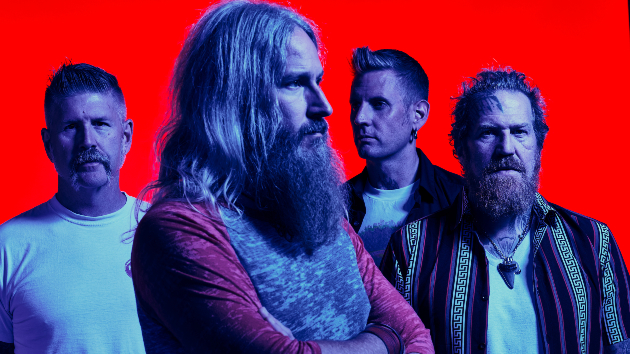
Mastodon has released a new song called “Sickle and Peace,” a track from the band’s upcoming album, Hushed and Grim.
The six-minute tune is a slow burner, starting with a ghostly children’s chorus as it builds to an epic guitar solo at the end. You can listen to it now via digital outlets.
“Sickle and Peace” is the third song to be released from Hushed and Grim, following the singles “Pushing the Tides” and “Teardrinker.” The whole album will arrive October 29.
Mastodon will embark on a U.S. tour in support of Hushed and Grim November 16 in Asheville, North Carolina.
Al Stewart‘s hit 1978 album Time Passages has been reissued as a limited-edition four-disc box set featuring three CDs and a DVD-Audio disc.
The expanded collection’s CDs feature a newly remastered version of the album created by original producer Alan Parsons, single edits, 1977 demos, an album outtake called “Tonton Macoute,” and a full previously unreleased concert that Stewart played in October 1978 at a Chicago radio station.
In addition, the DVD boasts a new 5.1 surround-sound version and an original remastered stereo mix of Time Passages by Parsons.
The box set also comes with an illustrated 68-page book that includes an essay featuring an exclusive interview with Stewart, plus a replica promo poster and four postcards.
Released in September 1978, Time Passages was British singer/songwriter Stewart’s eighth studio album, and followed his 1976 breakthrough record Year of the Cat. Time Passages‘ title track became Stewart’s highest-charting single in the U.S., reaching #7 on the Billboard Hot 100 and #1 on Billboard‘s Adult Contemporary chart. A second single, “Song on the Radio,” peaked at #29 on the Hot 100.
The album reached #10 on the Billboard 200 and went on to be RIAA-certified Platinum for sales of one million copies in the U.S.
Former Yes keyboardist Rick Wakeman launched the 2021 U.S. leg of his Even Grumpier Old Rock Star Tour earlier this month, but many of the originally announced dates wound up being postponed because of issues regarding COVID-19 restrictions.
As he continues playing a portion of his 2021 stateside outing, Wakeman has now revealed new dates for most of the postponed concerts, which will take place in early 2022. The run of rescheduled shows begins with a February 22 performance in Seattle and is mapped out through a March 11 concert in Fort Lauderdale, Florida.
The 72-year-old Rock & Roll Hall of Famer’s next show is scheduled for this Friday, October 22, in Huntington, New York, and his final 2021 U.S. date will take place on November 1 in Woodstock, New York.
A concert scheduled for November 6 in Wichita, Kansas, has been canceled, and refunds will be available at the point of purchase. Wakeman notes that news will be announced soon about postponed shows that haven’t been rescheduled yet in Albany, New York; Chicago; Kent, Ohio; and Buffalo, New York. You can check out Rick’s full schedule at RWCC.com.
As previously reported, Wakeman’s Even Grumpier Old Rock Star Tour shows feature him playing solo piano versions of Yes classics, material from his solo albums, and well-known songs by other artists to which he contributed, including hits by David Bowie and Cat Stevens. Rick also presents his arrangements of a few Beatles tunes at the concerts, as well as telling bawdy jokes and humorous anecdotes.
A new installment of the third season of the hit competition series Tough As Nails unfolds on CBS tonight. The show highlights “real-world heroes” who keep the country moving: from firefighters to package delivery people, and every job in between.
For host Phil Keoghan [KO-gan], he and the other producers say the series’ casts — both past and present — keep things interesting for the third go ’round.
“The freshness comes from the new people, and then it also comes from the new challenges,” Keoghan says.
“What’s really good now is that a lot of our past contestants are making suggestions about things that we should do on the show,” Keoghan continues. “So you’re going to see that a lot more…especially once we get through the pandemic and it’s easier for us to make the show.”
Keoghan adds, “You’re going to see a lot more of our cast making guest appearances and showing their jobs, often setting the challenges for our cast. That happens on season three. You’ll see some familiar faces pop up and you’re going to see them offer up some jobs that are tough in their space and their world.”
The governor issued a new call for the state legislature to provide an additional $11.4 million investment to help expedite the replacement of lead pipes and service lines in the predominately Black community within the next 18 months.
The estimated cost to replace all of the lead service lines in Benton Harbor is $30 million, and the state has so far earmarked some $18.6 million, according to a statement from the governor’s office. Whitmer called on the legislature to secure the additional $11.4 million by tapping into federal money made available to Michigan through the pandemic-era American Rescue Plan.
Her visit to the western Michigan community to meet with residents and local leaders on Tuesday came days after she signed an executive directive that aimed to coordinate all available state resources to deliver safe drinking water to residents.
“Every Michigander deserves safe drinking water,” Whitmer said in a statement, saying she visited Benton Harbor “to hear from community leaders doing the work on the ground and residents living through water challenges every day.”
“I cannot imagine the stress that moms and dads in Benton Harbor are under as they emerge from a pandemic, work hard to put food on the table, pay the bills, and face a threat to the health of their children,” she added. “That’s why we will not rest until every parent feels confident to give their kid a glass of water knowing that it is safe.”
For some Benton Harbor residents, the government attention and action comes too late. Elevated levels of lead have been detected in the city’s water system since at least 2018, according to a Natural Resources Defense Council petition filed last month to the Environmental Protection Agency on behalf of local advocacy groups and residents.
Residents continue to live with “significant and dangerous levels of lead contamination three years after the contamination was first discovered with no immediate solution in sight,” the petition states, calling it an “environmental justice” issue.
Some 85% of Benton Harbor’s approximately 9,700 resident are Black and 5% are Hispanic, according to the most-recent Census data. More than 45% of the population lives in poverty, the Census data states, and the median household income is $21,916.
Moreover, nearly 28% of the population is children under 18 years old. The U.S. Centers for Disease Control and Prevention warns on its website that lead generally affects children more than it does adults, and children tend to show signs of severe lead toxicity at lower levels than adults.
Lead poisoning can bring a slew of detrimental health impacts, the CDC warns, including: abdominal pain, constipation, headaches, irritability, loss of appetite, pain or tingling in the hands and/or feet and weakness.
The petition from the Natural Resources Defense Council notes that Benton Harbor’s residents “are not only subjected to a disproportionately high level of lead exposure from a variety of sources beyond their drinking water, but also often lack access to high quality health care and are exposed to a wide array of other threats that can exacerbate the negative health effects associated with lead exposure.”
Earlier this month, Michigan’s Department of Health and Human Services announced it was increasing the availability of free bottled water for Benton Harbor residents. The agency said in a statement that residents are being encouraged to use bottled water for cooking, drinking, brushing teeth, rinsing foods and mixing powdered infant formula.
The distribution of water bottles has faced hurdles, and the overall handling of the crisis has created mounting frustration among residents.
“Three years of this is ridiculous,” Rev. Edward Pinkney, a local faith leader told the local news outlet MLive, after a water handout organized by the state’s department of health ran out of water bottles 30 minutes after it was supposed to start.
Pinkney said he and his grassroots organization have been passing out 2,000 cases of water per month on their own dime since 2019.
Willie Mae Jones, a resident who said she and her four children have been drinking city water their entire lives, told the outlet they didn’t even know about the issue.
“We didn’t know we had lead in our water until probably a month ago,” Jones told MLive earlier this month. “We still have to pay for that water, and we can’t even use it. Now that’s ridiculous.”
The crisis in Benton Harbor also puts a harsh spotlight on real-world impacts of the nation’s dilapidated infrastructure, at a time when lawmakers on Capitol Hill are mulling over President Joe Biden’s massive infrastructure spending proposal.
Lana Del Rey has premiered the video for “Blue Banisters,” the title track off her upcoming new album.
The clip reflects the melancholy mood of the tune by recreating images from its lyrics, including Del Rey riding a John Deere tractor, baking a birthday cake, and, of course, painting her banisters blue.
You can watch the “Blue Banisters” video streaming now on YouTube.
The album Blue Banisters, which also features the previously released songs “Text Book,” “Arcadia” and “Wildflower Wildfire,” is due out October 22. It’s Del Rey’s second record this year, following March’s Chemtrails Over the Country Club.
Luke Bryan may be a massively successful country star these days, but early on in his career, both he and his wife Caroline made plenty of sacrifices so that he could chase his dream.
Specifically, Caroline says in a new appearance on the Uncut with Jay Cutler podcast, she gave up the comforts of sleeping in a bed. During one early tour, the singer’s wife came up with a particularly creative sleeping situation — with the couple’s then-newborn baby, Bo, in tow.
“When Luke was starting out, you know, you’re on one bus. And Bo Bryan was six, seven weeks old,” Caroline remembers. “We would tour with Luke, because he wanted us there. We would sleep on suitcases in the back of the bus.”
At the time, she says, she put Luke in a bunk so that he could be rested for his shows.
“And me and Bo would make a pallet with suitcases. Seriously. And there’s where I slept with an infant. And I’d get up and I’d make bottles in the night,” she continues. “Looking back now, I’m like, ‘How the hell did I do that?’”
Much has changed since then for the country superstar family. Not only is Luke a massively successful country artist, but the couple also recently starred in a series of Jockey commercials. More recently, Luke’s gearing up for the next season of American Idol, where he’ll return as a judge.
(NEW YORK) — Two attorneys pleaded guilty Wednesday to throwing a lit Molotov cocktail into an unoccupied vehicle belonging to the New York Police Department in Fort Greene, Brooklyn, during May 2020 demonstrations to protest the murder of George Floyd.
Colinford Mattis, an associate at Pryor Cashman, and Urooj Rahman, a public interest lawyer, exchanged text messages the night of May 30, 2020, that prosecutors quoted during the plea hearing.
“I hope they burn everything down. Need to burn all the police stations down,” assistant U.S. Attorney Ian Richardson quoted one message saying.
“Set a police car on fire after a lot of fights and check my story to see the trajectory of burning,” Richardson said in quoting another message from Rahman.
The reply text from Mattis said, “Go burn down 1PP,” an apparent reference to NYPD headquarters at One Police Plaza.
“What is your plea to count seven?” U.S. District Judge Brian Cogan asked.
“Guilty,” Rahman replied.
“I plead guilty your honor,” Mattis said.
“Are you aware you are all but certain to be disbarred as a result of this plea?” the judge asked.
“Yes, Your Honor,” both attorneys said.
Rahman and Mattis will be sentenced on Feb. 8, 2022, and would each face up to 10 years in prison if the judge applies a terrorism enhancement, Richardson said.
“On May 30, 2020, I knowingly possessed a destructive device, a Molotov cocktail,” Rahman said. “My actions occurred on a night of civil protest in Brooklyn following the murder of George Floyd. I deeply regret my actions.”
Mattis expressed similar regret.
“On the night of May 30, 2020, I knowingly possessed a destructive device,” Mattis told Judge Cogan. “I deeply regret my conduct and wish I had made better choices on that night.”
Miley Cyrus’ cover of Metallica’s “Nothing Else Matters” actually mattered quite a lot to her.
In a new piece for Interview magazine, the singer tells Metallica drummer Lars Ulrich that she appreciated being able to sing the song — which appeared on this year’s Metallica Blacklist tribute album — in her true voice.
“My whole life, whether in vocal training or just continuing to hone my craft, it’s always been about, ‘Why do you sound like a man? Where’s your f****** falsetto, b****? Why can’t you sing the high octave of “Party in the U.S.A.” anymore?’” Miley says.
“In this song, I get to sing in that low register, and I get to live in that authentic, genuine sound,” she adds.
Miley points out that her voice is how she expresses herself and she’s not about to sing in a way that is “false” just to fit a mold.
“I was honored by the fact that I didn’t have to sing this song in the way that females are ‘supposed’ to sing.” she says. “You can hear that at the end of the song, when I take the gloves off and just start flying. That part of the song really grabs people. It’s that lower register of my voice. So I’m grateful to have a song where I can lean into that.”