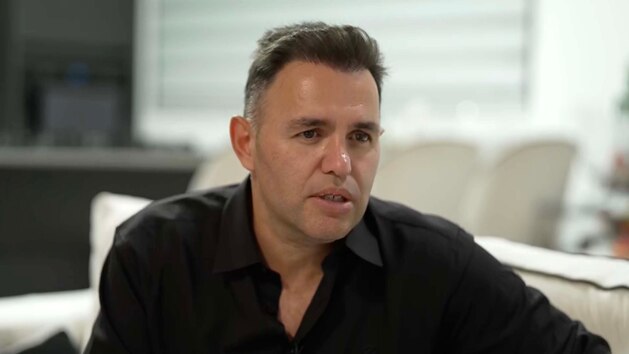
Andy Beshear speaks at the 38th Annual Michigan Democratic Women’s Caucus Legacy Luncheon on April 18, 2026 in Detroit, Michigan. (Bill Pugliano/Getty Images)
(WASHINGTON) — Kentucky’s Democratic Gov. Andy Beshear sent a letter on Wednesday to Republican Sen. Mitch McConnell asking for details on McConnell’s health situation after weeks of the Kentucky senator being hospitalized with few details shared by the senator’s team.
“Over the last several weeks, Kentuckians have grown increasingly concerned about the current state of your health and wellbeing, and ability to hold office in the United States Senate,” Beshear wrote in the letter, which was shared by the governor’s office.
“As Governor, I request that you fully update Kentuckians regarding the current status of your health.”
Beshear wrote that public officeholders “have made a commitment to our constituents to do our best to represent them and to always be transparent.”
“I believe this requires clear communication about one’s ability to serve,” he wrote.
He also wished him a speedy recovery.
ABC News reached out to McConnell’s office about the letter and didn’t receive an immediate response.
Beshear and McConnell are far apart ideologically, although they have worked together on some issues. The governor said last week he had not gotten any updates on McConnell’s condition.
If McConnell’s seat were to become vacant, Beshear would likely have to set up a special election to fill it, although that could depend on timing. McConnell’s seat is also up for election this year, but he is not running for reelection. Kentucky lawmakers previously passed legislation that blocked the governor from having the ability to appoint a temporary replacement.
The letter came amid questions over the longtime senator’s health. A spokesperson for McConnell first confirmed the senator had been hospitalized on June 14 for an unknown condition. His office has not provided many updates, though they said McConnell is continuing his recovery in the hospital.
Spokespeople for the lawmakers told ABC News on Tuesday that McConnell has had phone conversations with several Republican leaders as he remains hospitalized.
The health of McConnell “did not warrant an immediate return to the US” for his wife, former Transportation Secretary Elaine Chao, while she was on a trip abroad, according to Chao’s spokesperson.
In a statement to ABC affiliate WHAS on Tuesday, a spokesperson for Chao wrote, “The secretary was on a long-planned trip in China to support her family’s philanthropic endeavors. During the trip, she met with a number of people, including the US ambassador. The Senator’s health did not warrant an immediate return to the US.”
ABC News’ Allison Pecorin contributed to this report.
The Jackson County Sheriff’s Department released this photo during the search for Nolan Xavier Wells, 18, in Mississippi. (Jackson County Sheriff’s Department)
(JACKSON COUNTY, Miss.) — Authorities are asking for the public’s help as they investigate the mysterious death of Mississippi teen Nolan Xavier Wells.
Wells, 18, went missing on the 4th of July after going on a boat trip with friends to Horn Island, a barrier island about 10 miles from the Gulf Coast, officials said.
“[The friends] left [Horn Island] and went back without Nolan,” Jackson County Sheriff John Ledbetter said. “From what we understand, he chose to stay there.”
A body believed to be the teenager was recovered on Monday, officials said
Authorities said they believe Wells drowned and don’t suspect foul play, but the sheriff’s office stressed in a new statement Wednesday that investigators are “working diligently to determine exactly what occurred.”
The sheriff’s office said it urges anyone who was on or near the northwest tip of Horn Island on Saturday to come forward with photos or videos, “particularly those depicting alleged altercations or containing images of, or believed to include Nolan Wells.”
The sheriff’s office said it’s also looking for anyone who may have seen Wells or “observed or heard an argument, disturbance, or other unusual activity while on the island.”
“Even information that may seem insignificant could prove valuable to investigators,” the department said.
Wells’ mother, Christine Wonsley, wrote on social media on Wednesday, “Missing our Nolan so much every second of everyday. This has been the worst time in our lives.”
Civil rights attorney Ben Crump, who is representing the family, said Tuesday that his team will conduct an independent review to determine how Wells died.
“We will not rest until every fact about what happened to Nolan on Horn Island is brought into the light, and we call on investigators to pursue this case with the urgency and transparency this family deserves,” Crump said.
Authorities said anyone with information can call the sheriff’s department at 228-769-3065 during regular business hours or at 228-769-3063 after hours.
Cyclospora cayetanensis is a unicellular parasite that causes an intestinal infection called cyclosporiasis. (CDC)
(LANSING, Mich.) — Reported cases of cyclosporiasis, an intestinal illness caused by a parasite, are nearing 1,000 in Michigan, local health officials said Wednesday.
Since June 22, at least 992 cases have been confirmed, a spokesperson from the Michigan Department of Health and Human Services (MDHHS) told ABC News. At least 36 people have been hospitalized.
Typically, the state sees about 50 cases per year, meaning cases are nearly 20 times higher than on average.
Dr. Natasha Bagdasarian, an infectious disease physician, epidemiologist and the chief medical executive for the state of Michigan, told ABC News earlier this week that the department’s working hypothesis is the outbreak is linked to contaminated produce.
The parasite usually spreads through food or water contaminated with feces, according to the Centers for Disease Control and Prevention (CDC).
Foodborne outbreaks of cyclosporiasis have been linked to various types of imported fresh produce, such as raspberries, basil, snow peas, mesclun lettuce and cilantro, according to the CDC.
The MDHHS spokesperson said on Wednesday that no specific produce, grower, supplier or type of produce has been identified as the source.
The CDC said there have been 145 cases detected in 17 states since May 1, excluding Michigan. No deaths have been reported.
The CDC said patients’ ages cases ranged from 5 through 86 and 61% were female.
Some patients do not experience any symptoms but, for those who do, the most common symptom is “explosive watery diarrhea,” doctors previously told ABC News. Other symptoms can include cramping, bloating, low-grade fever, nausea and vomiting, the doctors said.
The CDC says it takes about one week from the time of infection to become symptomatic, but that time can range from two days to two weeks.
Because cyclosporiasis symptoms can resemble other illnesses, it may be hard for a patient to determine the cause.
“Anyone experiencing gastrointestinal illness, such as sudden and ongoing diarrhea, should contact their health care provider and their local health department,” the MDHHS spokesperson told ABC News in an email.
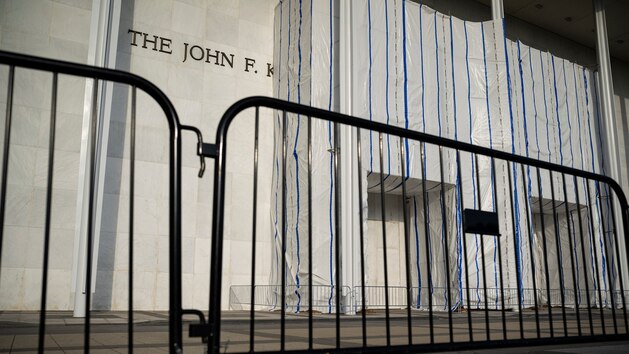
Construction crews build scaffolding outside The Kennedy Center on June 13, 2026 in Washington, DC. (Tasos Katopodis/Getty Images)
(WASHINGTON) — A panel of D.C. Circuit appeals court judges has rejected a request by President Donald Trump and fellow members of the Kennedy Center’s board to stay a lower court’s order that Trump’s name be removed from the building.
This is a developing story. Please check back for updates.
President Donald Trump holds a bilateral meeting with Ukrainian President Volodymyr Zelenskiy alongside the NATO leaders summit at the Bestepe Presidential Compound in Ankara, Turkey, July 8, 2026. (Win McNamee/Getty Images)
(ANKARA, Turkey) — President Donald Trump told Ukrainian President Volodymyr Zelenskyy on Wednesday the U.S. will give Ukraine a license to produce Patriot air defense systems.
“One of the things we’re going to be talking about is, you’ll — we’re going to give a license to you to make Patriots. That’s pretty cool, right?” Trump told Zelenskyy during a bilateral meeting at the NATO summit in Ankara, Turkey.
“This way he can’t complain that we’re not giving him enough. I said, ‘Make them yourself,'” Trump added.
Trump said the company that manufactures Patriot systems hasn’t been informed yet, but “that’ll work out all right.”
But when asked whether Trump would be willing to provide Patriot interceptors to Ukraine up front while production gets into place, the president said the U.S. didn’t have that many missiles.
“We have Patriots, but we don’t have that many. We need them for ourselves, too,” he said.
The meeting between Trump and Zelenskyy in Ankara came as expenditures of U.S. Patriot PAC-3 interceptor missiles in Ukraine and the Middle East have dramatically outpaced current production capabilities, resulting in a critical global shortage as the Russia-Ukraine war drags on.
“We need to find a way to get as quick as possible, as much as possible, missiles for Patriot systems. This is the most important thing,” Zelenskyy said at a defense industry forum at the alliance’s annual summit on Tuesday.
Russia has sought to exploit this shortfall by launching concentrated bombardments of ballistic missiles and drone swarms at Ukrainian targets, overwhelming the country’s defenses and resulting in scores of civilian deaths.
On Wednesday, Zelenskyy praised the U.S. for its support throughout the war.
“Mr. President, thank you very much for this meeting. And we’re thankful, as always, to your support, American support, bipartisan support,” he said.
Russia’s ‘last major advantage’
In an address to members of the NATO alliance on Tuesday, Zelenskyy stressed the critical nature of the shortage and argued it was time for Europe to produce its own systems to counter Russian ballistic missiles, calling the rocket-powered missiles Moscow’s “last major advantage.”
“We all value the Patriot system. It’s an excellent system,” he said. “But today’s wars have shown current Patriot production is not enough to meet the growing demand for protection against ballistic missiles. That is a fact.”
For his part, Trump presented a rosier outlook — asserting that an end to the conflict in Ukraine, which is now in its fifth year, could be on the horizon.
“I think we’re getting much closer than people realize, and President Putin wants it to end,” Trump said on Monday. “And President Zelenskyy actually wants it to end now.”
Trump also downplayed the impact of the war in Ukraine on Tuesday, saying “it doesn’t affect us” and depicting the conflict as a European issue. Trump had promised to end the war on Day 1 in office — a pledge he later said was hyperbolic.
Trump’s comments come amid Russian escalation in recent days. On Monday, Russian strikes targeted Ukraine’s military-industrial complex and energy infrastructure in and around Kyiv, according to Russia’s defense ministry.
Zelenskyy has been warning the Trump administration about the crucial depletion of interceptor missiles for several weeks. He is also pressing the U.S. to expedite a license that would allow Ukraine to manufacture Patriot batteries and interceptors domestically.
A strained relationship
The bilateral meeting tested the strength of Trump and Zelenskyy’s sometimes-rocky relationship at a time when Ukraine is facing new vulnerabilities on the battlefield and diplomacy with Russia has largely stalled.
Trump, on Wednesday, described Zelenskyy as a “difficult character,” but said they have a good relationship.
The leader’s first meeting of Trump’s second term — a February 2025 conversation in the Oval Office — devolved into a shouting match after Trump expressed skepticism about Ukraine’s position in the conflict and called for more gratitude from Zelenskyy for U.S. support.
But Trump appeared to grow more sympathetic to the Ukrainian cause over the past year as repeated efforts to bring Russian President Vladimir Putin to the negotiating table fell flat.
A watershed moment came last July when, after repeatedly pausing military aid to Ukraine, Trump agreed to supply weapons to Ukraine if they were purchased from the U.S. by NATO allies.
And there have been signs over the past month that Trump is reengaging in efforts to bring peace to Ukraine and once again eager to coordinate a deal between Zelenskyy and Putin.
During their bilateral meeting, Trump said he spoke with Putin about the Russian president’s desire to set up a meeting in Moscow, though Zelenskyy wouldn’t commit to such a meeting.
Trump held calls with Zelenskyy and Putin over the weekend as both leaders congratulated the president on the 250th anniversary of the United States’ independence.
It’s unclear how substantive the conversations were, though a Kremlin aide said that Trump spoke to Putin for 90 minutes and again offered to help end the war. Zelenskyy said he had “a very good call” with Trump and conveyed there was a “real prospect” for peace.
Trump last met with Zelenskyy at the G7 summit in June, where he, at times, appeared friendly to Ukraine’s cause — describing Russia as the “offensive” party in the conflict and saying he was “going to do whatever” he could to strike a deal.
French President Emmanuel Macron — the host of the G7 summit — said after the meeting that he was optimistic about Trump’s support for Ukraine, claiming he observed “a real change in comparison to recent months” in his attitude.
A sign points the way to Brigham and Women’s Hospital June 3, 2001 in Boston, Massachusetts. (Darren McCollester/Getty Images)
(BOSTON) –Nurses at Brigham and Women’s Hospital and Mass General Brigham home care clinicians took to the streets Wednesday morning for a strike set to involve roughly 4,500 workers, according to the Massachusetts Nurses Association.
The strike would be the largest nurse and healthcare professional strike in Massachusetts history, according to a Massachusetts Nurses Association press release.
“At both bargaining tables, the nurses and clinicians made significant efforts to compromise and offered to continue negotiating to avoid a strike,” the association wrote in a statement. “MGB refused to improve its proposals and declined opportunities to continue bargaining.”
The nurses’ strike, which was scheduled to begin at 7 a.m. Wednesday, is set to last one day and be followed by a lockout imposed by Mass General Brigham, the association said.
The work stoppage is now expected to last until 7:59 a.m. on July 15, according to the hospital.
Mass General Brigham home care clinicians plan to strike for seven days beginning at 8 a.m. on the same day, according to the union.
Brigham and Women’s Hospital said it will continue to provide high-quality patient care throughout the work stoppage, along with its outpatient centers, though picketing may cause heavier traffic than normal.
Temporary clinicians are being brought in to support patients during the work stoppage, and patients should keep their scheduled appointments unless advised otherwise by their care teams, the hospital said.
The union said it is seeking more competitive wage increases that keep pace with the rising cost of living, among other demands. It cited data from the MassINC Policy Center, which said the income needed to maintain a middle-class standard of living for a family of four in Massachusetts jumped 50% from 2020 to 2024.
Brigham and Women’s Hospital said in a statement that Brigham nurses are “among the highest compensated in the market.”
Scott Sperling, Mass General Brigham board chair and co-CEO of a private equity firm, wrote to the association in an email on Sunday night, stating that a “substantial effort” has been made to find common ground, according to the association’s press release.
On Tuesday, Boston Mayor Michelle Wu, Massachusetts Gov. Maura Healey and Massachusetts Sens. Elizabeth Warren and Edward J. Markey released a joint statement encouraging both sides to resume negotiations.
“A strike and lockout of this scale would cause serious disruption across the Greater Boston region, and the possibility that patient care could be impacted through diversions, delays, or other emergency measures is deeply concerning to the communities we represent,” the statement said.
U.S. President Donald at the NATO Summit on July 08, 2026 in Ankara, Turkey. (Photo by Win McNamee/Getty Images)
(ANKARA and LONDON) — President Donald Trump said on Wednesday morning that he believes that the interim agreement reached with Iran last month is “over,” following an intense exchange of fire between the two sides on Tuesday into Wednesday morning.
Trump huddled with top advisers on Tuesday while attending the NATO summit in Ankara, Turkey, to discuss the U.S. response to several fresh attacks on commercial ships in the Strait of Hormuz early this week, multiple people familiar with the discussions told ABC News.
The U.S., Qatar and Saudi Arabia attributed the attacks to Iranian forces, allegations denied by Tehran.
Speaking with reporters in Ankara on Wednesday during a press conference alongside NATO Secretary General Mark Rutte, Trump said that negotiations between the U.S. and Iran will continue, but said of the agreement, “For me, I think it’s over.”
“I don’t want to deal with them anymore. They’re scum. You know what scum is? They’re scum. They’re sick people. They’re led by sick people,” Trump said of Iran’s leadership in response to a question from ABC News.
“And they’re vicious, violent people. And if they had a nuclear weapon, they’d use it. As far as I’m concerned, it’s over,” the president continued. “There’s something wrong with them, they’re cuckoo,” Trump added.
The president did, however, suggest that U.S.-Iranian negotiations over a final peace deal could continue.
The 14-point MOU committed the signatories to the reopening Strait of Hormuz for commercial traffic, with the U.S. lifting its naval blockade of Iranian ports. Iran also committed not to pursue nuclear weapons — a commitment Tehran has previously made — while the U.S. agreed to allow Iranian oil sales and to begin work on a $300 million reconstruction fund for the country.
Under the MOU, fighting — including between Israel and the Tehran-backed Hezbollah militia in Lebanon — would stop for 60 days while the U.S. and Iran negotiate the terms of a final deal, which would cover issues including Iran’s nuclear material.
“I’ll speak to our negotiators. They want to negotiate. They’re good people. Steve Witkoff, Jared Kushner, but they have to come back to me. As far as I’m concerned, it’s just a waste of time dealing with them,” Trump said on Wednesday.
“I’ll let our wonderful negotiators keep talking if they want, but I don’t see it,” Trump said later in the press conference, adding that he did not care whether talks continued after funeral proceedings for slain Supreme Leader Ayatollah Ali Khamenei concluded.
When the MOU was signed last month, Trump said the deal “achieves everything we set out to accomplish, everything and much more.” But key issues, including the status of Iran’s nuclear program, remained unaddressed.
The White House has demanded an end to all Iranian enrichment of uranium, a proposal repeatedly rebuffed by Tehran, which says it needs to enrich uranium to power its civil nuclear power network.
On Wednesday, the president again said his administration would accomplish the “denuclearization of Iran.”
“We’re going to de-nuke it. We’re not going to let them, because they’re crazy, and they can’t have a nuclear weapon,” Trump said.
Intermittent exchanges of fire have continued between the U.S. and Iran despite the signing of the MOU in June.
Since Monday, U.S. Central Command said Iran had attacked three commercial vessels transiting the Strait of Hormuz.
CENTCOM said it then launched retaliatory strikes on more than 80 Iranian targets, including air defense systems, command and control networks, coastal radar sites, anti-ship missile capabilities and small boats.
The U.S. also revoked a license that authorized the sale of Iran oil under the MOU in response to the tanker attacks, with one U.S. official telling ABC News that the incidents were “wholly unacceptable.”
Iran’s military said on Wednesday that it responded to the renewed American strikes by attacking 85 U.S. military sites in Kuwait and Bahrain.
Trump on Wednesday lauded what he called the “powerful” U.S. strikes, adding, “We hit them very hard.”
“I told them every time you hit, we hit, and of course they’re dirty players, so they go after everyone, probably including me,” the president continued, referring to alleged Iranian assassination plots in which Trump said he remains a target.
“They want to take out the U.S. leader — me. I’m on every list. I saw things this morning, I’m on every single one of their lists, and so far I guess I’ve been a little bit lucky, but that maybe doesn’t last very long, because that’s the way it goes,” Trump said.
Mohammad Bagher Ghalibaf, the speaker of the Iranian parliament who has been serving as Tehran’s chief peace negotiator, said in a post to X early on Wednesday that the U.S. had violated the MOU with its latest strikes.
“The era of bullying and extortion is over. It leads nowhere. We don’t fold,” Ghalibaf wrote.
Oil prices spiked on Wednesday after Trump’s comments, with U.S. oil trading at $74.62, up around 6%, and global oil at $78.70, up more than 6%. The price of global oil is still significantly down on a high of nearly $120 last month before the MOU was announced.
Traffic has been moving through the Strait of Hormuz in recent weeks, including through Tuesday despite the latest attacks on ships. Data from Kpler, a global energy analytics firm, showed more than 100 transits of ships through the Strait between July 5 and July 7, including 41 crossings on July 7.
ABC News’ Rachel Scott, Karen Travers, Justine Fishel, Isabelle Murray, Sarah Kolinovsky and Zunaira Zaki contributed to this report.
Pedro Sanchez, Spain’s prime minister attends the NATO summit on July 08, 2026 in Ankara, Turkey. (Burak Kara/Getty Images)
(ANKARA, Turkey) — President Donald Trump on Wednesday appeared to grow increasingly frustrated with NATO allies for not supporting his war effort in Iran, targeting Spain in particular and calling for “all trade” to be cut off with that country.
“Spain is a wasted cause,” Trump said at the NATO Summit in Ankara, Turkey, during an official greeting with Secretary General Mark Rutte. “We don’t want to do any trade business with Spain anymore. By the way, I’d like you to cut it up. Scan, Spain is a terrible partner in NATO. They don’t participate, they don’t pay. I don’t want anything to do with Spain. Cut off all trade with Spain, please, including visits.”
The comments were the latest complaint from Trump against Spain, the only member of the North Atlantic Treaty Organization that has not committed to defense spending equal to 5% of its GDP by 2030.
The U.S., because of its outsized military spending, indirectly contributes more to the NATO than any other country, Trump said last week. The U.S. is responsible for about 15% of NATO’s direct funding, according to the bloc.
At last year’s NATO summit at The Hague, allies agreed at Trump’s prompting to target defense spending equal to 5% of each NATO member countries’ GDP, up from the previous 2%. Spain was alone among the 32 member states in saying it wouldn’t commit to the target.
Trump has previously threatened to end trade with Spain, including in March, when the Spanish foreign minister said at the time that they wouldn’t allow the U.S. to use jointly operated bases in southern Spain for any strikes not covered by the U.N.’s charter.
“I don’t want to do any more trade with them. All right, take it immediately,” Trump said on Wednesday. “Don’t even talk to them, they’re hopeless, bad people, because you know they have everybody else going and paying and working in Spain, in particular Spain, there are a couple of others, but in particular Spain, they’re open about it, they’re hostile about it, and let’s see how hostile they remain when they call up, and they ‘please, please, we want to trade with you, sir, we want to trade with you, sir.’ They make so much money with us, and we’re going to see that they make a lot less. I want no business with them.”
After Trump’s comments, sources at Moncloa Palace, the Spanish prime minister’s office, told Madrid’s El Dario newspaper that Spain “maintains an excellent social, cultural, and economic relationship with the U.S., and it is not our intention for that to change.”
Trump on Wednesday said “nobody,” aside from the “small countries” wanted to help the U.S. in its war with Iran.
“There was calls made a few weeks ago,” Trump said, claiming he spoke with the United Kingdom, Germany and France, among others. “Nobody wanted to help. Some of the very small countries wanted to help, because they’re the most vulnerable. I mean, that’s the only reason they wanted to help.”
The leaders of the U.K., France and Germany did not immediately respond to Trump’s statement on Wednesday. Each has repeatedly declined to involve their countries directly in the war, although each also has said Iran should not be allowed to develop nuclear weapons.
Trump spoke about his displeasure with NATO allies at large, saying that the U.S. has paid for allies to be protected against Russia but that safety has “nothing to do” with the U.S.
“They weren’t there for us, and we’ve been there for them, ” he said. “We spent over a trillion dollars over the last short period, trillion in order to protect these countries from Russia, and has nothing to do with us. We have a notion, but it’s been a long-term thing, and they haven’t treated us right.”
Trump on Wednesday shook hands with Danish Prime Minister Mette Frederiksen, a day after the president renewed his calls for the U.S. to take control of Greenland, which is an autonomous territory under Denmark.
Frederiksen pledged earlier in the summit to defend Greenland, saying, “Our position is clear as it has been all through. Greenland is, of course, not for sale.”
Rutte later celebrated Trump’s ability to get allies to pay a greater share for defense. Rutte appeared to remind the U.S. president that Spain was a part of the coalition that upped their spending.
“And you mentioned Spain, even you got Spain to pay 2% they spent, they made a huge step in last year, so there are still issues we have to solve, but hey, also, even Spain, I would say they got to the 2%,” Rutte said.
(NEW YORK) — Oil prices climbed and stocks tumbled in early trading on Wednesday after President Donald Trump said he believes an agreement with Iran is “over” amid an exchange of strikes in the Middle East.
Brent crude, the benchmark measure for worldwide oil trading, climbed more than 5% in early trading on Wednesday, pushing the price up to nearly $78 a barrel.
Oil prices stand above pre-war levels, though they have fallen from a high of as much as $118 reached earlier in the conflict.
Stock prices fell in response to the heightened tensions and rising oil prices.
The Dow Jones Industrial Average dropped 600 points, or 1.1%, while the S&P 500 declined 0.6%. The tech-heavy Nasdaq fell 0.4%.
This is a developing story. Please check back for updates.
President Donald Trump holds a bilateral meeting with Ukrainian President Volodymyr Zelenskiy alongside the NATO leaders summit at the Bestepe Presidential Compound in Ankara, Turkey, July 8, 2026. (Win McNamee/Getty Images)
(ANKARA, Turkey) — Ukraine’s President Volodymyr Zelenskyy is expected to make a direct appeal to President Donald Trump during a face-to-face meeting on the sidelines of the NATO summit, asking for help replenishing depleted stocks of American-made ammunition vital to the country’s defense.
“We need to find a way to get as quick as possible, as much as possible, missiles for Patriot systems. This is the most important thing,” Zelenskyy said at a defense industry forum at the alliance’s annual summit on Tuesday.
The meeting between Trump and Zelenskyy in Ankara comes as expenditures of U.S. Patriot PAC-3 interceptor missiles in Ukraine and the Middle East have dramatically outpaced current production capabilities, resulting in a critical global shortage as the Russia-Ukraine war drags on.
Russia has sought to exploit this shortfall by launching concentrated bombardments of ballistic missiles and drone swarms at Ukrainian targets, overwhelming the country’s defenses and resulting in scores of civilian deaths.
Russia’s ‘last major advantage’
In an address to members of the NATO alliance on Tuesday, Zelenskyy stressed the critical nature of the shortage and argued it was time for Europe to produce its own systems to counter Russian ballistic missiles, calling the rocket-powered missiles Moscow’s “last major advantage.”
“We all value the Patriot system. It’s an excellent system,” he said. “But today’s wars have shown current Patriot production is not enough to meet the growing demand for protection against ballistic missiles. That is a fact.”
For his part, Trump presented a rosier outlook — asserting that an end to the conflict in Ukraine, which is now in its fifth year, could be on the horizon.
“I think we’re getting much closer than people realize, and President Putin wants it to end,” Trump said on Monday. “And President Zelenskyy actually wants it to end now.”
Trump also downplayed the impact of the war in Ukraine on Tuesday, saying “it doesn’t affect us” and depicting the conflict as a European issue. Trump had promised to end the war on Day 1 in office — a pledge he later said was hyperbolic.
Trump’s comments come amid Russian escalation in recent days. On Monday, Russian strikes targeted Ukraine’s military-industrial complex and energy infrastructure in and around Kyiv, according to Russia’s defense ministry.
Zelenskyy has been warning the Trump administration about the crucial depletion of interceptor missiles for several weeks. He is also pressing the U.S. to expedite a license that would allow Ukraine to manufacture Patriot batteries and interceptors domestically.
A strained relationship
The bilateral meeting will test the strength of Trump and Zelenskyy’s sometimes-rocky relationship at a time when Ukraine is facing new vulnerabilities on the battlefield and diplomacy with Russia has largely stalled.
The leader’s first meeting of Trump’s second term — a February 2025 conversation in the Oval Office — devolved into a shouting match after Trump expressed skepticism about Ukraine’s position in the conflict and called for more gratitude from Zelenskyy for U.S. support.
But Trump appeared to grow more sympathetic to the Ukrainian cause over the past year as repeated efforts to bring Russian President Vladimir Putin to the negotiating table fell flat.
A watershed moment came last July when, after repeatedly pausing military aid to Ukraine, Trump agreed to supply weapons to Ukraine if they were purchased from the U.S. by NATO allies.
And there have been signs over the past month that Trump is reengaging in efforts to bring peace to Ukraine and once again eager to coordinate a deal between Zelenskyy and Putin.
Most recently, Trump held calls with Zelenskyy and Putin over the weekend, as both leaders congratulated the president on the 250th anniversary of the United States’ independence.
It’s unclear how substantive the conversations were, though a Kremlin aide said that Trump spoke to Putin for 90 minutes and again offered to help end the war. Zelenskyy said he had “a very good call” with Trump and conveyed there was a “real prospect” for peace.
Trump last met with Zelenskyy at the G7 summit in June, where he, at times, appeared friendly to Ukraine’s cause — describing Russia as the “offensive” party in the conflict and saying he was “going to do whatever” he could to strike a deal.
French President Emmanuel Macron — the host of the G7 summit — said after the meeting that he was optimistic about Trump’s support for Ukraine, claiming he observed “a real change in comparison to recent months” in his attitude.