
More power or more gauges? How the sports car market has become divided

More power or more gauges? How the sports car market has become divided
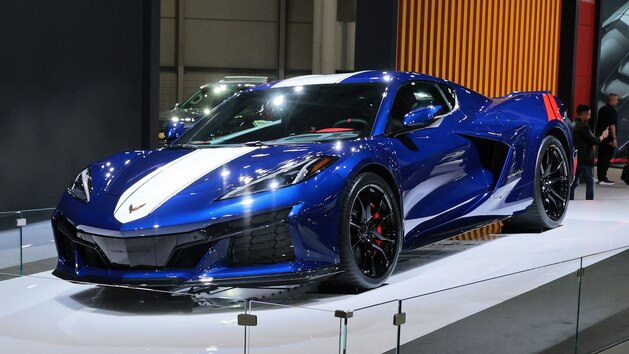
The 2027 Corvette Grand Sport X, a high-performance AWD hybrid model on display at the New York Auto Show, April 01, 2026 in New York City. (Michael M. Santiago/Getty Images)

A sports car with a naturally aspirated V12 engine and a manual transmission? It’s every enthusiast’s dream.

Buying one, however, requires deep pockets. The S1, Gordon Murray’s latest supercar creation, reportedly costs at least seven figures. All 64 units were sold even before collectors, industry insiders and admirers of Murray got a sneak peek at the S1 in August.

Murray himself has described the 681-horsepower car as “more elegant, more refined” but also “analog and deeply driver focused,” a seeming affirmation that manual gearboxes, gauges and ear-piercing revs (12,100 rpm!) can still exist in a world of increasing technology and electrification.

“A lot of customers are not too excited about hybrid supercars,” Matt Farah, host of “The Smoking Tire” podcast, told ABC News. “Regulations are making the new cars worse. People want an analog experience.”

The safety tech found in daily commuters — lane keep assist, emergency automatic braking, blind spot monitoring — has hindered the driving experience in sports cars, he argued. And hybrid powertrains — which boost output, speed and miles per gallon — can actually become a liability for owners, he said.

“Cars have just gotten insanely fast but that does not make them more fun, it makes them more braggable,” he said. “There’s no difference between 800 hp and 1,000 hp … you can only use so much on the street. I drive all this stuff and it’s boring.”

Enthusiasts are now splurging on older sports cars that have been “reimagined” by high-end restomod companies like Singer and Gunther Werks.

“The elite of the elite get real knobs and gauges and real stick shifts,” said Farah. “These small outfits are charging a lot to make old cars go faster.”

He added, “Everyone else gets stuck with a computer. The new stuff has become very digital but doesn’t have a lot of feel.”

Tony Roma, executive chief engineer for the global Corvette and performance cars team, called the latest supercars built by Murray, Czinger and others as “trendsetters,” adding that these boutique carmakers purposely keep production small.

“A lot of what they do is for show,” Roma told ABC News. “Corvette will never compete with these [supercars].”

He added, “This is a fashion industry. We sell a fashion product and people are buying the greatest and latest shiny thing.”

Roma declined to say whether a manual transmission would return in the Corvette, though he acknowledged the appeal of rowing one’s own gears and the desire for a more raw driving experience.

“What makes a great sports car? That is the question,” he said. “People want a visceral connection to their car. Customers want precise steering, a linear range of handling, they want the car to feel natural, to be a modern interpretation of the sports car in their youth. And they want it to sound great. The weight of the throttle and brake pedal — do they feel like the same person tuned them? And the car has to be confidence inspiring.”

Roma said Corvette’s customers also request a comfortable ride, which he said was achievable in all six Vettes currently sold, from the Stingray to the new Grand Sport to even the beastly ZR1X.

“Our niche, our draw, is that we’re affordable performance,” he said. “Most of our customers are not buying race cars.”

The backlash to big screens has helped propel sales of older Corvettes, like the C5 generation with manuals, Roma noted. As for the constant chatter about the unwelcome safety tech, Roma said the objections may be exaggerated.

“The people complaining about the tech … I am not sure they hate it,” he said.

Dan Pund, editor-in-chief of Road & Track, has driven many of the top supercars with hybrid powertrains. He said he’s astonished at what these machines can deliver when pushed hard on the track.

“The Ferrari 296 and F80 are amazing … they’re maintaining the sound of the engine, the gear shift, the dual clutch,” he told ABC News.

The 296 pairs a twin-turbocharged V6 with a plug-in hybrid system, which makes 819 hp. The F80’s twin-turbo V6 gets an assist from three electric motors for a terrifying 1,184 hp.

He also had high praise for McLaren’s new W1 supercar and its 916-hp twin-turbo V8, noting in his review that the electric motor is “fed by a tiny 1.4-kWh battery — might as well be a high-capacity pump flooding the driver’s brain with adrenaline, norepinephrine, and endorphins through a fire hose.”

Pund recognized that hybrid powertrains can add weight, a nightmare for purists. Automakers, however, have realized that “this is the reality of the situation … hybrid is the best option at this point. To be competitive in the industry, there has to be noise and vibration because that’s what sports car buyers want.”

And enthusiasts are clearly choosing hybrids over fully electric sports cars, he said.

“The Rimac [Nevera] was a darling of the industry but it did not sell. It feels like any electric car. You dip into the throttle and holy s— it’s fast. But you don’t hear anything and you don’t shift gears,” he said.

Ivan Drury, director of insights at Edmunds, said there will be “no end to how much people spend” on restomods as vintage sports cars with three pedals become sought after by consumers.

“As we layer in more tech and more electrification, sports cars become faster and easier to drive. But this slowly hacks away at the soul of the car,” he told ABC News. “These cars are borderline autonomous. There are so many warnings. The vehicle has more control than you do at this point.”

Fuel economy has never been a selling point for sports cars, he noted, which make up less than 1% of industry sales. Drury said he, too, has become nostalgic for older models like the Honda Prelude, which was his first car.

“Honda brought back the Prelude nameplate as a throwback,” he said. “Prelude looks the part but doesn’t back it up with speed and innovation. It would not surprise me at all if Honda pulls the plug on the Prelude after two to three years.”

A Honda spokesperson told ABC News that the company is meeting sales targets of the sports car.

“We announced during the launch of the Prelude that we expected annual sales volume of approximately 4,000 units,” the spokesperson said. “We also noted that Prelude wasn’t meant to be a volume model, but instead a halo for our hybrid lineup, as it attracts faithful Honda fans while also bringing new buyers to the Honda brand. In fact, more than a third of Prelude buyers have come from another brand.”

Farah said he was impressed with the Nissan Z Nismo, a manual sports car that costs a fraction of the price of supercars he regularly test drives.

“It’s under $70,000 and very engaging. That car has a lot of poise, great brakes and is very good dynamically — there’s not a lot of computer intervention,” he said.

But the Nissan is an exception, he admitted.

“It’s very telling that people would rather spend $3 million to $4 million on a [restomod] supercar than $700,000 on a new one,” he said.

Copyright © 2026, ABC Audio. All rights reserved.
More power or more gauges? How the sports car market has become divided

More power or more gauges? How the sports car market has become divided
The 2027 Corvette Grand Sport X, a high-performance AWD hybrid model on display at the New York Auto Show, April 01, 2026 in New York City. (Michael M. Santiago/Getty Images)

A sports car with a naturally aspirated V12 engine and a manual transmission? It’s every enthusiast’s dream.

Buying one, however, requires deep pockets. The S1, Gordon Murray’s latest supercar creation, reportedly costs at least seven figures. All 64 units were sold even before collectors, industry insiders and admirers of Murray got a sneak peek at the S1 in August.

Murray himself has described the 681-horsepower car as “more elegant, more refined” but also “analog and deeply driver focused,” a seeming affirmation that manual gearboxes, gauges and ear-piercing revs (12,100 rpm!) can still exist in a world of increasing technology and electrification.

“A lot of customers are not too excited about hybrid supercars,” Matt Farah, host of “The Smoking Tire” podcast, told ABC News. “Regulations are making the new cars worse. People want an analog experience.”

The safety tech found in daily commuters — lane keep assist, emergency automatic braking, blind spot monitoring — has hindered the driving experience in sports cars, he argued. And hybrid powertrains — which boost output, speed and miles per gallon — can actually become a liability for owners, he said.

“Cars have just gotten insanely fast but that does not make them more fun, it makes them more braggable,” he said. “There’s no difference between 800 hp and 1,000 hp … you can only use so much on the street. I drive all this stuff and it’s boring.”

Enthusiasts are now splurging on older sports cars that have been “reimagined” by high-end restomod companies like Singer and Gunther Werks.

“The elite of the elite get real knobs and gauges and real stick shifts,” said Farah. “These small outfits are charging a lot to make old cars go faster.”

He added, “Everyone else gets stuck with a computer. The new stuff has become very digital but doesn’t have a lot of feel.”

Tony Roma, executive chief engineer for the global Corvette and performance cars team, called the latest supercars built by Murray, Czinger and others as “trendsetters,” adding that these boutique carmakers purposely keep production small.

“A lot of what they do is for show,” Roma told ABC News. “Corvette will never compete with these [supercars].”

He added, “This is a fashion industry. We sell a fashion product and people are buying the greatest and latest shiny thing.”

Roma declined to say whether a manual transmission would return in the Corvette, though he acknowledged the appeal of rowing one’s own gears and the desire for a more raw driving experience.

“What makes a great sports car? That is the question,” he said. “People want a visceral connection to their car. Customers want precise steering, a linear range of handling, they want the car to feel natural, to be a modern interpretation of the sports car in their youth. And they want it to sound great. The weight of the throttle and brake pedal — do they feel like the same person tuned them? And the car has to be confidence inspiring.”

Roma said Corvette’s customers also request a comfortable ride, which he said was achievable in all six Vettes currently sold, from the Stingray to the new Grand Sport to even the beastly ZR1X.

“Our niche, our draw, is that we’re affordable performance,” he said. “Most of our customers are not buying race cars.”

The backlash to big screens has helped propel sales of older Corvettes, like the C5 generation with manuals, Roma noted. As for the constant chatter about the unwelcome safety tech, Roma said the objections may be exaggerated.

“The people complaining about the tech … I am not sure they hate it,” he said.

Dan Pund, editor-in-chief of Road & Track, has driven many of the top supercars with hybrid powertrains. He said he’s astonished at what these machines can deliver when pushed hard on the track.

“The Ferrari 296 and F80 are amazing … they’re maintaining the sound of the engine, the gear shift, the dual clutch,” he told ABC News.

The 296 pairs a twin-turbocharged V6 with a plug-in hybrid system, which makes 819 hp. The F80’s twin-turbo V6 gets an assist from three electric motors for a terrifying 1,184 hp.

He also had high praise for McLaren’s new W1 supercar and its 916-hp twin-turbo V8, noting in his review that the electric motor is “fed by a tiny 1.4-kWh battery — might as well be a high-capacity pump flooding the driver’s brain with adrenaline, norepinephrine, and endorphins through a fire hose.”

Pund recognized that hybrid powertrains can add weight, a nightmare for purists. Automakers, however, have realized that “this is the reality of the situation … hybrid is the best option at this point. To be competitive in the industry, there has to be noise and vibration because that’s what sports car buyers want.”

And enthusiasts are clearly choosing hybrids over fully electric sports cars, he said.

“The Rimac [Nevera] was a darling of the industry but it did not sell. It feels like any electric car. You dip into the throttle and holy s— it’s fast. But you don’t hear anything and you don’t shift gears,” he said.

Ivan Drury, director of insights at Edmunds, said there will be “no end to how much people spend” on restomods as vintage sports cars with three pedals become sought after by consumers.

“As we layer in more tech and more electrification, sports cars become faster and easier to drive. But this slowly hacks away at the soul of the car,” he told ABC News. “These cars are borderline autonomous. There are so many warnings. The vehicle has more control than you do at this point.”

Fuel economy has never been a selling point for sports cars, he noted, which make up less than 1% of industry sales. Drury said he, too, has become nostalgic for older models like the Honda Prelude, which was his first car.

“Honda brought back the Prelude nameplate as a throwback,” he said. “Prelude looks the part but doesn’t back it up with speed and innovation. It would not surprise me at all if Honda pulls the plug on the Prelude after two to three years.”

A Honda spokesperson told ABC News that the company is meeting sales targets of the sports car.

“We announced during the launch of the Prelude that we expected annual sales volume of approximately 4,000 units,” the spokesperson said. “We also noted that Prelude wasn’t meant to be a volume model, but instead a halo for our hybrid lineup, as it attracts faithful Honda fans while also bringing new buyers to the Honda brand. In fact, more than a third of Prelude buyers have come from another brand.”

Farah said he was impressed with the Nissan Z Nismo, a manual sports car that costs a fraction of the price of supercars he regularly test drives.

“It’s under $70,000 and very engaging. That car has a lot of poise, great brakes and is very good dynamically — there’s not a lot of computer intervention,” he said.

But the Nissan is an exception, he admitted.

“It’s very telling that people would rather spend $3 million to $4 million on a [restomod] supercar than $700,000 on a new one,” he said.

Copyright © 2026, ABC Audio. All rights reserved.

President Donald Trump announces creation of ‘Super Intelligence Force’ AI task force

President Donald Trump announces creation of ‘Super Intelligence Force’ AI task force
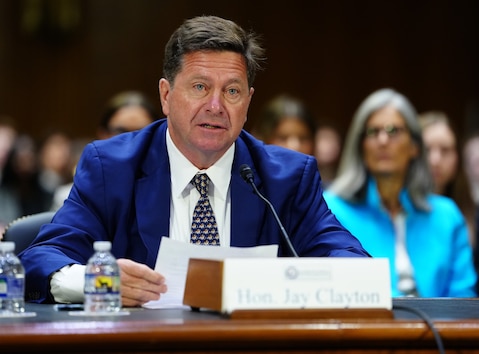
Director of National Intelligence Jay Clayton appears before the Senate Intelligence Committee during his nomination hearing on Capitol Hill, July 15, 2026, in Washington, D.C. (Aaron Schwartz/Getty Images)

President Donald Trump formally announced the creation of what he called a “Super Intelligence Force,” an artificial intelligence task force that he says will work to promote AI dominance while also protecting American lives and interests. 

“The Super Intelligence Force is tasked with coordinating the effort of the Federal Government to ensure that America continues to lead the World in Super Intelligence, which many say is bigger than the Industrial Revolution, and the Internet, and will protect the interests, and improve the lives, of all Americans,” Trump wrote on his social media platform Sunday.

Trump’s announcement was thin on details, with the president not outlining any specific action or oversight the task force will have on AI development — an issue about which some tech CEOs have raised concerns and called for federal regulation. 

“The Super Intelligence Force will coordinate the Federal Government’s engagement with Consumers, Public Interest Groups, Religious Organizations, Critical Infrastructure Providers, and Super Intelligence Companies,” Trump added. 

An ABC News request sent to the White House for more information about the task force’s objectives did not immediately receive a response.

Last month, Trump said he would create an AI task force amid rising concerns about the technology. Sunday’s formal announcement comes after the president met with top tech CEOs at the White House last week, where he said he and six companies signed a “constitution” establishing standards on how to self-police their technology. 

Trump said the task force will be led by Director of National Intelligence Jay Clayton, as well as Chairman of the Federal Trade Commission Andrew Ferguson, Under Secretary of Defense for Research and Engineering Emil Michael, and Director of the Office of Personnel Management Scott Kupor. 

Clayton, who is expected to serve as the White House’s new AI czar, told The Wall Street Journal in an interview published Saturday that global dominance in AI makes the U.S. more equipped to address risks from adversaries, echoing the president’s support for the technology’s continued growth. 

“The risk of not being first is high,” Clayton told The Wall Street Journal. “Not being first increases the identified, and unidentified, risks, particularly from our adversaries. Being first will better enable us to address those risks on behalf of the American people.”

Clayton said of the AI task force, “I expect there will be mechanisms developed in dialogue, just like there are in other industries.”

According to The Wall Street Journal, Clayton cited risk models for the financial industry that have been developed in conjunction with the Federal Reserve and Securities and Exchange Commission. He told the newspaper that the task force would examine current law and discuss possible actions that Congress could take. 

Clayton also expressed confidence in the group that the president has appointed to run the AI task force, citing the “diverse skill sets” and “common commitment” of its members. 

“These are all serious people who have addressed opportunities and risks in the past and are committed to doing this so that America wins the AI race and we win it through the benefit of the American people,” he added.

Copyright © 2026, ABC Audio. All rights reserved.
President Donald Trump announces creation of ‘Super Intelligence Force’ AI task force

President Donald Trump announces creation of ‘Super Intelligence Force’ AI task force
Director of National Intelligence Jay Clayton appears before the Senate Intelligence Committee during his nomination hearing on Capitol Hill, July 15, 2026, in Washington, D.C. (Aaron Schwartz/Getty Images)

President Donald Trump formally announced the creation of what he called a “Super Intelligence Force,” an artificial intelligence task force that he says will work to promote AI dominance while also protecting American lives and interests. 

“The Super Intelligence Force is tasked with coordinating the effort of the Federal Government to ensure that America continues to lead the World in Super Intelligence, which many say is bigger than the Industrial Revolution, and the Internet, and will protect the interests, and improve the lives, of all Americans,” Trump wrote on his social media platform Sunday.

Trump’s announcement was thin on details, with the president not outlining any specific action or oversight the task force will have on AI development — an issue about which some tech CEOs have raised concerns and called for federal regulation. 

“The Super Intelligence Force will coordinate the Federal Government’s engagement with Consumers, Public Interest Groups, Religious Organizations, Critical Infrastructure Providers, and Super Intelligence Companies,” Trump added. 

An ABC News request sent to the White House for more information about the task force’s objectives did not immediately receive a response.

Last month, Trump said he would create an AI task force amid rising concerns about the technology. Sunday’s formal announcement comes after the president met with top tech CEOs at the White House last week, where he said he and six companies signed a “constitution” establishing standards on how to self-police their technology. 

Trump said the task force will be led by Director of National Intelligence Jay Clayton, as well as Chairman of the Federal Trade Commission Andrew Ferguson, Under Secretary of Defense for Research and Engineering Emil Michael, and Director of the Office of Personnel Management Scott Kupor. 

Clayton, who is expected to serve as the White House’s new AI czar, told The Wall Street Journal in an interview published Saturday that global dominance in AI makes the U.S. more equipped to address risks from adversaries, echoing the president’s support for the technology’s continued growth. 

“The risk of not being first is high,” Clayton told The Wall Street Journal. “Not being first increases the identified, and unidentified, risks, particularly from our adversaries. Being first will better enable us to address those risks on behalf of the American people.”

Clayton said of the AI task force, “I expect there will be mechanisms developed in dialogue, just like there are in other industries.”

According to The Wall Street Journal, Clayton cited risk models for the financial industry that have been developed in conjunction with the Federal Reserve and Securities and Exchange Commission. He told the newspaper that the task force would examine current law and discuss possible actions that Congress could take. 

Clayton also expressed confidence in the group that the president has appointed to run the AI task force, citing the “diverse skill sets” and “common commitment” of its members. 

“These are all serious people who have addressed opportunities and risks in the past and are committed to doing this so that America wins the AI race and we win it through the benefit of the American people,” he added.

Copyright © 2026, ABC Audio. All rights reserved.

US Marine arrested on suspicion of murder after ‘brutal and heinous’ death in Japan, officials say

US Marine arrested on suspicion of murder after ‘brutal and heinous’ death in Japan, officials say
Getty Images/Stock Photo

A U.S. service member was arrested on suspicion of murder and robbery after a Japanese woman’s body was discovered in a hotel in Okinawa, local officials said, describing the alleged killing as a “heinous” incident that prompted the Japanese government to lodge a protest with the United States.

Shinjiro Koizumi, the Japanese minister of defense, said a U.S. Marine lance corporal was arrested on Sunday after the woman’s body was found early on Saturday in Naha, the capital city of the Okinawa prefecture.

NHK, Japan’s public broadcaster, identified the suspect as Devin Jacob Ballard, 20, who was stationed at U.S. Marine Corps Air Station Futenma, a base a few miles outside Naha. The broadcaster identified the alleged victim as Yagi Anna, 39, saying she was pronounced dead at the scene after being found at about 4:30 a.m. on Saturday.

Japanese Prime Minister Sanae Takaichi said the Okinawa Prefectural Police were investigating the incident as a murder.

“The occurrence of such an extremely brutal and heinous incident is a matter of profound regret, and as the Government of Japan, we have lodged a strong protest with the U.S. side,” she said on social media.

NHK reported that security camera footage showed a person who “appeared to be foreign entering the hotel with a woman and later leaving with her belongings.” Some of Yagi’s belongings were allegedly found abandoned near the hotel, NKH reported, citing local police.

The hair and tattoos of the person in the security camera footage reportedly resemble Ballard’s, according to NHK, which also reported that he is suspected of killing Anna between 2 a.m. and 4 a.m. local time Saturday and stealing her wallet and other unspecified belongings. Ballard was located late Saturday night in an entertainment district in Okinawa City, about 18 kilometers away from the hotel, and was arrested, according to NHK.

Anna’s cause of death was suffocation caused by pressure on her neck, NHK reports police saying. Ballard has denied killing Anna, police said, according to NHK.

U.S. officials did not immediately confirm the identity of the service member who was arrested, nor did they say whether the person had been officially charged in connection with the death.

“We are actively cooperating with Japanese authorities, in response to allegations of serious criminal actions by a Marine assigned to the III Marine Expeditionary Force,” the force said in a statement on social media. “We extend our deepest condolences to the victim’s family and friends.”

Tens of thousands of U.S. troops are stationed across Japan, including in the country’s southernmost prefecture, Okinawa, which is home to several U.S. bases.

The U.S. Embassy in Tokyo said it was aware of the incident and was extending “our deepest condolences to the bereaved family of the deceased.”

“At present, an investigation is underway to clarify the facts, and the United States Government continues to cooperate closely with the Government of Japan and local authorities,” the embassy said in a statement.

George Glass, the U.S. ambassador to Japan, said he had spoken on Sunday morning with the Ministry of Foreign Affairs and Okinawa’s governor, adding that his office was providing full cooperation with an investigation into the death.

The office of Toshimitsu Motegi, Japan’s foreign minister, said it had summoned Glass on Sunday to issue a protest.

Motegi “strongly urged the U.S. side to strengthen discipline and to prevent the recurrence of incidents so that such a tragedy will never be repeated,” his office said in a press release.

Okinawa Gov. Genta Koja called on Sunday for the U.S. military in Japan to “rigorously enforce discipline among its service members.”

“As Okinawa Prefecture, we will deal with this strictly, including by lodging strong protests with the U.S. military and both the Japanese and U.S. governments, to ensure that such tragic incidents never happen again,” he said in a statement.

ABC News’ Rashid Haddou and Joe Simonetti contributed to this report.

Copyright © 2026, ABC Audio. All rights reserved.

‘The Batman Part II’ production pauses as director Matt Reeves steps away for family matter

‘The Batman Part II’ production pauses as director Matt Reeves steps away for family matter
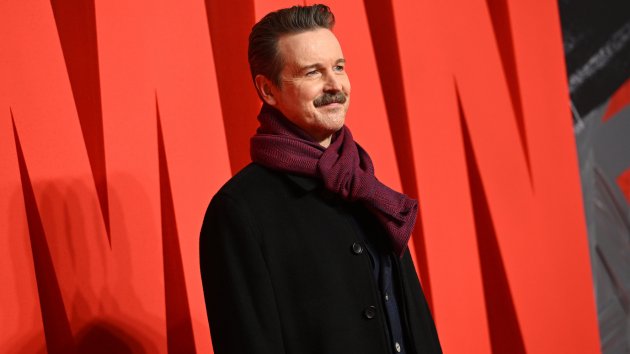
Director Matt Reeves attends ‘The Batman’ special screening at BFI IMAX Waterloo on Feb. 23, 2022, in London, England. (Jeff Spicer/Getty Images for Warner Bros.)

It may be a little while longer before Battinson is back on the big screen.

The Batman Part II has paused production. ABC Audio has learned this is due to director Matt Reeves temporarily stepping away from the production for personal reasons. DC Studios shared a statement with more information as to why.

“Production on The Batman Part II has been temporarily paused while Matt Reeves focuses on a family matter,” the statement reads. “Matt has the full support of DC Studios and we look forward to continuing the journey soon.”

The Batman Part II is currently set to open in theaters on Feb. 18, 2028. It has been delayed multiple times. The film was first scheduled to open on Oct. 2, 2026, before it was delayed to Oct. 1, 2027. There is no word on if this pause in production will cause another change in release date.

Robert Pattinson once again stars as the caped crusader in this sequel to The Batman, which was released in 2022.

The cast of The Batman Part II also includes franchise newcomers and A-listers Scarlett Johansson and Sebastian Stan, whose roles have yet to be announced. Charles Dance, Brian Tyree Henry and Sebastian Koch also star in the movie.

Copyright © 2026, ABC Audio. All rights reserved.

‘The Batman Part II’ production pauses as director Matt Reeves steps away for family matter

‘The Batman Part II’ production pauses as director Matt Reeves steps away for family matter
Director Matt Reeves attends ‘The Batman’ special screening at BFI IMAX Waterloo on Feb. 23, 2022, in London, England. (Jeff Spicer/Getty Images for Warner Bros.)

It may be a little while longer before Battinson is back on the big screen.

The Batman Part II has paused production. ABC Audio has learned this is due to director Matt Reeves temporarily stepping away from the production for personal reasons. DC Studios shared a statement with more information as to why.

“Production on The Batman Part II has been temporarily paused while Matt Reeves focuses on a family matter,” the statement reads. “Matt has the full support of DC Studios and we look forward to continuing the journey soon.”

The Batman Part II is currently set to open in theaters on Feb. 18, 2028. It has been delayed multiple times. The film was first scheduled to open on Oct. 2, 2026, before it was delayed to Oct. 1, 2027. There is no word on if this pause in production will cause another change in release date.

Robert Pattinson once again stars as the caped crusader in this sequel to The Batman, which was released in 2022.

The cast of The Batman Part II also includes franchise newcomers and A-listers Scarlett Johansson and Sebastian Stan, whose roles have yet to be announced. Charles Dance, Brian Tyree Henry and Sebastian Koch also star in the movie.

Copyright © 2026, ABC Audio. All rights reserved.

Should you use your 401(k) to pay off credit card debt?

Should you use your 401(k) to pay off credit card debt?
Stock photo of tax documents and calculator. (Tfilm/STOCK PHOTO/Getty Images)

Credit card debt held by Americans stands near an all-time high, according to the Federal Reserve Bank of New York, just as a rise in the Fed’s benchmark interest rate threatens to drive up borrowing costs.

The spending crunch may push some debt holders to tap their 401(k) accounts as a means of paying down what they owe and resetting their finances. But experts who spoke to ABC News cautioned against the move, saying any immediate benefits are typically outweighed by taxes, penalties and years of lost investment returns.

Though some budget-busting emergencies could warrant reaching into a 401(k), they said, the advantages and drawbacks differ, depending on circumstances and execution.

“It’s definitely a tempting option, particularly when credit card debt feels overwhelming and you’ve got this balance of cash sitting in another spot. But the costs of taking out retirement funds to pay down debt are very high,” Timi Joy Jorgensen, a professor and director of financial education and wellbeing at the American College of Financial Services, told ABC News.

Total U.S. credit card debt registered at $1.26 trillion in the second quarter of this year, marking an increase of $21 billion from the previous three-month period, a recent New York Federal Reserve study found, also noting it’s the second-highest debt load on record.

Credit card interest rates, meanwhile, have jumped significantly in recent years. In the second quarter of 2026, the average interest rate on all credit card accounts with a commercial bank stood at 20.94%, up from 15.13% at the same time in 2022, Federal Reserve data shows.

Many borrowers who find themselves squeezed between surging prices and heightened borrowing costs may turn to their 401(k) accounts to escape a cycle of high monthly payments and mounting interest. The prospect of short-term relief, however, could carry life-altering financial damage over the long term, some experts said.

People who withdraw directly from their 401(k) accounts usually incur a 10% early distribution tax if they are under age 59½, in addition to a standard income tax paid on the funds. Depending on an individual’s tax bracket, those payments can result in a combined 401(k) deduction of about 30% or more, Jorgensen said.

“If you want to pay down $20,000 in credit card debt, you need to take out almost $30,000 from your 401(k). It’s pretty expensive as a repayment plan,” Jorgensen added.

To be sure, borrowers can sometimes earn an exemption from the early distribution tax. Some 401(k) plans offer qualified hardship withdrawal, allowing individuals to access their funds under particularly dire financial circumstances. The Internal Revenue Service also allows exemptions from the early distribution tax under certain conditions, including disability, home purchase and terminal illness.

Yet even after taxes, the largest downside of early withdrawal from a 401(k) may still remain. The immediate amount paid to access the funds could pale in comparison to the lost income suffered as a result of years of lost investment returns on the withdrawn funds.

A $20,000 withdrawal, for example, may eliminate the opportunity to earn three or four times as much over the ensuing years. If invested at an annual rate of 7% return, $20,000 would grow to more than $75,000 in two decades, according to Jorgensen.

“You’re taking an asset that’s growing in order to pay down an asset that’s already in the past,” Jorgensen said.

Instead of a direct withdrawal of the funds, 401(k) account holders could take a different approach: a loan.

Under this strategy, a person borrows a set amount from his or her 401(k) account and slowly replenishes the account over time through payments deducted automatically from pay stubs. This option allows a person to avoid the taxes associated with a direct 401(k) withdrawal while accessing funds at an interest rate lower than he or she may otherwise find in a consumer loan, some experts said.

“There are times when the loan makes sense if you’re able to pay it back and your cash flow is keeping up,” Kiersten Saunders, a personal finance author and co-author of “Cashing Out: Win the Wealth Game by Walking Away.”

The main downside of a 401(k) loan is the risk a borrower may lose his or her job before the loan is repaid. Under those circumstances, the full loan amount is typically due by the next tax deadline.

If a person is in truly dire financial straits, he or she may benefit from turning to bankruptcy rather than a 401(k) withdrawal, some experts said. Since federal law shields 401(k) accounts from bankruptcy, the retirement funds may sustain hope for one’s financial future, even if present-day difficulties appear insurmountable, they added.

“The first thing I would do is put that retirement funding and savings out of my mind, because the courts will treat it that way,” Jorgensen said. “If the court isn’t going to touch it, then I wouldn’t touch it.”

Copyright © 2026, ABC Audio. All rights reserved.

‘Love Story’ actress Constance Zimmer reveals cancer diagnosis

‘Love Story’ actress Constance Zimmer reveals cancer diagnosis
Constance Zimmer attends FX’s ‘American Horror Story: 13’ celebration event at Hotel Chelsea on Sept. 23, 2026, in New York City. (Cindy Ord/WireImage via Getty Images)

Constance Zimmer has revealed she was diagnosed for breast cancer earlier this year.

The Love Story: John F. Kennedy Jr. & Carolyn Bessette actress took to Instagram on Sunday to write about her diagnosis. She shared all about the health development she kept a secret during the press tour for FX’s Love Story.

“October is #breastcancerawarenessmonth and I never thought I’d be honoring it with my own story. On March 13th when I was away from home– I heard these words from my doctor over zoom: ‘You have DCIS, also refereed to as Stage 0 breast cancer.’ The silence was deafening,” Zimmer wrote.

Love Story premiered on Feb. 12, almost exactly one month before Zimmer received the news.

“Here I was surrounded by women sharing their secrets about their Midlife truths – and I was holding onto the biggest secret I’d ever held. First, I had to call my husband and get home to tell our daughter in person,” Zimmer wrote. “The mental toll that followed was overwhelming on certain days as I began talking to many more doctors then I would’ve liked. Feeling like my options were limited and most suggested what was the quickest way to get this mass out ASAP, which was a mastectomy.”

Zimmer took time to decide whether or not she wanted the procedure. Eventually she was able to find a doctor who was able to do the operation without removing her breast.

“She was the first doctor to make me feel like what I wanted mattered and that made me weep with joy,” Zimmer wrote. “It did take 3 surgeries – 3 weeks in a row, but she did it, she saved my breast and it looks good too!”

Zimmer went on to receive an Emmy nomination for her role in Love Story. During her public press tour, she decided to keep her diagnosis and treatment private. “I then followed my surgeries with radiation, while celebrating my Emmy Nomination,” Zimmer wrote.

Now, Zimmer has announced that she is cancer free.

“From hospital gowns to Emmy glamour this was one hell of a ride,” Zimmer wrote. 

Disney is the parent company of ABC News and FX.

Copyright © 2026, ABC Audio. All rights reserved.