Jonas Brothers are joining the crowd of artists heading to Las Vegas.
The group will do a five-night mini residency at Dolby Live at Park MGM on June 3, 4, 9, 10 and 11. Tickets go on sale March 7 at 10 a.m. PT via Ticketmaster.com. For full details, visit Jonas Brothers.com.
JoBros fan club members can buy tickets starting tomorrow, Wednesday, March 2, at 10 a.m PT, as can Citi cardmembers. Pre-sales for members of the MGM Rewards program, and Live Nation and Ticketmaster customers can get access to a pre-sale on March 4 at 10 a.m. PT.
Usher and Silk Sonic recently announced extended residencies at Dolby Live.
JoBros also have four dates scheduled for Mexico in August and September.
Franz Ferdinand is the latest band to pull concert dates in Russia following the country’s invasion of Ukraine.
In a Twitter thread posted Tuesday morning, the “Take Me Out” rockers write, “We are cancelling our Russian shows that are scheduled for this summer. The only reason for this is the invasion of Ukraine by the Russian state.”
“We love Russia,” the thread reads. “This great country has inspired our band through its art and literature and since we first played there seventeen years ago, we have built a rich and deep relationship with our Russian fans.”
“Since Thursday morning, we have spoken to many of our friends in Russia via social media and have encountered unanimous opposition to this violence and solidarity with our Ukrainian friends,” the band continues. “We know you see the madness of your country’s leadership. We know you do not want war. We do not want war.”
Franz concludes, “Despite the tragedy of this situation, we still burn a flame of optimism in our hearts and look forward to the day when we can return in a time of peace to share the joy of music together again.”
In that spirit of finding that light in the darkness, all of Twitter is making pretty much the same joke about Franz Ferdinand being named after Archduke Franz Ferdinand of Austria, whose assassination led to the beginning of World War I.
Other artists who’ve canceled shows in Russia in support of Ukraine include Green Day, Imagine Dragons, AJR and Yungblud.
Bob Odenkirkrevealed on Sirus XM’s The Howard Stern Show Monday that his heart attack last July on the New Mexico set of Better Call Saul was more serious than had been reported.
“I would have been dead,” the Emmy-winning actor and writer admitted. “CPR saved my life.”
Odenkirk, 59, said were it not for the good physical shape he was in from the hit action film Nobody, as well as the swift action of the cast and crew of his AMC show, the outcome would have been much different. He explained that co-stars Rhea Seehorn and Patrick Fabian realized something was wrong and “raced to my side…Because I guess I turned grey right away, and stopped breathing, and they started yelling…”
The actor recalled it was the on-site medical expert, Rosa — who was there mainly to enforce COVID-19 protocols — who started CPR on him right away. After 12 minutes, she had someone take over while she ran to her car to get her own defibrillator, as the set didn’t have one.
“When the defibrillator doesn’t work once, that’s not good,” the actor explained. “When it doesn’t work the second time, that is kind of like — forget it. But then they jacked it up a third time, and it got me back to a rhythm.”
He added, “Because I was in good shape, you kind of enlarge other veins around your heart…And I was told that more blood was able to go to my heart during CPR because these veins were just a little bit bigger from a lot of working out.”
After undergoing an operation to unclog an artery, Odenkirk says his recovery also was helped by the physical shape he was in.
“Take CPR classes,” Odenkirk added, “because you can save lives.”
The fourth season of Yellowstone will come home to Peacock on March 28. The first three seasons of the hit series can be binged in their entirety on the streaming service, so the announcement wasn’t exactly a surprise but it’ll be well received by latecomers to the drama who still need to catch up. The third season premiere of the show, starring Kevin Costner as the head of the Dutton clan, was a smash hit for Paramount+. The show already has a hit prequel in Paramount+’s 1883, and will soon see a new spin-off, titled 1932, all from creator Taylor Sheridan…
Variety reports that Euphoria, the HBO drama starring Zendaya, hit a series high with Sunday’s season-two finale, drawing 6.6 million viewers. That makes it HBO’s second-most-watched show since 2004, behind only Game of Thrones, according to the pay TV channel. Season two episodes currently average 16.3 million viewers, the best performance for any season of an HBO series over the past 18 years, other than GoT. The season-two premiere’s viewership is approaching 19 million viewers in the U.S…
Warner Bros. on Tuesday dropped a new trailer for Fantastic Beasts: The Secrets of Dumbledore, the third and latest installment in the Fantastic Beasts and Where to Find Them franchise. The Secrets of Dumbledore finds Jude Law‘s titular character enlisting Magizoologist Newt Scamander — once again played by Eddie Redmayne — to lead an intrepid team of wizards to stop the powerful Dark wizard Gellert Grindelwald from seizing control of the wizarding world. Mads Mikkelsen replaces Johnny Depp as Grindelwald. The cast also includes Katherine Waterston, Alison Sudol, Ezra Miller, Dan Fogler and Jessica Williams. Fantastic Beasts: The Secrets of Dumbledore is slated to hit theaters April 15…
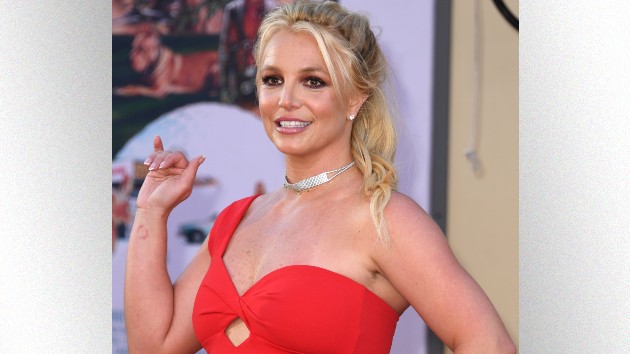
Britney Spears is baring it all in a series of Instagram photos of her tropical vacation with fiancéSam Asghari.
After sharing a video of herself and Sam aboard a private jet, traveling somewhere for Sam’s birthday, Britney then posted a series of photos and videos of herself lolling in the sand on a beach, completely naked except for some small diamond emojis covering up her naughtiest bits.
Britney’s friend Paris Hilton commented, “Sliving!” That’s the word Paris claims to have invented, which is a combination of “slaying” and “living your best life.”
Tropical vacations seem to be Britney’s favorite pastime: She also took a similar jaunt for her 40th birthday in December, and went to Hawaii in January.
(NEW YORK) — After more than 16 hours at the negotiating table Monday, Major League Baseball and the MLB Players Association still have not reached a new collective bargaining agreement.
But the two sides have not yet thrown in the towel on reaching a deal to allow the regular season to begin as planned on March 31.
The league has extended the deadline for a new CBA to Tuesday at 5 p.m. ET. Both sides are expected to resume talks at 11 a.m. ET.
ABC News’ Will Reeve appeared on Good Morning America Tuesday with the latest on the talks:
(NEW YORK) — Russian forces are continuing their attempted push through Ukraine from multiple directions, while Ukrainians, led by President Volodymr Zelenskyy, are putting up “stiff resistance,” according to U.S. officials.
The attack began Feb. 24 as Russian President Vladimir Putin announced a “special military operation.”
Russians moving from Belarus towards Ukraine’s capital, Kyiv, don’t appear to have advanced closer towards the city since coming within about 20 miles, although smaller advanced groups have been fighting gun battles with Ukrainian forces inside the capital since at least Friday.
Russia has been met by sanctions from the U.S., Canada and countries throughout Europe, targeting Russia’s economy and Putin himself.
Here’s how the news is developing Tuesday. All times Eastern:
Mar 01, 7:40 am
YouTube blocks RT, Sputnik in Europe
Google on Tuesday said it had blocked RT and Sputnik, Russian state-linked channels, from YouTube in Europe.
Due to the ongoing war in Ukraine, we’re blocking YouTube channels connected to RT and Sputnik across Europe, effective immediately. It’ll take time for our systems to fully ramp up. Our teams continue to monitor the situation around the clock to take swift action.
“Our teams continue to monitor the situation around the clock to take swift action,” the company said.
Mar 01, 6:39 am
Zelenskyy calls Russian attack ‘undisguised terror’
Ukrainian President Volodymyr Zelenskyy on Tuesday said the Russian attack on Kharkiv’s main square was an act of “undisguised terror.”
“After that, Russia is a terrorist state. No one will forgive. Nobody will forget,” he said on Facebook.
Mar 01, 6:22 am
About 660,000 refugees have fled Ukraine: UN
At least 660,000 people have fled Ukraine into neighboring countries in the six days since the Russian invasion began, the U.N. Refugees Agency said.
At the Polish border, UNHCR staff reported queues that were miles long.
“Those who crossed the border said that they had been waiting up to 60 hours,” the agency said on Tuesday. “Most arrivals are women and children from all parts of Ukraine. Temperatures are freezing and many have reported spending days on the road waiting to cross.”
Agency staff said people were waiting up to 20 hours to enter Romania. In Hungary, arrivals were “steady and waiting times vary.” The 37-mile trip between Odessa, Ukraine, and the border with Moldova was taking some refugees 24 hours, the agency said. And arrivals in Slovakia, where asylum laws were rapidly changed, were lower than elsewhere, agency staff said.
An unknown number of Ukrainian citizens have also been displaced within the country, Filippo Grandi, the agency’s commissioner, told the U.N. Security Council on Tuesday.
“The situation is moving so quickly, and the levels of risk are so high by now, that it is impossible for humanitarians to distribute systematically the aid, the help that Ukrainians desperately need,” he said.
The International Organisation for Migration said more than 470,000 people of various nationalities, “including a large number of overseas students and labour migrants,” are still in Ukraine.
Mar 01, 4:11 am
Russian bombardment strikes central square in Kharkiv
Russia on Tuesday launched a major bombardment of Ukraine’s second-largest city, Kharkiv, hitting a central square and its civilian administration building.
Video from the scene shows a large projective hitting next to the regional state administration building on Kharkiv’s Freedom Square, causing a huge blast. Aftermath shot on phones from the scene and inside the building, show it shattered with debris strewn around.
Ukraine’s emergency services ministry said at least six people, including one child were injured. It was unclear if anyone was killed.
Kharkiv Mayor Oleg Sinegubov confirmed the strike, calling it a “war crime.”
Monday’s shelling followed a sustained bombardment of civilian areas yesterday and overnight in Kharkiv by Russian heavy artillery, including multiple rocket launchers and an alleged use of cluster munitions.
“What is happening in Kharkiv is a war crime!” Sinegubov wrote on Facebook. “The Russian enemy is shelling whole residential neighborhoods of Kharkiv, where there is no critical infrastructure, no Ukrainian armed forces positions, which the Russians could be targeting.”
Sinegubov accused Russia of conducting the attacks during the day, when civilians were on the street. He said the city’s emergency services are unable to keep up with the number of attacks and injured.
So far at least 11 are dead, with dozens injured, he said.
Russian forces in Kharkiv appear to have shifted tactics to employing heavy artillery indiscriminately against the city, in an apparent effort to bombard and terrorize it into submission.
Sinegubov claimed the Russians were changing tactics because their offensive capabilities on the ground were running out and so they had nothing left but to launch aerial bombardments.
Mar 01, 3:28 am
‘Leave Kyiv urgently today,’ Indian Embassy tells citizens
The Indian Embassy in Kyiv on Tuesday urged Indians still in the capital to “leave Kyiv urgently today.”
“All Indian nationals including students are advised to leave Kyiv urgently today,” the embassy said on Twitter. “Preferably by available trains or through any other means available.”
Mar 01, 2:48 am
’We will fight until the end,’ says Ukrainian parliament member
Solomiia Bobrovska, a member of Ukraine’s parliament, on Monday said Ukrainians would “fight to the end” as they defend Kyiv from a Russian invasion.
“That’s the mood of Ukrainians. We are staying behind altogether, and we do understand that with the total second line staying behind their shoulders. And I think we will fight until the end,” Bobrovska told ABC News’ Linsey Davis.
Mar 01, 12:14 am
Russian troops ‘operational’ near Ukrainian nuclear power plant, agency says
Ukraine said its nuclear power plants are still being operated “safely and securely,” the International Atomic Energy Agency wrote in an update late Monday.
However, IAEA Director General Rafael Mariano Grossi said he “remained gravely concerned about maintaining their safety and security during the current conflict.”
Ukraine’s foreign ministry told the IAEA on Monday that Russian troops are “operational” near a functioning nuclear power plant at Zaporizhzhia, but the troops haven’t entered it so far. Any fighting near nuclear facilities causes alarm, and Ukraine has four sites in total with 15 reactors.
“It is extremely important that the nuclear power plants are not put at risk in any way,” Grossi said in a statement. “An accident involving the nuclear facilities in Ukraine could have severe consequences for public health and the environment.”
The IAEA Board of Governors will hold a meeting Wednesday to discuss the “safety, security and safeguards implications of the situation in Ukraine.”
(NEW YORK) — Even as the pandemic situation sharply improves and protective mandates are lifted, just a third of Americans see the coronavirus as mainly controlled — and six in 10 say it’s more important to try to contain the virus than to lift restrictions on normal activities.
Fifty-eight percent in this ABC News/Washington Post poll continue to prioritize controlling the spread of the virus, 20 percentage points more than the share (38%) who say it’s more important to discontinue restrictions.
That’s informed by continued concern about an unpredictable virus that has taken nearly 950,000 American lives and continues to infect nearly 70,000 and kill 1,700 daily. Thirty-four percent see the outbreak as completely or mostly controlled, up from about two in 10 last month (in a Fox News poll of registered voters), but still far from a majority. Half instead say it’s “somewhat” under control.
That said, the most dire views have improved sharply. Just 15% now say the outbreak is “not at all” under control, down sharply from 41% last month, when the omicron surge was in full swing, with a seven-day average of as many as 800,000 daily cases.
The poll, produced for ABC News by Langer Research Associates, was completed a day before the Centers for Disease Control and Prevention dropped its recommendation of indoor masking for the roughly seven in 10 people who live in areas with low or medium transmission levels. Nearly all states with mask requirements had already discontinued them.
Normal life
Another result points to cautious re-emergence. While 56% say they’ve fully or mostly resumed their pre-coronavirus life, that’s 10 points below its level in July, before the delta and omicron variants spurred record levels of infections. About a quarter say they’ve partly returned to normal; and 16%, barely or not at all. The latter is up from 9% last July.
Returning to normality is associated strongly with views of the pandemic. Among people who see the outbreak as completely or mostly controlled, seven in 10 report having largely resumed their pre-coronavirus life. That falls to 29% who say it’s not at all controlled. Indeed, 48% in this group barely have returned to normal life, if at all.
Machine Gun Kelly and Megan Fox‘s family is growing.
Taking to social media Monday, MGK, born Colson Baker, introduced their “newest member” — a cat named Whiskey.
“Welcome Whiskey to the gang,” the rocker wrote alongside photos and videos of their new furry friend.
In one of the photos, Kelly and Fox appeared in matching pajamas smiling for a family photo of the trio.
The new addition to the family comes almost two months after the pair shared news of their engagement.
“‘yes, in this life and every life’ beneath the same branches we fell in love under, i brought her back to ask her to marry me,” MGK wrote at the time.
(NEW YORK) — The number of births declined in the U.S. in 2021 and the COVID-19 pandemic played a role, according to a new report published by the Centers for Disease Control and Prevention on Tuesday.
Researchers from the National Center for Health Statistics — a branch of the CDC — compared provisional data from the first half of 2021 to final data from the first half of 2020.
They found there were 1.74 million births between January and June of last year, a 2% decline from the 1.78 million births that occurred over the same period in 2020.
The drop was largely driven by the decline in births for the month of January, with 304,000 babies born in January 2020 compared to nearly 277,000 in January 2021 — a 9% decrease.
“The last two or so years have kind of been unparalleled” when it comes to declines in births, Dr. Brady Hamilton, a statistician at the NCHS and co-author of the report, told ABC News. “Certainly the thing that caught our eye — and we already saw a hint when we looked at the data for 2020 compared to 2019 — there was an extremely sharp decline in the number of births in January of 2021 compared to January of 2020.”
However, after that sharp drop, the number of births increased in March and April of last year compared to 2020, before dropping again in May and then rising in June by 3%.
The authors noted this is an improvement from the first year of the pandemic, during which the number of births declined for each month of the first half of 2020 compared to 2019.
The report also found that the number of births declined for all races and ethnicities in the first half of 2021.
White women saw the smallest drop — of less than 1%, from about 916,000 births to 914,000 — and Asian women saw the biggest drop — of 8%, from approximately 110,000 births to 102,000.
Additionally, white, Black, Asian and Hispanic women had the largest declines in January, while American Indian/Alaska Native and Native Hawaiian/Pacific Islander women saw their biggest drops in May and February, respectively.
The report also looked at the number of births by state and found 19 states and Washington, D.C., reported fewer births during the first half of 2021 compared to the first half of 2020. Seventeen additional states reported declines, but they were not statistically significant.
The biggest drops were seen in New Mexico and Washington, D.C., with a 5% and 9% decrease, respectively.
Meanwhile, four states — Connecticut, Idaho, New Hampshire and Tennessee — saw a jump in the number of births.
Hamilton and his team said it’s clear the COVID-19 pandemic did play a role in the decline of births, but it’s unclear if it was the sole reason and what pandemic-specific factors led to the decline, such as economic uncertainty and lack of job security.
“While our data comes from the birth certificate and it’s an amazing data set … unfortunately it has limitations and one of those limitations is factors that people consider in terms of having a child, starting a family,” he said. “That’s important because when you look at the impact of the pandemic, what are the mechanisms and how exactly does it happen?”
He continued: “So we see these associations but in terms of teasing out particulars, we sort of have to wait to see until we get survey data which asks those particular questions about the decisions people were making.”
Hamilton did acknowledge that the large decline in January 2021 compared to January 2020 means that women were not getting pregnant around March and April 2020, when the first COVID-19 lockdowns and stay-at-home orders occurred.
“When it comes to looking at these numbers, there is a nine-month lag, so the number of births you see occurring a month reflects what people’s actions were nine months before,” he said. “So that [drop] is very interesting and something we will look at in more detail.”