(PHOENIX) — Ahead of Arizona’s Aug. 2 primary, Republican voters in the battleground state say they remain torn over former President Donald Trump’s place in the party — as he and his estranged former Vice President Mike Pence support dueling candidates in the GOP governor’s primary.
At a banquet-style event in Peoria on Friday with roughly 350 guests, Pence joined a term-limited Gov. Doug Ducey and GOP secretary of state candidate Beau Lane to support gubernatorial hopeful Karrin Taylor Robson, a wealthy donor and former member of the Arizona Board of Regents widely seen as the establishment candidate.
On the heels of another prime-time Jan. 6 hearing, Pence only mentioned Trump once in his 21-minute speech to tout their accomplishments — careful not to break fully from the former president in public but taking a quick swipe at Trump’s chosen candidate, Kari Lake, saying, “There are those who want to make this election about the past.”
That day, at a rally across the state, Trump and Lake, a former TV journalist-turned-“Ultra MAGA mom,” called President Joe Biden’s victory “illegitimate” and likened the former president to “Superman” before an energized crowd of thousands.
In interviews with ABC News, voters at a Lake town hall on Saturday expressed frustration with Pence for supporting Robson and for fulfilling his constitutional duty to certify the 2020 presidential election.
“To me, it just reiterated my disappointment in Pence,” said LeAnna Perez, a teacher for deaf and hard-of-hearing students from Louisiana who moved to Arizona in February and will be voting in her first election in the state next week. “I’m done with Mike Pence. He’s proving who he truly is.”
A half-dozen Republicans in Arizona told ABC News that while they support Trump’s “America First” policies, they are split on whether he is the right person to deliver them in an already polarized political climate.
“Whoever he is sponsoring is going to have a hard time in the primary and in the general election,” said Anastasia Keller, a lifelong Republican, Arizonan and small business owner who supported Trump in 2020.
Keller added that she had relatives break off from him: “They really liked Trump and what he stood for, some of the things that he accomplished, but the mean tweets and the overall attitude — I just don’t think that he can bring the country together.”
Pence, formerly Trump’s loyal No. 2, has become one of the most prominent GOP politicians with a contrasting style — endorsing a range of local candidates even against the Trump-endorsed picks, as he did when he stumped for Georgia Gov. Brian Kemp over primary challenger David Perdue.
Lake is the odds-on favorite for the gubernatorial nod, but Robson has seen a surge in polling in recent weeks with former Arizona Rep. Matt Salmon dropping out of the race to back her and blast Lake. But Lake would face an uphill battle in the general election in a state that has shifted blue, with the likely Democratic nominee, Secretary of State Katie Hobbs, singling out Lake over Robson in most of her attack ads.
John Mendibles, the executive director of Arizona’s League of Veterans who is supporting Robson, told ABC News that Republicans “want level heads. We don’t want no more craziness.”
“We’ve got enough of that. That’s behind us,” Mendibles said, holding a Robson sign for the camera. “This is 2022; 2024 is coming.”
One outside strategist in the Arizona governor’s race argued that Trump’s brand in the state was tarnished given Democrats’ victories in the state in 2018 and 2020.
“Kari Lake embodies the Trump experience. … She has taken the Trump playbook and [tried] to replicate what Trump did nationally in Arizona,” said GOP strategist and lifelong Arizonan Barrett Marson. “But Trump lost in 2020 in Arizona.”
According to a recent New York Times/Siena College poll, nearly half (49%) of Republicans said they wanted Trump to seek a second term. But the other half of those surveyed told the Times that they wanted someone else to get the Republican nomination in 2024 and 16% of GOP voters said they would never vote for Trump.
Voters at Lake’s event over the weekend said they would back Trump in 2024 — but also praised Florida Gov. Ron DeSantis, who is at 25% among GOP primary voters, according to the Times poll.
Jason J. Baker, who works for DoorDash and a Christian film company, said Trump has his vote “unless there’s a candidate that just blows him away.”
“It would be kind of close for me, because I’m a huge supporter of Gov. DeSantis, and if [South Dakota] Gov. Kristi Noem was to ever run, she’d pretty much have my vote from the announcement,” Sanchez said.
(WASHINGTON) — Rep. Liz Cheney said Sunday that she is working hard to win reelection this year and beat back a Trump-endorsed primary challenger — but if her time investigating the former president for the House Jan. 6 committee leads to her defeat, “there’s no question” it will have been worth it.
“I believe that my work on this committee is the single most important thing I have ever done professionally,” Cheney, R-Wyo., said on CNN’s “State of the Union.” “It is an unbelievable honor to represent the people of Wyoming in Congress. And I know that all of us who are elected officials take an oath that we swear under God to the Constitution.”
“That oath has to mean something,” she continued. “And that oath means that we cannot embrace and enable a president as dangerous as Donald Trump is.”
Cheney has become perhaps the GOP’s loudest anti-Trump voice and, as vice-chair of the House panel, has become a public face for the hearings this summer detailing a year-long investigation into the events surrounding the Capitol insurrection.
Despite her conservative record — which largely aligns with Trump on the issues — Cheney has been repudiated by many in her party for helping lead the House’s Jan. 6 investigation after she voted along with a handful of other Republicans to impeach Trump last year.
The GOP caucus booted her from House leadership not long after her impeachment vote and her state party censored her.
Last fall, Trump — who denies any wrongdoing in Jan. 6 — backed Harriet Hageman’s primary challenge to Cheney, saying in statement: “Harriet has my Complete and Total endorsement in Replacing the Democrats number one provider of sound bites, Liz Cheney.”
Voting is set for Aug. 16.
“I’m fighting hard. No matter what happens on Aug. 16, I’m going to wake up on Aug. 17 and continue to fight hard to ensure Donald Trump is never anywhere close to the Oval Office ever again,” Cheney said on CNN. But she acknowledged the cost.
“If I have to choose between maintaining a seat in the House of Representatives or protecting the constitutional republic and ensuring the American people know the truth about Donald Trump, I’m going to choose the Constitution and the truth every single day,” she said.
That echoes what she said on ABC’s This Week earlier this month: “The single most important thing is protecting the nation from Donald Trump. And I think that that matters to us as Americans more than anything else, and that’s why my work on the committee is so important.”
“I don’t intend to lose the Republican primary,” she said then.
On CNN, she also talked about the state of the committee’s investigation, which she said continued apace even as the panel’s summer hearings have wrapped. More are expected in the fall.
“We have a number of many interviews scheduled that are coming up. We anticipate talking to additional members of the president’s Cabinet. We anticipate talking to additional members of his campaign,” Cheney said, adding, “We’re very focused as well on the Secret Service and on interviewing additional members of the Secret Service and collecting additional information from them.”
Cheney said potential witnesses were prompted by the testimony of former Trump White House aide Cassidy Hutchinson, who said at a hearing last month, in part, that she was told Trump physically lashed out when his security detail prevented him from going to the Capitol to join his supporters.
The Secret Service has since said they will respond on the record to Hutchinson’s account.
They have also said agency text messages from the days around Jan. 6 were deleted — inadvertently — as part of a technology issue, though the House committee is pressing for answers.
“We will get to the bottom of it,” Cheney said Sunday.
Among the Trump-adjacent figures in talks with the panel is conservative activist Ginni Thomas, wife of Supreme Court Justice Clarence Thomas, who repeatedly urged Trump’s then-chief of staff, Mark Meadows, to attempt to overturn the 2020 election results
“The committee is engaged with her counsel. We certainly hope that she will agree to come in voluntarily. But the committee is fully prepared to contemplate a subpoena if she does not,” Cheney said on CNN.
“I hope it doesn’t get to that,” Cheney said. “I hope she will come in voluntarily.”
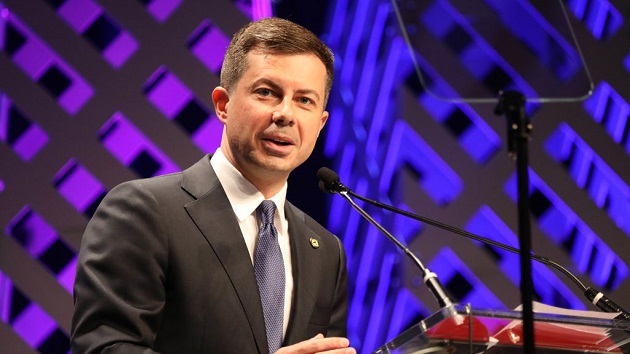
(WASHINGTON) — Transportation Secretary Pete Buttigieg had sharp words for the Republicans opposing a bill codifying the right to same-sex marriages, urging them to support the legislation’s passage in the Senate after it won bipartisan House approval.
Buttigieg, the first openly gay person to be confirmed to a Cabinet position, underscored during a CNN appearance on Sunday what it would mean for the legislation to become law, recounting a typical weekend morning in which he said he tries to take on household duties to give his husband, Chasten, a break.
“That half hour of my morning had me thinking about how much I depend on and count on my spouse every day. And our marriage deserves to be treated equally. I don’t know why this would be hard for a senator or a congressman,” Buttigieg said.
“I don’t understand how such a majority of House Republicans voted ‘no’ on our marriage as recently as Tuesday hours after I was in a room with a lot of them talking about transportation policy, having what I thought were perfectly normal conversations with many of them on that subject only for them to go around the corner and say my marriage doesn’t deserve to continue,” he said.
“If they don’t want to spend a lot of time on this, they can vote ‘yes’ and move on,” he continued, “and that would be really reassuring for a lot of families around America, including mine.”
Buttigieg also criticized Sen. Marco Rubio, R-Fla., specifically after Rubio said a vote on the bill would amount to a waste of time — echoing other Republicans who oppose the measure because they say Democrats are using it as political theater when no real threat to marriage rights exist.
“If he’s got time to fight against Disney, I don’t know why he wouldn’t have time to safeguard marriages like mine. Look, this is really, really important to a lot of people. It’s certainly important to me,” Buttigieg said, referencing Rubio’s dispute with Disney over the company’s criticism of a state law restricting discussions of sexual orientation and gender identity in public schools.
Rubio’s office did not immediately respond to a request for comment from ABC News.
Appearing on PBS last week, Buttigieg said the LGBTQ community was in “a very precarious moment.”
“Historically, rights and freedoms have always expanded, we went from one era to the next. It’s always been more free, and more just — even if imperfectly so. That was before. And the question now is, Are we going to start going backwards right now?” he said. “It is extremely disturbing, certainly as a married gay man and a member of the LGBTQ community, not only to see our rights coming up for debate once again but to see settled law called into question.”
Buttigieg’s remarks come as Democrats push multiple bills codifying unenumerated rights in the Constitution that had been extended via Supreme Court rulings.
With Roe v. Wade overturned last month, reversing five decades of national abortion access, Democrats argue other rights granted by the high court could be at risk, such as same-sex marriage.
Justice Clarence Thomas, one of the Supreme Court’s most conservative members, wrote in his concurring opinion rejecting Roe that the court should also reconsider its decisions legalizing same-sex marriage and ensuring contraception access.
Last week, 47 Republicans in the House joined with the Democratic majority in approving the bill ensuring recognition of lawfully granted same-sex and interracial marriages. One-hundred and fifty-seven Republicans voted against it, with some citing their personal beliefs and others saying it was unnecessary.
The bill faces an uncertain future in the Senate, where Democrats would need the support of 10 Republicans for passage.
(WASHINGTON) — Former President Donald Trump committed crimes related to last year’s Capitol riot and should ideally be charged by the Justice Department, House Jan. 6 committee member Adam Kinzinger contended on Sunday.
“I certainly hope they’re moving forward,” Kinzinger, R-Ill., told ABC “This Week” co-anchor Jonathan Karl of the Justice Department’s separate investigation into the events around the insurrection. “I certainly think there’s evidence of crimes, and I think it goes all the way up to Donald Trump.”
Kinzinger’s comments come after the House committee wrapped up its summer hearings, with the final session last week focusing on Trump’s inaction for 187 minutes as his supporters ransacked the Capitol.
Democrats and other Trump critics have expressed hope that the Justice Department’s probe will ultimately target the former president. Attorney General Merrick Garland has repeatedly stressed that prosecutors’ work and decision-making will not play out in public, but he pointedly noted last week that “no person” is above the law.
When pressed by Karl about the optics of the Justice Department investigating a former president and potential future candidate, Kinzinger said he is more concerned about the precedent that would be set if Trump is not charged.
“We never want to get in a position as a country [of] what you see in failed democracies, where every last administration is prosecuted. But there is a massive difference between ‘I’m gonna prosecute the last administration for political vengeance’ and not prosecuting an administration that literally attempted a failed coup. That is a precedent I’m way more concerned about,” Kinzinger said.
“If there is evidence that this happened from a judicial perspective, if there is the ability to move forward on prosecuting and you don’t, you basically set the floor for future behavior by any president,” he added. “And I don’t think a democracy can survive that.”
Karl asked Kinzinger about one of the most notable moments from the Jan. 6 hearings so far: when former Trump White House aide Cassidy Hutchinson testified that she was told Trump physically lashed out after his Secret Service detailed refused to let him go to the Capitol with his supporters.
The Secret Service said soon after Hutchinson’s testimony that they would respond on the record.
“Why have you not spoken yet to the lead detail who was in that vehicle on Jan. 6 with Donald Trump or the driver of that vehicle? And is that going to come?” Karl asked.
Kinzinger insinuated the lack of new information on that front was because of the agency, not investigators.
“The committee is more than welcome, if they will testify under oath, to throw the doors wide open for them and welcome them at any moment. It is not our decision that they haven’t so far,” he said, calling Hutchinson a “very credible witness.”
Karl also asked Kinzinger about a conference call among House Republicans just days before the Jan. 6 attack. According to Kinzinger’s retelling in an interview with The Washington Post, the Illinois lawmaker warned House Minority Leader Kevin McCarthy that he was concerned about violence because voters had been “convinced … that the election was stolen,” and McCarthy replied, “Thanks, Adam. Next caller.” (McCarthy didn’t comment to the Post on Kinzinger’s account.)
“Would it have been different if he had stood up and he had said, ‘No, the election’s not stolen,’ and pushed back on this effort?” Karl said.
“It would be so different right now. Would he have been pushed aside in the process? Maybe,” Kinzinger said. “But the question is, what are you going to stand for in your life, you know? Are you going to go out being knowns as the guy that enabled a failed coup, or are you going to be the guy that goes out standing up, right?”
Kinzinger, a vocal member of the GOP’s anti-Trump minority, also lashed out at Republicans who echo Trump’s baseless doubts about the integrity of the 2020 election, suggesting they’re duping their voters. He called out McCarthy by name.
“Ladies and gentlemen, and particularly my Republican friends, your leaders, by and large, have been lying to you,” he said. “They know the election wasn’t stolen, but they’re going to send out fundraising requests, they’re going to take your money from you and they’re going to use you to stay in power. You’re being abused.”
He continued, “You can be mad at Liz Cheney and I — that’s fine. … We’re not the ones lying to you. It’s the people you think are telling you what you want to hear. They’re the liars, and Kevin McCarthy is among them.”
(WASHINGTON) — Some Republicans “are very concerned” about Donald Trump potentially launching a 2024 presidential bid before November’s midterm races, which could upend contests across the country, Maryland Gov. Larry Hogan said Sunday.
“We had discussions about that at the Republican Governors Association last week,” Hogan told ABC “This Week” co-anchor Jonathan Karl of a possible Trump announcement, which Trump has repeatedly teased.
“I think most people are very concerned about the damage it does to the party if he announces now,” said Hogan, one of Trump’s loudest GOP critics. “And it may help in very red states or very red districts. But in competitive places and purple battlefields, it’s going to cost us seats if he were to do that.”
Karl asked Hogan about the House Jan. 6 committee hearings this summer, which most recently detailed Trump’s inaction responding to last year’s Capitol riot. Hogan contrasted that with his own decisions that day as a leader of a neighboring state.
“While the president was watching television and while the vice president [Mike Pence] was being whisked off to save his life and members of Congress, I was on the phone with the leaders of Congress. I was calling up the National Guard. I was sending in the Maryland State Police,” he said.
Hogan said the lack of response to the hearings from many leading Republicans was “disappointing,” especially in light of how they criticized Trump immediately after the Capitol attack. He said that the most striking part of the last hearing was watching outtakes from an address that Trump recorded on Jan. 7, 2021, the day after the insurrection.
The clips show a visibly frustrated Trump saying that he doesn’t want to read a line from the teleprompter that states “the election is now over.”
“Nothing really surprised me except those outtakes, I had never seen. And it showed the real thinking,” Hogan said, adding, “With those outtakes, you could see the anger.”
Hogan went on to reflect on the future of the Republican Party. He said the primary elections this year were just the start of a “long, tough fight” over GOP identity and whether Trump’s influence will endure.
“It’s not going to be easy. We’re going to win some; we’re going to lose some,” he said. “But I think the final chapter on some of this will be in November, when we lose some races.”
That was his prediction in Maryland where his handpicked choice, former state Commerce Secretary Kelly Schulz, last week lost out to the Trump-backed candidate, state Del. Dan Cox, in the Republican gubernatorial primary to succeed Hogan.
Cox has been sharply critical of Hogan, who in turn said Cox is too right-wing to win in Maryland, labeling him a “conspiracy theorist.”
According to data collected by FiveThirtyEight, at least 120 election-denying candidates who ran for all sorts of down-ballot offices advanced from their primaries and will be on the general election ticket in November.
Cox likewise attacked the 2020 election. He called former Vice President Mike Pence a “traitor” for certifying the 2020 election results in now-deleted tweets. (He later apologized.) He also organized buses to drive Maryland residents to Trump’s rally on Jan. 6, 2021, though he said he didn’t go to the Capitol and denounced the rioting that broke out there.
“I would not support the guy. I wouldn’t let him in the governor’s office, let alone vote for him for the governor’s office,” Hogan told Karl on “This Week.”
“It’s a big loss for the Republican Party,” he said. “And we have no chance of saving that governor’s seat.”
While Hogan also blamed Democrats for boosting Cox’s profile in the primary through advertising, as they have done with more conservative candidates in other elections, Karl noted that it was Republican voters who ultimately chose Cox, despite or because of his history of attacking the 2020 election and more.
“It was a very small turnout. So, first of all, only 20% of the people in Maryland are Republican, and 20% of them showed up to the polls. So about 2% of the people in Maryland voted for this guy,” Hogan said.
Cox’s victory did not dissuade him from continuing to make his case for an anti-Trump GOP, he said.
“Does this make you more or less likely to run for president in 2024?” Karl asked.
“It makes me more determined than ever to continue the battle to win over the Republican Party and take us back to a bigger tent, more Reagan-esque party,” Hogan said. “We’ve got our work cut out for us. But I’m certainly not giving up.”
ABC News’ Brittany Shepherd contributed to this report.
(WASHINGTON) — President Joe Biden’s doctor said Sunday that he “continue to improve significantly” after testing positive for COVID-19 last week.
Kevin O’Connor, Biden’s physician, wrote in a letter released by the White House that Biden’s primary symptom was a sore throat and that his runny nose, cough and body aches had all “diminished considerably.”
Biden completed his third day of Paxlovid, a COVID treatment, on Saturday night.
“His pulse, blood pressure, respiratory rate and temperature all remain normal. His oxygen saturation continues to be excellent on room air. His lungs remain clear,” O’Connor added in the memo to White House press secretary Karine Jean-Pierre.
Biden tested positive for the coronavirus three days ago. O’Connor wrote Saturday in a memo that he likely had the BA.5 subvariant, which now accounts for the majority of COVID-19 cases in the country and is more resistant to vaccines than prior strains.
The president appeared to contract a relatively minor case of the virus, according to the White House, with his symptoms consistently including a runny nose and a cough. He started experiencing a sore throat and body aches on Saturday.
O’Connor has never said Biden’s pulse, blood pressure, respiratory rate or oxygen were outside normal ranges throughout his infection.
In addition to Paxlovid, Biden has been using an albuterol inhaler for a cough, according to O’Connor. He is fully vaccinated and double-boosted.
Dr. Ashish Jha, the White House’s coronavirus coordinator, also expressed optimism on Sunday about the president’s infection, saying, “He had a great day yesterday, was feeling well.”
“This is a president who’s double-vaccinated, double-boosted, getting treatments that are widely available to Americans and has at this moment a mild respiratory illness,” Jha said on ABC’s “This Week.” “This is really good news, and this is both vaccines and treatments that are available to everyone. Really important that people go out and get vaccinated and avail themselves of these treatments if they get infected.”
Biden began presenting symptoms Wednesday evening and ultimately tested positive Thursday, according to his aides.
White House spokesman John Kirby said Friday that Biden’s positive test had “no impact” on “the national security decision-making process.”
Seventeen people have been identified as close contacts of Biden’s, though none of them tested positive for COVID-19. Among them are first lady Jill Biden, who is staying in Delaware until at least Tuesday, and Vice President Kamala Harris, who is maintaining her normal public schedule.
The president is working from the White House residence and will continue to do so until he tests negative.
(WASHINGTON) — Steve Bannon, who served as former President Donald Trump’s chief strategist before departing the White House in August 2017, is on trial for defying a subpoena from the House select committee investigating the Jan. 6 attack on the U.S. Capitol.
Bannon was subpoenaed by the Jan. 6 panel for records and testimony in September of last year.
After the House of Representatives voted to hold him in contempt for defying the subpoena, the Justice Department in November charged Bannon with two counts of criminal contempt of Congress, setting up this week’s trial.
Here is how the news is developing. All times are Eastern:
Jul 22, 3:00 PM EDT
Bannon guilty on both counts
Steve Bannon has been found guilty on both counts of criminal contempt of Congress.
Count 1 is for failing to appear for a deposition in October 2021, and carries a maximum sentence of one year behind bars.
Count 2 is for refusing to provide records by the October 2021 deadline. It also carries a maximum one-year sentence.
Jul 22, 2:36 PM EDT
Jury reaches verdict
The jury in the contempt trial of Steve Bannon has reached a verdict.
It comes roughly three hours after jury members left the courtroom to begin deliberations.
The contempt case against Steve Bannon is now in the jury’s hands, after the government finished its rebuttal to the defense’s closing argument.
Prosecutor Amanda Vaughn began the rebuttal by telling the jury, “The defendant wants to make this hard, difficult, and confusing. They want you to wonder, ‘What am I missing?'”
“You’re not missing anything,” Vaughn said. “There were two witnesses because it’s as simple as it seems … as clear as black and white” on paper, she said.
She said Bannon did tell the committee he would not comply with the subpoena, but “that is not a negotiation.” She said the committee repeatedly told Bannon that it rejected his claims and that he had to comply, but Bannon is now defending his actions by saying he had raised objections at the time.
“That is like a child continuing to argue with their parent after they’ve been grounded. They know they’ve been grounded, they can argue all they want; it doesn’t change the fact that the decision has been made,” she said. In this case, she said, the committee made the decision and has the authority to do so.
“This is not a mistake,” Vaughn said of Bannon’s actions. “It’s a choice, it is contempt, and it is a crime.”
She then pushed back on the defense’s argument that Bannon’s noncompliance can’t be “willful” because the committee didn’t pursue other options or take the matter to a court, as if the committee “had some sort of obligation” to go to court and “get their permission,” she said.
“That’s like saying the referee on a soccer field can’t make calls on plays unless they go over to the baseball diamond next door and get the umpire’s opinion first,” Vaughn said. “The committee doesn’t answer to former President Trump” — it’s a different branch of government, she said.
As for Bannon’s recent “no harm, no foul” argument that he is now willing to testify publicly after Trump sent a letter saying he would waive executive privilege, Vaughn said, “That’s not what the evidence in this case shows.”
“That sudden decision to comply is nothing but a ploy. And it’s not even a good one, because the defendant forgot to tell the committee he would supply them with documents,” Vaughn said. Bannon is “pretending to comply now,” she said, and “it’s a waste of everyone’s time.”
“The committee told the defendant many times that defiance is a crime, but he didn’t listen because he didn’t care. He had contempt for them and the public service they’re trying to perform,” Vaughn said.
“He is guilty,” she concluded.
At the conclusion of closing arguments, the judge released the one alternate juror remaining, leaving the 12 jurors to begin deliberations.
Jul 22, 12:08 PM EDT
Case against Bannon is a ‘rush to judgment,’ defense tells jury
Defense attorney Evan Corcoran continued his closing argument by asking the jury to assess each witness’s “credibility.”
“You need to consider whether a witness has an interest in the outcome of the case, and need to consider whether the witness has a friendship … with anyone associated with the case,” he said.
“The entire foundation of the government’s case rests on Ms. Amerling,” the Jan. 6 committee staffer, Corcoran said, adding that “of course” she has an interest in the outcome of this case.
He said Amerling “singled out” Bannon and “rushed to judgment,” claiming that she filled out the subpoena’s “proof of service” form “before it was served.”
“Why fill out the proof of service before it was accomplished? That’s a reason to doubt the government’s case,” he said.
He also suggested that Amerling has a political bias, saying that Amerling has been a “staff member aligned with one political party” and donated to Democratic causes.
“Ms. Amerling worked for 20 years for one political party,” he said.
Referencing the book club that Amerling and prosecutor Molly Gaston both belong to, Corcoran said that Amerling has a “relationship with the prosecutor,” which “raises questions.”
“They socialized out of work,” Corcoran said, before adding, “Make no mistake, I’m not against book clubs,” which drew laughs from those watching in the courtroom.
Corcoran also told the jury that Bannon didn’t comply with the subpoena because he believed negotiations with the jury were ongoing. Of the letters between the Jan. 6 committee and Bannon’s attorney, Robert Costello, in which the committee repeatedly told Costello that Bannon must comply, Corcoran said, “The government wants you to believe that that’s a paper trail to a crime. … It’s two lawyers trying to communicate and negotiate over a legal issue.”
As for the deadlines written on the subpoenas, “those dates were placeholders,” he said.
Corcoran also said that Bannon’s compliance was impacted by concerns over executive privilege.
“He didn’t intentionally refuse to comply with the subpoena,” Corcoran said. “He clearly, through his attorney, said, ‘Let’s remove the obstacle to my coming to testify. Let’s get rid of the obstacle of executive privilege, and I’ll testify, as I’ve done on several occasions before Congress.'”
Corcoran said that Bannon asked the committee to bring the executive privilege question before a court, and told the committee, “I will abide by the judge’s rules.”
“This case is not, as the prosecution said, about the need for people to play by the rules,” Corcoran said in wrapping up. “This is about Ms. Amerling saying they need to play by her rules.”
“Steve Bannon is innocent,” Corcoran concluded.
Jul 22, 11:46 AM EDT
Defense tells jury the government’s case ‘should give you pause’
Defense attorney Evan Corcoran began his closing argument by saying, “None of us will soon forget Jan. 6, 2021. It’s part of our collective memory.”
“But there isn’t evidence in this case that Steve Bannon was involved at all,” he said. “Steve Bannon is innocent of the crimes with which he’s charged.”
Telling the jury that there are many “things” that should “give you pause,” Corcoran said there is “reason to doubt the government’s case.”
He made several claims suggesting that the subpoena may not be valid for procedural reasons.
Corcoran said that Jan. 6 committee staffer Kristin Amerling testified that to her knowledge, Bannon, in conjunction with his subpoena, wasn’t provided a certain section of the House resolution laying out congressional rules, as required by congressional regulations. “That’s a reason for you to doubt the prosecution’s case. You must give Steve Bannon the benefit of the doubt,” Corcoran said.
The judge, however, interrupted Corcoran and told him to tie his remark to “an issue that’s actually been submitted” during trial — and when the prosecution raised an objection to Corcoran’s remarks, he moved on.
Corcoran then noted that Amerling had testified that a committee subpoena is only valid if it’s signed by the committee’s chairman. He then showed the jury Jan. 6 committee chairman Bennie Thompson’s signature on letters to then-Bannon attorney Robert Costello, comparing it to Thompson’s signature on the subpoena.
“That is the signature on the subpoena, and you could ask yourself if one of those things is different than the other. Because that could be a doubt as to the government’s case, a reasonable doubt as to [whether] chairman Thompson signed the subpoena,” Corcoran said.
At that point, the judge called for a private sidebar again, and after that Corcoran moved on.
Jul 22, 10:57 AM EDT
Bannon chose ‘allegiance’ to Trump over the law, prosecutor says
During her closing argument, prosecutor Molly Gaston reminded the jury that the judge had told them that to convict Bannon, they must find that he not only failed to comply with the subpoena, but that he did so “willfully” — not to mean that he did it for an “evil or bad purpose,” but that the failure was “deliberate and intentional” and not the result of “inadvertence, accident or mistake.”
Gaston insisted that Bannon’s decision was “deliberate” and “willful” and that, “the reason for that choice does not matter.”
“It does not matter if he refused to comply because his lawyers advised him so,” or because he believed a privilege was involved, she said. “As long as the defendant knew that he had been commanded by the subpoena to produce documents and give testimony,” then “his belief that he had a good excuse not to comply does not matter. That is not a defense for contempt.”
She said this may be “strict,” but “in order for the government to function, citizens need to follow the rules. … It is how we all live together in society.”
“The defendant chose allegiance to Donald Trump over compliance with the law,” Gaston said.
Regarding claims by the defense that Bannon thought the dates “in black and white on the face of that document were not hard deadlines,” Gaston said: “Please don’t fall for that.”
“We are here because the defendant had contempt for Congress,” she said. “This is a situation in which the name of the crime tells you everything you need to know: contempt.”
Referring to Bannon’s defense attorney, Gaston said that “Mr. Corcoran has tried to tell you this case is about politics, but the only person making this case about politics is the defendant, and he is doing it to distract and confuse you. Don’t let him.”
“There is nothing political about enforcing the law against someone who, like the defendant, flouts it,” she said.
“The defendant chose defiance,” Gaston said. “Find him guilty.”
Jul 22, 10:34 AM EDT
Prosecutor tells jury Bannon ‘didn’t show up’
Prosecutor Molly Gaston began closing arguments by telling the jury, “This case is not complicated, but it is important.”
“This is simply a case about a man — that man, Steve Bannon — who didn’t show up,” she said. “Why didn’t he show up? He didn’t show up because he did not want to, because he did not want to provide the Jan. 6 committee with documents, he did not want to answers its questions, and when it really comes down to it, he did not want to recognize Congress’ authority or play by the government’s rules.”
“So why is this case important?” Gaston said. “It is important because our government only works if people show up. It only works if people play by the rules. And it only works if people are held accountable when they do not. And in this case, when the defendant deliberately chose to defy a congressional subpoena, that was a crime.”
Calling Jan. 6 “a dark day in our nation’s history” that included “violence against law enforcement” and efforts to disrupt the “peaceful transfer of power,” Gaston said Congress created the Jan. 6 committee to “make sense of it” and to “make sure that it never happens again.”
Regarding the subpoena that the committee sent Bannon, she said, “This document is not hard to understand. It tells the defendant what he is required to do, and when he is required to do it.”
“The defendant did not produce a single document,” Gaston said. “Was that a mistake? No, that was intentional.”
She recited the back-and-forth correspondence between Bannon’s then-lawyer, Robert Costello, and the committee, in which Bannon claimed that executive privilege “completely exempted him” and the committee repeatedly said that it “rejected” that claim and warned Bannon that he could face prosecution for contempt of Congress.
She noted that the privilege that Bannon claimed “could not possibly cover everything” that the committee was asking for, and that Bannon “made clear” in a social media post that “he was defying the committee to — quote — ‘stand with Trump.'”
“This is the defendant celebrating his defiance,” Gaston said. “And this shows the defendant knew that the subpoena required him to produce documents.”
“This was not a mistake,” Gaston said, telling the jury “he ignored” the subpoena.
Jul 22, 10:04 AM EDT
Closing arguments get underway
Closing arguments are underway, after Judge Nichols gave the jury instructions for deliberations.
Regarding Bannon’s decision not to testify in the case, Nichols specifically told the jury: “You must not hold this decision against him, and it would be improper to speculate as to the reasons.”
“You must not assume the defendant is guilty because he chose not to testify,” the judge said.
The government will first make its closing argument, then the defense will make its closing argument, followed by a shorter rebuttal by the government.
Jul 22, 9:50 AM EDT
Defense concerned about impact of Jan. 6 hearing as trial resumes
As court resumed Friday morning for expected closing arguments, Bannon’s defense team filed a “notice” to Judge Carl Nichols expressing concern over last night’s prime-time Jan. 6 committee hearing and its “possible impact on the jury,” calling a segment in the hearing “highly inflammatory.”
The notice says that last night’s hearing “included a feature segment on the Defendant Stephen K. Bannon of a particularly inflammatory nature.” It’s referring to audio of Bannon that was played at about 10:38 p.m. ET in which Bannon can be heard days before the 2020 presidential election saying that even if Trump loses the election, “Trump will declare victory,” and there will be a “firestorm.”
Bannon’s defense team asked the judge to ask jurors whether they watched or heard about that segment, or the hearing in general.
“[T]here should be some inquiry, while assuring the jurors of the importance of candor and that they will not suffer negative consequences if they acknowledge exposure to the broadcast or its subject,” the team’s filing said.
“The nature and substance of the segment present a significant cause for concern regarding possible prejudice to Mr. Bannon’s constitutional fair trial rights and right to a jury trial if a juror viewed the segment of was made aware of it in some manner,” it said.
The jury has been brought into the courtroom for today’s proceedings, and so far there has been no mention of the defense team’s latest filing.
News coverage of the Jan. 6 committee has been an ongoing concern for both the defense team and prosecutors throughout this case. At the request of prosecutors, Judge Nichols reminded the jury not to watch or read about last night’s hearing before he sent the jury home last night.
Jul 21, 4:16 PM EDT
Leaving court, Bannon says he’s testified ‘more than anybody else’ in administration
Leaving the courthouse after the day in court, Bannon told reporters that — despite his decision not to testify in his trial on the advice of counsel — he has no compunction about testifying.
“Make sure everybody understands, of any person in the Trump administration, Stephen K. Bannon has testified,” Bannon said, referring to his earlier testimony as part of Special Counsel Robert Mueller’s Russia probe and a parallel investigation by the House Intelligence Committee at the time.
“Thirty hours in the Mueller Commission … 20 hours in front of the House Intelligence Committee … I think over 50 hours of testimony,” Bannon said.
“Every single time, more than anybody else in the Trump administration,” he said.
Jul 21, 3:05 PM EDT
Defense rests its case after telling judge they were ‘stymied’
The defense has rested its case and the jury has been sent home for the day, with closing arguments and jury instructions planned for Friday morning.
“Your honor, the defense rests,” Bannon’s attorney Evan Corcoran said before the jury was dismissed for the day.
The move comes after defense attorney David Schoen told Judge Carl Nichols that Bannon was never able to mount a full defense in the trial because the judge limited the types of arguments the defense could make, and because the defense had been unable to question members of the Jan. 6 committee rather than just a staffer.
The defense especially wanted to question committee chairman Bennie Thompson, who signed the subpoena at issue and then referred the case to the Justice Department for prosecution.
“Our view is we’ve been badly stymied in bringing a defense in this case,” Schoen said. Bannon, he said, has been “handcuffed and not able to explain his story of the case.”
Nichols disputed the characterization, telling Schoen that he has simply been following the law in deciding what should be allowed at trial.
Jul 21, 12:49 PM EDT
Attorneys argue over whether subpoena dates were ‘in flux’
In asking the judge to acquit Bannon of the charges against him, defense attorney Evan Corcoran said of the prosecution, “They have not presented evidence upon which a reasonable person could find beyond a reasonable doubt that Mr. Bannon is guilty of the charges of contempt of Congress.”
Regarding the deadline for Bannon to comply with the subpoena, Corcoran said that “it was clear” from the testimony of Jan. 6 committee staffer Kirstin Amerling that “the dates were in flux … but even the dates in the subpoena, she was unable to identify why those dates were in the subpoena at all. She was unable to identify who put those dates in the subpoena. And that’s a critical issue.”
Corcoran also argued that the indictment claims Bannon didn’t provide documents “by Oct. 18, 2021” — but the deadline on the subpoena itself was Oct. 7, 2021, a different date.
“In our view, the return date is either the date on the subpoena, or it’s open” — all of which shows “this was an ongoing negotiation,” Corcoran said.
In response, prosecutor Amanda Vaughn said, “The reasons for the dates are irrelevant.”
“The dates are on the subpoena,” Vaughn said. “The committee made clear in its letters to the defendant that those were the dates and that he had violated them, and the evidence is clear that he did not provide documents by Oct. 7 and did not come for his deposition on Oct. 14.”
The government “has provided sufficient evidence” of his guilt, and letters from the time and posts to Bannon’s social media “made clear” that he did not intend to comply, she said.
Jul 21, 12:13 PM EDT
Defense says no witnesses, including Bannon, will take the stand
At the start of the third day of testimony Thursday morning, the defense team in the contempt case against Steve Bannon said in court that they do not plan to call any witnesses to the stand — including Bannon himself — and instead asked the judge to dismiss the case.
“The jury has now heard all the evidence it is going to hear,” U.S. District Court Judge Carl Nichols subsequently announced.
The move came after the defense team asked the judge to acquit Bannon and rule that the government had not presented enough evidence to warrant continuing the trial.
In making its argument for acquittal, the defense said one of the government’s two witnesses “didn’t add much,” so it’s “really a one-witness case.”
The judge said he wouldn’t rule on the motion for acquittal yet.
Jul 20, 6:18 PM EDT
Bannon again rails at Thompson as he leaves courthouse
For the second day in a row, Bannon blasted Jan. 6 committee Chairman Bennie Thompson on his way out of court at the end of the day.
“Does he really have COVID?” said Bannon of the chairman, who announced Tuesday that he had tested positive for COVID-19.
“What are the odds that a guy that is vaxxed, boosted and double boosted, following Dr. Fauci’s recommendation — what are the odds, on the very day this trial starts, he comes up with COVID?” Bannon said of Thompson’s absence as a witness in his trial.
“Why is Bennie Thompson not here?” Bannon repeated.
-Laura Romero and Soo Rin Kim
Jul 20, 5:55 PM EDT
FBI agent details Bannon’s social posts about subpoena before government rests its case
After just two witnesses, the government rested its case against Steve Bannon.
FBI agent Stephen Hart, the prosecution’s second witness, spent less than an hour on the stand.
Hart spent much of time testifying about Bannon’s page on the social media platform Gettr, which Hart described as “similar to Twitter.”
Prosecutor Molly Gaston showed that on Sept. 24, 2021, the day that Bannon’s subpoena was received by his then-attorney, Robert Costello, Bannon’s Gettr page posted a link to a Rolling Stone article with the words, “The Bannon Subpoena Is Just the Beginning. Congress’s Jan. 6 Investigation is Going Big.” Then on Oct. 8, 2021, the day after he was supposed to produce records to the Jan. 6 committee, Bannon’s Gettr page posted a link to a Daily Mail article with the words, “Steve Bannon tells the January 6 select committee that he will NOT comply with their subpoena.”
The Gettr post included images of Bannon, Trump, and a letter from Costello.
The materials prompted a debate over whether the posts were made by Bannon himself or by someone with access to his account, and whether those were Bannon’s own words or the media outlets’ words.
Gaston then had Hart read from the Daily Mail article, which quoted Bannon as telling the Daily Mail, “I stand with Trump and the Constitution.”
“Those are his words,” Gaston said of Bannon.
Hart also testified about a November 2021 videoconference he and prosecutors had with Costello after Costello requested the meeting to try to convince prosecutors not to pursue the contempt case against Bannon.
Hart testified that during that meeting, Costello told them that by Oct. 7, 2021, the deadline to produce documents, “they had not gathered any documents by that point.” Costello also had no other reason for Bannon’s refusal to comply other than executive privilege, Hart said.
Hart also testified that Costello, in the meeting, did not suggest they thought the deadlines were flexible, or that they were negotiating for a different date, or that Bannon would comply if the committee set different deadlines.
At one point, Corcoran tried to remind jurors that many lawmakers didn’t support the resolution to find Bannon in contempt of Congress. On cross examination, he asked Hart about the investigative steps Hart took in this case, asking him, “Did you interview … the 200-plus members of Congress who voted not to refer Steven Bannon to the U.S. Attorney’s office for contempt of Congress?”
Gaston objected, and the judge agreed, so Corcoran moved on.
Prosecutor Amanda Vaughn subsequently stood up and told the judge, “Your honor, the government rests.”
Court will reconvene on Thursday morning.
Jul 20, 4:39 PM EDT
Defense says Bannon was in ongoing negotiations with committee
As his cross-examination of Jan. 6 committee staffer Kirstin Amerling wrapped up, defense attorney Evan Corcoran continued to frame Bannon’s noncompliance with the subpoena as happening at a time when Bannon’s attorney was still in negotiations with the committee.
Amerling, however, testified that Bannon wasn’t in negotiations because there was nothing to negotiate — Trump hadn’t actually asserted executive privilege, Amerling said, so there was no outstanding issue to resolve. And she said that the committee had made clear to Bannon repeatedly that there were no legal grounds for his refusal to turn over documents and testify before the committee.
Corcoran showed the jury the letter that Trump sent to Bannon on July 9, 2022 — just two weeks ago — in which Trump said he would waive executive privilege so Bannon could testify before the committee. He also displayed the letter that Bannon’s former attorney, Robert Costello, sent the committee on the same day saying that Bannon was now willing to testify in a public hearing.
But Amerling then read aloud from the letter that the committee sent to Costello in response, noting that Bannon’s latest offer “does not change the fact that Mr. Bannon failed to follow [proper] process and failed to comply with the Select Committee’s subpoena prior to the House referral of the contempt resolution concerning Mr. Bannon’s defiance of the subpoena.”
Prosecutor Amanda Vaughn noted that before two weeks ago, Bannon never offered to comply with the subpoena, even after being told repeatedly by the committee last year that his claims had no basis in law and that he could face prosecution; even after he was found in contempt of Congress in October last year; even after he was criminally charged a month later for contempt of Congress; and even after a lawsuit related to executive privilege had been resolved by the Supreme Court six months ago.
Amerling testified that had Bannon complied with the subpoena in time, the committee would have had “at least nine months of additional time” to review the information, and now there are “five or so months” left of the committee.
“So as opposed to having 14 in total, the committee only now has five?” Corcoran asked.
“That’s correct,” said Amerling.
Jul 20, 3:48 PM EDT
Defense argues Bannon was constrained by questions over executive privilege
In the defense’s ongoing cross examination of Jan. 6 committee staffer Kirstin Amerling, attorney Evan Corcoran continued to stress how Bannon was prevented from testifying due to the right of executive privilege that protects confidential communication with members of the executive branch.
But Amerling testified that there are two main issues with such a claim.
First, she said, some of what the subpoena requested “had nothing to do with communication with the former president” and “could not possibly be reached by executive privilege” — especially Bannon’s communications with campaign advisers, members of Congress and other private parties, as well as information related to Bannon’s podcast, she testified.
In addition, despite what others may have said, “The president had not formally or informally invoked executive privilege,” Amerling said. “It hadn’t been invoked.”
Yet Bannon still refused to comply with the subpoena, despite having no legal grounds to do so, she said.
Amerling reiterated that by the time the committee met to decide whether to pursue contempt charges, “there had been extensive back-and-forth already between the select committee and the defendant’s attorney about the issue of executive privilege, and the select committee had made its position clear.”
Corcoran also argued that Bannon didn’t comply with the subpoena right away because he expected the deadline would ultimately change, due to the fact that it’s common for subpoena deadlines to shift.
Amerling, however, testified that Bannon’s situation was different.
“When witnesses are cooperating with the committee and indicate they are willing to provide testimony, it is not unusual to have some back-and-forth about the dates that they will appear,” she said. However, she said, “it is very unusual for witnesses who receive a subpoena to say outright they will not comply.”
In his questions, Corcoran also suggested that Amerling might be a biased witness, noting that she had donated to Democratic causes in the past, and that she is a member of the same book club as one of the prosecutors in the case, Molly Gaston.
“So you’re in a book club with the prosecutor in this case?” Corcoran asked.
“We are,” Amerling replied.
Amerling said that it had been some time — perhaps as much as a year or more — since she and Gaston both attended a meeting of the club. But she conceded that, with the types of people who are in the book club, it was “not unusual that we would talk about politics in some way or another.”
Jul 20, 12:55 PM EDT
Defense attorney presses Jan. 6 staffer on timing of subpoena deadline
Under cross-examination from Bannon defense attorney Evan Corcoran, House Jan. 6 committee senior staffer Kristin Amerling was pressed on why the committee set the deadlines it did for Bannon to comply with the subpoena — especially since “the select committee is still receiving and reviewing documents” now, Corcoran said.
Corcoran pressed Amerling over who specifically decided that Bannon should have to produce documents by 10 a.m. on Oct. 7, 2021, and who specifically decided that Bannon should have to appear for a deposition on Oct. 14, 2021.
Amerling said that the “process” of drafting the subpoena involved many people, including senior staff like herself, but it was all ultimately approved by committee Chairman Bennie Thompson.
“To the best of my recollection, because of the multiple roles that we understood Mr. Bannon potentially had with respect to the events of Jan. 6, at the time that we put the subpoena together, there was a general interest in obtaining information from him expeditiously, because we believed this information could potentially lead us to other relevant witnesses or other relevant documents,” Amerling said. “There was general interest in including deadlines that required expeditious response.”
“The committee authorization is just through the end of this year,” so it is operating under “a very tight timeframe,” she said.
Corcoran also said he wanted to made clear to the jury that, as he put it, “in this case, there is no allegation that Steve Bannon was involved in the attack” on the Capitol.
Earlier, Amerling testified that the committee tried to give Bannon “an opportunity” to explain his “misconduct” in ignoring the subpoena and to provide “information that might shed light on his misconduct, such as he might have been confused” about the subpoena — but Bannon never presented any such explanation or information before he was found in contempt, she said.
Jul 20, 11:17 AM EDT
Jan. 6 staffer says panel ‘rejected the basis’ for Bannon’s privilege claim
Kristin Amerling, a senior staffer on the House Jan. 6 committee, returned to the stand to continue her testimony from Tuesday. She testified that Bannon was clearly informed that any claims of privilege were rejected by the committee, and that his non-compliance “would force” the committee to refer the matter to the Justice Department for prosecution.
She said the subpoena issued to Bannon indicated he was “required to produce” records encompassing 17 specific categories, including records related to the Jan. 6 rally near the White House, his communications with Trump allies and several right-wing groups, his communications with Republican lawmakers, and information related to his “War Room” podcast.
The committee was seeking to understand “the relationships or potential relationships between different individuals and organizations that played a role in Jan. 6,” Amerling said. “We wanted to ask him what he knew.”
Asked by prosecutor Amanda Vaughn if Bannon provided any records to the committee by the deadline of 10 a.m. on Oct. 7, 2021, Amerling replied, “He did not.”
“Did the committee get anything more than radio silence by 10 a.m. on Oct. 7?” Vaughn asked.
“No,” said Amerling.
Amerling said that in a correspondence she received that day at about 5 p.m. — after the deadline had passed — Bannon’s attorney at the time, Robert Costello, claimed that Trump had “announced his intention to assert” executive privilege, which Costello said at the time rendered Bannon “unable to respond” to the subpoena “until these issues are resolved.”
But the next day, Amerling recalled on the stand, she sent Costello a letter from Jan. 6 committee chairman Bennie Thompson, “explaining that the committee rejected the basis that he had offered for refusing to comply.”
“Did the letter also tell the defendant he still had to comply?” Vaughn asked Amerling.
“Yes, it did.” Amerling said.
“Did the letter warn the defendant what might happen if he failed to comply with the subpoena?” Vaughn asked.
“Yes, it did,” said Amerling.
The letter was “establishing a clear record of the committee’s views, making sure the defendant was aware of that,” Amerling testified.
Jul 20, 10:06 AM EDT
Judge won’t let trial become ‘political circus,’ he says
Federal prosecutors in Steve Bannon’s contempt trial raised concerns with the judge that Bannon’s team has been suggesting to the jury that this is a “politically motivated prosecution” before the second day of testimony got underway Wednesday morning.
Before the jury was brought in, prosecutor Amanda Vaughn asked U.S. District Judge Carl Nichols to make sure the jury “doesn’t hear one more word about this case being” politically motivated, after she said the defense’s opening statement Tuesday had “clear implications” that the defense was making that claim.
Nichols had barred such arguments from the trial.
In response, defense attorney Evan Corcoran defended his opening statement, saying it “was clearly on the line.”
Nichols then made it clear that during trial, the defense team may ask witnesses questions about whether they themselves may be biased — “but may not ask questions about whether someone else was biased in an action they took outside this courtroom.”
“I do not intend for this to become a political case, a political circus,” Nichols said.
Speaking to reporters after the first full day in court, Bannon blasted members of the Jan. 6 committee and House Democrats for not showing up as witnesses in his trial.
“Where is Bennie Thompson?” asked Bannon regarding the Jan. 6 committee chairman. “He’s made it a crime, not a civil charge … have the guts and the courage to show up here and say exactly why it’s a crime.”
“I will promise you one thing when the Republicans that are sweeping to victory on Nov. 8 — starting in January, you’re going to get a real committee,” Bannon said. “We’re going to get a real committee with a ranking member who will be a Democrat … and this will be run
appropriately and the American people will get the full story.”
The first witness for the prosecution, Kristin Amerling of the Jan. 6 committee, testified that a subpoena is not voluntary.
Amerling, the Jan. 6 panel’s deputy staff director and chief counsel, read aloud the congressional resolution creating the committee and explained that the committee’s role is to recommend “corrective measures” to prevent future attacks like the one on Jan. 6.
“Is a subpoena voluntary in any way?” asked prosecutor Amanda Vaughn.
“No,” Amerling replied.
Amerling also discussed how important it is to get information in a timely manner because the committee’s authority runs out at the end of the year. “There is an urgency to the focus of the Select Committee’s work … we have a limited amount of time in which to gather information,” she said.
Amerling noted that Bannon was subpoenaed pretty early on in the committee’s investigation.
She said the committee subpoenaed Bannon in particular because public accounts indicated that Bannon tried to persuade the public that the 2020 election was “illegitimate”; that on his podcast the day before Jan. 6 he made statements “including that all hell was going to break loose, that suggested he might have some advance knowledge of the events of Jan. 6”; that he was involved in discussions with White House officials, including Trump himself, relating to “strategies surrounding the events of Jan. 6”; and that he had been involved in discussions in the days leading up to Jan. 6 with “private parties who had gathered in the Willard hotel in Washington, D.C., reportedly to discuss strategies around efforts to interfere with the peaceful transfer of power or overturning the election results.”
“Is that something that would have been relevant to the committee’s investigation?” Vaughn asked.
“Yes, because the Select Committee was tasked with trying to understand what happened on Jan. 6, and why,” Amerling replied.
Amerling will be back on the stand Wednesday morning when the trial resumes.
Jul 19, 3:55 PM EDT
Defense tells jury ‘there was no ignoring the subpoena’
Bannon’s defense attorney Matt “Evan” Corcoran said in his opening statement that “no one ignored the subpoena” issued to Bannon, and that “there was direct engagement by Bob Costello,” Bannon’s attorney, with the House committee, specifically committee staffer Kristin Amerling.
He said Costello “immediately” communicated to the committee that there was an objection to the subpoena, “and that Steve Bannon could not appear and that he could not provide documents.”
“So there was no ignoring the subpoena,” Corcoran said. What followed was “a considerable back and forth” between Amerling and Costello — “they did what two lawyers do, they negotiated.”
Corcoran said, “the government wants you to believe … that Mr. Bannon committed a crime by not showing up to a congressional hearing room … but the evidence is going to be crystal clear no one, no one believed Mr. Bannon was going to appear on Oct. 14, 2021,” and the reasons he couldn’t appear had been articulated to the committee.
Corcoran told the jury that the government has to prove beyond a reasonable that Steve Bannon willfully defaulted when he didn’t appear for the deposition on Oct. 14, 2021 — “but you’ll find from the evidence that that date on the subpoena was the subject of ongoing discussions” and it was not “fixed.”
In addition, Corcoran told jurors, you will hear that “almost every single one” of the witnesses subpoenaed led to negotiations between committee staff and lawyers, and often the appearance would be at a later date than what was on the subpoena.
Corcoran also argued that the prosecution may have been infected by politics, telling the jury that with each document or each statement provided at trial, they should ask themselves: “Is this piece of evidence affected by politics?”
Jul 19, 3:31 PM EDT
Prosecutors say Bannon’s failure to comply was deliberate
Continuing her opening statement, federal prosecutor Amanda Vaughn told the jury that the subpoena to Bannon directed him to provide documents by the morning of Oct. 7, 2021, and to appear for a deposition the morning of Oct. 14, 2021 — but instead he had an attorney, Robert Costello, send a letter to the committee informing the committee that he would not comply “in any way,” she said.
“The excuse the defendant gave for not complying” was the claim that “a privilege” meant he didn’t have to turn over certain information, Vaughn said. “[But] it’s not up to the defendant or anyone else to decide if he can ignore the [request] based on a privilege, it’s up to the committee.”
And, said Vaughn, the committee clearly told Bannon that “your privilege does not get you out of this one, you have to provide documents, and you have to come to your deposition.” And importantly, she said, the committee told Bannon that “a refusal to comply” could result in criminal prosecution.
“You will see, the defendant’s failure to comply was deliberate here,” Vaughn told the jury. “The only verdict that is supported by the evidence here: that the defendant showed his contempt for the U.S. Congress, and that he’s guilty.”
Federal prosecutor Amanda Vaughn began opening statements by saying, “In September of last year, Congress needed information from the defendant, Steve Bannon. … Congress needed to know what the defendant knew about the events of Jan. 6, 2021. … Congress had gotten information that the defendant might have some details about the events leading up to that day and what occurred that day.”
So, Vaughn told the jury, Congress gave Bannon a subpoena “that mandated” he provide any information he might have.
“Congress was entitled to the information it sought, it wasn’t optional,” Vaughn said. “But as you will learn in this trial, the defendant refused to hand over the information he might have.”
Vaughn said Bannon ignored “multiple warnings” that he could face criminal prosecution for refusing to comply with the subpoena and for preventing the government from getting “important information.”
“The defendant decided he was above the law and decided he didn’t need to follow the government’s orders,” she said.
Jul 19, 2:51 PM EDT
Judge instructs jury of the burden of proof
Prior to opening statements, the judge made clear to the jury that the Justice Department has the burden to prove four distinct elements “beyond a reasonable doubt”:
(1) that Bannon was in fact subpoenaed for testimony and/or documents;
(2) that the testimony and/or documents were “pertinent” to the Jan. 6 committee’s investigation;
(3) that Bannon “failed to comply or refused to comply” with the subpoena;
(4) that the “failure or refusal to comply was willful.”
Jul 19, 2:44 PM EDT
Jury sworn in after judge denies continuance
A 14-member jury has been sworn in for the contempt trial of ex-Trump strategist Steve Bannon.
Of the 14 jurors, nine are men and five are women.
The swearing-in of the jury comes after U.S. District Judge Carl Nichols denied the defense’s request for a one-month delay of the trial, which attorneys for Bannon argued was necessary due to a “seismic shift in the understanding of the parties” of what the government’s evidence will be.
“We have a jury that is just about picked,” Nichols said in denying the request for a one-month continuance.
One of the jurors, a man who works for an appliance company, said Monday during jury selection that he watched the first Jan. 6 committee hearing and believes the committee is “trying to find the truth about what happened” on Jan. 6.
Another juror, a man who works as a maintenance manager for the Washington, D.C., Parks and Recreation department, said he believes what happened on Jan. 6 “doesn’t make sense.”
Another juror, a woman who works as a photographer for NASA, said “a lot” of her “photographer friends were at the Capitol” on Jan. 6, and she has watched some of the Jan. 6 hearings on the news.
(WASHINGTON) — President Joe Biden’s “symptoms have improved” one day after testing positive for COVID-19, the physician to the president, Dr. Kevin O’Connor, said in a statement Friday.
Biden had a temperature of 99.4 degrees Thursday evening, his doctor said. The president took acetaminophen and his temperature has been normal since then, O’Connor said.
Biden, 79, still has a runny nose, fatigue and occasional cough, O’Connor said.
The president’s pulse, blood pressure, respiratory rate and oxygen levels remain normal, O’Connor said.
Biden tested positive Thursday morning as part of routine testing, White House COVID-19 Response Coordinator Dr. Ashish Jha said Thursday.
The president felt “totally normal” during the day Wednesday, Jha said, and symptoms then started Wednesday evening, according to O’Connor.
President Biden continued working from the White House this morning, including speaking by phone with his national security team. pic.twitter.com/jdQkoDtupR
The president, who is fully vaccinated and received two boosters, is taking the antiviral pill Paxlovid, White House press secretary Karine Jean-Pierre said.
Paxlovid has “been shown in clinical trials to be 89% effective in reducing the risk of severe COVID-19 illness, meaning hospitalization or death,” ABC News Chief Medical Correspondent Dr. Jennifer Ashton said.
O’Connor said in a statement Friday that because Biden is vaccinated and double boosted he was not concerned for the president’s health.
“I anticipated that he will respond favorably, as most maximally protected patients do,” O’Connor said. “There has been nothing in the course of his illness thus far which gives me cause to alter that initial expectation.”
(WASHINGTON) — President Joe Biden’s “symptoms have improved” one day after testing positive for COVID-19, the physician to the president, Dr. Kevin O’Connor, said in a statement Friday.
Biden had a temperature of 99.4 degrees Thursday evening, his doctor said. The president took acetaminophen and his temperature has been normal since then, O’Connor said.
Biden, 79, still has a runny nose, fatigue and occasional cough, O’Connor said.
The president’s pulse, blood pressure, respiratory rate and oxygen levels remain normal, O’Connor said.
First lady Jill Biden, who is in Wilmington, Delaware, tested negative for COVID-19 Friday morning and remains symptom-free, according to her press secretary, Michael La Rosa. Jill Biden plans to remain in Wilmington until at least Tuesday, her office said.
Biden tested positive Thursday morning as part of routine testing, White House COVID-19 Response Coordinator Dr. Ashish Jha said Thursday.
The president felt “totally normal” during the day Wednesday, Jha said, and symptoms then started Wednesday evening, according to O’Connor.
President Biden continued working from the White House this morning, including speaking by phone with his national security team. pic.twitter.com/jdQkoDtupR
The president, who is fully vaccinated and received two boosters, is taking the antiviral pill Paxlovid, White House press secretary Karine Jean-Pierre said.
Paxlovid has “been shown in clinical trials to be 89% effective in reducing the risk of severe COVID-19 illness, meaning hospitalization or death,” ABC News Chief Medical Correspondent Dr. Jennifer Ashton said.
O’Connor said in a statement Friday that because Biden is vaccinated and double boosted he was not concerned for the president’s health.
“I anticipated that he will respond favorably, as most maximally protected patients do,” O’Connor said. “There has been nothing in the course of his illness thus far which gives me cause to alter that initial expectation.”
(WASHINGTON) — Steve Bannon, who served as former President Donald Trump’s chief strategist before departing the White House in August 2017, is on trial for defying a subpoena from the House select committee investigating the Jan. 6 attack on the U.S. Capitol.
Bannon was subpoenaed by the Jan. 6 panel for records and testimony in September of last year.
After the House of Representatives voted to hold him in contempt for defying the subpoena, the Justice Department in November charged Bannon with two counts of criminal contempt of Congress, setting up this week’s trial.
Here is how the news is developing. All times are Eastern:
Jul 22, 10:04 AM EDT
Closing arguments get underway
Closing arguments are underway, after Judge Nichols gave the jury instructions for deliberations.
Regarding Bannon’s decision not to testify in the case, Nichols specifically told the jury: “You must not hold this decision against him, and it would be improper to speculate as to the reasons.”
“You must not assume the defendant is guilty because he chose not to testify,” the judge said.
The government will first make its closing argument, then the defense will make its closing argument, followed by a shorter rebuttal by the government.
Jul 22, 9:50 AM EDT
Defense concerned about impact of Jan. 6 hearing as trial resumes
As court resumed Friday morning for expected closing arguments, Bannon’s defense team filed a “notice” to Judge Carl Nichols expressing concern over last night’s prime-time Jan. 6 committee hearing and its “possible impact on the jury,” calling a segment in the hearing “highly inflammatory.”
The notice says that last night’s hearing “included a feature segment on the Defendant Stephen K. Bannon of a particularly inflammatory nature.” It’s referring to audio of Bannon that was played at about 10:38 p.m. ET in which Bannon can be heard days before the 2020 presidential election saying that even if Trump loses the election, “Trump will declare victory,” and there will be a “firestorm.”
Bannon’s defense team asked the judge to ask jurors whether they watched or heard about that segment, or the hearing in general.
“[T]here should be some inquiry, while assuring the jurors of the importance of candor and that they will not suffer negative consequences if they acknowledge exposure to the broadcast or its subject,” the team’s filing said.
“The nature and substance of the segment present a significant cause for concern regarding possible prejudice to Mr. Bannon’s constitutional fair trial rights and right to a jury trial if a juror viewed the segment of was made aware of it in some manner,” it said.
The jury has been brought into the courtroom for today’s proceedings, and so far there has been no mention of the defense team’s latest filing.
News coverage of the Jan. 6 committee has been an ongoing concern for both the defense team and prosecutors throughout this case. At the request of prosecutors, Judge Nichols reminded the jury not to watch or read about last night’s hearing before he sent the jury home last night.
Jul 21, 4:16 PM EDT
Leaving court, Bannon says he’s testified ‘more than anybody else’ in administration
Leaving the courthouse after the day in court, Bannon told reporters that — despite his decision not to testify in his trial on the advice of counsel — he has no compunction about testifying.
“Make sure everybody understands, of any person in the Trump administration, Stephen K. Bannon has testified,” Bannon said, referring to his earlier testimony as part of Special Counsel Robert Mueller’s Russia probe and a parallel investigation by the House Intelligence Committee at the time.
“Thirty hours in the Mueller Commission … 20 hours in front of the House Intelligence Committee … I think over 50 hours of testimony,” Bannon said.
“Every single time, more than anybody else in the Trump administration,” he said.
Jul 21, 3:05 PM EDT
Defense rests its case after telling judge they were ‘stymied’
The defense has rested its case and the jury has been sent home for the day, with closing arguments and jury instructions planned for Friday morning.
“Your honor, the defense rests,” Bannon’s attorney Evan Corcoran said before the jury was dismissed for the day.
The move comes after defense attorney David Schoen told Judge Carl Nichols that Bannon was never able to mount a full defense in the trial because the judge limited the types of arguments the defense could make, and because the defense had been unable to question members of the Jan. 6 committee rather than just a staffer.
The defense especially wanted to question committee chairman Bennie Thompson, who signed the subpoena at issue and then referred the case to the Justice Department for prosecution.
“Our view is we’ve been badly stymied in bringing a defense in this case,” Schoen said. Bannon, he said, has been “handcuffed and not able to explain his story of the case.”
Nichols disputed the characterization, telling Schoen that he has simply been following the law in deciding what should be allowed at trial.
Jul 21, 12:49 PM EDT
Attorneys argue over whether subpoena dates were ‘in flux’
In asking the judge to acquit Bannon of the charges against him, defense attorney Evan Corcoran said of the prosecution, “They have not presented evidence upon which a reasonable person could find beyond a reasonable doubt that Mr. Bannon is guilty of the charges of contempt of Congress.”
Regarding the deadline for Bannon to comply with the subpoena, Corcoran said that “it was clear” from the testimony of Jan. 6 committee staffer Kirstin Amerling that “the dates were in flux … but even the dates in the subpoena, she was unable to identify why those dates were in the subpoena at all. She was unable to identify who put those dates in the subpoena. And that’s a critical issue.”
Corcoran also argued that the indictment claims Bannon didn’t provide documents “by Oct. 18, 2021” — but the deadline on the subpoena itself was Oct. 7, 2021, a different date.
“In our view, the return date is either the date on the subpoena, or it’s open” — all of which shows “this was an ongoing negotiation,” Corcoran said.
In response, prosecutor Amanda Vaughn said, “The reasons for the dates are irrelevant.”
“The dates are on the subpoena,” Vaughn said. “The committee made clear in its letters to the defendant that those were the dates and that he had violated them, and the evidence is clear that he did not provide documents by Oct. 7 and did not come for his deposition on Oct. 14.”
The government “has provided sufficient evidence” of his guilt, and letters from the time and posts to Bannon’s social media “made clear” that he did not intend to comply, she said.
Jul 21, 12:13 PM EDT
Defense says no witnesses, including Bannon, will take the stand
At the start of the third day of testimony Thursday morning, the defense team in the contempt case against Steve Bannon said in court that they do not plan to call any witnesses to the stand — including Bannon himself — and instead asked the judge to dismiss the case.
“The jury has now heard all the evidence it is going to hear,” U.S. District Court Judge Carl Nichols subsequently announced.
The move came after the defense team asked the judge to acquit Bannon and rule that the government had not presented enough evidence to warrant continuing the trial.
In making its argument for acquittal, the defense said one of the government’s two witnesses “didn’t add much,” so it’s “really a one-witness case.”
The judge said he wouldn’t rule on the motion for acquittal yet.
Jul 20, 6:18 PM EDT
Bannon again rails at Thompson as he leaves courthouse
For the second day in a row, Bannon blasted Jan. 6 committee Chairman Bennie Thompson on his way out of court at the end of the day.
“Does he really have COVID?” said Bannon of the chairman, who announced Tuesday that he had tested positive for COVID-19.
“What are the odds that a guy that is vaxxed, boosted and double boosted, following Dr. Fauci’s recommendation — what are the odds, on the very day this trial starts, he comes up with COVID?” Bannon said of Thompson’s absence as a witness in his trial.
“Why is Bennie Thompson not here?” Bannon repeated.
-Laura Romero and Soo Rin Kim
Jul 20, 5:55 PM EDT
FBI agent details Bannon’s social posts about subpoena before government rests its case
After just two witnesses, the government rested its case against Steve Bannon.
FBI agent Stephen Hart, the prosecution’s second witness, spent less than an hour on the stand.
Hart spent much of time testifying about Bannon’s page on the social media platform Gettr, which Hart described as “similar to Twitter.”
Prosecutor Molly Gaston showed that on Sept. 24, 2021, the day that Bannon’s subpoena was received by his then-attorney, Robert Costello, Bannon’s Gettr page posted a link to a Rolling Stone article with the words, “The Bannon Subpoena Is Just the Beginning. Congress’s Jan. 6 Investigation is Going Big.” Then on Oct. 8, 2021, the day after he was supposed to produce records to the Jan. 6 committee, Bannon’s Gettr page posted a link to a Daily Mail article with the words, “Steve Bannon tells the January 6 select committee that he will NOT comply with their subpoena.”
The Gettr post included images of Bannon, Trump, and a letter from Costello.
The materials prompted a debate over whether the posts were made by Bannon himself or by someone with access to his account, and whether those were Bannon’s own words or the media outlets’ words.
Gaston then had Hart read from the Daily Mail article, which quoted Bannon as telling the Daily Mail, “I stand with Trump and the Constitution.”
“Those are his words,” Gaston said of Bannon.
Hart also testified about a November 2021 videoconference he and prosecutors had with Costello after Costello requested the meeting to try to convince prosecutors not to pursue the contempt case against Bannon.
Hart testified that during that meeting, Costello told them that by Oct. 7, 2021, the deadline to produce documents, “they had not gathered any documents by that point.” Costello also had no other reason for Bannon’s refusal to comply other than executive privilege, Hart said.
Hart also testified that Costello, in the meeting, did not suggest they thought the deadlines were flexible, or that they were negotiating for a different date, or that Bannon would comply if the committee set different deadlines.
At one point, Corcoran tried to remind jurors that many lawmakers didn’t support the resolution to find Bannon in contempt of Congress. On cross examination, he asked Hart about the investigative steps Hart took in this case, asking him, “Did you interview … the 200-plus members of Congress who voted not to refer Steven Bannon to the U.S. Attorney’s office for contempt of Congress?”
Gaston objected, and the judge agreed, so Corcoran moved on.
Prosecutor Amanda Vaughn subsequently stood up and told the judge, “Your honor, the government rests.”
Court will reconvene on Thursday morning.
Jul 20, 4:39 PM EDT
Defense says Bannon was in ongoing negotiations with committee
As his cross-examination of Jan. 6 committee staffer Kirstin Amerling wrapped up, defense attorney Evan Corcoran continued to frame Bannon’s noncompliance with the subpoena as happening at a time when Bannon’s attorney was still in negotiations with the committee.
Amerling, however, testified that Bannon wasn’t in negotiations because there was nothing to negotiate — Trump hadn’t actually asserted executive privilege, Amerling said, so there was no outstanding issue to resolve. And she said that the committee had made clear to Bannon repeatedly that there were no legal grounds for his refusal to turn over documents and testify before the committee.
Corcoran showed the jury the letter that Trump sent to Bannon on July 9, 2022 — just two weeks ago — in which Trump said he would waive executive privilege so Bannon could testify before the committee. He also displayed the letter that Bannon’s former attorney, Robert Costello, sent the committee on the same day saying that Bannon was now willing to testify in a public hearing.
But Amerling then read aloud from the letter that the committee sent to Costello in response, noting that Bannon’s latest offer “does not change the fact that Mr. Bannon failed to follow [proper] process and failed to comply with the Select Committee’s subpoena prior to the House referral of the contempt resolution concerning Mr. Bannon’s defiance of the subpoena.”
Prosecutor Amanda Vaughn noted that before two weeks ago, Bannon never offered to comply with the subpoena, even after being told repeatedly by the committee last year that his claims had no basis in law and that he could face prosecution; even after he was found in contempt of Congress in October last year; even after he was criminally charged a month later for contempt of Congress; and even after a lawsuit related to executive privilege had been resolved by the Supreme Court six months ago.
Amerling testified that had Bannon complied with the subpoena in time, the committee would have had “at least nine months of additional time” to review the information, and now there are “five or so months” left of the committee.
“So as opposed to having 14 in total, the committee only now has five?” Corcoran asked.
“That’s correct,” said Amerling.
Jul 20, 3:48 PM EDT
Defense argues Bannon was constrained by questions over executive privilege
In the defense’s ongoing cross examination of Jan. 6 committee staffer Kirstin Amerling, attorney Evan Corcoran continued to stress how Bannon was prevented from testifying due to the right of executive privilege that protects confidential communication with members of the executive branch.
But Amerling testified that there are two main issues with such a claim.
First, she said, some of what the subpoena requested “had nothing to do with communication with the former president” and “could not possibly be reached by executive privilege” — especially Bannon’s communications with campaign advisers, members of Congress and other private parties, as well as information related to Bannon’s podcast, she testified.
In addition, despite what others may have said, “The president had not formally or informally invoked executive privilege,” Amerling said. “It hadn’t been invoked.”
Yet Bannon still refused to comply with the subpoena, despite having no legal grounds to do so, she said.
Amerling reiterated that by the time the committee met to decide whether to pursue contempt charges, “there had been extensive back-and-forth already between the select committee and the defendant’s attorney about the issue of executive privilege, and the select committee had made its position clear.”
Corcoran also argued that Bannon didn’t comply with the subpoena right away because he expected the deadline would ultimately change, due to the fact that it’s common for subpoena deadlines to shift.
Amerling, however, testified that Bannon’s situation was different.
“When witnesses are cooperating with the committee and indicate they are willing to provide testimony, it is not unusual to have some back-and-forth about the dates that they will appear,” she said. However, she said, “it is very unusual for witnesses who receive a subpoena to say outright they will not comply.”
In his questions, Corcoran also suggested that Amerling might be a biased witness, noting that she had donated to Democratic causes in the past, and that she is a member of the same book club as one of the prosecutors in the case, Molly Gaston.
“So you’re in a book club with the prosecutor in this case?” Corcoran asked.
“We are,” Amerling replied.
Amerling said that it had been some time — perhaps as much as a year or more — since she and Gaston both attended a meeting of the club. But she conceded that, with the types of people who are in the book club, it was “not unusual that we would talk about politics in some way or another.”
Jul 20, 12:55 PM EDT
Defense attorney presses Jan. 6 staffer on timing of subpoena deadline
Under cross-examination from Bannon defense attorney Evan Corcoran, House Jan. 6 committee senior staffer Kristin Amerling was pressed on why the committee set the deadlines it did for Bannon to comply with the subpoena — especially since “the select committee is still receiving and reviewing documents” now, Corcoran said.
Corcoran pressed Amerling over who specifically decided that Bannon should have to produce documents by 10 a.m. on Oct. 7, 2021, and who specifically decided that Bannon should have to appear for a deposition on Oct. 14, 2021.
Amerling said that the “process” of drafting the subpoena involved many people, including senior staff like herself, but it was all ultimately approved by committee Chairman Bennie Thompson.
“To the best of my recollection, because of the multiple roles that we understood Mr. Bannon potentially had with respect to the events of Jan. 6, at the time that we put the subpoena together, there was a general interest in obtaining information from him expeditiously, because we believed this information could potentially lead us to other relevant witnesses or other relevant documents,” Amerling said. “There was general interest in including deadlines that required expeditious response.”
“The committee authorization is just through the end of this year,” so it is operating under “a very tight timeframe,” she said.
Corcoran also said he wanted to made clear to the jury that, as he put it, “in this case, there is no allegation that Steve Bannon was involved in the attack” on the Capitol.
Earlier, Amerling testified that the committee tried to give Bannon “an opportunity” to explain his “misconduct” in ignoring the subpoena and to provide “information that might shed light on his misconduct, such as he might have been confused” about the subpoena — but Bannon never presented any such explanation or information before he was found in contempt, she said.
Jul 20, 11:17 AM EDT
Jan. 6 staffer says panel ‘rejected the basis’ for Bannon’s privilege claim
Kristin Amerling, a senior staffer on the House Jan. 6 committee, returned to the stand to continue her testimony from Tuesday. She testified that Bannon was clearly informed that any claims of privilege were rejected by the committee, and that his non-compliance “would force” the committee to refer the matter to the Justice Department for prosecution.
She said the subpoena issued to Bannon indicated he was “required to produce” records encompassing 17 specific categories, including records related to the Jan. 6 rally near the White House, his communications with Trump allies and several right-wing groups, his communications with Republican lawmakers, and information related to his “War Room” podcast.
The committee was seeking to understand “the relationships or potential relationships between different individuals and organizations that played a role in Jan. 6,” Amerling said. “We wanted to ask him what he knew.”
Asked by prosecutor Amanda Vaughn if Bannon provided any records to the committee by the deadline of 10 a.m. on Oct. 7, 2021, Amerling replied, “He did not.”
“Did the committee get anything more than radio silence by 10 a.m. on Oct. 7?” Vaughn asked.
“No,” said Amerling.
Amerling said that in a correspondence she received that day at about 5 p.m. — after the deadline had passed — Bannon’s attorney at the time, Robert Costello, claimed that Trump had “announced his intention to assert” executive privilege, which Costello said at the time rendered Bannon “unable to respond” to the subpoena “until these issues are resolved.”
But the next day, Amerling recalled on the stand, she sent Costello a letter from Jan. 6 committee chairman Bennie Thompson, “explaining that the committee rejected the basis that he had offered for refusing to comply.”
“Did the letter also tell the defendant he still had to comply?” Vaughn asked Amerling.
“Yes, it did.” Amerling said.
“Did the letter warn the defendant what might happen if he failed to comply with the subpoena?” Vaughn asked.
“Yes, it did,” said Amerling.
The letter was “establishing a clear record of the committee’s views, making sure the defendant was aware of that,” Amerling testified.
Jul 20, 10:06 AM EDT
Judge won’t let trial become ‘political circus,’ he says
Federal prosecutors in Steve Bannon’s contempt trial raised concerns with the judge that Bannon’s team has been suggesting to the jury that this is a “politically motivated prosecution” before the second day of testimony got underway Wednesday morning.
Before the jury was brought in, prosecutor Amanda Vaughn asked U.S. District Judge Carl Nichols to make sure the jury “doesn’t hear one more word about this case being” politically motivated, after she said the defense’s opening statement Tuesday had “clear implications” that the defense was making that claim.
Nichols had barred such arguments from the trial.
In response, defense attorney Evan Corcoran defended his opening statement, saying it “was clearly on the line.”
Nichols then made it clear that during trial, the defense team may ask witnesses questions about whether they themselves may be biased — “but may not ask questions about whether someone else was biased in an action they took outside this courtroom.”
“I do not intend for this to become a political case, a political circus,” Nichols said.
Speaking to reporters after the first full day in court, Bannon blasted members of the Jan. 6 committee and House Democrats for not showing up as witnesses in his trial.
“Where is Bennie Thompson?” asked Bannon regarding the Jan. 6 committee chairman. “He’s made it a crime, not a civil charge … have the guts and the courage to show up here and say exactly why it’s a crime.”
“I will promise you one thing when the Republicans that are sweeping to victory on Nov. 8 — starting in January, you’re going to get a real committee,” Bannon said. “We’re going to get a real committee with a ranking member who will be a Democrat … and this will be run
appropriately and the American people will get the full story.”
The first witness for the prosecution, Kristin Amerling of the Jan. 6 committee, testified that a subpoena is not voluntary.
Amerling, the Jan. 6 panel’s deputy staff director and chief counsel, read aloud the congressional resolution creating the committee and explained that the committee’s role is to recommend “corrective measures” to prevent future attacks like the one on Jan. 6.
“Is a subpoena voluntary in any way?” asked prosecutor Amanda Vaughn.
“No,” Amerling replied.
Amerling also discussed how important it is to get information in a timely manner because the committee’s authority runs out at the end of the year. “There is an urgency to the focus of the Select Committee’s work … we have a limited amount of time in which to gather information,” she said.
Amerling noted that Bannon was subpoenaed pretty early on in the committee’s investigation.
She said the committee subpoenaed Bannon in particular because public accounts indicated that Bannon tried to persuade the public that the 2020 election was “illegitimate”; that on his podcast the day before Jan. 6 he made statements “including that all hell was going to break loose, that suggested he might have some advance knowledge of the events of Jan. 6”; that he was involved in discussions with White House officials, including Trump himself, relating to “strategies surrounding the events of Jan. 6”; and that he had been involved in discussions in the days leading up to Jan. 6 with “private parties who had gathered in the Willard hotel in Washington, D.C., reportedly to discuss strategies around efforts to interfere with the peaceful transfer of power or overturning the election results.”
“Is that something that would have been relevant to the committee’s investigation?” Vaughn asked.
“Yes, because the Select Committee was tasked with trying to understand what happened on Jan. 6, and why,” Amerling replied.
Amerling will be back on the stand Wednesday morning when the trial resumes.
Jul 19, 3:55 PM EDT
Defense tells jury ‘there was no ignoring the subpoena’
Bannon’s defense attorney Matt “Evan” Corcoran said in his opening statement that “no one ignored the subpoena” issued to Bannon, and that “there was direct engagement by Bob Costello,” Bannon’s attorney, with the House committee, specifically committee staffer Kristin Amerling.
He said Costello “immediately” communicated to the committee that there was an objection to the subpoena, “and that Steve Bannon could not appear and that he could not provide documents.”
“So there was no ignoring the subpoena,” Corcoran said. What followed was “a considerable back and forth” between Amerling and Costello — “they did what two lawyers do, they negotiated.”
Corcoran said, “the government wants you to believe … that Mr. Bannon committed a crime by not showing up to a congressional hearing room … but the evidence is going to be crystal clear no one, no one believed Mr. Bannon was going to appear on Oct. 14, 2021,” and the reasons he couldn’t appear had been articulated to the committee.
Corcoran told the jury that the government has to prove beyond a reasonable that Steve Bannon willfully defaulted when he didn’t appear for the deposition on Oct. 14, 2021 — “but you’ll find from the evidence that that date on the subpoena was the subject of ongoing discussions” and it was not “fixed.”
In addition, Corcoran told jurors, you will hear that “almost every single one” of the witnesses subpoenaed led to negotiations between committee staff and lawyers, and often the appearance would be at a later date than what was on the subpoena.
Corcoran also argued that the prosecution may have been infected by politics, telling the jury that with each document or each statement provided at trial, they should ask themselves: “Is this piece of evidence affected by politics?”
Jul 19, 3:31 PM EDT
Prosecutors say Bannon’s failure to comply was deliberate
Continuing her opening statement, federal prosecutor Amanda Vaughn told the jury that the subpoena to Bannon directed him to provide documents by the morning of Oct. 7, 2021, and to appear for a deposition the morning of Oct. 14, 2021 — but instead he had an attorney, Robert Costello, send a letter to the committee informing the committee that he would not comply “in any way,” she said.
“The excuse the defendant gave for not complying” was the claim that “a privilege” meant he didn’t have to turn over certain information, Vaughn said. “[But] it’s not up to the defendant or anyone else to decide if he can ignore the [request] based on a privilege, it’s up to the committee.”
And, said Vaughn, the committee clearly told Bannon that “your privilege does not get you out of this one, you have to provide documents, and you have to come to your deposition.” And importantly, she said, the committee told Bannon that “a refusal to comply” could result in criminal prosecution.
“You will see, the defendant’s failure to comply was deliberate here,” Vaughn told the jury. “The only verdict that is supported by the evidence here: that the defendant showed his contempt for the U.S. Congress, and that he’s guilty.”
Federal prosecutor Amanda Vaughn began opening statements by saying, “In September of last year, Congress needed information from the defendant, Steve Bannon. … Congress needed to know what the defendant knew about the events of Jan. 6, 2021. … Congress had gotten information that the defendant might have some details about the events leading up to that day and what occurred that day.”
So, Vaughn told the jury, Congress gave Bannon a subpoena “that mandated” he provide any information he might have.
“Congress was entitled to the information it sought, it wasn’t optional,” Vaughn said. “But as you will learn in this trial, the defendant refused to hand over the information he might have.”
Vaughn said Bannon ignored “multiple warnings” that he could face criminal prosecution for refusing to comply with the subpoena and for preventing the government from getting “important information.”
“The defendant decided he was above the law and decided he didn’t need to follow the government’s orders,” she said.
Jul 19, 2:51 PM EDT
Judge instructs jury of the burden of proof
Prior to opening statements, the judge made clear to the jury that the Justice Department has the burden to prove four distinct elements “beyond a reasonable doubt”:
(1) that Bannon was in fact subpoenaed for testimony and/or documents;
(2) that the testimony and/or documents were “pertinent” to the Jan. 6 committee’s investigation;
(3) that Bannon “failed to comply or refused to comply” with the subpoena;
(4) that the “failure or refusal to comply was willful.”
Jul 19, 2:44 PM EDT
Jury sworn in after judge denies continuance
A 14-member jury has been sworn in for the contempt trial of ex-Trump strategist Steve Bannon.
Of the 14 jurors, nine are men and five are women.
The swearing-in of the jury comes after U.S. District Judge Carl Nichols denied the defense’s request for a one-month delay of the trial, which attorneys for Bannon argued was necessary due to a “seismic shift in the understanding of the parties” of what the government’s evidence will be.
“We have a jury that is just about picked,” Nichols said in denying the request for a one-month continuance.
One of the jurors, a man who works for an appliance company, said Monday during jury selection that he watched the first Jan. 6 committee hearing and believes the committee is “trying to find the truth about what happened” on Jan. 6.
Another juror, a man who works as a maintenance manager for the Washington, D.C., Parks and Recreation department, said he believes what happened on Jan. 6 “doesn’t make sense.”
Another juror, a woman who works as a photographer for NASA, said “a lot” of her “photographer friends were at the Capitol” on Jan. 6, and she has watched some of the Jan. 6 hearings on the news.