E Street Band and Bruce Springsteen saxophonist Clarence Clemons died in a Florida hospital six days after suffering a stroke at his home. He was 69.
Clemons, also known as The Big Man, was a member of the E Street Band from 1974 until his passing. He met Springsteen in 1971 in Asbury Park, New Jersey. Their meeting was immortalized on the track “The E Street Shuffle,” from Springsteen’s sophomore album, 1973’s The Wild, The Innocent and the E Street Shuffle, and on the 1975 Born To Run classic “Tenth Avenue Freeze-Out.”
Clemons was posthumously inducted into the Rock & Roll Hall of Fame as a member of the E Street Band in 2014.
In addition to his work with Springsteen, Clemons released several solo albums and had a hit with the 1985 track “You’re A Friend of Mine,” a collaboration with Jackson Browne.
Springsteen chose Clarence’s nephew Jake Clemons to be the new E Street Band saxophonist in 2012. He has performed with them ever since.
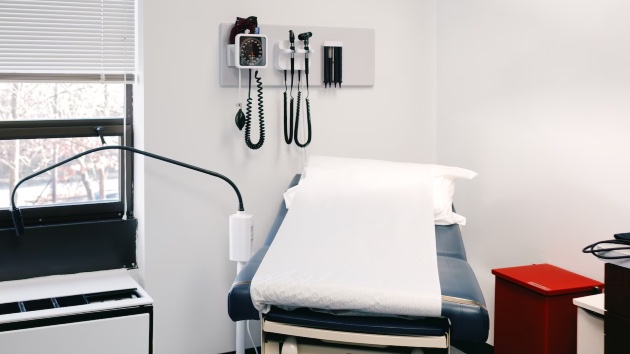
Close-up of examination table in doctor’s office (Grace Cary/Getty Images)
(NEW YORK) — Fewer than 49% of Americans can afford healthcare, the lowest rate since tracking began in 2021, according to Gallup data released Thursday.
In a single year, roughly 2.8 million people no longer identified as being “Cost Secure” meaning they could no longer afford access to quality care or pay for visits and prescriptions, according to the data. Worry about future healthcare costs, including visits and prescriptions, amongst Americans is also at an all-time high of over 40%, according to Gallup.
Gallup developed what it calls the “Healthcare Affordability Index,” which is sponsored by West Health, in 2021 drawing on self‑reported experiences from nationally representative surveys. The latest data comes from a study conducted between October and December of 2025, according to Gallup and West Health.
Healthcare has become a financial burden across income levels, according to the new data. According to the index, one in three upper-middle income households ($120,00 to $180,000) are not cost secure, nor are one in five households earning above $180,000.
Young adults, aged 18-29, have experienced the sharpest decline in ability to afford healthcare with those identifying as “cost secure” dropping 7 percentage points in a year.
Women continue to trail behind men when it comes to affording healthcare.
Between 2021 and 2024 the difference between men and women being able to afford care was 9% but in 2025 the gap widened to 15%, making it the largest gender gap in healthcare affordability on record.
Healthcare and inflation continue to rise with healthcare spending reaching $5.3 trillion in 2024. This, in part, is due to hospital prices increasing to 3.4% in 2024, the fastest rate increase since 2007, and insurance premiums going up by 20% after the expiration of subsidies under the Affordable Care Act.
With many Americans experiencing significant healthcare-related financial challenges, studies show that this can lead to significant consequences, including delaying or deferring care, leading to worse health overall.
Torie A. Livingston, MD, MPH, is a third-year pediatric resident physician at the University of Chicago and is a medical intern of the ABC News Medical Unit.
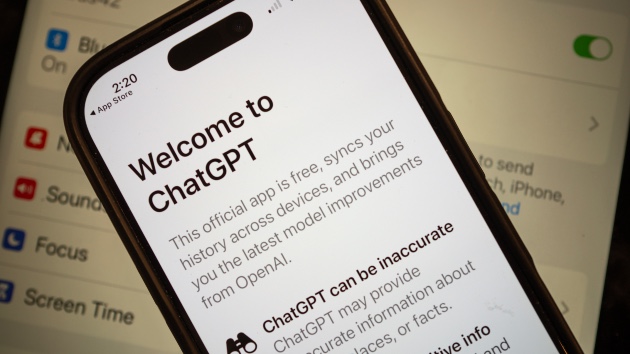
The ChatGPT app by OpenAI is shown on a cell phone on March 03, 2026 in Chicago, Illinois. (Photo by Scott Olson/Getty Images)
(NEW YORK) — Recently released polling on Americans’ opinions of artificial intelligence gives us an updated look at how people are interacting with AI, what they are using it for and whether they are skeptical of the technology.
About half of American adults (49%) said that they have used chatbots like ChatGPT, Gemini or Copilot before, up from 33% in 2024, according to a Pew Research Center report released Wednesday.
The study found 42% of adults who used chatbots used them to search for information, 38% used it for work tasks, 25% for fun or entertainment, 24% for creating or editing images or videos, 20% for medical advice and another 20% for diet and fitness information.
About a quarter of Americans — 24%– said they used chatbots daily, according to Pew.
The Pew study found that, overall, while Americans under 50 years old were more likely than those 50 and older to use chatbots, use has risen over time among adults of all ages. And while men and women both use chatbots at roughly the same rate overall, more men use chatbots on a daily basis than women.
The share of Americans using AI bots for advice and information on health has also increased. A KFF study released Wednesday found that 29% of Americans said they used AI tools or chatbots at least monthly for information and advice on health, up from 17% in 2024.
Most of these users, 56%, are confident they can determine what is true and what is false when accessing health information on chatbots. Younger adults were more confident than older adults.
Still, Americans are skeptical of AI chatbots.
Pew found that more Americans (40%) said that AI will have a negative impact on society over the next 20 years while only 16% said it will have a positive impact. Americans are also more negative on AI’s impact on themselves: 31% said it will have a negative impact over the next 20 years rather than a positive one (23%).
Younger adults are more wary about the impacts that AI will have on society and themselves than older adults, according to Pew. Nearly half of adults under 30 (48%) believe that AI will have a negative impact on society, compared to 39% of those 30 to 49 and 37% of those 50 and older. While 37% of adults under 30 said the impact on themselves will be negative, that falls to 30% among those 30 to 49 and 28% of those older than that.
Americans largely think AI is moving too fast: A 63% majority of adults said that AI is advancing too quickly, according to Pew, while 19% said it was moving at the right pace and just 2% said it was moving too slowly.
Americans are also concerned about personal information and AI. Pew found about 7 in 10 adults (71%) said that the use of AI will make personal information less secure.
While Americans don’t trust big tech or AI companies to do what’s best, they also don’t trust the government to keep them in check.
A CNN poll, also released Wednesday, found 69% of Americans saying they trust companies developing AI tools “a little” or “not at all” to do what is best for their users.
Pew found a similar share of Americans voicing skepticism that the U.S. government will regulate AI effectively (67%).
Democrats have become less confident in the government regulating AI. In a 2024 Pew Research Center poll, 54% said they had not much or no confidence in the government regulating AI effectively, rising to 74% in the new Pew poll. Republicans’ lack of confidence has declined over the same period from 70% to 61%. This divergence in the views of Democrats and Republicans over time may be because there was a Democratic president in 2024 and a Republican president now.
The Pew Research Center poll was conducted Feb. 17-23 among 5,119 U.S. adults with an error margin of +/- 1.6 percentage points, including 2,605 AI chatbot users with an error margin of +/- 2.2 percentage points.
The KFF poll and the CNN poll were both conducted May 7-31 among 2,480 U.S. adults and have an error margin of +/- 2.7 percentage points.
Black smoke rises from the area of the Russian oil producer Gazprom Neft’s Moscow oil refinery on the south-eastern outskirts of Moscow on June 18, 2026. (Photo by AFP via Getty Images)
(LONDON) — Ukraine launched hundreds of drones on Thursday targeting more than a dozen Russian regions, including Moscow, where they struck an oil refinery, sending plumes of black smoke into the air over the Russian capital.
Russia’s Ministry of Defense said the country’s defenses destroyed some 555 drones in the early morning hours. About 180 of those were shot down as they approached Moscow, the city’s mayor, Sergei Sobyanin, said in an update in Russian on the Telegram messaging app.
Ukraine laid claim to the aerial attack, with President Volodymyr Zelenskyy saying it marked the second time within a week that Kyiv had targeted the Moscow Oil Refinery, a sprawling facility in the city’s southeast that’s run by a subsidiary of state-owned Gazprom. Video verified by ABC News showed blasts at the Kapotnya district refinery.
“This is a fully justified response to Russian attacks on our cities and communities, and another important result of our warriors’ work against facilities that sustain Russia’s war machine,” Zelenskyy of Ukraine said on social media.
Russia on Thursday also continued its nightly long-range attacks on Ukraine, firing at least seven ballistic missiles and 239 drones at Ukraine overnight, the General Staff of the Armed Forces of Ukraine said in an update posted on social media. Ukraine said its defenses shot down or otherwise destroyed at least 216 drones or missiles.
Thursday’s Ukrainian strike ranked among the largest single-night long-range attacks undertaken by Kyiv since the war began more than four years ago. The country’s military said it targeted the refinery because it is “involved in supporting the Russian military.”
Zelenskyy sought in his social post to position Ukraine’s long-range strikes, which have escalated in recent weeks, as a means to push Moscow toward diplomacy. He said Ukraine’s Western partners have “have noted the precision and effectiveness of our mid-range strikes and long-range sanctions.”
The attack came in the hours before defense ministers of NATO states were set to gather in Brussels, Belgium, for a summit, where Ukraine’s security was among the topics to be discussed.
The Moscow public prosecutor’s office said “several” districts in the city were attacked by drones on Thursday, claiming there had been damage to apartment buildings. The office said there were casualties reported, but did not detail them.
Russia’s Department of Defense said it had launched in response a drone-and-missile attack against “fuel and energy facilities used by the Ukrainian Armed Forces.”
ABC News’ Victoria Beaule, Helena Skinner, Anna Sergeeva, Oleksiy Pshemyskiy and Jamie Dorrington contributed to this report.
Racks of servers are seen inside Google’s AI datacenter in Jackson County, Alabama. (ABC News)
(NEW YORK) — In the foothills of the Appalachians, where a coal plant once operated, now sits a massive data center operated by Google — and it’s about to get even bigger.
This week the tech giant announced a $1.5 billion expansion of its Jackson County, Alabama site. The company gave ABC News a rare exclusive look inside the campus — including its high-security server room — as public backlash grows against the buildout of data centers nationwide.
“There’s a lot of negative sentiment,” Thomas Gamble, the Southern Corridor Area Manager for Google Data Centers, told ABC News. “As we’re building, we’re trying to figure out the best, most efficient use of all the power, the water, any of the systems we can.”
Gamble, who grew up just five miles from the sprawling campus, said that the company pays for 100% of the power it uses at the facility, where corridors stacked with servers feed global demand for the company’s offerings, from maps to email to video streaming.
“We’re just a lot of servers storing information, just like books are in your library,” Gamble said.
Google is one of several big tech companies that has signed on to a voluntary “Ratepayer Protection Pledge” pushed by the Trump administration that seeks to protect American households from paying more for electricity costs associated with the construction of new data centers.
But the public remains skeptical. A Gallup poll conducted this spring found that 71% of Americans oppose the construction of AI data centers in their area, citing concerns about quality of life, the economy, local resources, pollution, water usage, electricity bills, and AI in general.
Of the poll respondents who said they would be in favor of a data center in their area, two-thirds cited local economic benefits as the reason.
ABC News has observed this debate play out in contentious town halls across the country, where impassioned residents and local leaders wrestle over the presence of these facilities, which developers say deliver hundreds of jobs and renewed investment in regions that may be otherwise neglected.
Lawmakers in at least 14 states are now considering slowing or banning the development of data centers. Proposed moratoriums in these states all target new facilities, and in some cases, include requirements to study the impacts of data centers.
Opponents of data centers argue that moratoriums will allow additional time to explore their effects on local communities, while proponents argue the moratoriums will hamper AI development and hurt local economies.
The map below shows states that have recently considered moratoriums, and the status of bills that include language on data center development. Click on or scroll over any of the shaded states for details on the bills.
Back in Jackson County, Chamber of Commerce president Rick Roden says Google’s data center has made him more excited about the future than he’s ever been.
“This changes our history, this changes our future, and we’re now known as a technology area,” he told ABC News. “We know that that’s going to open doors that we would have never had open before, just because we landed Google.”
The trailer for the third and final season of Survival of the Thickest has arrived. Michelle Buteau stars in the comedy series, which is based on her book of essays. The show follows Mavis Beaumont, a stylist and designer who is determined to thrive and grow her brand. Season 3 debuts on July 2 …
Podcaster Brooke Averick’s debut novel, Phoebe Berman’s Gonna Lose It, is getting adapted into a movie for Netflix. Averick, who co-hosts Brooke and Connor Make a Podcast, announced the news on Instagram Wednesday. “Wanted to let you all know,” she captioned the post. TheNightingale producer Elizabeth Cantillon is set to produce the film, which will be written by Book Lovers screenwriter Sarah Heyward …
Wagner Moura is in talks to join the Ocean’s Eleven prequel. Deadline reports the actor is negotiating to join the upcoming Warner Bros. film. Margot Robbie and Bradley Cooper are also set to star. In addition to starring in the film, Cooper is directing and writing it …
“Beautiful Things” is Megan Moroney’s latest hit to float down from Cloud 9 and ascend to the top five of the country radio charts.
But if you look at the other end of the ranking, there’s another track from her latest album that’s just beginning its climb.
“Medicine” comes with a bit of a warning: If you’re a man who’s ever treated a woman badly, Dr. Moroney will see you now.
“‘Medicine’ is a song I wrote with some of my favorite people about giving a guy a taste of their own medicine,” Megan explains. “I just find it hilarious that anytime I’ve ever treated a guy like 10 percent of how they’ve mistreated me, they freak out. And so this song is just kind of giving them a taste of their medicine.”
“And it’s a fun honky-tonk song, and I hope that I will see all of y’all line dancing to this one very soon,” she adds.
Megan swings by Summerfest in Milwaukee on Thursday, before a Friday stop in Grand Rapids. On Saturday, she plays Scotiabank Arena in Toronto.
In celebration of America’s 250th birthday, Esquire has put together a list of what it describes as “songs that are distinctly American, addressing protest and leisure, joy and pain, wisdom and silliness, nostalgia and experimentation.”
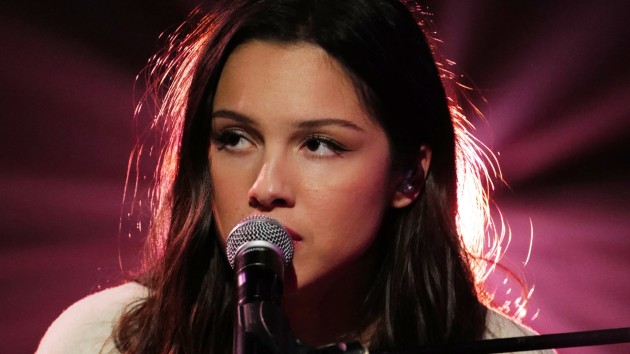
Olivia’s “Drivers License” made the cut, with Esquire writing that it “demonstrated the eternal power of two of American pop’s defining themes — cars and heartbreak.”
Furthermore, the mag says the song “transcended backgrounds and generations, creating a shared, uniquely national experience” and “stands as the … pinnacle” of 21st century pop.
Whitney Houston’s “I Will Always Love You” is also on the list because it’s, according to Esquire, “the all-time biggest-selling single by a female artist” and an “an era-defining record.” The magazine also notes it “represented the culmination of America’s musical century, blending country-music storytelling, pop sonic architecture, and Black creative expression.”
Other songs that made the cut include Tom Petty’s “Free Fallin’,” Aretha Franklin’s “Respect,” Bruce Springsteen’s “The River,” “Alright” by Kendrick Lamar, “Margaritaville” by Jimmy Buffett and tracks by Bob Dylan, The Ramones, Johnny Cash, KISS, The Chicks, Woody Guthrie, Bad Bunny, Elvis Presley, Chuck Berry and The Beach Boys.
In case you’re wondering why “Party in the U.S.A.” or “Born in the U.S.A.” isn’t on the list, it’s because songs that mentioned “America” or “U.S.A” in the title or chorus were immediately eliminated, due to the 25-song limit.
As for why there are no songs by Prince or Michael Jackson, Esquire writes that the two men “possessed such otherworldly gifts that they seemed to stand for something beyond their native country.”
ussell Wilson and Ciara attend The One Party by Uber: New York City at Pier 36 on June 12, 2026, in New York City. (Photo by Noam Galai/Getty Images for Uber)
People often ask Ciara to share the prayer she used to find her husband, Russell Wilson, but what did Russell pray for when it came to finding his future wife? Speaking to Keke Palmer on her podcast, he revealed he had a very specific plan for his life after his previous marriage came to an end.
“I had a whole plan,” Wilson told Palmer. “I’ma be single for about 10 years. I’ma make some friends along the way and then you gon’ marry your best friend, that whole thing, and sure enough, a year and half into my plan, I meet her, and I knew exactly when I met her, she was the one.”
According to Russell, he had told a friend he could see himself with Ciara before they even met.
“Somebody asked me, ‘Who do you see yourself with?’” Wilson said. “I was like, ‘Ciara.’ They were like, ‘She ain’t going to like you.’ I said, ‘She ain’t met me yet.’”
Years after, he had a conversation with his pastor over dinner and wrote down his “five nonnegotiables” for a future partner: a woman of faith, a woman who would be faithful, a woman like his mother, a woman who was independent and “somebody that would tilt the room.”
“Those five things, I wrote down, prayed over—we prayed over that night,” he told Keke. “Three days later, I met Ci for the first time.”
The full episode of Baby, This is Keke Palmer is available to watch on YouTube.