We now know when to expect season 2 of The Terminal List. Prime Video is releasing the second season of the Chris Pratt-starring series on Oct. 21. The show is based on the bestselling novels of the same name by author Jack Carr. The story follows Navy SEAL commander James Reece as he battles conspiratorial forces …
The teaser trailer for The Diplomat has arrived. Netflix has released a new trailer and the release date for the upcoming fourth season of the drama series. The new season of the show is set to debut on Oct. 15. Keri Russell, Rufus Sewell, Ato Essandoh, Ali Ahn, Nana Mensah, Rory Kinnear, Bradley Whitford and Allison Janney star in season 4 …
It’s time to make it shine. Netflix has released the teaser trailer and release date for its Victorious spinoff series Hollywood Arts. The show will premiere on Oct. 15. It finds Trina Vega, once again portrayed by Daniella Monet, as she returns to her former high school as a substitute teacher. She then finds herself inspiring a new generation of talented students …
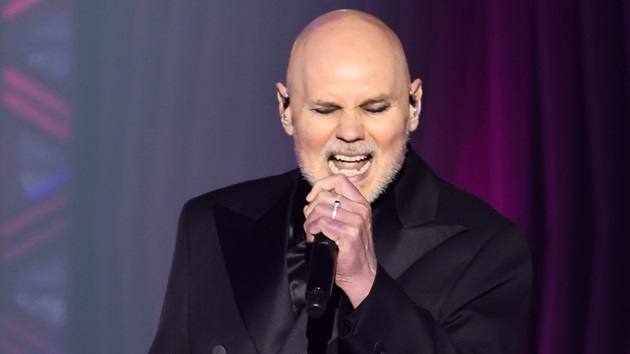
Billy Corgan performs onstage during the 2026 Songwriters Hall of Fame Induction Ceremony at The New York Marriott Marquis on June 11, 2026 in New York City. (Theo Wargo/Getty Images for for Songwriters Hall of Fame)
The Smashing Pumpkins will launch their Rats in a Cage tour in September. Each show will feature one set dedicated to the 1995 Pumpkins album Mellon Collie and the Infinite Sadness in honor of its 30th anniversary, as well as a second, career-spanning set.
“The Rats in a Cage tour is interesting, because I’ve made the choice that we’re gonna play the Mellon Collie set first,” frontman Billy Corgan tells ABC Audio. “Which means you’re gonna have 15-18,000 people in a room wondering, ‘OK, now what are they gonna do?'”
Indeed, the RIAA Diamond-certified Mellon Collie has some of the biggest Pumpkins hits, including “1979,” “Tonight, Tonight,” “Zero” and “Bullet with Butterfly Wings,” which spawned the famed lyric that inspired the tour’s name.
“We’re planning something sort of different,” Corgan says. “It’ll be interesting ’cause some people will take the journey and other people will think, ‘What are they doing? Because I came here to celebrate, and they’re taking me through a funeral.'”
The Rats in a Cage tour kicks off Sept. 30 in Columbus, Ohio.
Are Ariana Grande and her ex-turned-current boo Ricky Alvarez getting serious? According to Page Six, sharp-eyed fans noticed that at the London stop of her Eternal Sunshine Tour, she had a new tattoo on her collarbone, which appeared to read, “I do love you.” She posted a photo of those words in an Instagram dump a few days ago. This is significant, because Ricky has the same words tattooed on his collarbone, but in a different font.
Bruno Mars has a new visual coming. According to Entertainment Tonight, Bruno and Latin star Karol G recorded a live video for their emotional duet “Still” during her Aug. 15 show at SoFi Stadium in Inglewood, California. The song appears on Karol G’s latest album, which just came out Aug. 7. Ahead of the big moment, a message flashed on the screen, noting that the two had never performed the song live before, and confirming that the performance was being filmed for an upcoming video.
Katy Perry may be a huge star, and her boyfriend may be the former prime minister of Canada, but they’re still totally cringe when it comes to their kids. Justin’s son Xavier, who records under the name Xav, shared a video of his dad and Katy reacting to hearing his song “Downtown” come over the PA at a local Montreal hardware store. Justin lip-syncs to the song while waving a plunger around, and Katy jumps around goofily. “My new single Downtown reaction video,” Xav captioned the video. “Send me yours.”
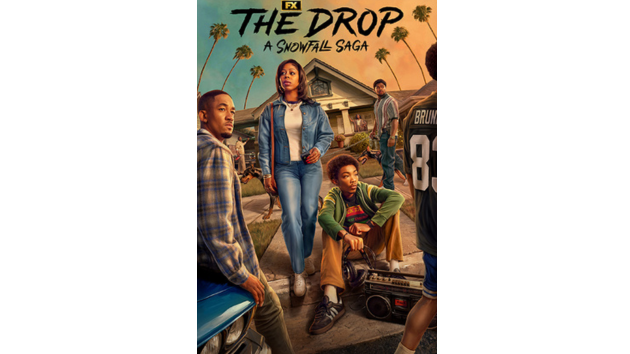
Snowfall‘s Wanda and Leon take on the music business in the show’s spinoff, The Drop: A Snowfall Saga.
A trailer shows Wanda expressing her belief in the power of music to reshape American culture, much like it helped transform her life as she recovered from a crack addiction in the original series.
“You gotta understand what I been through. When I was getting clean, music brought me back to life,” says Wanda, played by Gail Bean.
Though she enters the business believing it’s “the new gold rush” with “no cops, no murder,” the trailer reveals that danger follows as she immerses herself in the music industry and navigates its ties to the streets.
Leon, played by Isaiah John, has vowed to leave that world behind as he hopes to “chase down his own atonement through his free legal clinic,” according to the show’s website.
The Drop: A Snowfall Saga, which also stars Asante Blackk, Peyton Alex Smith, Simmie “Buddy” Sims III and Brandon Mychal Smith, premieres Sept. 8 on FX and Hulu.
Disney is the parent company of ABC News, Hulu and FX.
Ella Langley performs on ABC’s ‘CMA Fest presented by SoFi’ (Disney/Connie Chornuk)
Everyone, say it with me: Ella Langley is still #1.
The singer’s hit “Choosin’ Texas” has now racked up an 18th week on top of the Billboard Hot 100. That means it’s just one week away from tying the all-time record for a non-holiday song. That record is currently held by two songs: Shaboozey’s “A Bar Song (Tipsy)” and Lil Nas X’s “Old Town Road,” both of which ruled for 19 weeks.
Mariah Carey’s “All I Want for Christmas Is You” is the overall leader, with 22 weeks at #1.
Meanwhile, Ella can now count superstar rapper Drake among her “Ella’s Fellas” — the name the singer’s male fans use to refer to themselves. Drake jumped into the comments of Ella’s Sunday Instagram post and wrote “Goated Pen,” which is a slang way of saying, “one of the greatest songwriters of all time.”
This of course led to multiple fans begging Drake to record a collaboration with Ella.
And she seems to be a Drake fan, as well. On Saturday she posted a TikTok of herself lip-synching to “HYFR,” from the Toronto rapper’s 2012 album Take Care.
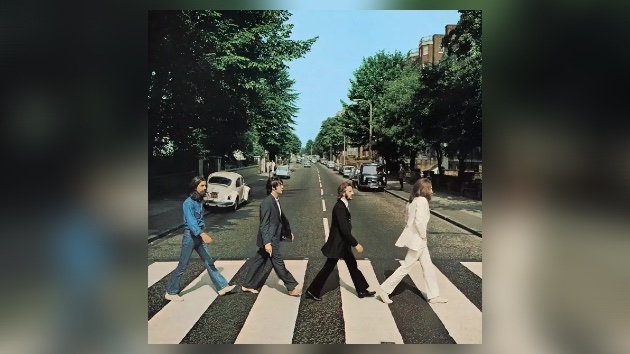
Sam Mendes’ upcoming Beatles project recently filmed a very iconic moment in Beatles history.
Video posted to social media shows the cast — Paul Mescal as Paul McCartney, Harris Dickinson as John Lennon, Joseph Quinn as George Harrison and Barry Keoghan as Ringo Starr — walking through the crosswalk by the legendary Abbey Road Studios in London. A photo of that infamous walk, of course, would go on to become the cover of the band’s 1969 album Abbey Road.
The Beatles — A Four-Film Cinematic Event is expected to open in April 2028. It will consist of four films, each told from the perspective of one of the band members. The cast also includes Saoirse Ronan as Linda McCartney, Mia McKenna-Bruce as Ringo’s wife Maureen Starkey, Anna Sawai as Yoko Ono and Aimee Lou Wood as Harrison’s wife Pattie Boyd.
The Sony films will mark the first time Apple Corps Ltd. and The Beatles have granted a studio the rights to the life stories of band members and their legendary catalog of music.
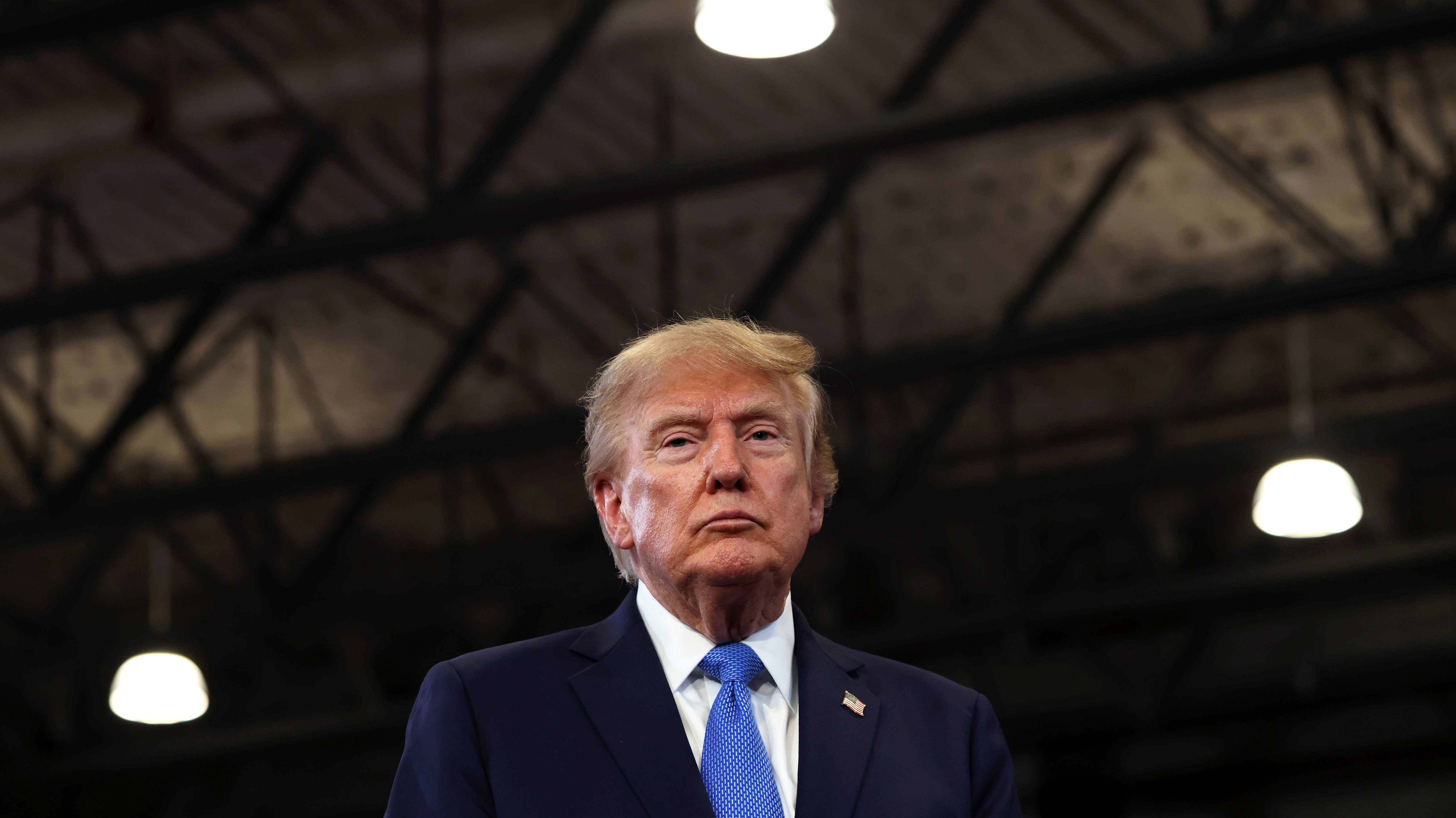
U.S. President Donald Trump departs after delivering remarks at the David S. Mack Center for Training and Intelligence on Aug. 14, 2026, in Garden City, New York. (Samuel Corum/Getty Images)
(WASHINGTON) — President Donald Trump contradicted Vice President JD Vance on Monday after the vice president asserted last week that the administration’s top priority amid the Iran war was to keep the price of oil and gas down for Americans.
In a social media post on Monday morning, Trump said that the “number one Goal is, and always will be” that Iran can’t have a nuclear weapon.
Last Thursday, Vance laid out a different order of priorities on Fox News, saying that “goal No. 1” for the administration amid the war was to “keep oil and gas cheap for Americans all over our country.”
“And then obviously, goal No. 2 is ensure that Iran never gets a nuclear weapon,” he added. “I feel confident we’re accomplishing both of those goals.”
Vance’s comments about prioritizing gas prices diverge from the president’s stated mission of eliminating Iran’s nuclear and ballistic missile programs. And while some Republicans have acknowledged gas prices are too high, Trump said he won’t apologize for it.
In the past, the president had outright rejected the idea that the domestic American economy should factor into military decisions around Iran.
“Not even a little bit,” Trump said back in May when asked to what extent financial pressure on Americans was motivating him to strike a deal.
“The only thing that matters when I’m talking about Iran, they can’t have a nuclear weapon,” he added. “I don’t think about Americans’ financial situation. I don’t think about anybody. I think about one thing. We cannot let Iran have a nuclear weapon, that’s all.”
Asked about Vance’s comments aboard Air Force One last Friday, White House press secretary Karoline Leavitt said that “both goals are equally as important to the president.”
“Of course, we want to keep gas prices low. That’s why the administration has done so much to keep the markets stable, but also ensuring Iran can never get a nuclear weapon is the president’s priority with respect to the ongoing conflict, and it’s something he’s going to see through one way or another,” she added.
Trump’s apparent rebuke of the vice president came just minutes after “Fox and Friends” anchor Lawrence Jones reacted to Vance’s comments during the program’s Monday morning broadcast, and called for “more clarity” from the White House on the U.S. objectives. Roughly eight minutes later, the president posted his message.
“It also looks like we got an answer from the president about what is priority No. 1 for the United States,” Jones said about an hour later in the broadcast as he relayed the details of the president’s post.
While the status of the Strait of Hormuz has become a central focus of the war — injecting volatility into the global energy market even as the conflict between the two countries has ebbed and flowed — Trump has repeatedly argued that the cost of not intervening in Iran would far outweigh the higher gas prices Americans are dealing with now.
The average price of a gallon of regular is $4.02 according to GasBuddy, up 7 cents form last week and up more than a dollar per gallon since the start of the war.
Speaking at the New York police academy last Friday, Trump told the gathered crowd that he would not apologize for the price of gas.
“[Iran’s] the No. 1 state sponsor of terror in the world. We don’t want to have them have nuclear weapons,” Trump said. “So remember that when you have to pay a little bit more, you’re at $4. It’s OK. I mean, it’s, I’m not — I’m not — I will never apologize. I did the right thing.”
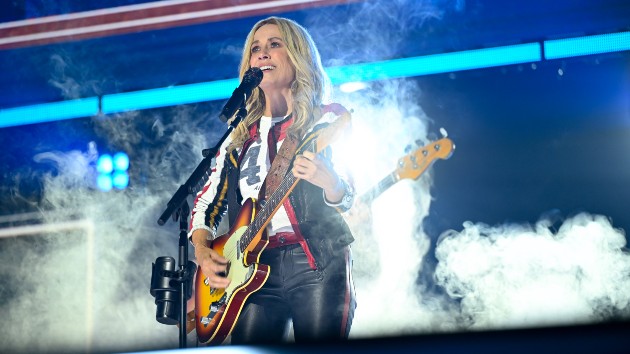
Sheryl Crow performs at Disney’s D23, Anaheim, California, August 15, 2026 (Image Group La/The Walt Disney Company)
Twenty years ago, Sheryl Crow contributed the song “Real Gone” to the animated Pixar film Cars. So it’s no surprise that she’s returning for the new animated series based on the franchise.
On Saturday night, Sheryl appeared at Disney’s biennial D23 fan event to debut a new song called “Built to Last,” which is the theme song for the upcoming Disney Jr. series Cars: Lightning Racers. She also performed “Real Gone” during the appearance.
But Sheryl’s involvement doesn’t end with the theme song. She also wrote 10 additional songs for the series, which debuts on Disney Jr. and streams on Disney+ in 2027. Many of the Cars cast members are reprising their roles for the series, including Owen Wilson as Lightning McQueen, Larry the Cable Guy as Mater, Bonnie Hunt as Sally and Tony Shalhoub as Luigi.
Sheryl’s new album Pick You Up is coming out Oct. 9.
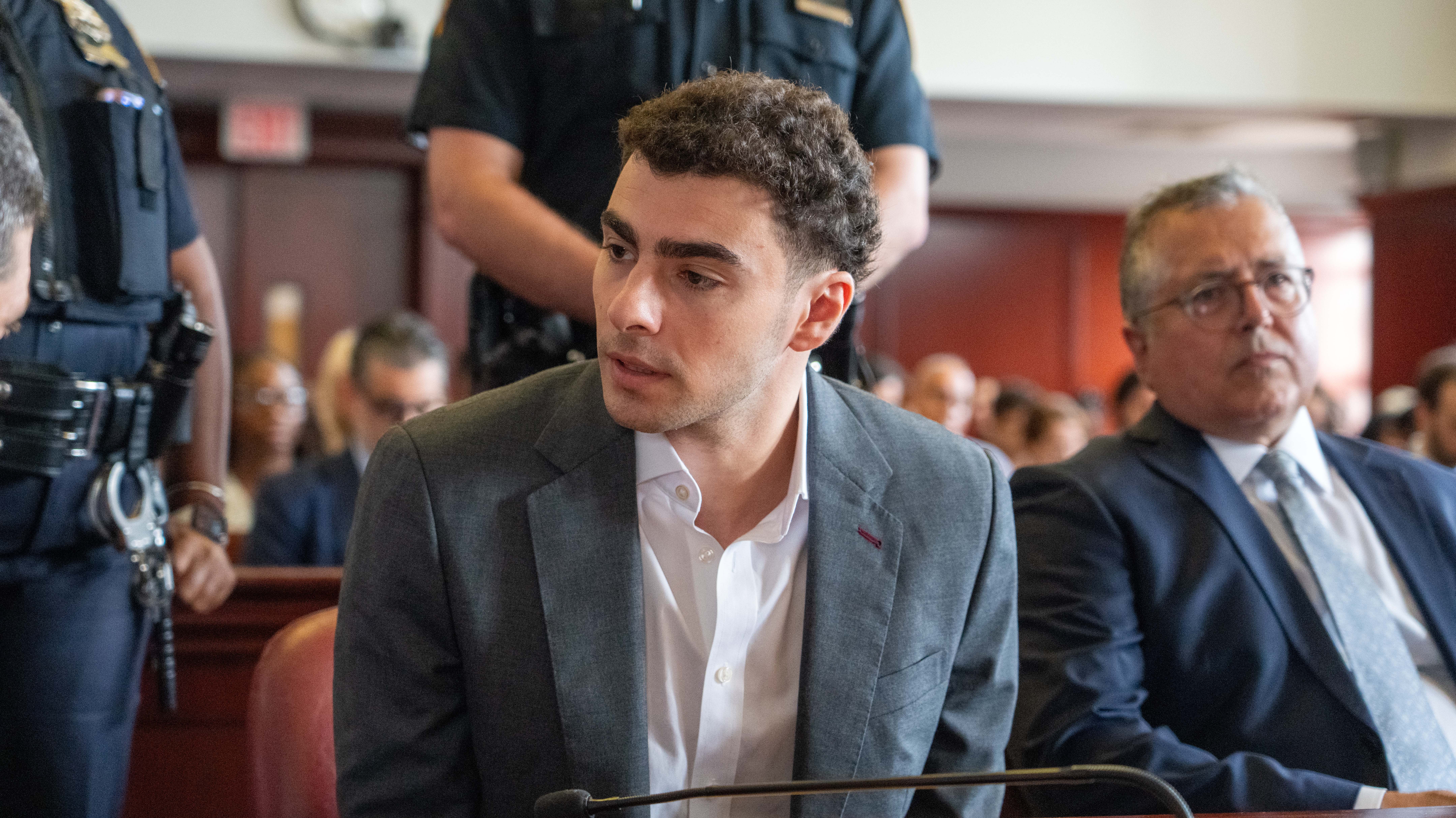
Luigi Mangione attends a pretrial appearance at Manhattan Criminal Court on Aug. 11, 2026, in New York City. (Steven Hirsch-Pool/Getty Images)
(NEW YORK) — A judge in New York on Monday gave prosecutors at the Manhattan District Attorney’s Office until Oct. 9 to respond to Luigi Mangione’s motion to dismiss his state murder indictment, effectively meaning that Mangione’s state murder trial — which had been set to begin on Sept. 8 — is adjourned.
On Friday, Mangione pleaded guilty to both federal stalking counts in his federal case and admitted to shooting UnitedHealthcare CEO Brian Thompson in December 2024.
Immediately following Mangione’s guilty plea, his attorneys filed a motion to dismiss the charges he’s facing in state court under New York’s double jeopardy law.
This is a developing story. Please check back for updates.
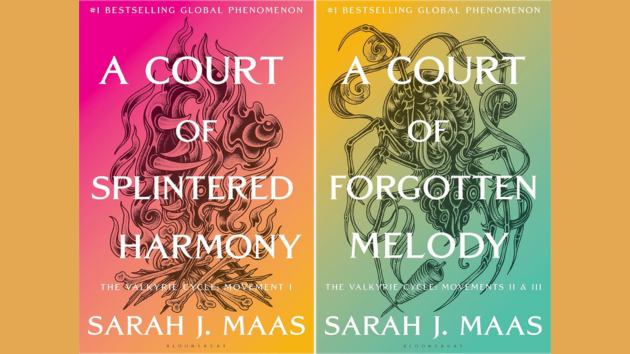
The book covers for Sarah J. Mass’ next installments in ‘A Court of Thorns and Roses’ series. (Bloomsbury)
Sarah J. Maas has revealed the titles and covers for the next two novels in her A Court of Thorns and Roses series.
The bestselling author took to Instagram on Monday to reveal the books will be titled A Court of Splintered Harmony and A Court of Forgotten Melody.
Her post featuring the book cover for A Court of Splintered Harmony was captioned, “What was broken will be remade.”
Maas’ post for A Court of Forgotten Melody included the caption, “What was lost will be reclaimed.”
A Court of Splintered Harmony will be released on Oct. 27, 2026, while A Court of Forgotten Melody will be released on Jan. 12, 2027.
Digital billboards displayed across Los Angeles, Denver and New York City also helped announce the news on Monday.
In March, Maas told Call Her Daddy host Alex Cooper that her popular ACOTAR series will continue with books six and seven.
“It’s been a long time coming,” she said at the time. “It’s something that took me a long time to write, just because there were enough things going on in my life that I had to sort through.”
She didn’t reveal much about the upcoming novels, but talked about her writing process, saying, “The story that was finally ready to come out of me was big. Really, really big. And as I started writing this in like this Montana energy vortex, it came out of me in a way that surprised me.”
She went on, “By the time I got to the end of the part one, it was, like, 400 pages long. But what I was writing felt right. That was the story that needed to be told.”
What resulted was 1,000 pages of storytelling, she said. Because of this, she’s decided to release the next part of the ACOTAR series in three parts.
She added, “I’ve never told a story this way. This is how it wants to come out. Why do I have to be held back by the realities of the glue that we need to hold the pages or just like placement on a shelf?”
The author introduced the first ACOTAR book to the world in May 2015. It follows 19-year-old huntress Feyre, who is taken to a magical land by a beast-like creature called Tamlin, described as a lethal, immortal faerie.
“Her feelings for the faerie, Tamlin, transform from icy hostility into a fiery passion that burns through every lie and warning she’s been told about the beautiful, dangerous world of the Fae,” a book synopsis said.
A Court of Mist and Fury was released in 2016 followed by A Court of Wings and Ruin in 2017 and A Court of Frost and Starlight in 2018.
A Court of Silver Flames was released in February 2021.
Maas’ announcement was also a part of the author’s rebrand of her digital presence, with her previous social media posts removed on Instagram and her website transformed into a darkened landing page.