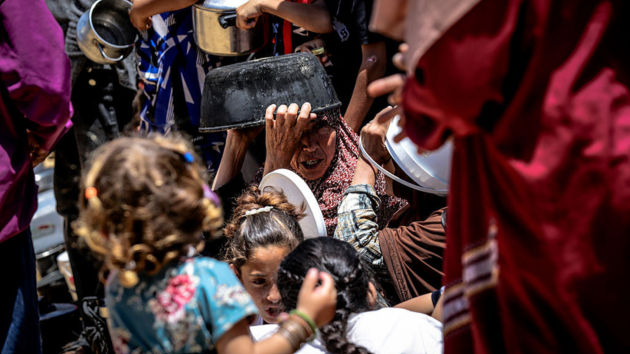
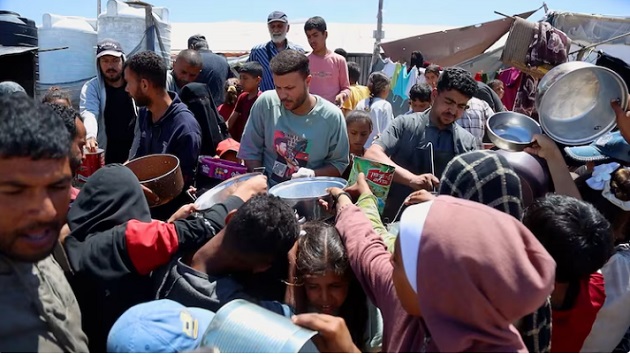
(GAZA) — After 11 weeks of a total blockade of aid into Gaza, two United States-backed food distribution centers opened in the southern Gaza city of Rafah on Tuesday, sparking chaos as thousands descended on the area in search of food.
Palestinians were seen flooding into sites in hopes of getting much-needed aid since Israel enforced a total humanitarian blockade on March 2.
The sheer volume of people, however, led to the centers in Rafah being overrun, gunfire erupting and staff being evacuated to safety.
Israel Defense Forces said in a statement that troops fired “warning shots” in the area of the distribution site as people flooded in, but said no aerial fire was launched toward the site.
“Control over the situation was established, food distribution operations are expected to continue as planned,” the IDF said.
Operated by the U.S.-led Gaza Humanitarian Foundation (GHF), two distribution sites located in Rafah’s Tal al-Sultan neighborhood and the Morag Corridor began distributing food to thousands of families on Tuesday.
State Department spokesperson Tammy Bruce said in a statement that aid operations by the Gaza Humanitarian Foundation “have succeeded,” but acknowledged, “it’s not surprising that there might be a few issues involved.”
Bruce said 8,000 food boxes have been distributed so far, totaling 462,000 meals delivered to Palestinians in need.
Bruce said the aid distribution was a triumph over Hamas, which she said restricted humanitarian aid flow at an earlier date by breaking the ceasefire with Israel.
“This process managed to overcome that dynamic, and the dynamic has changed,” the press secretary said.
The U.S.-led humanitarian plan, however, faced widespread criticism from established aid organizations that have been operating inside Gaza for the past 19 months, including criticism about whether the GHF has enough experience to mount a large-scale humanitarian operation.
On Tuesday, United Nations spokesperson Stephane Dujarric said in a statement that the scene in Rafah is “heartbreaking, to say the least.”
Dujarric said no fuel is currently available in southern Gaza and only one-third of the required supply was received last week.
Dujarric called for the “opening of all crossing points for humanitarian aid and commercial goods,” adding that the U.N. and its humanitarian partners “stand ready to deliver at scale.”
“International law must be respected and humanitarian operations must be enabled without any further delay,” Dujarric added.
The Israeli blockade of humanitarian aid entering Gaza has caused widespread malnutrition and conditions likely to lead to famine, according to the U.N. and other international aid organizations.
One in five people in Gaza, about 500,000 people, face starvation, the Integrated Food Security Phase Classification platform said on May 12, according to the U.N.
Israeli Prime Minister Benjamin Netanyahu said the distribution sites were set up in a way to prevent looting by Hamas.
“The idea is basically to take away the humanitarian looting as a tool of war of Hamas to give it to the population,” he said.
Netanyahu said that by giving people boxes of food rather than bags of flour, it’s “very hard for Hamas to steal it, especially because we guard these positions.”
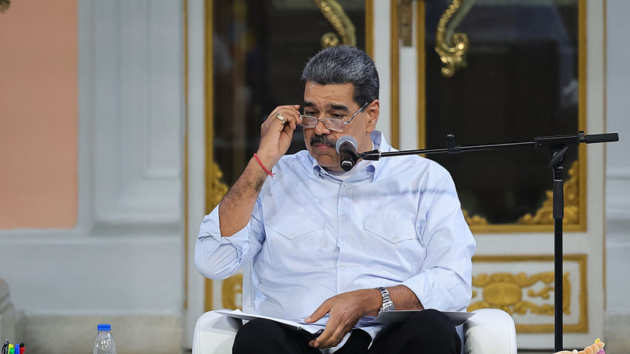
(WASHINGTON) — The State Department is ramping up efforts to dissuade Americans from traveling to Venezuela after revealing on Tuesday that the country is unjustly imprisoning more Americans than any other country.
“There are more U.S. citizens being held in prisons in Venezuela than any other country,” said Adam Boehler, the Trump administration’s special presidential envoy for hostage recovery.
“And these are not people that did anything wrong,” he continued. “Their only issue is that they are American. Venezuela takes more Americans than any other country for that sole reason.”
While the State Department has not revealed exactly how many U.S. citizens are behind bars in Venezuela, at least eight Americans are known to be detained in the country.
The State Department has classified Venezuela under its most severe travel advisory, “Level 4: Do Not Travel,” since February 2019. But on Tuesday, the U.S. embassies in Colombia, Guyana, Brazil and Aruba and the State Department’s Venezuela Affairs Unit reissued the warning in an attempt to reach more Americans.
“There is no safe way for Americans to travel to Venezuela,” a State Department spokesperson said. “U.S. citizens, dual nationals, and lawful permanent residents should avoid travel to Venezuela at all costs. No trip is worth the price of freedom.”
Americans often travel to Venezuela with loved ones or partners’ families or to see them. However, these loved ones face similar risks as their American contacts.
“Family members and partners of U.S. nationals are often detained alongside the American traveler. Visiting Venezuela puts other people at risk,” the official added.
The State Department is also warning U.S. nationals that in some cases, even close proximity to the Venezuelan border has led to detention by the country’s government.
That’s what happened to Lucas Hunter, a 37-year-old dual American and French citizen who was captured by the Venezuelan government in January while on a windsurfing trip in Colombia.
Hunter’s family said he never intended to visit Venezuela but that he was coerced across the border by the country’s border guards.
Although Hunter remains in Venezuelan custody, the Trump administration has successfully negotiated the release of seven other Americans.
In January, the Trump administration’s Special Presidential Envoy for Special Missions Richard Grenell made an usually high-profile trip to Venezuela, where he met with the country’s authoritarian president, Nicolas Maduro, face to face.
At the end of the visit, Grenell returned to the U.S. with six freed Americans.
Last week, Grenell announced in a post on X that another American detained in Venezuela, U.S. Air Force veteran Joseph St. Clair, had been released. The Trump administration has said it has offered no concessions to the Maduro regime in exchange for freeing U.S. nationals.
“That should continue. It needs to continue,” Boehler said of the releases during an interview with ABC News. “Every country in the world needs to know you can have no relationship with the United States if you are holding U.S. citizens.”
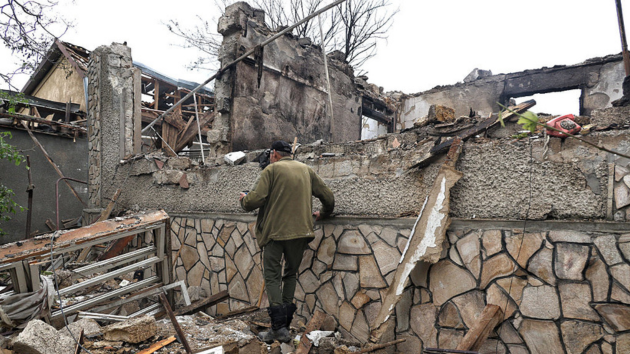
(LONDON) — Hundreds of Ukrainian drones crossed into Russia overnight into Wednesday morning, dozens of which targeted Moscow and again caused disruption to flights in and out of the capital, according to officials there.
Russia’s Defense Ministry said its forces shot down 296 Ukrainian drones over 12 regions — including the capital Moscow — during the latest round of long-range strikes.
Moscow Governor Andrei Vorobyov said on Telegram that at least 42 drones were downed over the region. Vorobyov reported damage to three homes in the town of Chekhov around 40 miles south of the capital.
Moscow’s Sheremetyevo International Airport — one of four international airports in the capital — also warned travelers of delays due to flight restrictions imposed during the latest drone attack. Recent weeks have seen regular disruptions to Moscow’s airports during such strikes.
Andriy Kovalenko, the head of the Counter-Disinformation Center operating as part of Ukraine’s National Security and Defense Council, said on Telegram there were “some pretty good hits” during Tuesday night’s attack.
Among the targets were the Dubna Machine-Building Plant — involved in the production of aviation, missile and drone technology, Kovalenko said — in the city of Dubna, around 70 miles north of Moscow.
Kovalenko said the Technopark ELMA-Zelenograd facility — which hosts the development of microelectronics, IT, robotics and medical equipment — was also targeted. The facility “is one of the centers where import substitution of critical components previously imported from the West takes place,” Kovalenko said.
ABC News could not immediately verify Kovalenko’s claim of successful strikes on the facilities.
Russia continued its own long-range attacks on Ukraine overnight. Ukraine’s air force said Moscow launched six missiles and 88 strike drones into the country, of which 71 drones were shot down or otherwise neutralized. The air force said it recorded impacts in eight locations.
The intensity of strikes by both sides have only increased since President Donald Trump’s return to office in January, the president having promised to end Russia’s war on its neighbor war in 24 hours. Trump has not delivered on that promise, and his frustration appears to have been building in recent weeks with the continued failure of U.S.-led ceasefire efforts.
Trump called Putin “absolutely crazy” in a Sunday social media post, then on Tuesday said Putin “doesn’t realize is that if it weren’t for me, lots of really bad things would have already happened to Russia, and I mean REALLY BAD. He’s playing with fire!”
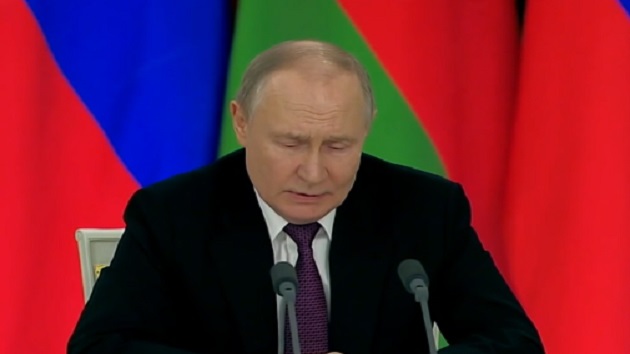
The U.S. and Ukraine are now waiting for Russia to deliver its peace memorandum — a document promised by Putin to Trump during a phone call between the two leaders earlier this month. Russia’s Foreign Ministry spokesperson Maria Zakharova said Tuesday that Moscow was still working on the document.
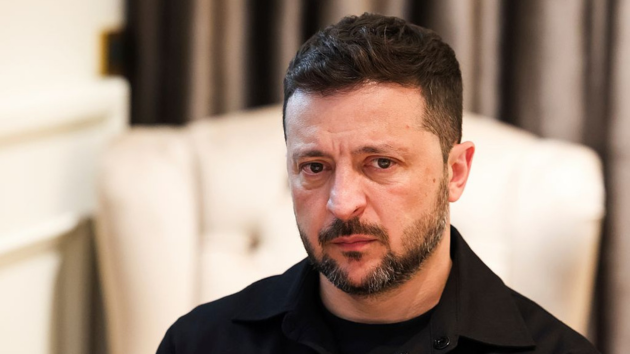
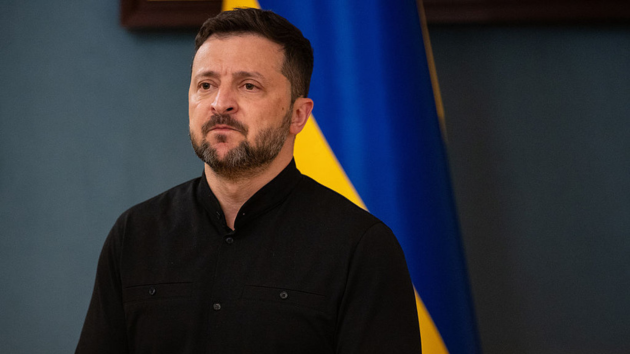
Ukrainian President Volodymyr Zelenskyy cast doubt on the Russian proposal. “They’ve already spent over a week on this,” he wrote on social media on Tuesday. “They talk a lot about diplomacy. But when, in the midst of all that, there are constant Russian strikes, constant killings, relentless assaults, and even preparations for new offensives.”
On Wednesday, Andriy Yermak — the head of Zelenskyy’s presidential office — wrote on Telegram, “Russians are masters of empty words.”
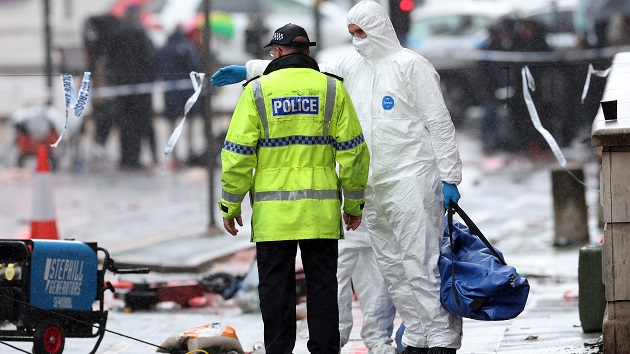
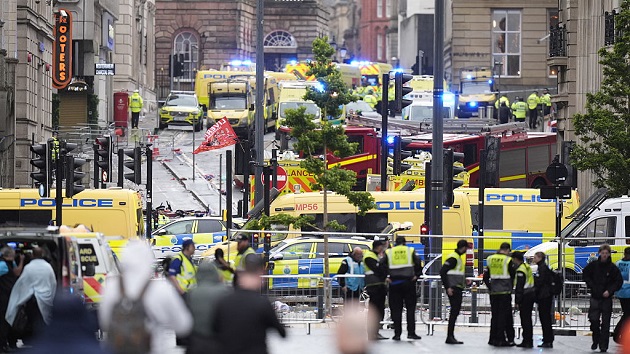
(LIVERPOOL, England) — The suspect accused of ramming a car into a crowd in Liverpool at a Premier League victory parade on Monday has been arrested for attempted murder, reckless driving and is believed to have been on drugs during the attack, officials said during a press conference on Tuesday.
Merseyside Police said on Tuesday that 65 people were injured from the attack, and 11 — all in stable condition — still remain in the hospital.
Officials said a robust traffic plan was in place for the parade, which included Water Street — where the attack occurred. But, the street was temporarily reopened for an ambulance to treat someone suffering a suspected heart attack, and the 53-year-old suspect followed the ambulance inside the crowd.
The attack is still not being treated as a terrorism and authorities are continuing their investigation. The suspect remains in custody and is being interviewed by officials.
Police said they will not speculate on the attack and encourage others to “refrain from sharing distressing content online.”
Alex Ellinghausen / Sydney Morning Herald via Getty Images
(LONDON) — Ukrainian intelligence and open-source data show Russian President Vladimir Putin does not “plan to end the war,” Ukrainian President Volodymyr Zelenskyy said in his daily evening address Monday.
“There is currently no indication that they are seriously considering peace or diplomacy,” he added. “On the contrary, there is ample evidence that they are preparing new offensive operations.”
The address came after an overnight exchange of long-range cross-border drone attacks between Russia and Ukraine.
Ukraine’s air force said Russia launched a total of 364 “air attack vehicles” — nine cruise missiles and 355 attack drones — in the latest bombardment.
All missiles and 288 drones were shot down or neutralized in flight, Ukraine’s air force said. Impacts were reported in five regions and falling debris in 10 regions, it added.
Russia’s Defense Ministry, meanwhile, said its forces downed 128 Ukrainian drones over 12 regions from Sunday night into Monday morning.
Near-nightly cross-border strikes have become a prominent feature of Russia’s war on Ukraine, now more than three years old with little sign of an imminent ceasefire or peace deal. Recent months have seen the bombardments grow in size.
On Saturday night into Sunday, for example, Russia launched what Ukrainian officials described as its largest aerial attack of the war. The assault included 367 drones and missiles and killed at least 18 people, officials said.
The weekend attacks prompted Trump to rebuke both Putin and Zelenskyy on his social media platform on Monday.
“I’m not happy with what Putin is doing,” he wrote. “He’s killing a lot of people, and I don’t know what the hell happened to Putin. I’ve known him a long time. Always gotten along with him, but he’s sending rockets into cities and killing people, and I don’t like it at all.”
“Likewise, President Zelenskyy is doing his Country no favors by talking the way he does,” he continued.
On Monday, Kremlin spokesperson Dmitry Peskov said Russia is “really grateful to the Americans and personally to President Trump for his assistance in organizing and launching this negotiation process. This is a very important achievement.”
However, Zelenskyy and his officials have cited Russia’s continued massed strikes as evidence that Moscow is not genuine in its public appeals for peace.
“Russia is counting on a prolonged war,” Zelenskyy remarked, when discussing the new intelligence that he said was analyzed in a meeting with his staff on Monday. “And on their part, this is a blatant disregard for all those around the world who seek peace and are trying to make diplomacy work.”
(LONDON) — President Volodymyr Zelenskyy again appealed to the U.S. to apply more pressure on Russian President Vladimir Putin in pursuit of peace talks to end Moscow’s 3-year-old invasion of its neighbor — and as massed long-range drone strikes continued.
“Russian strikes are becoming increasingly brazen and large-scale every night,” Zelenskyy wrote in an evening message to Telegram, after consecutive days of intense Russian strikes involving more than 900 attack drones and missiles.
“There is no military logic in this, but it is a clear political choice — the choice of Putin, the choice of Russia — the choice to keep waging war and destroying lives,” Zelenskyy wrote.
“New and strong sanctions against Russia — from the United States, from Europe, and from all those around the world who seek peace — will serve as a guaranteed means of forcing Russia not only to cease fire, but also to show respect,” Zelenskyy said.
“Putin must start respecting those he talks to,” the president wrote. “For now, he is simply playing games with diplomacy and diplomats. That must change.”
The Ukrainian president is seeking to frame Putin as the key impediment to a peace deal, as Kyiv navigates a fractious bilateral relationship with President Donald Trump’s administration.
Months of U.S.-brokered peace talks have failed to produce a lasting ceasefire or a clear framework for a peace deal.
Trump’s building frustration has been evident. This weekend, Trump said Putin had gone “absolutely crazy,” while also rebuking Zelenskyy for causing “problems” with his public statements.
Kyiv is pushing for a 30-day ceasefire during which time peace talks can take place. Russia has so far refused the proposal.
Putin told Trump in a phone call last week that Moscow was preparing a memorandum setting out its negotiating position. But Kyiv and its European partners have accused the Kremlin of intentionally stalling discussions.
Russian Foreign Ministry spokesperson Maria Zakharova told reporters at a Tuesday briefing that Moscow is still developing its memorandum, which she said will be sent to Kyiv as soon as it is completed.
“We expect that the Ukrainian side is doing the same work and will send us its developments simultaneously with the receipt of the Russian document,” Zakharova said.
Zelenskyy on Monday cast doubt on the Russian proposal. “They’ve already spent over a week on this,” he wrote. “They talk a lot about diplomacy. But when, in the midst of all that, there are constant Russian strikes, constant killings, relentless assaults, and even preparations for new offensives.”
Ukrainian leaders have repeatedly appealed to Trump to impose new, tougher sanctions on Moscow to push the Kremlin to downgrade its maximalist war goals. Those include the annexation of swaths of Ukrainian territory, Ukrainian demilitarization and a permanent block on the country’s accession to NATO.
Ukrainian requests have so far gone unanswered, despite Trump’s threats to introduce new sanctions to press Putin into negotiations.
Both Russia and Ukraine continued drone strikes on Monday night into Tuesday morning.
Ukraine’s air force said it shot down 43 of 60 Russian drones launched into the country, with confirmed impacts in nine locations and falling debris in three locations.
Russia’s Defense Ministry said its forces downed 99 Ukrainian drones over seven regions.
(LIVERPOOL) — A driver struck pedestrians in Liverpool on Monday, police said, as hundreds of thousands had gathered at a parade celebrating the Liverpool Football Club winning the English Premier League soccer title.
The vehicle collided with “a number of pedestrians on Water Street” just after 6 p.m. local time, Merseyside Police said.
The car stopped at the scene and a 53-year-old British man has been arrested, according to police.
“Extensive enquiries are ongoing to establish the circumstances leading up to the collision,” Merseyside Police said in an update while asking the public “not to speculate on the circumstances surrounding tonight’s incident.”
Police also asked people to send related footage to them and “not to share distressing content online.”
Emergency personnel are at the scene, authorities said. Police did not have details on any injuries in the collision.
United Kingdom Prime Minister Keir Starmer called the incident “shocking.”
“The scenes in Liverpool are appalling — my thoughts are with all those injured or affected,” Starmer said in a statement. “I’m being kept updated on developments and ask that we give the police the space they need to investigate.”
The Liverpool Football Club said it is in contact with police regarding the incident, which occurred toward the end of the parade.
“Our thoughts and prayers are with those who have been affected by this serious incident,” the club said in a statement. “We will continue to offer our full support to the emergency services and local authorities who are dealing with this incident.”
This is a developing story. Please check back for updates.
LONDON — Russia and Ukraine continued long-range cross-border drone attacks on Sunday night into Monday morning, despite President Donald Trump’s criticism of presidents Vladimir Putin and Volodymyr Zelenskyy — the latest signal of Trump’s frustration at his inability to bring Moscow’s 3-year-old invasion of its neighbor to a close.
Ukrainian officials said air defenses engaged targets across the country, including in the capital Kyiv where damage was reported to buildings.
Ukraine’s air force said Russia launched a total of 364 “air attack vehicles” — nine cruise missiles and 355 attack drones — in the latest bombardment. All missiles and 288 drones were shot down or neutralized in flight, the air force said. Impacts were reported in five regions and falling debris in 10 regions, the air force said.
Ukrainian President Volodymyr Zelenskyy said in a post to Telegram that Russian forces “used the largest number of drones against our cities and communities since the beginning of the full-scale war.”
“Only a sense of complete impunity can allow Russia to carry out such strikes and constantly increase their scale,” Zelenskyy said. “Like any criminal, Russia can only be brought to justice by force. Only through force — the force of the United States, the force of Europe, the force of all nations that respect life — can we achieve a complete cessation of these attacks and real peace.”
Russia’s Defense Ministry, meanwhile, said its forces downed 128 Ukrainian drones over 12 regions overnight and into Monday morning.
Andriy Kovalenko, the head of the Counter-Disinformation Center operating as part of Ukraine’s National Security and Defense Council, said “unknown drones” attacked the city of Yelabuga in Russia’s Tatarstan Republic — more than 500 miles east of Moscow and some 740 miles from the closest Ukrainian-controlled territory.
The target was a facility producing Russia’s Iranian-designed Shahed strike drones, Kovalenko said.
Other drones attacked “a chemical enterprise” in the Ivanovo region, around 150 miles northeast of Moscow, he added. The facility “creates components for Russian equipment and weapons, including missiles,” Kovalenko said.
Near-nightly cross-border strikes have become a prominent feature of Russia’s war on Ukraine, now more than three years old with little sign of an imminent ceasefire or peace deal. Recent months have seen the bombardments grow in size.
On Saturday night into Sunday, for example, Russia launched what Ukrainian officials described as its largest aerial attack of the war. The assault included 367 drones and missiles and killed at least 18 people, officials said.
The attack prompted Trump to rebuke Putin while speaking with reporters and later on social media.
“I’m not happy with what Putin is doing,” the president said. “He’s killing a lot of people, and I don’t know what the hell happened to Putin. I’ve known him a long time. Always gotten along with him, but he’s sending rockets into cities and killing people, and I don’t like it at all.”
Trump reiterated his close relationship with Putin but suggested that “something has happened” which has made him “crazy.”
“I’ve always said that he wants ALL of Ukraine, not just a piece of it, and maybe that’s proving to be right, but if he does, it will lead to the downfall of Russia!” Trump wrote on Truth Social.
Trump also attacked Zelenskyy, who he has repeatedly framed as an impediment to a U.S.-brokered peace deal. “Likewise, President Zelenskyy is doing his Country no favors by talking the way he does,” Trump wrote.
“Everything out of his mouth causes problems, I don’t like it, and it better stop,” Trump continued.
On Monday, Kremlin spokesperson Dmitry Peskov said Russia is “really grateful to the Americans and personally to President Trump for his assistance in organizing and launching this negotiation process. This is a very important achievement.”
“President Putin makes the decisions that are necessary to ensure the security of our country,” Peskov said, adding that the Kremlin is “closely monitoring” any “emotional overload” and “emotional reactions” connected to the peace process.
Zelenskyy and his officials have cited Russia’s continued massed strikes as evidence that Moscow is not genuine in its public appeals for peace.
Ukrainian leaders have repeatedly appealed to Trump to impose new, tougher sanctions on Moscow to push the Kremlin to downgrade its maximalist war goals. Those include the annexation of swaths of Ukrainian territory, Ukrainian demilitarization and a permanent block on the country’s accession to NATO.
Ukrainian requests have so far gone unanswered, despite Trump’s threats to introduce new measures to press Putin into negotiations. Kyiv is pushing for a 30-day ceasefire during which time peace talks can take place. Russia has so far refused the proposal.
Following the latest round of Russian strikes, Andriy Yermak — the head of Zelenskyy’s presidential office — wrote on Telegram on Monday morning, “Russia should speed up the ceasefire, now Moscow is slowing down even with the discussion of proposals, no specifics, only delaying time.”
Zelenskyy again urged sanctions. “The increase in Russian attacks should be met with increased sanctions,” he wrote on Telegram on Monday. “Russia’s disregard for diplomacy and refusal to even accept a ceasefire should be met with a blockade of Russian finances and trade in Russian oil.”
“Thank you to everyone in the world who is pushing this very strong agenda,” the president added. “Russia must end this war of its own. And for that to happen, we must deprive their will to fight of resources.”
After more than two months without aid entering Gaza, raising the risk of famine for millions of people, some aid trucks have begun entering the territory in the past few days.
Israeli Prime Minister Benjamin Netanyahu announced some aid would resume entering the Gaza Strip Sunday, May 18. The Israeli government is working with the U.S. to set up aid distribution points. However, the plan faces criticism from established aid organizations. The Israeli-American system for distributing aid in Gaza is set to begin on Monday, according to two sources familiar with the matter.
Some local content creators in Gaza, who gained a following with their food and recipe videos, continued posting from food kitchens amid the shortage of aid — a way to keep hope alive and find joy as war rages on, they say.
“For me, this is passion, to cook delicious things in these difficult times, and I really started feeling like a useful person in this crisis and war,” Hamada Sho told ABC News. Sho is a popular content creator on social media who makes videos from Gaza, cooking and serving food to his community in Khan Yunis.
He began working with social media before the war, previously working in marketing and development with restaurants in Gaza. After deciding to help people during the ongoing war by cooking, he started to post videos showing his cooking process in March 2024, sharing them on social media for people beyond Gaza to see what life there is like.
One of the videos before the blockade, posted online in February, shows Sho making a dessert with fresh fruit and cream over a base of Twinkies and then delivering the treats to children gathered on the beach as he is greeted with loud cheers.
After Israel implemented a total aid blockade on Gaza on March 2, ingredients entering Gaza also halted. Because of the lack of supplies entering the Strip, the supplies that are inside have skyrocketed in price.
“Now I can’t cook larger quantities. I can barely purchase some from the market with these unbelievable prices.” Sho said. “Whether it was rice, beans or anything, the most important thing is that people have at least one meal a day.”
The Israeli government has said the aid blockade was meant to put pressure on Hamas to release the remaining Israeli hostages still being held in Gaza since the Oct. 7, 2023, Hamas-led attack on Israel, in which Hamas fighters killed 1,200 people and kidnapped 251 hostages. There are still 58 hostages held captive by Hamas, 20 of whom are presumed to be alive. The war has taken a large toll on Palestinians, with over 53,000 killed in Gaza since the conflict began, according to the Hamas-run Gaza Health Ministry.
The blockade, which began on March 2, started a day after a temporary six-week ceasefire between Hamas and Israel ended on March 1. Israeli forces resumed military operations in Gaza on March 18.
Sho works with local organizations, like Watermelon Relief, a grass-roots initiative in Gaza providing aid to displaced families, to get raw materials, which he uses to cook and provide food to refugee camps and communities in need of food, generally cooking from community kitchens.
Ahmed El-Madhoun, a coordinator for Watermelon Relief, explained that the raw food used in many of the videos posted by Sho was sourced from humanitarian aid entering the strip and traders located in Gaza.
“After Ramadan, things got worse. The border closed tighter, and food became harder and harder to find. Basic things like flour, cooking oil and even clean water,” El-Madhoun said.
Watermelon Relief had to close its kitchen due to the lack of cooking material, he added.
“No vegetables, no meat, nothing in the market. And if it’s available, it’s very expensive,” El-Madhoun told ABC News.
The Integrated Food Security Phase Classification (IPC), a system used around the world to track food insecurity and malnutrition, released an updated report on May 12, classifying the entire Gaza Strip as Phase 4, indicating that “the entire population is expected to face crisis or worse acute food insecurity.”
Twenty-two percent of Gaza will likely experience a food “catastrophe” according to the Integrated Food Security Phase Classification (IPC) report.
“Our team members inside Gaza are surviving on the cheapest staples they can find—lentils, fava beans, dry chickpeas—if anything is available at all. A single sack of flour, once a basic item, now sells for up to 1,700 shekels, or nearly $480. These last supplies will not last much longer,” Mercy Corps, a humanitarian aid organization, wrote in a statement regarding the IPC report. “The people of Gaza are enduring one of the most harrowing humanitarian crises in recent history.”
As food continues to be hard to access for many in Gaza, people have begun to rely on kitchens started by organizations that can make large quantities of food and serve it to the community.
“Everyone relies on community kitchens for their food now,” said Mohammed Abu Rijela, another content creator posting videos of cooking food in Gaza.
He was a content creator before the war. After being displaced at the beginning of the war, he decided to help his community by starting community kitchens in Gaza, producing over 10,000 meals a day.
Since the blockade, the number of meals Abu Rijela was able to produce has decreased significantly.
“Instead of making 10,000 meals a day, now I make 3,000. At the same time, people’s demand increased greatly in the kitchen,” he added.
Sho’s and Abu Rijela’s viral food videos were met with backlash on social media, with commenters denying the reality of the food crisis, citing the large amounts of food in the videos as evidence of the contrary. A post Sho made in March 2025, showing him cooking a chicken shawarma, became a focus of the online backlash.
El-Madhoun, with Watermelon Relief, told ABC News that most of the videos featuring meat were likely filmed months ago.
“We have not been able to find any meat for two months,” El-Madhoun said. Some traders were able to keep some meat in their warehouses, but due to the lack of electricity, storing the meat was not possible, he added.
Sho said many of the kitchens have shut down due to the lack of food, adding he has been cooking mostly legumes, peas, beans and rice during this time of low availability. Even these ingredients are sometimes unavailable, he said.
“The prices of very basic goods are skyrocketing. And the children, 1.1 million children, are suffering from that. They don’t have enough food,” a UNICEF spokesperson in Gaza told ABC News.
A UNRWA senior communications officer and spokesperson, speaking in Geneva on May 20, described the slow arrival of aid as: “Not enough. Five trucks, nowhere near. Not enough.” The comment came as humanitarian agencies have received permission from Israel for “around 100” more aid trucks to enter the Strip, five of which were let in on Monday.
In a press release on May 12, the World Health Organization (WHO) called the situation in Gaza “one of the world’s worst hunger crises, unfolding in real time.”
“We do not need to wait for a declaration of famine in Gaza to know that people are already starving, sick, and dying, while food and medicines are minutes away across the border,” said WHO Director-General Dr. Tedros Adhanom Ghebreyesus.
LONDON — Russian drones and missiles again bombarded cities across Ukraine on Saturday night into Sunday morning despite the completion of the largest prisoner exchange of the 3-year-old war.
The Armed Forces Operational Command in Poland — a NATO nation that borders Ukraine to the west — said in a Sunday morning post to X that its fighter jets were scrambled during the Russian attack. “Intensive activity of long-range aviation of the Russian Federation has been observed, associated with strikes carried out on objects located, among others, in the western territory of Ukraine,” the statement said.
Ukraine’s air force said in a post to Telegram that Russia launched a total of 367 “air attack vehicles” — among them nine Iskander ballistic missiles, 56 cruise missiles, four guided air missiles and 298 attack drones — at targets across the country.
The air force said 45 cruise missiles and 266 drones were shot down or otherwise neutralized during the attack.
“Most regions of Ukraine were affected by the enemy attack,” the air force wrote, with strikes reported in 22 locations and downed cruise missiles or strike drones reported in 15 locations.
Ukraine’s Interior Ministry said in a statement that at least 18 people were killed — among them three children from the same family — and 85 people injured. More than 80 residential buildings were damaged and 27 fires recorded, it added.
President Volodymyr Zelenskyy wrote on social media early Sunday, “Today, rescuers have been working in more than 30 Ukrainian cities and villages following Russia’s massive strike.”
“These were deliberate strikes on ordinary cities,” Zelenskyy continued. “Ordinary residential buildings were destroyed and damaged. In Kyiv, dormitories of the university’s history department were hit. There were also strikes on enterprises. Tragically, people were killed, including children.”
Russia’s Defense Ministry claimed the attacks constituted “a massive strike by sea, air, land-based precision weapons and unmanned aerial vehicles against enterprises of Ukraine’s military-industrial complex that produce missile weapon components, radio electronics, explosives, rocket fuel and strike drones for the Armed Forces of Ukraine, as well as radio-technical reconnaissance and satellite communications centers.”
“The targets of the strike have been achieved,” the ministry said in a post to Telegram. “All designated targets have been hit.”
The latest attack marks the fourth consecutive night during which Russia launched more than 100 missiles and drones into Ukraine, per Ukrainian air force figures. Though long-range attacks have occurred almost nightly in recent months, Russia’s recent bombardments have been notable for their scale.
Ukraine is also continuing its own drone strikes into Russia, with the Defense Ministry in Moscow reporting the downing of 110 Ukrainian drones overnight into Sunday.
The barrages came despite the beginning of a multi-day prisoner exchange process on Friday. Some 1,000 troops from both sides were expected to be swapped, with the process complete as of Sunday morning, according to Zelenskyy.
The prisoner exchange was the largest since Moscow’s invasion began in February 2022. Russia and Ukraine have swapped prisoners of war throughout the conflict, despite their failure to agree a lasting ceasefire.
U.S.-brokered peace talks since President Donald Trump’s return to office in January have likewise failed to reach an accord, with both Kyiv and Moscow accusing each other of undermining negotiations.
Ukraine is demanding a full 30-day ceasefire, during which time peace talks can take place. Zelenskyy has repeatedly ruled out ceding territory to Moscow in any peace deal.
Trump’s threats of new sanctions on Russia — as yet unrealized despite Ukrainian and European appeals for more American pressure on President Vladimir Putin — do not appear to have pushed the Kremlin away from its maximalist war goals, which essentially equate to Ukrainian capitulation.
Those demands include the annexation of four partially-occupied Ukrainian regions — plus the retention of Crimea, which Russia seized in 2014 — Kyiv’s demilitarization, a permanent block on Ukrainian accession to NATO and the “denazification” of the country — a nebulous demand based on Russia’s false representation of the Ukrainian government as a far-right dictatorship.
Ukrainian leaders have cited Russia’s continued massed strikes as evidence that Moscow is not genuine in its appeals for peace.
“Each such terrorist Russian strike is a sufficient reason for new sanctions against Russia,” Zelenskyy said on Sunday. “Russia is dragging out this war and continues to kill every day. The world may go on a weekend break, but the war continues, regardless of weekends and weekdays. This cannot be ignored. Silence of America, silence of others around the world only encourage Putin.”
“Without truly strong pressure on the Russian leadership, this brutality cannot be stopped,” he added. “Sanctions will certainly help. Determination matters now — the determination of the United States, of European countries, and of all those around the world who seek peace. The world knows all the weaknesses of the Russian economy.”
“The war can be stopped, but only through the necessary force of pressure on Russia,” Zelenskyy said. “Putin must be forced to think not about launching missiles, but about ending the war.”
Andriy Yermak — the head of Zelenskyy’s office — wrote on Telegram early Sunday, “Instead of a ceasefire, there are murders.”
“Without pressure, nothing will change and Russia and its allies will only build up forces for such murders in Western countries,” Yermak continued. “Moscow will fight as long as it has the ability to produce weapons.”