
Some IVF parents launch campaign against former Alabama justice who made controversial ruling

Some IVF parents launch campaign against former Alabama justice who made controversial ruling
The Alabama Supreme Court in Montgomery, Alabama, US, on Wednesday, Feb. 28, 2024. (Andi Rice/Bloomberg via Getty Images)

(MONTGOMERY, Ala.) — The former Alabama Supreme Court justice who wrote the controversial ruling that temporarily halted in vitro fertilization services two years ago is running for state attorney general — and a group of conservative IVF parents is banding together to try to stop him.

Jay Mitchell wrote the majority opinion in a ruling that classified frozen embryos as people, prompting three of the state’s largest IVF treatment providers to halt care out of fear of wrongful death lawsuits when handling embryos.

“Unborn children are ‘children’ … without exception based on developmental stage, physical location, or any other ancillary characteristics,” Mitchell wrote in the majority ruling in 2024.

The decision led to widespread public outcry and an effort at the Alabama statehouse to pass a bill protecting IVF treatments. Republican Gov. Kay Ivey signed the bill shortly after the legislature passed it.

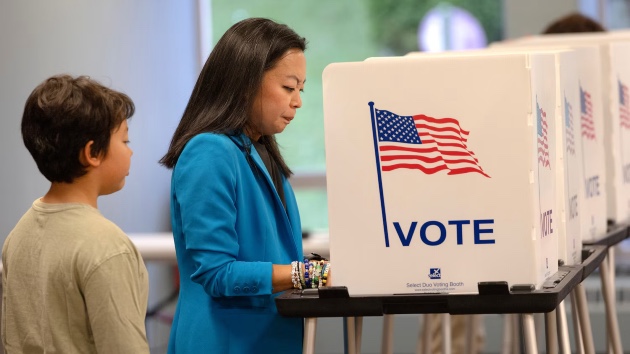
In the aftermath of the ruling, a group of parents who relied on in vitro fertilization to build their families created “Alabama Families for IVF,” a conservative grassroots coalition. The group is now airing ads against Mitchell in the state, voiced by Annie Hensler, who became a mother through IVF, though they have not yet endorsed a specific candidate.

“The attorney general’s office is a very powerful position, and we cannot have someone in that position that has this kind of judgment,” Katelanne Fadalla, an IVF parent who chairs the group, told ABC News.

Alabama’s attorney general would be responsible for enforcing state laws, including those related to reproductive health.

“We cannot risk having someone in office with this much influence over Alabama legislation who has already demonstrated that they cannot think through the consequences of the words that they write,” she added.

In a statement to ABC, Mitchell said, “I support IVF. My opinion protected IVF families and upheld Alabama law, but woke liberals and my political opponents continue to push lies about this case because they know I will fearlessly advance President Trump’s agenda as Alabama’s next Attorney General.”

Fadalla said she was preparing for her first consultation about IVF when news of the ruling broke in 2024.

“It was absolutely devastating,” she said.

“The opinion that came out of the Supreme Court from Jay Mitchell was not only extremely disruptive, but it was devastating to families across the state of Alabama during a time when all we are trying to do is grow our families,” Fadalla said.

In an ad airing across the state, the group accuses Mitchell of going against President Donald Trump, who declared his support for IVF after the 2024 ruling and called on the state legislature “to act quickly to find an immediate solution to preserve the availability of IVF in Alabama.”

“We want to make it easier for mothers and fathers to have babies, not harder — you know that. That includes — and you saw this was a big deal over the last few days — that includes supporting the availability of fertility treatments like IVF in every state in America,” Trump said during the 2024 presidential campaign shortly after the ruling.

Mitchell has defended his record, describing himself as a “rock-solid conservative and warrior for the Trump agenda.”

“Jay shares the incredible commitment Alabamians have to faith, family and freedom, and his legal record proves that he is ready and willing to defend those values in court,” his campaign states on its website.

Three candidates are running in the Republican primary for Alabama attorney general, which will take place on May 19.

Copyright © 2026, ABC Audio. All rights reserved.
Markwayne Mullin’s nomination to be DHS secretary narrowly clears Senate committee with Democratic support

Markwayne Mullin’s nomination to be DHS secretary narrowly clears Senate committee with Democratic support
U.S. Sen. Markwayne Mullin (R-OK) arrives to testify during a confirmation hearing to be the next Secretary of the Department of Homeland Security in the Dirksen Senate Office Building on March 18, 2026 in Washington, DC.(Photo by Chip Somodevilla/Getty Images)

(WASHINGTON) — Sen. Markwayne Mullin’s nomination to be the secretary of Homeland Security narrowly cleared a committee vote Thursday morning with the help of Democratic Sen. John Fetterman, teeing up the Oklahoma Republican’s nomination for a final vote on the Senate floor as soon as next week.

Mullin’s nomination advanced out of Senate Homeland Security Committee by a vote of 8-7. He needed a simple majority of votes to clear the committee.

After a series of contentious exchanges during Wednesday’s confirmation hearing, Sen. Rand Paul, the committee’s chairman, ultimately cast a vote against Mullin in committee on Thursday. Fetterman was the only Democrat to cast a vote in his favor.

Fetterman’s vote proved to be critical for Mullin as Republicans only hold a one seat majority on the committee. Paul’s objection meant that at least one Democrat would be necessary to push Mullin over the line. 

After the vote, Fetterman said he approached the Mullin vote with an “open mind.”

“We need a leader at DHS. We must reopen DHS. My AYE is rooted in a strong committed, constructive working relationship with Senator Mullin for our nation’s security,” Fetterman wrote in a post on X.

Mullin’s hearing came weeks after President Donald Trump fired DHS Secretary Kristi Noem, following her handling of the Minneapolis immigration enforcement and criticism that she used $220 million in taxpayer money for an ad campaign.

Mullin’s nomination will head to the Senate floor where he’ll need a simple majority of votes to be confirmed. He is expected to be approved by the chamber when he comes up for a final vote.

-ABC News’ Ivan Pereira contributed to this report.

Copyright © 2026, ABC Audio. All rights reserved.
Markwayne Mullin nomination to be DHS secretary narrowly clears Senate committee with support from Democrat Fetterman

Markwayne Mullin’s nomination to be DHS secretary narrowly clears Senate committee with Democratic support
U.S. Sen. Markwayne Mullin (R-OK) arrives to testify during a confirmation hearing to be the next Secretary of the Department of Homeland Security in the Dirksen Senate Office Building on March 18, 2026 in Washington, DC.(Photo by Chip Somodevilla/Getty Images)

(WASHINGTON) — Sen. Markwayne Mullin’s nomination to be the secretary of Homeland Security narrowly cleared a committee vote Thursday morning with the help of Democratic Sen. John Fetterman, teeing the Oklahoma Republican’s nomination up for a final vote on the Senate floor as soon as next week.

Mullin’s nomination advanced out of committee by a vote of 8-7. He needed a simple majority of votes to clear the committee.

This is a developing story. Please check back for updates.

Copyright © 2026, ABC Audio. All rights reserved.
House Oversight committee to depose Epstein’s longtime lawyer

House Oversight committee to depose Epstein’s longtime lawyer
Richard Kahn, an accountant for convicted sex offender Jeffrey Epstein, arrives for a House Oversight Committee deposition about Epstein, in Rayburn building on Wednesday, March 11, 2026. (Tom Williams/CQ-Roll Call, Inc via Getty Images)

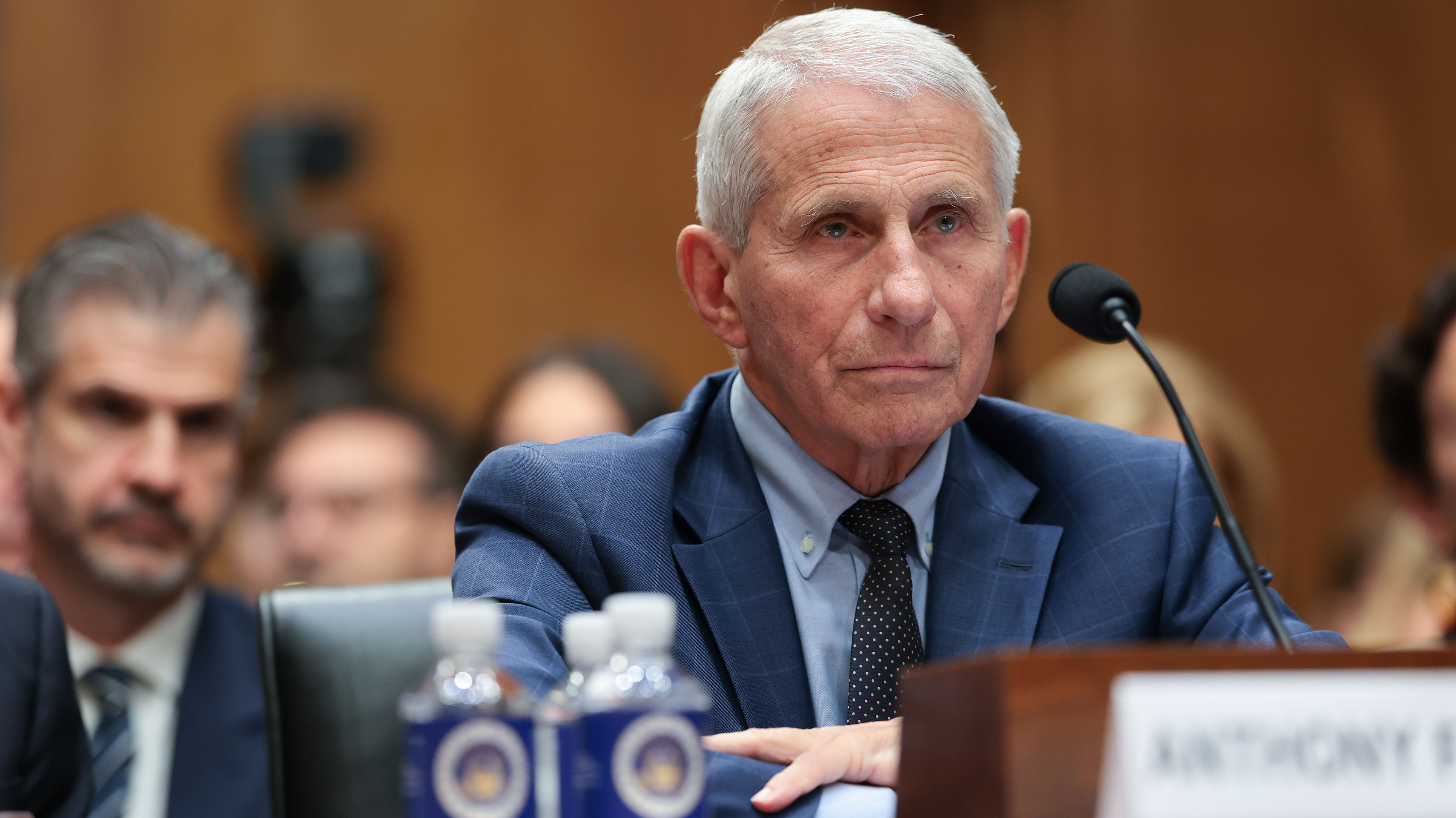
(WASHINGTON) — Members of the House Oversight Committee are set to depose a key member of Jeffrey Epstein’s inner circle who for more than two decades had a critical role managing his personal, financial and legal affairs.

Darren Indyke served as Epstein’s longtime attorney since the mid-1990s.

As Epstein for years attempted to avoid scrutiny while orchestrating a notorious sex trafficking operation, Indyke — together with accountant Richard Kahn — allegedly helped him navigate legal issues and formed part of the financier’s inner circle. Indyke allegedly helped facilitate at least three sham marriages between Epstein’s victims and withdrew hundreds of thousands of dollars in cash for Epstein, according to one lawsuit, and attested to Epstein’s character when he faced legal scrutiny. 

“Knowing that they would earn millions of dollars in exchange for facilitating Epstein’s sex abuse and trafficking, Indyke and Kahn chose money and power over following the law,” alleged one lawsuit that Indyke and Kahn agreed to settle with no admission of wrongdoing.

Neither man has been charged with any crimes. They both deny any wrongdoing and say they were unaware of Epstein’s crimes while working for him. 

The deposition Thursday comes as the House Oversight Committee attempts to zero in on members of Epstein’s inner circle to better understand how the disgraced financier was able to commit decades of crime with seeming impunity.

Following higher profile depositions of people like billionaire Leslie Wexner as well as Bill and Hillary Clinton, the questioning of both Indyke and Kahn arguably presents the committee with their strongest opportunity to learn more about Epstein’s life and crimes.

“I was not aware of the nature or extent of Epstein’s abuse of so many women until after Epstein’s death,” Kahn told lawmakers last week, according to his prepared remarks. “However, it pains me to think, and I deeply regret, that I may have unknowingly assisted Epstein in any way.”

Executor of Epstein’s Trust 
In a will signed two days before he was found dead in a Manhattan jail cell, Epstein named Kahn and Indyke as the co-executors of his estate and bequeathed them $25 million and $50 million, respectively. At the time of his death, Epstein’s estate was valued as much as $650 million. It was last valued at approximately $127 million, according to an October 2025 court filing, after paying out multiple settlements to Epstein’s victims.

As co-executors of Epstein’s estate, Indyke and Kahn recently agreed to settle a proposed class-action lawsuit brought by Epstein’s victims that accused them of “facilitation, participation, and concealment of Epstein’s illegal conduct” for their own financial gain.

According to the lawsuit, both men helped “structure Epstein’s bank accounts and cash withdrawals to give Epstein and his associates access to large amounts of cash in furtherance of sex trafficking.”

“The Epstein Enterprise would not have existed for the duration it did and at its scope and scale, without the collaboration and support of others. No one, except perhaps Ghislaine Maxwell, was as essential and central to Epstein’s operation as these Defendants,” the lawsuit alleged.

The settlement did not include an admission of wrongdoing and still needs to be approved by a judge.  Though the lawsuit was brought against them personally, the $25-35 million settlement would be paid by Epstein’s estate, according to the settlement terms.

“Neither Mr. Indyke nor Mr. Kahn socialized with Mr. Epstein, and both men reject as categorically false any suggestion that they knowingly facilitated or assisted Mr. Epstein in his sexual abuse or trafficking of women, or that they were aware of his actions while they provided professional services to him,” an attorney for the men told ABC News in December. 

Allegedly arranged sham marriages
In a lawsuit filed by government of the U.S. Virgin Islands, Indyke and Kahn were alleged to have helped facilitate at least three sham marriages created to secure immigration status for some of Epstein’s victims, further securing control of the women and ensuring they could remain in the United States. 

“The victims were coerced into participating in these arranged marriages, and understood that there would be consequences, including serious reputational and bodily harm, if they refused to enter a marriage or attempted to end it,” the complaint alleged.

According to a civil lawsuit filed in 2019 by an anonymous accuser, one woman alleged that Epstein’s longtime attorney — not explicitly named as Indyke in the lawsuit — helped prepare the legal paperwork for the marriage, going as far as arranging photographs “to give the appearance that the marriage was legitimate.”

“When the victim inquired about getting divorced … Indyke tried to talk her out of a divorce and threatened that she would lose Epstein’s protection,” a 2024 lawsuit alleged. 

Files released earlier this year by the Department of Justice appeared to reference some of the marriages allegedly arranged by Indyke and Kahn.

“Good morning Jeffrey! We are going now to get marriage license,” an unidentified individual wrote Epstein in 2013. “She is asking if it’s possible to meet with you? Because she has some questions.”  

Withdrawing thousands in cash 
Court filings as well as documents released by the Department of Justice suggested that both Indyke and Kahn played integral roles in managing Epstein’s wealth and overseeing his regular expenses, including alleged payments to women.

According to the Virgin Islands lawsuit — which was settled by the Epstein estate with no admission of wrongdoing — Indyke and Kahn allegedly arranged payments from Epstein’s personal, corporate and nonprofits bank accounts to victims. That lawsuit alleged that Epstein — together with Kahn and Indyke — managed more than 140 different bank accounts.

According to documents released by the DOJ, Indyke served as an officer for many of the holding and shell companies related to Epstein’s real estate and financial holdings.

A 2020 settlement between Deutsche Bank and the New York state financial regulator also suggested that an attorney for Epstein — who sources told ABC News is Indyke — methodically withdrew cash for Epstein in a manner they said intentionally avoided scrutiny.

Limiting the withdrawals to $7,500 in cash — the maximum amount permitted and below the threshold to trigger concerns — Indyke allegedly withdrew hundreds of thousands of dollars for Epstein over four years. While the transactions were below the $10,000 limit to trigger an alert to the Treasury Department, a report by New York State’s Department of Financial Services faulted Deutsche Bank for ignoring red flags about Epstein’s bank accounts.

Jail visits and a character reference 
After securing a plea deal in Florida, Jeffrey Epstein was visited in jail frequently by Indyke, according to visitor logs maintained by the Palm Beach Sheriff. Indyke also helped secure a lenient work-release program for Epstein by vouching for his employment, allowing Epstein to leave the jail for up to 16 hours a day, ABC News reported in 2021.

Prior to Epstein’s plea deal, Indyke also attested to Epstein’s character. According to a letter sent from defense lawyers to prosecutors in Florida, Indyke vouched for Epstein’s character and claimed that Epstein provided financial and emotional support to his family.

“Although Jeffrey was adamant that we owed him nothing, Jeffery honored us by agreeing to be the godfather of our children,” the letter quoted Indyke. 

Copyright © 2026, ABC Audio. All rights reserved.
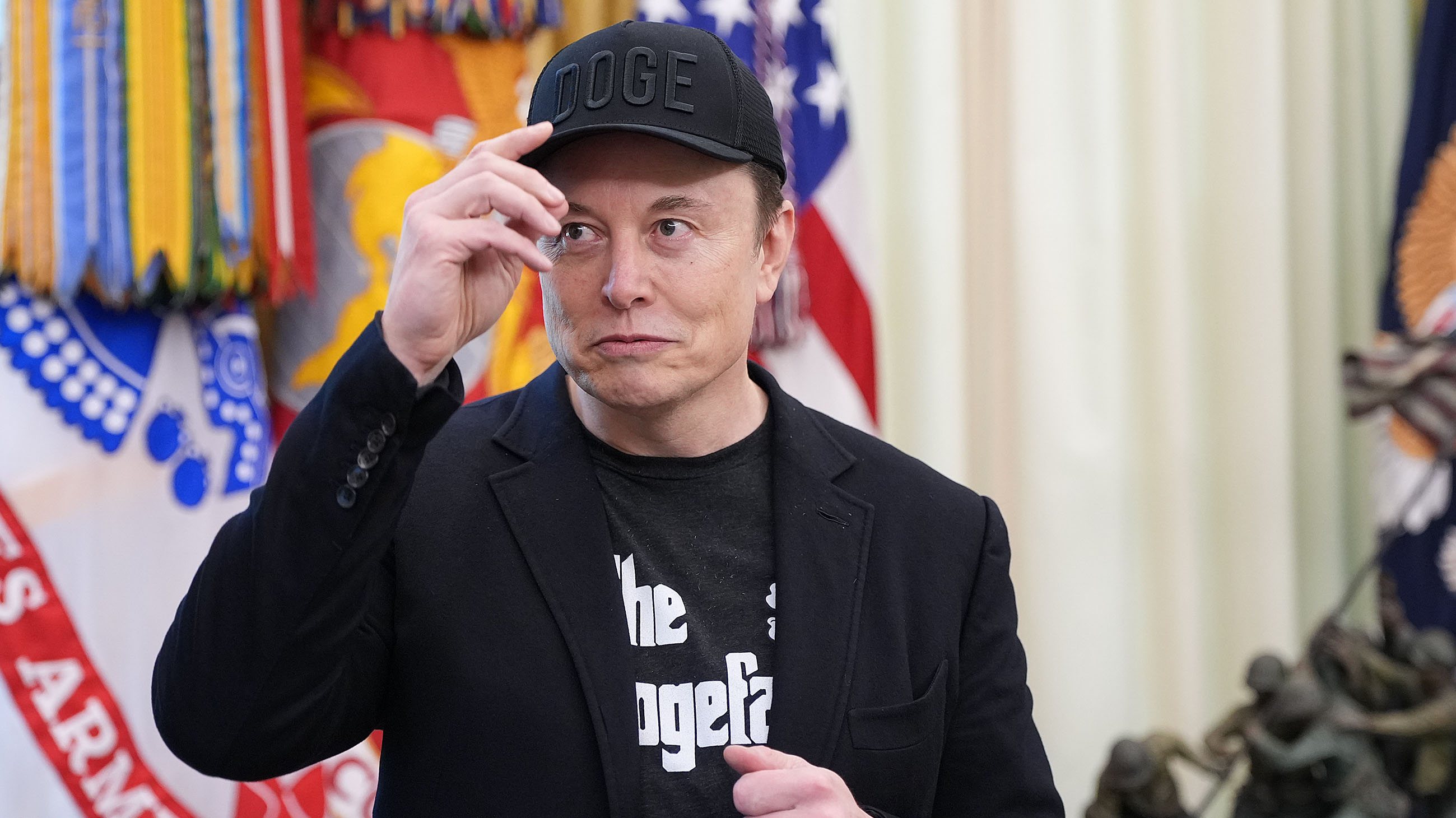
‘I will follow the law,’ Bondi says after Democrats storm out of Epstein files briefing

‘I will follow the law,’ Bondi says after Democrats storm out of Epstein files briefing
Attorney General Pam Bondi arrives ahead of a closed briefing before the House Oversight Committee at the U.S. Capitol in Washington, DC on March 18, 2026. (Photo by Nathan Posner/Anadolu via Getty Images)

(WASHINGTON) — House Oversight Committee Democrats said Wednesday that Attorney General Pam Bondi refused to commit to complying with a subpoena that compels her to testify at a closed-door deposition over the Jeffrey Epstein files on April 14.

Frustrations boiled over Wednesday evening as Democrats stormed out in protest of a closed-door briefing on the files — characterizing it as a “fake hearing.” Republicans chided Democrats for a “premeditated” stunt.

Rep. Robert Garcia, the top Democrat on the committee, told reporters, “She refused on multiple occasions to commit to following the subpoena that Chairman [James] Comer actually just put out. I asked her repeatedly that question. Other members asked her that question, and she would not commit to it. It is outrageous. It’s infuriating, and it’s continuous — this White House cover up of the Epstein files.”

Republicans, however, contended that Bondi actually stated that she would “follow the law” regarding her subpoena. 

“​​She said she’s going to stick to the law, whatever the law is, that’s what it is. So, I’m not the attorney but that was a legal answer, and that’s what she’s required to do as the attorney general,” Rep. Tim Burchett, R-Tenn., said. “It was all staged, you could tell it, because it just built up to it.”

Asked after the briefing if she would comply with the subpoena, Bondi replied, “I made it crystal clear. I will follow the law.”

Congressional subpoenas carry the weight of law behind them — defying one could result in a charge of contempt of Congress. But Democrats would need a handful of Republicans to vote with them to hold Bondi in contempt and the Department of Justice typically does not prosecute its own attorney general.

The attorney general admonished Democrats, who she said did not ask any substantive questions.

“We were there to answer questions. It’s the evening. We came at their convenience. We gave them as, really, as much time as they wanted,” Bondi said. “We sat there saying, ‘anything you want to ask us, ask us, anything you want to ask us.'”

After the briefing, Comer told reporters that he does not believe Bondi should sit for a deposition — even though the committee approved the subpoena. 

“I personally don’t see any reason for her to do a deposition. She’s the sitting attorney general. She’s turning over documents. I think the Democrats want to do this to embarrass her,” he said.

Comer stressed that he did not vote for the subpoena to bring her in for a deposition.

“I want to bring in the bad guys for the deposition,” Comer emphasized. “I want to bring in the men who have abused women. I want to bring in anyone who is involved in the prosecution and or lack of prosecution, of Epstein Maxwell and and some of these other guys. So that’s where I think our time and energy should be spent.”

Comer and Rep. Summer Lee, D-Pa., told reporters that they had a heated exchange, with the chairman acknowledging he scolded Lee to stop “bitching.”

“She was just complaining about the format,” Comer said. “The attorney general and [Deputy Attorney General Todd] Blanche and all the top brass at the DOJ in here to answer questions, and yet they don’t ask a single question.”

Copyright © 2026, ABC Audio. All rights reserved.
Gabbard questioned on whether Iran posed ‘imminent nuclear threat’

Gabbard questioned on whether Iran posed ‘imminent nuclear threat’
U.S. Director of National Intelligence Tulsi Gabbard attends an event where President Donald Trump delivered an announcement on his Homeland Security Task Force in the State Dinning Room of the White House on October 23, 2025 in Washington, DC. (Photo by Alex Wong/Getty Images)

(WASHINGTON) — For the first time since the start of the war, Director of National Intelligence Tulsi Gabbard faced pointed questions Wednesday on whether Iran posed an “imminent threat” to the U.S. as President Donald Trump has maintained.

Lawmakers pressed Gabbard, CIA Director John Ratcliffe, FBI Director Kash Patel and other national security officials on the conflict, and other global matters, on the intelligence community’s annual assessment of such worldwide threats on Capitol Hill.

The hearing came one day after the resignation of Joe Kent, the Trump administration’s top counterterrorism official, who stepped down over his objections to the war, arguing there was no “imminent threat” from Iran.

Gabbard says only Trump can determine an ‘imminent threat’ in contentious exchange

Democratic Sen. Jon Ossoff pointedly questioned Gabbard about the intelligence community’s assessment on Iran’s nuclear capabilities.

President Trump previously said Iran’s nuclear program was “obliterated” by U.S. strikes last summer. Among its several justifications for the current war, however, the White House said Tehran posed an imminent nuclear threat.

“Was it the assessment of the intelligence community that there was an imminent nuclear threat posed by the Iranian regime? Yes or no?” Ossoff asked Gabbard.

“Senator, the only person who can determine what is and is not an imminent threat is the president,” Gabbard said.

Ossoff pushed back, accusing Gabbard of not answering directly because her response would contradict a statement from the White House.

“It is precisely your responsibility to determine what constitutes a threat to the United States. This is the worldwide threats hearing, where, as you noted in your opening testimony, you represent the [intelligence community’s] assessment of threats. You are here to represent the IC’s assessment of threats,” Ossoff said.

At another point in the hearing, CIA Director Ratcliffe said Iran has “been unwilling and incapable of enriching uranium to 60% as a result of” last summer’s strikes.

Lt. General James Adams, the director of the Defense Intelligence Agency, deferred questions about Iran’s existing nuclear capability and discussion about the possibility of U.S. boots on the ground to eliminate it to a classified session.

On Iran’s missile capabilities, Gabbard said Iran “previously demonstrated space launch and other technology it could use to begin to develop a militarily viable ICBM [Intercontinental Ballistic Missile] before 2035, should Tehran attempt to pursue that capability.”

Her remarks repeat an earlier assessment by the Defense Intelligence Agency before the U.S. and Israel began the war on Iran on Feb. 28. Gabbard said the assessment would be updated with the impact of the administration’s military campaign “Operation Epic Fury.”

Gabbard says Iranian regime appears ‘intact’ but ‘largely degraded’

In her opening statement, Gabbard provided the latest intelligence community assessment on Iran.

On the country’s current leadership, Gabbard said the regime “appears to be intact, but largely degraded due to attacks.”

“Its conventional military power projection capabilities have largely been destroyed, leaving limited options. Iran’s strategic position has been significantly degraded,” she said.

She also warned that while “internal tensions are likely to increase” inside Iran as its “economy worsens.”

“If a hostile regime survives, it will likely seek to begin a yearslong effort to rebuild its military, missiles and UAV [Unmanned Aerial Vehicle] force,” Gabbard said.

CIA director pushes back on ex-counterterrorism official

Ratcliffe told senators that Iran “posed an immediate threat” when the U.S. decided to attack the country, pushing back on the statements made by Kent when he resigned.

Kent said in his resignation letter he could not “in good conscience” support the war and argued that Iran posed “no imminent threat” to the nation.

Asked whether he believed “Iran had ceased in its nuclear ambitions, or … its desire to continue to build ballistic missiles capable of threatening American troops and allies in the Middle East” by Republican Sen. Jon Cornyn, Ratcliffe said “the intelligence reflects the contrary.”

“So you disagree with Mr. Kent?” Cornyn asked.

“I do,” Ratcliffe said.

Cornyn did not put the question to Gabbard, Kent’s former boss.

“I think Iran has been a constant threat to the United States for an extended period of time, and posed an immediate threat at this time,” Ratcliffe said.

Officials pressed on planning for Strait of Hormuz, Gabbard sidesteps

Gabbard sidestepped questions on whether she briefed the president on a probable response from Iran — which has been now beared out with Iranian strikes against U.S. partners in the region and a closure of the critical Strait of Hormuz.

Asked by Sen. Angus King, an independent from Maine, whether that contingency was “communicated to the president,” Gabbard would only say that the U.S. military took “preemptive planning” measures ahead of its attack.

She later acknowledged that it’s “long been an assessment of the IC that Iran would likely hold the Strait of Hormuz as leverage.”

“Did you brief the president, if he starts a war of choice, that the likely result would be that Iran would strike adjacent Gulf nations and close the Strait of Hormuz?” Sen. Mark Warner, the top Democrat on the Senate Intelligence Committee, asked Gabbard at one point.

“I have not and won’t divulge internal conversations,” Gabbard replied.

Copyright © 2026, ABC Audio. All rights reserved.
‘Low impulse control’: GOP Sen. Paul confronts Trump’s DHS pick Markwayne Mullin over ‘violence’ at confirmation hearing

‘Low impulse control’: GOP Sen. Paul confronts Trump’s DHS pick Markwayne Mullin over ‘violence’ at confirmation hearing
Chairman Sen. Rand Paul (R-KY) delivers an opening statement during a confirmation hearing for U.S. Sen. Markwayne Mullin (R-OK) to be the next Secretary of the Department of Homeland Security in the Dirksen Senate Office Building on March 18, 2026 in Washington, DC. (Chip Somodevilla/Getty Images)

(WASHINGTON) — Republican Sen. Markwayne Mullin’s confirmation hearing began with a personal confrontation between fellow Republican Sen. Rand Paul as Mullin seeks to take over the Department of Homeland Security from its embattled leader, Kristi Noem.

Paul, the Senate Homeland Security Committee chairman, sparred with Mullin over comments the Oklahoma senator reportedly made earlier this year regarding Paul’s voting record and assault by a neighbor in Kentucky in 2017.

“You told the media that I was a ‘freaking snake’ and that you completely understood why I had been assaulted,” Paul said.

Paul also pointed to Mullin’s previous public confrontations and temperament, adding that Mullin had “low impulse control.”

“Tell the world why you believe I deserve to be assaulted from behind, have six ribs broken and a damaged lung. Tell me to my face why you think I deserved it. And while you’re at it, explain to the American public why they should trust a man with anger issues,” Paul said.

“I just wonder if someone who applauds violence against their political opponents is the right person to lead an agency that has struggled to accept limits of the proper use of force,” he continued.

Before making his opening statement, Mullin fired back.

“I said I could understand, because of the behavior, you were having, that I could understand why your neighbor … did what he did,” Mullin said. “As far as my term of ‘snake in the grass,’ sir, I work around this room to try to fix problems. I’ve worked with many people in this room. It seems like you fight Republicans more than you work with us.”

Mullin, who President Donald Trump earlier this month tapped to take over the agency from Noem, asked Paul to let him earn his respect and said he would be secretary for all Americans.

Paul later played the tense moment at a November 2023 Health, Education, Labor and Pensions Committee hearing when Mullin stood up from his seat and appeared to prepare to physically fight Teamsters Union President Sean O’Brien as well as a montage of Mullin’s responses to the incident.

“I get it it’s about character assassination for you,” Mullin said to Paul. “That’s the way this game is played. I understand it. And you are making this about you, which is fine.”

Mullin noted that O’Brien, sitting directly behind him, came to the hearing on Wednesday as a “close friend.”

“As you can notice over my shoulder is my good friend, Sean O’Brien. Both of us have had conversations and shaken hands and agreed we could have done things different,” Mullin said. “Sean has become a close friend. We talk all the time. I have been on his podcast. It is how you handle your differences. Not like this, chairman.”

Paul told ABC News Capitol Hill Correspondent Jay O’Brien on Wednesday that he’s planning to hold a committee vote to advance Mullin’s confirmation out of the committee on Thursday — during which, Paul said he will vote no. That means Mullin still needs at least one Democratic vote to advance — and Democratic Sen. John Fetterman said he’s open to being that vote.

Fetterman previously said he was inclined to support Mullin, and Wednesday’s hearing didn’t change that, he told reporters.

Mullin pressed on Pretti comments

Lawmakers on the Senate Homeland Security Committee grilled Mullin, who has no law enforcement experience, throughout the day as the department he’s seeking to lead remains shut down due to a funding stalemate, with no clear end to that shutdown in sight.

Mullin’s hearing came as parts of DHS — from the Federal Emergency Management Agency to the Transportation Security Administration — are shut down amid a funding fight over Immigration and Customs Enforcement.

Democrats have said they will fund the department only if changes are made to the agency in the wake of the shooting deaths of Renee Good and Alex Pretti by federal law enforcement in Minneapolis earlier this year.

Sen. Gary Peters, the ranking member of the committee, pressed Mullin over his comments following the killing of Pretti, a Minneapolis nurse who was shot by federal agents during a protest in January.

After Pretti’s death, Mullin echoed initial statements from Noem and White House deputy chief Stephen Miller, calling Pretti “a deranged individual that came in to cause max damage.”

Noem later walked back her comments, claiming she did not have all of the facts at the time.

“I think I said this privately when we had a conversation. Those words probably should have been retracted. I shouldn’t have said that,” Mullin said to Peters, adding he was “responding immediately without the facts.”

“That’s my fault. That won’t happen as secretary,” Mullin said.

When Peters asked Mullin if he would apologize to Pretti’s family for his comments, Mullin stressed that the investigation into the shooting was ongoing.

“We’ll let the investigation go through, and if I’m proven wrong, then I will, absolutely,” he said.

Mullin asked about travel after ‘smell’ of war comments

Peters asked Mullin, who is not a veteran, about his comments to Fox News earlier this month where he suggested he knows what war “smells” like. Mullin admitted that he had never been out of the country for anything other than mission work and vacations.

Peters asked about the travel to Georgia and Azerbaijan that was listed in the FBI report on Mullin, but the nominee said those 2021 trips were classified.

“So where did you smell war?” Peters asked.

“Sir, I just said that this was classified,” Mullin responded.

Mullin on elections, FEMA

Democratic Sen. Elissa Slotkin asked Mullin about Trump’s controversial suggestion that Republicans “nationalize” elections and asked Mullin if he supported putting armed agents at polling stations.

“The only reason why my officers would be there, if there was a specific threat for them to be there, not for intimidation,” Mullin said.

Mullin appeared to counter the messaging of his predecessor when it came to Federal Emergency Management Agency and said the agency “needs to be restructured not eliminated.”

After the Senate Homeland Security Committee vote on Thursday, if his nomination is confirmed, it would then head to the Senate floor where he could be confirmed as soon as next week.

It is all but certain that Mullin will be confirmed as DHS secretary on the Senate floor.

ABC News’ Allison Pecorin and Jay O’Brien contributed to this report.

Copyright © 2026, ABC Audio. All rights reserved.

DNI Tulsi Gabbard testifies at threats hearing amid questions about Iran war, counterterrorism official’s resignation

Gabbard questioned on whether Iran posed ‘imminent nuclear threat’
U.S. Director of National Intelligence Tulsi Gabbard attends an event where President Donald Trump delivered an announcement on his Homeland Security Task Force in the State Dinning Room of the White House on October 23, 2025 in Washington, DC. (Photo by Alex Wong/Getty Images)

(WASHINGOTN) — Director of National Intelligence Tulsi Gabbard returns to Capitol Hill this week for an annual set of hearings on worldwide threats — her most significant public appearance in months and her clearest opportunity yet to address the intelligence picture surrounding the war in Iran.

Lawmakers are expected to press Gabbard on the administration’s handling of the Iran conflict, homeland security concerns, election integrity and the broader global threat environment at a moment of rising tension.

The hearings will also offer a rare extended look at an intelligence chief who has spent much of the past year largely out of public view. The Senate Intelligence Committee is scheduled to hear from her on Wednesday, March 18, with the House hearing set for Thursday, March 19.

She heads into the hearings under fresh scrutiny after the resignation of Joe Kent, the administration’s top counterterrorism official, who stepped down Tuesday over his objections to the Iran war — the highest-profile administration official to resign publicly over the conflict.

An ODNI official told ABC News that Gabbard was not asked by the White House to fire Kent, pushing back on a report first aired by Fox News.

Kent’s resignation sharpened questions already hanging over the administration’s case for war — whether Iran posed an imminent threat to the United States.

In his resignation letter, Kent said he could not “in good conscience” support the war and argued that Iran posed “no imminent threat” to the nation, directly undercutting President Donald Trump’s repeated public justification for the conflict.

Trump has previously said Tehran posed an imminent threat and was “very nearly” in a position to strike.

Hours after Kent’s resignation became public, Gabbard moved to publicly back Trump’s authority to make that call.

In a post on X, she said the president, as commander in chief, is responsible for determining “what is and is not an imminent threat” and whether action is necessary to protect U.S. troops, the American people and the country.

She added that ODNI’s role is to coordinate and integrate intelligence, so the president has the best information available to inform his decisions, and said Trump had concluded Iran posed an imminent threat after reviewing the available intelligence.

She did not directly address Kent’s allegations or mention him by name.

The moment is especially striking for Gabbard because few figures in Trump’s orbit spent more time warning about regime change wars, intelligence failures and the cost of Washington interventionism.

As a 2020 Democratic presidential candidate, she was so vocal in her opposition to war with Iran that she sold “No War With Iran” T-shirts.

In an exclusive interview with ABC News last year, she again spoke about diplomacy, military restraint and the human cost of conflict in terms that reflected a worldview she has carried for years.

In that interview, Gabbard said the stress of her first deployment in her mid-20s turned part of her hair white, and that she kept the streak as a reminder of the high human cost of war.

“War must always be the last resort, only after all measures of diplomacy have been completely exhausted,” she told ABC News in the interview.

This week’s hearings will also unfold against the backdrop of Gabbard’s broader and unusually quiet tenure. Before taking office, she was rarely far from public view, frequently appearing on television, podcasts and social media.

As DNI, that version of her has largely faded from public view.

In recent months, she has appeared mostly in glimpses, at major administration moments.

Gabbard, a lieutenant colonel in the Army Reserve and the first person in U.S. history to serve as DNI while in military uniform, appeared in uniform at Dover Air Force Base earlier this month during the dignified transfer of six American soldiers killed in a drone strike in Kuwait in the opening hours of the war with Iran.

She also heads into the hearing with other controversies still hanging over her.

Gabbard has drawn scrutiny for her role in the administration’s election integrity push, including her appearance outside the FBI’s operation in Fulton County, Georgia, in January, where federal agents seized election materials tied to the 2020 election, and her subsequent acknowledgment that she arranged a call between President Donald Trump and the agents involved. She has also faced continuing questions about her investigations into election security in Puerto Rico and Arizona.

ABC News previously reported that Gabbard arranged a call between Trump and FBI agents involved in the seizure of election materials in Fulton County, an unusual move given the sensitivity of the investigation. In Arizona, a senior administration official told ABC News that Gabbard was not on the ground but was still “working across the agency to ensure election integrity.”

The hearing is shaping up as more than a routine annual threat assessment.

It will be the clearest public test yet of how Gabbard explains the role she has carved out inside the Trump administration, and how she reconciles the anti-war politics that helped define her rise with the office she now holds at the center of a war she is being asked to defend.

Copyright © 2026, ABC Audio. All rights reserved.
Chief Justice Roberts: ‘Personally directed hostility is dangerous, and it’s got to stop’

Chief Justice Roberts: ‘Personally directed hostility is dangerous, and it’s got to stop’
John Roberts, chief justice of the U.S. Supreme Court, during the formal group photograph at the Supreme Court in Washington, D.C., U.S., on Friday, April 23, 2021. Amy Coney Barrett’s confirmation by the Senate last year was a touchstone accomplishment for Donald Trump and congressional Republicans that solidified a 6-3 conservative majority on the court just eight days before the U.S. held its presidential election. (Photographer: Erin Schaff/The New York Times/Bloomberg via Getty Images)

(WASHINGTON) — In a rare public appearance, Chief Justice John Roberts on Tuesday addressed criticism of the Supreme Court, the federal judiciary and individual judges, saying “personally directed hostility is dangerous, and it’s got to stop.”

Roberts spoke generally about attacks on courts and judges, which have surged in recent years, during a conversation with U.S. District Court Judge Lee Rosenthal at the Baker Institute at Rice University.

He did not address any specific criticism or controversy, though the comments come at a time of heightened scrutiny of the court’s recent landmark decisions on presidential power.

“It does come with the territory,” Roberts said of criticism. “It can very much be healthy. We don’t believe that we’re flawless in any way. It is important that — important that our decisions are subjected to scrutiny, and they are. The problem sometimes is that the criticism can move from a focus on legal analysis to personalities.”

Violent threats against individual judges and justices have spiked, according to law enforcement officials. Four years ago, a man was arrested outside the home of Justice Brett Kavanaugh with the intention of assassinating him. He was later convicted and sentenced to eight years in prison.

Roberts was careful to say that no “one political perspective” is responsible for the threats, but that as they become more “personal” they “can be actually quite dangerous.”

“Judges around the country work very hard to get it right,” he said, “and if they don’t, their opinions are subject to criticism. But personally directed hostility is dangerous, and it’s got to stop.”

The remarks came on the heels of a fresh wave of criticism of the Supreme Court from President Donald Trump, who has accused Roberts and several of his peers — some of whom Trump appointed to the court — of being “disloyal” and “unpatriotic” after they ruled against his sweeping global tariffs program. Trump alleged on Monday that the court is a “weaponized and unjust political organization” that is “hurting our country.”

Trump has also singled out U.S. District Judge James Boasberg for intense criticism after Boasberg on Friday blocked the Justice Department’s subpoenas of Fed Chair Jerome Powell as part of a criminal investigation into his handling of a multibillion-dollar renovation of the Federal Reserve Building.

Last year, Trump called for Boasberg’s impeachment after the judge temporarily blocked the administration’s fast-tracked deportations to Venezuela. The comments prompted a rare public response at the time from Roberts, who said in a statement that impeachment was not an appropriate recourse for a losing party in a case.

Overall, Trump has had a favorable track record at the high court during the first year of his second term, winning nearly every emergency request of permission to move forward with controversial policies being litigated in lower courts. He has also benefitted from a 2025 landmark ruling that limited the ability of judges to issue nationwide injunctions and a sweeping 2024 decision granting presidential immunity from criminal prosecution.

“I actually try not to read outside criticism too much,” Roberts told Rosenthal. “And it’s, you know, just because you’re on to something else, and you don’t want to worry too much about — you’ve done your best and that’s all you can do.”

Copyright © 2026, ABC Audio. All rights reserved.

Trump blasts NATO after allies rebuff his call to help reopen Strait of Hormuz

Trump blasts NATO after allies rebuff his call to help reopen Strait of Hormuz
U.S. President Donald Trump speaks to members of the media onboard Air Force One on March 15, 2026 while en route to Joint Base Andrews, Maryland from West Palm Beach Florida. President Trump returned to Washington D.C. on Sunday following a weekend trip to Florida. (Photo by Nathan Howard/Getty Images)

(WASHINGTON) — After NATO allies rebuffed his call to assist the U.S. in securing the critical Strait of Hormuz, President Donald Trump said on Tuesday the U.S. doesn’t need their help after all.

“I think NATO’s making a very foolish mistake,” Trump said, airing out his grievances with the transatlantic alliance during an Oval Office meeting with Ireland’s Taoiseach Micheál Martin.

“This was a great test because we don’t need them, but they should have been there,” the president added.

Trump over the weekend requested U.S. partners in Europe and Asia send warships to help police the strait, where roughly one-fifth of the world’s oil supply is caught in the crosshairs of the U.S. and Israeli war with Iran.

No country has publicly announced plans to send ships or other kinds of assistance to unblock the strait.

“This is not our war; we did not start it,” German Defense Minister Boris Pistorius said on Monday.

“We will not be drawn into the wider war,” British Prime Minister Keir Starmer similarly said.

Despite the cold shoulder from several allies, President Trump on Monday said that “numerous countries” had told him “they’re on the way.” Trump did not identify which countries, and said that Secretary of State Marco Rubio would soon provide a list.

As of Tuesday afternoon, no list had been released.

When asked what countries would join in a coalition to secure the strait, Trump said he’s had “great support from the Middle East” including Qatar, the United Arab Emirates, Saudi Arabia, Bahrain and “of course Israel” — but did not explicitly say what those countries would be doing.

In a social media post on Tuesday, Trump wrote the U.S. military had been “informed by most of our NATO ‘Allies’ that they don’t want to get involved with our Military Operation against the Terrorist Regime of Iran, in the Middle East, this, despite the fact that almost every Country strongly agreed with what we are doing, and that Iran cannot, in any way, shape, or form, be allowed to have a Nuclear Weapon.”

Trump said the U.S. didn’t need the assistance from those countries, or from “Japan, Australia and South Korea.”

“Well, we don’t need too much help, and we don’t need any help, actually,” Trump later said in the Oval Office.

When asked if he would retaliate against NATO countries for not heeding his call or if he was rethinking the alliance, Trump said no.

“I have nothing currently in mind. But I will say that I’m not exactly thrilled,” Trump said.

Trump pointed to the assistance the U.S. provided to help Ukraine fight Russia’s invasion under the Biden administration as he criticized NATO for not stepping in to help with reopening the Strait of Hormuz.

“You would have thought they would have said, ‘We’d love to send a couple of minesweepers,'” Trump said. “It’s not a big deal. It doesn’t cost very much money. But they didn’t do that. So, you know, it’s — I think it’s very unfair to the United States, not to me, but to the United States.”

Meanwhile, the impact of Iran’s stranglehold is being felt abroad and at home. The price of oil has hovered around $100 a barrel this week. In the U.S., the national average for a gallon of gas is $3.79 — up about 88 cents from a month ago.

President Trump had also called on China, which Iran is still allowing to transit the Gulf, to assist in the Strait of Hormuz. The response from China’s foreign ministry was a call for all parties to immediately stop military operations.

President Trump announced Tuesday that his previously planned trip to China is now postponed for five to six weeks. Trump didn’t provide details on why, only that he was “resetting the meeting” originally scheduled for early April.

“I look forward to seeing President Xi. He looks forward to seeing me, I think,” Trump said.

Copyright © 2026, ABC Audio. All rights reserved.