
Crypto mogul sues Trump family venture over alleged fraud

Crypto mogul sues Trump family venture over alleged fraud
Justin Sun, founder of Tron, during the Token2049 conference in Singapore on Oct. 2, 2025. (Photo by Suhaimi Abdullah/Bloomberg via Getty Images)

(WASHINGTON) — A cryptocurrency mogul who has invested tens of millions of dollars in various enterprises tied to President Donald Trump and his family filed suit against the Trump family’s flagship crypto venture late Tuesday for, among other claims, alleged breach of contract and fraud — a major escalation of a feud that erupted on social media earlier this month. 

Justin Sun, a Chinese-born billionaire who has cultivated deep ties to the Trumps, filed the lawsuit late Tuesday in a California federal court, accusing World Liberty Financial of freezing his investment in the firm’s digital tokens in a bid to “ratchet up pressure” on Sun to promote another one of the company’s offerings.  

Sun “has long been (and remains) an ardent supporter of President Trump and the Trump family” and has invested roughly $45 million in World Liberty Financial at least in part “because of the Trump family’s association with the project,” Sun’s lawyers wrote. 

But Sun’s lawsuit accused other World Liberty “operators” of “engaging in an illegal scheme to seize property … [causing] Mr. Sun and his companies to incur hundreds of millions of dollars in damages,” his lawyers wrote. 

A World Liberty Financial spokesperson directed ABC News to posts on X from Eric Trump, who called the suit “ridiculous,” and World Liberty co-founder Zach Witkoff called the claims in the suit “entirely meritless.” 

“World Liberty looks forward to getting the case thrown out promptly,” Zach Witkoff wrote. 

Eric Trump, the son of President Trump, and Zach Witkoff, the son of the president’s special envoy Steve Witkoff, helped launch World Liberty Financial in 2024, shortly before Donald Trump’s election. 

Sun gained notoriety in part for his purchase of a $6 million banana art piece — an actual piece of fruit duct-taped to a wall — and has since invested in both World Liberty Financial and the president’s meme coin, called $TRUMP. He attended a gala last year for the top investors in the meme coin and currently sits atop the leaderboard for a luncheon scheduled for this weekend at Trump’s Mar-a-Lago estate.

Earlier this year, Sun agreed to pay $10 million to resolve a civil fraud case brought by the Biden-era Securities and Exchange Commission. 

In his lawsuit filed Tuesday, Sun accused executives at World Liberty Financial — excluding members of the Trump family — of using the firm “as a golden opportunity to leverage the Trump brand to profit through fraud.”

He accused the firm of seizing his coins as leverage to persuade Sun to promote World Liberty Financial’s stablecoin, called USD1, and “mint” it on his own platform, called TRON — a strategy he called “a pressure tactic that itself qualifies as criminal extortion.” 

Sun first raised these concerns on social media earlier this month. World Liberty Financial at the time denied the allegations and added in a post on X, “See you in court pal.” 

Copyright © 2026, ABC Audio. All rights reserved.

Supreme Court rules in favor of Army veteran wounded in suicide attack

Supreme Court rules in favor of Army veteran wounded in suicide attack
The US Supreme Court in Washington, DC, US, on Monday, April 20, 2026. (Graeme Sloan/Bloomberg via Getty Images)

(WASHINGTON) — The Supreme Court on Wednesday ruled in favor of a U.S. Army veteran wounded in a 2016 suicide bombing in Afghanistan, allowing him to sue a military contractor for damages after it allegedly failed to supervise the attacker who was an employee.

The 6-3 decision reverses lower court rulings which had said the contractor, Fluor Corporation, was immune from lawsuits because it was operating on behalf of the U.S. government and opens the door to other damages suits against war-zone contractors for activities outside the bounds of their responsibility.

The attacker, Ahmad Nayeb, was employed by Fluor to work in a nontactical vehicle yard on Bagram Air Base under an Army contract that required the company to ensure all personnel complied with base security policies, which included their confinement to works sites and “constant view of them.”  

In November 2016, Nayeb roamed the base freely for nearly an hour and used U.S. government tools to make his bomb inside the secure base, according to an Army investigation cited in court documents.

The explosion killed five and wounded 17, including then-Army Spc. Winston Hencely, who confronted the attacker just as he detonated his suicide vest. Nayeb was killed; the explosion fractured Hencely’s skull and resulted in permanent disability.

While damages claims against the U.S. government and its military contractors arising out of combatant activities are generally prohibited by federal law, Justice Clarence Thomas, writing for the court’s majority, concluded immunity does not apply to cases when “the contractor was not required or authorized to take the action at issue.”

“The government required Fluor to hire Afghan employees and to provide logistics for Bagram Airfield. But, it did not, Hencely contends, require Fluor to leave Nayeb unsupervised, allow him to walk alone for an hour after his shift, or permit him to obtain unauthorized tools with which he could build a bomb,” Thomas wrote.

The decision clears the way for Hencely to pursue a damages case against the company in federal court.

In dissent, Justices Samuel Alito and Brett Kavanaugh and Chief Justice John Roberts said while they believe Hencely deserves “a full measure of support from the American people,” a damages lawsuit is “not the way to give the petitioner what he is due.”

Alito wrote, “War is the exclusive domain of the Federal Government, but the Court [today] allows state (or foreign law) to encroach on that domain. The Constitution precludes that encroachment.”

Fluor Corp, which disputes liability for the bombing, did not immediately respond to ABC News’ request for comment on the court’s decision. 

Copyright © 2026, ABC Audio. All rights reserved.
Georgia Democratic Rep. David Scott dies at 80

Georgia Democratic Rep. David Scott dies at 80
Rep. David Scott, D-Ga., attends the House Financial Services Committee hearing on “Make Community Banking Great Again” in the Ryaburn House Office Building on Wednesday, February 5, 2025. (Bill Clark/CQ-Roll Call, Inc via Getty Images)

(WASHINGTON) — Veteran Democratic Rep. David Scott of Georgia has died. He was 80 years old.

Scott, who served as the top Democrat on the House Agriculture Committee from 2021 to 2025, served in the House for more than 23 years, taking office in 2003.

He was in the Capitol on Tuesday when he cast his final vote as a member.

This is a developing story. Please check back for updates.

Copyright © 2026, ABC Audio. All rights reserved.
Embattled Democratic Rep. Sheila Cherfilus-McCormick resigns from Congress

Embattled Democratic Rep. Sheila Cherfilus-McCormick resigns from Congress
U.S. Rep. Sheila Cherfilus-McCormick (D-FLA) appears for a hearing of the House Ethics Committee on Capitol Hill on March 26, 2026 in Washington, DC. (Andrew Harnik/Getty Images)

(WASHINGTON) — Florida Democrat Rep. Sheila Cherfilus-McCormick resigned from Congress on Tuesday afternoon, just before she was to face a House Ethics Committee sanction hearing.

The committee was set to hold a rare public hearing to determine what sanction would be appropriate for it to recommend to the full House against Cherfilus-McCormick.

Last month, Cherfilus-McCormick was found guilty of 25 House ethics violations, including acceptance of improper campaign contributions and commingling of campaign and personal funds. The congresswoman was indicted in November 2025 by a federal grand jury on charges of stealing $5 million in Federal Emergency Management Agency funds, which she is accused of laundering to support her successful 2021 congressional campaign.

Cherfilus-McCormick has denied wrongdoing, excusing the allegations as an accounting error.

In her resignation announcement, the congresswoman called the process a “witch hunt.”

“By going forward with this process while a criminal indictment is pending, the Committee prevented me from defending myself,” she said. “I simply cannot stand by and allow my due process rights to be trampled on, and my good name to be tarnished.”

Ethics Committee Chairman Michael Guest read out loud the congresswoman’s resignation letter after the committee briefly convened and said the committee had lost jurisdiction over Cherfilus-McCormick with her resignation.

“I will tell you that the committee has worked diligently to investigate this matter, that this was not a rush to judgment, as some would claim, that this was a very deliberate process to gather information into allegations that were extremely serious and extremely complicated,” Guest said.

Ranking Democrat Mark DeSaulnier told the committee, “Nobody’s happy. I don’t think any of us are happy at what we’ve gone through, but I am extremely proud of being associated with all of you.”

She is the third member of the House to resign in a week, following Republican Rep. Tony Gonzales of Texas and Democratic Rep. Eric Swalwell, who were accused of sexual misconduct and were about to face efforts by their colleagues to have them expelled.

Expelling a member of the House is a rare occurrence. A two-thirds majority is required to remove a member.

Only six House members in U.S. history have been expelled from the lower chamber. Former New York Republican Rep. George Santos was the most recent lawmaker expelled from the House in 2023.

The committee could have recommended a range of sanctions, including expulsion, censure, reprimand, fine — and even denial or limitation of any right, according to House rules. The House may punish its members and may expel its members by a two-thirds vote, according to Article 1, Section 5 of the Constitution.

The sanction recommendation against Cherfilus-McCormick was expected to be announced in writing after the hearing. Afterward, the panel was to break into executive session to conclude its deliberations and reach a judgment.

Before Cherfilus-McCormick announced her resignation, Florida Republican Rep. Greg Steube said he would move to force a vote to try to expel the congresswoman following the sanction hearing. Steube was expected to make the expulsion resolution privileged, which required Speaker Mike Johnson to hold a vote on the matter within two legislative days.

The speaker signaled last week that expelling Cherfilus-McCormick over her alleged crimes would be “appropriate.”

Though he initially insisted that Democrats would not help Republicans expel Cherfilus-McCormick, House Minority Leader Hakeem Jeffries said on Monday that Democrats would convene a caucus meeting to determine how they’ll handle the the bipartisan Ethics panel’s recommendations.

After her resignation, Steube called on the Department of Justice to put Cherfilus-McCormick in prison.

“This is a victory for our institution and the great state of Florida,” Steube wrote on X. “Thank you to everyone who stayed involved and kept the pressure on. Now it’s on the DOJ to put her in prison.”

Copyright © 2026, ABC Audio. All rights reserved.
Hegseth ends mandatory flu vaccine for US military, says shot is now optional

Hegseth ends mandatory flu vaccine for US military, says shot is now optional
U.S. Secretary of War Pete Hegseth speaks as Adm. Brad Cooper, Commander of U.S. Central Command, listens during a press briefing at the Pentagon on April 16, 2026 in Arlington, Virginia. (Alex Wong/Getty Images)

(WASHINGTON) — Defense Secretary Pete Hegseth announced on Tuesday that the annual flu vaccine will now be optional for all U.S. military personnel, both active and reserve.  

Previously, the flu vaccine had been mandatory. The new policy is in line with a previous change, making the COVID-19 vaccine optional.

Hegseth announced the change in a video posted on social media.  

“The notion that a flu vaccine must be mandatory for every service member, everywhere, in every circumstance, at all times, is just overly broad and not rational,” Hegseth said.

“Our new policy is simple: If you, an American warrior entrusted to defend this nation, believe that the flu vaccine is in your best interest, then you are free to take it; you should. But we will not force you,” Hegseth added.

Referring to the COVID-19 vaccine that led to the dismissal of 8,000 service members who refused to take it, Hegseth said, “Our men and women in uniform were forced to choose between their conscience and their country, even when those decisions posed no threat to our military readiness.”

“That era of betrayal is over,” said Hegseth.

This is a developing story. Please check back for updates.

Copyright © 2026, ABC Audio. All rights reserved.
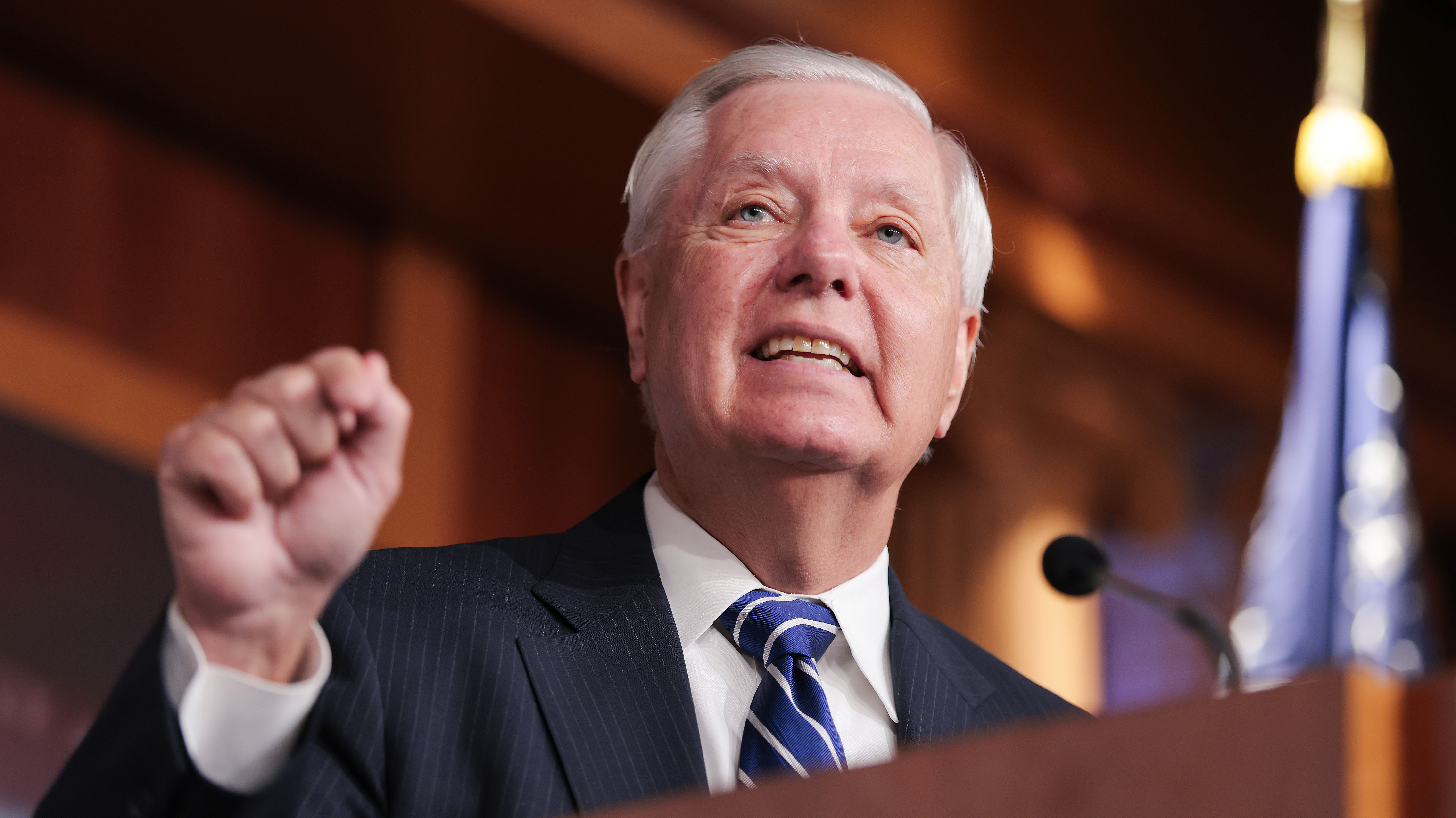
House Ethics Committee to determine sanction for embattled Democratic Rep. Sheila Cherfilus-McCormick

Embattled Democratic Rep. Sheila Cherfilus-McCormick resigns from Congress
U.S. Rep. Sheila Cherfilus-McCormick (D-FLA) appears for a hearing of the House Ethics Committee on Capitol Hill on March 26, 2026 in Washington, DC. (Andrew Harnik/Getty Images)

(WASHINGTON) — Florida Democratic Rep. Sheila Cherfilus-McCormick’s fate as a member of the House of Representatives hangs in limbo as a potential expulsion vote looms this week.

The House Ethics Committee is set to hold a rare public hearing Tuesday afternoon to determine what sanction would be appropriate for the panel to recommend to the full House against Cherfilus-McCormick.

Expelling a member of the House is a rare occurrence. A two-thirds majority is required to remove a member.

Only six House members in U.S. history have been expelled from the lower chamber. Former New York Republican Rep. George Santos was the most recent lawmaker expelled from the House in 2023.

Last month, Cherfilus-McCormick was found guilty of 25 House ethics violations, including acceptance of improper campaign contributions and commingling of campaign and personal funds. The congresswoman was indicted in November 2025 by a federal grand jury on charges of stealing $5 million in Federal Emergency Management Agency funds, which she is accused of laundering to support her successful 2021 congressional campaign.

Cherfilus-McCormick has denied wrongdoing — excusing the allegations as an accounting error. Also, she has insisted she won’t resign.

“For those asking whether I plan to resign, the answer is no. This is not the time to abandon the district, not when they too are fighting for their future,” she said in a statement last week.

The committee may recommend a range of sanctions, including expulsion, censure, reprimand, fine — and even denial or limitation of any right, according to House rules. The House may punish its members and may expel its members by a two-thirds vote, according to Article 1, Section 5 of the Constitution. 

The sanction recommendation against Cherfilus-McCormick is expected to be announced in writing after the hearing, which is expected to last for approximately two hours pending no interruptions. Afterward, the panel will break into executive session to conclude its deliberations and reach a judgment.

The precise timing of when the committee will release its bipartisan decision is unclear.

Regardless of the panel’s recommendation, Florida Republican Rep. Greg Steube said he’ll move to force a vote to try to expel the congresswoman following the sanction hearing. Steube is expected to make the expulsion resolution privileged, which requires Speaker Mike Johnson to hold a vote on the matter within two-legislative days. 

The speaker signaled last week that expelling Cherfilus-McCormick over her alleged crimes would be “appropriate.” 

Though he initially insisted that Democrats would not help Republicans expel Cherfilus-McCormick, House Minority Leader Hakeem Jeffries said on Monday that Democrats will convene a caucus meeting to determine how they’ll handle the the bipartisan Ethics panel’s recommendations.

Copyright © 2026, ABC Audio. All rights reserved.
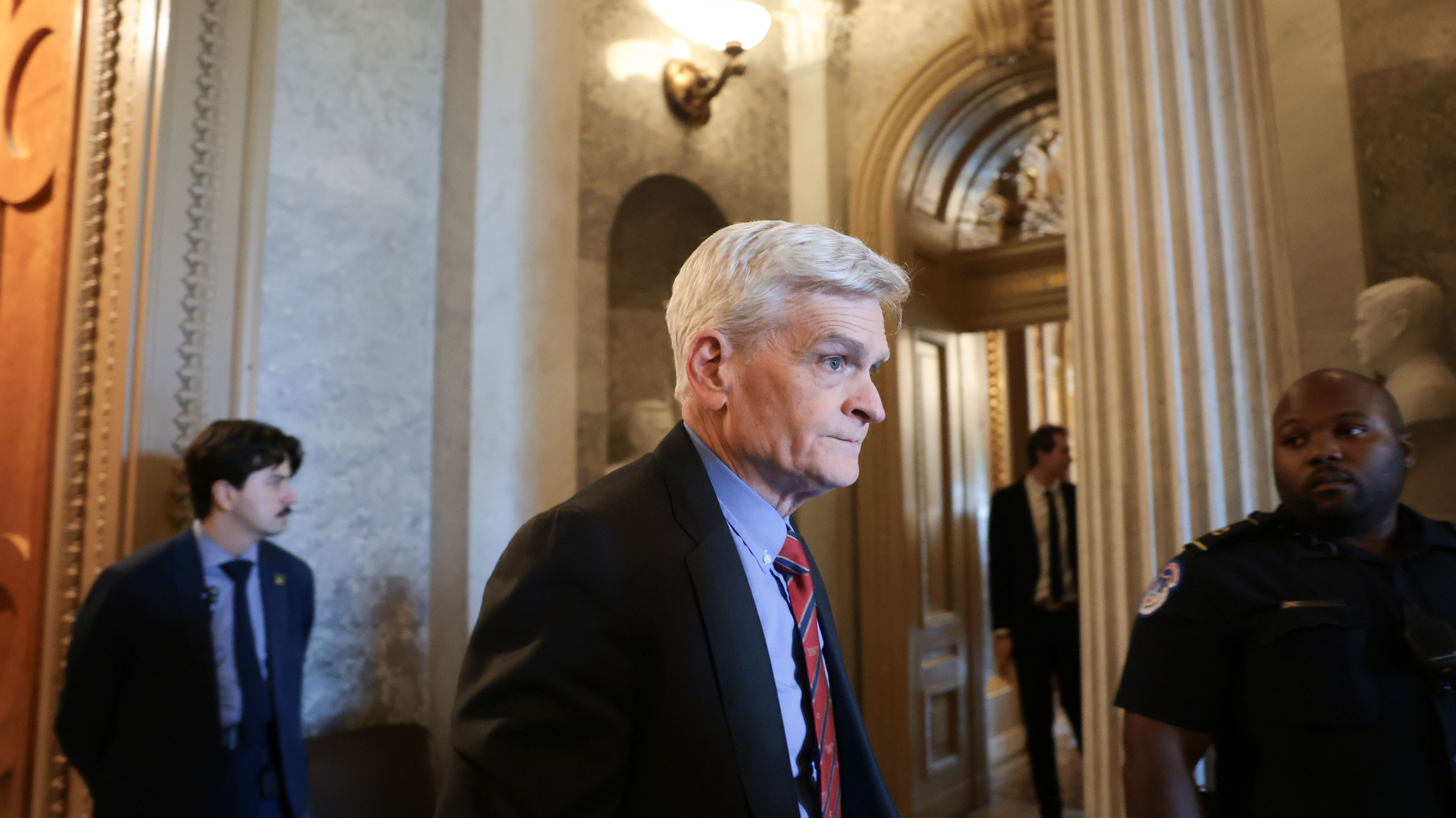
In Virginia redistricting election, 4 House seats at stake as voters go to the polls

In Virginia redistricting election, 4 House seats at stake as voters go to the polls
Former Virginia Gov. Glenn Youngkin (left) and former Virginia Attorney General Jason Miyares (right) campaign in Leesburg, VA on Monday, April 20, 2026. (ABC News)

(RICHMOND, Va.) — Voters in Virginia head to the polls Tuesday to vote on a redistricting ballot measure referendum that could have major implications for the midterm elections.

The referendum will decide if the Democratic-controlled legislature should be allowed to redraw the state’s congressional map. That would allow the legislature to implement a map that would reconfigure four congressional seats to favor Democrats, which could have major implications for control of the U.S. House after November’s midterm election.

Democrats have said they need the measure in Virginia to pass in order to continue to counter previous mid-decade redistricting that benefited Republicans in Texas and other states. But Republicans have called it a power grab in a state that is relatively split even politically, and say it sidelines a redistricting commission voters previously approved. 

Surrogates for both sides of the measure have been campaigning in full force ahead of election day, and President Donald Trump weighed in on Monday night in a rally held by telephone.

“This referendum is a blatant partisan power grab… if it passes, Virginia Democrats will eliminate four out of five congressional seats [held by Republicans in Virginia], so you’re going to get just wiped out in terms of representation in Washington,” Trump said on Monday.

But House Minority Leader Hakeem Jeffries, D-N.Y., a strong proponent of the measure, said earlier Monday that the redistricting was because of Trump, who encouraged Texas and other states to redistrict in 2025.

“We believe that it’s the voters of Virginia and the people of this country who should decide which party is in the majority… not Donald Trump and his extreme MAGA sycophants in state legislative bodies across the country who were ordered by Donald Trump to gerrymander the national congressional map as part of the effort to rig the midterm elections,” he told reporters on Monday.

During mid-decade redistricting in 2025, nine seats were redrawn to benefit Republicans, while six seats were redrawn to benefit Democrats. If Democrats add four seats to their count, then Democrats might only net one new seat if all seats flip as expected in November. But Florida is also set to consider mid-decade redistricting, which is expected to help Republicans bolster their count.

In the Virginia election, the Democratic-supported side of the measure far outfundraised and outspent the main group supporting a “no” vote, according to campaign finance filings, although both sides raised and spent millions. As of April 10, Virginians for Fair Elections, the flagship organization campaigning in favor of redistricting, has raised over $64 million, while Virginians for Fair Maps Referendum Committee, the largest organization campaigning against redistricting, has raised under $20 million.

While Democrats framed many of their arguments in favor of the redraw as meant to counter Trump, the president himself did not campaign for the “no” side in person and did not engage much with the election until the day before Election Day. 

Former Virginia Gov. Glenn Youngkin, asked by ABC News outside of an anti-redistricting campaign event in Leesburg, Virginia, on Monday if he thinks Trump or national Republicans should have gotten more involved with the race, downplayed the need for that, saying that the opposition to redistricting could go across party lines.

“I think what we’ve seen is that, first of all, it’s been a grassroots effort across the Commonwealth,” Youngkin told ABC News. “There are so many [vote] ‘no’ signs around the Commonwealth… and at the heart of it, that’s Virginians standing up, not just Republicans.”

Copyright © 2026, ABC Audio. All rights reserved.
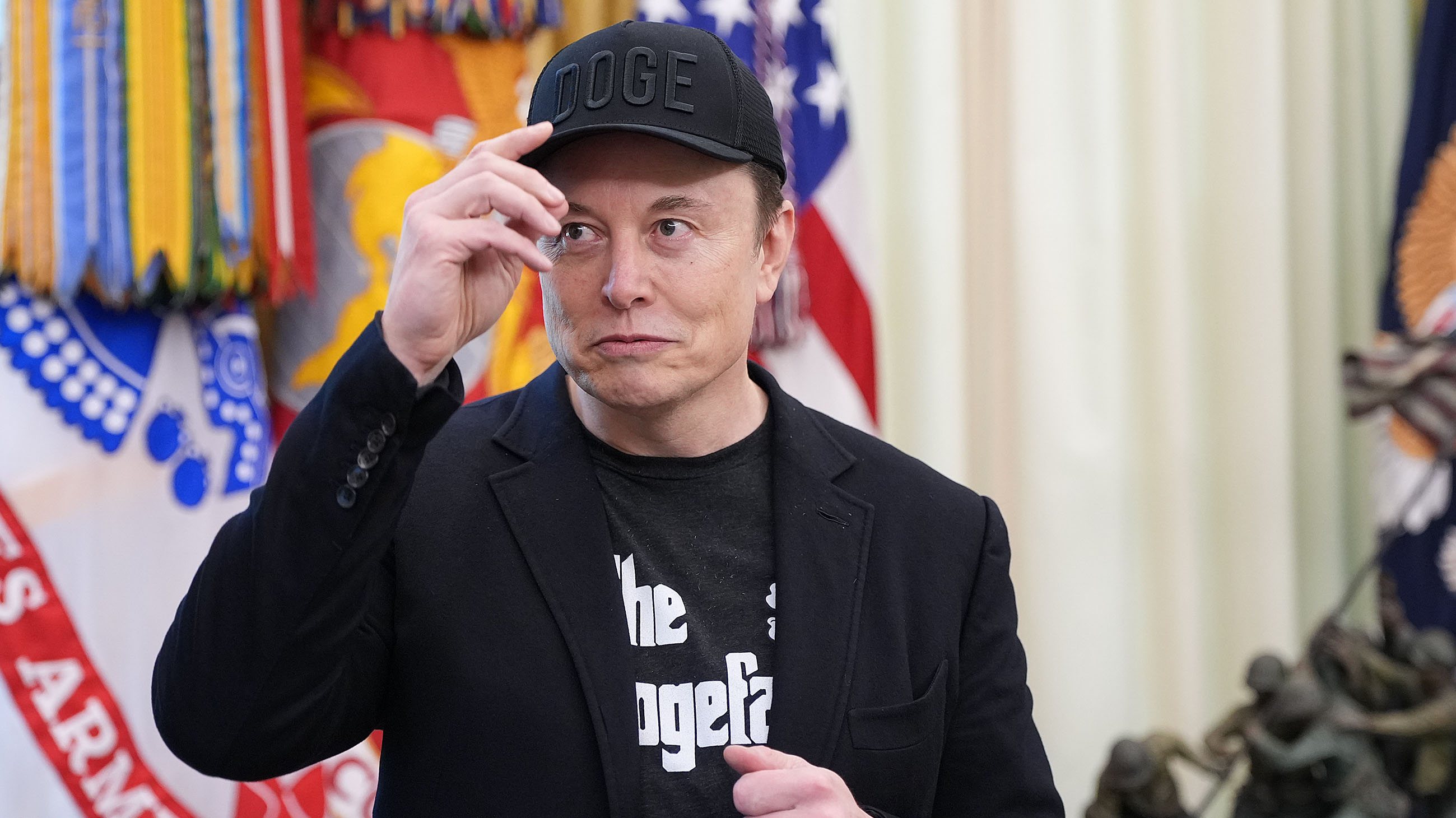
House Ethics Committee urges victims of sexual misconduct to contact them after lawmaker resignations

House Ethics Committee urges victims of sexual misconduct to contact them after lawmaker resignations
The US Capitol in Washington, DC, US, on Monday, April 20, 2026. House Republicans will send their first funding bills for the next fiscal year to the floor this week, while the Senate GOP plots a blueprint for patching up missing money for the current one. (Photographer: Graeme Sloan/Bloomberg via Getty Images)

(WASHINGTON) — The bipartisan House Ethics Committee on Monday released a rare statement encouraging anyone who may have experienced sexual misconduct by a House member or staffer to contact them, the Office of Congressional Workplace Rights or the Office of Employee Advocacy.

“There should be zero tolerance for sexual misconduct, harassment, or discrimination in the halls of Congress, or in any employment setting,” the committee said in a lengthy statement. 

“The greatest hurdle the Committee faces in evaluating allegations of sexual misconduct is in convincing the most vulnerable witnesses to share their stories,” the statement read. “Accordingly, the Committee’s practice has been to release only the information that is necessary to hold Members accountable for misconduct and address public reporting that impacts the integrity of the House.”

The statement comes after allegations of sexual misconduct led to the resignations of California Democrat Eric Swalwell and Texas Republican Tony Gonzales last week. 

Gonzales and Swalwell were about to face efforts by their colleagues to have them expelled from the House. The House Ethics Committee had announced investigations into both men, which ended when they resigned.

Gonzales dropped his reelection bid earlier this year after admitting to a relationship with a staffer who later died by suicide. Gonzales said he “made a mistake” and “had a lapse in judgement.”

Swalwell suspended his campaign for governor of California amid the accusations against him, including allegations of sexual assault, which he’s denied. Swalwell’s attorney, Sara Azari, last week said the allegations are “false.”

The committee said that since 2017, it has initiated investigations in 20 matters involving sexual misconduct by a lawmaker. 

“The Committee has also investigated several Members for their handling of allegations of sexual misconduct by their senior staff,” the statement read. 

In its history, the committee has conducted 28 sexual misconduct investigations. Several members who were being investigated resigned and even some were cleared.

The panel noted that it does not handle sexual harassment lawsuits or have “any involvement in settlements of such claims.” 

“The Committee has taken the position that conduct that falls short of legal definitions of sexual harassment or assault under federal or state statutes can still be a violation of the Code of Official Conduct, which imposes a higher standard on Members of the House,” the statement read. “The Committee has also consistently publicly announced its investigations into publicly reported allegations of sexual misconduct and has announced any findings in those matters.”

Copyright © 2026, ABC Audio. All rights reserved.
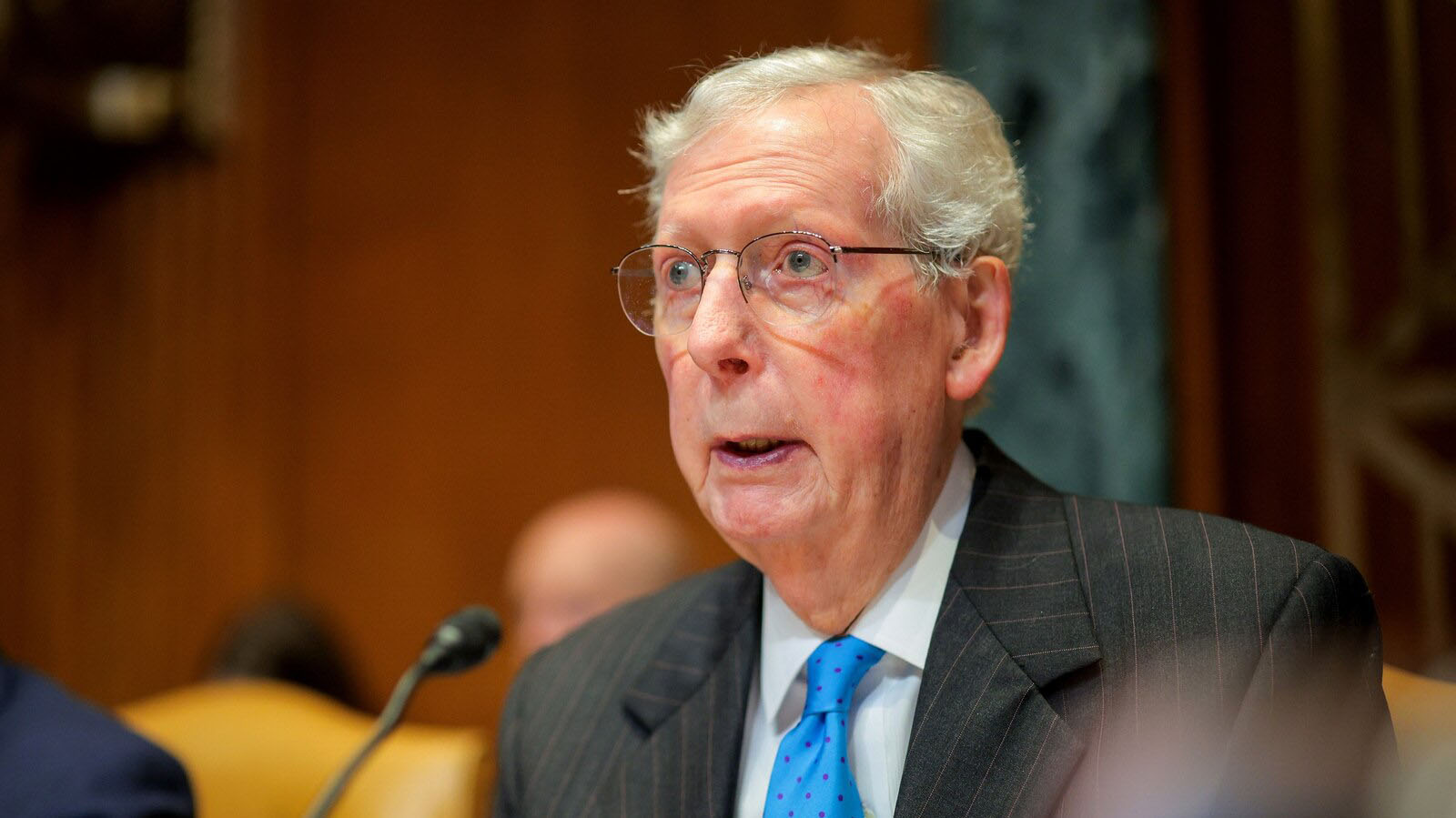
Trump tells ABC News he thinks he can trust the Iranians

Trump tells ABC News he thinks he can trust the Iranians
President Donald Trump walks over to speak to the media before boarding Marine One on the South Lawn of the White House on April 16, 2026 in Washington, DC. President Donald Trump is traveling to Las Vegas, Nevada to promote the tax cuts he signed into law in the “One Big Beautiful Bill Act” ahead of the midterm election. Tomorrow he will deliver remarks at a Turning Point USA event in Phoenix, Arizona. (Photo by Anna Moneymaker/Getty Images)

(WASHINGTON) — After announcing the Strait of Hormuz is “completely open” and saying a deal can soon be secured with Iran, a triumphant-sounding President Donald Trump told ABC News he believes he can trust the Iranians.

“I think they’ve had it,” Trump said in a phone interview on Friday. “I think they’ve had enough. That can happen to anybody. Even people like you and I can say, ‘I’ve had enough.'”

Trump said that the United States will be working with Iran to remove their enriched uranium, what he calls “nuclear dust,” and that it will be brought to the United States.

The president said it will be done with the Iranians in a “very peaceful manner.”

Trump also told ABC News the Iranians will be receiving no money for the exchange, saying that reports of a $20 billion payment are “fake news.” 

Trump said this will all be resolved “very soon,” and that the U.S. blockade on ships coming to and from Iran will not come down until the agreement is finalized.

When asked if he thinks he can trust the Iranians to fulfill their commitments here, Trump said yes.

On his negotiating team, Trump told ABC News, “Steve [Witkoff] and Jared [Kushner] will be going out, and maybe J.D. [Vance]. Haven’t spoken to J.D. about that yet.”

The president said talks would take place in “Islamabad only. I’m not interested in going to countries that didn’t help.” Trump said a second round of talks could happen as soon as this weekend, though no formal announcement has been made.

“They want to make a deal. They want to make some money, you know. … They’re not making any money as long as I have the blockade,” Trump said.

Trump also said NATO called him, though he didn’t say specifically who, and offered to help.

“NATO called me and said, ‘Is there anything we can do?’ And I said, ‘Yeah, stay away,'” he said.

The president also spoke at length about Lebanon. On Thursday, Israel and Lebanon agreed to a 10-day ceasefire. The Israeli military action in Lebanon targeting Hezbollah, an Iran-backed militia group, had been an obstacle in talks between the U.S. and Iran.

Trump said that’s a separate peace deal, and he reiterated what he has said on his social media platform: “I am going to prohibit him [Israeli Prime Minister Benjamin Netanyahu] from bombing Lebanon.”

When asked how, Trump said he’ll tell Netanyahu “he cannot do it.”

Regarding Lebanon, Trump said that he is going to involve the president of Syria in the final deal, and that he’s going dealing with Hezbollah.

Copyright © 2026, ABC Audio. All rights reserved.

First on ABC: Memo to Rubio details data on HIV/AIDS treatment program under Trump administration

First on ABC: Memo to Rubio details data on HIV/AIDS treatment program under Trump administration
Secretary of State Marco Rubio delivers remarks during working-level peace talks at the U.S. State Department, April 14, 2026, in Washington. (Andrew Harnik/Getty Images)

(WASHINGTON) — Data collected by the State Department that has not previously been made public indicates that the number of people receiving treatment through the President’s Emergency Plan for AIDS Relief (PEPFAR) has remained steady despite dramatic cuts to foreign aid funding under the Trump administration, according to an internal department memo sent to Secretary of State Marco Rubio and seen exclusively by ABC News. 

The memo, which is marked sensitive but unclassified, says that even though overall spending on the initiative fell by roughly 30%, 20.6 million people living with HIV in more than 50 countries received anti-retroviral treatment through U.S. government programs during the 2025 fiscal year — the same number government data shows were receiving the therapy in 2024. 

However, the memo did not provide information on the number of individuals who had received testing and counseling services through PEPFAR, which was 84.1 million in 2024. Global health experts estimate that figure could have fallen by more than 15 million in 2025, due in part to an interruption to some testing programs during the Trump administration’s freeze on most foreign aid in early 2025. 

But Jeremy Lewin, the State Department’s senior official for foreign and security assistance, reports that the data collected in 2025 shows progress towards other Trump administration goals, including ending mother-to-child transmission of HIV. 

Lewin wrote to Rubio that the number of pregnant and breastfeeding mothers who began pre-exposure prophylaxis through PEPFAR more than doubled. He said it climbed from 43,000 in 2024 to 103,000 in 2025, ” showing early progress on any early focus area of yours and President Trump’s.” 

Additionally, Lewin said the 2025 data demonstrates “an important shift toward country self-reliance,” indicating that treatment programs for 3 million people with HIV/AIDS were now being managed by national governments rather than organizations working on behalf of PEPFAR. 

Lewin said the department expected to see “further progress” toward country self-reliance as it further shifts toward its new global health strategy based on bilateral agreements that mandate a level of co-investment from participating nations. 

In a letter outlining the plan in September 2025, Rubio said that the U.S. would enter pacts with 71 countries by the end of the year and establish detailed implementation plans with those nations by the end of March 2026 — a timeline the administration has fallen behind. 

In his memo, Lewin said that as of April 7, the U.S had now “signed 30 compacts with nearly $20.6 billion dollars in both U.S. and partner co-investment commitments,” adding that the current data “does not yet show the impact of these historic deals.”

The Bureau of Global Health Security and Diplomacy will confidentially brief members of Congress on the 2025 PEPFAR data before releasing it to the public on Friday, according to the memo.

Since it was launched by former President George W. Bush in 2003, PEPFAR has saved 25 million lives globally, supported 7 million orphans and vulnerable children, and enabled 5.5 million babies to be born HIV-free, according to the State Department. It’s credited as the largest commitment by any country to fight a single disease in history.

Copyright © 2026, ABC Audio. All rights reserved.