

House primed to vote on Iran war powers resolution

House primed to vote on Iran war powers resolution
Speaker of the House Mike Johnson (R-LA) speaks to members of the media during a news conference on Capitol Hill on March 4, 2026 in Washington, DC. (Andrew Harnik/Getty Images)

(WASHINGTON) — As lawmakers debate the legal basis of President Donald Trump’s decision to launch strikes against Iran, the House is primed to vote on a war powers resolution Thursday afternoon that attempts to curtail military action.

The resolution, which only expresses the sentiment of Congress, calls on the president to terminate the use of U.S. armed forces in hostilities against Iran or any part of the Iranian government or military unless a declaration of war or authorization to use military force is enacted.

It comes after recent U.S. strikes on Iran that killed several Iranian leaders, including Ayatollah Ali Khamenei, the supreme leader of Iran.

The measure is non-binding and not subject to the president’s signature or veto.

Nevertheless, passage remains an open question in the closely divided House and could depend on attendance Thursday.

Speaker Mike Johnson argued Wednesday that the United States is “not at war” but only engaged in a “defensive operation” in Iran. 

“We’re not at war right now,” Johnson told reporters at the Capitol. “We’re in — four days into a very specific, clear mission and operation.”

Later on Wednesday, Trump contradicted Johnson, repeatedly referring to the conflict in Iran as a “war” hours after Johnson said it wasn’t.

Sitting next to Johnson during a roundtable on energy prices, Trump said “we’re doing very well on — on the war front, to put it mildly.”

Johnson also expressed confidence that Republicans will defeat the resolution, despite some reservations voiced by a couple of conservatives.

“I think passage of a war powers resolution right now would be a terrible, dangerous idea,” Johnson said. “It would empower our enemies. It would kneecap our own forces, and it would take the ability of the U.S. military and the commander in chief away from completing this critical mission to keep everybody safe.”

The resolution’s prospects for passage rests largely on turnout in the House where Republicans hold a slim majority. Nine lawmakers missed votes on Wednesday, including four Republicans and five Democrats — enough truancy to sway the vote on Thursday.

The measure was debated on the House floor on Wednesday, though a vote was postponed until Thursday.

“We have lost our way,” Democratic Rep. Ro Khanna, the bill’s Democratic sponsor, said during debate. “Let us declare with courage and clarity that we reject this illegal and unjust war in Iran. Let us choose moral renewal over further moral decay.”

At least two Republicans — Reps. Thomas Massie, the bill’s Republican sponsor, and Warren Davidson — have announced they will vote in favor of the measure, though a handful of moderate Democrats are expected to offset those defections by opposing the resolution themselves. 

On Wednesday, Senate Democrats failed to meet a 51-vote threshold on an alternate Iran war powers resolution sponsored by Democratic Sen. Tim Kaine and Republican Sen. Rand Paul. The resolution failed behind a 47-53 tally. 

Copyright © 2026, ABC Audio. All rights reserved.
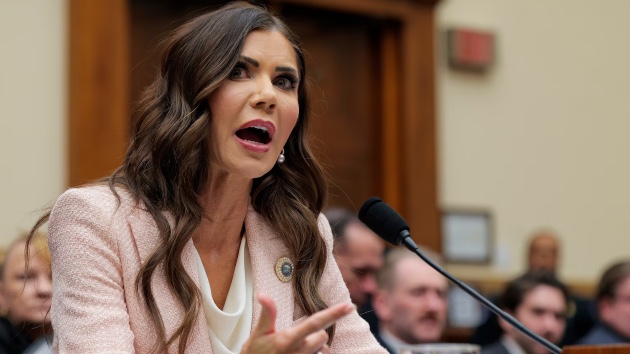
DHS Secretary Kristi Noem appeared on Wednesday in front of a House committee.

DHS Secretary Kristi Noem appeared on Wednesday in front of a House committee.
U.S. Secretary of Homeland Security Kristi Noem testifies before the House Judiciary Committee in the Rayburn House Office Building on March 04, 2026 in Washington, DC. (Heather Diehl/Getty Images)

(WASHINGTON) — A Democratic senator says Homeland Security Secretary Kristi Noem provided false testimony to the Senate Judiciary Committee.

In her appearance before the committee on Tuesday, Noem was asked by Sen. Richard Blumenthal, D-Conn., whether her adviser Corey Lewandowski, who is serving as a special government employee, has any role in approving DHS contracts, and she said no.

“Evidence suggests that your testimony was false. Internal DHS records show that Mr. Lewandowski has personally approved contracts at DHS, including, but not limited to, a multimillion-dollar contract,” according to a letter Blumenthal sent to Noem on Wednesday. “And current and former DHS employees have stated that Mr. Lewandowski’s signature is a green light for money to be transmitted to contractors.”

Blumenthal sent the letter on Wednesday night, after Noem’s testimony in front the House Committee.

In a follow-up appearance before a House committee on Wednesday, Rep. Jared Moskowitz asked Noem if she would like to correct her answer from Tuesday.

“What I would say is that he is an adviser to the Department of Homeland Security,” she said.

Sources have told ABC News that Lewandowski is Noem’s de facto chief of staff, despite having a 130-day cap on being able to work at the department, due to his status as a special government employee.

According to multiple sources, Lewandowski and Noem both approve contracts and “nothing” gets to the secretary without Lewandowski’s approval.

Oftentimes, Lewandowski travels with the secretary to her public events, and on multiple occasions ABC News has seen Lewandowski behind the scenes at events the secretary is speaking at.

When asked by two Democratic representatives if the two were romantically linked, Noem did not deny it and instead called the two Democratic members’ line of questioning “garbage.”

Lewandowski and Noem have both previously denied any romantic relationship. Both are married to other people.

The department didn’t immediately respond to the letter, or about Lewandowski’s role at DHS. 

Copyright © 2026, ABC Audio. All rights reserved.

Gen-Z identical twins model civility as political foes

Gen-Z identical twins model civility as political foes
ABC News

(INDIANAPOLIS) — If all politics is local, as the old saying goes, a pair of identical twins in Indiana proves that those local politics often start as a family affair — and don’t have to become uncivil.

Nick and Nathan Roberts may look exactly alike, but the 25-year-old brothers and members of the next generation of America’s civic leaders are anything but identical when it comes to their politics.

“From the time we were younger, he ended up in more right wing circles on the internet,” Nick said of his brother in an interview with ABC News Live PRIME. “I was in more of just more liberal circles. I don’t know what happened.”

They still live together with their grandparents, sharing a love of dogs, books and desire to travel the world. But that’s where the similarities end.

Nick Roberts, a diehard Democrat, is an Indianapolis city-county councilor and one of the youngest elected officials in the country.

Nathan Roberts, who identifies as a MAGA Republican, founded an Indiana political advocacy group last year and is a state organizer for Turning Point, the organization founded by Charlie Kirk.

“Our dad was conservative and our mom was liberal,” Nathan Roberts said. “I guess those are good examples of our family being divided.”

The Roberts twins, both college dropouts, are also Gen Z political outliers. More American twentysomethings identify as independents than any other group of adults, according to Gallup. Roughly one in four identify as Democrats, even fewer as Republicans.

“If you want to make a difference, you have to be involved,” said Nick Roberts. “And it’s easy, I think, to throw your hands up and say, ‘Well, I’m an independent. I hate both parties.’ But if you actually want to be engaged in the process, you have to kind of pick a side.”

“I think a lot of people go independent because it’s kind of like a sign of, like purity, like I’m above the thing,” added Nathan Roberts, “but really, it’s just like you not having much of a voice. I sort of understand and respect what people do when they go independent, I just don’t think it’s the right strategy.”

The twins got engaged in politics as Donald Trump rode down the escalator in Manhattan in 2015, launching his first presidential campaign. In 2020, they participated in their first campaigns and later supported rival candidates for president in 2024.

They say they agree on support for public safety, veterans issues and even protecting the environment. Their sharpest disagreement: immigration.

“I support law enforcement, but there’s come a point where, you know, we are nation immigrants,” said Nick Roberts. “Everybody came from immigrants at one point or another, and we have to do it humanely with laws, but not where we’re treating people inhumanely like we’ve seen over the last few months.”

Nathan Roberts rejects the view of an American “melting pot.”

“‘Nation of immigrants’ — those terms didn’t, none of them even existed until post-1900. You never heard George Washington saying America is a nation of immigrants,” he said.

On 95% of the issues, they sharply disagree and are dug in. When President Trump demanded Indiana redraw its election map to help Republicans in November, the twins even testified against each other in the statehouse.

Still, in what some see as a lesson for the country, the Roberts twins insist they manage never to get angry or unloving with each other.

“He’s very intelligent, and I love the fact he gets involved. You have all these people giving their opinions about stuff on the internet, but none of them lift a finger, besides maybe voting,” Nathan Roberts said of his brother. “He’s somebody who shows up to stuff.”

Nick Roberts said behind the “provocative” rhetoric, Nathan Roberts is reasoned and informed. “Though he pretends to be like a very inflammatory guy on social media,” he said, “I think he is very well-read on history and knows a lot of his stuff and the law, especially immigration.”

With no desire for higher political office for now, the Roberts twins say they’re just content to be councilor and constituent, as brothers, modeling civility and love despite the deepest political differences.

“Believe it or not, he’s actually not one of my most demanding constituents,” Nick Roberts said of Nathan Roberts with a chuckle.

“There’s been a time when I’m like, you know, you could change that, like, traffic sign to be slightly better and there wouldn’t be such a traffic jam at that place at 5pm,” Nathan Roberts quipped with a smile, “and he would be like that would be a good idea.”

Copyright © 2026, ABC Audio. All rights reserved.
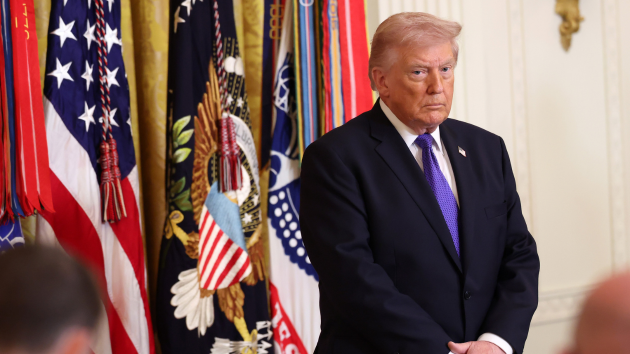
Trump teases endorsement in Texas Senate primary as GOP leaders urge him to back Cornyn

Trump teases endorsement in Texas Senate primary as GOP leaders urge him to back Cornyn
U.S. President Donald Trump arrives for a Medal of Honor Ceremony in the East Room of the White House on March 02, 2026, in Washington, DC. (Photo by Win McNamee/Getty Images)

(WASHINGTON) — President Donald Trump on Wednesday said he will soon make an endorsement in the heated Texas Senate Republican primary, as Sen. John Cornyn and Texas Attorney General Ken Paxton head toward a runoff election in May.

Trump also expressed his desire for the non-endorsed candidate to concede.

“The Republican Primary Race for the United States Senate in the Great State of Texas, a State I LOVE and won 3 times in Record Numbers (the HIGHEST vote ever recorded, by far!!!), cannot, for the good of the Party, and our Country, itself, be allowed to go on any longer. IT MUST STOP NOW!” Trump wrote on his social media platform.

“I will be making my Endorsement soon, and will be asking the candidate that I don’t Endorse to immediately DROP OUT OF THE RACE! Is that fair? We must win in November!!!” Trump wrote.

The president’s post came hours after Senate Republican leadership urged Trump to back Cornyn, a four-term Republican senator, over Paxton, a conservative firebrand who has become popular among Trump’s MAGA base despite being involved in several scandals.

Neither Cornyn nor Paxton captured 50% of the vote on Tuesday night’s primary. Republican Rep. Wesley Hunt, who was also running in the primary, has conceded.

The winner of the GOP primary will face Democrat James Talarico, a 36-year-old Presbyterian seminarian and former teacher who defeated Rep. Jasmine Crockett on Tuesday night.

At stake in this year’s midterm cycle is Trump’s hold on Congress, where Republicans have narrow majorities in both the House and Senate.

“We need to hold that seat, which means we need to nominate somebody that’s going to win in November. And to me, that’s only one of those two that’s going to make it to the runoff: and that is John Cornyn,” Republican Whip John Barrasso said on Wednesday. “I would encourage the president to endorse him. The president will make his on his own time.”

Barrasso noted higher turnout on Tuesday night among Democratic voters, which he said “shows that the energy and enthusiasm is there on the Democrat side.

“We need to nominate somebody who attracts voters across the state of Texas, and that’s John Cornyn,” Barrasso said. 

Senate Majority Leader John Thune said he’s hopeful that Trump will endorse Cornyn and save the GOP’s campaign arm from continuing to have to spend heavily to help Cornyn defeat Paxton. Cornyn and his allies already spent more than $70 million on ad spending, according to tracking firm AdImpact.

“Cornyn had, in my view — had a great night. And you know, wins. He’s positioned to win the runoff,” Thune said. “And if the president endorses early, it saves everybody a lot of money and lot of just, 10 weeks of spirited campaign on our side that keeps us from spending time focusing on the Democrats.” 

Thune said that a hard-fought primary runoff between two Republican candidates is “not helpful.”

“Which is why, if the president can weigh in, it would be enormously helpful,” Thune said. 

Thune later told Fox News that he spoke with Trump on Wednesday and reiterated his support for Cornyn, though he said Trump “makes his own decisions.”

Throughout the course of the primary election, Trump’s avoided making an endorsement, claiming that Cornyn, Paxton and Hunt were all “excellent” candidates and his “friends.”

Trump, in his social media post on Wednesday, praised Cornyn and Paxton for running “good races” but said they were “not good enough.”

“We have an easy to beat, Radical Left Opponent, and we have to TOTALLY FOCUS on putting him away, quickly and decisively! Both John and Ken ran great races, but not good enough. Now, this one, must be PERFECT!” Trump wrote.

ABC News’ Diana Paulsen contributed to this report.

Copyright © 2026, ABC Audio. All rights reserved.

Embattled Rep. Tony Gonzales heads to runoff with Brandon Herrera in Texas GOP primary

Embattled Rep. Tony Gonzales heads to runoff with Brandon Herrera in Texas GOP primary
Republican congressional candidate Brandon Herrera speaks during a campaign rally at the Constantino S Pizza restaurant on February 26, 2026, in Somerset, Texas. Brandon Bell/Getty Images

(TEXAS) — The Texas 23rd Congressional District race is projected to head to a runoff, as incumbent Rep. Tony Gonzales, who was accused of having an affair with a staffer who later died by suicide, and conservative activist Brandon Herrera both failed to receive more than 50% of the vote.

With 94% of the expected vote reporting Wednesday morning, Herrera holds just about a 1-point advantage over Gonzales (roughly 43% to 42%).

Gonzales and Herrera previously went head-to-head in the 2024 Republican primary and similarly advanced to a runoff. Gonzales ultimately won by just 400 votes. 

Tuesday’s primary election came as Gonzales battles calls from some House Republicans to resign amid allegations that he engaged in an extramarital affair with a congressional aide who died by suicide last fall. Gonzales has denied the allegations of the affair with the aide, Regina Santos-Aviles.

Asked recently if he had an extramarital affair with Santos-Aviles, Gonzales said “what you have seen is not all the facts.”

Text messages, provided to ABC News by Santos-Aviles’ widower, appear to show Gonzales pursuing a relationship with the former staffer. ABC News has reached out to Gonzales for a request for comment on the text messages.

In February, Gonzales told ABC News that “Ms. Santos-Aviles was a kind soul who devoted her life to making the community a better place.”

ABC News has also confirmed that Gonzales has been under investigation by the Office of Congressional Conduct, which has already completed its probe. Due to its rules, the OCC can’t transmit a report against a member of Congress 60 days prior to an election.

The runoff election is scheduled for May 26, which is more than 60 days away from the primary election.

On Wednesday, the House Ethics Committee announced that it started an investigative subcommittee to look into the allegations against Gonzales.

Gonzales has notably lost many endorsements in his bid for reelection as calls for his resignation continue. He said last month that he is “not going to resign.”

President Donald Trump had endorsed Gonzales prior to the allegations. Since then, the White House has not responded to ABC News’ questions about whether the president still supports Gonzales.

In a post on X reacting to the news of a runoff, Gonzales began by thanking the president and looking forward to a “victorious May.”

In a reply to Gonzales post, Herrera retorted: “Are you seriously congratulating yourself for not winning your primary?”

Herrera, a Second Amendment activist and social media personality, has also faced his share of controversy, including accusations that his YouTube videos allegedly featured Nazi-related imagery. In response, Herrera wrote in a social media post that “I am not, nor have I never been a neo-Nazi.”

Both candidates have sought to align themselves closely with the president.

ABC News’ Lauren Peller contributed to this report.

Copyright © 2026, ABC Audio. All rights reserved.
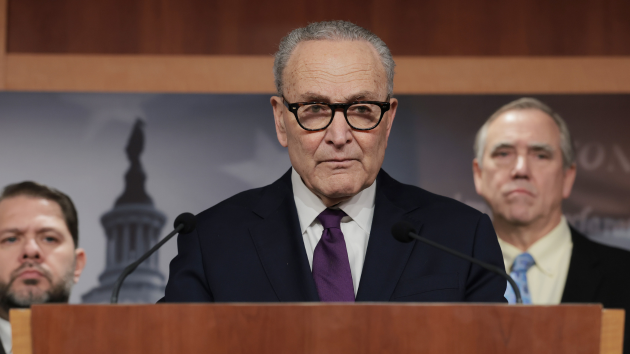
Senate voting on Democrats’ Iran war powers resolution

Senate voting on Democrats’ Iran war powers resolution
U.S. Senate Minority Leader Chuck Schumer (D-NY) speaks during a news conference on the Epstein Files on Capitol Hill February 26, 2026 in Washington, DC. (Anna Moneymaker/Getty Images)

(WASHINGTON) — The Senate is voting Wednesday on a Democratic-led Iran war powers resolution that calls for congressional approval for military action against Iran.

The initial procedural vote to pass the resolution, introduced by Sens. Tim Kaine and Adam Schiff, would direct the removal of United States armed forces from hostilities within or against Iran that have not been authorized by Congress. It comes after recent U.S. strikes on Iran that killed several Iranian leaders, including Ayatollah Ali Khamenei, the supreme leader of Iran.

There is no timeline in the bill, so if it passed and President Donald Trump signed it, which is highly unlikely, the U.S. would have to draw down troops.

Because this bill is privileged, it would only need 51 votes to advance and ultimately be approved by the Senate. It’s not yet clear whether the legislation will have that support, but at this time it seems unlikely to advance.

Earlier this year, a similar resolution concerning military action in Venezuela passed an initial procedural test vote when a small handful of Republican senators voted with Democrats to move it forward. Some of those Republicans were ultimately swayed to revoke their support for that legislation during a vote on final passage, and the bill was ultimately defeated by Vice President JD Vance’s tie-breaking vote.

This time around though, Republicans seem even more inclined to support Trump’s actions in Iran.

Republican Sen. Josh Hawley, of Missouri, was one of the Republicans who initially supported the Venezuela war powers resolution before ultimately voting against it during a vote of final passage. His switch in position during that vote in January came after Trump attacked Hawley and the other Republicans who initially supported the proposal.

Hawley told ABC News on Tuesday that he would vote against the Iran war powers resolution.

The legislation cites the 1973 War Powers Resolution, which states that in the absence of a declaration of war but when armed forces are introduced, the president must report to Congress within 48 hours the circumstances necessitating their introduction and must terminate the use of U.S. armed forces within 60 days unless Congress permits otherwise. If approval is not granted after that 60-day period and the president deems it an emergency, then an additional 30 days are granted for ending operations.

“I think they’re in compliance with the statute. The statute gives them 60 days, gives the administration 60 days to conduct activity without having to come back to … Congress for authorization, unless they’re ground troops. My view has always been, ground troops will require congressional authorization. So they’re currently none involved, none have been involved, and they’re following the War Powers Act,” Hawley said.

Still, Democrats say the vote is critical. Sen. Kaine, of Virginia, who is leading the Iran resolution and who has been an outspoken proponent of Congress’ role in declaring war, said the vote will show where everyone stands on the conflict.

“We’re going to put everybody on the record [Wednesday]. Nobody gets to hide and give the president an easy pass or an end run around the Constitution,” Kaine said on Tuesday. “Everybody’s got to declare whether they’re for this war or against it.”

Without the support of at least a few Republicans, the Iran resolution is likely to fail to advance during Wednesday’s vote. 

Even if this legislation were to pass, it would still require approval in the House and the signature of the president to become law.

The House is set to vote on its own war powers resolution later this week. The non-binding measure, introduced by Democratic Rep. Ro Khanna and GOP Rep. Thomas Massie, would not be subject to the president’s signature or veto if it passed both houses of Congress.

On Wednesday, Johnson expressed confidence that Republicans will defeat the House’s war powers resolution, despite some reservations expressed by a handful of conservatives. Republicans hold a razor-thin majority in the House, so it would only take a few defections for the bill to pass.

“I think passage of a war powers resolution right now would be a terrible, dangerous idea,” Johnson warned. “It would empower our enemies. It would kneecap our own forces, and it would take the ability of the U.S. military and the commander in chief away from completing this critical mission to keep everybody safe.”

ABC News’ John Parkinson and Lauren Peller contributed to this report.

Copyright © 2026, ABC Audio. All rights reserved.
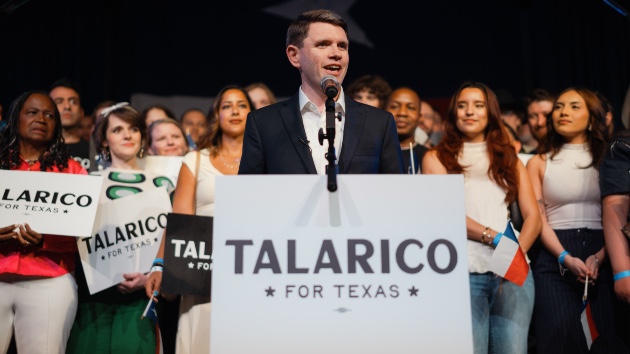
Takeaways from the first primaries of the 2026 election cycle

Takeaways from the first primaries of the 2026 election cycle
State Representative James Talarico, a Democrat from Texas and US Senate candidate, speaks during a Texas primary election night event at Emo’s Austin in Austin, Texas, US, early on Wednesday, March 4, 2026. (Photographer: Jordan Vonderhaar/Bloomberg via Getty Images)

(WASHINGTON) — Primary voting began on Tuesday in Texas, Arkansas and North Carolina, marking the beginning of the 2026 midterm elections, which are expected to be seen in part as referenda on the first year of President Donald Trump’s second term.

Here are a few key takeaways from the early voting.

Texas GOP Senate primary heads for a runoff

The heated Republican Senate primary heads to a runoff between Sen. John Cornyn and Attorney General Ken Paxton, as neither secured over 50% of the vote Tuesday evening.

Rep. Wesley Hunt, who was also running in the race, conceded Tuesday evening and did not endorse Paxton or Cornyn.

With Trump not endorsing in the race, Paxton attempted to paint Cornyn as not aligned with the President and said that Cornyn “stabbed [Trump] in the back by trying to derail his presidential campaigns.”

“No one can name [one] accomplishment [of Cornyn’s],” Paxton said Tuesday night. “The people of Texas deserve better. That’s the message we’re taking into the runoff.”

Cornyn continued his attacks on Paxton Tuesday night, calling him a “shameless candidate” and saying there’s too much at stake in this year’s election for him to be elected to the Senate.

“I refuse to allow a flawed, self-centered and shameless candidate like Ken Paxton risk everything we’ve worked so hard to build over these many years, there is simply too much at stake in this midterm election for our state and for our country, the final two years of … President Trump’s agenda hangs in the balance,” Cornyn said.

Talarico defeats Crockett

On Tuesday morning, U.S. Rep. Jasmine Crockett conceded to State Rep. James Talarico, the 36-year-old Presbyterian seminarian and former teacher in the contested Texas Democratic Senate primary, giving hope to national Democrats about the possibility of flipping the state blue.

“This morning I called James and congratulated him on becoming the Senate nominee. Texas is primed to turn blue and we must remain united because this is bigger than any one person,” Crockett said in a statement. “This is about the future of all 30 million Texans and getting America back on track. With the primary behind us, Democrats must rally around our nominees and win. I’m committed to doing my part and will continue working to elect democrats up and down the ballot.”

Talarico will face off against whoever wins May’s runoff election in the state’s Senate GOP primary between Cornyn and Paxton — a race that Trump has still yet to endorse a candidate in and is expected to become uglier in the lead up to the runoff.

The last time a Democrat won a Senate race in Texas was in 1988.

Talarico told his supporters early Wednesday morning at his election party that he was confident in the movement they had built.

“Tonight, our campaign is shocking the nation. We are still waiting for an official call, but we are confident in this movement we’ve built together. Every vote must be counted, every voice must be heard,” Talarico said. “We are not we are not just trying to win an election. We are trying to fundamentally change our politics, and it’s working. “

The Trump factor

And in some down-ballot races, Trump’s endorsement continues to carry weight.

Republican Rep. Dan Crenshaw became the first GOP incumbent to lose a primary this cycle when he was defeated by hardline conservative state Rep. Steve Toth, in a race that focused on which candidate aligned with Trump the most.

Trump did not endorse either candidate in the race, which left Crenshaw as the only House Republican in Texas running for re-election without the President’s support.

At multiple points during his time in Congress, Crenshaw found himself at odds with Trump, including over the President’s refusal to accept the 2020 election results.

In North Carolina, a Senate seat Democrats hope to flip, former Gov. Roy Cooper, a Democrat, and former Republican National Committee chairman Michael Whatley each won their primaries handily and will face off in one of the most-watched Senate races this cycle.

Whatley, who was endorsed by Trump, embraced the President and said he would stand with him if elected to the U.S. Senate during his victory speech Tuesday night.

“I will stand with President Trump to finish the job, secure the border permanently and ensure that illegal aliens are swiftly deported,” Whatley said later on his victory remarks.

Copyright © 2026, ABC Audio. All rights reserved.

US sub sinks Iranian ship by torpedo in Indian Ocean, 1st such attack since WWII

US sub sinks Iranian ship by torpedo in Indian Ocean, 1st such attack since WWII
Pete Hegseth, US secretary of defense, during a news conference at the Pentagon in Arlington, Virginia, US, on Monday, March 2, 2026. Stefani Reynolds/Bloomberg via Getty Images

(WASHINGTON) — A U.S. submarine on Tuesday sank an Iranian warship in the Indian Ocean, Defense Secretary Pete Hegseth said Wednesday, the first time since WWII the U.S. has sunk an enemy combatant ship by torpedo.

This is a developing story. Please check back for updates.

Copyright © 2026, ABC Audio. All rights reserved.

Senate to vote on Democrats’ Iran war powers resolution

Senate voting on Democrats’ Iran war powers resolution
U.S. Senate Minority Leader Chuck Schumer (D-NY) speaks during a news conference on the Epstein Files on Capitol Hill February 26, 2026 in Washington, DC. (Anna Moneymaker/Getty Images)

(WASHINGTON) — The Senate will vote Wednesday on a Democratic-led Iran war powers resolution, according to a press release from Minority Leader Chuck Schumer and bill co-sponsors Sens. Tim Kaine and Adam Schiff.

The resolution would direct the removal of United States armed forces from hostilities within or against Iran that have not been authorized by Congress. It comes after recent U.S. strikes on Iran that killed several Iranian leaders, including Ayatollah Ali Khamenei, the supreme leader of Iran.

There is no timeline in the bill, so if it passed and President Donald Trump signed it, the U.S. would have to draw down troops.

Because this bill is privileged, it would only need 51 votes to advance and ultimately be approved by the Senate. It’s not yet clear whether the legislation will have that support, but at this time it seems unlikely to advance.

Earlier this year, a similar resolution concerning military action in Venezuela passed an initial procedural test vote when a small handful of Republican senators voted with Democrats to move it forward. Some of those Republicans were ultimately swayed to revoke their support for that legislation during a vote on final passage, and the bill was ultimately defeated by Vice President JD Vance’s tie-breaking vote.

This time around though, Republicans seem even more inclined to support Trump’s actions in Iran.

Republican Sen. Josh Hawley, of Missouri, was one of the Republicans who initially supported the Venezuela war powers resolution before ultimately voting against it during a vote of final passage. His switch in position during that vote in January came after Trump attacked Hawley and the other Republicans who initially supported the proposal in a post on social media. 

Hawley told ABC News on Tuesday that he would vote against the Iran war powers resolution.

The legislation cites the 1973 War Powers Resolution, which states that in the absence of a declaration of war but when armed forces are introduced, the president must report to Congress within 48 hours the circumstances necessitating their introduction and must terminate the use of U.S. armed forces within 60 days unless Congress permits otherwise. If approval is not granted and the president deems it an emergency, then an additional 30 days are granted for ending operations.

“I think they’re in compliance with the statute. The statute gives them 60 days, gives the administration 60 days to conduct activity without having to come back to … Congress for authorization, unless they’re ground troops. My view has always been, ground troops will require congressional authorization. So they’re currently none involved, none have been involved, and they’re following the War Powers Act,” Hawley said.

Still, Democrats say the vote is critical. Sen. Kaine, of Virginia, who is leading the Iran resolution and who has been an outspoken proponent of Congress’ role in declaring war, said the vote will show where everyone stands on the conflict.

“We’re going to put everybody on the record [Wednesday]. Nobody gets to hide and give the president an easy pass or an end run around the Constitution,” Kaine said on Tuesday. “Everybody’s got to declare whether they’re for this war or against it.”

Without the support of at least a few Republicans, the Iran resolution is likely to fail to advance during Wednesday’s vote.

Even if this legislation were to pass, it would still require approval in the House and the signature of the president to become law. It is highly unlikely Trump would sign the bill should it make it to his desk.

Copyright © 2026, ABC Audio. All rights reserved.

As war with Iran stretches on, some experts raise concerns over ‘war of attrition’ with missile stockpiles

As war with Iran stretches on, some experts raise concerns over ‘war of attrition’ with missile stockpiles
In this U.S. Navy released handout, Arleigh Burke-class guided-missile destroyer USS Frank E. Petersen Jr. (DDG 121) fires a Tomahawk Land Attack Missile during operations in support of Operation Epic Fury, on February 28, 2026 at Sea. (Photo by U.S. Navy via Getty Images)

(NEW YORK) — While President Donald Trump says Operation Epic Fury could last several weeks, a question some are raising is how long U.S. and allies’ missile defense stockpiles can last in an extended conflict with Iran.

Trump has insisted that the U.S. is well equipped to fight, with a “virtually unlimited supply,” and other Gulf states have pushed back on claims that they are running missiles.

How much of the U.S. interceptor stockpile is being used up to defend against Iran’s continued heavy missile and drone attacks is classified, but it’s expected to be among questions lawmakers have for top Trump administration officials this week when they brief lawmakers on Capitol Hill.

Some experts are also raising concerns about America’s cache of the expensive air defense missiles as the Iranian military continues to target U.S. assets and other allies in retaliation.

Kelly Grieco, a senior fellow at the Stimson Center think tank and former assistant professor at the Air Command and Staff College, told ABC News that the conflict is becoming a “war of attrition.”

Watch special coverage on Nightline, “War with Iran,” each night on ABC and streaming on Disney+ and Hulu.

The U.S. and Israeli militaries are now in a race to destroy Iran’s missile capabilities, including launchers and production facilities, before the U.S. and Israel’s own stockpile of air defense interceptor missiles in the region is depleted, according to Grieco.

“The question is becoming who runs out of missiles first. Does the defender run out of interceptors,” she asked, referring to the armies of the U.S., Israel and the Gulf states. “Or does Iran run out of missiles, or their ability to launch missiles?”

“If the Iranians are able to launch with the kinds of numbers they have been launching over the past 48 hours over the next four to five weeks, that does not seem sustainable from an interceptor perspective,” she added. 

“But if those numbers drop off because the U.S. and Israel destroy the launchers themselves, or their storage facilities, and the numbers drop dramatically, then we could potentially sustain this campaign,” Greico said.

Retired Lt. Gen. Dan Karbler, former commander of the U.S. Space and Missile Defense Command, told ABC News Live Tuesday that extensive drone use by the Iranian military has prompted the use of smaller short-range missiles as interceptors.

“We don’t want to shoot Patriot missiles at the drones,” he said. “So, some of our short-range air defense, more capability of that type of nature needs to flow into countries so we’re using our short-range missiles to take out these drones not our very limited patriot missiles.”

President Trump attempted to assuage concerns about the stockpile Tuesday — but also acknowledged the number of some of the highest-grade munitions is “not where we want it to be.”

“The United States Munitions Stockpiles have, at the medium and upper medium grade, never been higher or better — As was stated to me today, we have a virtually unlimited supply of these weapons,” Trump wrote on social media early Tuesday morning. 

And even as he says the U.S. will “easily prevail” in this war and that the U.S. is prepared for the operation to go on for “whatever it takes,” Trump wrote that “Wars can be fought “forever,” and very successfully, using just these supplies.” 

The U.S. was already concerned about its stockpile before this war as the Russian-Ukraine conflict, the Israeli-Gaza conflict and last summer’s conflict with Iran have dramatically increased demand for Patriot and THAAD missiles, according to Greico.

Terminal High Altitude Area Defense missiles that are used to defend against Iran’s most powerful ballistic missiles are in particularly short supply. Grieco estimated that if the U.S. uses its THAAD missiles at same rate as the 12-day conflict with Iran last year, it likely only has enough for about two weeks now at most.

Grieco said it will take a long time, and be costly, for the U.S. and other countries to replenish their antimissile stockpiles, which are more time consuming and expensive to produce than the Iranian weapons they defend against.

Iran has not launched missiles at the same scale so far compared to the attacks during conflict with Israel last year.

Israeli officials and independent experts said they believe that may reflect a strategy by Iran to run down air defense supplies with relatively smaller but steady attacks over a longer period.

Copyright © 2026, ABC Audio. All rights reserved.