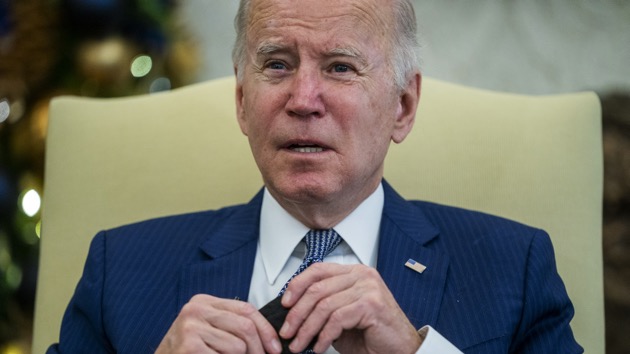
Biden agrees with France’s Macron that sub snub could have been handled better

Biden agrees with France’s Macron that sub snub could have been handled better
CameronSmith/Flickr

(WASHINGTON) — President Joe Biden for the first time admitted the diplomatic fallout with France over a recent defense deal could have been better handled, the White House said Wednesday in a joint statement with French President Emmanuel Macron’s office.

Biden and Macron spoke on the phone Wednesday, in a bid to smooth over the diplomatic fallout from a defense partnership the U.S. struck with Australia and the United Kingdom.

“The two leaders agreed that the situation would have benefitted from open consultations among allies on matters of strategic interest to France and our European partners,” the statement from the White House and Élysée Palace said. “President Biden conveyed his ongoing commitment in that regard.”

The reconciliatory note could signal that France may tone down its criticism of Biden after he agreed to share nuclear submarine technology with Australia.

France’s leaders have compared Biden to his predecessor, President Donald Trump, saying the U.S. surprised France, a key ally, with the agreement — which resulted in Australia scuttling a major deal that had been underway with France.

Biden and Macron plan to meet in Europe in October, according to the statement. Biden is set to head to Glasgow, Scotland, that month for a summit on the climate crisis, although the two sides did not say where the leaders planned to meet.

Meanwhile, Macron will return the French ambassador to Washington next week — France had recalled him in response to the defense news — and the ambassador will who will “then start intensive work with senior U.S, officials,” the statement reads.

The two leaders “have decided to open a process of in-depth consultations, aimed at creating the conditions for ensuring confidence and proposing concrete measures toward common objectives,” the White House and Élysée Palace said. “They will meet in Europe at the end of October to reach shared understandings and maintain momentum in this process.”

The statement also said Biden “reaffirms the strategic importance of French and European engagement in the Indo-Pacific region.”

Copyright © 2021, ABC Audio. All rights reserved.

Biden admin missed red flags before Haitian migrant surge

Biden admin missed red flags before Haitian migrant surge
OleksiiLiskonih/iStock

(WASHINGTON) — Months before the Haitian migrant surge at the southern border, Border Patrol agents on the front lines in Texas sounded alarms that Del Rio was vulnerable and resources could become overwhelmed, according to email messages reviewed by ABC News.

Despite the warnings, officials say preparations for the migrant surge only began when large waves started showing up this week. Now the Biden administration is scrambling to track, process and remove those gathered under an international bridge in the South Texas town of Del Rio that at one point ballooned to more than 14,000.

In one email to Del Rio sector management dated June 1, 2021, members of the National Border Patrol Council expressed the need for additional  measures to process migrants in the field in the event that facilities became overwhelmed. Agents offered specific suggestions including the use of digital tablets to allow for early initiation of the migrant intake process immediately after encounters with Customs and Border Protection.

In a second email days later, the Del Rio agents went so far as to ensure the tablets had wireless data capabilities with the right network provider so they could be used along the international boundary line.

The emails were sent to Del Rio Sector Border Patrol management, an arm of the Department of Homeland Security. Management responded weeks later to the June emails with a single line in red typeface:

“This is being explored, several other platforms are being considered which are more efficient.”

“The agency did indeed consider the tablets, but it never materialized into anything of substance,” said Jon Anfinsen, National Border Patrol Council vice president. “As the months went on, the groups continued to increase in size and frequency, but the temporary facilities are only now starting to come online over the past few days, after things had already spun out of control.”

Anfinsen said the groundwork for the migrant surge only began last week as the border became overwhelmed.

Asked by Republican Rep. Michael McCaul on Wednesday about the emails, Homeland Security Secretary Alejandro Mayorkas said his Department does track migration in Central and South America but that the rate at which this group came together at the border was unprecedented.

“We watch the flow of individuals who are seeking to migrate irregularly through Mexico from the Northern Triangle countries, and further south we do indeed track it,” Mayorkas said. “And nevertheless, a congressman, as I previously articulated the speed with which this materialized is unprecedented.”

“Did you see this threat coming? And if so — what if anything did you do?” McCaul pressed.

“We have not seen before such a rapid migration — irregular migration — of individuals as we have observed and experienced with respect to the Haitians who have crossed the border in Del Rio Texas,” Mayorkas said. “That has been an unprecedented speed.”

The Department of Homeland Security did not respond to a request to comment on the email exchange. U.S. Customs and Border Protection declined to comment.

There were other early warning signs, including reports of large migrants groups moving into Panama in the early weeks of summer. Panama’s foreign minister was concerned about the mounting pressure after the country’s migration division reported a 477% increase in border crossings between January and April, according to a June report from Bloomberg News.

Haitian migrants have been leaving the island nation in large numbers since the massive earthquake of January 2010. Many moved to reside in Brazil and Chile but have faced a lack of economic stability and security in South America.

Arrests at the border have neared record levels over the summer. CBP has made more than 1.5 million arrests or detentions so far this budget year. Immigration officials point out a significant portion, sometimes as much as a third, of those arrests involve repeat offenders and the administration has taken steps to send migrants further into the interior of Mexico to prevent recidivism.

Haiti has been devastated by natural disasters and political unrest with two major earthquakes in roughly the past decade. The first in 2010 sent thousands seeking refuge in South America. A less expansive, but still deadly, earthquake last month killed more than 2,200. But this most recent quake occurred after the July 29 deadline set by the Biden administration for any Haitians to receive refuge in the U.S.

Copyright © 2021, ABC Audio. All rights reserved.

Biden tries to salvage agenda threatened by Democratic infighting

Biden tries to salvage agenda threatened by Democratic infighting
BrianPIrwin/iStock

(WASHINGTON) — President Joe Biden on Wednesday worked to salvage his sweeping legislative agenda as Democratic infighting imperiled his ambitious goals on infrastructure, climate change, and Americans’ relationship with government into peril.

The president planned to host a series of Democratic congressional leaders and factions at the White House, with the goal of pushing two pieces of legislation to the finish line: the bipartisan $1.2 trillion physical infrastructure bill that already passed the Senate but faces challenges in the House, and a potentially much larger bill with hundreds of billions of dollars for “human infrastructure” — funding for child care, eldercare, universal preschool, free community college, combating climate change, and a host of other Democratic priorities.

House Speaker Nancy Pelosi told reporters late Tuesday that she intends to put the bipartisan infrastructure bill on the floor next week — as early as Monday — for consideration, but it’s unclear if and when the lower chamber will vote on the bill.

Pelosi and Democratic leadership have urged their entire caucus to support the bill, despite the fact that the $3.5 trillion bill is still weeks away from completion and progressives have said they won’t support the bipartisan bill unless the larger social bill is passed. Historically, Pelosi is loath to put a bill on the floor that will fail, so leadership must decide soon how they intend to play this.

Congressional Progressive Caucus chair Rep. Pramila Jayapal, D-Wash., who met with Pelosi on Tuesday for 90 minutes in her office and is expected to meet with Biden later Wednesday — told ABC News that more than half of her caucus, which stands at nearly 100 members, is ready to tank the bipartisan infrastructure bill if the larger progressive bill isn’t ready by next week.

Meanwhile, moderate Democrats in both houses of Congress oppose some specific items in the larger bill — which Biden calls his “Build Back Better agenda” — as well as its overall price tag. They’ve threatened to tank that bill if significant changes aren’t made to it — changes the progressives adamantly oppose.

“Our belief is that it’s not, it’s not a random number, it’s about what we are putting into the bill and what we’re willing to take out. So if there are people who say they want a smaller bill, are they going to take out childcare or are they going to take out housing or are they going to take out climate change efforts? What is it that we’re going to take out? For us, it’s never been a $3.5 trillion bill. It’s a $0 bill, because there was plenty of money to pay for the entire thing,” Jayapal told ABC News.

With his agenda at risk, Biden planned to host Pelosi and Senate Majority Leader Chuck Schumer at 2 p.m., followed by House Democratic moderates and Sen. Joe Manchin of West Virginia, who has been leading the charge against the larger spending bill, according to people familiar with the meetings. Later, at 5:30 p.m., he’ll meet with Jayapal of Washington, according to a person familiar with the meeting.

“I hope he is the secret sauce,” House Majority Leader Steny Hoyer said of Biden late Tuesday night.

“The president of the United States is always a very influential figure, and I know he wants both bills passed,” Hoyer told reporters.

Biden senior adviser Kate Bedingfield, the White House communications director, will travel to the Hill to meet with House Democrats around 3 p.m., according to a person familiar with that meeting.

Manchin has said for months he believes there should be a “strategic pause” before Congress takes up the reconciliation bill, citing his concerns about spending. His opposition to the price tag runs in tandem with Democratic Sen. Kyrsten Sinema of Arizona. Either one of them could tank the progressive bill from becoming law.

Separately, progressives are insisting that a pathway to citizenship is included in the bill. The Senate parliamentarian dealt a blow to Democrats late Sunday after ruling that immigration reform does not have a direct budgetary impact and therefor could not be included in the reconciliation bill.

Schumer and other Democrats expressed deep disappointment and vowed to continue fighting for new pathways to citizenship for immigrants in the country illegally.

The messy legislative fight carries high stakes with next year’s midterms looming and the president hoping to chalk up a major win Democrats can point to as his approval sags after a much criticized withdrawal from Afghanistan and amid the continuing coronavirus pandemic.

Biden must also contend with a looming possible government shutdown on Oct. 1. Democrats in the House passed a short-term spending bill late Tuesday that would punt the shutdown fight to Dec. 3. The legislation also provides billions in aid for emergency disaster relief and Afghan evacuees. It also suspends the debt limit to December 2022.

But Senate Republicans have vowed to block any legislation that would lift or suspend the debt limit.

Senate Republicans say they oppose suspending the debt limit because of additional spending measures Democrats are currently crafting — even though the debt limit does not authorize new spending and is instead paying off previous debt, much of it incurred during the Trump administration.

Senate Democrats have countered that they have lifted the debt limit with Republicans under the Trump administration on multiple occasions and say it’s a bipartisan responsibility.

Treasury Secretary Janet Yellen has said if Congress does not act to raise the debt limit, the U.S. could default on its debt sometime in October, potentially triggering an “economic catastrophe.”

Republicans, led by Senate Minority Leader Mitch McConnell, have said for weeks they will oppose any measure that raises the debt ceiling, insisting that Democrats can do it alone given their control over all three branches of government.

“Since Democrats decided to go it alone, they will not get Senate Republicans’ help with raising the debt limit. I’ve explained this clearly and consistently for over two months,” McConnell said on the Senate floor earlier this week.

Biden has often touted the deal-making skills he honed over decades in the Senate, and the next few days will put his abilities to the test.

Copyright © 2021, ABC Audio. All rights reserved.

When to expect decision on COVID-19 vaccine boosters

When to expect decision on COVID-19 vaccine boosters
carmengabriela/iStock

(WASHINGTON) — The U.S. Food and Drug Administration is expected to greenlight Pfizer booster shots Wednesday for seniors and other high-risk Americans, a step that would pave the way for third doses to be offered as early as the end of the week.

The deliberation follows a recommendation last week by the FDA’s independent scientific advisers that, while protection from vaccination is strong, immunity probably wanes after six months and is important to replenish for certain high-risk groups.

The advisory panel, called the Vaccines and Related Biological Products Advisory Committee, said there wasn’t enough evidence yet to recommend every vaccinated adult get a third dose.

Instead, the panel recommended the extra shot for those 65 and older or at high risk of severe COVID-19. The panel also supported boosters for health care and other front-line workers, like teachers, who are at higher risk for occupational exposure.

The FDA’s vaccine chief, Dr. Peter Marks, framed the booster debate as one “based on complex data sets evolving in front of our eyes,” but with key information still incoming on how boosters will impact a wider age group, the panel ultimately indicated current data has yet to mature enough to recommend boosters for all.

“We need safety data for younger populations and we need to really know what the benefit is,” Dr. Jeremy Faust, an emergency physician at Brigham and Women’s Hospital and an instructor at Harvard Medical School, told ABC News Friday. “So far we’ve got some reasonable data for older people, but I really think that there are too many questions on the younger populations.”

Currently, only immunocompromised Americans are eligible for a third dose of the Pfizer or Moderna vaccine. An estimated 2 million people have received a third mRNA based vaccine from the two manufacturers. Moderna and Johnson & Johnson have also asked the government to agree to booster shots for a larger population, and those requests are pending FDA review. FDA decisions are expected within the coming weeks.

If and when the career scientists at the FDA decide to sign off on boosters, the Pfizer vaccine can be labeled and administered as a three-dose vaccine for certain groups.

But before delivering the shots, the Centers for Disease Control and Prevention will need to issue official recommendations.

A separate independent panel that advises the CDC is set to meet Wednesday for presentations and then again on Thursday to discuss the data in more granular detail before a vote.

CDC Director Rochelle Walensky is then expected to weigh in by the end of the week with an official recommendation for who exactly should get the shots.

Among the recommendations by the CDC will be a decision on who qualifies as “high risk” and which “front-line” workers are at highest risk of exposure.

Experts say it’s possible the FDA will endorse the idea of booster shots for people under 65 without conditions that put them at higher risk of severe illness as new data comes in.

“The story is not over because more and more data is coming in,” White House chief medical adviser Dr. Anthony Fauci told ABC’s Martha Raddatz on This Week Sunday.

“I think we really do need to test the water with one foot as we move forward,” Dr. Paul Offit, an FDA advisory panel member and director of the Vaccine Education Center at Children’s Hospital of Philadelphia, told ABC News following the panel’s vote last week.

“By the end of this week I think we’ll learn more about exactly what the recommendations are,” he said.

Copyright © 2021, ABC Audio. All rights reserved.

Haaland embraces ‘indigenous knowledge’ in confronting historic climate change impacts

Haaland embraces ‘indigenous knowledge’ in confronting historic climate change impacts
Official White House Photo by Lawrence Jackson

(WASHINGTON) — A relentless drought and wildfire season in America’s West and a tense standoff over federal leases for oil and gas drilling have been early tests for the Biden administration’s climate policy and Interior Secretary Deb Haaland, the first Native American to hold the job and first indigenous member of a White House Cabinet.

“I can’t speak for every tribe or even my tribe, but I can make sure that tribal leaders have a seat at the table,” Haaland said in an interview with ABC News Live Prime. “Certainly, in this time of climate change bearing down upon us, that indigenous knowledge about our natural world will be extremely valuable and important to all of us.”

“Indian tribes have been on this continent for millennia, for tens of thousands of years,” she added. “They know how to take care of the land … that’s knowledge that’s been passed down for generations and generations.”

Haaland, a former U.S. representative from New Mexico and one of the first two native women to serve in Congress, is leaning in on her experience as a member of the Laguna Pueblo tribe to confront the historic impacts of climate change on communities nationwide.

She leads the agency which manages more than 480 million acres of public lands and a government leasing program that has allowed private energy businesses to tap into valuable natural resources situated on federal property.

Early in his term, President Joe Biden ordered a moratorium of new leases — with an eye toward discontinuing the program altogether — in an effort to curb greenhouse gas emissions from fossil fuels. The move has made Haaland, who’s now conducting a formal review of the program, a target of criticism from the energy industry and Republican lawmakers from states dependent on oil and gas production.

“You said that if you had it your way, and I quote, you’d stop oil and gas leasing on public lands. As secretary, you will get to have it your way,” Sen. Steve Daines of Montana charged during Haaland’s confirmation hearing earlier this year. The Republican later voted against her nomination.

“It’s a pause on just new leases, not existing, valid leases,” Haaland responded, explaining the moratorium. Last month, a federal court ordered the Interior Department to resume the leasing program while legal challenges continue.

“It has the potential to cost jobs here in the United States, good-paying energy jobs,” Frank Macchiarola, an energy industry lobbyist at the American Petroleum Institute told ABC News. “It has the potential to increase costs for consumers.”

Most U.S. oil and gas production occurs on private land, according to the Congressional Research Service. Roughly 9% of American output came from federal lands in 2019, the agency said.

Haaland is also helping to lead the federal government’s response to historic drought and wildfires fueled by climate change.

Ninety percent of the American West is experiencing “severe” or “exceptional” drought, according to the U.S. Drought Monitor. The conditions have ravaged the agricultural industry in nearly a dozen states and forced several to enact mandatory water cutbacks for residents. California, Arizona and New Mexico have also been battling some of the largest and most destructive wildfires in years.

“Drought doesn’t just impact one community. It affects all of us, from farmers and ranchers to city dwellers and Indian tribes,” Haaland said on a visit to Denver in July. “We all have a role to use water wisely, manage our resources with every community in mind, work collaboratively and respect each other during this challenging time.”

The Interior Department has deployed millions of dollars in federal relief funds and sped recruitment of government firefighters. Last month, Haaland announced a pay raise for those on the front lines.

“We need to think about, you know, does that come down to management? Is that something that we need to reinvestigate how some of these forested lands are being managed? And is there a better way to prepare those forested lands for the next fire season?” said Brian Fuchs, a climatologist at the National Drought Mitigation Center, who hopes the worsening drought will lead to a greater review of how federal lands are managed and can best combat drought.

Haaland is also overseeing a multi-billion dollar renovation plan for the National Park System; a renewed campaign to improve access to the parks for communities of color; and steps to address longstanding protests by some tribal groups demanding greater control over federal parklands.

“You have to understand that for there to be any justice or repair on these lands, it has to go back to the roots. And for indigenous peoples on these lands — it goes back to land theft,” said Krystal Two Bulls, director of the Landback movement, which calls for all federal lands to be returned to their original tribes. “This entire so-called country was built on top of — stolen land by stolen people.”

Two Bulls and other Landback organizers argue that tribes are best suited to care for these lands given their deep history and knowledge of the natural world.

“Whoever’s currently in charge is not protecting these lands, indigenous peoples, that’s not what we’re about, we’re about that relationship to the land,” Two Bulls told ABC News. “Native peoples knew how to manage and work with the fire, as a natural element, we knew how to do that.”

Haaland has said she wants to use that knowledge in her tenure at the Interior Department and to make clear that “those voices are heard.”

“Well, we absolutely are listening,” she said.

During official travel, she regularly pays homage to her roots; she was known to wear traditional moccasins in the House and donned ceremonial tribal garb for her swearing in with Vice President Kamala Harris. She even addressed senators in the native language of the Laguna Pueblo during her confirmation hearing in the spring.

She also brings a legacy of service to her country; her father served as a Marine for three decades and her mother served in the Navy. Haaland said that she has always had a connection with the outdoors, and recalls spending time outside often with her father, who was an avid fisherman.

“I worked hard, and you know I followed a path, but I also stand on the shoulders of … so many tribal leaders who have come before me,” Haaland said. “And so I feel very confident that if it weren’t for those people that I wouldn’t have had that path to follow.”

Haaland was confirmed as secretary of the interior by a 51-40 vote in the Senate in March. Once sworn in, she took over the reins at an agency that less than two centuries earlier had a mission to “civilize or exterminate” indigenous people and led the oppressive relocation of Native Americans.

She says that history gave her no hesitation.

“This is our ancestral homeland, this is Native Americans’, this is our ancestral homeland. We’re not going anywhere,” Haaland said. “This is land we love and care about.”

Copyright © 2021, ABC Audio. All rights reserved.

House votes to approve bill to avert government shutdown

House votes to approve bill to avert government shutdown
rarrarorro/iStock

(WASHINGTON) — The House voted along party lines to pass a short-term funding bill to avert a government shutdown next week.

The final vote was 220-211.

The bill would fund the government through Dec. 3 and it also includes billions in emergency disaster relief and aid for Afghan evacuees. It also suspends the debt limit through December 2022.

Senate Republicans are expected to block the measure later this week because they do not want to vote on raising the debt limit — which means a shutdown could still happen if funding runs out after midnight on Sept. 30.

Democrats need 10 Republican senators to vote with them, and as of right now, the votes are not there. The path forward to avert a shutdown is unclear as of right now.

Senate Republicans have said they oppose suspending the debt limit because of additional spending measures Democrats are crafting — even though doing so would pay for previous expenditures. But Senate Democrats worked with Republicans under the Trump administration to raise the debt limit on multiple occasions and said it’s a bipartisan responsibility.

Treasury Secretary Janet Yellen has said if Congress does not act to raise the debt limit, the U.S. could default on its debt sometime in October, potentially triggering an “economic catastrophe.”

Republicans, led by Senate Minority Leader Mitch McConnell, have said for weeks they will oppose any measure that raises the debt ceiling, insisting that Democrats can do it alone given their control over all three branches of government.

“Since Democrats decided to go it alone, they will not get Senate Republicans’ help with raising the debt limit. I’ve explained this clearly and consistently for over two months,” McConnell said Monday on the Senate floor.

But Democrats are pressing ahead and remain optimistic about the bill’s prospects, knowing full well the challenge they face in getting Republicans on board.

“It is our hope that Senate Republicans will also do the right thing and stop playing politics around the debt limit,” House Democratic caucus chair Hakeem Jeffries said at a press conference Tuesday.

Jeffries indicated that at least a handful of Republicans have publicly expressed they will end up voting for the bill. Democrats need at least 10 Republicans in the Senate to back the bill.

“Three times — during the administration of the former president — three times House Democrats cooperated in raising the debt ceiling,” Jeffries said.

“Now all of a sudden, they want to jam up the American people and the American economy and our full faith and credit, because they’re playing politics?” Jeffries said of Republicans in the Senate.

“Senate Republicans should be hearing from their friends in the big banks and big business, as to how catastrophic a default on our debt would be for industry, for commerce, for the economy and most importantly for the American people,” Jeffries added.

Without GOP support, it’s unclear how Democrats will plan to tackle the issue of raising or suspending the debt limit alone.

“The debt limit is a shared responsibility, and I urge Congress to come together, in that spirit, on a bipartisan basis as it has in the past to protect the full faith and credit of the United States,” House Speaker Nancy Pelosi wrote in a letter to members over the weekend.

The short-term funding bill unveiled on Tuesday extends funding through Dec. 3 for all vital federal agencies, including health, housing, education and public safety programs.

“It is critical that Congress swiftly pass this legislation to support critical education, health, housing and public safety programs and provide emergency help for disaster survivors and Afghan evacuees,” House Appropriations Chairwoman Rosa DeLauro said in a statement Tuesday.

The bill also includes $28.6 billion in emergency disaster relief to address recent natural disasters, including multiple hurricanes and wildfires, severe droughts and winter storms in 2021 and prior years.

Another $6.3 billion would support Afghan evacuees, including funding to temporarily house evacuees at American facilities and in foreign countries, provide necessary security screenings and ultimately resettle eligible evacuees in the United States. The legislation also includes funding to provide humanitarian assistance for Afghan refugees in neighboring countries.

The legislation suspends the debt limit through December 2022.

Copyright © 2021, ABC Audio. All rights reserved.

House Democrats remove money for Israel’s Iron Dome system in funding bill

House Democrats remove money for Israel’s Iron Dome system in funding bill
uschools/iStock

(WASHINGTON) — House Democrats on Tuesday removed $1 billion in funding for Israel’s Iron Dome air defense system from their stopgap government funding bill, after progressives threatened to tank the measure over the military support for Israel.

While Democratic leaders committed to approving the funding by year’s end in another must-pass bill, the holdup was the latest episode in an ongoing intraparty debate over support for Israel.

Republicans quickly took to social media to accuse Democrats of undermining Israel’s security, and planned a procedural vote to highlight Democrats’ divisions — even as they had planned to vote against the initial measure when it included Iron Dome funding.

Moderate Democrats also criticized their colleagues for opposing the funds for the defensive missile system, which President Joe Biden promised to replenish after Israel’s conflict with the Palestinian militant group Hamas in May.

While lawmakers from both parties have supported Israel’s right to defend itself unconditionally for decades, a growing group of Democratic lawmakers have called on party leaders to revisit its relationship with Israel, and have accused its military of human rights abuses and blasted the treatment of Palestinians.

That tension has been exacerbated in recent years by the efforts of conservative Israeli leaders — most notably former Prime Minister Benjamin Netanyahu — to align closely with Republicans and former President Donald Trump, after tensions with the Obama administration over the U.S. nuclear negotiations with Iran.

Still, Democratic Party leaders and Biden have been quick to demonstrate their support for Israel. House Majority Leader Steny Hoyer on Tuesday spoke to Israeli Foreign Minister Yair Lapid about the Iron Dome funding debate and reiterated Democrats’ commitment to passing the measure.

Copyright © 2021, ABC Audio. All rights reserved.

Two disbarred attorneys outside Texas sue abortion doctor under SB8

Two disbarred attorneys outside Texas sue abortion doctor under SB8
Kuzma/iStock

(WASHINGTON) — The first tests of Texas’ unprecedented and highly controversial scheme for enforcing a ban on nearly all abortions have come from two non-Texans — both former lawyers disbarred for alleged misconduct who are effectively inviting courts to invalidate the law on constitutional grounds.

Oscar Stilley, a former Arkansas attorney, brought one of the two civil suits filed Monday in Bexar County District Court against a San Antonio abortion doctor who publicly admitted to performing an unlawful procedure. Stilley is in custody of the Federal Bureau of Prisons on a 15-year sentence for tax evasion and conspiracy, according to the complaint posted on his personal website.

Felipe N. Gomez, an Illinois attorney, brought the other suit; he is currently suspended from the state’s bar over accusations of sending harassing and threatening emails, records show.

“In some ways the identity of these first plaintiffs highlights the absurdity of the law,” said Kate Shaw, Cardozo School of Law professor and ABC News legal contributor.

“No connection to the issue, no connection to the parties, no connection — as far as we can tell from the complaints — to Texas, at all. And yet, they may well have the ability, the way the law is drafted, to go to court and to have the courts actually hear their case,” she continued.

Gomez is a self-described “pro choice plaintiff,” according to the two-page complaint obtained by ABC affiliate KSAT, and explicitly asked the court to strike the law, SB8, down.

SB8 prohibits abortions after about 6 weeks of pregnancy in Texas and allows “any person, other than an officer or employee of state or local government,” to bring a civil suit against someone believed to have “aided or abetted” an unlawful abortion.

“The statute says that anybody can file a suit. That doesn’t mean that there’s not some state constitutional limitation on who could file a suit,” said Irving Gornstein, executive director of the Supreme Court Institute at Georgetown Law Center, “but this person seems to be somebody who has no objection to abortions, he just wants to earn a bounty.”

Stilley, who is seeking to claim a minimum $10,000 reward, and Gomez, who says he is not seeking any financial damages, both sued Dr. Alan Braid, an OB-GYN based in San Antonio, who publicly acknowledged in an op-ed on Sept. 6 that he had performed a first-trimester abortion in express violation of state law.

“I acted because I had a duty of care to this patient, as I do for all patients, and because she has a fundamental right to receive this care,” Braid wrote. “I fully understood that there could be legal consequences — but I wanted to make sure that Texas didn’t get away with its bid to prevent this blatantly unconstitutional law from being tested.”

The U.S. Supreme Court voted 5-4 on Sept. 1 to allow SB8 to take effect on procedural grounds, despite what the majority acknowledged as “serious questions” about constitutionality. The justices did not address those questions.

Legal experts said the new civil cases are now “vehicles” for state and federal courts to examine the substance of SB8 itself — the near total ban on abortions across the state — and ultimately suspend enforcement of the measure as in violation of longstanding Supreme Court precedent.

Copyright © 2021, ABC Audio. All rights reserved.

Democrats introduce post-Trump ethics bill to enforce subpoenas, limit conflicts

Democrats introduce post-Trump ethics bill to enforce subpoenas, limit conflicts
uschools/iStock

“Donald Trump made this legislation a necessity, but this is bigger than any one president,” Rep. Adam Schiff, D-Calif., said in a news conference. “It’s about our values, our ideals and our future.”

The Protecting Our Democracy Act would speed up the enforcement of congressional subpoenas — which were routinely ignored by the Trump administration — and require administration officials to pay any court fines and legal fees.

After Trump refused to acknowledge Joe Biden’s election victory and disrupted the transition, the bill proposes starting the transition process within five days of the election and would allow both campaigns to receive government briefings and make other preparations.

It would also require presidents and candidates to submit years of income tax returns to the Federal Election Commission for public release — after Trump refused to release his returns as a candidate and as commander-in-chief, arguing that an ongoing Internal Revenue Service audit prevented him from doing so.

Rep. Jerry Nadler, D-N.Y., the chairman of the House Judiciary Committee, said the proposal would prevent presidents from using their office as a “get-out-of-jail-free card,” by suspending the statute of limitations for crimes committed by a president or vice president while they are in office.

Schiff said the House could vote on the package later this fall. But it’s unclear if it has the support of at least 10 Republicans in the Senate to clear the filibuster and 60-vote threshold for legislation.

“I realize many of the Republican members live in fear of angry statements from the former president,” Schiff said.

Many of the underlying bills in the package, including proposals to beef up protections for whistleblowers and independent inspectors general at government agencies, have bipartisan support — suggesting that Democrats could have more success in the Senate if they take it up piecemeal.

The Biden administration has worked “very constructively” with Democrats for months on the package, Schiff said.

The White House asked lawmakers to exempt administration officials from court fines if they are instructed to ignore subpoenas by the president. The version of the bill unveiled Tuesday also did not include earlier language requiring the White House to turn over presidential communications to Congress.

Copyright © 2021, ABC Audio. All rights reserved.

Democrats dare GOP to vote against government funding bill

House votes to approve bill to avert government shutdown
rarrarorro/iStock

(NEW YORK) — House Democrats are plowing ahead to vote on a bill Tuesday that will fund the government through Dec. 3, provide billions in emergency disaster relief and billions more to support Afghan evacuees — but it is expected to be blocked by Senate Republicans.

The federal government faces a looming shutdown at the end of the fiscal year on Sept. 30, leaving lawmakers with little time to finagle a compromise over a suspension of the debt limit, which Democrats have attached to the must-pass spending bill.

Senate Republicans say they oppose suspending the debt limit because of additional spending measures Democrats are crafting — even though doing so would pay for previous expenditures. But Senate Democrats worked with Republicans under the Trump administration to raise the debt limit on multiple occasions and say it’s a bipartisan responsibility.

Treasury Secretary Janet Yellen has said if Congress does not act to raise the debt limit, the U.S. could default on its debt sometime in October, potentially triggering an “economic catastrophe.”

Republicans, led by Senate Minority Leader Mitch McConnell, have said for weeks they will oppose any measure that raises the debt ceiling, insisting that Democrats can do it alone given their control over all three branches of government.

“Since Democrats decided to go it alone, they will not get Senate Republicans’ help with raising the debt limit. I’ve explained this clearly and consistently for over two months,” McConnell said Monday on the Senate floor.

But Democrats are pressing ahead and remain optimistic about the bill’s prospects, knowing full well the challenge they face in getting Republicans on board.

“It is our hope that Senate Republicans will also do the right thing and stop playing politics around the debt limit,” House Democratic caucus chair Hakeem Jeffries said at a press conference Tuesday.

Jeffries indicated that at least a handful of Republicans have publicly expressed they will end up voting for the bill. Democrats need at least 10 Republicans in the Senate to back the bill.

“Three times – during the administration of the former president – three times House Democrats cooperated in raising the debt ceiling,” Jeffries said.

“Now all of a sudden, they want to jam up the American people and the American economy and our full faith and credit, because they’re playing politics?” Jeffries said of Republicans in the Senate.

“Senate Republicans should be hearing from their friends in the big banks and big business, as to how catastrophic a default on our debt would be for industry, for commerce, for the economy and most importantly for the American people,” Jeffries added.

Without GOP support, it’s unclear how Democrats will plan to tackle the issue of raising or suspending the debt limit alone.

“The debt limit is a shared responsibility, and I urge Congress to come together, in that spirit, on a bipartisan basis as it has in the past to protect the full faith and credit of the United States,” House Speaker Nancy Pelosi wrote in a letter to members over the weekend.

The short-term funding bill unveiled on Tuesday extends funding through Dec. 3 for all vital federal agencies, including health, housing, education and public safety programs.

“It is critical that Congress swiftly pass this legislation to support critical education, health, housing and public safety programs and provide emergency help for disaster survivors and Afghan evacuees,” House Appropriations Chairwoman Rosa DeLauro said in a statement Tuesday.

The bill also includes $28.6 billion in emergency disaster relief to address recent natural disasters, including multiple hurricanes and wildfires, severe droughts and winter storms in 2021 and prior years.

The legislation suspends the debt limit through December 2022.

Copyright © 2021, ABC Audio. All rights reserved.