(NEW YORK) — Former Trump White House adviser Steve Bannon will stand trial in November 2023, a judge in New York said Tuesday.
Bannon is charged with defrauding donors to the “We Build the Wall” campaign, which was an independent effort intended to raise money for former President Donald Trump’s signature policy project.
The Manhattan District Attorney’s Office said Bannon promised 100% of money raised would go toward building a wall along the U.S. southern border. However, he allegedly concealed his role in diverting some of the $15 million in donations toward the campaign’s chief executive, who had pledged to take no salary.
Bannon has pleaded not guilty to charges of money laundering, conspiracy and scheming to defraud investors.
Prosecutors said during a brief hearing Tuesday they had turned over four terabytes of evidence to Bannon’s defense attorney.
“There’s a great deal of it — hundreds of thousands of pages,” defense attorney David Schoen said. “Discovery is very detailed — bank records, witness interviews.”
Schoen, who also represented Trump during his second impeachment, asked for 10 months to file motions, a request Judge Juan Merchan said was “not in the realm of reality.”
Instead, the judge gave the defense until Feb. 6 to file motions. Prosecutors have until June 6 to reply before the judge’s rulings in September.
A few protesters greeted Bannon as he entered and left court. He made no statements.
(WASHINGTON) — Less than 24 hours after accusing his father of “destroying” lives following a report in the Daily Beast that an ex-girlfriend claimed Georgia GOP Senate hopeful Herschel Walker paid the cost of her abortion more than a decade ago, Christian Walker has doubled down on his scathing response in a pair of videos on Tuesday.
The younger Walker, an outspoken conservative social media personality and podcast host, accused his father of repeatedly lying throughout the campaign, which also faced reports of Walker’s alleged extramarital affairs and “secret” children months ago.
“I stayed silent as the atrocities against my mom were downplayed. I stayed silent when it came out that my father Herschel Walker had all these random kids across the country – none of whom he raised. And you know my favorite issue to talk about is father absence. Surprise! Because it affected me. That’s why I talk about it all the time. Because it affected me,” Christian Walker said in a video Tuesday morning.
“Family values people? He has four kids, four different women. Wasn’t in the house raising one of them. He was out having sex with other women. Do you care about family values? It was silent lie, after lie, after lie.”
Christian Walker went on to address parts of the Daily Beast’s recent reporting that Herschel Walker reimbursed a woman for the cost of an abortion.
Herschel Walker has denied the reports about affairs and paying for anyone’s abortion. The former football star said he will file a defamation lawsuit against the Daily Beast during an appearance on Fox News Channel’s “Hannity” on Monday.
“I can tell you right now, I never asked anyone to get an abortion,” Walker told Sean Hannity. “I never paid for an abortion — it’s a lie.”
ABC News has not been able to confirm the Daily Beast’s reporting.
“The abortion card drops yesterday – it’s literally his handwriting in the card. They say they have receipts – whatever. He gets on Twitter, he lies about it. OK, I’m done,” Christian Walker said. “Everything has been a lie.”
Hershel Walker is battling against incumbent Democrat Sen. Raphael Warnock in one of the most closely watched Senate races in the country. He’s maintained a staunch anti-abortion position as a candidate, aligning himself with a bill proposed by Sen. Lindsey Graham, R-S.C., that would institute a national ban on most abortions after 15 weeks.
“I am a proud pro-life Christian, and I will always stand up for our unborn children. I believe the issue should be decided at the state level, but I WOULD support this policy,” Walker said after Graham announced the measure.
Christian Walker said he and his mother, Cindy Grossman, had the opportunity to tank his father’s campaign on “day one” – but have opted to stay silent on assurances that Herschel Walker would “get ahead of his past” on the campaign trail. Grossman has accused her ex-husband of threatening to choke and shoot her. She recounted her experience in a 2008 interview with ABC News’ Bob Woodruff.
“We were talking and the next thing I knew,” Grossman said during the interview, “he just kind of raged and he got a gun and put it to my temple.'”
Walker said in a 2008 interview that he does not remember the incident, though not disputing the claims. “If I can remember it, I’ll talk about it,” he said.
After retiring from football, according to his memoir, “Breaking Free,” Walker’s mental health and 16-year marriage deteriorated. He discussed the book in a 2008 interview with “Nightline,” telling ABC News that many of his struggles stemmed from what he described as a diagnosis of dissociative identity disorder.
Walker has said that he has made a full recovery and taken responsibility for any past transgressions.
“Herschel addressed these issues in detail with Bob Woodruff 14 years ago — he even wrote a book about it,” Mallory Blount, a spokesperson for the Walker campaign, told ABC News in May. “The same reporters who praised him for his courage are now trashing him because he is a Republican.”
But in his book, Walker does not address several claims about his behavior — some of which are documented in police records. Walker did not write, for example, about allegations that he once held a gun to his ex-wife’s head.
“I haven’t told any stories. I’m just saying don’t lie. Don’t lie on my mom, don’t lie on me. Don’t lie on the lives you’ve destroyed and act like you’re some moral family man.” Christian Walker said on Tuesday.
Though a prominent conservative firebrand, Christian Walker has not appeared in a major way with his father on the trail. He said he attended one event with his father last year, but nothing since.
Herschel Walker seldom mentions Christian Walker on the campaign trail. One time of note, however, was when the candidate shared with supporters that he told his son “you’re not that special” before he went to college.
In a follow-up Twitter video, Christian said a litany of Republicans have called him asking him why he isn’t stumping for his father. He claims he told them he isn’t getting involved and refuted commentators who have attempted to extrapolate the relationship between him and his father based on social media posts.
“For certain political pundits to pull up old pictures I’ve posted of my dad thinking they can police and determine my relationship with my dad was…if you want to pull stuff up, I’ll pull stuff up. Don’t try me. Don’t test my authenticity,” Christian Walker said.
ABC News’ Lalee Ibssa and Isabella Murray contributed to this report.
(AUGUSTA, Ga.) — Brenna Lyons, a young mom living with her husband and toddler son in Augusta, Georgia, suffered a miscarriage last spring.
The procedure she required to remove tissue from her uterus was the same used for a woman getting an abortion, called a “dilation and curettage.”
At the time, Georgia’s six-week abortion ban wasn’t in place. And because her fetus no longer had a heartbeat, she shouldn’t have been impacted by the law anyway.
Still, Lyons wonders: Had the law been different at the time, would her doctors have believed her that she was miscarrying? Could they have denied her the procedure to avoid legal trouble? Would she have been forced to pass the pregnancy at home by herself instead of getting help right away?
Lyons, who is pregnant again, says those questions haunt her and her female friends with similar experiences. And they are fired up to vote next month.
“I have friends in Arkansas who have voiced the same kind of concern that the law just puts that hesitance there, that pause” on what’s legal and what’s not, she said.
“Whereas when we had a constitutional right (to an abortion), our doctors felt like they could do what they needed to do to protect us,” she said.
As the nation inches toward a midterm election next month where Republicans have high hopes of major gains, poll watchers are eyeing whether women like Lyons and her friends could become a kind of wild card that tips the outcome of close races.
According to a survey released Tuesday and paid for by the right-leaning think tank American Enterprise Institute, abortion rights now dominate what younger female voters care about – surpassing inflation, crime and immigration by a significant margin.
Also, young women overwhelmingly say abortion should be legal, including nearly half who say there should be no restrictions on it at all.
While it’s unclear if that passion might translate into actual votes – the survey was taken in August with the midterm elections still weeks away – today’s abortion debate is emerging as a kind of “generational defining moment” in US politics that could impact future elections, said Dan Cox, director of AEI’s Survey Center on American Life.
“No one cares about this issue more than young women,” he said. “In fact, and I’ve never seen this before in roughly 15 years of polling, abortion is ranking as the most important issue” in that group.
AEI’s survey released Tuesday echoed similar findings that Democrats hope will sway tight races.
The final impact though is far from clear. Complicating the election outlook is that the woman most directly impacted by abortion restrictions – namely Black women living in the South where bans are most prominent — aren’t the majority of voters.
In Georgia, for example, before it’s six-week ban took effect this summer, Black women sought out 65 percent of the abortions in the state, compared to 21 percent of whites, according to data compiled by the Centers for Disease Control of and Prevention.
Advocates say poverty and a lack of affordable health care, including contraceptives, are to blame.
Yet, the majority of voters in Georgia’s recent elections are white and over 65 — a demographic typically more concerned with inflation and cost of living, than abortion. That’s a major liability for a candidate like Democrat Stacey Abrams, who is running again for Georgia governor after narrowly losing four years ago to Republican Brian Kemp.
Jasmine Keith, an Atlanta-based organizer for the New Georgia Project, a voter rights group originally founded by Abrams, wants to change that equation.
Keith spent a recent weekend handing out emergency conception with voter guides at a block party in a Walmart parking lot in South Fulton. Another weekend, she helped to host an event at a roller-skating rink called “Rollin’ With Repro” for “an afternoon of roller skating, reproductive justice and voter education.”
The majority of people she speaks with are young and Black, like her, and very concerned, she said.
“A lot of people don’t know,” she said of Georgia’s six-week ban. “And when they do find out, I feel like it’s a push for them” to vote.
Emily Greene, who runs the organization’s Augusta office and has been working on voter engagement efforts since she was a teen, said she’s sensed a difference in voters this election.
“They’re just ready … They want to go. They won’t be pushed back down,” Greene said of voters.
But to political strategists and pollsters like Cox, the question remains whether voters passionately in favor of abortion rights will show up at the polls this November in a new way.
Lyons, for example, is a long-time voter who said she would have punched a ticket for Democrats anyway.
“For certain constituencies, for certain segments of the population, I think it’s going to have profound political impacts long term,” said Cox.
For Lysons, she has decided to speak up more on the issue.
Her goal? “Hopefully be a voice for someone who feels like they can’t speak up, can’t be heard, can’t make it to the polls,” she said.
(UVALDE, Texas) — Texas Democratic gubernatorial candidate Beto O’Rourke rolled out an ad campaign Saturday featuring tearful endorsements from families of victims of the Robb Elementary School shooting in Uvalde.
Many Uvalde families have continued to voice how unheard they feel by their representatives as they plead for gun control statewide and nationally. Parents have spoken publicly about wanting commonsense gun legislation, and their calls on Abbott to convene a special session have gone unanswered.
One ad begins with parents looking straight to the camera, holding photos of their children and sharing what they hoped to do when they grew up: Lexi Rubio wanted to be a lawyer, Jackie Cazares hoped to become a veterinarian and Layla Salazar, a track star.
Another ad solely focuses on Maite Rodriguez, whose mother, Ana Rodriguez, stoically narrates the video.
“She wore green Converse with the heart drawn on the right toe. Those shoes ended up being one way to identify her body in that classroom. I never want another family to go through this. Greg Abbott has done nothing to stop the next shooting. No laws passed. Nothing to keep kids safe in school. So, I’m voting Beto for Maite,” Ana Rodriguez says in the video.
Beto for Texas’ director of communications, Chris Evans, told ABC News the ads are running in all major markets across the state of Texas indefinitely.
ABC News has reached out to Abbott’s office for comment.
Nineteen students and two teachers died at the hands of a gunman on May 24. The police response to the shooting has come under intense scrutiny after it was revealed that officers did not breach the classroom containing the gunman for over an hour. The response also spurred a Texas House investigation that published a damning report in July outlining law enforcement’s failures.
The ad campaign began just one day after the first and only Texas gubernatorial debate between O’Rourke and incumbent Gov. Greg Abbott, which notably featured many questions to both candidates on the topic of the shooting in Uvalde. The entire debate was less than an hour in duration, and the Uvalde-related discussion comprised more than 10 minutes of it.
Joshua Blank, research director of the Texas Politics Project at the University of Texas-Austin, told ABC News that according to his research and expertise, he does not see Uvalde heavily influencing the upcoming election.
“As horrific as that may sound, polling has consistently shown that in the wake of mass shootings, and even mass shootings as horrific as the one that occurred in Uvalde, that partisan voters tend to look to partisan interpretations of those events. And so, while we might expect to see large shifts in sentiment in the wake of these tragedies, we tend not to find them,” Blank said.
A Quinnipiac University poll last month found that the top three issues likely voters in Texas saw as most urgent were the Texas-Mexico border, at 38%, followed by abortion (17%) and inflation (11%). Gun policy garnered 8%, according to the poll, illustrating Blank’s point.
Blank also said partisan voters approach solutions to gun violence differently.
“I think the issue is that voters of different persuasions come to the issue of gun violence and gun safety with a different set of expectations about what would be effective in addressing the pandemic or the epidemic of gun violence,” Blank said.
One of the key issues of O’Rourke’s campaign platform is gun safety. He’s made it clear he believes significant policy reform is the answer, in forms such as “red flag” laws, universal background checks and a repeal of permitless carry. Abbott, conversely, says he “will continue to fight any federal government overreach that aims to disrupt the 2nd Amendment rights of law-abiding Texans,” according to his website. His stance has also been illustrated by his passage of open and campus carry across the state during his tenure as governor.
Even if many agree that gun violence is an issue Texas officials should do more to prevent, Blank said this “doesn’t mean that a majority of Texans think that the policy response that would be most effective necessarily has to do with stricter gun laws.”
In the Quinnipiac poll, likely voters were also asked, between Abbott and O’Rourke, who would do a better job handling gun policy; 53% said the sitting governor would do a better job, while 44% responded that O’Rourke would.
(WASHINGTON) — Democrats in key swing states like Arizona and Michigan have refused to face opponents who espouse the false claim that the 2020 race was stolen from former President Donald Trump.
These Democratic politicians say they want to avoid combative spectacles with people who are attacking the election system without evidence — suggesting their rivals are too far outside the mainstream to be worth engaging.
But that choice is not without criticism as some outside experts note it has strategic value, too.
“Candidates who are ahead in the polls and believe that they will be able to win without debates are advantaged by not debating. They will find a reason to justify their decision — and in this case, what you’re seeing is a reason to justify a decision among candidates who believe they’re going to be able to win without debating,” Kathleen Hall Jamieson, a political scientist at the University of Pennsylvania and director of the Annenberg Public Policy Center, told ABC News.
Some major Republicans, like Nevada Senate hopeful Adam Laxalt, have so far also opted against debates.
“Statewide debates attract very low viewership. But from a normative standpoint, it is desirable for the electorate to be able to see the candidates side-by-side and for the process to have journalists be given the opportunity to ask tough questions,” Jamieson said.
She said the biggest problem with not debating “is not who gains electoral advantage, but what is the public and the press not able to know as a result of that decision?”
“One would hope that candidates would perceive the advantage to the electoral process in deciding to debate, even if they find their opposing candidate unworthy of exchange,” Jamieson said, adding: “If you think that you are incapable of presenting yourself well in a debate, you’re less likely to agree to one, whether you are ahead or behind in the polls. That doesn’t mean that we should absolve candidates of the responsibility to debate.”
Larry Sabato, a political scientist at the University of Virginia, said candidates are usually able to “get away with canceling debates without much of a penalty” as voters don’t usually see the events as key to their choices.
While the trend has a new twist this cycle, Sabato said the resistance to debating has a long history.
“Every single year almost all candidates will debate about debates — how many there should be, how long they should be, where they should be, what subjects they should cover. This has become a permanent part of campaigning, and most people just tune it out because it doesn’t affect their lives,” he said. “It has no real impact on your campaign or your likelihood to win. And if you think of the other candidate as the beginning of the collapse of Western civilization then why not say, ‘I’m not putting myself through that.'”
In Arizona, Secretary of State Katie Hobbs, the Democratic nominee for governor, declined to debate Republican opponent Kari Lake even after the Citizens Clean Elections Commission moved its deadline to allow Hobbs’ team more time to negotiate the terms. Hobbs said she felt it wouldn’t be worthwhile.
“We all saw the spectacle [Lake] created in the GOP primary,” she said in late September.
Lake painted Hobbs as having something to hide for refusing to debate and, in a series of Twitter videos, taunted her opponent to face her.
In Michigan, incumbent Democratic Attorney General Dana Nessel offered a similar rationale as Hobbs, saying GOP rival Matt DePerno — who has claimed “election fraud” in 2020 — operates by a different “set of facts” so a debate with him wouldn’t be “serious” or helpful to voters.
Nessel also raised the potential of being confined by codes of ethics in having to respond to DePerno, whom Nessel has alleged was a “prime instigator” in a plot to illegally access voting machines in a bid to find evidence to overturn the 2020 presidential results. DePerno has not been charged and has said he is being politically persecuted.
Meanwhile, in Pennsylvania, another battleground state, progress toward a gubernatorial debate ground to a halt not because of the Democrat but because of the Republican: Doug Mastriano — who was in Washington, D.C., on Jan. 6 and helped lead the effort to challenge the 2020 results in his state — tried to rewrite traditional debate rules including allowing the candidates to each select a moderator. A spokesman for Democratic nominee Josh Shapiro, the state’s attorney general, ruled out accepting Mastriano’s terms, calling the move a “stunt” that threatened “good-faith debate negotiations.”
Here is the backstory on some of the major debates that won’t happen:
Arizona
Bucking 20 years of Arizona campaign tradition, Hobbs declined to debate her Republican opponent in the only gubernatorial debate, which was set for next week. Hobbs cited Lake’s performance in a GOP primary forum as having made Arizona “the butt of late-night TV jokes.”
“You can’t debate a conspiracy theorist,” Hobbs’ campaign manager, Nicole DeMont, said at a public meeting with the debate commission last month.
But as election deniers dominate the Republican side of the statewide ballot, Hobbs is the only Democratic nominee that declined to face one on the debate stage. Barrett Marson, a Republican strategist in Arizona who isn’t working with Lake, criticized that reasoning since Hobbs also skipped a Democratic primary debate with her long-shot opponent then, Marco Lopez — “someone who’s not an election denier,” Marson noted.
“Instead of practicing against Marco Lopez, she didn’t debate then because she’s probably just not a very good debater,” he said.
Hobbs’ campaign declined to comment to ABC News for this story.
At Arizona State University last month, she dismissed 76-year-old supporter Linda Martini, who drove from Phoenix to Tempe to help register voters, after Martini tried to ask Hobbs why she won’t debate.
“Let’s not do this here,” Hobbs told Martini. “We need to talk about this later,” she said, and she walked away with her team.
Martini subsequently told reporters, “She’s got to debate … It’s bad for her not to.”
“The people want to see her on TV. I can tell you from the senior community that I know best, they want to see her,” Martini added. “Unless she could give a really good reason why, she has to debate.”
Hobbs insisted to reporters last week that she’s “not afraid” of debating Lake but wants to have “a substantive conversation.”
Lake, who according to FiveThirtyEight’s analysis has been closing the gap with Hobbs in recent polling, told ABC News last week that Hobbs’ explanation is nothing more than an “excuse.”
“They know that the Democrats are weak candidates with policies that Americans don’t want,” Lake argued.
Lake went on to try to recast her election denialism as being about “honesty and faith” and said Hobbs should challenge her directly: “If she’s got a problem with where I stand on elections … then she should show up Oct. 12, and I’d love to debate her on that.”
Marson, the Republican strategist, believes Hobbs’ team has determined she will be better off skipping the debate than attending — “but I think that voters want to see it and are really questioning, What are you afraid of?”
“If Kari Lake wants to rant and rave for an hour on stage, then voters would see that and then make their own decisions,” Marson added. “We’ve seen recently Kari try to soften her image, and she’s gonna be able to use this unfettered access to voters to soften her image and not ever face a tough point from Katie Hobbs.”
Bill Scheel, a longtime consultant to Democrats in the state, agreed with Marson that debate participation may not swing races but called it a “missed opportunity.”
“This election is not going to be decided by whether someone debates or not. The actual viewership on public TV would be a tiny fraction of the overall electorate, but I really do think it’s a missed opportunity for Hobbs. She’s still not clearly defined for most Arizona voters,” he said.
Michigan
Michigan Attorney General Nessel, who is seeking reelection, decided she won’t debate DePerno, her Republican opponent, because she thinks he wouldn’t participate in a “serious” event to “educate and inform voters.”
“You have to have two candidates that are willing to abide by a set of facts that actually exist,” she told ABC News in an interview in Lansing last week.
“You can’t have separate sets of facts, and the things that Mr. DePerno often says, he’s not dealing with facts. He’s literally lying. He’s making up things,” Nessel contended. “And by giving him the platform to disseminate this kind of disinformation is a disservice to the voters in this state.”
She added that prosecutorial codes of ethics are also tying her hands because of an investigation into DePerno and others. The case is being overseen by an outside prosecutor at Nessel’s request. Still, she said, DePerno could raise the investigation on stage if they were to debate and twist the details while she would be limited in responding.
DePerno declined to comment to ABC News or respond to Nessel’s criticism.
The attorney general, who is gay, also believes her identity as a member of the LGBTQ community may be weaponized against her if she were to debate DePerno, who has referred to her by the derogatory label “General Groomer.”
“It’s not just a matter of insulting me. It’s insulting to the at least half a million residents in my state who also identify as openly LGBTA, and I’m not going to allow him to disparage me like that. I’m not going to allow him to disparage the hundreds of thousands of residents that I represent,” Nessel told ABC News.
Pennsylvania
Debate negotiations in the Pennsylvania gubernatorial race have devolved into accusations of cowardice and of theatrics amid attempts by Mastriano, the Republican candidate, to rewrite traditional rules.
In an August letter to Shapiro, his Democratic opponent, Mastriano proposed his own set of guidelines, which would ban news outlets from holding exclusive broadcast rights over the debates and would let each candidate choose a moderator.
A Shapiro spokesman called the proposal “a stunt” and an excuse by Mastriano to avoid questions. He has shunned traditional media while focusing on conservative grassroots efforts.
“It’s unfortunate that Doug Mastriano has recklessly decided to blow up good-faith debate negotiations with media outlets across the Commonwealth,” the Shapiro spokesman, Will Simons, said in a statement at the time.
Mastriano has tried to frame Shapiro as cowardly for not accepting his terms and called Shapiro “reluctant” to face him. Last month, he invited Shapiro to what he said would be a debate in central Pennsylvania featuring Mercedes Schlapp, a former aide to Trump, as a moderator.
“Doug Mastriano’s unserious proposal is an obvious stunt to avoid any real questions about his extreme agenda and record of conduct by dictating his own rules for debates,” Simons said last week in a statement to ABC News.
“Nobody gets to pick their own moderators or set their own terms,” he added.
In the meantime, counties have already begun sending absentee ballots to voters.
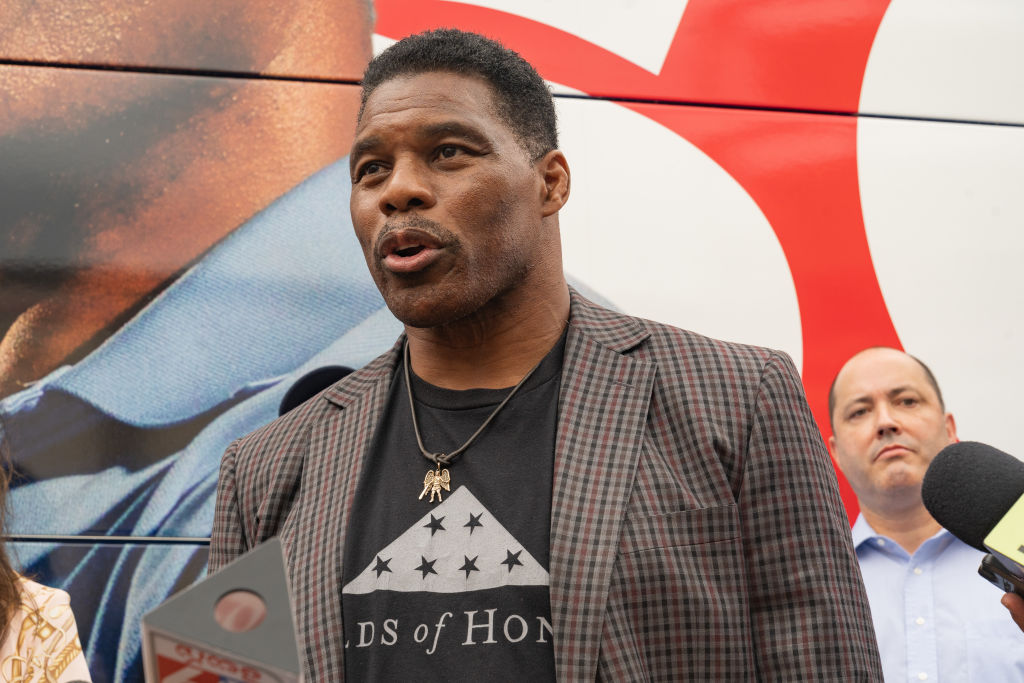
(WASHINGTON) — Herschel Walker, a Georgia football icon and U.S. Senate hopeful, has denied a report in the Daily Beast that an ex-girlfriend claimed he paid the cost of her abortion more than 10 years ago, a claim that would seem to contradict his anti-abortion posture on the campaign trail.
Walker, a Republican, immediately denied the claim and promised to file a defamation lawsuit against the Daily Beast, which published the story, on Tuesday morning. Walker later appeared on Fox News Channel’s Hannity, where he issued additional denials.
“I can tell you right now, I never asked anyone to get an abortion,” Walker told Sean Hannity. “I never paid for an abortion — it’s a lie.”
The Daily Beast reported Monday that an unidentified woman who claimed to be Walker’s ex-girlfriend said she sought a medical abortion after the couple conceived in 2009. The woman shared documentation with the news outlet: a receipt from an abortion clinic, a bank deposit receipt with an image of a $700 check that appeared to be signed by Walker sent within a week of the abortion and a “get well” card that appeared to be signed by Walker.
ABC News was not able to confirm the Daily Beast’s reporting.
Walker has carved out a staunch anti-abortion position as a candidate for U.S. Senate, aligning himself with a bill proposed by Sen. Lindsey Graham, R-S.C., that would institute a national ban on abortions after 15 weeks.
Without explicitly citing the Daily Beast’s reporting, Walker’s adult son, Christian Walker, an outspoken conservative social media personality and podcast host, lambasted his father on Twitter.
“Every family member of Herschel Walker asked him not to run for office, because we all knew (some of) his past. Every single one,” Christian Walker wrote Monday. “He decided to give us the middle finger and air out all of his dirty laundry in public, while simultaneously lying about it. I’m done.”
The younger Walker also leveled additional allegations against his father, who has attracted scrutiny in recent months for allegations of violence in his past. In a book years ago, Herschel Walker has described himself as having been diagnosed with a dissociative identity disorder, or D.I.D. He has said that treatment healed him.
“I know my mom and I would really appreciate if my father Herschel Walker stopped lying and making a mockery of us,” Christian Walker wrote Monday on Twitter. “You’re not a ‘family man.'”
Walker is currently locked in a heated and high-stakes battle for Georgia’s Senate seat with Democratic Sen. Raphael Warnock, the outcome of which could tilt the balance of power in Washington come November.
When asked about the Daily Beast report late Monday, Warnock deferred to the “pundits [who will] decide how they think it will impact the race.”
(UVALDE, Texas) — Texas Democratic gubernatorial candidate Beto O’Rourke rolled out an ad campaign Saturday featuring tearful endorsements from families of victims of the Robb Elementary School shooting in Uvalde.
One ad begins with parents looking straight to the camera, holding photos of their children and sharing what they hoped to do when they grew up: Lexi Rubio wanted to be a lawyer, Jackie Cazares hoped to become a veterinarian and Layla Salazar, a track star.
Another ad solely focuses on Maite Rodriguez, whose mother, Ana Rodriguez, stoically narrates the video.
“She wore green Converse with the heart drawn on the right toe. Those shoes ended up being one way to identify her body in that classroom. I never want another family to go through this. Greg Abbott has done nothing to stop the next shooting. No laws passed. Nothing to keep kids safe in school. So, I’m voting Beto for Maite,” Ana Rodriguez says in the video.
Beto for Texas’ director of communications, Chris Evans, told ABC News the ads are running in all major markets across the state of Texas indefinitely.
Uvalde families have continued to voice how unheard they feel by their representatives as they plead for gun control statewide and nationally. Parents have spoken publicly about wanting commonsense gun legislation, and their calls on Abbott to convene a special session have gone unanswered.
Nineteen students and two teachers died at the hands of a gunman on May 24. The police response to the shooting has come under intense scrutiny after it was revealed that officers did not breach the classroom containing the gunman for over an hour. The response also spurred a Texas House investigation that published a damning report in July outlining law enforcement’s failures.
The ad campaign began just one day after the first and only Texas gubernatorial debate between O’Rourke and incumbent Gov. Greg Abbott, which notably featured many questions to both candidates on the topic of the shooting in Uvalde. The entire debate was less than an hour in duration, and the Uvalde-related discussion comprised more than 10 minutes of it.
Joshua Blank, research director of the Texas Politics Project at the University of Texas-Austin, told ABC News that according to his research and expertise, he does not see Uvalde heavily influencing the upcoming election.
“As horrific as that may sound, polling has consistently shown that in the wake of mass shootings, and even mass shootings as horrific as the one that occurred in Uvalde, that partisan voters tend to look to partisan interpretations of those events. And so, while we might expect to see large shifts in sentiment in the wake of these tragedies, we tend not to find them,” Blank said.
A Quinnipiac University poll last month found that the top three issues likely voters in Texas saw as most urgent were the Texas-Mexico border, at 38%, followed by abortion (17%) and inflation (11%). Gun policy garnered 8%, according to the poll, illustrating Blank’s point.
Blank also said partisan voters approach solutions to gun violence differently.
“I think the issue is that voters of different persuasions come to the issue of gun violence and gun safety with a different set of expectations about what would be effective in addressing the pandemic or the epidemic of gun violence,” Blank said.
One of the key issues of O’Rourke’s campaign platform is gun safety. He’s made it clear he believes significant policy reform is the answer, in forms such as “red flag” laws, universal background checks and a repeal of permitless carry. Abbott, conversely, says he “will continue to fight any federal government overreach that aims to disrupt the 2nd Amendment rights of law-abiding Texans,” according to his website. His stance has also been illustrated by his passage of open and campus carry across the state during his tenure as governor.
Even if many agree that gun violence is an issue Texas officials should do more to prevent, Blank said this “doesn’t mean that a majority of Texans think that the policy response that would be most effective necessarily has to do with stricter gun laws.”
In the Quinnipiac poll, likely voters were also asked, between Abbott and O’Rourke, who would do a better job handling gun policy; 53% said the sitting governor would do a better job, while 44% responded that O’Rourke would.
(WASHINGTON) — Five members of the Oath Keepers facing charges of seditious conspiracy “concocted a plan for an armed rebellion to shatter a bedrock of American democracy,” a federal prosecutor said Monday in opening statements at the D.C. district court, kicking off the high-stakes first trial for members of the far-right militia group.
Assistant U.S. Attorney Jeffrey Nestler told jurors the defendants, including Oath Keepers founder Stewart Rhodes, along with members Kelly Meggs, Jessica Watkins, Kenneth Harrelson and Thomas Caldwell, “banded together to do whatever was necessary” to stop the transfer of power between Donald Trump and then-President-elect Joe Biden — and that they saw U.S. Congress certification of the electoral college as their perfect opportunity.
In addition to their alleged involvement in the Jan. 6 assault on the Capitol, the Oath Keepers members conspired to stage “an arsenal of firearms,” including multiple semi-automatic rifles at a hotel just outside of Washington D.C. and multiple teams of so-called “Quick Reaction Forces,” with Caldwell even plotting for ways to potentially ferry weapons into the city by boat across the Potomac River in case they were called on, the prosecution alleged.
Nestler showed jurors multiple photo and video exhibits during his more than hour-long opening statement, including the now-infamous picture of members of the group climbing the steps of the U.S. Capitol during the Jan. 6 riot in a military-style “stack” formation. He also showed video snippets of members of the Oath Keepers militia participating in training sessions with semi-automatic rifles.
All of the defendants, except Meggs, formerly served in the military before joining the Oath Keepers.
“These defendants use their training, knowledge and experience they gained in the United States Armed Forces to further their ability to succeed and plot to oppose by force the government of the United States,” Nestler said on Monday.
While Rhodes is not alleged to have participated in the breach of the Capitol, Nestler described him as the group’s ringleader in calling members to Washington and urging them to resist the transfer of power by force if necessary.
Nestler played audio of various public appeals Rhodes made to Trump directly, asking him to invoke the Insurrection Act, which he believed would help mobilize members of the group to take up arms and resist any efforts to remove Trump from office. He said Rhodes, a Yale-educated former lawyer, told the group “they needed to be careful with their words” and used coded language to shield their true aims of opposing by force the lawful transfer of presidential power, the prosecution alleged.
Even after the riot, as they learned law enforcement was seeking to arrest those involved in the attack on the Capitol, Rhodes attempted to pass a message directly to Trump assuring him it was not too late to take action, Nestler said.
“My only regret is that they should have brought rifles,” Rhodes said in recorded audio on Jan. 10. “We could have fixed it right then and there.”
Rhetoric used by the group’s members grew increasingly violent in the days leading up to Jan. 6, Nestler said, with Rhodes and others raising the prospect of civil war or “bloody war” erupting as the end of Trump’s time in power grew closer.
All of the defendants have pleaded not guilty to the charges.
Defense attorneys for the five charged Oath Keepers are expected to argue their clients did nothing illegal in connection with the Jan. 6 attack, while claiming the government’s decision to charge them with the rarely-used seditious conspiracy statute is an effort to target members of the militia group over their political beliefs.
“The real evidence is going to show our clients were there to do security on [January] 5th and 6th,” Stewart Rhodes’ attorney Phillip Linder said during his opening statement Monday. “The type of security they’ve done for 13 years throughout their history.”
Linder said Rhodes would testify during the trial. He described Rhodes as “extremely patriotic” and claimed the Justice Department’s presenting of his recorded statements about opposing the transfer of power were merely an attempt to “alarm and anger” the jury.
“You take a handful of texts and you take a handful of things you don’t understand, take some things that look bad and put them together then you come to a conclusion or an incorrect mischaracterization,” Linder said on Monday. “We want to bring you the full picture.”
The trial is expected to last upward of a month, lawyers have estimated, with a second set of defendants from the Oath Keepers militia charged in the conspiracy slated to stand trial in late November.
Nestler said the five Oath Keepers did have other reasons for being in Washington on Jan. 6 other than the storming of the Capitol, such as providing security for VIPs and attending Trump’s “Stop the Steal” rally at the Ellipse that preceded the riot.
But, Nestler said, all of them “also agreed to do whatever was necessary, including using force to make sure that presidential power was not transferred,” and that included driving to D.C. so they were able to bring their “weapons of war” close to the nation’s Capital.
(WASHINGTON) — After her investiture at the U.S. Supreme Court last week, Justice Ketanji Brown Jackson heralded her “seat at the table” and a desire to “get to work.”
During oral arguments Monday, the public got a glimpse of what that looks like: the nation’s first Black woman justice emerged as a remarkably active questioner in her debut on the bench, making clear she will not hesitate to make her mark on debate.
“Let me try to bring some enlightenment to it,” Jackson said dryly to an attorney challenging key parts of the Clean Water Act.
The law gives the Environmental Protection Agency authority to regulate “waters of the United States,” but there is widespread disagreement about the extent to which wetlands count.
The case, the first of the court’s new term, will decide the scope of EPA power over tens of millions of acres of marshland and swamp land. Environmental advocates say public health and safety hangs in the balance.
“Isn’t the issue what Congress intended?” Jackson pressed. “Why is it that your conception of this does not relate in any way to Congress’ primary objective?”
“The objective of the statute is to ensure the chemical, physical, and biological integrity of the nation’s waters,” she added.
Attorney Damien Schiff, representing an Idaho couple that wants to build their dream home on a lot near Priest Lake, argued that the federal government should not have unbound power to regulate wetlands on Americans’ property without direct, physical connection to a major body of water.
“The Sacketts’ property contains no waters, much less waters of the U.S.,” Schiff said. The EPA contends marsh on the Sacketts’ property has a “significant nexus” to the nearby lake.
The court will decide early next year how to draw the line.
The dispute played out for nearly two hours inside a courtroom packed with attorneys, clerks, special guests, and members of the public for the first time in two and a half years since the COVID-19 pandemic forced the arguments to go virtual. Masks were not required, though Justices Sonia Sotomayor and Elena Kagan wore them on the bench.
The nine justices assumed new seating assignments, by seniority, for the first time since the retirement of Justice Stephen Breyer. Flanking Chief Justice John Roberts at the center are Justices Clarence Thomas and Samuel Alito. Justices Amy Coney Barrett and Jackson, as the newest members of the court, hold the seats at each end of the bench.
Heightened security measures were visible throughout the courthouse, including a new requirement that water cannot be brought inside the building, but a steel security fence that had encircled the Court starting in June has been removed.
While the proceedings were again opened to the public in-person, the Court has decided to continue livestream audio online. “I think that’s a great compromise on transparency and a huge step for the chief justice,” said Sarah Isgur, a former Justice Department attorney and now an ABC News legal analyst.
The court gaveled in a new term and welcomed Justice Jackson as public confidence in the institution has slumped to a new low.
Jackson’s appointment does not alter the ideological makeup of the court — six conservatives, three liberals — but her presence could change dynamics in untold ways.
“Each new justice really changes the institution,” said Kate Shaw of Cardoza School of Law and an ABC News contributor. “By all accounts, she is a bridge builder and a warm and collegial person. I don’t expect any radical change, but it’ll matter for the public to see her on the bench, and I think it will matter as the court starts issuing opinions.”
Jackson spoke at least 21 times during Monday’s argument in the Sackett case, according to an ABC News review of the transcript.
“Although Justice Jackson might be more liberal in some respects than Justice Breyer, she won’t change the really polarized cases. But every new justice is a new court, and there could be some unexpected alliances,” Jeffrey Rosen, president and CEO of the National Constitution Center, said.
(NEW YORK) — Former Secretary of State Rex Tillerson testified Monday during the illegal foreign lobbying trial of former Donald Trump ally Tom Barrack that he never asked Barrack to undertake any diplomacy on behalf of the United States during his year-long stint as Trump’s secretary of state.
“Did you ever ask Tom Barack to commit any diplomacy on behalf of the United States?” prosecutor Hiral Mehta asked.
“No,” Tillerson replied.
Barrack, a billionaire California businessman who ran Trump’s 2016 inaugural committee, is currently on trial in Brooklyn federal court for alleged illegal lobbying on behalf of the United Arab Emirates before and during the Trump administration. He has pleaded not guilty to the charges, which Barrack’s defense attorney has dismissed the charge as ridiculous.
“[The government’s] accusations are nothing short of ridiculous. Tom Barrack was never under anybody’s direction. Tom Barrack was never under anybody’s control,” said Michael Schachter, Barrack’s attorney, during opening statements. “Tom Barrack was his own man [and] said things because he wanted to.”
Tillerson, the former chief diplomat of the United States, during his three hours on the stand said he had had no knowledge of Barrack’s communications with the UAE. Prosecutors allege failing to register as a lobbyist for those communications constitutes a crime.
But Tillerson also conceded there were conversations about foreign policy that he was not always a part of, including between Trump and his son-and-law, Jared Kushner — who he said was also in communication with government officials, though not always in lockstep.
“It was evident that at times Mr. Kushner was engaging with the same government officials on the same issues I was engaging with them on and that those messages were not consistent,” Tillerson said.
Regardless, he emphasized the importance of transparency surrounding relationships with foreign governments.
“You always, in any communication, want to understand the context in which the information is coming to you,” Tillerson said.
Tillerson also testified that his dealings with Barrack were limited, but that Barrack had called him “on a couple of occasions” to discuss a potential ambassadorship.
“I recall him expressing interest in serving as an ambassador,” said Tillerson, who said he brought the idea up to Trump, who “did not direct [him] one way or another” on the idea.
On cross-examination, the defense sought to normalize Barrack’s contacts with the UAE by likening them to Tillerson’s own contacts with foreign government officials during his time as the chief executive officer of Exxon Mobil.
Tillerson testified he took over one hundred foreign trips and met with dozens of foreign government officials when serving in that private role, including in the Middle East and Russia, in his efforts to promote the interests of his company.
“The fact that you were interacting with government officials in Russia… in no way meant you adopted all of their views or operated under their control, right?” asked Randall Jackson, Barrack’s attorney.
“We at all times represent our views, nobody else’s,” said Tillerson, who has since retired.
But Tillerson said during that time, he explored registering.
“I had my attorneys look at the law,” Tillerson said, “and I wanted to be sure.”
Barrack was arrested in California in July 2021, accused of using his connection to Trump to surreptitiously promote UAE interests. The trial is expected to last five weeks, attorneys said during a hearing earlier this year.
According to the indictment, The UAE worked through Barrack “to influence United States foreign policy in the first 100 days, 6 months, 1 year and 4 years of the Trump administration.”
The UAE funds committed nearly $400 million to Barrack’s investment management firm, the indictment said, though it did not make clear whether Barrack’s firm ever received the money.
The indictment released last July also charged Barrack with obstruction of justice and making multiple false statements during a June 20, 2019, interview with federal law enforcement agents.