
Transgender athlete bans get Supreme Court review in landmark case

Transgender athlete bans get Supreme Court review in landmark case
Becky Pepper Jackson competes in discus and shot put on the girls high school track and field team in her West Virginia hometown. (ABC News)

(WASHINGTON) — The Supreme Court on Tuesday will for the first time wade into the heated national debate over whether transgender girls should be allowed to participate in girls’ and women’s sports.

The justices will hear arguments in a pair of cases from Idaho and West Virginia, where federal courts have blocked state laws that would prohibit trans girls from participating on teams consistent with their gender identity.

The outcome of the cases will determine the fate of those laws and similar measures in 27 other states. There are an estimated 122,000 transgender American teens who participate in high school sports nationwide, according to the Williams Institute at UCLA Law School.

Lower courts have concluded separately that the bans discriminate “on the basis of sex” in violation of Title IX, the landmark civil rights law that has promoted equal opportunities for women and girls in athletics, and the Constitution’s Equal Protection Clause.

The states are asking the justices to overturn those decisions and reinstate their laws, arguing that sex and gender identity are not synonymous when it comes to women’s athletics and that allowing transgender girls to compete against cisgender girls is unfair and unsafe.

“It really comes down to one simple question,” said West Virginia Attorney General John McCuskey in an interview with ABC News. “Is it legal and constitutional for states to delineate their athletic playing fields based on the immutable physical characteristics that people have that are associated with their sex that’s assigned at birth?”

Becky Pepper Jackson, a high school sophomore from Bridgeport, West Virginia, who competes in discus and shot put on the track and field team, brought the legal challenge to her state’s law in 2021. She is the only known openly trans athlete in West Virginia in any sport.

“Someone has to do it. Someone has to do this for all of us,” Becky, 15, told ABC News in an exclusive interview. “Otherwise these laws and bills are just going to stand.”

Transgender athletes make up just over 1% of the more than 8 million teenage student athletes nationwide, according to the Williams Institute.

Idaho college student Lindsay Hecox, a former track and cross-country runner who was barred from trying out for her school teams, sued over her state’s ban in 2020. Last year, she asked the court to drop her case because she no longer wished to compete in sports and didn’t want to be in the spotlight. However, Idaho fought to keep the case alive.

“Everyone has had the experience of being told, look, you can’t play. You have to sit on the bench, or you can’t make the team. And everyone knows how that feels,” said Sasha Jean Buchert, an attorney with Lambda Legal, an LGBTQ advocacy group involved with the cases.

“That’s what’s happening to transgender kids right now,” Buchert said. “And the scope of [these bans] is absolutely absurd.”

Becky, who has openly identified as a girl since third grade, said she has never undergone male puberty, thanks to puberty-blocking medication, and has no physiological advantage over her peers.

“She has testosterone from her adrenal glands just like every female out there, but that’s the only testosterone she has,” said her mother, Heather Jackson. “She’s actually not the biggest person on her team. There’s people taller than her; there’s people shorter than her. She’s just an average female teenager.”

As a young cross-country runner, Becky was consistently at the back of the pack. More recently, she earned a spot in the state championship for discus and shot put, where she placed third and eighth, respectively.

“I put in time over the summer and after practices just trying to improve my technique and get better,” she said.

Her performance at an eighth grade track meet in 2024 drew protests from other athletes who claimed she made them uncomfortable in the locker room and on the field.

“I just didn’t think it was right,” said Sabrina Shriver, 16, a former discus thrower who refused to compete against Becky at the meet and later quit the sport because of her participation in the league. “It was just, I don’t know, we all just felt uncomfortable and we’re just, we didn’t want any part of it.”

The competitive advantage boys and men have physically over girls and women has been well established in physically demanding sports by medical research and serves as a primary basis for distinctions between the sexes in athletics.

Studies have shown testosterone produced during male puberty does lead to more muscle mass, larger hearts and lungs, greater body height and longer limbs on average for boys and men, according to the American College of Sports Medicine.

Before puberty, however, “sex differences in athletic performance are minimal,” the group says research shows.

A key issue in the West Virginia case is a dispute over whether Becky, 15, possesses an advantage at all, given she has not undergone male puberty, takes estrogen supplements and does not produce high levels of testosterone.

“If [sports leagues] look at the medical records of individuals like the Olympic committee does, testing people — they test for performance enhancing medications or drugs that their athletes take — so if we can look at those levels, let’s look at her levels,” Heather Jackson said.

McCuskey says a testing regimen is just not practicable and that Becky can still compete, but on a boys team. “We have to be able to draw a line here,” he said.

“Becky is bigger and stronger and faster than the females that she’s competing against,” said the attorney general.

He has urged the Supreme Court to stay out of the debate, arguing in a court brief that West Virginia’s law “implicates ‘fierce scientific and policy debates’ that elected legislators are best able to resolve.”

The U.S. Olympic Committee, the NCAA and 29 states ban transgender girls and women from competing on teams consistent with their gender identity. The other 21 states do not have bans, including California and New York, which have laws explicitly allowing trans athletes to compete.

Last year, the Supreme Court’s conservative majority upheld a Tennessee law banning some gender-affirming medical treatments for transgender minors, rejecting claims that the law discriminated “on the basis of sex” and saying that states should have leeway to regulate health care in an area of scientific uncertainty.

In 2020, however, the Court concluded in a landmark decision that a Michigan transgender woman fired by her employer for being transgender was discriminated against “on the basis of sex” under Title VII of the Civil Rights Act of 1964.

Justice Neil Gorsuch explained in his majority opinion that her termination was “for traits or actions it would not have questioned in members of a different sex.”

Becky, Lindsay, and their attorneys with the American Civil Liberties Union and Lambda Legal say the same reasoning should be applied to sports bans.

“There’s been a number of setbacks that we’ve experienced over the last few years in the courts, but I do have a sense of optimism with this case in light of the fact that the legal issues at play here are some of the same issues at play five years ago,” said Buchert, the Lambda Legal attorney.

Notwithstanding the legal arguments, 69% of Americans say transgender girls should only be allowed to play on boys teams, according to a June 2025 Gallup survey.

The Trump administration also supports the exclusion of transgender athletes from sports teams. An executive order signed in February 2025 says “it is the policy of the United States to rescind all funds from educational programs that deprive women and girls of fair athletic opportunities.”

Becky says, while she understands public opinion, she is unable to “go against who I am.”

“I’ve been a girl forever,” she said, “and playing on the guys’ team is going backwards.”

Copyright © 2026, ABC Audio. All rights reserved.
Minnesota senator: White House ‘attempting to cover up’ Good shooting

Minnesota senator: White House ‘attempting to cover up’ Good shooting
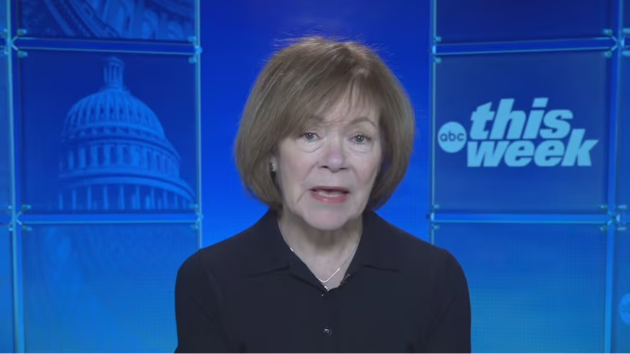
Sen. Tina Smith, D-Minn., appears on ABC News’ “This Week” on Jan. 11, 2026. (ABC News)

(NEW YORK) — Minnesota Democratic Sen. Tina Smith said Sunday that the Trump administration was “attempting to cover up what happened” in the fatal shooting of Renee Good, a U.S. citizen and mother of three, by an Immigration and Customs Enforcement (ICE) agent in Minneapolis on Wednesday.

ABC News obtained cell phone video of the incident that was taken by the ICE agent who fired the shots.

“I think what we are seeing here is the federal government — [Department of Homeland Security Secretary] Kristi Noem, Vice President [JD] Vance, [President] Donald Trump — attempting to cover up what happened here in the Twin Cities, and I don’t think that people here and around the country are believing it,” Smith told ABC News’ “This Week” co-anchor Martha Raddatz.

 Trump administration officials have asserted that Good was attempting to run over the ICE officer with her car, prompting the officer to shoot her in what they say was self-defense. Noem said Good’s actions were an act of “domestic terrorism.”

Local officials and many Democratic lawmakers have disputed DHS’s assessment of the incident.

“You are saying the administration is trying to cover up this shooting. That’s a pretty serious charge. What do you mean exactly,” Raddatz asked.

“What I mean by that is that you can see everything that they are doing is trying to shape the narrative, to say what happened, without any investigation,” Smith said.

Smith went on to criticize the administration for its response to the shooting.

“What I think is essential to keep in mind here is that if we’re going to trust the federal government, how can we trust the federal government to do an objective, unbiassed investigation, without prejudice, when at the beginning of that investigation they have already announced exactly what they saw — what they think happened.”

Smith said she has “seen nothing in any of the eyewitness videos, nor in any of the eyewitness reports from this tragic day, that would suggest that [Good] was in any way a threat to these officers.”

“Legally, do you think the ICE officer — certainly said he feared bodily harm. Is that possible in your eyes?” Raddatz pressed.

“It’s hard for me, looking at the evidence that I have seen, to imaging how he could feel bodily harm,” Smith said.

The FBI is investigating the shooting, but Minnesota officials said that the federal government has cut them out, blocking state agencies from accessing case material.

“And then they bar, from participating in the investigation, the unbiased state investigators who frequently collaborate with federal investigators on — when there are things that need to be looked into. So, I mean, I think they have just completely destroyed any credibility as they have so quickly rushed to judgement.”

The fatal shooting of Good sparked country-wide protests against ICE presence in American cities. In Minneapolis, local officials maintain that the protests have been mostly peaceful.

Here are more highlights from Smith’s interview:

On the actions of the ICE officer around the shooting, as captured by videos
Smith:  I understand how law enforcement, professional law enforcement, is trained. They are trained to deescalate situations, not make some worse, not make conflict worse. They are certainly trained to step out of the way of a moving vehicle, not place themselves in the middle of a moving vehicle. And no professional law enforcement would like, exchange words or banter with somebody who is engaged in their legal right to protest and then lose control, which is, you know, which looks to me like what happened here.

Message to people protesting shooting, ICE’s presence in communities
Smith: Of course it is essential that we have peaceful protests. And what I have been saying to people, in all the opportunities I have when I talk to people on the street is that, that the Trump administration wants to foment chaos and division and fear and even violence. And it is essential that we do not fall into that trap, that our, our strength is in our unity, our strength is in our peaceful demonstrations. And, you know, we will not give in. We will not sort of cave in to the fear and the chaos that they are trying to create, they are creating, but we will meet that with unity and with peace.

Copyright © 2026, ABC Audio. All rights reserved.
As Trump pitches oil companies on Venezuela plans, experts see challenges: Analysis

As Trump pitches oil companies on Venezuela plans, experts see challenges: Analysis
Alex Wong/Getty Images

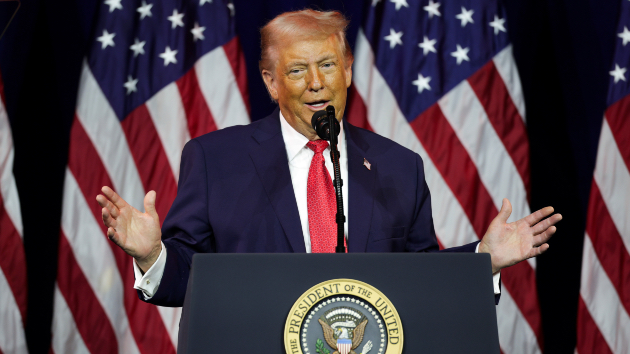
(WASHINGTON) — The White House will host America’s oil titans Friday as President Donald Trump is expected to lay out his plan for a post-Nicolas Maduro Venezuela with an economic revamp of its oil industry as its centerpiece.

The president, who said a recovery plan for Venezuela could require years of American involvement, told Fox News’ Sean Hannity Thursday that the U.S. would be “running the oil” and that he expected “at least $100 billion” of investment from the major companies.

“We’re going to rebuild the oil and the oil infrastructure, we’ll be in charge of it,” Trump said. “It’s going to do great, make a lot of money, and we’re going to take it from there, but we’re going to rebuild the country. And ultimately, you’re going to have elections.”

A White House official told ABC News that Secretary of State Marco Rubio, who has led the administration’s Venezuela policy, will attend the meeting that will include Chevron, Exxon, Conoco Phillips, Continental, Halliburton, HKN, Valero, Marathon, Shell, Trafigura, Vitol Americas, Repsol, Eni, Aspect Holdings, Tallgrass, Raisa Energy and Hilcorp.

A handful of those companies are European.

Only hours after American aircraft returned from an audacious mission in Caracas to arrest Maduro and take him to the U.S. for prosecution, Trump identified oil as the key to the U.S. strategy, asserting that American oil companies would quickly seize on a market newly friendly to them, generating revenues for America’s energy industry and establishing favorable ties with Venezuela. Trump and Rubio have said those revenues would ultimately benefit the people of Venezuelan people, some 82% of whom live in poverty, according to a 2024 report by the United Nations.

A risky choice for private industry

Experts told ABC News that the plan’s heavy reliance on the private American oil sector will present the industry with a risky choice to do business in a country some argue is less stable and harder to predict after the toppling of its president.

“The very first thing on oil all the oil companies checklist is going to be the outlook for political stability – durable political stability – that, by the way, needs to last a lot longer than the Trump administration,” said Clayton Seigle, a senior fellow at the Centers for Strategic and International Studies who focuses on energy security.

On Tuesday, the White House announced Venezuela would relinquish 30 to 50 million barrels of oil to the U.S., which would then sell the crude on the market and store revenues in American accounts.

Rubio on Wednesday fleshed out a three-phase strategy, including stabilization in Venezuela, economic recovery, and finally, a political transition there.

“They understand that the only way they can move oil and generate revenue and not have economic collapse is if they cooperate and work with the United States,” Rubio said. “And that’s what we are going to [see] happen.”

Rubio said the U.S. would continue enforcing a legal “quarantine” of illicit oil tankers transiting to and from Venezuela to bend Caracas to Washington’s will, citing the U.S. seizure of two such tankers this week. A third was seized Friday morning.

“We don’t want [Venezuela] descending into chaos,” he said, arguing the threat to the tankers would force the government, run by interim President Delcy Rodriguez, to the table.

Venezuela’s leadership, which has condemned the U.S. attack on its capital and the ouster of its president, has signaled a lukewarm embrace of cooperation on oil.

“Venezuela is open to energy relations where all parties benefit,” Rodriguez said.

Democrats called what the administration labels “leverage” as a form of brute control over the country.

“This is an insane plan,” said Sen. Chris Murphy, a Connecticut Democrat. “They are talking about stealing the Venezuelan oil at gunpoint for a period of time – undefined – as leverage to micromanage the country. I mean, the scope and insanity of that plan is absolutely stunning.”

‘Realist’ view of facts on the ground

Kimberly Breier, a former assistant secretary of State for Western Hemisphere Affairs during the first Trump administration, said the U.S. plan – which removed Maduro from power but kept the rest of his regime, including other U.S.-sanctioned officials, in place – was a “very realist” view of the facts on the ground.

“I think this is a transition to a transition,” Breier said. “I think this current situation is an intermediate step where there’s a hope and a plan that you’re going to be able to get the regime to do some of the harder things that are going to need to be done to allow for a real democratic transition to the rightfully elected government.”

Whether the energy dimension of the plan, which would require U.S. energy companies to work with the same regime that was hostile to them, is only “a hope and an aspiration” at this stage, said Seigle. “We don’t know how feasible it is.”

Oil executives who will sit down with the president in Washington will bring a checklist of questions on sanctions, tax regime, property rights, and political stability, experts told ABC News. Investments the White House might ask of them, which would include rebuilding and modernizing infrastructure, would require years and billions of dollars, they said.

“When it comes to energy, item number one is giving confidence in enduring political stability,” Seigle said.

The administration knows that oil companies “are looking for stability,” said Breier, who is now a senior adviser at Covington. “I think they’re looking for a leader that they think is not a transitional leader.”

“Certainly, oil companies operate all over the world in places that are not democracies. But from a policy standpoint…the durable, lasting leadership of Venezuela is the democratically elected one,” she said, referring to Edmundo Gonzalez, who won the 2024 Venezuelan presidential election but has been exiled.

Oil execs may not be ready to jump in

Oil companies will “express interest and to sincerely look into the matter and try to understand what their contributions could be and maybe some of the associated planning,” Seigle predicted. “But I do not think that we will see major new commitments from U.S. oil companies to leap into the Venezuelan operating environment until a lot of things on their checklists are satisfied.”

“The problem is [the administration] got the sequence backwards,” he said. “The sequence is the oil companies need to see that Venezuela is an attractive environment with a long runway of stability, and then in the future, the oil can flow.”

Breier said the energy dimension of the president’s plan is part and parcel of a broader set of objectives to counter migration and drug flows and promote a democracy in the country.

ABC News reported that the administration has made two demands to Rodriguez that must be met for the U.S. to allow the country to pump more oil. Venezuela must cut its economic ties with China, Russia, and Iran, sources said, and must agree to partner exclusively with the U.S. on oil production and favor America when selling heavy crude oil.

Breier said the reporting rings true with her experience at the State Department, where she worked with the former opposition leader of Venezuela, another elected president in exile, Juan Guaidó.

“With the Guaidó team, there were conversations about…not going [through] all this trouble for [Venezuela] to then cut deals with the Russians and the Chinese and the oil sector,” she said. “So that’s a very consistent approach.” Breier said the administration’s approach will be “private sector led” by Western companies, including the Europeans.

The White House “view[s] US companies as the most nimble and able to go in and start rebuilding the sector quickly so that you don’t end up with the U.S. taxpayer having to put the tab for reconstructing Venezuela,” she said.

Copyright © 2026, ABC Audio. All rights reserved.

White House architect suggests more renovations could follow East Wing ballroom project

White House architect suggests more renovations could follow East Wing ballroom project
Demolition of the East Wing of the White House, during construction on the new ballroom extension of the White House in Washington, DC, US, on Tuesday, Dec. 9, 2025. (Aaron Schwartz/Bloomberg via Getty Images)

(WASHINGTON) — The White House on Thursday presented the latest plans for the East Wing renovation project, the construction of a 90,000-square-foot ballroom, in a public meeting of the National Capital Planning Commission.

The project’s architect, Shalom Baranes, said during the meeting that the White House is considering adding a one-story addition to the West Wing to restore “symmetry” to the complex after the East Wing ballroom project is complete.

His comments came after announcing a two-story colonnade would connect the East Room in the White House to the new ballroom.  

“The White House is therefore considering the idea of a modest one-story addition to the West Wing colonnade, which would serve to restore a sense of symmetry around the original central pavilion.”

Baranes also clarified details about the expansion project, telling commissioners the East Wing expansion would include a second floor, and that the new ballroom would have roughly 40-foot ceilings, be roughly 22,000 square feet of the nearly 90,000 square foot project, and be able to accommodate up to 1,000 seated guests.

Phil Mendelson, the Washington City Council Chairman and member of the planning commission, said he felt the East Wing design could appear to be “overwhelming” the existing White House structure.

Baranes said the 45,000 square foot project would “exactly” match the height of the White House when completed.

President Donald Trump has repeatedly increased the size and cost of the ballroom project. Last month, he said it would cost $400 million, after an initial estimate of $200 million. The White House has said the project will be funded by private donations.

Answering questions from commissioners, Baranes said the potential project would add a story to the West Wing colonnade, and not the West Wing building proper.

He also offered no timetable for the potential addition and did not present any new renderings or drawings.

Josh Fisher, a White House official who also supplemented the presentation, said the Trump administration is also considering changes to Lafayette Park and the visitor screening areas on the White House complex in the future.

Will Scharf, a senior White House official who sits on the Capital Planning Commission, noted that Trump is hosted at Windsor Castle when he visits the United Kingdom, but when the King of England visits the White House, he may be hosted in a “tent” on the White House lawn.

“That, to me, is not a good look for the United States,” he said.

James Blair, another Trump appointee on the commission, said the current White House can’t “accommodate” efforts for the president to “break bread” with groups of lawmakers.

Other commissioners affiliated with the city expressed some reservations about the scale of the project and the fact that demolition started before the plan was presented.

The White House announced the ballroom construction project in late July, and demolition began suddenly on the East Wing in late October, when workers were spotted tearing down the wing of the White House that contained the first lady’s offices.

Scharf pointed out that demolition began at the Smithsonian Air and Space Museum before the renovation plan was presented to local bodies.

In December, the National Trust for Historic Preservation filed a lawsuit to stop the East Wing construction project by claiming the administration had circumvented the required review process for federal projects. 

In a hearing in that case, the administration told a federal judge it would submit plans for the project to the relevant federal oversight bodies. 

The judge said he would hold a follow-up hearing on the White House’s process in January and declined to stop construction at the time. 

Days later, the administration submitted formal applications and plans for the renovation project to the NCPC and the Commission of Fine Arts, a White House official confirmed to ABC News at the time.

In its filing in the case brought by the historic preservation group, the Justice Department argued that without a permanent ballroom, the White House can no longer meet the needs of the president as he fulfills his constitutional duty to “receive Ambassadors and other public Ministers.”

“It is entirely fitting, then, that the presidential residence and workplace be equipped for that purpose. Given modern needs, the White House is not,” the Justice Department argued.

Even as it determined in late August that the White House ballroom would have “no significant impact” on the surrounding grounds, the National Park Service did highlight some of the adverse effects of the project, presaging concerns that have since been echoed by preservationists, architects and designers.

“The new building’s larger footprint and height will dominate the eastern portion of the site, creating a visual imbalance with the more modestly scaled West Wing and Executive Mansion,” the NPS report noted. “Adding a second story to the East Colonnade will further modify the setting, contrasting with the single-story design of the West Colonnade and changing the traditional spatial organization and sightlines of the grounds.”

Such changes, the report indicated, “will adversely alter the design, setting, and feeling of the White House and grounds over the long-term,” while the destruction of the East Wing would result in “the permanent loss of a component that has been integral to White House operations since 1942.”

Still, the “environmental assessment” — prepared by the deputy director of the park service and signed by its comptroller — concluded that the benefits of a new ballroom for state functions would outweigh the adverse effects “by reducing reliance on temporary event infrastructure, minimizing wear on the grounds, and improving functionality for large gatherings.”

The White House announced the ballroom construction project in late July, and demolition began suddenly on the East Wing in late October, when workers were spotted tearing down the wing of the White House that contained the first lady’s offices.

Trump has repeatedly increased the size and cost of the construction 90,000 square foot ballroom project. Last month, he said it would cost $400 million, after an initial estimate of $200 million. The White House has said the project will be funded by private donations. 

The president has also moved to fill both advisory boards supervising the ballroom project with his own aides and appointees. 

He also spent some of his vacation working on the project: Last Friday in Florida, he visited Arc Stone & Tile, an Italian stone importer, and spent roughly an hour at the showroom before purchasing onyx and marble for the ballroom.

The White House expects to make its final presentations to the Commission of Fine Arts in February, and to the National Capitol Planning Commission in March, and will submit its final plan for the project by the end of January, a White House official told ABC News. 

Copyright © 2026, ABC Audio. All rights reserved.

House falls short of overriding 2 Trump vetoes of bipartisan bills

House falls short of overriding 2 Trump vetoes of bipartisan bills

(WASHINGTON) — The House on Thursday failed to override two of President Donald Trump’s vetoes of GOP-backed bills that passed unanimously in the House and Senate, falling short of the necessary two-thirds majority on either vote.

This is a developing story. Please check back for updates.


Copyright © 2026, ABC Audio. All rights reserved.
House to vote on Obamacare subsidies extension after 9 Republicans help get bill to the floor

House to vote on Obamacare subsidies extension after 9 Republicans help get bill to the floor
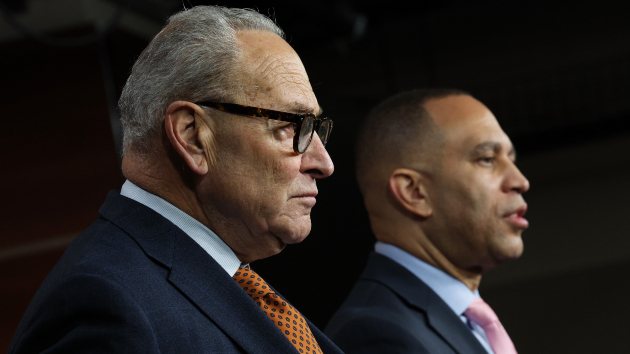
House Minority Leader Hakeem Jeffries (D-NY) speaks as U.S. Senate Minority Leader Chuck Schumer (D-NY) looks on during a news conference at the U.S. Capitol on January 08, 2026 in Washington, DC. (Photo by Kevin Dietsch/Getty Images)

(WASHINGTON) — Ahead of Thursday’s vote on a three-year extension of enhanced Affordable Care Act subsidies, Democrats are boasting that several Republicans are expected to defy their leadership team.

House Minority Leader Hakeem Jeffries expressed pride in the “bipartisan coalition” created ahead of Thursday’s vote on a three-year extension of enhanced Affordable Care Act subsidies after nine Republicans crossed the aisle Wednesday night to set up passage in the House.

“I hope today there will be more Republicans joining this leader,” said Senate Minority Leader Chuck Schumer, gesturing towards Jeffries at a news conference Thursday.

Jeffries called the vote “an opportunity to take a meaningful step forward to lower the high cost of living for everyday Americans, particularly as it relates to health care, but it’s a battle that we will continue to wage on behalf of the American people.”

Wednesday’s procedural vote passed by a 221-205 margin. Nine Republicans — Reps. Mike Lawler and Nick LaLota of New York, Rob Bresnahan, Ryan Mackenzie and Brian Fitzpatrick of Pennsylvania, Maria Salazar of Florida, David Valadao of California, Thomas Kean of New Jersey, and Max Miller of Ohio — voted with Democrats to pass it.

The subsidies, which expired at the end of 2025, were enhanced during the COVID-19 pandemic to increase the amount of financial assistance to those who were already eligible and to expand eligibility to more people.

A tangible path forward that sends legislation through Senate to the Resolute Desk to address the expired subsidies remains in question.

Senate Majority Leader John Thune said Thursday that there’s “no appetite” in the upper chamber for an extension and pointed instead to ongoing bipartisan talks between senators and House members.

“We’ve had that vote, as you know, already,” Thune said. “But we’ll see what happens from the working group, and if they can come up with something that has reforms. And we’ll go from there.

The Senate last month rejected a three-year extension of the subsidies when the measure fell short of the 60-vote threshold, though four Republicans — Sens. Susan Collins of Maine, Josh Hawley of Missouri, and Lisa Murkowski and Dan Sullivan of Alaska — all crossed the aisle in support of the measure.

An estimated 22 million of the 24 million ACA marketplace enrollees are currently receiving enhanced premium tax credits to lower their monthly premiums, and many are seeing their premiums soar in 2026.

The nonpartisan Congressional Budget Office estimates the bill would increase the federal deficit by about $80.6 billion over the next decade.

If the measure is enacted, the number of people with health insurance would increase by 100,000 people in 2026, 3 million in 2027, 4 million in 2028 and 1.1 million in 2029, relative to current law, the CBO reported.

According to the CBO, the 4 million increase in 2028 would result from changes in several types of coverage: 6.2 million more people would be enrolled through ACA health insurance marketplaces; 400,000 million more people enrolled in Medicaid and the Children’s Health Insurance Program; 500,000 fewer people would purchase nongroup coverage outside the marketplaces; and 2.1 million fewer people would have employment-based coverage.

President Donald Trump has publicly expressed his opposition to extending the enhanced subsidies.

“I’d like not to be able to do it. I’d like to see us get right into this. I don’t know why we have to extend — this can be done rapidly if the Democrats would come along,” Trump said on Dec. 18 in the Oval Office.

After Speaker Mike Johnson resisted pressure to allow a vote on the subsidies late last year, a quartet of House Republicans — Fitzpatrick, Lawler, Bresnahan and Mackenzie — banded together before the holiday break and signed on to a Democratic discharge petition to force a vote on an ACA extension, much to the chagrin of GOP leaders.

ABC News’ Allison Pecorin contributed to this report.

Copyright © 2026, ABC Audio. All rights reserved.
Senate advances war powers resolution to rein in Trump on Venezuela

Senate advances war powers resolution to rein in Trump on Venezuela
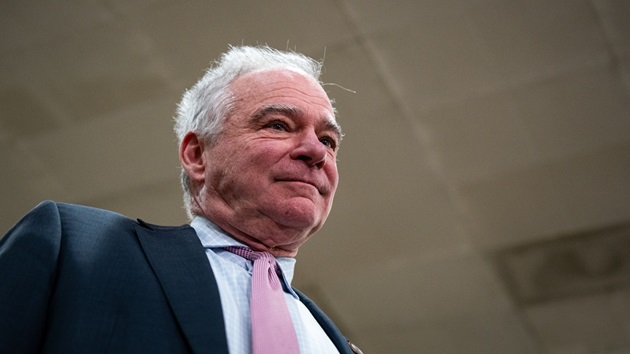
Senator Tim Kaine, a Democrat from Virginia, following an all-Senate briefing on Venezuela at the US Capitol in Washington, DC, US, on Wednesday, Jan. 7, 2026. Al Drago/Bloomberg via Getty Images

(WASHINGTON) — In a rare rebuke to the Trump administration, the Senate on Thursday advanced a war powers resolution that would block the president’s use of the U.S. armed forces to engage in hostilities within or against Venezuela unless authorized by Congress.

A small group of Senate Republicans joined with all Democrats to narrowly advance the resolution by a vote of 52-47.  It needed 51 votes to move forward.

The legislation, if ultimately approved by the Senate, would still need to be approved by the House and signed by the president. The bill did not pass the Senate with a veto-proof majority and it is unlikely that Trump would sign it into law. In order to override a presidential veto, Congress would need the support of two-thirds of the House and the Senate.

Republican Sens. Rand Paul, Lisa Murkowski, Todd Young, Susan Collins and Josh Hawley voted with all Democrats in favor of the legislation.

Democratic Sen. Tim Kaine, a member of the Senate Armed Services Committee, pushed for the resolution to receive a vote immediately after President Donald Trump announced U.S. forces carried out a large-scale attack in Venezuela, capturing dictator Nicolas Maduro and his wife, who are facing federal charges including narcoterrorism conspiracy and conspiracy to import cocaine. Both Maduro and his wife entered not guilty pleas earlier this week.

“Where will this go next? Will the President deploy our troops to protect Iranian protesters? To enforce the fragile ceasefire in Gaza? To battle terrorists in Nigeria? To seize Greenland or the Panama Canal? To suppress Americans peacefully assembling to protest his policies? Trump has threatened to do all this and more and sees no need to seek legal authorization from people’s elected legislature before putting servicemembers at risk,” Kaine said in a statement on Jan. 3.

Kaine added it was “long past time for Congress to reassert its critical constitutional role in matters of war, peace, diplomacy and trade.”

The White House “strongly” opposes the war powers resolution, according to a new memo from the Office of Management and Budget obtained by ABC News on Thursday.

“Maduro’s crimes and other hostile actions have resulted in a predatory incursion into the United States, the destabilization of the Western Hemisphere, massive death and human suffering, and a substantial and ongoing danger posed to our Nation,” the memo reads.

The memo stated that if the resolution is presented to the president, “his advisors would recommend that he veto” it.

After the vote, Trump called out the GOP senators who voted for the resolution, saying in a social media post that they “should be ashamed” and “never be elected to office again.”

“This Vote greatly hampers American Self Defense and National Security, impeding the President’s Authority as Commander in Chief,” Trump posted.

The Constitution vests Congress with the authority to declare war while making the president the commander in chief of the military. Trump’s action in Venezuela follows a decadeslong pattern of presidents occasionally taking military action without congressional approval.

The Trump administration described the strike in Venezuela as a law enforcement operation facilitated by the military, and Trump has said the U.S. is not at war with Venezuela but the U.S. will “run” the country for an unspecified period of time.

Some of the Republicans who voted in favor of the resolution on Thursday said that while they were supportive of Trump’s initial action against Maduro, they do not support moving forward with additional action in the country without congressional approval.

“With Maduro rightfully captured, the circumstances have now changed. While I support the operation to seize Nicolas Maduro, which was extraordinary in its precision and complexity, I do not support committing additional U.S. forces or entering into any long-term military involvement in Venezuela or Greenland without specific congressional authorization,” Collins said in a statement explaining her support for the measure.

Ahead of the vote, Senate Majority Whip John Barrasso urged senators to reject the resolution.

“Let’s be clear about what that resolution does and what it does not do. It does not reassert Congress’s powers. It does not make America stronger. It makes America weaker and less safe,” Barrasso said in a statement on Wednesday.

“It would weaken the President’s legitimate, constitutional authority. This body, the United States Senate, is being asked whether the President of the United States has the authority to arrest indicted criminals. Of course he does. Democrats want to weaken the President’s ability to enforce the law. That is the wrong message to send to hardened drug traffickers and to dictators,” Barrasso added.

Copyright © 2026, ABC Audio. All rights reserved.
White House expected to present ballroom construction plans in 1st public meeting

White House architect suggests more renovations could follow East Wing ballroom project
Demolition of the East Wing of the White House, during construction on the new ballroom extension of the White House in Washington, DC, US, on Tuesday, Dec. 9, 2025. (Aaron Schwartz/Bloomberg via Getty Images)

(WASHINGTON) — The White House on Thursday is expected to present the latest plans for the East Wing renovation project, in a public meeting of the National Capital Planning Commission.

An organization established by Congress to manage Washington-area federal projects, the NCPC has an agenda item for the “East Wing Modernization Project” on the schedule for its Jan. 8 meeting, which is open to the public and will be livestreamed.

In December, the National Trust for Historic Preservation filed a lawsuit to stop the East Wing construction project by claiming the administration had circumvented the required review process for federal projects. 

In a hearing in that case, the administration told a federal judge it would submit plans for the project to the relevant federal oversight bodies.

The judge said he would hold a follow-up hearing on the White House’s process in January and declined to stop construction at the time. 

Days later, the administration submitted formal applications and plans for the renovation project to the NCPC and the Commission of Fine Arts, a White House official confirmed to ABC News at the time.

In its filing in the case brought by the historic preservation group, the Justice Department argued that without a permanent ballroom, the White House can no longer meet the needs of the president as he fulfills his constitutional duty to “receive Ambassadors and other public Ministers.”

“It is entirely fitting, then, that the presidential residence and workplace be equipped for that purpose. Given modern needs, the White House is not,” the Justice Department argued.

Even as it determined in late August that the White House ballroom would have “no significant impact” on the surrounding grounds, the National Park Service did highlight some of the adverse effects of the project, presaging concerns that have since been echoed by preservationists, architects and designers.

“The new building’s larger footprint and height will dominate the eastern portion of the site, creating a visual imbalance with the more modestly scaled West Wing and Executive Mansion,” the NPS report noted. “Adding a second story to the East Colonnade will further modify the setting, contrasting with the single-story design of the West Colonnade and changing the traditional spatial organization and sightlines of the grounds.”

Such changes, the report indicated, “will adversely alter the design, setting, and feeling of the White House and grounds over the long-term,” while the destruction of the East Wing would result in “the permanent loss of a component that has been integral to White House operations since 1942.”

Still, the “environmental assessment” — prepared by the deputy director of the park service and signed by its comptroller — concluded that the benefits of a new ballroom for state functions would outweigh the adverse effects “by reducing reliance on temporary event infrastructure, minimizing wear on the grounds, and improving functionality for large gatherings.”

The White House announced the ballroom construction project in late July, and demolition began suddenly on the East Wing in late October, when workers were spotted tearing down the wing of the White House that contained the first lady’s offices.

Trump has repeatedly increased the size and cost of the construction 90,000 square foot ballroom project. Last month, he said it would cost $400 million, after an initial estimate of $200 million. The White House has said the project will be funded by private donations.

The president has also moved to fill both advisory boards supervising the ballroom project with his own aides and appointees. 

He also spent some of his vacation working on the project: Last Friday in Florida, he visited Arc Stone & Tile, an Italian stone importer, and spent roughly an hour at the showroom before purchasing onyx and marble for the ballroom.

The White House expects to make its final presentations to the Commission of Fine Arts in February, and to the National Capitol Planning Commission in March, and will submit its final plan for the project by the end of January, a White House official told ABC News. 

Copyright © 2026, ABC Audio. All rights reserved.
Former Democratic House Majority Leader Steny Hoyer to announce retirement after more than 40 years in Congress

Former Democratic House Majority Leader Steny Hoyer to announce retirement after more than 40 years in Congress
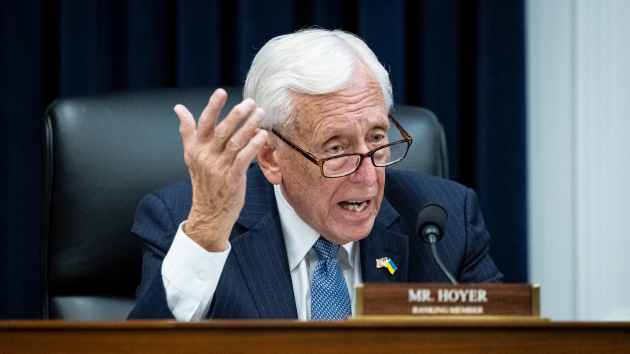
Representative Steny Hoyer, a Democrat from Maryland and ranking member of the House Appropriations Subcommittee on Financial Services and General Government, during a hearing in Washington, DC, US, on Thursday, May 15, 2025. (Graeme Sloan/Bloomberg via Getty Images)

(WASHINGTON) — Rep. Steny Hoyer, D-Md., the former No. 2 Democrat in the chamber who has served for decades, is set to announce his retirement from Congress, his office confirmed to ABC News.

Hoyer will formally announce his decision not to run for reelection on the House floor at 10 a.m. Thursday.

Hoyer, 86, spent two decades as Nancy Pelosi’s deputy and is set to retire as the California Democrat also prepares to leave Congress at the end of the year — amid a debate in the party about turning over leadership to a new generation.

Their relationship dates back to the 1960s when they served as congressional interns together, decades before they competed to lead Democrats.

The genteel dean of the Maryland delegation, who helped send billions of federal dollars to his state as an appropriator, was often a key negotiating partner for Republican leaders who maintained better relations with him than the hard-charging Pelosi.

Many Democrats are now turning to see if 85-year-old Jim Clyburn of South Carolina, the longtime No. 3 Democrat on the team, will follow through on plans to run for reelection next year.

Copyright © 2026, ABC Audio. All rights reserved.

‘States should lead:’ McMahon grants Iowa first-of-its-kind education funding waiver

‘States should lead:’ McMahon grants Iowa first-of-its-kind education funding waiver
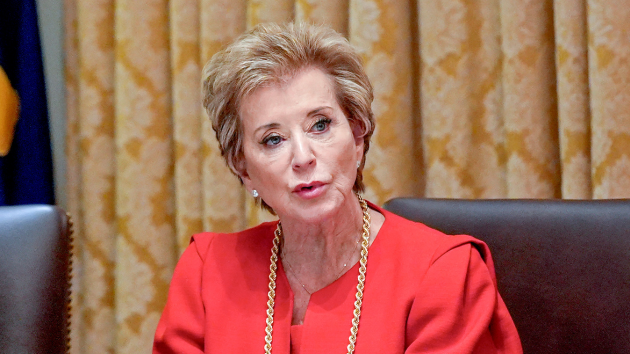
Linda McMahon, US education secretary, during a cabinet meeting at the White House in Washington, DC, US, on Tuesday, Dec. 2, 2025. (Yuri Gripas/CNP/Bloomberg via Getty Images)

(NEW YORK) — U.S. Secretary of Education Linda McMahon granted Iowa a first-of-its-kind waiver to use millions of unrestricted federal dollars on education in a move that inches the Trump administration closer to its goal of transferring education power and decision-making to states.

“States should lead — Washington should support their sound approaches and get out of the way,” McMahon announced on Wednesday. “We hope that as we partner with congressional leaders to return education to the states we can work with them [Iowa] to expand these opportunities for states and local leaders to run their education systems.”

The over $9 million waiver will help the Hawkeye State save millions in “compliance costs” over four years as the money flows directly back into the classroom, McMahon said in a post on X.

“Iowa now has the flexibility to cut paperwork and simplify a hundred percent of state activities funding streams. It can invest in proven strategies to build a world-class teacher pipeline, close achievement gaps, and open post secondary opportunities to prepare for a great career,” McMahon said.

Under the waiver, certain federal requirements will be dropped so that less strings are attached giving the state more flexibility in using the aid. Prior to the formal waiver request, the state submitted a Unified Allocation Plan to show how it would use its funds to improve academic outcomes for Iowa’s education programs. The plan includes supporting effective educator development, English language acquisition, among other topics, according to state education leaders.

The approval of the waiver bolsters McMahon’s mission to reduce the federal government’s role in education nationwide. But education is already a local-level issue in the U.S. On average, state and local education agencies provide about 90% of public school funding across the country.

The agency is also working with about six additional states on their waiver requests, an Education Department spokesperson confirmed to ABC News.

Title VIII of the Elementary and Secondary Education Act of 1965 allows states and tribes to submit requests to waive any statutory or regulatory requirement seeking to “reduce administrative burden” and align programs with the needs of its students, according to a release from the Department of Education.

In addition to Iowa’s $9 million in flexible federal funding, the Education Department approved the state’s application for “Ed-Flex authority,” which allows the state to grant individual school districts waivers from certain federal requirements without first having to submit individual waiver requests, according to the release from the department.

McMahon made the announcement during her “Returning Education to the States Tour.”

During her first year as the nation’s top education official, McMahon has made about two dozen stops in states across the country aiming to identify the best educational practices on the local level and work with local leaders to scale those practices nationwide, she says.

Wednesday’s announcement allows state leaders to focus federal dollars on work that best improves the achievement of Iowa students, according to the release from the department. For the announcement, McMahon was joined by Iowa Gov. Kim Reynolds, director of Education McKenzie Snow, and surrounded by about a dozen students at Broadway Elementary School in Denison.

Reynolds touted Iowa’s education models, including teaching the science of reading and using evidence-based math and reading practices. She stressed that the move Wednesday means “moving the dial” towards returning education to the states.

“The more red tape that we cut from the federal level, the more Iowa can increase education quality,” she added.

“I look forward to continuing to improve student outcomes, reduce red tape for schools, support teachers, and ensure federal education dollars are focused toward state and local priorities where they make the greatest difference,” Reynolds said in a statement.

However, critics of the Trump administration’s education initiatives say they believe abolishing the agency and giving sole power to the states could harm the millions of students across the country.

The top Democrat on the House Education and Workforce Committee slammed McMahon’s approval of the education waiver for allegedly ignoring the law and abandoning marginalized students.

In a statement, Ranking Member Bobby Scott, D-Virginia, urged the Department to “refrain” from granting similar waivers to other states.

“Congress must not sit idly by as the Trump administration makes every effort to drag students, educators, and parents back into an era where students were denied the opportunities and resources they needed to succeed,” Scott said.

Copyright © 2026, ABC Audio. All rights reserved.