Former National Security Adviser John Bolton speaks to reporters after speaking in a panel hosted by the National Council of Resistance of Iran – U.S. Representative Office (NCRI-US) at the Willard InterContinental Hotel on August 17, 2022 in Washington, DC. (Photo by Anna Moneymaker/Getty Images)
(WASHINGTON) — President Donald Trump’s former national security adviser John Bolton is expected to plead guilty over mishandling classified documents, sources familiar with the matter told ABC News Thursday.
Bolton could not immediately be reached for comment. The Department of Justice is declining to comment.
This is a developing story. Please check back for updates.
(WASHINGTON) — President Donald Trump, during a dinner Wednesday evening, announced his intent to nominate acting Attorney General Todd Blanche to the post permanently.
In a video shared on social media by White House Deputy Chief of Staff Dan Scavino, Trump is seen in the Rose Garden saying that he will instruct his team to start the process to formally nominate Blanche to the post on Thursday.
Earlier, Trump’s announcement was confirmed to ABC News by two sources at the dinner.
Blanche, who was once Trump’s personal attorney, served as the Department of Justice’s deputy attorney general until the president tapped him to serve as acting attorney general following Pam Bondi’s ouster.
Trump hinted at the move in a pre-taped interview with the program “Pod Force One” on Wednesday, saying that he thinks Blanche will be nominated to the attorney general position.
“I wanted to see how he’s received, you know, we put him as acting, and he’s done a very good job, but I’ve known him a long time,” Trump said.
In recent weeks, Blanche has been at the center of the controversy over the Justice Department’s so-called $1.8 billion “Anti-Weaponization Fund,” ostensibly established to benefit the president’s allies.
On Tuesday, Blanche told Congress that the department was “not moving forward with the fund.”
The move came after heavy pressure from Republican congressional leadership and marked a significant defeat for Blanche, who had spent the past two weeks seeking to defend the $1.776 billion fund while refusing to rule out the prospect that settlements could be paid out to defendants who joined in the Jan. 6 attack on the U.S. Capitol — including those who had been convicted for assaulting law enforcement.
But on Wednesday, the president himself admitted he did not know what the fund’s future would be after a federal judge temporarily blocked it.
“I’d have to ask the lawyers. I don’t know,” Trump said when pressed on whether the plan was truly dead.
“The weaponization fund, as far as I’m concerned, was a beautiful thing,” he added.
Before Blanche told lawmakers the administration was nixing the fund, several Senate Republicans had balked at the plan, telling him they would not be able to pass Trump’s legislative agenda until the issue was resolved and even raised concerns about losing in the upcoming, high-stakes midterm elections as a result of the controversial settlement fund.
As acting attorney general, Blanche also secured the indictment of former FBI Director James Comey over his post of seashells that the Justice Department claims amounted to a threat against the president.
Blanche has shrugged off the suggestion that he would use the Justice Department to more aggressively target perceived foes of the president.
Republican gubernatorial candidate, U.S. Rep Randy Feenstra speaks to guests during a campaign event at the Silo City farm on May 30, 2026, near Sioux Rapids, Iowa. (Scott Olson/Getty Images)
(NEW YORK) — The results of House, governor and mayoral primary elections in six states on Tuesday night show some promising signs for incumbents and the Democratic establishment and the potential limits of an endorsement from President Donald Trump.
They also show what a key toss-up race jolted by a congressman’s absence will look like in the November midterms.
Here are some takeaways from the June 2 primaries.
Karen Bass is first LA mayor in more than 20 years to face runoff
In Los Angeles’ closely watched nonpartisan mayoral primary race, embattled incumbent Mayor Karen Bass has reason for enthusiasm after months of uncertainty, while reality star Spencer Pratt still has to play the waiting game, although he appears to have put up a strong showing. ABC News projected on Tuesday that Bass will advance to a runoff in November, meaning she will have a shot to keep her seat.
Bass, the first woman and second African American elected to lead the city, is the first Los Angeles mayor to face a runoff in more than two decades.
Bass dedicated her reelection campaign to emphasizing her past experience and achievements in the role, but faced scrutiny over her record and battled criticism for her handling of last year’s Los Angeles wildfires. Bass, who was away from the city on a planned diplomatic trip to Ghana when the Palisades Fire first erupted, has pushed back on criticism over her management of the fire, saying earlier this year that her focus “is on the lives and on the homes.”
Criticism of Bass gave an opening to Spencer Pratt, the former star of “The Hills,” who ran a campaign focused on calling out Bass’ handling of the fires and saying that he’d fix a city he felt had become broken.
It’s still unclear if Pratt will advance to the next round with Bass, or whether progressive city councilmember Nithya Raman will end up in the runoff. As of Wednesday morning, Pratt is in second place and leads Raman by around 8 percentage points, but there is still around an estimated 40% of the vote left to be counted.
Pratt’s current second-place position, which could shift, might be read by some as a limit on the allure of celebrity candidates. However, it could also be seen as a sign of the strength of Pratt running a campaign with a clear message and going beyond relying just on name recognition.
In the state’s marquee race for governor, meanwhile, it’s still too early to tell which candidates will advance in the top-two primary — with many mail ballots still to be counted.
As of Wednesday morning, Trump-endorsed Republican Steve Hilton and former Health Secretary Xavier Becerra, a Democrat, have the most votes, with billionaire businessman Tom Steyer — a Democratic candidate who spent tens of millions in the race — running behind them.
In Iowa, a loss for Trump-supported candidate in gubernatorial primary and potential win for the Democratic establishment
Trump’s key endorsements during the 2026 election cycle have usually resulted in wins for his preferred candidates, including in Kentucky’s recent 4th Congressional District primaries where a Trump-backed challenger unseated the maverick GOP Rep. Thomas Massie.
But one major Trump-backed candidate in Iowa conceded in his primary.
Republican Rep. Randy Feenstra, who currently represents Iowa’s 4th Congressional District and was mounting a statewide bid for governor, conceded late Tuesday to GOP opponent and “Make America Healthy Again” movement supporter, Zach Lahn, in the gubernatorial primary in Iowa.
As of Wednesday morning, he trailed Lahn by around 1 percentage point.
Lahn will face Iowa state auditor Rob Sand, who was unopposed in the Democratic primary, in November. Democrats have feted Sand as a candidate who can flip the governorship by appealing to voters across the aisle, although he’ll still face an uphill battle in a state that voted for Trump by 13 points in 2024.
Meanwhile, Iowa state Rep. Josh Turek’s projected win by over 20 percentage points in the Iowa Democratic primary for Senate could be seen as a win for establishment Democrats, in a year when progressive challengers have been making waves in primaries across the country and occasionally unseating incumbents.
Turek himself is not an average politician. He has a unique background, as a four-time Paralympian born with spina bifida after his father was exposed to Agent Orange while serving in Vietnam. But he was also, to an extent, seen as the Democratic establishment’s choice, given that he received support from Democratic groups that are aligned with Democratic leader Chuck Schumer, who did not formally endorse Turek, and took on positions that tacked to the center.
Turek will face Trump-backed Rep. Ashley Hinson, the projected winner of the Republican primary, in what is set to become one of the most closely watched Senate races of 2026. The seat is opening up as Republican incumbent Sen. Joni Ernst is retiring.
Key New Jersey matchup gets set amid Kean’s absence
ABC News has projected that Rebecca Bennett, a former Navy helicopter pilot, will be the Democratic nominee for Congress in New Jersey’s 7th Congressional District, in what is set to be a closely watched matchup between incumbent GOP Rep. Tom Kean and Bennett this November — especially given Kean’s unusual absence from Congress for months. Trump has backed Kean regardless of his absence.
New Jersey’s 7th District was already a top target for Democrats this year even before Kean’s disappearance occurred. The district is rated as a toss up-by the Cook Political Report, and Trump just barely carried it in 2024.
Kean flipped the seat in 2022 for Republicans, just a few years after Democrat Tom Malinowski flipped the seat when he won it in 2018. But Kean has been absent from Congress for months, and has not voted since March 5. For weeks, Kean’s office has defended the congressman’s hiatus — telling reporters that he is addressing an unspecific medical issue.
Kean said in a statement on Tuesday afternoon, “I am optimistic about the road ahead, and ready to earn the support of voters in every corner of this district.” A spokesperson for Kean also told ABC News that the congressman voted by mail last week.
ABC News’ Emily Chang, Clarissa Gonzalez, Juhi Doshi, Gaby Vinick, Lauren Peller, John Parkinson and Jay O’Brien contributed to this report.
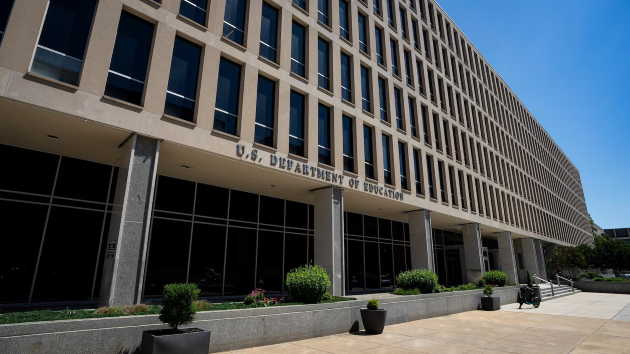
The Department of Education headquarters, May 28, 2026, in Washington, D.C. (Al Drago/Getty Images)
(WASHINGTON) — Two physician associate groups have sued the Trump administration over a federal rule limiting student loan borrowing for some graduate degree programs that impact healthcare professionals, including physician associates and assistants (PAs), nurse practitioners and other clinical providers.
The American Academy of Physician Associates (AAPA) and the Physician Associates Education Association (PAEA) filed a lawsuit aimed at reversing a Department of Education regulation that the plaintiffs claim violates the Administrative Procedure Act. They are separately requesting an emergency injunction that seeks to block the rule from taking effect for PA students on July 1.
The complaint also claims that the rule exceeds the Education Department’s statutory jurisdiction and is therefore unlawful. The Government Accountability Office website said the Administrative Procedure Act prescribes the minimum procedural steps an agency must follow in its administrative proceedings.
The lawsuit alleges the Education Department overstepped its legal authority by disqualifying a PA degree from being categorized as a professional degree.
The new rule entitled the Reimagining and Improving Student Education-Federal Student Loan Program (RISE) — which is based on an existing regulation — finalized the definition of “professional” and “graduate” programs, restricting student loan borrowing limits to $200,000 and $100,000 total for professional and graduate degrees respectively. The $100,000 total cost for PA students is capped at $20,500 annually.
AAPA’s CEO Lisa Gables said the rule will have “devastating consequences” for the PA workforce.
“PA programs meet every element of the professional degree definition that Congress established in law,” Gables wrote in a statement. “They award entry-level master’s degrees, require rigorous clinical training, and lead to professional licensure in all 50 states.”
She added, “We are in court to ensure the law is implemented as Congress intended.”
According to the Education Department’s final regulation, pharmacy and dentistry are among the list of eleven professional degree programs –- including medicine, law and clinical psychology degrees –- eligible for the $200,000 cap, but teaching, nursing, and physician associates are now capped at the lower limit.
The median PA program tuition is nearly $97,000 for residents before fees and additional costs, according to AAPA.
The recent move is drawing widespread concern from public service advocates as the healthcare groups stress that the federal loan limits will push many students to be dependent on private student loans, which have stricter approval requirements, unfavorable interest rates, and limited repayment plan options.
The rule would harm the associations’ ability to provide member services and advocacy and the groups’ members would also suffer “negative consequences” if PA students do not have access to the higher loan amounts that allow them to attend PA programs, according to the complaint.
Rory O’Sullivan, at D.C.-based policy think-tank Arnold Ventures, argued that loan limits should be based on degree program outcomes, not what field of study the degree is in.
Wednesday’s filing comes as 24 states and Washington, D.C., sued the administration on similar grounds in May, arguing that the rule would widen the nursing shortage because the borrowing limit would disincentivize students from entering the field.
Secretary of Education Linda McMahon defended her department’s rule at an annual budget hearing on Capitol Hill last month.
“These particular programs have not been reclassified as nonprofessional,” McMahon said during the House Education committee hearing. “They were never classified as professional degrees – that just wasn’t a part of the equation.”
“There’s been no other measure that has been taken to try to bring down the cost of education,” McMahon contended.
The Department of Education emphasized that loan caps are “common sense” and place downward pressure on the cost of tuition across the country.
Ellen Keast, the press secretary for higher education at the Education Department, told ABC News in a statement, “For two decades, colleges and universities have been able to charge virtually unlimited tuition, even as many student loan borrowers see little to no return on their investment.”
“During this time, tuition has risen faster than any other household expense, and 71 percent of graduates with debt report delaying major life milestones, while institutions have taken in billions at the expense of young Americans’ financial stability,” Keast said.
She added: “The Trump Administration is working to correct this longstanding imbalance by ending a system that pushed students into debt they often could not repay and by promoting access to high quality education that serves students, not institutional bottom lines.”
‘My dream of being a PA is probably shot’
Wednesday’s complaint said the rule will burden students, like Ben Pinckney from New York, and deter them from applying to PA programs. The plaintiffs said it effectively creates scenarios where those aspiring PAs are unable to afford the cost of attendance because the vast majority of PA students need the higher loan limits authorized for the “professional student” to be able to attend PA school.
Pinckney told ABC News in an exclusive interview he has dreamed of becoming a PA for years but said he’s still struggling to find an affordable graduate school within the student loan caps. The 46-year-old recent college graduate said an emergency room PA saved his life when he was the victim of a shooting years ago and that inspired him to pursue medicine as a profession.
“Not only did he save my life in the physical, but [also with] the conversations we used to have,” Pinckney told ABC News, adding “My mentality and my way of thinking changed because of the PA.”
Pinckney, who later served in the U.S. Army as a combat medic, said he voted for President Donald Trump in 2024 but believes the Trump administration’s rule is “hurting both sides” by making the PA degree harder to obtain.
“It’s less about politics and more about helping providers or potential providers get the schooling they need, so that we can go into the communities that we want to go into and help those people,” Pinckney said.
PAs treat patients under the supervision of a physician in healthcare settings, including hospitals, doctors’ offices, and outpatient clinics, according to the Bureau of Labor Statistics. Advocates stress that the department’s decision could strain critical patient care access and the majority of students pursuing PA degrees, who will comprise a significant share of the nation’s healthcare workforce over the next decade.
Pinckney said it’s heartbreaking because his goal of becoming a healthcare provider – within an already overburdened healthcare system – remains in limbo. “If nothing changes, then my dream of being a PA is probably shot,” Pinckney said. “If nothing is done short of someone giving me, you know, a huge grant or scholarship, then this chapter for me is over,” he later added.
U.S. sailors carry a fuel hose on the flight deck of Nimitz-class aircraft carrier USS Abraham Lincoln, May 24, 2026. (US Navy)
(WASHINGTON) — The Pentagon is increasingly strained by a growing list of unplanned and rising expenses over the last year, with fuel costs emerging as one of the most significant pressures.
Defense Department records show the average price the agency paid for fuel climbed from $154.14 per barrel in October to $195.72 in April – a nearly 27% increase in just six months, documents show. Those costs are averages across two dozen types of fuels the military uses, including gasoline and jet fuel.
Oil and fuel prices have surged during the Iran war. That surge could saddle the Pentagon with more than $1 billion in unplanned costs this year to power its jets, tanks and other military equipment, based on the department’s fuel consumption in recent years. The Defense Department purchases some 80 million barrels of fuel annually.
Commanders are also grappling with surging civilian fuel and commercial airfare costs, adding to the financial strain on a military that depends heavily on both. Troops typically use commercial flights and rental cars to travel to different training events, and are often compensated for miles driven in personal vehicles.
Because of that, travel is being heavily scrutinized, with some formations dramatically reducing travel for training and other events or outright canceling the bulk of it since at least April, multiple U.S. officials explained to ABC News and documents show.
“Current energy market dynamics are increasing fuel costs, which can affect the costs of transporting personnel, supplies and equipment,” Lt. Col. Orlando Howard, an Army spokesperson, said in a statement, adding that the service is prioritizing travel and equipment usage to preserve funding for critical operations and readiness requirements.
According to internal documents and multiple U.S. officials, the Army has been forced to make sweeping cuts to training as it grapples with a $4 billion-$6 billion shortfall through the remainder of the fiscal year, which ends Sept. 30.
That shortfall is attributed to a confluence of factors, including the Iran war, expanding missions on the U.S. southern border, and the National Guard’s ongoing mission in Washington, D.C., which is aimed to double in size to some 5,000 troops for the summer.
Compounding those issues are rising fuel costs, all spurring intense financial scrutiny. The reductions have eliminated dozens of training courses, including programs for medical personnel, engineers and artillery troops. The service has also sharply curtailed helicopter flight hours, limiting many crews to minimum flying requirements, internal service plans show.
But it is not only the Army that is feeling the strain of financial belt-tightening – some of the other services also face unexpected expenses that could impact training cycles.
Adm. Daryl Caudle, the Navy’s Chief of Naval Operations, warned lawmakers in May that the sea service might start running out of money soon.
“You see a large Navy force in the Middle East. So we’re burning bright … but it does come at cost, and it comes at operational costs,” Caudle told the House Armed Services Committee, adding that the service will start running out of money in the summer.
“I will have to start making decisions to change training, operations, certification events, those type of things we do to generate our force, in the July timeframe and their current expenditure,” he said.
One internal Army assessment in April found that the financial pain could leave units slated to deploy to Europe next year with what the assessment framed as an insufficient amount of training. The review, which examined the Army’s III Armored Corps – a roughly 70,000-soldier formation headquartered at Fort Hood, Texas – concluded it could take more than a year to restore affected units to their pre-Iran war training levels.
The military’s complex web of fuel purchasing provides some protection against market volatility. In many cases, the Pentagon purchases fuel through contracts 18 months in advance.
But those agreements include provisions that allow prices to be adjusted if the market shifts, limiting the department’s ability to fully insulate itself from sustained increases.
Fuel prices surged in 2022 following Russia’s invasion of Ukraine, destabilizing markets. The national average for a gallon of regular gasoline in the U.S. climbed past $5 for one week that summer, according to federal data. That year, Congress twice gave the Pentagon more money for fuel, totaling $5.2 billion.
Additionally, the Defense Department is using far more fuel this year than it projected when budgets were set more than a year ago, with the Air Force burning through 10% more than it projected it would, Gen. Kenneth Wilsbach, the chief of staff of the Air Force, told lawmakers in May, amid the ongoing war with Iran.
That could mean the use of hundreds of thousands of gallons of extra fuel. The Defense Department is by far the federal government’s largest fuel consumer, burning roughly 227 million gallons of diesel and about 2.2 billion gallons of jet fuel annually since 2021, according to Pentagon data.
Meanwhile, the Marine Corps is not facing any notable funding shortfall, nor has it had to scale back any training, according to the service, though it is significantly smaller than the other branches of the military.
“Annually, we adjust our budgeted spend plans to address various contingencies as they arise, ensuring we prioritize our most critical mission requirements,” a Marine Corps spokesperson said in a statement.
ABC News’ Luis Martinez contributed to this report.
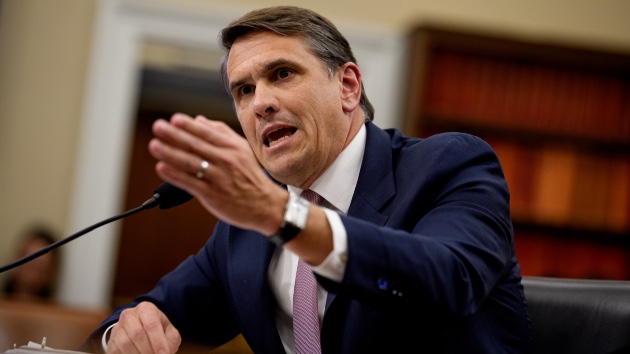
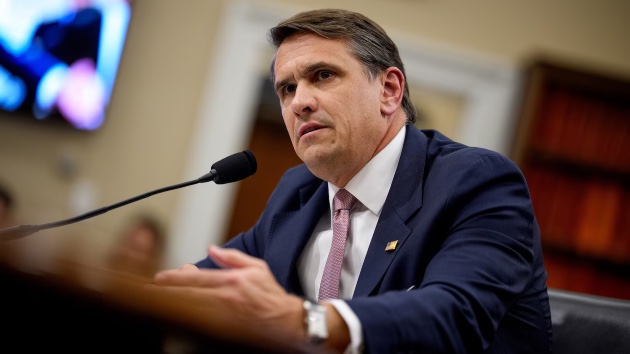
Acting U.S. Attorney General Todd Blanche testifies during a House Committee on Appropriations, Subcommittee on Commerce, Justice, Science, and Related Agencies hearing in the Rayburn House Office Building on June 02, 2026 in Washington, DC. (Andrew Harnik/Getty Images)
(WASHINGTON) — The Justice Department’s number three-ranked official suggested overnight in a since deleted post that the Trump administration would be moving forward with an alternative plan to compensate victims of claimed Biden-era “weaponization.”
The post came just hours after the acting attorney general committed to Congress that DOJ was scrapping plans for a so-called “Anti-Weaponization Fund.”
The fund was created in exchange for Trump agreeing to drop his $10 billion lawsuit against the IRS as well as two civil claims related to the Russia collusion investigation he faced during his first term in office and the 2022 search of his Mar-a-Lago estate.
Stanley Woodward, the associate attorney general who signed off on the president’s controversial settlement, responded approvingly to a suggestion pushed by Sen. Lindsey Graham, R-S.C., on X Tuesday that victims of so-called Biden-era “weaponization” could still be compensated through claims under the requests under the Federal Torts Claims Act.
“We’re on it.” Woodward posted at 10:45 p.m. Tuesday evening in response to Graham’s post. Woodward’s post was deleted Wednesday morning, and a DOJ spokesperson has not responded to ABC’s request for comment as to why it’s no longer on his X account.
The post comes just hours after acting AG Todd Blanche told House lawmakers that the administration was permanently scrapping plans for its “Anti-Weaponization Fund.”
Blanche, however, under pressure from Democrats did not commit to putting the department’s position into writing.
Democrats could seek to seize on Woodward’s post as evidence the administration is seeking an alternate way to pay Jan 6 rioters.
Los Angeles Mayor Karen Bass looks on as she greets customers at Pann’s Restaurant on June 01, 2026 in Los Angeles, California. With one day to go before the California primary, Los Angeles Mayor Karen Bass continues to campaign across the city. (Photo by Justin Sullivan/Getty Images)
(LOS ANGELES) — Votes are being counted in the closely watched primary election to determine Los Angeles’ next mayor.
Voters in the nation’s second-largest city had their choice of 14 candidates to choose from in a race that included incumbent Mayor Karen Bass, reality TV personality Spencer Pratt and city Councilwoman Nithya Raman.
ABC News projects that Bass will advance to a runoff, though it is currently unclear which candidate she will face in the runoff election.
During the campaign, candidates running for the top office in Los Angeles focused on a variety of issues afflicting the Southern California metropolis, including recovery from the devastating 2025 Los Angeles wildfires, homelessness, Immigrations and Customs Enforcement (ICE) and more.
While the primary is nonpartisan, Bass has served Congress as a Democrat, Raman is a self-described Democrat, and Pratt is a registered Republican.
Here is a rundown of the candidates, the issues and how the election will function.
The candidates
While 14 candidates are running for office, three front-runners have emerged in polls: Bass, Pratt and Raman met in the only televised debate of the race on May 6.
Bass, a Los Angeles native, entered politics in 2004 after a career in medicine as a physician assistant. The mayor served in the California State Assembly, rising to the speaker of the assembly before running for Congress in 2010.
She served six terms in the House as a Democrat before becoming the first woman and second African American mayor of Los Angeles in 2022.
Raman, running as a progressive, launched her campaign earlier this year, just before the deadline, and has been a member of the city council since 2020.
Raman, who holds degrees from both Harvard and the Massachusetts Institute of Technology, describes herself as an “urban planner” on her website.
Pratt, who has generated headlines since announcing his candidacy earlier this year, is running as an outsider in the field. Pratt rose to fame in his 20s serving as a villain archetype on the hit reality TV show “The Hills.”
The former reality star has said his political ambitions were fueled by his association with the Palisades wildfire, which claimed his home.
The issues
No topic has been more prominent in the mayoral campaign than the Los Angeles fire response and recovery. When fires ravaged the region in early 2025, more than 10,000 structures were destroyed as more than 30,000 acres of the city burned.
Pratt has been the most outspoken critic of the city’s response. Bass has defended her actions while also admitting the city must learn from the fire. Raman has also criticized the “dysfunctional” response to the fires.
Homelessness, another key issue candidates have focused on down the stretch, was hotly debated on the debate stage last month. Bass has cited what she says are inroads on the issue, saying L.A. had seen a decrease in homelessness under her administration.
Raman’s campaign has stressed the importance of bringing unhoused people indoors, while Pratt has focused on what he sees as the core cause of homelessness: drug addiction.
The candidates also have different stances on what the city’s approach to ICE should be. Last year, ICE raids became a flashpoint for widespread protests across the city.
As mayor, Bass has pushed back on ICE’s presence in Los Angeles, saying in a press release in March, “Los Angeles will not stand for ICE’s fear, intimidation and unlawful targeting.”
Raman’s plan to address ICE in Los Angeles includes appointing a police chief “committed to protecting immigrants” and ensuring the Los Angeles Police Department “does not coordinate with federal immigration enforcement,” according to her website.
Pratt recently told ABC News the future mayor would not be able to work with ICE because of California’s sanctuary law status, adding, “I’m going to make the streets so safe the federal government is not going to need to come to L.A., because they’re going to be like ‘Wow this mayor has these streets safe and clean.'”
Other hot topics at play in the primary is the revival of Hollywood, LAPD funding, affordable housing and more.
How the primary works
According to the city of Los Angeles election code, the Los Angeles mayoral primary can result in either an outright winner or a runoff, depending on final vote tallies.
A candidate will be determined the winner if they receive a majority of votes in the primary. In the case that does not happen, the top two vote-getters will advance to a runoff in the general election in November.
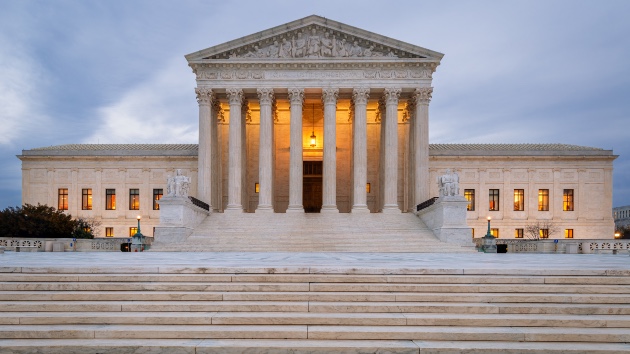
Steps to the United States Supreme Court, Washington DC, America. (joe daniel price/Getty Images)
(WASHINGTON) — The Supreme Court has cleared the way for Alabama Republicans to use a contested 2023 congressional map that a lower court last week called “intentional race-based discrimination” in violation of the Voting Rights Act and the Constitution.
The move is a significant win for the GOP, allowing the state to eliminate one of two majority-Black districts occupied by Democrats, even as election experts and state administrators have warned of major confusion for voters with the late change.
Civil rights groups lamented the decision as a stark example of the impact of the court’s historic April decision in Louisiana v. Callais which rolled back longstanding voting rights protections for minority voters.
In an unsigned opinion Tuesday, the court’s conservative majority said the unanimous three-judge panel — which included two Trump appointee — in the Alabama dispute failed to apply “updated” standards the justices issued in the Callais decision for proving a political process is not equally open for minority voters.
The court said the panel “did not heed the presumption of legislative good faith” by concluding state lawmakers had “discriminatory animus.”
The court’s decision concluded that the judges also erred in blocking the 2023 map even though the minority voters challenging it could not provide an alternative map that offered the same political advantages sought by Republicans.
Alabama Republican Gov. Kay Ivey praised the decision, and her office confirmed the state would hold a special primary using the new maps with redrawn districts on Aug. 11.
“The U.S. Supreme Court confirmed what I have said all along and that is that Alabama knows our state, our people and our districts best,” Ivey said in a statement. “Today’s decision is a win for the people of Alabama and our elections.
Justice Sonia Sotomayor, in a lengthy dissent joined by Justices Elena Kagan and Ketanji Brown Jackson, accused her colleagues of “unleashing chaos” and “confus[ing] voters.”
The map change will require state officials to change the voter registrations of hundreds of thousands of voters in a matter of days and educate them on where to cast new ballots.
“Just as Alabama doubled down on racial discrimination, the Court today doubles down on chaos,” Sotomayor wrote. “Because I choose to defend the rule of law and the right of all Alabamians to participate equally in democracy, I respectfully dissent.”
In 2024, Alabama had been required to use a map with two majority-Black districts, one of which was won by Democratic Rep. Shomari Figures.
The new map could allow Republicans to flip Figures’ seat.
The NAACP slammed the Supreme Court’s decision as discriminatory.
“The Supreme Court continues to unleash chaos in our democratic process, and with this latest action, gives Alabama approval to use a congressional map that had previously been found to be intentionally discriminatory,” NAACP General Counsel Kristen Clarke wrote in a statement. “This is a Court that is stripping Black voters of power and voice at a speed that would put Jim Crow jurists to shame. Our message to communities remains the same — the best way to express dissent is by showing up at the ballot box this election season.”
-ABC News’ Oren Oppenheim contributed to this report.
(WASHINGTON) — Acting Attorney General Todd Blanche confirmed during testimony before a House subcommittee on Tuesday that the Trump administration is backing down from establishing a $1.8 billion “Anti-Weaponization Fund” to benefit allies of President Donald Trump following heavy pressure from Republican congressional leadership.
This is a developing story. Please check back for updates.
White House Press Secretary Karoline Leavitt, Melania Trump, U.S. President Donald Trump, and Weijia Jiang attend as Mentalist Oz Pearlman hosts The White House Correspondents Dinner at Washington Hilton, April 25, 2026. (Kevin Mazur/Getty Images)
(WASHINGTON) — The White House correspondents’ dinner has been rescheduled for July 24, after a shooting forced the cancellation of the annual event in April, White House Correspondents’ Association president Weijia Jiang said.
“Rescheduling was not automatic. It was a choice that the WHCA board made after thoughtful consideration and input from our members,” she said in a statement.
Cole Allen, 31, is accused of trying to assassinate President Donald Trump at the April 25 dinner at the Washington Hilton hotel. He was tackled by law enforcement after rushing through a security checkpoint at the hotel, where thousands of journalists as well as Trump and members of his Cabinet were gathered for the annual event, according to prosecutors.
Allen allegedly wrote that administration officials were his targets, according to a criminal complaint.
Allen has pleaded not guilty to attempted assassination of the President of the United States, assault on a federal law enforcement officer with a deadly weapon, transportation of a firearm and ammunition over state lines with the intent to commit a felony and discharge of a firearm during a crime of violence.
Jiang said the rescheduled dinner “will not only be an opportunity to carry out our program. It will be a statement that violence has no place in American life and a free press will not be intimidated into silence.”
“Our thoughts remain with the officer who was injured and with everyone who experienced that evening,” she added. “We are indebted to the US Secret Service, law enforcement and the hotel staff whose swift response protected our guests and our staff.”
Jiang did not say where July’s dinner will be held.