Trump announces deal to reduce cost of specific IVF medication

Trump announces deal to reduce cost of specific IVF medication
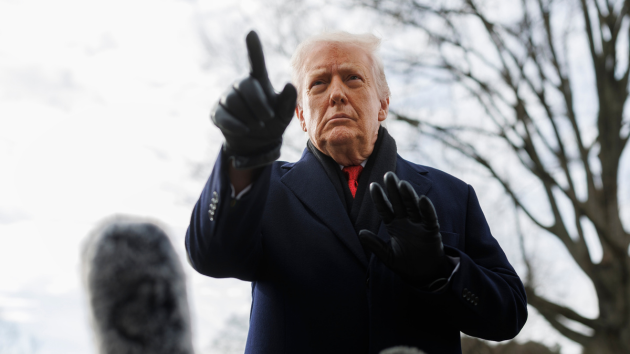
U.S. President Donald Trump looks on during a press conference in the Oval Office of the White House on October 15, 2025 in Washington, DC. Trump and Federal Bureau of Investigation Director Kash Patel provided an update on the Trump administration’s progress in reducing violent crime. (Photo by Kevin Dietsch/Getty Images)

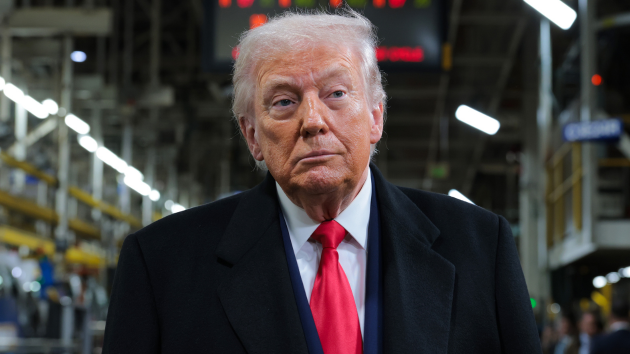
(WASHINGTON) — President Donald Trump announced a deal on Thursday between his administration and pharmaceutical company EMD Serono to reduce the cost of some fertility medications.

Senior administration officials have said this deal will help millions of American women struggling to conceive with their ability to afford the expensive treatment. 

Trump pledged to expand IVF access for Americans struggling to start families — making it a point of his presidential campaign. In February, he signed an executive order looking into how to lower costs and reduce barriers to IVF.

This deal “delivers on the president’s pledge,” an official said. 

“In the Trump administration, we want to make it easier for couples to have babies, raise children and start the families they’ve always dreamed out,” Trump said during an announcement from the Oval Office.

Trump said EMD Serono, the largest fertility drug manufacturer in the world, has agreed to provide discounts for the cost of fertility drugs the company sells in the U.S., including its most popular, Gonal-f, which treats infertility in women and men.

Officials told ABC News a fertility drug typically costs between $5,000 and $6,000 per cycle, the officials said, and only about 30% of families have access to some sort of employer-based coverage. 

Trump said EMD Serono will list its fertility drugs online at “very, very heavily reduced prices.”

“We’re pleased to announce that, depending on the patient’s income, the cost of drugs for a standard IVF cycle of infertility will decrease somewhere between 42 and 79% for families,” an official said, and “based on the results of this negotiation.”

The official said those drugs will be available in early 2026.

In 2024, the U.S. Department of Health and Human Services (HHS) stated the cost for a single cycle of IVF can range from $15,000 to $20,000, and can surpass $30,000 if a donor egg is involved.

The average number of cycles needed to become pregnant from IVF is 2.5, meaning the average cost of IVF to conceive successfully can exceed $40,000, according to the HHS.

In May, Trump signed an executive order to pressure companies to only charge U.S. patients the same rate as they charge in other countries, an effort called “most favored nation” pricing.

This kicked off a monthslong campaign to pressure pharmaceutical companies to drop their prices voluntarily, without regulation. 

The White House also said that the two specialty pharmacies that account for more than 80% of the distribution of the drug — CVS Specialty Pharmacy and Express Scripts Freedom Fertility Pharmacy — told the administration they would “materially reduce their expenses associated with the handling of this drug, while still ensuring access to all families who wish to use it.” 

Copyright © 2025, ABC Audio. All rights reserved.
B-52s fly off coast of Venezuela in show of force by Trump

B-52s fly off coast of Venezuela in show of force by Trump
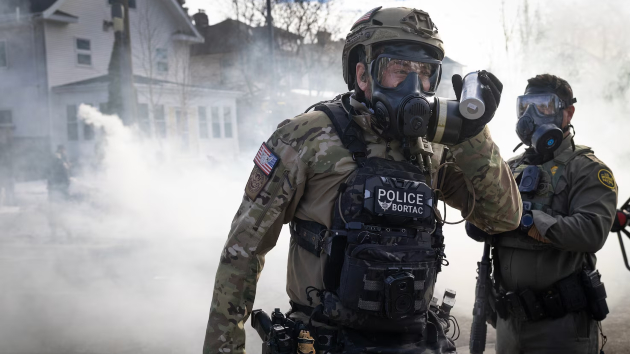
B-52-Bomber in the blue sky. The Boeing B-52 Stratofortress is an eight-engine long-range bomber of the US Air Force.

(BOSSIER PARISH, La.) — Three B-52 bombers took off from Barksdale AFB in Louisiana on Wednesday and flew for hours near the coast of Venezuela, according to flight tracking data, in what appears to be a major show of force by President Donald Trump.

The B-52 is a long-range, heavy bomber that has been used in conventional warfare in such places as Iraq and Syria. But it’s also capable of carrying nuclear weapons.

Trump confirmed on Wednesday that had authorized CIA action in Venezuela because of the flow of migrants and drugs from the country, and indicated his administration is exploring land strikes inside Venezuela.

Asked what’s next for his administration’s “war” on drug cartels and whether they were considering strikes on land, Trump said they were looking into it.

“Well, I don’t want to tell you exactly, but we are certainly looking at land now because we’ve got the sea very well under control,” the president said.

On Tuesday, Trump and Defense Secretary Pete Hegseth posted a video of another lethal strike on alleged drug boat from Venezuela.

Since Sept. 2, Trump has ordered military strikes on at least five boats in the Caribbean Sea that the administration insists, without providing evidence, were carrying drugs to the U.S. The use of lethal of military force against drug boats is unprecedented and raises legal questions. Past administrations have relied on law enforcement to interdict drug shipments.

This is a developing story. Please check back for updates.

Copyright © 2025, ABC Audio. All rights reserved.

Sen. Mitch McConnell falls in Capitol hallway

Sen. Mitch McConnell falls in Capitol hallway
Sen. Mitch McConnell, R-Ky., attends the Senate Appropriations Committee markup of the “Commerce, Justice, Science, and Related Agencies Appropriations Act,” and other bills in Dirksen building on Thursday, July 10, 2025. Tom Williams/CQ-Roll Call, Inc via Getty Images

(WASHINGTON) — Sen. Mitch McConnell, 83, fell to the ground in a Capitol hallway Thursday afternoon as he made his way to Senate votes.

This is a developing story. Please check back for updates.

Copyright © 2025, ABC Audio. All rights reserved.
Thune says he offered Democrats a vote on Obamacare subsidies to end government shutdown

Thune says he offered Democrats a vote on Obamacare subsidies to end government shutdown
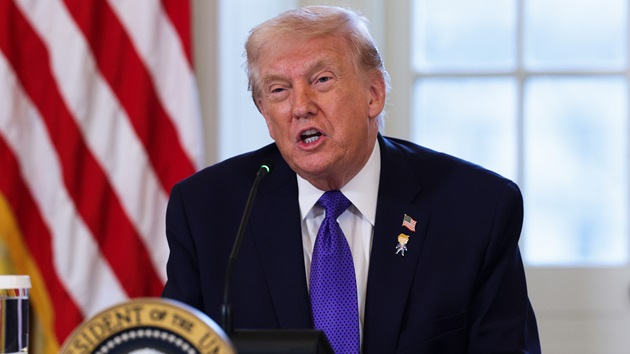
Senate Majority Leader John Thune speaks to reporters as Senate Republican leaders hold a press conference following their weekly policy lunch on Capitol Hill in Washington, October 15, 2025. (Andrew Harnik/Getty Images)

(WASHINGTON) — Senate Majority Leader John Thune said he offered Democrats an opportunity to address their biggest priority in an effort to end the government shutdown — but it was not enough to end the stalemate.

Thune, during an interview on MSNBC that aired Thursday morning, said he has offered Democrats a vote on extending the Affordable Care Act premium subsidies, but that he couldn’t guarantee an outcome.

“I’ve told them. I said, and I’ve said, ‘We are willing to have the conversation.’ I’ve said, ‘If you need a vote, we can guarantee you get a vote by a date certain.’ At some point Democrats have to take yes for an answer,” Thune said in the interview, which was taped Wednesday.

Senate Majority Leader John Thune said he offered Democrats an opportunity to address their biggest priority in an effort to end the government shutdown — but it was not enough to end the stalemate.

Thune, during an interview on MSNBC that aired Thursday morning, said he has offered Democrats a vote on extending the Affordable Care Act premium subsidies, but that he couldn’t guarantee an outcome.

“I’ve told them. I said, and I’ve said, ‘We are willing to have the conversation.’ I’ve said, ‘If you need a vote, we can guarantee you get a vote by a date certain.’ At some point Democrats have to take yes for an answer,” Thune said in the interview, which was taped Wednesday.

Thursday’s vote is a different sort of vote than previous ones related to the shutdown. This vote begins debate on one of 12 regular order annual appropriations bills that keep the government running.

Thune has signaled that if the Senate does successfully support this package Thursday, he’ll attempt to affix funding bills for additional agencies to it using regular order on the Senate floor.

Reopening the government is a crucial first step to continue discussions about reforms to health care, Thune said on MSNBC. He committed to conversations, but not an outcome. 

“There is a path forward, I believe, but it has to include reforms, and can I guarantee an outcome? No. And that’s what people want to see — guarantee us that this is going to pass,” Thune said. “I can’t guarantee it’s going to pass. I can guarantee you that there will be a process and you will get a vote.” 

Asked about Thune’s comments, Speaker Mike Johnson reiterated Thursday morning that no health care outcomes can be guaranteed.

“It’s not possible for Leader Thune to guarantee to Chuck Schumer some outcome on that, because we haven’t finished those deliberations. I mean, that’s just as simple as it is,” Johnson said during his Thursday morning news conference.

There is bipartisan interest, Thune said, in keeping health care costs down. But changes to the program need to be made, and negotiations on those changes start with opening the government, Thune said. 

Thune was pressed on efforts by the White House to rescind congressionally appropriated funds. Democrats have said that the use of rescissions has made them leery to work on funding deals. Thune did not explicitly say he wanted the White House to stop making rescissions, but he said regular order appropriations were the preferred method.

“The rescission power is something that constitutionally the president has — the question of whether they use it or not — yeah, I mean, that’s obviously something I think that they would need to talk to the White House about,” Thune said.

He said he’s had “conversations” on the topic with the White House and that “I do think that it’s in everybody’s best interest, including the White House’s, to have a normal appropriations process where people are bought in.”

As Thune sat for this interview, the House was in its third consecutive week of recess. Thune was asked if it was the right choice for the House to remain out of town. He said it was a “judgement call” for Speaker Johnson to make. 

“There isn’t anything right now. They did their job. They passed their bill. The game is in the Senate,” Thune said.

He also couldn’t guarantee the shutdown would end any time soon. When asked by Ali Vitali if he thought it would be over by Thanksgiving, Thune didn’t commit. 

“I hope it doesn’t last through Thanksgiving, because that’s going to be a lot of harm to the American people,” he said.

ABC News’ Lauren Peller contributed to this report.

Copyright © 2025, ABC Audio. All rights reserved.

US-China rare Earth minerals fight explained

US-China rare Earth minerals fight explained
Ju Peng/Xinhua via Getty

(WASHINGTON) — Just weeks before the planned meeting between President Donald Trump and Chinese President Xi Jinping in South Korea, China dramatically expanded its restrictions on rare earth minerals, a move the Trump administration sees as a sharp escalation in China’s efforts to tighten its grip on global manufacturing.

China’s new rules, which apply to all countries, are set to take effect in phases on Nov. 8, then Dec. 1.

“It is an exercise in economic coercion on every country in the world,” Ambassador Jameison Greer said Wednesday during a press conference alongside Treasury Secretary Scott Bessent. “This will give China control over basically the entire global economy and the technology supply chain.”

The move prompted Trump to threaten 100% tariffs on all products from China starting Nov 1st. So far, Beijing hasn’t shown any public indication that it’s pulling back on its controls, but Bessent remains sanguine.  

“I am optimistic that this can be de-escalated. Ultimately, we are confident in the strong relationship between President Trump and President Xi,” Secretary Bessent said. ” We’ve had substantial communication with the Chinese over the past few days, and we believe that there will be more forthcoming this week.”

Some experts say Beijing is playing hardball to increase its leverage in these upcoming talks, while undercutting U.S. efforts to boost its industrial base.

Bessent said Wednesday that Trump is still expected to meet with Xi in South Korea despite the tariff threats.

The Chinese government stated on Sunday that it does not want a trade war, but it will also not shy away from it.

“On the tariff issue, China’s position remains consistent: we do not want a trade war, but we are not afraid of one,” China’s Ministry of Commerce said in a statement Sunday. “If the U.S. persists in its course, China will resolutely take appropriate countermeasures to safeguard its legitimate rights and interests.”

China’s move to restrict rare Earth minerals could have global implications.

The restrictions affect a wide swath of the U.S. and global economy. Rare earths are key to producing computer chips, which are needed for many things like smartphones and AI systems. They’re also critical to making magnets to power drones, robots and cars. Rare earths are also crucial for defense technology, including F-35 fighter jets, Tomahawk missiles, and radar systems.

The restrictions mean that foreign firms must obtain Chinese government approval to export products that have even trace amounts of certain rare earths that originate from China.

Given that China is overwhelmingly dominant in this sector, this could have major national security implications.

Ambassador Greer gave an example on Wednesday, saying that “if a car is built in America and sold in Mexico, you would need to seek approval from China before making a sale because of the chips in the car.”

The broad scope of this rule from China is similar to how the U.S. has implemented export restrictions to control chip production around the world that uses American technology.

The sweeping new restrictions are a sign, some analysts say, that China wants the U.S. to roll back its own export controls, and that this fight is about more than just tariffs.

Copyright © 2025, ABC Audio. All rights reserved.

Trump vows federal ‘surge’ in more American cities to combat crime

Trump vows federal ‘surge’ in more American cities to combat crime
U.S. President Donald Trump returns to the White House following a visit to Walter Reed National Military Medical Center on October 10, 2025 in Washington, DC. President Trump traveled to Walter Reed to visit with troops and receive a medical check up. (Photo by Anna Rose Layden/Getty Images)

(WASHINGTON) — President Donald Trump, speaking in the Oval Office on Wednesday alongside FBI Director Kash Patel, said his administration is going to “go into other cities” to combat crime.

“We’re going to have a surge of strong, good people, patriots. And they’re going to go in, they straighten it all out,” Trump said.

This is a developing story. Please check back for updates.

Copyright © 2025, ABC Audio. All rights reserved.

Democratic senators want investigation into Noem’s TSA video that blamed Democrats for the shutdown

Democratic senators want investigation into Noem’s TSA video that blamed Democrats for the shutdown
U.S. Secretary of Homeland Security Kristi Noem speaks during a roundtable discussion in the State Dining Room of the White House on October 08, 2025 in Washington, DC. Trump’s administration held the roundtable to discuss the anti-fascist Antifa movement after signing an executive order designating it as a “domestic terrorist organization”. (Photo by Anna Moneymaker/Getty Images)

(WASHINGTON) — Democratic senators are alleging that the Department of Homeland Security potentially violated the Hatch Act by asking airports across the country to play a video featuring DHS Secretary Kristi Noem blaming Democrats for the impacts of the government shutdown.

“This appears to be a flagrant violation of Sec. 715, which states ‘No part of any funds appropriated in this or any other act shall be used by an agency of the executive to branch… for the preparation, distribution or use of any… film presentation designed to support or defeat legislation pending before the Congress, except in presentation to the Congress itself,'” Connecticut Democratic Sen. Richard Blumenthal wrote in the letter to DHS citing a section from the Anti-Lobbying Act. 

The Hatch Act restricts certain political activities by federal employees and by some state, Washington, D.C., and local government workers who are involved or work in federally funded programs. Penalties for violating it include removal from federal employment, suspension without pay, demotion, or blocking a party from federal jobs for up to five years, according to the Office of Special Counsel.

“The law’s purposes are to ensure that federal programs are administered in a nonpartisan fashion, to protect federal employees from political coercion in the workplace, and to ensure that federal employees are advanced based on merit and not based on political affiliation,” according to the U.S. Office of Special Counsel’s website.

In response to ABC News’ request for comment on the call for an investigation, DHS Assistant Secretary Tricia McLaughlin said “DHS responds to official correspondence through official channels.”

“It is TSA’s top priority to ensure that travelers have the most pleasant, efficient, and safe air travel security experience possible. It is a simple statement of fact that Democrats in Congress refuse to fund the federal government, and because of this, most of our TSA employees are working without pay. It’s unfortunate our workforce has been put in this position due to political gamesmanship. Our hope is that Democrats will soon recognize the importance of opening the government,” she said.

The letter followed a number of airports nationwide declining to play the video, saying their facilities’ policies bar the showing of political content. Some of them also pointed to the Hatch Act. 

Among the major airports that declined to show the DHS video are LaGuardia, Newark Liberty, John F. Kennedy, Charlotte Douglas International, Seattle-Tacoma, San Francisco, Hartsfield-Jackson Atlanta, Chicago O’ Hare, Phoenix International and Colorado Springs.

As of Wednesday afternoon, officials at Detroit Metropolitan Wayne County Airport in Michigan and Bismarck Airport in North Dakota said the video was being shown on screens controlled by TSA at the airports and out of their control. Both airports said they were not involved in the decision to play the video. A spokesperson for Detroit Wayne Airport said it has requested that TSA stop playing the video. 

The letter to DHS led by Blumenthal and Rhode Island Sen. Jack Reed was  cosigned by 15 other senators and asks the department to “immediately remove these videos from all TSA checkpoints and cease illegally using federal funds for partisan political messaging.”  

The senators also asked DHS to provide information on the funding used to produce the video, including the cost, the approver of the funds, whether anyone from the Trump administration was consulted on the video, and if any outside contractors or organizations were involved in its creation to assess whether any federal laws were violated or funds misused, according to the letter. 

A similar letter was sent by Washington Democratic Sen. Maria Cantwell, ranking member on the Senate Committee on Commerce, Science and Transportation, to the Office of Special Counsel demanding an investigation into the video, adding that the OSC is responsible for enforcing the Hatch Act. 

“When viewed in its totality, Secretary Noem’s video can only be reasonably interpreted as a partisan message intended to misleadingly malign the Trump Administration’s political opponents, convince Americans to blame ‘Democrats in Congress’ for the ongoing government shutdown, and influence their future votes — all while omitting the fact that Republicans currently control the White House, U.S. Senate, and U.S. House of Representatives,” Cantwell wrote in the letter.

Copyright © 2025, ABC Audio. All rights reserved.

Texas State Rep. Gina Hinojosa launches Democratic bid for governor

Texas State Rep. Gina Hinojosa launches Democratic bid for governor
In this Aug. 18, 2025, file photo, Rep. Gina Hinojosa reacts as a proclamation by the Governor is read inside the House Chamber at the Texas Capitol in Austin, Texas. Mikala Compton/Austin American-Statesman via Getty Images, FILE

(TEXAS) — One of the Texas Democrats who attempted to block Republican efforts to redraw the state’s congressional maps mid-decade is looking to bring that fighting spirit to the governor’s mansion.

Austin-area state Rep. Gina Hinojosa, a Democrat, on Tuesday launched a bid to unseat Republican Gov. Greg Abbott.

Hinojosa told ABC News she believes Texas voters desire a spirited, fresh candidate to take on Abbott, who is running for a fourth term.

“I think Americans are done with politics as usual and are interested in shaking off labels and just wanting to see something real,” she said. “I’m as real as you get — a mom who got mad [who] ran for office.”

A former Austin ISD school board president, Hinojosa will center education, and campaigning on behalf of Texas public schools, in her bid. Hinojosa was elected to the statehouse in 2016.

“After 10 years, I now understand where our money is going and our money is going to vendor contracts and to enrich the billionaire class and not to the needs of Texans,” she said.

Hinojosa was part of the first wave of legislators who, this summer, left the state to deny their Republican counterparts a quorum, which brought the Abbott-backed special session to implement new GOP-favored congressional maps to a screeching halt. 

The quorum break kicked off a national redistricting saga; high-profile Democrats, like California Gov. Gavin Newsom, Illinois. Gov. JB Pritzker, and New York Gov. Kathy Hochul hosted these lawmakers to protest the maps.

Pritzker took on an outsized role in the showdown, helping coordinate the travel and lodging of dozens of state lawmakers as they camped out in Illinois and ran out the clock. Former President Barack Obama even called into their Illinois’ encampment and offered support. 

Texas Republicans did eventually pass new congressional maps after establishing a second special session, though Texas Democrats, Hinojosa among them, heralded their collective action as a win. Newsom and California Democrats, in turn, launched their own effort to pass blue-leaning maps, bringing the issue to voters on a proposition this November.

Hinojosa said her involvement in the quorum break “opened my eyes” that voters are ready for a fight.

“I can run for governor because I have faith in Texans that they will have my back and that they are in this with me. That quorum break did expand my understanding of where Texans, where voters are today in 2025 when it comes to what they want to see their leaders doing,” she said.

But Hinojosa, a self-described populist, has a lot of ground to gain. No Democrat has won a statewide office in Texas since 1994. And Texas’ Latino population has been slowly edging toward Trump over the last few elections. Trump led former President Joe Biden by 6 points in the state in 2020 — and the gulf grew in 2024, when trounced former Vice President Kamala Harris by 14 points. 

She must also edge out serious Democratic challengers in the primary. Andrew White, the son of former Texas Gov. Mark White, is also running. And she faces the potential of more well-known Democrats jumping into the fray. (Though Hinojosa says both Rep. Joaquin Castro and former congressman Beto O’Rourke have told her they’ve ruled out a gubernatorial run.)

Despite it all, she feels she can navigate these challenges. And is making a bet that Texas voters feel the same.

“People want change. I’m the candidate of change. Greg Abbott is the candidate of status quo, of the insider club enriching themselves with our taxpayer dollars. So, I feel very good about being a candidate that represents the desires and what Texans want to see in a leader,” Hinojosa said. 

Copyright © 2025, ABC Audio. All rights reserved.

Ex-girlfriend of GOP Rep. Cory Mills granted restraining order against him

Ex-girlfriend of GOP Rep. Cory Mills granted restraining order against him
Rep. Cory Mills, R-Fla., leaves the U.S. Capitol after the last votes before August recess, on Wednesday July 23, 2025. (Tom Williams/CQ-Roll Call, Inc via Getty Images)

(FLORIDA) — A Florida judge issued a protective order against Republican Rep. Cory Mills after he was accused by a former girlfriend of threatening to release sexually explicit videos of her, according to court documents.

The judge ordered the congressman to refrain from contacting Lindsey Langston, who was named Miss United States in 2024 and is a Republican state committeewoman from Columbia County.

Langston alleged in July that Mills threatened to release videos of her after their breakup earlier this year and that he threatened to harm any future partners, according to a report obtained from the Columbia County Sheriff’s Office in Florida.

In the order, the judge wrote that Langston has “reasonable cause to believe she is in imminent danger of becoming the victim of another act of dating violence” and said the evidence supported Langston’s assertion that Mills had caused her “substantial emotional distress” and that Mills offered “no credible rebuttal” to her testimony.

The order, which remains in place until January 2026, prohibits Mills from contacting Langston in any way and from coming within 500 feet of her residence or place of employment.

In her first comments since the judge’s decision, Langston said she now “feels like I’m able to live my life again.”

“I do feel that justice was served, and I can’t even describe the relief that I felt once I got the phone call that I had been issued the injunction for protection. I felt like I’m able to live my life again,” Langston said on a Zoom call Wednesday with reporters, sitting next to her attorney.

Mills previously said in a statement to ABC News, “These claims are false and misrepresent the nature of my interactions,” and accused a former Florida primary opponent of “weaponizing the legal system to launch a political attack against the man who beat him.”

In the order, the judge said he did not find Mills’ testimony to be “truthful.”

“The court, considering the totality of the testimony and the circumstances, does not find the Respondent’s testimony concerning the intimate videos to be truthful,” the judge wrote.

Speaker Mike Johnson, on Wednesday, was asked about allegations against Mills and told reporters, “I have not heard or looked into details of that. I’ve been a little busy. We have a House Ethics Committee; if it warrants that, I am sure they’ll look into it.”

“You have to ask Rep. Mills about that,” the Speaker added when pressed. “I mean, he’s been a faithful colleague here. I know his work on the Hill. I mean, I don’t. I don’t know all the details of all the individual allegations and what he’s doing in his outside life. Let’s talk about things that are really serious.”

Langston’s attorney Bobi Frank said Wednesday that her client plans to cooperate with any future investigations, including with the House Ethics Committee, and said she had been in contact with “other individuals” involved the matter and alleged that “Miss Langston is not alone.”

ABC News has reached out to Mills for a comment.

Copyright © 2025, ABC Audio. All rights reserved.

Supreme Court appears ready to limit key part of Voting Rights Act

Supreme Court appears ready to limit key part of Voting Rights Act
Voting rights activists protest outside the U.S. Supreme Court as the court prepares to hear arguments in a case challenging Louisiana’s congressional map in Washington on Wednesday, October 15, 2025. (Bill Clark/CQ-Roll Call, Inc via Getty Images)

(WASHINGTON) — The Supreme Court on Wednesday appeared ready to limit how a key part of the Voting Rights Act long aimed at protecting equal opportunity for racial minority voters is applied to the drawing of state election maps. 

During oral arguments in a complicated case challenging the drawing of a second majority-black district in Louisiana, the court’s conservative majority suggested race may have improperly predominated as a factor in its creation.

At the same time, it was not clear whether a majority of the court was prepared to issue a more sweeping ruling that any use of race as a factor in redistricting is unconstitutional. 

Section 2 of the Voting Rights Act has long been a guardrail against states “packing” Black voters into districts and “cracking” communities of color into other districts with an aim of diluting their electoral influence.

Courts that have found a violation of Section 2 then order states to redraw their maps, with an eye on race, to ensure minority voters are given fair chance at political participation. 

The law does not require proof of intent to discriminate — prohibiting any discrimination in effect — but several conservative justices suggested that plaintiffs should have to show at least some possibility of intent, a tougher standard to meet. 

Justice Brett Kavanaugh, who could be the key vote in the case, voiced particular concern about the indefinite use of race to draw maps compliant with Section 2.

“This court’s cases in a variety of contexts have said that race-based remedies are permissible for a period of time, sometimes for a long period of time, decades in some cases, but that they should not be indefinite and should have an end point,” Kavanaugh said. 

“What is not grounded in case law,” replied Janai Nelson, president and director-counsel of the NAACP Legal Defense Fund, which is defending Louisiana’s map, “is the idea that an entire statute should somehow dissolve simply because race may be an element of the remedy.”

The court’s longstanding precedents have said that race cannot be a primary motivating factor when drawing congressional districts under the equal protection clause of the 14th Amendment, but they also grant states have breathing room to consider race in order to comply with the Voting Rights Act. 

The court most recently upheld Section 2 in a 2023 decision. 

“What Section 2 does is to say where the effects [of a congressional map] are discriminatory such that … African Americans here are not being given the same voting opportunities as white people are, then a remedy is appropriate,” Justice Elena Kagan told Louisiana Solicitor General Benjamin Aguinaga. “That remedy doesn’t have to be race-based, but sometimes it is race-based in order to correct the racially discriminatory situation that exists.”

Justice Ketanji Brown Jackson most vigorously defended the legacy of Section 2 and its use to create two majority-black districts in Louisiana, describing the Civil Rights-era law as a “tool” to identify racial disparities. 

“It’s like a tape measure that we’re looking [at] as to whether or not certain circumstances exist, and those circumstances that Congress is worried about – unequal access to electoral opportunity,” she said. “That’s why it doesn’t need a time limit, because it’s not doing any work other than just pointing us to the direction of where we might need to do something.”

Justice Samuel Alito said outright that he believed lower courts did not correctly apply the Supreme Court’s precedents around Section 2 to the maps at issue in Louisiana. 

“There’s a serious question about whether the Black population within the district in question in the illustrative map was geographically compact,” he said, referring to one of the legal requirements for a VRA-compliant map. 

A decision in Louisiana’s favor could, at the very least, require the state to redraw its map under more race-neutral criteria ahead of the 2026 midterm election. The two majority-black districts are represented by Democrats. 

A broader conclusion in the case could upend congressional maps nationwide, potentially triggering the redrawing of race-neutral districts in multiple states and in turn putting minority representation at risk in legislatures nationwide.  

Nelson argued that a further rollback of the Voting Rights Act would be “catastrophic.” 

 “If we take Louisiana as one example, every congressional member who is Black was elected from a VRA opportunity district,” she said. “We only have the diversity that we see across the south, for example, because of litigation that forced the creation of opportunity districts under the Voting Rights Act.” 

The court is expected to release a decision before the end of its term in June 2026.  How quickly it releases its ruling could determine whether or not states will have sufficient time to redraw maps — if necessary — before midterm voting begins.

Copyright © 2025, ABC Audio. All rights reserved.