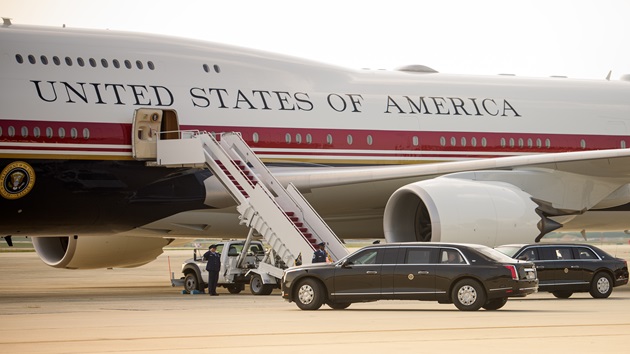
U.S. President Donald Trump arrives at Air Force One on July 01, 2026 at Joint Base Andrews, Maryland. (Andrew Harnik/Getty Images)
(WASHINGTON) — President Donald Trump on Wednesday is taking the first ride on the newly retrofitted Air Force One 747, which was donated by the Qatari royal family.
Trump, taking the retrofitted jet to North Dakota, touted it as “maybe the greatest commercial plane ever built.”
“I said to Boeing, ‘What’s the best one?’ They said this is the best plane ever built, and you’re going to have the privilege of flying it, and I have a privilege also of flying it,” Trump told reporters before boarding the jet — which is approximately 14 years old — at Joint Base Andrews.
ABC News Chief White House Correspondent Mary Bruce, who is traveling with Trump on his trip, asked him about the use of taxpayer dollars to modify the luxurious plane, which likely only will be used by him.
“Well, it cost very little relative to what it would cost if we did it a different way,” Trump said.
The Qatari-gifted jet worth $400 million raised questions from some lawmakers and ethics experts over the unprecedented foreign gift. But Trump on Wednesday gave credit to the Qatari government.
“Frankly, we couldn’t build a plane like this because we wouldn’t be willing to spend the kind of money necessary. They spent top dollar,” the president said.
The U.S. Air Force has been modifying the jet in Texas since September to meet the security, communications and other needs to transport the president. The Air Force had estimated it would cost less than $400 million to retrofit the gift.
The plane is to be used as the new Air Force One until shortly before Trump leaves office, at which time ownership of the plane will be transferred to the Donald J. Trump Presidential Library Foundation, sources familiar with the proposed arrangement have told ABC News.
Boeing was already contracted by the United State government to build a new fleet of jets that would serve as the next-generation Air Force One, expected to be delivered in 2028 around the time Trump leaves office.
Trump on Wednesday said the gifted plane was needed, citing the age of the past jet.
“Our Air Force One was 35, 36 years old, and it would be parked next to the new ones like this, and it really didn’t look appropriate for our country. So we’re very proud of this,” Trump said.
Trump is traveling to North Dakota to participate in a Freedom 250 Train Ride and Welcome Ceremony and to tour the Theodore Roosevelt Presidential Library before delivering remarks in Medora.
“I’m excited about the first flight. It’s something nobody’s ever seen anything like it, even you people, with all your experience and all of your talent, you will never see anything like this,” Trump said just before his departure. “So, they just completed it. They made it appropriate for a president, that means the security and all of the different bells and whistles they put on. Very complex stuff, but it’s really quite something, and this is a plane that the United States of America should have.”
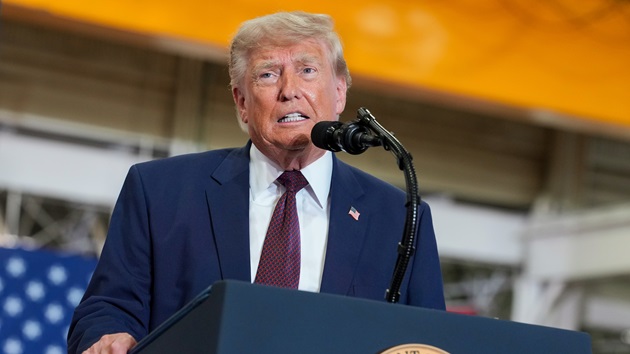
U.S. President Donald Trump delivers remarks at the Mack Trucks Lehigh Valley Operations facility on June 23, 2026 in Macungie, Pennsylvania. (Andrew Harnik/Getty Images)
(WASHINGTON) — President Donald Trump earned more than $1.3 billion from his cryptocurrency ventures in 2025, according to his personal financial disclosure released on Tuesday by the Office of Government Ethics.
The over-900-page disclosure, which covers last year, showed that the president earned billions of dollars in revenue from his properties around the world and from his foray into cryptocurrency. The president also received numerous gifts totaling more than $370,000, according to the disclosure.
But one of the standout performers last year was the president’s cryptocurrency investments.
The president’s disclosure listed earnings of $636 million from CIC Digital LLC, a cryptocurrency firm affiliated with the Trump Organization. The vast majority of that income came from a $635 million license agreement with Celebration Coin to sell the president’s $TRUMP meme coin, which he launched days before his second inauguration, billing himself as the “crypto president.”
Trump also reported earning an additional $526 million from the sale of cryptocurrency tokens through the Trump-connected firm World Liberty Financial. He earned another $65 million from sales of equity in WLF’s holding company.
World Liberty Financial came under scrutiny earlier this year after the firm reportedly sold a $500 million stake to a member of the Emirati royal family shortly before Trump’s inauguration.
The president reported another $196,875,000 in income from investments in Stablecoin Holdco, LLC, the parent holding company of World Liberty Financial.
The president also reported earning at least $389 million from his properties and golf courses and clubs in the U.S. and Scotland, including over $77 million alone from Mar-a-Lago.
Outside of his businesses and physical holdings, the president received a number of gifts last year valued in the hundreds of thousands of dollars., according to the disclosure.
One standout gift was a statue from Sticker Mule CEO Anthony Constantino, which depicted the now-iconic image of the president with his fist raised following the attempted assassination in Butler, Pennsylvania. That statue, which now sits prominently at Trump National Golf Club in Florida, was estimated at $250,000.
Trump also received several tickets to a variety of sporting events as gifts, including 10 Super Bowl LIX tickets, 10 tickets to the FIFA men’s World Cup, and 30 tickets to two UFC fights. The president also received tickets to the Ryder Cup, the US Open, and the Daytona 500.
Trump also profited from a variety of lawsuits against media and technology companies, earning $80 million in income from legal settlements throughout the year.
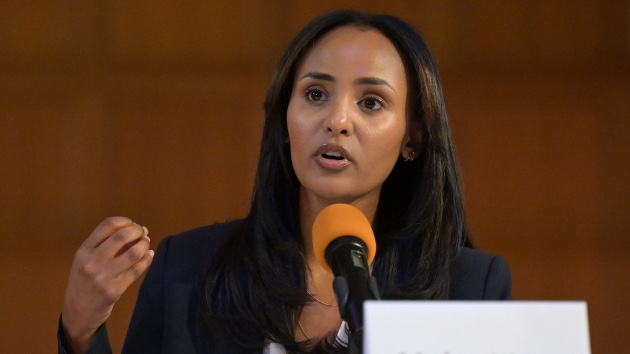
Melat Kiros participated in a League of Women Voters Congressional District 1 candidate forum at Montview Presbyterian Church on May 28, 2026, in Denver, Colorado. (Photo by RJ Sangosti/MediaNews Group/The Denver Post via Getty Images)
(NEW YORK) — Melat Kiros, a 29-year-old attorney and democratic socialist, will win the Democratic primary for U.S. House in Colorado’s 1st Congressional District, the Associated Press projected, triumphing over longtime incumbent Rep. Diana DeGette and notching another win for the left wing of the Democratic Party over established incumbents.
Kiros’ projected win is a stunning victory for a political newcomer and yet another apparent sign of Democratic voter discontent with incumbents, just a week after three insurgent candidates triumphed against incumbent or incumbent-backed candidates in New York City congressional races.
The primary challenger, who was fired from her law firm in 2023 after writing an open letter criticizing her employers’ response to pro-Palestinian protests, campaigned on channeling voters’ anger with the political system; her campaign also tapped into the strength of local and national branches of the Democratic Socialists of America.
DeGette, who has served in the House for around three decades, had argued that her experience, including in leadership roles during President Donald Trump’s impeachment proceedings, made her effective at pushing back against the Trump administration.
Kiros will face Republican nominee Christie Peterson, an accountant, who was uncontested in the GOP primary. The Cook Political Report rates the seat, which is based around Denver, as solidly Democratic.
Another victory for progressive wing in gubernatorial primary
The Associated Press also projected on Tuesday night that Attorney General Phil Weiser will win the Democratic primary for governor in Colorado, triumphing against Sen. Michael Bennet.
The results could potentially be seen as another sign of Democratic voters’ dissatisfaction with Washington and incumbents in Congress, even though the race was technically for a state position.
Weiser, who served in the Obama administration and as Colorado’s attorney general since 2019, had positioned himself as the insurgent in the race against Bennet, linking the longtime senator to Washington and gridlock in Congress. Incumbent Democratic Gov. Jared Polis is term-limited.
But there was better news for another congressman from Colorado. The Associated Press projected Tuesday night that incumbent Sen. John Hickenlooper will win the Democratic primary for Senate in Colorado, putting him on a glide path back to Congress as he runs for a second term.
Hickenlooper triumphed over a primary challenge from state Sen. Julie Gonzales, who ran a progressive campaign and notched the endorsement of left-leaning organizations.
Inside the Melat-DeGette race
Still, most of the attention was focused on the 1st Congressional District.
Ahead of Tuesday’s primary, Kiros told ABC News she hoped to build on the movement’s momentum from last Tuesday in New York.
“Ultimately, folks are really tired of the party failing to meaningfully represent the values and policies that are extremely popular with our base,” she said. “And we’re looking for leaders that are unbought and unafraid to stand up to a lot of these corporations and special interests that have gotten us into this mess in the first place.”
Kiros has also been outspoken about criticism of Israel and its conduct in Gaza, another issue that has divided Democrats and played a major role in the New York primaries. She recently faced some pushback for not calling the June 2025 firebombing in Boulder, Colorado, of on a group of demonstrators calling for the release of Israeli hostages antisemitic, although she condemned the violence and said she is committed to combatting antisemitism.
Kiros told ABC News on Monday that the attack was “a horrific attack on a group of Jewish people that were just engaging in peaceful protest,” and said that she is committed to combatting hate in all forms, including antisemitism; that responsibility also includes “making sure that we are rejecting this conflation of the state of Israel’s actions with Judaism and with the Jewish people, and making sure that we are preventing that kind of conflation from leading to the kind of horrific attacks that a lot of Jewish people are afraid of.”
While Kiros netted the endorsement of progressive stalwart Sen. Bernie Sanders, an independent, and some left-leaning groups, the race did not break down evenly along ideological fault lines.
DeGette is a leading member of the Congressional Progressive Caucus who has led Democratic messaging on abortion rights and served as a House impeachment manager during Trump’s second impeachment trial.
Unlike some incumbent Democrats facing primaries, she has criticized Israel’s handling of the war in Gaza and voted against additional U.S. military aid to Israel.
“Denver knows I don’t back down. That’s why I’m taking on Donald Trump to protect our reproductive freedom, abolish ICE, and pass Medicare for All. Together we’ll win and deliver on our progressive values,” DeGette said in a statement to ABC News before the primary.
In a recent interview with ABC affiliate KMGH-TV, DeGette argued that her time in Congress was an asset to her constituents.
But that long record also made her a target for frustrated progressives, who sense momentum after democratic socialists Darializa Avila Chevalier and Claire Valdez defeated establishment-backed Democrats in two New York City primaries — including the chairman of the Congressional Hispanic Caucus — last week, with the help of democratic socialist Mayor Zohran Mamdani.
“They see Melat as someone who has put up a fight — not just against Republican fascism, but also against the Democratic establishment that has failed voters,” Usamah Andrabi, communications director for Justice Democrats, told ABC News.
The group helped Kiros and her allies knock on tens of thousands of doors and make more than 200,000 calls to potential voters since last week, according to the Justice Democrats.
DeGette’s record “is very progressive, and she’s not a moderate,” Doug Friednash, an attorney who was chief of staff to Hickenlooper, told ABC News. “A lot of young voters are demanding change … they look at rising health care costs, gas prices, and there’s a view that the establishment hasn’t done enough.”
Elsewhere, in Colorado’s 8th District, a battleground seat currently held by a Republican, Democrat Manny Rutinel, a 31-year-old state representative, was projected by the Associated Press to win the primary for the Democratic nomination against former state lawmaker Shannon Bird.
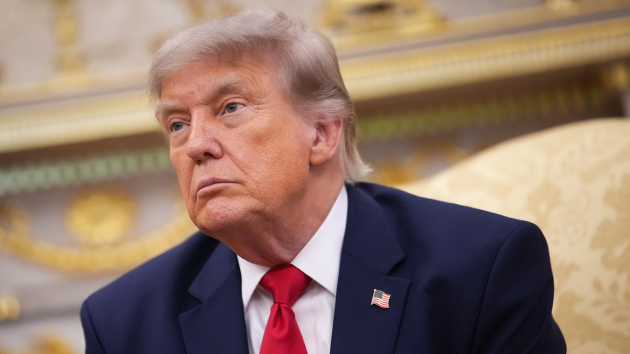
U.S. President Donald Trump attends a meeting with NATO Secretary-General Mark Rutte in the Oval Office of the White House on June 24, 2026, in Washington, DC. Secretary-General Mark Rutte is meeting with the President before the annual NATO summit next month and as the Pentagon does a six-month review of American forces in Europe. (Photo by Andrew Harnik/Getty Images)
(WASHINGTON) — President Donald Trump brushed off his loss after the Supreme Court rejected his attempt to end birthright citizenship — rooted in the 14th Amendment — on Tuesday, saying the decision is “too bad for the Country” and insisting that he can “easily make it up in Congress through Legislation.”
The court ruled in a 6-3 decision to reject Trump’s executive order that he issued on the first day of his presidency, with Chief Justice John Roberts writing for the majority, “Citizenship, then and now, was the right to have rights — to freely participate in our political community. The Framers of the Fourteenth Amendment extended that promise to every free-born person in this land. We keep that promise today.”
Trump responded to the court’s decision with a post on his social media platform, writing, “The Supreme Court upheld Birthright Citizenship, which is too bad for our Country, but we can easily make it up in Congress through Legislation, with the support of the President, that has now been determined during this process,” he wrote on his social media platform.
“No long and unwieldy Constitutional Amendment is necessary! Congress should start TODAY to work on ending expensive and unfair to our Country, Birthright Citizenship,” he added.
Birthright citizenship is rooted in both the Constitution and 1940 federal citizenship law. But even if the law were to be changed, this would likely be challenged in court on constitutional grounds with the possibility of the issue making its way back to the Supreme Court.
ABC News reached out to the White House for more information about how the president would use Congress as a workaround for the court’s decision and if he is prepared for the issue to potentially return to legal scrutiny, but the White House referred questions back to the president’s post.
On Monday, Trump said he would “accept” the results of the Supreme Court and acknowledged that “it’s up to them.”
In a subsequent post Tuesday, Trump again reiterated his desire to “correct” the birthright citizenship case in Congress while touting other cases that he won before the court.
House Speaker Mike Johnson, speaking at a House Republican news conference before Trump posted, said he was “very disappointed” with the decision and that Congress will look at amending the Constitution to address the issue.
“I think it subjects the country to serious challenges going forward and we’ll have to deal with it as a Congress,” Johnson said, saying the policy has been “grossly abused.”
“I’m sure we will continue to look at that. I’m sure the conclusion from this opinion is going to be you’ve got to amend the Constitution to fix that,” he said.
Johnson acknowledged a constitutional amendment would be “very complicated” and a “many-years-long process,” but said he thought it was likely the only way forward.
Amending the Constitution would take a two-thirds majority in both chambers of Congress ratification by three-quarters of the states.
Rep. Thomas Kean Jr. (R-NJ) arrives at the U.S. Capitol on June 30, 2026 in Washington, DC. (Anna Moneymaker/Getty Images)
(WASHINGTON) — Republican Rep. Tom Kean Jr. of New Jersey arrived back on Capitol Hill on Tuesday after a nearly four-month absence, and announced on the House floor that he received a depression diagnosis that led to an extended hospital stay.
“Now, when people hear the word ‘depression,’ many people think, simply feel, it means feeling sad, but depression is so much more than that,” Kean said. “It is physical, it is emotional, and until you experience it yourself, it is difficult to fully understand how powerful this illness can be.”
Kean said he wanted to get back to Congress as quickly as possible, understanding the importance of representing his constituents, but ultimately decided to follow his doctor’s recommendations to stay under their care.
“The doctors recommended that I remain in the hospital to address my illness. They explained to me that this would be the fastest way to recovery, and to be honest, I was hesitant. I didn’t think that I had time for it. I had responsibilities to my family, I had responsibilities to my constituents, I had responsibilities to this institution, and like many people, I believed that I could simply push through, but I agreed to follow my doctor’s recommendations again, not believing that it would result in a long-term stay,” he said.
Kean has not voted in the House since March 5, missing more than 100 roll call votes during his time away.
The congressman had not publicly addressed the reason for his absence prior to Tuesday, raising questions on his whereabouts.
During his absence, Kean won the Republican primary (where he was unopposed) in his reelection bid and received President Donald Trump’s endorsement. Kean will face Democrat Rebecca Bennett, a former Navy helicopter pilot, in November for New Jersey’s 7th Congressional District, a toss-up district Democrats hope to flip.
Kean, on Tuesday, did not answer multiple questions from reporters on why he didn’t communicate with his constituents earlier about his health issues.
In his floor remarks, Kean said he believed he would’ve been back on Capitol Hill in a few weeks, but soon began to realize that there is “no timeline for healing, there is no timeline for recovery, only the work of getting better one day at a time.”
“Today I am grateful that I listened to my doctors. I am grateful for the exceptional care that I received from doctors, nurses, and support staff. I am grateful that I accepted help, because today I stand before you healthier, stronger, and excited to return to the work that I love,” he said.
He then thanked his family, staff, constituents, and medical team for their care and understanding, going on to advocate that “asking for help is not a weakness, it is a strength.”
“This is not a partisan issue. It touches every community, every family and every corner of this country. If sharing my story encourages even one person to seek help, if it gives one family the courage to have a difficult conversation or reminds one person that recovery is possible, then this moment will have been worthwhile,” he said as he concluded his speech.
If you or a loved one is experiencing a mental health crisis, please call or text the 988 Suicide & Crisis Lifeline. You will reach a trained crisis counselor for free, 24 hours a day, seven days a week. You can also go to 988lifeline.org.
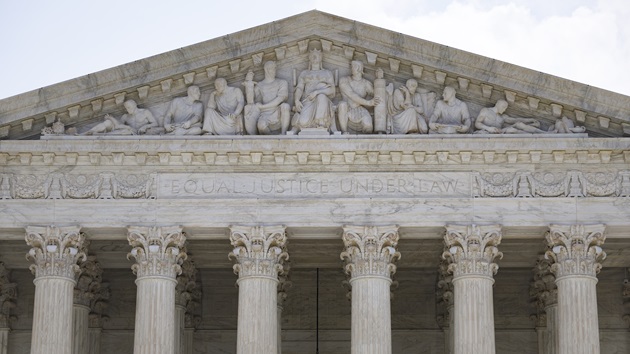
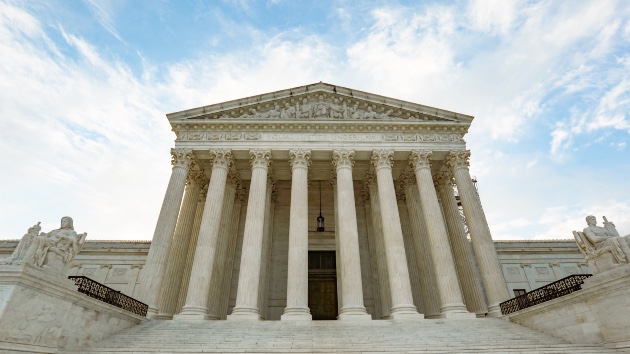
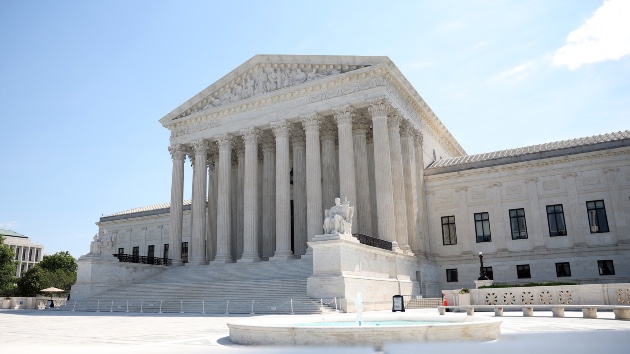
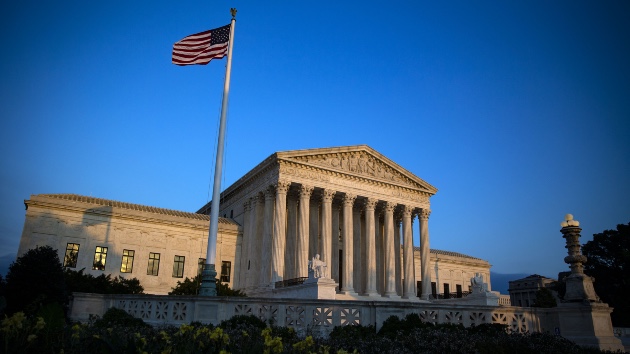
The West Front of U.S. Supreme Court on June 29, 2026 in Washington, DC. (Tom Brenner/Getty Images)
(WASHINGTON) — The Supreme Court on Tuesday said it will decide later this year whether state bans on the possession of AR-15 firearms and similar semi-automatic “assault style” guns violate the Second Amendment.
Ten states plus D.C. ban the weapons, which have been used in many of the deadliest mass shootings in U.S. history, including Sandy Hook Elementary in Newtown, Connecticut, and Uvalde, Texas.
This is a developing story. Please check back for updates.
(WASHINGTON) — The Supreme Court on Tuesday rejected President Donald Trump’s attempt to end birthright citizenship in the U.S. by executive order, reaffirming in a 6-3 ruling more than a century of legal precedent and national tradition that babies born on American soil are automatically American citizens.
The decision is a blow to Trump, who had lobbied the court to uphold his Day 1 order and attended oral arguments in the case, becoming the first sitting president to do so.
Trump had argued that children born to unlawful immigrants and temporary visitors, like tourists and foreign students, do not qualify for citizenship under terms of the 14th Amendment, which was enacted after the Civil War to address the status of former slaves and their descendants.
Immigrant advocates and civil liberties groups opposing the policy change warned that it would harm hundreds of thousands of children born every year to non-citizen parents and create a bureaucratic nightmare for older Americans, who would no longer be able to prove citizenship simply with a birth certificate.
An estimated 255,000 children born every year to non-citizen parents would have lost legal status under the order, according to the Migration Policy Institute. Some may have faced difficulty establishing citizenship in any country, effectively being born as “stateless.”
Every lower court to have considered Trump’s unprecedented order deemed it unlawful, issuing injunctions to put it on hold. The high court’s decision preserves the status quo.
The 14th Amendment, which was ratified in 1868, says all “persons born or naturalized in the U.S. and subject to the jurisdiction thereof” are citizens. Congress later codified the same language in federal citizenship law in 1940.
The administration insisted children born to parents who are not American citizens or legal permanent residents are not “subject to the jurisdiction” of the U.S. because they still owe political “allegiance” to a foreign nation.
The Supreme Court previously rejected that argument in 1898.
“The [14th] Amendment, in clear words and in manifest intent, includes the children born, within the territory of the United States, of all other persons, of whatever race or color, domiciled within the United States,” wrote Justice Horace Gray in the landmark Wong Kim Ark v. U.S. decision, addressing the status of children born to noncitizens.
This is a developing story. Please check back for updates.
The U.S Supreme Court is seen on June 25, 2026 in Washington, DC. . (Photo by Kevin Dietsch/Getty Images)
(WASHINGTON) — The Supreme Court on Tuesday rolled back longstanding limits on the amount of money political parties can spend in coordination with individual candidates for federal office — a ruling that could unleash a wave of new spending before the midterms. The Supreme Court said the spending limits violate the First Amendment.
This is a developing story. Please check back for updates.
The U.S. Supreme Court building stands in Washington, D.C., U.S. Photographer: Al Drago/Bloomberg
(WASHINGTON) — The Supreme Court on Tuesday upheld state bans on transgender girls from participating in girls’ and women’s competitive sports, reversing a pair of lower court decisions that had blocked the bans as violations of Title IX and the 14th Amendment.
The 6-3 decision came from Justice Brett Kavanaugh.
The ruling in a pair of cases from West Virginia and Idaho effectively upholds laws in those two states, plus 27 others that block trans girls from teams consistent with their gender identity.
The decision marks the first time the high court has weighed in on the heated national debate over transgender athletes.
The court’s ruling is a major setback for the estimated 122,000 transgender American teenagers who participate in high school sports, according to the Williams Institute at UCLA.
For trans teens and their families, the dispute has involved a matter of immutable identity and equal opportunity.
For many states and top U.S. athletic organizations, including the U.S. Olympic Committee and NCAA, the inclusion of trans athletes has been seen as creating an unfair and unsafe playing field.
The competitive advantage boys and men have physically over girls and women has been well established in physically demanding sports by medical research and serves as a primary basis for distinctions between the sexes in athletics.
Studies have shown testosterone produced during male puberty does lead to more muscle mass, larger hearts and lungs, greater body height and longer limbs on average for boys and men, according to the American College of Sports Medicine.
Many transgender teens who have received gender-affirming medical treatment from a young age argue that they lack any physiological advantage because they have not undergone male puberty.
Twenty-one states allow transgender girls to compete on girls’ sports teams, including California and New York, which have laws explicitly protecting the right of trans girls to play.
Becky Pepper Jackson, the only known openly transgender athlete in West Virginia in any sport, sued her state in a bid to continue competing on her high school track team where she throws discus and shot put. Jackson recently won the state championship in girls shot put.
“I’ve been a girl forever, and playing on the guys’ team is going backwards,” she told ABC News in an interview last year.
When West Virginia’s law takes effect, she will no longer be allowed to participate in girls competitive sports leagues. Competing with boys, she said, would “go against who I am.”
Becky, who has openly identified as a girl since third grade, said she has never undergone male puberty, thanks to puberty-blocking medication.
Idaho college student Lindsay Hecox, a former track and cross-country runner who was barred from trying out for her school teams, sued over her state’s ban in 2020. Last year, she asked the Supreme Court to drop her case because she no longer wished to compete in sports and didn’t want to be in the spotlight. However, Idaho fought to keep the case alive.
Lower courts concluded separately that the state bans discriminate “on the basis of sex” in violation of Title IX, the landmark civil rights law that has promoted equal opportunities for women and girls in athletics, and the Constitution’s Equal Protection Clause.
The Supreme Court’s conservative majority reversed those decisions and reinstated the laws.
Last year, the same majority upheld a Tennessee law banning some gender-affirming medical treatments for transgender minors, rejecting claims that the law discriminated “on the basis of sex” and saying that states should have leeway to regulate health care in an area of scientific uncertainty.
In 2020, however, the high court concluded in a landmark decision that a Michigan transgender woman fired by her employer for being transgender was discriminated against “on the basis of sex” under Title VII of the Civil Rights Act of 1964.
Justice Neil Gorsuch explained in his majority opinion at the time that her termination was “for traits or actions it would not have questioned in members of a different sex.”
Sixty-nine percent of Americans believe transgender girls should only be allowed to play on boys’ teams, consistent with their gender assigned at birth, according to a June 2025 Gallup survey.
This is a developing story. Please check back for updates.
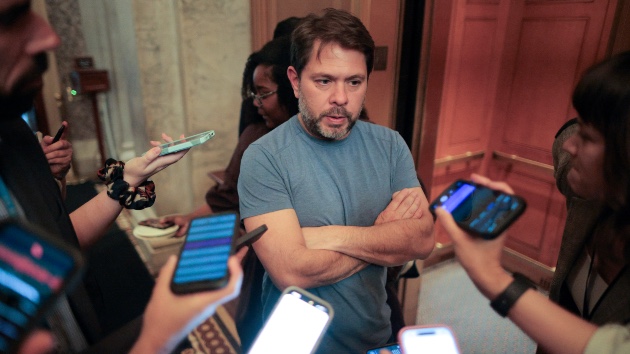
Sen. Ruben Gallego (D-AZ) talks to reporters as he heads for a vote at the U.S. Capitol on June 01, 2026 in Washington, DC. (Photo by Chip Somodevilla/Getty Images)
(WASHINGTON) — Arizona Sen. Ruben Gallego is under federal investigation for suspected campaign finance violations, a person familiar with the matter confirmed to ABC News.
According to multiple reports, Gallego, a Democrat, used campaign funds to fly his family to the Caribbean, Miami, Nantucket and Puerto Rico. He also allegedly used funds to pay for childcare.
Campaign funds may be used to pay for a candidate’s childcare expenses that are incurred as a direct result of campaign activities, according to the Federal Election Commission.
On Monday, the Senate Ethics Committee closed its inquiry into allegations of sexual misconduct and campaign finance violations after finding no evidence that Gallego violated Senate rules or applicable law, according to a letter released by his office.
In regards to the federal investigation, a Gallego spokesperson told Axios that “it’s the least surprising news of the week that this comes immediately after the Senate Ethics Committee cleared Senator Gallego of right-wing smears pushed by the administration.”
ABC News has reached out to Gallego’s office for comment on the investigation. The Department of Justice has not yet commented on the probe.