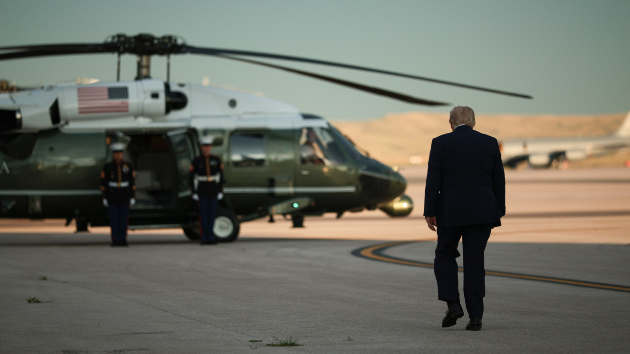
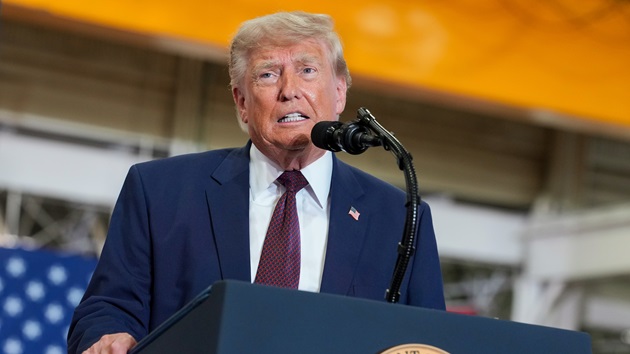
President Donald Trump walks over to Marine One after landing in Air Force One on July 03, 2026 at Ellsworth Air Force Base, South Dakota. (Chip Somodevilla/Getty Images)
(WASHINGTON) — President Donald Trump confirmed on Monday that he is constructing a granite helipad for Marine One on the White House South Lawn, and said it will be paid for by Sikorsky Aircraft, a subsidiary of Lockheed Martin, which makes helicopters that transport the president.
“So, now we’re building a helipad, a beautiful helipad, and it’s got the seal of the White House on it, in granite, in carved granite. It’s really a beautiful thing,” Trump said while taking reporter questions at an event in the Oval Office.
Trump said Sikorsky would pay for the construction.
“It’s about $5 or $6 million. They’re paying the full cost,” the president said.
A Lockheed Martin spokesperson, in a statement provided to ABC News, said the company “has a long history of supporting projects” in Washington, D.C., and across the country.
“This specific contribution was made to the Trust for the National Mall, the National Park Service’s non-profit organization,” the spokesperson said. “Our engagement with the federal government is guided by rigorous ethics and compliance standards and conducted in full accordance with all applicable laws and regulations.”
Lockheed Martin delivered a new fleet of Sikorsky helicopters to the Air Force in 2024, but the White House has had to keep using an older fleet for South Lawn departures and arrivals because they burn the grass. Trump on Monday said the helicopters not only singed the grass but also “ripped it out.”
The newer helicopters have been used when the president is away on travel.
A spokesperson for Sikorsky said in a statement that the new helicopter, a VH‑92A Patriot, “is a recognizable patriotic asset known around the globe for safety, security and reliability.”
The U.S. Navy awarded Sikorsky Aircraft a $1.24 billion contract to replace the Marine One helicopter fleet. The deal was agreed to under President Barack Obama’s administration.
“It brings increased capabilities for the no‑fail mission supporting the Commander‑in‑Chief around the world. The helicopter delivers increased performance and reduced maintenance costs and time over the current fleet of presidential helicopters,” the Sikorsky spokesperson said.
The helipad will be Trump’s latest construction project at the White House.
The East Wing was demolished last year to make way for construction of Trump’s massive White House ballroom. The ballroom addition has sparked numerous legal challenges.
Trump installed plaques underneath portraits of presidents at the White House — dubbed the “Presidential Walk of Fame” — along the West Wing Colonnade.
He also paved over the grass at the White House Rose Garden to create a patio with tables, and installed two massive flagpoles on the North and South lawns. More recently, scaffolding was erected for restoration work on the building’s stone columns.
Trump commented on the work while hosting a lunch at the new Rose Garden Club.
“A lot of love is being put in the White House,” the president said.
ABC News’ Alexandra Hutzler contributed to this report.
President Donald Trump walks over to Marine One after landing in Air Force One on July 03, 2026 at Ellsworth Air Force Base, South Dakota. (Chip Somodevilla/Getty Images)
(WASHINGTON) — President Donald Trump confirmed on Monday that he is constructing a granite helicopter landing pad for Marine One on the White House South Lawn, which he said will be paid for by Sikorsky Aircraft, a subsidiary of Lockheed Martin that makes helicopters that transport the president.
This is a developing story. Please check back for updates.
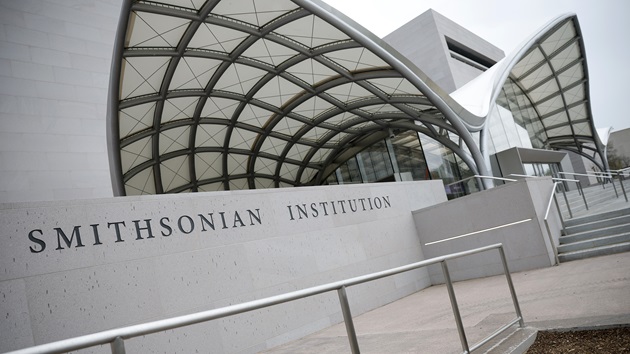
A Smithsonian Institution sign is seen on the National Air and Space Museum on the National Mall on March 28, 2025 in Washington, DC. (Kevin Dietsch/Getty Images)
(WASHINGTON) — The White House released a scathing 162-page report accusing the Smithsonian Institution of engaging in “extreme political activism” and presenting “a radical view of American history.”
The report, which was published on Saturday, July 4, particularly took aim at the Smithsonian’s National Museum of American History (NMAH), accusing its leadership of adopting “an ideological framework that no longer treats the American story as a shared national inheritance to be taught or celebrated, but as a political instrument to divide, dispirit, and discourage our citizens.”
The report accuses the museum of “anti-White activism,” “illegal alien activism,” and “transgender activism.” It also includes many photos of materials the White House has identified as problematic.
Asked about the report, a spokesperson for the Smithsonian, which oversees 21 museums, galleries and the national zoo, told ABC News that the institution remains committed to impartial learning.
“For more than 180 years, the Smithsonian has served the American public with nonpartisan and independent scholarship, and we remain committed to doing so,” the spokesperson said on Sunday.
In his most recent public comments, Smithsonian Secretary Lonnie Bunch told NBC’s “Meet the Press” in an interview that aired Sunday morning that the institution is “in pursuit of the promise of America.”
The report, which was published by the White House’s Domestic Policy Council, comes amid an ongoing White House review of the Smithsonian as well as a separate internal review launched by the Smithsonian into its own exhibits and processes. Asked about the status of the internal review, a spokesperson for the Smithsonian did not comment.
The White House review was launched in response to President Donald Trump’s March 27, 2025 executive order, “Restoring Truth and Sanity to American History.”
The executive order directed Vice President J.D. Vance, in consultation with the president’s advisers on domestic policy, “to remove improper ideology” from Smithsonian institutions, arguing that materials that cast America in a “negative light” have no place in federal cultural institutions.
“The serious concerns raised in this report are not about a few exhibits or a few controversial labels,” the report says. “As it stands today, it would benefit most Americans, especially parents bringing their children for a tour, if the Smithsonian’s flagship history museum had a label at every entrance that reads: ‘Warning: the exhibits in this museum were prepared by people who don’t want you to love your country.'”
What’s in the report?
The report includes dozens of examples of exhibits and materials in exhibits that the White House has determined to be examples of “radical activism.”
For instance, the report highlights an exhibit titled “Many Voices, One Nation,” and claims that its contents attempt “to instill within visitors its belief that migration and immigration, including the granting of citizenship to illegal aliens, is a defining modern-day civil rights and human liberty issue.”
The report also takes issue with displays about transgender people, including an exhibit titled “Girlhood” that profiled transgender media personality and LGBTQ+ rights advocate Jazz Jennings.
“One of the clearest examples of NMAH’s radical ideology is its refusal to correctly identify or define what a woman is,” the report states — reinforcing language from Trump’s January 2025 executive order, which outlined that this administration’s policy would be to “recognize two sexes, male and female” based on biology.
Overall, the report takes issue with materials addressing “white supremacy,” “racism” and the country’s history of “slavery,” “conquest” and “exclusion.”
The report claims that the museum fails to substantially represent the founders of the United States and that the exhibits cast America as “a problematic country irredeemably conceived, founded by deeply flawed men, and still operating today as an instrument of systemic racism and oppression.”
Sarah Weicksel, executive director of the American Historical Association, previously told ABC News that the White House is seeking to create “a narrowly sanitized version of the American past” at federal cultural institutions “that fits comfortably” into Trump’s executive order.
The American Historical Association (AHC), which represents 10,000 historians across various educational and cultural institutions in the U.S., has publicly defended the Smithsonian and urged the White House to “respect and value the expertise of the historians, curators, and other museum professionals who conduct the review and revision of historical content according to the professional standards of our discipline.”
ABC News reached out to AHA for further comment.
What comes next?
The report does not specify action points related to correcting the so-called “activism,” but does reference the fact that the Smithsonian Institution is largely funded by the federal government and U.S. taxpayers.
“That means the public has a right to expect that it will operate as a faithful steward of the Nation’s historic and cultural heritage, not as a vehicle for ideological campaigns,” the report says.
According to the Smithsonian Institution, which oversees 21 museums and galleries and the national zoo, it currently receives more than $1 billion in federal funding — about 62% of its funding — and the remainder of the funds come from “trust funds or non-federal funds, including contributions from private sources” and revenues from Smithsonian enterprises.
Bunch has been leading the Smithsonian since 2019 but the institution is overseen by a 17-member governing body, known as the Board of Regents. Bunch, who met with Trump at the White House on Aug. 28, 2025, repeatedly affirmed the Smithsonian’s “independence” from political influence.
Referencing his conversations with Trump in a Sept. 3, 2025 letter to the institution’s employees, Bunch underscored the independence of the Smithsonian, saying it was “paramount.” He also told employees that the institution remains committed to telling the “American story” and “will always be, a place that welcomes all Americans and the world.”
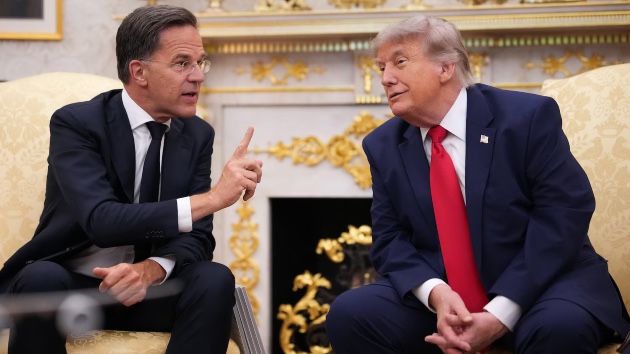
President Donald Trump participates in a meeting with NATO Secretary General Mark Rutte in the Oval Office at the White House in Washington, June 24, 2026. (Andrew Harnik/Getty Images)
(WASHINGTON) — President Donald Trump will head to the NATO summit in Ankara, Turkey, this week as an unstable ceasefire between the U.S. and Iran and Trump’s feud with his NATO allies continue.
The summit will be held Tuesday and Wednesday at the Beştepe Presidential Compound and chaired by NATO Secretary General Mark Rutte. The formal opening is scheduled for Tuesday and the event is expected to conclude the following day, when Trump will hold a news conference.
Trump’s trip will be brief. He is expected to leave the White House Monday night and return to the U.S. on Wednesday evening. While in Turkey, the president is expected to take part in a bilateral meetings with Turkish President Recep Tayyip Erdogan and Ukrainian President Volodymyr Zelenskyy and participate in a number of working sessions.
‘Taking stock’ of NATO
Matt Whitaker, the U.S. ambassador to NATO, said Sunday that the summit will measure the progress of NATO allies’ commitment to spend 5% of their GDP on defense and said that the U.S. would also “take stock of our allies’ expanding NATO’s capabilities in support of the burden-shifting going on here on the European continent.”
“Some allies are doing more than others. Poland, the Nordic countries, the Baltic countries lead the way, and Germany is on track for the 5%, reaching it in 2029. But many others are lagging behind,” Whitaker said.
The summit also comes after Trump has repeatedly floated the idea of leaving NATO. As recently as April, Trump expressed frustration with European allies amid the U.S.’s war with Iran, as many members have been reluctant to join military operations in re-opening and patrolling the Strait of Hormuz.
“Oh yes, I would say [it’s] beyond reconsideration. I was never swayed by NATO,” Trump said in April when asked if he would reconsider the U.S.’s membership after the conflict ends. “I always knew they were a paper tiger, and Putin knows that too, by the way.”
More broadly, Trump has been extremely critical of NATO allies over their ability to share the burden of contributing to the post-World War II alliance.
Whitaker said, “The United States remains a proud NATO member,” but “we have responsibilities elsewhere in the world as the world’s only superpower.”
Trump continued his criticism of some NATO allies as recently as last week.
“Ridiculous for the U.S.A. to continue along this one sided path when the relationship is not reciprocal. They were not there for us,” Trump wrote last Thursday on his social media platform.
“The United States spends more money on NATO than any other country, by far, to protect them, without getting any benefit from so doing,” the president also claimed on Thursday in a post on social media.
While Trump claims that allies spend “on NATO,” that’s not how the alliance works. Member states must spend 2% of their GDP on their own national defense budgets. The U.S. is NATO’s largest defense spender by virtue of having the world’s largest defense budget. But taken as a percentage of GDP, the US has hovered around 3% range — less than Poland and Baltic allies.
NATO’s involvement in Iran war
Trump’s requests for allies’ support in the U.S. war against Iran goes beyond NATO’s collective defense agreement, which calls for all to respond to an attack on a member country. Yet Trump has framed it as a test of whether allies reciprocate in return for American security commitments.
A senior U.S. official said Sunday the U.S. believes ensuring freedom of navigation through the Strait of Hormuz would be on the agenda, but that many NATO allies don’t have the capabilities to support those operations.
“I certainly believe that the Strait of Hormuz and the protection of the maritime traffic going through there is going to be a subject that comes up,” the official said.
But, they continued, “Many [NATO allies] don’t have the necessary ships or assets to contribute to a meaningful maritime effort” despite the fact that “we’ve had a lot of allies raise their hand and offer to participate.”
Shifting the burden to NATO allies
Two senior U.S. officials said on Sunday that the U.S. plans to further shift the burden of European defense onto European countries, saying that a force posture review currently underway of the military’s presence in Europe “very well may lead” to changes.
Asked about the potential for a U.S. force reduction in Europe, one senior U.S. official confirmed that Defense Secretary Pete Hegseth attended a meeting of NATO defense ministers weeks ago to announce a “six-month or less” review of the U.S. force posture in Europe.
“The main reason being, we continue to have global demands as the United States of America, and we should always be looking at how we’re deployed to our threats,” the official said, adding that any shift in troop placement would be “based on nonpolitical reasons.”
“There should be no surprise that we’re doing a posture review or surprise if that posture review very well may lead to us adjusting our posture because we’re trying to shift burden to Europe,” another official added.
NATO 3.0
The summit comes fresh off of Rutte’s visit to the White House on June 24, when he said NATO is entering a new phase centered on greater European responsibility while keeping the U.S. engaged in the alliance. Rutte framed the summit as the moment when member countries begin implementing the spending and capability commitments made at last year’s Hague summit.
Rutte said the summit will be the beginning of a transatlantic “defense industrial revolution,” promising announcements of “tens of billions” of dollars in defense-related contracts. He ventured that this year’s summit is “more important” than last year’s in the Hague because of implementation of concrete investments aimed directly at Russia.
“Vladimir, we will defend ourselves,” Rutte addressed Russian President Vladimir Putin in a speech to the Atlantic Council last week.
A ‘big gift bag’ for Turkey
Trump said last Wednesday he would not have attended the summit were it not for his relationship with Turkish President Recep Tayyip Erdogan and suggested he plans to bring a significant offer, or a “big gift bag” for his host — potentially including the sale of dozens of F-35 fighter jets to the country.
“I am going to the summit out of respect for President Erdogan … Except for the fact that it was being held in Turkey by President Erdogan, I don’t think I would have gone to it,” Trump said before a meeting with Rutte in the Oval Office in June.
Turkey is seeking to join the U.S. F-35 program, but it is prohibited from doing so as long as it possesses Russian-made air defenses.
“I’m probably going to do something that’s going to make him very happy,” Trump said.
Ending the war in Ukraine
As has been the case since the war with Russia began in 2022, the issue of Ukraine is also likely to play a key role in the NATO gathering.
White House spokesperson Anna Kelly said Sunday that Trump will meet separately with Zelenskyy on Wednesday afternoon in addition to other meetings with NATO leaders.
A senior U.S. official said Sunday that Trump planned to speak with Zelenskyy about “how we can end the war.”
“So, there are some small areas where Ukraine has made progress. There’s some small areas where Russia has made progress. But, the line of contact has been frozen over the last couple of months,” the official said.
The official said that Trump was hopeful a meeting with Zelenskyy could bring the war closer to an end.
“We’re hopeful that we can make progress towards doing that when, when the president gets together with President Zelenskyy and I’m sure he’ll follow up with President Putin as well,” the official said.
The conversation with Zelenskyy would come after Trump spoke with Putin on Saturday for nearly an hour and a half, according to a Kremlin readout, which noted that the two touched on Ukraine and that Trump “reiterated his readiness” to find a solution to the conflict.
The White House did not respond to a request for comment on the call.
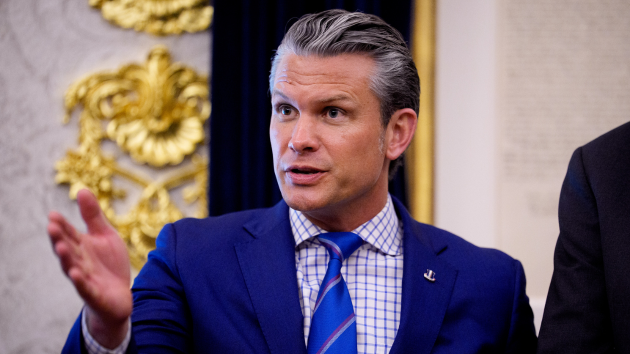
Secretary of War Pete Hegseth speaks during an event with U.S. President Donald Trump in the Oval Office of the White House on June 22, 2026, in Washington, DC. President Trump signed two orders on quantum computing. (Photo by Andrew Harnik/Getty Images)
(WASHINGTON) — Secretary of Defense Pete Hegseth on Thursday dismissed protesters chanting “Guard go home” outside a ceremony in Washington, D.C., honoring National Guard troops as their presence in the nation’s capital approaches the one-year mark and has nearly doubled in recent weeks to roughly 5,000 personnel.
“It’s the sound of ingrates,” Hegseth told a formation of some 250 National Guardsmen gathered at a park nestled in Washington D.C.’s northwest neighborhoods. “People who are so blinded by ideology they can’t see law and order and common sense in front of them. There’s nothing ideological about this group.”
Outside the park, dozens of protesters gathered in front of a security perimeter formed by National Guard troops and law enforcement, chanting through megaphones and blowing whistles while drums and a trombone added to the noise as they sought to drown out the speeches. The peaceful demonstration remained largely uneventful.
Speaking in front of the Meridian Hill Park fountain that was recently repaired by the Department of the Interior after years of being inoperative, Hegseth was joined by National Guard chief Gen. Steven Nordhaus, acting Attorney General Todd Blanche, Brig. Gen. Leland Blanchard, commander of the District of Columbia National Guard, and senior White House aide Stephen Miller, who has been an architect of the Trump administration’s National Guard mission in Washington D.C. Each praised the troops serving in Washington.
The deployment has largely focused on high-visibility patrols through downtown corridors and major tourist areas, far from the city’s high-crime areas, along with civic support missions, including trash collection. Troops are commonly armed with 9mm SIG Sauer M17 pistols or 5.56mm M4 rifles.
National Guard troops have been deployed to Washington since last August, with states maintaining a steady rotation of personnel into the city. The broad mission has placed military personnel on civilian streets in an unprecedented domestic role, though National Guard troops retain very limited legal authority.
The National Guard also maintains its constant rotation of units to missions in Africa, Europe and in the Middle East amid the war with Iran. Troops often serve in a part-time capacity, juggling their Guard duty with typical civilian careers.
The force has been drawn overwhelmingly from Republican-led states. The D.C. National Guard itself accounts for about 500 troops, roughly one-quarter of its force, serving on the mission.
South Carolina has deployed roughly 700 troops, Georgia nearly 800 and Mississippi about 500, according to National Guard figures. Other states with sizable contingents include West Virginia, Nebraska, Florida and Louisiana.
Democratic-led states and U.S. territories have begun sending troops to D.C. in recent weeks, but only for events tied to America’s 250th anniversary celebration and an expected surge in tourism.
Earlier this week, Michigan’s Democratic Gov. Gretchen Whitmer warned she would withdraw her state’s troops if they were assigned to President Donald Trump’s ongoing “Safe and Beautiful” mission rather than July 4th-related events.
In practice, however, drawing a distinction between holiday security operations and the Guard’s broader mission in Washington, D.C., may be difficult. Much of the ongoing mission is already concentrated around the National Mall and downtown transit stations, where tourists and local residents celebrating the holiday are expected to converge, one U.S. official explained. National Guard units from other states are frequently sent to Washington for major events such as presidential inaugurations.
Estimates have shown the Guard deployment is more expensive than using additional police officers or municipal workers.
An analysis from the Niskanen Center found the cost differential between troops and local law enforcement was roughly $607 per Guardsman per day compared to about $384 per day for a D.C. police officer.
The report also noted that the National Guard’s presence in D.C. has not reduced violent crime but has coincided with a decline in property crimes.
One estimate from the Congressional Budget Office found the National Guard’s D.C. footprint will cost at least $660 million this year, but it doesn’t account for the additional surge of troops for the summer.
A White House spokeswoman dismissed the Niskanen analysis and insisted the National Guard presence had driven down crime and improved quality of life in the District.
Two National Guard members from West Virginia were shot in the head while on patrol in November. Army Spc. Sarah Beckstrom, 20, died from her injuries. U.S. Air Force Staff Sgt. Andrew Wolfe, 24, was critically injured and is still recovering, his family says.
Rahmanullah Lakanwal, 30, an Afghan national and suspected gunman, pleaded not guilty to the shootings. The Department of Justice said in June it is determining whether to seek the death penalty.
(WASHINGTON) — Three-time U.S. Olympian David Hearn has been indicted in the Superior Court of the District of Columbia for allegedly “maliciously” destroying lining at the Lincoln Memorial Reflecting Pool.
This is a developing story. Please check back for updates.
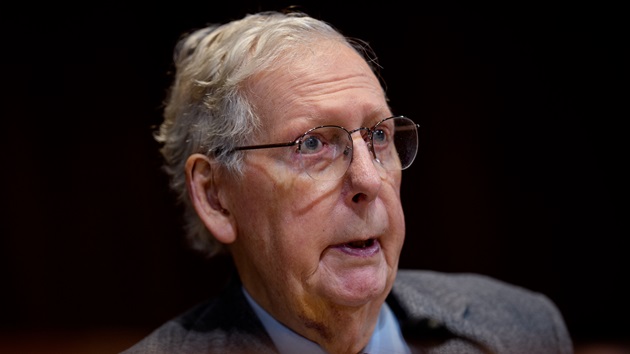
Sen. Mitch McConnell (R-KY) speaks during a Senate Appropriations Subcommittee hearing on Capitol Hill on December 3, 2025 in Washington, DC. (Andrew Harnik/Getty Images)
(WASHINGTON) — Emergency medical personnel were dispatched to the Washington home of Republican Sen. Mitch McConnell last month to attend to an unconscious person who appeared to be in cardiac arrest, according to EMS dispatch audio reviewed by ABC News.
While the audio does not indicate who the person is, the incident occurred on the same day that McConnell was hospitalized on June 14.
At 8:36 a.m., a dispatcher directed an “ALS response” ambulance to McConnell’s residence for an “unconscious” person. “ALS” stands for Advanced Life Support.
At 8:42 a.m., the EMS responder, identified as “Medic 3,” responded to the dispatcher, saying “inform supervisor CPR in progress.”
At 8:43 a.m., the dispatcher said “EMS to respond, for cardiac arrest,” and once again repeated McConnell’s address.
McConnell is not named directly in any of the audio.
A spokesperson for McConnell declined to comment on the audio and did not provide any update on McConnell’s current condition.
On June 14, McConnell’s spokesperson confirmed he was admitted to the hospital, adding “he is receiving excellent care.” It’s unclear if McConnell remains in the hospital.
Senate Majority Leader John Thune said on June 15 he had spoken with McConnell following the Kentucky senator’s hospitalization. Thune told reporters McConnell was “dialed in” and “wants to be back.”
Republican Whip John Barrasso also spoke to McConnell that day, a spokesperson for Barrasso confirmed. Barrasso said McConnell was “engaged” and eager to return to the Hill.
On June 22, McConnell’s office indicated he was still working on Senate business, but would not be appearing on Capitol Hill for votes.
“Senator McConnell is still working closely with staff on Senate business and Kentucky matters as he continues his recovery. However, he will not be voting this week,” a McConnell spokesperson said on June 22.
McConnell has not yet returned to the Senate and was last seen on the Hill on June 11.
This is the latest in a string of medical incidents that the seven-term senator and longtime Republican leader has faced in recent years. McConnell, 84, stepped down from leadership in 2024 and is set to retire at the end of his term in January.
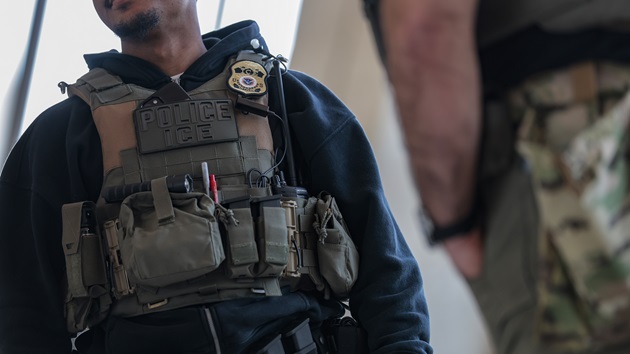
Immigration and Customs Enforcement (ICE) agents patrol Dulles International Airport on March 24, 2026 in Dulles, Virginia. (Heather Diehl/Getty Images)
(WASHINGTON) — Immigration officials have quietly ramped up arrests in the recent days, taking 10,000 people who they say are illegally in the United States into custody within a five-day space, sources familiar with the figures said Thursday.
The source said the significant number of arrests have occurred around the United States since last week.
The new goal for immigration authorities is to arrest at least 2,000 per day going forward, according to sources. Last year, in a meeting with senior Immigration and Customs Enforcement officials, White House and senior Department of Homeland Security officials urged a goal of 3,000 arrests per day, a source familiar told ABC News.
“Since Day One, DHS law enforcement has been delivering on President Trump’s promise to the American people to arrest and deport criminal illegal aliens including murderers, rapists, pedophiles, gang members, and terrorists,” a DHS spokesperson said in a statement.
During the immigration crackdown, President Donald Trump has pledged to target the “worst of the worst” criminal offenders among the nation’s migrants. While the criminal histories of those arrested in this latest sweep is not yet clear, the DHS spokesperson said that “nearly 70% of ICE arrests are of illegal aliens charged or convicted of a crime in the U.S.”
The recent arrests have been carried out with little publicity, according to sources, after DHS Secretary Markwayne Mullin pledged during his confirmation hearing earlier this year to keep the agency out of the headlines and do the work quietly. That is in contrast to former DHS Secretary Kristi Noem, who wanted maximum publicity for ICE enforcement.
ICE has a new pick to lead the agency, Lance Schroyer, a top Mullin ally and former Oklahoma state trooper who has no federal immigration experience.
The New York Times first reported the details.
Mike Howell, who serves as the president of the Trump-aligned Oversight Project and a leader of the Mass Deportation Coalition, applauded the arrests numbers, but said there should “transparency and meaningful metrics on deportation-related statistics,” which are not publicly available.
“There have been so many numbers thrown around in press releases, estimates, extrapolations, and puffery that most people are just kind of immune to it and waiting to see the hard data that’s being withheld,” Howell said.
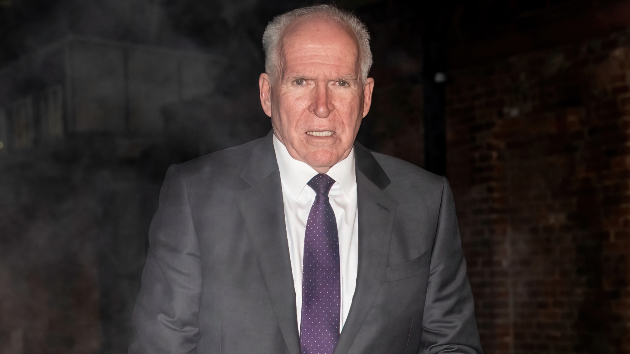
Former Director of the Central Intelligence Agency John O. Brennan is seen on October 24, 2022 in Philadelphia, Pennsylvania. (Gilbert Carrasquillo/GC Images)
(WASHINGTON) — Former CIA Director John Brennan on Wednesday sued President Donald Trump and his top law enforcement officials to force them to preserve records related to investigations into Brennan.
This is a developing story. Please check back for updates.
U.S. President Donald Trump delivers remarks at the Mack Trucks Lehigh Valley Operations facility on June 23, 2026 in Macungie, Pennsylvania. (Andrew Harnik/Getty Images)
(WASHINGTON) — President Donald Trump earned more than $1.4 billion from his cryptocurrency ventures in 2025, according to his personal financial disclosure released on Tuesday by the Office of Government Ethics.
The over-900-page disclosure, which covers last year, showed that the president earned billions of dollars in revenue from his properties around the world and from his foray into cryptocurrency. The president also received numerous gifts totaling more than $370,000, according to the disclosure.
But one of the standout performers last year was the president’s cryptocurrency investments.
The president’s disclosure listed earnings of $636 million from CIC Digital LLC, a cryptocurrency firm affiliated with the Trump Organization. The vast majority of that income came from a $635 million license agreement with Celebration Coin to sell the president’s $TRUMP meme coin, which he launched days before his second inauguration, billing himself as the “crypto president.”
Trump also reported earning an additional $526 million from the sale of cryptocurrency tokens through the Trump-connected firm World Liberty Financial. He earned another $65 million from sales of equity in WLF’s holding company.
World Liberty Financial came under scrutiny earlier this year after the firm reportedly sold a $500 million stake to a member of the Emirati royal family shortly before Trump’s inauguration.
The president reported another $196,875,000 in income from investments in Stablecoin Holdco, LLC, the parent holding company of World Liberty Financial.
The president also reported earning at least $389 million from his properties and golf courses and clubs in the U.S. and Scotland, including over $77 million alone from Mar-a-Lago.
Outside of his businesses and physical holdings, the president received a number of gifts last year valued in the hundreds of thousands of dollars., according to the disclosure.
One standout gift was a statue from Sticker Mule CEO Anthony Constantino, which depicted the now-iconic image of the president with his fist raised following the attempted assassination in Butler, Pennsylvania. That statue, which now sits prominently at Trump National Golf Club in Florida, was estimated at $250,000.
Trump also received several tickets to a variety of sporting events as gifts, including 10 Super Bowl LIX tickets, 10 tickets to the FIFA men’s World Cup, and 30 tickets to two UFC fights. The president also received tickets to the Ryder Cup, the US Open, and the Daytona 500.
Trump also profited from a variety of lawsuits against media and technology companies, earning $86 million in income from legal settlements throughout the year.