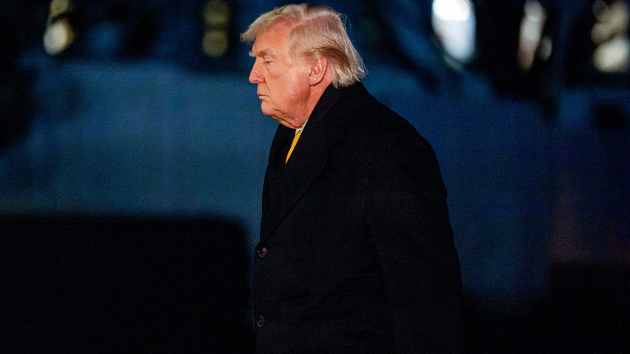
(WASHINGTON) President Donald Trump and Hungary’s autocratic leader Viktor Orban, whom Trump has repeatedly praised as a “strongman,” will meet at the White House on Friday.
Expected to be part of the talks is Russia’s war in Ukraine, specifically new U.S. sanctions targeting two of Moscow’s largest oil companies and their subsidiaries that are set to go into effect on Nov. 21.
Last week, Trump said Orban wanted an exemption from the sanctions.
“He has asked for an exemption. We haven’t granted one, but he has asked. He’s a friend of mine. He’s asked for an exemption,” Trump told reporters on Air Force One.
Orban was recently going to play host to a summit between President Trump and Russian President Vladimir Putin, before Trump called the proposed meeting off amid frustration with the lack of progress in peace talks.
Trump said they had picked Budapest, Hungary as the location because both he and Putin liked Orban.
“He’s been a very good leader in the sense of running his country,” Trump said of Orban.
Ahead of Friday’s meeting, Orban posted on X that he hoped to “open a new chapter in Hungarian–American relations with President Trump.”
“Our goal is to establish a strategic partnership that includes energy cooperation, investments, defence collaboration, and discussions on the post-war landscape following the Russia–Ukraine conflict. We are working on an agreement based on mutual benefits, one that serves the interests of every Hungarian citizen,” Orban wrote.
Trump also welcomed Orban to the White House during his first term, in 2019, breaking from his predecessors who had shunned Hungary’s prime minister from Washington.
The two men met several times when Trump was out of office at his Florida estate, including during the summer of the 2024 campaign and after Trump became president-elect.
Orban has been embraced by many prominent American conservatives over his positions on immigration and LGBTQ issues, and has spoken several times at the Conservative Political Action Conference. Orban hosted a CPAC event in Hungary earlier this year.
Trump praised Orban during the ABC News September 2024 presidential debate with then-Vice President Kamala Harris, after Harris claimed Trump was not respected on the world stage.
“Let me just tell you about world leaders. Viktor Orban, one of the most respected men — they call him a strong man. He’s a tough person. Smart. Prime Minister of Hungary. They said why is the whole world blowing up? Three years ago it wasn’t. Why is it blowing up? He said because you need Trump back as president,” Trump said during the debate.
U.S. Rep. Elise Stefanik (R-NY) speaks during a hearing before the House Education and Workforce Committee at the Rayburn House Office Building on May 7, 2025 in Washington, DC. Alex Wong/Getty Images
(NEW YORK) — New York Republican Rep. Elise Stefanik, a top ally of President Donald Trump on Capitol Hill, officially launched a campaign for governor in 2026 against Democratic Gov. Kathy Hochul on Friday after months of hinting at the move.
She has been a vocal critic of Hochul and doubled down on attacks against her after the upstate moderate governor endorsed New York City Mayor-elect Zohran Mamdani following his Democratic primary victory.
In a statement Friday through her campaign, Stefanik slammed Hochul, her likely opponent in the election if both Stefanik and Hochul win their respective party primaries.
“Kathy Hochul is the Worst Governor in America. Under Kathy Hochul’s failed leadership, New York is the most unaffordable state in the nation with the highest taxes, highest energy, utilities, rent, and grocery prices crushing hardworking families,” Stefanik wrote.
“I am running for Governor to bring a new generation of leadership to Albany to make New York affordable and safe for families all across our great state,” Stefanik wrote. “Our campaign will unify Republicans, Democrats, and Independents to Fire Kathy Hochul once and for all to Save New York.”
An announcement video Stefanik posted on Friday focused on a similar message, with the video’s narrator largely pinning affordability issues and other key concerns on Hochul.
The video does not mention President Donald Trump.
But Hochul and the New York State Democratic Party are pointing to her close relationship with Trump as a detriment. And New York went blue in the 2024 presidential election — with Trump receiving 43% of the vote in New York state, trailing Vice President Kamala Harris by around 13 percentage points.
“Elise Stefanik is running to deliver New York for Donald Trump and raise your costs,” Hochul said in a post on X on Friday. “Not on my watch. My message to Trump’s ‘top ally’ — bring it on.”
After Tuesday’s election victories for Democrats, a spokesperson for the New York State Democratic Party said New Yorkers will reject Stefanik, who was briefly nominated for a position as United Nations ambassador by Trump earlier this year.
“Voters in New York and across the country rejected Trump and his enablers earlier this week, and Stefanik will face the same fate when she launches her campaign to put Trump ahead of New Yorkers,” Addison Dick wrote in a statement.
Press releases from Stefanik’s campaign on Friday released after the announcement said that Stefanik has already netted endorsements from more than half of New York’s Republican county chairs and from the chair of the New York Republican Party.
“There will not be a Republican primary and a year from now, Elise will lead our team to victory over Kathy Hochul, end one-party Democrat rule, and make New York affordable again,” New York GOP Chairman Ed Cox wrote in a statement.
The upstate New York congresswoman, a onetime staffer for Mitt Romney’s 2012 presidential campaign who helped former House Speaker Paul Ryan prepare for his vice presidential debate, gained prominence in the MAGA movement during the first Trump administration as a vocal defender of the president on the House Intelligence Committee during Democrats’ first impeachment inquiry in 2019.
New York last elected a Republican governor in 2002 when George Pataki won a third term in office.
Tasos Katopodis/Getty Images for Fair Share America
(WASHINGTON) — As tributes pour in for former Speaker of the House Nancy Pelosi after she announced Thursday that she would leave Congress in January 2027 at the end of her current term, it’s an open question who will replace her.
According to filings with the Federal Election Commission as of Thursday morning, six Democratic candidates besides Pelosi and two Republicans have registered campaign committees for the June 2026 primary for California’s 11th Congressional District, the San Francisco-based congressional seat Pelosi represents.
California uses a “top-two” primary system where the two candidates with the most votes, regardless of party, advance to the general election.
The filing period for California’s congressional primary does not open until February 9, 2026, and closes on March 6, so there is still plenty of time for other challengers to enter the ring.
Two of those candidates had already been gaining attention and some prominence.
Both are decades younger than Pelosi, and now could be among the continued wave of generational change within the Democratic Party — similar to how U.S. Rep. Jerry Nadler, D-N.Y., announced his retirement in September and is likely to be succeeded by one of the numerous younger candidates who have launched bids.
California state Sen. Scott Wiener announced in October, weeks before Pelosi’s announcement, that he would run for the seat. Weiner had previously indicated he would wait for her to announce her plans.
Wiener, 55, was first elected to the California state Senate in 2016 and previously worked in San Francisco city government and as a lawyer.
In his announcement video launching his congressional bid, he said he was running “to defend San Francisco, our values, our people, and the constitution of the United States with everything we have … Trump and his MAGA extremists don’t scare me.” According to federal campaign finance filings, his campaign had nearly $870,000 on hand as of the end of September.
Wiener, in a statement on Thursday, called Pelosi “an icon of American politics,” and praised her work on health care, the economy, climate policy, and “fighting for the marginalized … At the height of the AIDS crisis, when so many others wanted to push LGBTQ people under the rug, Nancy Pelosi fought proudly for us to be treated with dignity.”
Speaking about his own experience coming out as gay around the time Pelosi came to Congress and said she was there to fight AIDS, Wiener added, “It was a terrifying time to come of age as a gay man, and Nancy Pelosi stepped up and used her voice and platform to fight for people like me.”
Asked on Thursday by ABC station KGO-TV how more challengers might enter the race now and how that impact his campaign, Wiener said he didn’t want to speculate on who else might enter.
“Today, this is really just about honoring Nancy Pelosi, her leadership, how much she delivered for our city and our country. And then we will certainly have plenty of time to talk about the campaign,” he said.
Separately, former Silicon Valley tech entrepreneur Saikat Chakrabarti had well beforehand launched a primary campaign to Pelosi, with a progressive platform that includes tuition-free public college and universal health care.
Chakrabarti, 39, a founding engineer of the online payment platform Stripe, was New York Rep. Alexandria Ocasio-Cortez’s campaign manager during her 2018 primary upset against incumbent Joe Crowley, which kicked off Ocasio-Cortez’s meteoric rise.
He also worked as her chief of staff in Congress for the beginning of her first term and got his start in politics working on Bernie Sanders’ 2016 presidential campaign.
In a statement on Thursday, Chakrabarti thanked Pelosi “for your decades of service that defined a generation of politics and for doing something truly rare in Washington: making room for the next one. Our campaign is ready to build on that legacy by fighting to create a San Francisco and an America that works for everyone.”
Speaking with ABC News on Thursday, Chakrabarti said that challengers in the race and Pelosi’s decision to retire “doesn’t change what my campaign’s about, because I still believe we need to change the Democratic Party. I’m still calling for people to run all across the country to build this new movement.”
Asked if he’d want Pelosi’s endorsement, Chakrabarti said he would if she’s willing to endorse him but that it’s her decision to make.
Gabrielle Lurie/San Francisco Chronicle via Getty Images
(WASHINGTON) — President Donald Trump on Thursday called former House Speaker Nancy Pelosi an “evil woman” when asked to comment on her retirement announcement.
“I’m glad she’s retiring,” Trump said as he took reporter questions in the Oval Office during a news conference on reducing the cost of weight loss drugs for Americans.
“I think she did the country a great service by retiring,” Trump continued. “I think she was a tremendous liability for the country. I thought she was an evil woman who did a poor job, who cost the country a lot in damages and in reputation. I thought she was terrible.”
Pelosi became one of Trump’s fiercest critics, and their tensions were well-documented as she led the House in the final years of his first term.
She presided over both of Trump’s impeachments, the first in 2019 over allegations of abuse of power and the second in 2021 after a pro-Trump mob stormed the U.S. Capitol on Jan. 6.
In 2020, she went viral for ripping up a copy of Trump’s State of the Union speech as she stood behind him.
Pelosi did not attend Trump’s inauguration this past January.
More recently, she called Trump a “vile creature” in an interview with CNN.
“The worst thing on the face of the Earth, but anyway,” Pelosi said. When asked to explain why she described him that way, Pelosi said he “does not honor the Constitution.”
Trump, too, has spared no criticism of Pelosi over the years. He regularly targeted her in his 2024 campaign speeches and rallies, calling her a “crooked person,” “evil” and “sick.”
Pelosi, 85, announced early Thursday morning in a video message that she was retiring at the end of her current term in 2027 representing San Francisco in Congress.
The first woman elected speaker of the U.S. House of Representatives and the first woman to lead a major political party in either chamber of Congress, Pelosi will leave Washington after nearly 40 years as one of the most powerful elected women in history.
“I say to my colleagues in the House all the time, no matter what title they have bestowed upon me, speaker, leader, whip, there has been no greater honor for me than to stand on the House floor and say, I speak for the people of San Francisco. I have truly loved serving as your voice,” Pelosi said in her announcement on Thursday.
(WASHINGTON) — Former House Speaker Nancy Pelosi announced Thursday that she will retire at the end of her current term in Congress, starting the long goodbye as the California Democrat wraps up one of the most consequential legislative careers in U.S. history.
“I want you, my fellow San Franciscans, to be the first to know,” Pelosi said in a video message. “I will not be seeking reelection to Congress. With a grateful heart, I look forward to my final year of service as your proud representative.”
Pelosi’s term in Congress ends on Jan. 3, 2027.
Pelosi, 85, was the first woman elected speaker of the U.S. House of Representatives and the first woman to lead a major political party in either chamber of Congress.
She has represented part of the San Francisco area in the House since 1987. This is her 19th term.
“As we go forward, my message to the city I love is this: San Francisco, know your power,” Pelosi said in the video announcement.
For weeks, Pelosi had deflected questions about her political future, insisting her central focus was on ensuring that Prop 50 redistricting ballot measure passed in California. With that achievement in the rear-view mirror, Pelosi quickly made her plans clear that she will not seek another term in the House.
“I say to my colleagues in the House all the time, no matter what title they have bestowed upon me, Speaker, Leader, Whip, there has been no greater honor for me than to stand on the House floor and say, I speak for the people of San Francisco. I have truly loved serving as your voice,” Pelosi said in the video.
Pelosi’s rise Pelosi was elected as the first woman speaker in 2007 and elected again in 2019 — the only speaker in 70 years to have won the office twice after having lost the office when Republicans regained the House majority in 2010.
She led the House Democrats for 19 years, previously having served as House Democratic whip. She rose to prominence in 2002 after whipping the majority of the party against an Iraq War resolution that her mentor, then-Minority Leader Dick Gephardt of Missouri, crafted with President George W. Bush’s administration. She became minority leader when Gephardt stepped down to run for president.
“This is an historic moment,” she said in a speech after accepting the speaker’s gavel for the first time. “It’s an historic moment for the Congress. It’s an historic moment for the women of America.”
Her measured rise to power was characterized by her steady command of inside politics and her ability unite conflicting factions of Democrats in order to achieve legislative success.
Journalist Susan Page, the author of a biography about the House speaker, called Pelosi a “master of the inside game of politics and of being a legislative leader” in an April 2021 interview with ABC News’ “Powerhouse Politics” podcast.
Page revealed in her book that Pelosi originally planned to step down after the 2016 election but changed her mind after President Donald Trump was elected in 2016.
In 2019, Pelosi led the investigation that resulted in the third presidential impeachment in history following what the impeachment charges said were Trump’s alleged moves to solicit foreign intervention in the 2020 presidential election and withhold congressionally appropriated assistance to Ukraine.
Pelosi headed Trump’s second impeachment in 2021 after his supporters mounted a violent insurrection against the U.S. Capitol following the 2020 presidential election that Trump sought to overturn. She then led the House in creating a bipartisan select committee to investigate the Jan. 6 attack.
“I have enjoyed working with three presidents achieving historic investments in clean energy with President George Bush, transformed health care reform with President Barack Obama and forging the future from infrastructure to health care to climate action with President Joe Biden,” Pelosi said in a speech bidding farewell to the speakership in December 2022, notably leaving Trump off the list.
Nancy Patricia D’Alesandro was born in Baltimore, Maryland, on March 26, 1940 to an Italian-American family. Her father, Thomas D’Alesandro Jr., was a Democratic politician who represented Maryland’s 3rd Congressional District in the House and later served as mayor of Baltimore. Her mother, Annunciata M. “Nancy” D’Alesandro, was also involved in Democratic politics as an organizer.
She met Paul Pelosi at Georgetown University in 1961. The couple married in 1963 and had five children. Pelosi raised their children in San Francisco and started a Democratic Party club at her home, until she began working for the presidential campaign of California Gov. Jerry Brown in 1976, when she was 36.
By 1981, she was the Democratic Party chair for the state of California.
In 1987, Pelosi won a special election for California’s then-5th Congressional District which encompassed most of the city of San Francisco. Pelosi advanced through the ranks of the House Democratic Caucus to be elected House minority whip in 2002. She was elevated to House minority leader the following year, becoming the first woman to hold each of those positions in either chamber of Congress.
In October 2022, Paul Pelosi was the victim of an attack at the couple’s San Francisco home. The assailant, later told authorities the attack was intended for Nancy Pelosi, according to a criminal complaint filed in federal court.
Following the loss of a Democratic majority in the House in November 2022, Pelosi said she would be giving up the gavel for the last time.
“History will note she is the most consequential Speaker of the House of Representatives in our history,” Biden said in a statement at the time.
(NEW YORK) — One year out from the 2026 midterms, major Democratic Party names have been taking the show on the road, saying that they’re helping the party lay the groundwork to battle for the U.S. House.
They also might be preparing to run for president.
ABC News has tracked at least 24 visits by Democratic presidential hopefuls to the campaign trail in the key 2025 elections that Democrats swept — New Jersey and Virginia’s gubernatorial races, New York City’s mayoral election, and California’s redistricting ballot proposition election.
Separately, ABC News has tracked at least 43 visits or planned visits so far in 2025 and 2026 by Democratic presidential hopefuls to key early or battleground presidential election states. Some of those states are also expected to be key House battlegrounds in 2026.
The early and battleground state count excludes if the state is their home state and does not count multiple visits by the same candidate.
“Anybody who’s looking at the 2028 cycle is starting to head out on the road … Putting an emphasis on states that could determine control of the House is your best bet, and probably should be your only focus between now and the midterms,” Sawyer Hackett, a veteran Democratic strategist who worked on presidential campaigns for Barack Obama, Hillary Clinton and Julian Castro, told ABC News.
2025 election states: New Jersey, Virginia, California, New York City
In New Jersey, Democratic candidate and U.S. Rep. Mikie Sherrill received support on the trail from a crowd of presidential hopefuls, including former Transportation Secretary Pete Buttigieg, former Chicago Mayor Rahm Emanuel, Arizona Sen. Ruben Gallego, Arizona Sen. Mark Kelly, California Rep. Ro Khanna, Minnesota Sen. Amy Klobuchar, Maryland Gov. Wes Moore, Pennsylvania Gov. Josh Shapiro, New Jersey Sen. Cory Booker and Michigan Gov. Gretchen Whitmer.
And in Virginia, Democratic candidate and former U.S. Rep. Abigail Spanberger had the support of Beshear, Buttigieg, Emanuel, Gallego, Kelly, Khanna, Moore, Shapiro, and Whitmer.
California Gov. Gavin Newsom, former Vice President Kamala Harris, and Klobuchar separately stumped for “Proposition 50” in California, while Khanna and New York Rep. Alexandria Ocasio-Cortez stumped for Democratic mayoral candidate Zohran Mamdani in New York City.
Key early states: Iowa, New Hampshire, South Carolina
Some of the presidential hopefuls have flocked to states with early nominating contests. The Democratic Party is currently reevaluating its calendar for when those early contests will occur, but Hackett said Democrats hoping to run are still covering their bases.
Iowa, which usually boasts first-in-the-nation caucuses, will host a closely watched Senate race next year. The state also has some competitive House seats.
Iowa hosted former Minnesota Gov. Tim Walz in March and Buttigieg for a town hall in May, while Gallego visited in August and Emanuel came by in September. Kelly is set to visit in November, while Maryland Sen. Chris Van Hollen spoke to Iowa Democrats in September.
New Hampshire, which holds the nation’s first presidential primaries and will hold a contested U.S. Senate race in 2026 for the seat being vacated by Sen. Jeanne Shaheen, has hosted several lawmakers. Kentucky Gov. Andy Beshear visited earlier this month; Gallego and Khanna stopped by in August; Klobuchar was there in July and New Jersey Sen. Cory Booker will visit in November.
When Illinois Gov. JB Pritzker visited in April, he painted a dire picture for his party.
“Fellow Democrats, for far too long, we’ve been guilty of listening to a bunch of do-nothing political types who would tell you that America’s house is not on fire, even as the flames were licking their faces,” Pritzker said.
South Carolina, meanwhile, also has an early presidential primary. This year, it saw visits from Beshear, Khanna and Newsom in July — who told rural residents “what we’re experiencing is America in reverse.”
Kelly visited in September, while Maryland Gov. Wes Moore and Walz visited in late May for South Carolina Rep. Jim Clyburn’s “Fish Fry” event, which has often been fertile waters for would-be Pennsylvania Avenue hopefuls.
Both Walz and Moore have told ABC News previously they are not “running” for president or have no plans to run.
Battleground states: Arizona, Georgia, Michigan, Nevada, North Carolina, Pennsylvania and Wisconsin
Several 2028 presidential hopefuls have also made their way around the seven battleground states, which have been considered winnable by either party and have an outsized influence on where campaigns place their resources.
A few potential candidates have or plan to pay visits to Arizona, including Ocasio-Cortez, who visited in March as part of the Fighting Oligarchy tour run by independent Sen. Bernie Sanders. Whitmer visited in March, while Booker visited in April and Buttigieg visited in October. Harris, who recently said she’ll “possibly” run for president again, will be speaking there in April 2026.
Arizona has two congressional seats currently held by Republicans viewed as competitive, according to the Cook Political Report.
Georgia is often the site of both a close presidential race and critical down-ballot races. Khanna visited in August, while Harris made a stop there on her book tour in October.
Further north, Moore and Khanna have paid visits this year to the battleground state of Michigan, where both President Donald Trump and Democratic Senate candidate Elissa Slotkin won in 2024.
Wisconsin, which had the closest margin between Trump and Harris in 2024 of the battleground states, saw visits from Klobuchar in March, Khanna in May, Walz in March and September and Whitmer in October.
Nevada, which also often figures early in the presidential primary calendar, saw visits this year from Ocasio-Cortez in March, Pritzker and Khanna in August, and Gallego and Kelly in September.
North Carolina saw visits from Pritzker in July and Buttigieg in September. Harris visited for her book tour there in October, while fellow Californian Khanna will drop by in November.
Pennsylvania is also a key battleground state. Moore delivered a commencement address at Lincoln University in Gettysburg in May, the same month Gallego and Khanna paid their own visits. Notably, two Republicans in Pennsylvania, Reps. Scott Perry and Ryan Mackenzie, are expecting to face fierce fights to hold onto their seats.
Khanna recently said the party’s focus is to win back control of the House, which has a Republican majority.
“We have already a number of great candidates for 2028 that’ll emerge, but right now the focus has to be to take back the House in terms of political priority,” Khanna told public media organization WHYY.
(NEW YORK) — U.S. Customs and Border Protection had the lowest number of border encounters in any October, according to statistics obtained by ABC News.
The numbers also represent the lowest start to a fiscal year ever recorded. CPB says.
In October, there were 30,561 total encounters nationwide — the lowest start to a fiscal year ever recorded by CBP. The previous record low was 43,010 in October of FY2012, officials said.
The numbers are also almost 80% lower than in October 2024, according to CBP statistics.
“History made: the lowest border crossings in October history and the sixth straight month of ZERO releases. This is most secure border ever,” said Homeland Security Secretary Kristi Noem in a statement to ABC News, who also thanked the men and women of CBP.
Since Jan. 21 through the end of October, there have been 106,134 total enforcement encounters along the southwest border. The daily average encounters along the border is 258 per day — 95% lower than the previous administration’s encounter numbers, CPB said.
Customs and Border Protection has focused now on interior enforcement due, it says, to the lack of migrants encountered at the border. They are currently deployed to cities, including Chicago and Los Angeles.
“Our mission is simple: secure the border and safeguard this nation,” said CBP Commissioner Rodney Scott. “And that’s exactly what we are doing. No excuses. No politics. Just results delivered by the most dedicated law-enforcement professionals in the country. We’re not easing up — we’re pushing even harder.”
(WASHINGTON) — Returning from the White House Wednesday after President Donald Trump made yet another call for Senate Republicans to overturn the filibuster, Majority Leader John Thune reiterated his view that there are not the necessary votes among Senate Republicans to change the Senate rules.
Thune was asked Wednesday if he believed that Trump could sway some of his reluctant members to support the filibuster.
“I don’t doubt that he could have some sway with members,” Thune said. “But I know where the math is on this issue in the Senate, and … it’s just not happening.”
Thune has been an outspoken defender of the Senate’s rule requiring 60 votes to pass most legislative matters. But he’s not the only Republican who has publicly expressed skepticism about overturning the rule.
Republican Sen. Mike Rounds was among the group of Republicans who met with Trump for breakfast at the White House after a bruising election night, which saw Democratic victories in several races. After the meeting, Rounds said that the president made “a really good point” about Republicans changing the rule. But he wasn’t sold.
“I think there’s a lot of us that really think the Senate was designed in the first place to find a long term, stable solution to problems, so we’ll listen to what the president has to say,” Rounds said.
GOP Sen. John Kennedy called the filibuster “important.”
“My position hasn’t changed,” Kennedy said Wednesday. “As I’ve said before, the role of a senator is not just to advance good ideas. The role of a senator it to kill bad ideas. And when you’re in the minority, we’re not now, but we could be someday, it’s important to have a filibuster.”
Republican Sen. Thom Tillis said his views on the filibuster aren’t changing.
“There’s nothing that could move me on the filibuster,” Tillis said. “I’ve been that way for 11 years. Too old to change now.”
Other lawmakers said they they could be persuaded to end the filibuster.
GOP Sen. John Cornyn has been an outspoken defendant of the filibuster for years. On Wednesday, he told reporters, “I’m open to changing the filibuster.”
Cornyn said his mind is being changed on this issue by the “fact that we haven’t been able to do regular order appropriations for a while” and “having a willful minority being able to shut down the government at any time they want to.”
Republican Sen. Josh Hawley also said the shutdown was beginning to change his tune on the rule.
“My message is to my Democrat friends; we better find a way to get to the table real fast. Because if you’re putting me to a choice between, are people going to eat, or am I going to defend the arcane filibuster rules, I’m going to choose people eating. So, we’re getting there real fast,” Hawley said.
Thune said Trump “honestly believes” in ending the filibuster, but then pivoted, saying the focus should be on reopening the government — which has been shut down for 36 days as of Wednesday, making it the longest government shutdown in history.
He was asked whether he agreed with Trump’s assessment that the government shutdown negatively affected Republicans during Tuesday’s election. He said it was “hard to draw conclusions.”
“Well, I mean, here in Northern Virginia, possibly. I don’t know for sure,” Thune said of the Virginia election, which saw Democratic victories for the governor, lieutenant governor and attorney general races. “This is a community here, obviously, in Northern Virginia, that has a lot of federal workers. So it certainly could have been a factor in the elections.”
The election losses, Thune said, were “pretty much expected.”
“So I think that, you know, the challenge for us going forward is to make sure we are speaking to the issues the American people care about — the economic issues.”
Democratic Leader Chuck Schumer took a victory lap on the Senate floor Wednesday morning, saying the election results prove that it’s time for Republicans to negotiate with Democrats on ending the shutdown.
“Last night was a great night for America and a five-alarm fire for Donald Trump and Republicans. The Republicans’ high-cost house is on fire, and they’ve only got themselves to blame,” Schumer said on the floor. “As loudly and clearly as they could have, the American people said last night, ‘Enough is enough.'”
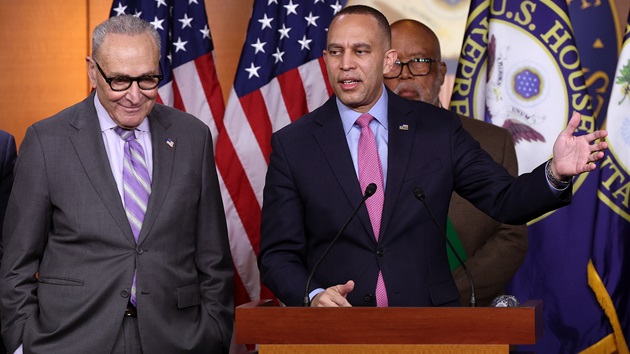
Schumer and House Democratic Leader Hakeem Jeffries, in a new letter addressed to Trump, are demanding a bipartisan meeting with Republicans to end the shutdown and address the “Republican health care crisis.”
Schumer and Jeffries have repeatedly requested bipartisan negotiations throughout the shutdown.
“It is time to sit down and negotiate with Democrats to bring this Republican shutdown to an end,” Schumer said on the floor Wednesday. “We told the president we’ve been asking for a meeting for weeks and even months, but now the election results ought to send a much needed bolt of lightning to Donald Trump that he should meet with us to end this crisis.”
ABC News’ Lauren Peller contributed to this report.
(NEW YORK) — New York City Mayor-Elect Zohran Mamdani told “Good Morning America” on Wednesday that he would not be “intimidated” by potential threats from President Donald Trump to deploy the National Guard to the city.
“His threats are inevitable,” Mamdani said. “This has nothing to do a safety, it has to do with intimidation.”
“If it was safety, President Trump would be threatening to the deploy the National Guard to the top 10 states of crime, eight out of which are all Republican-led,” Mamdani added. “But because of that party he won’t actually be doing it.”
The 34-year-old democratic socialist was propelled to victory amid a record turnout in New York City. More than 2 million voters turned out on Tuesday — the first time a mayoral election crossed that threshold since 1969.
Mamdani will become the city’s youngest mayor since 1892 and the first Muslim to hold the office.
Mamdani also said he saw his election victory as a “mandate” to pursue the “most ambitious” affordability agenda for New Yorkers in decades.
He described the first steps toward funding that agenda as pushing to raise taxes on the wealthiest New Yorkers — along with raising corporate taxes to 11.5% from its current level at about 7.25%.
“These things together raise about $9 billion,” he said, “which more than pays for the economic agenda and also starts to Trump-proof our city.”
Mamdani’s proposal for city-funded universal child care is among the policies he said he planned to fund with new tax revenues.
(NEW YORK) — Democratic candidate Zohran Mamdani’s projected victory as New York City’s first Muslim and South Asian mayor marks a historic moment, that could galvanize those communities, some voters and experts tell ABC News.
“It is going to make a big difference for our people — South Indians, Muslims, people who are immigrants like me. They will also think … there’s a place for them in this country,” Asif Mahmood, a Democratic bundler who helped fundraise for Hillary Clinton and Kamala Harris and ran for Congress himself, told ABC News ahead of Election Day.
Some Democratic strategists have pointed out that South Asian and Arab Muslims in the U.S., many of whom immigrated post-1965, have historically not been invested in politics. Asian-Americans in general have also been underrepresented in polling and research, even in recent election years, ABC News previously reported.
But Mamdani’s catapult into the national spotlight could help turn the tide, with members of those communities mobilizing in large numbers on his behalf throughout his campaign.
In fact, South Asian voter turnout in the 2025 NYC primary election increased by about 40% compared to the 2021 primary, according to data from research firm L2 provided to ABC News.
“This has created so much interest,” Mahmood said, saying that South Asians and Muslims are “definitely engaging more” in New York politics. He did, however, express concerns over how long the participation will last, and said he was “real skeptical” that such energy will translate to other candidates in the future.
The emphasis on a candidate’s identity was particularly heightened in this race — something that has been embraced by Mamdani’s campaign and supporters, but attacked by his opponents.
Born in Uganda, Mamdani is a Muslim of Indian descent who has lived in the United States since he was seven years old before becoming a naturalized citizen in 2018.
“This campaign has awakened something powerful in New York’s South Asian and Muslim communities — a sense of visibility, pride, and political belonging that’s been denied for generations,” Dora Pekec, a spokesperson for Mamdani, told ABC in a statement.
Vishvajit Singh, a storyteller and artist who has lived in NYC for ten years, told ABC News prior to Election Day that “the excitement to vote is real, even beyond the South Asian community.”
“Both supporters and critics of his candidacy stand to benefit — his rise may open more opportunities for South Asians (‘desis’) in U.S. governance,” Singh said, adding that Mamdani’s victory will “inspire children of brown and even Hispanic backgrounds to think about big governmental positions.”
Raza Ahmad Rumi, a policy analyst and lecturer at City University of New York originally from Pakistan, told ABC how Mamdani’s rise “reflects a generational shift in New York politics.”
“His charisma and connection with people — including support from white and Jewish youth — show that his appeal goes far beyond identity,” Rumi said.
Mamdani’s impact appears to transcend beyond the Big Apple, reaching community members across the country and overseas.
“I don’t know a single South Asian — and I know a lot of South Asians — who doesn’t know about this race going on,” Mahmood, who is based in California, said.
Dr. Naomi Green, assistant-secretary general for the Muslims Council of Britain, told ABC News that Mamdani’s “broad support across New York and beyond is proof that people value justice and inclusion over prejudice.” In 2016, London made history when the city elected its first Muslim mayor.
Ushering in NYC’s first Muslim mayor marks a significant milestone in a place that has experienced longstanding Islamophobia, especially following the deadly 9/11 terrorist attacks that occurred in the city.
The dark day in NYC was repeatedly mentioned in the run-up to Election Day, with Mamdani accusing his opponent, former New York Gov. Andrew Cuomo, of engaging in Islamophobic rhetoric relating to him and 9/11.
Cuomo has pushed back on these accusations, arguing that Mamdani was being divisive and falsely alleging Islamophobia. Speaking to Fox News just days before the election, Cuomo accused Mamdani of “playing the race card” and attempting to win voters on the basis of his identity.
Mahmood told ABC that such commentary actually helped Mamdani by fueling voter anger against his opponents.
But not all South Asians are enthusiastic about Mamdani. In October, Cuomo launched a “South Asians for Cuomo” coalition that rallied around the Independent candidate over Mamdani.
The Indian community has seen particular divide, with some criticizing Mamdani’s economic policies and even accusing him of being anti-Hindu, pointing to his past remarks about Indian Prime Minister Narendra Modi.
The Mamdani campaign did not immediately respond to a request for comment on these anti-Hindu accusations. A campaign adviser told the New York Times that Mamdani rejects anti-Hindu rhetoric, and pointed out that his mother is Hindu.
Fahad Solaiman, member of Jackson Heights Bangladeshi Business Development Association and Community Board, told ABC that he takes issue with feasibility of Mamdani’s promises, calling them “unrealistic.”
“We’re hardworking people. There are so many South Asian Americans in public office now — even the FBI Director is South Asian. But the problem isn’t who’s in office; it’s the kind of promises being made. [Mamdani] overpromises constantly,” Solaiman said.
Mamdani has also received backlash from some members of the Jewish community, with over 1,000 rabbis nationwide signing a letter decrying his rhetoric on Israel.
Mamdani’s victory as the Democratic candidate also comes during a time of declining Democratic support among Indian-Americans nationwide. The Carnegie Endowment for American Peace found less Indian-Americans voting blue in 2024 compared to 2020, even with former Vice President Harris, a Black and Indian woman, at the top of the Democratic ticket.
A recent Pew Research Center report also noted shrinking Muslim support for Democrats, with 42% of Muslims identifying with or leaning Republican in 2024, compared to 13% of Muslims identifying or leaning Republican in 2017.
Mahmood emphasized that Mamdani’s identity does not define his candidacy.
“He’s not going to make his mayorship [about being] a Muslim mayor, but he’s a good mayor, and he happens to be Muslim,” Mahmood said. “He’s a good mayor, he happens to be South Asian.”