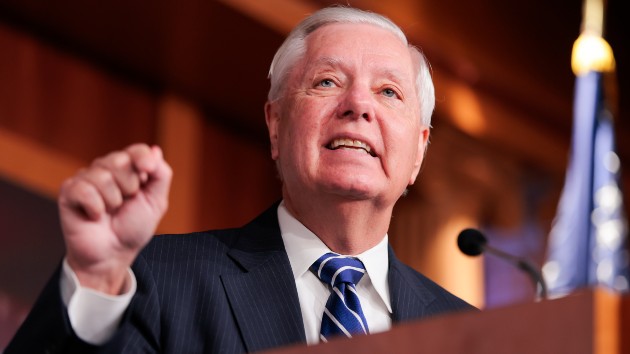
U.S. Sen. Lindsey Graham (R-SC) speaks during a press conference at the U.S. Capitol on April 27, 2026, in Washington, DC. Republican senators gathered to introduce legislation to fund construction of a White House ballroom as a secure alternative event space following the shooting at the White House Correspondents’ Association dinner in Washington, DC Saturday night. (Photo by Heather Diehl/Getty Images)
(WASHINGTON) — National political leaders and prominent figures from around the globe will remember South Carolina Republican Sen. Lindsey Graham with a ceremony on Capitol Hill and a funeral service in Washington, D.C., on Tuesday.
Graham is first being recognized with a ceremony in the Capitol rotunda. His casket was brought to the Capitol, where he is being honored by his fellow senators.
The ceremony includes remarks from Senate Majority Leader John Thune and Vice President JD Vance, according to the program.
Graham served more than two decades in the Senate, becoming one of the chamber’s most recognizable Republicans and one of President Donald Trump’s closest friends and advisers. He advised the president on foreign matters, including the recent war in Iran, and was a prominent fixture of the Senate’s powerful Judiciary Committee.
He died suddenly and unexpectedly on July 11 at the age of 71. Preliminary findings from the Medical Examiner of the District of Columbia said that the senator died due to “aortic dissection due to arteriosclerotic cardiovascular disease.”
Later Tuesday, there will be a funeral service at the Washington National Cathedral. Trump is expected to speak at the service, according to the office of Darline Graham, the late senator’s sister who was sworn in earlier this month to finish out the rest of his term.
The cathedral funeral is expected to be attended by a number of world leaders, including Israeli Prime Minister Benjamin Netanyahu and Ukrainian President Volodymyr Zelenskyy. Graham worked closely with both men as a staunch ally to both nations. Graham spent some of his final days in Ukraine and met with Zelenskyy just before he died.
Graham’s casket will return to South Carolina on Wednesday, where further memorial services are set for Columbia, the state’s capital, and Pickens County, where Graham grew up and part of the district he represented.
U.S. Sen. Lindsey Graham (R-SC) speaks during a press conference at the U.S. Capitol on April 27, 2026, in Washington, DC. Republican senators gathered to introduce legislation to fund construction of a White House ballroom as a secure alternative event space following the shooting at the White House Correspondents’ Association dinner in Washington, DC Saturday night. (Photo by Heather Diehl/Getty Images)
(WASHINGTON) — National political leaders and prominent figures from around the globe will remember South Carolina Republican Sen. Lindsey Graham with a ceremony on Capitol Hill and a funeral service in Washington, D.C., on Tuesday.
Graham served more than two decades in the Senate, becoming one of the chamber’s most recognizable Republicans and one of President Donald Trump’s closest friends and advisers. He advised the president on foreign matters, including the recent war in Iran, and was a prominent fixture of the Senate’s powerful Judiciary Committee.
He died suddenly and unexpectedly on July 11 at the age of 71. Preliminary findings from the Medical Examiner of the District of Columbia said that the senator died due to “aortic dissection due to arteriosclerotic cardiovascular disease.”
Graham will first be recognized on Tuesday with a ceremony in the Capitol rotunda. His casket will be brought to the Capitol where he will be honored by his fellow senators.
Details of that ceremony have not yet been made available.
Later Tuesday, there will be a funeral service at the Washington National Cathedral. Trump is expected to speak at the service, according to the office of Darline Graham, the late senator’s sister who was sworn in earlier this month to finish out the rest of his term.
The cathedral funeral is expected to be attended by a number of world leaders, including Israeli Prime Minister Benjamin Netanyahu and Ukrainian President Volodymyr Zelenskyy. Graham worked closely with both men as a staunch ally to both nations. Graham spent some of his final days in Ukraine and met with Zelenskyy just before he died.
Graham’s casket will return to South Carolina on Wednesday, where further memorial services are set for Columbia, the state’s capital, and Pickens County, where Graham grew up and part of the district he represented.
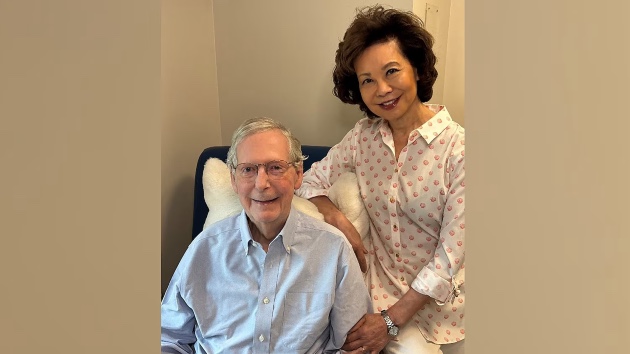
Senator Mitch McConnell and Secretary Elaine Chao, July 26, 2026. (Courtesy of Sen. Mitch McConnell)
(WASHINGTON) — Sen. Mitch McConnell’s office issued a statement from the Republican senator on Monday saying that he will miss an upcoming Kentucky political event in order to continue his rehabilitation following a June 14 fall that left him hospitalized.
“I’m still working hard to get back to my full schedule of work in the Senate and in Kentucky, keeping up with intense physical therapy per my doctors’ orders. Unfortunately, that means I won’t be able to make it to Fancy Farm, Kentucky this Saturday,” McConnell said in the statement of the political event and cookout held annually in Kentucky.
“As always, I appreciate all of your continued well wishes, and I’m looking forward to getting back to the Senate and to Kentucky soon.”
An additional statement from the Office of the Attending Physician says that McConnell is continuing with a course of physical therapy and rehabilitation, adding that he is “not yet medically cleared to leave the rehab facility and return to the office.”
“Since his discharge from hospital care, he has maintained a strenuous course of physical therapy and rehabilitation, including multiple sessions a day designed to rebuild strength and reduce the risk of future falls,” the OAP statement reads.
McConnell’s office also included a new image of the senator and his wife, Elaine Chao, that it says was taken on Sunday, July 26.
McConnell was hospitalized on June 14, though his team initially released few details about the incident — prompting calls from many, including Kentucky Gov. Andy Beshear, for more transparency.
In a statement issued July 12, nearly a month after his hospitalization, McConnell said he was hospitalized due to a fall that left him briefly unconscious. He also had to deal with a “mild case of pneumonia.”
He has not been seen on Capitol Hill since June 11.
McConnell has said he intends to finish his term, which expires in January. The seven-term senator has already said he does not intend to seek reelection in January.
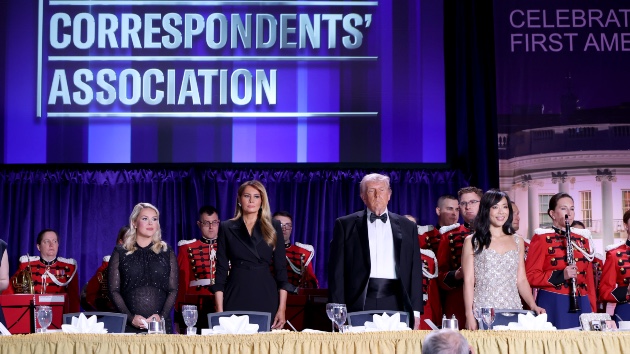
: (L-R) White House Press Secretary Karoline Leavitt, Melania Trump, U.S. President Donald Trump, and Weijia Jiang attend as Mentalist Oz Pearlman hosts The White House Correspondents Dinner at Washington Hilton on April 25, 2026 in Washington, DC. (Photo by Kevin Mazur/Getty Images for OP)
(WASHINGTON) — President Donald Trump will attend the rescheduled White House Correspondents’ Association Dinner Friday night, the White House said, after the annual dinner ended abruptly three months ago when shots rang out.
“Alongside all of you members of the media, the president looks forward to finishing what he started before a despicable assassination attempt derailed the original event back in April,” White House press secretary Karoline Leavitt told reporters on Thursday.
The spring dinner devolved into chaos after authorities say Cole Allen opened fire inside the Washington Hilton hotel, where thousands of journalists and guests gathered for the annual celebration of the First Amendment. The president and top government officials were also in attendance.
Allen pleaded not guilty in May to charges of attempting to assassinate the president, transportation of a firearm with intent to commit a felony, discharge of a firearm during a crime of violence and assaulting a federal officer with a deadly weapon.
Secret Service officer Victor Gonzales was shot in the incident, but the bullet struck “his protective vest and [he] continued responding to the threat,” the Secret Service said.
Sean Curran, the Secret Service director, said in a briefing on Wednesday that the agency measures worked in April and that they are preparing for Friday’s rescheduled dinner.
Friday’s dinner is taking place at a different Washington, D.C., hotel, the Waldorf Astoria on Pennsylvania Avenue.
“We will always evaluate every site and, right now, we have an advance team there and they will take back and they will set up a plan to set that site up for success just like we did at the White House correspondents’ dinner at the Hilton,” Curran said.
The White House Correspondents’ Association announced on Tuesday that it will present a special award, the President’s Award for Exceptional Service, during Friday night’s dinner to Gonzales and the staff of the Washington Hilton.
“Officer Gonzales played a significant role when he ran toward danger so that thousands of others could make it home safely,” Weijia Jiang, who presided over the April dinner as WHCA president, said in a statement. “His courage stemmed from a dedication to service, which we are looking forward to honoring this week.”
Jiang said the Hilton staff is being recognized for their “professionalism and commitment to service” by continuing to “take care of guests” after experiencing the “harrowing situation” themselves.
The shooting took place before the scheduled program that features the presentation of journalism awards, remarks from the president, and entertainment from an invited headliner. This year’s entertainer was mentalist Oz Pearlman, who will be back for the redo dinner, the association said.
The association added that it was determined “to finish the program that was interrupted.”
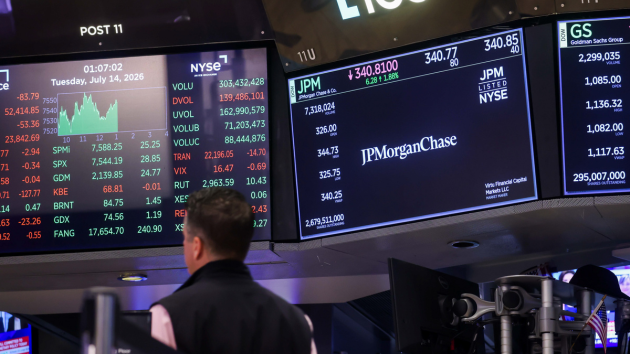
New York Stock Exchange (NYSE) in New York, US, on Tuesday, July 14, 2026. (Michael Nagle/Bloomberg via Getty Images)
(WASHINGTON) — The House on Wednesday passed a bill that would ban members of Congress from trading individual stocks as well as mandate that voters provide photo identification “as a condition of casting a ballot” by a 232-198 vote.
Thirteen Democrats voted with all Republicans in favor of the bill.
The Stop Insider Trading Act, championed by House Administration Committee Chairman Bryan Steil of Wisconsin, would prohibit members of Congress, their spouses and their dependent children from buying new stocks. The bill would, however, allow lawmakers to keep the stocks they already own.
“This is the first congressional stock trading ban to receive a vote on the floor of the House,” Steil said on the floor. “If you want to day trade, there is a place for that on Wall Street.”
Administration Committee ranking Democrat Joe Morelle of New York called the bill a “sham” because it “allows members of Congress to continue owning and trading stocks.”
Rep. Teresa Leger Fernandez of New Mexico, the chair of the Democratic Women’s Caucus, told ABC News that the bill wouldn’t prevent a member from selling stock they already hold.
“It doesn’t ban stock trading because you could still acquire stocks, sell stocks, use information that you have that you garner here in Congress to make a profit. And stock trading involves purchase and sales, and it does not prohibit sales,” she said.
Some Democrats opposed the bill in part because they contend it doesn’t go far enough to rein in stock trading for the executive branch, including the president and vice president.
“The biggest glaring absence is that the president and vice president can continue to stock trade,” Leger Fernandez said.
President Donald Trump’s recent financial disclosure report shows his investment advisers made more than 21,000 trades on his behalf last year, many involving companies with business before, or regulated by, his administration.
Republican Rep. Chip Roy of Texas also expressed regret that GOP leadership made the vote a “partisan exercise” by attaching voter ID to the ban and agreed with Democrats who argue the scope of legislation should address all three branches of government.
“It should apply to everybody. That was my preference, and always had been,” Roy said. “We stuck on focusing on Congress because you know, get your own house in order, and then you know you can kind of start pointing fingers elsewhere, but I would like it to apply to everybody in the executive branch, judiciary branch, and here.”
Other Democrats opposed the bill because it combined the stock ban bill with the voter ID provision as Trump continues to push Republicans in both chambers to pass the SAVE America Act, which Democrats oppose because they say it would disenfranchise some voters.
According to the bill text, that provision requires voters to show a valid physical photo identification when casting a ballot for federal office. Mail-in and absentee voters can attach a photocopy of their ID to their ballot. If an eligible voter forgets to bring their ID to vote, they can cast a provisional ballot.
“They’ve added provisions that have absolutely nothing to do with stock trading and everything to do with their obsession, their obsession with the 2020 election,” Morelle said of the voter ID provision.
Leger Fernandez said the bill amounted to a “Trojan Horse” for the Save America Act.
Rep. Alexandra Ocasio-Cortez of New York called it a “bait-and-switch” bill.
“They attached these voter suppression provisions specifically because they knew it would kill a stock trading ban. I proudly voted no because we are not going to sabotage mail-in voting in this country, and we’re not going to fall for, kind of, their bait-and-switch tactic here.”
Because of the voter ID language in the bill, the bill faces a rocky path in the Senate. Trump has pushed Republicans in the upper chamber to eliminate or modify the filibuster to pass his election legislation, though Majority Leader John Thune has repeatedly said Republicans don’t have the votes to do that.
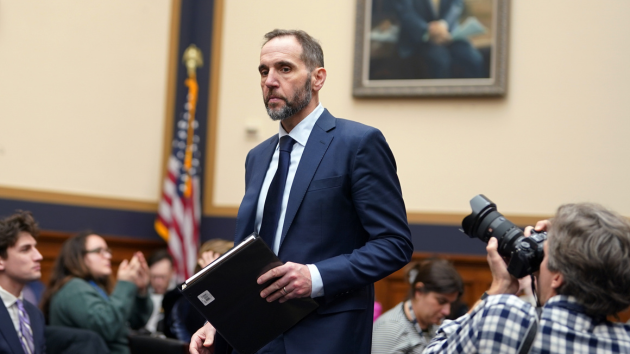
Former Special Counsel Jack Smith returns from a recess to resume his testimony during a hearing before the House Judiciary Committee in the Rayburn House Office Building on Capitol Hill on January 22, 2026 in Washington, DC. (Photo by Al Drago/Getty Images)
(WASHINGTON) — House Judiciary Committee Chairman Jim Jordan issued a criminal referral against former Special Counsel Jack Smith on Wednesday for allegedly making “willfully and intentionally false statements” when testifying before Congress last December.
“The Committee on the Judiciary writes to refer strong evidence that appears to show Jack Smith, former Special Counsel, knowingly made false statements during his December 17, 2025 deposition,” Jordan wrote in a letter sent to Acting Attorney General Todd Blanche.
In the letter, Jordan questioned what Smith said under oath about obtaining phone records of 44 lawmakers who communicated with President Donald Trump and other members of the White House related to efforts to overturn the 2020 election.
“This information calls into question the completeness and accuracy of statements that Mr. Smith made under oath to the Committee regarding his team’s access to the content of Members’ text messages,” Jordan wrote.
Jordan stated that responses by Smith during congressional testimony “gave the impression that neither Mr. Smith nor his team had access to the content of members’ privileged text messages.”
“We now know this to be false,” Jordan wrote.
“His conduct can only be understood as an effort to thwart the Committee’s inquiry by intentionally making false statements and representations before Congress. We therefore believe that sufficient evidence exists for DOJ to examine whether Mr. Smith’s actions warrant a charge,” the letter added.
Counsel for Smith responded to Jordan’s referral disputing that his statements in any way could be construed as perjury — arguing the effort “reflects a chilling eagerness to weaponize the justice system by attacking a career, nonpartisan public servant who faithfully and fearlessly performed his duties by following the facts and the law.”
Top Judiciary Democrat Rep. Jamie Raskin slammed the GOP-led criminal referral — calling it “baseless” and “vindictive.”
“Jack Smith was clear and consistent in his testimony, and he told the truth. When asked if his subpoena for Members’ toll records sought the content of either Member’s phone calls or messages, he truthfully replied that they did not,” Raskin said in a statement.
Raskin said the referral “if ever brought before a judge, will get laughed out of court” and is “meant to harass Jack Smith.”
Criminal referrals are just recommendations and do not always lead to a prosecution.
This move by Jordan comes after Blanche said last week at his confirmation hearing that DOJ might investigate Smith over alleged perjury.
“Have you thought about investigating this guy for perjury?” GOP Sen. Josh Hawley, of Missouri, asked of Blanche after recounting testimony where Smith previously denied that toll records obtained from members of Congress did not include the contents of messages.
“We take testimony in front of this body very seriously, yes,” Blanche responded.
During Smith’s investigation into Jan. 6, his office sought limited phone toll data from eight senators and a member of the House in the days surrounding the Jan. 6 assault on the Capitol.
While such records would not involve the content of any phone calls or messages, multiple Republicans have incorrectly claimed that Smith had “tapped” their phones or “spied” on them.
Records released ahead of last week’s hearing indicated that contents of messages obtained by Smith’s teams related to messages handed over by the National Archives and Records Administration — not the toll records he referred to in his original answer.
“I think he absolutely should be investigated,” Hawley said. “I hope that you will investigate Jack Smith for perjury and I hope that possibly you’ll prosecute him.”
“Yes, senator,” Blanche said.
Trump has long called for Smith to be investigated.
In an interview with MS NOW earlier this month, Smith said the U.S. is facing an “attack on the rule of law that is different in kind and scope to anything I’ve seen in my lifetime.”
L-R: 1st Lt Tyler James Feehan, Pvt. Isabella Gonzales and Sgt. Michael Emmanuel Swinton, Sgt. Angel Rampersad. (US Army)
(WASHINGTON) — President Donald Trump will travel to Dover Air Force Base in Delaware on Wednesday to attend a dignified transfer of U.S. service members killed in the war in Iran.
“Heading to Dover Air Force Base to HONOR OUR HEROES!” Trump posted to his social media platform Wednesday morning.
Overnight, the Pentagon identified the third person believed to have been killed in action during Friday’s Iranian strike on a U.S. base in Jordan as Army Sgt. Angel S. Rampersad, 28, of Ozone Park, New York.
Two other American soldiers died in the Iranian attack on the U.S. base: Pfc. Isabella Gonzales, 19, of Carrollton, Texas, and 1st Lt. Tyler Feehan, of Ewa Beach, Hawaii.
A fourth soldier. Army Sgt. Michael Emmanuel Swinton, 30, of Fayetteville, North Carolina, died Sunday following the controlled detonation of a downed Iranian attack drone at Erbil Air Base in Iraq, the Army said.
Since the U.S. war in Iran began in late February, at least 18 soldiers have been killed and roughly 500 wounded, according to the Department of Defense.
Fighting has intensified after a ceasefire between the U.S. and Iran reached in mid-June broke down. There has now been 11 consecutive nights of strikes.
This is a developing story. Please check back for updates.
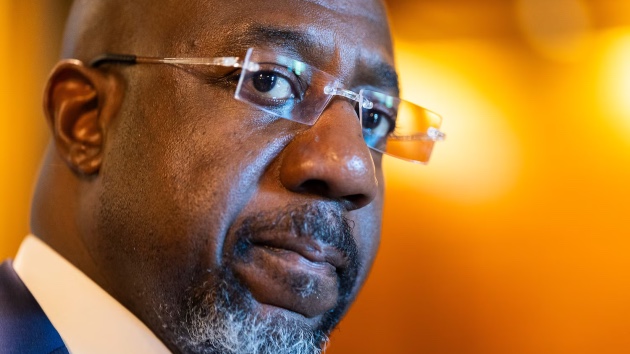
U.S. Sen. Raphael Warnock, D-Ga., departs from the Senate chamber during a vote in the U.S. Capitol Building on July 13, 2026, in Washington, D.C. Senators faced questions from reporters after two weeks of recess and being in their home states. (Finn Gomez/Getty Images)
(WASHINGTON) — Senator Raphael Warnock, D-Ga, is calling for Democrats to investigate officials who he says have “manipulated their maps to silence the voices of Black voters,” as soon as they flip the House or Senate in the midterms.
In the plan, first reviewed by ABC News, Warnock said, “Here is what Democrats must do as soon as we regain power: investigate craven politicians, ban partisan gerrymandering, stop billionaires from buying our elections, expand our democracy and guarantee the right to vote for all Americans.”
Warnock has not ruled out a run for the White House in 2028. That possibility comes as roughly a third of the Congressional Black Caucus risks losing its seats before 2028, with GOP-led Southern legislatures redrawing maps after the Supreme Court’s Louisiana v. Callais ruling gutted Section 2 of the Voting Rights Act.
In Louisiana, where Black residents make up roughly one-third of the population, a federal court had found that a post-2020 congressional map with only one majority-Black district likely diluted Black voting power. The legislature responded by drawing a second majority-Black district as courts had required in similar circumstances.
Justice Samuel Alito, who authored the Supreme Court opinion, which said that states only violate the Voting Rights Act when “evidence supports a strong inference that the State intentionally drew its districts to afford minority voters less opportunity because of their race.”
Republicans have argued that they are redrawing congressional maps to comply with the Supreme Court or to remedy unfairly-drawn districts, and that the districts that could be changed may still elect Black representatives to Congress.
Calling for officials who he says have engaged in gerrymandering to decimate minority voices is a position Warnock hasn’t called for until now, and he said in a phone interview with ABC News that the Callais decision was an “inflection point” for him to do so.
“A Democratic majority in either chamber must immediately investigate these officials, including through Congressional hearings, document requests, depositions, testimony, and, if necessary, subpoenas,” Warnock’s plan states. “We must analyze their statements, actions, and contributions to determine if there is any evidence that they broke any laws in their race to gerrymander and silence Black voices.”
Asked whether Democrats who’ve engaged in partisan gerrymandering — in California, for example — should face investigation, Warnock said that the state’s redistricting came in direct response to President Donald Trump pushing Texas to gerrymander five seats.
“There’s a significant difference between that and an open process in which Californians got to vote,” Warnock said. “This was not done in a smoky, dark room. They had a referendum. Again, if I had my druthers, there would be no gerrymandering.”
“There are only 22 districts out of 435 in this country in which a Democrat or a Republican could win the seat. I’m a Democrat. I think that’s a sad state of affairs,” Warnock added.
Warnock said that he’s been pushing his party to prioritize voting rights since he was first elected. In 2021, during negotiations over the Bipartisan Infrastructure Law, Warnock urged then-President Joe Biden in a phone call that legislative action on voting rights should be prioritized alongside the package.
Warnock said he tried to convince former Democratic Sens. Joe Manchin and Kyrsten Sinema to amend the filibuster so the party could pass voting rights legislation four years ago, arguing voting rights mattered more than a procedural rule.
“I said to my caucus then, as the newcomer, that I was afraid that if we don’t do something … we would cross a Rubicon in this country that we wouldn’t be able to get back,” Warnock said. “I said that then, and sadly, it didn’t get done.”
Looking ahead, Warnock said if Democrats flip even just one chamber, the party should break up pieces of the John Lewis Voting Rights Advancement Act, and “force everybody to vote on it.”
(WASHINGTON) — The Justice Department is investigating embattled Republican Florida Rep. Cory Mills, according to multiple sources familiar with the situation.
The investigation is in part about his finances, according to sources. Mills’ office did not respond to ABC News’ request for comment.
MS NOW first reported the investigation.
Further details about the investigation were not immediately clear.
Mills was elected to the House to represent Florida’s 7th District in 2022 and reelected in 2024. He serves on the House Armed Services and Intelligence committees.
Last November, the House Ethics Committee voted to establish an investigative subcommittee to examine allegations that Mills violated campaign finance laws and engaged in sexual misconduct and dating violence.
Regarding allegations of sexual misconduct, Mills issued a statement last year, before the ethics committee probe was lauched, stating in part: “These claims are false and misrepresent the nature of my interactions,” and he accused a former Florida primary opponent of “weaponizing the legal system to launch a political attack against the man who beat him.”
This is a developing story. Please check back for updates.
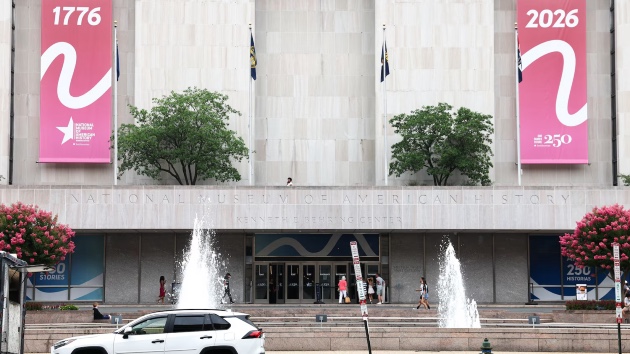
The Smithsonian American History Museum on July 07, 2026 in Washington, DC. (Finn Gomez/Getty Images)
(WASHINGTON) — The director of the Smithsonian’s National Museum of American History (MNAH) is scheduled to testify before two congressional House committees this week amid sharp criticism from the White House over the contents of the Washington, D.C. museum.
Anthea Hartig is set to face grilling by lawmakers on Tuesday morning in a House Subcommittee on Delivering Government Efficiency hearing titled “Rewriting American History: Examining the Smithsonian’s Efforts to Reshape the Past,” according to a committee press release.
She is also expected to testify in a related hearing on Wednesday before the Committee on House Administration, a committee spokesperson confirmed to ABC News. ABC News has reached out to the Smithsonian for confirmation.
Hartig was named in a scathing White House Domestic Policy Council report released on July 4, accusing the MNAH and its leadership of engaging in “extreme political activism” and presenting “a radical view of American history.”
Asked about the report, a spokesperson for the Smithsonian told ABC News on July 5 that the institution remains committed to impartial learning.
“For more than 180 years, the Smithsonian has served the American public with nonpartisan and independent scholarship, and we remain committed to doing so,” the spokesperson said.
Hartig’s testimony this week would mark the first time that a top leader at the Smithsonian gets grilled publicly by Congress after President Donald Trump targeted the institution in his March 27, 2025 executive order, “Restoring Truth and Sanity to American History.”
The executive order directed Vice President J.D. Vance, in consultation with the president’s advisers on domestic policy, “to remove improper ideology” from Smithsonian institutions, arguing that materials that cast America in a “negative light” have no place in federal cultural institutions.
The White House last year launched an investigation into the Smithsonian, which oversees 21 museums, galleries and the national zoo, and released the July 4 report targeting the American history museum as part of this probe.
The report accuses the museum of “anti-White activism,” “illegal alien activism,” and “transgender activism.” It also includes many photos of materials the White House has identified as problematic.
Smithsonian Secretary Lonnie Bunch, who has not addressed the report publicly, disputed its findings in an internal letter to staff that was obtained by ABC News.
Bunch wrote that Smithsonian leadership is “carefully” reviewing the report’s findings, but said that the report’s assessment is “not a fair characterization.
“While there will always be room for improvement, this report is not a fair characterization of the work and totality of the National Museum of American History,” Bunch said in the letter. “At the Smithsonian, our work is driven by scholarship, accuracy, and an uncompromising commitment to tell the fullness of America’s story.”
“As public servants and the keepers of this institution, we are charged with helping a nation find understanding, hope, and clarity and as part of that duty, we are dedicated to excellence, reflection, and growth,” Bunch added.
The report was published by the White House Domestic Policy Council. Vince Haley, the group’s director, said in a statement to ABC News that “No American wants the Smithsonian’s National Museum of American History to be a system of ideological activism.”
“Unfortunately, the report demonstrates that is exactly what the Smithsonian’s flagship museum has become,” he said. “It is our hope and expectation that the Smithsonian will eventually rise once again to that noble obligation — to tell America’s story for our children, the world, and future generations of Americans,” he added.