
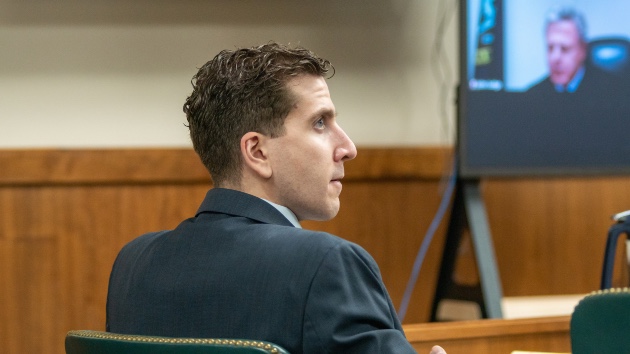
Bryan Kohberger admits to Idaho college killings in plea hearing

Bryan Kohberger admits to Idaho college killings in plea hearing
Kai Eiselein-Pool/Getty Images

(MOSCOW, Idaho) — Bryan Kohberger admitted to the killings of four University of Idaho students at his change of plea hearing on Wednesday, pleading guilty to all five counts, despite the former criminology student’s initial eagerness to be exonerated in the high-profile case.

At the Ada County Courthouse in Boise, Idaho, Judge Steven Hippler asked Kohberger how he pleads for each count. Kohberger quickly said “guilty” each time, showing no emotion.

Kohberger — who was charged with four counts of first-degree murder and one count of burglary in connection with the 2022 killings of the four students — will be spared the death penalty as a part of the plea, according to a letter sent to victims’ relatives. He’ll be sentenced to four consecutive life sentences on the murder counts and the maximum penalty of 10 years on the burglary count, according to the agreement.

At the start of the hearing, Kohberger briefly answered questions from Hippler with “yes” and “no,” marking the first time since his arrest that Kohberger spoke during court proceedings.

He was asked if he was thinking clearly, and Kohberger responded, “yes.” When asked if he was promised anything in exchange for the plea, Kohberger responded, “no.” Asked if he was pleading guilty because he is guilty, Kohberger responded, “yes.”

Hippler asked Kohberger if he “killed and murdered” each victim, naming the four students: Kaylee Goncalves, Madison Mogen, Xana Kernodle and Kernodle’s boyfriend, Ethan Chapin. Kohberger responded “yes” each time, showing no emotion.

Kohberger’s father shook his head as the victims’ names were read.

Prosecutor Bill Thompson outlined for the judge the state’s evidence against Kohberger, including Kohberger’s DNA matching the male DNA on a knife sheath left by Mogen’s body.

Kohberger also waives his right to appeal as a part of the agreement.

The plea comes just weeks before Kohberger’s trial was to get underway. Jury selection was set to start on Aug. 4 and opening arguments were scheduled for Aug 18.

Prosecutors — who met with victims’ families last week — called the plea a “sincere attempt to seek justice” for the families.

But the dad of 21-year-old victim Kaylee Goncalves blasted the move, accusing the prosecutors of mishandling and rushing the plea deal.

Steve Goncalves said outside court on Wednesday that the prosecution “made a deal with the devil.”

The Goncalves family told ABC News they contacted prosecutors on Tuesday asking for the terms of Kohberger’s deal be amended to include additional requirements: they asked for a full confession and for the location of the alleged murder weapon — described by authorities as a KA-BAR-style hunting knife — which has never been found.

The family said prosecutors turned down the request, explaining that an offer already accepted by the defendant could not ethically be changed. The family said the prosecutors indicated they’re asking the court to allow the prosecution to include a factual summary of the evidence against Kohberger at Wednesday’s hearing, and that more information about Kohberger’s actions would be presented at his sentencing hearing.

The family of 20-year-old victim Ethan Chapin said in a brief statement that they’re at the hearing “in support of the plea bargain.” This is the Chapins’ first appearance at court since their son was killed.

Idaho law requires the state to afford violent crime victims or their families an opportunity to communicate with prosecutors and to be advised of any proposed plea offer before entering into an agreement, but the ultimate decision lies solely with the prosecution.

Kohberger’s parents also attended Wednesday’s hearing, their first time in court with their son since his arrest in Pennsylvania more than two years ago. Attorneys for the Kohberger family said in a statement on Tuesday, “The Kohbergers are asking members of the media for privacy, respect, and responsible judgment during this time. We will continue to allow the legal process to unfold with respect to all parties.”

Prosecutors allege Kohberger fatally stabbed Goncalves, Mogen, Kernodle and Chapin in the students’ off-campus house in the early hours of Nov. 13, 2022.

Two roommates in the house survived, including one roommate who told authorities in the middle of the night she saw a man walking past her in the house, according to court documents. The roommate described the intruder as “not very muscular, but athletically built with bushy eyebrows,” according to the documents.

Kohberger, who was studying for a Ph.D. in criminology at nearby Washington State University at the time of the crime, was arrested at his parents’ home in Pennsylvania in December 2022.

Copyright © 2025, ABC Audio. All rights reserved.

‘I’m coming home, baby!’: Sean ‘Diddy’ Combs reacts after verdict read

‘I’m coming home, baby!’: Sean ‘Diddy’ Combs reacts after verdict read
Shareif Ziyadat/Getty Images for Sean “Diddy” Combs

(NEW YORK) — After the split verdict in his federal sex trafficking and racketeering conspiracy trial was read, acquitting him of the most serious offenses, Sean “Diddy” Combs turned to his family and exclaimed, “I’m coming home, baby!”

After a two-month trial, the New York jury found the 55-year-old hip-hop mogul not guilty of racketeering conspiracy, the most serious charge.

The jury did find him guilty of two counts of transportation to engage in prostitution, one in connection with his ex-girlfriend, Cassie Ventura, and one in connection with an ex-girlfriend who testified under the pseudonym “Jane.”

He was found not guilty of both charges of sex trafficking by force, fraud, or coercion in connection with Ventura and “Jane.”

When the verdict was read in the Manhattan federal courtroom on Wednesday, Combs was overcome with emotion, his feet visibly shaking throughout the reading.

He pumped his fist slightly when he heard he was found not guilty of racketeering conspiracy. Some members in the gallery gasped.

Combs continued to look straight ahead as the remaining verdicts were read. When he heard the first guilty verdict, he rubbed his forehead.

When Combs was found not guilty of sex trafficking in connection with Ventura, there were screams of joy in the gallery.

There was very little reaction from Combs’ family as the verdict was read. His son Justin leaned down and put his head in his lap while others looked straight ahead. Dana Tran, the mother of his youngest child, was in tears.

As each juror confirmed that the verdict read was accurate, Combs nodded his head and mouthed “thank you” to each of them.

When the verdict was confirmed and the judge gave the jurors instructions, Combs turned in his seat to his family and said, “I’m coming home, baby! I’m coming home!”

As the jury left the courtroom, Combs clasped his hands in front of his chest and again mouthed, “Thank you.”

Combs kneeled on the ground and appeared to pray briefly after the jury was out of the room.

After the judge left the bench, the defense team hugged and congratulated each other and the Combs family broke into applause. One person exclaimed that the defense attorneys were the “dream team.”

As Combs left the courtroom, he said to his family, “I love you, I’ma be home soon.”

Sean Combs’ mother, Janice Combs, told ABC News as she left the courtroom that her heart was fluttering as the verdict was read.

His son Christian told ABC News outside the courthouse, “We love everybody watching. We’re so happy, my Pops is coming home. God bless.”

U.S. District Judge Arun Subramanian said he will decide whether Combs gets released on Wednesday.

He said the decision might take some time — including giving the lawyers time to write letters arguing for and against release — but will happen sometime on Wednesday.

Defense attorney Marc Agnifilo said Combs should be released on Wednesday and argued for $1 million bond.

“I am not saying it is not a serious crime. It is a crime of a vastly different nature,” he said. “I believe that a significant change in conditions is warranted.”

When the judge said he thought Combs likely didn’t want to return to Metropolitan Detention Center Brooklyn, Combs comically shook his head no and put up prayer hands, as the gallery broke out in laughter.

Combs has already served about nine months in federal prison while awaiting trial.

Each charge of transportation to engage in prostitution carries a maximum sentence of 10 years in prison.

Assistant United States Attorney Maurene Ryan Comey said the government plans to pursue “significant incarceration” for Combs.

Copyright © 2025, ABC Audio. All rights reserved.

Trump ramps up pressure on House Republicans to pass major tax cut and spending bill

Trump ramps up pressure on House Republicans to pass major tax cut and spending bill
Anna Moneymaker/Getty Images

(WASHINGTON) — President Donald Trump is ramping up pressure on Republicans to get his tax and spending bill across the finish line.

Several House Republicans arrived White House on Wednesday morning for meetings as the president presses his party to pass the sweeping legislation — a centerpiece of Trump’s second term agenda.

Vice President JD Vance, who cast the tie-breaking vote to get the bill passed in the Senate, was spotted at the White House as well.

An administration official said the White House is hosting multiple meetings on Wednesday with Republicans on the White House complex. The president is expected to engage directly with members throughout the day.

Some of the lawmakers seen entering were GOP eps. Jeff Van Drew, Rob Bresnahan, Dusty Johnson, Dan Newhouse, Mike Lawler and Andrew Garbarino.

Those lawmakers are part of the Main Street Caucus, a group of lawmakers who bill themselves as “pragmatic” conservatives focused on getting things done.

President Trump notably has no public events on his schedule Wednesday.

Trump previously told ABC News Chief White House Correspondent Mary Bruce he believed things would be “easier” in the House than the Senate with regards to the megabill, but several changes made by the Senate have angered some Republican hardliners in the House.

House Majority Leader Steve Scalise, talking to reporters on Capitol Hill, questioned whether the House would be able to pass the megabill on Wednesday — but said Trump was helping on that front.

Asked by ABC News whether he feels like Republicans are short of the votes needed for passage, Scalise acknowledged the bumpy road both in the past and ahead.

“We’ve still had a lot of members that had questions about the changes that the Senate made. That’s to be expected,” Scalise said.

The majority leader added, “When you talk to members, there’s some that still are holding out for something different, but at the end of the day, they know this is probably as good as we’re going to get.”

Scalise said that Republican leadership is meeting with small groups of members who haven’t locked in their support, and the president is also helping on that today as their “best closer.”

“He’s talking to individual members,” Scalise said of President Trump. “Even when the bill was in the Senate, you had some individual members that wanted some changes in the Senate calling the president to help his support for those changes, and some of those changes were implemented. So you know, the President, from day one, has been our best closer, and he’s going to continue to be through today.”

Trump also continued an online pressure campaign, posting to his conservative social media site multiple times on Wednesday.

“Republicans, don’t let the Radical Left Democrats push you around,” Trump wrote this morning. “We’ve got all the cards, and we are going to use them. Last year America was a ‘DEAD’ Nation, with no hope for the future, and now it’s the ‘HOTTEST NATION IN THE WORLD!’ MAKE AMERICA GREAT AGAIN!”

Copyright © 2025, ABC Audio. All rights reserved.
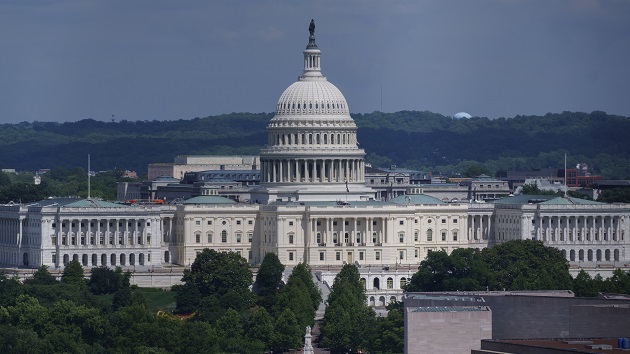
These Senate changes to Trump’s agenda bill could be sticking points in House

These Senate changes to Trump’s agenda bill could be sticking points in House
Kevin Carter/Getty Images

(WASHINGTON) — All eyes are now on the House after the Senate narrowly passed a major tax cut and spending bill that is the centerpiece of President Donald Trump’s agenda.

A key test vote is expected in the House on Wednesday, but it’s unclear if it will pass given divisions within the GOP. Several House Republicans were spotted at the White House to meet with President Trump, who is ramping up pressure on lawmakers to get the bill to his desk.

But several changes made by the Senate to the bill passed by the House back in May could become sticking points.

Medicaid provisions

The Senate made even deeper cuts and other changes to Medicaid, with the nonpartisan Congressional Budget Office (CBO) estimating 11.8 million Americans could lose their health insurance over the next decade as a result. That’s roughly three million more people than the CBO estimate for the House bill.

The Senate kept many of the new work requirements for Medicaid that the House approved, but significantly altered the Medicaid provider tax that states use to secure more federal funding for the health program.

That became a point of contention among some Senate Republicans, including North Carolina’s Thom Tillis and Maine’s Susan Collins, who both voted against the Senate bill.

Already, some House Republicans have voiced similar concern.

Rep. David Valadao, a moderate California Republican, said he would vote no on the Trump bill unless the Senate stuck to the exact Medicaid provisions in the House-passed bill.

“I support the reasonable provisions in H.R. 1 that protect Medicaid’s long-term viability and ensure the program continues to serve our most vulnerable, but I will not support a final bill that eliminates vital funding streams our hospitals rely on, including provider taxes and state directed payments, or any provisions that punish expansion states,” Valadao said in a statement.

Deficit and debt limit

The CBO estimated the Senate bill would add roughly $3.4 trillion to the national debt over the next 10 years — about $1 trillion more than the version passed by the House.

The Senate version also includes a $5 trillion increase in the debt ceiling, significantly higher than the $4 trillion hike approved by the lower chamber.

Rep. Chip Roy, a Texas Republican, on Tuesday said the “overall deficit number is not good” and that he was not “inclined” to support the Senate bill.

Rep. Andy Harris, the chair of the House Freedom Caucus, said the House should take more time to work through the Senate bill and find a compromise.

“The Senate bill moved way far away from the House bill, added $750 billion to an already large deficit and debt,” Harris said on CNBC on Wednesday morning, adding more the deficit is “probably not a good idea.”

Other changes

Other Republican hardliners are taking issue with various portions of the House bill that were taken out by the Senate parliamentarian, who is responsible for ensuring provisions abide by the Byrd Rule and reconciliation process.

Some of the items taken out of the House bill include language that would have repealed some Biden-era rules on clean energy and electric vehicles.

The Senate version of the bill also phases out solar energy tax credits that were part of President Joe Biden’s Inflation Reduction Act at a slower rate than the House version.

“Many Senators thought they were voting for a bill that would end the Green New Scam,” Rep. Keith Self, a Texas Republican, wrote on X. “Turns out, a last-minute paragraph inserted by lobbyists and agreed to by leadership does the exact opposite. What else is lurking in this bill? And why is the House being pressured to vote on it with less than 24 hours to review?”

Rep. Andy Ogles, a Tennessee Republican, said he wanted to push an amendment to replace the Senate text with the House bill.

“I don’t work for the Senate parliamentarian. I work for the PEOPLE. That’s why I just filed an amendment to delete their dud and replace it with the strong House bill we passed weeks ago,” Ogles wrote on X. “The Senate’s version of the Big Beautiful Bill guts key Trump provisions — all at the behest of an unelected parliamentarian.”

A big hurdle for House Republicans when they first took up Trump’s domestic policy bill was SALT, the State and Local Tax deduction.

The House ultimately decided on a $40,000 cap and $500,000 income limit would increase by 1 percent through 2033. The Senate version, however, would keep the cap on state and local tax deductions at $40,000 for married couple who make less than $500,000 per year, but the cap drops down to $10,000 after five years in 2029.

“I think SALT got worse,” Rep. Roy told reporters after the Senate passed the bill.

ABC News’ Mariam Khan, Lauren Peller, Joh Parkinson, Allison Pecorin and Isabella Murray contributed to this report.

Copyright © 2025, ABC Audio. All rights reserved.
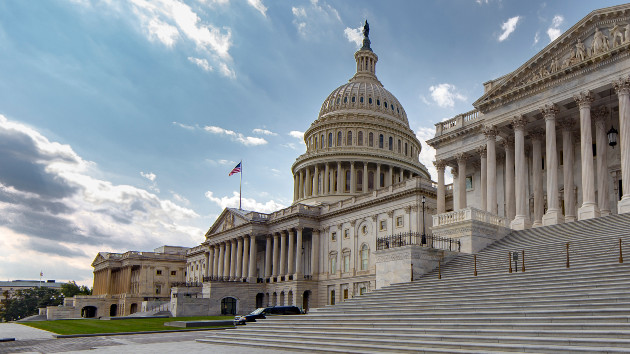
House considers president’s megabill amid GOP divisions

House considers president’s megabill amid GOP divisions
Photo by Mike Kline (notkalvin)/Getty Images

(WASHINGTON) — The House is debating ahead of a key test vote for President Donald Trump’s tax and immigration megabill to send it to the floor for a final vote but it was unclear Wednesday morning if Speaker Mike Johnson has the votes to get it passed.

Johnson faces opposition from factions within his caucus, particularly among fiscal hawks, that puts passage in question. In addition to that, storms Tuesday snarled travel to Washington. In an earlier procedural vote Wednesday, eight Republicans were absent.

With a razor-thin majority, Johnson can afford only three defections if all members are voting and present.

House Majority Leader Steve Scalise cast some doubt that Republicans will succeed today, questioning aloud whether the House will pass the president’s bill on Wednesday.

“We’ll see some time later today if we can get that done,” Scalise told reporters. “So we still have some more conversations with members. Obviously, members have gone through the changes that the Senate made, and you know, some of them take us a little bit backwards. Some of them are a little bit better.”

The House must first pass a rule, which is a procedural motion to advance legislation, to consider final passage of the bill. It is unclear if that will pass.

The House took up the bill Tuesday night after a nail-biter vote in the Senate with Vice President JD Vance casting the tiebreaker vote after it split 50-50. GOP Sens. Thom Tillis, Rand Paul and Susan Collins voted against the measure, along with every Democrat.

The legislation passed the House Rules Committee early on Wednesday with a 7-6 vote.

Republican backers of the Senate bill have touted its roughly $4 trillion in tax cuts and new funding for border security, plus the inclusion of key Trump campaign pledges such as no taxes on tips and overtime.

The legislation also guts Biden-era clean energy initiatives; slashes entitlement health programs like Medicaid and SNAP, which are intended to help the nation’s most vulnerable Americans; and includes a plan to lift the cap on the state and local tax deduction, currently set at $10,000, to $40,000.

The Senate version is projected to add roughly $1 trillion more — and $3.3 trillion in total — to the deficit over the next decade when compared with the version passed by the House in May, according to an estimate from the nonpartisan Congressional Budget Office.

The CBO also found that 11.8 million people could go uninsured over the next decade due to cuts in Medicaid, which emerged as a critical issue among several of the Senate Republican holdouts.

Johnson said Tuesday evening that some members were facing problems getting back to Washington, D.C., after more than 1,200 flights were canceled or delayed across the country because of storms in the eastern U.S.

Nonetheless, Johnson told Fox News’ Sean Hannity on Tuesday night that he expects a vote in the House on Wednesday or Thursday.

“Assuming we have a full House, we’ll get it through the Rules Committee in the morning,” he said. “We’ll move that forward to the floor, and hopefully we’re voting on this by tomorrow or Thursday at latest, depending on the weather and delays and travel and all the rest.”

Johnson and top Republican leaders said in a statement that the House will consider the bill “immediately for final passage” — with renewed intent to put the measure on Trump’s desk by July 4.

“The American people gave us a clear mandate, and after four years of Democrat failure, we intend to deliver without delay,” the leaders said.

“This bill is President Trump’s agenda, and we are making it law. House Republicans are ready to finish the job,” they added.

Trump told ABC News’ Chief White House Correspondent Mary Bruce on Tuesday that he expects the bill “to go very nicely” in the House.

Asked about the House Republicans who were unhappy with the Senate’s version of the legislation, the president said, “Well, I just heard that about the Senate, and the bill just passed, and it tells you there’s something for everyone.”

“I mean, we have — it’s a great bill,” he continued. “There is something for everyone, and I think it’s going to go very nicely in the House. Actually, I think it will be easier in the House than it was in the Senate.”

Trump disputed the CBO’s projection that the bill would cause 11.8 million Americans to lose their insurance.

“I’m saying it’s going to be a very much smaller number than that and that number will be waste, fraud and abuse,” he said, though did not say where he was getting such data or analysis from.

Several House Republicans were at the White House Wednesday morning for meetings as Trump ramped up pressure on his party to pass the bill. Vance arriving as well.

An administration official said the White House is holding multiple meetings on the White House complex with Republicans. The president is expected to engage directly with members throughout the day.

Some of the lawmakers spotted entering the White House included Reps. Jeff Van Drew, Rob Bresnahan, Dusty Johnson, Dan Newhouse, Mike Lawler, Andrew Garbarino. Those lawmakers are part of the Main Street Caucus — a group of lawmakers who bill themselves as “pragmatic” conservatives focused on getting things done.

Vance was also spotted arriving at the White House.

The House process began Tuesday with a meeting of the Rules Committee, which approved the bill by 7-6 after almost 12 hours of discussion. GOP Reps. Ralph Norman and Chip Roy sided with Democrats in voting against the measure in committee.

Roy was among the early critics of the bill, saying he was “not inclined to vote” for the legislation as amended. Roy has previously threatened to withhold support on critical votes, only to ultimately side with the president.

Roy said “the overall deficit number is not good” in the bill the Senate passed, suggesting it violates the House’s budget framework. “It’s front-loaded versus back-loaded, as we all know. I think it got worse. I think SALT got worse. It got more expensive,” he added.

After Tuesday’s Senate vote, Majority Leader John Thune said he and his colleagues had delivered a “strong product” to the House, but also acknowledged there may be more hurdles before the legislation reaches Trump’s desk.

“Well, we’ll see,” Thune said when asked about the bill’s chances. “I mean, you know how hard it was to pass it — I think the House, I appreciate the narrow margins they have over there.”

“I think we took what they sent us and strengthened and improved upon it,” he added. “And so I’m hopeful that now, when it gets sent over there, as they deliberate about how they want to handle it, they’ll find the goals that are necessary to pass it.”

ABC News’ John Helton, Isabella Murray, Mary Bruce and Alex Ederson contributed to this report.

Copyright © 2025, ABC Audio. All rights reserved.

Man arrested for allegedly attacking fellow passenger ‘unprovoked’ on Frontier flight

Man arrested for allegedly attacking fellow passenger ‘unprovoked’ on Frontier flight
Miami Dade Corrections & Rehabilitation

(MIAMI) — A man was arrested and charged after allegedly attacking a fellow passenger on a Frontier fight “unprovoked,” according to the Miami Dade Sheriff’s Office.

Ishaan Sharma, 21, has been charged with battery and is facing a $500 bond, according to jail records.

Miami Dade Sheriff’s Office deputies responded to a report of a battery that occurred on a Frontier Airlines Flight coming into Miami International Airport on Tuesday, according to an arrest affidavit.

On the scene, the victim told police the attack was “unprovoked” and occurred when Sharma allegedly “approached him and grabbed his neck while returning to his assigned seat,” according to the affidavit.

A physical altercation then occurred between the two passengers, with Sharma suffering a “visible laceration to his left eyebrow which required medical assistance,” the affidavit said.

The victim only suffered superficial cuts and refused medical assistance on the scene.

Sharma was taken into custody and transported to Turner Guilford Knight Correctional Center after being cleared at Jackson West Hospital.

Copyright © 2025, ABC Audio. All rights reserved.
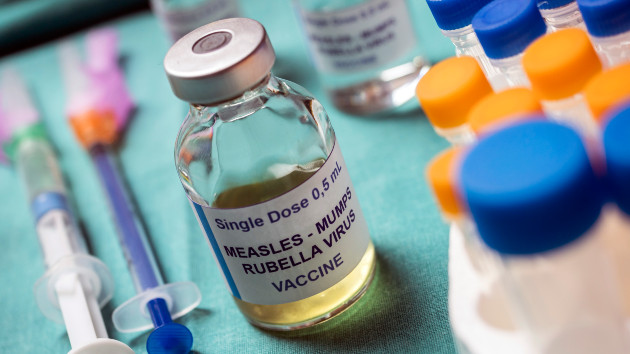
Wyoming confirms 1st case of measles in 15 years as infections near 30-year high in US

Wyoming confirms 1st case of measles in 15 years as infections near 30-year high in US
DIGICOMPHOTO/SCIENCE PHOTO LIBRARY/Getty Images

(NEW YORK) — Wyoming is reporting its first measles case in 15 years as the infectious disease continues to spread across the United States.

The state’s Department of Health said on Tuesday that it had confirmed a case in an unvaccinated child in Natrona County, which is located in the central part of the state and includes the town of Casper.

The pediatric case is the first reported in Wyoming since 2010, according to the WDH.

It’s unclear how the child became sick, and no other identifying details were provided including name, age or sex.

A release from the WDH said the child was infectious while in the emergency department waiting room at Banner Wyoming Medical Center in Casper on Thursday, June 24, from 11 a.m. MT to 1 p.m. MT and on Friday, June 25, from 12:55 p.m. MT to 2:55 p.m. MT.

The WDH said it is working with Banner Wyoming Medical Center to notify individuals who may have been exposed to measles during those times.

“We are asking individuals who were potentially exposed to self-monitor for measles symptoms for 21 days past the exposure date and consider avoiding crowded public places or high-risk settings such as daycare centers,” Dr. Alexia Harrist, state health officer with the WDH, said in the release.

Wyoming is the 37th state to confirm a case of measles this year as infections near a 30-year high in the U.S.

As of Wednesday morning, a total of 1,227 cases have been confirmed, according to data from the Centers for Disease Control and Prevention (CDC).

The U.S. is currently on track to surpass the 1,274 cases seen in 2019 and is expected to see the highest number of cases since 1992.

There have been three confirmed deaths so far this year, two among unvaccinated children in Texas and one among an unvaccinated adult in New Mexico.

Among the nationally confirmed cases, the CDC says 95% are among people who are unvaccinated or whose vaccination status is unknown.

Meanwhile, 2% of cases are among those who have received one dose of the measles, mumps and rubella (MMR) vaccine and 3% of cases are among those who received the recommended two doses, according to the CDC.

“Measles is one of the most contagious diseases we know, but it is preventable,” Harrist said in the release. “The MMR vaccine is safe and highly effective, providing long-lasting protection. Two doses of MMR vaccine are about 97% effective in preventing measles, and we recommend that all Wyoming residents ensure they and their children are up to date on MMR vaccinations.”

As of 2023, the latest year for which data is available, at least 93% of kindergartners in Wyoming had received at least one MMR dose, including 96% of kindergartners in Natrona County, where the new case was confirmed, according to the WDH.

Copyright © 2025, ABC Audio. All rights reserved.

US freezes air defense and precision weapons shipment to Ukraine, White House says

US freezes air defense and precision weapons shipment to Ukraine, White House says
Roman Chop/Global Images Ukraine via Getty Images

(LONDON) — The White House confirmed on Tuesday that President Donald Trump’s administration froze the shipment of some air defense and precision guided weapons that were on track to be sent to Ukraine.

Officials said the decision followed an assessment of U.S. stockpiles.

“This decision was made to put America’s interests first following a DOD review of our nation’s military support and assistance to other countries across the globe,” said White House spokesperson Anna Kelly.

“The strength of the United States Armed Forces remains unquestioned — just ask Iran,” she added in a statement sent to reporters.

Politico first reported the decision. It was not immediately clear whether other shipments of weapons would be released or how much was paused.

The Pentagon declined to provide additional details about the decision.

“America’s military has never been more ready and more capable thanks to President Trump and Secretary Hegseth’s leadership,” Chief Pentagon Spokesman Sean Parnell said in a statement.

“Our service members are fully equipped to deter against any threat and the Senate’s recent passage of the One Big Beautiful Bill ensures that our weapons and defense systems are modernized to protect against 21st century threats for generations to come.”

Pentagon policy chief Elbridge Colby provided an updated statement Wednesday saying the military is continuing to provide Trump “with robust options to continue military aid to Ukraine, consistent with his goal of bringing this tragic war to an end.”

Mykhailo Podolyak — a top adviser to Ukraine’s presidential office — denied that the U.S. will end its supply air defenses to Ukraine. Speaking on Ukrainian television on Wednesday, Podolyak said negotiations are ongoing on how to provide them, including potential purchases by Kyiv.

“America will not abandon its support for Ukraine in protecting civilians from Russian strikes,” Podolyak said. “There are enough anti-missile systems and missiles for them in U.S. warehouses.”

“Negotiations on their supply to Ukraine, including on a commercial basis, are ongoing,” Podolyak said.

Ukraine’s Defense Ministry also commented on the reports, saying in a post to Telegram it “has not received any official notification regarding the suspension or revision of delivery schedules for the agreed defense assistance.” The ministry said it requested a phone call with its U.S. counterparts “to further clarify the details.”

“For Ukraine, it is critically important to maintain resilience, continuity, and predictability in the provision of the agreed defense assistance — especially in strengthening our air defense systems,” the ministry said.

“We are grateful to the United States for all its support and highly value the efforts of our American partners aimed at achieving genuine peace. We emphasize that the path to ending the war lies through consistent and collective pressure on the aggressor, as well as through continued support for Ukraine.”

Oleksandr Merezhko, a member of the Ukrainian parliament representing President Volodymyr Zelenskyy’s party and the chair of the body’s foreign affairs committee, told ABC News that the reports are “concerning, of course, but I hope that it’s some kind of technical delay.”

“If not, then it might have negative impact on our defense capabilities — especially when it comes to air defense,” Merezhko added. Any hint of a delay in aid, the lawmaker warned, would “embolden” Russian President Vladimir Putin “to intensify bombardments.”

The military shipment was frozen comes just a week after Trump signaled his openness to selling Patriot missiles to Ukraine.

After meeting with Zelenskyy at the NATO summit in the Netherlands, Trump said, “They do want to have the anti-missile, missiles,” Trump said of Ukraine. “As they call them the Patriots, and we’re going to see if we can make some available.”

“You know, they’re very hard to get. We need them too. We were supplying them to Israel, and they’re very effective, 100% effective. Hard to believe how effective,” Trump said.

“As far as money going, we’ll see what happens. There’s a lot of spirit,” Trump added.

The Patriot system is especially valuable to Ukraine, having been used to down Russian ballistic missiles, drones and aircraft since arriving in the country in the spring of 2023.

Russia is intensifying its near-nightly drone and missile attacks on cities and targets all across Ukraine.

June saw Moscow set a new monthly record for the number of long-range drones and missiles launched into Ukraine — 5,438 drones and 239 missiles — according to figures published by the Ukrainian air force.

The U.S. remained the most generous single contributor of aid to Ukraine as of April 2025, according to the Kiel Institute for the World Economy, a research group based in Germany that tracks support from foreign governments toward Ukraine.

The U.S. has contributed around $130 billion in total aid to Ukraine since 2022, of which $74 billion is military assistance. Combined, European Union nations have contributed more overall — $157 billion — but less than the U.S. on the military front, at slightly less than $73 billion.

Ukraine’s budget for military and security spending approved by lawmakers in late 2024 was around $53.7 billion.

Trump has repeatedly raised the prospect of curtailing or ending U.S. military support for Kyiv, both on the campaign trail and since returning to office in January. A nine-month pause on U.S. aid in 2024, due to a gridlocked Congress, forced Kyiv to consider a future without American assistance.

Those fears materialized in March 2025 when Trump imposed a week-long freeze on all American military aid and intelligence sharing with Ukraine. The flow soon resumed, but Trump’s frustration has only deepened as U.S.-brokered peace talks floundered.

The administration approved a $50 million sale of military aid to Ukraine in April, but only after Kyiv signed off on a controversial minerals sharing deal.

The White House is also yet to use some $3.9 billion earmarked to fund military aid to Ukraine — to be drawn from existing U.S. stocks, meaning it can be delivered quickly — that former President Joe Biden was not able to spend before the end of his term.

Zelenskyy said early this year that American aid accounts for 30% of Ukrainian weaponry. Though other estimates go as low as 20%, Washington remains a key benefactor — particularly for advanced weapons systems for which Ukraine has no domestically- or European-produced analogues.

-ABC News’ Anne Flaherty, Kelsey Walsh, Molly Nagle, Patrick Reevell and Ellie Kaufman contributed to this report.

Copyright © 2025, ABC Audio. All rights reserved.

Bryan Kohberger due in court today to plead guilty in Idaho college killings, sparing him death penalty

Bryan Kohberger admits to Idaho college killings in plea hearing
Kai Eiselein-Pool/Getty Images

(MOSCOW, Idaho) — Bryan Kohberger is expected to plead guilty on Wednesday to all counts in the killings of four University of Idaho students, despite the former criminology student’s initial eagerness to be exonerated in the high-profile case.

Kohberger — who was charged with four counts of first-degree murder and one count of burglary in connection with the 2022 killings of roommates Kaylee Goncalves, Madison Mogen and Xana Kernodle and Kernodle’s boyfriend, Ethan Chapin — will be spared the death penalty as a part of the plea, according to a letter sent to victims’ relatives.

He’ll be sentenced to four consecutive life sentences on the murder counts and the maximum penalty of 10 years on the burglary count, according to the agreement.

Kohberger will also waive all right to appeal, the agreement said.

The plea comes just weeks before Kohberger’s trial was to get underway. Jury selection was set to start on Aug. 4 and opening arguments were scheduled for Aug 18.

Prosecutors — who met with victims’ families last week — called the plea a “sincere attempt to seek justice” for the families.

But the dad of 21-year-old victim Kaylee Goncalves is blasting the move, accusing the prosecutors of mishandling and rushing the plea deal.

“At the least, justice starts with an interview of the families to ask them what justice is. And we didn’t get that,” Steve Goncalves told ABC News.

The Goncalves family told ABC News they contacted prosecutors on Tuesday asking for the terms of Kohberger’s deal be amended to include additional requirements: they asked for a full confession and for the location of the alleged murder weapon — described by authorities as a KA-BAR-style hunting knife — which has never been found.

The family said prosecutors turned down the request, explaining that an offer already accepted by the defendant could not ethically be changed. The family said the prosecutors indicated they’re asking the court to allow the prosecution to include a factual summary of the evidence against Kohberger at Wednesday’s hearing, and that more information about Kohberger’s actions would be presented at his sentencing hearing.

The family of 20-year-old victim Ethan Chapin said in a brief statement that they’ll be in Boise on Wednesday “in support of the plea bargain.”

Idaho law requires the state to afford violent crime victims or their families an opportunity to communicate with prosecutors and to be advised of any proposed plea offer before entering into an agreement, but the ultimate decision lies solely with the prosecution.

Prosecutors anticipate sentencing to take place in late July, as long as Kohberger enters the guilty plea as expected on Wednesday, according to a letter prosecutors sent to victims’ families. In the event Kohberger fails to enter the pleas, prosecutors indicated they are ready to proceed to trial in August, the letter said.

Attorneys for the Kohberger family said in a statement on Tuesday, “The Kohbergers are asking members of the media for privacy, respect, and responsible judgment during this time. We will continue to allow the legal process to unfold with respect to all parties.”

Prosecutors allege Kohberger fatally stabbed Goncalves, Mogen, Kernodle and Chapin in the students’ off-campus house in the early hours of Nov. 13, 2022.

Two roommates in the house survived, including one roommate who told authorities in the middle of the night she saw a man walking past her in the house, according to court documents. The roommate described the intruder as “not very muscular, but athletically built with bushy eyebrows,” according to the documents.
University at the time of the crime, was arrested at his parents’ home in Pennsylvania in December 2022.

Kohberger, who was studying for a Ph.D. in criminology at nearby Washington State University at the time of the crime, was arrested at his parents’ home in Pennsylvania in December 2022.

Defense lawyers have said Kohberger was driving around alone on the night of the murders.

ABC News chief legal analyst Dan Abrams said Kohberger may have agreed to the plea because the defense has lost numerous arguments to the judge.

“The defense had tried to get the death penalty taken off the table again and again, and they kept losing. Most recently, they tried to point the finger at other possible suspects,” but the judge rejected that argument, citing a lack of evidence, Abrams told “Good Morning America” on Tuesday.

With the prosecution’s DNA evidence, video evidence and cellphone records, the defense was faced with “a pretty bad case in the end,” Abrams said.

A key piece of evidence against Kohberger is his DNA, which was found on a knife sheath left by one of the victim’s bodies, prosecutors said. Kohberger’s defense attorneys sought to exclude DNA evidence, but the judge denied their request.

“You put it all together and it was tough to figure out exactly where the defense was gonna go with this,” Abrams said.

Copyright © 2025, ABC Audio. All rights reserved.

House begins work on Trump megabill, Johnson says vote could come Wednesday

House considers president’s megabill amid GOP divisions
Photo by Mike Kline (notkalvin)/Getty Images

(WASHINGTON) — After a nail-biter vote in the Senate, the House took up President Donald Trump’s tax and immigration megabill on Tuesday, with House Speaker Mike Johnson suggesting a vote could be held as early as Wednesday.

Trump’s “One Big Beautiful Bill” was approved by the Senate on Tuesday, with Vice President JD Vance casting a tie-breaking vote to get the legislation across the line and send it to the House for consideration.

GOP Sens. Thom Tillis, Rand Paul and Susan Collins voted against the measure, along with every Democrat, putting the vote at 50-50 before Vance’s intervention.

The legislation passed the House Rules Committee early on Wednesday with a 7-6 vote and will be debated on the floor after legislative business begins at 9 a.m.

Trump’s bill is expected to face some opposition in the House, particularly among fiscal hawks.

Republican backers of the Senate bill have touted its roughly $4 trillion in tax cuts and new funding for border security, plus the inclusion of key Trump campaign pledges such as no taxes on tips and overtime.

The legislation also guts Biden-era clean energy initiatives; slashes entitlement health programs like Medicaid and SNAP, which are intended to help the nation’s most vulnerable Americans; and includes a plan to lift the cap on the state and local tax deduction, currently set at $10,000, to $40,000.

The Senate version is projected to add roughly $1 trillion more — and $3.3 trillion in total — to the deficit over the next decade when compared with the version passed by the House in May, according to an estimate from the nonpartisan Congressional Budget Office.

The CBO also found that 11.8 million people could go uninsured over the next decade due to cuts in Medicaid, which emerged as a critical issue among several of the Senate Republican holdouts.

With a razor-thin majority, Johnson can afford only three defections if all members are voting and present.

Johnson also said Tuesday evening that some members were facing problems getting back to Washington, D.C., after more than 1,200 flights were canceled or delayed across the country because of storms in the eastern U.S.

Nonetheless, Johnson told Fox News’ Sean Hannity on Tuesday night that he expects a vote in the House on Wednesday or Thursday.

“Assuming we have a full House, we’ll get it through the Rules Committee in the morning,” he said. “We’ll move that forward to the floor, and hopefully we’re voting on this by tomorrow or Thursday at latest, depending on the weather and delays and travel and all the rest.”

Having passed the House Rules Committee, the legislation will be subject to a debate and a vote on the rule, which could occur as early as Wednesday morning.

The House will then move to a vote on final passage, after which the bill will be sent to Trump’s desk.

Johnson and top Republican leaders said in a statement that the House will consider the bill “immediately for final passage” — with renewed intent to put the measure on Trump’s desk by July 4.

“The American people gave us a clear mandate, and after four years of Democrat failure, we intend to deliver without delay,” the leaders said.

“This bill is President Trump’s agenda, and we are making it law. House Republicans are ready to finish the job,” they added.

Trump told ABC News’ Chief White House Correspondent Mary Bruce on Tuesday that he expects the bill “to go very nicely” in the House.

Asked about the House Republicans who were unhappy with the Senate’s version of the legislation, the president said, “Well, I just heard that about the Senate, and the bill just passed, and it tells you there’s something for everyone.”

“I mean, we have — it’s a great bill,” he continued. “There is something for everyone, and I think it’s going to go very nicely in the House. Actually, I think it will be easier in the House than it was in the Senate.”

Trump disputed the CBO’s projection that the bill would cause 11.8 million Americans to lose their insurance.

“I’m saying it’s going to be a very much smaller number than that and that number will be waste, fraud and abuse,” he said, though did not say where he was getting such data or analysis from.

The House process began Tuesday with a meeting of the Rules Committee, which approved the bill by 7-6 after almost 12 hours of discussion. GOP Reps. Ralph Norman and Chip Roy sided with Democrats in voting against the measure in committee.

Roy was among the early critics of the bill, saying he was “not inclined to vote” for the legislation as amended. Roy has previously threatened to withhold support on critical votes, only to ultimately side with the president.

Roy said “the overall deficit number is not good” in the bill the Senate passed, suggesting it violates the House’s budget framework. “It’s front-loaded versus back-loaded, as we all know. I think it got worse. I think SALT got worse. It got more expensive,” he added.

After Tuesday’s Senate vote, Majority Leader John Thune said he and his colleagues had delivered a “strong product” to the House, but also acknowledged there may be more hurdles before the legislation reaches Trump’s desk.

“Well, we’ll see,” Thune said when asked about the bill’s chances. “I mean, you know how hard it was to pass it — I think the House, I appreciate the narrow margins they have over there.”

“I think we took what they sent us and strengthened and improved upon it,” he added. “And so I’m hopeful that now, when it gets sent over there, as they deliberate about how they want to handle it, they’ll find the goals that are necessary to pass it.”

ABC News’ John Helton, Isabella Murray, Mary Bruce and Alex Ederson contributed to this report.

Copyright © 2025, ABC Audio. All rights reserved.