
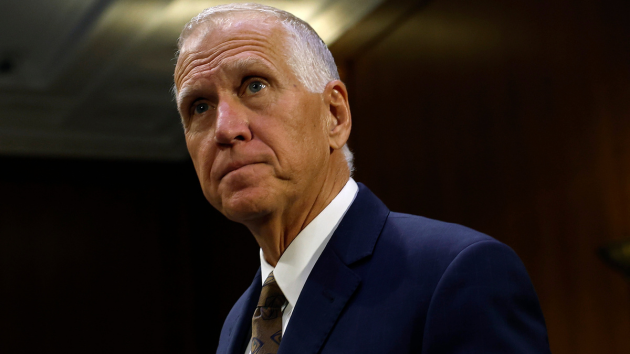
Lara Trump, Roy Cooper in the mix as Tillis retirement ignites fierce North Carolina Senate race

Lara Trump, Roy Cooper in the mix as Tillis retirement ignites fierce North Carolina Senate race
Photo by Kevin Dietsch/Getty Images

(WASHINGTON) — Republican Sen. Thom Tillis’ decision not to seek reelection is jolting what was already expected to be a fierce battle in North Carolina to either challenge him or flip his seat, which will now be wide open in 2026.

Without Tillis on the ballot, Republicans have been floating their ideal candidate to hold onto their slim majority in the Senate, many of whom are less critical of President Donald Trump than Tillis, including allies Michael Whatley, chairman of the GOP, and the president’s daughter-in-law, Lara Trump.

A Republican National Committee official waved ABC News off the notion that Whatley, who used to lead the North Carolina GOP, was leaving his post, saying that Whatley currently has no plans to look at another office for the time being.

“Chairman Whatley is focused on serving the president and working with his team to protect and expand our Republican majorities in the midterms,” the official, who was granted anonymity to discuss deliberations, said.

Lara Trump, who also faces mounting external pressure to run in her native North Carolina, told Fox News Radio on Monday that she would certainly consider the possibility.

“North Carolina is my home state. It’s where I was born and raised. It made me the person I am today…if it works out and the timing works, and it works out for my family, it is absolutely something that I would consider doing,” she explained.

President Trump told reporters on Tuesday that he’d be excited for his daughter-in-law to run: “Somebody that would really be great is Lara. She grew up there … Lara Trump, I mean, that would always be my first choice.”

But he added later that he hasn’t talked to her directly about the potential bid, and that other Republicans could be successful, too.

“I don’t know who the candidates are going to be. I think you can have one of the congressmen step up,” he said.

Lara Trump, who ruled out a Senate run in Florida earlier in the year, would likely be the frontrunner if she entered. Other potential contenders, like Rep. Pat Harrigan said Tuesday in a post on X that he would back Lara Trump if she chose to run.

“There’s lots of excitement around the 2026 Senate race, but let me be crystal clear about something: if @LaraLeaTrump enters this race, I’ll be the first to endorse her and the first to fight for her victory,” Harrigan wrote.

In addition to Trump, other North Carolina Republicans who could be considering Senate bids including Reps. Greg Murphy and Addison McDowell, sources familiar with the situation told ABC News. North Carolina Rep. Richard Hudson, who chairs the campaign arm of House Republicans, said on Tuesday he would not run.

Regardless of the candidate, the North Carolina GOP said in a statement it feels confident that another Republican will take Tillis’ place.

“Senator Tillis has announced his decision to not seek re-election to the U.S. Senate and we wish him well in his retirement from public service. As we move forward into the midterm elections, we will hold this seat for Republicans in 2026 and continue to deliver on President Trump’s America First priorities,” North Carolina GOP Chairman Jason Simmons said.

Democrats disagree and find Tillis’ retirement an opportunity to make up for ground the lost in 2024. Former U.S. Rep. Wiley Nickel has already announced a run, and wrote on X on Sunday, “Thom Tillis is out. No matter which MAGA loyalist Trump picks, I’m the only Democrat in this race and I’m ready to win.”

Yet the candidate atop North Carolina Democrats’ wish list is their former governor, Roy Cooper. A spokesperson for Cooper told ABC News he’s strongly considering a run and will announce his decision “in the coming weeks.

Anderson Clayton, the chair of the North Carolina Democratic Party, told ABC News in an interview Monday that as she has been “going around the state and going around all my different counties, what I’ve heard the most from folks is that they would love to see Governor Cooper get in this race.”

But Clayton, even as she praised Cooper’s strong approval ratings and the desire among many for him to run, pointed to a “bench” of others she said were strong candidates, including Nickel and Lt. Gov. Rachel Hunt. A spokesperson for Hunt’s lieutenant governor campaign told ABC News that Hunt believes Cooper will run but that “if the field shifts, she’ll give it thoughtful consideration.”

Clayton said she believes Democrats will handily flip the seat no matter who is on the ticket.

“I think that the Republican Party is running away from Thom Tillis, which is what we saw from the announcement [Sunday] … We immediately saw the president deciding that he was going to find a primary challenger for Tillis. And I think it shows that North Carolina Democrats are in a prime position to be able to take this seat, especially now that it’s an open seat,” she said.

She said the party had also seen an influx in donations and volunteers since Tillis announced his retirement.

Cooper would be “a real powerhouse” if he decided to enter the race, Davidson College political science professor Susan Roberts told ABC News. She contrasted Cooper with the progressive New York Assembly member Zohran Mamdani, the presumptive Democratic primary nominee for mayor of New York City.

“[Cooper] may not be the shiniest object [or] have the campaign that helped Mamdani in the New York mayor’s primary, he may not have that shiny social media presence, but I think he has the gravitas to be a good candidate, and I think he would know how to govern,” Roberts said.

Mac McCorkle, a professor at Duke University’s Sanford School of Public Policy, said Lara Trump’s powerful name recognition could clear the Republican primary field.

“The other Republicans who were thinking about it are kind of no-names,” McCorkle said. “I think it’s Lara Trump’s to refuse.”

He said while less-known candidates might need to take positions heavily to the right to win over “the MAGA base” in the primary, Lara Trump’s connection to President Trump could help her gain support without having to do so, making her more appealing to moderate voters later on in the general election.

On the other hand, Jason Roberts, a political science professor at the University of North Carolina at Chapel Hill, saw Lara Trump’s family connection to the president as a potential disadvantage.

“Midterm elections typically don’t go well for the president’s party, because the out-party is fired up. The in-party typically doesn’t have as high a turnout,” Roberts said. “What successful presidential party candidates do in a midterm is they try to distinguish themselves from that president. And if you’re running a candidate whose last name is Trump, that’s going to be really, really difficult to do.”

ABC News’ Hannah Demissie and Benjamin Siegel contributed to this report.

Copyright © 2025, ABC Audio. All rights reserved.

Trump again brings up the idea of deporting US citizens for crimes

Trump again brings up the idea of deporting US citizens for crimes
Photo by Joe Raedle/Getty Images

(WASHINGTON) — President Donald Trump continued on Tuesday to float his idea, which some legal experts say is unconstitutional, to deport U.S. citizens who commit crimes.

Speaking to the press during a tour of a migrant detention center in the Florida Everglades, the president repeated claims that there are many immigrants who are now citizens and have been committing serious crimes.

“They’re not new to our country. They’re old to our country. Many of them were born in our country. I think we ought to get them the hell out of here, too, if you want to know the truth,” he said. “So maybe that will be the next job.”

The proposal came weeks after the Assistant Attorney General Brett Shumate — a Trump appointee — released a memo giving U.S. attorneys wide discretion to decide when to pursue the denaturalization process to “advance the Administration’s policy objectives.”

Some of the cases U.S. attorneys should pursue are those against individuals who have engaged in torture, war crimes, human trafficking and human rights violations, the memo says.

Legal experts have warned that Trump’s proposals are unconstitutional claiming they violate the Eighth Amendment, which prohibits cruel and unusual punishment. The issue has not come before the courts yet.

Amanda Frost, a professor at the University of Virginia School of Law, told ABC News in April that the administration could try to target naturalized U.S. citizens, who can lose their immigration status if they’ve committed treason or falsified information during their naturalization process. However, she said those instances are rare.

“If someone’s a naturalized citizen, there could be an effort to denaturalize that person and deport them,” Frost said. “But then it would have to be that they committed some sort of fraud or error in their naturalization process. An unrelated crime could not be the basis for denaturalizing and deporting somebody.”

Trump acknowledged that he didn’t know if deporting U.S. citizens who are convicted of crimes is legal.

“We’ll have to find that out legally. I’m just saying if we had the legal right to do it, I would do it in a heartbeat,” he added. “I don’t know if we do or not, we’re looking at that right now.”

ABC News’ Alexandra Hutzler contributed to this report.

Copyright © 2025, ABC Audio. All rights reserved.

Woman allegedly leaves over 100 cats inside U-Haul, arrested: Police

Woman allegedly leaves over 100 cats inside U-Haul, arrested: Police
Merced County Sheriff’s Office

(SANTA NELLA, Calif.) — A woman was arrested after leaving over 100 cats inside a U-Haul in a Southern California parking lot, according to the Merced County Sheriff’s Office.

Jeannie Maxon, 69, was arrested on Sunday after deputies were dispatched to a parking lot of a Taco Bell in Santa Nella, California, to “check on the welfare of several cats in a U-Haul van,” the sheriff’s office said in a statement on Monday.

Once on the scene, the deputy observed “at least 20 cats in distress” through the window of the vehicle, officials said.

Animal control then responded to the scene and located 106 “extremely emaciated cats, as well as 28 deceased cats” in the vehicle without food or water, officials said.

Photos from the scene show the felines pressed against the front windshield of the van, with others found in cardboard boxes inside the vehicle.

All of the cats — which ranged from one week to 8 years old — were seized and taken to the Merced County Animal Shelter, officials said.

Once the cats are medically cleared by veterinary staff, they will be available for adoption, officials said.

Maxon, who is from Long Beach, California, was charged with 93 counts of animal cruelty and booked into the Merced County Jail.

The sheriff’s office said the investigation remains active and they will provide updates regarding the adoption process of the cats.

Officials reminded the public of the dangers of keeping an animal inside an unattended vehicle, especially on a summer day.

“On a warm day, temperatures inside a car can soar to extreme levels in just a few minutes, even with the windows open. Please ensure that when you’re traveling with your pet, they’re provided with a cool place to stay, offering plenty of shade, lots of water and food,” the sheriff’s office said in a statement.

It is unclear whether Maxon remains in custody as of Tuesday or whether she has an attorney that can speak on her behalf.

Copyright © 2025, ABC Audio. All rights reserved.

Woman killed when tree falls on car in Delaware as East Coast storms intensify

Woman killed when tree falls on car in Delaware as East Coast storms intensify
WPVI

(WILMINGTON, Del.) — A severe thunderstorm turned deadly Monday night in Wilmington, Delaware, when a falling tree killed a 79-year-old woman riding in a car, Delaware State Police said.

Meteorologists warn the storm marks the beginning of a dangerous weather pattern along the Eastern Seaboard.

The crash happened about 10:08 p.m. on Lancaster Pike when the storm caused a tree to fall into the path of an SUV, according to state police. The driver, a 79-year-old man from Newark, Delaware, tried to swerve but couldn’t avoid the collision, police said.

The driver was taken to a hospital with serious injuries, but his female passenger, also from Newark, died at the scene, police said. Authorities are withholding the victim’s name until relatives are notified.

The incident came as powerful storms swept through the region, part of a broader weather system that continues to threaten more than 30 million Americans along the I-95 corridor.

The National Weather Service reported a weak tornado touched down near Omar, Delaware, on Monday afternoon, damaging only a small patch of trees.

The dangerous weather pattern intensified early Tuesday when southeastern Pennsylvania declared a flash flood emergency after 4 to 6 inches of rain fell in 10 hours.

Multiple water rescues were required in the Pennsylvania counties of Lancaster and Lebanon, particularly near Mount Joy and Manheim.

The severe weather threat is ramping back up Tuesday, with damaging winds and flash flooding remaining the primary concerns.

The threat zone spans from central Virginia to New York City, including major metropolitan areas like Washington, D.C., Baltimore, and Philadelphia.

The storms are causing significant travel disruptions. As of 11:10 a.m. Tuesday, airlines canceled 623 flights nationwide, with more cancellations expected throughout the afternoon.

Officials warn that ground stops and delays are likely at major airports along the I-95 corridor, particularly in Philadelphia, Washington, D.C., and New York.

Delaware State Police continue to investigate Monday night’s fatal crash and urge witnesses to contact the department or Delaware Crime Stoppers at 1-800-847-3333.

For those affected by the tragedy, the Delaware State Police Victim Services Unit offers 24-hour support through their hotline: 1-800-VICTIM-1 (1-800-842-8461).

Copyright © 2025, ABC Audio. All rights reserved.
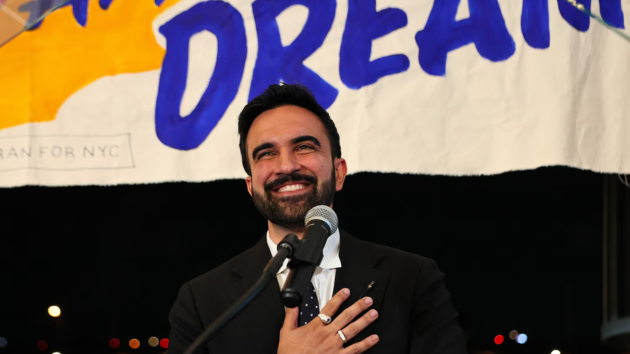
Trump falsely questions Zohran Mamdani’s citizenship, threatens to arrest him over ICE operations

Trump falsely questions Zohran Mamdani’s citizenship, threatens to arrest him over ICE operations
Michael M. Santiago/Getty Images

(WASHINGTON) — President Donald Trump threatened New York state lawmaker Zohran Mamdani with arrest if the presumptive Democratic nominee for New York City mayor defies Immigration and Customs Enforcement operations.

The president also continued to allege the 33-year-old Democratic socialist is a “communist” while talking to reporters Tuesday at the new so-called “Alligator Alcatraz” migrant detention center in Florida’s Everglades.

When asked by a reporter what his message is to Mamdani — after he said in a victory speech following the New York City Democratic mayoral primary that he would “stop masked ICE agents from deporting our neighbors” — Trump responded, “Well then, we’ll have to arrest him.”

“Look, we don’t need a communist in this country, but if we have one, I’m going to be watching over him very carefully on behalf of the nation,” Trump continued.

Trump also referenced false claims that Mamdani is in the country illegally.

“A lot of people are saying he’s here illegally,” Trump said. “We’re going to look at everything. Ideally, he’s going to turn out to be much less than a communist. But right now he’s a communist. That’s not a socialist.”

Born in Uganda, Mamdani has lived in the United States since he was 7 years old and became a naturalized citizen in 2018.

As he departed the White House earlier Tuesday, Trump continued his attack on Mamdani in the wake of the primary, calling him a “total nut job” and “bad news” and reiterating his false claim the politician is a communist.

“I think I’m gonna have a lot of fun with him, watching him, because he has to come right through this building to get his money,” Trump said after threatening to withhold funding from New York if Mamdani doesn’t “do the right thing.”

Mamdani responded to Trump in a statement on Tuesday, calling his remarks “intimidation.”

“His statements don’t just represent an attack on our democracy but an attempt to send a message to every New Yorker who refuses to hide in the shadows: if you speak up, they will come for you. We will not accept this intimidation,” Mamdani said.

When asked about comments from Trump on social media calling him a “Communist Lunatic” in an interview with ABC News last week, Mamdani shrugged off the epithet, saying he’d encourage Trump to learn about his policies, and that he’d work with Trump on affordability but would resist the president’s deportation plans.

“The next mayor of New York City will have to work with the Trump administration. Are you willing to do that? Will you do that?” ABC News Senior Political Correspondent Rachel Scott asked.

“I will work with the Trump administration when it is to the benefit of New Yorkers,” Mamdani said. “My approach will never be reflexive, whether in agreement or opposition, but if it comes at the expense of the New Yorkers that I’m running to serve, then, no, I will not be working with the administration on harming the people that I look to represent.”

Mamdani also responded to Trump’s attacks during an interview on NBC’s “Meet the Press” on Sunday. Asked how he responds to being called a communist, Mamdani said, “I am not.”

“I have already had to start to get used to the fact that the president will talk about how I look, how I sound, where I’m from, who I am. Ultimately because he wants to distract from what I’m fighting for,” Mamdani said. “And I’m fighting for the very working people that he ran a campaign to empower that he has since then betrayed.”

The New York City Board of Elections released the results of the ranked-choice voting tabulation on Tuesday, one week after initial results that only reflected voters’ first choice candidates showed Mamdani with around 44% of the vote and Cuomo with around 36%.

Mamdani now leads former Gov. Andrew Cuomo by 12 points, 56% to 44%, in the Democratic primary, according to the updated results.

These may not be the final margins, as cured ballots come in before the Board of Elections certifies the election on July 15, though subsequent updates are not expected to change who is on top. Current Mayor Eric Adams will run as an independent, while Cuomo will also run as an independent on the “Fight and Deliver” ballot line, a source close to the campaign confirmed to ABC News. Curtis Sliwa, who also ran for mayor against Adams four years ago, will be the Republican candidate.

The New York City mayoral election is scheduled to occur on Nov. 4.

ABC News’ Oren Oppenheim, Brittany Shepherd and Lalee Ibssa contributed to this report.

Copyright © 2025, ABC Audio. All rights reserved.

USAID programs now being run by State Department as agency ends operations

USAID programs now being run by State Department as agency ends operations
Ezra Acayan/Getty Images

(WASHINGTON) — The State Department is taking over programs previously run by the U.S. Agency for International Development (USAID) in a move officials say will restructure U.S. foreign assistance and reorient it toward national interests, as a new study finds the cuts could contribute to millions of deaths by 2030.

Secretary of State Marco Rubio announced in a post on Substack on Tuesday that USAID — which oversaw foreign aid, disaster relief and international development programs — would no longer be providing assistance to other countries.

“As of July 1st, USAID will officially cease to implement foreign assistance,” Rubio wrote. “Foreign assistance programs that align with administration policies — and which advance American interests — will be administered by the State Department, where they will be delivered with more accountability, strategy, and efficiency.”

A senior official at the State Department, who briefed reporters on Tuesday, said the “U.S. foreign assistance policy” would aim to be “linked up diplomatically” with the foreign policy agenda of the Trump administration and U.S. partners.

“Once we get through this transition and the programs are over here, I think the next few months are going to help indicate where we think our vision of the future is,” the official said. “We do not foresee a gap operationally.”

The foreign aid agency was among the first government agencies the Department of Government Efficiency, formerly run by Elon Musk, slashed in its effort to scale back the size of the federal government.

The Trump administration sought to dismantle USAID, terminating thousands of contracts and placing workers on leave.

In a statement in February, the State Department said “significant portions of USAID funding are not aligned with the core national interests of the United States.”

In recorded farewell remarks shared privately with USAID staff on Monday, former Presidents George W. Bush and Barack Obama criticized the decision to gut the agency.

Obama calling the dismantling of USAID a tragedy and a “colossal mistake,” according to The Associated Press, which reviewed portions of the video. Bush focused on PEPFAR — the global health initiative launched under his administration to address the HIV/AIDS epidemic — which is credited for saving 25 million lives, the AP reported.

Humanitarian aid organizations said they have been witnessing the effects of USAID cuts, with programs shutting down that helped communities experiencing poverty and conflict.

“It’s an extremely sad day,” Bob Kitchen, vice president of emergency and humanitarian action with the International Rescue Committee (IRC), told ABC News. “I had the pleasure of working with hundreds of committed USAID staff around the world over the last couple of decades. They’ve done amazing work and funded amazing projects, and it’s sad to see like that’ll come predominantly to an end.”

Kitchen said IRC has lost several of its grants and that 40% of its funding came from USAID. As a result, he said several IRC programs are now closed or will soon close, including water and sanitation programs, mobile health clinics and school programs.

“What that looks like … is many thousands of girls who no longer can go to any form of school [In Afghanistan] as a result of the closure of this program,” Kitchen said. “The one that really hits me is we have somehow found ways to keep thousands of girls going to school, informal schools, underground schools. That has all stopped.”

USAID’s closure comes amid a study published in The Lancet on Monday that found cuts to USAID could cause more than 14 million additional deaths by 2030.

Using models, the authors estimated the impact of USAID funding on deaths from 2001 to 2021. The team then used models to estimate effects up to five years from now.

The study found that more than 91 million deaths were prevented by USAID funding to low-income and middle-income countries over the 21-year study period, including a 65% reduction in mortality from HIV/AIDS and a 51% reduction from malaria.

Forecasting models not only predicted millions of additional deaths due to the steep cuts, but also that one-third of those deaths are projected to occur in children younger than age 5.

The State Department official said such studies “misapprehend” the administration’s new vision for foreign assistance and that reported life-and-death impacts “is not what we’re hearing on the ground.”

“You can go back and relitigate all these little decisions. That’s not our focus,” the official said. “That’s not the secretary’s focus. We are excited about what sort of the ‘America First’ foreign assistance agenda is going to look like, and how much impact we can have moving forward.”

The official said the new strategy would, for example, expect partners to take on more prevention work for patients with HIV infections and reduce their reliance on U.S.-funded programs for preventive health care.

They noted that up to 90% of direct beneficiaries are receiving their medication under PEPFAR to date. There will be more investment in ending mother-to-child HIV transmission, the official said.

“The administration has a target of ending mother-child transmission by the time that President Trump leaves office, and we think that we can meet that and we’re going to invest more in that particular space,” the official said.

Copyright © 2025, ABC Audio. All rights reserved.
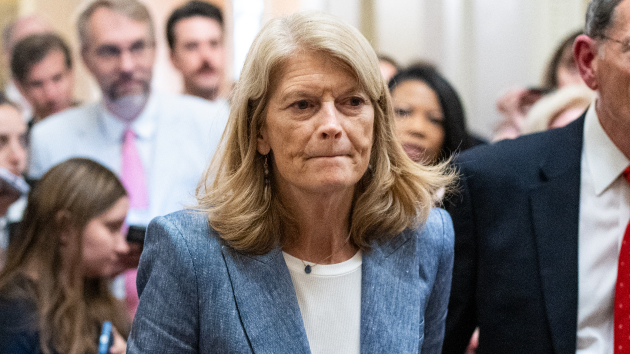
It all came down to Collins and Murkowski: Inside the final passage of Trump’s ‘big, beautiful bill’

It all came down to Collins and Murkowski: Inside the final passage of Trump’s ‘big, beautiful bill’
Bill Clark/CQ-Roll Call, Inc via Getty Images

(WASHINGTON) — Gathered on the Senate floor after a 26-hour, record-breaking vote-a-rama series, senators voted hastily on two final Republican-led amendments before getting to the main event: final passage of President Donald Trump’s “big, beautiful bill.”

Vice President JD Vance was presiding over the chamber after breaking a tie on a previously considered wraparound amendment to the bill. It was assumed that he would soon break another tie on the bill’s final passage, with a number of Republican holdouts remaining to make the vote math still uncertain.

It was just a matter of who would be the third “no” vote Republicans could afford to lose and still pass the bill. Sens. Thom Tillis and Rand Paul had already committed to voting it down.

Sen. Lisa Murkowski was widely thought to be the last opponent, with a temporary SNAP carveout for her state of Alaska hanging in the balance down until the last minute.

When the final vote started, Murkowski was seated in the second row near the middle of the chamber. Next to her was Mississippi GOP Sen. Roger Wicker and next to him was another moderate Republican Sen. Susan Collins of Maine, who eventually proved to be the third and final GOP “no” vote.

Collins, dressed in a hot-pink pantsuit, votes near the top of the alphabet. But she left near the beginning of the vote’s final passage to go to the cloakroom. She missed her chance to vote when her name was called, coming out shortly after and walking directly to Murkowski. Collins put her arm around Murkowski, and then went up to the clerk and put her thumb down: no. She then left the chamber.

Focus was then squarely on Murkowski, whose vote could have tanked the entire bill. But former Senate Majority Leader Mitch McConnell came up to sit next to her. The two talked quietly and then shook hands. When her name was called, Murkowski quietly said “Aye.”

Senators had added additional sweeteners for her state, including a provision aimed at insulating Alaska from some of the bill’s harshest impacts on SNAP.

She then started to leave the chamber, shaking hands with GOP Sens. Jerry Moran of Kansas and Bill Cassidy of Louisiana before exiting.

Afterward, Murkowski told ABC News’ she “struggled mightily with the [bill’s] impact on the most vulnerable in this country.”

“I needed help, and I worked to get that every single day. And did I get everything that I wanted? Absolutely not,” she added.

Senate Majority Leader John Thune didn’t speak to either woman after their votes. He was seated in his chair in the front of the chamber.

Collins later explained her vote in a statement: “My vote against this bill stems primarily from the harmful impact it will have on Medicaid, affecting low-income families and rural health care providers like our hospitals and nursing homes.”

She also said she had problems with cuts to energy tax credits and that the rural hospital relief fund that was created to try to get Republican holdouts to vote for the bill was insufficient.

ABC News’ John Parkinson and Lauren Peller contributed to this report.

Copyright © 2025, ABC Audio. All rights reserved.

Lone wolf actor biggest threat to 4th of July festivities in New York, San Francisco: FBI, DHS bulletins

Lone wolf actor biggest threat to 4th of July festivities in New York, San Francisco: FBI, DHS bulletins
Beata Zawrzel/NurPhoto via Getty Images

(NEW YORK) — A lone wolf actor poses the biggest threat to Fourth of July celebrations in New York and San Francisco, according to multiple intelligence bulletins obtained by ABC News.

The Department of Homeland Security and the FBI are concerned about the potential for copycat attacks from the New Orleans terror attack on New Year’s Day, as well as homegrown extremists.

“We are concerned about the potential threat of copycat attacks inspired by the 2025 New Year’s Day vehicle-ramming attack in New Orleans and continued [foreign terrorist organizations] messaging calling for attacks against Western targets,” both bulletins say.

Those who could be inspired by terrorist organizations who are in the U.S., are of concern for law enforcement, according to the bulletins.

In New York, officials are concerned about individuals “motivated by a broad range of racial, ethnic, political, religious, anti-government, societal, or personal grievances.”

“Of these actors, US-based violent extremists supporting FTOs and [Domestic violent extremists] not linked to FTOs represent two of the most persistent threats,” the bulletins say. “Lone offenders, in particular, remain a concern due to their ability to often avoid detection until operational and to inflict significant casualties.”

In San Francisco, “malicious actors, including violent extremists and criminals, could potentially exploit or target First Amendment-protected demonstrations via mass casualty or opportunistic attacks; dangerous, destructive, or disruptive activity; or other criminal disruptions, as we have seen with other events in the past,” according to DHS.

“We remain concerned that these malicious actors and violent extremists may attempt to create public safety hazards using weapons, chemical irritants, bodily fluids, or other hazardous materials, and enter and disrupt designated event areas that are closed to public access,” say both bulletins dated June 23, 2025.

Authorities are also concerned about drones, which may pose a danger to participants, attendees and law enforcement, authorities say.

The conflict in the Middle East between Israel and Hamas is also of concern, and authorities cite last month’s Molotov cocktail attack in Boulder, Colorado, and bias against the Jewish community as an indicator.

“Individuals with grievances linked to the conflict could also perceive large gatherings, such as Independence Day celebrations, as opportunistic targets symbolic of the West in general,” according to the law enforcement bulletins.

Copyright © 2025, ABC Audio. All rights reserved.
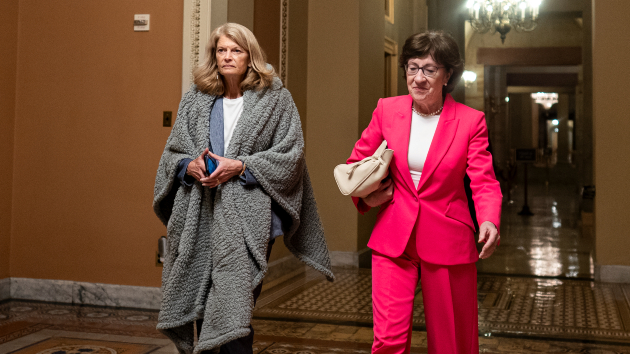
Inside the final passage of Trump’s ‘big, beautiful bill’

It all came down to Collins and Murkowski: Inside the final passage of Trump’s ‘big, beautiful bill’
Bill Clark/CQ-Roll Call, Inc via Getty Images

(WASHINGTON) — Gathered on the Senate floor after a 26-hour, record-breaking vote-a-rama series, senators voted hastily on two final Republican-led amendments before getting to the main event: final passage of President Donald Trump’s “big, beautiful bill.”

Vice President JD Vance was presiding over the chamber after breaking a tie on a previously considered wraparound amendment to the bill. It was assumed that he would soon break another tie on the bill’s final passage, with a number of Republican holdouts remaining to make the vote math still uncertain.

It was just a matter of who would be the third “no” vote Republicans could afford to lose and still pass the bill. Sens. Thom Tillis and Rand Paul had already committed to voting it down.

Sen. Lisa Murkowski was widely thought to be the last opponent, with a temporary SNAP carveout for her state of Alaska hanging in the balance down until the last minute.

When the final vote started, Murkowski was seated in the second row near the middle of the chamber. Next to her was Mississippi GOP Sen. Roger Wicker and next to him was another moderate Republican Sen. Susan Collins of Maine, who eventually proved to be the third and final GOP “no” vote.

Collins, dressed in a hot-pink pantsuit, votes near the top of the alphabet. But she left near the beginning of the vote’s final passage to go to the cloakroom. She missed her chance to vote when her name was called, coming out shortly after and walking directly to Murkowski. Collins put her arm around Murkowski, and then went up to the clerk and put her thumb down: no. She then left the chamber.

Focus was then squarely on Murkowski, whose vote could have tanked the entire bill. But former Senate Majority Leader Mitch McConnell came up to sit next to her. The two talked quietly and then shook hands. When her name was called, Murkowski quietly said “Aye.”

Senators had added additional sweeteners for her state, including a provision aimed at insulating Alaska from some of the bill’s harshest impacts on SNAP.

She then started to leave the chamber, shaking hands with GOP Sens. Jerry Moran of Kansas and Bill Cassidy of Louisiana before exiting.

Senate Majority Leader John Thune didn’t speak to either woman after their votes. He was seated in his chair in the front of the chamber.

Collins later explained her vote in a statement: “My vote against this bill stems primarily from the harmful impact it will have on Medicaid, affecting low-income families and rural health care providers like our hospitals and nursing homes.”

She also said she had problems with cuts to energy tax credits and that the rural hospital relief fund that was created to try to get Republican holdouts to vote for the bill was insufficient.

Copyright © 2025, ABC Audio. All rights reserved.

Which Republican senators voted against Trump’s agenda bill and why

Which Republican senators voted against Trump’s agenda bill and why
Al Drago/Getty Image

(WASHINGTON) — President Donald Trump’s tax cut and spending bill came down to the wire as Senate Republican leaders scrambled to get all GOP members on board before the final vote Tuesday.

In the end, three long-serving GOP members, Susan Collins of Maine, Rand Paul of Kentucky and Thom Tillis of North Carolina voted against, forcing Vice President JD Vance to break a 50-50 tie.

Each of the three has explained their reasons for bucking the president.

Susan Collins

One of the mostly closely watched as the vote neared was Collins, who had been on the fence due to the bill’s proposed Medicaid cuts.

“Approximately 400,000 Mainers – nearly a third of the state’s population – depend on this program,” she said in a statement after voting no. “A dramatic reduction in future Medicaid funding, an estimated $5.9 billion in Maine over the next 10 years, could threaten not only Mainers’ access to health care, but also the very existence of several of our state’s rural hospitals.”

Collins added that the bill had “additional problems.”

“The tax credits that energy entrepreneurs have relied on should have been gradually phased out so as not to waste the work that has already been put into these innovative new projects and prevent them from being completed,” she said.

Thom Tillis

Tillis has been extremely vocal in his opposition sine the weekend, drawing attention for a passionate floor speech citing Medicaid provisions he claimed would hurt his North Carolina constituents.

During a closed-door GOP conference meeting two weeks ago, Tillis is reported to have made the point that Medicaid coverage for more than 600,000 North Carolinians would be at risk under the Senate’s proposal and asked his colleagues to consider how the policy would affect their own states — even providing state-specific data on a handout.

“I just encouraged other members to go to their states and just measure how … take a look at the proposed cuts and tell me whether or not you can absorb it in the normal course of business, and in many cases, you’re gonna find that you can’t,” Tillis told reporters at the Capitol last week.

Trump lashed out against Tillis on his social media platform and to the press and threatened to field primary challengers. Tillis announced on Saturday that he would not seek reelection.

Rand Paul

Paul, a staunch advocate for keeping spending and the debt ceiling in check, posted on X that he wanted the bill to include a 90% reduction in the ceiling.

“No earmarks. No handouts. Just real fiscal reform. I wasn’t looking for favors. I wasn’t horse-trading. I was fighting for the American people and against our out-of-control debt,” he said.

“Bottom line: I offered my vote for fiscal sanity. Congress chose to sell out taxpayers instead. Only once the bill is released, we will know what the true price was,” Paul added.

Copyright © 2025, ABC Audio. All rights reserved.