LEXINGTON, Ky. — Two women were shot and killed at a Kentucky church by a suspect who fled there after allegedly shooting a state trooper elsewhere, according to officials.
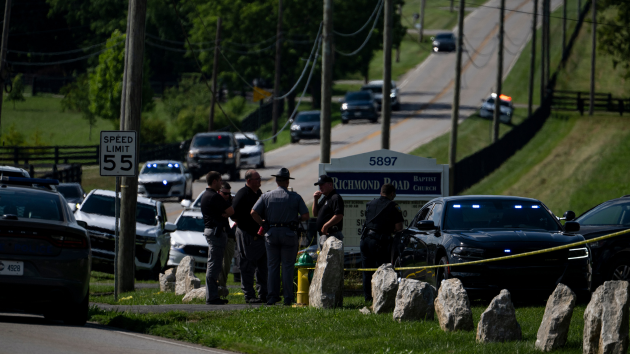
A suspect allegedly shot a Kentucky State Police trooper near the Blue Grass Airport in Lexington, KY, and then fled to a church, where the suspect shot four people before police shot and killed the suspect, officials said at a Lexington Police Department press conference late Sunday afternoon.
Two of the churchgoers, both women, were killed, officials said. The other two victims, both male, were taken to the hospital for treatment. One of them is in critical condition while the other is stable, according to officials.
“Something like this has a huge impact on our community,” Lexington Police Chief Lawrence Weathers said during the press conference.
The incident occurred at approximately 11:36 a.m. on Sunday when a suspect “shot a trooper and then fled the scene,” Kentucky State Police said in a statement.
The suspect shot the trooper on Terminal Drive, adjacent to the Blue Grass Airport, then fled to the Richmond Road Baptist church, according to the Lexington Police Department.
The gunman was able to escape by carjacking a vehicle, police said during the press conference.
Officers were able to track the suspect’s vehicle, leading them to the church, where the suspect shot four individuals. The two women — a 72-year-old and a 32-year-old — were pronounced dead at the scene, and the two men were transported to the hospital.
The trooper wounded in the shooting is also receiving medical attention, according to the agencies, with the Lexington Police Department statement saying that the trooper “is in stable condition.”
The suspect was shot by responding law enforcement and was pronounced dead at the scene, officials said. The identity of the shooter will be provided once the suspect’s family has been notified, police said.
Officials said they believe that the suspect had a connection to individuals at the church. The motive behind the shooting remains unclear.
A official briefed on the investigation told ABC News that the suspect had a history of mental health, drug and anger issues. He had had a domestic situation with an ex-girlfriend who then filed protection orders against him, the official said.
Coroner Gary Ginn said the majority of the people at the church were related biologically or “have been friends for many years.”
“It’s a tight-knit group of people,” Ginn said during the press conference.
Lexington police said in an earlier statement that officers had “temporarily closed some roads nearby” the incident and that authorities will “remain in the area until the investigation is complete.”
Kentucky Gov. Andy Beshear said in a statement that he is “heartbroken” regarding the news of the two deaths.
“Violence like this has no place in our commonwealth or country. Kentucky, let’s stand strong together and support our Lexington neighbors during this difficult time,” Beshear said in a post shared on X. Police said they will provide more information on the incident “as it becomes available.”
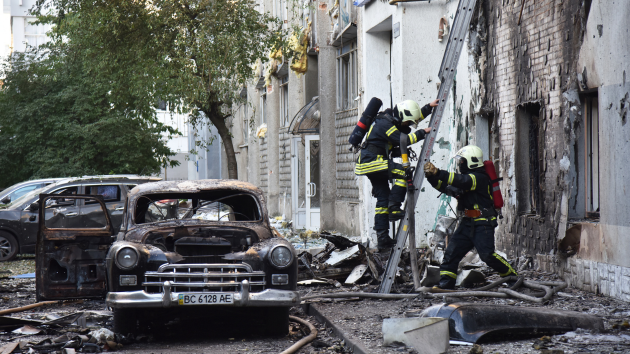
BUDAPEST — Russia launched four missiles and 136 drones into Ukraine overnight into Monday morning, according to Ukraine’s air force, after President Donald Trump said the U.S. would provide Kyiv with more Patriot surface-to-air systems to help defend against Russia’s nightly bombardments.
Ukraine’s air force said in a post to Telegram that 108 drones were shot down or otherwise neutralized during the latest attack, with 28 drones impacting in 10 locations. Falling debris from downed drones was reported in four locations, the air force said.
Russia’s Defense Ministry, meanwhile, said its forces downed 11 Ukrainian drones overnight into Monday morning.
Russian President Vladimir Putin is continuing the long-range bombardment of Ukrainian cities despite criticism from Trump, whose months-long push for a ceasefire and eventual peace deal has thus far failed to achieve a breakthrough.
Ahead of an expected announcement on his Ukraine-Russia policy on Monday, Trump said Sunday that the U.S. would provide more “sophisticated” equipment to aid Kyiv in its defense against Russian attacks.
Trump is also expected to meet with NATO Secretary-General Mark Rutte in Washington, D.C., on Monday.
“We basically are going to send them various pieces of very sophisticated military equipment,” Trump told reporters on Sunday. “They’re going to pay us 100% for them, and that’s the way we want it,” Trump said.
Asked if he would still send 10 Patriot missiles to Ukraine — as announced last week — the president said the number has not been finalized but that Kyiv would be receiving more aid.
“I haven’t agreed on the number yet, but they’re going to have some because they do need protection,” he said.
“But the European Union is paying for it,” Trump added. “We’re not paying anything for it, but we will send it. It will be business for us, and we will send them Patriots, which they desperately need, because Putin really surprised a lot of people.”
“He talks nice and then he bombs everybody in the evening. There’s a little bit of a problem there,” Trump continued.
The Patriot surface-to-air missile system has become one of Ukraine’s most important platforms during Russia’s full-scale invasion, which began in February 2022. Since 2023, Patriots in Ukraine have been used to down drones, ballistic missiles and Russian aircraft.
Ukraine now fields at least six Patriots, two of which were provided by the U.S. and the others by different NATO allies.
Ukraine has other air defense platforms — among them the European IRIS-T and SAMP-T systems — but none have been so publicly celebrated by Ukraine for blunting Russian attacks. The system, which entered U.S. service in the 1980s, has even been credited with shooting down Russian hypersonic missiles.
Trump declined to say whether he would be announcing new sanctions on Russia on Monday.
Sen. Lindsey Graham told ABC News last week that Trump is “ready” to act on a sweeping Senate bill that would impose tariffs of up to 500% on countries that buy oil and gas from Russia.
Trump, Graham said Wednesday, is “trying to get Putin to the table, but Putin’s not responding.” The legislation will include a waiver allowing Trump to lift sanctions on countries purchasing Russian oil or uranium for 180 days, Graham said.
Meanwhile, Trump’s Russia-Ukraine envoy Keith Kellogg arrived in Kyiv on Monday.
Andriy Yermak, the head of Ukraine’s presidential office, welcomed Kellogg in a post to Telegram. “Peace through strength is the principle of U.S. President Donald Trump, and we support this approach,” he said.
(LONDON) — A small plane was involved in a “collision” at London Southend Airport in Sussex, England, on Sunday, according to Essex Police.
Essex Police said they are on the scene after a “serious incident” occurred at the Southend airport at approximately 4 p.m. local time on Sunday. They said they are responding to reports of a “collision involving one 12 metre plane” and said the emergency response will last several hours.
The East England Ambulance Service said they’ve sent “four ambulances, a rapid response vehicle, four Hazardous Are Response Team vehicles, three senior paramedic cars and an Essex and Herts Air Ambulance” to the airport.
Officials said the public should avoid the area and that they are evacuating the Rochford Hundred Golf Club and Westcliff Rugby Club “due to their proximity to the incident.”
Police said updates will be issued “as soon as possible.”
London Southend Airport is located about one hour east of London, a few miles from the coast.
This is a developing story. Please check back for updates.
ABC News’ Victoria Beaule contributed to this story.
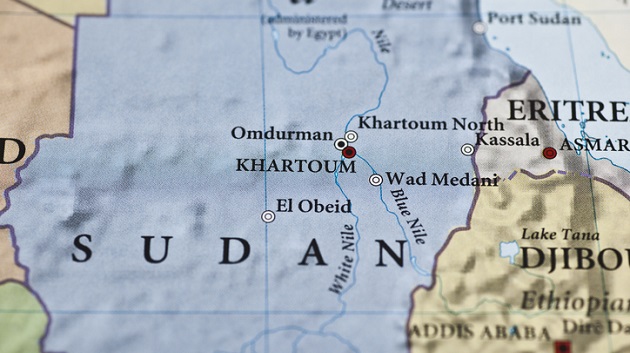
(WASHINGTON) — Humanitarians in Sudan, where a two-year civil war has given rise to the world’s most acute needs and made assistance increasingly difficult, warn that a vacuum left by cuts to U.S. funding for aid programs cannot be filled.
The civil war between the country’s army and a paramilitary group has displaced 11 million people internally and 4 million more are refugees in other countries. It’s the only place in the world where famine conditions have been confirmed in multiple locations, and the United Nations says 30 million Sudanese require assistance — or 60% of the country’s population.
The U.S. shuttered its arm for foreign assistance at the beginning of July, formerly the U.S. Agency for International Development, folding it under the State Department in a move Secretary of State Marco Rubio said marked the end of an “era of government-sanctioned inefficiency.” And the U.S. Senate could vote on legislation proposed by the Trump Administration as soon as this week to claw back over $8 billion in funding due to be dispersed for USAID in the remainder of the fiscal year.
“Moving forward, our assistance will be targeted and time limited,” Rubio wrote on Substack, adding the U.S. “will favor those nations that have demonstrated both the ability and willingness to help themselves and will target our resources to areas where they can have a multiplier effect.”
The months-long drawdown of USAID reduced its staff by 83% — down from 10,000 employees to a few hundred — and resulted in stop-work orders for grantees of its funds, including in Sudan. The State Department says the life-saving work of the agency, which distributes grants to aid implementers, is continuing, and said its new “America First” foreign assistance policy would be accountable to policymakers in Washington instead of global entities like the United Nations.
A senior State Department official last week called the end of USAID and the institution of a new overarching office at State “a milestone for American engagement in the world,” saying U.S. assistance abroad would be “linked up diplomatically” with U.S. interests.
The British medical journal Lancet found that in the absence of USAID’s funds and works, 14 million more people would die in the next five years, a third of those children under 5.
The senior State Department official downplayed the study.
“You can go back and relitigate all these little decisions. That’s not our focus. That’s not the secretary’s focus,” the official said. “We are excited about what sort of the America First foreign assistance agenda is going to look like, and how much impact we can have moving forward.”
Meanwhile, in the world’s most dire humanitarian crisis, where access for emergency food and medical workers has been made increasingly difficult by warring parties, people are fleeing violence on foot, children are malnourished, and Sudanese are dying from treatable conditions.
Pietro Curtaz, an emergency logistics coordinator for Médecins Sans Frontières (Doctors Without Borders, or MSF) said children he sees crossing Sudan’s border are malnourished at a rate of 29%.
The cuts to USAID — and the chaos that followed — have “come with a body count” in Sudan said Tom Perriello, the U.S. special envoy to Sudan in the last year of the Biden administration from 2024 to 2025.
There were 29 USAID employees in Sudan in 2023, at the outset of the war, according to then-administrator Samantha Powers.
The July 1 reprogramming of USAID into the State Department cut two additional U.S. staffers dedicated to Sudan, leaving just nine remaining in the region, said Andrea Tracy, a former USAID Sudan official who now runs her own humanitarian funding mechanism for the country.
Tracy saw colleagues lose their jobs on a daily basis as USAID wound down the programs it funded in the country, she told ABC News in a June phone call.
“I was talking to one of the regional directors the other day, and just that morning, she got an email saying another 40 programs are going to be cut,” she said. “So we haven’t found the floor yet.”
The dramatic reorientation of U.S. aid abroad comes as the United Kingdom, Switzerland, and Germany have announced a scaling down of their own foreign assistance budgets and as humanitarian crises in places like Sudan — where the civil war has stretched into a third year — deepen.
According to data from the U.N., USAID provided 44% of the world’s humanitarian funding in 2024 for Sudan.
A U.N. spokesman told ABC News that “food aid, nutrition support and essential health services” have been cut back as the U.N.’s annual fund for Sudan is funded at only 14%.
“Without urgent additional support, the risk of famine and further deterioration remains high,” said Dan Teng’o, a spokesperson for the U.N.’s Office for the Coordination of Humanitarian Affairs.
The State Department did not respond to requests by ABC News for the current data on its assistance commitments to Sudan after foreign aid freezes and layoffs.
But it said in a statement that “foreign assistance continues to arrive in Sudan,” citing a $56 million donation to the World Food Programme and a wheat grain delivery under USAID that would feed “as many as 3.2 million people for an entire month.”
It also said emergency assistance continues for refugees of Sudan who have been displaced to “seven neighboring countries due to the conflict.”
Important dollars for refugee assistance are in jeopardy, too, as humanitarians brace for the impacts of a proposed $1.7 billion cut to U.S. refugee assistance. As a part of Rubio’s reorganization, the State Department proposed a 50% reduction for aid to the world’s refugees in its 2026 budget request to Congress.
Chain reactions and health care at the brink
Humanitarians, who are legally protected under international law, have not been spared from the violence of the civil war, which has deprived people of the chance to stave off starvation and made access increasingly difficult.
Five humanitarians in June died when a U.N. convoy came under attack, the U.N. said.
In the void, small, grassroots organizations began to sprout when war broke out two years ago. A coalition known as Mutual Aid stood up emergency clinics and soup kitchens that became “a lifeline” for Sudanese, Tracy said. The coalition was backed by nearly 80% funding from USAID, organizers have said.
When the White House on President Donald Trump’s first day in office froze all U.S. assistance abroad, Tracy said, some 1,500 of the kitchens in Sudan closed almost immediately.
Perriello, whose role as the special envoy in Sudan has been left vacant by the Trump administration, said the Mutual Aid coalition was among a group of “edgy efforts … redefining approaches to aid.” These programs suffered the first and “deepest” cuts, he said.
Tracy said the pain from the cuts has been felt most acutely in the health sector, where medicine is not moving the way it used to and a “chain” of “different components that rely on each other” are not in place.
“Once you break one of those components, it all breaks,” she said.
MSF, which provides emergency medical care in Sudan, is operating in a country where the World Health Organization estimates only 20 to 30% of health facilities are operational.
“Wherever we look in Sudan, you will find humanitarian and medical needs. All those needs are overwhelming, urgent, and unfortunately, unmet,” Claire San Filippo, MSF’s emergency coordinator for Sudan, said.
A “case study” for impact of cuts
At the Tine border point in Chad, east of the violence-plunged Darfur region of Sudan, Curtaz, the emergency coordinator for MSF, told ABC News the cuts are impossible to miss.
“Clinically … we tend to see people that are in much worse condition than before because of all of that,” he said.
MSF is independent and donor-funded, taking no dollars from the U.S. government and therefore not directly affected by the cuts and shutdown of USAID.
Sudan has become a “case study” for the “impact of those cuts,” Curtaz said.
“One of the examples you can touch first,” he said, is the lack of shelter for refugees under a 110-degree sun. People arrive by foot in Chad having spent the day with no form of shelter, he said.
The 18,000 people hosted in Tine should have had at least 350 toilets, meeting a standard in acute situations of one toilet for every 50 people, Curtaz said. But for a group surging toward 20,000 people, it had only nine toilets.
Asked whether the large, interconnected humanitarian system is neglecting Sudan, Curtaz agreed.
“A majority of the weight is lying on us, on the host community and on grassroots organizations that are doing their best to support the population,” he said. “So, yes.”
“For the first time in my life,” Tracy said, MSF doctors and administrators told her “‘We really need the USAID money … to come back online, because we’re carrying way more of a load than we can handle. We’re falling apart here.’”
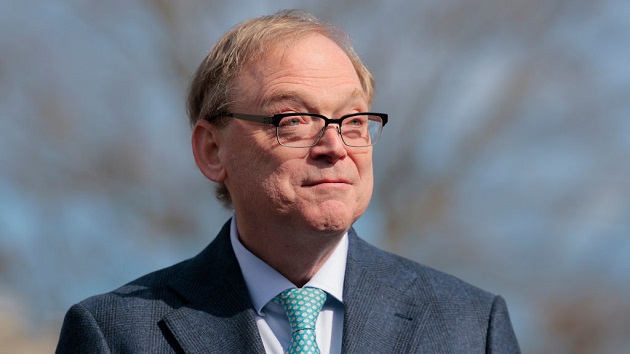
(WASHINGTON) — National Economic Council Director Kevin Hassett defended President Donald Trump’s newly unveiled 50% tariff against Brazil, the United States’ second-largest trading partner, saying the move is part of the administration’s broader global tariff strategy.
Speaking with ABC News’ “This Week” co-anchor Jonathan Karl, Hassett said that the president has the authority to impose new tariffs if he thinks there is a national defense emergency or a national security threat — though Trump’s letter to Brazil highlighted the ongoing criminal case against his political ally, former President Jair Bolsonaro.
“So how is it a national security threat … how Brazil is handling a criminal case against its former president?” Karl asked.
“Well, that’s not the only thing,” Hassett said.
“The bottom line is that what we’re doing absolutely, collectively across every country is we’re onshoring production in the U.S. to reduce the national emergency, that is, that we have a massive trade deficit that’s putting us at risk should we need production in the U.S. because of a national security crisis,” he added.
“But again, as we’ve just established, we have a trade surplus with Brazil, not a deficit,” Karl noted.
“If you look at an overall strategy, if you don’t have an overall strategy for this, then there’ll be transshipping and everything else, and you won’t achieve your objectives,” Hassett said.
Pressed by Karl about Trump’s recent criticism of Federal Reserve Chair Jerome Powell, Hassett echoed the White House’s criticism of recent cost overruns in the renovation of the Fed’s Washington, D.C., headquarters.
“I think that whether the president decides to push down that road or not is going to depend a lot on the answers that we get to the questions that [Office of Management and Budget Director] Russ Vought sent to the Fed,” Hassett said when asked if the cost overruns could be used as a pretext to fire Powell.
“Yes or no answer. Does the president, in your view, have the authority to fire the Fed chair?” Karl asked.
That’s a thing that’s being looked into,” Hassett said. “But certainly, if there’s cause, he does.”
Here are more highlights from Hassett’s interview
On new tariffs with the European Union and Mexico
Karl: So let me ask you, because what we’re hearing from the Europeans and from the Mexicans is they were in the middle of these negotiations as this was, as this was going on, so is this a negotiating tactic, or are these tariffs real?
Hassett: These — well, these tariffs are real if the president doesn’t get a deal that he thinks is good enough, but, you know, conversations are ongoing, and we’ll see where the dust settles. The bottom line is that President Trump has produced a huge amount of tariff revenue with the tariffs we’ve seen in the first half of the year. The Congressional Budget Office has said that tariff revenue over the next 10 years will help reduce the deficit and secure our entitlement programs is $3 trillion and consumers haven’t seen that.
You know, Consumer Price Index inflation right now is the lowest it’s been in over a decade. And so what President Trump has always said is that the foreign suppliers, the foreign governments are going to bear most of the tariffs. It’s being visibly seen, and I think that that’s probably affecting his negotiating position because we’ve got all this empirical evidence that his position has been proven correct in the data.
On copper tariffs
Karl: Let me ask you about the 50% tariff that the president has imposed on copper imports. Copper, of course, is widely used in construction, industrial manufacturing, cars, mobile phones, and the like. This is what The Wall Street Journal had to say about these tariffs: “Mister Trump is going to make U.S. firms pay 50% more for a vital metal while they wait five or more years for U.S. sourcing. How does making it more expensive to build aircraft, ships, and ammunition promote national security? This is national insecurity.” What’s your response to The Wall Street Journal?
Hassett: Right. The bottom line is that if there is a time of war, then we need to have the metals that we need to produce American weapons, and copper is a key component in many American weapon sets. And so, as we look forward to the threats that America faces, the president decided that we have plenty of copper in the U.S., but not enough copper production. And that’s why he’s taken this strong step.
Karl: But are you concerned about the effect of higher copper prices before American manufacturing can get up to speed?
Hassett: The fact is that that effect that you’re just discussing is something that you mentioned that economists said were going to be coming all year, these effects, and inflation is way, way down. In fact, inflation in the U.S. is right about the same level as it is in Europe.
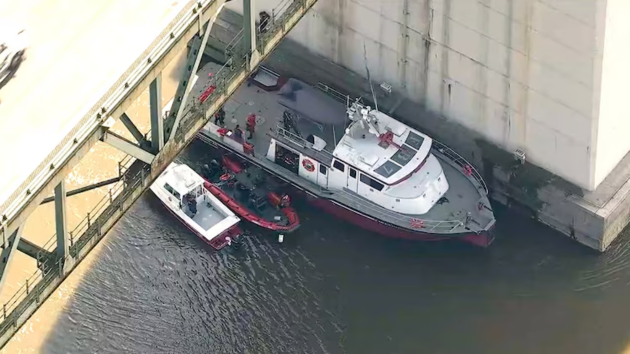
(NEW CASTLE, DE) — First responders recovered the body of a driver Saturday after their truck cab plunged off the Delaware Memorial Bridge a day earlier.
The Delaware River Port Authority crews began searching the river after the truck cab crossed three lanes of traffic, went onto the concrete pad near the Delaware anchorage and crashed through a concrete wall around 3:40 a.m. Friday.
On Saturday morning, crews found the unidentified driver inside the cab which was recovered.
The cab was brought the surface with the assistance of a crane and barge from the active construction site of the Bridge Ship Collision Protection project, DRPA said in a statement.
The driver’s body was removed using a Hurst tool, the agency said.
The cause of the crash is still under investigation. No other vehicles were involved.
(WASHINGTON) — President Donald Trump has posted two letters on his social media platform announcing new tariffs on the European Union and Mexico that will take effect on Aug. 1.
Trump will impose a 30% tariff on Mexico due to fentanyl crossing the border, he said in a letter to Mexican President Claudia Sheinbaum.
“Mexico has been helping me secure the border, BUT what Mexico has done is not enough. Mexico still has not stopped the Cartels who are trying to turn all of North America in a Narco-Trafficking Playground,” Trump wrote in the letter.
Mexico did not face a new tariff on April 2, the day of Trump’s so-called “Liberation Day” tariff rollout. There remains a 25% tariff on non-USMCA-compliant goods from Canada and Mexico, as well as a 50% tariff on steel, aluminum and derivative products.
The United States mainly imports vehicles, machinery and electrical equipment, alongside agricultural products such as fruits, vegetables, beer and spirits from Mexico.
Trump said the EU will also face a 30% tariff as a result of the United States trade deficit, in a letter addressed to European Commission President Ursula von der Leyen.
The EU, one of the largest trading blocs with the U.S., primarily exports pharmaceutical products and mechanical appliances to the U.S.
According to the Office of the U.S. Trade Representative, the U.S. goods trade deficit with the European Union was $235.6 billion in 2024, a 12.9 % increase over 2023.
Trump has long touted productive conversations that left him “extremely satisfied” regarding a trade deal with the EU; however, at one point, he once threatened tariffs as high as 50%.
In his letters, Trump again promised that there would be no tariffs on manufacturing companies that decide to build in the U.S.
The European Commission president responded Saturday saying the 30% tariff “would hurt businesses, consumers and patients on both side of the Atlantic.”
“We will continue working towards an agreement by August 1,” von der Leyen said. “At the same time, we are ready to safeguard EU interests on the basis of proportionate countermeasures.”
In a statement posted on X, Mexican economic minister Marcelo Ebrard said Mexico had already been negotiating with the U.S. to “protect businesses and jobs.”
“We were informed that, as part of the profound changes in U.S. trade policy, all countries will receive a letter signed by the President of the United States establishing new tariffs starting August 1st,” Ebrard said. “We stated at the meeting that this was an unfair deal and that we did not agree with it.”
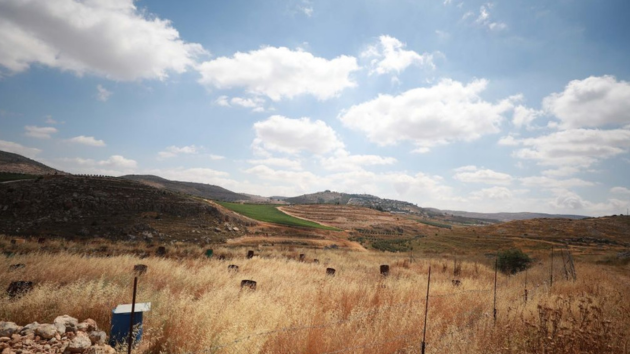
(RAMALLAH, WEST BANK) — A 20-year-old American from Florida was allegedly beaten to death by Israeli settlers while visiting his family in the West Bank, according to Palestinian health officials and his family.
Sayfollah “Saif” Musallet was killed in the town of Sinjil, north of Ramallah, according to the Palestinian Health Ministry in the West Bank.
A second man was also shot dead in the attacks, according to the health ministry.
Musallet was trying to protect his family’s land from Israeli settlers, who surrounded him for over three hours, blocking the ambulance from reaching him, according to his family. He died before making it to the hospital, they said.
He is the fifth American killed in the West Bank since the war between Israel and Hamas began on Oct. 7, 2023, when 1,200 Israelis were killed in a Hamas-led terrorist attack on southern Israel.
Musallet was born in Florida, lived in Tampa, and ran a business there, according to his family. He had traveled to the West Bank on June 4, they said.
“He was a kind, hard-working, and deeply-respected young man, working to build his dreams. Saif built a successful business in Tampa and was known for his generosity, ambition, and connection to his Palestinian heritage,” his family said in a statement.
The Israel Defense Forces said it was “aware of reports regarding a Palestinian civilian killed and a number of injured Palestinians as a result of the confrontation, and they are being looked into by the ISA and Israel Police.”
The IDF said rocks were thrown at Israeli settlers adjacent to Sinjil, causing light injuries.
“Shortly after, a violent confrontation developed in the area involving Palestinians and Israeli civilians, which included vandalism of Palestinian property, arson, physical clashes, and rock hurling,” the IDF said.
Musallet’s family is demanding “the U.S. State Department lead an immediate investigation and hold the Israeli settlers who killed Musallet accountable for their crimes.”
“This is an unimaginable nightmare and injustice that no family should ever have to face,” the family said in a statement.
The family said they demand “justice.”
“We are devastated that our beloved Sayfollah Musallet (nicknamed Saif) was brutally beaten to death by Israeli settlers while he was protecting his family’s land from settlers who were attempting to steal it,” his family said.
ABC News has reached out to the U.S. State Department for comment.
A U.S. State Department spokesperson told Reuters on Friday it was aware of the incident, but that the department had no further comment “out of respect for the privacy of the family and loved ones” of the reported victim.
Four other Americans have been killed in the West Bank since Oct. 7, 2023. Tawfic Abdel Jabbar, 17, was killed on Jan. 19, 2024; Mohammad Alkhdour, 17, was killed on Feb. 10, 2024; Aysenur Eygi, 26, was killed on Sept. 6, 2024; and Amer Rabee, 14, was killed on April 6, 2025.
Minutes earlier, Malaya was in the car with her parents, her brother, her sister and her sister’s friend driving to her beloved camp in Missouri where she was so excited to be a counselor, Hammond told ABC News.
“I tried to stop, but I couldn’t,” he said, overcome with emotion, recalling how their minivan went off the bridge and started taking on water.
Hammond said he shouted at everyone to roll down their windows.
“If we didn’t get ’em down, we’d be done,” he said.
Hammond got his window down and he and his wife escaped through the front of the car. Malaya had the harder task of getting the minivan’s back door open as the water quickly rose, her father said.
“Miraculously, she got it open in time,” he said, and Malaya helped her siblings and the friend escape, sending them all into the rushing waters.
Hammond, an experienced river rafter, called it “the craziest river I’ve ever been in.”
He saw Malaya — a lifeguard and a certified swim instructor — ahead of him in the water.
“She knew to turn on her back,” he said, and she was singing “Rise and Shine Give God the Glory” — a song she planned to teach her campers.
She had the “presence of mind” “to keep herself calm,” he said, crying.
“That was the last I saw her,” he said.
The family searched for Malaya through the weekend. Her remains were recovered on Monday, her father said.
Hammond stressed his immense gratitude for the “extraordinary” first responders who came to help look for his daughter, especially local fire chief Michael Phillips, who responded to their emergency call and later went missing in the floods. He has not been found.
“He sacrificed himself for my family,” Hammond said, crying. “I want to go grieve with his family. … I will do whatever I can for his family.”
As for his own heartbreak, Hammond said through tears, “It’s a form of grief I’ve never known.”
“I’ve lost people close to me, but this is unlike anything I’ve ever experienced,” he said. “If you told me I was gonna be burying my daughter before I left this planet — no, not Malaya Grace.”
His “luminous” Malaya was a talented singer and artist who painted incredible watercolors at 3 years old, he said.
She worked as a barista at her local coffee shop and was known as the peacemaker among her peers.
She always had a “sense of tranquility and peace,” her dad said.
“Her middle name was Grace for a reason — she was grace personified,” he said.
“Just being with her, it just made everything better,” he said. “In a world that’s so out of control … she was the counterbalance to that. She took her sweet, sweet time, and we love that about her. It made us slow down. And I really miss that.”
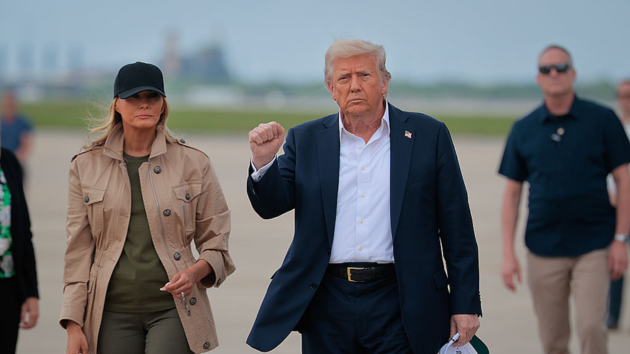
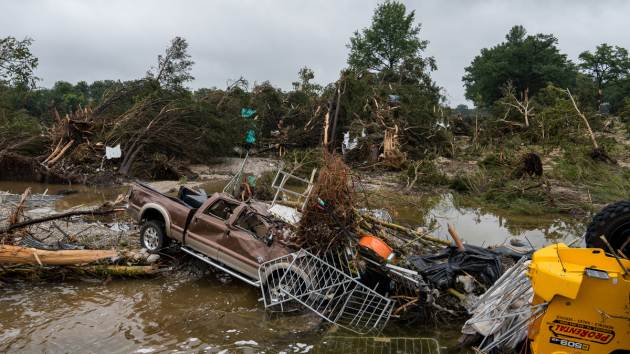
(WASHINGTON) — President Donald Trump toured the devastation left by flash flooding in central Texas amid growing questions about how local officials responded to the crisis as well as questions about the federal response — including the fate of the Federal Emergency Management Agency.
Trump’s visit on Friday came a week after heavy rainfall caused the Guadalupe River in Kerr County to rise 26 feet in less than an hour, killing at least 121, including dozens of children at the nearby Christian summer camp, Camp Mystic.
“The first lady and I are here in Texas to express the love and support and the anguish of our entire nation in the aftermath of this really horrific and deadly flood,” Trump said as he spoke at a roundtable event with first responders and local officials.
“We mourn for every single life that was swept away in the flood, and we pray for the families that are left behind,” the president added. “It’s amazing, the incredible spirit from those families.”
The search for more than 170 people still missing continues with more than 2,100 responders on the ground in Texas from local, state and federal agencies.
Meanwhile, local officials are under scrutiny about what steps were taken to adequately warn people and how long it took for authorities to take action based on escalating weather and other alerts.
Trump, notably, hasn’t engaged in similar criticism about how the crisis was handled — as he has done in the case of other disasters.
“Nobody has any idea how and why a thing like this could happen,” Trump said on Friday.
Trump was asked for his response to those who say the warning alerts didn’t go out in time and that more people could have been saved.
“Well, I think everyone did an incredible job under the circumstances,” Trump said. “I just have admiration for the job that everybody did. There’s just admiration.”
Trump went on to criticize the reporter for asking the question: “Only an evil person would ask a question like that,” he pushed back.
“I think this has been heroism. This has been incredible. Really, the job you’ve all done,” Trump added. “It’s easy to sit back and say, ‘Oh, what could have happened here or there, maybe we could have done something differently.’ This was a thing … that’s happened before.”
Trump later added, “Two words: Unity and competence. If you were to ask me two words that I’ve seen here.”
It’s a marked contrast to how Trump has reacted in the past, including to the California wildfires earlier this year, where he blasted California’s Democratic Gov. Gavin Newsom and other local Democratic officials.
Some of the hardest-hit areas of central Texas, including Kerr County, are areas of strong Republican support that voted for Trump in the 2024 election.
Trump approved a major disaster declaration for Texas earlier this week. On Friday, it was expanded to include more areas affected by the floods.
Trump, instead, has largely focused on his relationship with Gov. Gregg Abbott — a Republican and strong ally of the president.
Trump and Abbott met with first responders on the scene on Friday. Abbott earlier Friday said the federal government updated Trump’s disaster declaration for the state to include more counties.
“There has been extraordinary collaboration with the state and the federal government to make sure that we address Texans’ needs as quickly as possible through disaster assistance programs,” Abbott said in a press release. “The State of Texas will continue to work with our federal and local partners to provide impacted Texans with the support they need to heal and recover.”
The White House has pushed back heavily on criticism of the administration’s cuts to the National Weather Service, which led to some to question if staffing levels or forecasting abilities were impacted.
“Blaming President Trump for these floods is a depraved lie, and it serves no purpose during this time of national mourning,” White House press secretary Karoline Leavitt said from the briefing room podium on Monday.
Trump’s also avoided answering questions on whether he is still aiming to phase out FEMA.
Department of Homeland Security Secretary Kristi Noem, discussed the federal response to the floods during a Cabinet meeting on Tuesday.
“We as a federal government don’t manage these disasters, the state does,” Noem contended. “We come in and support them. And that’s exactly what we did here in this situation. FEMA went to an enhanced level immediately. But as soon as you signed the major disaster declaration, we were able to get them resources and dollars right away, just like you envisioned through state lot grants to help them with cleanup. And we’re still there in presence.”
Later in the week, though, Noem went after FEMA during the Biden and other previous administrations — alleging the agency has suffered from “gross mismanagement and negligence.”
“The list of famous failures is staggering,” Noem claimed in comments to the FEMA Advisory Council, a task force designed to recommend reforms to the agency, including possible dismantlement of the agency as it exists today. Trump appointed Abbott as a new member to the group back in April.
Acting FEMA Administrator David Richardson had yet to visit the affected areas in Texas as of Thursday afternoon.
ABC News’ Luke Barr and Kelsey Walsh contributed to this report.