(CLACKAMAS COUNTY, Ore.) — An avid mountain biker has been reported missing in Oregon after not returning from a planned biking trip near Mount Hood on Friday, according to the Clackamas County Sheriff’s Office.
Ralph Sawyer, 52, was reported missing on Friday at approximately 10:30 p.m. after he had left home that morning for a mountain biking trip and had not returned home at the expected time of 8:30 p.m., officials said in a statement on Sunday.
“A search and rescue mission was immediately launched to locate him,” the sheriff’s office said.
Sawyer, who has a “long history of mountain biking in the area and is familiar with the terrain,” has not been locate, with officials entering their third day of search efforts on Monday, the sheriff’s office said.
Officials were able to locate Sawyer’s vehicle, a blue Kia Soul, at 12:15 a.m. on Saturday. His cellphone was also found inside the vehicle, officials said.
Officials said the search for Sawyer has been centered along East Still Creed Road to Veda Lake and Kinzel Lake, along with the United States Forest Service roads around Trillium Lake, which is about 40 miles southeast of Portland.
On Saturday, nearly 40 people were involved in the search for Sawyer, while around 70 were mobilized on Sunday, officials said.
ATVs, canine units and drones have also been utilized in the search efforts, officials said.
Sawyer, who is described as 6 feet, 1 inch tall with brown hair, was last seen wearing an orange bike helmet, blue shirt and black bike shorts, officials said.
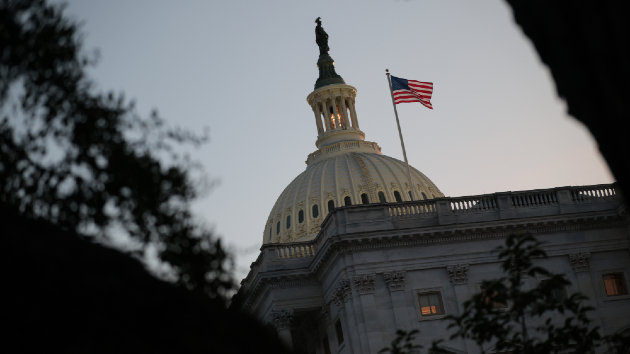
(WASHINGTON) — Senate Republicans are expected to spend the week rushing to try to deliver President Donald Trump a package that formalizes some of the cuts made by Elon Musks’ Department of Government Efficiency by striking $9.4 billion from the previously approved federal budget.
Congress has until the end of the week to send the bill to Trump’s desk, but the path forward for the rescissions package remains a bit murky ahead of a series of critical votes on it this week.
The package, which narrowly passed the House in May, would cull back funding from Public Broadcasting Service and National Public Radio, and would also formalize many of the cuts to U.S. Agency for International Development (USAID), a foreign aid arm of the government that was heavily targeted by DOGE earlier this year.
Unlike many bills in the Senate, Republicans can pass the package with a simple majority of votes. But at present, there are a few vocal opponents of the package who have made clear that they want to see major changes implemented. And some Senate Republicans are raising alarm bells about cuts that make up the bedrock of the package.
A number of Republicans that represent states with rural communities — such as Sens. Lisa Murkowski of Alaska and Mike Rounds of South Dakota — have expressed concerns about cuts to public broadcasting that could affect the ability of certain communities to access emergency alerts.
Sen. Susan Collins, the chair of the Senate Appropriations Committee, has been the most vocally skeptical Republicans of the whole package, in part because of the cuts to public broadcasting.
“There is a lot of what the Corporation for Public Broadcasting does that I support, such as the 70 percent of the money that goes to the emergency fund to local stations. They maintain the emergency alert systems. They do public programming,” Collins said to reporters on Capitol Hill Thursday.
Collins has also joined a number of Republicans in expressing concern about cuts in the bill to PEPFAR, a historically bipartisan and popular HIV and AIDS relief program championed by former President George W. Bush.
The House-approved version of the bill would formalize $400 million in cuts to the program as part of its larger swath of cuts to USAID.
On Thursday, in a post on social media, Trump threatened to withhold his support for any Republican who votes against this package.
“It is very important that all Republicans adhere to my Recissions [sic] Bill and, in particular, DEFUND THE CORPORATION FOR PUBLIC BROADCASTING (PBS and NPR), which is worse than CNN & MSDNC put together. Any Republican that votes to allow this monstrosity to continue broadcasting will not have my support or Endorsement. Thank you for your attention to this matter!”
Collins, a rare moderate Republican in the Senate, is up for reelection in 2026 and has not yet announced whether she intends to run.
Senate Republicans may attempt to modify the bill on the Senate floor to make it more palatable to holdouts, but seriously modifying or eliminating cuts implemented in any part of the package would be a blow to the cuts Republicans want to tout. Also, $9.4 billion is already a relatively small value in comparison to the trillions in spending the government does annually.
The procedural process on the Senate floor is also complicated with limited time to execute. The Senate is expected to kick things off on Tuesday with a vote to move the bill out of the Senate Appropriations Committee to the Senate floor, since the legislation was not formally advanced by the committee.
If the Senate manages to clear a number of procedural votes, they’ll also have to hold a vote-a-rama, during which lawmakers from both sides of the aisle have the opportunity to vote on an unlimited number of amendments to the package. These processes can sometimes last through the night.
If the Senate amends the package in any way, it will have to go back to the House and pass again. Under the rules governing rescissions packages like this, Congress must complete work within 40 days of a request for rescission being issued by the White House. That means Congress has until Friday to complete this whole process.
Sen. Rand Paul, one of the conference’s deficit hawks who notably voted against Trump’s megabill late last month due to spending concerns, said on CBS News’ “Face the Nation” on Sunday that he said he believes the final vote on the package will be “close.”
“I suspect it’s going to be very close. I don’t know if it will be modified in advance, but I can’t really honestly look Americans in the face and say that I’m going to be doing something about the deficit if I can’t cut $9 billion,” Paul told CBS’s Margaret Brennan.
ABC News’ Isabella Murray contributed to this report.
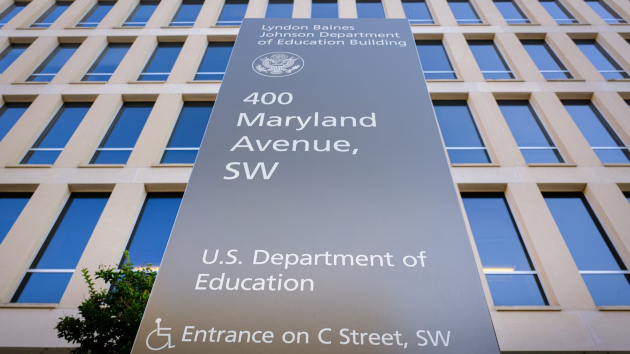
(WASHINGTON) — About two dozen state attorneys general and Democratic governors sued the Trump administration on Monday for withholding more than $6 billion in federal funds for several education programs nationwide.
“This is plainly against the law,” North Carolina Attorney General Jeff Jackson told ABC News in an exclusive interview ahead of the lawsuit.
The suit was filed in the U.S. District Court of Rhode Island. It includes the attorney general of the District of Columbia, Pennsylvania Gov. Josh Shapiro, and Kentucky Gov. Andy Beshear.
“It’s against the Constitution,” Jackson explained, adding, “It’s against the Impoundment Act. From a legal standpoint, this is not a hard case.”
The Impoundment Control Act of 1974 says Congress must consider and review executive branch withholdings of budget authority, according to the U.S. Government Accountability Office. The law requires the president to report any withholdings promptly to Congress.
Federal aid for schools is typically allocated each year on July 1, but aid was paused on June 30 in an ongoing programmatic review of education funding, according to a Department of Education memo sent to Congress obtained by ABC News.
“If the courts don’t act promptly, the consequences will be dire,” Jackson warned, arguing that districts face immediate harm as the school year approaches.
Jackson said the funding review also broke the constitutional separation of powers as the executive branch unilaterally halted congressionally authorized money for programs that serve millions of America’s students.
The Department of Education referred questions to the Office of Management and Budget (OMB), which told ABC News many of the programs “grossly misused” government funds to promote a “radical leftwing agenda.” The Impoundment Control Act specifically states OMB should specify the duration of proposed partial-year deferrals. However, in a statement to ABC News, an OMB spokesman said no decisions have yet been made.
Even though no funding has been cut, Jackson condemned the administration, contending the effect of the pause is going to be massive and could result in North Carolina firing about 1,000 educators. He said workforce training, teacher preparation, suicide prevention and after-school programs could all be shuttered.
“Everybody knows when it comes to juvenile crime, you want a safe place for teenagers to be able to go, to be able to keep them out of trouble,” Jackson told ABC News. “Nobody thinks that eliminating after-school programs across the entire country is a good idea.”
The pause has so far included Title II-A grants for effective educator instruction, Title IV-B grants for after-school programming, Title IV-A grants for student support, Title III-A funding for English Language Acquisition, Title I-C funding for Migrant Education and grants for adult education, according to the department’s memo to Congress.
Parents groups, nonprofits, and education advocates decrying the review are also expected to mount lawsuits against the administration, according to sources familiar.
“This is one of those moments where something really big and potentially really damaging could be getting ready to occur,” Jackson said.
“I’m going to do everything that I can to stop it,” he added. “It would be great if parents across the country lent their voices to this cause. I think everybody needs to hear from them.”
The funding pause comes as the administration has threatened to dismantle the Department of Education, reduced nearly half the agency’s staff and made cuts to grants and programs that run afoul of its priorities.
Jackson and state education leaders around the country believe vulnerable students will bear the brunt of any delayed funding. Alabama, California, and Washington state’s education chiefs slammed the review, saying they haven’t been given a timetable on when it might be completed. OMB has not said when it will make a decision.
Alabama State Superintendent of Education Eric Mackey said this will affect students with the “greatest need” as the stalled funding meets his state’s ongoing educator shortage.
“The loss of funding for those rural, poor, high poverty school districts, is just going to be, you know, more fuel for the fire that makes it more difficult to educate children in those communities,” Mackey told ABC News.
The National Education Association, the country’s largest labor union that represents teachers and other education professionals, estimates Alabama could lose about $100 million if the funds aren’t reinstated, Washington would be out $150 million, and more than $900 million in funding remains halted in California by the administration.
“It is a huge threat to our districts, many of whom don’t have the reserves to cover the balance here,” California State Superintendent of Public Instruction Tony Thurmond told ABC News.
“They built their budgets based on the expectation that federal funds would flow, as they have for many years, and so it creates threats for local districts that they may have to lay staff off. It raises threats for us as a state agency that provides technical assistance to many districts. You know, how will we continue to fund these positions?” he said.
Both California and Washington state’s attorneys general joined the lawsuit. The education programs likely can’t withstand a review that stretches into the school year, state education leaders say.
“If we don’t have assurances that the money is going to be there [by September], school districts will have already started cutting programs,” Washington State Superintendent of Public Instruction Chris Reykdal told ABC News. “We will start our school year under the belief that we’re going to go at least a year without these funds,” he said.
Meanwhile, as districts in Alabama return to school within three weeks, Mackey warned some programs may be eliminated for years to come.
“Let’s say we get eight, nine months down the road, and we’re still in this pause situation and the funds haven’t come. Then, I think as we begin to budget for the 2026-2027 school year then you’re going to see a lot of programs cut,” Mackey said.
“People, as long as they can, will hold out. But if they see that this is kind of a permanent thing, that that funding is just not going to be consistent, then they are going to have to go with the more conservative approach,” he added.
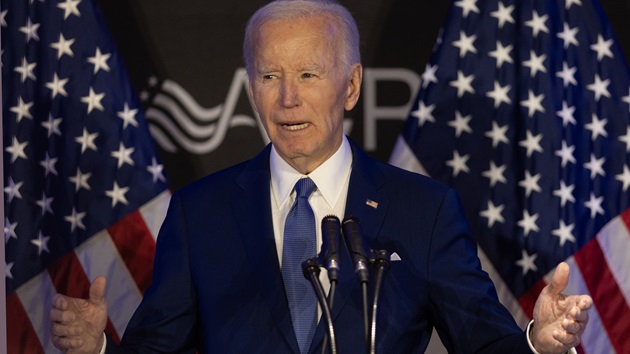
(WASHINGTON) — Former President Joe Biden, in an interview with the New York Times published on Sunday, said that he personally made every clemency and pardon decision during the last few weeks of his presidency — including those made with an autopen.
However, he and aides told the Times that some decisions for large batches of pardons were based on broad categories that various people fell into, not based on reviewing individuals on a case-by-case basis. Biden said he approved the categories and standards for choosing who to pardon.
“I made every single one of those. And — including the categories, when we set this up to begin with,” Biden said of the clemency and pardon decisions.
In December, Biden pardoned his son, Hunter Biden, who was convicted on tax evasion and federal gun charges; commuted the sentences of nearly 1,500 people on home confinement; and pardoned 39 people who were convicted of nonviolent crimes.
President Donald Trump and congressional Republicans have also focused their ire on Biden’s use of an autopen device to sign pardons and other documents, claiming either that the pardons Biden approved are void because they were signed using an autopen, or that it matters who controlled the autopen when the pardons were signed. Trump has said he has used an autopen for some trivial matters, but criticized its use for pardons.
In June, Trump ordered Attorney General Pam Bondi to investigate whether the Biden administration sought to conspire to cover up his mental state while in office, and to look through Biden’s use of the autopen.
“The autopen is, you know, is legal. As you know, other presidents used it, including Trump. But the point is that, you know, we’re talking about a whole lot of people.”
“They’re liars,” Biden also said of Trump and Republicans. “They know it … they’ve had a pretty good thing going here. They’ve done so badly. They’ve lied so consistently about almost everything they’re doing. The best thing they can do is try to change the focus and focus on something else.”
He called the furor “consistent with Trump’s game plan all along … if I told you three years ago, we’d have a president doing this, I think you’d look at me in the eye and say, ‘What, are you, crazy?'”
Asked about the Times’ report Monday morning, Trump called Biden’s use of autopen a “tremendous scandal.” The president once again claimed without evidence that Biden wasn’t aware of what was being signed.
“I guarantee you he knew nothing about what he was signing, I guarantee you,” Trump said in the Oval Office.
Biden’s latest remarks come as Trump and Republicans continue to argue that Biden was not the one making decisions to grant pardons or clemencies, or in charge of decisions more broadly during his presidency.
In May, Senate Republicans announced their plans to launch the probe into Biden’s mental fitness while in office, including his use of autopen.
The House Oversight Committee is also conducting an investigation into Biden’s health in office. Last week, Biden’s former White House physician Dr. Kevin O’Connor briefly appeared before the Oversight Committee behind closed doors, where he declined to cooperate, invoking the Fifth Amendment and asserting physician-patient privilege.
The Times said it reviewed emails from the Biden White House that corroborated that it had put in place a process where Biden made decisions before clemency records were signed by an autopen device. ABC News has not obtained or reviewed these emails.
For larger categories of individuals being considered to be pardoned, the Times reported, Biden did not approve every single name, but approved what standards would be used to figure out which people would get their sentences adjusted. Biden himself did discuss pardons for higher-profile figures, such as former chairman of the Joint Chiefs of Staff Mark Milley, according to the New York Times’ report.
“Well, first of all, there’s categories. So, you know, they aren’t reading names off for the commutations for those who had been home confinements for, during the pandemic,” Biden told the Times.
“So the only things that really we read off names for were, for example, you know, was I, what was I going to do about, for example, Mark Milley? Mark’s a good guy. We know how vindictive Trump is and I’ve no doubt they would have gone after Mark for no good reason … I told them I wanted to make sure he had a pardon because I knew exactly what Trump would do — without any merit, I might add,” Biden told the Times.
The Times said there were some small changes made to the lists of people set to receive pardons after Biden had approved the category based on new information from the Bureau of Prisons, and that aides did not bother to run the revisions by Biden before putting the pardons through autopen, although the aides saw that as routine.
Biden further defended the decision to pardon his family members because Trump would “go after me through my family,” he told the Times.
“I know how vindictive he is. I mean, everybody knows how vindictive he is,” Biden told the Times. “So we knew that they’d do what they’re doing now. And my family didn’t do anything wrong … and all it would do is, if they, if he went after them, would be, is run up legal bills.”
(BUDAPEST) — President Donald Trump threatened “severe tariffs” against Russia if a ceasefire deal isn’t reached in 50 days over its war in Ukraine.
“We’re very, very unhappy with them,” Trump said of Russia during remarks in the Oval Office alongside NATO Secretary-General Mark Rutte on Monday.
“Tariffs at about 100%. You call them secondary tariffs, you know what that means,” he added.
Trump also announced an agreement with NATO regarding weapons to assist Ukraine amid Russia’s onslaught.
“We’ve made a deal today where we are going to be sending them weapons and they’re going to be paying for them. We, the United States, will not be having any payment made,” Trump said.
Rutte called the deal “really big” and said this is “Europeans stepping up.”
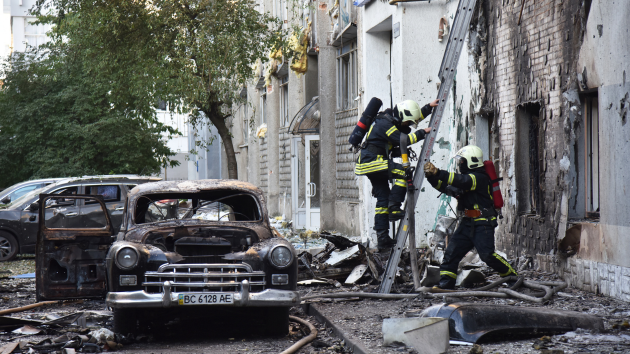
The announcement comes after Russia launched four missiles and 136 drones into Ukraine overnight into Monday morning, according to Ukraine’s air force.
Ukraine’s air force said in a post to Telegram that 108 drones were shot down or otherwise neutralized during the latest attack, with 28 drones impacting in 10 locations. Falling debris from downed drones was reported in four locations, the air force said.
Russia’s Defense Ministry, meanwhile, said its forces downed 11 Ukrainian drones overnight into Monday morning.
Russian President Vladimir Putin is continuing the long-range bombardment of Ukrainian cities despite criticism from Trump, whose months-long push for a ceasefire and eventual peace deal has thus far failed to achieve a breakthrough.
Trump had said Sunday that the U.S. would provide Kyiv with more Patriot surface-to-air systems to help defend against Russia’s nightly bombardments.
Asked when he expected some weapons, including Patriot systems, to arrive in Ukraine, Trump told reporters on Monday, “We’re going to have some come very soon, within days.”
Rutte added that the next arms delivery to Ukraine will encompass a wider range of military equipment, extending beyond the Patriot missile systems.
Trump said Sunday that the U.S. would provide more “sophisticated” equipment to aid Kyiv in its defense against Russian attacks.
“We basically are going to send them various pieces of very sophisticated military equipment,” Trump told reporters on Sunday. “They’re going to pay us 100% for them, and that’s the way we want it,” Trump said.
Asked if he would still send 10 Patriot missiles to Ukraine — as announced last week — the president said the number has not been finalized but that Kyiv would be receiving more aid.
“I haven’t agreed on the number yet, but they’re going to have some because they do need protection,” he said.
“But the European Union is paying for it,” Trump added. “We’re not paying anything for it, but we will send it. It will be business for us, and we will send them Patriots, which they desperately need, because Putin really surprised a lot of people.”
“He talks nice and then he bombs everybody in the evening. There’s a little bit of a problem there,” Trump continued.
The Patriot surface-to-air missile system has become one of Ukraine’s most important platforms during Russia’s full-scale invasion, which began in February 2022. Since 2023, Patriots in Ukraine have been used to down drones, ballistic missiles and Russian aircraft.
Ukraine now fields at least six Patriots, two of which were provided by the U.S. and the others by different NATO allies.
Ukraine has other air defense platforms — among them the European IRIS-T and SAMP-T systems — but none have been so publicly celebrated by Ukraine for blunting Russian attacks. The system, which entered U.S. service in the 1980s, has even been credited with shooting down Russian hypersonic missiles.
Sen. Lindsey Graham told ABC News last week that Trump is “ready” to act on a sweeping Senate bill that would impose tariffs of up to 500% on countries that buy oil and gas from Russia.
Trump, Graham said Wednesday, is “trying to get Putin to the table, but Putin’s not responding.” The legislation will include a waiver allowing Trump to lift sanctions on countries purchasing Russian oil or uranium for 180 days, Graham said.
Responding to Trump’s remarks on Sunday, Kremlin spokesperson Dmitry Peskov told reporters at a Monday briefing, “A lot has been said about the high cost and so on, now it seems that these supplies will be paid for by Europe,” as quoted by Russia’s state Tass news agency.
“Some things will be paid for, some things will not be paid for, but the fact remains that the supply of weapons, ammunition and military equipment from the United States has continued and continues to Ukraine,” Peskov said,
Meanwhile, Trump’s Russia-Ukraine envoy Keith Kellogg met with Ukrainian President Volodymyr Zelenskyy in Kyiv on Monday. Zelenskyy said they had a “productive conversation” in which they discussed possible sanctions against Russia.
“We discussed the path to peace and what we can practically do together to bring it closer,” Zelenskyy said in a statement. “This includes strengthening Ukraine’s air defense, joint production, and procurement of defense weapons in collaboration with Europe. And of course, sanctions against Russia and those who help it.”
ABC News’ Hannah Demissie and Alexandra Hutzler contributed to this report.
(FALL RIVER, Mass.) — Nine people have been killed and dozens are hurt after a five-alarm fire tore through an assisted-living facility in Fall River, Massachusetts, officials said.
Firefighters, police and other responders descended on the scene of the Sunday night fire at the Gabriel House assisted-living facility, where they found multiple people “hanging out of the windows, screaming and begging to be rescued,” Fall River Fire Chief Jeffrey Bacon said.
Smoke was all over the building, Bacon said.
“This was not a situation where teams arrived and people were able to get out easily — all of these people needed assistance,” Massachusetts Gov. Maura Healey said. “Many were in wheelchairs, many were immobile, many had oxygen tanks.”
About 12 “non-ambulatory residents were physically carried out by our officers,” according to Fall River police.
Thirty people, including five firefighters, were taken to local hospitals, Bacon said.
One person is in critical condition, Bacon said. The five firefighters have already been released, officials said.
The building — which was home to about 70 people — is now clear, officials said.
It’s not clear if the sprinklers went off, officials said.
“My heart goes out to those who are waking up to the most horrific news imaginable about their loved ones this morning,” Healey said in a statement on Monday.
Later at a news conference, the governor expressed her gratitude for the first responders’ quick actions.
“Were it not for that, we would’ve seen an even far — an unimaginable loss of life here, given the vulnerability of this population,” she said.
The cause of the fire is under investigation. One official briefed on the probe told ABC News that, as a preliminary matter, the fire does not appear to have been set intentionally. More likely, the source said, it appears to have been caused by some sort of electrical or mechanical problem.
Fall River, near the Massachusetts-Rhode Island border, is about 50 miles south of Boston.
The building was built in 1964 and underwent an exterior remodeling in 2000, according to tax assessment records. It was listed on the assessment form used by the city as having an “average-good” physical condition as of this February, the records said.
This is a developing story. Please check back for updates.
ABC News’ Jared Kofsky, Matt Foster and Jessica Gorman contributed to this report.
(LONDON) — A small plane crashed at London Southend Airport in Sussex, England, on Sunday, killing all four people on board, according to local officials.
On Sunday, Essex Police said they were on the scene after a “serious incident” occurred at the Southend airport at approximately 4 p.m. local time. They said they are responding to reports of a “collision involving one 12 metre plane” and said the emergency response will last several hours.
The aircraft — which had landed at the airport earlier in the day — took off and was heading to the Netherlands, Essex Police said on Monday. But shortly after takeoff, the plane got “into difficulty and crashed within the airport boundary.”
Police are “working to officially confirm” the identities of the four dead people but they believe all are foreign nationals, authorities said on Monday.
“Our thoughts are with their families and colleagues at this tragic time. I can promise them that those who have passed away will be treated with the utmost care and dignity,” police said.
Zeusch Aviation confirmed on Sunday its flight SUZ1 was involved in the incident and that the company is “actively supporting the authorities with the investigation.”
The East England Ambulance Service said they’ve sent “four ambulances, a rapid response vehicle, four Hazardous Are Response Team vehicles, three senior paramedic cars and an Essex and Herts Air Ambulance” to the airport.
Officials said the public should avoid the area and that they are evacuating the Rochford Hundred Golf Club and Westcliff Rugby Club “due to their proximity to the incident.”
London Southend Airport confirmed the “serious incident” on Sunday afternoon involving a “general aviation aircraft.”
“We are working closely with the local authorities and will be able to provide more information as soon as possible,” the airport said in a statement.
Airport authorities later said the airport is closed until further notice as investigations respond to the incident.
“All flights to and from the Airport have been cancelled while Police, emergency services and air accident investigators are attending the incident. We ask that any passengers due to travel tomorrow via London Southend Airport contact their airline for information and advice,” airport officials said in a statement.
The spokesperson for the Air Accidents Investigation Branch said they are aware of they accident “involving an aircraft near Southend Airport this afternoon” and have deployed a “team and an investigation into the cause of the accident.”
London Southend Airport is located about one hour east of London, a few miles from the coast.
ABC News’ Victoria Beaule, Ayesha Ali and Will Gretsky contributed to this story.
(NEW YORK) — Stocks were mixed in early trading on Monday after President Donald Trump over the weekend issued 30% tariffs on the European Union and Mexico, rekindling tensions with two of the largest U.S. trade partners and threatening to raise consumer prices.
The Dow Jones Industrial Average dropped 115 points, or 0.26%, while the S&P 500 dropped 0.15%. The tech-heavy Nasdaq ticked up 0.04%.
Trump on Saturday announced new tariffs on the European Union and Mexico that will take effect on Aug. 1. That start date matches the onset of levies issued for more than 20 other countries in recent days, including top trade partners Canada, Japan and South Korea.
In a letter posted on his social media platform, Trump faulted Mexico for its alleged failure to stop the transport of fentanyl into the U.S. Between September and April, nearly all fentanyl seized by the U.S. came through the southern border with Mexico, according to U.S. Customs and Border Patrol, or CBP.
In response to a previous set of tariffs issued in February, Mexico vowed to take steps to address the transport of fentanyl, prompting Trump to temporarily pause the levies.
In a statement posted on X, Mexican economic minister Marcelo Ebrard said Mexico had already been negotiating with the U.S. to “protect businesses and jobs.”
“We were informed that, as part of the profound changes in U.S. trade policy, all countries will receive a letter signed by the President of the United States establishing new tariffs starting August 1st,” Ebrard said. “We stated at the meeting that this was an unfair deal and that we did not agree with it.”
Trump sharply criticized the EU in a separate letter posted on social media, claiming the the U.S. runs an unacceptably high trade deficit with the EU. In a statement released on Saturday afternoon, European Commission President Ursula von der Leyen said the EU remains committed to “dialogue, stability, and a constructive transatlantic partnership.”
ABC News’ Kelsey Walsh and Patricio Chile contributed to this report.
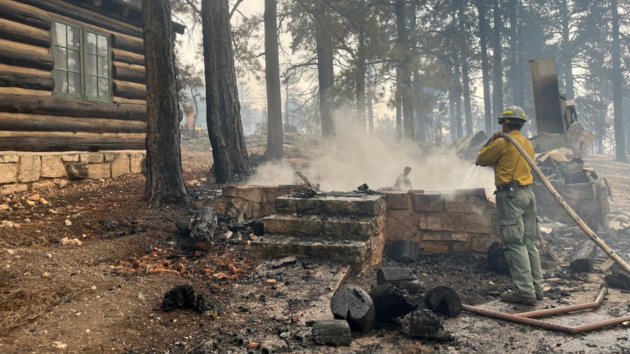
NORTH RIM, Ariz. — The Grand Canyon Lodge was one of dozens of structures destroyed in a fast-moving wildfire in Arizona over the weekend, the National Park Service (NPS) confirmed.
The lodge, which sits on the North Rim of Grand Canyon National Park, first opened in 1937 and is listed as a National Historic Landmark. It is the only in-park lodging option in that region of the park.
The fire, dubbed by officials as the Dragon Bravo Fire, had scorched over 5,000 acres as of Sunday morning and is being fueled by extreme summer heat, low humidity and strong winds.
A second fire, the White Sage Fire, is also threatening the Grand Canyon’s North Rim, according to NPS.
The lodge is one of approximately 50 to 80 structures that have been lost, including the National Park Service’s administrative building and visitor facilities.
NPS officials said aerial bucket drops were conducted to slow fire movement near the lodge; however, a chlorine gas leak at the nearby water treatment facility prompted the evacuation of firefighting personnel from critical zones.
Chlorine gas can quickly settle into lower elevations such as the inner canyon, posing a health risk, officials added.
No deaths or injuries have been reported in the fire, and all staff and residents were successfully evacuated before the fire’s escalation, NPS officials said.
The North Rim will remain closed to all visitor access for the remainder of the 2025 season, according to NPS.
Arizona Gov. Katie Hobbs released a statement on Sunday, saying she’s “incredibly saddened by the destruction of the historic Grand Canyon Lodge.”
“As someone who was born and raised in Arizona, I know what the Grand Canyon National Park means to so many people, not just in Arizona, but all over the world, and how devastating it is to see this damage done to one of Arizona’s most cherished landmarks,” Hobbs said.
Hobbs also called for “scrutiny” into the federal government’s emergency response to the wildfire. “They must first take aggressive action to end the wildfire and prevent further damage,” Hobbs said.
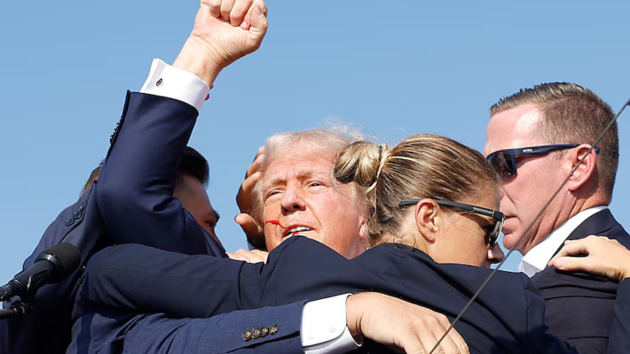
BUTLER, Pa. — Senate Homeland Security And Governmental Affairs Committee Chairman Rand Paul released a final report Sunday on the committee’s findings from its investigation into the assassination attempt by Thomas Crooks targeting then-candidate Donald Trump, marking one year since the events in Butler, Pennsylvania.
The report has few new details and is largely a rehashing of information that was already known about the shooting. It largely mirrors a preliminary report on the investigation put forward by then-committee Chairman Gary Peters in September 2024.
The report outlines what Paul calls “stunning failures by the United States Secret Service that allowed then-former President Donald J. Trump to be shot on July 13, 2024.”
“The truth is, President Trump, and the nation, was fortunate. The once-again President survived despite being shot in the head. Since that day, there has been another attempt on his life and further threats to do him harm, including most recently a renewed threat from Iran. This report reveals a disturbing pattern of communication failures and negligence that culminated in a preventable tragedy. What happened was inexcusable and the consequences imposed for the failures so far do not reflect the severity of the situation,” Paul’s report says.
Secret Service Director Sean Curran said in a statement Sunday that his agency “will continue to work cooperatively with the committee as we move forward in our mission.”
“Following the events of July 13, the Secret Service took a serious look at our operations and implemented substantive reforms to address the failures that occurred that day,” Curran said. “The Secret Service appreciates the continued support of President Trump, Congress, and our federal and local partners who have been instrumental in providing crucial resources needed to support the agency’s efforts.”
The report stems from the committee’s bipartisan investigation launched shortly after the attack on July 13, 2024. It is based on 75,000 pages of document produced to the committee, according to the report.
The report’s findings highlight many that have already been reported about the attempted shooting of Trump, including what it describes as “unacceptable failures” in planning and execution of the Butler rally.
In particular, it highlights, as previously reported, communication failures that led to vulnerabilities on the day. It focuses on a previously reported breakdown of communications between local law enforcement and the USSS.
The report notes instances leading up to the Butler rally in which the Secret Service headquarters denied or left unfulfilled requests for additional resources to support Trump during the campaign. They highlight an instance in which a request for countersnipers at a rally in South Carolina went unfulfilled, though there were countersnipers at the Butler rally.
It also highlights that lack of countersnipers at Trump’s July 9, 2024, rally in Doral even after a briefing the day before from the USSS Protective Intelligence Division led to the July 9 determination by USSS that counter snipers should be present at all of Trump’s outdoor rallies due to intelligence reflecting increased risks at outdoor events.
The report also highlights other instances of other resources, such as Counter Assault Teams and drones, being denied for various Trump events in 2024.
The report argues there has been “insufficient accountability” for USSS officials involved in the incident. Paul, according to the report, subpoenaed USSS for records related to the “disciplinary actions” taken against personnel involved in planning the Butler rally earlier this month. The produced documents revealed that six individuals have faced disciplinary action, and the report argues that the penalties received were “too weak to match the severity of the failures”.
Paul also says that Kimberley Cheatle, the former USSS director, made false statements when testifying before Congress following the attack. Cheatle told the committee that there were “no requests that were denied” for the Butler rally, but the committee found evidence of “at least two instances of assets being denied by the USSS headquarters” related to the Butler rally. The report asserts that former Acting Director Ronald Rowe’s testimony was also “misleading.”