(NEW YORK) — The Department of Homeland Security’s Cybersecurity and Infrastructure Security Agency (CISA) has posted an alert saying it is aware of “active exploitation” of a new vulnerability to Microsoft SharePoint “enabling unauthorized access to on-premise SharePoint servers.”
The exploitation activity “provides unauthenticated access to systems and enables malicious actors to fully access SharePoint content, including file systems and internal configurations, and execute code over the network,” the post stated.
“The FBI is aware of the matter, and we are working closely with our federal government and private sector partners,” the bureau said in a statement.
According to a Microsoft customer guidance blog post issued Saturday, “Microsoft is aware of active attacks targeting on-premises SharePoint Server customers by exploiting vulnerabilities partially addressed by the July Security Update.”
“These vulnerabilities apply to on-premises SharePoint Servers only,” the post added and “SharePoint Online in Microsoft 365 is not impacted.”
A company spokesperson said the company has been “coordinating closely with CISA, DOD Cyber Defense Command, and key cybersecurity partners around the world throughout our response.”
“While the scope and impact continue to be assessed,” CISA Acting Executive Assistant Director for Cybersecurity Chris Butera said in a statement, “the new common vulnerabilities and exposure (CVE), CVE-2025-53770, is a variant of the existing vulnerability CVE-2025-49706 and poses a risk to organizations with on-premise SharePoint servers.”
CISA was “made aware of the exploitation by a trusted partner and we reached out to Microsoft immediately to take action,” the statement said. “Microsoft is responding quickly, and we are working with the company to help notify potentially impacted entities about recommended mitigations.”
Eye Security, a cybersecurity firm, says it “identified active large-scale exploitation” of the new vulnerability “being used in the wild” on SharePoint servers across the world and discovered “dozens of systems actively compromised,” according to a blog post on the firm’s website. The breaches “probably” began on the evening of July 18.
According to a post by Palo Alto Networks Unit 42, a threat research and security consulting firm, “These flaws allow unauthenticated attackers to access restricted functionality.”
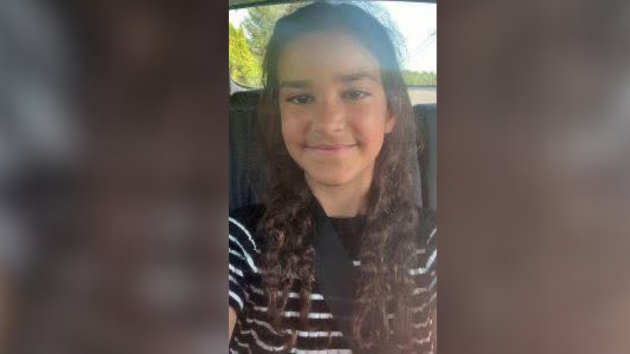
(TICONDEROGA, N.Y.) — A 9-year-old Canadian girl whose father had reported she had been kidnapped in upstate New York was found dead Sunday afternoon, with investigators saying she had not been abducted and they were now questioning inconsistencies in her dad’s story, according to authorities.
The body of the girl, identified by the Warren County Sheriff’s Office as Melina Galanis Frattolin, was discovered in Ticonderoga, New York, near the New York-Vermont border, about 15 miles from Lake George, where her father initially claimed she had been kidnapped on Saturday by a man driving a white van.
The report from the father led the New York State Police to issue an Amber Alert earlier on Sunday. A massive search was launched, involving State Police K-9 and aviation units, New York State Park Rangers, the Essex and Warren County sheriff’s offices, the New York State Department of Conservation, and the Ticonderoga Police Department.
“As the case progressed, law enforcement identified inconsistencies in the father’s account of events and the timeline he provided,” according to a statement from the State Police.
The investigation was ongoing Sunday afternoon as State Police took over the investigation from the Warren County Sheriff’s Office.
There was no immediate comment from the State Police on whether Melina’s father, who police identified as 45-year-old Luciano Frattolin, also of Canada, had been arrested in his daughter’s death.
State police did not disclose how Melina died.
“At this time, there is no indication that an abduction occurred, and there is no threat to the public,” the State Police said in its statement.
Luciano Frattolin called 911 in Warren County late Saturday night, claiming his daughter had been abducted by a stranger, according to police. The father claimed the girl was kidnapped around 9:40 p.m. at a rest stop off Interstate 87 near Lake George, where he allegedly claimed they pulled over to use the restroom, according to police radio dispatches provided by Broadcastify.
The father told police his daughter was wearing light colored shorts, a blue-and-white striped shirt and white Adidas sneakers, police said.
“The child was taken under circumstances that lead police to believe that they are in imminent danger of serious bodily harm and/or death,” authorities said in an initial statement that accompanied the Amber Alert.
(MINOT, N.D.) — A Delta regional jet on approach to Minot, North Dakota, made an “aggressive maneuver” to avoid a mid-air collision with a B-52 bomber, according to the Delta pilot.
The incident took place on July 18, according to the airline. The flight, operated by SkyWest, had departed from Minneapolis. Once on the ground, the pilot apologized to passengers for the abrupt move and explained the situation.
“Given his speed … I don’t know how fast they were going, but they were a lot faster than us, I felt it was the safest thing to do to turn behind it,” the pilot said, according to a recording of the conversation. “So sorry about the aggressive maneuver, it caught me by surprise, this is not normal at all. I don’t know why they didn’t give us a heads up, because the Air Force base does have radar … long story short, it was not fun, but I do apologize for it and thank you for understanding. Not a not a fun day at work.”
It’s unclear how close the two jets came from each other or if a cockpit alarm was activated to warn the pilots of a potential collision. Minot is home to an Air Force base with B-52 bombers.
The Air Force has not released any information about the event to ABC News. SkyWest said it’s investigating the incident.
“SkyWest flight 3788, operating as Delta Connection from Minneapolis, Minnesota to Minot, North Dakota, landed safely in Minot after being cleared for approach by the tower but performed a go-around when another aircraft became visible in their flight path. We are investigating the incident,” according to a spokesperson.
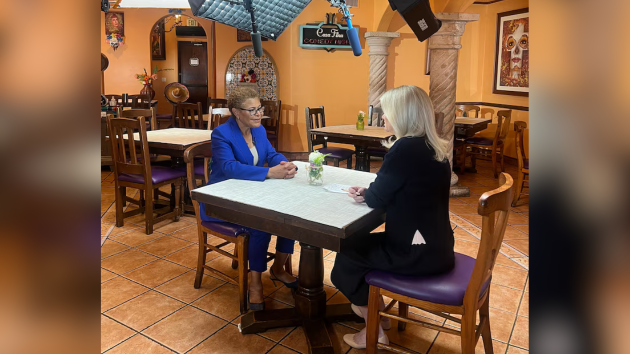
(LOS ANGELES) — As President Donald Trump marks six months into his second term, Los Angeles Mayor Karen Bass told ABC News’ “This Week” co-anchor Martha Raddatz that the administration’s immigration crackdown has not only sparked protests, but fear among the city’s residents.
“Los Angeles is a city of immigrants — 3.8 million people, and about 50% of our population is Latino. And so when the raids started, fear spread,” Bass said.
Immigration and Customs Enforcement (ICE) raids started in Los Angeles early June, prompting demonstrations that at times turned violent. While Trump’s deportation push was initially said to be centered around undocumented immigrants with criminal records, an ABC News analysis of new data shows that in recent weeks, the Trump administration has arrested an increasing number of migrants with no criminal convictions.
Since then, farmers, business owners and immigrant advocacy groups have, like the mayor, said that many residents have been afraid to leave their homes for fear of deportation, affecting the workforce, food supply and the culture of the city. Bass said that the restaurant the interview took place in, located in the predominantly Latino Boyle Heights neighborhood of east Los Angeles, was typically bustling. But now, it — and the neighborhood overall — can feel like a ghost town.
“It’s not just the deportation. It’s the fear that sets in when raids occur, when people are snatched off the street,” Bass said. “Even people who are here legally, even people who are U.S. Citizens, have been detained. Immigrants who have their papers and were showing up for their annual immigration appointment were detained when they showed up doing exactly what they were supposed to be doing.”
She criticized ICE for agents for executing enforcement operations without their affiliation being prominently displayed.
“Masked men in unmarked cars, no license plate, no real uniforms, jumping out of cars with rifles, and snatching people off the street, leading a lot of people to think maybe kidnappings were taking place,” Bass said. “How do you have masked men who then say, ‘Well, we are federal officials,’ with no identification?”
Raddatz noted that administration says those agents do that because “there have been threats… [and] doxing.”
“We have a Los Angeles police department that has to deal with crime in this city every single day. And they’re not masked. They stay here,” Bass said. “The masked men parachute in, stay here for a while, and leave. And so you enter a profession like policing, like law enforcement? I’m sorry, I don’t think you have a right to have a mask and snatch people off the street.”
Bass also touched on the continued presence of federal troops in the city. In response to those protests in early June, Trump deployed the National Guard and active-duty Marines to Los Angeles after protesters clashed with police. Some protestors threw rocks, fireworks and other objects at police, according to reports, before the arrival of federal troops.
Trump signed a memorandum in June saying the National Guard was deployed to address lawlessness in Los Angeles. The California National Guard’s 79th Infantry Brigade Combat Team posted on X that its objective was to protect federal protesters and personnel.
In her interview with ABC News, Bass denounced the violence as “terrible,” but said it did not “warrant military intervention.”
“It did not warrant the Marines coming into our city with basically no real mission, but just to show a force,” Bass said.
While the number of National Guard members in the city has been cut roughly in half, Bass said that their objective has not changed since they first arrived — and argued they’re presence is still not necessary.
“If you drive by our two federal buildings, you will see them standing out there. But there’s nothing going on in those federal buildings. So in my opinion, we are misusing taxpayers’ dollars, and we are misusing our troops,” she said.
While she disagreed strongly with the Trump administration’s immigration agenda, Bass said she appreciated the help the administration gave Los Angeles during the massive January wildfires.
“Well, I will heap praise on the administration for the first six months in Los Angeles with the fires. If you ask me, is there anything that they have done good in terms of immigration? I don’t know. I don’t think so,” she said. “I think that the viewpoint has been punitive, has been let’s make it as miserable as possible so that these people don’t come.”
Bass said that she is still willing to “work” with the White House, noting both the Olympics and World Cup coming to the city over the next few years.
“How does this end?” Raddatz asked. “How do you see the next six months, the next two years for immigrants in your city?”“Well, I am just hoping that this reign of terror ends. I’m hoping that the military leaves, because they were never needed here to begin with. I’m hoping that we can get back to normal. I’m hoping that the next time I come to this restaurant, that it will be filled, because people won’t be afraid to come here,” Bass said.
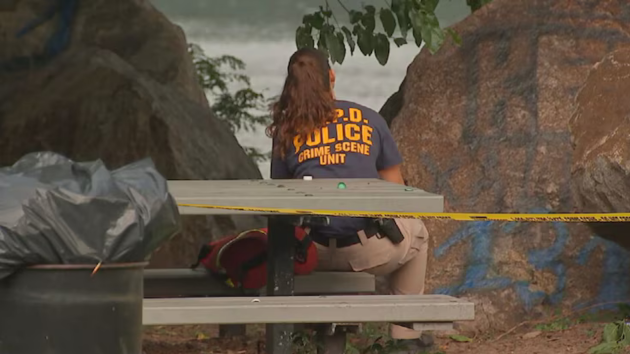
(NEW YORK) — An off-duty U.S. Border Patrol agent was shot and wounded just before midnight on Sunday in a New York City park under the George Washington Bridge and police said one person in custody is being investigated for the crime, authorities said.
The shooting unfolded at 11:51 p.m. Saturday in Fort Washington Park in the Washington Heights neighborhood of upper Manhattan, according to the New York Police Department.
A 42-year-old victim, who police sources told ABC New York affiliate station WABC is a federal Border Patrol agent, was shot in the face and arm during the incident.
The victim, whose name was not immediately released, was taken to Harlem Hospital, where he was recovering from his injuries on Sunday and is expected to survive, police said.
One person was taken into custody and police said they are investigating whether the person was involved in the shooting, authorities said.
A motive for the shooting remains under investigation. Investigators are probing whether the shooting stemmed from an apparent robbery.
The shooting occurred near the Little Red Lighthouse in Fort Washington Park, which is directly beneath the George Washington Bridge, police said.
The New York shooting comes roughly two weeks after a gunman opened fire at the entrance to the Border Patrol sector annex in McAllen, Texas.
The suspect in the July 7 shooting, identified as 27-year-old Ryan Louis Mosqueda, fired “many rounds” at the federal building that houses the U.S. Border Patrol office at the McAllen International Airport, according to McAllen Police Chief Victor Rodriguez.
The suspect, identified as 27-year-old Ryan Louis Mosqueda, fired at the entrance to the federal building that houses the U.S. Border Patrol offices at the McAllen International Airport, Rodriguez said at a news conference.
The suspect was confronted and killed by Border Patrol agents and local police, according to McAllen police and the Department of Homeland Security (DHS).
Two police officers and a Border Patrol employee were injured in the attack, according to the DHS.
The motive for the McAllen shooting remains under investigation.
(ZIKIM, Israel.) At least 73 Palestinians were killed on Sunday while trying to get access to food, according to the Hamas-run Gaza Ministry of Health. Another 150 people were injured, Gaza health officials said.
The majority of those killed were gathered near the Zikim border between Gaza and Israel.
The Israel Defense Forces said a review is ongoing. In a statement, it said that its troops fired near crowds “in order to remove an immediate threat posed to them,” though it wasn’t specific. The IDF added that it was aware of reports of casualties but said that a “preliminary review indicates that the reported number of casualties does not align with existing information.”
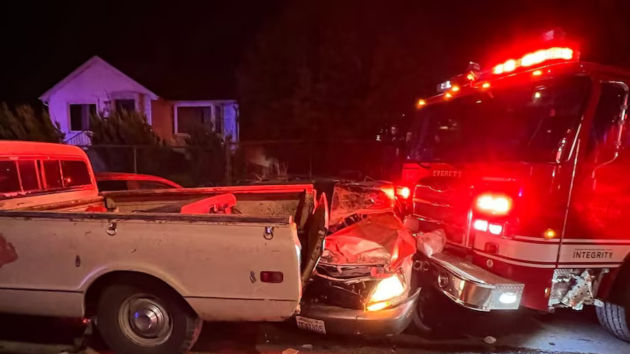
(EVERETT, Wash.) — A suspect remained on the loose Sunday after stealing a 35,000-pound fire engine in Everett, Washington, and going on a rampage, crashing into more than a dozen parked vehicles before abandoning the emergency rig and fleeing on foot, according to police and fire officials.
The theft of the Everett Fire Department pumper truck unfolded as its fire crew was on the fifth floor of a nearby building attending a medical emergency call, police said.
“Losing a fire engine in such a reckless manner not only jeopardizes the safety of our first responders but also puts our community at risk,” Everett Police Chief John DeRousse said in a statement. “We are committed to ensuring the safety of our residents, and any information that helps us resolve this incident is crucial. It is imperative that we hold the suspect accountable for their actions, and we will work diligently to bring them to justice.”
The theft happened just after 11 p.m. on Friday in the 2900 block of Hoyt Avenue in Everett, according to police. Firefighters returning from the medical emergency call discovered their engine, a 2018 Pierce Enforcer Pumper truck, was missing, according to police.
Around that same time, the first 911 call came in reporting a fire engine had crashed into two parked vehicles and fled the scene, according to police.
Within a minute of getting the call, a second 911 caller reported that the fire engine had plowed into 10 parked vehicles and that the driver had abandoned the apparatus and ran from the scene, police said.
As officers responded to the crash sites, they came across three other scenes where vehicle or property — including trees and a street sign — had been damaged, police said.
At least 16 parked vehicles were damaged in the rampage, according to police.
The stolen fire engine also sustained significant damage and had to be taken out of service, officials said.
No injuries were reported.
“We are actively reviewing this incident and examining our policies and procedures to see what, if anything, can be done to help prevent such occurrences in the future,” Everett Fire Chief Dave DeMarco said in a statement.
As the investigation continued on Sunday, police requested help from the community in identifying the suspect. Police asked that anyone with information about the incident to contact investigators immediately.
(LONDON) — Russia’s Defense Ministry on Sunday claimed to have shot down at least 26 Ukrainian drones over the Moscow region, as both sides continued their long-range strike campaigns despite Kyiv suggesting a resumption of bilateral ceasefire talks this week.
The Defense Ministry in Moscow said in posts to Telegram that 132 Ukrainian drones were downed overnight and into Sunday afternoon. The interceptions took place over at least nine Russian regions plus occupied Crimea and the Black Sea, according to the ministry.
The latest attack prompted restrictions at all four of Moscow’s international airports, according to Telegram posts by Artem Korenyako, a spokesperson for Russia’s federal aviation agency Rosaviatsiya. Korenyako said that least 134 aircraft were diverted to alternate airports amid the disruption.
Andriy Kovalenko, the head of the Counter-Disinformation Center operating as part of Ukraine’s National Security and Defense Council, wrote on Telegram, “The most effective story is the paralysis of Russia’s air traffic.”
Moscow Mayor Sergey Sobyanin said early Sunday that at least 21 Ukrainian drones were destroyed over the capital region since 6 p.m. local time on Saturday.
Among them was one drone downed in Zelenograd, around 20 miles northwest of central Moscow. Russian Telegram channels reported that the wreckage of the drone fell in a residential area and set fire to cars.
“Emergency services are working at the crash site in Zelenograd,” Sobyanin wrote on Telegram. “All necessary measures are being taken. According to preliminary information, there are no serious injuries or casualties.”
Ukraine’s air force, meanwhile, reported 57 Russian drones launched into the country overnight. Twenty-five drones were downed or otherwise suppressed, the air force said, with 32 drones impacting in 10 locations and debris falling in six locations.
July has seen both sides expand long-range drone strikes amid stalled ceasefire talks and despite continued pressure from President Donald Trump’s administration.
Zelenskyy said in a post to Telegram on Saturday that Kyiv had proposed new talks to be held this week, as both sides continue work on a prisoner exchange agreement reached at previous rounds of talks held in Istanbul, Turkey.
Rustem Umerov, who last week was moved from his role as defense minister to serve as secretary of the National Security and Defense Council, “reported that he has proposed another meeting with the Russian side for next week,” Zelenskyy wrote.
“The pace of negotiations must be increased,” the president said. “Everything must be done to achieve a ceasefire. And the Russian side must stop hiding from decisions.”
“Prisoner exchanges. Return of children. End to the killings. And a meeting at the level of leaders is needed to truly ensure peace — a really lasting one,” Zelenskyy said. “Ukraine is ready for such a meeting.”
Also on Sunday, Zelenskyy said in a post to X that he received a report from Commander-in-Chief Gen. Oleksandr Syrskyi on issues including “our long-range strikes, particularly the frequency and effectiveness of deep strikes.”
“Russian logistics must suffer significantly in response to Russia prolonging this war,” Zelenskyy wrote.
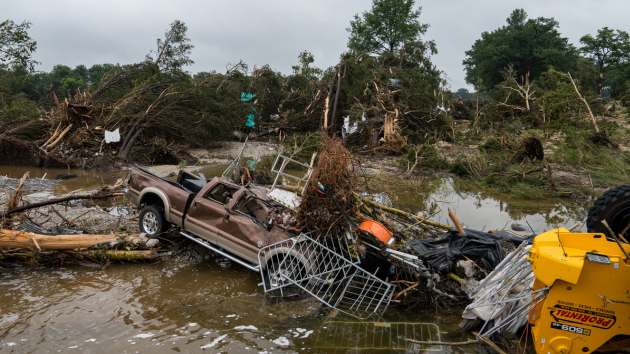
(KERRVILLE, Texas.) — Officials in hard-hit Kerr County, Texas, which was ravaged by flooding earlier this month, say the number of people believed to be missing has dropped from nearly 100 to three.
“Through extensive follow-up work among state and local agencies, many individuals who were initially reported as missing have been verified as safe and removed from the list,” the city of Kerrville said in news release. “This has been an ongoing effort as investigators worked diligently to verify reports of missing persons and confirm their status.”
Earlier this week, Texas officials said 97 people in the county were still unaccounted for after the deadly July 4 floods. At its height, the number of people listed as missing in the county was more than 160.
“We are profoundly grateful to the more than 1,000 local, state, and federal authorities who have worked tirelessly in the wake of the devastating flood that struck our community,” Kerrville City Manager Dalton Rice said in a statement. “Thanks to their extraordinary efforts, the number of individuals previously listed as missing has dropped from over 160 to three.”
In addition to the three people missing in Kerr County, there were still three people missing in Travis County and one person listed as missing in Burnet County, according to the most recent update earlier this week.
Overall, the death toll from the July 4 flooding across the state of Texas stood at 134 as of earlier this week.
Of those, 107 were in Kerr County — including 70 adults and 37 children.
(NEW YORK) — One of the world’s largest digital design platforms, Thingiverse, is taking new steps to block 3D-printed guns and gun parts after investigators in New York discovered an alarming number of design files for 3D-printed weapons available for download.
Thingiverse began deploying automated technology to rapidly detect and remove digital files for 3D-printed firearms.
“Thingiverse is committed to fostering a safe, welcoming, and collaborative environment for its global community. As part of this commitment, we regularly review and update our policies and procedures to help prevent the sharing of unlawful and harmful content, such as weapons and illegal materials, as outlined in our Acceptable Use Policy,” the company said in a statement.
“Following discussions with the Manhattan District Attorney’s Office about concerns around untraceable firearms, we are taking additional steps to improve our content moderation efforts,” they added.
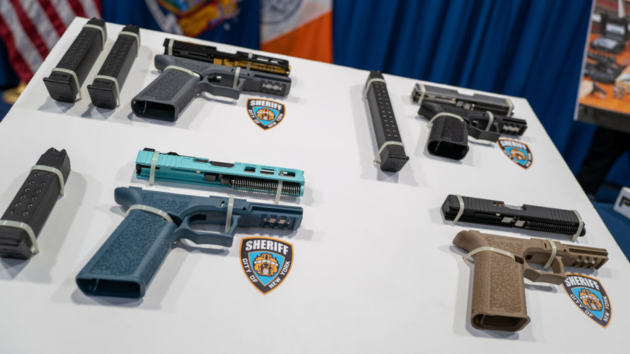
Untraceable ghost guns have become an increasing problem. One hundred and fifty ghost guns were seized in New York City in 2020. The number tripled in 2024.
More recently, the ghost guns have evolved into weapons that can be made with nothing more than a 3D printer and a computer. A user can download a design file for Glock and print it within a few hours, concealed from public view.
Earlier this year, Manhattan District Attorney Alvin Bragg sent letters to 3D printing companies asking them to help combat the spread of homemade guns, which he called a “growing threat.”
Luigi Mangione allegedly used a 3D-printed gun and silencer in the assassination-style killing of United Healthcare chief executive Brian Thompson. Mangione pleaded not guilty to federal charges.
Bragg called on the companies to remove online blueprints, known as CAD files, that can be used to print firearms and gun parts without a background check.
Before an individual can use a 3D printer, they need digital designs for the product they want to manufacture, commonly in the form of “STL”, “3MF”, or “OBJ” files. In the case of Thingiverse, one of the largest platforms in the digital design space, investigators from the district attorney’s office and the NYPD found hundreds of CAD files for 3D-printed weapons, alarming both law enforcement and the company.
As Thingiverse grew, its existing security measures could not keep up with weapons-related CAD files. Its engineers souped them up and a recent test found a significant number of those files no longer available, according to the district attorney’s office.
“Combating the proliferation of 3D-printed weapons remains a top priority for the Office, and I am grateful to Thingiverse for its willingness to collaborate on addressing this urgent issue,” Bragg said. “It’s good faith efforts to stop the spread of 3D-printed weapons into our communities should serve as a model for other 3D printing and digital design companies.”
This week, Bragg sent a similar letter to Bambu Lab, a China-based manufacturer of 3D printers.
“The risk your product creates, as 3D printers are used more and more frequently in schools and homes, is unacceptable,” Bragg wrote in the letter, a copy of which was obtained by ABC News.
He called on Bambu Lab to adopt a security measure used by a different company that checks print jobs against a database of gun blueprints and uses AI to attempt to recognize the shapes of common gun parts.
When a user opts into this program, it blocks prints of detected firearms.
“In order to protect your customers and our residents, and to provide additional roadblocks in the acquisition of illicit firearms, I urge that you implement similar security features as a default standard for all users of your product,” the DA wrote.
“Additionally, it is paramount that you explicitly ban the creation of illegal weapons in your company’s user agreement, as your user’s agreement makes no mention of rules regarding the use of Bambu technology for weapons acquisition.”
The district attorney’s office conceded the measure will not stop the proliferation of ghost guns, but the goal is to make it harder for people to find the designs to create them.