(NEW YORK) — A federal judge in Florida denied one of three Justice Department requests to unseal grand jury records tied to federal investigations into Epstein, according to a public order released Wednesday.
The request is one of three made by the Justice Department to judges in New York and Florida seeking to unseal records from federal investigations into Epstein.
According to the order by District Judge Robin Rosenberg, the records the department sought to unseal related to grand juries convened in West Palm Beach in 2005 and 2007 that had investigated Epstein.
Judge Rosenberg faulted the Justice Department for failing to outline sufficient arguments to justify the unsealing of the records, which are normally protected under strict secrecy rules.
Rosenberg’s opinion states her “hands are tied” given existing precedent in the Eleventh Circuit Court of Appeals which only permits the disclosure of such grand jury materials under narrow exceptions.
She further denied a request to transfer the issue into the jurisdiction of the Southern District of New York, where two judges are separately mulling over similar motions from the department seeking to unseal grand jury records tied to Epstein and his longtime associate Ghislaine Maxwell.
A Justice Department spokesperson did not immediately respond to a request for comment on the order.
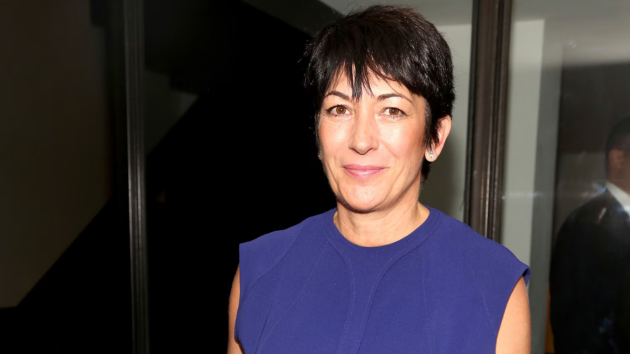
Meanwhile, a federal judge in New York denied Ghislaine Maxwell’s request to review grand jury testimony related to Epstein.
“It is black-letter law that defendants generally are not entitled to access to grand jury materials,” U.S. District Judge Paul Engelmayer wrote.
Maxwell’s lawyers requested access to the sensitive grand jury records to determine if Maxwell would take a position on the records’ release.
Judge Engelmayer wrote that there is no “compelling necessity” for Maxwell to review the records. An objection from Maxwell into unsealing the records could further complicate the process of potentially releasing the records.
“She has not shown, or attempted to show, that the grand jury materials in her case are apt to reveal any deficiency in the proceedings leading to her indictment,” he wrote.
Judge Engelmayer noted that he plans to “expeditiously” review the transcripts himself and would consider providing an excerpt or synopsis to Maxwell’s lawyers.
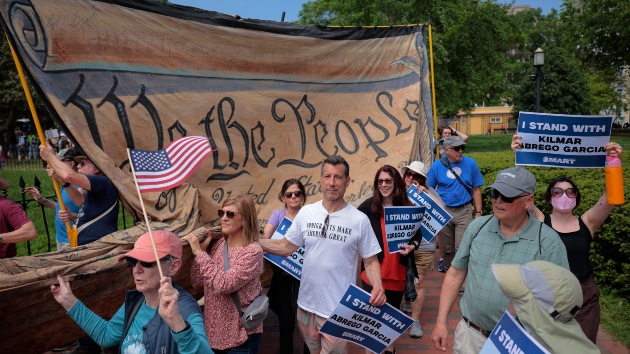
(NEW YORK) — A magistrate judge in Tennessee has paused accused MS-13 gang member Kilmar Abrego Garcia’s release from criminal custody for 30 days, shortly after a separate judge ruled he should be returned to Maryland if released while awaiting trial.
Abrego Garcia has been awaiting his release on bail after pleading not guilty last month to human smuggling charges in Tennessee.
“Abrego shall therefore remain in the custody of the United States Marshal pending further order, as previously directed,” U.S. Magistrate Judge Barbara Holmes said Wednesday.
Abrego Garcia’s attorneys requested the stay on Monday because they were advised by the government that if Abrego Garcia were released, the Department of Homeland Security would begin removal proceedings.
“Given the uncertainty of the outcome of any removal proceedings, Mr. Abrego respectfully requests that, should the Court deny the government’s motion for revocation, the issuance of an order releasing Mr. Abrego be delayed for 30 days to allow Mr. Abrego to evaluate his options and determine whether additional relief is necessary,” his lawyers wrote on Monday.
Wednesday’s ruling came shortly after U.S. District Judge Paula Xinis ordered the Trump administration to return Abrego Garcia to Maryland and blocked the administration from detaining and deporting him upon his release from criminal custody.
Xinis ruled that the U.S. government “shall restore Abrego Garcia to his ICE Order of Supervision out of the Baltimore Field Office.”
Judge Xinis said her order to have Abrego Garcia placed under ICE supervision in Maryland, where he was living with his wife and children before he was mistakenly deported in March, is necessary to “provide the kind of effective relief to which a wrongfully removed alien is entitled upon return.”
The federal judge said her order, which also requires the government to provide 72 hours’ notice if it intends to deport him to a third country, is “narrowly tailored” to allow the Trump administration to initiate “lawful immigration proceedings upon Abrego Garcia’s return to Maryland.”
The immigration proceedings may or may not include “lawful arrest, detention and eventual removal,” Xinis said.
This decision follows a separate ruling in Abrego Garcia’s criminal case where U.S. District Judge Waverly Crenshaw denied the government’s motion to revoke a magistrate judge’s order for Abrego Garcia’s release. Judge Crenshaw said on Wednesday that Abrego Garcia “shall be released upon the issuance of the Magistrate Judge’s release order with conditions.”
Judge Crenshaw said he was not persuaded that “Abrego’s unlawful removal from the United States now presents a risk that he will fail to appear in court to avoid similar treatment in the future.”
In his memo, Judge Crenshaw said that testimony provided by Peter Joseph, a Homeland Security agent, that Abrego Garcia transported both Barrio 18 and MS-13 gang members cuts against “the already slim evidence demonstrating Abrego is a member of MS-13.”
“For the Court to find that Abrego is member of or in affiliation with MS13, it would have to make so many inferences from the Government’s proffered evidence in its favor that such conclusion would border on fanciful,” Judge Crenshaw wrote.
Abrego Garcia, a Salvadoran native, was deported in March to El Salvador’s CECOT mega-prison — despite a 2019 court order barring his deportation to that country due to fear of persecution — after the Trump administration claimed he was a member of the criminal gang MS-13, which he denies.
He was brought back to the U.S. last month to face charges in Tennessee of allegedly transporting undocumented migrants within the U.S. while he was living in Maryland.
Homeland Security Assistant Secretary Tricia McLaughlin slammed Wednesday’s rulings in a series of posts on X.
“MS-13 gang member, human trafficker and criminal illegal alien will never walk America’s streets again,” McLaughlin said in one post.
“The fact this unhinged judge is trying to tell ICE they can’t arrest an MS-13 gang member, indicted by a grand jury for human trafficking, and subject to immigration arrest under federal law is LAWLESS AND INSANE,” she said in another.
Abrego Garcia’s immigration attorney called the rulings “a powerful rebuke of the government’s lawless conduct and a critical safeguard for [Abrego Garcia’s] due process rights.”
“A federal judge has now barred ICE from taking him back into custody in Tennessee, and ordered that any future deportation attempt must come with advance notice,” Simon Sandoval-Moshenberg told ABC News. “After the government unlawfully deported him once without warning, this legal protection is essential. We are grateful the court recognized that Kilmar’s rights and safety are at stake, and that the government’s past actions give serious cause for concern.”
Sylvain Gaboury/Paul Bruinooge/Patrick McMullan via Getty Images
(WASHINGTON) — House Oversight Committee Chairman James Comer on Wednesday issued a subpoena to Ghislaine Maxwell, convicted associate of Jeffrey Epstein, for a deposition to occur at Federal Correctional Institution Tallahassee on Aug. 11.
“The facts and circumstances surrounding both your and Mr. Epstein’s cases have received immense public interest and scrutiny,” Comer wrote in a statement Wednesday.
Maxwell was convicted of sex trafficking and other charges and sentenced to 20 years in prison in 2022.
“What we’re talking about here is someone who’s in federal prison on appeal, so our attorneys will have to communicate with her attorneys to see if there are terms, if she wants,” Comer said before the subpoena was issued. “If there are no terms, we’ll roll in there quick.”
The situation will be similar to Comer’s effort to interview Jason Galanis, a former business partner of Hunter Biden and Devon Archer, during the GOP’s impeachment inquiry of then-President Joe Biden.
“I did that with [Jason] Galanis, and the Democrats were real offended that we would want to interview anyone in prison. But now you know they’re, they’re all they want to interview someone in prison,” Comer said.
The committee has shown a propensity to record video of the interviews and release content afterwards — as it did with several former Biden officials who invoked their 5th Amendment rights earlier this summer — so it’s possible there could be handout video from the deposition.
Separately, Attorney General Pam Bondi said Monday that Deputy Attorney Todd Blanche will meet with Maxwell sometime in the “coming days.”
President Donald Trump last week said on his social media platform that he had ordered the Justice Department to “release all Grand Jury testimony with respect to Jeffrey Epstein, subject only to Court Approval.”
Comer has also signaled that the circumstances of a closed-door deposition at a federal prison could attract both Democrats and Republicans to attend the interview.
“There will be so many members of Congress that’ll want to be in that prison,” Comer said. “I would assume that there’ll be a lot of members of the Oversight Committee on both — in both parties that’ll want to be there.”
A congressional subpoena is a formal legal order issued by a congressional committee or individual compelling their testimony.
David Oscar Markus, appellate counsel for Maxwell, said in a statement to ABC News that Maxwell “looks forward” to meeting with Blanche and that meeting will inform how she proceeds with the subpoena.
“As for the congressional subpoena, Ms. Maxwell is taking this one step at a time. She looks forward to her meeting with the Department of Justice, and that discussion will help inform how she proceeds,” he said.
Markus also responded to comments from House Speaker Mike Johnson earlier Wednesday questioning Maxwell’s credibility as a witness.
“If they see fit to bring in Ghislaine Maxwell for testimony, that’s fine. I will note the obvious concern, the caveat that Chairman Comer and I and everyone has that could she be counted on to tell the truth? Is she a credible witness?” Johnson said to reporters.
“We understand Speaker Johnson’s general concern — Congress should always vet the credibility of its witnesses. But in this case, those concerns are unfounded. If Ms. Maxwell agrees to testify before Congress and not take the 5th — and that remains a big if — she would testify truthfully, as she always has said she would and as she will with Mr. Blanche. The truth should not be feared or preemptively dismissed,” Markus said in a statement.
(LA CROSSE, Wis.) — A 22-year-old graduate student who disappeared after leaving a bar early Sunday morning has been found dead in the Mississippi River, according to the La Crosse Police Department.
Eliotte Heinz, a graduate student at Viterbo University in La Crosse, Wisconsin, was last seen on Sunday at approximately 3:22 a.m. near the Mississippi River, police said. According to her missing person poster, Heinz was allegedly seen leaving Bronco’s Bar in La Crosse at approximately 2:30 a.m.
Heinz’s body was found in the Mississippi River near Brownsville, Minnesota, on Wednesday, police said.
“This was not the outcome we had hoped for throughout this search. Our thoughts are with Eliotte’s family, friends and all those who knew Eliotte. We are grateful for the outpouring of support from so many within the La Crosse community, the State of Wisconsin and nationally to locate Eliotte,” police said in a statement on Wednesday.
Police said they are continuing to investigate and “will await the results of an autopsy for an official cause of death.”
Viterbo University said in a statement the community is “heartbroken by this loss” and extends “our deepest sympathies to her families and friends.”
“There are no words that can ease the pain of losing someone so young, with so much life ahead of her. Our hearts go out to to Eliotte’s family. We hold them in our prayers and stand with them in their grief,” Viterbo University President Rick Trietley.
Earlier Tuesday, police had said the search for Heinz remained active, with “numerous resources” being utilized as they continue to receive tips.
Members of the community gathered to search for Heinz and hand out copies of her missing person poster.
Heinz’s family had asked for residents in the area to review home security camera footage from early Sunday morning between 2 a.m. and 6 a.m., saying “even the smallest detail could make a difference.”
“The outpouring of supporting in the search efforts for Eliotte has been overwhelming, and we are deeply grateful for the kindness, prayers and encouragement from the community and beyond,” the family said in a statement shared on the university’s social media on Tuesday prior to the discovery of her body.
Viterbo will hold a memorial service for Heinz this fall, “in coordination with her family once students return to campus,” the university said in a statement.
(WASHINGTON) — Lawmakers from both parties have so far rejected steep cuts to the National Oceanic and Atmospheric Administration (NOAA) proposed by the Trump administration and reiterated their support for a fully staffed National Weather Service (NWS) during recent committee meetings, which included key appropriations markup sessions.
While the House and Senate spending bills for fiscal year 2026 are still in the early stages of the legislative process, initial drafts indicate bipartisan pushback against the significant cuts outlined in the administration’s budget proposal, released earlier this year.
For fiscal year 2026, which begins Oct. 1, the Trump administration proposed cutting NOAA’s budget by roughly 25%, including the elimination of its research division, the Office of Oceanic and Atmospheric Research (OAR) and making major reductions to other key offices such as the National Centers for Environmental Information (NCEI), the world’s largest provider of weather and climate data.
The budget proposal stated, “The FY 2026 budget eliminates all funding for climate, weather, and ocean Laboratories and Cooperative Institutes. It also does not fund Regional Climate Data and Information, Climate Competitive Research, the National Sea Grant College Program, Sea Grant Aquaculture Research, or the National Oceanographic Partnership Program.”
The House Appropriations Subcommittee on Commerce, Justice, Science and Related Agencies advanced a spending bill with bipartisan support last week that would fund NOAA at levels mostly in line with budgets of previous years.
The fiscal year 2026 Commerce, Justice, Science appropriations bill provides roughly $5.8 billion to NOAA in 2026, a 6% decrease from the previous year. However, it restores a majority of funding for NOAA’s Operations, Research and Facilities (ORF) account, which includes OAR. While specific spending details have not yet been released, this would likely spare many critical research labs and climate institutes from potential cuts.
During the July 15 markup session, Subcommittee Chairman Hal Rogers, R-Ky., expressed his support for the National Weather Service, emphasizing the recent toll of devastating flooding hitting the country.
“Flooding has inflicted much pain on this nation over the last few months,” he said. “From my district in Kentucky to Texas, now is the time to ensure the National Weather Service is equipped with the funding it needs to warn and protect our citizens.”
At the start of the markup session, Rosa DeLauro, D-Conn., the subcommittee’s ranking Democrat, voiced concerns over both the proposed NOAA budget and recent staffing and funding cuts at the National Weather Service.
“Weather forecasts are not waste, fraud and abuse,” she said. “I ask my colleagues, did anyone come to your town halls and complain that the National Weather Service has too many meteorologists? Too many people issuing advisories, watches and warnings on severe storms?”
DeLauro also cited concerns from Bill Turner, Connecticut’s state emergency management director, who said the situation is “a very fragile house of cards right now, and we need them to continue… It really could be catastrophic in a lot of ways for our state if they go down that path of stopping the National Weather Service and their functionality.”
The bill now advances to the full committee for a markup on Thursday, July 24.
The Senate’s version of the bill allocates approximately $6.14 billion to NOAA for fiscal year 2026, just below the $6.18 billion approved for 2025. While this represents a modest overall decrease, the Senate Committee on Appropriations voted to boost spending for the agency’s Operations, Research and Facilities (ORF) account, adding $68.7 million. The increase means more available funding that could go to key offices such as OAR, NWS and NESDIS (National Environmental Satellite, Data, and Information Service).
The current Senate bill explicitly signals support for NOAA’s mission, including weather and climate research.
“The Committee strongly supports Climate Laboratories and Cooperative Institutes for their critical role in delivering high-quality weather information and driving economic benefits across the United States,” the bill states.
The bill also addresses staffing concerns at local NWS offices across the country and provides additional funding to ensure they become fully staffed.
The bill’s authors write, “Insufficient staffing levels risk compromising public safety and the NWS’s mission to protect lives and property. The Committee provides an additional $10,000,000 for Analyze, Forecast and Support and urges the NWS to prioritize recruitment, retention, and training initiatives to ensure all weather forecast offices (WFOs) are fully staffed.”
While introducing the bill, Jerry Moran, R- Kan., chairman of the Senate Appropriations Subcommittee on Commerce, Science and Justice, said, “NOAA, and particularly the National Weather Service, is a hugely important component of what this bill funds, and this bill recognizes that importance.” He added that the bill “fully funds the National Weather Service” and “eliminates any reduction in the workforce.”
However, Brian Schatz, D-Hawaii, raised concerns that the bill still gave too much discretion to the Office of Management and Budget (OMB) to determine the staffing levels needed to fulfill the agency’s mission and statutory obligation — “the Office of Management and Budget which clearly made the judgment that the National Weather Service has too many human beings working,” Schatz said.
He introduced an amendment that would have required the administration to maintain full-time staffing at levels in place as of Sept. 30, 2024, but it was rejected along party lines.
The Senate Committee on Appropriations approved the Fiscal Year 2026 Commerce, Justice, Science, and Related Agencies Appropriations Act on July 17 by a vote of 19-10.
What does the Trump Administration want to cut? The administration’s budget proposal calls for eliminating the Office of Oceanic and Atmospheric Research (OAR) as a NOAA Line Office, with several of its functions transferred to the National Weather Service and the National Ocean Service. OAR leads NOAA’s weather and climate research and develops many of the forecasting tools meteorologists rely on to produce timely and accurate forecasts.
The proposed budget would include shutting down NOAA’s nationwide network of research labs and cooperative institutes. Among them is the Global Systems Laboratory in Boulder, Colorado, where the High-Resolution Rapid Refresh (HRRR) model, a critical tool in modern weather forecasting, was first developed more than a decade ago. The HRRR model helps meteorologists track everything from severe thunderstorms to extreme rainfall to wildfire smoke.
The Global Monitoring Laboratory, also based in Boulder, oversees operations at Mauna Loa Observatory on Hawaii’s Big Island. This observatory has maintained the world’s longest continuous observation of atmospheric carbon dioxide and has been crucial to our understanding of how human-caused greenhouse gas emissions fuel global warming.
NOAA’s Atlantic Oceanographic and Meteorological Laboratory (AOML) in Miami, Florida, plays a vital role in operational hurricane forecasting. The lab develops cutting-edge tropical weather models that have significantly improved forecast accuracy in recent decades. National Hurricane Center (NHC) forecasters set a record for forecast track accuracy in 2024, according to a NOAA report. NHC issued 347 official forecasts during the 2024 Atlantic hurricane season, and its track predictions set accuracy records at every forecast time period.
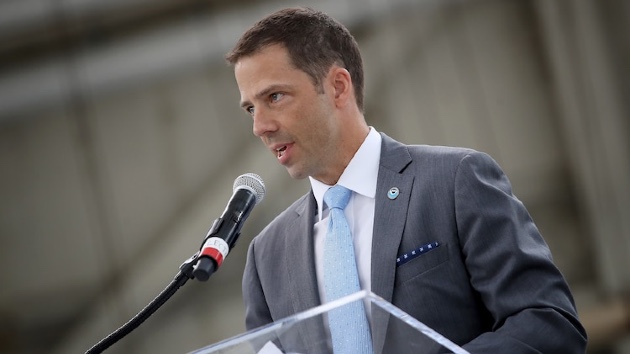
Who will lead NOAA next? Earlier this month, during a confirmation hearing, Dr. Neil Jacobs, President Donald Trump’s nominee to head NOAA, said he supports the administration’s proposal to significantly cut the agency’s budget arguing the reductions could be achieved by shifting work from research to operations without impacting “mission essential functions.”
Jacobs also said if confirmed, he would “ensure that staffing the weather service offices is a top priority,” adding that, “It’s really important for the people to be there because they have relationships with the people in the local community. They’re a trusted source.”
NOAA’s 2025 budget costs Americans less than $20 per person this year.
ABC News reached out to NOAA for comment, but did not immediately hear back.
(NEW YORK) — A federal judge has blocked the Trump administration, including U.S. Immigration and Customs Enforcement, from detaining Kilmar Abrego Garcia upon his release from criminal custody in Tennessee.
Abrego Garcia has been awaiting his release on bail after pleading not guilty last month to human smuggling charges in Tennessee.
U.S. District Judge Paula Xinis ruled on Wednesday that the U.S. government “shall restore Abrego Garcia to his ICE Order of Supervision out of the Baltimore Field Office.”
Judge Xinis also ordered the government to provide written notice to Abrego Garcia and his attorneys if they intend to remove him to a third country.
This decision follows a separate ruling in Abrego Garcia’s criminal case where U.S. District Judge Waverly Crenshaw denied the government’s motion to revoke a magistrate judge’s order for Abrego Garcia’s release. Judge Crenshaw said on Wednesday that Abrego Garcia “shall be released upon the issuance of the Magistrate Judge’s release order with conditions.”
Abrego Garcia, a Salvadoran native, was deported in March to El Salvador’s CECOT mega-prison — despite a 2019 court order barring his deportation to that country due to fear of persecution — after the Trump administration claimed he was a member of the criminal gang MS-13, which he denies.
He was brought back to the U.S. last month to face charges in Tennessee of allegedly transporting undocumented migrants within the U.S. while he was living in Maryland.
The government has indicated it intends to detain Abrego Garcia and deport him to a third country if he is released from custody.
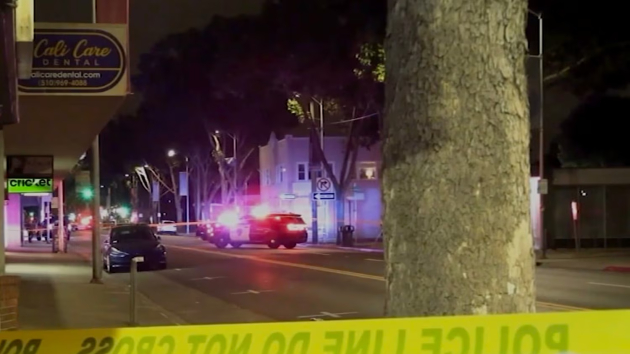
(SAN FRANCISCO) — Prosecutors have filed murder charges against a man accused of shooting and killing a woman who was walking her dogs in San Leandro, California, earlier this month.
Rohith Sunil, 21, was charged with felony murder, assault with a semi-automatic gun and carrying a loaded weapon in public in the July 17 shooting death of 41-year-old Casey Way, according to the Office of District Attorney of Alameda.
Prosecutors have also included sentencing enhancements for the personal use of a firearm causing death.
Way was walking her dogs with her boyfriend when she was allegedly approached by Sunil, according to prosecutors. He allegedly had a conversation with the couple before suddenly pulling out a handgun and shooting her, prosecutors said.
Way was transported to Eden hospital after suffering from a single gunshot wound. She later succumbed to her injuries, according to a probable cause declaration.
Way’s boyfriend told police that the couple was walking from their apartment to a liquor store when a black sedan pulled up alongside them and parked. A man wearing a black ski mask and all black clothing and who had a tattoo under one of his eyes got out of the car and confronted them, asking if the city they were in was Oakland and how to get back to San Jose, according to the declaration.
Way then began to look up directions on her phone to help the suspect. As she was doing so, the suspect noticed she was wearing a red bandanna and began to ask her if she was in a gang, which Way and her boyfriend denied, according to the declaration.
The suspect then pulled out a black pistol and pointed it at the couple, who backed away from him.
“The suspect laughed and racked the pistol slide, ejecting a live round onto the ground. The suspect then pointed the firearm at the victim and fired a single shot, striking her on the right side of her body,” the witness told police, according to the declaration. The suspect then allegedly got back in the vehicle and fled the scene.
Way’s boyfriend told police that he did not know the suspect and that this was a “random act,” according to the declaration.
Sunil is being held in Santa Rita Jail without bail, according to jail records.
Sunil “personally and intentionally discharged a firearm, and caused great bodily injury and death to Casey Lyn Way,” and “inflicted great bodily injury on another person,” a criminal complaint against Sunil said.
On July 18, Dublin Police Department officers arrested Sunil after they received a call from a victim who said he was being followed around by a vehicle, according to the declaration.
Police located the vehicle and contact the individual inside, Sunil, and while speaking with him a semiautomatic firearm fell out of his waistband, according to the declaration. Dublin officers were not aware of the murder investigation but booked Sunil at Santa Rita Jail.
Sunil was interviewed by police and he allegedly admitted to having the gun and being the sole occupant of the car on the day of the murder. Police say he told them he had been “black out” drunk from drinking at a friend’s house and denied knowing anything about the murder, according to the declaration.
Sunil matched the appearance and clothing description given to police by witnesses to the murder as did his vehicle.
Sunil is not listed with the Department of Justice as the registered owner of a pistol, revolver or other firearm capable of being concealed on his person, according to court documents.
Sunil’s plea hearing is scheduled for Monday.
If convicted, Sunil could be sentenced to 50 years to life in state prison, according to the district attorney’s office. Attorney information for Sunil was not immediately available.
(NEW YORK) — A federal judge in Florida denied a Justice Department request to unseal grand jury records tied to federal investigations into Jeffrey Epstein, according to a public order released Wednesday.
The request is one of three made by the Justice Department to judges in New York and Florida seeking to unseal records from federal investigations into Epstein.
According to the order by district judge Robin Rosenberg, the records the department sought to unseal related to grand juries convened in West Palm Beach in 2005 and 2007 that had investigated Epstein.
Judge Rosenberg faulted the Justice Department for failing to outline sufficient arguments to justify the unsealing of the records, which are normally protected under strict secrecy rules.
Rosenberg’s opinion states her “hands are tied” given existing precedent in the Eleventh Circuit Court of Appeals which only permits the disclosure of such grand jury materials under narrow exceptions.
She further denied a request to transfer the issue into the jurisdiction of the Southern District of New York, where two judges are separately mulling over similar motions from the department seeking to unseal grand jury records tied to Epstein and his longtime associate Ghislaine Maxwell.
A Justice Department spokesperson did not immediately respond to a request for comment on the order.
This is a developing story. Please check back for updates.
(NEW YORK) — As a new school year approaches, multiple school systems around the country told ABC News that a Department of Education funding freeze is causing confusion.
Some school districts told ABC News education cuts are illegal and will hurt students, but others said they support the Trump administration’s decision to reevaluate the department’s funding.
“Of course states and programs rely on these federal funds but we also rely on the president’s leadership to ensure they are aligned with our values,” Wyoming Superintendent of Public Instruction Megan Degenfelder said in a statement to ABC News.
Alaska’s largest school district, a collection of Democratic states ranging from California to Rhode Island, and advocacy groups across the country have sued the Trump administration over the $6 billion funding freeze of valuable education programs.
“There’s going to be a direct impact in every single school in our nation. And I think people forget that,” Rhode Island Department of Education Commissioner Angélica Infante-Green told ABC News.
“I am here today because of the teachers, the education that I got, and it actually is a game changer,” Infante-Green, who is a first-generation American and learned English through school, said. “It changes the lives of not just the students, but the community as a whole. They can participate in the American dream.”
Although some states support the administration’s decision, Infante-Green has called it “illegal.”
“These are dollars that were appropriated by Congress, and this [pause] hurts kids.” she said.
A pause on the total $6 billion funding happened on July 1, when federal aid for schools is typically allocated each year. However, states were notified on June 30 that an ongoing programmatic review of education funding would occur, according to a Department of Education memo sent to Congress, obtained by ABC News. School districts and programs have been concerned that programs and staff could be eliminated if funding isn’t restored.
These funds are used to aid after-school programs, English learning acquisition, adult basic education, and many more important initiatives. States received a letter from Congress that said there would be a programmatic review to ensure the legitimacy of each program as the Office of Management and Budget suggested these programs have become misused to promote “radical left wing agendas.”
Sen. Lisa Murkowski, R-Alaksa, and nine other Republican senators signed onto a letter last week requesting the Trump administration reverse the funding pause, which they said prompted the Office of Management and Budget (OMB) to unfreeze more than $1 billion in after-school and summer learning funding.
However, OMB did not indicate whether it would be unfreezing the rest of the roughly $6 billion in federal funds for programs.
Despite the uncertainty caused by the education funding freezing, the Montana Office of Public Instruction Superintendent, Susie Hedalen, is supportive of the funding pause and feels confident that Montana will see its funding soon.
“I appreciate that they’re [the funding] being evaluated and that we’re taking a close look, because we don’t need federal funds with the strings attached. We don’t need the bureaucracy, and we need to make sure that we can use our funding to align to our values, not the agendas from the bureaucrats in DC,” Hedalen told ABC News.
Echoing other conservative education leaders who’ve spoken with ABC News about the pause, Hedalen believes there is a need to reevaluate the funding.
“I appreciate the President’s approach to take a critical look at our funding streams. That’s long overdue,” Hedalen said. “We are optimistic in Montana that those will continue to flow. But we do think it’s important that we take a close look, and we are looking forward to having education returned to the state agencies,” Hedalen added.
While there is ultimately a divide regarding the funding, Infante-Green suggested most states are concerned that the pause potentially hurts kids, “everybody understands that this is not a political issue,” she said, “this is about our students.” ABC News
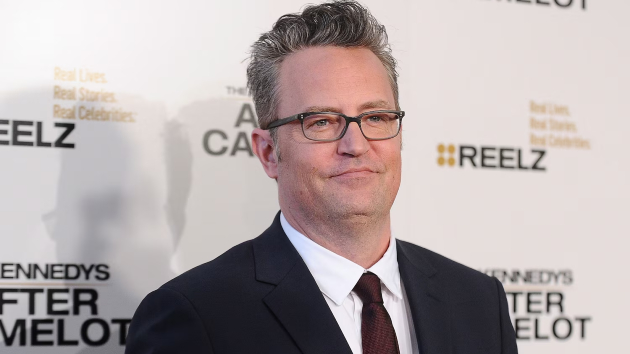
(LOS ANGELES) — A doctor pleaded guilty Wednesday to distributing ketamine to Matthew Perry before he died, becoming the fourth person convicted in connection with the “Friends” actor’s 2023 overdose death.
Dr. Salvador Plasencia pleaded guilty to four counts of distribution of ketamine during a hearing in Los Angeles Wednesday morning, the Department of Justice said.
“Dr. Plasencia is profoundly remorseful for the treatment decisions he made while providing ketamine to Matthew Perry,” his attorney, Karen Goldstein, said in a statement. “He is fully accepting responsibility by pleading guilty to drug distribution.”
Plasencia intends to voluntarily surrender his medical license, “acknowledging his failure to protect Mr. Perry, a patient who was especially vulnerable due to addiction,” Goldstein said. He has indicated through his attorneys that he will surrender his medical license in the next 30 to 45 days, prosecutors said.
“While Dr. Plasencia was not treating Mr. Perry at the time of his death, he hopes his case serves as a warning to other medical professionals and leads to stricter oversight and clear protocols for the rapidly growing at-home ketamine industry in order to prevent future tragedies like this one,” Goldstein said.
Plasencia was one of five people charged in the wake of Perry’s death from a ketamine overdose on Oct. 28, 2023, at the age of 54. The actor was discovered unresponsive in a jacuzzi at his Los Angeles home, police said. An autopsy report revealed he died from the acute effects of ketamine.
The operator of an urgent care clinic in Malibu, Plasencia had been set to go on trial in August in the case prior to reaching a plea agreement. He will remain out on bond until his sentencing hearing on Dec. 3, with prosecutors saying he faces a maximum sentence of 10 years in federal prison for each count.
His conviction comes after Mark Chavez, a second doctor charged in the case, pleaded guilty to distributing ketamine in October 2024. He is scheduled to be sentenced in September.
According to Plasencia’s plea agreement, he distributed 20 vials of ketamine, ketamine lozenges and syringes to Perry and the actor’s live-in assistant, Kenneth Iwamasa, between Sept. 30, 2023, and Oct. 12, 2023.
Plasencia “admits that his conduct fell below the proper standard of medical care and that transfers of ketamine vials to Defendant Iwamasa and Victim M.P. were not for a legitimate medical purpose,” his plea agreement stated.
Iwamasa, who admitted in court documents to administering the ketamine on the day that Perry died, pleaded guilty in August 2024 to one count of conspiracy to distribute ketamine causing death, the DOJ said. He is scheduled to be sentenced in November.
According to his plea agreement, Perry asked Iwamasa to help him procure ketamine in September 2023 and provided his assistant with “money, or promised to reimburse him, and directed him to find sources from whom to acquire the drugs.”
One of Plasencia’s patients introduced him to Perry on Sept. 30, 2023, with the unidentified patient referring to the actor as a “‘high profile person’ who was seeking ketamine and was willing to pay ‘cash and lots of thousands’ for ketamine treatment,'” according to Plasencia’s plea agreement.
Plasencia contacted Chavez, who had previously operated a ketamine clinic, to discuss Perry’s request for ketamine and purchased vials of liquid ketamine, ketamine lozenges and other items from him, according to the agreement.
In discussing how much to charge Perry, Plasencia said in text messages to Chavez, “I wonder how much this moron will pay” and “Lets [sic] find out,” the Department of Justice said.
Plasencia administered ketamine to Perry at the actor’s home on several occasions, and left vials and lozenges with Iwamasa to administer, according to the plea agreement. In one instance, he was paid $12,000 for such a visit, according to the agreement.
One such instance occurred outside of the home, when Plasencia administered ketamine to Perry in a parking lot near an aquarium in Long Beach, according to the plea agreement. Upon learning about that, Chavez “reprimanded” the other doctor “for ‘dosing people’ in cars, and in a public place where children are present,” Chavez’s plea agreement stated.
Plasencia returned to Perry’s home on Oct. 12, 2023, to administer ketamine, during which the actor’s blood pressure spiked, causing him to “freeze up,” according to Plasencia’s plea agreement.
“Notwithstanding Victim M.P.’s reaction, defendant left additional vials of ketamine with Defendant Iwamasa, knowing that Defendant Iwamasa would inject the ketamine into Victim M.P.,” the agreement stated.
After receiving 10 more vials of ketamine through a licensed pharmaceutical company using his DEA license, Plasencia texted Iwamasa on Oct. 27, 2023, according to the plea agreement: “I know you mentioned taking a break. I have been stocking up on the meanwhile. I am not sure when you guys plan to resume but in case its when im out of town this weekend I have left supplies with a nurse of mine …I can always let her know the plan.”
Perry died the following day after overdosing on ketamine, which Plasencia had not provided, according to the plea agreement.
Another defendant in the case, Eric Fleming, admitted in court documents that he distributed the ketamine that killed Perry, prosecutors said. He pleaded guilty in August 2024 to one count of conspiracy to distribute ketamine and one count of distribution of ketamine resulting in death. He admitted in court documents that he distributed 50 vials of ketamine that he obtained from another defendant in the case — Jasveen Sangha — to Iwamasa, including the ketamine that killed Perry, the DOJ said. Fleming is scheduled to be sentenced in November.
Sangha, allegedly known as “The Ketamine Queen,” is accused of selling 50 vials of ketamine over two weeks to Perry, working with Fleming and Iwamasa to distribute the drugs to Perry, prosecutors said. She is accused of selling Perry the batch of ketamine that killed him.
Sangha pleaded not guilty and is scheduled to go on trial in August.