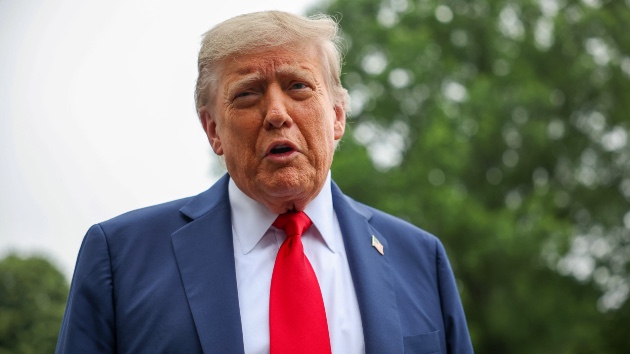
(WASHINGTON) — President Donald Trump announced a trade agreement with Japan on Tuesday, making it the largest U.S. trade partner to broker an accord as the White House threatens to impose tariffs on dozens of countries within days.
Before the deal, Japan faced the prospect of a 25% tariff rate set to take effect Aug. 1. Instead, products from the fifth-largest U.S. trade partner will be slapped with a 15% tariff, in exchange for a willingness on the part of Japan to import some goods, among other concessions.
In a post on social media late Tuesday, Trump touted the agreement as a “massive deal.” The White House has yet to release full details of the agreement.
Japanese Prime Minister Shigeru Ishiba also celebrated the accord. “With the national interests of both countries in mind, we were able to reach an agreement at this time,” Ishiba said.
Japan’s Nikkei index surged 3.5% on Wednesday, while major U.S. indexes nudged slightly higher in early trading.
Here’s what to know about what’s in the trade agreement and what comes next:
What’s in the U.S. trade agreement with Japan? The trade agreement lowers the tariff rate on Japanese products to 15%, putting it below the threatened rate of 25% but higher than a universal rate of 10% faced by nearly all imports.
Even more, the U.S. agreed to set a 15% tariff on Japanese cars, putting it below the 25% tariff rate placed on imported vehicles from other nations.
Japan purchased nearly $80 billion worth of U.S. products in 2024, while the U.S. bought about $148 billion worth of Japanese goods, according to the Office of the U.S. Trade Representative, a government agency.
Cars and auto parts accounted for about $52 billion worth of imported Japanese products, making up more than one-third of products purchased by the U.S., government data shows. Shares of Japan-based Toyota soared more than 13% on Wednesday, while Honda jumped about 12%.
In exchange for the softening of U.S. tariffs, Japan agreed to open its economy to imports of trucks, rice and other agricultural goods, Trump said.
Japan also agreed to invest $550 billion in the U.S. economy, Trump added, but the president did not specify how the funds would be spent.
How many trade agreements has the White House achieved so far? When Trump delayed the onset of so-called “reciprocal tariffs” in April, the White House vowed to strike 90 trade agreements in 90 days. Before that deadline elapsed, Trump proposed a flurry of similar country-specific tariffs with a new effect date of Aug. 1.
So far, Trump has brokered agreements with the United Kingdom, Indonesia, Vietnam, the Philippines and Japan. The White House also reached a preliminary accord with China that lowered tit-for-tat tariffs previously imposed by the world’s two largest economies.
For his part, the president has insisted that the on-again, off-again levies make up a key part of his negotiation strategy.
“The president and his trade team want to cut the best deals for the American people and the American worker,” White House press secretary Karoline Leavitt said last month when she announced the Aug. 1 deadline.
Price hikes could hit coffee, shoes, appliances and a range of other products if additional tariffs take effect on Aug. 1, analysts previously told ABC News.
(LA CROSSE, Wis.) — Wisconsin officials continue to search for a 22-year-old graduate student who disappeared after leaving a bar early Sunday morning, according to the La Crosse Police Department.
Eliotte Heinz, a graduate student at Viterbo University in La Crosse, Wisconsin, was last seen on Sunday at approximately 3:22 a.m. near the Mississippi River, police said. According to her missing person poster, Heinz was allegedly seen leaving Bronco’s Bar in La Crosse at approximately 2:30 a.m.
Police, along with Heinz’s family and friends, have made “several attempts to locate her with no success,” officials said in a statement on Sunday.
On Tuesday, police said the search for Heinz remains active, with “numerous resources” being utilized as they continue to receive tips.
Members of the community gathered on Tuesday to search for Heinz and hand out copies of her missing person poster.
Heinz’s family is asking for residents in the area to review home security camera footage from early Sunday morning between 2 a.m. and 6 a.m., saying “even the smallest detail could make a difference.”
“The outpouring of supporting in the search efforts for Eliotte has been overwhelming, and we are deeply grateful for the kindness, prayers and encouragement from the community and beyond,” the family said in a statement shared on the university’s social media.
The family also said the “most important thing you can do is continue sharing Eliotte’s information on social media.”
Brielle Handrich, who went to high school with Heinz, told La Crosse ABC affiliate WXOW she hopes Heinz is “out there fighting her battle” and “knows that there’s people out there searching.”
Heinz is described as 5 feet, 4 inches tall, 106 pounds with blonde hair and blue eyes, police said. She was last seen wearing a white T-shirt and jean shorts, officials said.
Anyone who has any information on Heinz or her whereabouts should contact the La Crosse Police Department’s nonemergency line at 608-782-7575.
(JACKSONVILLE, Fla.) — William McNeil, Jr., the 22-year-old Florida man whose violent arrest by Jacksonville sheriff’s deputies was caught in a viral video, addressed the incident publicly for the first time during a press conference on Wednesday morning.
McNeil began his brief remarks by thanking those who supported him, then turned to the Feb. 19 incident.
“I was getting pulled over, and I needed to step out the car, and I know I didn’t do nothing wrong. I was really just scared,” he said.
He was also asked by a reporter what he was taught about dealing with law enforcement.
“Basically, what I was taught is to, instead of fighting them on the street where we don’t have power, fight them in the courts,” McNeil said in response.
McNeil’s mother, Latoya Solomon, said during the press conference that watching the video was emotionally difficult for her and it took her months to watch it in its entirety.
“I’m thankful to God for protecting him, because I know what the outcome could have been,” Solomon said
His stepfather, Alton Solomon, was visibly emotional while reflecting on the incident.
“To see that video made me go back to the moment when I was 22. It hurt,” he said.
McNeil is student at Livingstone College in Salisbury, North Carolina, where he is also the leader of the marching band.
Speaking during the press conference, one of McNeil’s attorneys, Ben Crump, called for the firing of the deputy who punched McNeil during the incident.
“If you don’t terminate this officer and you condone this type of police excessive force, then it sends a message to all of the other police officers on the Jacksonville Sheriff’s Office team. It tells them, it is OK for you to treat citizens like this, it is okay to treat Black motorists like this,” Crump said. “In America, it is not OK.”
On Monday, attorney Harry Daniels told ABC News that his client plans to take legal action.
“We are planning to do everything we can do to secure justice,” Daniels said when asked if the legal team plans to file a lawsuit. “We are seeking all options to ensure accountability.”
The sheriff’s office said on Sunday that the agency launched an investigation into the incident after the 2-minute cell phone video captured by McNeil went viral. On Monday, Jacksonville Sheriff T.K. Waters also released body camera footage from two deputies who were present on the scene of the arrest.
In the video, sheriff’s deputies are seen beating and punching McNeil during the traffic stop after he repeatedly questioned why he was being pulled over and refused to exit his vehicle. The deputy who broke McNeil’s window and punched him was identified by Waters as D. Bowers.
“Pending the outcome of this administrative review, Officer Bowers has been stripped of his law enforcement authority,” Waters said. It is unclear if other deputies involved in the arrest have been placed on administrative leave.
Waters also announced on Monday that “the State Attorney’s Office has determined that none of the involved officers violated criminal law,” but highlighted that the deputies’ actions are now being examined in an “administrative review,” which will determine if the deputies “violated [Jacksonville Sheriff’s Office] policy.”
ABC News has reached out to the Office of the State Attorney for the Fourth Judicial Circuit serving Clay, Duval, & Nassau Counties for further comment.
It is unclear if Bowers has retained an attorney. ABC News has reached out to Jacksonville Sheriff’s Office for further comment, but have not heard back.
“I will neither defend nor commend officer Bowers’ response to resistance until all the facts are known and the investigation is completed,” Waters said.
(WASHINGTON) — The head of FEMA’s Urban Search and Rescue branch, Ken Pagurek, resigned on Monday, multiple sources confirmed to ABC News.
Pagurek told colleagues he was frustrated by the Department of Homeland Security’s efforts to dismantle FEMA and by new hurdles that slowed the agency’s response to the catastrophic flooding in Central Texas earlier this month, according to sources familiar with the matter.
Sources said he pointed to a new DHS policy requiring all spending over $100,000 to be personally approved by Secretary Kristi Noem as a key factor behind the delays and, ultimately, his decision to step down.
The news was first reported by CNN.
Pagurek had worked with FEMA’s search and rescue operations for more than a decade and had served as its chief for the past year.
Pagurek did not respond to a request for comment by ABC News.
DHS spokesperson Tricia McLaughlin told ABC News, “The attempt to spin a personal career decision into some big scandal is RIDICULOUS. It is laughable that a career public employee, who claims to serve the American people, would choose to resign over our refusal to hastily approve a six-figure deployment contract without basic financial oversight.”
“We’re being responsible with taxpayer dollars, that’s our job,” McLaughlin said. “FEMA experienced no delays in deployment of assets, and Texas officials have unequivocally and vocally applauded the federal government and FEMA’s response. If anyone is upset by the end of unchecked, blank-check spending under President Trump’s administration, that says more about them than it does about us.”
(LONDON) — Ukrainian President Volodymyr Zelenskyy is facing protests across the country after signing a controversial bill on Tuesday that critics say will neuter the independence of two prominent anti-corruption bodies.
As Ukrainian and Russian delegations prepare to meet in Istanbul, Turkey, for a new round of ceasefire talks, Zelenskyy and his allies are facing a groundswell of opposition at home.
On Tuesday, Zelenskyy signed a controversial law passed by parliament that will bring the Anti-Corruption Bureau (NABU) and its partner organization, the Specialised Anti-Corruption Prosecutor’s Office (SAPO), under the direct control of the Prosecutor General’s Office (PGO).
Both bodies were set up in the aftermath of Ukraine’s pro-Western Maidan Revolution in 2014, with the intention of rooting out systemic corruption and helping Kyiv reform its democratic system with an eye on European Union accession.
The passing of the new legislation this week prompted protests in Kyiv and other major cities across Ukraine, with demonstrators even violating the nighttime curfew imposed as a guard against nightly Russian drone and missile strikes.
A spokesperson for the European Commission warned the move could undermine Ukraine’s potential bid to join the EU. Kyiv’s European funding, they added, is “conditional on progress on transparency, judicial reform and democratic government.”
Transparency International’s Ukraine branch, meanwhile, said the move represented a “massive setback in anti-corruption reform” and a “direct threat to Ukraine’s path to the EU.”
The passage of the bill followed dozens of raids on NABU employees by officers from the Security Service of Ukraine (SBU) and the PGO on Monday. Officers also began inspecting the handling of state secrets at SAPO.
Zelenskyy and his supporters have framed the measures as necessary to root out Russian infiltration and influence within Ukraine’s anti-corruption bodies.
“The anti-corruption infrastructure will work,” Zelenskyy wrote on Telegram late on Tuesday. “Only without Russian influences — everything needs to be cleansed of this. And there should be more justice.”
“Of course, NABU and SAPO will work. And it is important that the Prosecutor General is determined to ensure that in Ukraine the inevitability of punishment for those who go against the law is really ensured,” he added. “And this is what is really needed for Ukraine. The cases that were pending must be investigated.”
“For years, officials who fled Ukraine have been living peacefully abroad for some reason — in very nice countries and without legal consequences,” Zelenskyy continued.
“This is abnormal. There is no rational explanation why criminal proceedings worth billions have been ‘hanging’ for years. And there is no explanation why the Russians can still get the information they need.”
“It is important that there is an inevitability of punishment and that society really sees this,” the president wrote.
On Wednesday, Zelenskyy said in another post that he met with the heads all law enforcement and anti-corruption agencies plus the prosecutor general. “We all hear what society says,” Zelenskyy wrote. “We see what people expect from state institutions to ensure justice and the effectiveness of each institution.”
“We agreed that next week there will be an in-depth working meeting regarding the general action plan,” Zelenksyy said. “And in two weeks, a joint plan should be ready — outlining the necessary steps to strengthen Ukraine, address existing issues, provide more justice and genuinely protect the interests of Ukrainian society.”
The bill was passed by the Ukrainian parliament — the Rada — by 263 representatives, having quickly moved through committee. Thirteen MPs voted against, 13 abstained and 35 did not vote.
It was supported in parliament by members of Zelenskyy’s Servant of the People party, as well as former Prime Minister Yulia Tymoshenko’s Batkivshchyna party. The Opposition Platform – For Life party, which is widely considered pro-Russian and has had several representatives accused of treason during the war, also backed the measure.
Oleksandr Merezhko, a member of Zelenskyy’s party and the chair of the parliament’s foreign affairs committee, told ABC News he backed the legislation though admitted he had “some doubts” about its content.
“I trust the president,” Merezkho said. “In such cases I normally also trust the decision of the committee.”
Merezhko said his concerns were over “what consequences it might have from the perspective of the negotiations with the EU on our membership.”
European counterparts, Merezhko continued, “are worried and they are asking questions. I think that we need better communication with our European partners on that issue.”
“There might be some sensitive aspects which need clear explanation to our partners by the president,” he added. “I’m personally in favor of the independence of the anti-corruption bodies. But I’m also in favor of the true rule of law of the state in Ukraine.”
Zelenskyy’s decision to sign the divisive bill has piqued concern of an anti-democratic power grab by the president and his inner circle — chief among them Andriy Yermak, the head of the presidential office.
A former Ukrainian official, who asked not to be identified for fear of reprisal, told ABC News, “We are not losing the war because the West did not give us enough weapons. We are losing the war because of corruption, lack of professional management and because many do not see why they should fight for Zelenskyy’s autocracy.”
“Yermak is just a good implementor of Zelenskyy’s will,” the former official added.
Vitaliy Shabunin, a prominent Ukrainian anti-corruption activist who previously headed the first Public Oversight Council at NABU, said the bill will allow the prosecutor general — who is appointed by the president — to “shut down all investigations involving the president’s friends.”
Kyiv Mayor Vitali Klitschko — who has repeatedly clashed with Zelenskyy’s administration during Russia’s full-scale war — joined protesters in the capital on Tuesday.
The new measure, he wrote on Telegram, “definitely does not bring Ukraine closer to the European Union. It certainly does not bring it closer to democracy, the rule of law, and legality — to those values for which our soldiers are dying today in a bloody struggle against the aggressor.”
Proponents of the bill “are dragging Ukraine faster and faster into authoritarianism,” the mayor added, “hiding behind the war, destroying anti-corruption bodies, local self-government, silencing activists and journalists.”
“Yes, there are many questions about the independence, impartiality, and adherence to legal procedures by all law enforcement agencies,” Klitschko continued. “But the system needs to be changed, not turned into a bulldog of the authorities.”
“And we must not forget that sooner or later, all actions will have to be accounted for — both politically and legally,” the mayor wrote.
ABC News’ Will Gretsky contributed to this report.
(JACKSONVILLE, Fla.) — William McNeil, Jr., the 22-year-old Florida man whose violent arrest by Jacksonville sheriff’s deputies was caught in a viral video, is expected to speak out about the incident during a press conference outside the Jacksonville Sheriff’s Office on Wednesday morning.
The sheriff’s office said on Sunday that the agency launched an investigation into the Feb. 19 incident after the 2-minute cell phone video captured by McNeil went viral. On Monday, Jacksonville Sheriff T.K. Waters also released body camera footage from two deputies who were present on the scene of the arrest.
In the video, sheriff’s deputies are seen beating and punching McNeil during the traffic stop after he repeatedly questioned why he was being pulled over and refused to exit his vehicle.
What the video shows of McNeil’s arrest
McNeil was pulled over by a sheriff’s deputy at 4:15 p.m. local time for allegedly not having his headlights on due to “inclement weather” and not wearing a seat belt, according to a police report obtained by ABC News.
Body camera video shows McNeil telling the deputy that it wasn’t raining and he didn’t need to have his headlights turned on and asked to speak with a supervisor. After McNeil locks himself in his vehicle and repeatedly refuses to exit, the deputy threatens to break his window and calls for backup, the video shows.
The body camera video and the 2-minute cell phone video both captured McNeil being punched and beaten after a deputy broke his car window.
The videos show McNeil speaking with a group of deputies and appearing to explain why he was pulled over by the first deputy who arrived on the scene.
“There’s no rain,” McNeil says in the video.
“It doesn’t matter,” a sheriff’s deputy can be heard saying as they ask him to exit his vehicle.
Harry Daniels, one of the attorneys representing McNeil, told ABC News Live anchor Kyra Phillips in the interview on Monday that his client refused to exit his vehicle because he was “afraid” of police.
“He is afraid. You know, in this environment, policing in America, especially young men of color, are very afraid of police,” Daniels said, adding that his client decided to begin recording the incident once the deputy refused to call a supervisor so he could dispute the traffic stop.
After McNeil again asks to speak with a supervisor, the videos show a deputy — who was identified by Waters on Monday as D. Bowers — breaking McNeil’s car window and punching him in the face while McNeil is facing forward. McNeil then appears to be pulled out of his car and is punched again as he is pushed down to the ground by multiple deputies and seemingly beaten.
“You’re under arrest,” officers can be heard saying as they push McNeil to the ground and hold him down.
The charges against McNeil
Court records show that McNeil was arrested and charged with “resisting arrest without violence to his or her person,” possessing not more than 20 grams of marijuana with intent to use drug paraphernalia, driving while driver’s license is suspended, not wearing a seatbelt and no headlights in rain/fog/or smoke.
Additionally, court records show that he was sentenced to and served two days in jail for resisting arrest without violence and driving with a suspended license.
“McNeil was arrested and pled guilty to resisting a police officer without violence,” Waters said. “Force absolutely looks ugly, and because all force is ugly, whether or not the officer involved acted within outside [Jacksonville Sheriff’s Office] policy, that’s still what we’re investigating.”
In the incident report filed by Bowers, the deputy does not mention that he punched McNeil while he was sitting in his car, but says that “force” was used after McNeil was removed from the vehicle.
The report filed by Bowers also claims that McNeil reached for a knife on the floor of his vehicle as officers opened the door.
The body camera video does not show McNeil reaching for a knife on the floor of his car.
The video does appear to show an object that the sheriff’s office identified as a knife on the floor of McNeil’s car that officers recovered after he was removed from the vehicle. A deputy can be heard pointing it out in the video.
A reporter pressed Waters on the claim that McNeil reached for a knife, saying, “I couldn’t see any clear indication of that in the video. Do you see that when you’re watching?””
“No, actually, I don’t see where his hands are. I can’t assume, no one can assume,” Waters said.
Daniels told Phillips on Monday that the claim that McNeil reached for a knife is a “lie,” and criticized the deputy for not disclosing that he punched McNeil in the incident report.
What’s next for McNeil and the officer
Waters announced on Monday that “the State Attorney’s Office has determined that none of the involved officers violated criminal law,” but highlighted that the deputies’ actions are now being examined in an “administrative review,” which will determine if the deputies “violated [Jacksonville Sheriff’s Office] policy.”
ABC News has reached out to the Office of the State Attorney for the Fourth Judicial Circuit serving Clay, Duval, & Nassau Counties for further comment.
“Pending the outcome of this administrative review, Officer Bowers has been stripped of his law enforcement authority,” Waters said. It is unclear if other deputies involved in the arrest have been placed on administrative leave.
“I will neither defend nor commend officer Bowers’ response to resistance until all the facts are known and the investigation is completed,” Waters said.
It is unclear if Bowers has retained an attorney. ABC News has reached out to Jacksonville Sheriff’s Office for further comment, but have not heard back.
On Monday, Daniels said that his client plans to take legal action.
“This officer broke his window and just punched him in his face. Mr. McNeil suffered very significant injury,” Daniels said.
“We are planning to do everything we can do to secure justice,” Daniels said when asked if the legal team plans to file a lawsuit. “We are seeking all options to ensure accountability.”
(DETROIT) — A man has been arrested and charged with murder in Michigan after a call for help suddenly cut off, police said.
The incident occurred on Saturday morning around 6:45 a.m. when police in Shelby Township, near Detroit, received a 911 call from a man who immediately hung up the phone, according to a statement from police.
Officers were then sent to the apartment to check on the welfare of the occupants, police said.
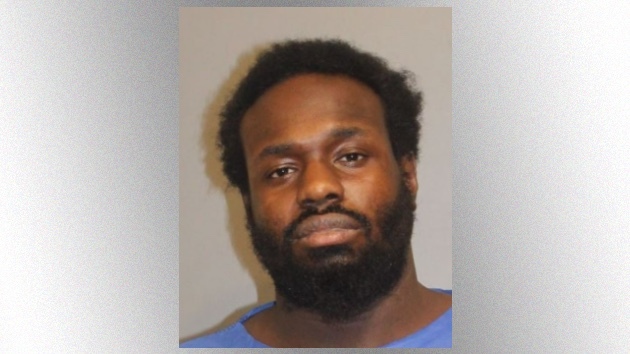
“Upon arrival, officers were met at the door by Terrance Lamar Bowie, a 29-year-old male from Casco, Michigan,” authorities said. “Bowie made statements to officers indicating that there was a dead body located inside of the apartment.”
Officers then found the body a 27-year old woman in a bedroom. She has not been identified.
“Evidence gathered from the scene indicates that this was a homicide, and the suspect, Terrance Lamar Bowie, was placed under arrest,” police said.
Authorities confirmed that this “was not a random act of violence, as the victim and Bowie were both known to each other.”
Bowie was arraigned on Tuesday in district court and charged with second degree murder and scene tampering. His bond was set at $2 million by Judge Stephen Sierawski.
Bowie’s next court appearance will be in August, officials said.
“Think twice before committing a crime in Shelby Township. Our team is committed to the safety and security of our residents and business owners,” said Police Chief Robert J. Shelide. “However, if you commit a violent crime in Shelby Township, we will leave no stone unturned and pursue you until you are brought to justice.”
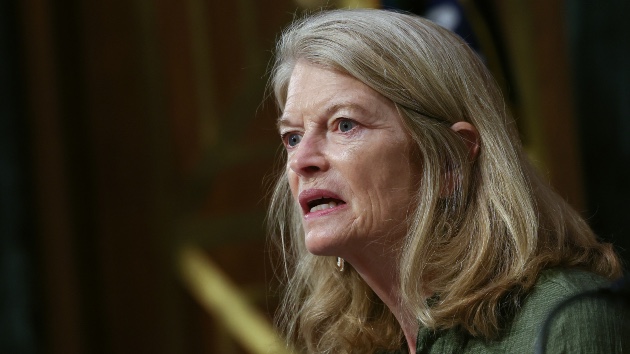
(WASHINGTON) — Alaska Republican Sen. Lisa Murkowski said she’s worried the Trump administration’s federal education funding freeze could mean “closing schools” in her home state.
“Many of our school districts have already made really hard decisions about closing schools,” Murkowski said in the wake of three of Alaska’s school districts suing the Trump administration for freezing more than roughly $6 billion in congressionally authorized federal education funding nationwide.
“Both in Fairbanks and Anchorage, we’ve seen layoffs,” Murkowski said.
Earlier this month, the Anchorage School District announced in a letter to the community that the district had already begun laying off some staff members after $46 million was impacted by the pause. The district receives about a third of the state’s federal education funds, according to Superintendent Jharrett Bryantt.
“I wish I could say that we were really solid on the state level, but we’re not. And now there’s questions on the federal level as well,” Murkowski added.
Murkowski and nine other Republican senators signed onto a letter last week requesting the Trump administration reverse the funding pause, which they said prompted the Office of Management and Budget (OMB) to unfreeze more than $1 billion in after-school and summer learning funding.
However, OMB did not indicate whether it would be unfreezing the rest of the roughly $6 billion in federal funds for programs, such as English language learning, educator development and adult education, among others.
Sen. Shelley Moore Capito, R-W.Va., led the group of 10 senators signing on to the letter. She told ABC News that she hopes the administration can successfully restore all education funding to states by time school starts.
“I’d like to see some of the other programs released, but, you know, we haven’t heard one way or the other,” Moore Capito told ABC News.
School district leaders are now scrambling due to the uncertainty, according to state officials who’ve spoken to ABC News. At least two dozen states, several school districts and education advocacy groups have now sued the administration over the funding freeze.
An OMB spokesman said the funds are under review for “grossly” misusing programs that promote “radial leftwing agendas.”
But Murkowski slammed the administration for contending that districts in Alaska pushed programs with radical ideology. She said the programs are not “woke or ideologically out of line.”
Murkowski fears the programmatic review from the OMB — the stated reason for the freeze — could stretch into the school year, suggesting it would harm adult and English language learners the most. The delayed funding could in turn impact the workforce, according to Murkowski.
“If your literacy skills are weak, if you’re working on your English skills, I mean, these are all things that are keeping people out of the workforce at a time when we’re trying to get people into it,” Murkowski said, adding “So I am very worried.”
Since the funding pause ensued on July 1, North Dakota Republican Sen. John Hoeven said he has been hearing from concerned educators in his state as well.
Hoeven was relieved when the after-school and summer learning grants were unfrozen because they, too, help the workforce, he said.
With funding for those programs secured, parents won’t have to make other arrangements for their children, potentially missing work to do so, Hoeven told ABC News. “That was the one that was most timely.”
Hoeven and Murkowski said they’re reaching out to Education Secretary Linda McMahon, hoping she can help release the additional funding to schools. OMB hasn’t made a decision yet on how long its review will take.
ABC News has reached out to the Education Department for comment.
Meanwhile, Arkansas Republican Sen. John Boozman said at this point unfreezing any aid is a positive first step.
“The good news is that we are moving in the right direction,” Boozman told ABC News.
“Hopefully we can get them [the rest of funding] restored as soon as possible.”
As the school year approaches, Murkowski stressed that the administration must move quickly.
“I don’t want to call it cuts yet, because my hope is that they’re just unpaused and that they are going to materialize,” she said.
The senator, who grew up in Alaska and raised her children there, told ABC News that she is hopeful McMahon understands that rural communities will suffer without critical education programs.
“It’s just kind of making it real to her,” Murkowski said, adding, “I know we’re worried in Alaska, and I have to assume it’s the same all over the country.”
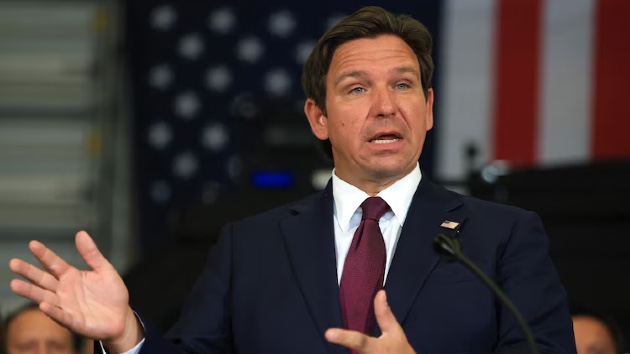
Miami elections could proceed this year as originally planned, after a judge ruled that city officials could not push elections back to 2026 without voter approval.
The ruling comes after the Miami city council voted 3-2, and Miami Mayor Francis Suarez signed off, to cancel November’s elections and hold them in 2026 instead. They argued the alignment with statewide elections would lower costs and increase turnout. The decision was met with pushback for being done via ordinance rather than a vote from the public.
Suarez and council members faced accusations, including from Florida Gov. Ron DeSantis and Florida Attorney General James Uthmeier, of deciding to extend their own time in office, some beyond legal term limits.
Mayoral candidate Emilio Gonzalez filed a lawsuit on June 30, challenging the decision, calling it “unconstitutional” and a “blatant power grab.”
Miami-Dade County Circuit Judge Valerie R. Manno Schurr ruled in favor of Gonzalez on Monday, saying the city did not have the authority to shift elections without voter approval.
“The Court declares that the City of Miami cannot change the dates of municipal elections or the terms of offices for the City’s elected officials without amending the City of Miami Municipal Charter … which requires approval by the electorate,” Schurr wrote in her opinion.
DeSantis lauded Monday’s decision. He previously called the attempt to postpone the elections “wrong” and said he hoped to see “a swift legal response.”
“City of Miami politicians voted to defy term limits, cancel this year’s scheduled election, and extend their own terms in office — all without voter approval. Today, a judge has put the kibosh on the scheme,” DeSantis wrote on X. “Great to see the law and common sense prevail.”
Florida Attorney General James Uthmeier, who had issued a legal opinion on June 11 supporting Gonzalez’s argument, also weighed in on social media.
“Thrilled that the Court agreed with our legal opinion on the City of Miami’s unconstitutional attempt at moving back an election without voter approval,” Uthmeier wrote.
Another amicus brief supporting Gonzalez’s came come from former Miami mayor and current Commissioner Joseph Carollo. Carollo was one of the two commissioners who voted against shifting the elections.
The court’s ruling offers declaratory relief but not injunctive relief, meaning Miami is legally in the wrong but has not been explicitly ordered not to postpone its elections. However, Florida State University Law Professor Michael Morley said “if push comes to shove, the court can just enter injunctive relief” at any time.
The city is appealing Schurr’s decision.
“While we respectfully disagree with the trial court’s decision, we are confident in the strength of our case and remain optimistic about the outcome on appeal,” City Attorney George Wysong wrote in the appeal notice.
Morley said he thought the appeal was “extremely unlikely” to succeed.
Speaking prior to the ruling, University of Miami Law Professor Charlton Copeland said due to the nature of the dispute, the suit would be able to move through the courts “fairly quickly.”
“These are clean legal arguments about what law governs… these aren’t procedurally complicated issues,” Copeland said.
Aubrey Jewett, a professor at the University of Central Florida, said the choice to hold elections on even or odd years involves a “trade off.”
Odd-year elections might have lower turnout, but “a greater emphasis on local issues that people are actually looking at and voting on.” In even years, local concerns might be drowned out by state or federal issues despite a higher turnout, Jewett told ABC News.
Even as elections could go forward this year as planned, Jewett said harm has been done to Miami’s political culture already because the postponement decision was pushed without voter input.
“The local politics has long had a reputation for being sort of an insider’s game, and that a relatively few number of people have a lot of influence,” Jewett said. “I think that for a lot of Miami residents, it will breed even more cynicism and distrust.”
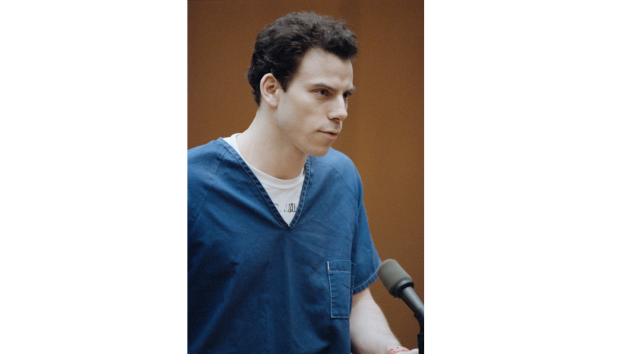
Erik Menendez, 54, is in the hospital and has been diagnosed with a serious medical condition, his family confirmed to ABC News.
The condition has not been disclosed.
Erik and Lyle Menendez were resentenced in May to 50 years to life in prison, which makes them eligible for parole — the latest step in a yearslong battle for the brothers trying to get released after 35 years behind bars.
The brothers have a parole hearing on Aug. 21.
His attorney, Mark Geragos, appeared on TMZ calling for Erik Menendez’s immediate release.
“It’s a serious condition,” Geragos told TMZ.
“I just think he should be parole furloughed, I think is the proper term, and he could be medically furloughed in advance of the hearing so that he can work with the parole attorney and get up to speed and be ready and do it and give it his best shot. I think that it’s the only fair and equitable thing to do,” he said.
Erik and Lyle Menendez were initially sentenced to life without the possibility of parole for the 1989 murders of their parents, Jose and Kitty Menendez. Los Angeles County District Attorney Nathan Hochman has fought against their release, calling the brothers’ claims of self-defense part of a litany of “lies.” But the brothers have the support of over 20 family members in their efforts to be freed.