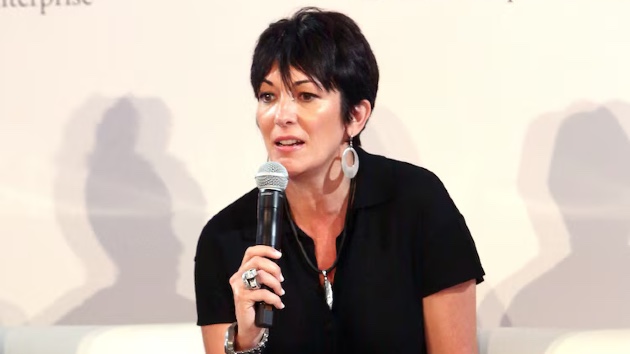
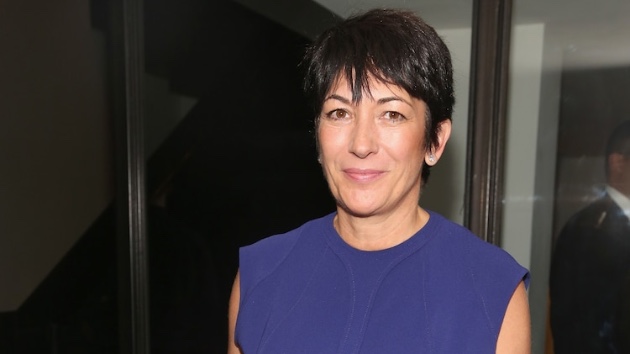
(WASHINGTON) — A senior Department of Justice official is meeting with longtime Jeffrey Epstein associate Ghislaine Maxwell on Thursday in Tallahassee, Florida, sources familiar with the matter told ABC News.
The meeting between Deputy Attorney General Todd Blanche and Maxwell is occurring in downtown Tallahassee at the U.S. attorney’s office, which is located inside the federal courthouse, sources familiar with the matter said.
Maxwell was convicted of sex trafficking and other charges and sentenced to 20 years in prison in 2022. She is serving her sentence at a federal prison in Tallahassee.
Blanche arrived at the federal courthouse around 9 a.m. ET. He shook his head and said “no” when asked if he had anything to say ahead of his meeting with Maxwell.
Maxwell’s attorneys were also seen entering the federal courthouse in Tallahassee.
“We’re looking forward to a productive day,” David O. Markus, Maxwell’s appellate lawyer, told ABC News. He declined further comment.
The Justice Department said earlier this week that the meeting between Blanche and Maxwell would occur “in the coming days.”
“President Trump has told us to release all credible evidence. If Ghislaine Maxwell has information about anyone who has committed crimes against victims, the FBI and the DOJ will hear what she has to say,” Blanche said in the statement posted by Attorney General Pam Bondi on X earlier this week.
Maxwell’s attorney confirmed earlier this week that they were in discussions with the government about the visit, saying in a statement that “Ghislaine will always testify truthfully.”
Separately, on Wednesday, House Oversight Committee Chairman James Comer issued a subpoena for Maxwell for a deposition to occur at the prison on Aug. 11.
“The facts and circumstances surrounding both your and Mr. Epstein’s cases have received immense public interest and scrutiny,” Comer wrote in a statement Wednesday.
(WASHINGTON) — A senior Department of Justice official is meeting with longtime Jeffrey Epstein associate Ghislaine Maxwell on Thursday in Tallahassee, Florida, sources familiar with the matter told ABC News.
The meeting between Deputy Attorney General Todd Blanche and Maxwell is occurring in downtown Tallahassee at the U.S. attorney’s office, which is located inside the federal courthouse, sources familiar with the matter said.
Maxwell was convicted of sex trafficking and other charges and sentenced to 20 years in prison in 2022. She is serving her sentence at a federal prison in Tallahassee.
Blanche arrived at the federal courthouse around 9 a.m. ET. He shook his head and said “no” when asked if he had anything to say ahead of his meeting with Maxwell.
Maxwell’s attorneys were also seen entering the federal courthouse in Tallahassee.
“We’re looking forward to a productive day,” David O. Markus, Maxwell’s appellate lawyer, told ABC News. He declined further comment.
The Justice Department said earlier this week that the meeting between Blanche and Maxwell would occur “in the coming days.”
“President Trump has told us to release all credible evidence. If Ghislaine Maxwell has information about anyone who has committed crimes against victims, the FBI and the DOJ will hear what she has to say,” Blanche said in the statement posted by Attorney General Pam Bondi on X earlier this week.
Maxwell’s attorney confirmed earlier this week that they were in discussions with the government about the visit, saying in a statement that “Ghislaine will always testify truthfully.”
Separately, on Wednesday, House Oversight Committee Chairman James Comer issued a subpoena for Maxwell for a deposition to occur at the prison on Aug. 11.
“The facts and circumstances surrounding both your and Mr. Epstein’s cases have received immense public interest and scrutiny,” Comer wrote in a statement Wednesday.
(WASHINGTON) — A senior Department of Justice official is expected to meet with longtime Jeffrey Epstein associate Ghislaine Maxwell on Thursday in Tallahassee, Florida, sources familiar with the matter told ABC News.
According to sources familiar with the matter, the expected meeting between Deputy Attorney General Todd Blanche and Maxwell is occurring in downtown Tallahassee at the U.S. attorney’s office, which is located inside the federal courthouse.
Maxwell will be transported Thursday morning from the federal prison where she is being held to the U.S. attorneys office.
Blanche arrived at the federal courthouse around 9 a.m. ET. He shook his head and said “no” when asked if he had anything to say ahead of his meeting with Maxwell.
Maxwell’s attorneys were also seen entering the federal courthouse in Tallahassee.
“We’re looking forward to a productive day,” David O. Markus, Maxwell’s appellate lawyer, told ABC News. He declined further comment.
The Justice Department said earlier this week that the meeting between Blanche and Maxwell would occur “in the coming days.”
“President Trump has told us to release all credible evidence. If Ghislaine Maxwell has information about anyone who has committed crimes against victims, the FBI and the DOJ will hear what she has to say,” Blanche said in the statement posted by Attorney General Pam Bondi on X earlier this week.
Maxwell’s attorney confirmed earlier this week that they were in discussions with the government about the visit, saying in a statement that “Ghislaine will always testify truthfully.”
Maxwell was convicted of sex trafficking and other charges and sentenced to 20 years in prison in 2022. She is serving her sentence at a federal prison in Tallahassee.
Separately, on Wednesday, House Oversight Committee Chairman James Comer issued a subpoena for Maxwell for a deposition to occur at the prison on Aug. 11.
“The facts and circumstances surrounding both your and Mr. Epstein’s cases have received immense public interest and scrutiny,” Comer wrote in a statement Wednesday.
(TEL AVIV, Israel) — Hamas’ latest response to a U.S.-brokered Gaza ceasefire proposal is “currently being reviewed” by Israel, Prime Minister Benjamin Netanyahu’s office said on Thursday.
Hamas announced Wednesday night it had submitted to mediators a response to the ceasefire deal currently on the table. The details of Hamas’ response were not immediately made public.
Sources familiar with the matter tell ABC News that a trilateral meeting in Italy between top Israeli, Qatari and American officials is slated to discuss Hamas’s response as early as today. The U.S. State Department said Wednesday President Trump’s Mideast Envoy was traveling to Italy to meet with top officials regarding a Gaza ceasefire.
Representatives from Israel and the militant group have been in Doha, Qatar, for more than two weeks working on a ceasefire proposal for the 21-month-old conflict in Gaza.
Those negotiations continue as more than 100 aid groups warned Wednesday that the enclave was on the verge of “mass starvation.”
(WASHINGTON) — Ghislaine Maxwell engaged in a “significant pattern of dishonest conduct,” enabled and participated in the abuse of multiple teenage girls, and failed to take responsibility for her crimes.
That was the assessment of the federal prosecutors who brought a criminal case against the longtime associate of Jeffrey Epstein and sent her to prison for 20 years.
Now, three years later — and amid the ongoing controversy surrounding the Trump administration’s handling of the Epstein files — the Department of Justice has decided to approach Maxwell, 63, to purportedly learn more about her knowledge of whether Epstein’s sex trafficking extended to people other than himself.
Prosecutors’ sentencing memorandum after Maxwell’s 2021 conviction offers a frank assessment of Maxwell’s “monstrous” crimes and casts doubt on her honesty ahead of her meeting with Deputy Attorney General Todd Blanche later this week.
“In short, the defendant has lied repeatedly about her crimes, exhibited an utter failure to accept responsibility, and demonstrated repeated disrespect for the law and the Court,” federal prosecutors with the U.S. Attorney’s Office for the Southern District of New York wrote in June 2022.
Blanche is set to meet with Maxwell in the coming days to potentially learn more information “about anyone who has committed crimes against victims.”
Ahead of the meeting, Maxwell’s appellate counsel David Oscar Markus vowed that she would “testify truthfully” and thanked President Donald Trump for his “commitment to uncovering the truth in this case.”
Maxwell continues to appeal her conviction. Her lawyers have asked the Supreme Court to throw out her case, arguing a non-prosecution agreement that Epstein made with federal prosecutors in Florida in 2007 allegedly barred her subsequent prosecution in New York more than a decade later.
The Trump administration asked the high court earlier this month to deny Maxwell’s petition.
In their sentencing memo in 2022, defense lawyers argued Maxwell “should not bear all the punishment for which Epstein should have been held responsible.”
“Epstein was the mastermind, Epstein was the principal abuser, and Epstein orchestrated the crimes for his personal gratification. Indeed, had Ghislaine Maxwell never had the profound misfortune of meeting Jeffrey Epstein over 30 years ago, she would not be here,” they argued.
Prosecutors said Maxwell enabled Epstein and directly participated in the abuse.
According to prosecutors, the testimony elicited at Maxwell’s trial demonstrated she was a vital participant in Epstein’s crimes, offering a veneer of respectability and trust before the convicted sex offender abused dozens of teenage girls.
She identified and preyed on vulnerable young women, groomed them to normalize their abuse and participated in the abuse — directly enabling one of the most significant sex trafficking operations in US history, prosecutors said.
“Maxwell befriended her victims, won their trust, slowly broke down their boundaries, and normalized sexual abuse,” prosecutors wrote in the the memo. “Maxwell’s victims trusted her: she was a seemingly respectable woman who showed interest in them and promised to help them. She was key to the entire operation of the scheme, and Epstein could not have committed these crimes without her.”
According to the government’s sentencing memorandum, Maxwell “personally engaged in sexual abuse when she fondled the breasts” of three victims. She was also “the person who was most frequently in the room when Epstein abused” one of the victims, who testified under the name Jane.
“Years of sexual abuse, multiple victims, devastating psychological harm: none of this could have happened without Maxwell,” prosecutors wrote.
Maxwell repeatedly lied to officials, prosecutors said Prosecutors repeatedly emphasized at trial that Maxwell should not be trusted, arguing that she “engaged in a significant pattern of dishonest conduct, which speaks volumes about her character.”
They identified at least four instances in which Maxwell allegedly lied or made dishonest representations to the authorities or in civil lawsuits.
During a 2016 deposition, she said under oath that she never gave Annie Farmer, a victim who testified at trial, a massage. Farmer’s testimony at trial “established that was a lie,” prosecutors said.
She allegedly lied to court officials during an interview about her assets. When the court denied her bail application, the judge noted that Maxwell “misrepresent[ed] key facts to Pretrial Services and, by extension, the Court.”
Prosecutors said that Maxwell lied in November 2021 when she told the court, “I have not committed any crime” in response to a question about whether she engaged in plea discussions with the government.
Maxwell also falsely claimed she had no assets when she interviewed with the court’s probation office, despite having previously claimed she had $22 million in assets. She also declined to provide information about the circumstances of her marriage, prosecutors said.
“In short, the defendant decides when she wishes to disclose facts to the Court, and those facts shift when it serves the defendant’s interests,” prosecutors wrote.
Maxwell profited from relationship with Epstein, prosecutors said Prosecutors alleged that Maxwell lived a “remarkable life of privilege” and received approximately $23 million from Epstein during the timeframe of their alleged crimes.
Maxwell also received a townhouse in New York from Epstein and benefited from his lavish lifestyle, prosecutors allege. Epstein also bequeathed her $10 million from his estate, though Maxwell has not received those funds because the estate is in probate.
“As part of a disturbing agreement with Jeffrey Epstein, Maxwell identified, groomed, and abused multiple victims, while she enjoyed a life of extraordinary luxury and privilege. In her wake, Maxwell left her victims permanently scarred with emotional and psychological injuries,” prosecutors wrote.
Maxwell deflected responsibility for her crimes, prosecutors said At her sentencing, some of the witnesses who testified at trial urged Judge Alison Nathan to impose a severe sentence due to the harm Maxwell had caused and her apparent lack of remorse.
A witness who testified under the name Kate described Maxwell as “a manipulative, cruel and merciless person who only uses kindness to manipulate and generosity to seek recognition.”
“The lack of remorse or responsibility taken by Ghislaine for how she ruined the lives of countless women and children is exactly how we can tell that she doesn’t think what she did is wrong. She is not sorry, and she would do it again,” Kate said.
Annie Farmer asked the judge to consider the “ongoing suffering of the many women whom she abused and exploited” and how Maxwell’s inability to accept the consequences of her crimes continued to harm the victims.
“I ask you to bear in mind how Maxwell’s unwillingness to acknowledge her crimes, her lack of remorse and her repeated lies about her victims created the need for many of us to engage in a long fight for justice that has felt like a black hole sucking in our precious time, energy and well-being for much too long now, things that cannot be replaced,” Farmer said.
When Maxwell briefly addressed the court, she said that she “empathize[s] deeply with all of the victims in this case” and that meeting Epstein years earlier was her “greatest regret.”
Her lawyers have long argued that Maxwell was unfairly targeted for Epstein’s crimes after his death, and her statement at sentencing echoed that argument.
“Jeffrey Epstein should have been here before all of you. He should have stood before you all those years ago,” she said. “He should have stood before you in 2005, again in 2009, and again in 2019, all of the many times he was accused, charged, and prosecuted. But today it is not about Epstein ultimately. It is for me to be sentenced and for the victims to address me, and me alone, in this court.”
ABC News’ Peter Charalambous contributed to this report.
Russia Ministry of Emergency Situations/Handout/Anadolu via Getty Images
(LONDON and MOSCOW) — A passenger plane carrying 48 people crashed on Thursday morning in Russia’s far eastern Amur region with no survivors, according to the local governor.
The Russian news agency Interfax reported that the plane’s wreckage was found around nine miles from its intended destination in the town of Tynda, having traveled from the regional hub of Blagoveshchensk some 360 miles away.
Gov. Vasily Orlov said in a post to Telegram that the An-24 aircraft vanished from radar close to Tynda. Emergency services later found the wreckage in nearby woods. “I regret to inform you that there are no survivors,” Orlov wrote in a later post. “Rescuers have reached the crash site.” Orlov declared three days of mourning.
Artem Korenyako — a spokesperson for Russia’s federal aviation agency Rosaviatsiya — wrote on Telegram that a search and rescue helicopter “discovered a burning fuselage.”
Russia’s Ministry of Emergency Situations also reported the discovery of burning wreckage in a post to Telegram. More than 50 people and 10 pieces of equipment were deployed in search and rescue efforts, the ministry said.
Irkutsk Oblast Gov. Igor Kobzev said that “the flight crew, technical staff and flight attendants lived in the Irkutsk region.” He noted that officials are working to “get a full list of passengers today and, of course, to see who of them lives in the Irkutsk region.”
This is a developing story. Please check back for updates.
ABC News’ Morgan Winsor contributed to this report.
(LONDON) — Ukrainian President Volodymyr Zelenskyy on Wednesday urged national unity as demonstrators took to the streets of more than a dozen cities nationwide to protest a controversial bill that critics said will neuter two key anti-corruption agencies.
Ukrainian media estimated that thousands of people gathered near the presidential office in the capital Kyiv on Wednesday evening, despite a nightly curfew and the ever-present threat of Russian drone and missile strikes.
Those gathered were protesting a controversial law approved by parliament and signed by Zelenskyy on Tuesday. The bill will bring the Anti-Corruption Bureau (NABU) and its partner organization, the Specialised Anti-Corruption Prosecutor’s Office (SAPO), under the direct control of the Prosecutor General’s Office (PGO).
The prosecutor general is appointed by the president, prompting concern among critics that the law will give the president’s office undue influence over NABU and SAPO.
The president sought to ease tensions on Wednesday, promising to put forward a new bill to ensure the independence of the anti-corruption bodies.
Zelenskyy said in a post to Telegram that he met with the heads of all law enforcement and anti-corruption agencies.
“We agreed that the heads of these institutions will jointly propose an action plan — a plan of concrete steps that can strengthen the rule of law in Ukraine,” he wrote. “Of course, everyone has heard what people are saying these days — what they are saying on social media, to each other, on the streets. It’s not falling on deaf ears.”
“We’ve analyzed all the concerns, all the aspects of what needs to be changed and what needs to be stepped up,” he added.
“And what will remain most important is not losing our national unity, ending the war, stopping this Russian evil and securing a dignified peace for Ukraine,” Zelenskyy wrote. “And exactly as we all envision it — as a full-fledged part of Europe. We’ll make it happen.”
On Thursday, Zelenskyy said had approved the text of the new bill which would be sent to parliament. “The most important thing is real tools, no Russian ties and the independence of NABU and [SAPO],” the president wrote.
Both NABU and SAPO were set up in the aftermath of Ukraine’s pro-Western Maidan Revolution in 2014, with the intention of rooting out systemic corruption and helping Kyiv reform its democratic system with an eye on EU accession.
Critics of the new legislation say it constitutes a power grab by Zelenskyy and his presidential office — which is headed by influential chief of staff Andriy Yermak — that undermines Ukrainian democracy and threatens the country’s EU ambitions.
Zelenskyy and his supporters have defended the measures as necessary to root out Russian influence in NABU and SAPO.
The passing of the law followed a series of raids on NABU employees by officers from the Security Service of Ukraine (SBU) and the PGO on Monday. Officers also began inspecting the handling of state secrets at SAPO.
“The anti-corruption infrastructure will work,” Zelenskyy wrote on Telegram late on Tuesday. “Only without Russian influences — everything needs to be cleansed of this. And there should be more justice.”
The domestic political crisis erupted as a Ukrainian delegation headed to Istanbul, Turkey, for the latest round of ceasefire talks with Russian negotiators. Wednesday’s meeting there ended after less than an hour.
Vladimir Medinsky, who led the Russian delegation, told reporters after the talks that the two sides agreed on a new prisoner exchange of at least 1,200 people.
The two sides also discussed the memoranda exchanged during the last round of talks on June 2, Medinsky said, adding that the delegations were “quite far from each other.” The parties agreed to continue negotiations, Medinsky said.
When asked about a potential meeting between Zelenskyy and Russian President Vladimir Putin, Medinsky said any potential meeting should be carefully prepared.
Cross-border drone strikes continued despite the new talks. Russia’s Defense Ministry said its forces downed 42 Ukrainian drones overnight into Thursday morning.
Russian drones and missiles, meanwhile, targeted Odesa, Cherkasy, Kharkiv, Zaporizhzhia, Donetsk, Sumy and Mykolaiv regions, Zelenskyy said in a post to Telegram.
Ukraine’s air force said Russia launched 103 strike drones and four missiles into the country overnight into Thursday morning. Ninety drones and one missile were shot down or suppressed, the air force said, with impacts by 13 drones and three missiles across 11 locations. Falling debris from interceptions was reported in six places.
“Russia does not stop its terror, blocks diplomacy and that is why it deserves full-scale sanctions responses and our strikes on its logistics, military bases and military production facilities,” the president wrote.
“We will do everything to make diplomacy work,” he added. “But it is Russia that must end this war that it started itself.”
ABC News’ Ellie Kaufman, Will Gretsky and Tanya Stukalova contributed to this report.
Luiz C. Ribeiro/New York Daily News/Tribune News Service via Getty Images
(NEW YORK) — Columbia University has agreed to pay $200 million over the next three years to resolve claims it discriminated against Jewish students — an agreement the university said will restore hundreds of millions of dollars in federal grants the Trump administration had terminated or paused earlier this year.
“While Columbia does not admit to wrongdoing with this resolution agreement, the institution’s leaders have recognized, repeatedly, that Jewish students and faculty have experienced painful, unacceptable incidents, and that reform was and is needed,” the university said in a statement.
In addition, the school agreed to pay $21 million to settle investigations brought by the U.S. Equal Employment Opportunity Commission.
Columbia also agreed to submit to a federal monitor that will assure compliance with admissions and hiring practices and provide certain information about foreign students to immigration authorities.
In a social media post Wednesday evening, President Donald Trump celebrated the agreement.
“Columbia has agreed to pay a penalty of $200 Million Dollars to the United States Government for violating Federal Law, in addition to over $20 Million to their Jewish employees who were unlawfully targeted and harassed,” Trump said in the post.
“Numerous other Higher Education Institutions that have hurt so many, and been so unfair and unjust, and have wrongly spent federal money, much of it from our government, are upcoming,” Trump added.
The agreement puts an end to a months-long dispute between Columbia and the Trump administration over federal funding.
In March, the Trump administration said it was canceling $400 million worth of grants and contracts to the university citing what it called “the school’s continued inaction in the face of persistent harassment of Jewish students.”
Later that month, the university agreed to nine demands from the Trump administration, including banning masks and stricter controls over its Middle East studies department.
The university said the agreement announced Wednesday builds on steps it previously took as part of negotiations with the administration and “builds on Columbia’s broader commitment to combating antisemitism.”
As a result of the agreement, the university said “a vast majority” of the federal grants which were terminated or paused in March would be reinstated and that “Columbia’s access to billions of dollars in current and future grants will be restored.” That includes grants terminated by the National Institutes of Health and the Department of Health and Human Services.
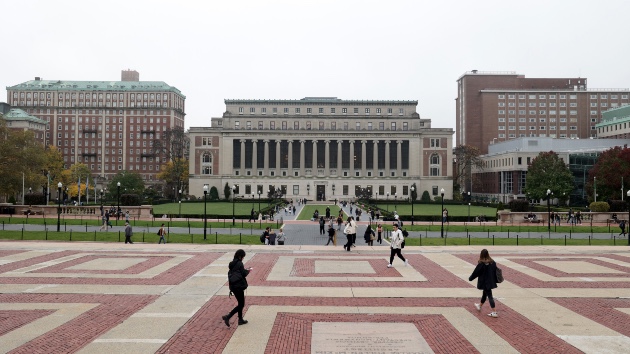
Earlier this week, the school said it was disciplining more than 70 students over two pro-Palestinian protests on the campus in the spring — including a protest in May when students took over Butler Library.
The campus was roiled by protests last spring over the Israel-Hamas war. In late April 2024, pro-Palestinian protesters barricaded themselves inside Hamilton Hall, leading to several arrests. The students involved were later expelled, suspended or had their degrees temporarily revoked.
(WASHINGTON) — The Senate on Wednesday took a step toward approving its first appropriation bill, agreeing to advance military construction and Veterans Affairs spending in a 90-8 vote.
But lawmakers have a long way to go to avoid a government shutdown, with 12 appropriations bills to get through before the Sept. 30 deadline.
The House, which has passed two appropriations bills, saw its legislative session ended early by Speaker Mike Johnson amid turmoil over the Trump administration’s handling of the Jeffrey Epstein files.
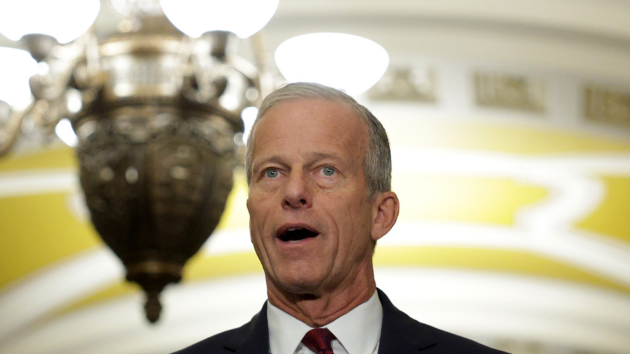
The Senate is set to begin its August recess next week, though Senate Majority Leader John Thune has kept open the possibility of canceling the weekslong break at President Donald Trump’s request to advance his nominees.
And unlike many of the things that Republicans have done this Congress, passing any of the 12 appropriations bills in the Senate will require 60 votes to pass.
Thune, during an appearance on Fox News’ “Sunday Morning Futures,” said “we’ve got to find a way” to start moving the measures.
“We are going to need to get appropriations done. That will require some cooperation from Democrats and hopefully they will be willing to make sure that the government is funded,” Thune told host Maria Bartiromo.
Democrats seek to strategize on funding
Democrats met behind closed doors on Tuesday to try to hash out a cohesive strategy for approaching government funding ahead of the s hutdown deadline.
Senate Minority Leader Chuck Schumer and House Minority Leader Hakeem Jeffries also met with their Democratic appropriators.
At a brief joint press conference afterward, Schumer and Jeffries said Democrats were committed to a “bipartisan, bicameral” appropriations process but blamed Republicans for making a clear path forward to averting a shutdown difficult.
“As has always been the case we are prepared to engage in those discussions in good faith, but House Republicans are not there. House Republicans are in fact marching us toward a possible government shutdown that will hurt the American people. We remain ready, willing and able to have the type of appropriations process that will yield a good result for the American people, but that process must be bipartisan and bicameral in nature,” Jeffries said.
Schumer said Senate Democrats supported the first appropriations bill on military construction and VA funding because it will help veterans and undo some cuts made by the Department of Government Efficiency — but that other issues wouldn’t be as simple.
Democrats are weighing a number of considerations as they think about how to deal with government funding, especially with most saying they feel scorned after Republicans struck $9 billion in previously-approved funds from the federal budget.
Republicans were able to pass the rescissions package, which included cuts to foreign aid and public broadcasting, without any Democratic support. Democrats say it amounts to a betrayal of a previous agreement that’s left them reluctant about future deals.
“Speaking for myself, I am really hard put to vote for appropriations when I know Republicans are just going to ride roughshod and reverse them down the line on a strictly partisan basis,” Sen. Richard Blumenthal, a Connecticut Democrat, said on Monday. “The pattern of partisan betrayal on the part of my colleagues gives me a lot of pause so I am really torn about it.”
Sen. Peter Welch, a Vermont Democrat, echoed those sentiments.
“There’s a trust issue that we have to have to legislate where you reach an agreement and then there’s a switch-a-roo on rescissions and you have 60 votes and it suddenly goes to 50,” Welch said. “What we thought was solid and set in stone suddenly melts away, that is a problem.”
Thune on Tuesday also called for a bipartisan path forward on the appropriations process, but put the onus on Democrats to work with Republicans.
“The Democrats have indicated, because they’re so upset over the rescissions bill last week — which, by the way, cut one-tenth of 1 percent of all federal spending — that somehow they can use that as an excuse to shut down the appropriations process and therefore shut down the government,” Thune said at a press conference with Senate Republican leadership. “We think that would be a big mistake, and hopefully they will think better of it and work with us.”
The White House, though, has made the case the government funding process should be “less bipartisan.”
“It’s not going to keep me up at night, and I think it will lead to better results, by having the appropriations process be a little bit partisan. And I don’t think it’s necessarily leading to a shutdown,” White House Office of Management and Budget Director Russ Vought told reporters last week.
“Who ran and won on the on an agenda of a bipartisan appropriations process? Literally no one. No Democrat, no Republican,” he added. “There is no voter in the country that’s went to the polls and said, ‘I’m voting for a bipartisan appropriations process.'”
Democratic Senator Patty Murray of Washington, the vice chair of the Senate Committee on Appropriations, said on the Senate floor before Wednesday’s vote that she thought his process should move forward in its historically bipartisan fashion despite Republicans’ recent moves to work on government funding through a rescissions package.
“To be clear, if Republicans continue cutting bipartisan deals with more rescissions, that’s not cooperation,” Murray said. She added, “So for anyone considering the partisan route, you cannot write a bill without talking to Democrats and then act surprised when Democrats don’t support it. You want our votes. You work with us, and this bill today that we’re considering shows that is possible.”
(WASHINGTON) — The White House on Wednesday released its promised “AI Action Plan,” a sweeping set of policy proposals aimed at boosting the United States’ goal for dominance in artificial intelligence through sweeping deregulation.
The plan was developed by the Trump administration’s AI and crypto czar, David Sacks, and the Office of Science and Technology Policy.
The 24-page plan outlines over 90 federal actions focused on three areas of focus: increasing private-sector innovation, expanding AI-related infrastructure and exporting American AI. It follows President Donald Trump’s January executive order directing the creation of an “AI Action Plan” within 180 days.
The proposals appear to break from the Biden administration’s more safety-first AI framework, but White House officials cast the strategy as essential to “winning the AI race” against global competitors, especially China.
The new plan comes as consumer advocates warn it gives tech companies outsized influence and effectively lets them write their own rules. Public Citizen called it “a corporate giveaway.
“The Trump administration’s reckless AI agenda prioritizes corporate profits over public safety. The administration plans to give billions to Big Tech so they can burn even more dirty energy, release untested products, and rush into the AI era without accountability to the American public,” the group said in a statement.
Trump is expected to issue executive orders tied to the plan’s priorities. The president on Wednesday will appear at the “Winning the AI Race” event, hosted by the Hill and Valley Forum and the All‑In podcast, which is co-hosted by Sacks.
Key pillars of the White House’s AI plan
The plan aims to accelerate AI Innovation by cutting regulations, pushing for private-sector adoption of AI technologies and relying on the private sector to recommend regulatory barriers to cut.
Building and expanding AI infrastructure in America is also among the priorities of the proposal. This means fast-tracking permits for the creation of data centers, removing diversity, equity and inclusion (DEI) and climate requirements, as well as investing in AI-related workforce training.
Additionally, the plan recommends, in the name of protecting “free speech” and “American values,” to remove references to misinformation, DEI and climate change from federal AI safety guidelines.
The plan, however, does not address the use of copyrighted data for AI training, which has emerged as a key issue for AI and the basis for lawsuits. When asked about this, a senior official told ABC News the issue is currently before the courts and beyond the scope of executive action, stating: “Fair use is the law of the land.”