(WASHINGTON) — A federal judge halted the Trump administration’s efforts to withhold grant funding from “sanctuary” cities and counties for not cooperating with immigration enforcement.
The 15-page order from Judge William Orrick grants a preliminary injunction in the administration’s effort to withhold funds and expands the number of cities that federal funds can’t be withheld from due to their “sanctuary” status for undocumented immigrants.
The Trump administration has sought to strip the cities’ Housing and Urban Development (HUD) grants due to their lack of cooperation with immigration authorities.
More than 30 cities from Albuquerque to Boston were under the ruling — which amounts to hundreds of millions of dollars in grants.
The Trump administration has been increasing its efforts to have so-called “sanctuary cities” cooperate with the federal government.
The Department of Justice in recent months has filed several legal challenges in several cities and states including New York City, New York state, Los Angeles, Colorado, Illinois, New Jersey, challenging policies that that blocked immigration officials from arresting people at or near courthouses without a warrant signed by a judge.
(NEW YORK) — A suspect who allegedly shot and killed his ex-wife at a hospital in Detroit and then fled the scene has been taken into custody, according to police.
Mario Green, 53, was arrested without incident shortly before 3 a.m. local time Saturday, according to the Detroit Police Department.
The shooting occurred before 10 a.m. Friday in the basement of Henry Ford Hospital, where his ex-wife Latricia Green worked, according to police.
“Our officers worked tirelessly to get this monster off the street,” Detroit Police Chief Todd Bettison said in a statement.
“I would like to thank our law enforcement partners who assisted us in apprehending Mario Green, along with the community who gave us numerous tips about the suspect. No person deserves what happened to Ms. Latricia Green and my heart and prayers go out to her family,” he said.
The suspect allegedly fired multiple shots from a handgun after getting into a “verbal altercation” with his ex-wife, Detroit Police Chief Todd Bettison said during a press briefing Friday.
The suspect then fled the hospital in a 2011 white Dodge Charger, Bettison said. He was captured on video leaving the facility at approximately 9:55 a.m., the chief said.
“He is presumed to be armed and dangerous,” Bettison said.
No other victims were located following a sweep of the hospital, police said.
Bettison said he did not know what the victim did at the hospital or how Mario Green was able to access the basement.
About a month ago, Latricia Green had filed for a personal protection order against Mario Green, according to Detroit Assistant Police Chief Charles Fitzgerald.
“Unfortunately, it was not served on her ex-husband, so it almost brings us here today, ” Fitzgerald told ABC Detroit affiliate WXYZ.
Green has an address in Bloomfield Hills, Michigan, and is described as being approximately 6 feet 4 inches. Michigan State Police released images of the suspect and his vehicle amid the manhunt.
The hospital briefly closed but has since reopened to all patients and visitors.
Henry Ford Health, the hospital’s parent company, said it is cooperating with the police investigation “and are conducting our own internal investigation as well.”
“We are devastated by the loss of our Henry Ford Hospital teammate and our hearts go out to her loved ones — her family, friends, and the people she worked with every day,” the hospital said in a statement.
“We are providing resources to our team members who are dealing with the impacts of this tragic incident. The safety and well-being of our patients, visitors, and team members is our greatest priority,” the statement continued.
(NEW YORK) — The past few months, several disappearances have occurred involving hikers setting out on multi-day excursions who are never seen again.
On Wednesday, search efforts were called off for a Minnesota man, who was last heard from in late July after planning a three-day hike through Wyoming’s Big Horn National Park.
“With weather conditions and other factors updated in our search models, we have to face the reality that the most optimistic survival odds have run out,” officials said.
Similarly, a New Jersey man has been missing since July 28 after reportedly hiking along one of the most challenging trails in the Grand Canyon, according to the National Park Service. Since the hiker’s disappearance, officials have not provided additional updates on his possible whereabouts or the search efforts.
“The overwhelming percentage of missing hikers and accidents and tragedies we see, I think, are probably preventable,” Cris Hazzard, a professional hiking guide and author, known as as “The Hiking Guy,” told ABC News.
Hazzard said these disappearances usually occur when people either “don’t know what they are getting into” or “they’re not prepared.”
So, here’s what Hazzard recommends the next time a hiker — whether they are a beginner or a frequent visitor of the trails — sets out on their next outdoor adventure.
Several minutes of ‘homework’ before embarking on hike Before even beginning a hiking trail or camping excursion, Hazzard said the hiker should check the park’s website, ensuring it is open and there are not any warnings in place.
“A lot of times people think, ‘Well, it’s not going to happen to me, I spent all this money to visit the Grand Canyon and you’re not going to take the hike away from me.’ I get it, but you need to take that stuff seriously,” Hazzard said.
Along with checking the individual park’s website, Hazzard recommends the AllTrails app, where other hikers can leave trail reports and see what others have been experiencing on specifics paths.
Be prepared with the proper gear, including satellite communication When putting together the essential materials for an extended hiking trip, Hazzard said people should ensure they have fitness clothes, a backpack, plenty of water (with electrolytes for warmer hiking conditions) and a rain jacket in case of thunderstorms.
But, Hazzard emphasizes one item that is the most important — an LED flashlight or headlamp.
“Think of a situation of when you’re on a hike and you sprain your ankle halfway through, and there’s a couple hours of daylight. Now you’re hopping back, and if you’re not comfortable hiking, or you don’t know the trail, you could be in the pitch dark, you could get lost and you can get into bigger trouble,” Hazzard said.
Any time issues like that come up, Hazzard said the LED headlamp is “going to bail you out of that.”
Other tools that could prevent tragedies are satellite communication devices that can send an SOS signal to loved ones or to local officials, Hazzard said.
A Garmin Inreach, which is like a “rugged outdoor instrument,” features SOS and non-emergency communication — so hikers can even let family members know when they are running a little behind schedule, Hazzard said.
Additionally, a Personal Locator Beacon (PLB) allows a hiker to broadcast their location to government search and rescue teams with just the push of a button, Hazzard said. This device can share a hiker’s location every 10 minutes via satellite to create a “breadcrumb” trail — making it significantly easier for emergency personnel to find a stranded or injured individual along the trail, Hazzard said.
Not hesitating to ask for help If a hiker does end up getting lost, Hazzard emphasized people should not try to figure out a solution on their own, but instead reach out for help immediately, even if it’s just calling and asking for directions.
“Time is an asset in rescuing you. [Officials] much rather would know that you need help even if they don’t go out and pick you up with a helicopter, they can at least make sure that you’re safe,” Hazzard told ABC News.
Share hiking plans and estimated time of return with a trusted person Hazzard does not discourage hiking alone — as that is how he normally travels the trails — but he encourages those who are solo to share hiking plans with others before embarking on their excursions, since that individual could then give officials precise details in case of an emergency.
“The sooner you report somebody missing and you can give somebody at the park specific information about where that person was hiking, the better the chances of that person being found,” Hazzard said.
Overall, Hazzard said he hopes people remember that while hiking can “look like a very scary thing,” it can actually be safe — with the proper precautions.
“Going to the wilderness can look like climbing Mount Everest, and really it’s not. But it’s just that if you get in trouble, it’s not like going for a walk in a neighborhood or you call an Uber or call 911, you just have to prepare a little bit for it. If you look at it that way, it’s not so intimidating or so scary,” Hazzard told ABC News.
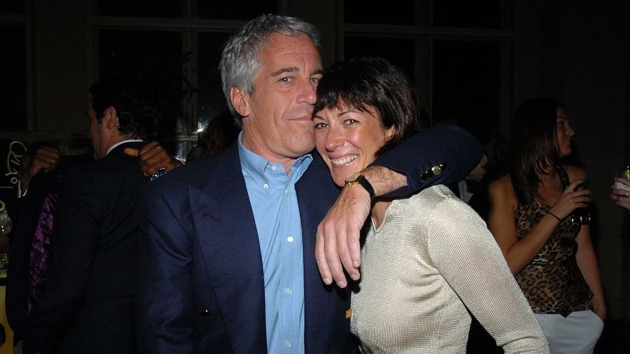
(NEW YORK) — The woman thought to have the most direct knowledge of Jeffrey Epstein’s decades-long sex-trafficking operation claims there was no client list, no blackmail scheme and — to her knowledge — no high-profile Epstein associates who committed illicit acts in connection with the notorious sex-offender’s crimes.
That’s according to an account provided by Epstein’s convicted co-conspirator Ghislaine Maxwell to a top official of the U.S. Department of Justice during a highly unusual two-day interview session last month, sources briefed on the contents of the discussions told ABC News.
Maxwell told Deputy Attorney General Todd Blanche that during her time with Epstein — which ranged from the early 1990s to the mid-2000s — she never witnessed nor heard of any inappropriate or criminal activity by President Donald Trump, former President Bill Clinton, nor any of the well-known men who associated with Epstein, according to the sources.
A transcript of Maxwell’s interview with Blanche, and audio of the interview, were among the items provided by the DOJ on Friday to the House Committee on Oversight and Government Reform, in response to a congressional subpoena for the complete investigative files on Epstein, sources said.
The 63-year old Maxwell, who has been incarcerated since her arrest in 2020, also claimed she had been misidentified by a key witness at her criminal trial and insisted she was not involved in the sexual exploitation of minors, the sources said.
Blanche — who previously served as a personal defense attorney to President Donald Trump — announced his intention to speak with Maxwell in a social media post last month, as the Trump administration sought to quell the self-inflicted controversy surrounding its decision not to release the government’s investigative files on Epstein, after repeatedly promising to do so.
The Department of Justice — in an unsigned memo released last month explaining its decision — said that a “systematic review” revealed no incriminating client list and no evidence “that could predicate an investigation into uncharged third parties.”
Maxwell was granted limited immunity for the interview with Blanche, sources previously told ABC News, meaning nothing she said could be used against her, unless she lied.
She is currently serving a 20-year prison sentence for aiding and participating in Epstein’s trafficking of underage girls, which involved a scheme to recruit young women and girls for massages of Epstein that turned sexual. Federal prosecutors in New York said Maxwell helped Epstein recruit, groom and ultimately abuse girls as young as 14.
Despite her conviction at trial in 2021 — where she declined to take the witness stand — Maxwell claimed in her interview with Blanche that she had been wrongly accused and did not receive a fair trial. She maintained, as she had done previously in a 2016 deposition in a civil case, that she never recruited anyone underage to massage Epstein and never witnessed or participated in any criminal acts, the sources said.
Federal prosecutors charged Maxwell with perjury for alleged lies she told during the 2016 deposition. And the government repeatedly assailed her credibility during her criminal case, citing her “willingness to lie brazenly under oath about her conduct,” according to court records.
Maxwell was indicted in July 2020, during the first Trump administration. Her trial occurred in late 2021, while President Joe Biden was in the White House. The perjury counts against her were eventually dropped after her conviction on the more serious charges.
Blanche’s meeting with Maxwell came just days after the Justice Department fired Maurene Comey, a federal prosecutor in New York with the most detailed knowledge of the case. Comey, the daughter of former FBI Director James Comey, led the criminal prosecution of Maxwell.
Blanche — the top deputy to U.S. Attorney General Pamela Bondi –indicated that the goal of the Maxwell meeting was to determine if she had “information about anyone who has committed crimes against victims,” according to a July 22 statement posted to social media by the DOJ.
According to sources familiar with internal deliberations that preceded the meeting with Maxwell, Blanche was encouraged by some top administration officials to seek information that could lead to criminal investigations that might quiet the outrage from some of Trump’s most vocal supporters.
“The FBI and the DOJ will hear what she has to say,” Blanche wrote in the post. “Until now, no administration on behalf of the Department had inquired about her willingness to meet with the government. That changes now.”
Sources told ABC News, however, that it was Maxwell’s legal team that initiated the request for the meeting. Maxwell has a pending application before the U.S. Supreme Court to review her conviction. Her lawyers have stated that they have not yet asked President Trump to commute her sentence or to pardon her, but that Maxwell “would welcome any relief.”
Blanche was accompanied by an FBI agent and another DOJ official and Maxwell was with three of her attorneys, according to sources familiar with the meeting.
The unusual meeting involving the nation’s second-ranking law enforcement official and a convicted sex-trafficker evoked a strong response from some victims of Epstein and Maxwell.
Annie Farmer, one of the witnesses who testified for the prosecution at Maxwell’s trial, told a federal court last week that she and other victims “unequivocally object to any potential leniency that the government may be considering for Maxwell.”
During nine hours of questioning over two days, Maxwell was quizzed by Blanche about dozens of famous people — politicians, business titans and Hollywood stars — who had previously been named as having associated with Epstein. And in each instance, Maxwell indicated that she had never witnessed nor heard about any alleged wrongdoing, the sources said.
Maxwell’s attorney, David Markus, told reporters after the meetings concluded that his client had been asked by Blanche about “one hundred different people.”
“She didn’t hold anything back,” Markus said.
Among those Blanche inquired about, sources told ABC News, were tech billionaires Bill Gates, Reid Hoffman and Elon Musk; political figures Ehud Barak, Robert Kennedy Jr. and the late U.S. Senator George Mitchell; and celebrities Kevin Spacey, Chris Tucker and Naomi Campbell.
The rumored existence of an apocryphal “Epstein client list” has long fueled speculation of a “deep state” cover-up to protect an elite cabal of alleged participants in Epstein’s crimes. Some of the most vocal purveyors of the theory — including FBI Director Kash Patel and his top deputy Dan Bongino — have since taken up prominent posts in the Trump administration.
But Maxwell said there was no such list and that she saw no indication that Epstein had obtained compromising information that he used to extort others, according to the sources who were briefed on the interview.
At one point in the interview, Maxwell likened the quest to find others complicit in Epstein’s crimes to the Salem witch trials of the 17th century, according to a person familiar with what Maxwell said.
Significant portions of the interview were dedicated to inquiries about President Trump and ex-President Bill Clinton.
Before any allegations of sexual misconduct against Epstein surfaced in 2005, Trump and Clinton each spoke glowingly of Epstein, and court records have included documents and testimony indicating that — at separate times — both men flew with Epstein on his private jets.
Clinton’s association with Epstein was first noted publicly in 2002, after reporters learned of the former president’s journey that year on Epstein’s jet for a humanitarian mission to multiple African nations. Clinton told New York magazine through a spokesman at the time that “Jeffrey is both a highly successful financier and a committed philanthropist with a keen sense of global markets and an in-depth knowledge of twenty-first-century science.”
In that same article, Trump boasted of his friendship with Epstein, saying, “I’ve known Jeff for fifteen years. Terrific guy.”
“He’s a lot of fun to be with. It is even said that he likes beautiful women as much as I do, and many of them are on the younger side. No doubt about it — Jeffrey enjoys his social life,” Trump told the magazine.
Maxwell told Blanche she had a friendship with former President Clinton after being introduced by a mutual acquaintance, the sources said. Maxwell said she had suggested to Epstein that he allow Clinton to use his private jumbo jet to fly to multiple international destinations in Africa, Asia and Europe in the early 2000s. Clinton, Maxwell said, had no particular interest in Epstein other than having the use of his plane.
Despite President Trump’s oft-repeated claims that Clinton had traveled more than 20 times to Little St. James — Epstein’s private U.S. Virgin Islands estate where much of Epstein’s abuse is alleged to have occurred — Maxwell said the former president had never been there and wouldn’t have wanted to go, because he had no relationship with Epstein, according to sources familiar with what Maxwell told Blanche.
Bill Clinton has previously said through a spokesperson that he “knew nothing” about Epstein’s crimes, had never visited the island, and that all the flights on Epstein’s aircraft in 2002 and 2003 were associated with work for the Clinton Foundation.
As for the current president, Maxwell said that she first knew of Trump through her late father, who purchased the New York Daily News in 1991. She said she only saw Trump and Epstein, both native New Yorkers, together in social settings and never saw or heard anything inappropriate about Trump while he was with Epstein.
And at a time when her legal team has publicly signaled her hopes for a reprieve from the president, Maxwell, the sources said, expressed admiration for Trump.
Published reports in the New York Times and the Wall Street Journal last month indicated that the decision not to release the Epstein files came after President Trump was informed in May that his name was among those that appeared multiple times in the documents. The president has denied that he was told his name appeared in the files.
The appearance of a name in the Epstein files is not evidence of illicit activity.
President Trump has said he ended his association with Epstein before any allegations of sexual abuse were raised in Florida in the mid 2000s.
Trump said in 2019, after Epstein’s arrest for child sex trafficking, that he hadn’t spoken to him in 15 years. More recently, the president has claimed he split with Epstein after discovering Epstein was allegedly poaching employees from the spa at Mar-a-Lago, the president’s private club in Palm Beach.
Maxwell was escorted from her prison cell in Tallahassee to the U.S. Attorney’s Office for the two days of meetings with Blanche. A week later, she was transferred to a minimum-security federal prison camp for women in Texas, with no official explanation for the move.
Maxwell is the Oxford-educated daughter of Robert Maxwell, the larger-than-life publishing baron whose rags-to-riches story captivated England. She lived an extravagant life among the British elite until her father’s business empire collapsed in the wake of his death in 1991. She relocated to New York looking for a fresh start and was soon seen in the company of the mysterious multimillionaire Epstein.
Epstein was arrested in July 2019 and charged in a federal indictment with conspiracy and child sex trafficking. He died in custody a month later, while awaiting trial. His death was ruled a suicide by hanging.
(NEW YORK) — Kilmar Abrego Garcia, who was wrongly deported in March before being brought back to the U.S., has been released from criminal custody in Tennessee and is on his way to Maryland, an attorney for Abrego Garcia told ABC News.
The Salvadoran native has been in criminal custody since the federal government brought him back to the U.S. in June to face human smuggling charges.
Once he is is released, immigration authorities will not be allowed to detain Abrego Garcia due to a ruling from a federal judge who last month ordered the government to return him to Maryland and blocked the administration from deporting him upon his release in Tennessee.
Abrego Garcia’s lawyers said this week that they hired a private security company to bring him to Maryland.
In her July order, U.S. District Judge Paula Xinis ruled that the U.S. government “shall restore Abrego Garcia to his ICE Order of Supervision out of the Baltimore Field Office.”
Xinis said her order to have Abrego Garcia placed under ICE supervision in Maryland, where he was living with his wife and children before he was mistakenly deported in March, is necessary to “provide the kind of effective relief to which a wrongfully removed alien is entitled upon return.”
The July order, which also requires the government to provide 72 hours’ notice if it intends to deport Abrego Garcia to a third country, is “narrowly tailored” to allow the Trump administration to initiate “lawful immigration proceedings upon Abrego Garcia’s return to Maryland.”
The immigration proceedings may or may not include “lawful arrest, detention and eventual removal,” Xinis said.
Abrego Garcia was deported in March to El Salvador’s CECOT mega-prison — despite a 2019 court order barring his deportation to that country due to fear of persecution — after the Trump administration claimed he was a member of the criminal gang MS-13, which his family and attorneys deny.
He was brought back to the U.S. last month to face charges in Tennessee of allegedly transporting undocumented migrants within the U.S. while he was living in Maryland. He has pleaded not guilty.
On Tuesday, Abrego Garcia’s attorneys accused federal prosecutors of “vindictive and selective prosecution” in a motion seeking to dismiss the criminal charges against him.
In the 25-page filing, the attorneys argued that the government charged him “because he refused to acquiesce in the government’s violation of his due process rights.”
“Kilmar Abrego Garcia has been singled out by the United States government,” his attorneys said.
Abrego Garcia’s trial in his human smuggling case is set to begin on Jan. 27, 2027.
(PEMBROKE, N.Y.) — A rescue operation is underway after a collision involving a tour bus and a semi-truck in Upstate New York on Friday, officials said.
The “serious crash” occurred on Interstate 90 in Pembroke, near Buffalo, according to New York State Police. Images from the scene showed the bus on its side and a large emergency response.
“Emergency personnel are on scene, and additional ambulances and medical support have been requested,” New York State Police Sgt. Jack Keller said in a statement.
New York Gov. Kathy Hochul said she has been “briefed on the tragic tour bus accident” and that a rescue is underway.
“My team is coordinating closely with @nyspolice and local officials who are working to rescue and provide assistance to everyone involved,” she said in a statement on X.
Authorities have not released any details on possible injuries in the collision.
All lanes on the thruway at Pembroke were closed due to the crash.
“Expect heavy delays and alternate routes of travel,” New York State Police said.
This is a developing story. Please check back for updates.
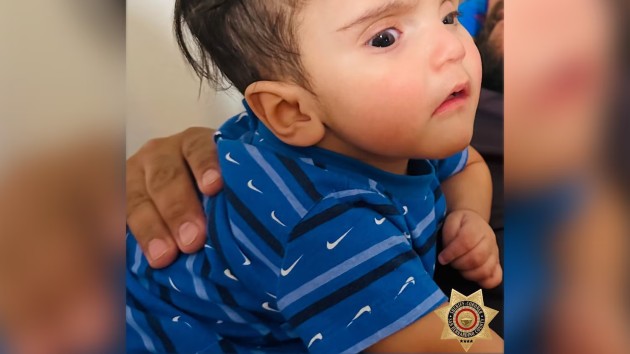
As the search for Emmanuel Haro, a missing 7-month-old child, seen here in this undated photo, continues, officials cannot “rule out foul play” as the mother’s story has contained inconsistencies, according to the San Bernardino County Sheriff’s Department. San Bernardino County Sheriff’s Department
(SAN BERNARDINO COUNTY, Calif.) — The parents of a 7-month-old child who has been missing for over a week have been arrested for murder, authorities in California announced Friday.
Emmanuel Haro was reported missing on Aug. 14 at approximately 7:47 p.m. local time after the child’s mother “reported being attacked outside a retail store on Yucaipa Boulevard,” the sheriff’s office said in a statement last week.
Stock image of police lights. Douglas Sacha/Getty Images
(DETROIT) — Police are looking for a man they said shot and killed his ex-wife at a hospital in Detroit and then fled the scene.
The shooting occurred before 10 a.m. local time Friday in the basement of Henry Ford Hospital, where the victim worked, according to Detroit Police Chief Todd Bettison.
The suspect allegedly fired multiple shots from a handgun after getting into a “verbal altercation” with his ex-wife, Bettison said during a press briefing.
The suspect — identified as 53-year-old Mario Green — then fled the hospital in a 2011 white Dodge Charger, Bettison said. He was captured on video leaving the facility at approximately 9:55 a.m., the chief said.
“He is presumed to be armed and dangerous,” Bettison said. “We expect to have him in custody very, very shortly, but we’re asking for the community’s help.”
Bettison said there is no longer an active situation at the hospital, but it remains a crime scene. No other victims were located following a sweep of the hospital, police said.
Police did not release the name of the victim, who was approximately 40 years old. Bettison said he did not know what she did at the hospital or how Green was able to access the basement.
About a month ago, the victim had filed for a personal protection order against her Green, according to Detroit Assistant Police Chief Charles Fitzgerald.
“Unfortunately, it was not served on her ex husband, so it almost brings us here today, ” Fitzgerald told ABC Detroit affiliate WXYZ.
Green has an address in Bloomfield Hills, Michigan, and is described as being approximately 6 feet 4 inches.
This is a developing story. Please check back for updates.
Smoke rises after Israeli forces carried out airstrikes in Gaza City, Gaza, on August 22, 2025. Hamza Z. H. Qraiqea/Anadolu via Getty Images
(LONDON) — Israeli Defense Minister Israel Katz warned Friday that Gaza city could “turn into Rafah and Beit Hanoun,” areas that were destroyed earlier in the war, unless Hamas agrees to Israel’s terms.
This comes after Israeli Prime Minister Benjamin Netanyahu said he would approve the military’s plans to seize Gaza City.
“Soon, the gates of hell will open on the heads of Hamas’ murderers and rapists in Gaza – until they agree to Israel’s conditions for ending the war, primarily the release of all hostages and their disarmament. If they do not agree – Gaza, the capital of Hamas, will become Rafah and Beit Hanoun. Exactly as I promised – so it will be,” Katz said in a post on X.
The Israel Defense Forces said Friday that ground troops are “operating on the outskirts of Gaza City locating and dismantling terrorist infrastructure above and underground.”
The IDF has said it plans to escalate the war soon by seizing Gaza City and other Hamas strongholds in the Gaza Strip, which humanitarian organizations warned will exacerbate the hunger crisis.
A United Nations-backed food security monitor announced on Friday that a famine determination has been made in Gaza City. The Integrated Food Security Phase Classification (IPC) raised its classification for the Gaza City region in the north-central Gaza Strip to Phase 5, the highest and worst level of its acute food insecurity scale. The IPC itself does not declare a famine, but its famine determination can inform decision-makers in governments and bodies such as the U.N.
In a report published Friday, the IPC said “this Famine is entirely man-made,” adding that it can be “halted and reversed.
The Coordinator of Government Activities in the Territories, the Israeli defense body in charge of coordinating aid to Gaza, said Friday it “firmly rejects the claim of famine in the Gaza Strip, and particularly in Gaza City,” alleging that the IPC report “is based on partial and unreliable sources, many of them affiliated with Hamas.”
In a statement Friday, the Israeli Prime Minister’s Office called the IPC’s famine determination in parts of the Gaza Strip “an outright lie” and “a modern blood libel.”
The IDF said its troops are operating in the Jabalia area, Khan Younis and on the outskirts of Gaza City to “eliminate terrorists and dismantle terrorist infrastructure.”
At least 71 Palestinians were killed and 251 injured throughout the Gaza Strip in the past 24 hours, Gaza’s Hamas-run Ministry of Health said Friday.
Among those killed were 24 people trying to get humanitarian aid, while another 133 aid seekers were wounded, according to the health ministry.
Two others died of starvation over the past day, bringing the total number of deaths due to starvation to 273, including 112 children, the health ministry said.
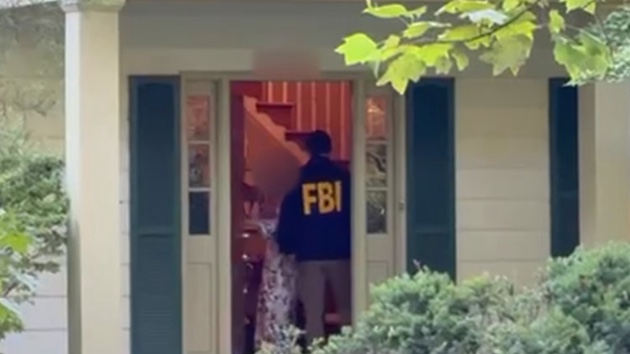
An FBI agent enters the home of John Bolton, Donald Trump’s former national security advisor, August 22, 2025 in Bethesda, Maryland./ ABC News
(NEW YORK) — Federal agents were seen Friday morning searching the Maryland residence and Washington, D.C., office of former Trump national security adviser John Bolton, ABC News has learned.
Sources familiar with the matter told ABC News that the search, carried out by the FBI, is related to allegations that Bolton is in possession of classified records.
“NO ONE is above the law… @FBI agents on mission,” FBI director Kash Patel said on social media.
It was not immediately clear what sensitive records federal investigators believe Bolton may have possessed.
The federal agents, along with approximately six FBI vehicles, were seen at Bolton’s home for over an hour early this morning around 7 a.m. Local Montgomery County police were observed by ABC News blocking both entrances to Bolton’s street but have since left.
Agents were seen coming in and out of the house and it is still unclear if anything was removed from inside Bolton’s home.
The extraordinary move comes as President Donald Trump has recently ramped up pressure on the Justice Department to bring charges against his political opponents.
Bolton has long been a target of Trump’s ire. Most recently Trump has taken aim at Bolton’s criticisms of Trump’s engagements with Russian President Vladimir Putin.
Trump told reporters Friday morning that he didn’t know about the FBI raid on Bolton’s house.
When asked whether he expected the DOJ to brief him on the raid, Trump said that they “probably” would give him updates “today sometime” but added that he didn’t want to know about the details.
“You have to do what you have to do. I don’t want to know about it,” Trump said in reference to Attorney General Pam Bondi and other officials involved in the investigation.
“America’s safety isn’t negotiable,” Bondi said in a response to Patel’s earlier post on social media. “Justice will be pursued. Always.”
A federal magistrate judge in Maryland signed off on the search at Bolton’s home, sources said.
A separate federal magistrate judge in Washington had authorized the search of his downtown D.C. office, according to sources.
To obtain a search warrant, investigators need to have probable cause of a violation of federal law.
That means authorities would need to convince a judge that there is sufficient reason based on known facts to believe that a crime has been committed, or that a certain property is connected with a crime.
The search, however, does not mean prosecutors have determined Bolton committed a crime.
This is a developing story. Please check back for updates.