
How long will the COVID-19 vaccine last and who needs a booster?

iStock/Bill Oxford

(WASHINGTON) — The Food and Drug Administration and Centers for Disease Control and Prevention are expected to announce that all vaccinated people will be eligible for booster shots at least eight months after their second dose.

But experts caution that vaccine efficacy is declining along a gradual slope — not a sudden cliff that drops off suddenly after eight months. For the nation’s public health experts, the question has become: What’s an acceptable threshold?

Currently available data suggests all three authorized vaccines are offering good protection at least six months after initial vaccination — likely even longer.

“We believe sooner or later you will need a booster for durability of protection,” said Dr. Anthony Fauci, speaking at Thursday’s White House press briefing. “We do not believe that others, elderly or non-elderly, who are not immunocompromised, need a vaccine [booster] right at this moment.”

“We are evaluating this on a day-by-day, week-by-week, month-by-month basis,” Fauci added. “So, if the data shows us that, in fact, we do need to do that, we’ll be very ready to do it and do it expeditiously.”

Vaccine experts have said protection from current COVID-19 vaccines is expected to wane slightly over time. Meanwhile, the delta variant is expected to chip away slightly at overall vaccine effectiveness. Executives from both Moderna and Pfizer have said booster doses eventually will be needed.

But so far, vaccines are still holding up well, experts said. Some studies have indicated a slight dip in efficacy, but mostly when it comes to protection from symptomatic and mild illness. Data thus far indicates that vaccines are still extremely effective at preventing hospitalizations and deaths.

Moderna and Pfizer both reported positive data from their ongoing phase 3 trials, which have continued to monitor volunteers at least six months after their initial shots. Moderna has said its vaccine remains more 93% effective against symptomatic illness after six months, while Pfizer reported a dip in efficacy to 84%, though both studies were conducted with slightly different criteria and prior to the emergence of the delta variant.

Although an independent study from the Mayo Clinic hinted that Pfizer immunity might wane faster than Moderna immunity, experts said it’s likely too soon to say that for sure.

Johnson & Johnson, meanwhile, has yet to report six-month data for its single-shot vaccine. The company, however, has released promising laboratory data showing a strong immune system response up to eight months later. And a real-world study from South Africa showed good protection against delta.

That said, some Americans aren’t waiting for a formal recommendation to get an additional shot. According to an internal CDC briefing reported by ABC News, approximately 1.1 million already have taken booster shots.

Many doctors have cautioned against this. Booster doses are still being studied formally, and there could be still-unknown risks associated with getting them. Researchers are still evaluating side effects, proper dosages and the right time to get one.

“The main thing I really want to stress to everyone,” said Dr. Simone Wildes, an infectious disease specialist at South Shore Health and an ABC News contributor, “is that, right now, we are not recommending booster shots. However, that could change.”

Other doctors and public health specialists also said they’re also not rushing to recommend boosters for the general public. Not only are current vaccines proving to be overwhelmingly effective, but doctors are also still collecting data on the potential impacts of an additional shot. And vaccine producers are still researching whether lower dosages will suffice as potential boosters.

“Everyone wants to know — when is the timeline?” Wildes said.

Experts still aren’t sure.

“We don’t know how long immunity lasts,” said John Brownstein, chief innovation officer at Boston Children’s Hospital and an ABC News contributor. “We don’t know what ‘waning’ means. We will clearly see that in the fall as we see a surge, and we’ll understand what delta or any future variant means for cases in the population.”

Copyright © 2021, ABC Audio. All rights reserved.

Meet the mom, a former geisha, who just hit 1 million subscribers on YouTube

iStock/Eloi_Omella

(KYOTO, Japan) — Moe, 30, is a former geisha turned mom and YouTuber. She’s well aware of how drastic her career change may look as no two professions appear to be more different.

In Japan, geishas are enigmas with utterly private lives. They study traditional Japanese performing arts and use that knowledge to entertain guests through their own performances at parties. Gaining entry into one of those parties is a guarded secret and unlikely for the common passerby.

On the other hand, YouTubers are, for the most part, open books with much of their lives laid bare for all to see. They vlog about their daily lives, share intimate details and show off their home spaces.

But for Moe, known as “Kimono Mom” on YouTube, both of her chosen professions are rooted in the same thing: a love of culture and a desire to preserve it.

The path to becoming a geisha

It all started when Moe was 15 years old and living in Kyoto.

“When I was in my first year of high school, we had homework to find 10 different unique jobs,” she told “Good Morning America.” “My grandfather was teaching calligraphy at Gion, where maiko and geiko were living. … At that time, I realized that I lived in Kyoto but didn’t know much about maiko and geiko, and I didn’t even know how Japanese traditions were preserved, so I interviewed them.”

Moe, whose last name is being withheld for privacy reasons, said she was impressed by how hard maikos (apprentice geishas) and geikos (another word for geisha) worked to preserve Japanese culture.

“I wanted to be like that,” she said.

Moe left school at age 15 and moved into an okiya, or geisha house, where she began an apprenticeship. Her days were full, she said, with classes from 9 a.m. to 2 or 3 p.m., and then work from 5 p.m. until as late as 1 a.m.

“When you go to a geisha party, there are guests waiting,” Moe said. “I’d bring food, drinks and show them Japanese dance.”

Moe completed her apprenticeship and became a full geisha at age 20, and said that while the work was demanding, she loved it.

“I liked to be on stage,” she said of her favorite part of being a geisha. “I’ve always liked to stand out since when I was little.”

Marriage brought change and culture shock.

Traditionally, geishas aren’t allowed to marry. If they want to do so, they have to retire from the profession. So when Moe married her first husband at the age of 21, she was forced to quit.

“A geisha has to quit when she gets married,” she said. “So [when] I got married, I retired and went to Tokyo to have a married life.”

Life in urban Tokyo was completely at odds with her previous life, and Moe said she was “shocked by the cultural difference.”

“Since I was 15 years old, I lived in the okiya,” she said. “I couldn’t carry my cellphone, I couldn’t watch TV — I lived in that world.”

As a housewife with a husband who didn’t want her to go out, Moe said she felt “like a bird in a cage.” Now knowing what the world outside of the okiya was like, she didn’t want to give up her freedom and pushed for a divorce.

“After I knew my freedom, I met many various people and I couldn’t live without my real personality,” she said.

Moe started working and later remarried. However, after she became pregnant and gave birth to her daughter, Sutan, she again had to leave her job.

“I always thought that I didn’t want to go back to living as a housewife,” she said. “But I didn’t know that being a mom was so busy.”

In early 2020, a YouTuber named Paolo contacted Moe to ask if she’d be willing to be filmed for his “Japan Day in the Life” series. Her video focused on a day in the life of a Japanese mom and, with 15 million views at the time of writing, is his most popular in the series.

“At the time I was featured in Paolo’s video, I had never seen YouTube,” Moe said, adding that Paolo was the first YouTuber she’d ever met. “I intuitively thought, ‘Maybe I can do it too.'”

For her channel, Moe thought to feature what was familiar.

“When I thought about what I could do now, I had an idea that I’d try to combine kimono and cooking,” she said. “I make recipes because I want people from overseas to see them. … I use ingredients that are easily available overseas.”

Armed with just an iPhone and laptop, “Kimono Mom” was born.

The videos have a universal appeal.

In her first video on Feb. 21, 2020, Moe is in a kimono as she demonstrates how to make a deep-fried lotus root sandwich. Throughout the video, she has to stop what she’s doing multiple times because of Sutan crying or wanting to be held — an experience that parents everywhere know all too well.

While some may edit out those clips or reshoot, Moe doesn’t shy away from them, leaving them in the final product. It’s this level of authenticity that Moe believes is the reason her channel has garnered such an international following.

“The image of mothers is international,” Moe said. “It doesn’t change so much in Japan, the United States or Brazil. There are mothers all over the world so even if the person watching isn’t a mother … a mother’s presence is close to people’s hearts.”

Initially, Moe didn’t want her daughter to appear in the videos for privacy reasons, but said the nature of being a mom to a young child made it “inevitable.”

“My daughter hasn’t left me alone since she started talking,” Moe said. “It feels like she’s always next to me.”

With her videos, Moe hopes to provide a lens into Japanese culture, food and motherhood. In addition to cooking, Moe also vlogs about other aspects of her life, such as her family’s daily activities, how they spend their holidays and her daughter’s “terrible twos”.

Copyright © 2021, ABC Audio. All rights reserved.
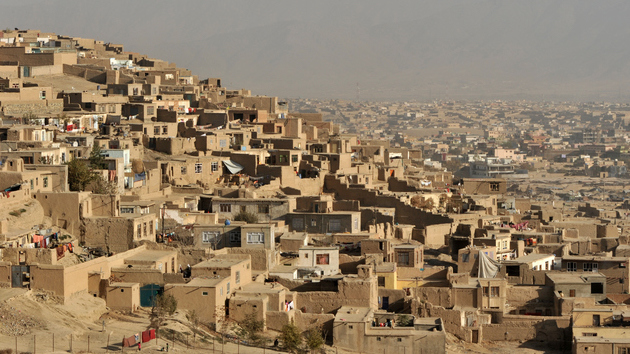
Afghan contractor details his family’s escape from Kabul

iStock/christophe_cerisier

Just 10 days ago, Ahmad and his family were living at home in Kabul, Afghanistan. Now, they’re starting a new life in the U.S.

“It’s quite different and I like it. It is something that I have never imagined before,” Ahmad told ABC News. In this report, he will only be referred to by his first name to protect his family.

“The peace. The calm… You’re free, you can go anywhere, you can do anything, you enjoy your life. And the most important thing [is] that we have a better future for children.”

Within a few short weeks of American troops’ departure, Ahmad’s home country of Afghanistan fell quickly to the Taliban, an Islamic military insurgent group. This catastrophic outcome came after 20 years of American forces fighting there and almost a trillion dollars spent. Nearly 2,400 Americans, 66,000 Afghan military fighters and over 47,000 Afghan civilians were killed in the decadeslong war.

“I just missed… what’s happening in Afghanistan. This week, I came here, and then next Friday. It was under the Taliban control,” he said. “I am very lucky, and I’m happy for that.”

Ahmad said it took him a year and a half to get out of the country, and now it’s “impossible” for the thousands of other Afghans trying to escape.

For years, Ahmad worked in logistics, supplying equipment for the U.S. and Afghan forces in Kabul. But his association with the West made him a target for the Taliban, despite its assurances that those who worked with the U.S. would not be harmed.

“We don’t believe them because … they recently killed some interpreters and journalists in our province, and put them in a massive mass grave,” Ahmad said. “They will do it again. They did it before and they are going to do it again.”

His special immigrant visa, or SIV, was finally approved this month, allowing him, his wife and their two daughters to get out.

“The situation in Afghanistan … for me, for my family, for my children, there was no future,” he said. “So that’s why I decided to move.”

Still, most of their family is trapped back home and at risk. ABC News agreed not to reveal the family’s full name or where they are to avoid retribution against their relatives.

“God save them. And they should save themselves, they should hide themselves,” Ahmad said. “If [they] go out they will be caught on the, on the road, and [the Taliban will] put them in prison … We can’t say anything. I just told my friend … Please change your locations, do not be in one place … don’t be caught by the Taliban. Whatever you can do. Just don’t be in your address, don’t be in your home, or don’t be in places that the people may find you. This is the only thing that I can tell my friends and coworkers in Afghanistan.”

Ahmad worries about the Taliban’s restrictions that will affect women in the country, including rules about not wearing nail polish and not being allowed in public without a male guardian.

“They are not allowed to go to the university or to school. So that means that, as is the same rule that they had in 1996 … a woman is not allowed to go to the university or not to work,” he said. “So, basically, you have paralyzed, half of the community of the country, half of the population of the country, paralyzed.”

However, he believes women will “definitely” fight back for their freedoms.

“The women of Afghanistan today is not the women of Afghanistan before — they are more educated,” he said. “They have seen the world, they know everything, and nobody will sit back and say okay, do whatever. Everybody will try to fight back, for their rights.”

Without the support and protection of the U.S. military, the success of women in the country seems hopeless.

Ahmad didn’t expect the war to end like this.

“We were expecting a peace in Afghanistan… a country that all the people should have their own rights, their own freedom, but right now, we went back. Twenty years back, the same spot that we were then,” he said. “It doesn’t make me angry, but it makes me sad. As we know that America came for a purpose, they achieved their purpose. We cannot force them to stay in Afghanistan, and fight for, on, on our behalf.”

For Americans who served in the war, and for a generation of Afghans who saw the promise of progress, many are wondering if their sacrifices were in vain. Those left behind in the country may pay the highest cost as the situation grows direr by the minute.

Scenes from Kabul show thousands racing to flee at the airport, with adults and children hanging off aircraft as they attempt to take off. Six thousand American troops have now been ordered to head directly to Kabul to assist in the evacuation of U.S. personnel and Afghans who assisted the U.S. mission, a U.S. official told ABC News.

Ahmad decided to work for the U.S. in 2016.

“It was a good financial support for my family to live,” he said. “We thought that it is going to help our country with working with the U.S. government, and somehow we are helping our country to run the aircrafts, against the invaders.”

He didn’t know his work would make him a target of the Taliban.

“[In] the beginning, my neighbors, my relations, my close relatives … they were trying to convince me that I shouldn’t work with U.S. government,” he said. Then, he said, he and his family were menaced with calls and knocks on their doors.

Ahmad says he believes Afghanistan’s rapid fall was a cause of its weak government.

“They didn’t build [the government], then build their strength. They’re all depending on the U.S. government support for U.S. military [for] 20 years, they [were] just relying on other forces. British or Australian forces. They didn’t want to build their own ability or capability to control.”

He said he blames “ourselves” for his country’s downfall.

“Why we didn’t [we] change, and 20 years. We had everything, all the facilities, all the support, all the money, why we didn’t change? Why we didn’t change ourselves, why we didn’t change for [the] better?” he said. “I blame ourselves, our leaders for that.”

He can’t foresee when he will return to his home country but says if the regime changes and if “There’s a peace, I will go back.”

Copyright © 2021, ABC Audio. All rights reserved.

Tracking a trio of tropical systems: Latest forecasts for Fred, Grace and Henri

Doctor_bass/iStock

(NEW YORK) — There’s a trio of tropical systems in the Atlantic Basin, with Fred moving up the East Coast as Grace hits Haiti and Henri churns near Bermuda.

Fred

Fred made landfall on the Florida Panhandle Monday afternoon, leading to flooding as Panama City saw 10 inches of rain.

President Joe Biden approved an emergency declaration for Florida due to Fred’s flooding.

Fred has now weakened to a tropical depression over Georgia, but the heavy rain should continue from Georgia to the Carolinas and into Virginia. There’s a high risk of flooding for the Southern Appalachians Tuesday as Fred moves north.

The heavy rainfall likely will stretch into the Northeast Wednesday afternoon into Thursday, with 6 inches of rain possible in Pennsylvania, New Jersey and New York. Flash flooding is possible for major cities including Philadelphia and New York City.

Grace

Tropical Storm Grace is now leaving Haiti, where it dumped heavy rain that lead to flash flooding in a nation already reeling from an earthquake this weekend that’s killed over 1,400.

Grace should move over Jamaica Tuesday and into the western Caribbean Sea by Thursday before approaching Mexico’s Yucatan Peninsulas as a strong tropical storm or possibly a Category 1 hurricane.

Grace is not expected to threaten the U.S. but Mexico could see flash flooding.

Henri

Henri is forecast to circle Bermuda over the next few days, providing gusty winds and some rain.

The U.S. likely will only see minor impacts from Henri, with high surf and rip currents along the East Coast.

Copyright © 2021, ABC Audio. All rights reserved.

Biden stands by his decision, concedes Taliban takeover was faster than expected

Official White House Photo by Adam Schultz

(WASHINGTON) — In an address to the nation on the crisis in Afghanistan, President Joe Biden conceded that the Taliban takeover of the country unfolded faster than anticipated, but insisted that he remains “squarely behind” his decision to withdraw American troops.

“I will not repeat the mistakes we’ve made in the past — the mistake of staying and fighting indefinitely in a conflict that is not in the national interests of the United States, of doubling down on a civil war in a foreign country, of attempting to remake a country through the endless military deployments of U.S. forces,” Biden said.

While Biden said he ultimately bore responsibility for the situation in Afghanistan, declaring “I am president of the United States of America, and the buck stops with me,” he also faulted Afghan forces for the Taliban’s rapid advance.

“We gave them every chance to determine their own future. (What) we could not provide them was the will to fight for that future,” he said.

“There are some very brave and capable Afghan special forces units and soldiers,” the president continued. “But if Afghanistan is unable to mount any real resistance to the Taliban now, there is no chance that one more year, five more years or 20 more years of U.S. military boots on the ground would have made any difference.”

Biden also blamed his predecessor for the current situation in Afghanistan, claiming an agreement former President Donald Trump cut with the Taliban while he was in office left him with only two options: End the U.S. military mission or reignite the conflict.

Biden has repeatedly pointed out that he is the fourth president to preside over an American troop presence in Afghanistan and adamantly insisted he won’t pass it on to a fifth commander-in-chief.

“So I’m left again to ask of those who argued that we should stay, how many more generations of America’s daughters and sons would you have me send to fight Afghanistan’s civil war when Afghan troops will not? How many more lives — American lives — is it worth?” Biden said.

Biden also argued that ending the military mission in Afghanistan would free up counterterrorism resources to address broader threats to the homeland posed by jihadist groups throughout Africa and the Middle East.

But concerns within the intelligence community that Afghanistan will revert to an incubator for extremism remains. Gen. Mark Milley, the chairman of the Joint Chiefs of Staff, told senators during a briefing that the Pentagon would reassess the threat posed by Al -Qaida now that the Taliban have retaken the country.

As conditions in Afghanistan deteriorate, Republicans are pouncing on the White House, calling the drawdown an embarrassment for the nation.

“What we have seen is an unmitigated disaster — a stain on the reputation of the United States of America,” Senate Minority Leader Mitch McConnell said on Monday.

Few Democrats have rushed to publicly defend the Biden administration. In a statement released before the president’s remarks, Sen. Mark Warner, D-Va., the chairman of the Senate Select Committee on Intelligence, called the images being broadcast out of Afghanistan “devastating” and vowed “to ask tough but necessary questions about why we weren’t better prepared for a worst-case scenario involving such a swift and total collapse of the Afghan government and security forces.”

Biden denied that national security officials were caught off guard, insisting “we were clear-eyed about the risks. We planned for every contingency.”

He also offered little in the ways of an explanation as to why the planned withdrawal had unraveled into a chaotic evacuation effort.

Biden did not take any questions from the reporters gathered in the East Room following his speech, his first public remarks on Afghanistan in nearly a week.

The president was previously scheduled to remain at Camp David until Wednesday, but returned to the White House to deliver the address. He departed again for Camp David shortly after he concluded his remarks.

The White House said Biden had been receiving regular updates from his advisors throughout the weekend and released a photo of Biden being briefed in a video conference Sunday.

Copyright © 2021, ABC Audio. All rights reserved.

COVID-19 live updates: US reports over 200,000 new cases in a single day

Lubo Ivanko/iStock

(NEW YORK) — The United States is facing a COVID-19 surge this summer as the more contagious delta variant spreads.

More than 622,000 Americans have died from COVID-19 and over 4.3 million people have died from the disease worldwide, according to real-time data compiled by the Center for Systems Science and Engineering at Johns Hopkins University.

Just 59.3% of Americans ages 12 and up are fully vaccinated against COVID-19, according to data from the Centers for Disease Control and Prevention.

Here’s how the news is developing Tuesday. All times Eastern:

Aug 17, 4:56 am
US reports over 200,000 new cases in a day for 3rd time this month

There were 209,988 new cases of COVID-19 confirmed in the United States on Monday, according to a real-time count kept by Johns Hopkins University.

It’s the third time this month that the U.S. has reported more than 200,000 newly confirmed infections in a single day.

Meanwhile, Johns Hopkins data shows an additional 683 fatalities from the disease were registered nationwide on Monday, down from this month’s peak of 1,889 new deaths on Aug. 13.

A total of 36,888,978 people in the U.S. have been diagnosed with COVID-19 since the pandemic began, and at least 622,321 have died, according to Johns Hopkins data. The cases include people from all 50 U.S. states, Washington, D.C., and other U.S. territories as well as repatriated citizens.

Aug 17, 4:38 am
Bangladesh extends COVID-19 vaccines to Rohingya refugees

Bangladesh has launched a COVID-19 vaccination program for Rohingya refugees housed in one of the world’s largest and most densely populated camps in Cox’s Bazar, according to a press release from the World Health Organization.

The campaign, led by the Bangladeshi government with technical support from the WHO and other partners, is initially targeting nearly 48,000 Rohingya refugees who are 55 and older. It’s part of Bangladesh’s national deployment and vaccination plan to ensure equity and fair allocation of vaccines across the country.

“Bangladesh is demonstrating what WHO has been advocating for — equitable access to vaccines,” Dr. Poonam Khetrapal Singh, regional director of the WHO South-East Asia Region, said in a statement Monday. “Inclusion is key to protecting vulnerable populations like the refugees, for safeguarding their health and that of their host communities and societies.”

More than 1 million Rohingya — a stateless ethnic group who predominantly practice Islam — are sheltering in crowded camps in Bangladesh after fleeing persecution in Buddhist-majority Myanmar.

Aug 16, 11:38 pm
Biden admin expected to recommend boosters for all Americans

The Biden administration could soon be urging Americans to get a booster shot eight months after completing their original vaccination, a source familiar with the discussions told ABC News Monday.

Federal health officials and experts are currently coalescing around the idea that all Americans should receive a booster, the source said. Those booster shots could be rolled out as soon as mid to late September — pending Food and Drug Administration authorization.

The announcement, first reported by The New York Times and The Washington Post, could come as soon as this week.

The new timeline for the booster shots in a significant shift for the administration, which previously had been non-comital on when boosters for the majority of Americans would be needed.

Aug 16, 10:20 pm
El Paso sues state of Texas over ban on mask mandates

The city of El Paso has filed a lawsuit challenging Texas Gov. Greg Abbott’s ban on mask mandates in the state to allow for local protective measures to be ordered in the county.

Starting Wednesday at 12:01 a.m., a local health authority order will mandate that all individuals over the age of 2 wear some form of face covering while in public indoor spaces.

The parents of children under the age of 10 will be responsible for appropriately masking their children while outside their home, city officials said.

The order comes after El Paso City-County Health Authority Dr. Hector Ocaranza recommended masks at all indoor facilities in the county.

A face covering is not required on those who are eating or drinking or anyone who has trouble breathing, has a medical condition or disability that prevents wearing a face covering.

Copyright © 2021, ABC Audio. All rights reserved.

Tesla’s Autopilot systems the subject of new NHTSA investigation

jetcityimage/iStock

(WASHINGTON) — The U.S. agency that oversees highway safety officially has launched a formal probe into Tesla’s Autopilot systems after identifying 11 separate crashes involving the feature over approximately four years.

The National Highway Traffic Safety Administration told ABC News in a statement Monday that it is “opening a preliminary evaluation into Tesla Autopilot systems and the technologies and methods used to monitor, assist, and enforce the driver’s engagement with driving while Autopilot is in use.”

“A preliminary evaluation starts the agency’s fact-finding mission and allows additional information and data to be collected — in this case about Tesla Autopilot,” the statement added. “Specifically, this investigation stems from 11 separate crashes beginning in 2018, in which various Tesla models crashed where first responders were active, including some that crashed directly into the vehicles of first responders.”

In a separate document on the investigation posted to its website Monday, the agency said the probe will include 2014 through 2021 Tesla Model Y, Model X, Model S and Model 3 vehicles.

There were 17 injuries and one fatality associated with the 11 crashes, the document stated. The crashes took place in nine states, and most of the incidents took place after dark.

The NHTSA said that in all of these cases, the Tesla vehicles had either Autopilot or Traffic Aware Cruise Control engaged just prior to the crashes.

Tesla did not immediately respond to ABC News’ request for comment Monday.

The company, and its eccentric CEO Elon Musk, have long defended Autopilot systems as safe.

On its website, the company has released internal data that suggests vehicles with Autopilot turned on are involved in fewer accidents per mile than those without Autopilot engaged.

In its statement to ABC News, the NHTSA reminded the public that “no commercially available motor vehicles today are capable of driving themselves” and all vehicles require a human driver to be in control at all times.

Copyright © 2021, ABC Audio. All rights reserved.

US mission in Afghanistan a failure: Government watchdog

MivPiv/iStock

(WASHINGTON) — The Taliban’s return to power has ended America’s two-decade effort to build a democratic society in its mold in Afghanistan. But that effort, despite its billions of dollars and tens of thousands of lives, was doomed virtually from the start by a galling failure to understand the country and a willful disregard for local realities on the ground, according to a scathing new report.

The U.S. Special Inspector General for Afghanistan Reconstruction, or SIGAR, blasted successive U.S. administrations for lacking the “necessary mindset, expertise, and resources to develop and manage the strategy to rebuild Afghanistan,” in its latest report released Tuesday.

The report, prepared before Kabul’s fall, found that while the U.S. achieved some important successes for the Afghan people, those gains would be lost if the Taliban took control.

“The U.S. government struggled to develop a coherent strategy, understand how long the reconstruction mission would take, ensure its projects were sustainable, staff the mission with trained professionals, account for the challenges posed by insecurity, tailor efforts to the Afghan context, and understand the impact of programs,” the report said.

More than 140 pages long, the report details how 20 years and $145 billion of effort were often wasted because projects weren’t tailored to the complex realities on the ground. Essentially, the U.S. government kept trying to force Afghanistan into a box that it didn’t — and couldn’t — fit into, the report found.

“We were devoid of a fundamental understanding of Afghanistan,” Douglas Lute, who oversaw the war for Presidents George W. Bush and Barack Obama from 2007 to 2013, told SIGAR. “We didn’t know what we were doing.”

“It’s really much worse than you think,” he added. “There (was) a fundamental gap of understanding on the front end, overstated objectives, an overreliance on the military, and a lack of understanding of the resources necessary.”

This is the 11th annual lessons-learned report released by SIGAR, which has 13 years of oversight work now. John Sopko, the special inspector general, has highlighted failures throughout the U.S. war in Afghanistan, from waste and fraud to a lack of transparency.

These failures in reconstruction, in particular, had critical impacts on a local level, according to the report, undermining U.S. efforts to erode support for the Taliban and build faith in the Afghan government.

“In the majority of districts, we never even heard the real problems of the people,” Jabar Naimee, who served as governor of three Afghan provinces, told SIGAR. “We made assumptions, conducted military operations, brought in government staff, and assumed it would lead to security and stability.”

But it did not. The report argued that since the U.S. government did not pay attention to the local context when projects were implemented, they often stoked local conflicts because one interest group was prioritized over another, which allowed insurgents to create alliances.

Staffing failures exacerbated those problems, according to the inspector general’s report. U.S. reconstruction projects were created and funded — and then officials were ordered to find individuals to carry them out — leading to unqualified workers and construction efforts that were often abandoned before completion.

“DOD police advisors watched American TV shows to learn about policing, civil affairs teams were mass-produced via PowerPoint presentations, and every agency experienced annual lobotomies as staff constantly rotated out, leaving successors to start from scratch and make similar mistakes all over again,” the report said.

Those failures at the program-level and below were mirrored by “policymakers’ ignorance of the Afghan context at the highest strategic levels,” according to the report, with the influence of politics always behind the scenes.

“U.S. officials also prioritized their own political preferences for what they wanted reconstruction to look like, rather than what they could realistically achieve,” the report said.

Afghan officials are to blame as well, the report said, especially for corruption. But the vast amount of American money flowing to reconstruction projects would often fuel that problem.

“The ultimate point of failure for our efforts wasn’t an insurgency,” Ryan Crocker, who served as ambassador to Afghanistan, told SIGAR. “It was the weight of endemic corruption.”

Because the U.S. government refused to create a successful peace process, “the Taliban soon rebuilt itself as a powerful insurgency,” according to the report.

That may now doom the Afghan people to a return to darker days.

“There is no doubt, however, that the lives of millions of Afghans have been improved by U.S. government interventions,” the report said, including gains in life expectancy, the mortality of children under five, GDP per capita, and literacy rates. But the report argued that these gains were neither proportional to the massive U.S. investment nor sustainable with the U.S. military now leaving.

Copyright © 2021, ABC Audio. All rights reserved.

More kids are getting sick from COVID. Is it delta?

Drazen Zigic/iStock

(NEW YORK) — Throughout much of 2020, parents took comfort in a single silver lining the pandemic: The virus seemed to spare young people, particularly children and toddlers, whose symptoms were considerably milder than the adults around them.

The precise reason for this was never quite clear. One theory was that children had fewer “receptors” that could become infected with the virus. Some wondered if kids had better immunity because of frequent exposure to other coronaviruses. Children also were less likely to be burdened by the kind of underlying health conditions plaguing older adults, according to health experts.

But the arrival of the delta variant seems to have changed that equation in just a matter of months. Health officials are warning of the steepest surge in COVID hospitalizations among children since the pandemic began, with rates 4.6 times higher than it was just five weeks ago. Those rates now put pediatric hospitalizations on par with the height of the pandemic.

But are children now at greater risk than they were last year?

Health experts said the research on the impact of delta isn’t solid yet. It’s possible the delta variant is so wildly transmissible that children are facing repeated exposure. It’s also possible that people have grown more careless — abandoning masks and social distancing, with much of the country itching to return to normal.

Dr. Edward Behrens, chief of the division of rheumatology at Children’s Hospital of Philadelphia, said a big issue is that people wrongly assumed children were never at risk in the first place.

“It was a comforting narrative that was never true. They [children] always had the potential to be a reservoir for virus,” he said.

While hospitals continue to collect the data, others say they remain alarmed by what they are seeing. According to the Centers for Disease Control and Prevention, COVID deaths among children this year were twice as high as flu deaths.

“Many of us (in pediatrics) around the country are struck by the fact that we’re seeing otherwise healthy kids are getting sick and requiring oxygen, ending up in the ICU,” Dr. Andrew Pavia, chief of Pediatric Infectious Diseases at the University of Utah, told ABC News.

So while the studies may be inconclusive, “our clinical impression is that (delta) may actually be worse, and that it’s not just a very larger number of kids are getting infected,” Pavia said.

“This summer we’ve seen many more kids with severe symptoms of COVID compared to what we saw last year and then more concerning what we’ve seen this summer is really young children,” Dr. Kenneth Paris, associate professor of pediatrics at LSU Health Sciences Center in New Orleans, told ABC News.

In Dallas, that sudden spike meant the city ran out of intensive care beds for children last Friday.

“That means if your child’s in a car wreck, or more likely if they have COVID and need an ICU bed, we don’t have one,” Dallas County Judge Clay Jenkins said in a news conference Friday.

“Your child will wait for another child to die. Your child will just not get on the ventilator,” he added.

Dr. Cindy Bowens, medical director of the pediatric ICU at Children’s Medical Center in Dallas, said they are still encouraging parents to bring their children to the hospital if they are sick.

“We will find care for every kid who comes to the hospital,” she said.

Overall, children are still considered significantly less likely than adults to experience bad outcomes from COVID-19. According to an estimate by the American Academy of Pediatrics and the Children’s Hospital Association, less than 2% of all child COVID-19 cases resulted in hospitalization. ​

Deaths are even more rare — almost extraordinarily so — with less than .03% of cases involving children.

Still, health experts say it’s the wrong approach to assume risk to children is minimal because it’s so much lower than the risk to older adults. That goes for teens and young adults who qualify for the vaccine, too.

“If you are young and healthy, should you be super worried that you’re going to die of this disease? No,” said Dr. David Dowdy, associate professor of epidemiology at the Johns Hopkins Bloomberg School of Public Health. “But if your goal is to be reasonably healthy and to avoid the potential for symptoms that could last for weeks or months, it’s definitely a better idea to get the vaccine.”

In other words, “just because it’s not going to kill you, doesn’t mean that you can’t get really sick,” he said.

Dowdy said he’s also not convinced delta’s superpowers are behind the sudden surge in kids getting sick either. He points to the widespread change in behaviors this spring when vaccinations became widely available and people dropped their masks and began gathering again in large groups whether they were vaccinated or not.

Dr. Anthony Fauci, the nation’s top infectious disease expert and President Joe Biden’s chief medical adviser, told ABC News anchor David Muir last week: “What is absolutely clear is that more children are getting infected. And as more children get infected, you will naturally see more children get hospitalized.”

Dr. Mark Kline, physician-in-chief of Children’s Hospital New Orleans, said he is alarmed at the number of critically ill children, including infants and toddlers, in his care who are struggling with COVID-19. He said children have become the “collateral damage” of adults who are refusing to wear masks or get vaccinated.

“Children currently have no way out of this pandemic other than through the advocacy and personal responsibility of their parents and all adults,” he said. “So far, we are failing them miserably.”

Copyright © 2021, ABC Audio. All rights reserved.

How an epidemiologist plans to send his kids back to school amid COVID-19 surge

Dr. John Brownstein

(NEW YORK) — As parents across the country brace for another school year upended by the coronavirus pandemic, they are also face rising concerns over kids’ safety amid the delta variant and the vulnerability of unvaccinated children.

One of those parents preparing his children for an unpredictable school year is Dr. John Brownstein, an epidemiologist, chief innovation officer at Boston Children’s Hospital and ABC News contributor.

We asked Brownstein, also an ABC News’ contributor, how is he preparing to send his two children, ages 10 and 11, safely back to school in-person later this month.

“My view is still that we will likely be able to keep our kids in person, but this virus has to keep us humble and things might change,” he said. “As long as we recognize it’s not one size fits all, and that we’re flexible and nuanced, I think we can still aim to have a great year for our kids.”

Here are four steps Brownstein said he is taking for his kids’ new school year:

1. I’m having my kids wear face masks.

Brownstein said his children’s school is asking all students, teachers and staff to wear face masks, regardless of vaccination status, which he supports as a way to help keep people safe and allow for in-person learning.

His children are too young to be vaccinated as currently only children ages 12 and older are eligible to receive a COVID-19 vaccine in the United States.

“We know that there is substantial high transmission of COVID happening around this country right now, and when you have a lot of transmission in the community, that will spill over into schools,” he said. “If parents consider the individual risk of their kids, but on top of that the risk of having to go virtual [learning], it makes sense for them to consider masking their kids, as a way to make sure to preserve the school year ahead.”

Brownstein said his kids were able to do in-person learning last year by wearing face masks, of which he recommends families have a large collection, so kids have continual access to clean face masks.

“We went with cloth masks because our kids had more affinity for them and we knew that they would adhere to it,” he said. “And through the year, we found that our kids were incredibly adherent … and generally speaking, they were able to have a normal school year, despite having this cloth on their face all day.”

2. I’m asking school administrators questions.

Brownstein said he has kept an open dialogue with the leaders of his kids’ school over the past nearly two years of the pandemic.

“What we found is school administrators do have the essential objective of keeping kids safe and keeping the school going and everyone wants that for our kids,” he said. “And the teachers, above all, are looking to keep their classrooms in person, so having conversations with administrators, with teachers about understanding protocols, why decisions have been made and being an active voice in making some of those decisions is critical.”

“Parents can be a really effective advocate for making sure that the kids can have a safe school year ahead,” he added.

Brownstein said some of the questions parents may want to ask include:

  • What are the school’s mask guidelines? At what points in the school day can kids take mask breaks?
  • When will students gather in indoor settings, like auditoriums, gymnasiums and lunchrooms? What is the masking requirement in those environments?
  • What is the school doing to make sure there is adequate ventilation?
  • Are there any COVID-19 testing requirements?
  • Are teachers and staff required to be vaccinated? What is the status of vaccination among students who are eligible for the vaccine?

3. I’m not stressing about cleaning groceries, surfaces at home.

While many parents were worried about disinfecting everything from groceries to countertops in the beginning of the pandemic, that can be much less of a concern for parents now, according to Brownstein.

“What we now know is that transmission is really driven by respiratory air droplets and aerosols, and the other modes of transmission are just far and away less of a concern,” he said. “If we want to give our kids a normal year and we want to try to get back to normal, we should be aiming to focus on those high-transmission events.”

“That’s why the focus has been on masking and social distancing and ventilation, because those are really the places in which transmission can take place,” Brownstein added. “Some of those other activities I really do think that we can do away with for this year.”

4. I’m staying flexible and optimistic.

Brownstein says he is looking at the return to school in the context of the need to keep kids, families and teachers safe, while keeping in perspective kids’ relative low risk of severe complications from COVID-19, balanced with the need to give kids a fulfilling school year.

“With that balance, we can’t live in fear,” he said. “We have to make sure to be flexible and nuanced as we approach the school year, and recognize that it still might not be a normal year, but we should aim for the most normal experience.”

Brownstein added that he and fellow parents still, “have to be reasonable if things change, if we have to cancel certain activities, and certain types of events can’t take place because of the level of transmission in the community.”

Copyright © 2021, ABC Audio. All rights reserved.