
Trump announces temporary pause on new Canada tariffs

Trump announces temporary pause on new Canada tariffs
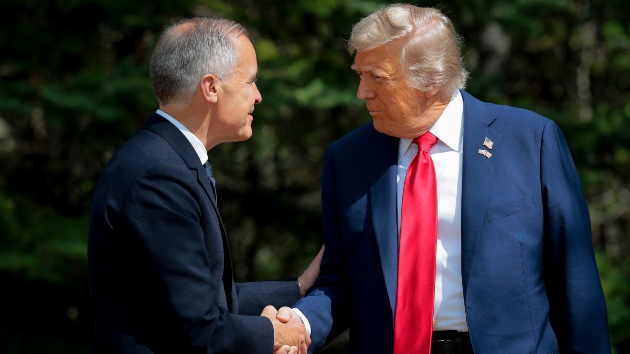
Canadian Prime Minister Mark Carney greets U.S. President Donald Trump at the official welcome ceremony during the G7 Leaders’ Summit on June 16, 2025 in Kananaskis, Alberta. (Photo by Chip Somodevilla/Getty Images)

(NEW YORK) — President Donald Trump said he is pausing for three days the new 50% tariffs on Canadian goods set to go into effect early Wednesday, citing a deal between the U.S. and Canada.

“I have paused the 50% Tariffs against Canada, that were scheduled to kick in tomorrow morning for a three day period, based on the fact that Canada and the U.S.A., subject to the finalization of documents, have a DEAL,” Trump said in a social media post.

The new tariffs, targeting dozens of products from hockey sticks to wine, were set to go into effect at 12:01 a.m. ET on Wednesday.

The U.S. Trade Representative’s official account on X responded to Trump’s announcement, providing a bit of insight into what a final deal might entail.

“The deal will include comprehensive market access for all American goods, economic security commitments, digital trade alignment, and many important provisions that will continue to protect our market and American workers, along with our Canadian partners,” the USTR posted.

While the president did not offer specifics about the deal, he did suggest that it might include a renewed effort to build the Keystone Pipeline, despite the project being canceled in 2021 after years of criticism about the project’s environmental impact.

“Keystone XL Pipeline, long ago killed by Sleepy Joe Biden, may be awoken from the grave!” Trump added in the post.  

Due to exemptions on key goods, the tariffs were expected to hit only a fraction of U.S. imports from Canada.

Still, the list of affected goods features an array of food items such as dairy products, honey, whey protein and molasses; as well as alcoholic beverages like whiskey and vodka.

It all comes weeks after Trump imposed sweeping new tariffs on 60 trade partners, including the European Union. Those levies ramped up an effort to reconstruct far-reaching duties struck down by the Supreme Court earlier this year.

Unlike previous tariffs, the new Canada tariffs would have applied to products compliant with the United States-Mexico-Canada Agreement, or USMCA, a free trade agreement. The levies included significant exemptions, however, leaving out some top Canadian imports such as oil, gas and potash.

Trump first announced the tariffs in a series of executive orders last month, saying the move had been made in retaliation for Canadian policies he considers discriminatory against U.S. exports.

“President Trump is offsetting the burden and disadvantage on U.S. commerce from Canada’s discriminatory treatment of U.S. commerce and is leveling the playing field for crucial American exports–cars, alcohol, and dairy,” the White House said at the time.

In a statement last month, Canadian Prime Minister Mark Carney criticized a flurry of U.S. tariffs put forward since last year, saying Canada has “merely matched those measures.”

“This trade dispute has raised costs for families, particularly in the U.S. Canada stands ready to engage intensively to address outstanding issues with the U.S. to the mutual benefit of our citizens,” Carney said.

Trump has carried out on-again, off-again trade negotiations with Canada since he took office, aiming to resolve a dispute that began with tariffs announced by Trump early in his second term.

Trump sought to impose the tariffs under a legal authority enshrined in section 338 of the Tariff Act of 1930, which allows the president to enact levies up to 50% for countries found to have discriminated against the U.S. relative to their treatment of other nations.

The provision has never been invoked before, meaning the move lacks judicial precedent, Abigail Watt, an economist at UBS, said in a memo shared with ABC News.

Copyright © 2026, ABC Audio. All rights reserved.
US-South Korea military drills to end early after Trump order, Seoul says

US-South Korea military drills to end early after Trump order, Seoul says
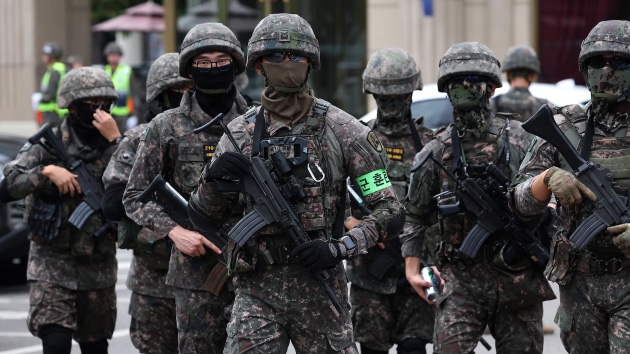
South Korean soldiers participate in an anti-terrorism exercise, linked to the ongoing joint military drills known as Ulchi Freedom Shield (UFS), at Lotte Hotel World on Aug. 19, 2026 in Seoul, South Korea. (Chung Sung-jun/Getty Images)

(LONDON) — South Korea’s Joint Chiefs of Staff (JCS) confirmed that ongoing joint military drills with U.S. forces would end early, following President Donald Trump’s announcement Sunday that he had ordered the Pentagon to “substantially reduce” the exercises.

The annual U.S.-South Korea Ulchi Freedom Shield began Monday. On Wednesday, South Korea’s Joint Chiefs of Staff said in a statement that, in response to a U.S. proposal, “the allies agreed to adjust parts of the exercise, including its duration and scale.”

The drills will now end Aug. 21, six days earlier than originally planned. The two sides also agreed to scale back some combined field training exercises, the details of which are still under discussion, the JCS said.

“Going forward, South Korea and the United States will discuss and implement various measures to achieve the objectives of the UFS exercise and maintain a strong combined defense posture,” the statement added.

A Pentagon official told ABC News that the exercise had been “substantially reduced” on “direction from the president and secretary of war.”

“The exercise will conclude on Aug. 21, one week earlier than scheduled. Associated live-training events have been reduced, with certain events canceled or converted to simulations,” the official said. “These adjustments preserve essential readiness and training objectives. There will be no degradation to U.S. training objectives.”

Trump ordered the drills scaled back, citing his “very good” relationship with North Korea’s Supreme Leader Kim Jong Un. Pyongyang routinely protests joint U.S.-South Korean exercises, framing their military cooperation as undermining stability on the Korean Peninsula.

This week, Pyongyang described Ulchi Freedom Shield as an “open threat” to North Korea.

On Sunday, Trump criticized the annual military exercise as “inappropriate and hostile” toward North Korea, a country he said has been “unthreatening and respectful” toward the United States during his presidency.

“Based on my very good relationship with Kim Jong Un, of North Korea, I am not happy with the fact that the United States has, long ago, agreed to participate in Joint Military Exercises with South Korea,” Trump wrote on his social media platform.

“Therefore, and based on the fact that it is too late to cancel, I have instructed Secretary of War, Pete Hegseth, to substantially reduce the Joint Military Exercises!” he said.

South Korea is a longtime U.S. ally and hosts roughly 28,500 U.S. troops. The U.S. presence on the peninsula has traditionally been intended to prevent a resumption of cross-border hostilities, with the Korean War of 1950-53 having never officially ended.

In 2006, North Korea tested its first nuclear weapon and has since been expanding its atomic weapons stockpile — despite international condemnation and sanctions led by successive U.S. administrations — alongside a ballistic missile research program which has produced munitions capable of reaching the continental U.S.

In recent decades, the U.S. presence in South Korea has also become an important point of leverage in the strategic contest between Washington and Beijing, the latter having long served as Pyongyang’s prime patron.

ABC News’ Joohee Cho, Desiree Adib, Will Gretsky and Steve Beynon contributed to this report. 

Copyright © 2026, ABC Audio. All rights reserved.
Takeaways from Tuesday primaries: Trump endorsement only goes so far

Takeaways from Tuesday primaries: Trump endorsement only goes so far
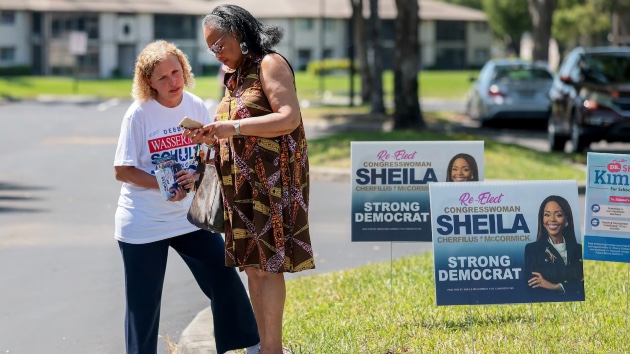
Democratic Congressional candidate Rep. Debbie Wasserman Schultz speaks with voter Camille Edwards as she campaigns outside of the Kings Point Clubhouse polling station, August 18, 2026, in Tamarac, Florida. Joe Raedle/Getty Images

(WASHINGTON) — Several high-profile primary races Tuesday tested how much President Donald Trump’s endorsement can do for a scandal-marred candidate, showed the impact of Republicans’ mid-decade redistricting and highlighted the continued battle between established Democratic candidates and progressive challengers.

Here are takeaways from Tuesday’s primaries:

Trump endorsement can’t lift Mills

Embattled and scandal-ridden Republican Rep. Cory Mills lost his reelection bid in Florida Tuesday, defeated by challenger Ryan Elijah, a former TV news anchor and NFL sideline reporter.

Mills faces a House Ethics Committee investigation; a judge issued a restraining order against him last year after he was accused by his former girlfriend of threatening to distribute sexually explicit videos of her; and in July, ABC News reported that the embattled congressman was also under investigation by the Department of Justice, in part about his finances. Mills has denied the allegations.

Mills’ loss suggests that Republicans have limits when it comes to how long they can stand behind a candidate carrying too much baggage. Despite the scandals that have followed him, Mills still retained Trump’s endorsement.

Putting aside differences before November

Republican Rep. Byron Donalds unsurprisingly secured his party’s nomination in the gubernatorial race in Florida. Donalds’ campaign has received immense support among Republicans and Trump’s endorsement.

Donalds now faces the task of uniting his party after what was a bruising primary. Donalds said he received congratulatory calls from his competitors, Paul Renner and James Fishback. In his victory speech, Donalds called for Florida Republicans to come together.

“But tonight the primary is over. Tonight we put aside our differences. Tonight we are one united Republican Party,” Donalds said.

Wasserman Schultz promises representation matters

Democratic Rep. Debbie Wasserman Schultz won her primary in Florida’s historically Black 20th Congressional District that was redrawn this year by the Republican-controlled legislature.

Her decision to run in the district drew criticism from her four Black opponents and other Black Democrats who have already been impacted by Republican redistricting efforts in southern states.

In her victory speech, Wasserman Schultz referenced redistricting Republicans hope will improve their chances of retaining the House in November. She promised the redrawn majority-minority district that increasing representation is among her top priorities.

“This is such a difficult and fraught time in our country. There is so much at stake in this moment, and I want people to know that representation matters. It matters, and I will fight to make sure that representation counts again,” she said Tuesday evening.
Moskowitz fends off challenge from DSA candidate

In the Democratic primary for Florida’s 25th District, two-term incumbent Rep. Jared Moskowitz, who was also running in a redrawn district, fended off a challenge from Democratic Socialists of America candidate Oliver Larkin.

The race highlighted how support for Israel is becoming prominent issue in this year’s election as more Democrats have become less supportive. Moskowitz has been a staunch supporter of Israel while Larkin has called for the U.S. to cut off aid.

The race was a continuation of established Democratic candidates facing challenges from progressives, as seen in the Senate race in Michigan.

Moskowitz now faces a competitive general election in November, as his seat is one Republicans see as a top pickup opportunity.

Copyright © 2026, ABC Audio. All rights reserved.

Padres minor league coach detained by ICE at El Paso airport

Padres minor league coach detained by ICE at El Paso airport
Oswaldo Pirela is seen in this undated photo. (Photo courtesy of Jorge Pirela)

(NEW YORK) — U.S. Immigration and Customs Enforcement arrested a member of the San Diego Padres’ minor league coaching staff, according to his family and the agency.

Oswaldo Pirela, the team’s minor league catching coordinator who is based in Arizona, was detained Sunday morning at El Paso International Airport while he was traveling for work, his brother and mother told ABC News.

Pirela, 34, a married father of two daughters, entered the U.S. legally from Venezuela in 2014 and was allowed to remain in the country until 2018, the Department of Homeland Security said in a statement Tuesday. However, the agency alleged that he, “overstayed his welcome.”

“When approached by law enforcement officers, he was not in possession of legal documentation granting him status in the country. He will remain in ICE custody pending removal proceedings and will receive due process,” DHS said in a statement.

Pirela’s family said in social media posts that he has done nothing wrong and is in the country legally.

“Oswaldo, like me and other members of our family, was directly affected by persecution from the Venezuelan regime. We came to the United States seeking safety through the legal process, applied for asylum through the proper channels, and have worked hard to build our lives and become contributing members of American society,” his brother, Jorge Pirela, said in an Instagram post on Monday.

The Padres said in a statement to ABC News Tuesday that it is aware of Pirela’s arrest.

“We are working to gather additional information and will not have any further comment at this time,” the team said.

A LinkedIn profile for Pirela, confirmed by his brother, said he played for the Texas Rangers from July 2008 to November 2011. After arriving in America in 2014, he worked landscape management before returning to baseball as a coach.

He has been with the Padres since 2024, according to the LinkedIn profile.

Copyright © 2026, ABC Audio. All rights reserved.
Minnesota sues Texas governor to compel extradition of ICE agent for trial

Minnesota sues Texas governor to compel extradition of ICE agent for trial
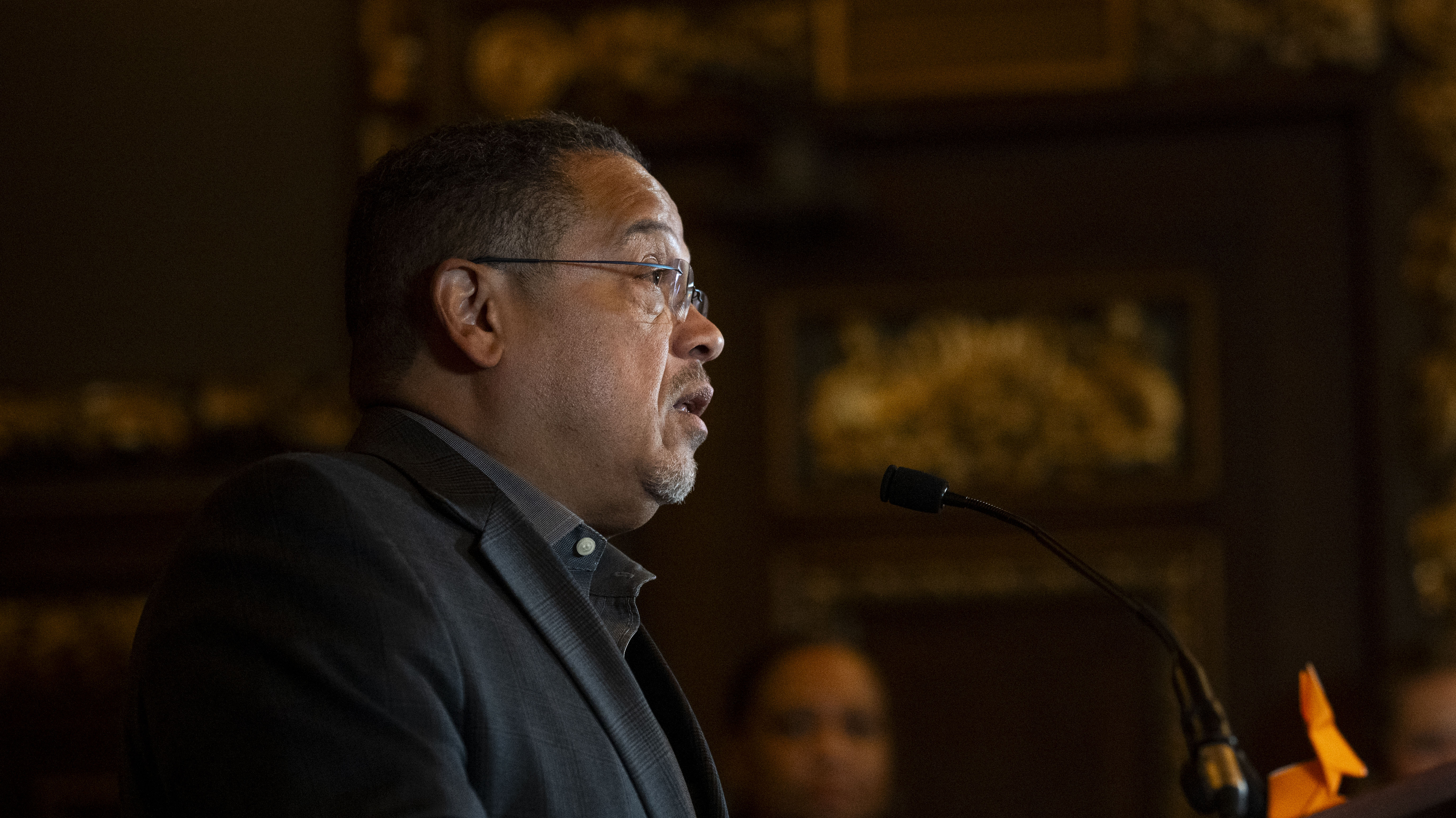
Minnesota Attorney General Keith Ellison speaks during a press conference about federal detention of children at the State Capitol building on Feb. 3, 2026, in St. Paul, Minnesota. (Stephen Maturen/Getty Images)

(WASHINGTON) — Minnesota Attorney General Keith Ellison has filed a federal lawsuit against Texas Gov. Greg Abbott to compel the extradition of an Immigration and Customs Enforcement agent charged with assault over a nonfatal shooting and alleged false reporting during Operation Metro Surge. 

The ICE agent, Christian Castro, is accused of firing a gun at the front door of an occupied home in Minneapolis on Jan. 14, striking a Venezuelan man in the leg, then lying about the circumstances of the shooting, according to prosecutors.

Castro was charged in May with four counts of second-degree assault and one count of falsely reporting a crime. A Hennepin County District Court judge found probable cause for the charges and issued a nationwide warrant for Castro’s arrest, according to Ellison’s office.

On May 29, Texas Rangers located and arrested Castro, after which a Cameron County judge ordered him detained pending extradition proceedings, according to Ellison’s office.

Four days after Castro’s arrest, Minnesota Gov. Tim Walz sent Abbott an extradition request, but, according to Ellison’s office, the Texas governor has “withheld a rendition warrant” directing law enforcement to transfer Castro back to Minnesota for prosecution.

“Now, Governor Abbott is trying to shield Castro from being held accountable for these serious charges by refusing to extradite him to Minnesota,” Ellison said in a statement on Tuesday. “Abbott’s refusal to extradite Castro is unconstitutional and violates federal law and Texas law. I will not stand for that, so I’m taking Abbott to court. Christian Castro will stand trial in Minnesota.”

ABC News reached out to the Texas governor’s office for comment on the Minnesota lawsuit but has not yet received a response.

The lawsuit also alleges that Manuel Trevino — the sheriff of Cameron County, Texas, who is named as a defendant in the federal complaint — has failed to make Castro available for extradition.

Ellison’s office said the attorney general will also be requesting a temporary restraining order “barring the Cameron County Sheriff’s Office from releasing Castro.”

The Cameron County sheriff declined to comment on the lawsuit.

Copyright © 2026, ABC Audio. All rights reserved.

Navy ship without power for 4 days in South China Sea

Navy ship without power for 4 days in South China Sea
Arleigh Burke-class guided missile destroyer USS Benfold (DDG 65) conducts routine operations in the South China Sea July 23, 2026. (U.S. Navy photo by Mass Communication Specialist Seaman Andrew Novak)

(WASHINGTON) — A power failure aboard a U.S. Navy destroyer operating in the South China Sea last month left the ship’s crew without potable water, hot food, working toilets or air conditioning for four days.

The outage stemmed from an engineering failure aboard the USS Benfold, an Arleigh Burke-class guided-missile destroyer, Cmdr. Matthew Comer, a 7th Fleet spokesperson, said in a statement to ABC News.

The incident adds to concerns about the strain on the Navy as it juggles the Iran war and an expanding slate of global commitments.

The Benfold, a 30-year-old ship, was sailing with the George Washington carrier strike group on July 24 when an issue with the ship’s generators caused a complete loss of power aboard the destroyer, according to Comer.

The George Washington strike group is slated to relieve the USS Abraham Lincoln in the Middle East, where the carrier and its crew have faced an extended deployment supporting the Iran war.

“There were no injuries to the crew, who demonstrated resilience, grit, professionalism, and unwavering steadiness in their response,” Comer said of the power failure on the Benfold.

It’s unclear why the incident wasn’t disclosed by the sea service at the time.

ABC News reached out to the Navy for more information about the circumstances surrounding the power outage.

The Benfold was towed by contracted tugboats to Subic Bay in the Philippines, arriving July 28, where Navy maintenance specialists met the ship to begin repairs. Sailors were provided food and moved into contracted lodging ashore beginning the following day, Comer said.

Power was restored July 30, and repairs were completed on Aug. 7; the Benfold departed Subic Bay a day later, Comer added.

It’s unclear whether the Benfold returned to its home port of Japan or continued to sail with the Washington. 

Copyright © 2026, ABC Audio. All rights reserved.
Judge clears way for termination of Ethiopians’ Temporary Protected Status

Judge clears way for termination of Ethiopians’ Temporary Protected Status
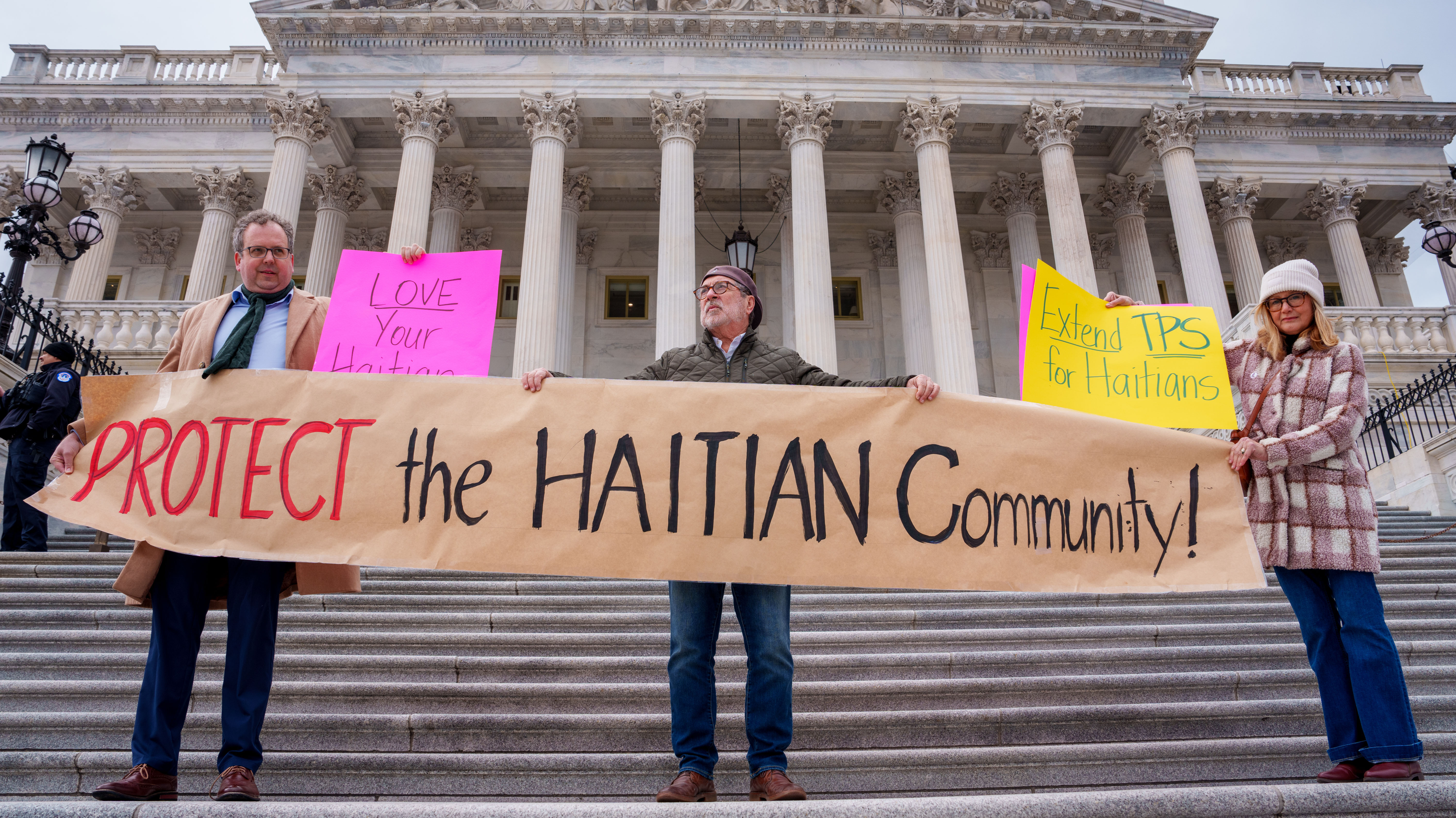
Alexei Laushkin, Rev. Patrick Mahoney and Katie Mahoney demonstrate against the Trump administration’s plan to revoke Temporary Protected Status for the Haitian community on March 6, 2025, in Washington, D.C. (Andrew Harnik/Getty Images)

(WASHINGTON) — A federal judge in Boston has cleared the way for the Trump administration to terminate temporary protected status for Ethiopian nationals.

U.S. District Judge Brian Murphy on Tuesday lifted the administrative stay that had been blocking the termination of the TPS program.

The ruling follows other recent court orders allowing the administration to end protections for TPS holders from countries including Haiti, Somalia, Syria and Myanmar as part of the administration’s ongoing immigration crackdown.

The court rulings come after the U.S. Supreme Court ruled in June that the Trump administration could terminate TPS for Haitian nationals. 

The advocacy group African Communities Together filed suit in January, arguing that Ethiopia remains in a humanitarian crisis.

“Should TPS for Ethiopia be terminated, all Plaintiffs will face impossible choices: to uproot their lives yet again in search of a pathway to safety in a third country; to remain in the United States without lawful immigration status, at risk of imminent immigration confinement and removal; or to relocate to Ethiopia, a country still suffering violent conflict,” the group said in its original complaint.

TPS status, established by the 1952 Immigration and Nationality Act, provides work authorization and protection from deportation if a foreign country is deemed by the government to be unsafe because of armed conflict, natural disaster, or “extraordinary and temporary conditions.”

In a post on X, the Department of Homeland Security said that individuals with terminated TPS should leave the U.S.

“Those with terminated TPS should leave NOW,” DHS said. “If they don’t, we will DEPORT them.”

Copyright © 2026, ABC Audio. All rights reserved.
14 face charges related to alleged cocaine ring at Penn State fraternities

14 face charges related to alleged cocaine ring at Penn State fraternities
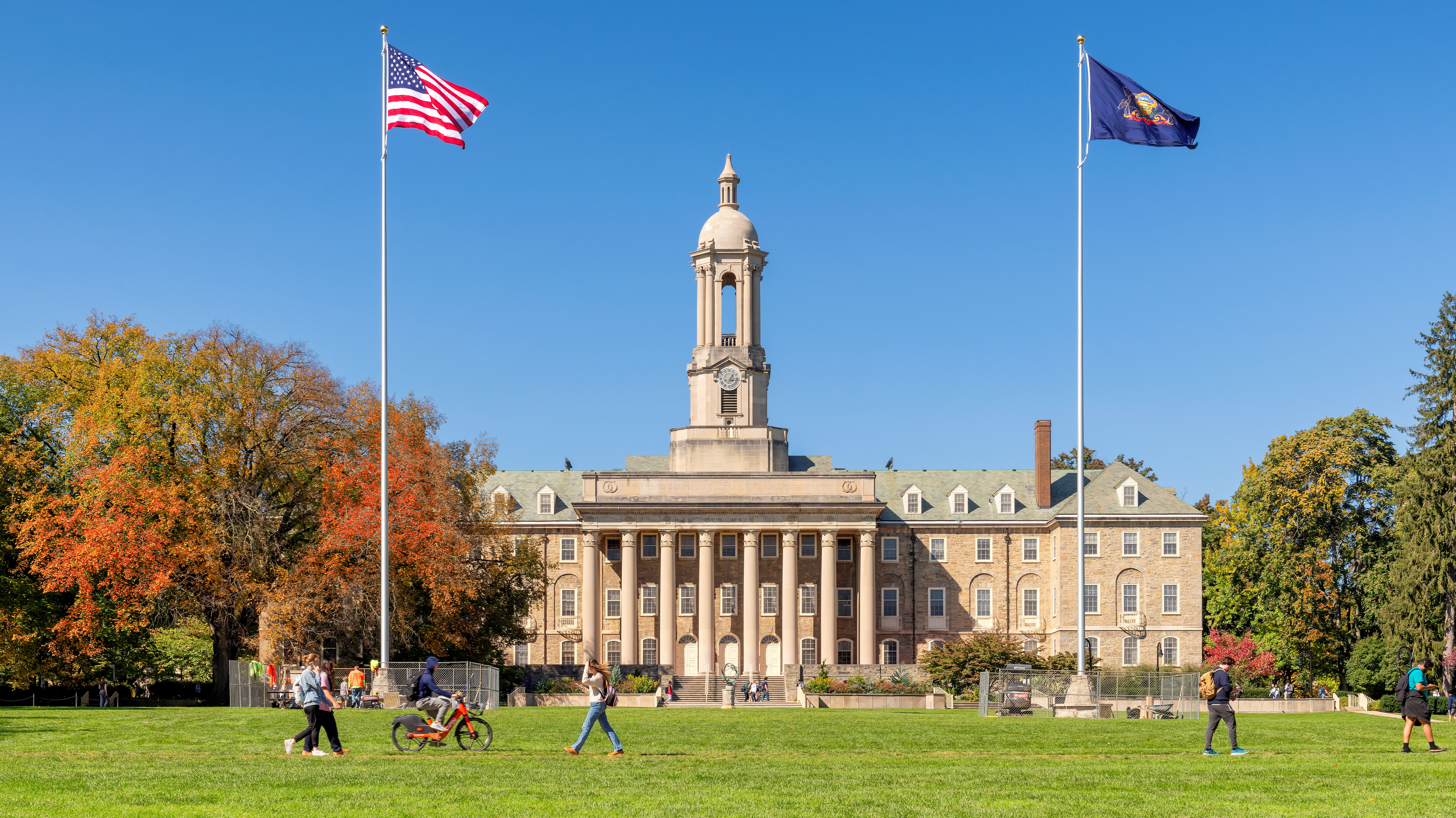
The Old Main building on the campus of Penn State University, Oct. 11, 2024, in State College, Pennsylvania. (Dmitry Vinogradov/Getty Images)

(NEW YORK) — Charges were announced Monday against 14 people in connection with an alleged cocaine-trafficking operation involving students associated with two Penn State fraternities, the Pennsylvania attorney general’s office said.

Thirteen current or former students, as well as a student’s father, face felony or misdemeanor charges, according to a press release. At least four defendants are current students, the attorney general’s office said.

“This was a coordinated and highly profitable drug-trafficking crew revolving around two senior members of the fraternities, other fraternity brothers, and pledges,” Attorney General Dave Sunday said in a statement. “In fact, according to the evidence uncovered, cutting and packaging cocaine was, for some pledges, an indoctrination into the fraternities.”

Penn State officials placed the Delta Upsilon fraternity on an interim suspension, the school said in a statement. The other fraternity, Sigma Chi, where members were allegedly involved, is not recognized as an official fraternity at the school, the statement said.

The allegations stem from 2023 and 2024, Penn State said, adding that both fraternities operate off campus.

The investigation, which the attorney general dubbed “Operation Drugs Unlimited,” found that two members of the group — Agostino Abbatiello and Thomas Robinson — were alleged to have been the main suppliers to the group, roles that included “making regular trips to Philadelphia and New York for large quantities of cocaine,” officials said.

“The cocaine was then cut and packaged — primarily at the Delta Upsilon and Sigma Chi fraternity houses — and distributed mainly to Penn State University students,” according to the attorney general’s office.

Officials said they tracked how the cocaine was allegedly obtained, packaged and sold, saying, “Most of the payments were made in cash or via payment apps.”

Abbatiello and Robinson, along with two others, Mohammed Hurabi and Lars Zeepvat, face charges including felony corrupt organizations, conspiracy, dealing in proceeds of unlawful activity and related offenses, the office said. Another person, Robert Zanolla, faces charges of felony conspiracy and criminal use of a communication facility, as well as related misdemeanors, the office said.

The eight remaining student-age defendants face misdemeanor counts of possession and possession of drug paraphernalia, the office said.

“Paul Robinson is charged with felony tampering, hindering apprehension for taking steps to conceal evidence, including a safe containing drugs and cash, and obstructing the investigation,” the release said, identifying him as the father of one of the students.

The charges were announced by Sunday’s office in cooperation with the State College Police Department and the 54th Statewide Investigating Grand Jury.

“We are horrified by these serious allegations against current and former students,” said Andrea Dowhower, Penn State’s vice president for Student Affairs, in a statement.

Dowhower added, “Criminal activity, including hazing, such as this has no place at our institution, and we will cooperate with law enforcement in any way we can. We will continue to enhance our efforts around health and safety and hazing educational efforts for all our organizations.”

Copyright © 2026, ABC Audio. All rights reserved.

DOJ asks appeals court to reinstate human smuggling case against Kilmar Abrego Garcia

DOJ asks appeals court to reinstate human smuggling case against Kilmar Abrego Garcia
Kilmar Abrego Garcia arrives with his wife Jennifer Vasquez Sura and his attorney Simon Sandoval-Moshenberg (L) at U.S. District Court for the District of Maryland on Dec. 22, 2025, in Greenbelt, Maryland. (Alex Wong/Getty Images)

(WASHINGTON) — The Department of Justice has asked an appeals court to reinstate the criminal human smuggling case against Kilmar Abrego Garcia.

In May, a federal judge granted Abrego Garcia’s motion to dismiss the case, finding that the federal government failed to rebut Abrego Garcia’s “presumption of vindictiveness.”

“Because the presumption of vindictiveness remains unrebutted, the indictment must be dismissed,” U.S. District Judge Waverly Crenshaw wrote in May.

In a brief filed Monday, attorneys for the DOJ urged an appellate court to overturn Judge Crenshaw’s May ruling, arguing that the decision to indict Abrego Garcia was supported by “legitimate reasons.”

“The decision to seek an indictment against Abrego Garcia for human smuggling was made by career prosecutors based on the evidence, the law, and their firm belief that there is proof beyond a reasonable doubt that Abrego Garcia had committed the offenses charged,” the DOJ said in a press release. “The indictment and prosecution of Abrego Garcia in the Middle District of Tennessee was not vindictive, and the evidence before the district court established that it was not.”

Abrego Garcia, who had been living in Maryland with his wife and children, was deported in March of last year to El Salvador’s CECOT mega-prison — despite a 2019 court order barring his deportation to that country due to a fear of persecution — after the Trump administration claimed he was a member of the criminal gang MS-13, which he denies.

He was brought back to the U.S. last June to face human smuggling charges in Tennessee, after which U.S. District Judge Paula Xinis released him from ICE detention while he awaited trial.

In May, Judge Crenshaw highlighted the involvement of high-ranking DOJ officials in the case, pointing to public statements made by then-Deputy Attorney General Todd Blanche to conclude that the government could not justify its sudden shift from wanting to deport Abrego Garcia to prosecuting him.

In its filing Monday, the DOJ argued that Blanche’s public comments in an interview regarding the deportation case “do not reflect a vindictive motive.”

“At a minimum, nothing in his interview supports an inference that the United States pursued charges ‘solely’ to retaliate against Abrego for his civil suit,” the DOJ argued. “The district court’s contrary reasoning — which did not even address the full quotation — is illogical and clearly erroneous.”

The criminal charges in Tennessee stem from a 2022 traffic stop disclosed in an April 2025 press release issued by the Department of Homeland Security, which touted a “bombshell investigative report” alleging that Abrego Garcia was a suspected human trafficker. He was not charged or arrested during the traffic stop, which lasted for more than an hour. 

“Instead of investigating the November 2022 traffic stop to identify who was responsible for the human smuggling, Blanche started the investigation to implicate Abrego,” Judge Crenshaw wrote in May. “He did so to justify the Executive Branch’s decision to remove him to El Salvador.”

Copyright © 2026, ABC Audio. All rights reserved.
Trump contradicts Vance, says nukes, not oil prices, No. 1 priority in Iran

Trump contradicts Vance, says nukes, not oil prices, No. 1 priority in Iran
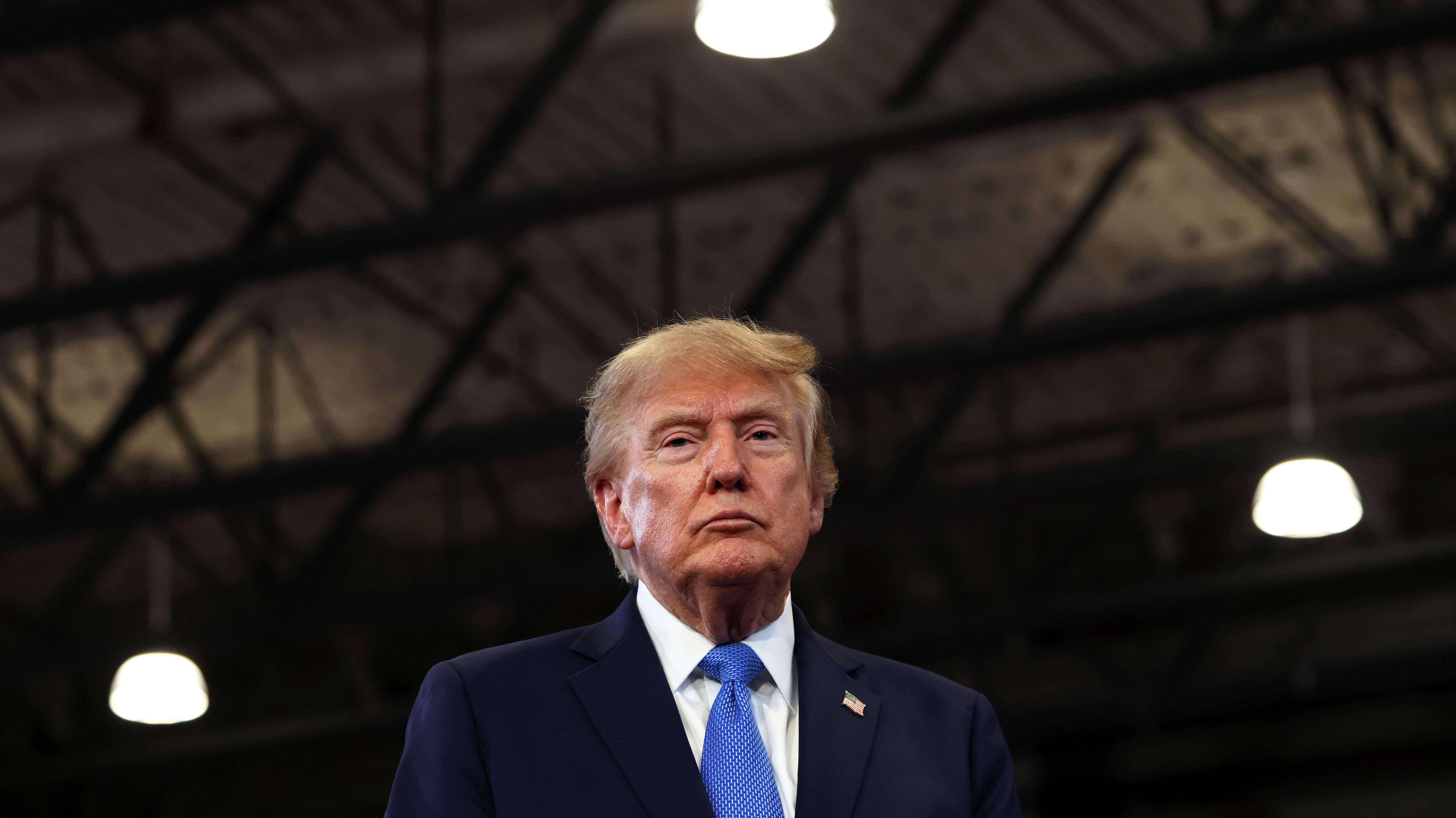
U.S. President Donald Trump departs after delivering remarks at the David S. Mack Center for Training and Intelligence on Aug. 14, 2026, in Garden City, New York. (Samuel Corum/Getty Images)

(WASHINGTON) — President Donald Trump contradicted Vice President JD Vance on Monday after the vice president asserted last week that the administration’s top priority amid the Iran war was to keep the price of oil and gas down for Americans.

In a social media post on Monday morning, Trump said that the “number one Goal is, and always will be” that Iran can’t have a nuclear weapon.

Last Thursday, Vance laid out a different order of priorities on Fox News, saying that “goal No. 1” for the administration amid the war was to “keep oil and gas cheap for Americans all over our country.”

“And then obviously, goal No. 2 is ensure that Iran never gets a nuclear weapon,” he added. “I feel confident we’re accomplishing both of those goals.”

Vance’s comments about prioritizing gas prices diverge from the president’s stated mission of eliminating Iran’s nuclear and ballistic missile programs. And while some Republicans have acknowledged gas prices are too high, Trump said he won’t apologize for it.

In the past, the president had outright rejected the idea that the domestic American economy should factor into military decisions around Iran. 

“Not even a little bit,” Trump said back in May when asked to what extent financial pressure on Americans was motivating him to strike a deal.

“The only thing that matters when I’m talking about Iran, they can’t have a nuclear weapon,” he added. “I don’t think about Americans’ financial situation. I don’t think about anybody. I think about one thing. We cannot let Iran have a nuclear weapon, that’s all.”

Asked about Vance’s comments aboard Air Force One last Friday, White House press secretary Karoline Leavitt said that “both goals are equally as important to the president.”

“Of course, we want to keep gas prices low. That’s why the administration has done so much to keep the markets stable, but also ensuring Iran can never get a nuclear weapon is the president’s priority with respect to the ongoing conflict, and it’s something he’s going to see through one way or another,” she added. 

Trump’s apparent rebuke of the vice president came just minutes after “Fox and Friends” anchor Lawrence Jones reacted to Vance’s comments during the program’s Monday morning broadcast, and called for “more clarity” from the White House on the U.S. objectives. Roughly eight minutes later, the president posted his message. 

“It also looks like we got an answer from the president about what is priority No. 1 for the United States,” Jones said about an hour later in the broadcast as he relayed the details of the president’s post.

While the status of the Strait of Hormuz has become a central focus of the war — injecting volatility into the global energy market even as the conflict between the two countries has ebbed and flowed — Trump has repeatedly argued that the cost of not intervening in Iran would far outweigh the higher gas prices Americans are dealing with now.

The average price of a gallon of regular is $4.02 according to GasBuddy, up 7 cents form last week and up more than a dollar per gallon since the start of the war.

Speaking at the New York police academy last Friday, Trump told the gathered crowd that he would not apologize for the price of gas. 

“[Iran’s] the No. 1 state sponsor of terror in the world. We don’t want to have them have nuclear weapons,” Trump said. “So remember that when you have to pay a little bit more, you’re at $4. It’s OK. I mean, it’s, I’m not — I’m not — I will never apologize. I did the right thing.”

Copyright © 2026, ABC Audio. All rights reserved.