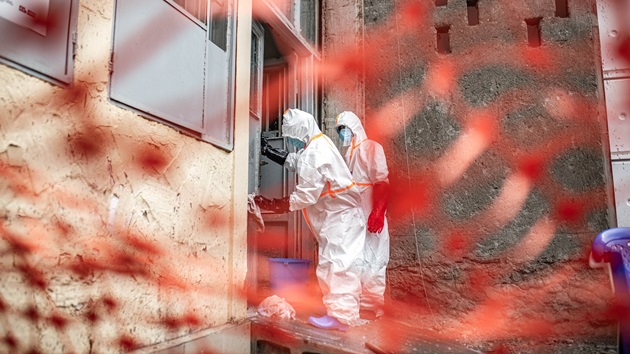
Medical workers disinfect a facility used to treat an Ebola patient at the Heal Africa Hospital on June 4, 2026 in Goma, Democratic Republic of Congo. (Daniel Buuma/Getty Images)
(NEW YORK) — A second American citizen infected with Ebola in the Democratic Republic of the Congo (DRC) has been transferred to Germany for care, the head of the World Health Organization said on Monday.
The Centers for Disease Control and Prevention (CDC) announced over the weekend that the unnamed patient works for a humanitarian aid organization and tested positive for the Bundibugyo virus, the strain of Ebola that is behind the DRC’s outbreak.
In a post on X on Monday, Dr. Tedros Adhanom Ghebreyesus, director-general of the WHO, said the organization “has provided clinical care and close monitoring” for the patient in the Ituri province, where most of the DRC’s cases have been confirmed.
Samaritan’s Purse, which has been responding to the outbreak, confirmed on Monday that one of their staff members is the infected patient.
“We can confirm that one of our Samaritan’s Purse staff members working in Bunia, Democratic Republic of the Congo (DRC), has tested positive for the Ebola virus,” Franklin Graham, president and CEO of Samaritan’s Purse, said in a statement. “This respected and faithful staff member has been a part of our Disaster Assistance Response Team for 15 years and has been serving in a logistics capacity in the DRC over the past month. He was not involved in direct patient care at our two Ebola Treatment Centers.”
Samaritan’s Purse said it immediately contacted the CDC, the State Department and the DRC’s government upon learning of the positive test and that the organization has begun contact tracing.
The first American infected with Ebola was a doctor who contracted the disease while treating patients in the DRC. Dr. Peter Stafford was evacuated to Germany at the time to receive specialty care and was hospitalized at Charité University Hospital in Berlin, according to Serge, the international Christian missionary group that employs him.
His wife, Dr. Rebekah Stafford, and their four children were also evacuated to Germany and moved into a separate space at the hospital as high-risk contacts. Peter Stafford was discharged from the hospital in June, and the family has since returned to the United States.
The outbreak in the DRC has led to more than 1,900 cases and more than 700 deaths, according to the latest figures from the DRC’s Ministry of Health.
“As infections among response personnel are not unexpected in an outbreak of this scale, protecting frontline responders must remain a top priority,” the WHO’s Tedros wrote on X. “We are deeply grateful for the courage and commitment of all health workers working to end this outbreak.”
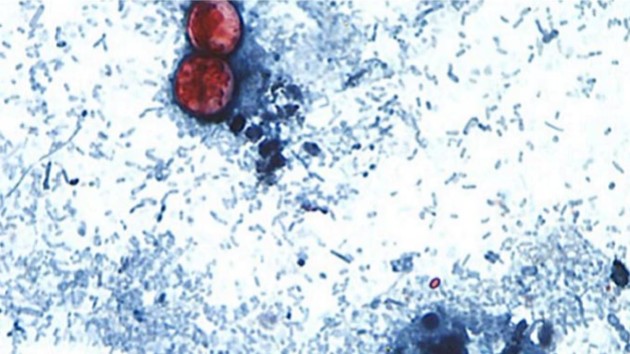
Cyclospora cayetanensis is a unicellular parasite that causes an intestinal infection called cyclosporiasis. (CDC)
(NEW YORK) — Reported cases of cyclosporiasis, an intestinal illness caused by a parasite, have surpassed 2,600 in Michigan, the state’s health department said on Monday.
This is a developing story. Please check back for updates.
Immigration and Customs Enforcement (ICE) agents on March 24, 2026 in New York, New York. (Photo by Michael M. Santiago/Getty Images)
(BIDDLEFORD, Maine) — Federal immigration authorities were involved in a shooting in Biddeford, Maine, multiple sources told ABC News.
Local elected leaders, including Maine Speaker Ryan Fecteau, said in social media posts that at least one person was killed in the incident.
“A person was killed. ICE was involved,” Fecteau alleged in a post on his Facebook account. “State Police and the Department of Public Safety are now on scene to gather details and would expect the FBI to investigate as well.”
Rep. Chellie Pingree, D-Maine, said in a social media post that she is “aware of reports that someone was fatally shot in Biddeford this morning, and ICE may be involved.
“My team and I are working to get more information and will share more as we learn it,” Pingree said.
This is a developing story. Please check back for updates.
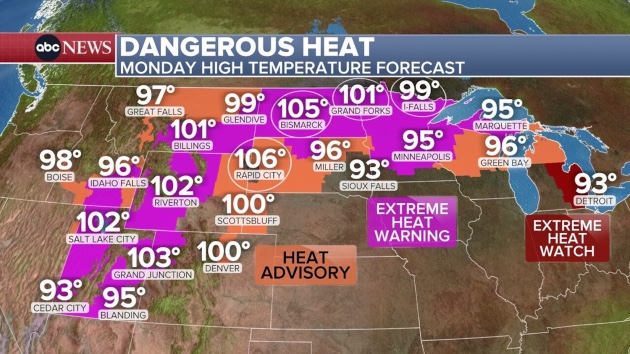
An ABC News graphic shows the forecast on Monday, July 13, 2026. (ABC News)
(NEW YORK) — Dangerous heat from Los Angeles to Boston is expected to impact more than 100 million Americans this week.
Multiple cities in the West, from Utah to Montana, experienced their hottest temperatures on record Sunday afternoon, shattering previous heat records.
The preliminary high temperature in Salt Lake City was 109 degrees F, breaking the previous all-time record high of 107 degrees, previously set in 1960, 2002, 2021, and twice in 2022. Temperature records for the city go back to 1874.
Billings, Montana reached a preliminary high temperature of 111 degrees on Sunday afternoon, shattering the previous all-time high of 108 degrees set on July 14, 2002.
In Miles City, Montana, the temperature rose to a preliminary high of 115 degrees on Sunday afternoon, also shattering its previous all-time high of 111 degrees set on June 26, 2012.
For reference, the hottest temperature ever recorded in the state of Montana is 117 degrees, observed in the town of Medicine Lake on July 5, 1937, and in Glendive on July 20, 1893.
A heat dome has set up over the Northern Plains, with extreme heat and humidity over America’s northern tier.
An extreme heat warning is in place through Thursday for Minneapolis, Minnesota, with daily high heat index up to 100 possible.
Other extreme heat warnings are in place from Utah to the upper peninsula of Michigan.
In Utah, places like Zion Canyon could feel like 110 today, while Salt Lake City and Billings reach above 100.
Fargo, North Dakota, is under an extreme heat warning for a heat index as high as 110 today and Tuesday.
The heat index for places like Calumet, Michigan, and Duluth, Minnesota, could reach near 100.
On Tuesday, Detroit, Michigan, is under an extreme heat watch for a heat index near 107.
In the Northeast, a heat wave is set to begin on Tuesday, with three or more days of temperatures over 90 degrees for New York City, Philadelphia and D.C.
A heat advisory is in place for at least Tuesday and Wednesday across much of the Northeast due to heat indices around 100 expected.
The upper Northeast will be hottest on Tuesday with a heat index of 100 to 104 from Rochester to Albany to Boston.
New York City to D.C. is likely the hottest on Wednesday with heat indices near 100 in NYC and near 105 in D.C.
Out West, Southern California is under heat alerts through Thursday.
Temps will reach 85 to 90 across the coastal valleys and up to 105 for the interior valleys through Tuesday.
Wednesday and Thursday will be hotter, with temps in downtown LA reaching the middle to upper 90s and interior valleys reaching up to 105.
Tuesday severe weather threat for northern New England
Fueled by the extreme heat and humidity and a sinking cold front from Canada, severe storms capable of destructive winds over 70 mph, large hail large than ping pong balls and a strong tornado or two will move over northern New England.
A level 3 of 5 risk is in place from northeast New York through northern Vermont, northern New Hampshire, and northern Maine on Tuesday afternoon and evening. It includes Burlington, Vermont; Plattsburgh, New York; Caribou, Maine; Colchester, Vermont; and Massena, New York.
Storms are most likely after 5 p.m. ET and continuing into the night as the cold front sinks south.
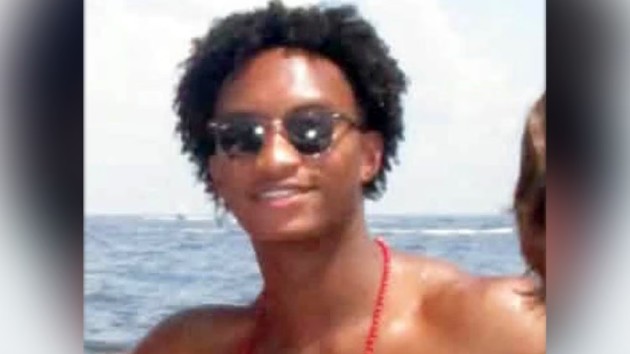
The Jackson County Sheriff’s Department released this photo during the search for Nolan Xavier Wells, 18, in Mississippi. (Jackson County Sheriff’s Department)
(NEW YORK) — A viral video depicting a Fourth of July party at a barrier island off the coast of Mississippi does not depict an argument involving Nolan Wells, a childhood friend of the late teen, said to ABC News Sunday in a broadcast exclusive.
Wells, an 18-year-old Mississippi football player, died last weekend following an all-day party on Horn Island, off the coast of Ocean Springs, his hometown. Attorney Ben Crump, who is representing Wells’ parents, said Friday that Wells is among a group of people standing on the island and is heard on the video, shot from a boat on the water, demanding his phone back. However, Tracestin Shepherd, a long-time Wells friend, said the voice heard on the video was his own. Wells is not in the video, he said.
“That’s me yelling. … there was no talk about a phone in that video,” but instead, Shepherd said, he was telling both friend Jayvon Williams, and a family member, who were both restraining him, to let him off the boat so he could continue the fight. “Nolan wasn’t on the island” at that time, he claimed.
Shepherd said the altercation was between him and another man, a stranger, who allegedly started a fight with him. He said that he and his group of friends, which included Wells, had been drinking alcohol since the late morning after multiple boats, all containing his friends, arrived on the island for an outing that had been planned to be “one last hurrah” before returning to either school or work after the holiday break. About 300 people, many of them former high school classmates, were concentrated on their portion of the island.
Later in the day, after being told the boat needed to return to shore due to an electrical issue, Wells said he wanted to stay behind because he met a girl and would return on another friend’s boat, Shepherd said.
Wells’ body was recovered on Monday in water off the island shore. Jackson County Sheriff John Ledbetter told ABC News he suspects Wells drowned, but is still investigating. An autopsy is being conducted by the state medical examiner. The results are pending, said Jackson County Coroner Bruce Lynd Jr.
Shepherd said he and Wells were among a tight circle of friends who had known each other since their freshman year at Ocean Springs High School. Shepherd, 20, said Wells “was just somebody that you automatically just felt so comfortable to talk to” and they bonded through athletics. Their friend group was “very diverse” in race and ethnicity, and he said they all had one thing in common: Admiration for Wells.
“Nobody would ever hurt Nolan in our friend group. We would die for him. We would do everything in our power for that guy. If he needed anything, we would do it,” he said. “Nolan brought us all together.”
Shepherd declined to be interviewed on camera out of fear for his safety. He said he and other friends have been besieged by death threats since Wells’ body was found last Monday from people accusing them of playing a role in his death.
He said he wanted to speak publicly because he wanted to set the record straight due to what he said was misinformation and speculation swirling online. Crump told “Good Morning America” Thursday that a key piece of evidence was Wells’ phone, which he said was retrieved from his friends — something he said was suspicious.
Shepherd said it was very common for everyone to leave their phones in boats. He said few videos or photos exist from that day because “everybody was in the water” and not on their phones.
“All our friends are out there. Who are we communicating with? And we’re in salt water. We’re not in fresh water,” he said.
Wells, he said, placed his phone in the boat of one of their friends. “When Nolan got in the water, he put his phone on the [boat] dash also with probably 15 other phones.” Shepherd’s uncle, who asked not to be named and was piloting one of the boats that day, said it is normal for people in the boating community to ignore their phones while on the water.
“That’s not uncommon. I’ve even gotten home and had phones on my deck; I didn’t know whose they were. They come and get the phones later. Out there, they can give a care less about their phone. They get up in the boat, take a picture, set it down, get back in the water,” he said.
Ledbetter told ABC News that Crump has not yet turned over Wells’ phone to his investigators. Crump said Friday that the family planned to turn over the phone after they conducted their own independent investigation.
Shepherd also said that a photo that Crump shared on his Instagram, which supposedly shows Wells at a pool party, was not from July 5, as the caption claims. He said the party took place on June 27 in nearby Pass Christian, Mississippi.
Investigators from the Jackson County Sheriff’s Department talked to Shepherd and his group of friends on Monday and on Friday he gave an official statement.
He said he is upset by the suggestion from Crump that race may have played a role in Wells’ death. As a result, he said, he and his friends have become targets. “They’re trying to spin a narrative that’s not there,” he said. “He’s wrong.”
“I understand [Wells’] parents are grieving and I really think he’s taken a little bit of advantage of that. And I don’t like that. I really don’t because they’re vulnerable,” he said.
Shepherd said he wants “everybody just to relax and let everybody mourn the loss of Nolan. And let us remember him as the sweet guy he was and not something we’re scared of because of the trauma we’ve had,” he said. “If Ben Crump is doing his own investigation, let him do it. And then let the sheriff’s office conclude with their investigation and figure out what the facts are on their end. Let us all just know the truth instead of jumping to two conclusions about things.”
“We all cared and loved Nolan, and nobody wanted to see Nolan die. Nobody wanted his life taken so short,” he said. “He had everything going for him.”
Sen. Lindsey Graham speaks during a press conference at the U.S. Capitol, April 27, 2026, in Washington. (Heather Diehl/Getty Images)
(WASHINGTON) — Lindsey Graham, a longtime Republican senator from South Carolina, who had become one of President Donald Trump’s staunchest political allies, died on Saturday after a “brief and sudden” illness, his office said in a statement. He was 71.
“Senator Graham’s family appreciates prayers at this time and asks for privacy during this incredibly difficult period,” said the statement, which was posted early Sunday on social media.
First elected to the Senate in 2002, Graham had in 23 years risen to be one of the chamber’s most prominent figures. He won reelection three times, most recently in 2020.
“Senator Lindsey Graham, one of the greatest people and Senators I have ever known, is dead!” Trump said on social media on Sunday morning. “He was always working, and was a true American Patriot. Lindsey will be greatly missed!!!”
The flags above the White House, as well as on the White House North Lawn flagpole, have been lowered to half staff following the news of Graham’s death.
Graham was aligned with the president on most matters and the two were seen together frequently on the golf course and at events. He advised the president on matters of foreign policy, including recently on the Iran war. He was outspoken in support of the president’s decision to lead strikes on nuclear sites in Iran last year.
Graham served as the current chair of the Senate Budget Committee, a role he had most recently used to lead the Senate’s efforts to pass a roughly $70 billion budget reconciliation bill to provide funding for border security. That legislation was signed by Trump in June.
He was a also member of the Appropriations, Judiciary and Environment and Public Works committees.
In his time in the Senate, Graham also helmed the powerful Senate Judiciary Committee from 2019 to 2022.
While atop the panel, he led the committee through the swift confirmation of Justice Amy Coney Barrett to the Supreme Court, following the death of Justice Ruth Bader Ginsburg in the final months of Trump’s first term. Graham had earlier been among those who blocked President Barack Obama’s nomination of Merrick Garland, his pick to fill the vacancy left by the death of Justice Antonin Scalia, almost 11 months before the 2016 presidential election.
Graham would have returned to the top GOP position on the committee next Congress.
Before his time in the Senate, Graham had served in the House, where he represented South Carolina’s third district. He was first elected to that office in 1994 and served four terms.
In his more than three decades in Washington, Graham had sparred with several presidents. As a member of the House in 1998, he was appointed a manager of the impeachment proceedings against then-President Bill Clinton. He was a harsh critic of Obama, as well as President Joe Biden, whom he also considered a longtime friend from their years together in the Senate.
Graham was also once numbered among the fiercest critics of Trump, whom he ran against in the 2016 presidential election, a race he withdrew from before the primaries. But their relationship had softened, with Graham saying he had turned into one of his closest friends.
“On a professional level, I am proud to have been there at the beginning when President Trump — through sheer force of will — achieved the greatest political comeback in American history,” Graham said in March 2025. “On a personal level, I genuinely enjoy our friendship. He’s an awesome golfing buddy, who I have yet to beat.”
The president recently endorsed Graham in his primary campaign, in which Graham sailed to victory in June with nearly 57% of the vote, defeating several challengers. He was slated to appear on the ballot this November.
Trump held a tele-rally for Graham ahead of the race, praising their partnership amid the war in Iran, which Graham staunchly defended.
“They cannot have a nuclear weapon,” Trump said at the time. “And Lindsey has been fighting with me all the way. All the way for that. We’ve been a very tough team and I think we are winning that battle.”
He was a member of the Judiciary committee since he first joined the Senate in 2003. His time on the panel was spent working to mold the federal judiciary. While serving on the committee he helped to advance confirmation of conservative judges to the federal bench, and also became a staunch defender of Trump, his close friend and ally.
Graham in recent statements appeared positive that he and Trump would continue in lockstep if Graham was reelected the in fall.
“Let me tell you in ’27, if I win in November, I’ll be chairman of the Judiciary Committee,” he said. “I’ll wake up every morning and go to bed every night, thinking, ‘How many judges can we put on the bench before Trump leaves in ’28.'”
He had been a foreign policy hawk during his time in office, supporting the president in his war with Iran, making visits to Israel and fostering a strong and at-times contentious relationship with Ukrainian President Volodymyr Zelenskyy. He pushed for military aid to the country, including weapons and financial assistance.
Shortly before his death, Graham made his 10th visit to Ukraine — meeting with Zelenskyy and visiting a drone manufacturer in the country. He and a bipartisan group of senators announced on Friday a bipartisan deal with the White House on a Russia-sanctions bill that Graham had long-championed.
“In my opinion, this summer is the time to go all in to put pressure on [Russian President Vladimir] Putin to get to the peace table and end the bloodbath,” he said on July 7.
Zelenskyy said on Sunday that he and Graham met twice in the past week, adding that he was “deeply saddened” by the news, calling the senator a “true defender of freedom,” a “staunch advocate” for Ukraine and a “determined leader.”
Israeli Prime Minister Netanyahu, in a statement posted on Sunday morning, called the senator a “dear friend,” going on to say, “Israel has lost one of its greatest friends. America has lost a great patriot. I have lost a beloved friend.”
Graham was also highly involved, earlier in his career, in efforts to craft a bipartisan deal on immigration. He worked across the aisle in 2013 to negotiate a border security bill that created a pathway to citizenship for some undocumented migrants while increasing border security and changing immigration rules. That legislation never became law.
Lindsey Olin Graham was born on July 9, 1955, in Central, South Carolina, a town in the state’s northwest that, at that time, had little more than 1,000 residents.
His official Senate biography described his family as “blue collar,” saying his parents ran a local restaurant and pool hall. He became the legal guardian to his younger sister and raised her after his parents died.
“The first member of his family to go to college, Graham earned his undergraduate and law degrees from the University of South Carolina,” his bio said.
The year after he earned a law degree in 1981, he joined the U.S. Air Force, where he served as a lawyer. He was assigned overseas in Germany between 1984 and 1988, before leaving active duty the following year.
As a reservist, he was later called to active duty during the first Gulf War, during which he served state-side.
He retired as a reservist in June 2015 at the rank of colonel.
Graham lived in Seneca, South Carolina, and was not married. His official biography says he was a member of Corinth Baptist Church.
He last voted in the Senate on June 24, right before the chamber departed for the Fourth of July recess. The Senate is slated to return on Monday.
Graham had been a longtime friend of Sen. John McCain, a Republican, who died in 2018, and Sen. Joe Lieberman, a Democrat-turned-independent, who died in 2024.
The three “traveled the world together,” Graham said in 2018.
“I’ve seen these guys in action,” Graham said at the time. “I’ve learned a lot from both of them and we had so much fun.”
Majority Leader John Thune said on Sunday that his “heart is heavy” to learn of the death of his friend and colleague.
“As South Carolina’s senior senator, Lindsey fought passionately for the Palmetto State,” Thune said in a post on social media. “He was a trusted adviser and colleague to me and many others, and numerous presidents and heads of state have relied on his counsel. His influence on the federal judiciary, our national defense, and his beloved South Carolina will be felt for generations.”
ABC News’ Shannon Kingston, Nicholas Kerr and Charlotte Gardiner contributed to this report.
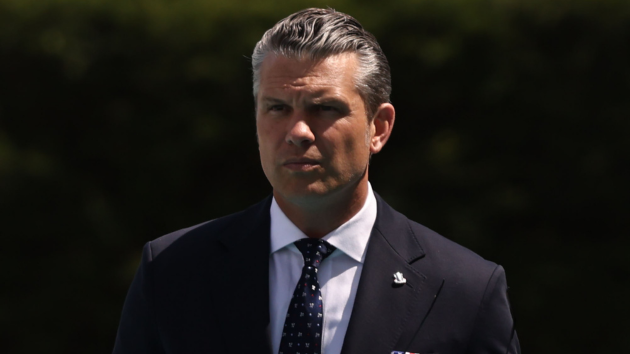
U.S. Secretary of War Pete Hegseth awaits the arrival of U.S. President Donald Trump for the NATO Summit on July 07, 2026, in Ankara, Turkey. Leaders from NATO’s 32 countries, plus NATO allies like Ukraine, gathered in the Turkish capital to discuss a range of issues involving spending targets, defense industrial production, and support for Ukraine, among other topics. (Photo by Burak Kara/Getty Images)
(SOUTH CAROLINA) — The suspensions of eight Apache pilots who flew low over the South Carolina coast on July Fourth were lifted Friday, according to the South Carolina National Guard, just hours after Secretary of Defense Pete Hegseth publicly called for the reversal.
The Apache attack helicopters were flying in South Carolina’s annual “Salute from the Shore” event — which flies from Myrtle Beach, South Carolina, to Beaufort, North Carolina, along the coast on the Fourth of July — when video footage posted online appeared to show the pilots flying low over a crowded coastline. The pilots are members of the South Carolina National Guard’s Alpha 1-151 Attack Battalion.
The eight pilots involved were temporarily suspended shortly after the flight, Maj. Lisa Allen, a spokesperson for the South Carolina National Guard, confirmed on Thursday to ABC affiliate WPDE in Florence, South Carolina. What prompted the suspension is unclear.
The Guard clarified in a Thursday press release that the action was a “routine administrative measure whenever a flight profile is under review” and that the soldiers were still taking part in “regular daily duties in a non-flying capacity” — emphasizing in a post on X that it was “not a disciplinary action.” Allen confirmed on Friday that the review was now complete.
Low-altitude flying carries inherent risks, including the potential for debris to scatter on the ground and less time for pilots to respond to emergencies.
As the video of their flyover circulated on social media, reports of the suspension drew national scrutiny and prompted backlash from state and federal lawmakers.
Republican Rep. Russell Fry of South Carolina called for the National Guard to “drop this review and restore these pilots immediately” in a Thursday morning post on X, saying the pilots “should be celebrated, not sanctioned.” Fry also penned a letter to the South Carolina National Guard, where he decried the suspension as a “misguided decision and a misuse of resources.”
South Carolina Gov. Henry McMaster, a Republican, also criticized the suspension.
“Surely, they know how to safely navigate the coast of South Carolina — and her scores of cheering residents and tourists on our 250th anniversary,” McMaster wrote on X.
Hegseth weighed in on Thursday evening, promising to “fix” the suspension in response to a video of the flyover posted on X.
“We’ll fix this. Carry on, Patriots,” Hegseth wrote.
Pentagon spokesperson Sean Parnell echoed Hegseth in his Friday announcement lifting the suspension, writing on X that “Effective immediately, the suspension of all involved South Carolina pilots has been lifted. Carry on Patriots.”
Allen also announced in a press release that the suspension was lifted, adding that “The South Carolina National Guard appreciates the outpouring of concern and support from our community and state leaders.”
It is not the first time that Hegseth has intervened on behalf of suspended Apache pilots. In late March, two Apache helicopters were flagged by the Army for flying low and hovering near Kid Rock’s Nashville house. Their suspension was rolled back just hours after it was announced, and Hegseth quickly took credit.
“Pilots suspension LIFTED. No punishment. No investigation. Carry on, patriots,” he posted on X at the time.
Apaches are the Army’s primary attack helicopter, being fully integrated into the force in the 1980s and seeing their combat debut during the U.S. invasion of Panama. They continued to be heavily used in the wars in Iraq and Afghanistan and are currently deployed in the war with Iran.
Missouri Governor Mike Kehoe waits for U.S. Vice President JD Vance’s arrival at Kansas City International Airport May 18, 2026, in Kansas City, Missouri. Vance will be in Kansas City, where he will deliver remarks on the Trump administration’s efforts to support American manufacturing during a visit to a facility. (Photo by Eric Lee-Pool/Getty Images)
(MISSOURI) — Emergency responders are at the scene of a campground in Missouri where a building reportedly collapsed into floodwaters amid flash flooding on Friday.
Initial reports indicate 10 to 17 individuals may have entered the water as a result of the collapse, according to the Reynolds County Sheriff’s Office.
Five campers who were previously reported missing from Bearcat Getaway Campground have been located and accounted for while the search for those who may have been in the building that collapsed continues.
Over 90 water rescues have been conducted involving residents, campers and motorists affected by rapidly rising floodwaters, the sheriff’s office said.
The governor of Missouri declared a state of emergency on Friday in response to flash flooding.
“Over the past 24 hours, intense storms have created dangerous flash flooding across several regions of Missouri, resulting in multiple swift-water rescues. Activating the State Emergency Operations Plan allows our agencies to move quickly, coordinate resources, and support local response efforts,” Gov. Mike Kehoe said in a statement Friday.
“With additional heavy rain expected through the weekend, the threat is not over. If you’re camping, floating, or spending time near rivers and streams, move to higher ground and stay alert of weather conditions,” Kehoe said. “Missourians should continue to monitor local forecasts and follow the guidance of local authorities.”
Rescue operations began around 2:30 a.m. on Friday after emergency calls reported numerous campers trapped by rising water, according to the Missouri State Highway Patrol.
A flash flood emergency has been declared for several locations in Missouri and additional thunderstorms with heavy rain are expected to continue throughout the evening.
Water rescues were reported amid catastrophic flooding.
In parts of Iron and Reynolds counties, 7 to 12 inches of rain have fallen. The Black River at Lesterville rose 8 feet in an hour, with that water working its way toward Annapolis, where river levels quickly rose.
This emergency includes recreational places such as Johnson’s Shut-Ins and Taum Sauk Mountain State Park. Towns in the emergency include Viburnum, Annapolis, Glover, Oates, Bixby, Lesterville, Black, Hogan, Chloride, and Sabula.
Additional rounds of heavy rain and storms will continue from the central Plains east to the Ohio Valley and interior parts of the Northeast through this weekend.
There is a level 3 of 4 (moderate risk) for excessive rainfall over already hard-hit southeastern Missouri on Friday. Also, a level 2 of 4 (slight risk) for excessive rainfall from parts of the Mid-Mississippi Valley to the Central Appalachians.
A Flood Watch is in effect for over 21 million Americans, from Pennsylvania to Tennessee and west to Missouri.
Officials are warning Missourians not to attempt to drive through floodwaters even if the water appears shallow.
Just six inches of floodwater can sweep a person off their feet, and as little as one foot of water can move most cars off the road.
“More than half of flood deaths in Missouri are victims in vehicles. Nighttime severe weather is particularly dangerous because visibility is severely reduced. If you find yourself stranded by floodwaters, immediately call for help and seek higher ground,” the governor’s office warned Friday.
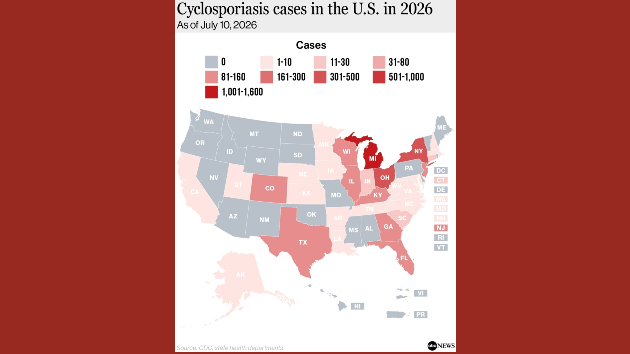
Cyclosporiasis cases in the U.S. in 2026 as of July 10, 2026 (CDC, state health departments)
(NEW YORK) — Cases of cyclosporiasis, an intestinal infection caused by a parasite, are currently being reported in nearly three dozen states, according to an ABC News tally.
As of Friday, at least 2,844 cases have been reported in 32 states, data from the Centers for Disease Control and Prevention (CDC) and state health departments show.
The CDC said the true number of people sick with cyclosporiasis is likely higher than the reported figure because some people recover without medical care and are not tested for the parasite.
Most cases are currently being reported in Michigan with 1,562 as of Friday, according to the Michigan Department of Health and Human Services (MDHHS). At least 44 people have been hospitalized in the state.
This is 31 times higher than the approximately 50 cases that Michigan sees every year, according to the health department.
Michigan health officials previously told ABC News that the working hypothesis is the outbreak is linked to food contamination but, so far, no produce, grower or supplier has been identified.
The parasite usually spreads through food or water contaminated with feces, according to the CDC.
Foodborne outbreaks of cyclosporiasis have been linked to various types of imported fresh produce, such as raspberries, basil, snow peas, mesclun lettuce and cilantro, the CDC says.
New York is reporting the second highest number of cases at 394, followed by Ohio at 364, according to data from both state health departments. Meanwhile, Illinois and Florida are each reporting more than 100 cases, according to their respective health departments.
The most common symptom of cyclosporiasis is watery diarrhea “with frequent and sometimes explosive bowel movements,” according to the CDC. Other symptoms nay include nausea, vomiting, abdominal pain or bloating.
The time between becoming infected and showing symptoms is typically about one week but can range from two days to two weeks, the CDC says. The lag can make it difficult to trace back what may have infected someone, doctors previously told ABC News.
Cyclosporiasis is treated with the oral antibiotic trimethoprim-sulfamethoxazole (TMP-SMX), commonly sold as Bactrim, Septra and Cotrim, and taken for 10 days, according to the CDC.
The agency says people can prevent infection by thoroughly washing produce, cutting away bruised or damaged parts of fruits and vegetables and refrigerating pre-prepared or pre-cut produce.
Additionally, the CDC recommends washing hands thoroughly with soap and water before handling or preparing raw fruits and vegetables.
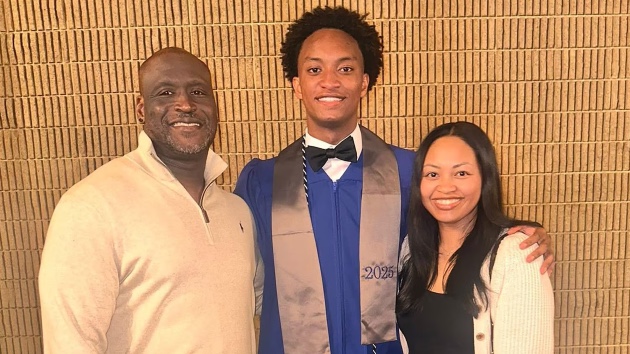
An undated photo of 18-year-old Nolan Xavier Wells, whose body was believed to be recovered after going missing on July 4, 2026. (Courtesy of the Wells Family)
(NEW YORK) — The parents of Nolan Xavier Wells, Christine and Elmore Wonsley, broke their silence on their son’s mysterious death in an interview with “Good Morning America” anchor Michael Strahan on Friday morning.
“We just want honesty and transparency. We want a thorough investigation,” Christine Wonsley said. “We want that same respect that would be given to anybody else, and that’s it. We just want answers.”
The Wonsleys, who were joined by their attorney Ben Crump, called for a “thorough” and independent investigation.
They also expressed the need to shed more light on unanswered questions, including what they allege are deleted messages from their son’s phone, that have led them to become “suspicious” about his death following a July 4 boating trip.
“Nolan was just like this bright light … his smile, his energy was just, just so infectious,” Christine Wonsley said. “He was just a genuinely a good person. Like I always say, all the best parts of me are with him.”
Elmore Wonsley said Wells “was very loving.”
“There was not a friend that he couldn’t make … he’s gonna be really missed,” he said.
Wells, who played football at Southwest Mississippi Community College, went missing during a Fourth of July celebration with high school friends on Horn Island, a popular undeveloped island just south of Ocean Springs, Mississippi, officials said.
The 18-year-old’s body was recovered on Monday. Authorities said they suspect Wells drowned, but are still investigating. An autopsy was conducted but results could take weeks, officials said.
The disappearance
According to Jackson County Sheriff John Ledbetter, a friend of Wells contacted the Coast Guard around 11 p.m. last Saturday, July 4. Separately, Wells’ mother contacted the sheriff’s office about her son around midnight leading into Sunday, July 5.
The Wonsleys cast doubt on claims by friends that Wells decided to stay behind on the island, while his friends left.
“That we cannot answer,” Christine Wonsley said when asked why Wells would stay behind. “I just, I can’t — I can’t fathom why he would.”
Elmore Wonsley said that would have gone against the advice they gave Wells.
“We always told him, if you go with a group, you stay with a group,” he said.
Ledbetter told ABC News in an interview that aired on “GMA” on Friday that nothing “yet” from the evidence they collected indicates that foul play was involved in Wells’ death, but the investigation will take time and is ongoing, he added.
“We’re working towards the same goal as the family. We want a thorough investigation. We’re trying to find out everything ,” he said. “We are providing a thorough, professional, and accurate investigation. That’s what we’re going to continue to do, until we arrive at the answers that the family deserves.”
Crump, the attorney representing the Wonsleys, told ABC News Live in an interview on Wednesday that Wells could swim, his family is “not accepting that Nolan drowned accidentally.”
Unanswered questions
Christine Wonsley told “GMA” that his family tracked his phone, but when she went to pick it up from Wells’ friends, she said it appears that some texts and SnapChat messages had been deleted. It is unclear which friends Wells’ phone was retrieved from and who could have been in possession of it prior to that.
“When we finally got his phone, me and my sister went through the phone. We went in his Snapchat. He had two accounts. Absolutely nothing,” Christine Wonsley said. “It wasn’t even 24 hours, which is how long videos and pictures stay in Snapchat … even my sister was like ‘Yeah, that’s suspicious.'”
Crump, who joined the Wonsleys on “GMA” Friday, said that the family has questions about a cell phone video of an “argument” that was posted online.
“You can hear an argument going where Nolan is saying, ‘Give me my freaking phone! What are you freaking doing?’ And so then his phone ends up missing,” Crump said.
“No young person leaves their cell phone,” he added. “It’s not adding up, and that is the problem when you think about the history of Mississippi. Yeah, so there are so many questions that need to be answered.”
Ledbetter told GMA on Thursday night that Wells’ phone has not been turned over to investigators yet.
“It may be important, may be a piece that we haven’t got yet,” he said.
Ledbetter noted that the “argument” video will be part of the investigation.
As the family searches for answers, the investigation will continue in Washington, D.C., Crump said, where “we are having an independent autopsy done at behest of his family.”
He noted that former NFL football star Colin Kaepernick helped pay for it.
“We flew his body up from Mississippi to D.C. because they wanted an autopsy done by a person with no interaction with the Mississippi law enforcement because there’s an issue of trust here that is really important,” Crump said.
Ledbetter told “GMA” that the sheriff’s office welcomes the independent investigation.
“By all means, that’s more information looking into the death of Nolan that will be made available and another set of eyes looking at it,” he said.
Ledbetter asked the public for “patience” as investigators look into a “substantial amount” of tips, in addition to reviewing photo and video evidence.
The sheriff’s department stressed Wednesday that the investigation is ongoing and urged anyone who was on or near the northwest tip of Horn Island to come forward with photos or videos, “particularly those depicting alleged altercations or containing images of, or believed to include Nolan Wells.”
ABC News’ Sasha Pezenick, Kirk Cohall and Mark Guarino contributed to this report.