(WASHINGTON) — For the first time, the Biden administration is commenting on the Food and Drug Administration’s long-time blood donation guidelines, which are impacting the LGBTQ+ community by preventing gay and bisexual men from being eligible blood donors.
The statement, made by a White House official exclusively to ABC News, acknowledges the painful origins of the policy and comes on the heels of the American Red Cross declaring their first-ever national blood crisis last week, as supplies at hospitals and blood banks become dangerously low.
Current U.S. policy holds that sexually active gay or bisexual men must abstain from sex for at least three months before they’re allowed to donate blood. The rule applies to gay and bisexual men who are monogamous and those who test HIV negative and are practicing safe sex. It also includes gay and bisexual COVID-19 survivors who wish to donate convalescent plasma, rich with antibodies, for research.
The restriction on blood donations came out of the HIV/AIDS crisis of the 1980s, when limited testing technology and capacity existed to screen blood for HIV. In 1983, the FDA implemented a lifetime ban on blood donations from all men who had sex with men after 1977.
The FDA removed the lifetime ban and enacted a 12-month deferral period in 2015, meaning gay or bisexual men had to abstain from having sex with other men for at least 12 months before donating blood. That deferral period was reduced to three months in April 2020 amid blood supply shortages in the beginning months of the COVID-19 pandemic.
Despite cutting of deferral periods in recent years, the current federal policy remains a blanket policy covering LGBTQ+ people, and does not take into account individual risk.
“The legacy of bans on blood donation continues to be painful, especially for LGBTQI+ communities,” the White House official told ABC News in a statement. “The President is committed to ensuring that this policy is based on science, not fiction or stigma. While there are no new decisions to announce at the moment, the FDA is currently supporting the ‘ADVANCE’ study, a scientific study to develop relevant scientific evidence and inform any potential policy changes.”
In 2020, ABC News broke the story that several major blood donation organizations — including the American Red Cross, Vitalant and OneBlood — announced that they were working together in an FDA-funded study (ADVANCE: Assessing Donor Variability And New Concepts in Eligibility) to provide data to determine if eligibility based on an individual’s risk could replace the time-based deferral system while maintaining the safety of the blood supply.
While the lead researchers involved in the study previously told ABC News their goal was to present their findings to the FDA in late 2021, the FDA revealed to ABC News that the study is ongoing, amid what the American Red Cross is calling “the worst blood shortage in over a decade.”
While the American Red Cross said that there is no clear data that would suggest that changing the current blood donation policy would significantly increase the number of blood donations, if the deferral period were lifted, an additional 360,000 men would likely donate, “which could help save the lives of more than a million people,” according to LGBTQ+ advocacy group GLAAD.
In what seems like a clash over risk vs. stigma, LGBTQ+ advocacy groups and many in the medical community are aligned on the idea that the current federal policy on LGBTQ+ blood donor eligibility is largely discriminatory.
“We believe blood donation eligibility should not be determined by methods that are based upon sexual orientation and we’re committed to achieving this goal,” the American Red Cross said in a statement to ABC News.
Sarah Warbelow, legal director for the Human Rights Campaign, also told ABC News, “Just like other individuals throughout the country, many people have sex on a regular basis, including with partners and spouses.”
And in 2020, Dr. Patrice Harris, president of the American Medical Association, told “Good Morning America”: “The AMA has been a long-term advocate of using a risk-based approach, rather than stigmatizing one group of people. So we believe there should not even be the three-month deferral, but that we should use a risk-based approach.”
ABC News’ Kiara Alfonseca contributed to this report.
(WASHINGTON) — A showdown between the nation’s major airlines, the FAA and AT&T and Verizon appears to be cooling after both telecom giants agreed at the last minute to pause a portion of their 5G-C rollout on Wednesday.
“At our sole discretion we have voluntarily agreed to temporarily defer turning on a limited number of towers around certain airport runways as we continue to work with the aviation industry and the FAA to provide further information about our 5G deployment,” AT&T said in a statement Tuesday.
Verizon followed AT&T saying, “We have voluntarily decided to limit our 5G network around airports. The Federal Aviation Administration (FAA) and our nation’s airlines have not been able to fully resolve navigating 5G around airports, despite it being safe and fully operational in more than 40 other countries.”
CEOs from American, United, Delta and seven other major carriers warned of “significant” disruptions in the country’s aviation system if the 5G rollout continued as planned.
Aviation officials are concerned that the frequency used for 5G may interfere with airplanes’ radio altimeters — devices used by pilots to measure the distance between the aircraft and the ground in order to land.
In the letter, U.S. airline leaders wrote to government officials Monday asking that the wireless carriers not deploy 5G within two miles of runways at certain airports.
“This will allow 5G to be deployed while avoiding harmful impacts on the aviation industry, traveling public, supply chain, vaccine distribution, our workforce and broader economy,” the CEOs wrote.
The FAA warned pilots won’t be able to use radio altimeters to land at 88 airports closest to Verizon and AT&T’s 5G towers. Earlier this month, the FAA and wireless carriers agreed to implement “buffer zones” around 50 airports across the country to try to mitigate the issue.
Airline officials, however, said this is not enough. United Airlines said the current plan will have “devastating” impacts on its operation, impacting an estimated 1.25 million of the carrier’s passengers and at least 15,000 flights.
“We won’t compromise on safety – full stop,” United said in a statement.
Captain Dennis Tajer, an American Airlines 737 pilot and a spokesperson for the Allied Pilots Association, also called the rollout “unsafe.”
“We’re not going to fly the airplane unless it’s safe,” Tajer told ABC News. “But putting that added distraction of other systems going wrong close to the ground is not the way you run a safety culture.”
The telecom giants have insisted 5G-C Band technology is safe and has been proven in more than 40 other countries, albeit at much lower power levels than what’s planned in the U.S.
In a statement, AT&T made clear its frustration with the federal government, writing in part: “We are frustrated by the FAA’s inability to do what nearly 40 countries have done, which is to safely deploy 5G technology without disrupting aviation services, and we urge it do so in a timely manner. We are launching our advanced 5G services everywhere else as planned with the temporary exception of this limited number of towers.”
When asked why the FAA did not act over the past two years, White House press secretary Jen Psaki said, “There will be lots of time to look back and see how we got here. And I know many of you will do that. And, of course, that is understandable. But right now, over the next 24, or less than 24 hours, what we’re focused on is trying to come to a solution that will minimize travel — you know disruptions to passenger travel, cargo operations — on our economic recovery.”
President Biden thanked Verizon and AT&T for the delay, saying in a statement, “This agreement will avoid potentially devastating disruptions to passenger travel, cargo operations, and our economic recovery, while allowing more than 90 percent of wireless tower deployment to occur as scheduled.”
The president said the agreement “protects flight safety and allows aviation operations to continue without significant disruption and will bring more high-speed internet options to millions of Americans.”
ABC News’ Mina Kaji, Mary Bruce and Sarah Kolinovsky contributed to this report.
(COON RAPIDS, Minn.) — A Minnesota man with COVID who had been fighting for his life for months was transferred to a new hospital days after a judge blocked another hospital from taking him off a ventilator.
The decision allowed Scott Quiner, 55, of Buffalo, Minnesota, to be moved to a hospital in Texas, where he is being treated.
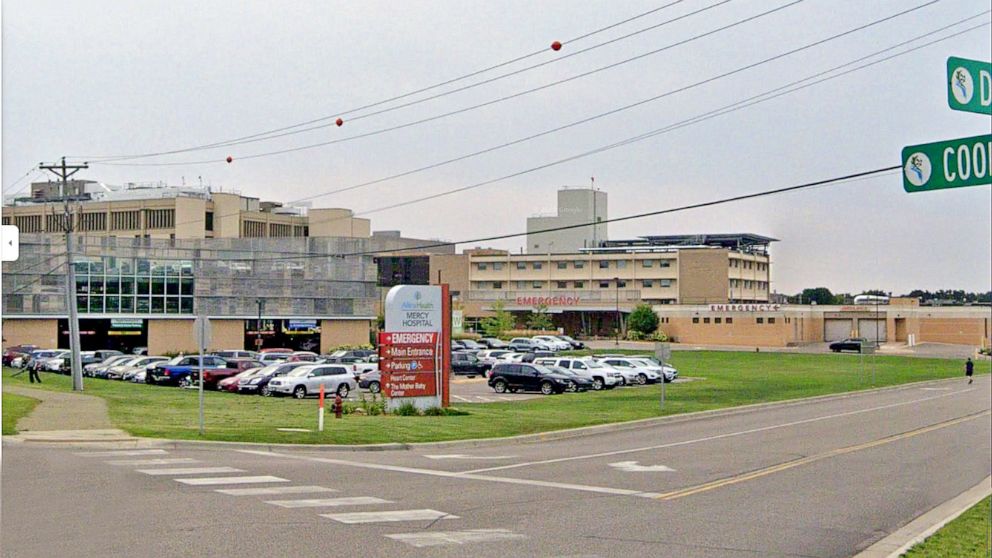
Quiner was initially admitted to Waconia Hospital, and then transferred to the ICU at Mercy Hospital, in Coon Rapids, on Nov. 6, after he tested positive for the virus in late October, according to a GoFundMe page in support of Quiner’s family, and the StarTribune, which was first to report this story.
Anne Quiner, Scott’s wife, was granted a temporary restraining order last Thursday against Mercy Hospital, after doctors informed her that day that they would be disconnecting her husband from the ventilator that had been supporting him since the late fall.
The order, from an Anoka County judge, prohibited the hospital from turning off ventilation support, while Anne Quiner searched for a new facility to care for her husband.
According to the court order, Anne Quiner told doctors that as her husband’s health care proxy, she “vehemently disagree[d]” with these actions and did not want her husband’s ventilator turned off.
Over the weekend, Scott Quiner was moved to a facility in Texas for treatment, Marjorie J. Holsten, the Quiner family’s attorney, told ABC News in a statement on Monday.
“A doctor evaluated him and determined that he was severely undernourished. Scott has been receiving much-needed nourishment and hydration and medications that were not given by Mercy,” Holsten said. “He is being weaned off of the sedating drugs and has already been able to follow with his eyes movements the doctor made with his hands. He is making progress in the right direction, though he has a long road ahead of him and continued prayers are appreciated.”
Quiner remains on a ventilator but the oxygen level has been lowered, the family’s lawyer said.
Representatives from Allina Health, which operates Mercy Hospital, told ABC News that they wish the patient and the family well, and have “great confidence” in their team’s work.
“Allina Health has great confidence in the exceptional care provided to our patients, which is administered according to evidence-based practices by our talented and compassionate medical teams. Due to patient privacy, we cannot comment on care provided to specific patients,” the health system wrote. “Allina Health continues to wish the patient and family well. Any information regarding the patient’s on-going care should be directed to his current medical provider.”
(NEW YORK) — A comet more than three times the size of the Empire State Building got up close to Earth’s orbit Tuesday afternoon but was far enough to avoid turning into a sci-fi disaster movie, according to astronomers.
Asteroid 7482 (1994 PC1) flew by Earth around 4:51 p.m., according to NASA, which has been tracking the object for decades through its planetary defense systems.
Researchers say the asteroid, which measures 1 kilometer in diameter, came around .01325 Astronomical Units, or 1.2 million miles, away from Earth’s atmosphere.
That distance didn’t pose any threat to the Earth, according to researchers.
The last time the asteroid was this close to Earth’s orbit was 89 years ago when it flew 0.00752 AU, roughly 699,000 miles, away from the planet, NASA data showed.
The next time the asteroid will come this close to Earth will be in 2105 when it will fly 0.01556 AU, roughly 1.4 million miles, away from Earth.
(WASHINGTON) — The House select committee investigating the Jan. 6 Capitol attack on Tuesday subpoenaed former Trump lawyers Rudy Giuliani, Jenna Ellis and Sidney Powell, who pushed unfounded claims of widespread election fraud and pushed to overturn the 2020 election results on former President Donald Trump’s behalf.
“The Select Committee’s investigation has revealed credible evidence that you publicly promoted claims that the 2020 election was stolen and participated in attempts to disrupt or delay the certification of the election results based on your allegations,” the panel wrote in letters to Giuliani, Ellis, Powell and Trump aide and attorney Boris Epshteyn.
Within the last week, the House Select Committee also subpoenaed the phone records of Eric Trump, former president Trump’s second eldest son — a source with direct knowledge has confirmed to ABC News. The subpoena was sent to a cell phone provider of Eric Trump.
The group subpoenaed Tuesday worked with Trump to contest the results of the election in the fall of 2020, traveling to key states and huddling with Trump and other White House aides in the Oval Office as the president weighed how to overturn the results.
“The four individuals we’ve subpoenaed today advanced unsupported theories about election fraud, pushed efforts to overturn the election results, or were in direct contact with the former President about attempts to stop the counting of electoral votes,” Chairman Bennie Thompson, D-Miss., said in a statement. “We expect these individuals to join the nearly 400 witnesses who have spoken with the Select Committee as the committee works to get answers for the American people about the violent attack on our democracy.”
Ellis also circulated two legal memos urging former Vice President Mike Pence to reject or delay the count of electoral votes on Jan. 6, the committee said.
Giuliani urged Trump to seize voting machines after being told the Department of Homeland Security lacked the authority to do so, the committee said, pointing to a report from the news website Axios and documents obtained by investigators.
The former mayor of New York City, a close Trump confidant, spoke at the Jan. 6 rally outside the White House, urging for “trial by combat” over the election results before Trump supporters marched to the Capitol.
Powell, according to the committee, reportedly urged Trump to seize voting machines to find evidence that foreign hackers had altered the election results.
Powell, Giuliani, Ellis and Epshteyn did not immediately respond to requests for comment.
Dominion Voting Systems, a Colorado-based voting machine company, has filed defamation lawsuits against both Giuliani and Powell and is seeking billions of dollars in damages over their unfounded claims of election fraud. A federal judge denied both Powell and Giuliani’s efforts to have the suits dismissed.
Giuliani’s law license was also suspended in New York state last year over his claims of election fraud.
ABC’s John Santucci, Olivia Rubin and Will Steakin contributed to this report.
Handout/New Zealand Defense Force via Getty Images
(NEW YORK) — For the first time since a massive undersea volcano erupted and caused widespread damage, the government of Tonga released its first statement on Tuesday morning, describing a huge mushroom plume that covered the entire South Pacific island kingdom and nearly 50-foot tsunami waves that crashed ashore and devastated villages.
International and domestic communication, including the Internet, had been severed since the blast of the Hunga Tonga Hunga Ha’apai volcano on Saturday. According to the government’s statement, the volcanic eruption damaged an underwater fiber optic cable, cutting off communication to the outside world.
“As a result of the eruption, a volcanic mushroom plume was released reaching the stratosphere and extending radially covering all Tonga Islands, generating tsunami waves rising up to 15 meters, hitting the west coast of Tongatapu Islands, ‘Eue and Ha’apai Islands,” the government statement said.
The eruption occurred in the South Pacific, about 40 miles south of Tonga.
A damage assessment was underway on Tuesday and the government was relying on satellite phones and high-frequency radio to establish communication between the multiple islands that comprise the Polynesian kingdom. Government officials said communication with at least one island, Niuas, had yet to be restored.
At least three deaths have been confirmed, including the death of a British national, the government said. Also killed was a 65-year-old woman on Mango Island and a 49-year-old man from Nomuka Island, according to the statement.
Two people remain unaccounted for and numerous injuries have been reported, the government said.
The government said it is particularly concerned about the damage caused to the islands of Mango, Fonoifua and Nomuka after receiving initial reports from first responders deployed to those islands.
“The first consignment is headed for these islands as all houses were destroyed on Mango Island; only two houses remain on Fonoifua Island with extensive damage on Nomuka Island,” the government said.
It was not immediately clear how many houses and people occupied the islands of Mango, Nomuka and Fonoifua. Many of Tonga’s 170 islands are uninhabited or sparsely inhabited.
At least eight houses were completely destroyed and 20 others were severely damaged in the village of Kolomotu on Tonga’s most populated island, Tongatapu, the government said.
On ‘Eua Island, two houses were completely destroyed and 45 were severely damaged, according to the government.
The government said that evacuations are underway from the small island of ‘Atata near the capital city of Nukuʻalofa, throughout Tongatapu, Mango, Fonoifua and Nomuka islands.
“Water supplies have been seriously affected by the volcanic ash,” the government statement said. “Government efforts have to be made to ensure the continuity of the supply of drinking water.”
Sea and air transportation have also been affected due to continuing large waves and volcanic ash covering airport runways.
“Domestic and international flights have been deferred until further notice as the airports undergo clean-up,” the government said.
The volcanic eruption was so strong it caused a sonic boom that could be heard and felt more than 6,000 miles away in Alaska, officials said.
The blast also triggered tsunami warnings from Fiji to Hawaii and the California coast.
The large waves caused by the volcanic eruption were being blamed for an oil spill off the Peruvian coast roughly 6,600 miles from Tonga. The Peruvian Civil Defense Institute released a statement on Monday saying a ship was loading oil into La Pampilla refinery on the Pacific coast of Puru on Sunday when waves moved the vessel and caused the spill.
(WASHINGTON) — The House select committee investigating the Jan. 6 Capitol attack on Tuesday subpoenaed Trump lawyers Rudy Giuliani and Jenna Elllis, who were among those who pushed claims of widespread voter fraud in the 2020 election and for GOP officials to disrupt the certification of President Joe Biden’s victory.
The committee, which is seeking records and testimony from the witnesses in early February, also subpoenaed Trump aide Boris Epshteyn and lawyer Sidney Powell.
To date, the committee has issued nearly 60 public subpoenas for records and testimony.
(WASHINGTON) — For the first time this Congress, the Senate started debating voting rights legislation on Tuesday, a day after Democrats failed to meet their hopeful, symbolic, deadline to pass an election reform bill by Martin Luther King Jr. Day.
Majority Leader Chuck Schumer opened debate on the House-passed voting rights bill, a combination bill wrapping in both the Freedom to Vote Act and John Lewis Voting Rights Advancement Act, on Tuesday afternoon.
But Democrats need 60 votes, or the support of 10 Republican senators — which they don’t have — plus all 50 of their own, to overcome a GOP filibuster on the legislation and end debate, making way for the bill’s final passage. All 50 Senate Republicans are opposed to the bill.
“The American people deserve to see their senators go on record on whether they will support these bills or oppose them. Indeed, that may be the only way to make progress on this issue,” Schumer said on Tuesday. “And if Republicans choose to continue to filibuster voting rights legislation, we must consider and vote on rule changes that are appropriate and necessary to restore the Senate and make voting legislation possible.”
The bill at hand would make Election Day a federal holiday, expand early voting and mail-in-voting, and give the federal government greater oversight over state elections. And would come at a time when nearly 20 states have restricted access to voting fueled by false claims in the wake of the 2020 election, according to the Brennan Center for Justice.
Quoting the late civil rights leader Dr. Martin Luther King Jr., Schumer acknowledged that Democrats have “an uphill struggle” to pass voting rights legislation but said they should “keep moving, keep fighting” in the face of the inevitable defeat this week.
“Win, lose, or draw — members of this chamber were elected to debate and to vote, especially on an issue this vital to the beating heart of our democracy as voting rights. And the public — the public is entitled to know where each senator stands on an issue so sacrosanct as defending our democracy.”
He also seized the spotlight to slam Republicans for continuing to block Democrats from passing the legislation last year, and addressing the American people from the Senate floor, said the GOP has “regressed.”
“The Republican Party used to be one that supported voting rights. Presidents Reagan, George H.W. Bush and George W. Bush worked to renew voting rights bills,” Schumer said. “Now, sadly, unfortunately, this is Donald Trump’s Republican Party.”
McConnell, on Tuesday, speaking first for Republicans, slammed his colleagues across the aisle for characterizing the Senate filibuster as a “Jim Crow relic” while, Democrats argue, the procedural tactic is being weaponized by Republicans to prevent federal voting protections largely to minorities.
“This is about one party wanting the power to unilaterally rewrite the rulebook of American elections,” McConnell said.
“Democrats have been pushing the same policy changes in the same Chicken Little rhetoric since 2019,” he added. “The Democratic leader’s effort to break the Senate long predates the latest pretext.”
“Too many of our colleagues across the aisle still want to respond to a 50-50 Senate with a rule-breaking power grab. Those voting to break this institution will not be a free vote or a harmless action, even if efforts fail,” McConnell continued. “An unprincipled attempt at grabbing power is not harmless just because it fails. Voting to break the Senate is not cost-free, just because of a bipartisan majority of your colleagues have the wisdom to stop you.”
To go it alone, Schumer said he will move to challenge the chamber’s filibuster rule with a simple majority vote, and aides say that rules-change proposal will come as early as Wednesday. Schumer on Tuesday also filed cloture on the bill, setting up the 60-vote threshold filibuster vote for later this week.
It’s still unclear exactly how Democrats intend to change the filibuster rule. Schumer didn’t lay out specifics Tuesday on what his plans are on possible changes to the filibuster when Republicans block the voting rights bill as they’re expected to do.
Senate Democrats are scheduled to meet Tuesday evening ahead of an expected vote Wednesday to try to change the filibuster rule.
Sen Tim Kaine, D-Va., a key negotiator in voting rights talks., told ABC News last week that it will likely amount to a one-time change to the rule, or carveout, by lowering the threshold to end debate on the legislation from 60 votes to 51 votes. In theory, Vice President Kamala Harris, as president of the Senate, could serve as Democrats’ tie-breaking vote — both to quash the filibuster and, eventually, pass the voting rights bill.
Another option Democrats have looked into is reverting back to a talking filibuster, which would require 41 opponents of the bill to keep talking on the floor — called “holding the floor” — to test the opposition’s stamina. If they run out of steam, there would be a 51-vote requirement for passage of the once-filibustered bill.
But Democrats need the support of their entire party to change the rule in the chamber where they hold the slimmest of majorities. And conservative Democratic Sens. Joe Manchin and Kyrsten Sinema have made clear their opposition to changing the filibuster, even though both support the underlying legislation, so the effort is expected to fail — a massive blow to Democrats as President Joe Biden approaches one year in office on Thursday.
Martin Luther King Jr.’s 13-year-old granddaughter, Yolanda Renee King, called out Manchin and Sinema by name in demonstrations near Capitol Hill on Monday as activists took the street to demand action in the name of the late civil rights leader being honored across the nation.
“Sen. Sinema, Sen. Manchin, our future hinges on your decision, and history will remember what choice you make,” she called out. “So join me in demanding action for today, tomorrow and generations to come.”
After Biden took the national spotlight last Tuesday in Georgia to demand the Senate change its rules “whichever way they need to be changed to prevent a minority of senators from blocking actions on voting rights,” he met with Sinema and Manchin privately at the White House. As he headed to the Hill last Thursday to meet with lawmakers, Sinema stunningly took to the Senate floor and reiterated her opposition to what the president had just publicly called for.
Republicans, meanwhile, have argued Biden went too far in his attacks on the GOP, tying their obstruction on the bill to Jim Crow-era racism, with Minority Leader Mitch McConnell slamming Biden’s speech from the Senate chamber as “profoundly, profoundly un-presidential” and as a “rant” that was “incoherent, incorrect and beneath his office.”
As activists continue to push for federal action, Sen. Mitt Romney, R-Utah, said over the weekend he was never contacted by the White House to try and gain support for passing voting rights legislation.
“Sadly, this election reform bill that the president has been pushing, I never got a call on that from the White House. There was no negotiation, bringing the Republicans and Democrats together to try to come up with something that would meet bipartisan interest,” he told NBC’s “Meet The Press” Sunday.
With the Senate finally taking up voting rights Tuesday, the president is scheduled to remain out of sight, according to his schedule, but at the White House for briefings.
Biden is scheduled to hold a news conference on Wednesday, one day before marking his first year in office, where he’ll likely face questions on the issue of voting rights — among other unfinished agenda items.
(NEW YORK) — As the COVID-19 pandemic has swept the globe, more than 5.5 million people have died from the disease worldwide, including over 851,000 Americans, according to real-time data compiled by Johns Hopkins University’s Center for Systems Science and Engineering.
About 62.9% of the population in the United States is fully vaccinated against COVID-19, according to data from the Centers for Disease Control and Prevention.
Here’s how the news is developing. All times Eastern:
Jan 18, 4:03 pm
No ICU beds left in Oklahoma City: ‘We are struggling to keep up’
All intensive care units are full in Oklahoma City, where 117 patients are in emergency rooms waiting for an open bed, Dr. Julie Watson, chief medical Officer of INTEGRIS Health, said Tuesday.
Some patients have been waiting more than 24 hours for an available ICU bed, Watson said.
“Our emergency departments are overflowing. Our health care professionals are exhausted. We’ve been working nearly nonstop for over two years now,” Watson said at a news conference. “Omicron cases are rising faster than previous variants and we are struggling to keep up.”
“We aren’t able to care for patients the way we normally do,” she continued. “It feels, and sometimes even looks, like a war zone. … We have to care for patients in hallways, sometimes closets.”
Oklahoma City hospitals are also experiencing staffing shortages and supply chain shortages.
“Some days we don’t have syringes, or saline or chest tube setups,” she said.
-ABC News’ Katherine Carroll
Jan 18, 3:23 pm
Kansas to end contact tracing
Kansas will end its contact tracing program at the end January due to an overwhelming number of COVID-19 cases and a “diminished” willingness of people to take part, the state health department announced Tuesday.
“As we enter the third year of this pandemic, public health has to begin to adjust the level of response to help alleviate the strain on the Public Health system,” Janet Stanek, acting secretary of the state’s Department of Health and Environment, said in a statement. “The pandemic is far from over, but this step is a move toward managing COVID-19 as an endemic disease. The responsibility of protecting yourself and others belongs to all of us.”
-ABC News’ Will McDuffie
Jan 18, 2:50 pm
Stephen A. Smith opens up about illness: ‘I didn’t know if I was gonna make it’
ESPN commentator Stephen A. Smith is opening up about his intense COVID-19 battle.
After Smith tested positive in December, he said he had a 103 degree fever every night.
“Woke up with chills and a pool of sweat. Headaches were massive. Coughing profusely,” Smith said, according to The New York Post.
Smith said he was admitted to the hospital over New Year’s with pneumonia in both lungs.
“They told me, had I not been vaccinated, I wouldn’t be here. That’s how bad it was,” he said.
Smith is now back to work, but he said, “two-and-a-half, three weeks ago, I didn’t know if I was gonna make it.”
-ABC News’ Will Gretsky
Disney is the parent company of ABC News and ESPN.
Jan 18, 2:05 pm
New York cases down 75% from early January
New York state, hit hard by the omicron surge over the holidays, is seeing COVID-19 cases down 75% from early January, state officials said.
New York reported 22,312 new cases Tuesday, according to state data. On Jan. 7, New York state recorded 90,132 daily cases.
The seven-day average of new cases is down 38.9% from the previous week and the seven-day average of hospital admissions dropped 13.6% from the previous week, according to state data.
“We hope to close the books on this winter surge soon,” Gov. Kathy Hochul said Tuesday.
-ABC News’ Will Gretsky
Jan 18, 12:30 pm
Biden administration website to order free tests goes live
The Biden administration’s website to order four free at-home rapid tests per household is now live at covidtests.gov.
The tests won’t ship for another seven to 12 days.
-ABC News’ Cheyenne Haslett
Jan 18, 11:45 am
Omicron accounts for 99.5% of new cases in US: CDC
Omicron is estimated to account for 99.5% of new cases in the U.S. as of Saturday, according to new forecast data released by the Centers for Disease Control and Prevention on Tuesday.
In early-December, omicron was estimated to account for just 0.6% of all new cases. The delta variant now accounts for only 0.5% of new U.S. cases, forecasters estimate.
These percentages are calculated using modeling and should be considered estimates, not exact figures.
-ABC News’ Arielle Mitropoulos
Jan 18, 10:42 am
COVID-19 patient at center of life support battle transferred from Minnesota to Texas
A Minnesota man severely ill with COVID-19 was transferred to a Texas hospital over the weekend, after his wife was granted a temporary restraining order against the Minnesota hospital where doctors informed her they would take him off a ventilator.
Scott Quiner, 55, of Buffalo, Minnesota, tested positive for COVID-19 in late October and was initially admitted to Waconia Hospital before being transferred to the intensive care unit at Mercy Hospital in Coon Rapids on Nov. 6, according to a GoFundMe page in support of the Quiner family and an article by the StarTribune, which was first to report the story.
A court order, issued last Thursday and obtained by ABC News, prohibited Mercy Hospital from disconnecting the ventilator that had been supporting Scott Quiner for months while his wife, Anne Quiner, searched for a new facility to continue his care. An Anoka County judge granted the order after health care providers advised Anne Quiner that they “intend[ed] to take actions on Thursday, January 13, 2022, that [would] end [her] husband’s life.”
According to court documents, Anne Quiner told doctors that, as her husband’s health care proxy, she “vehemently disagree[d]” with these actions, and did not want her husband’s ventilator turned off.
Over the weekend, Scott Quiner was subsequently moved to a facility in Texas for treatment, according to the Quiner family’s attorney, Marjorie J. Holsten.
“A doctor evaluated him and determined that he was severely undernourished. Scott has been receiving much-needed nourishment and hydration and medications that were not given by Mercy,” Holsten told ABC News in a statement Monday. “He is being weaned off of the sedating drugs and has already been able to follow with his eyes movements the doctor made with his hands. He is making progress in the right direction, though he has a long road ahead of him and continued prayers are appreciated.”
Representatives for Allina Health, which operates Mercy Hospital, said they wish the patient and his family well and have “great confidence” in their team’s work.
“Allina Health has great confidence in the exceptional care provided to our patients, which is administered according to evidence-based practices by our talented and compassionate medical teams. Due to patient privacy, we cannot comment on care provided to specific patients,” the health system told ABC News in a statement Monday. “Allina Health continues to wish the patient and family well. Any information regarding the patient’s on-going care should be directed to his current medical provider.”
-ABC News’ Arielle Mitropoulos
Jan 18, 7:30 am
Hong Kong to cull 2,000 small animals after hamsters test positive
Some 2,000 hamsters and other small animals will be culled in Hong Kong amid fears over possible animal-to-human transmission of COVID-19, authorities announced Tuesday.
The move came after an employee at the Little Boss pet store in Hong Kong’s Causeway Bay shopping district tested positive for the highly contagious delta variant on Monday. Further testing revealed at least 11 hamsters in the shop, imported from the Netherlands, were also infected, according to authorities.
The store has been shuttered and its hamsters, rabbits and chinchillas will all be tested and euthanized. Anyone who visited the shop since Jan. 7 is being urged to get in touch with authorities. Although officials said there is no evidence animals can transmit the virus to humans, they are not ruling out the possibility.
As a precautionary measure, authorities said they will seize all hamsters in Hong Kong’s 34 licensed stores for testing before putting them down in a humane manner. Residents who purchased hamsters after Dec. 22 are being urged to hand them over to be tested and culled. The customers themselves will be subject to mandatory testing and quarantine.
Hong Kong will also cease the sale and import of small mammals, including hamsters. All shops selling hamsters in the city have been ordered to stop doing so immediately, according to authorities.
“We have assessed the risks of these batches are relatively high and therefore made the decision based on public health needs,” Dr. Leung Siu-fai, director of Hong Kong’s Agriculture, Fisheries and Conservation Department, told a press conference Tuesday. “We urge all pet owners to observe strict hygiene when handling their pets and cages. Do not kiss or abandon them on the streets.”
-ABC News’ Britt Clennett
Jan 17, 2:31 pm
Moderna working on combined COVID, flu booster
Moderna CEO Stéphane Bancel told the Davos Agenda Monday that the company is working on a combined COVID-19 and flu booster shot, which could, in a “best case scenario,” be made available by fall 2023.
Bancel said the company’s goal is to be able to provide a single annual booster.
-ABC News’ Arielle Mitropoulos
Jan 17, 2:16 pm
Fauci: Unclear whether omicron will lead world into an ‘endemic’ phase
Dr. Anthony Fauci said Monday it’s an “open question” as to whether the omicron variant will lead the globe into a new endemic phase of the pandemic.
“We were fortunate that omicron, although it is highly transmissible, nonetheless, is not as pathogenic but the sheer volume of people who are getting infected overrides that rather less level of pathogenicity,” Fauci said at the Davos Agenda, a virtual event held by the World Economic Forum.
But Fauci said it’s still unclear if omicron’s reduced severity will translate to the virus gradually becoming less prevalent.
“I would hope that that’s the case. But that would only be the case if you don’t get another variant that alludes to the immune response to the prior variant,” Fauci said, adding that it is “very difficult” to calculate how the globe could reach herd immunity.
When the globe does enter an endemic phase, Fauci said there will be a “new normal.”
“It’s not going to be that you’re going to eliminate this disease completely. We’re not going to do that. But hopefully it will be at such a low level that it doesn’t disrupt our normal, social, economic and other interactions with each other,” Fauci said. “To me, that’s what the new normal is. I hope the new normal also includes a real strong corporate memory of what pandemics can do.”
-ABC News’ Arielle Mitropoulos
Jan 17, 11:40 am
Growing evidence suggests COVID surge may be receding in parts of US
Growing evidence suggests the omicron surge may be beginning to recede in the parts of the U.S. that were first hit by the variant.
Although new case rates remain high across much of the Northeast, daily totals are slowly beginning to fall. New York City reported a 17% drop and New Jersey reported a 17.6% drop in new cases over the last week. Washington, D.C., reported a nearly 25% decline and Vermont saw a nearly 22% decline in cases in the last week.
But health officials caution the latest surge has yet to peak for much of the U.S. The nation is still reporting nearly 800,000 new cases a day — a record high and a more than eight-fold increase compared to six weeks ago.
Surgeon General Dr. Vivek Murthy told CNN on Sunday that Americans should not expect a decline in the days to come.
“This is a very difficult time during this surge. We are seeing high case numbers and hospitalization rates… we’re also seeing strain in many of our hospitals around the country,” Murthy said. “The next few weeks will be tough.”
Nearly 1,800 Americans are dying from COVID-19 each day – an approximately 52.6% jump since Jan. 1.
(SHARON HILL, Penn.) — Criminal charges have been filed against three Pennsylvania police officers in connection with the shooting death of an 8-year-old girl and the wounding of three others at a high school football game last year.
The girl, Fanta Bility, was killed on Aug. 27 when gunfire broke out shortly after the conclusion of a game at Academy Park High School in Sharon Hill, a community of about 5,700 residents near the Philadelphia International Airport. Bility’s sister and two others were injured.
Delaware County District Attorney Jack Stollsteimer announced the charges Tuesday against three Sharon Hill Police officers — Devon Smith, Sean Dolan and Brian Devaney — in connection with Bility’s death. The officers face a total of 12 criminal counts of manslaughter and reckless endangerment “for their actions that night,” according to a statement from the district attorney’s office.
Preliminary findings in the investigation found that return fire from the police officers after a gunfight between two teens likely struck and killed Bility, prosecutors announced in September, less than a week after the shooting.
“We have now concluded beyond a reasonable doubt that it was, in fact, shots from the officers that struck and killed Fanta Bility and injured three others,” the statement from the district attorney’s office read.
A grand jury recommended charges of voluntary manslaughter, involuntary manslaughter and reckless endangerment, which were all approved by the district attorney’s office.
Investigators determined that after the gun shots began, two were fired in the direction of the officers, who were monitoring the crowd exiting the stadium, prosecutors said. The officers then discharged their weapons in the direction of the football field.
The officers were placed on paid administrative leave following the shooting. The Sharon Hill Borough Council will vote on whether to fire the officers during a meeting on Thursday, according to a statement from the council.
“The entire Borough grieves for Fanta Bility and we again convey our deepest sympathies to her family and everyone affected by the shooting,” the statement read. “Today’s indictment of our police officers brings us to another solemn moment. Today we must reflect on our safety, and on those who are sworn to protect and serve.”
Bail was set at $500,000 for each officer, and preliminary hearings have been set for Jan. 27 in the Springfield District Court.
“This is a terrible tragedy that was caused by armed and violent criminals who turned a high school football game into a crime scene in which an innocent child lost her life and others were seriously injured,” Raymond Driscoll, Steven Patton and Charles Gibbs, the lawyers for the three officers, said in a joint statement. “These three officers ran to the sound of gunshots and risked their own lives to protect that community. These three good men are innocent, and remain heartbroken for all who have suffered because of this senseless violence.”
The gunfight that killed Bility began as a verbal altercation between two teens, prosecutors said. Activists criticized prosecutors for their handling of the case after arguing that the two teens who started the gun battle should be held criminally liable for Bility’s death. The pair were eventually charged with first-degree murder and other offenses.
Stollsteimer directed his office to drop the murder charges against the teens, he said in a statement Tuesday.
“While I believe these defendants should be held accountable for starting the series of events that ultimately led to Fanta Bility’s death, developments during the grand jury investigation render it appropriate to withdraw these charges at this time,” Stollsteimer said.
Hasein Strand, 18, of Collingdale, Pennsylvania, pleaded guilty to illegal possession of a firearm and charges of aggravated assault for his wounding of a child bystander during the gunfight. By the terms of his plea, Strand will serve a sentence of 32 to 64 months at a state correctional institute and will remain under court supervision until 2030, prosecutors said.
The other teen involved in the fight, who is 16, “remains charged with serious crimes for his attempt to kill Strand,” prosecutors said. A scheduled hearing for him was postponed last week after activists ramped up their protests.
The family is thankful for the charges brought against the officers, an attorney for the Bility family, Bruce L. Castor Jr., said in a statement released by the district attorney’s office Tuesday.
“The family appreciates that the District Attorney has kept the family informed at every stage of this investigation,” Castor said. “From the beginning he assured them that he would seek justice for Fanta, and today’s charges indicate that he’s done exactly that. They made the right call.”