Lev Radin/Pacific Press/LightRocket via Getty Images
(NEW YORK) — Nearly 1,500 New York City municipal workers have been fired over their refusal to get vaccinated against COVID-19.
That number represents less than 1% of the city’s workforce, but it appears to be the country’s largest workforce reduction linked to COVID vaccines.
Under a mandate set by former Mayor Bill de Blasio, city employees on leave without pay and those who were newly hired had been told they had until Friday, Feb. 11, to show proof of vaccination or they would face termination.
The workers on leave had to submit proof of their first dose and would then have 45 days to receive a second dose. The new workers had submitted proof of an initial dose when they were hired and were required to show they’d completed their vaccine series.
The 1,428 employees who were on unpaid leave for more than three months lost their jobs.
Data provided by City Hall Monday shows the majority of employees who were fired worked in the Department of Education, which saw 914 people let go. The Housing Authority terminated 101 workers.
Also fired were 36 New York Police Department workers and 25 FDNY employees.
Meanwhile, 939 employees on unpaid leave — about 40% of the group — opted to get vaccinated and keep their jobs.
Additionally, 99.8% of new employees showed proof of being vaccinated. Only two workers hired after Aug. 2 failed to get a COVID vaccine and were fired Friday.
The City Hall data shows the two employees were from the Department of Sanitation and the Human Resources Administration, respectively.
“City workers served on the frontlines during the pandemic, and by getting vaccinated, they are, once again, showing how they are willing to do the right thing to protect themselves and all New Yorkers,” Mayor Eric Adams said in a statement. “Our goal was always to vaccinate, not terminate, and city workers stepped up and met the goal placed before them.”
He continued, “Out of all the new city employees who received notices two weeks ago, only two who worked last week are no longer employed by the city. I’m grateful to all the city workers who continue to serve New Yorkers and ‘Get Stuff Done’ for the greatest city in the world.”
A city official told ABC News that residents should not notice any disruption of services due to the firings.
ABC News’ Mark Crudele contributed to this report.
Cloe Poisson/Tribune News Service via Getty Images via Getty Images
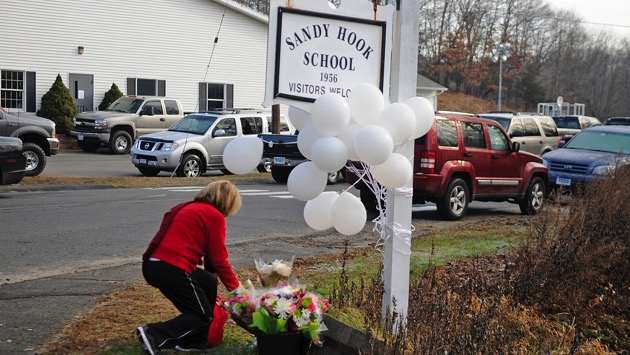
(NEW YORK) — Remington Arms agreed Tuesday to settle liability claims from the families of five adults and four children killed in the massacre at Sandy Hook Elementary School, according to a new court filing, marking the first time a gun manufacturer has been held liable for a mass shooting in the U.S.
The settlement comes nearly eight years after the families sued the maker of the Bushmaster XM15-E2S semiautomatic rifle that was used in the 2012 mass shooting in Newtown, Connecticut.
More details will be announced at a news conference from the families.
On Dec. 14, 2012, Adam Lanza, 20, forced his way into Sandy Hook Elementary School, and in the course of 264 seconds, fatally shot 20 first-graders and six staff members.
The rifle Lanza used was Remington’s version of the AR-15 assault rifle, which is substantially similar to the standard issue M16 military service rifle used by the U.S. Army and other nations’ armed forces, but fires only in semiautomatic mode.
The families argued Remington negligently entrusted to civilian consumers an assault-style rifle that is suitable for use only by military and law enforcement personnel and violated the Connecticut Unfair Trade Practices Act through the sale or wrongful marketing of the rifle.
Remington, which filed for bankruptcy protection in July 2020, had argued all of the plaintiffs’ legal theories were barred under Connecticut law and by a federal statute — the Protection of Lawful Commerce in Arms Act — which, with limited exceptions, immunizes firearms manufacturers, distributors and dealers from civil liability for crimes committed by third parties using their weapons.
(NEW YORK) — The United States is warning that Russia could invade Ukraine “any day” amid escalating tensions in the region.
As many as 150,000 Russian troops are estimated to be massed near Ukraine’s borders and U.S. officials have urged all Americans to leave Ukraine as well as neighboring Belarus and part of Moldvoa.
U.S. Secretary of State Antony Blinken announced Monday that the nation was shuttering its embassy in Kyiv and “temporarily” relocating the small group of diplomats left in Ukraine to the western city of Lviv, citing the “rapid acceleration in the buildup of Russian forces.”
But Ukrainian officials have said they do not see signs of a Russian attack as soon as Wednesday — the date reportedly given to NATO allies — and called for a day of unity instead.
Russia has demanded the U.S. and NATO bar Ukraine from joining the military alliance and pull back troops from Eastern European member states, while denying it has plans to invade Ukraine.
Here’s how the news is developing. All times Eastern:
Feb 15, 11:28 am
Blinken talks with Russian counterpart
In a signal that the door to diplomacy could remain open, Secretary of State Antony Blinken and Russian Foreign Minister Lavrov spoke again Tuesday morning, according to a senior State Department official.
The two had already spoken on Saturday and agreed to connect again in the coming days, the official said, as the two governments have delivered mixed messages on the extent of Russia’s military presence and intent on Ukraine’s border.
Meanwhile, President Joe Biden had a phone call with French President Emmanuel Macron, according to a White House official, while Defense Secretary Lloyd Austin has departed Washington for Brussels for NATO meetings.
-ABC News’ Conor Finnegan and Sarah Kolinovsky
Feb 15, 11:08 am
Putin comments on ‘partial withdrawal’ of Russian troops
Russian President Vladimir Putin commented on what he called Russia’s “partial withdrawal” of troops near Ukraine on Tuesday, one day after Pentagon officials said Russia had sent even more troops to the border region over the last 24 to 48 hours.
Putin delivered mixed messages at a press conference in Moscow, suggesting he does not consider the crisis to be resolved as Russia’s key demand that Ukraine is barred from joining NATO has not been met. But he also said there were items in the U.S. responses “to discuss,” specifically noting Russia is ready to talk about the Intermediate-range Nuclear Forces (INF) treaty, which the Trump administration withdrew from, among other “military confidence-building measures.”
“We want to resolve this question right now. In the nearest future, in the course of the negotiating process, with peaceful means,” Putin said.
Asked about some Russian troops pulling back on Tuesday, Putin hinted there could still be room for escalation but added, “we will strive to agree on the issues which have been put forward by us using the diplomatic path.”
“How will Russia act next? According to plan!” he said.
-ABC News’ Patrick Reevell
Feb 15, 10:23 am
Putin reacts to Russian parliament vote to recognize Donbas
Russian President Vladimir Putin indicated Tuesday that he will not immediately recognize two Russian-controlled breakaway regions in eastern Ukraine as independent.
Putin said he believes the idea has the support of the majority of Russians but that he thinks Russia should continue to try to resolve the conflict with Ukraine through the Minsk peace agreements.
The Minsk accords signed in 2014 and 2015 were aimed at ending the ongoing conflict between the Ukrainian army and the Russian-backed separatists forces in an area of southeastern Ukraine known as the Donbas. But Putin’s recognition of the regions would amount to Russia formally withdrawing from the agreement.
Putin’s comments suggest that while he doesn’t intend to immediately move to recognize the regions, he might keep the action as a threat hanging over negotiations with Ukraine and the West. He painted the parliament vote as the expression of lawmakers rather than something directed by the Kremlin.
“We must do everything to resolve the problems in Donbas but, as before, starting from the possibilities from the Minsk agreement that have not been realized to their end,” Putin said Tuesday.
Meanwhile, the leader of one of the regions welcomed the Russian parliament vote but fell short of calling on Putin to take the step.
“We thank the deputies of the State Duma for the results of today’s vote,” Denis Pushilin, head of the self-proclaimed Donetsk People’s Republic said in a statement Tuesday. “With that, we will treat with respect and understanding any decision taken by the top leadership of the Russian Federation.”
Pushilin called the initiative “timely,” given what he claimed was the threat from Ukraine, which he alleged was massing troops near the regions and showed Kyiv has no intention of fulfilling the Minsk agreements or resolving the conflict peacefully.
-ABC News’ Patrick Reevell
Feb 15, 9:19 am
US assessing Russia’s claim of withdrawing some troops
The United States is assessing Russia’s claim that it is withdrawing some troops from Ukraine’s borders, U.S. Ambassador to NATO Julianne Smith said Tuesday.
During a press briefing at NATO headquarters in Brussels, Smith cast some doubt on the claim after Russia made similar statements in late December.
“All I can say is we’ll have to verify that and take a look,” Smith told reporters. “We want to make sure we understand what they’re talking about when they say de-escalation, and we want to verify that that is in fact what’s happening. So stand by, we’ll obviously take a look at that.”
When asked again whether some Russian forces were in fact pulling back, Smith reiterated: “I can’t say yes or no. I can’t say really anything about it at this moment because this is something that we’ll have to look at closely and verify in the days ahead.”
NATO’s defense ministers, including U.S. Secretary of Defense Lloyd Austin, will meet Wednesday to discuss deployments within the military alliance and a “variety of contingencies,” according to Smith, who noted that NATO “will continue to determine whether or not additional enhancements might be necessary.”
While any Russian troop withdrawals could be a sign of de-escalation, the law passed Tuesday in Russia’s parliament calling on President Vladimir Putin to recognize Russian-controlled breakaway regions in eastern Ukraine as independent would be a “new shift in the escalation,” Smith said, adding that the U.S. and NATO “would monitor that very closely” and determine its response.
“If they proceed with this, then I think it’s a clear violation of Ukraine’s territorial integrity and its sovereignty, and it’s also a violation of the Minsk agreement,” she told reporters, “and so that would obviously be a new shift in the escalation.”
As the U.S. and NATO await Russia’s written proposals on issues like arms control and military exercises, Smith again called on Russia to engage meaningfully in talks.
“Look, we can spend the rest of the year going back and forth exchanging letters,” she said, “but really what’s important is the best way to proceed would be for us to sit down at the table again.”
Until then, Smith said they do not know what Putin will decide.
“We do not understand fundamentally — none of us do — what is inside President Putin’s head,” she added, “and so we cannot make any guess about where all of this is headed.”
Feb 15, 8:32 am
NATO: No sign yet of Russian de-escalation
NATO Secretary-General Jens Stoltenberg said Tuesday that the military alliance has “not seen any signs of reduced Russian military presence on the borders of Ukraine.”
“So far, we have not seen any de-escalation on the ground,” Stoltenberg told reporters at NATO’s headquarters in Brussels. “But we will continue to monitor and to follow closely what Russia is doing, and the signs coming from Moscow about a willingness to continue to engage in diplomatic efforts — that gives some reason for cautious optimism. But we will, of course, follow very closely what’s happening on the ground and whether this is reflected in some real de-escalation of the Russian military build-up in and around Ukraine.”
Feb 15, 8:20 am
US warns of Russian cyberattack alongside Ukraine invasion
Top cybersecurity officials from the U.S. Department of Homeland Security and the FBI have warned of potential attacks on American cyber infrastructure in concert with a physical invasion of Ukraine, according to a source familiar with the matter.
The source told ABC News that the warning came Monday on a call with state and local officials — but it’s not new. On Friday, the Homeland Security Department’s Cybersecurity and Infrastructure Security Agency (CISA) explicitly warned of Russian cyberattacks and made a veiled mention of the ongoing geopolitical climate.
“The Russian government has used cyber as a key component of their force projection over the last decade, including previously in Ukraine in the 2015 timeframe,” the CISA said in an online post. “The Russian government understands that disabling or destroying critical infrastructure—including power and communications—can augment pressure on a country’s government, military and population and accelerate their acceding to Russian objectives.”
U.S. officials have said a Russian invasion of Ukraine could happen “at any time” and that they believe Ukraine could also be a target of an offensive cyberattack. Ukraine has already been the target of what some Ukrainian officials believed was a Russian cyberattack earlier this year, when suspected Russian hackers defaced Ukrainian government websites.
The U.S. Department of Homeland Security has been warning in bulletins as early as January that there could be a cyberattack tied to a possible Russian invasion.
Feb 15, 7:02 am
Russia’s parliament asks Putin to recognize breakaway regions in Ukraine
Russia’s parliament voted for a law on Tuesday that calls on President Vladimir Putin to recognize two Russian-controlled breakaway regions in eastern Ukraine as independent.
The measure is a formal appeal to Putin to recognize the self-declared Donetsk and Luhansk people’s republics, in an area of southeastern Ukraine known as the Donbas, where Russian-backed separatists forces have been battling the Ukrainian army since 2014.
Such recognition would open a path for Russia to formally annex the two regions as it did the Crimean Peninsula almost eight years ago. It’s now up to Putin to decide whether to go through with it.
Two bills were initially put forward for a vote in Russia’s parliament — one by the Communist Party and the other by Putin’s ruling United Russia. The first would have the request sent to the president immediately, while the second would have sought consultations with the foreign ministry and other government agencies before appealing directly to Putin. Ultimately, parliament voted for the first bill.
Ukrainian President Volodymyr Zelenskyy’s office called the vote an “escalatory action.” Ukraine’s foreign ministry has warned that it will consider Russia recognizing the separatist regions as a withdrawal from the Minsk peace agreement reached in 2015, which was supposed to end the conflict in Donbas that broke out a year earlier.
Feb 15, 5:41 am
Ukraine reacts to Russia announcing withdrawal: ‘We’ll believe it when we see it’
Ukrainian Minister of Foreign Affairs Dmytro Kuleba reacted to Russia’s announcement Tuesday that it is withdrawing some troops from the border, saying his country will “believe it when we see it.”
“There are constantly various statements coming from the Russian Federation, so we have a rule: we’ll believe it when we see it,” Kuleba said during a televised briefing Tuesday. “When we see the withdrawal, we’ll believe in de-escalation.”
Feb 15, 5:25 am
Russia says some troops will return to base
Some Russian troops positioned near the border with Ukraine will begin returning to their bases Tuesday after completing “exercises,” according to the Russian Ministry of Defense.
The units set to return are from Russia’s Southern and Western Military Districts, the defense ministry said Tuesday. But there are troops from other military districts massed on the border. Still, if some troops do pull back, it would potentially be a key signal that the crisis with Ukraine will not escalate.
Russian state media then released video purportedly showing tank troops loading up in neighboring Belarus to return home as well as tanks in southwestern Russia moving back. A spokesperson for Russia’s Southern Military District told state media Tuesday that some personnel have begun leaving Crimea for their permanent bases following the completion of drills.
In 2014, Russia annexed Ukraine’s Crimean Peninsula and established two federal subjects there, the Republic of Crimea and the federal city of Sevastopol. But the international community still recognizes the territories as being part of Ukraine.
Russian Minister of Defense Sergey Shoygu told Russian President Vladimir Putin on Monday that the military exercises would end “in the near future.” There are still drills being conducted in neighboring Belarus as well as the Black Sea that are due to end Feb. 20.
Maria Zakharova, spokesperson for the Russian Ministry of Foreign Affairs, said in a post on her official Facebook page on Tuesday that Feb. 15 “will go down in history as the day the Western propoganda war failed.”
“Disgraced and destroyed without a single shot fired,” Zakharova added.
Feb 15, 4:29 am
White House warns invasion could start ‘at any time’
While the United States believes a path of diplomacy remains “open” to Russia, a White House official warned that a Russian invasion of Ukraine “could begin at any time.”
Answering a question from ABC News’ Cecilia Vega during a press briefing Monday, White House Principal Deputy Press Secretary Karine Jean-Pierre said the U.S. government is so far seeing “more and more” Russian troops arrive on the border with Ukraine.
“In the past 10 days or so, when you look at what is happening at the border of Ukraine, there, we are seeing more than 100,000 troops there and it’s just been an every day more and more troops,” Jean-Pierre said.
“So we are certainly open to having conversations and seeing a de-escalation,” she added. “That door is open for diplomacy and this is up to President Putin. He has to make that decision. It is his decision to make on which direction he wants to take this.”
Jean-Pierre noted that “it remains unclear which path Russia will choose to take.”
When asked about the imminency of the situation, she said: “We are in the window when an invasion could begin at any time.”
“I’m not going to comment on the intelligence information,” she added, “except to say that it could begin this week.”
(WASHINGTON) — The FBI has warned of criminals increasingly using “SIM swap” scams in which criminals obtain cellphone SIM cards from unknowing victims and steal their personal information, including their cell phone numbers and bank account details.
These scams netted criminals $68 million in 2021 alone, the FBI said, and it received more than 1,611 complaints. From 2018 to 2020, the FBI reports, victims suffered $12 million in losses.
Criminals are able to obtain an individual’s SIM card through phishing tactics by pretending to be the victim’s mobile carrier, according to the FBI.
“Once the SIM is swapped, the victim’s calls, texts, and other data are diverted to the criminal’s device,” the FBI said. “This access allows criminals to send ‘Forgot Password’ or ‘Account Recovery’ requests to the victim’s email and other online accounts associated with the victim’s mobile telephone number.”
Alarmingly, “the criminal uses the codes to login and reset passwords, gaining control of online accounts associated with the victim’s phone profile,” the FBI said.
The FBI urged the public to be aware of suspicious emails and not to advertise financial ownership in cryptocurrency or other financial assets.
(NEW YORK) — The majority of children under age 5 are getting more screen time than is recommended by pediatricians, new research shows.
The American Academy of Pediatrics (AAP) recommends babies and toddlers up to age 2 should avoid screen time other than video-chatting, while children ages 2 to 5 should be limited to no more than one hour per day of high-quality programming.
More than 75% of children younger than 2 and 64% of kids ages 2 to 5 exceeded the recommended guidelines, according to researchers at the University of Calgary, who analyzed over 60 studies looking at more than 89,000 children around the world.
The researchers described kids ages 5 and under as the “fastest-growing users of digital media,” citing research showing that prior to the coronavirus pandemic, kids in that age group used screens for an average of around 25% of the time they are awake each day.
They found that kids under 2 consume more TV and movies, while kids ages 2 to 5 engage in everything from TV and movies to tablets and video games.
“Digital media are now a regular part of young children’s lives, and supporting families to best fit evidence-based recommendations into their daily routines needs to be a priority,” the researchers wrote.
Too much screen time can be linked to obesity when it replaces physical activity or encourages mindless eating while being on screens, irregular sleep if they are on screens more than recommended, and even violence if exposed to violent content on TV, which can significantly impact their behavior, according to an article published by the Mayo Clinic in May 2021.
Other studies have found that there can be cognitive and emotional delays in a child’s development from excessive screen time.
While regulated screen time does have some potential benefits for kids, like learning opportunities, parents should monitor their kids’ use, according to Dr. Jennifer Ashton, ABC News chief medical correspondent.
“I think when you take into account the risk versus benefit, in this age group, the risks outweigh the benefits,” Ashton said Tuesday on ABC’s Good Morning America.
Ashton recommends limiting screen time by keeping kids engaged in a variety of ways.
One tip is to make a screen time schedule that sets time aside on the weekends for activities away from computers and tablets. Making a chart for older kids so they can see where they are on their schedule is also another way to limit screen time.
Ashton also said it is important to separate eating from screen time, so kids are not consuming snacks or meals while they watch.
And finally, Ashton recommends bringing in other activities, like getting outside with kids to walk or play.
(NEW YORK) — Black students are much more likely to incur the largest average student loan debt out of any group in the United States, including their white peers, according to a recent study from nonprofit The Education Trust.
It’s a situation Dr. Shamell Bell knows well. Even though she had scholarships, Bell, who is now a Harvard lecturer and single mother, took out multiple student loans to pay for her living expenses while she pursued higher education.
Bell told ABC News’ Good Morning America the stress from her college debt has significantly impacted her life.
“Every single night, I’m not getting sleep because I’m worried about my bills. I’m worried about loan payments. I’m worried about my credit,” she said.
“We were sold a lie with the educational system. I went all the way to the top and I still feel like I failed,” she added.
Bell isn’t alone. A 2021 report from the American Association of University Women, based in part on federal data, shows that women not only make less than men after graduating from school, they hold more debt, an average of $31,276 more. Black women also borrowed an average of $37,558, more than other racial and ethnic groups overall.
Financial aid expert Jessica Brown, author of How To Pay For College When You’re Broke, told GMA there are several keys to tackling college debt. Here are her recommendations:
Financial advice for incoming students
– Apply for grants, loans and other aid as soon as possible with the Free Application for Federal Student Aid (FAFSA).
– Research prospective schools.
– Understand the cost of attendance at different schools.
– Make a financial blueprint with your family.
Financial advice for current students
– Use apps to look for “unclaimed” scholarships. Apps like Scholly and the HBCU Hub can help you identify these funds. You can also look into community organizations and see if they offer any scholarships you qualify for.
– Build relationships with your college’s financial aid office.
– Maintain academic excellence. Many scholarships award strong academic performance.
Financial advice for graduates
– Build a relationship with your loan servicer. This way, you can identify the best repayment plan for you that’s realistic and feasible for you to maintain.
– Inquire about consolidating federal student loans and see if that would be best for your situation.
– Check your eligibility for public service loan forgiveness. Some jobs, in sectors such as education and the federal government, offer loan forgiveness for employees.
(KYIV, Ukraine) — Russia’s military has said some troops massed near Ukraine will begin returning to base on Tuesday following the completion of what it called “exercises,” in a potential sign of de-escalation amid continuing fears of a possible Russian invasion.
Russia’s Ministry of Defense said units from its southern and western military districts, which have deployed thousands of troops close to Ukraine’s border, had begun returning to barracks. Video released by the military showed what it said was tanks pulling back and being loaded onto rail transports. A spokesman for Russia’s southern military district also said its servicemen had also begun leaving Crimea, where Russia has built up a large force.
United States and Ukrainian officials, as well as independent experts, though cautioned that it was still to be seen whether the Russian forces will now really leave and how many. Major Russian exercises are still continuing in neighboring Belarus to the north of Ukraine and in the Black Sea.
Ukraine’s foreign minister said officials would believe the Russian withdrawal “when we see it.”
Hopes that Russia might be moving to de-escalate were dimmed by Russia’s parliament which on Tuesday voted to pass a law calling on President Vladimir Putin to recognize two Russian-controlled breakaway regions of Ukraine as independent. The law appeals to Putin to recognize the self-proclaimed “People’s Republics of Donetsk and Luhansk” in the Donbas region of eastern Ukraine, pro-Russian statelets that were created with Moscow’s backing and troops during fighting in 2014. Separatist forces, backed up by Russian troops, have continued to fight a low intensity war with the Ukrainian government along a static frontline since then.
The move to recognize the regions would open a path to Russia formally annexing the regions, as it did Crimea eight years ago, a step that would likely trigger more Western sanctions and further escalate the crisis. The vote now puts the decision in Putin’s hands, who can decide whether to go through with it.
The parliament’s speaker, Vyacheslav Volodin, said the appeal would be sent to Putin “immediately.”
Putin’s spokesman, Dmitry Peskov, said the issue was “highly, highly relevant in Russian society” but told reporters not to get ahead of themselves, as “no decisions have been taken.”
The vote was denounced in Ukraine, with an advisor to President Volodymyr Zelenskyy calling it an “escalatory action.” The advisor, Mikhailo Podolyak, said if Putin went ahead it would amount to Russia’s formal exit from the Minsk agreements, the stalled 2015 peace deal aimed at ending the war in eastern Ukraine.
The U.S. and other western countries have warned this week that a Russian invasion of Ukraine could come this week and U.S. officials Tuesday said they would wait to see if Russia really does now pull back its forces, warning they consider Ukraine still to be inside the window for a potential attack.
Satellite images and videos spotted on social media by open source researchers over the weekend and Monday showed Russian forces continuing to move closer to Ukraine, with some units taking up what experts said appeared to be forward positions. The U.S. on Monday announced it was closing down its embassy in Kyiv and moving key diplomats to Lviv in western Ukraine amid an “accelerated” build up by Russian forces.
The Russian announcement that it was pulling back some forces came a day after Russian Defense Minister Sergey Shoigu briefed Putin that Russia’s huge military drills would end in the “near future.”
Shoigu told Putin that “part of the drills are approaching their completion, and part would be completed in the near future.”
Russia has always denied it has any intention to attack Ukraine using the over 100,000 troops it has massed near its border. Russia has painted warnings from the U.S. and other Western countries that it may be preparing to launch an invasion as “hysteria.”
A spokeswoman for Russia’s Foreign Ministry on Tuesday said that the day would prove the Western warnings had been unfounded.
Tuesday “will go down in history as the day the Western propaganda war failed. Disgraced and destroyed without a shot being fired,” the spokeswoman, Maria Zakharova, wrote on her Facebook.
Military exercises on an unprecedented scale are continuing in Belarus and are due to end on Feb. 20.
Putin hosted German Chancellor Olaf Scholz for talks at the Kremlin on Tuesday, as Western countries continue intensive diplomacy to try to avert a war.
The U.S. has warned that Russia could launch an invasion of Ukraine this week, reportedly briefing NATO allies last week that it had intelligence the attack could come as early as Wednesday.
Ukraine’s government has expressed more skepticism that Russia is ready to attack this week, suggesting it believes the massive Russian build up is intended to pressure Ukraine with the threat of invasion. Zelenskyy, in a televised address Monday night, told Ukrainians he was declaring Wednesday, the alleged day of a possible Russian attack, a national holiday.
Zelenskyy’s national security advisor, Oleksiy Danilov, told Ukrainian television Monday night that Ukraine did not see signs Russia is preparing to attack on Feb. 16 or 17.
“We recognize all the risks that there are for our country. But the situation is absolutely under control,” he said. “More than that, we today do not see that a broad-scale invasion from Russia can happen on either 16th or 17th February. We do not see that.”
(NEW YORK) — The United States is warning that Russia could invade Ukraine “any day” amid escalating tensions in the region.
As many as 150,000 Russian troops are estimated to be massed near Ukraine’s borders and U.S. officials have urged all Americans to leave the country.
U.S. Secretary of State Antony Blinken announced Monday that the country was shuttering its embassy in Kyiv and “temporarily” relocating the small group of diplomats left in Ukraine to the western city of Lviv, citing the “rapid acceleration in the buildup of Russian forces.”
But Ukrainian officials have said they do not see signs of a Russian attack as soon as Wednesday — the date reportedly given to NATO allies — and called for a day of unity instead.
Russia has demanded the U.S. and NATO bar Ukraine from joining the military alliance and pull back troops from Eastern European member states, while denying it has plans to invade Ukraine.
Here’s how the news is developing. All times Eastern:
Feb 15, 7:02 am
Russia’s parliament asks Putin to recognize breakaway regions in Ukraine
Russia’s parliament voted for a law on Tuesday that calls on President Vladimir Putin to recognize two Russian-controlled breakaway regions in eastern Ukraine as independent.
The measure is a formal appeal to Putin to recognize the self-declared Donetsk and Luhansk people’s republics, in an area of southeastern Ukraine known as the Donbas, where Russian-backed separatists forces have been battling the Ukrainian army since 2014.
Such recognition would open a path for Russia to formally annex the two regions as it did the Crimean Peninsula almost eight years ago. It’s now up to Putin to decide whether to go through with it.
Two bills were initially put forward for a vote in Russia’s parliament — one by the Communist Party and the other by Putin’s ruling United Russia. The first would have the request sent to the president immediately, while the second would have sought consultations with the foreign ministry and other government agencies before appealing directly to Putin. Ultimately, parliament voted for the first bill.
Ukrainian President Volodymyr Zelenskyy’s office called the vote an “escalatory action.” Ukraine’s foreign ministry has warned that it will consider Russia recognizing the separatist regions as a withdrawal from the Minsk peace agreement reached in 2015, which was supposed to end the conflict in Donbas that broke out a year earlier.
Feb 15, 5:41 am
Ukraine reacts to Russia announcing withdrawal: ‘We’ll believe it when we see it’
Ukrainian Minister of Foreign Affairs Dmytro Kuleba reacted to Russia’s announcement Tuesday that it is withdrawing some troops from the border, saying his country will “believe it when we see it.”
“There are constantly various statements coming from the Russian Federation, so we have a rule: we’ll believe it when we see it,” Kuleba said during a televised briefing Tuesday. “When we see the withdrawal, we’ll believe in de-escalation.”
Feb 15, 5:25 am
Russia says some troops will return to base
Some Russian troops positioned near the border with Ukraine will begin returning to their bases Tuesday after completing “exercises,” according to the Russian Ministry of Defense.
The units set to return are from Russia’s Southern and Western Military Districts, the defense ministry said Tuesday. But there are troops from other military districts massed on the border. Still, if some troops do pull back, it would potentially be a key signal that the crisis with Ukraine will not escalate.
Russian state media then released video purportedly showing tank troops loading up in neighboring Belarus to return home as well as tanks in southwestern Russia moving back. A spokesperson for Russia’s Southern Military District told state media Tuesday that some personnel have begun leaving Crimea for their permanent bases following the completion of drills.
In 2014, Russia annexed Ukraine’s Crimean Peninsula and established two federal subjects there, the Republic of Crimea and the federal city of Sevastopol. But the international community still recognizes the territories as being part of Ukraine.
Russian Minister of Defense Sergey Shoygu told Russian President Vladimir Putin on Monday that the military exercises would end “in the near future.” There are still drills being conducted in neighboring Belarus as well as the Black Sea that are due to end Feb. 20.
Maria Zakharova, spokesperson for the Russian Ministry of Foreign Affairs, said in a post on her official Facebook page on Tuesday that Feb. 15 “will go down in history as the day the Western propoganda war failed.”
“Disgraced and destroyed without a single shot fired,” Zakharova added.
Feb 15, 4:29 am
White House warns invasion could start ‘at any time’
While the United States believes a path of diplomacy remains “open” to Russia, a White House official warned that a Russian invasion of Ukraine “could begin at any time.”
Answering a question from ABC News’ Cecilia Vega during a press briefing Monday, White House Principal Deputy Press Secretary Karine Jean-Pierre said the U.S. government is so far seeing “more and more” Russian troops arrive on the border with Ukraine.
“In the past 10 days or so, when you look at what is happening at the border of Ukraine, there, we are seeing more than 100,000 troops there and it’s just been an every day more and more troops,” Jean-Pierre said.
“So we are certainly open to having conversations and seeing a de-escalation,” she added. “That door is open for diplomacy and this is up to President Putin. He has to make that decision. It is his decision to make on which direction he wants to take this.”
Jean-Pierre noted that “it remains unclear which path Russia will choose to take.”
When asked about the imminency of the situation, she said: “We are in the window when an invasion could begin at any time.”
“I’m not going to comment on the intelligence information,” she added, “except to say that it could begin this week.”
(NEW YORK) — A Missouri mom is warning fellow parents about a rare condition caused by a strand of hair that sent her 5-month-old son to the emergency room.
Sara Ward, from St. Louis, shared a Facebook post explaining that her 5-month-old son, Logan, started developing a condition called hair tourniquet syndrome on Jan. 22 and, over the course of a week, had to be rushed to his pediatrician’s office, urgent care and later, the emergency room at SSM Health Cardinal Glennon Children’s Hospital.
“This was my first time and even with being a third-time parent, I was not aware of this beforehand,” Ward, a mom of three, told ABC News’ Good Morning America.
“I had never seen this or this (had) never come up with any of my friends or family members that are moms. So I was definitely kind of in the dark on just how severe this can be,” Ward said.
For Ward, the unexpected ordeal began when she and her husband noticed that one of Logan’s toes was “looking a little bit pink.”
“We kind of didn’t really think much of it that night because he didn’t seem bothered by it at all,” she said.
They went about their weekend as usual, but Ward said that after a couple of days, Logan’s toe started changing color again.
“By Monday, it hadn’t improved and it was starting to look redder and we were kind of noticing this line that was going across the middle of the toe.”
That’s when she decided to take Logan to see his pediatrician and it was at the doctor’s office that she first learned about hair tourniquet syndrome.
“Hair tourniquet syndrome is when there is a piece of hair, or a thread of another material like a piece of cloth, that’s tightly wrapped around a body part. It’s usually a finger or a toe, but it also can be the genitals,” Dr. Sara Holmstrom, a board-certified pediatrician and a pediatric emergency medicine fellow at Lurie Children’s Hospital in Chicago, explained to GMA.
Holmstrom said hair tourniquet syndrome cases are “pretty uncommon overall” and noted that in a 2015 review from Lurie Children’s, only 81 cases of patients ranging in age from 2 to 22 years old were reported from May 2004 to March 2014.
“It most often occurs in young infants under six months, most frequently on the toe, and most of the time, patients do not need surgery,” Holmstrom added. At 5 months, Logan matched the typical patient profile.
At the pediatrician’s office, Ward estimated that Logan’s doctor and nurses spent about 40 minutes trying to remove the hair that had somehow gotten wrapped around his third right toe.
“They took a look and they had to use all these kinds of special instruments. They brought in these magnifying goggles and special lights and they had these long tweezers and like little scalpels,” Ward said. “They were going in there and they could not get it either. I mean they were able to get one small piece of it but they did not feel confident that they got it.”
Logan’s pediatrician then sent the family home with orders to monitor his condition and see if the toe would get better on its own.
“Within a few hours of being home, it felt like the toe was starting to swell some and we felt like it was starting to look a little bit purple, in the back of the toe,” Ward said. “So we became concerned again, and I took him into the urgent care center. And they sent us right to the emergency room.”
Ward said several doctors responded to Logan’s case and he was admitted to the hospital for an overnight stay. By Tuesday morning, when Logan’s toe wasn’t immediately improving, doctors told Ward they had to start considering surgery as a treatment option.
“I was just kind of in shock the whole time that it was getting to this point. I just really thought nothing of it in the very beginning because it didn’t seem to bother him and once we went into the pediatrician and they mentioned that a piece of hair got wrapped around it, I still thought it was going to be an easy fix and that well then, you can just go in and we’ll remove the hair right here in the pediatrician’s office. … I think that’s where a lot of people don’t understand the severity that these hair tourniquets can cause and that it can get to that point,” Ward said.
Symptoms and treatment options for hair tourniquet syndrome
According to Dr. Katie Lockwood, a pediatrician at Children’s Hospital of Philadelphia, “typically, the affected body part becomes red, swollen, and sometimes has an indentation where the hair/fiber is in a circumferential pattern.”
“You will notice some redness and swelling of a digit, or the affected area, so fingers, toes and then sometimes genitals. So, more commonly the penis in males or labia in females … Sometimes it can cause breakdown of the skin so you may see a little bit of bleeding with time,” Holmstrom continued. “And if it’s been there for a really long time, the digit can actually turn purple, so not just a red discoloration but kind of purple and signs that the blood flow has not been adequate for some time.”
“If (parents notice) their babies are really fussy and they’ve checked all the usual things – they’re fed, they don’t have a wet diaper, they’re trying to console them – as a mom of a six-month-old myself, I would say, ‘Let me just take these socks off and take a peek at the toes,'” Holmstrom added.
Both physicians noted that if manual attempts at removing the hair or thread are unsuccessful, doctors will try other methods.
“We do this in the emergency room, use a chemical solution that dissolves hair,” Holmstrom said. “So over-the-counter, that’s Nair. Veet is another brand and we actually have that in the emergency room to dissolve the hair. And then worst-case scenario, if it can’t be manually or chemically removed, then surgical removal is needed.”
Ward said Logan did not need to have surgery and the hospital discharged him once his toe swelling started to improve.
“We’re actually not really sure what happened. Some of the swelling started to come down. So we’re not sure if maybe the hair removal creams might have worked. I mean, honestly, we couldn’t even tell you because we never even really saw the hair,” she said.
Her message to other parents?
“Be aware of hairs and always be checking the toes and fingers. If (you) see that a hair strand is wrapped around it, try to remove it as quickly as you can and if you can’t get it, then seek help from your pediatrician right away,” she said.
Lockwood and Holmstrom both recommend seeking medical care or contacting a pediatrician if a child can’t be consoled after all the usual methods are exhausted. Other signs it may be time to get a doctor’s opinion is if there’s any abnormal discoloration or swelling of a finger or toe that doesn’t subside.
Ward reported that it took at least a week for Logan’s toe to “fully look back to normal” and her baby boy has recovered three weeks after the incident.
(NEW YORK) — Joan MacDonald went from struggling with stairs to being a fitness influencer on Instagram with more than one million followers — and she did it while in her 70s.
Her transformation journey began five years ago, when she said she was fatigued, suffering from painful arthritis and struggled to walk up and down stairs.
Joan MacDonald’s breaking point, she said, came when she was told by a doctor that her blood pressure was rising and she would need to again increase her medication.
Her daughter, Michelle MacDonald, a fitness coach, was visiting her at the time and challenged her to make changes to her diet and exercise to improve her quality of life.
“When Michelle gave me that ultimatum to do something about my life, I figured it’s now or never,” Joan MacDonald said. “I was sick and tired of being sick and tired. It was existing, not living.”
In January 2017, just a few weeks before her 71st birthday, Joan MacDonald flew from her home in Canada to Tulum, Mexico, where Michelle MacDonald and her husband own a gym.
She began to follow a diet program laid out by her daughter that was focused on making sure she got enough macronutrients — fats, carbohydrates and proteins — in five meals per day, rather than sporadically snacking like she had done before.
Joan MacDonald also began to workout in the gym for the first time with Michelle MacDonald, founder of The Wonder Woman, a strength and bodybuilding coaching program.
“It was tough in the beginning,” Michelle MacDonald said. “People don’t realize that [my mom] was there in the trenches, trying to figure it all out and getting frustrated.”
According to Joan MacDonald, her motivation to continue came from how much better she started to feel very quickly.
She said she lost around 10 pounds in the first month of training, and in just a few months she was able to reduce her medications by half.
Once she returned to Canada, Joan MacDonald continued with her wellness journey by tracking her food on a macronutrient-focused app and by continuing her workouts.
“I go to the gym five days a week,” she said, noting two of those days are cardio-focused workouts. “I like that routine, because it gives you something to look forward to.”
Over the past four years, she said she has maintained a 65-pound weight loss and gone off medications for high blood pressure, high cholesterol and acid reflux.
As she transformed her health, Joan MacDonald said she was encouraged by her daughter to start an Instagram account to document her progress and connect with other people.
Today, her Train With Joan Instagram account has 1.5 million followers. She also has a website and an app that offers workout and meal plans overseen by Michelle MacDonald, who specializes in coaching women of all ages.
Joan MacDonald said she hopes people who follow her journey take away that it’s never too late to change your life, no matter your age or situation.
“Nothing is magical. It’s work, but it’s work that you can enjoy,” she said. “In the end, you are going to be stronger and healthier, and that’s all that really matters.”
The MacDonalds shared five tips for people who want to transform their health, no matter their age:
1. Think about your sleep.
“We live in a culture that doesn’t prioritize sleep,” Michelle MacDonald said. “But there’s so much research that shows when you’re not getting eight hours of quality sleep, it really negatively impacts you hormonally, cognitive function and your body.”
2. Drink lots of water and eat protein with every meal.
Michelle MacDonald said most women she works with, including her mom, come to her not eating enough calories. She recommends eating five meals consistently throughout the day and including protein at every meal, with the goal of eating in total daily one gram of protein for every pound of a person’s ideal body weight, so 130 grams of protein if their ideal weight is 130 pounds.
In addition, Michelle MacDonald recommends drinking at least three liters of water for day, for most people.
“Drink more water, and pace it out,” she said. “Drinking mindfully is an easy way to attach yourself to this idea that you’re taking care of yourself.”
3. Get active.
Start by just walking, aiming for 10,000 steps per day, which can be broken up and completed throughout the day, according to Michelle MacDonald.
Once a person is ready, she recommends adding in 45 minutes of strength training a few day per week.
“Train with intention, not lifting the same weight forever,” she said. “If you want to use the weights to change your body, you want to do that with intention and try to push yourself.”
4. Focus on a positive mindset.
Joan MacDonald said she continually works on having a positive inner dialogue in order to help her reach her goals.
“Mindset is something that I am still learning, and I know that it’s a very strong factor in everything,” she said. “It’s something you really have to work at.”
Both she and her daughter recommend journaling in the morning to set intentions and start off the day with a clear head.
5. Document your progress.
Take a photo of yourself on the day you start your journey, and keep documenting your progress, Michelle MacDonald recommends.
“Have a starting photo … and take photos every week,” she said. “You may not feel changes, but you’ll see them.”