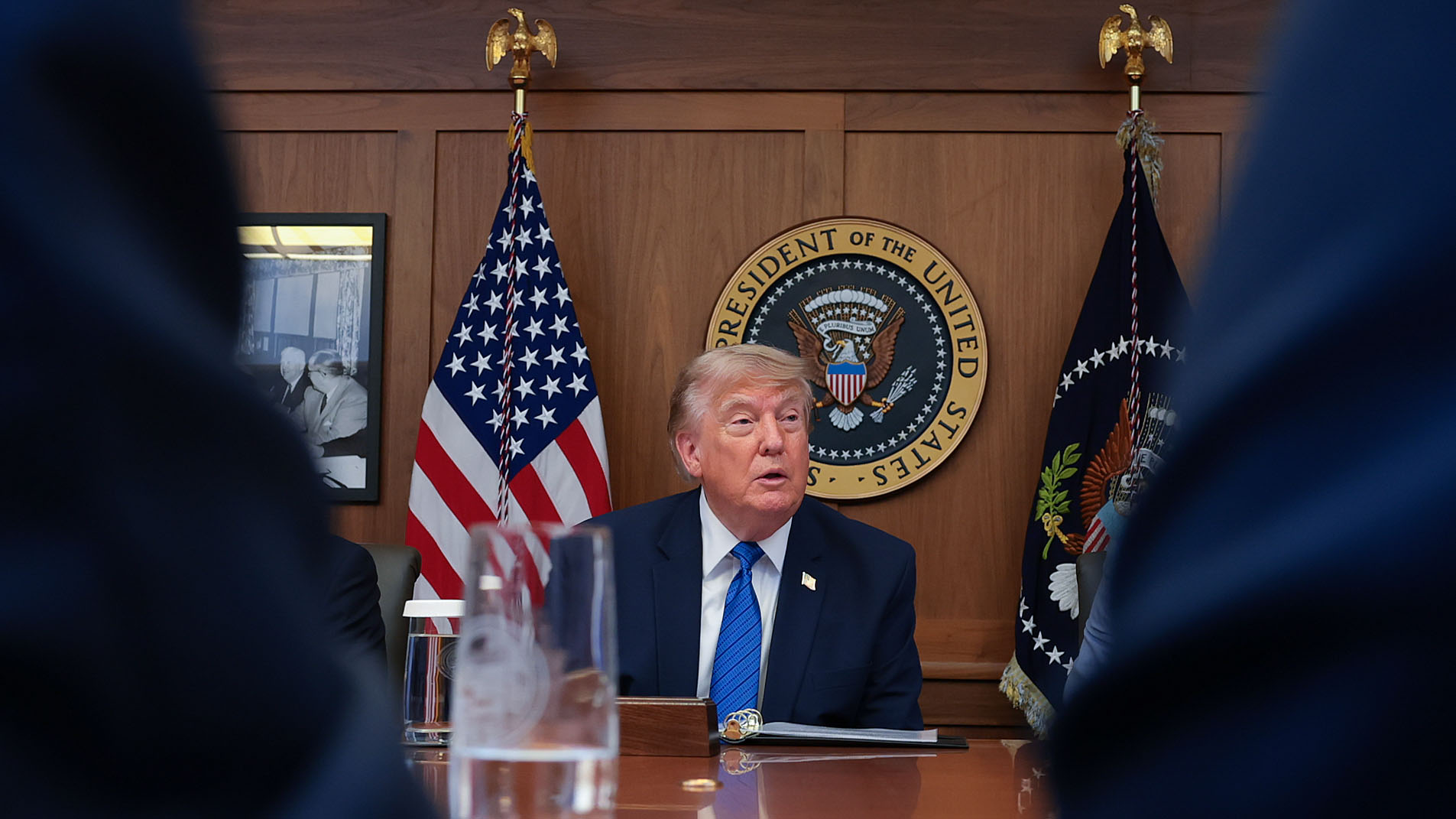
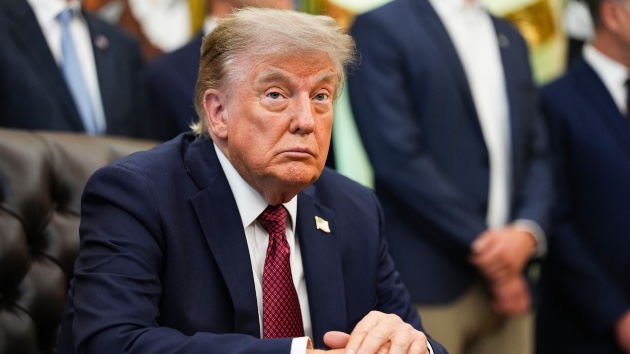
U.S. President Donald Trump at a Cabinet meeting at Camp David, the presidential retreat, on July 31, 2026 in Camp David, Maryland. (Photo by Anna Moneymaker/Getty Images)
(WASHINGTON) — President Donald Trump on Friday blamed Minnesota’s Democratic governor for cyberattacks on the state’s water systems even though U.S. officials previously told ABC News authorities are investigating whether Iran or hackers associated with the country could be behind them.
“We heard in Minnesota there was a cyberattack and they blame it on Iran. I don’t think so. I think, I blame it on Minnesota because they’re grossly incompetent,” Trump said a Cabinet meeting at Camp David.
More than 30 water systems in Minnesota were targeted in a cyberattack Sunday and Monday according to Minnesota IT Services (MNIT).
MNIT said the attackers targeted systems to remotely monitor and control equipment, including the programmable logic controllers (PLCs).
The Cybersecurity and Infrastructure Security Agency (CISA) said in an alert Thursday that cyber threat actors are targeting PLCs and modifying passwords to “to lock out operators.”
Despite the warnings, Trump laid the blame on Minnesota and Democratic Gov. Tim Walz.
“I think that Minnesota ought to get its act together. It’s one of the worst run states,” he told ABC News’ Mary Bruce when she asked about the attack.
Walz pushed back against Trump in statements on social media Friday.
“Trump knows exactly who is responsible for this attack, and knows that other states were hit too. This is what modern warfare looks like, and it further illustrates there’s no plan to win a war with Iran,” he said.
The governor also noted federal cuts by the The Department of Government Efficiency (DOGE) weakened cyber security.’
“DOGE took an axe to CISA and left the U.S. exposed to cyber attacks. Thankfully, our experts in Minnesota were able to identify the vulnerability quickly and work with local communities to stop it,” he said.
MNIT said there are no active requests from Minnesota localities for residents to change their water use and that it is working with federal investigators in the probe. The agency said it has not determined who was responsible.
“In this situation, ‘impacted’ means investigators confirmed malicious activity involving a system’s technology. It does not mean every affected community experienced a disruption to water service,” MNIT said in a statement Thursday.
Patriot launchers modules mounted on M983 HEMTT, part of the U.S.-made MIM-104 Patriot surface-to-air missile (SAM) system, are pictured on a open field on Feb. 18, 2023, in Zamosc, Poland. (Photo by Omar Marques/Getty Images)
(WASHINGTON) — President Donald Trump appeared to reverse course on his offer earlier this month to license Ukraine to produce Patriot missiles, saying during a Friday Cabinet meeting that “we have not agreed to that.”
This is a developing story. Please check back for updates.
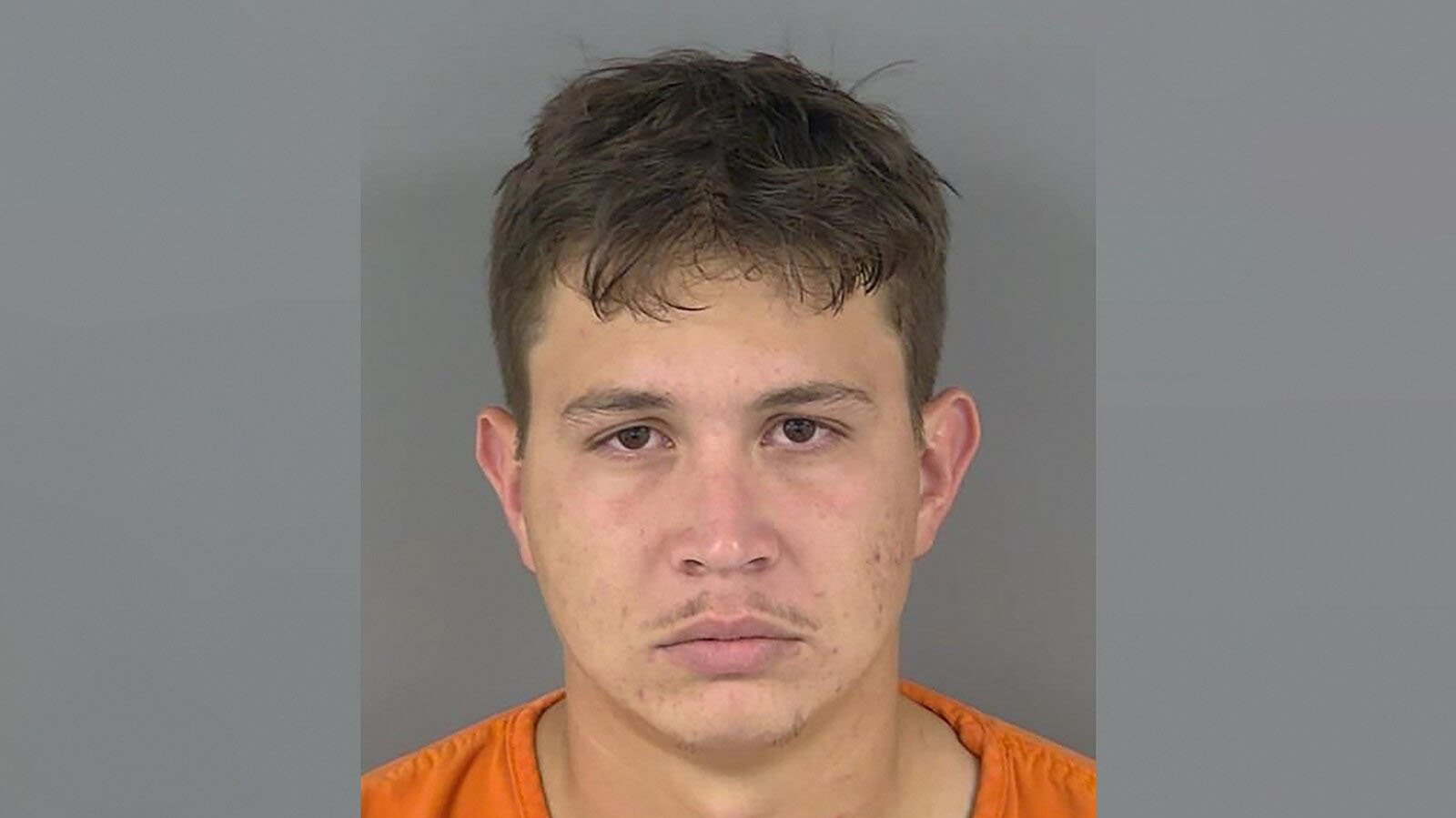
Ariel Gonzalez Rodriguez has been charged with manslaughter with a firearm, months after he allegedly shot and killed neighbor. (Collier County Sheriff’s Office)
(NEW YORK) — A man has been charged with manslaughter months after he allegedly shot and killed his neighbor, mistaking him for a bear, according to an arrest affidavit.
Ariel Gonzalez Rodriguez, 25, was charged on Tuesday for the March killing of his neighbor Jason Sheffield in Naples, Florida.
Rodriguez’s wife, Katherin Hidalgo, told investigators that she heard a noise around midnight and was worried a wild animal was attacking the farm animals she has in her backyard, so she woke her husband up to investigate, according to the affidavit.
After leaving the house with a smaller caliber rifle, Rodriguez — who was 24 at the time — returned to tell his wife he believed it may have been a bear, before retrieving a larger caliber rifle, according to the affidavit.
Rodriguez told investigators he fired a single round from the larger rifle to the ground. Rodriguez then alleged he believed the noise was walking closer and that he was about to be attacked, prompting him to shoot a round in the direction of his neighbor’s property at about waist level, according to the affidavit.
Hidalgo told investigators she heard at least two gunshots before her husband returned to the residence, according to the affidavit.
Hidalgo told investigators that Rodriguez told her whatever was making the noise — which he believed might have been a bear — began approaching him, so he shot off a “couple of warning shots,” according to the affidavit.
“According to Katherin, Ariel did not further investigate because he feared he might have wounded the bear and did not want to risk getting attacked. He told Katherin he would go check in the morning,” the affidavit said.
Around 8 a.m. the next day, Rodriguez explored his property but did not see anything. He then proceeded to explore his neighbor’s property, where he discovered his neighbor lying face down with blood on his body, according to the affidavit.
In the morning, Rodriguez told his wife he had shot someone before dialing 911, according to the affidavit.
Rodriguez dialed 911 and stayed on the phone with dispatchers until deputies arrived. Rodriguez was brought in on the charge of manslaughter with a firearm, according to the affidavit.
“Ariel was frantic as he informed the dispatcher that he shot off a gun yesterday at a noise he believed to be a bear, but now believed he accidentally shot his neighbor,” investigators wrote in an arrest affidavit.
When officers responded to the scene, Rodriguez and his wife were handcuffed, detained and placed in the back of separate patrol vehicles, according to the affidavit.
Investigators found the neighbor dead, lying face down in an overgrown patch of vegetation behind a chicken coop. He appeared to have blood on the back of his shirt, according to the affidavit.
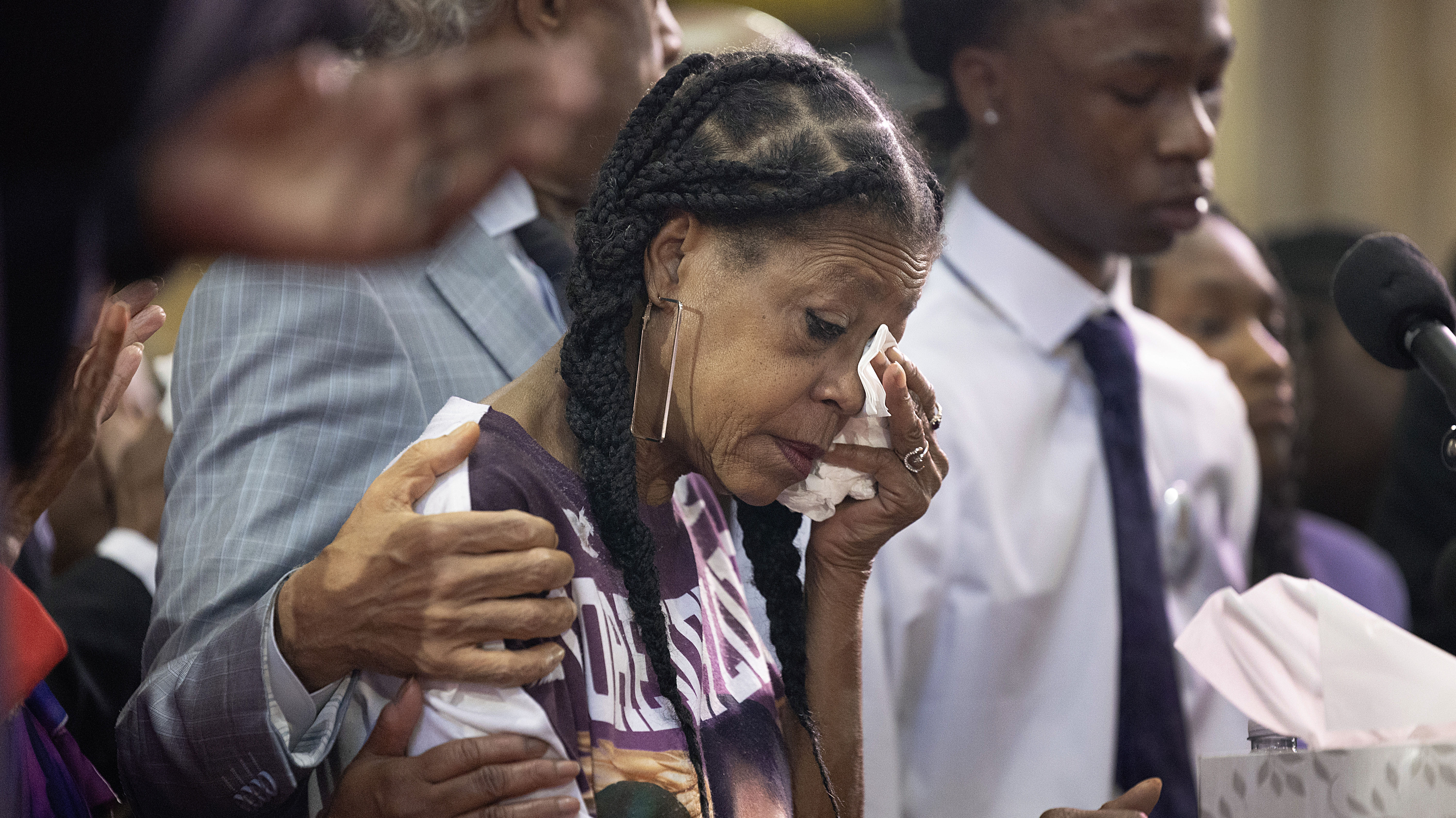
Donna Massey, the mother of shooting victim Sonya Massey, is comforted during a press conference at New Mount Pilgrim Church on July 30, 2024, in Chicago. Sonya Massey was shot in the head and killed in her home by Sangamon County Sheriff’s Deputy Sean Grayson after she called police to report a possible prowler. (Photo by Scott Olson/Getty Images)
(WASHINGTON) — Sean Grayson, the former Illinois sheriff’s deputy who was convicted of second-degree murder in the fatal 2024 shooting of Sonya Massey, was on Friday denied early release by a prisoner review board.
“I am writing to confirm that the Board voted 3-0 to deny Sean Grayson’s medical release application,” an Illinois Prisoner Review Board spokesperson said in a statement to ABC News. “He will remain in custody.”
Grayson had asked for an early release because he has cancer. He was sentenced to 20 years in prison in January, after his conviction last October.
This is a developing story. Please check back for updates.
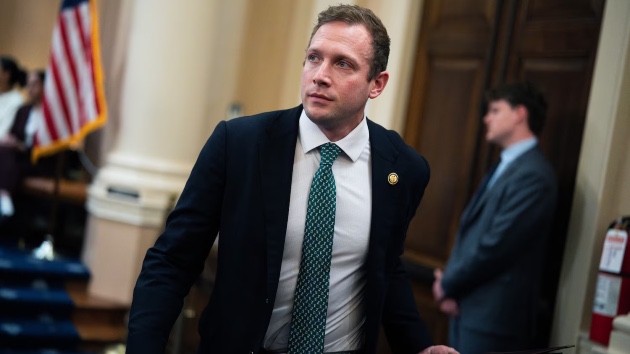
Rep. Max Miller, R-Ohio, attends the Ways and Means Committee hearing on the priorities of the Treasury Department in Longworth building on Thursday, June 4, 2026. Treasury Secretary Scott Bessent testified. (Tom Williams/CQ-Roll Call, Inc via Getty Images)
(WASHINGTON) — Ohio congressman Max Miller is denying allegations of domestic abuse made by his ex-wife.
Police reports obtained by ABC News show that Miller’s ex-wife, Emily Moreno, the daughter of Sen. Bernie Moreno, alleged multiple incidents of physical violence during their marriage and divorce proceedings. The allegations come amid Miller’s reelection bid for what is seen as a safe Republican seat and have led to calls from some Democratic members of Congress for an ethics investigation and resignation.
Miller, a former Trump White House aide, was married to Emily Moreno from 2022 to 2024 and the two have one child, a 2-year-old daughter. The couple married at Trump’s Mar-a-Lago estate at a ceremony that included a toast by President Donald Trump.
In the police reports, Moreno told police officers that Miller “threw her against the wall, which resulted in an obvious grab mark on her upper arm” and had previously “held a gun to her head” and threw hot water on her. According to the police report, Moreno also recounts her child telling her “Daddy kill you.”
Additionally, the report shows Moreno told the police that her daughter received physical injuries while in Miller’s care.
Miller, who represents Ohio’s 7th District, was never charged with a crime and the Department of Children and Family Services did not find evidence to substantiate allegations of child abuse, according to records released in court filings.
Miller denies abusing his wife or daughter. In a defamation lawsuit against his ex-wife, he has argued that this is a “repeated pattern” of false accusations by his wife meant “to ruin my reputation, gain an edge in custody and litigation matters, and seek revenge.”
Prior allegations against Miller
This is not the first time Miller has been accused of violence against women. Former White House press Secretary Stephanie Grisham alleged in her 2021 memoir that she had been physically abused by her partner while working at the White House.
She later identified that man as Miller in a Washington Post op-ed. She claims that she told White House officials at the time about the alleged abuse and they failed to take action.
The White House declined to comment on allegations of abuse by Miller towards Grisham or Moreno.
Miller’s office directed ABC News to Miller’s past social media posts denying the alleged abuse and attacking past reporting on the case.
Miller denied Grisham’s allegations and sued her for defamation while running for Congress in 2023. They reached a confidential settlement. Grisham is now suing Miller for violating the terms of their settlement by discussing the case in his denials of the allegations by Moreno.
Lawyers for Emily Moreno on Thursday applied for a restraining order against Miller, citing “harassment and threats” by the congressman against the legal team.
Lawyers for Moreno have not replied to requests for comment.
Miller has gone after his Republican colleague and ex-father in law Sen. Bernie Moreno publicly, posting on X in May: “It is unfortunate that @berniemoreno continues to fund and enable his daughter’s malicious campaign to ruin my life despite his knowledge of her mental health issues. Bernie, this must be distracting from your job. These antics harm your own grandchild. Anytime you want to put a stop to this, you can.”
A spokesperson for the senator told The Washington Post that Moreno’s “top priority is the safety and well-being of his daughter and granddaughter.” The statement added: “While he does not litigate these matters in the media or respond to baseless public attacks, he will do whatever it takes to ensure a just outcome for his family.”
Miller is facing off against Democrat Brian Poindexter, a union iron worker, in November. Poindexter’s campaign did not respond to ABC’s requests for comment.
Last month, Cook Political Report changed the race’s ranking from “Solid Republican” to “Likely Republican” shortly after internal polling found Democratic challenger Poindexter trailing Miller by just one point.
Miller won the district with only 51% of the vote in 2024, largely due to a credible third party candidate. Trump won the district with 55% of the vote in 2024.
While his opponent has not made the allegations against Miller central to his campaign as of yet, outside groups have stepped in to elevate the accusations.
The pro-labor Battleground Alliance PAC conducted robocalls to roughly 100,000 households last month recounting Moreno and Grisham’s claims. A spokesperson for the PAC did not reply to ABC News’ requests for comment.
The Republican National Congressional Committee declined to comment on the specific allegations against Miller and as a rule does not comment on spending decisions.
The House Majority PAC, which helps elect Democrats, told ABC it is “willing to do whatever it takes to take back the House, and nothing is off the table. Democrats are expanding the map deeper into Trump territory by the day, and Brian Poindexter will defeat the scandal plagued Max Miller.”
They did not specifically respond to a question about planned spending to support Poindexter in that race.
‘Troubling accusations’ and calls for investigation
Ohio Gov. Mike DeWine was asked about the allegations on Thursday by ABC”s Cleveland affiliate and said that they were “troubling accusations” and that “people of the district are having to weigh the facts.”
Ohio Democratic Rep. Shontel Brown, who represents the neighboring 11th District, called on Miller to resign.
Miller is hardly the only member of Congress to attract attention for allegations of misconduct towards women this year alone. Reps. Eric Swalwell and Tony Gonzales departed congress this year amid allegations of misconduct with aides.
Rep. Cory Mills, R-Fla., remains under a House ethics investigation for a range of allegations, including domestic violence by a former partner. He denies all allegations of misconduct.
House Speaker Mike Johnson was asked about the allegations against Miller and Mills at a press conference last week and said: “Well, the key word there is allegation. We have a process here. The House Ethics Committee works on those things. If allegations are made, they work through a process. So I I’m not in the business of commenting on investigations as they as they’re in process, and we’ll see how that shakes out.”
At least one member of Congress has called for an ethics investigation into Miller. Democratic Congressman Sam Liccardo of California posted on X: “Allegations that Max Miller abused his wife and child demand an immediate House Ethics Committee investigation. Congress must never serve as a safe harbor for abusers.”
The House Ethics Committee declined to comment on the allegations against Miller and whether there is an active investigation by the committee into his conduct.
In this photo illustration, a Kalshi logo is seen displayed on a smartphone on the top of a laptop. (Photo Illustration by Omar Marques/SOPA Images/LightRocket via Getty Images)
(NEW YORK) — New York sued Kalshi on Friday, alleging its prediction market is nothing more than illegal, unlicensed gambling, in large part because outcomes depend more on chance than skill.
The lawsuit does not seek to close down Kalshi, but, if successful, it could dent its ability to operate.
Kalshi insists its event contracts are federally regulated derivatives outside the scope of state gaming laws but New York Attorney General Letitia James’ lawsuit said Kalshi is merely seeking “to avoid the legal and financial consequences of New York’s close regulation of gambling by offering what is quintessentially wagering.”
“It’s sad to see this type of political theater from the leadership in our own state. States can’t just shut down a federally licensed exchange,” Elisabeth Diana, Kalshi’s Head of Communications told ABC News. “This would also hurt New Yorkers, who would be driven offshore. We love New York, we love New Yorkers, and New Yorkers love our product.”
The lawsuit alleged Kalshi violates state laws prohibiting wagering on games involving New York college teams and all sports betting for those under 21.
The Commodity Futures Trading Commission, which has said prediction markets are its exclusive purview, filed for a temporary restraining order to halt the state’s lawsuit.
“New York’s gambling laws protect children from underage betting and help combat gambling addiction,” James said in a statement. “No matter what they call themselves, prediction makers like Kalshi are gambling platforms, plain and simple.”
The lawsuit sought a court order demanding Kalshi submit to state regulators and taxes, to forfeit illegal profits and pay restitution to users nationwide, a possible penalty that could cost Kalshi an estimated $36 billion, according to a statement of facts accompanying the lawsuit.
“Kalshi has chosen to ignore New York’s gambling laws, which exist to protect consumers, prevent problematic gambling, deliver funding for critical public services and ensure that every company plays by the same rules,” Governor Kathy Hochul said.
Undated photo of Karakoram Range, Pakistan (Photo by Uwe Steffens/ullstein bild via Getty Images)
(LONDON )– A team of 10 climbers, including one American, is missing after a reported avalanche on Broad Peak in Pakistan’s Karakoram mountain range, according to the Alpine Club of Pakistan.
The club said the avalanche was reported around midday Thursday and that it has lost contact with the expedition.
The team reportedly includes five Nepalese mountaineers led by climber Nims Dai, Pakistani climber Sohail Sakhi of Hunza, an Omani climber, American climber Mallory Geis, a Chinese climber and one other foreign climber, according to the Alpine Club of Pakistan. Renowned climber Nirmal Purja is also thought to be among the missing.
Broad Peak, where the climbers were traversing when the avalanche struck, is a 26,401-foot mountain in the Karakoram range in central Asia.
The Alpine Club of Pakistan said the entire team has been out of communication since the reported avalanche but confirmed that it is working with government authorities and relevant agencies to support an immediate search-and-rescue operation.
Two Pakistan Army aviation helicopters are carrying out rescue operations, while ground rescue teams are already searching the area.”Every possible effort is being made to ensure that helicopter support and all available rescue resources are mobilized at the earliest opportunity, subject to weather and operational conditions,” the club said in a statement.
The Alpine Club of Pakistan said it is continuing to monitor the situation and will provide updates as more information becomes available.
U.S. President Donald Trump makes an announcement on American nuclear innovation in the Oval Office at the White House on July 24, 2026 in Washington, DC. (Photo by Eric Lee/Getty Images)
(WASHINGTON) — President Donald Trump announced Thursday an agreement for Hamas to disarm and Israel to withdraw its troops from the Gaza Strip as part of a U.S.-brokered ceasefire signed last year.
“This agreement is a critical step towards Gaza finally being governed by a new Palestinian government that will work closely with the Board of Peace to help the Palestinian people,” Trump said in a social media post, referencing the newly formed multinational organization established by the U.S. president to oversee the 20-point peace plan in Gaza.
“At the same time, Israel will have the security it deserves, with Gaza no longer used as a base for terror attacks,” Trump added.
Few details about the agreement were initially released and there was no immediate official comment from Israel or Hamas on the president’s announcement.
In a statement following Trump’s announcement, the Board of Peace said Hamas has “agreed to a detailed Roadmap for implementing the next phases of the Gaza ceasefire,” calling it the result of a months of negotiations.
“The Roadmap represents a historic breakthrough,” the board said. “For the first time, Hamas officially has committed to an actionable plan for relinquishing all its weapons, which will be followed by Israeli withdrawal from Gaza.”
In his post, Trump said the agreement marks a “major milestone” in the 20-point plan and noted that it “will be carried out in carefully structured phases.”
“As disarmament is completed, Israeli forces will withdraw, and the International Stabilization Force will work with a new Palestinian police force to take responsibility for Gaza being safe for its residents and its neighbors,” Trump said. “Under this agreement, Gaza will finally be in the hands of a new Palestinian government that serves its PEOPLE.”
Trump also thanked mediators — including Egypt, Qatar and Turkey — for their work on the plan.
Trump’s 20-point plan, unveiled last fall, led to a ceasefire between Israel and Hamas, as well as the exchange of Israeli hostages and Palestinian prisoners. The plan also calls for Hamas — Gaza’s militant rulers — to surrender its weapons and dismantle its military infrastructure — including a vast tunnel network — and relinquish power to a new technocratic Palestinian government in return for an Israeli troop withdrawal, desperately needed humanitarian aid for Gaza’s population and an international effort to rebuild the war-ravaged Palestinian territory.
Earlier this month, Hamas announced it had dissolved its government in the strip to make way for the National Committee for the Administration of Gaza as part of phase two of the plan.
The war between Israel and Hamas began after the Hamas-led terror attack on southern Israel on Oct. 7, 2023, which killed more than 1,200 people and saw 251 taken hostage. The Israeli military subsequently launched a massive retaliatory campaign in Gaza, which has killed more than 73,000 Palestinians, including over 1,200 killed since the ceasefire, according to Gaza’s Hamas-run Ministry of Health. The conflict also led to a humanitarian crisis in Gaza, with the United Nations saying last week the overall situation remains “brutal.”
Savannah Guthrie and mother Nancy Guthrie, June 15, 2023. (Nathan Congleton/NBC via Getty Images)
(NEW YORK) — Testing on hair found at the home of “Today” show host Savannah Guthrie’s mother in the Tucson, Arizona, area is complete and does not point to a suspect in the 84-year-old’s abduction, Pima County Sheriff Chris Nanos told ABC News on Thursday.
“The hair was done … and there was nothing,” Nanos said in an interview.
That leaves a mixed sample of DNA retrieved from Nancy Guthrie’s home as the only known piece of biological evidence, and one that has so far not been affirmatively linked to a suspect.
The sample is a mix of as many as four people, the sheriff revealed. It’s not clear the technology even exists yet to untangle it, though the sheriff said multiple labs across the country are trying, including the FBI lab in Quantico, Virginia, and labs in Kansas, Florida, California and Arizona.
“My understanding is there are at least five, maybe six, labs across the country that are working on all of this,” Nanos said. “We have some of the brightest minds in the nation, if not the world, working on this.”
Investigators believe Guthrie was taken from her home in the early hours of Feb. 1 by a masked man captured on her doorbell camera. But six months later, Nanos is unable to say whether that masked man was working alone.
“I don’t think anybody’s here ready to say it’s one guy, it’s 10 guys,” Nanos said. “Did he have help? Could have.”
“My understanding is there are at least five, maybe six, labs across the country that are working on all of this,” Nanos said. “We have some of the brightest minds in the nation, if not the world, working on this.”
Investigators believe Guthrie was taken from her home in the early hours of Feb. 1 by a masked man captured on her doorbell camera. But six months later, Nanos is unable to say whether that masked man was working alone.
“I don’t think anybody’s here ready to say it’s one guy, it’s 10 guys,” Nanos said. “Did he have help? Could have.”
In an undated stock photo, a computer hacker is seen typing on a laptop. (STOCK PHOTO/Getty Images)
(WASHINGTON) — Federal and state authorities are investigating a series of coordinated cyberattacks at more than 30 water plants in Minnesota earlier this week. Authorities are looking into whether Iran or hackers associated with the country could be behind the attacks, multiple U.S. officials told ABC News Thursday.
This is a developing story. Please check back for updates.