
Pam Bondi to appear before House Oversight Committee to address Epstein questions

Pam Bondi to appear before House Oversight Committee to address Epstein questions
Attorney General Pam Bondi speaks with ABC News, Apr. 25, 2025. (ABC News)

(WASHINGTON, D.C.) — After a tumultuous year at the Department of Justice largely defined by her controversial handling of the Epstein files, former Attorney General Pam Bondi is set to participate in a transcribed interview with the House Oversight Committee on Friday.

The second Trump cabinet official to testify behind closed doors as part of the Oversight Committee’s yearlong Epstein probe, Bondi is expected to face questions about reneging on her promise to publicly release the DOJ’s files on convicted sex offender Jeffrey Epstein, which ultimately prompted Congress to pass the Epstein Files Transparency Act forcing the release of millions of documents.

Trump removed Bondi as attorney general in April after sources said he grew frustrated with her handling of the Epstein files and the unsuccessful prosecutions of his perceived political opponents.

“Pam Bondi is a Great American Patriot and a loyal friend, who faithfully served as my Attorney General over the past year,” Trump wrote on social media announcing her departure. “We love Pam, and she will be transitioning to a much needed and important new job in the private sector, to be announced at a date in the near future.”

Earlier this week, Axios reported that Trump had appointed Bondi to serve on an advisory panel on AI policy, tasked with coordinating cooperation between the government and tech leaders.

In an unusual arrangement, a DOJ spokesperson said that Bondi will be accompanied during Friday’s transcribed interview by Assistant Attorney General for Civil Rights Harmeet Dhillon and other DOJ personnel, in order to “assist the Committee in understanding the Department’s role in implementing and complying with the Epstein Files Transparency Act during her tenure.”

“Because former Attorney General Bondi oversaw the Department at the time the Act was enacted and carried out, DOJ’s presence is solely to ensure accurate representation of Department processes, facilitate any necessary clarifications, and support a complete factual record for the Committee,” a DOJ spokesperson said in a statement earlier this week.

The DOJ originally sought to have Bondi avoid appearing by arguing that the subpoena the committee issued “no longer obligates her to appear” since she left the role of attorney general. Bondi ultimately agreed to testify voluntarily after the top Democrat on the committee introduced a resolution to hold her in contempt for failing to appear.

Shortly after beginning her tenure as attorney general last year, Bondi faced immediate pressure from Trump’s MAGA followers and others to begin releasing the DOJ’s files from its investigations of Epstein and his associates. Speaking to Fox News in February 2025, Bondi said Epstein’s client list was “sitting on my desk right now to review” and said the release of the files was a “directive by President Trump.”

However, when the DOJ released the “first phase” of the Epstein files that month — inviting, with great fanfare, conservative influencers to receive the files — it was determined that nearly every document released was already public. By July, the Department of Justice and FBI said in a joint memo that no further documents would be released, citing victim privacy and the assertion that the documents warranted no further investigations — a decision that sparked backlash from much of the MAGA base.

“To that end, while we have labored to provide the public with maximum information regarding Epstein and ensured examination of any evidence in the government’s possession, it is the determination of the Department of Justice and the Federal Bureau of Investigation that no further disclosure would be appropriate or warranted,” the memo said.

Bondi later defended her statement about Epstein’s client list by clarifying she was referring to the Epstein files generally along with other files released by the Trump administration, including documents related to JFK and MLK Jr. The DOJ/FBI memo also said that their review of the files “revealed no incriminating ‘client list'” and no evidence that Epstein blackmailed prominent individuals.

Despite the memo stating that no further investigation was warranted, Trump in November ordered Bondi to investigate Epstein’s ties to Bill Clinton and other prominent Democrats. At the time, Bondi said the DOJ would “pursue this with urgency and integrity” and assigned the matter to the U.S. attorney in Manhattan.

The Justice Department’s subsequent release of Epstein files following the passage of the Epstein Files Transparency Act prompted bipartisan criticism when the DOJ improperly redacted files — both exposing victim identities while concealing other information — and declined to release millions of additional files by claiming they were duplicative, privileged or contained sensitive victim information.

Bondi’s deputy and successor, now-acting Attorney General Todd Blanche, acknowledged the release of sensitive victim information was “horrible” and “inexcusable.”

He said the DOJ is finished investigating Epstein.

“And so I think that to the extent that the Epstein files was a part of the past year of this Justice Department, it should not be a part of anything going forward,” Blanche said in April.

Copyright © 2026, ABC Audio. All rights reserved.
New report warns of rising food insecurity nationwide

New report warns of rising food insecurity nationwide
Volunteers help distribute food with the Atlanta Community Food Bank on March 27, 2026, in Atlanta, Georgia. (Photo by Megan Varner/Getty Images)

(NEW YORK) — A new economic report identified a “remarkable” rise in food insecurity, potentially explaining gloomy consumer outlooks despite strong economic fundamentals.

The Federal Reserve Bank of New York released a report on Wednesday identifying uncertain access to adequate food and consumer pessimism on the rise in certain vulnerable groups across the country.

The report, which relies on newly collected data from the Survey of Consumer Expectations (SCE), found a “remarkable increase in food insecurity, particularly among lower-educated and lower-income households and households with young children.”

It also identified “a contemporaneous increase in pessimism among the same groups, along with a sharp decline in job-finding expectations.”

The report found that between late 2025 and early 2026, there was an increase in households reporting they had to skip meals, use food banks, rely on SNAP benefits or dip into savings to cover groceries, which are up 2.9% from a year ago, the Bureau of Labor Statistics noted earlier this month.The survey showed that the percentage of those who didn’t have enough food or kids missed a meal more than doubled from June 2020 to early 2026.

More specifically, it found that, of households with income under $50,000 a year, 16% reported not enough food or kids missing meals in late 2025 and 19.7% recorded those circumstances in early 2026. That’s up from just 6.7% in mid 2020.

The survey noted that 40.1% of the same subset of respondents reported dipping into their savings in early 2026 versus 37.8% in late 2025 and 29% in mid-2020.

Among respondents with a high school diploma, the survey found 10.7% had received food donations in mid-2020, compared to 18.8% in late 205 and 20.9% in early 2026.

Food insecurity, the SCE report notes, “is associated with poor health outcomes as well as lower educational attainment, worker productivity, and lifetime earnings.”

The report also highlighted the existence of “solid economic fundamentals,” such as “low unemployment, historically high household net wealth, and resilient consumer spending” despite a growing sense of consumer pessimism, suggesting “a ‘K-shaped’ economy, in which consumption growth in recent years has been driven largely by higher-income and college-educated households while lower-income households have seen fewer gains.”

It says the findings concerning food insecurity are likely a helpful guide to understanding generally low consumer sentiment, despite an economy with “solid economic fundamentals.”

“While not necessarily causal, the observed positive association between food insecurity and overall consumer pessimism, together with the increase in the incidence of food insecurity, especially among households at the bottom of the K-shape, point to a potential explanation for the unusually low recent levels of consumer sentiment at a time when the hard economic data paint a more positive picture,” the report reads.

Copyright © 2026, ABC Audio. All rights reserved.
US agriculture industry at risk as drought conditions worsen

US agriculture industry at risk as drought conditions worsen
The vast empty plains stretch to the horizon in Springfield, Colorado, the county seat of Baca County, on May 10, 2026. Baca County has received only .78 inches of rain since Jan. 1, 2026. (Photo by Mark Makela/Getty Images)

(WASHINGTON) — Farms all over the country are bracing for the impact of drought after months of little precipitation, experts told ABC News.

More than 60% of the continental United States has been under moderate drought or worse conditions since April 7, according to the U.S. Drought Monitor.

The nation as a whole has experienced a dry, warm period that began in the early autumn of 2025 and has pushed into recent weeks, Brad Rippey, a U.S. Department of Agriculture meteorologist, told ABC News.

Long-term drought trends have put Midwest crops at risk

Farms in the Midwest that produce winter wheat have been especially impacted, Rippey said. The largest region that produces winter wheat — the Great Plains stretching from Montana to Texas — has been hit the hardest by drought as well as some spring freezes, Rippey added.

Up to 44% of this year’s winter wheat is rated as very poor to poor, according to the latest data from the USDA’s National Agricultural Statistics Service (NASS), released on Tuesday. Nebraska is at the top of the list, with 82% of its winter wheat crop rated very poor to poor, but states like Colorado, Oklahoma, Texas and Kansas are experiencing high rates of poor crop as well, according to the NASS.

While there was good moisture when the winter wheat was planted in the fall, extremely dry conditions from the beginning of March through the first half of May prevented optimal growing conditions, Brad Fuller, president of the Western Horizons Corporation and a consulting agronomist to many farms in Kansas, told ABC News.

Agriculture experts are expecting a 32% abandonment of winter wheat in the U.S. this year, according to the USDA’s Wheat Outlook. Such a high abandonment rate has only happened once since the Dust Bowl era in 1933 — in 2022 when drought conditions were at record highs, Riddey said.

The issues have also extended to the cattle industry due to poor rangeland and pasture conditions as a result of the dry conditions, Riddey said.

“A lot of the rangeland and pastures out in the middle section of the country are also in pretty rough shape heading into the key hay production season,” Riddey said.

Farmers in the Midwest are holding out hope for the spring-planted crops. But conditions were so dry in recent weeks that some growers skipped planting crops like corn or sorghum, Fuller said.

“We’ve had places in southwest Kansas that have gone well over 200 days without more than a half an inch of rain,” he said.

Farms in the West could be at risk as well

The West is facing dry, hot conditions in the near future, coming off “devastatingly” warm months in March and April, Riddey said. To exacerbate the situation, some reservoirs — especially Lake Mead and Lake Powell, the largest in the country — are experiencing low water levels due to the lack of snowpack during the winter.

These reservoirs are crucial for farms in the West that supply the rest of the country, Steven Fassnacht, a professor of snow hydrology at Colorado State University, told ABC News. About 75% of the nation’s lettuce and leafy greens are grown in California, according to the state’s Department of Food and Agriculture.

When there’s less surface water, farmers in California will turn to groundwater, Amanda Fencl, director of climate science for the Union of Concerned Scientists, told ABC News. But overuse of groundwater can decrease the water quality and lower the groundwater table, causing the land above it to sink. Overuse of groundwater can also alter the soil moisture, making it drier and lower, Fassnacht said.

Lake Mead could reach a record-low level of 1,036 feet of elevation in 2026, according to the 24-month study released by the Bureau of Reclamation last week. Lake Powell is also projected to drop to a new record-low level in the coming months, surpassing the previous record of around 3,520 feet set in 2023, Cody Moser, senior hydrologist at the Colorado River Basin Forecast Center, said during a webinar on May 7. The Colorado River basin as a whole is currently sitting at 49% of storage of its historic average, Riddey said.

“There are a lot of pieces of pie for that limited Western water,” Riddey said.

Small, family-run farms would be most impacted by water shortages, Fencl said. They may be faced with having to take certain crops out of production or changing which crops they decide to harvest.

Drought conditions typically lead to lower yields and loss in profits, Fencl added.

What will climate conditions be like in the near future?

While it has been raining in the Midwest in recent days, it’s not nearly enough to make up for the dry conditions over the last eight months, Riddey said.

“It’s not going to recover from just a couple of rain events,” he said. “It will take some time.”

But there is a light at the end of the tunnel. Monsoon season is expected to start in early July and last through August and September. After that, the development of El Niño conditions in October will bring more drought relief into the fall, winter and spring of 2027, Riddey said.

“All indications are we should see a pretty active monsoon that could provide some relief, but we have to get between now and monsoon onset,” he said.

Copyright © 2026, ABC Audio. All rights reserved.

Treasury pushing plans for $250 bill with Trump’s portrait and signature, sources say

Treasury pushing plans for 0 bill with Trump’s portrait and signature, sources say
Treasury pushing plans for $250 bill with Trump’s portrait and signature, sources say
U.S. President Donald Trump dances on stage after delivering remarks during a campaign and economic policy event in the Eugene Levy Fieldhouse at SUNY Rockland Community College on May 22, 2026 in Suffern, New York. (Roberto Schmidt/Getty Images)

(WASHINGTON) — Trump administration officials have pushed the office tasked with printing the nation’s money to move forward with designing a commemorative $250 bill with President Donald Trump’s portrait and signature, should legislation to create the new currency pass, according to two people with knowledge of the discussions.

It would mark the first time a living person has appeared on U.S. currency in more than 150 years. As of now, federal law explicitly states only deceased people can appear on United States currency.

But some Republicans in Congress are working to change that.

Republican Rep. Joe Wilson, of South Carolina, has introduced a bill ordering the Treasury Department to print $250 Federal Reserve notes featuring a portrait of Trump.

The bill has 15 Republican cosponsors, a small sum for legislation that was introduced more than a year ago.

The bill has not passed — stuck in the House Financial Services committee for more than a year — but in a statement to ABC News, the Treasury Department acknowledged the Bureau of Engraving and Printing is “conducting appropriate planning and due diligence” should the legislation be signed into law.

It would still have to pass the Senate as well before it hits Trump’s desk, requiring a bipartisan majority of 60 votes for passage. Democrats are expected to try to block the effort.

If the bill doesn’t become law, it expires at the end of the 119th Congress. After that, Wilson or another member can try to reintroduce it in the 120th session.

A Treasury Department spokesperson called the bill a “proactive” measure.

“Should this legislative mandate be signed into law, the BEP is moving proactively to produce a $250 commemorative note which will appropriately recognize the 250th Anniversary of our great nation,” the spokesperson said.

The number 250 reflects the nation’s upcoming anniversary.

There’s been no word from Republican leadership on whether they would support Wilson’s bill, though none of its party leaders have signed on as cosponsors.

Two people familiar with the discussions told ABC News that U.S. Treasurer Brandon Beach and Treasury Secretary Scott Bessent have pushed for the president’s signature to be added to the $250 bill.

The Treasury Department did not dispute the reporting.

“Based on the recommendation of U.S. Treasurer Brandon Beach, Secretary Bessent will recognize the historic achievements of our great country and President Trump by adding his signature to the currency,” a spokesperson stated.

The Treasury Department insisted no taxpayer dollars will be used to produce the new bill, noting Bureau of Engraving and Printing finances its operations entirely through product sales and billings rather than relying on annual congressional appropriations.

The State Department announced it would begin issuing special edition passports featuring Trump’s portrait and signature to commemorate the anniversary.

The Washington Post was the first to report the news.

ABC News’ John Parkinson contributed to this report.

Copyright © 2026, ABC Audio. All rights reserved.

DHS Secretary Mullin threatens to pull agents from Newark airport over ICE detention center protests

DHS Secretary Mullin threatens to pull agents from Newark airport over ICE detention center protests
Markwayne Mullin, secretary of the US Department of Homeland Security (DHS), during a cabinet meeting at the White House in Washington, DC, US, on Wednesday, May 27, 2026. (Samuel Corum/Sipa/Bloomberg via Getty Images)

(NEWARK, N.J.) — Homeland Security Secretary Markwayne Mullin amped up his threats Thursday to pull Customs and Border Protection (CBP) agents who process international passengers at Newark Liberty International Airport to help control protesters outside of New Jersey’s Delaney Hall detention center.

Mullin continued to slam the protests, now in their seventh day, outside the Immigration Customs and Enforcement detention center over reports of poor living conditions and poor health among its 300 detainees. DHS has denied the allegations.

ICE agents have clashed with protesters who attempted to block vehicles from entering, prompting the federal agents to use pepper spray and batons against them.

Mullin told “Fox & Friends” on Thursday that DHS needed to “prioritize federal police officers” in response to the protests and is considering pulling CBP agents from the airport to help agents outside the detention facility, which would delay processing international travelers and cargo.

“That may effect international flights coming in and out of their airport because I’m going to have to pull Customs and Border Protection officers out of being able to process international flights and put them helping our ICE agents,” he said.

“By the way, if you can’t process international flights because Customs is closed, you can’t obviously process international flights coming in from out of country,” he added.

Mullin said on Fox News that if “things don’t change” he’ll have to make the move “pretty quick.”

“We are not going to halt the flights, we won’t be able to process them because we won’t have officers there,” he said. “We will have to pull out our Customs and Border Patrol officers that process these flights and put them in these [detention] facilities to help protect our employees coming out to work.”

The Port Authority of New York and New Jersey, which operates Newark Liberty International, did not immediately comment on Mullin’s proposal.

Mullin has long been teasing a plan to pull CBP officers from airports that are in so-called “sanctuary jurisdictions.” On Wednesday, he said he is “drawing up plans.”

However, Mullin’s controversial proposal has received pushback from travel groups.

U.S. Travel Association, a group representing the country’s travel industry, met with Mullin last week and expressed concerns about the plan to withdraw CBP officers from several cities.

“U.S. Travel believes such a move would have devastating consequences for the travel industry and communities that depend on international visitation,” the group said in a statement Friday.

At least one Trump administration official has questioned such a policy.

Asked about the proposal in a congressional hearing last week, Transportation Secretary Sean Duffy said he wasn’t familiar with Mullin’s comments but said it wouldn’t be a good idea to implement such a policy based on politics.

“I’d like to take a look at [Mullin’s] comments and get the context and I’d even ask him a question of what he meant by that, but we have people from around the world and around the country that need to be able to fly into all different kinds of places. We shouldn’t shut down air travel in a state that doesn’t agree with our politics,” Duffy said.

The demonstrations at Delaney Hall continued Wednesday night and protesters again clashed with federal law enforcement.

Several Democratic Congress members, including New Jersey Sen. Corey Booker, have visited the detention center over the last week and say they have seen the decrepit conditions first hand.

“The stories I’ve gotten, especially from women inmates, about the access to medical attention, seemed unsatisfactory, if not downright dangerous to their conditions,” Booker said Wednesday.

That same day, Mullin denied the allegations and the reports of a hunger strike inside the facility contending that  there were “only a handful of individuals that was refusing to eat” because they allegedly wanted their “ethnic right food.”

“Well, they can go back to their country and get whatever food they want,” he told reporters. 

Copyright © 2026, ABC Audio. All rights reserved.
Man dead, woman critically injured after home explosion in attempted murder-suicide

Man dead, woman critically injured after home explosion in attempted murder-suicide
A man is dead and a woman is injured after a house exploded in Michigan in an attempted murder-suicide, in Kent County, Michigan, on May 26, 2026. (Kent County Sheriff’s Office)

(PLAINFIELD TOWNSHIP, Mich.) — A man is dead and a woman was critically injured after a home exploded in Plainfield Township, Michigan, on Tuesday, according to the sheriff’s office.

The home was completely destroyed with debris on fire when deputies and fire personnel responded to the scene after nearly 50 calls reported an explosion and house fire around 4 a.m., according to the Kent County Sheriff’s Office.

“The fire was intentionally set, we believe, by the husband at this point, intending to be a murder-suicide at the residence,” Kent County Undersheriff Bryan Muir told reporters.

Officials have not released the names of the man and woman in the explosion, but said they believe “the husband” set the fire, Muir said. The woman was associated with the address, according to authorities.

Two neighbors — a teenager who lived next door and another man who lived nearby — pulled the injured woman from the home after the explosion, according to the sheriff’s office. She was treated on the scene and taken to the hospital in critical condition, the sheriff’s office said.

“We are very proud of them for stepping up and helping someone in need during an extremely dangerous situation,” the sheriff’s office said in a statement.

“Without their actions, it is likely she would have perished in the fire. She has some significant medical-related issues right now and we are hoping for a recovery,” Muir said.

Hours later, a dead man, believed to be the person registered to the address, was found at the scene, the sheriff’s office said.

The cause of the fire has not yet been determined, but investigators preliminarily believe a source of natural gas was released in the basement and used to start the fire, Alpine Township Fire Chief Jeremy Kelly said.

Investigators believe the explosion was a “domestic-related situation at the home,” Muir told reporters.

There are no concerns of any gas leaks or other home explosions in the area, Muir said.

“We want to relay to the family affected by this our deepest sorrows for having to deal with a situation so tragic,” Muir said. 

Copyright © 2026, ABC Audio. All rights reserved.
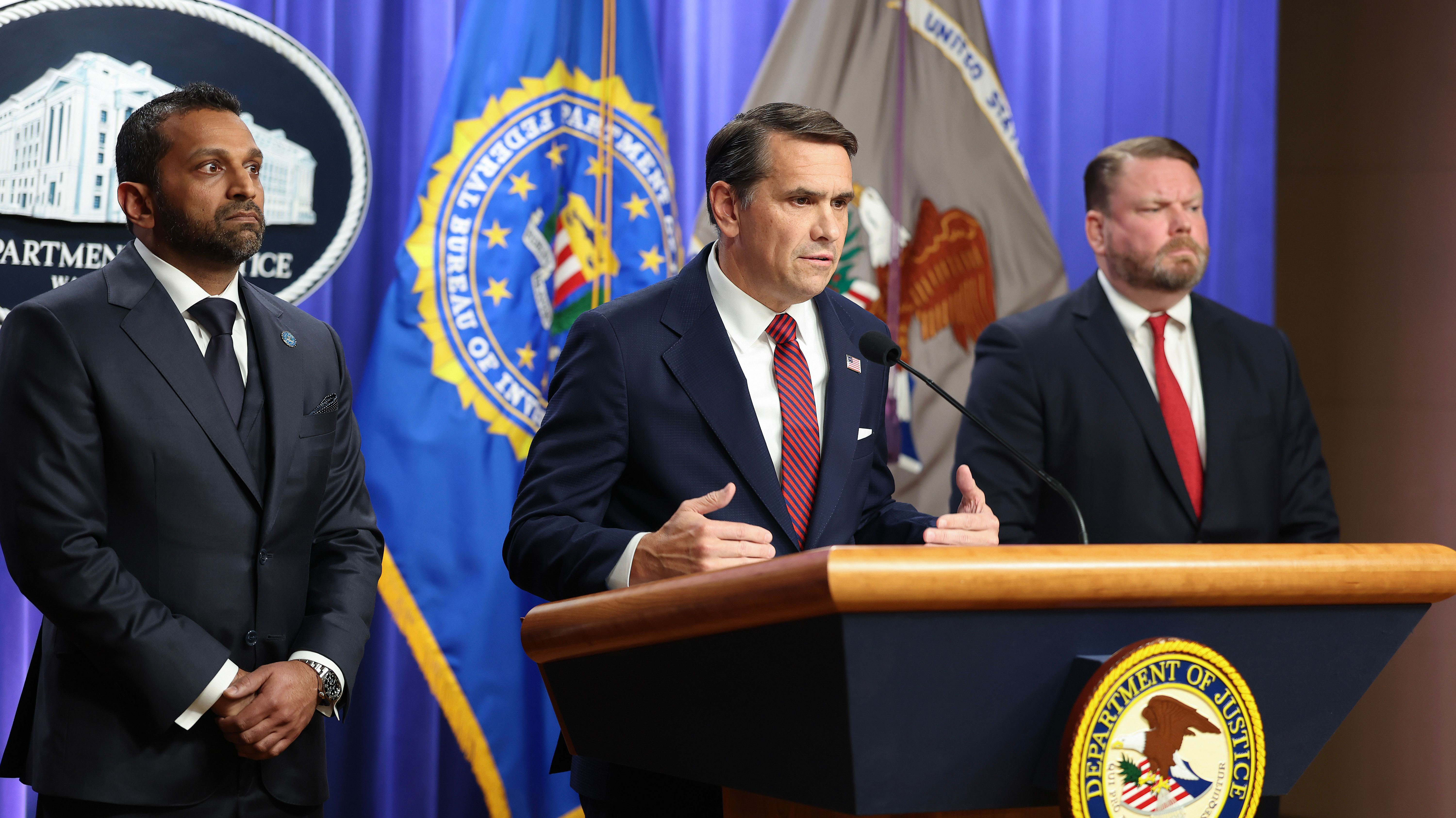
Inflation hits highest level in nearly 3 years, Fed’s preferred gauge shows

Inflation hits highest level in nearly 3 years, Fed’s preferred gauge shows
A worker stacks groceries at a store in Brooklyn on May 12, 2026, in New York City. The rise in fuel, food, and other essentials for millions of Americans comes as the war with Iran continues to be a drag on both the domestic and international economy. (Photo by Spencer Platt/Getty Images)

(WASHINGTON) — Inflation jumped for a second consecutive month in April as the Iran war drove up gasoline prices and strained household budgets, government data on Thursday showed.

Prices rose 3.8% in April compared to a year earlier, according to the Personal Consumption Expenditures (PCE) Index, an inflation gauge preferred by the Federal Reserve. The PCE stood at 2.8% as recently as February.

Inflation now stands at its highest level since May 2023, the Commerce Department report showed.

The savings rate, meanwhile, fell to 2.6%, its lowest level since 2022, suggesting some strapped consumers are struggling to stash away extra funds.

A persistent increase in consumer prices may put pressure on the Fed to raise interest rates as a means of dialing back inflation. The latest reading comes days after Fed Chair Kevin Warsh began a four-year term atop the central bank.

For now, futures markets overwhelmingly expect the Fed to hold interest rates steady when policy makers meet next month, according to the CME FedWatch Tool, a measure of investor sentiment.

However, markets peg the chances of a quarter-point rate increase by the end of the year at more than one in three, well above where odds of a rate hike stood prior to the war, the tool shows.

The benchmark interest rate stands at a level between 3.5% and 3.75%. That figure marks a significant drop from a recent peak attained in 2023, but borrowing costs remain well above a 0% rate established at the outset of the COVID-19 pandemic.

The Middle East conflict prompted the Iranian closure of the Strait of Hormuz, a maritime trading route that facilitates the transport of about one-fifth of global oil supply. The standoff triggered one of the largest oil shocks ever recorded.

As a result, gasoline prices surged. The price of an average gallon of gas stood at $4.42 as of Thursday, AAA data showed – an increase of $1.44 per gallon since the war began on Feb. 28. That amounts to a 48% price jump in about three months.

Copyright © 2026, ABC Audio. All rights reserved.
Man fatally shot during Eid prayer service in Minnesota, suspect in custody

Man fatally shot during Eid prayer service in Minnesota, suspect in custody

(MINNEAPOLIS) — A suspect has been apprehended after a 26-year-old man was fatally shot while attending a prayer service in Minnesota, authorities said.

Khalid Ibrahim Abdi was shot multiple times just before 10 a.m. Wednesday at the Canterbury Park Expo Center in Shakopee, about 25 miles outside of Minneapolis, the Shakopee Police Department said.

He was taken to the Hennepin County Medical Center and later died from his injuries, police said.

A suspect was taken into custody Thursday morning and is being held pending charges, police said. The suspect’s name has not been publicly released.

Abdi was a member and field representative of the AFSCME Council 5 labor union, according to AFSCME Council 5 executive director Bart Andersen.

“It is with unimaginable sadness and heartbreak to share that we lost our union brother and AFSCME Council 5 Field Representative Khalid Abdi today, who was shot and killed while attending an Eid prayer gathering,” Anderson said in a statement.

“Khalid will be forever remembered for his tenacious organizing spirit, his warm and inviting presence, and his unyielding passion and drive to fight for the working-class and all historically marginalized communities,” Anderson said.

“Please keep Khalid’s family, friends, neighbors, and all of us coworkers in your thoughts,” he continued. “Khalid’s tenacity, heart, and joy lives in all of us forever.”

Copyright © 2026, ABC Audio. All rights reserved.
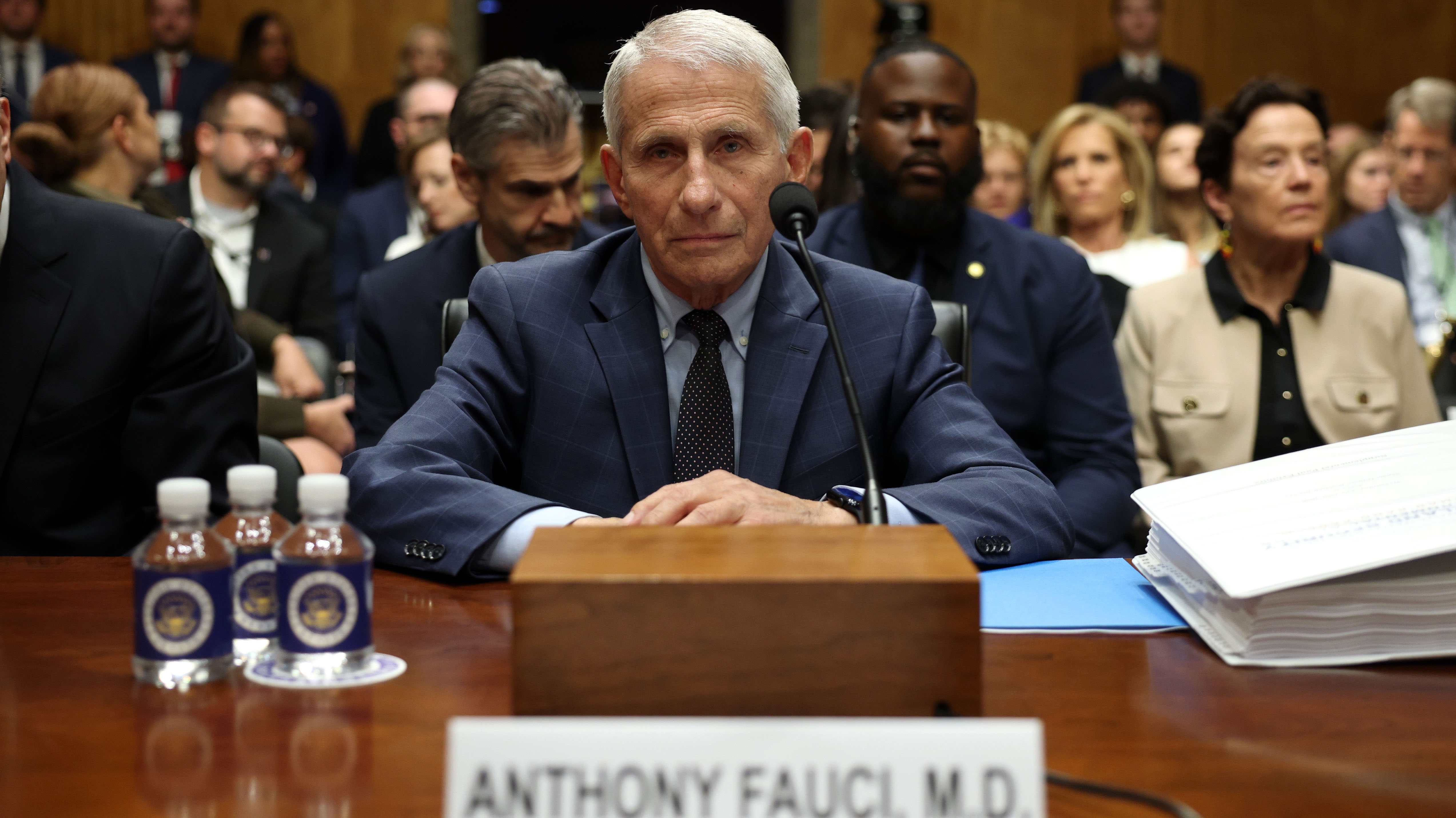
Trump admin sent $20.6B in tariff refunds so far: Court filing

Trump admin sent .6B in tariff refunds so far: Court filing
Trump admin sent $20.6B in tariff refunds so far: Court filing
U.S. President Donald Trump speaks during a Cabinet meeting in the Cabinet Room of the White House on May 27, 2026 in Washington, DC. (Win McNamee/Getty Images)

(NEW YORK) — A court filing shows how businesses are getting money back from the U.S. government after the Supreme Court ruled many of President Donald Trump’s tariffs were illegal.

The Trump administration has sent out $20.6 billion in tariff refunds so far, according to a new court filing.

The filing sheds light on how tens of thousands of American businesses are starting to get money back from the federal government after the Supreme Court ruled many of President Donald Trump’s tariffs were illegal in February.

Walmart suggested last week it will cut prices for shoppers using the estimated $2.4 billion in refunds it’s owed.

“On tariffs, we are availing ourselves of the process to get refunds. We would definitely bias and try to prioritize price investment for that … we think the single best return that we can have on a $1 of capital right now is to invest in the customer and invest in price,” Walmart CFO John David Rainey said on the company’s earnings call.

Major companies like Walmart, Costco, Apple, Home Depot and General Motors have all confirmed in recent weeks they’re applying for refunds.

It’s unlikely that most companies will give money directly back to shoppers who already bought products with higher prices because of tariffs. The nonpartisan Tax Foundation estimates the tariffs that were ruled illegal cost the typical American household $700 last year.

UPS, FedEx and DHL said they will directly refund customers. UPS recently updated its website with details on how importers can claim to get money back.

In total, U.S. Customs and Border Protection has said it could owe up to $166 billion to more than 330,000 importers. The new filing notes $85 billion in refunds have been accepted so far, and the $20.6 billion represents money that has successfully gone back to importers who filed for refunds on the government’s online portal.

A U.S. trade official previously overstated the amount of money that had gone out to companies by $10 billion, the filing noted.

Copyright © 2026, ABC Audio. All rights reserved.
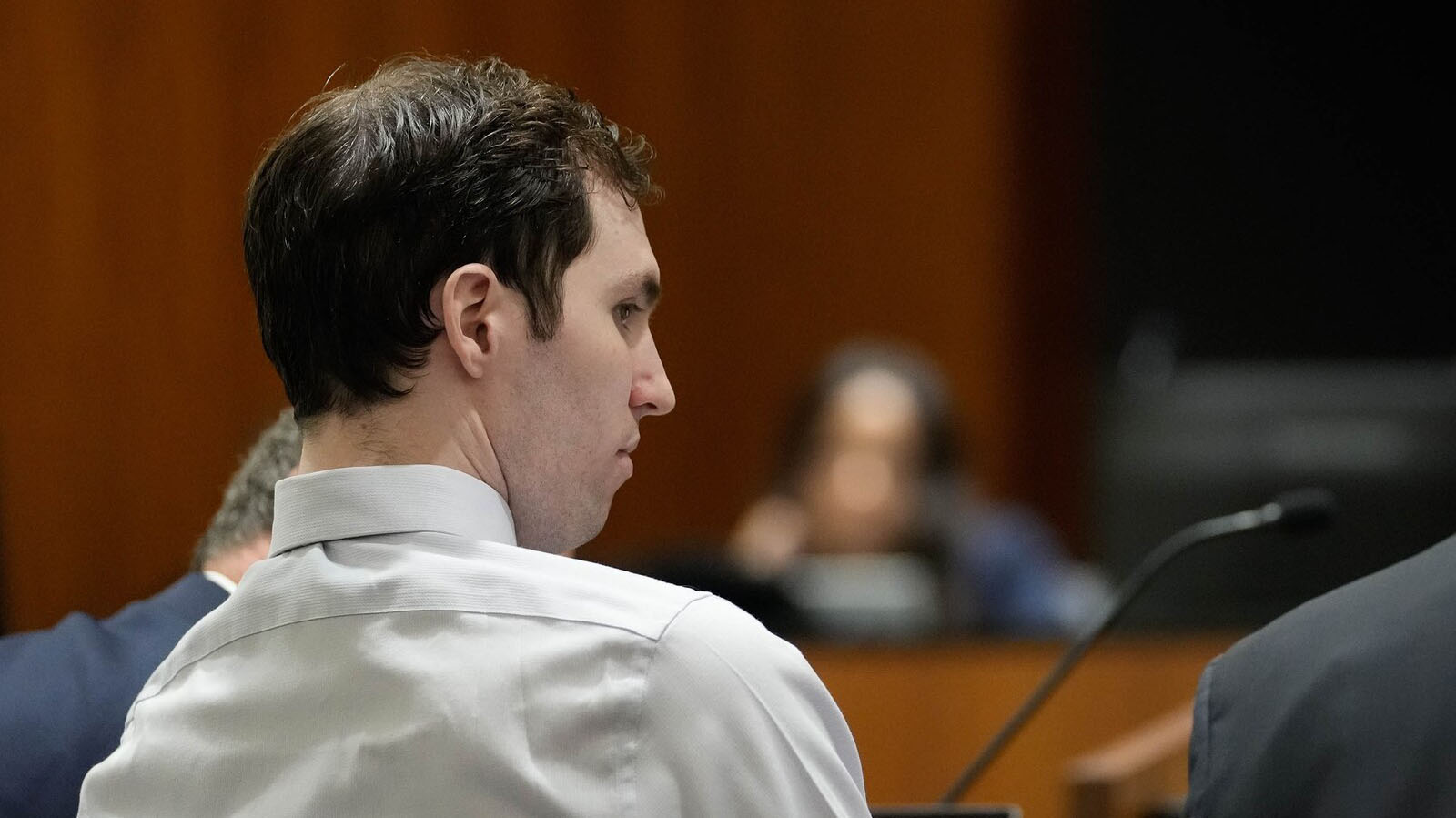
‘Out of control’: Doctors on the front line of Ebola outbreak speak out

‘Out of control’: Doctors on the front line of Ebola outbreak speak out
Workers line up to disinfect their protective equipment at General Referral Hospital of Mongbwalu during the Ebola outbreak response in Mongbwalu, Ituri province, eastern Democratic Republic of Congo, on May 20, 2026. (Michel Lunanga/Getty Images)

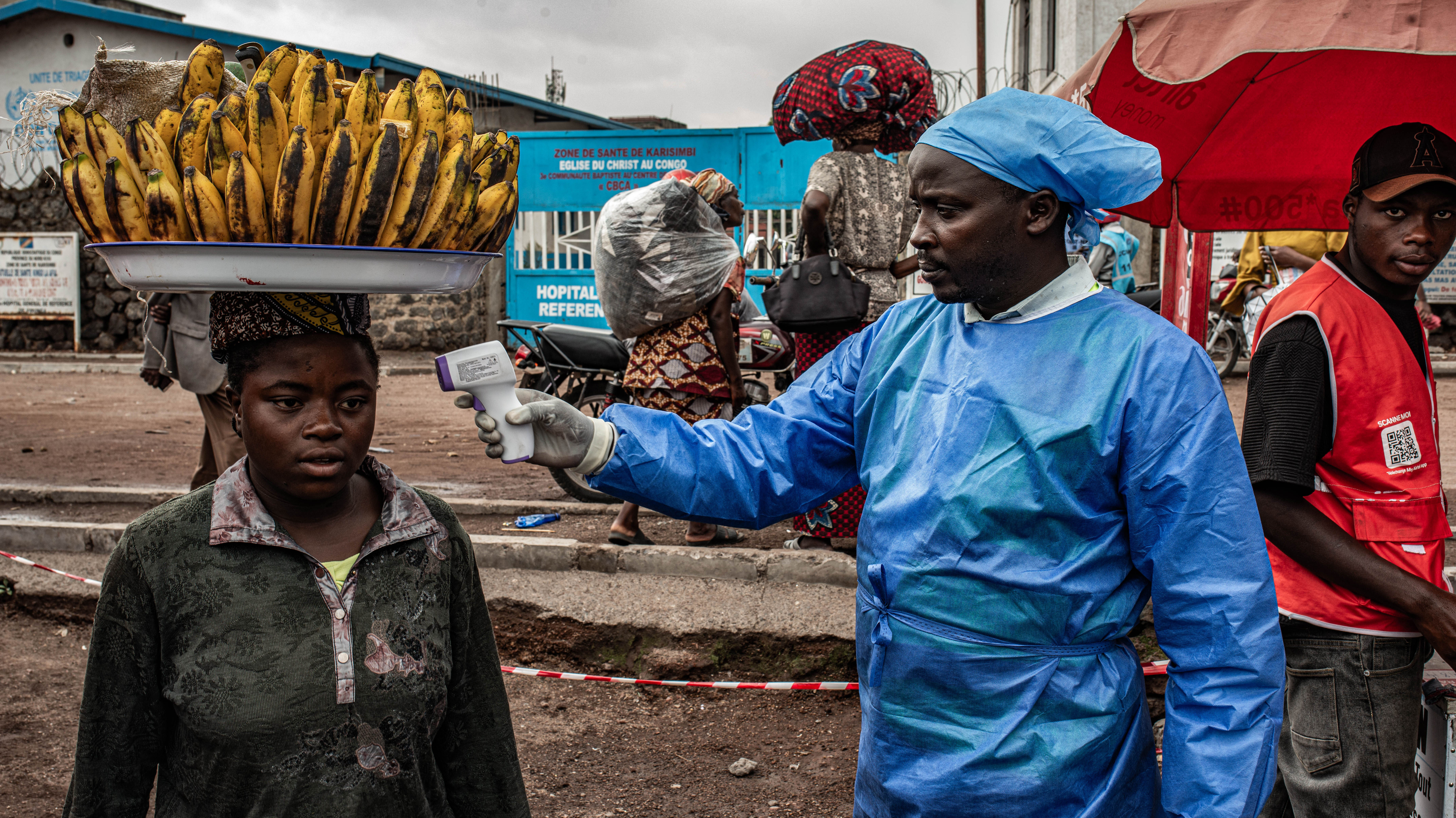
(LONDON) — Doctors and public health workers at the epicenter of the Ebola outbreak in eastern Democratic Republic of Congo (DRC) told ABC News that the deadly virus is still spreading at an alarming rate.

“The outbreak is completely out of control,” said Dr. Richard Kojan in an interview from the city of Bunia in Ituri province, which is the hardest hit.

Kojan, who has been involved in fighting previous Ebola outbreaks in central and western Africa and is president of the Alliance for International Medical Action, said deep mistrust within some local communities is hampering efforts to contain the virus.

Another clinician, Dr. Richard Lokudi, who is the director of the main hospital in Mongbwalu, the hardest hit area, told ABC News that the disease was spreading “at an exponential speed.”

Dr. Lokudi said seven symptomatic patients suspected of having Ebola had recently “escaped” from Mongbwalu Hospital.

This was creating “chains and chains of contamination,” Dr. Lokudi said, adding that this was making the virus “difficult to fight.”

According to the World Health Organization, more than 1,000 suspected cases of a rare strain of Ebola, known as Bundibugyo, have been identified in the eastern DRC and more than 230 suspected deaths from the virus have been recorded.

There is currently no vaccine for the Bundibugyo strain. Seven confirmed cases have also been identified in neighboring Uganda, the WHO said.

Last week, the World Health Organization declared the outbreak a public health emergency of international concern.

Jeremy Konyndyk, who worked as a senior official at USAID under Presidents Barack Obama and Joe Biden and is now president of Refugees International, said that the outbreak had already reached an “explosive” level of transmission.

Konyndyk, who is based in Maryland, described the situation in central Africa as “about as urgent as any Ebola response has ever been” and said the 1,000 suspected cases were “almost certainly the tip of the iceberg” and “perhaps even an undercount by a factor of two or three.”

Health officials believe the Bundibugyo strain of Ebola had been circulating, undetected, in the Ituri province for up to three months before it was officially identified. The unusual strain was harder to identify via testing.

However, levels of mistrust within local communities toward measures to contain the virus, as well as skepticism that the virus even exists, are now hampering efforts to stem the outbreak, health officials say.

Kojan said there is currently a lack of laboratory testing capacity in the region, which is needed for accurate diagnosis and effective contact tracing.

The lack of lab capacity means symptomatic patients suspected of having the virus can wait for days for test results, increasing the risk of them leaving isolation prematurely, Kojan said.

“People don’t trust that, you know, Ebola is a reality,” he said.

The Congolese clinician said he was on “the front line” without access to a laboratory, meaning he was struggling to build trust with patients.

New cases every day

Both Both Dr. Lokudi and Dr. Kojan said their healthcare facilities were receiving new suspected cases of Ebola every day.

Amidst the high levels of mistrust, there has also been growing anger towards strict healthcare procedures, which are necessary to safely bury the dead and stop the virus from spreading.

The two Congolese doctors confirmed reports that on two occasions, isolation tents and healthcare facilities had been set on fire by angry crowds in recent days.

In an exchange of messages with ABC News on Tuesday, Lokudi said the police and military were now protecting his hospital, but he said angry groups of youths had still been gathering nearby.

He said that in some cases, amid “resistance” from local populations, officials were unable to safely access remote areas of Ituri province to investigate suspected deaths from the virus.

Lokudi described the situation as “really concerning,” saying that if teams do not go to such areas, then family members face a high risk of catching the virus if they themselves bury their loved ones.

Ebola is transmitted via bodily fluids, so treating sick patients and handling the deceased should only be done by healthcare teams in protective suits. Ideally, a victim’s home should also be sprayed down with disinfectant.

In the remote rural communities affected, these vital protective measures can run contrary to local burial practices and reports suggest this, mixed with a level of misunderstanding, has been the source of many people’s anger.

Kojan described a lack of masks and protective clothing as another “really big problem,” and both doctors said more adequately trained healthcare professionals were needed on the ground to raise awareness and implement barriers to stop the spread of the virus.

Cuts to U.S. programs created difficulties

Konyndyk said significant cuts to U.S, humanitarian aid in the DRC had made things harder.

“We’re kind of fighting this one with several hands tied behind our back,” Konyndyk told ABC News.

“When we have fought Ebola in the past on this scale, it has been a combination of the Ministry of Health, WHO, USAID, CDC,” he said. 

“USAID is fully gone, CDC is badly weakened. WHO has been badly weakened, the U.S., of course, withdrew from WHO and cut off all funding,” Konyndyk added.

The former USAID official said in an interview that they were “almost certain” that if USAID were still in place, this outbreak would have been caught earlier.

Konyndyk said he believed earlier reports of “an unknown viral hemorrhagic fever outbreak” in the region “would have been brought to the attention of the U.S. mission” in the DRC.

“I’ve talked with some of the members who worked on that team, who were forced out of the government, who would say things like, look, I would be on the phone every week with health leaders in this part of the country,” Konyndyk told ABC News.

“I think the U.S. visibility on that diminished badly and that contributed certainly to the US being slow to wake up to this, but also to the world being slow to wake up to it,” the humanitarian leader said.

A White House official in response said the claim that cuts to U.S. aid have affected the response to the Ebola outbreak in the DRC was “ridiculous.”

“You could just as easily say people died because England didn’t give enough money or Canada didn’t give more or China didn’t. Why not blame the other countries who don’t do any foreign aid?” the official added.

The Trump administration has argued that its “America First Foreign Assistance programs” are intertwined with broader foreign policy goals and the national interest.

“The United States has saved more lives, and continues to save more lives, than any other country in the world, and we’re going to continue to do it,” the White House official said in a statement. “We’re not going to continue to pour billions of dollars out the door of American taxpayer funds for programs that don’t work and in some cases were flat-out corrupt.”

Back in the affected area of the DRC, both doctors interviewed by ABC said they had messages for the US and the world.

International support is needed urgently “on all levels,” according to Lokudi.

Kojan said he is appealing to the world to realize that this is about people’s “humanity.”

“People are really scared. It’s our humanity … so my message is, you know, we need attention.”

Copyright © 2026, ABC Audio. All rights reserved.