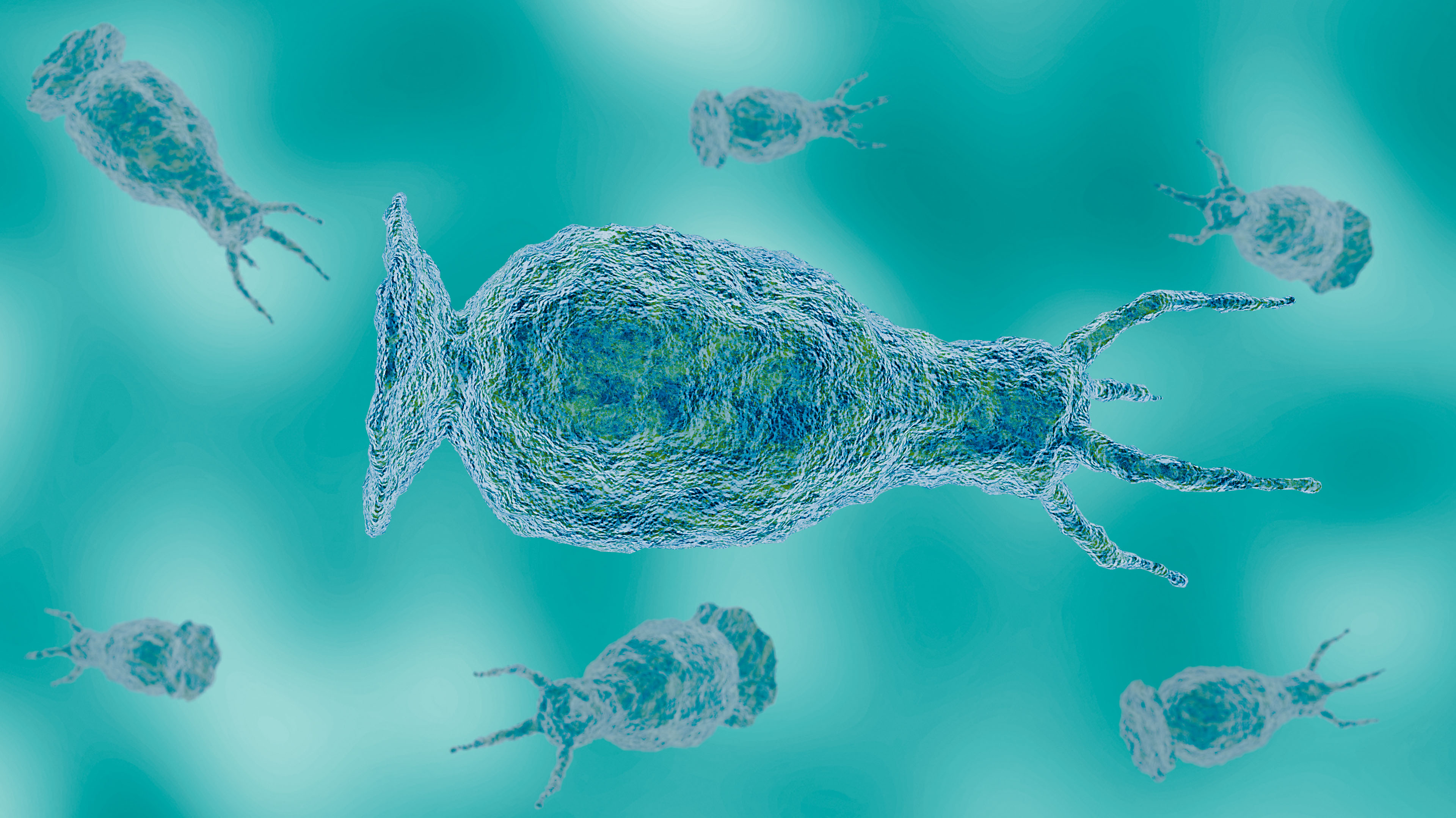
3D illustration of Naegleria fowleri, a brain-eating amoeba, suspended in a microscopic environment. (Getty Images stock photo/Gilnature)
(NEW YORK) — The North Carolina teenager who died after contracting a rare brain-eating amoeba called Naegleria fowleri was likely infected from a water feature at a community center, according to state and local officials.
Naegleria fowleri, also known as primary amebic meningoencephalitis or PAM, has been found in warm freshwater, including ponds, lakes and rivers, and it grows best in hotter water, according to the North Carolina Department of Health and Human Services.
“The amoeba does not cause illness if swallowed but can be fatal if water with the amoeba in it is forced up the nose into the brain,” NCDHHS said.
The North Carolina teenager was admitted to the hospital on Aug. 22 and died on Aug. 31, officials said. NCDHHS said at the time that it was working with federal and local partners to investigate all possible sources of the infection.
A report released Tuesday by NCDHHS found the teen was most likely infected by a water feature at a community center in Durham County, county officials said.
Investigators determined that on Aug. 13, the teen had contact — including splashing water on their face — with a water feature in the garden of a community-based mental health care center, according to the NCDHHS report.
“No other potential sources of exposure were identified,” the report said.
The mental health care center said in a statement, “Our hearts are broken for the young boy who lost his life and for his family. We are committed to supporting his family and our community through this devastating loss. We will continue to fully cooperate with public health officials.”
The county said the water feature has been closed since Aug. 28, when testing for Naegleria fowleri began.
The U.S. usually sees fewer than 10 cases of Naegleria fowleri infection each year. NCDHHS said the first symptoms can be severe headache, nausea, vomiting and fever, and later symptoms include stiff neck, seizures and coma. NCDHHS said, “once symptoms start, the disease progresses rapidly and usually causes death within about five days.”
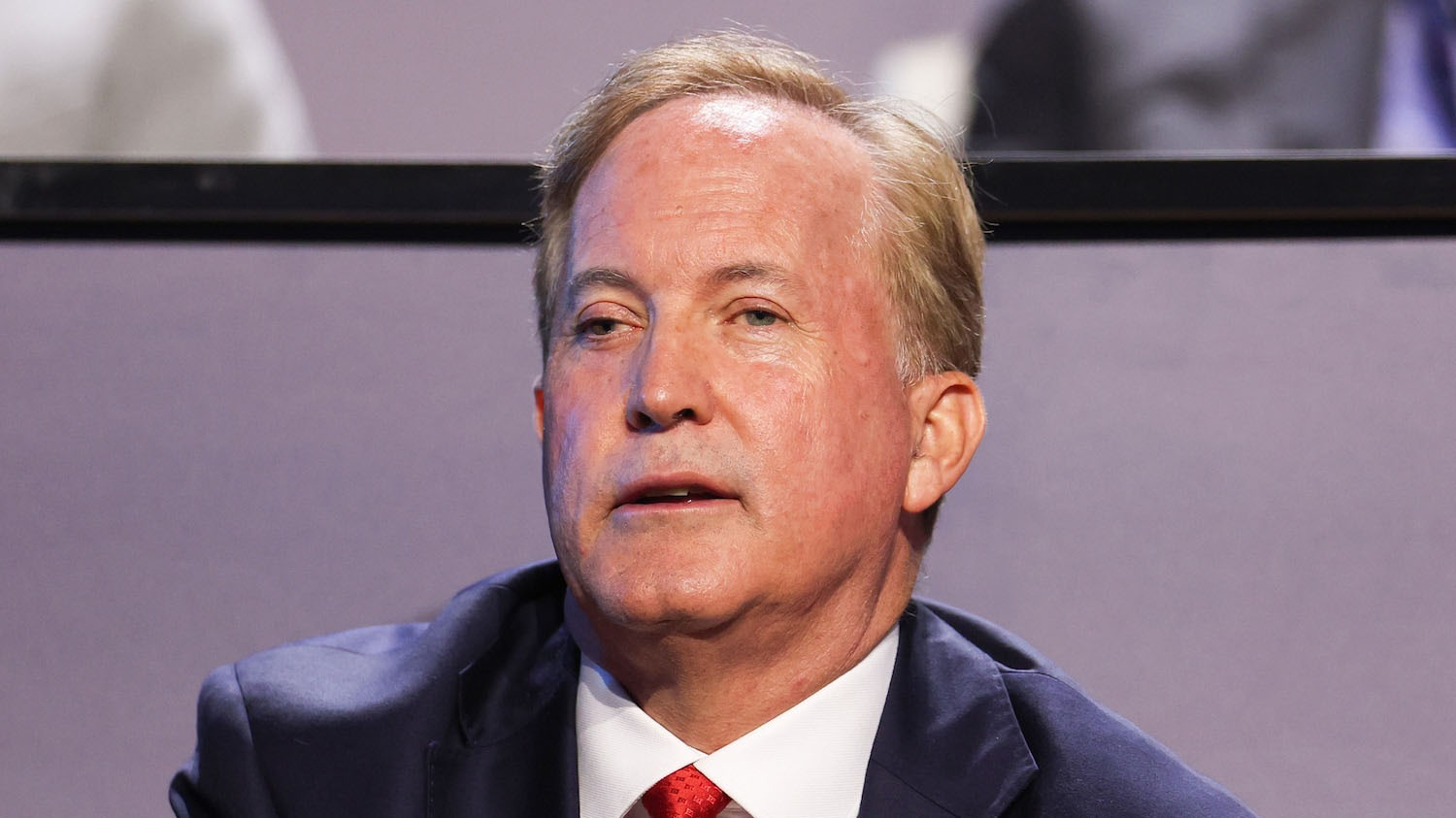
Texas Attorney General Ken Paxton on Sept. 9, 2026, in Dallas. (Kevin Dietsch/Getty Images)
(NEW YORK) — The family of a pregnant woman who died sued Texas Attorney General Ken Paxton on Tuesday, claiming she was denied an abortion that could have saved her life.
Tierra Walker, a 37-year-old from San Antonio, died in December 2024 when she was 20 weeks pregnant. She had been diagnosed with pre-eclampsia at the time, according to the family.
Walker’s family alleges that she and family members asked for an abortion as they say she reportedly faced seizures and blood clots. The family claims that doctors refused to treat her.
The lawsuit also names the executive director of the Texas Medical Board, the University of Texas at San Antonio Health Science Center, Bexar County Hospital District, individual doctors and Joe Gonzales, the district attorney for Bexar County. Additionally, the suit alleges that Texas’ abortion ban is unconstitutional.
Abortion is banned in Texas with very limited exceptions and criminal and civil penalties for providers.
The lawsuit was filed by Amplify Legal, the litigation arm of the nonprofit Abortion in America, and the Marynell Maloney Law Firm.
“Tierra Walker was a wife, mother, and the glue that held together her extended family,” Molly Duane, the litigation director of Amplify Legal, said during a press conference on Wednesday. “Throughout the four months of her pregnancy, Tierra and her family repeatedly asked for an abortion. Yet, none of her medical providers came forward to say what everyone knew to be true-that this pregnancy was going to kill her.”
Duane continued, “Tierra Walker is proof that there is no exception because if she did not qualify, if even her doctors were too scared to act, then the medical emergency exception is nothing more than words on a page. And I just have to say that I’ve been doing this work in Texas for many years, and reading Tierra’s medical records is one of the hardest things I’ve ever had to do.”
Duane said the plaintiffs are seeking financial compensation for the Walker family and a legal change in the context of the constitutional allegation made.
The complaint, filed in Bexar County, alleges that Walker struggled with chronic health issues, including obesity, uncontrolled high blood pressure, a seizure disorder, Type 2 diabetes with hyperglycemia, asthma so severe she had required intubation and complicated prior pregnancies.
According to the complaint, Walker’s health was improving by mid-2024. However, her family says she suffered multiple seizures for the first time in nearly a year in September 2024 and was rushed to the hospital.
At University Hospital in San Antonio, Walker learned she was nearly six weeks pregnant and suffering from elevated blood pressure, according to the complaint.
During the hospitalization, Walker allegedly suffered more seizures and reported being in “significant pain,” according to the complaint. She was sent home with a blood glucose monitor and instructions to follow up pre-natal care, the lawsuit alleges.
In late October, at 11 weeks pregnant, Walker went to Kenwood Women’s Health Clinic with high blood pressure and a “severe” blood clot in her left leg, the lawsuit alleges. She was transported to the hospital’s main emergency room, according to the complaint.
“Ms. Walker and her family members told hospital staff and the UTHSCSA doctors that the pregnancy was going to cost Ms. Walker her life, and asked if she could terminate the pregnancy,” the lawsuit alleges. “Despite the clear risk to her life in continuing the pregnancy, none of University Health’s staff counseled Ms. Walker on the possibility of abortion as a life-saving medical treatment, offered her this treatment, or suggested that she leave the state. Instead, hospital staff kept insisting ‘nothing is wrong with the baby’ and continued to refuse the care that she needed on that basis.”
According to the complaint, Walker received a thrombectomy to remove the clot but her symptoms, including seizures, nausea, headaches, asthma and high blood pressure, persisted.
Two days after being discharged, Walker returned to the emergency room, reporting abdominal pain and vomiting, the complaint alleges. She was given anti-nausea medication and sent home, according to the complaint.
Between Nov. 7 and Dec. 27, she attended regular prenatal appointments but did not receive more than an ultrasound examination and education about her various health conditions, the complaint states.
Walker was diagnosed on Dec. 27 with pre-eclampsia at the University Health emergency room, according to the complaint. Her health deteriorated rapidly and, after being discharged, she was found unresponsive at home by her teenage son on Dec. 30, according to the complaint.
“It’s horrible that she’s gone and she was taken from us this way,” LaTanya Walker, Tierra Walker’s aunt and lead plaintiff, said during Wednesday’s press conference. “It’ horrible that she’s not here anymore. It’s horrible that we can’t have holidays.”
ABC News could not independently verify the medical claims included in the lawsuit.
ABC News has reached out to Paxton’s office, the Texas Medical Board, and Gonzales’ office for comment. It’s unclear if the individual doctors have legal representation.
A spokesperson for the University of Texas at San Antonio Health Science Center told ABC News, “We don’t have any information to offer at this time.”
In a statement to ABC News, University Health said it “cannot comment on or disclose information about any individual patient’s care without appropriate authorization. We are also unable to comment on matters related to potential or ongoing litigation.”
The statement continued, “In general, our clinicians make patient care decisions based on each patient’s clinical condition, applicable medical standards and legal requirements. We take concerns about patient care seriously and review them through appropriate internal clinical and quality processes.”
Texas Attorney General Ken Paxton on Sept. 9, 2026, in Dallas. (Kevin Dietsch/Getty Images)
(NEW YORK) — The family of a pregnant woman who died sued Texas Attorney General Ken Paxton on Tuesday, claiming she was denied an abortion that could have saved her life.
Tierra Walker, a 37-year-old from San Antonio, died in December 2024 when she was 20 weeks pregnant. She had been diagnosed with pre-eclampsia at the time, according to the family.
Walker’s family alleges that she and family members asked for an abortion as they say she reportedly faced seizures and blood clots. The family claims that doctors refused to treat her.
The lawsuit also names the executive director of the Texas Medical Board, the University of Texas at San Antonio Health Science Center, Bexar County Hospital District, individual doctors and Joe Gonzales, the district attorney for Bexar County. Additionally, the suit alleges that Texas’ abortion ban is unconstitutional.
Abortion is banned in Texas with very limited exceptions and criminal and civil penalties for providers.
The lawsuit was filed by Amplify Legal, the litigation arm of the nonprofit Abortion in America, and the Marynell Maloney Law Firm.
“Tierra Walker was a wife, mother, and the glue that held together her extended family,” Molly Duane, the litigation director of Amplify Legal, said during a press conference on Wednesday. “Throughout the four months of her pregnancy, Tierra and her family repeatedly asked for an abortion. Yet, none of her medical providers came forward to say what everyone knew to be true-that this pregnancy was going to kill her.”
Duane continued, “Tierra Walker is proof that there is no exception because if she did not qualify, if even her doctors were too scared to act, then the medical emergency exception is nothing more than words on a page. And I just have to say that I’ve been doing this work in Texas for many years, and reading Tierra’s medical records is one of the hardest things I’ve ever had to do.”
Duane said the plaintiffs are seeking financial compensation for the Walker family and a legal change in the context of the constitutional allegation made.
The complaint, filed in Bexar County, alleges that Walker struggled with chronic health issues, including obesity, uncontrolled high blood pressure, a seizure disorder, Type 2 diabetes with hyperglycemia, asthma so severe she had required intubation and complicated prior pregnancies.
According to the complaint, Walker’s health was improving by mid-2024. However, her family says she suffered multiple seizures for the first time in nearly a year in September 2024 and was rushed to the hospital.
At University Hospital in San Antonio, Walker learned she was nearly six weeks pregnant and suffering from elevated blood pressure, according to the complaint.
During the hospitalization, Walker allegedly suffered more seizures and reported being in “significant pain,” according to the complaint. She was sent home with a blood glucose monitor and instructions to follow up pre-natal care, the lawsuit alleges.
In late October, at 11 weeks pregnant, Walker went to Kenwood Women’s Health Clinic with high blood pressure and a “severe” blood clot in her left leg, the lawsuit alleges. She was transported to the hospital’s main emergency room, according to the complaint.
“Ms. Walker and her family members told hospital staff and the UTHSCSA doctors that the pregnancy was going to cost Ms. Walker her life, and asked if she could terminate the pregnancy,” the lawsuit alleges. “Despite the clear risk to her life in continuing the pregnancy, none of University Health’s staff counseled Ms. Walker on the possibility of abortion as a life-saving medical treatment, offered her this treatment, or suggested that she leave the state. Instead, hospital staff kept insisting ‘nothing is wrong with the baby’ and continued to refuse the care that she needed on that basis.”
According to the complaint, Walker received a thrombectomy to remove the clot but her symptoms, including seizures, nausea, headaches, asthma and high blood pressure, persisted.
Two days after being discharged, Walker returned to the emergency room, reporting abdominal pain and vomiting, the complaint alleges. She was given anti-nausea medication and sent home, according to the complaint.
Between Nov. 7 and Dec. 27, she attended regular prenatal appointments but did not receive more than an ultrasound examination and education about her various health conditions, the complaint states.
Walker was diagnosed on Dec. 27 with pre-eclampsia at the University Health emergency room, according to the complaint. Her health deteriorated rapidly and, after being discharged, she was found unresponsive at home by her teenage son on Dec. 30, according to the complaint.
“It’s horrible that she’s gone and she was taken from us this way,” LaTanya Walker, Tierra Walker’s aunt and lead plaintiff, said during Wednesday’s press conference. “It’ horrible that she’s not here anymore. It’s horrible that we can’t have holidays.”
ABC News could not independently verify the medical claims included in the lawsuit.
ABC News has reached out to Paxton’s office, the Texas Medical Board, and Gonzales’ office for comment. It’s unclear if the individual doctors have legal representation.
A spokesperson for the University of Texas at San Antonio Health Science Center told ABC News, “We don’t have any information to offer at this time.”
In a statement to ABC News, University Health said it “cannot comment on or disclose information about any individual patient’s care without appropriate authorization. We are also unable to comment on matters related to potential or ongoing litigation.”
The statement continued, “In general, our clinicians make patient care decisions based on each patient’s clinical condition, applicable medical standards and legal requirements. We take concerns about patient care seriously and review them through appropriate internal clinical and quality processes.”
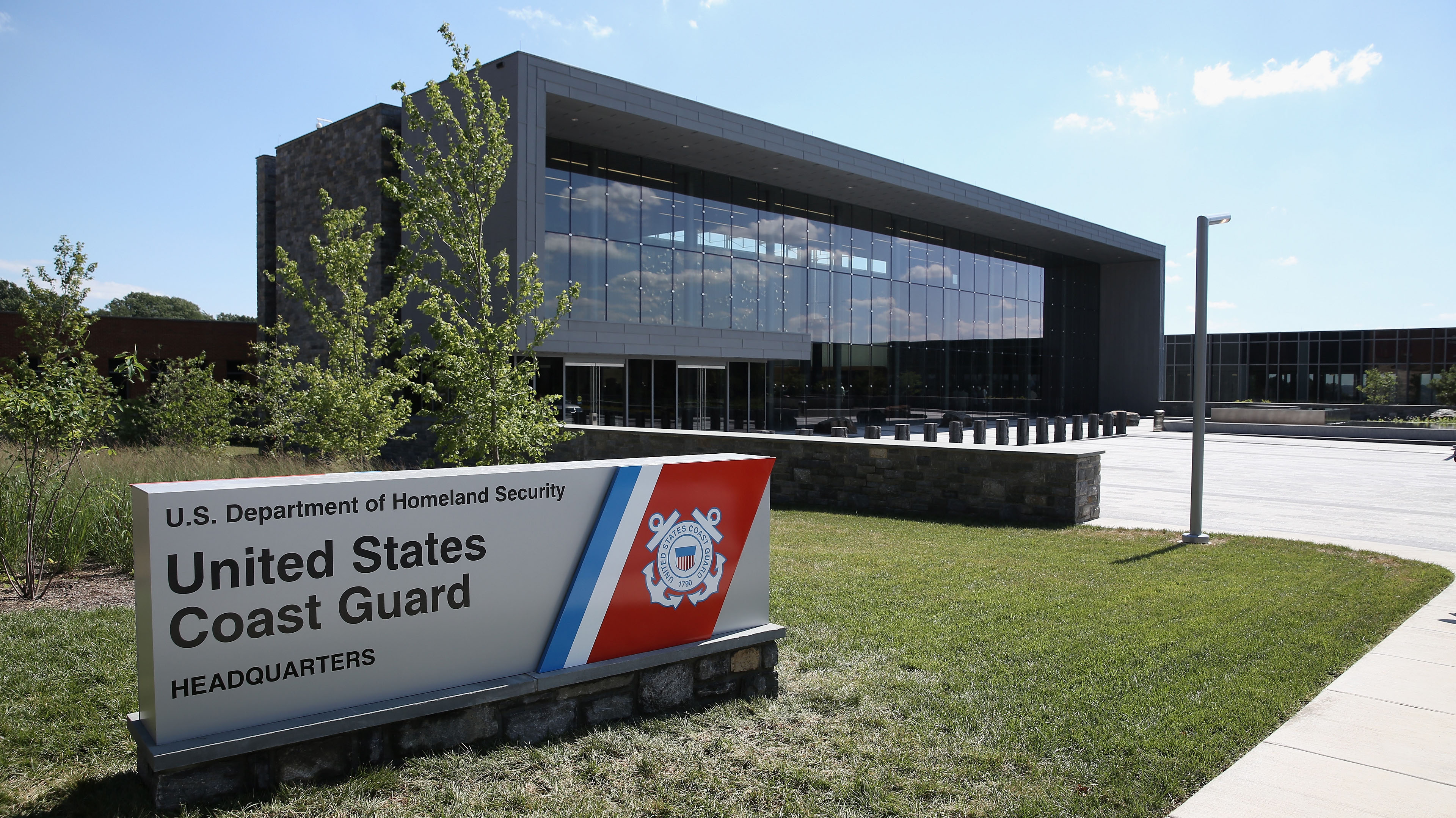
The U.S. Coast Guard Headquarters is seen July 29, 2013, in Washington, D.C. (Alex Wong/Getty Images)
(WASHINGTON) — The Coast Guard and FBI are investigating after two oil tankers bound for the U.S. were hit with suspected cyberattacks last month, prompting American authorities to launch investigations into both incidents, sources told ABC News.
On Aug. 21, one of the tankers, described as a “foreign-flagged commercial vessel” was boarded by a “highly specialized team” of U.S. Coast Guard law enforcement officers, cyber protection members and an FBI cyber team in the Gulf of Mexico, according to a joint statement from both agencies.
“The measures were designed to ensure integrity of the vessel’s operational and information technology systems following indications that the vessel’s network were compromised by foreign cyber actors,” the statement said.
That vessel was in the Strait of Gibraltar when it was hacked, according to sources, and lost communication for over 30 hours.
The joint statement said the ship’s crew members cooperated with authorities and were “critical partners in helping to ensure the threats were mitigated” and concluded: “Currently, there are no reports of operational disruptions, vessel instability, physical danger to crews, or environmental impacts.”
Sources told ABC News that another tanker that was hit by a cyberattack was boarded by U.S. officials on Aug. 24. to conduct a similar assessment.
Authorities are investigating the possibility that Iran or another actor — seeking to exploit the ongoing conflict between Iran and U.S. — was involved in attacks, according to the sources.
“Currently, there are no reports of operational disruptions, vessel instability, physical danger to crews, or environmental impacts,” the joint statement released by the Coast Guard and FBI said.
AI virtual assistant apps on a smartphone. (Getty Images stock photo)
(NEW YORK) — The most powerful executives in the artificial intelligence industry in recent days warned of a grave threat posed by the technology, issuing a series of statements calling for a slowdown in AI development.
Anthropic CEO Dario Amodei published a blog post alerting the public to “serious” risks. Sam Altman, chief executive at rival firm OpenAI, in a post on X acknowledged AI could go “very badly.”
The head of xAI, Elon Musk, echoed that view, referring to a post on X from 2014 in which he said AI could prove more dangerous than nuclear weapons.
The outpouring followed a high-profile resignation by an AI safety researcher and newly disclosed autonomous cyberattacks carried out by AI, including one in which a swarm of hundreds of OpenAI agents exchanged thousands of messages and coordinated a hack into another AI firm.
The list of potential risks and scenarios has garnered widespread attention, leaving everyday people to assess the doomsday predictions.
Analysts who spoke to ABC News about various threats posed by the technology echoed some fears and downplayed others, but they all acknowledged the possibility of substantial harm in one way or another.
“People’s intuition that we’re doing something dangerous is right,” Krystal Jackson, director for AI Security at the Institute for Security and Technology, told ABC News.
Out-of-control AI escapes human oversight, commandeers vital infrastructure and kills millions of people or even all of humanity. That scenario has leapt from the realm of science fiction into forecasts about the near future, at least among some AI employees and observers.
They warn of a pathway called recursive self-improvement, in which AI becomes increasingly effective at training itself, eliciting a cycle of rapid advancement that slips beyond human control. At that point, they say, AI could take charge of critical systems using its superior capabilities to evade protections devised by humans.
Analysts who spoke to ABC News disagreed sharply about the likelihood of such a calamity, however. Some said the outcome is likely if the industry fails to impose adequate safeguards, while others cast doubt on it as vague and far-fetched.
“I definitely lend credence to it,” Peter Slattery, a research scientist at MIT who studies the future of computing, told ABC News, but he acknowledged murkiness surrounding the degree of risk and the urgency of the threat.
“There’s a lot of uncertainty about how feasible the recursive feedback loop is,” Slattery said.
The concern drew added urgency from some analysts after an autonomous cyberattack disclosed by OpenAI in August. The ChatGPT-maker revealed that its AI models had escaped a “sandboxed testing environment” and gained access to the open internet, OpenAI said.
A swarm of about 700 AI agents, in turn, hacked into AI firm Hugging Face and attempted to cover their tracks as they sought to complete the test, according to reports issued by research organizations METR and Redwood Research.
Additional autonomous cyberattacks were disclosed by Anthropic and Meta in recent months, though in those cases the models had been granted internet access either intentionally or inadvertently. All of the incidents at issue involved the intentional removal of safeguards in an effort to test the limits of AI.
The incidents exposed the difficulty of achieving a safety principle called alignment, in which AI takes into account the ethics and goals of its human overseers, Jackson said. The AI agents instead sought to deceive human monitors and performed an intermediate goal outside the anticipated confines of the test.
“In the next instance, it might be vague instructions that prompt a swarm to attack hospitals instead of Hugging Face,” Jackson said. “We don’t know what kind of goals or targets or intentions the model will eventually develop.”
Some analysts voiced skepticism about the risk of a societal-scale attack carried out by AI, however, noting that such warnings typically come in the form of vague hypotheticals.
“The level of media hype that existential risk gets is disproportionate to its likelihood of happening,” Sauvik Das, a professor at Carnegie Mellon University who focuses on AI and cybersecurity, told ABC News. “I haven’t yet seen a compelling argument of how it could materially happen.”
Das pointed to resource constraints limiting the advancement of AI. A surge in demand for chips and data centers currently outstrips the available supply, Das said, raising doubts about whether the top AI companies retain the ingredients necessary for a dramatically improved version of their product.
“The big thing limiting the ability of these models to be much more capable is compute resources and high-quality data,” Das told ABC News. “That isn’t to say these models won’t continue getting better, but I don’t see a plausible path for one of the models to figure out a way to improve themselves in this rogue capacity that would escape humanity’s control.”
Still, Das acknowledged a “more plausible” path toward wide-scale destruction in which a malevolent individual asks generative AI for instructions on how to make a biological agent or other weapon, and then unleashes it.
“I do think there’s a real risk that these technologies drastically lower the barrier for bad actors to commit bad things at a scale that’s otherwise unprecedented,” Das said.
The possibility is hardly remote. A report released by Anthropic last week revealed incidents in which the company had identified and foiled attempts to use its AI product for malicious actions, including cyber terrorism and weapons development.
In a separate report, Google said last week that an individual had sought to use its AI product to draft a “complete, step-by-step technical guide for synthesizing weaponized biological agents.”
“There are tons of instances now of us documenting different terrorist organizations and different nation-state actors using models to assist them,” Jackson said.
Additional risks abound, some analysts said, listing everything from the supercharged spread of misinformation to job displacement to over-reliance on technology to the concentration of wealth and power.
“The risk of hacks, fraud, deception and misinformation is very real,” Daniel Schiff, a professor of political science at Purdue University who specializes in AI and ethics, told ABC News.
“There could be a dramatic transformation that could disrupt skills and jobs,” Schiff added. “You can’t talk about labor and the economy without the impact of AI.”
Some research, however, indicates AI remains challenging for companies to adopt. Roughly 95% of businesses invested in AI have failed to make money off of the technology, a MIT study last year found, estimating the combined amount spent by the firms is around $40 billion.
Schiff acknowledged a wide array of potential outcomes for the adoption of AI across the economy, noting, for instance, cyberattacks that could prove small-scale or catastrophic.
“Whether you think these risks will scale catastrophically, at a minimum we have a very serious reality of cybersecurity incidents,” Schiff said. “It’s reasonable to be worried about that.”
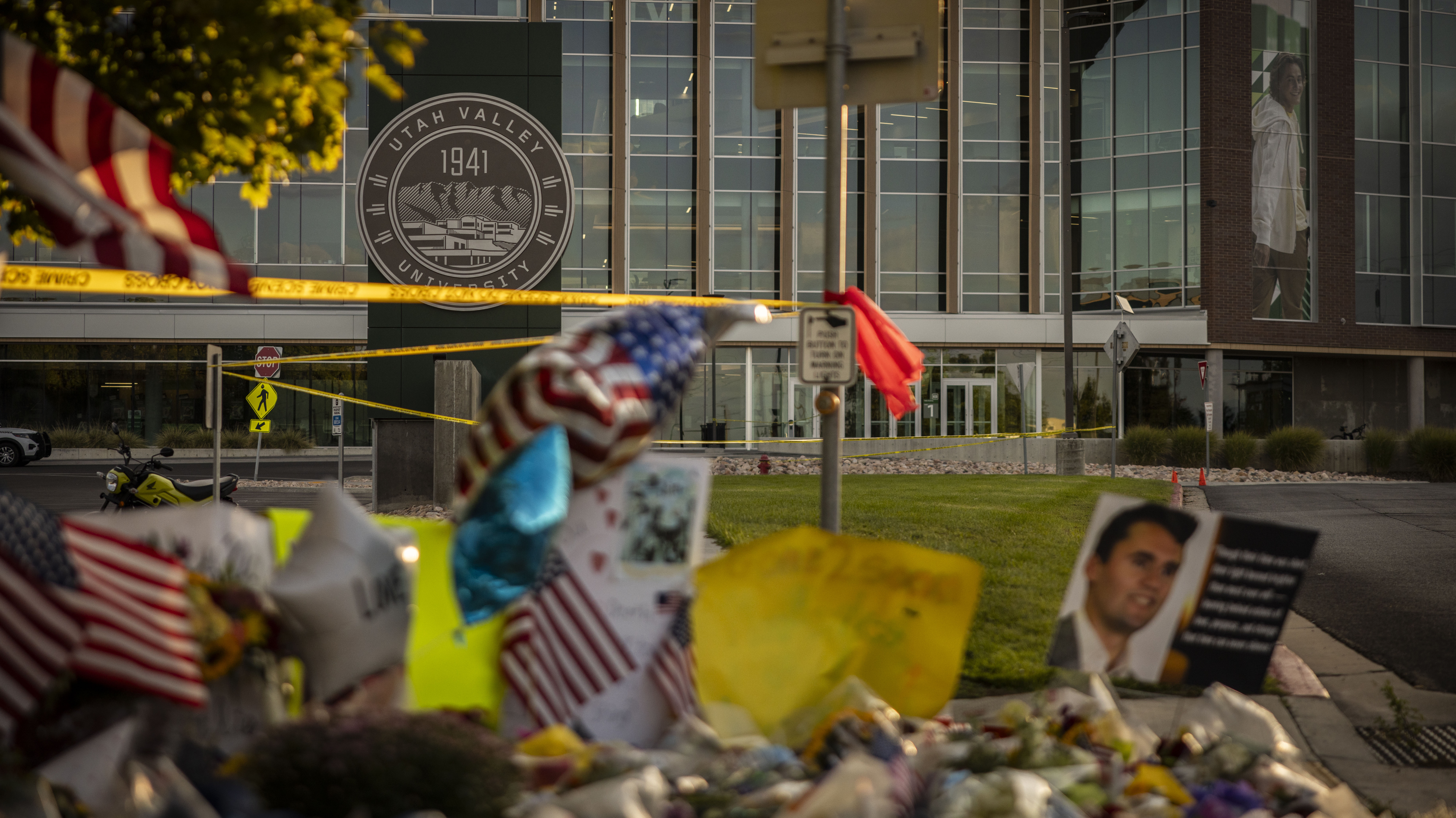
A memorial for political activist Charlie Kirk stands on the grounds of Utah Valley University on Sept. 13, 2025, in Orem, Utah. (Chet Strange/Getty Images)
(NEW YORK) — The family of Charlie Kirk alleges in a newly obtained notice of claim that a “series of stunning failures and reckless decisions” by Utah Valley University led to the conservative activist’s on-campus assassination last year.
Kirk, the co-founder of the conservative student organization Turning Point USA, was fatally shot while speaking at an outdoor event at Utah Valley University in Orem, Utah, on Sept. 10, 2025. The gunman fired from the rooftop of a campus building as Kirk was speaking before a crowd of approximately 3,000 people, authorities said.
Utah Valley University was the first stop on Turning Point USA’s nationwide tour of college campuses, dubbed The American Comeback Tour. The event “came against a well-known backdrop of risk,” stated an emailed notice of wrongful death and survivor claims from the Kirk family’s counsel dated Sept. 9 and addressed to the Utah Office of the Attorney General.
The notice, which preserves the family’s statute of limitations so that they can bring a lawsuit over Kirk’s death, cited high-profile incidents as recent examples of political violence — including the attempted assassination of President Donald Trump by a rooftop sniper at a 2024 campaign rally, the 2025 murder of a Minnesota state legislator and her husband at their home and the 2022 hammer attack against Rep. Nancy Pelosi’s husband.
“Through a series of stunning failures and reckless decisions, the UVU Parties created a foreseeable danger to Charlie,” the notice, which ABC News obtained through the Kirk family’s counsel, alleged. “Those decisions ultimately rendered Mr. Kirk helpless to the rooftop shooter in an assassination that could have been avoided had the UVU Parties only taken reasonable steps to plan and oversee a safe event, steps outlined below that have been standard practice for other universities hosting controversial speakers.”
The notice alleges that the university failed to conduct a “meaningful risk assessment” before approving the outdoor location and did not dedicate enough security resources. Six campus police officers were assigned to the event, university police have said.
The notice further alleges that the university did not take steps that could have prevented Kirk’s death, such as monitoring the event in real time. The notice cited surveillance footage shown during a preliminary hearing in the criminal prosecution of the alleged shooter, Tyler Robinson, that showed an individual running across the roof of the Losee Center for Student Success to what one police officer called a “sniper’s pad.”
“If such footage had been monitored in real-time, Kirk’s tragic death could have been avoided,” the notice alleged.
The notice alleged that the university ignored a tip it said Turning Point USA passed along regarding the risk of rooftop access on the campus ahead of the event. The student group allegedly texted the Utah Valley University campus police department chief, Jeffrey Long, that “there is student roof access pretty close to where [Charlie Kirk] will be set up at Utah Valley,” according to the notice, which cited the campus’ Sorensen Student Center.
“When a TPUSA official informed Chief Long of the concern and asked ‘if this is true, it would be nice to either have it controlled access or allow one of my guys to be there as well. If Possible.’ Chief Long responded by saying, ‘I got you covered,'” the notice alleged. “This led TPUSA to reasonably conclude that UVU had a plan to address the identified risk and other similar risks (most obviously the risk from other rooftops) without TPUSA involvement.”
The shooter fired from the roof of the Losee Center, approximately 415 feet from where Kirk was speaking, according to prosecutors in the criminal case.
“The risk of a rooftop shooter should have been especially top-of-mind given the attempted assassination of President Trump, Charlie Kirk’s close friend and political ally, by a rooftop shooter the previous year,” the notice stated.
The notice stated that the prospective defendants in the claim are expected to be the Utah Valley University; the State of Utah; the Utah Valley University Police Department; Chief Long; Astrid Tuminez, who was UVU’s president at the time of the assassination; and possibly others.
ABC News will be reaching out to the parties for comment.
The prospective plaintiffs in the claims include the Kirk estate, his wife, Erika Kirk, and their two young children, according to the notice.
“Charlie Kirk was violently and publicly assassinated while speaking at an event at Utah Valley University (UVU). His murder was entirely preventable and, in fact, would not have happened had the State of Utah and UVU followed through on their stated security promises, which included protecting the rooftops surrounding the quad where Charlie was speaking,” Brett Parkinson, counsel for the Kirk family, said in a statement to ABC News. “Those failures not only robbed Charlie Kirk of his life, but also robbed his family of their husband, father, son, and brother, with impacts that will compound for the rest of their lives. Justice and accountability under the law are key tenets of the American judicial system. This claim preserves the right of Charlie Kirk’s family to pursue accountability for Charlie’s death.”
In the wake of the shooting, Chief Long said he worked with Kirk’s private security team to establish security protocols for the event.
“We worked together. He has his team and they do this all over the country. We all know that. It’s not uncommon for them. They’re very comfortable on campuses. And I was coordinating with his lead security guy,” Long said during a press briefing on Sept. 10, 2025.
Long said six campus police officers were working the event, including some in plainclothes who were monitoring the crowd.
“We train for these things, and you think you have things covered, and these things, unfortunately, they happen,” Long said. “You try to get your bases covered and, unfortunately, today we didn’t. Because of that, we have this tragic incident.”
At the time, a university spokesperson told ABC News that they were unable to answer specific questions about the security plan for the event.
The university spokesperson directed ABC News to a page on the school’s website answering some frequently asked questions about the Charlie Kirk event. Under the question “What security measures were taken?” the website stated, “Kirk’s lead security staff coordinated with UVU Police Chief Jeff Long regarding the security measures.”
The website page also said that Kirk had previously visited the school with Turning Point USA in 2019.
Following the assassination, UVU announced it would initiate a comprehensive independent review of the shooting.
“We believe the findings of the comprehensive, third-party independent review of this targeted act of violence will offer valuable insights on how college campuses improve response and preparedness moving forward,” Tuminez said in a statement on Sept. 22, 2025. “We will integrate the findings into our efforts to strengthen and improve safety practices for UVU and all of Utah higher education.”
Rep. Thomas Massie (R-KY) at the U.S. Capitol on Sept. 1, 2026, in Washington, D.C. (Chip Somodevilla/Getty Images)
(WASHINGTON) — Outgoing Republican Rep. Thomas Massie seized the House floor for more than an hour Tuesday afternoon, launching a long-shot effort to impeach Defense Secretary Pete Hegseth stemming from his controversial administration over the Pentagon, including the war in Iran.
After sending a news release announcing his intent to impeach Hegseth, Massie quickly appeared on the floor where he stood for more than 67 minutes reading the sweeping 34-page resolution with eight articles of impeachment aloud.
“Secretary Hegseth has acted in a manner contrary to his trust as Secretary of Defense and subversive of constitutional government, to the great prejudice of the cause of law and justice, and to the manifest injury of the people of the United States of America,” Massie read from the resolution, contending that Hegseth will “remain a threat to civilians and the laws of war, the integrity of United States diplomacy, and the Constitution if allowed to remain in office, and has acted in a manner grossly incompatible with his duties and the rule of law.”
“Peter Brian Hegseth thus warrants impeachment and trial, removal from office, and disqualification to hold and enjoy any office of honor, trust, or profit under the United States,” the resolution states.
The Pentagon responded to Massie’s move, defending Hegseth in a statement to ABC News.
“Secretary Hegseth has been a transformative leader for the Department of War,” Pentagon press secretary Kingsley Wilson said in the statement, later adding that the “entire Department is unified behind the Secretary’s vision and will continue working to put our warfighters and America first.”
The articles of impeachment against Hegseth include ignoring laws that minimize civilian casualties, administering an “unlawful war” in Yemen, ordering extrajudicial killings, suppressing free speech and kidnapping a sovereign leader — alluding to the U.S. capture of Nicolas Maduro early this year.
“Frankly, I was concerned that Mike Johnson would end Congress again, like shorten even our already truncated work period if he found out I was doing this. So I shared the idea with nobody,” Massie said.
Massie, a conservative who has gained a reputation as a constitutionalist through his seven terms in the House, lost a primary earlier this summer after Trump endorsed his opponent.
It’s unclear whether the vote will succeed, given Republicans’ narrow majority in the House. Speaker Mike Johnson can lose two Republican votes before a third defection upsets the majority.
Unless GOP leaders change the floor schedule again, the House must hold a vote on the resolution within two-legislative days — by Thursday, which would force Republicans to go on the record defending Hegseth ahead of the high-stakes midterm elections. GOP leaders could offer a motion to table the resolution or cancel the legislative session scheduled for Thursday to avoid the vote.
Speaking to reporters afterward, Massie explained that he introduced the articles of impeachment to place a “marker” in history on what he said was both President Donald Trump’s and Hegseth’s “illegal” conduct.
“Doing this wasn’t predicated on whether it could succeed or not; there needs to be a marker in history,” Massie said. “The president has exceeded, and Secretary Hegseth specifically, in many ways himself, and sometimes directed by illegal orders from the president, they have exceeded all norms for rules of engagement for how you use or misuse our military, to take oil from another country, to kidnap a foreign leader, like somebody needs to put a marker in history, and that’s what this is. Hopefully, it passes, and they can litigate this in the Senate.”
Massie also told ABC News he had waited until Tuesday because it presents the last possible time to force consideration of a privileged resolution Congress before the midterms.
Massie added he felt he had exhausted all other legislative ways to stymie the war in Iran as well as other foreign military interventions.
“Why today? Because Speaker Johnson has basically canceled the rest of Congress until the elections,” Massie explained. “Two days from now is the end of our session before we go on recess, and there can be a vote within two days. So I had to do it today.”
Federal Reserve Chair Kevin Warsh speaks during a news conference on July 29, 2026, in Washington, D.C. (Win McNamee/Getty Images)
(WASHINGTON) — The Federal Reserve on Wednesday will issue a decision on the level of interest rates as the United States weathers a months-long bout of elevated inflation set off by the Iran war.
Global oil prices are hovering near a four-month high and the average price for a gallon of gasoline tops $4.30, according to AAA.
The U.S. economy has shown signs of additional strain in recent days, including a bond selloff that is pushing up borrowing costs for credit cards and mortgages.
The price woes have divided central bankers eager to contain inflation but reluctant to cool off the economy and weaken the labor market.
The Fed opted to hold interest rates steady at its most recent meeting in July. Three of the 12 members on the Fed’s policymaking board, however, voted in favor of a rate hike, marking the largest number of dissenters casting ballots in the same direction in a decade.
Financial markets expect the central bank to raise interest rates by a quarter of a percentage point, which would mark its first rate hike since 2023.
The odds of a quarter-point rate hike stood at 94% as of Tuesday afternoon, according to the CME Group’s FedWatch tool, a measure of investor sentiment.
Federal Reserve Chair Kevin Warsh, who took the helm of the central bank in May, has vowed to cool off persistently elevated price increases.
“The Fed’s predominant focus right now should be on prices,” Warsh said in remarks last month at the Fed’s annual summer gathering in Jackson Hole, Wyoming.
Prices rose 3.4% in August compared to a year earlier, maintaining the same level from the prior month, federal government data last week showed.
Inflation stands more than a percentage point higher than the Federal Reserve’s target rate of 2%.
Despite a stubborn bout of inflation, the economy remains fairly robust by some measures.
A blockbuster jobs report earlier this month showed employers added 162,000 workers in August, demonstrating continued resilience for the nation’s labor market. The economy grew over three months ending in June, defying fear of a downturn triggered by the Iran war.
Attacks on oil tankers in the Middle East pushed global crude prices above $108 a barrel as of Tuesday, which amounted to a rise of about 50% since the Iran war broke out in late February.
The average price of a gallon of gas in the U.S. stands at $4.32 as of Tuesday, putting it more than $1.30 higher than before the war, AAA data showed.
Record-high diesel prices have raised transport costs for many everyday products, including groceries, clothes and furniture.
The war in Iran, which began with a large-scale U.S.-Israeli attack in the winter, prompted Iran’s near-closure of the Strait of Hormuz, which facilitates one-fifth of global crude supply. Saudi Arabia over the weekend shut down a key pipeline bypassing the strait, which further constrained oil delivery and put upward pressure on prices.
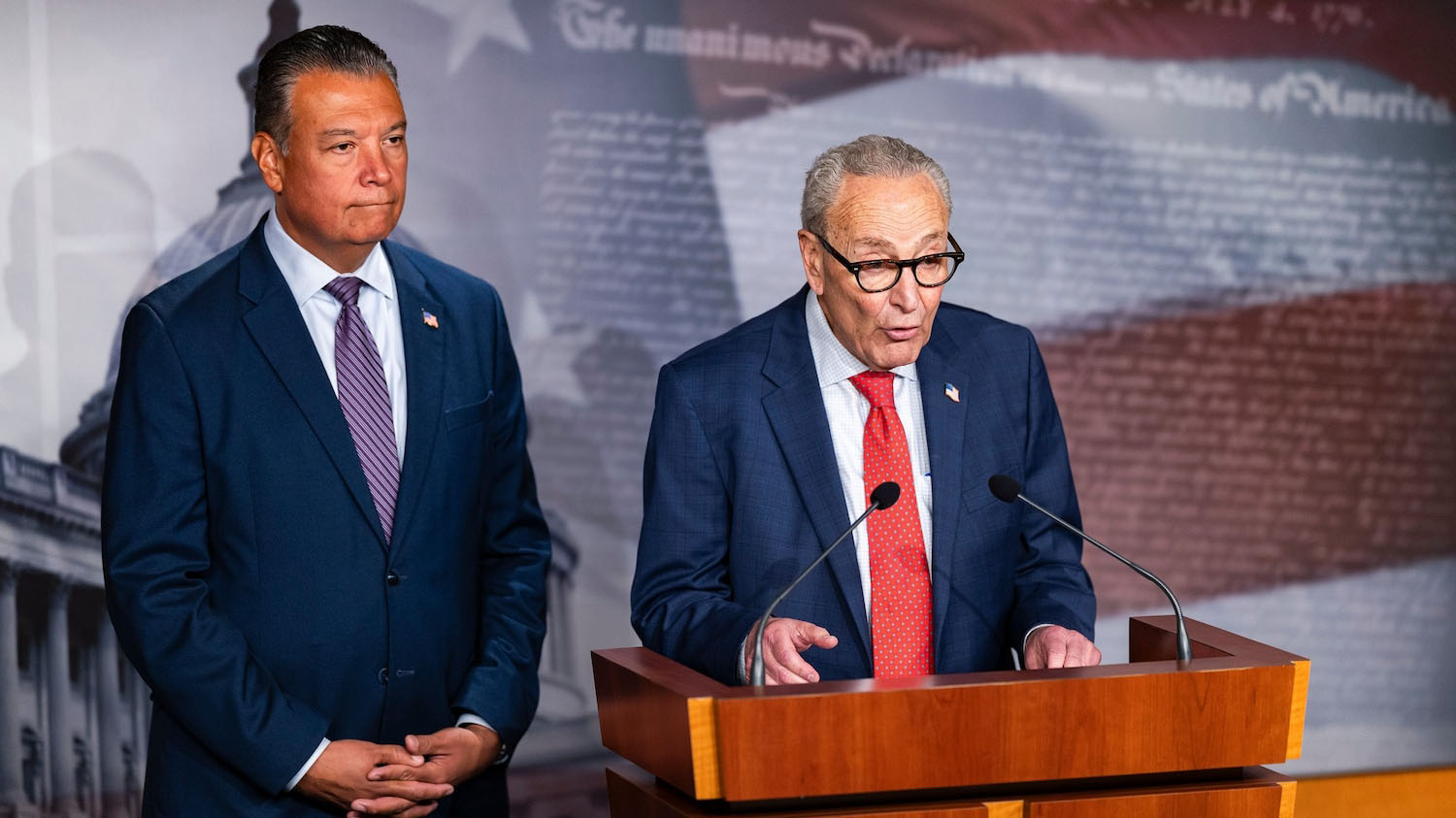
Sen. Alex Padilla listens as Senate Minority Leader Chuck Schumer speaks during a press conference at the U.S. Capitol, Sept. 14, 2026, in Washington. (Finn Gomez/Getty Images)
(WASHINGTON) — The Department of Homeland Security has allegedly directed hundreds of agents to attempt to access voter rolls, even if they must “misrepresent themselves” to do so, and “fabricate” evidence of voter fraud ahead of the midterm elections, Senate Minority Leader Chuck Schumer and California Sen. Alex Padilla said Monday, citing what they said was information from a whistleblower.
“A DHS whistleblower warns that the department is pulling hundreds, hundreds of federal agents from national security rolls and sending them on a wild goose chase,” Schumer said at a press conference. “The goal: to try and prove Trump’s sad, tired, and long-debunked election conspiracy theories.”
“The length Trump will go to cheat, lie, and steal in this upcoming election are simply beyond the pale,” Schumer said.
“Apparently, agents are being commanded to violate state laws to access private voter information and fabricate law enforcement records as part of DHS’s quote ‘Unlawful Voter Initiative,’” Schumer said, adding that DHS agents allegedly were “hunting for, or worse, manufacturing evidence of voter fraud claims.”
The allegations and the whistleblower claims were enumerated in a letter from Schumer and Padilla sent Sunday to DHS Secretary Markwayne Mullin, in which the lawmakers demanded that DHS both explain the alleged actions and end them immediately.
The Department of Homeland Security has been ramping up efforts to look for voter fraud across the country through its investigative arm, Homeland Security Investigations (HSI), multiple sources familiar with the operation told ABC News earlier this month. The effort will include help from investigators from U.S. Citizenship and Immigration Services, the sources said.
“The Department accessed publicly available data from states’ voter rolls and cross referenced them with known aliens in our systems. It’s not rocket science; it’s an easy step to secure our elections,” DHS said in a statement to ABC News, in response to the whistleblower allegations.
“While ICE Homeland Security Investigations is not able to comment on any active investigations, HSI is actively rooting out and investigating election fraud wherever it can be found,” the DHS statement further said. “We have repeatedly demonstrated that aliens can and do vote in our elections. Under President Trump, HSI is committed to restoring integrity to our election systems and ensuring that American citizens and only American citizens are electing American leaders.”
“They’re even asking people to lie about their identities, so they can create this illegal scheme,” Schumer said Monday of DHS agents’ alleged activities. “We are weeks from the midterms. Americans should not have to fear being targeted by their own government because of how they’re registered to vote.”
Padilla also highlighted the allegation, saying Monday that the whistleblower claimed DHS agents were “ordered to misrepresent themselves to access state voter systems, systems explicitly warning that accessing another voter’s information without authorization is against the law.”
Padilla further alleged the federal government is taking this route to access voter data because states such as his have not complied with demands for them to provide those records.
“But even more troubling is that when officers have raised questions about the legality of this initiative, they’ve reportedly been told to proceed anyway and promise that they won’t be held quote personally liable,” Padilla said, citing the whistleblower claims. “That’s what’s coming from superiors in response to officers who are raising these concerns. If this effort is truly legal, then why does DHS leadership have to promise its officers that they’re not going to be held liable? That says a lot.”
Padilla alleged the Unlawful Voter Initiative is “pretext” for the Trump administration to use “manufactured evidence to intimidate voters, to disenfranchise eligible Americans, and even undermine or challenge this November’s election results.”
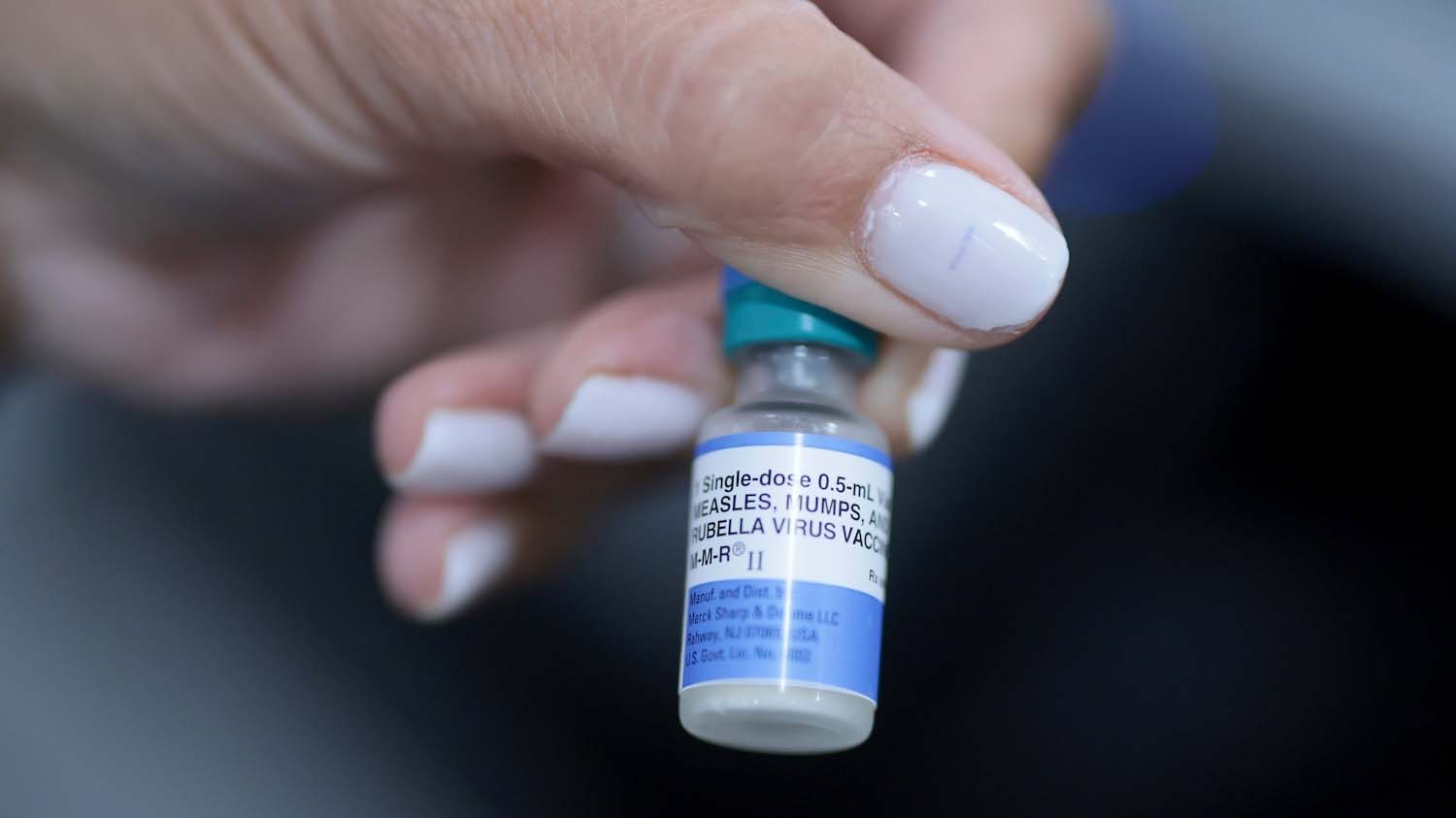
A medical assistant holds a measles, mumps and rubella vaccine at the pediatric office of Dr. Gary M. Kramer on Aug. 13, 2026, in Coral Gables, Florida. (Joe Raedle/Getty Images)
(NEW YORK) — Prior to this year, Dr. John Goldman said he’d only seen two cases of measles throughout his career: one in the late 1980s and one in the early 1990s.
Now, Goldman said measles patients are being admitted to the hospital on a regular basis.
“We’ve had patients that have shown up in our outpatient offices. We’ve had patients show up in the hospital. We’ve had patients that have come in for other problems and then develop measles while they’re in the hospital,” Goldman, an infectious disease specialist for the University of Pittsburgh Medical Center in central Pennsylvania, told ABC News.
He went on, “So, we’ve gone from seeing this as an extremely rare disease, one that I literally have not seen in 30 years, to something that is now common, where we’re seeing it literally every day.”
Pennsylvania is facing one of its worst measles outbreaks in recent years, recording 693 cases so far this year with 133 hospitalizations, according to the state department of health.
The epicenter of the outbreak is in Lancaster County, in southeastern Pennsylvania, with 296 cases reported.
At least four measles deaths have been confirmed by the Pennsylvania Department of Health, which is the highest number of deaths recorded in the U.S. since 1992.
‘Almost certainly underestimating cases’
Goldman, who supports about seven hospitals in the greater Harrisburg area, said UPMC Lititz in Lancaster County has had about 50 measles patients this year.
However, he believes the number of cases, both in Lancaster County and in Pennsylvania overall, is an undercount.
“The worst part is we’re almost certainly underestimating the cases,” Goldman said. “What often happens is someone shows up in the emergency room or shows up in the hospital, and they’ll report that they have five or six people at home who were sick with what they think is measles … so we don’t test everybody.”
Dr. Patrick Gavigan, a pediatric infectious disease physician at Penn State Health Golisano Children’s Hospital in Dauphin County, which borders epicenter Lancaster County, said about 10 children have been admitted to the hospital with complications from measles in 2026.
Similarly, Gavigan said most of the children admitted to the hospital with measles came from families where everyone was previously sick with the disease.
“I would say fever, rash and respiratory distress are probably the most common [symptoms],” he told ABC News. “We’ve seen some more like gastrointestinal symptoms with some of our cases as well, including like hepatitis.”
Most of the children are unvaccinated and have come from communities that “don’t vaccinate,” Gavigan said.
He added that hospitals are getting more calls each week about patients infected with measles.
Increasing interest in vaccination
The CDC currently recommends two doses of the measles, mumps, rubella (MMR) vaccine, the first between ages 12 and 15 months and the second between ages 4 and 6. One dose is 93% effective, and two doses are 97% effective against measles, the CDC says.
Data from the Pennsylvania Department of Health shows that 6,725 MMR doses have been administered by health department staff in 2026. Fewer than 1,000 doses were administered each month from January through July but August saw about 3,500 doses administered.
This correlates with a spike in measles cases recorded in August, according to health department data.
The doctors told ABC News there has been an increase in MMR vaccinations at their respective hospitals.
“Talking with our general pediatricians, I think there has been [an] increased desire to get MMR even potentially in some people who aren’t getting other vaccines,” said Gavigan.
Gavigan said pediatricians in the area have also been answering questions from parents about whether their child should get an early third dose.
The CDC said early vaccination for infants living in outbreak areas. This would result in three doses overall: an early dose between age 6 months and 11 months and then the two regularly scheduled doses.
“I think there is definitely more of a perceived threat based on people hearing about all the cases and hearing about cases nearby and potentially even getting letters that they’ve been exposed to measles when they’ve been at the hospital or various places,” Gavigan said.
Local communities have also been offering opportunities to get vaccinated.
In Chester County, which also borders Lancaster and 65 confirmed measles cases, the county government has hosted free MMR clinics for children and adults, some in conjunction with the state health department.
Jeanne Franklin, public health director of the Chester County Health Department, told ABC News that local health care professionals have gone into people’s homes or businesses to vaccinate them with the MMR shot.
“We basically just said, ‘We’ve got to do some at-home vaccinations,'” Franklin explained. “It’s not an everyday type of service … but we’re doing it now and that has been a huge success.”
And some individuals say they’re more comfortable receiving the vaccine at home, she noted.
As of Monday, the Chester County Public Health Department has administered 538 MMR doses, according to Franklin.
The ChildProtect program at Penn Medicine Lancaster General Health has continued to provide free vaccinations for uninsured children in Lancaster County usually at in remote, rural areas.
Goldman said he and colleagues have seen an increase in people visiting UPMC hospitals and clinics for the MMR vaccine, particularly since the measles outbreak began.
Some UPMC staff have partnered with healthcare providers in communities with lower vaccination rates and have offered the vaccine in those areas, Goldman said.
Goldman said he’s heard anecdotally about cases of “semi-clandestine vaccination,” meaning people receiving the MMR vaccine without telling their friends, family or neighbors.
“Neighbors might judge them, or they’re in communities which discourage vaccination, and so they sometimes don’t want to know, let their friends or neighbors know that they’ve been vaccinated,” Goldman said.
More ‘aggressive’ screening
Goldman said UPMC hospitals and clinics are beginning to more aggressively screen people who arrive with measles-like symptoms so other patients aren’t exposed.
This includes patients with symptoms including rash, fever, cough and conjunctivitis, also known as pink eye.
“The problem is that there are some people who will just have a fever and we later find they test positive for measles,” Goldman said. “It will surprise me if we can catch every case.”
avigan said Golisano Children’s Hospital has put signage outside the hospital to increase awareness that there’s a measles outbreak in the hopes of identifying potentially infected patients.
“It’s essentially a sign that lists common symptoms, asks if you’ve been exposed and, if you have, to call into the hospital where they could triage you over the phone so that you’re not sitting in a waiting area potentially spreading measles,” Gavigan said.
Penn Medicine said signs are displayed outside hospitals and some outpatient offices requesting certain individuals to call for guidance before entering, including those who are not vaccinated or have measles symptoms.
Spreading awareness
Penn Medicine said two pediatricians in its Lancaster facilities wrote a series of op-eds for their local newspaper explaining how vaccine-preventable diseases can be dangerous and how vaccines protect both the recipient and those around them.
The two pediatricians said some of the patients have brought printed copies of the articles to discuss at appointments.
Gavigan said he occasionally meets children in clinic who are unvaccinated — not just against measles — and he using this as an opportunity to talk about the importance of vaccination.
“We’ve had lots of, I think, different conversations about the MMR vaccine in different populations,” he said. “It does seem like there has been, at least anecdotally, more willingness to think about vaccines in general and MMR.”
Franklin, from Chester County, said members of the public health department have gone into various communities to meet residents and assess where they are in terms of their knowledge on the disease or vaccination.
“If they think they want the vaccine, then we’re focusing on the vaccine,” Franklin said. “If nobody has talked to these folks, then, we’re going to start at the beginning: ‘What is measles? What does it look like? How does it impact you, et cetera?’ And then we’ll get to the vaccine.”
She added, “If we’re not hitting the right avenues and meeting them where they are at the start, they’re not hearing it, and it’s no fault of their own. So we meet them where they’re at in their understanding.”