In this screen grab from a video released by the Honolulu Fire Department, HFD responded to a report of a missing swimmer reported at Hanauma Bay Ridge Trail, on June 24, 2026. (Honolulu Fire Department)
(OAHU, Hawaii) — The United States Coast Guardand local officials are conducting a search for a 49-year-old man and his 16-year-old son who went missing Tuesday morning after leaving for a hike on the eastern coast of Oahu, a Coast Guard press release said.
Family members said the pair left their hotel at around 7 a.m. Tuesday to hike the Hanauma Bay Rock Bridge Trail, according to officials. Passersby found a backpack containing the man’s belongings near the trail at 8:45 a.m. and notified the Honolulu Police Department, the release said.
Police, theHonolulu Fire Department, Honolulu Ocean Safety Department and the Coast Guard launched a joint search operation late Tuesday morning after confirmation that the father and son were missing, ABC News Honoluluaffiliate KITV reported.
The names of the father and son have not been released.
The agencies searched along the trail and surrounding areas, and deployed fire department helicopters and rescue boat, safety department jet skis and Coast Guard resources, the fire department said.
The mission wassuspended at 5:30 p.m. local time Tuesday due to adverse weather conditions and was scheduled to resume Wednesday morning, fire officials said.
A U.S. Army National Guard troop stands watch at the Lincoln Memorial on June 08, 2026, in Washington, DC. Lincoln Memorial Reflecting Pool has been partially re-filled after the bottom of it was repainted as part of President Donald Trump’s effort to repair Washington landmarks in for preparation the country’s 250th birthday this summer. (Photo by Chip Somodevilla/Getty Images)
(WASHINGTON) — The top Democrat on the House Oversight Committee sent letters Wednesday to the contractors overseeing the renovation at the Lincoln Memorial Reflecting Pool on the National Mall, requesting information such as contracts and water quality records.
The Reflecting Pool has been plagued with algae and peeling paint in the days since the Trump administration completed its renovation, which cost taxpayers more than $16 million.
Rep. Robert Garcia, D-Calif., sent separate letters to the company hired to paint the reflecting pool and the company hired to remove the algae that later appeared in the pool.
“Donald Trump’s disastrous renovation of our national reflecting pool is his latest failed vanity project,” Garcia said in a statement. “The President should be focused on making life more affordable for the American people, not rewarding his loyalists with government contracts and wasting taxpayer money on failing projects. We’re demanding answers straight from the contractors about the project’s failures.”
The ranking member requested information by July 8, 2026, including the scope of the work, contract performance standards, communications with the National Park Service and amounts invoiced or paid.
Democrats, who are in the minority, do not have subpoena power to compel these contractors to hand over information or even respond.
Trump said this week the Reflecting Pool will be drained again for “permanent repair” around the Fourth of July and said that six people have now been arrested for alleged damage to the site. No charges had been filed in the alleged arrests.
The Interior Department and the U.S. Park Police have not responded to multiple outreaches for evidence of the alleged vandalism.
President Donald Trump holds an executive order he signed during an Ambassador Meeting in the Cabinet Room of the White House on March 25, 2025.(Win McNamee/Getty Images)
(WASHINGTON) — A federal judge on Wednesday permanently blocked the Trump administration from enforcing an executive order signed last year that required proof of citizenship to register to vote and demanded mail-in ballots be received by Election Day.
This is a developing story. Please check back for updates.
Police in Cleveland, Ohio, are investigating back-to-back attacks, June 22, 2026, in which victims were shot with blowgun darts similar to one in this photo. (The Washington Post via Getty Images)
(CLEVELAND) — A man suspected of shooting two people with blowgun darts in back-to-back broad daylight attacks this week in the same Cleveland, Ohio, neighborhood, has been arrested, police said on Wednesday.
The 42-year-old suspect, whose name was not immediately released, was arrested on Tuesday on suspicion of felony assault following a two-day manhunt, according to the Cleveland Police Department.
One of the victims was shot multiple times with blow darts and had to undergo surgery, according to police.
The bizarre attacks unfolded around 4 p.m. local time on Monday in the Clark-Fulton neighborhood of west Cleveland, police said in a statement to ABC News on Wednesday morning.
A woman targeted in the first incident alleged the suspect, whom she recognized from the neighborhood, verbally insulted her and struck her in the face with his hand in an unprovoked attack, according to the police statement.
The victim alleged that a short time later, the suspect confronted her again in the parking lot of a Family Dollar store, according to the police report. The man allegedly pulled out a blow-dart gun and fired it repeatedly at the woman, striking her with needle-like darts at least five times, according to police.
“Upon arrival, officers located a 56-year-old woman who had been struck with several long-needle darts,” police said.
She was taken to MetroHealth Medical Center in Cleveland, where she underwent surgery to remove one of the darts that pierced her liver, according to police.
While at the hospital with the first victim, police received a report that a second person had been shot with a blowdart gun in the same Clark-Fulton neighborhood near the busy intersection of West 25th Street and Clark Ave., according to police.
Officers who responded to the scene in the Clark-Fulton neighborhood discovered a 40-year-old man suffering from wounds in the blowgun dart attack, police said.
“The victim stated that he was in the area of West 25th Street when an unknown male shot him with a blow dart. He reported running from the area and calling 911,” according to the police report.
The victim was treated at a hospital for his injuries, police said.
A search was immediately launched, according to police. On Wednesday, officers arrested the suspect after spotting him in the Clark-Fulton neighborhood, according to the police statement.
During the arrest, officers recovered a blowgun as evidence, police said.
Booths await Maine residents to cast their ballots at a polling station inside the Portland Exposition Building on June 9, 2026 in Bangor, Maine. (CJ Gunther/Getty Images)
(NEW YORK) — On prediction markets like Kalshi and Polymarket, bettors can put money on dozens of election-related bets in Maryland, from the winner of the upcoming gubernatorial race to the margin of victory in the state’s 6th Congressional District.
For most Americans, the Maryland elections are fair game — races in the state are already generating hundreds of thousands of dollars in trading volume on the major prediction markets. But not for residents of Maryland, which is one of a handful of states that ban election betting. And Jared DeMaranis, the state’s election administrator, plans to enforce it.
“If we have credible information about illegalities and it’s not within our civil citation authorities, we will of course refer those matters to the office of the state prosecutor for enforcement,” DeMaranis told ABC News. “This is going to be a growing issue and something that we need to stop in its infancy.”
Federal regulators and the courts have given Americans the green light to wager on elections, prompting a frenzy of wagering on the outcomes of races, the likelihood of candidates dropping out, the amount of voter turnout, and more. But more than half of U.S. states have existing laws on the books that limit or restrict the practice, according to research from the Pew Research Center — and now state leaders are sorting out how exactly to enforce those rules.
Maryland, Texas and Arizona are among those states with laws explicitly banning election betting. And in Wisconsin, residents cannot cast ballots in elections in which they have placed a “bet or wager depending upon the result of the election,” according to state law.
Ann Jacobs, the chair of the Wisconsin Election Commission, said Wisconsinites who bet on an election and then vote in it could have their vote challenged or face voter fraud charges. Jacobs acknowledged that it would be a difficult rule to enforce, but stood by the spirit of the law.
“The policy behind saying, ‘You can bet or you can vote, but you can’t do both,’ is 100% a sound policy,” Jacobs said. “We want people to vote based on their belief that the person they are voting for is going to be the best for their community … it just makes sense.”
Arizona officials have focused their efforts on the platforms themselves. The state’s attorney general filed criminal charges against Kalshi earlier this year claiming the platform operated an illegal, unlicensed gambling business and accepted unlawful wagers from Arizona residents.
In April, a federal judge blocked Arizona from continuing its criminal case. The injunction followed a lawsuit against the state by the Commodity Futures Trading Commission — the federal regulator overseeing prediction markets — which argued that prediction markets fall under federal oversight rather than state gambling regulations.
The Arizona attorney general’s office declined to comment on the active case or how it will address potential election betting this season.
Officials in Texas, another state with a law banning election betting, did not respond to inquiries from ABC News. But Christopher McGinn, the executive director of the Texas Association of County Election Officials, said he and other administrators are engaged in early discussions about how to handle prediction markets, particularly the likelihood that individuals with a financial stake in the outcome of an election may have “more incentive to attempt to manipulate [elections], or spread misinformation.”
Prediction market advocates believe election-related event contracts strengthen political forecasting and can predict outcomes with greater accuracy than traditional polls. But many election experts warn that election wagering could threaten to compromise the integrity of elections or incentivize offenders to profit from insider information.
“I can’t think of all of the ways that people might try to make money off of election outcomes, but I’m sure there are enterprising people who will come up with all kinds of things,” said Rick Hasen, an expert in election law at the University of California-Los Angeles. “We don’t want to start thinking of elections as a financial incentive. The potential for manipulation is too great.”
Legalized election betting in the U.S. is a new phenomenon. In 2024, Kalshi prevailed in a lawsuit that allowed it to offer event contracts for politics and elections. More recently, the Commodity Futures Trading Commission proposed new rules that classified elections “as contests, not gaming,” further clearing the way for platforms to offer election-related wagers.
Those developments present state officials with a challenge: How can they enforce state-level bans on election betting without support from federal regulators or the platforms themselves? The answer for some, including Maryland, is to pursue the individuals.
“Right now, it’s on the person. The person that places the wager on the platform is doing the illegality,” said DeMaranis, the Maryland elections chief, adding that lawmakers will eventually “need to clarify the role of those platforms to make sure they’re liable for offering monetary incentives on elections.”
Matthew Wein, a former Homeland Security official, said a similar dynamic emerged with social media giants over the past decade. In the absence of a crackdown on platforms, authorities were left to pursue users “for doing things they shouldn’t have been doing on the platforms, but not against the platforms themselves.”
“And this seems to be heading in the same direction with prediction markets,” said Wein, who now authors a gambling newsletter called “Secure Stakes.”
A Polymarket spokesperson said states with election betting bans “run counter to the established framework for regulating prediction markets.”
“We look forward to addressing these claims through the appropriate legal process,” the spokesperson said.
A Kalshi spokesperson said the company’s services are “federally regulated and have stock-market-grade systems for identifying and addressing market manipulation.”
Meanwhile, in Washington, D.C., lawmakers continue to scrutinize prediction market platforms. Rep. Jamie Raskin, D-Md., and Sen. Jeff Merkley, D-Ore., have introduced legislation that would prohibit event contracts on election outcomes, which they said “spreads civic cynicism and distrust in our democratic institutions.”
DeMaranis said he has struggled to instill a sense of urgency among the nation’s election officials, many of whom he said have never heard of prediction markets.
The effort, he said, has left him feeling like the “canary in the coal mine.”
“It’s about the integrity and public trust of the electoral process,” DeMaranis said. “When you have people that are engaging in election-related wagering, the integrity of the entire process now comes into question.”
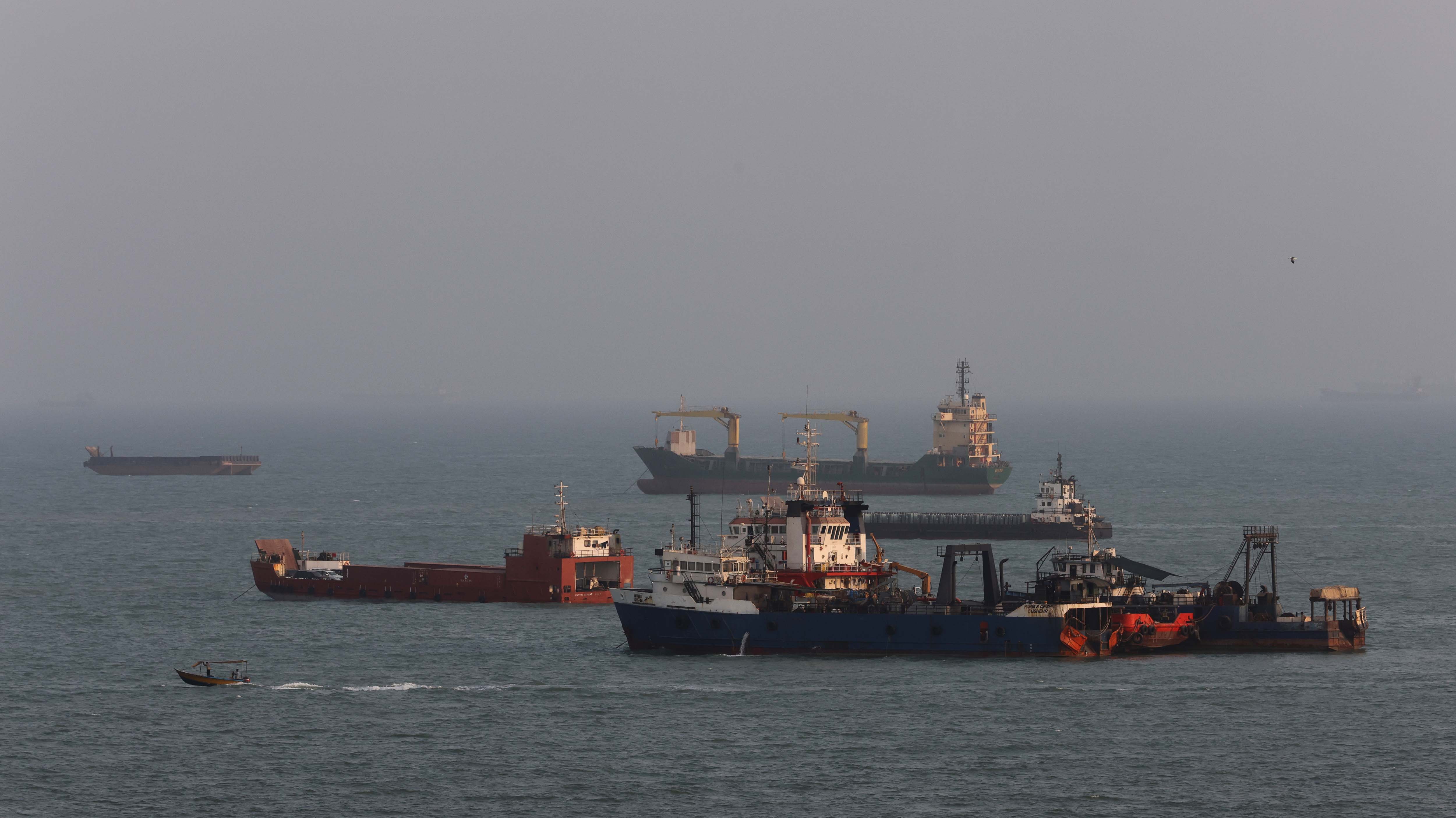
A cargo ship remains anchored on May 16, 2026 in the Strait of Hormuz near Larak Island, Iran. (Majid Saeedi/Getty Images)
(NEW YORK) — Global oil prices on Wednesday fell to their lowest level since before the outbreak of the Iran war.
Brent crude futures, the benchmark index for worldwide trading, dropped to $73.50 a barrel. That figure, which amounted to a nearly 5% decline on Wednesday, marked the lowest price since Feb. 27, the day before the Middle East conflict began.
Stock prices, meanwhile, ticked higher Wednesday after a down day Tuesday. The Dow Jones Industrial Average jumped 105 points, or 0.2%, while the S&P 500 increased 0.2%. The tech-heavy Nasdaq rose 0.2%.Gas prices fell below $4 per gallon last week, crossing the milestone as oil costs eased in response to negotiations between the U.S. and Iran to end the war.
The national average price of a gallon of gas stands at $3.92, marking a decline of 58 cents, or 13%, over the past month, AAA data showed. Gas prices, however, remain 94 cents higher than where they stood before the Iran war.
The Middle East conflict prompted the Iranian closure of the Strait of Hormuz, a maritime trading route that facilitates the transport of about one-fifth of the global oil supply. The standoff triggered one of the largest oil shocks ever recorded, sending gasoline prices higher.
Delegations from the United States and Iran arrived over the weekend at the Bürgenstock resort in Switzerland, where they began negotiations aimed at a war-ending deal based on a memorandum of understanding signed last week by both countries.
The memorandum in part called on Iran to allow commercial shipping to resume through the strait, and to do so toll-free for the next 60 days.
In a social media post on Wednesday, President Donald Trump said Iran told him that there would be “no tolls, no insurance costs” and “no other charges of any kind” for ships traveling through the strait.
Claims to the contrary are “troublemaking” false reports, Trump said in the post.
Search and recovery workers dig through debris looking for any survivors or remains of people swept up in the flash flooding near Camp Mystic on July 6, 2025 in Hunt, Texas. . (Photo by Jim Vondruska/Getty Images)
(HUNT, Texas) — Camp Mystic, the Christian all-girls sleepaway camp, filed for bankruptcy on Wednesday, according to court records.
The Chapter 11 filing comes nearly a year after a deadly flood killed 25 girls and two teen counselors at the camp’s Guadalupe River location, which is located in the Texas Hill Country.
According to the Wednesday filing, Camp Mystic has a debt exceeding $10 million.
In April, Camp Mystic said it had planned to welcome more than 800 girls to its Cypress Lake location this summer before withdrawing its application.
Families of the flood victims and some officials, including Texas Lt. Gov. Dan Patrick, had called on the Texas Department of State Health Services to block Camp Mystic’s license for the summer.
Patrick contended the camp shouldn’t reopen until the flood was fully investigated.
The parents of one of the deceased campers — 8-year-old Cile Steward, whose body has yet to be recovered after she was swept away in the Guadalupe River — have also been vocal about the camp not reopening while their daughter remains missing.
Casey Garrett, a Houston attorney hired by the state legislature to investigate the deadly flood, presented a review of the camp’s policies in April based on interviews with approximately 150 people, including campers, counselors, the camp’s owners and the victims’ families.
The attorney said there was inadequate training or drillsfor counselors and campers regarding a flood threat.
A written report of the investigation’s findings is expected later this year, The Associated Press reported.
The Texas Rangers have also opened a criminal investigation of Camp Mystic, Patrick said.
Families of the victims have also filed a lawsuit against the camp.
In a previous statement to ABC News in response to the lawsuits filed by families, Camp Mystic said, “We continue to pray for the grieving families and ask for God’s healing and comfort.”
Jeff Ray, legal counsel for Camp Mystic, said in a statement, “We intend to demonstrate and prove that this sudden surge of floodwaters far exceeded any previous flood in the area by several magnitudes, that it was unexpected and that no adequate warning systems existed in the area.”
“We disagree with several accusations and misinformation in the legal filings regarding the actions of Camp Mystic and Dick Eastland, who lost his life as well. We will thoroughly respond to these accusations in due course,” Ray added.
-ABC News’ Meredith Deliso and Ivan Pereira contributed to this report.
This is a developing story. Check back for updates.
(NEW YORK) — France has confirmed its first Ebola case linked to the outbreak in the Democratic Republic of the Congo (DRC) as the United Nations warned that the outbreak is the fastest-growing in Africa’s history.
The patient in France is a humanitarian doctor who recently returned from the DRC and has been transferred to a specialist hospital, authorities confirmed.
French health officials said the case was detected quickly, the necessary precautions are in place and that there is no indication of local spread.
“France has specialized capabilities for managing highly transmissible infectious diseases,” France’s Ministry of Health said in a statement announcing the case. “Patients are treated in a designated healthcare facility, following strict biosafety protocols (negative pressure room, dedicated equipment and protocols). Health authorities are fully mobilized and the situation is being continuously monitored.”
“All precautionary measures, including the patient’s isolation, were taken upon his arrival in the country, with transfer to the hospital under secure conditions to prevent any risk of contamination,” the statement continued.
Officials said a thorough epidemiological investigation is underway to identify individuals who may have been in contact with the patient and that they will be contacted “without delay” by the regional health agency before undergoing 21 days of home isolation while being closely monitored the entire time.
The European Centre for Disease Prevention and Control said on Wednesday that the risk of infection is “low” for European residents and travelers to areas of active transmission, and “very low” for the general European population.
The development comes as U.N. officials warned on Tuesday that the Ebola outbreak in the DRC is spreading at an unprecedented pace.
As of Monday, there were 1,048 confirmed cases and 267 deaths, making it the largest number of confirmed Ebola cases recorded during the first month of an outbreak in Africa, according to Dr. Abdirahman Mahamud, director of heath and emergency alert and response operations at the World Health Organization.
Mahamud said it took just 37 days for the current outbreak to reach 250 deaths, compared to 78 days during the 2014 and 2016 West Africa outbreaks and 130 days during the 2018-2019 DRC outbreak.
Mahamud added that there are some signs the response has been scaled up to match the pace of the outbreak’s spread.
The number of beds available for treatment has risen in the last two weeks, “going from a handful to over 500 beds across 19 health zones,” he said.
Additionally, the U.N. said laboratory capacity has also increased from 30 tests a day in Kinshasa, the DRC’s capital, at the start of the outbreak to more than 2,000 tests per day through eight labs in the three provinces at the center of the outbreak.
Paolo Cravero, senior office of communications and media relations at the International Federation of the Red Cross and Red Crescent Societies, said there is “a lack of trust in the response” among affected communities and that the organization is “working hard with communities to bridge that gap.”
“Rumor and misinformation are creating some difficulties,” he said.
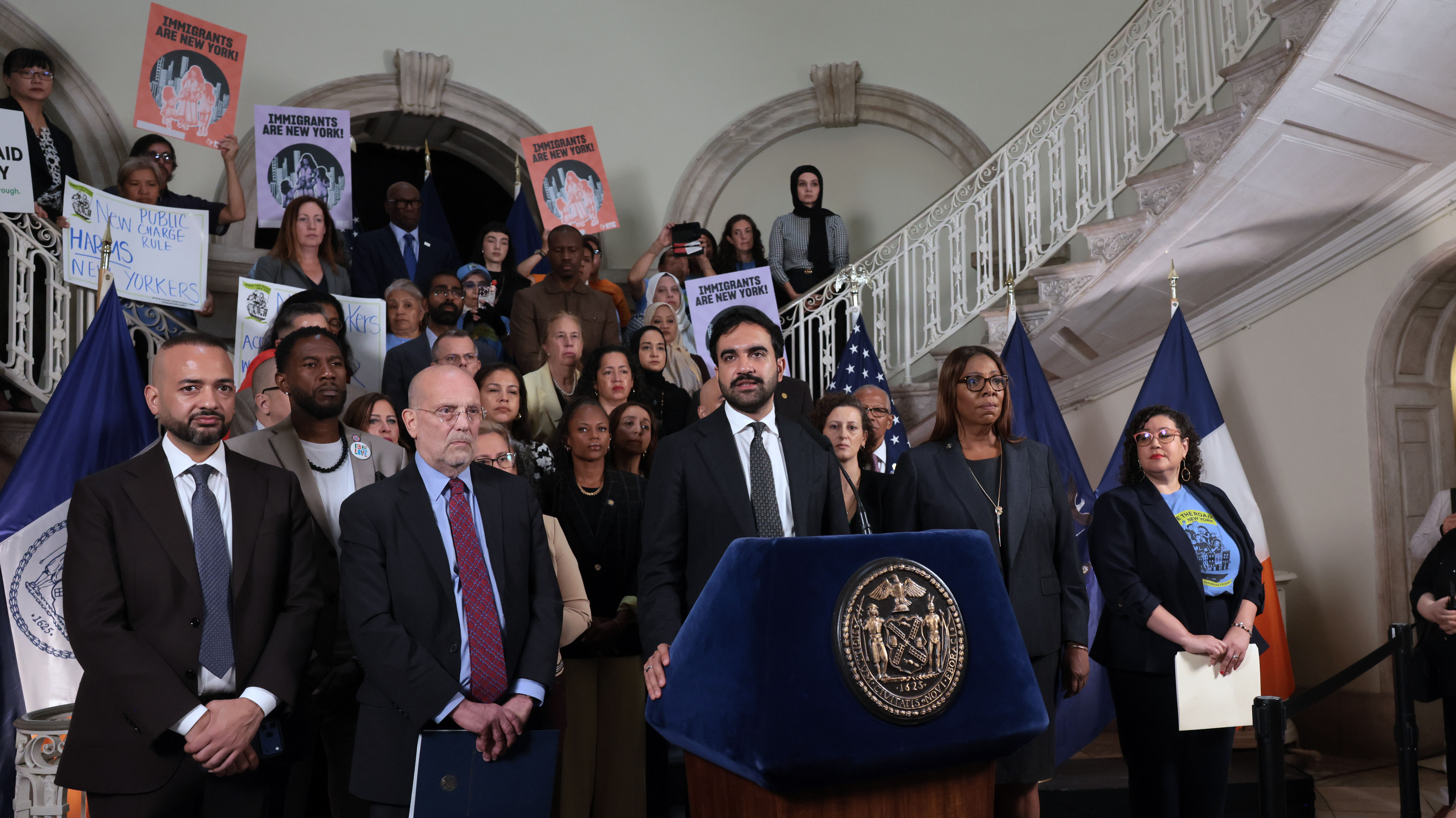
(NEW YORK) — Frank Carone, a former chief of staff to ex-New York Mayor Eric Adams, was arrested on Wednesday morning along with his brother Anthony and two others as part of a federal bribery case, according to federal investigators.
While serving as chief of staff, Carone allegedly, “agreed to accept a series of bribe payments” as part of a scheme to “exploit the city’s migrant crisis for profit,” according to an indictment unsealed Wednesday in Brooklyn federal court.
In 2022, during the influx of migrants into New York, the city needed to rent entire hotels to accommodate asylum-seekers using emergency contracts.
Carone allegedly accepted $120,000 in bribes from two co-defendants, Crystal Chen and Yan Po Zhu, in exchange for steering a multimillion-dollar emergency contract to a Microtel in Long Island City, Queens, that they controlled, federal prosecutors alleged.
To conceal the bribes, the payments were allegedly funneled through an account that Carone’s brother, Anthony, controlled, the indictment said.
“In total, Zhu and Chen paid approximately $120,000 to F. Carone in exchange for an Emergency Shelter Contract for the Microtel, which was laundered through the Law Firm #2 account by A. Carone and his co-defendants,” the indictment said.
The indictment included photographs of Zhu and Carone socializing at Zhu’s Long Island home in June 2022, a time when the indictment said Zhu and Chen’s efforts to secure an Emergency Shelter Contract through other means were stalling.
“Zhu leveraged his burgeoning personal relationship with the defendant, Frank V. Carone,” the indictment said.
The city ultimately awarded Microtel a nearly $7 million contract, even though it was smaller than another Long Island City hotel under consideration.
The indictment quoted an unnamed city employee who allegedly “lamented that replacing the professional’s staff’s recommendations with the Microtel ‘meant a loss of 75 units,’ which would necessitate opening more locations to make up the difference.”
The defendants are charged with 13 counts, including conspiracy, federal program bribery and obstruction.
Carone helped with Adams’ transition into office in January 2022 and served as the mayor’s chief of staff until December that year, when he departed the administration.
As he departed, he said that in his position it had been an “honor keeping the trains running for this administration,” according to a press release at the time.
Arthur Aidala, an attorney representing Carone, said in a statement to ABC News that Carone was notified that he was under federal investigation three years ago and denied the allegations.
“Frank Carone was part of an administration that publicly challenged what it viewed as the previous White House’s dangerous immigration policies and their harmful impact on New York City,” Aidala said in a statement to ABC News. “Following an extensive three-year investigation that examined numerous aspects of Mr. Carone’s personal and professional life, prosecutors ultimately brought these charges.”
“Mr. Carone maintains his innocence and looks forward to addressing these allegations through the legal process. He is confident that the facts will demonstrate that he acted lawfully and appropriately at all times,” Aidala added.
Attorney information for the other defendants was not immediately available.
Todd Shapiro, a spokesperson for former Mayor Adams, said in a statement that his “prayers are with [Carone’s] family”
“Frank Carone has dedicated decades of his life to public service, the legal profession, and helping countless individuals, businesses, and charitable organizations throughout New York,” he said.
A view of gas pumps at a USA Gasoline station on May 04, 2026 in Los Angeles, California. (Justin Sullivan/Getty Images)
(WASHINGTON) — President Donald Trump has called for the Department of Justice to “immediately start looking into” oil companies as he accused them of price gouging and not lowering the “price at the pump” fast enough in a message on social media.
“The big Oil Companies are not dropping their price at the pump commensurate with the sharply lower prices they are paying for Oil,” Trump said in a post on Truth Social. “Those prices are dropping like a rock! In other words, customers are being ‘gouged.’”
“I have instructed the DOJ to immediately start looking into this,” Trump continued. “Gasoline prices better start going down a lot faster than what I’m seeing!”
A DOJ spokesperson responded to Trump’s post, telling ABC News that “The price of fuel is not only a national security issue, it impacts the wallet of every American. We will always commit to ensuring affordability in this nation.”
Trump’s call for the investigation comes amid reports of ships beginning to move oil and Liquefied Natural Gas (LNG) through the Strait of Hormuz.
Oil prices have continued to lower recently as peace talks between the United States and Iran have been taking place. U.S. oil is trading at $70.13 a barrel — down 4.18% — and global oil is trading at $73.74 — down 4.28%. Oil is now close to where it was before the war began — U.S. oil ended at $67 a barrel the Friday before the war started.
The Treasury’s move allowing more Iranian oil onto the market until Aug. 21 and reports there was more traffic in the Strait of Hormuz are helping push oil prices lower.
The average price of a gallon of regular gas is $3.90, down 9 cents from last week’s average, according to GasBuddy.
Secretary of Energy Chris Wright said Sunday that oil traffic through the Strait of Hormuz is “already back to normal” after the U.S. and Iran signed a preliminary agreement to reopen the critical waterway while negotiators spend the next two months trying to work out yet-to-be-resolved nuclear issues.
“I’m long out of the business of predicting oil or gasoline prices, but they will continue to head down. Flows of oil and natural gas through the straits have already returned to normal, and they will continue that way whatever happens with the negotiations with the Iranians,” Wright said on ABC News’ “This Week.” “We’ve got growing American production, surging production in Venezuela. We’ve got cooperation with all the other energy producers of the world. So, I think Americans can expect continued declines in energy prices.”
U.S. and Iranian leaders signed a memorandum of understanding last week that appears to have broken the monthslong stalemate in the Strait of Hormuz, a waterway in the Gulf region through which around 20% of the global oil supply normally transits to enter the market.
Energy prices spiked in May, with U.S. gas prices averaging $4.56 per gallon over the month, according to Gas Buddy.