

Iran war timeline: 1 month of escalating strikes, broadening conflict

Iran war timeline: 1 month of escalating strikes, broadening conflict
A view of gigantic poster as daily life continues despite the ongoing conflict in Tehran, Iran on April 1, 2026. (Fatemeh Bahrami/Anadolu via Getty Images)

(LONDON) — President Donald Trump is set to address the nation on Wednesday evening with an “important update” on the ongoing U.S.-Israeli war against Iran, which was launched on Feb. 28.

ABC News has collated a timeline of the key events in the conflict to date.

Feb. 28: Combined U.S.-Israeli airstrikes began, with Iranian Supreme Leader Ayatollah Ali Khamenei killed alongside dozens of senior political and military leaders in strikes on his office in Tehran. Iran immediately began retaliatory attacks targeting Israel, U.S. facilities and allies across the Middle East.

The opening salvo of strikes targeted Iranian government and military sites across the country, but there were allegations of collateral damage. The most significant was an airstrike on a girls’ elementary school in the southern city of Minab, which Iranian state media said killed 168 people.

March 1: Six American troops were killed in an Iranian drone strike on a U.S. base in Port Shuaiba, Kuwait — the first U.S. personnel to be killed in the conflict. Three U.S. F-15 fighter jets are also shot down by friendly fire from Kuwaiti air defenses.

The first commercial tankers were struck by projectiles in the Strait of Hormuz, marking the beginning of Iran’s efforts to choke the flow of shipping through the strategic chokepoint.

March 2: The Iran-aligned Hezbollah militant group in Lebanon launches attacks into northern Israel, framing them as retaliation for several months of Israeli airstrikes across Lebanon. Israel responded by intensifying its campaign — including with fresh strikes in Beirut — and launching new ground operations along the shared border.

March 4: The Iranian IRIS Dena frigate was sunk by a U.S. submarine off the coast of Sri Lanka, killing at least 104 crew members, according to the Iranian military.

The Israeli military issued an “urgent warning” to all residents of southern Lebanon located south of the Litani River ahead of intended strikes, ordering them to immediately evacuate and head north of the river — highlighting a vast area.

March 8: Mojtaba Khamenei was selected by Iran’s Assembly of Experts as the country’s next supreme leader, succeeding his father who was killed on Feb. 28. Mojtaba Khamenei’s candidacy was reportedly backed by the Islamic Revolutionary Guards Corps, in which the new leader once served.

March 12: A U.S. KC-135 refueling aircraft went down over western Iraq, killing six airmen. Another aircraft involved in the incident was damaged but able to land safely.

March 17: Ali Larijani, the influential secretary of Iran’s Supreme National Security Council, was killed in an Israeli strike in Tehran.

March 18: The Israeli military strikes the South Pars gas field in the Persian Gulf, which is shared by Iran and Qatar. The attack signaled a move toward the targeting of energy and critical infrastructure targets, prompting Tehran to warn it would target energy targets across the Gulf.

March 20: Iran is accused of launching a missile attack targeting Diego Garcia, a U.S.-U.K. military base in the Indian Ocean, around 2,500 miles from Iranian territory. The U.S. and Israel said the attacked showed that the range of Iranian missiles was longer than Tehran previously admitted.

March 22: Trump issued a 48-hour ultimatum for Iran to open the Strait of Hormuz or face punishing strikes on critical energy infrastructure. The president later extended his deadline.

March 24: Airstrikes targeted three major Iranian steelworks, reflecting an apparent shift in U.S.-Israeli strategy toward degrading Iran’s economic base.

Iranian drones and missiles targeted the Prince Sultan Air Base in Saudi Arabia, damaging several American aircraft — among them an E-3 Sentry AWACS aircraft — and wounding multiple service members.

Israeli Defense Minister Israel Katz said the Israeli military will destroy homes in southern Lebanon, just as it did in the war-torn Gaza Strip, in a continued effort to eliminate Hezbollah militants from the area. Israel will implement “the Rafah and Beit Hanoun models,” Katz said, referring to two Gaza border towns that Israel destroyed in its offensive in the Palestinian enclave.

March 28: The Iran-aligned Houthis rebels in Yemen fired a ballistic missile toward Israel, marking their first involvement in the conflict.

March 28: U.S. Central Command announces the arrival of some 3,500 U.S. sailors and Marines in the Middle East aboard the USS Tripoli, amid reports of a possible American ground operation against Iran. Around 1,500 soldiers with the 82nd Airborne Division are also expected in the region.

March 30: Trump again demanded the end of Iranian harassment of shipping in the Strait of Hormuz, threatening to broaden U.S. strikes to target Iranian energy facilities and desalination plants.

March 31: Katz says Israeli forces will occupy Lebanese territory up to the Litani River — around 18 miles north of the Israeli border — and block the return of hundreds of thousands of displaced residents.

April 1: Trump prepares for an “important” address to the nation related to the war in Iran.

Copyright © 2026, ABC Audio. All rights reserved.

Supreme Court appears skeptical of Trump’s case to end birthright citizenship

Supreme Court appears skeptical of Trump’s case to end birthright citizenship
U.S. Supreme Court building on March 31, 2026 in Washington, DC. (Roberto Schmidt/Getty Images)

(WASHINGTON) — As President Donald Trump looked on during an unprecedented visit to the Supreme Court, a majority of justices appeared skeptical of his administration’s bid to end birthright citizenship during arguments in the landmark case Wednesday.

Most of the court’s conservatives and all three liberal members raised doubts about the constitutionality of Trump’s Day 1 executive order that would limit American citizenship at birth only to those born to U.S. citizens and legal permanent residents.

It would also impose sweeping changes for all new parents and current American citizens going forward, requiring a new system to verify a person’s citizenship beyond a simple birth certificate.

The 14th Amendment, ratified in 1868, says all “persons born or naturalized in the U.S. and subject to the jurisdiction thereof” are citizens. Congress later codified the same language in federal citizenship law in 1940 and again in 1952.

Solicitor General D. John Sauer argued that the phrase “subject to the jurisdiction” applies only to children whose parents have “allegiance” to the U.S., which he said is determined by being “domiciled” in the country.

The meaning of ‘domiciled’

The 1898 landmark Supreme Court decision in U.S. v Wong Kim Ark, widely considered to be the precedent affirming birthright citizenship, concluded, “The [14th] Amendment, in clear words and in manifest intent, includes the children born, within the territory of the United States, of all other persons, of whatever race or color, domiciled within the United States.”

Sauer said “domiciled” means living in the U.S. lawfully with “intent to stay.”

But many of the court’s conservatives questioned how that definition was derived and whether it aligned with the views of the framers of the 14th Amendment and members of Congress who codified the citizenship clause.

Trump — the first sitting president to attend the high court’s arguments — was seated in the front row of the public gallery alongside White House Counsel David Warrington, Attorney General Pam Bondi and Commerce Secretary Howard Lutnick.  

As Sauer parried with the justices, Trump sat attentive and expressionless. His presence in the chamber was not publicly announced or acknowledged by any of the justices on the bench. While Justices Ketanji Brown Jackson, Brett Kavanaugh, and Elena Kagan were most immediately in his line of sight, it was not clear whether any justice on the bench made eye contact with him. Trump also did not engage with anyone seated beside him or in the chamber.

Trump departed the chamber as ACLU Legal Director Cecilia Wang was in the middle of delivering her opening statement, in which she argued that the principle of birthright citizenship was enshrined in the Constitution to prevent government officials from stripping citizenship away.

“Ask any American what our citizenship rule is, and they’ll tell you, everyone born here is a citizen alike,” Wang said. “That rule was enshrined in the 14th Amendment to put it out of the reach of any government official to destroy.”

“If you credit the government’s theory, the citizenship of millions of Americans past, present and future could be called into question,” Wang said.

‘Very quirky arguments’

Sauer got a somewhat frosty reception from at least two key Supreme Court Justices — Chief Justice John Roberts and Associate Justice Neil Gorsuch — during his arguments, in which he contended that the longstanding understanding of the 14th Amendment is incorrect.

“The citizenship clause was adopted just after the Civil War to grant citizenship to the newly freed slaves and their children whose allegiance to the United States had been established by generations of domicile. Here, it did not grant citizenship to the children of temporary visitors or illegal aliens who have no such allegiance,” Sauer said.

Roberts noted that the Trump administration is relying on “very quirky” arguments, saying they are using “narrow exceptions” to claim that a much broader class of people should be ineligible for birthright citizenship.

“You know, children of ambassadors, children of enemies during a hostile invasion, children on warships, and then you expand it to the whole class of illegal aliens here in the country — I’m not quite sure how you can get to that big group from such tiny and sort of idiosyncratic examples,” said Roberts.

Gorsuch also remarked that the Trump administration seems to be relying on outdated “Roman law sources” and court precedents that do not work in their favor.

“I’m not sure how much you want to rely on Wong Kim Ark,” Gorsuch remarked about the landmark 1898 case that enshrined birthright citizenship.

Justice Elena Kagan similarly voiced concerns about the sources cited by the Trump administration.

“You’re using some pretty obscure sources to get to this concept,” she said.

‘Illegal immigration’

Justice Samuel Alito initiated a discussion on “illegal immigration” by noting that it was “something that was basically unknown” at the time when the 14th amendment was adopted in the 1860s.

“What we’re dealing with here is something that was basically unknown at the time when the 14th Amendment was adopted, which is illegal immigration,” Alito said. “So how do we deal with that situation when we have a general rule?”

Sauer responded by agreeing with Alito, saying that “illegal immigration did not exist [then],” and “the problem of temporary visitors didn’t exist.”

Sauer pointed to “commentators” from 1881 to 1922 who, he claimed, were “uniformly saying the children of temporary visitors are not included.” He argued that this logic “naturally extends” to those who enter the country illegally.

Justice Kagan challenged Sauer’s argument on immigration, saying his arguments in his brief did not focus on “illegal immigration.”

“Most of your brief is about people who are just temporarily in the country where there was quite clearly an experience of an understanding that there were going to be temporary inhabitants,” Kagan said. “And your whole theory of the case is built on that group.”

“You don’t get to talking about undocumented persons until quite later, and at much lesser … I think it’s like 10 pages to three pages or something like that,” she said.

When asked about how the Trump administration would apply their birthright citizenship executive order, pointed to a guidance document from the Social Security Administration issued last year.

“How does this work? Are you suggesting that when a baby is born, people have to have documents present in the delivery room?” Justice Jackson asked.

“I think that’s directly addressing the SSA guidance that cited in our brief, what SSA says,” Sauer responded.

Justice Jackson appeared skeptical of that response, pressing Sauer about the steps of the process and whether a parent could challenge a final decision.

“We’ll give you a social security number, provided that there’s the system [that] automatically checks the immigration status of the parents — which there are robust databases for — and then it appears no different to the vast majority of birthing parents,” Sauer said.

Birth tourism

In his opening statements, Sauer laid out one of the Trump administration’s key arguments about why birthright citizenship should not be extended to the children of undocumented immigrants, claiming that if it remains “unrestricted” it will continue to be a “pull factor for illegal immigration” and would “reward” immigrants who violate immigration laws.

“It has spawned a sprawling industry of birth tourism as uncounted thousands of foreigners from potentially hostile nations have flocked to give birth in the United States in recent decades, creating a whole generation of American citizens abroad with no meaningful ties to the United States,” Sauer said.

The Trump administration has often claimed that birth tourism — the idea that foreign nationals travel to the U.S. with the sole purpose of having a child here — poses a national security risk and undermines birthright citizenship.

Justice Roberts pressed Sauer to explain how common the problem is, but Sauer was unable to give a clear answer.

“No one knows for sure. There’s a March 9 letter from a number of members of Congress to DHS saying, ‘Do we have any information about this?’ The media reports indicate estimates could be over one million, or 1.5 million from the People’s Republic of China alone. The congressional report that we cite in our brief talks about certain hotspots, like Russian elites coming to Miami through these birth tourism companies,” Sauer said.

Sauer went on to claim that media reports indicate there are 500 “birth tourism companies” in China, prompting Justice Roberts to interject to ask if Sauer agreed that had “no impact on the legal analysis before us.”

“We’re in a new world now as Justice Alito pointed out, to where 8 billion people are one plane ride away from having a child who is a U.S. citizen,” Sauer added later.

In a statement Wednesday morning, ACLU Executive Director Anthony D. Romero addressed Trump’s attendance at the proceedings, saying Trump would “watch the ACLU school him in the meaning of the Constitution and birthright citizenship.”

“Any effort to distract from the gravity and importance of this case will not succeed. The Supreme Court is up to the task of interpreting and defending the Constitution even under the glare of a sitting president a couple dozen feet away from them,” he said.

Wednesday’s arguments concluded after about two hours. A ruling in the case isn’t expected until the end of June.

Copyright © 2026, ABC Audio. All rights reserved.
Trump rails against birthright citizenship after attending Supreme Court arguments

Trump rails against birthright citizenship after attending Supreme Court arguments
US President Donald Trump departs the North Portico of the White House in Washington, DC, US, on Wednesday, April 1, 2026. (Shawn Thew/EPA/Bloomberg via Getty Images)

(WASHINGTON) — President Donald Trump attended oral arguments at the Supreme Court on Wednesday, a historic first for a sitting president, as the justices considered his executive order seeking to end birthright citizenship.

No cameras were allowed inside the courtroom. Trump’s motorcade arrived outside the building on Wednesday morning shortly before arguments began. His motorcade later departed the court after Solicitor General John Sauer’s presentation on behalf of the government.

After the hearing concluded, Trump wrote in a social media post that the U.S. is “stupid” to allow the practice.

“We are the only Country in the World STUPID enough to allow ‘Birthright’ Citizenship!” Trump posted.

According to the Pew Research Center, 32 other countries, most of them in the Western Hemisphere, have laws similar to the U.S. guaranteeing citizenship to children born in the country.

Trump, who entered the court at 9:47 a.m. wearing a red tie and blue suit, was seated in the front row of the public gallery alongside White House Counsel David Warrington, Attorney General Pam Bondi and Commerce Secretary Howard Lutnick.  

As Sauer parried with the justices, Trump sat attentive and expressionless. His presence in the chamber was not publicly announced or acknowledged by any of the justices on the bench. Trump did not engage with anyone seated beside him or in the chamber.

Trump previously floated attending arguments last year when the court took up his global tariff policy, but ultimately he did not attend.

Trump has repeatedly attacked the Supreme Court in the wake of the ruling invalidating most of his tariffs, including two justices he appointed, Neil Gorsuch and Amy Coney Barrett.

“I love a few of them, I don’t like some others,” Trump said on Tuesday when asked which justices he would be listening for most closely.

Trump is asking the justices to uphold his Day 1 executive order eliminating birthright citizenship under a novel interpretation of the 14th Amendment and requiring parents to prove their own legal status before citizenship is granted to their children.

Lower courts have struck down Trump’s executive order.

American Civil Liberties Union Legal Director Cecillia Wang argued on behalf of the class of plaintiffs. Wang herself is a birthright citizen, born in Oregon to Taiwanese parents.

ACLU Executive Director Anthony D. Romero addressed Trump’s attendance, saying he will “watch the ACLU school him in the meaning of the Constitution and birthright citizenship.”

“Any effort to distract from the gravity and importance of this case will not succeed. The Supreme Court is up to the task of interpreting and defending the Constitution even under the glare of a sitting president a couple dozen feet away from them,” he said.

ABC News’ Devin Dwyer contributed to this report.

Copyright © 2026, ABC Audio. All rights reserved.
King Charles III to address Congress on April 28, leaders say

King Charles III to address Congress on April 28, leaders say
King Charles III speaks on March 27, 2026 in Oxford, England. (Kate Green/Getty Images)

(LONDON) — King Charles III will address a joint meeting of Congress on April 28 as part of his upcoming state visit to the U.S., according to a joint statement issued by Congressional leaders on Tuesday.

The address, the statement said, “celebrates the 250th anniversary of American independence and the enduring special relationship between the United States and the United Kingdom.”

The statement was issued by House Speaker Mike Johnson, Senate Majority Leader John Thune, Senate Minority Leader Chuck Schumer and House Minority Leader Hakeem Jeffries.

“This year, the United States will mark the 250th anniversary of its independence. As we celebrate this historic milestone and recommit ourselves to the principles upon which our nation was founded, we also recognize that the American experiment endures in no small part because of the British tradition from which it sprang,” the statement said.

“We believe an address to Congress will provide a unique opportunity to share your vision for the future of our special relationship and reaffirm our alliance at this pivotal time in history,” it added.

Johnson posted about the invitation on X, noting the U.S. and U.K. “share one of the most consequential partnerships in history.”

President Donald Trump said that the state visit will take place from April 27 until April 30.

Preparations for the visit come at a tense moment between the Trump administration and NATO, of which Britain is a member, over the reluctance of allies in the intergovernmental military alliance to join the ongoing U.S.-Israeli war in Iran. On Wednesday, Trump said in an interview that he is considering pulling the U.S. out of NATO.

In a press conference on Wednesday, British Prime Minister Keir Starmer said the U.K. is fully committed to NATO and that he isn’t going to change his position on the war.

“I have to act in our national interests,” Starmer told reporters. “This is not our war,” he continued, noting “a good deal of pressure on me to change my position in relation to joining the war. I’m not going to change my position on the war.”

In 2023, Congress passed legislation requiring any presidential decision to leave NATO to have two-thirds approval in the Senate or be authorized through an act of Congress.

Copyright © 2026, ABC Audio. All rights reserved.
Luigi Mangione’s federal trial pushed from September to October

Luigi Mangione’s federal trial pushed from September to October
Luigi Mangione appears for a suppression of evidence hearing in the killing of UnitedHealthcare CEO Brian Thompson in Manhattan Criminal Court on December 16, 2025 in New York City. (Photo by Seth Wenig-Pool/Getty Images)

(NEW YORK) — A federal judge in New York on Wednesday pushed back Luigi Mangione’s federal trial from September to October, giving an additional month’s separation between his state and federal trials.

U.S. District Judge Margaret Garnett said the federal trial jury selection will begin Oct. 5, with the presentation of evidence beginning Oct. 26.

“Whether we like it or not, we are somewhat at the mercy of events in the state case,” Garnett said, noting Mangione’s state trial is scheduled for June 8.

“What is happening at 100 Centre [the state courthouse] inevitably affects how we structure things here so the defendant can get a fair trial,” Garnett said.

Mangione pleaded not guilty to state and federal charges after he was arrested for allegedly gunning down UnitedHealthcare CEO Brian Thompson in Midtown Manhattan in December 2024.

Mangione, 27, faces the possibility of life in prison if he’s convicted in either case. Garnett previously threw out the federal charges that carry the possibility of the death penalty and the judge overseeing the state prosecution, Gregory Carro, previously tossed out an enhancement to the state murder charges that said Mangione’s alleged conduct amounted to terrorism. 

Copyright © 2026, ABC Audio. All rights reserved.
Birthright citizenship case: Justices question administration’s ‘quirky’ arguments

Birthright citizenship case: Justices question administration’s ‘quirky’ arguments
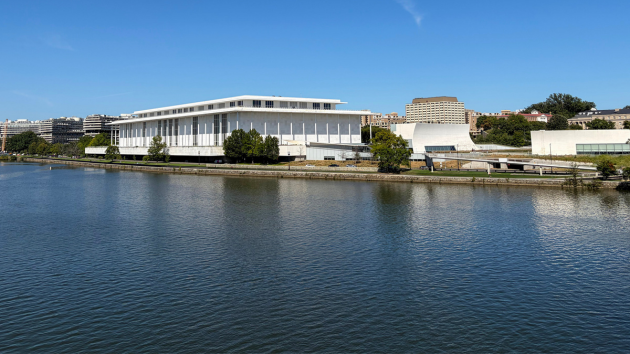
Supreme Court (Walter Bibikow/Getty Images)

(WASHINGTON) — Solicitor General D. John Sauer got a somewhat frosty reception from at least two key Supreme Court Justices — Chief Justice John Roberts and Associate Justice Neil Gorsuch — as oral arguments in the Supreme Court’s landmark birthright citizenship case got underway Wednesday.

President Donald Trump arrived at the Supreme Court Wednesday morning, making him the first sitting president to attend the high court’s arguments. 

Trump is asking the justices to uphold his Day 1 executive order eliminating birthright citizenship under a novel interpretation of the 14th Amendment and requiring parents to prove their own legal status before citizenship is granted to their children. 

Roberts noted that the Trump administration is relying on “very quirky” arguments, saying they are using “narrow exceptions” to claim that a much broader class of people should be ineligible for birthright citizenship. 

“You know, children of ambassadors, children of enemies during a hostile invasion, children on warships, and then you expand it to the whole class of illegal aliens here in the country. I’m not quite sure how you can get to that big group from such tiny and sort of idiosyncratic examples,” said Roberts. 

Gorsuch also remarked that the Trump administration seems to be relying on outdated “Roman law sources” and court precedents that do not work in their favor. 

“I’m not sure how much you want to rely on Wong Kim Ark,” Gorsuch remarked about the landmark 1898 case that enshrined birthright citizenship. 

Justice Elena Kagan similarly voices concerns about the sources cited by the Trump administration. 

“You’re using some pretty obscure sources to get to this concept,” she said. 

Justice Samuel Alito initiated a discussion on “illegal immigration” by noting that it was “something that was basically unknown” at the time when the 14th amendment was adopted in the 1860s. 

“What we’re dealing with here is something that was basically unknown at the time when the 14th Amendment was adopted, which is illegal immigration,” Alito said. “So how do we deal with that situation when we have a general rule?”

Sauer responded by agreeing with Alito, saying that “illegal immigration did not exist [then],” and “the problem of temporary visitors didn’t exist.”

Sauer pointed to “commentators” from 1881 to 1922 who, he claimed, were “uniformly saying the children of temporary visitors are not included.” He argued that this logic “naturally extends” to those who enter the country illegally.

Justice Elena Kagan challenged Sauer’s argument on immigration, saying his arguments in his brief did not focus on “illegal immigration.”

“Most of your brief is about people who are just temporarily in the country where there was quite clearly an experience of an understanding that there were going to be temporary inhabitants,” Kagan said. “And your whole theory of the case is built on that group.”

“You don’t get to talking about undocumented persons until quite later, and at much lesser … I think it’s like 10 pages to three pages or something like that,” she said.

Sauer began his arguments by arguing that the longstanding understanding of the 14th Amendment is incorrect. 

“The citizenship clause was adopted just after the Civil War to grant citizenship to the newly freed slaves and their children whose allegiance to the United States had been established by generations of domicile. Here, it did not grant citizenship to the children of temporary visitors or illegal aliens who have no such allegiance,” he said. 

In his opening statements, Sauer laid out one of the Trump administration’s key arguments about why birthright citizenship should not be extended to the children of undocumented immigrants, claiming that if it remains “unrestricted” it will continue to be a “pull factor for illegal immigration” and would “reward” immigrants who violate immigration laws. 

“It has spawned a sprawling industry of birth tourism as uncounted thousands of foreigners from potentially hostile nations have flocked to give birth in the United States in recent decades, creating a whole generation of American citizens abroad with no meaningful ties to the United States,” Sauer said. 

In a statement this morning, ACLU Executive Director Anthony D. Romero addressed Trump’s attendance at the proceedings, saying he will “watch the ACLU school him in the meaning of the Constitution and birthright citizenship.” 

“Any effort to distract from the gravity and importance of this case will not succeed. The Supreme Court is up to the task of interpreting and defending the Constitution even under the glare of a sitting president a couple dozen feet away from them,” he said. 

Although the proceedings should provide a sense of how interested the judges are in Trump’s reinterpretation of the 14th Amendment, a ruling in the case isn’t expected until the end of June.

This is a developing story. Please check back for updates.

Copyright © 2026, ABC Audio. All rights reserved.
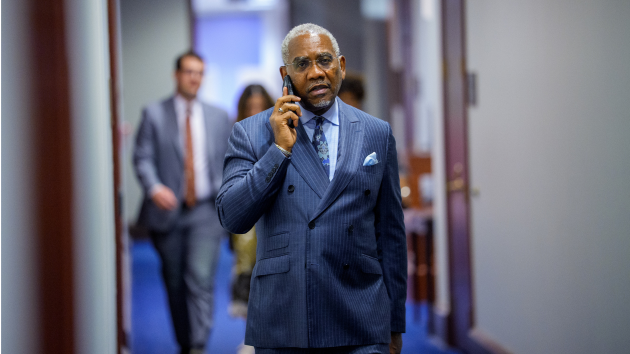
Trump, in historic first, attends Supreme Court arguments on birthright citizenship

Trump rails against birthright citizenship after attending Supreme Court arguments
US President Donald Trump departs the North Portico of the White House in Washington, DC, US, on Wednesday, April 1, 2026. (Shawn Thew/EPA/Bloomberg via Getty Images)

(WASHINGTON) — President Donald Trump is attending oral arguments at the Supreme Court on Wednesday, a historic first for a sitting president, as the justices consider his executive order seeking to end birthright citizenship.

“I’m going,” Trump told reporters in the Oval Office on Tuesday.

No cameras are allowed inside the courtroom. Trump’s motorcade was seen arriving outside the building on Wednesday morning.

Trump previously floated attending arguments last year when the court took up his global tariff policy, but ultimately he did not attend.

Trump has repeatedly attacked the Supreme Court in the wake of the ruling invalidating most of his tariffs, including two justices he appointed, Neil Gorsuch and Amy Coney Barrett. 

“I love a few of them, I don’t like some others,” Trump said on Tuesday when asked which justices he would be listening for most closely.

Solicitor General John Sauer is arguing for the government, asking the justices to uphold Trump’s Day 1 executive order eliminating birthright citizenship under a novel interpretation of the 14th Amendment and requiring parents to prove their own legal status before citizenship is granted to their children.

Lower courts have struck down Trump’s executive order.

American Civil Liberties Union Legal Director Cecillia Wang is arguing on behalf of the class of plaintiffs.

ACLU Executive Director Anthony D. Romero addressed Trump’s attendance, saying he will “watch the ACLU school him in the meaning of the Constitution and birthright citizenship.”

“Any effort to distract from the gravity and importance of this case will not succeed. The Supreme Court is up to the task of interpreting and defending the Constitution even under the glare of a sitting president a couple dozen feet away from them,” he said. 

This is a developing story. Please check back for updates.

Copyright © 2026, ABC Audio. All rights reserved.

What to know about SCOTUS hearing on Trump’s bid to end birthright citizenship

Supreme Court appears skeptical of Trump’s case to end birthright citizenship
U.S. Supreme Court building on March 31, 2026 in Washington, DC. (Roberto Schmidt/Getty Images)

(WASHINGTON) — For more than a century, an American birth certificate has been a key to unlocking the benefits of American citizenship.

Most parents of newborns on U.S. soil have simply needed proof of birth from a hospital to apply for social security numbers, passports and early life benefits for their children. Into adulthood, the birth certificate has been universally recognized as proof of citizenship for voter registration, employment, home loans and military service.

A landmark case before the Supreme Court on Wednesday will determine whether that longstanding cultural norm and legal precedent will continue, or whether sweeping bureaucratic changes that could impact millions will soon take effect.

President Donald Trump is asking the justices to uphold his Day 1 executive order eliminating birthright citizenship under a novel interpretation of the 14th Amendment and requiring parents to prove their own legal status before citizenship is granted to their children.

All lower courts that have considered the case struck the order down.

The amendment, which was ratified in 1868, says all “persons born or naturalized in the U.S. and subject to the jurisdiction thereof” are citizens. Congress later codified the same language in federal citizenship law in 1940.

“Look at the dates of this long ago legislation – THE EXACT END OF THE CIVIL WAR!” Trump posted on social media Monday. “It is about the BABIES OF SLAVES!”

Trump argues children born to parents who are not American citizens or legal permanent residents were never considered “subject to the jurisdiction” of the U.S. because they still owe political “allegiance” to a foreign nation.

Courts and the government, however, have repeatedly interpreted the 14th Amendment to unambiguously confer citizenship on all children born on U.S. soil, including to babies of unauthorized noncitizens and temporary residents, such as international students, foreign nationals who are in the U.S. on tourist visas and seasonal workers.

“The [14th] Amendment, in clear words and in manifest intent, includes the children born, within the territory of the United States, of all other persons, of whatever race or color, domiciled within the United States,” wrote Justice Horace Gray in an 1898 Supreme Court opinion addressing the status of children born to noncitizens.

Immigrant advocates and civil liberties groups insist Trump’s order is blatantly unconstitutional — contrary to the plain text of the Constitution and history of the citizenship clause — and would unleash “chaos” nationwide.

“The impacts on this country would be catastrophic,” said ACLU attorney Cody Wofsy, who is leading the case against the order.

“Most directly, the children who would be stripped of their citizenship would be … subject to arrest, detention and deportation from the only country they’ve ever known,” Wofsy said.

An estimated 255,000 children born every year on U.S. soil to noncitizen parents could lose legal status under Trump’s order, according to the Migration Policy Institute. Some may have difficulty establishing citizenship in any country, effectively being born as “stateless.”

“Babies [born to parents] from countries like Nepal, Afghanistan, Bhutan, where there is not a clear pathway to citizenship in their home countries,” said Anisa Rahm, legal director of the South Asian American Justice Collaborative. “So therefore, where do they belong?”

While the administration insists the order will only apply to children born after it takes effect, legal scholars have warned that a ruling striking down birthright citizenship could have retroactive consequences.

“The citizenship of other Americans could be called into question,” said Winnie Kao, an attorney with the Asian Law Caucus, one of the groups that brought a class-action suit against the administration over the order.

“Vast swaths of U.S. law would need to be reexamined because they are premised on birthright citizenship,” added Kao. “It will also be a total administrative and bureaucratic nightmare for everyone — even for parents who are U.S. citizens.”

An ABC News review of Trump administration plans for implementing a new citizenship policy across federal agencies suggests a more involved and potentially complicated process for new parents than currently exists, if the executive order takes effect.

The Social Security Administration says birth certificates would no longer be sufficient documentation to obtain a new Social Security Number for a newborn.

“SSA will require evidence that such a person’s mother and/or father is a U.S. citizen or in an eligible immigration status at the time of the person’s birth,” the agency wrote in a July 2025 guidance memo.

Parents would first need to submit their own citizenship documentation by mail, phone or online, the agency said. Alternatively, parents could provide a “self-attestation” of citizenship subject to “state and federal penalties for perjury,” according to the memo.

The State Department says it would adopt similar verification measures for passport applicants.

For children born to lawful but temporary immigrants — who would no longer be eligible for citizenship — the U.S. Citizenship and Immigration Services says parents would need to register to obtain the same temporary legal status for their kids.

Federally funded benefits for children, like nutrition assistance and health care services, provided by the Department of Health and Human Services would also require extensive documentation by all parents to prove their children were citizens at birth, the agency said in a memo.

During oral arguments last year in a predecessor case involving Trump’s birthright citizenship order, Justice Brett Kavanaugh — often a key vote in hotly contested cases — voiced concern about whether the government would be able to carry out citizenship checks for parents of the more than 3.6 million babies born in the U.S. each year.

“Federal officials will have to figure that out essentially,” U.S. Solicitor General John Sauer told the justice under questioning.

“How?” Kavanaugh responded skeptically.

“So, you can imagine a number of ways –” Sauer began.

“Such as?” Kavanaugh quipped. “For all the newborns? Is that how it’s going to work?”

Sauer replied at the time that the administration did not have all the details worked out because courts had blocked the executive order in full.

Polls show the nation is sharply divided over the issue of American citizenship for newborn children of unauthorized immigrants. Half of adults — 50% — say they should receive U.S. citizenship; 49% say they should not, according to an April 2025 Pew Research Center survey.

Copyright © 2026, ABC Audio. All rights reserved.

Luigi Mangione returning to court to try to delay federal trial

Luigi Mangione’s federal trial pushed from September to October
Luigi Mangione appears for a suppression of evidence hearing in the killing of UnitedHealthcare CEO Brian Thompson in Manhattan Criminal Court on December 16, 2025 in New York City. (Photo by Seth Wenig-Pool/Getty Images)

(NEW YORK) — Luigi Mangione is returning to federal court in Manhattan, where his attorneys will try to convince the judge to postpone his federal trial until next year.

On Wednesday, the defense will ask U.S. District Judge Margaret Garnett to delay Mangione’s September 2026 trial until January 2027 so defense attorneys can ask the judge overseeing the state prosecution, Gregory Carro, to move the state trial from June 2026 to September 2026.

“As a result of these competing schedules, Mr. Mangione is now in the position of needing to prepare for two complicated and serious trials at the same time,” defense attorney Karen Friedman Agnifilo said in a letter ahead of Wednesday’s hearing.

“Because Justice Carro scheduled the state trial for June 8, 2026, Mr. Mangione is now in the impossible position of having to review 800 jury questionnaires during the week of June 29, 2026, while on trial for second-degree murder in state court,” she said. “As a practical matter, this would not be possible.”

The defense also argued the effectiveness of Mangione’s defense would be diminished without the rescheduling.

“Though fierce advocates for their clients, defense counsel cannot be in two places at once,” Friedman Agnifilo said.

“Realistically, defense counsel cannot be defending Mr. Mangione in state court on second-degree murder charges that carry a maximum sentence of twenty-five years to life while, at the same time, also reviewing 800 questionnaires for a federal case that carries a maximum life sentence. Moreover, counsel will not be able to adequately prepare for the federal trial because they will be on trial in state court.”

Mangione pleaded not guilty to state and federal charges after he was arrested for allegedly gunning down UnitedHealthcare CEO Brian Thompson in Midtown Manhattan in December 2024.

Federal prosecutors are opposed to delaying the trial.

“The concerns identified by the defense can be fully addressed through targeted modifications to the questionnaire process, rather than a wholesale continuance of the trial date in this case,” prosecutor Sean Buckley wrote.

Mangione, 27, faces the possibility of life in prison if he’s convicted in either case. Garnett previously threw out the federal charges that carry the possibility of the death penalty and Carro previously tossed out an enhancement to the state murder charges that said Mangione’s alleged conduct amounted to terrorism. 

Copyright © 2026, ABC Audio. All rights reserved.
White House signals it seeks a diplomatic solution in Iran: Experts

White House signals it seeks a diplomatic solution in Iran: Experts
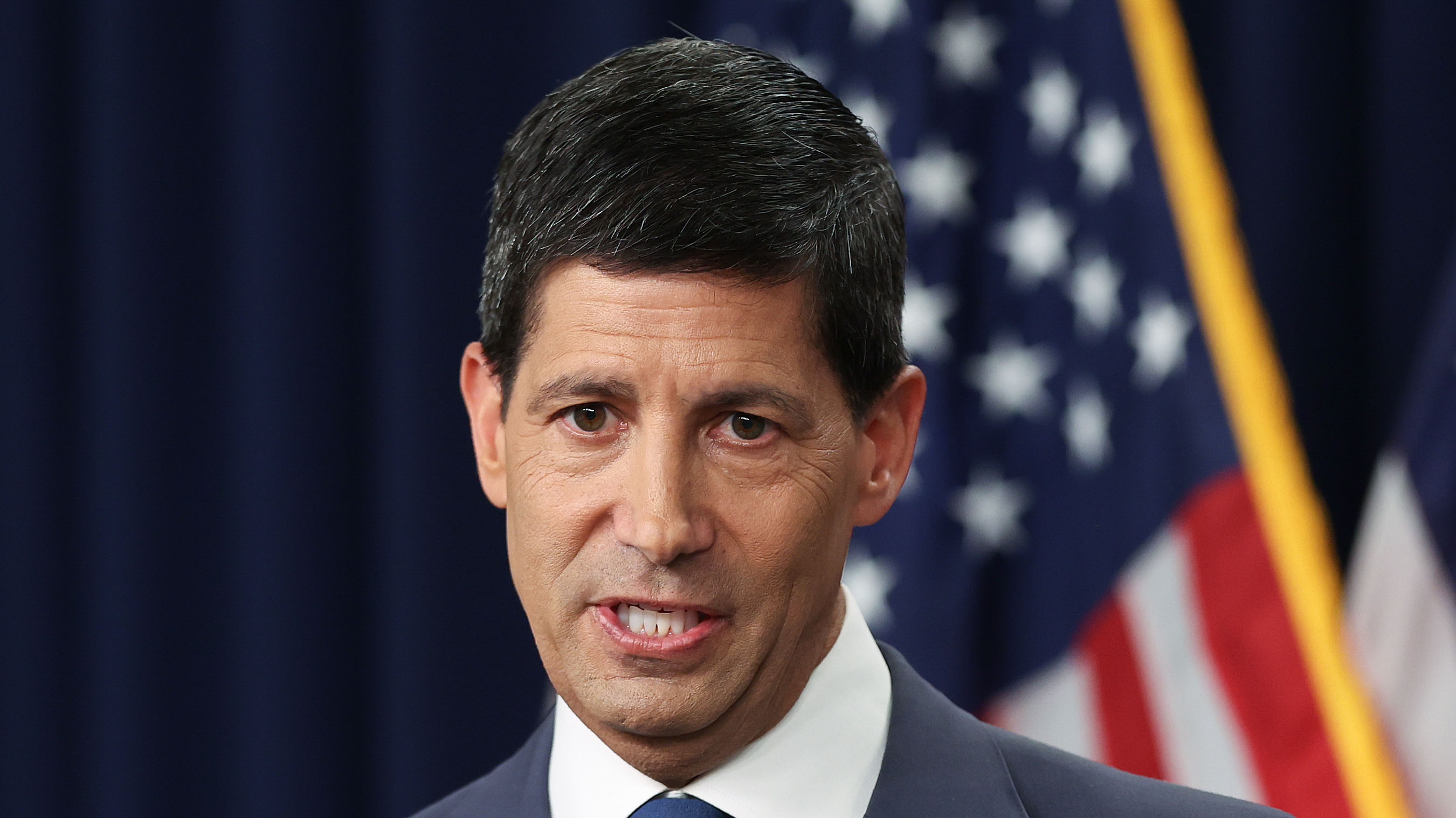
Marco Rubio, US secretary of state, during a cabinet meeting at the White House in Washington, DC, US, on Thursday, March 26, 2026. (Photographer: Will Oliver/EPA/Bloomberg via Getty Images)

(WASHINGTON) — Top Trump administration officials have touted diplomatic efforts to end the war in Iran as the president signals it could end without pursuing the challenging military operation of opening the Strait of Hormuz with naval escorts.

In an interview with “Good Morning America” host George Stephanopoulos on Monday, Secretary of State Marco Rubio did not cite the reopening of the strait, the vital chokepoint of which 20% of the world’s oil flows through, which has been largely closed to shipping traffic, as a U.S. objective. President Donald Trump in the early days of the war said the U.S. Navy would take measures to ensure ships could sail there.

Rubio listed the “destruction” of Iran’s air force, navy, missile-launch capacity and military industry as the four objectives of what he termed a U.S. “operation.”

“All of this so that they can never hide behind it to acquire a nuclear weapon,” Rubio said. “That was our objective from the beginning; that remains our objective now.”

Secretary of Defense Pete Hegseth on Tuesday also omitted freedom of movement in the Strait of Hormuz as one of the Pentagon’s priorities, instead calling on other nations with energy interests there to be involved in reopening it.

The president shifted responsibility over the strait — whose access has been largely blocked by Iran as a response to the U.S. and Israel attacks on the country — to those allies and partners.

“They can police it themselves,” Trump told ABC’s Jonathan Karl on Tuesday. “Why should I do it for them?”

The apparent recalibration — just days after Trump threatened intensified military action if Iran did not move to open the strait — signals the US could be plotting an exit in which it declares it’s accomplished the outlined military objectives without seeking to repair the war’s most devastating economic consequence, a former senior U.S. diplomat said.

“I think Rubio may have signaled one option the president has,” said the former diplomat who engaged in negotiations with Iran. “It’s not a very good one, but … of the bad and worse options, it’s probably the better bad option.”

The former U.S. official said a hasty exit from the conflict without addressing two of its thorniest issues — the Strait of Hormuz and Iran’s nuclear stockpile — suggests there is a diplomatic deal to be achieved that would end the fighting.

“I think Rubio, at least, sounds like he just wants to bring this [conflict] to closure along the parameters that he outlined, and then hope that world pressure opens the Strait of Hormuz,” the former official said.

Objectives articulated by the administration earlier in the conflict — like regime change and denuclearization — would remain unmet by such a deal, the former diplomat said.

Tehran’s diplomatic view
Whether or not the U.S. is pursuing a diplomatic exit, it will be complicated for a battered Iran to deal with a country that initiated a war with it a month ago, analysts of Tehran’s government told ABC News.

Iran may be open to diplomacy, the analysts said, but it would seek durable assurances that it will not be attacked by the U.S. — or Israel — in the future.

Iranian Foreign Minister Abbas Araghchi said Tuesday that his country was not negotiating with the U.S. but that messages were being passed.

Pakistan, who along with Turkey and Egypt has positioned itself as an intermediary between the U.S. and Iran, have been delivering those messages between the warring nations, establishing an important “venue” for talks, said Syed Mohammad Ali, a lecturer at Johns Hopkins University and analyst of Pakistani politics.

“I think the most important thing here is to have created a channel of mediation,” Ali said. “And in conflict situations that is of vital importance.”

Ali, who is familiar with the early negotiations, said early diplomatic exchanges have been “maximalist” as the two sides remain far apart.

He cautioned that Pakistan, which has offered to host direct talks, would by itself “not be in a position to really help hammer this out … they can continue playing this role, but the terms are going to be set elsewhere.”

The introduction of China to diplomatic discussions, he said, could bring the kind of “big power pressure” and “strategic leverage” that the US and Iran, whose economies are intertwined with Beijing’s, might respond to.

The Chinese and Pakistani governments released a five-point plan, which called for an immediate ceasefire and “normal passage” through the Strait of Hormuz, after a meeting of their foreign ministers in Beijing on Tuesday. Trump is set to visit China in May.

Esfandyar Batmanghelidj, an expert on Iranian politics and economics and an adjunct professor at Johns Hopkins, said any durable diplomatic breakthrough would likely follow a set of “high-level principles” that enables a ceasefire.

Leaders of the Iranian regime won’t readily come to the negotiating table, Batmanghelidj said, unless the conflict is perceived as a “stalemate” with the U.S. and talks are not framed as capitulation to Trump. Hardliners in Tehran, including leadership of the Iranian Revolutionary Guard Corps which would be allergic to negotiating with Washington, are still believed to wield considerable influence.

But “the elements” for a deal “are there,” Batmanghelidj said.

“Ultimately, this war has gone well enough for the Iranians that they can also point to a victory, but it has also been painful enough that even those that are very hardline in the Iranian system will understand that they don’t want to run a country that has been turned into some sort of basket case.”

Copyright © 2026, ABC Audio. All rights reserved.