
New federal screening guidance expands cervical cancer testing with an at-home HPV option

New federal screening guidance expands cervical cancer testing with an at-home HPV option
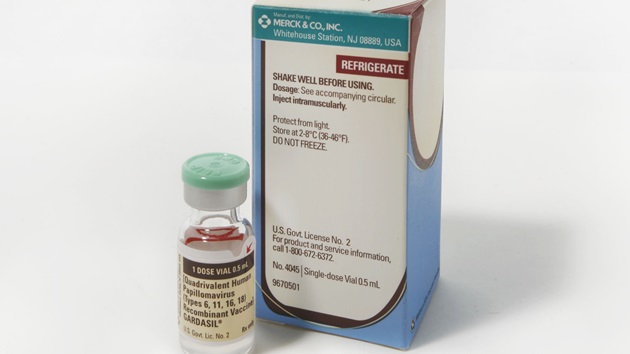
In this handout from Merck & Co, a box and vial of Gardasil, a new cervical cancer vaccine, is seen is this undated photo. Russell Kirk/Merck & Co. via Getty Images

(NEW YORK) — A major update to federal women’s health preventive guidance will make it easier for women to get screened for cervical cancer, including a self-collection option that allows some women to test themselves at home instead of going to a doctor for a pelvic exam.

The new option will be covered by private insurance beginning in January 2027.

The updated Health Resources and Services Administration (HRSA) guidance now advises that people receive a high-risk HPV test – which checks for the virus types most likely to cause cervical cancer – every five years for average-risk women ages 30 to 65 as the preferred screening approach. This can be done with a clinician-collected sample or by the patient at home. 

Women in that age group still have other choices: a combination of an HPV and Pap test every five years, or Pap testing alone every three years if HPV testing isn’t available. 

“The addition of self-collection really empowers women to make this choice for themselves,” Ann Sheehy, MD, the HRSA’s chief medical officer, told ABC News. “We do retain the option for Pap smear … this is just an additional choice for women.”

For women ages 21 to 29, the recommendations stay the same: Pap tests every three years, which Sheehy said aligns with available evidence.

“By doing this, we’re going to get some of those people that have been falling through the cracks and not getting this testing done in advance,” Tom Engels, administrator of the HRSA, told ABC News. “And by doing that, we’re going to save lives.”

Engels emphasized that the update is meant to expand testing options, not replace the Pap test. Self-collection is intended to remove barriers for women who find in-office screening difficult to schedule, uncomfortable, or hard to access, he stressed. 

American Cancer Society (ACS) guidelines updated in December, by contrast, recommend that cervical cancer screening should begin at age 25 and centers on primary HPV testing, including self-collection tests.

“The combination of good evidence of the benefits of self-collection, which include increased access to cervical cancer screening, combined with FDA approval, led the ACS and HRSA to include self-collection in their guideline update,” Dr. Robert Smith, senior vice president, Early Cancer Detection Science at the American Cancer Society and author of the organization’s updated guidelines, told ABC News.

Cervical cancer screening is often cited as a major public health success. Over the last 50 years, cervical cancer incidence and deaths have fallen by more than 50% in the U.S., according to the American Cancer Society, largely because screening can catch precancerous changes early, before patients notice any symptoms.

When cervical cancer is found early, five-year survival is higher than 90%, Centers for Disease Control and Prevention (CDC) data suggests. But the HSRA guidance notes that more than half of diagnoses happen beyond the earliest stage, after the disease is spread to other areas of the body. In those later stages, five-year survival is only about 20%, according to the CDC.

Wide use of the HPV vaccine is expected to push cervical cancer rates even lower over time, but most of the historical decline happened before widespread vaccination efforts.

Sheehy said she has seen the consequences when screening doesn’t happen, and why early detection matters.

“I’ve seen women who didn’t have access to screening, and their cancer presented at a very late stage,” she said. “Most women who have early-stage cervical cancer or precancer lesions are asymptomatic, and the only way we’re going to detect that is with screening.”

The updated guidance aims to address stubborn gaps despite the decades of progress, she added, pointing out that about half of women diagnosed with cervical cancer have either never been screened or their screening isn’t up to date, and about one in four women in the U.S. are not up to date with screening, according to the CDC.

Only FDA-approved tests are recommended for self-collection. The FDA first expanded approvals in May 2024 to allow patients to self-collect samples in a clinical setting. In May 2025, the FDA approved the first at-home self-collection cervical cancer screening kit.

The at-home option is available by prescription. Exactly how patients access a covered self-collecting test may vary by insurer and plan.

“There’s some FDA tests that are approved for self-collection in an office-based setting and there is one that is available for self-collection at home,” Sheehy noted.

Sheehy and Smith both added that a positive HPV result is not a cancer diagnosis, but it can mean additional testing is necessary.

The updated guidance also aims to reduce costs that can pile up after an abnormal screening result by clarifying what insurers must cover without cost-sharing, including follow-up testing and diagnostic evaluation such as Pap testing, biopsy, and lab work, depending on individual needs.

A separate HRSA guideline that took effect Jan. 1 also requires insurance coverage for patient navigation services that help women schedule screenings, address care challenges, and follow up after abnormal results.

“We know the health care system is incredibly complicated for patients to navigate,” Sheehy said.

Both Engles and Sheehy emphasized how optimistic they are about the potential benefits of expanding access to cervical screening.

“This could be really, really, game-changing for women,” Sheehy said.

Radhika Malhotra, MD, is an internal medicine-preventive medicine resident at Rutgers New Jersey Medical School and a member of the ABC News Medical Unit. 

ABC News’ Liz Neporent contributed to this report.

Copyright © 2026, ABC Audio. All rights reserved.
Minnesota Gov. Tim Walz ends reelection bid

Minnesota Gov. Tim Walz ends reelection bid
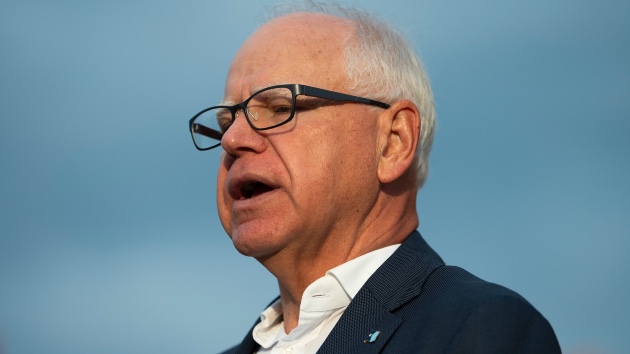
: Minnesota Gov. Tim Walz speaks to media gathered on the first day of school at Deerwood Elementary on September 2, 2025 in Eagan, Minnesota. (Photo by Stephen Maturen/Getty Images)

(NEW YORK) — Minnesota Gov. Tim Walz, a Democrat, announced Monday that he would drop his bid for reelection as governor of Minnesota, saying that he would not be able to give a campaign all of his attention as he works to defend Minnesota against allegations of fraud and right-wing scrutiny.

This is a developing story. Please check back for updates.

Copyright © 2026, ABC Audio. All rights reserved.
Man taken into custody after allegedly causing damage to Vance’s Ohio home, Secret Service says

Man taken into custody after allegedly causing damage to Vance’s Ohio home, Secret Service says
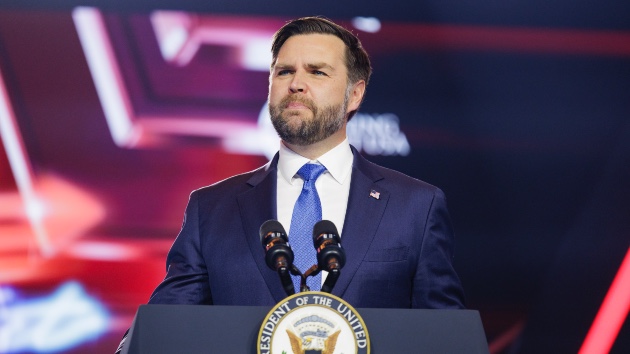
Vice President JD Vance speaks on the final day of Turning Point USA’s annual AmericaFest conference at the Phoenix Convention Center on December 21, 2025 in Phoenix, Arizona. (Photo by Caylo Seals/Getty Images)

(CINCINNATI) — A man was taken into custody after allegedly causing property damage, including breaking windows, at Vice President JD Vance’s home in Ohio, the U.S. Secret Service said on Monday.  

Just after midnight the man was physically detained by Secret Service personnel and then taken into custody by the Cincinnati Police for property damage.

“The residence was unoccupied at the time of the incident, and the Vice President and his family were not in Ohio,” the Secret Service said.

Vance and his wife, Usha, purchased the home for about $1.4 million in 2018 in Cincinnati’s East Walnut Hills neighborhood, which sits along the Ohio River and east of downtown, according to the Hamilton County Auditor’s Office.

Copyright © 2026, ABC Audio. All rights reserved.
American tourists stranded across the Caribbean after airspace closed for Maduro capture

American tourists stranded across the Caribbean after airspace closed for Maduro capture
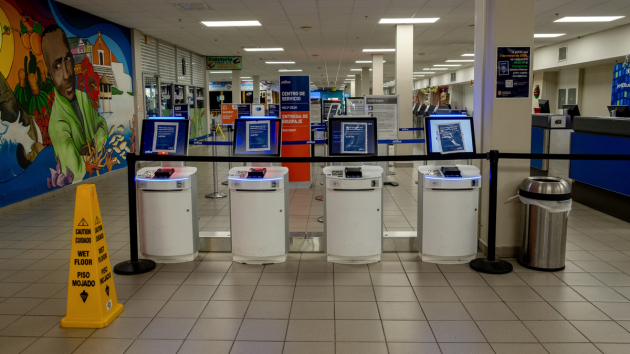
Self check-in kiosk are blocked off at Rafael Hernandez International Airport in Aguadilla, Puerto Rico. (Yadira Hernandez-Pico/Bloomberg via Getty Images)

(NEW YORK) — Despite the Federal Aviation Administration reopening the Eastern Caribbean airspace following the dramatic capture of Venezuelan President Nicolás Maduro by U.S. forces, some American tourists said they remain stranded across the region.

As airlines scrambled on Sunday to add flights and get people home from the Caribbean, tourists such as Nydia Han said they remain stuck.

Han, an anchor and reporter for ABC Philadelphia station WPVI, said she and her family were supposed to fly from San Juan, Puerto Rico, to Philadelphia on Sunday night. But now, she said she has been told by the airlines that she can’t get a flight home until Friday.

“Unfortunately, because of Maduro’s capture and airspace being closed, we are stuck here in Vieques,” Han said in a video she shared with ABC News.

The FAA issued a so-called notice to airmen (NOTAM) to airlines early Saturday that it was banning flights from entering the Eastern Caribbean airspace “due to safety-of-flight risk associated with ongoing military activity.”

U.S. Transportation Secretary Sean Duffy said in a social media post later on Saturday that the Caribbean airspace ban would expire at midnight Eastern time on Sunday.

Major U.S. air carriers — including Southwest, JetBlue, United, Delta and American — canceled hundreds of flights during the airspace ban and some are scrambling to add additional flights to the region to accommodate affected customers.

Delta says they’ve added 2,600 seats through extra flights on Monday and the airline says it’s working to reaccommodate all customers by Tuesday.

Delta said delays could occur in the Caribbean on Monday because of the increased airline capacity and recommended that customers with confirmed and rebooked tickets on Monday arrive three hours early to allow for crowded airports.

Customers without confirmed tickets should not go to the airport until they’ve been rebooked. 

American Airlines has added a total of 7,000 more seats with 43 extra flights. On Monday, for the first time in over a decade, American will operate interisland flights in the Eastern Caribbean with two flights connecting Anguilla Wallblake, Anguilla (AXA) and Beef Island, BVI (EIS) to San Juan, Puerto Rico. 

Flights throughout the Caribbean — including other popular destinations such as Aruba, Bonaire, Curacao, St. Martin and St. Thomas in the U.S. Virgin Islands — were also canceled during the airspace ban, but some airports are getting back to normal.

Flights were arriving and departing from the Queen Beatrix International Airport in Oranjestad, Aruba, according to FlightRadar24.

About 29 flights into and out of Luis Muñoz Marín International Airport in Puerto Rico were canceled on Sunday, a far cry from the 400 inbound and outbound flights canceled on Saturday.

Billy Gunther of Florida said he and his wife are newlyweds and were wrapping up their stay at an Airbnb in Puerto Rico on Saturday when they got a notification that their flight was canceled.

Gunther told ABC affiliate station WZVN in Naples, Florida, that it could be another three days before he and his wife get a flight back home. Gunther said he has spoken to other tourists coping with flight cancellations.

“So, you have a lot of people who are anxious, that they don’t know when they’re going to come home,” Gunther said.

Copyright © 2026, ABC Audio. All rights reserved.
Trial begins for former Uvalde officer charged in Robb Elementary shooting response

Trial begins for former Uvalde officer charged in Robb Elementary shooting response
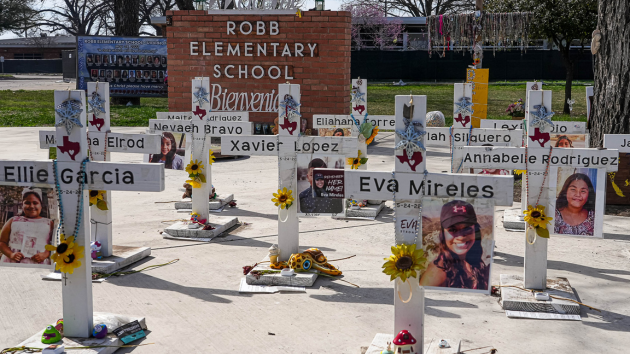
Crosses dedicated to the 21 victims of the 2022 mass shooting at Robb Elementary are placed in front of the school on Monday, Feb. 26, 2024 in Uvalde. (Aaron E. Martinez/Austin American-Statesman via Getty Images)

(CORPUS CHRISTI, Texas) — Nearly four years after a gunman killed 19 students and two teachers in a Texas elementary school, a jury is set to decide whether a police officer should be held criminally responsible in connection with one of the worst school shootings in American history.

Jury selection begins Monday in the trial of former Uvalde school police officer Adrian Gonzales, charged with allegedly placing more than two dozen children in “imminent danger” by failing to respond to the crisis as it unfolded.

Prosecutors allege that Gonzales, one of the first of nearly 400 officers to respond to the rampage, failed to engage the shooter despite knowing his location, having time to respond and being trained to handle active shooters. It ultimately took 77 minutes for law enforcement to mount a counter-assault that would kill the gunman.

Ever since the shooting tore apart Uvalde on May 24, 2022, families of the victims have been seeking accountability and answers. Many have argued their children might have been saved had police confronted the gunman more quickly.

The trial, being staged 200 miles from Uvalde in Corpus Christi, marks an exceedingly rare instance of prosecutors seeking to convict a member of law enforcement for a response to a school shooting.

Prosecutors in June 2024 charged both Gonzales and Uvalde schools Police Chief Pete Arredondo — the on-site commander on the day of the shooting — with multiple counts of endangerment and abandonment of a child.

Gonzales and Arredondo are the only officers charged. Both have pleaded not guilty.

Investigations have determined that Salvador Ramos, 18, acted alone in carrying out the massacre. He was killed on-site at Robb Elementary School.

Gonzales was charged with 29 felony counts, one for each of the 19 fourth-graders who died in the shooting and 10 students who survived in classroom 112.

According to the indictment, he “failed to engage, distract or delay the shooter” after hearing the gunshots and learning about the shooter’s location.

Arredondo was charged with 10 felony counts for allegedly endangering the 10 survivors by delaying the law enforcement response and not following active shooter protocols.

Arredondo and Gonzales were charged at the same time, but Gonzales will be facing trial first and alone.

Arredondo’s case has been delayed indefinitely by an ongoing federal lawsuit filed after the U.S. Border Patrol refused repeated efforts by Uvalde prosecutors to interview Border Patrol agents who responded to the shooting, including two who were in the tactical unit responsible for killing the gunman at the school.

Each count carries a maximum of two years in prison, though judges and juries in Texas have broad discretion in imposing sentences, according to Sandra Guerra Thompson, a criminal law professor at the University of Houston Law Center.

“There’s a lot of different ways that this could go,” she said. “All the children who were so horrifically killed that would seem to motivate a longer sentence for anyone who is found to have some fault.”

Ahead of trial, prosecutors issued at least 75 subpoenas to potential witnesses, including police officers, teachers, and families of victims, according to court filings.

More than 20 members of the elite Texas Rangers, 16 members of the Uvalde Consolidated Independent School District, and multiple physicians from nearby hospitals have received subpoenas, according to court filings.

In the attempt to make their case against Gonzales, prosecutors turned to a child endangerment law more commonly used to prosecute negligent parents or caretakers responsible for things like leaving a child in a hot car or without supervision at a beach. The law has rarely been used against police officers, experts noted, because of the difficulty in proving they had a legal obligation to the children.

“The critical issue here is whether the individual has a duty to act,” said Thompson, the law professor in Houston.

According to Houston-based defense attorney Nicole DeBorde Hochglaube, prosecutors will need to establish that Gonzales had a legal duty — not just a moral obligation — to intervene and that he failed to follow his training for active shooter scenarios.

“The jury is going to have the nasty task of looking through some horrible things to determine if he had the duty to act,” she said, referencing evidence such as body camera footage and frantic 911 calls from the shooting.

Legal experts who spoke with ABC News noted that Gonzales’ role as a responding officer — not the commander or case agent at the scene — could make it tough to convince the jury the man’s conduct amounted to a crime.

If prosecutors can secure a conviction, it would mark the first time that a police officer has been held accountable for how they carried out their duties at a mass shooting to which they responded.

Prosecutors rarely attempt to charge police officers who have responded to mass shootings, according to Phil Stinson, a professor at Bowling Green State University in Ohio, who maintains a database of police officers who have been arrested. Of the 25,000 arrests since 2005 included in the database, Stinson identified only two prosecutions similar to those against Gonzales and Arredondo.

Defense attorneys for Gonzales have argued he is being unfairly scapegoated for a crime he didn’t commit and that he did all he could to save and rescue children who were in imminent danger.

“Those precious souls were stolen by a monster that day, but that monster was not Adrian [Gonazales],” defense attorney Nico LaHood told ABC affiliate KSAT in San Antonio. “He was there, he was present. He was going into danger. And so the narrative of the government is something we’re going to contest highly, and that’s going to be the point of contention before this jury.”

Court filings shed little light on the case Gonzales’ lawyers will mount, though attorneys have signaled plans to use drone footage from Robb Elementary to assist them.

“The factual circumstances of this case intricately entail the timing and spatial proximity of the actors and events unfolding at Robb Elementary school on the day of the murders,” attorneys wrote in a court filing.

Copyright © 2026, ABC Audio. All rights reserved.
Questions swirl about who is going to ‘run’ Venezuela after Maduro’s ouster

Questions swirl about who is going to ‘run’ Venezuela after Maduro’s ouster
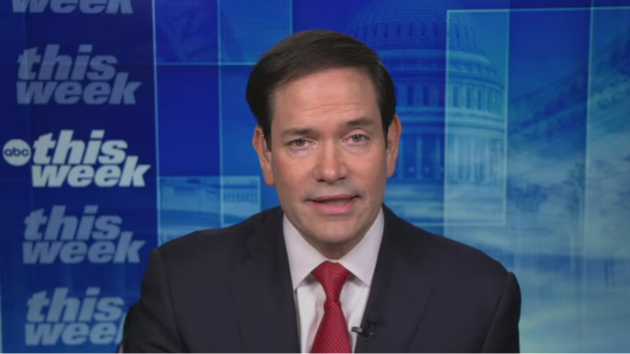
Secretary of State Marco Rubio speaks with ABC News while appearing on This Week, Jan. 4, 2026. (ABC News)

(NEW YORK) — In the wake of the dramatic capture of Venezuelan President Nicolas Maduro and his wife, and the “large scale strike” by the U.S. on the country, questions abound about how the U.S. might run a country of 31 million people.

President Donald Trump stunned and alarmed many by announcing not only Maduro’s ouster, but saying that the U.S. would “run” the country temporarily, a statement that drew sharp criticism from some Democratic lawmakers and others about a new and complex foreign entanglement.

Retired Marine Corps colonel and former State Department official Steve Ganyard, an ABC News contributor, told “Good Morning America” that American involvement could go on for a “very long time.”

“The trick here will be to not disturb the underlying structure of Venezuelan society … to find somebody that will come in, provide just enough stability to lead to what hopefully will be free and fair elections,” Ganyard said.

Ganyard also said the U.S. military force that is in place is not equipped “to put boots on the ground,” if the interim government does not go along with American interests. “Those options at this point are very, very limited,” he said.

Trump expressed skepticism about not only Venezuelan opposition leader Maria Corina Machado, but also other leaders in the country, due to their connection to Maduro.

The Venezuelan Supreme Court on Saturday directed the country’s vice president, Delcy Rodriguez, to assume the presidency, citing the “exceptional situation created by the kidnapping of Nicolás Maduro Moros.”

In an address on Saturday, Rodriguez called for Maduro’s “immediate release.”

“The people must go to the streets, the armed forces must deploy across the country, and all institutions must activate — to defend what we are, as sons and daughters of Simon Bolivar,” she said during the address, in Spanish.

The statements appeared to be at odds with the characterization of her position by President Trump, who indicated that in a call with Secretary of State Marco Rubio, Rodriguez said “she’s essentially willing to do what we think is necessary to make Venezuela great again.”

“She had a long conversation with Marco, and she said, “We’ll do whatever you need.” She, I think she was quite gracious, but she really doesn’t have a choice. We’re going to have this done right,” Trump said during a press conference at Mar-a-Lago on Saturday.

Rubio, for his part, reserved judgment about Rodriguez’s comments. “We’re going to make decisions based on their actions and their deeds in the days and weeks to come,” he said in an interview with The New York Times.

ABC News has reached out to the State Department for comment.

During an appearance Sunday on ABC’s “This Week,” Rubio said that the administration was not recognizing Rodríguez as the current legitimate leader in Venezuela.

“We don’t believe that this regime in place is legitimate via an election,” Rubio said.

The implications of Trump’s pronouncement that the U.S. was going to “run” Venezuela were not immediately clear.

The president suggested during his press conference Saturday that some of his Cabinet officials could undertake the task in coordination with a team of people in Venezuela. He also did not rule out “boots on the ground” from the American military.

“We can’t take a chance of letting somebody else run it and just take over what he left, left off, so we’re making that decision now,” Trump said. “We’ll be involved in it very much. And we want to do liberty for the people.”

Trump also said that the opposition leader, Machado, does not have the “respect” needed to run the country. Political analysts interviewed by ABC News rejected Trump’s assessment of Machado.

A U.S. official said the Trump administration would engage diplomatically with the remainder of the Venezuelan government, engage with oil executives to rebuild the infrastructure, that the American military would remain at the ready, that the oil embargo would remain in place and the administration would continue to dismantle cartels. Beyond that, the plan was not immediately clear.

On “This Week” Sunday, when pressed on whether the U.S. was in charge of Venezuela right now, Rubio said that what the U.S. was “running” was the “direction” of the situation.

“What we are running is the direction that this is going to move moving forward. And that is we have leverage,” Rubio added. 

Copyright © 2026, ABC Audio. All rights reserved.
‘It’s a violation of the law’: Schumer criticizes Trump’s decision to strike Venezuela

‘It’s a violation of the law’: Schumer criticizes Trump’s decision to strike Venezuela
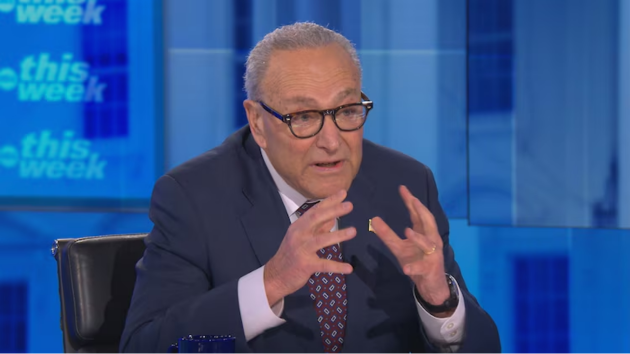
Senate Minority Leader Chuck Schumer speaks with ABC News while appearing on This Week, Jan. 4, 2026. (ABC News)

(NEW YORK) — Senate Minority Leader Chuck Schumer addressed on Sunday the stunning U.S. strike on Venezuela, saying the capture of Venezuelan President Nicolás Maduro was unlawful.

“Maduro is a horrible, horrible person, but you don’t treat lawlessness with other lawlessness, and that’s what’s happened here,” Schumer told “This Week” anchor George Stephanopoulos. “There is no authority … they did not just do ships off the water. They went inside Venezuela, bombed civilian as well as military places, and it’s a violation of the law to do what they did without getting the authorization of Congress.”

Despite President Donald Trump’s claims on Saturday that the United States was “going to run” Venezuela “until such time as we can do a safe, proper and judicious transition,” the Democratic senator told Stephanopoulos that “nobody knows” who is actually running Venezuela right now.

“The American people this morning, George, are scratching their heads in wonderment and in fear of what the president has proposed,” Schumer said. “We have learned through the years when America tries to do regime change and nation building in this way, the American people pay the price in both blood and in dollars.”

Schumer expressed skepticism that U.S. oil companies could fix Venezuela’s oil infrastructure, a claim Trump made after the strike.

“It seems sort of a back-of-the envelope operation, at least by what they’ve told people,” Schumer said. “These oil fields have been in disrepair for years. We have no idea how long it’s going to take, how much it’s going to cost, and whether we need military troops guarding the oil fields while we do it.”

Schumer also criticized Trump’s involvement in Venezuela after his frequent campaign promise to avoid overseas conflicts.

“The American people are worried that this is creating an endless war. The very thing that Donald Trump campaigned against over and over and over again was no more endless wars. And right now, we’re headed right into one, with no barriers, with no discussion,” he argued.

Trump’s declaration follows the overnight mission in which a U.S. military extraction team, supported by over 150 military aircraft, made their way into Venezuela’s capital of Caracas and reached the compound where Maduro and his wife were staying. The team then brought the pair to the USS Iwo Jima warship before bringing them to New York City where Maduro is facing charges of narcoterrorism and drug trafficking.

Here are more highlights from Schumer’s interview.

The expired Obamacare insurance premiums

“We passed legislation to renew them for three years, and the Republicans blocked it in every single way. They’re a mess. They’re a mess. [Senate Majority Leader] John Thune has said he will not renew them. [House Speaker Mike] Johnson has said they will not … so it’s the Republicans [who] have screwed this up. If they can find a way out of the mess, we want to work with anybody to lower the prices.”

If there will be another government shutdown

“No. There are two separate tracks here. Democrats want to fund the appropriations, the spending bills all the way through 2026. We want to work with a bicameral, bipartisan way to do it. And the good news is our Republican appropriators are working with us, and we’re making good progress in that regard.”

Copyright © 2026, ABC Audio. All rights reserved.
Trump’s vow to ‘run’ Venezuela, sell oil, part of plan to dominate Western Hemisphere

Trump’s vow to ‘run’ Venezuela, sell oil, part of plan to dominate Western Hemisphere
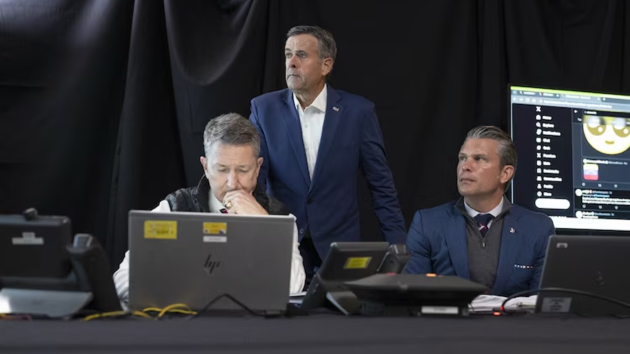
In this image posted to social media on President Donald Trump’s Truth Social account, General Dan Caine, Chairman of the Joint Chiefs of Staff, CIA Director John Ratcliffe and Secretary of Defense Pete Hegseth are shown at Mar-a-Lago in Palm Beach, Fla., on Jan. 3, 2026, watching a remote feed of the US military’s mission to capture Venezuela’s President Nicolas Maduro. (@realdonaldtrump)

(NEW YORK) – At a Mar-a-Lago news conference Saturday morning, hours after he ordered a military strike in Venezuela and the capture of the country’s president, Nicolas Maduro, and his wife, President Donald Trump started off calling it an anti-drug law enforcement operation.

His Secretary of State, Marco Rubio, said “at its core, this was an arrest of two indicted fugitives of American justice.”

But Trump’s framing of the issue appeared to quickly expand when he stunned observers by saying the U.S. was going to “run the country” temporarily, even if that involved troops on the ground, that American companies would soon start selling the country’s vast oil reserves, and that it was part of an overall strategy of U.S. dominance in the Western Hemisphere.

While Trump said that the U.S. would “make Venezuela great again,” when asked repeatedly about the specifics of America’s role, including a possible timetable, Trump gave few specifics.

“We’re going to be running it with a group, and we’re going to make sure it’s run properly. We’re going to rebuild the oil infrastructure, which will cost billions of dollars. It will be paid for by the oil companies directly. They will be reimbursed for what they’re doing, but that’s going to be paid,” Trump said.

Later, a U.S. official told ABC News what it would look like for the U.S. to “run” Venezuela.

The official said top Trump officials will continue to diplomatically engage with those remaining in the Venezuelan government, that the administration will engage with oil executives to begin oil expansion in the country and that the U.S. military will remain postured and ready, and that the oil embargo would remain in effect.

American boots on the ground possible
The president brushed off questions about concerns about the length and logistics of the U.S. operation.

Trump was asked about whether U.S. troops would be on the ground in order to “run” Venezuela and indicated he could use the military to make sure it’s run “properly.”

“Well, you know, they always say, ‘boots on the ground, oh.’ So, we’re not afraid of boots on the ground,” he said. “We had boots on the ground last night at a very high level. Actually, we’re not afraid of it. We don’t mind saying it, but we’re going to make sure that that country is run properly.”

When pressed again later, Trump suggested that the only U.S. presence will pertain “to oil,” suggesting the presence will be American oil companies.

“We’re going to be taking out a tremendous amount of wealth out of the ground, and that wealth is going to the people of Venezuela and people from outside of Venezuela that used to be in Venezuela, and it goes also to the United States of America in the form of reimbursement for the damages caused by that country,” he said.

The president also suggested that U.S. forces remain “ready” to carry out a “much bigger” second-wave attack on Venezuela.

Trump faced pushback from Democrats over his announcement.

“The idea that Trump plans to now run Venezuela should strike fear in the hearts of all Americans,” Sen. Minority Leader Chuck Schumer, D-N.Y., said in a statement. “The American people have seen this before and paid the devastating price.”

Republican Rep. Marjorie Taylor Greene of Georgia, who is leaving Congress Monday following a fallout with Trump, slammed the president over his actions.

“Americans disgust [sic] with our own government’s never ending military aggression and support of foreign wars is justified because we are forced to pay for it and both parties, Republicans and Democrats, always keep the Washington military machine funded and going,” she said in a statement. “This is what many in MAGA thought they voted to end.”

When pressed about how taking the action in Venezuela is “America First,” Trump said that it was for the U.S. to  surround itself with “good neighbors,” and “energy.”

Trump’s comments during the news conference were a far cry from his previous rhetoric in the weeks leading up to the strike in the Venezuelan capital, in which he condemned Maduro and his regime for allegedly contributing to drug trafficking, a charge Maduro has repeatedly denied..

Trump makes case using Monroe Doctrine
The president has reaffirmed and expanded his policy of a modern version of the Monroe Doctrine declared in 1823, the notion that views America as the dominant leader in the Western Hemisphere.

“All of these actions were in gross violation of the core principles of American foreign policy, dating back more than two centuries, and not anymore, all the way back. It dated to the Monroe Doctrine,” he said.

“And the Monroe Doctrine is a big deal, but we’ve superseded it by a lot, by a real lot. They now call it the ‘Donroe Doctrine,'” the president added, playing off his name.

Trump’s comments Saturday came after he released a message in December that he called the “Trump Corollary” to the Monroe Doctrine, saying that “the American people — not foreign nations nor globalist institutions — will always control their own destiny in our hemisphere.”

Foreign leaders in Russia, Cuba and Russia denounced Saturday’s strike.

“Venezuela should be guaranteed the right to determine its own fate without any destructive, especially military intervention from outside. We reaffirm our solidarity with the Venezuelan people and support for the course of their Bolivarian leadership aimed at protecting the national interests and sovereignty of the country,” the Russian foreign ministry said in statement.

Trump does not back opposition leader
When asked about whether he’d support opposition head María Corina Machado to become the country’s new leader, Trump dismissed the possibility.

“I think it would be very tough for her to be the leader. She doesn’t have the support within or the respect within the country. She’s a very nice woman, but she doesn’t have the respect,” Trump said.

Machado put out a statement Saturday praising Maduro’s removal.

“Today we are ready to take over power. We remain vigilant, active, and organized until a democratic transition is concrete. A transition that needs ALL of us,” she said. “To Venezuelans inside our country, be ready to mobilize what we will soon communicate to you through our official channels.”

Machado, who was awarded the Nobel Peace Prize last year, told reporters last month that she would return to the country “when we believe the security conditions are right, and it won’t depend on whether or not the regime leaves.”

After winning the prize, she posted a statement on X where she dedicated the prize to “to the suffering people of Venezuela and to President Trump for his decisive support of our cause!”

When asked how soon he wanted to see Venezuela hold elections, Trump indicated that he wants to see if it happens quickly, but noted that it “takes a period of time.”

Venezuelan Vice President Delcy Rodriguez demanded Maduro’s return in a speech on state TV. Trump had said “she’s essentially willing to do what we think is necessary to make Venezuela great again.”

“We had already warned that an aggression was underway under false excuses, under false pretexts, and that the masks had fallen and it had only one objective: regime change in Venezuela — and the capture of our energy, mineral, and natural resources,” Rodriguez said in Spanish.

Copyright © 2026, ABC Audio. All rights reserved.
‘What he ate’: Inside the meticulously planned operation to capture Maduro

‘What he ate’: Inside the meticulously planned operation to capture Maduro
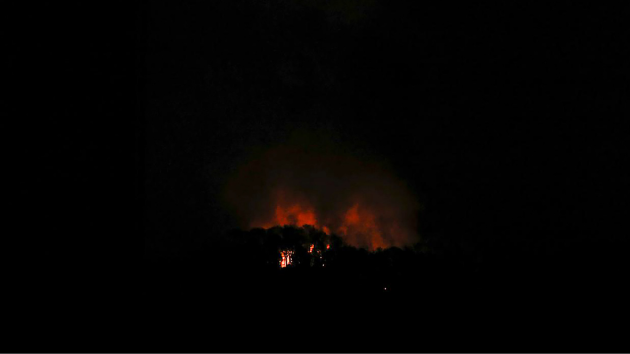
Multiple strong explosions were heard on Saturday in Venezuelaâs capital Caracas amid rising tensions with the United States on January 3, 2026. (Stringer/Anadolu via Getty Images)

(NEW YORK) — Gen. Dan Caine, chairman of the Joint Chiefs of Staff, provided a very detailed account of how the U.S. military’s mission to apprehend Nicholas Maduro and his wife took place early Saturday morning.

Here are highlights:

The mission was called Operation “Absolute Resolve”

Caine said that more than 150 aircraft were involved, including fighter aircraft, bombers, surveillance aircraft, intelligence aircraft, and helicopters. He said the entire joint force was involved in the mission (Army, Navy, Air Force, Marines, Space Force, intelligence agencies).

The aircraft involved were:

— Fighters: F-35s, F/A-18s, E/A-18s, F-22s

— Bombers: B-1 bombers

— Unmanned aircraft and E-2 Hawkeyes

He said the aircraft took off from 20 different bases on land at at sea and that support aircraft were involved as well.

President Donald Trump gave the order to undertake the mission at 10:46 p.m., Caine said. He said the president’s message of “Good luck and Godspeed” was communicated to the entire force.

The extraction force that captured Maduro and his wife included law enforcement.

The helicopters carrying the force flew at an altitude of 100 feet above the water as they approached Venezuela.

As they came near, air defense systems were disabled to ensure the safe passage of the helicopters to Maduro’s compound.  

The helicopters arrived at the compound at 1:01 a.m. Eastern Time, 2:01 a.m. local time. 

Upon arrival, they came under fire and responded in self-defense with “overwhelming force,” Caine said.  

One of the helicopters was hit, but remained flyable.

Maduro and his wife were taken into custody by Justice Department officials “assisted by incredible U.S. military” forces with “no loss of life,” Caine said. He did not provide any details of any injured Americans.

When the helicopters left the compound, they were protected by fighter aircraft and drones that provided suppressive fire.

The extraction force was over water at 3:39 a.m. Eastern Time, Caine said.

Maduro and wife were then taken to the USS Iwo Jima.

Venezuela’s Vice President Delcy Rodriguez, in a call to state TV Saturday morning, said that “innocent people” had died, but gave no specifics, and didn’t address during a later speech.

Caine said the mission was “meticulously planned” and was “the culmination of months of planning and rehearsals.”

“We think we develop, we train, we rehearse, we debrief, we rehearse again and again, not to get it right, but to ensure that we cannot get it wrong. Our jobs are to integrate combat power so when the order comes, we can deliver overwhelming force at the time and the place of our choosing against any foe anywhere in the world,” he said.

The military worked closely with the U.S. intelligence agencies: CIA, NGA, NSA. “We watched, we prepared, we remained patient and professional,” said Caine.

U.S. intelligence knew Maduro’s pattern of life — where he moved, lived, traveled, ate, and worked, he said.

The mission was ready in early December waiting for the right day to maximize the element of surprise, he said.

Copyright © 2026, ABC Audio. All rights reserved.
Republicans largely back Trump on Venezuela action, Democrats decry it as unjustified

Republicans largely back Trump on Venezuela action, Democrats decry it as unjustified
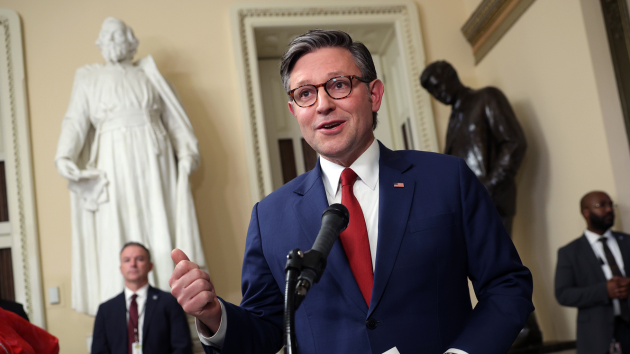
U.S. Speaker of the House Mike Johnson (R-LA) speaks to members of the media as he leaves the House Chamber at the U.S. Capitol on December 17, 2025 in Washington, DC. (Kevin Dietsch/Getty Images)

(WASHINGTON) — Top congressional leaders — comprising the “Gang of 8” — did not receive a briefing from the administration before the U.S. strike in Venezuela began, multiple sources told ABC News Saturday morning.

Per one source, the Department of Defense notified congressional staff after the operation started.

Weeks ago, President Donald Trump indicated he wouldn’t  brief lawmakers in advance of any land operations in Venezuela because he was worried they would “leak.” 

Early congressional reaction largely split along party lines.

Secretary of State Marco Rubio worked the phones Saturday morning to shore up support among Republicans on Capitol Hill.

Notably, Utah Republican Sen. Mike Lee initially seemed critical of the action being taken without authorization by Congress.

“I look forward to learning what, if anything, might constitutionally justify this action in the absence of a declaration of war or authorization for the use of military force,” Lee posted on X.

But later, Lee followed up his post saying he had spoken by phone with Rubio about and was now comfortable with the administration’s authority to take action.

“Just got off the phone with @SecRubio He informed me that Nicolás Maduro has been arrested by U.S. personnel to stand trial on criminal charges in the United States, and that the kinetic action we saw tonight was deployed to protect and defend those executing the arrest warrant This action likely falls within the president’s inherent authority under Article II of the Constitution to protect U.S. personnel from an actual or imminent attack Thank you, @SecRubio, for keeping me apprised,” Lee wrote.

He also said that Rubio told him he anticipates “no further action in Venezuela now that Maduro is in U.S. custody.”

Senate Intelligence Committee Chairman Tom Cotton, an Arkansas Republican, echoed Lee’s comments after saying he, too, had spoken with Rubio.

“Nicolas Maduro wasn’t just an illegitimate dictator; he also ran a vast drug-trafficking operation. That’s why he was indicted in U.S. court nearly six years ago for drug trafficking and narco-terrorism,” Cotton posted on X. “I just spoke to @SecRubio, who confirmed that Maduro is in U.S. custody and will face justice for his crimes against our citizens. I commend President Trump and our brave troops and law-enforcement officers for this incredible operation.”

Later, speaking to Fox News, Cotton said, “Congress doesn’t need to be notified ever time the executive branch is making an arrest. And that’s exactly what happened this morning in Venezuela, and now Maduro is going to come to the United States, and he’s going to face justice.”

House Speaker Mike Johnson said in a statement he has spoken to Rubio and Defense Secretary Pete Hegseth in “the last several hours” — calling the military action in Venezuela “decisive” and a “justified operation that will protect American lives.”

Johnson said the Trump administration is working to schedule briefings next week when Congress returns to Washington after the holiday break.

Senate Majority Leader John Thune, a South Dakota Republican, said in a statement that he had spoken with Rubio as well and argued Trump’s actions were undertaken as part of “the execution of a valid Department of Justice warrant.”

“President Trump’s decisive action to disrupt the unacceptable status quo and apprehend Maduro, through the execution of a valid Department of Justice warrant, is an important first step to bring him to justice for the drug crimes for which he has been indicted in the United States,” Thune said.

The top Democrat on the House Intelligence Committee, Rep. Jim Himes of Connecticut, countered that Rubio had denied regime change was the administration’s goal.

“Maduro is an illegitimate ruler, but I have seen no evidence that his presidency poses a threat that would justify military action without Congressional authorization, nor have I heard a strategy for the day after and how we will prevent Venezuela from descending into chaos,” he said in a statement. “Secretary Rubio repeatedly denied to Congress that the Administration intended to force regime change in Venezuela. The Administration must immediately brief Congress on its plan to ensure stability in the region and its legal justification for this decision.”

In a statement Saturday morning, Democratic Sen. Tim Kaine of Virginia, one of the Senate’s most vocal advocates for congressional war authorizations, issued a scathing statement on Trump’s actions in Venezuela and called for Congress to take up his resolution that would block the use of the U.S. armed forces to engage in hostilities within or against Venezuela unless authorized by Congress.

“Where will this go next? Will the President deploy our troops to protect Iranian protesters? To enforce the fragile ceasefire in Gaza? To battle terrorists in Nigeria? To seize Greenland or the Panama Canal? To suppress Americans peacefully assembling to protest his policies?” Kaine said.

“Trump has threatened to do all this and more and sees no need to seek legal authorization from people’s elected legislature before putting servicemembers at risk,” he said.

Kaine, along with California Democratic Sen. Adam Schiff and co-sponsor GOP Sen. Rand Paul of Kentucky, introduced a war powers resolution last month to block the use of the U.S. military to engage in hostilities within or against Venezuela unless authorized by Congress.

That legislation is ready to be called up for a vote. The Senate returns to Washington next week on Monday, while the House returns on Tuesday.

Last month, Republicans defeated two Democratic war powers resolutions that attempted to reign in the president’s military actions in the Caribbean and East Pacific.

The first measure, H. Con. Res. 61, would direct the president to remove U.S. Armed Forces from hostilities with any presidentially designated terrorist organization in the Western Hemisphere unless a declaration of war or authorization to use military force for such purpose has been enacted.

That resolution was authored by the ranking Democrat on the House Foreign Affairs Committee, Rep. Gregory Meeks. A vote failed on Dec. 17 by a count of 210-216, with two Republicans voting in favor and two Democrats opposed to the measure.

“This action is also a violation of international law and further undermines America’s global standing,” Meeks, D-N.Y., stated Saturday following the operation. “Congress must reassert its constitutional role before this escalation leads to greater instability, chaos, and unnecessary risk to American lives.”

A separate war powers resolution, H. Con. Res. 64 — championed by Massachusetts Democratic Rep. Jim McGovern and written to address hostilities with Venezuela, narrowly failed by a vote of 211-213, with three Republicans voting in favor — at odds with the rest of the House Republican Conference. One moderate Democrat, Rep. Henry Cuellar of Texas, voted to defeat the measure alongside Republicans.

On Saturday, McGovern argued the strikes are illegal.

“Without authorization from Congress, and with the vast majority of Americans opposed to military action, Trump just launched an unjustified, illegal strike on Venezuela,” he posted on X.

While congressional Republicans overwhelmingly expressed support for the Trump administration’s operation to capture Maduro, at least three House Republicans put out critical statements of the action.

GOP Rep. Thomas Massie of Kentucky posted on X: “If this action were constitutionally sound, the Attorney General wouldn’t be tweeting that they’ve arrested the President of a sovereign country and his wife for possessing guns in violation of a 1934 U.S. firearm law.”

Rep. Don Bacon of Nebraska posted on X, in part, “My main concern is now Russia will use this to justify their illegal and barbaric military actions against Ukraine, or China to justify an invasion of Taiwan. Freedom and rule of law were defended last night, but dictators will try to exploit this to rationalize their selfish objectives.”

Republican Rep. Marjorie Taylor Greene of Georgia posted, in part, “If U.S. military action and regime change in Venezuela was really about saving American lives from deadly drugs then why hasn’t the Trump admin taken action against Mexican cartels?”

She added, “And if prosecuting narco terrorists is a high priority then why did President Trump pardon the former Honduran President Juan Orlando Hernandez who was convicted and sentenced for 45 years for trafficking hundreds of tons of cocaine into America? Ironically cocaine is the same drug that Venezuela primarily traffics into the U.S.

Greene continued, “Americans disgust with our own government’s never ending military aggression and support of foreign wars is justified because we are forced to pay for it and both parties, Republicans and Democrats, always keep the Washington military machine funded and going. This is what many in MAGA thought they voted to end. Boy were we wrong.”

Copyright © 2026, ABC Audio. All rights reserved.