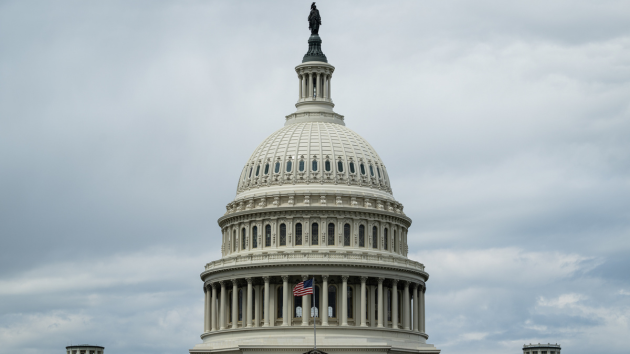
The US Capitol in Washington, DC, US, on Monday, April 20, 2026. House Republicans will send their first funding bills for the next fiscal year to the floor this week, while the Senate GOP plots a blueprint for patching up missing money for the current one. (Photographer: Graeme Sloan/Bloomberg via Getty Images)
(WASHINGTON) — The bipartisan House Ethics Committee on Monday released a rare statement encouraging anyone who may have experienced sexual misconduct by a House member or staffer to contact them, the Office of Congressional Workplace Rights or the Office of Employee Advocacy.
“There should be zero tolerance for sexual misconduct, harassment, or discrimination in the halls of Congress, or in any employment setting,” the committee said in a lengthy statement.
“The greatest hurdle the Committee faces in evaluating allegations of sexual misconduct is in convincing the most vulnerable witnesses to share their stories,” the statement read. “Accordingly, the Committee’s practice has been to release only the information that is necessary to hold Members accountable for misconduct and address public reporting that impacts the integrity of the House.”
The statement comes after allegations of sexual misconduct led to the resignations of California Democrat Eric Swalwell and Texas Republican Tony Gonzales last week.
Gonzales and Swalwell were about to face efforts by their colleagues to have them expelled from the House. The House Ethics Committee had announced investigations into both men, which ended when they resigned.
Gonzales dropped his reelection bid earlier this year after admitting to a relationship with a staffer who later died by suicide. Gonzales said he “made a mistake” and “had a lapse in judgement.”
Swalwell suspended his campaign for governor of California amid the accusations against him, including allegations of sexual assault, which he’s denied. Swalwell’s attorney, Sara Azari, last week said the allegations are “false.”
The committee said that since 2017, it has initiated investigations in 20 matters involving sexual misconduct by a lawmaker.
“The Committee has also investigated several Members for their handling of allegations of sexual misconduct by their senior staff,” the statement read.
In its history, the committee has conducted 28 sexual misconduct investigations. Several members who were being investigated resigned and even some were cleared.
The panel noted that it does not handle sexual harassment lawsuits or have “any involvement in settlements of such claims.”
“The Committee has taken the position that conduct that falls short of legal definitions of sexual harassment or assault under federal or state statutes can still be a violation of the Code of Official Conduct, which imposes a higher standard on Members of the House,” the statement read. “The Committee has also consistently publicly announced its investigations into publicly reported allegations of sexual misconduct and has announced any findings in those matters.”
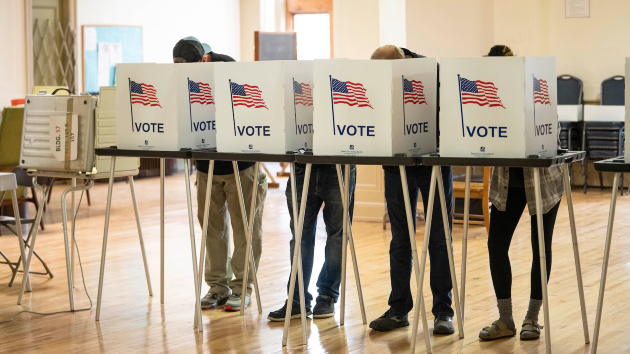
Voters cast ballots at the polls inside Central United Methodist Church on November 5, 2024 in Detroit, Michigan. (Sarah Rice/Getty Images)
(WAYNE COUNTY, Mich.) — The Justice Department has demanded 2024 federal election ballots and records from Wayne County, Michigan, according to a letter posted online by state officials early Monday morning.
The letter, from Assistant Attorney General Harmeet Dhillon, references three voter fraud convictions from the 2020 election and a civil case alleging fraud that was dismissed in 2020.
“Based on this history of fraud convictions and other allegations concerning the election procedures in Wayne County and, for the purpose of ensuring that the foregoing federal election laws were not violated in the November 2024 federal election, we are requesting that you produce the following election-related records from that election: all ballots (including absentee and provisional), ballot receipts, and ballot envelopes,” the DOJ letter said.
State officials said the letter is a continuation of President Donald Trump’s efforts to interfere with the election process, following his recent executive order regarding mail-in voting and the FBI’s seizure of 2020 election ballots in Fulton County, Georgia.
“Once again, President Trump is weaponizing the Justice Department in an attempt to sabotage our democratic process and turn it into his own personal agency to interfere in state elections. This request is as absurd as it is baseless,” Michigan Attorney General Dana Nessel said in a statement. “Successful convictions underline that Michigan’s safeguards work and that instances of voter fraud are rare and addressed.”
“Using these prosecutions and recycling debunked 2020 election conspiracy theories as justification to demand copies of the ballots of Michigan residents is a clear attempt to bully clerks and spread fear, even after Donald Trump won Michigan in 2024. If this administration wants to bring this circus to our state, my office is prepared to protect the people’s right to vote,” Nessel said.
Michigan state officials also say that none of the examples provided in the letter were from the 2024 election cycle.
Representatives from the Justice Department and the White House did not immediately respond to a request for comment from ABC News.
FBI agents in January removed 700 boxes containing ballots and other materials associated with the 2020 election from a Fulton County election site after obtaining a search warrant based on unproven claims of widespread voting irregularities.
Trump has long criticized the outcome of the 2020 election, personally pushing to overturn the results after his loss and later being indicted in two criminal cases over his actions. Those cases have since been dismissed, and Trump has continued to push for criminal accountability for what he baselessly alleged was a stolen election.
Stock image of police lights. (Douglas Sacha/Getty Images)
(WINSTON-SALEM, N.C.) — Multiple people were shot, including two fatally, after a “planned fight” between two juveniles at a North Carolina park escalated and several people opened fire, authorities said.
Gunfire broke out at Leinbach Park in Winston-Salem on Monday morning, according to police.
“This stemmed from a planned fight between two young individuals,” the Winston-Salem Police Department said.
The two met shortly before 10 a.m., when the “situation escalated significantly, leading to multiple people exchanging gunfire,” the police department said.
Two people are dead, according to the North Carolina State Bureau of Investigation.
Winston-Salem police said they have not confirmed the total number of victims and suspects are “still outstanding.”
The incident was isolated and remains under investigation, police said.
Leinbach Park, which is located near a middle school, remains closed, police said. Students at the school were safe, police said.
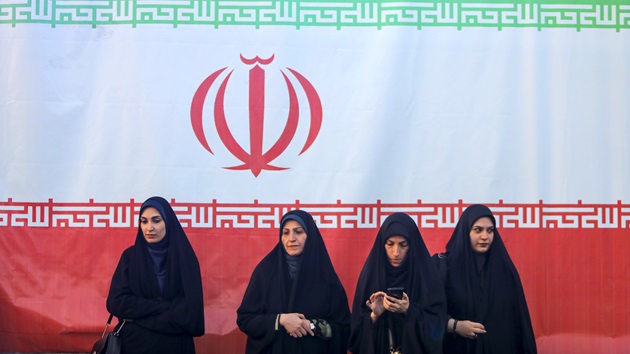
Women seen in front of an Iranian flag during a pro-government National Army Day demonstration on April 17, 2026 in Tehran, Iran. (Majid Saeedi/Getty Images)
(LONDON) — Even as a fragile two-week ceasefire between Iran and the U.S. holds – sparing about 90 million Iranians from the immediate threat of bombardment – many Iranians at home and abroad say they still face an intensifying wave of threats from the Islamic Republic regime as it continues cracking down on dissent.
The leaders of the Iranian regime have escalated measures to silence any kind of protests and criticisms against their policies both inside the country and across its diaspora, Iranians and observers inside the country and abroad told ABC News.
Shiva, a London-based Iranian journalist, says she has received direct threats from Iranian security forces, been labelled a “traitor” and had her assets in Iran confiscated. Shiva and other Iranians who spoke with ABC News in recent days asked not to be identified by their real names because of security concerns.
She is one of more than 400 Iranian journalists and artists abroad whose assets in Iran have been seized by the Islamic Republic for allegedly supporting what authorities describe as “hostile foreign actors,” according to a judiciary statement issued on April 11.
Since the beginning of the U.S.-Israeli war on Iran, the Islamic Republic judicial authorities have repeatedly said that they would adopt extreme measures against those who “collaborate with the enemy” – a broad accusation that they usually use against protesters.
The measures range from harsh sentences by the judiciary including death sentence and lengthy prison terms on protesters at home, to seizing local assets belonging to dissidents abroad.
Despite the threats against her, Shiva says she is most concerned about her family who live in Iran and could face harassment by authorities because of her reporting, she told ABC News on Wednesday.
Having covered the situation of human rights violations in Iran, she added that she is “extremely worried” about the situation of the imprisoned protesters in the country.
“What worries me is my family, and the people inside Iran,” Shiva said, “the voices of people inside the country are not being heard – those who are at risk of execution, those who are being silenced.”
A judicial authority told the state media on Tuesday that such moves are aligned with the new legislation of the country made to intensify penalties for espionage and cooperation with countries that are deemed as “hostile” to Iran including Israel and the United States.
Arrests, prison situation and executions
In the months before the war with the U.S. and Israel began in late February, the Iranian regime committed massacres to suppress a series of nationwide protests in the country while imposing an internet blackout to prevent voices of protesters and families of the victims from being heard by the world, and to disrupt their communication with one another, according to the U.S. and international observers.
According to the U.S.-based Human Rights News Agency (HRANA), over 7,000 people – including at least 6,488 protesters – were killed in the protests which had been ignited over the severe economic hardships with dramatic fall of the country’s currency in the last days of December 2025. ABC News could not independently verify those figures.
Security forces arrested more than 50,000 people across the country, HRANA reported. Two Iranian lawyers and several human rights activists told ABC News at the time that those behind the bars did not have access to basic rights including having access to a lawyer or a fair transparent trial.
Rule of fear
The situation got even worse for dissidents in Iran after the U.S. and Israel started the war on the country, Iranians told ABC News, following President Donald Trump’s Feb. 28 address to Iranians, in which he said that they can “take over” their government once the U.S. and Israel are finished.
“The hour of your freedom is at hand. Stay sheltered. Don’t leave your home. It’s very dangerous outside. Bombs will be dropping everywhere. When we are finished, take over your government. It will be yours to take,” Trump said in that address as the war began.
Iran’s police chief, Gen. Ahmad-Reza Radan warned Iranians in a March 11 interview on state TV that they would be shot dead if they came to streets to protest. “If people take to the streets to protest, we will do what we did to the enemy. Our hand is on the trigger,” Radan said.
During the war, main squares and streets of cities were again taken over by the police, armed forces and plain clothes security agents of the regime as several Iranians from Tehran, Isfahan, Rasht and other cities of the country told ABC News. The forces would not only control the streets on checkpoints, but would use loudspeakers to play religious and revolutionary propaganda songs.
“At night, I see the regime forces marching on the streets of my neighborhood,” Saghar, a resident of west Tehran, told ABC News after the war began.
“When I hear their voices, I feel like I want to scream,” she said. “I see them from the window and I get so angry that I like to throw everything I can at them. Why don’t I have a share of the streets of my city? Everywhere is under their control.”
Behind bars in an unknown location
The anger is even more fierce for many families of victims and prisoners of the protests.
Shailin Asadollahi, sister of an Iranian prisoner, told ABC News during the war that her family had no information at the time about the whereabouts of her brother Ali Asadollahi, a dissident poet, who was jailed by the regime. Asadollahi and many other prisoners had been transferred to locations unknown to their families after the war began, she said, creating a dire fear among families about their loved ones’ safety and wellbeing.
“I am so distressed and worried. I feel I struggle to even breathe when I think about where my brother is when bombs constantly fall over the city,” she told ABC News. “But Ali told us upon his arrest that no matter what happens to him we need to be the voice for all prisoners, not just him.”
“It is not just about us knowing where they are,” Shailin said. “Even a few prisoners who have called their families have said that they hear the bombs but don’t know where they are,” she added.
Following the destruction of some of the main judicial facilities of the country in the U.S.-Israeli attacks and closure of some state organizations, an Iranian lawyer in the country told ABC News that it had become almost impossible to get any update from the status of prisoners.
“Neither families nor us as lawyers know who to call and where to follow up the situation of the prisoners as no one from the judiciary is responsive,” the lawyer told ABC News. She asked not to be named over security concerns.
New arrests
Iranian authorities also appeared to accelerated arrests during the war and the current ceasefire on a range of charges, including espionage and actions against national security. The intelligence ministry and the IRGC intelligence forces publish news of recent arrests in different cities almost every day.
In one of the latest cases, 22 people were arrested in the southwestern province of Khuzestan, the semi-official Tasnim News agency reported, quoting the police.
Collaboration with the “enemy media” is one of the common charges for those who are arrested. The Iranian police chief said in March that 500 people were arrested for sending information to “the enemy and anti-Iranian media.” Hundreds more have been arrested since then according to the daily reports from Iranian authorities.
Record number of executions, observers say
HRANA said on April 2 that the implementation of death sentences in Iran has entered “a new and deeply alarming phase.” During the war, at least 10 political prisoners have been executed, and there is “a noticeable acceleration in executions,” HRANA reported.
Amirhossein Hatami, an 18-year-old protester, was one of those 10 protesters. He was executed on April 2, on charges related to the nationwide protests in the country in January, according to Mizan News Agency, the official news outlet of the country’s judiciary. The report added that Hatami was allegedly involved in burning a government property.
Amnesty International, writing on social media, described Hatami’s trial as “grossly unfair.”
Two other protesters, Mohammadamin Biglari and Shahin Vahedparast, who had been arrested for the same case were later executed three days later, Mizan reported.
A source close to one of the four prisoners’ families told ABC News that that these protesters along with two others arrested on this case had been moved from the prison’s general ward and their lives are under imminent threat of execution.
The recent execution of protesters comes despite Trump’s warnings to Iranian authorities before the war that continuing to execute protesters could trigger a strong response.
“The war was never about Iranian protesters and Iranian people’s rights,” Shadi, an Iranian woman from Rasht posted on her Instagram story in April along with the news of the recent executions.
“If Trump cared about us and our lives, there would be one point about human rights situation in Iran in their 15-point proposal,” she wrote. “But there is no mention of Iranian people in there. It is all about the oil and Iran’s proxies aboard and the Strait of Hormuz.”
At least 1,639 people were executed by the Iranian regime in 2025, which was 68% more than the year before and highest number recorded since 1989, according to a joint report by Norway-based Iran Human Rights (IHR) and Paris-based Together Against the Death Penalty (EPCM), on April 13.
Stifling journalism and activism
While Iranian journalists abroad like Shiva who have tried to do their jobs are now facing growing threats and potential punishment from the regime, journalists and activists inside the country face even harsher restrictions. Many are unable to speak openly about people’s suffering from the scars of war and state repression.
“Tyranny, war, sanctions, executions and imprisonment, all are tools for the destruction of Iran and the annihilation of its people’s lives,” Zia Nabavi, a dissident activist in Iran, wrote on his Instagram story in March.
Nabavi has spent more than a decade in prison for his activism and is one of many dissidents who believe the war will not bring about positive outcomes for Iranians.
Some believe that war against the Islamic Republic could lead to regime change. But Nabavi and others argue it would instead erode the fragile space needed to pursue social freedoms and equal rights, reducing public demands to survival amid the devastation caused by conflict.
Nabavi believes that those who impose executions, sanctions and wars on Iranians are different, but “the arrival of one does not mean the departure of another,” as they are all “life-killing,” he wrote.
“They can walk hand-in-hand to escort us toward the darkest possible fate,” Nabavi added in his Instagram story.
Despite the pressures – from war, censorship and ongoing security threats – journalists like Shiva say they will continue their work, documenting events and sharing stories about Iran.
“The Islamic Republic is trying to extend its censorship and intimidation beyond its borders. But it cannot silence me here,” Shiva said.
“They have already taken away my ability to return home, but they cannot take away my voice,” she said.
Stock Market Wall Street (Matteo Colombo/Getty Images)
(NEW YORK) — Stocks dipped and oil prices rose in early trading on Monday as tensions mounted in the Strait of Hormuz, putting pressure on the ceasefire between the U.S and Iran a day before it’s set to expire.
The Dow Jones Industrial Average fell 25 points, or 0.07%, while the S&P 500 dropped 0.1%. The tech-heavy Nasdaq declined 0.1%.
U.S. Marines seized an Iran-flagged container ship in the Gulf of Oman on Sunday, according to CENTOM, just a day after two Indian ships came under fire in the Strait of Hormuz.
A potential second round of peace talks between the U.S. and Iran remained in doubt on Monday. Iranian Foreign Ministry spokesperson Esmaeil Baghaei said Monday that Iran has not yet made any decision regarding additional talks.
West Texas Intermediate futures, the benchmark index for U.S. oil prices, climbed more than 4% on Monday, registering at about $87 a barrel.
The escalating tensions appeared to reverse a brief thaw on Friday, when a senior Iranian official declared the strait “completely open” for tanker traffic. Within minutes, President Donald Trump celebrated the announcement as a major breakthrough.
The glimmer of relief for the critical waterway sent stock prices soaring and oil prices plummeting on Friday.
This is a developing story. Please check back for updates.
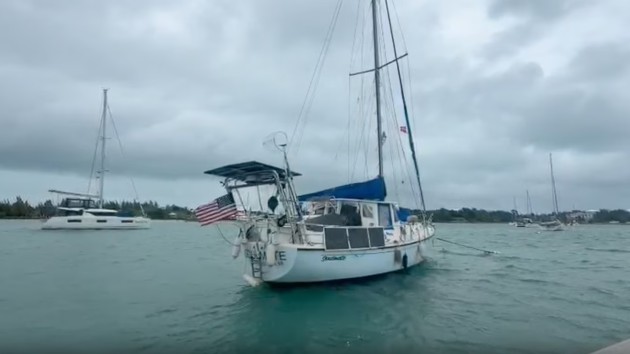
The Hookers’ boat, “Soulmate,” is seen in Marsh Harbor on Great Abaco Island in the Bahamas, April 8, 2026. (ABC News)
(NEW YORK) — More than two weeks after American Lynette Hooker went overboard and disappeared in the Bahamas, her daughter is speaking out to ABC News.
“It still feels surreal,” Karli Aylesworth said. “… This feels like something you just watch in a movie, but it’s my life.”
Aylesworth’s mother, Lynette Hooker, has been missing since the evening of April 4 when Aylesworth’s stepfather, Brian Hooker, said she went overboard. The couple had departed Hope Town for their yacht, Soulmate, in Elbow Cay, when bad weather caused her to fall off their dinghy, Brian Hooker told authorities.
Brian Hooker, 58, was arrested on April 8 and questioned by police. He was released on April 13 without charges.
Brian Hooker told ABC News on April 14 that he was staying in the Bahamas with a “sole focus” of finding his wife, “no matter how likely or unlikely that is.”
But Brian Hooker then left the Bahamas, his attorney said on April 15, noting that his mother is not well.
Aylesworth and her boyfriend said they doubted Brian Hooker’s story from the beginning and are now left with more questions than answers.
“I don’t understand how she drowned or got floated away,” Aylesworth said. “It just made me be more, ‘Why didn’t he do this? Why didn’t you do that? Why did that happen?'”
Aylesworth said she met with the Coast Guard and the Bahamian authorities, who allowed her to visit the sailboat her mother and stepfather called home.
“I went and got some of her belongings, like a headband. I got her ‘L’ necklace that she used to always wear. I got a picture frame I made for her, something that my grandma sewed for her,” she said.
“It was really hard because it was almost eerie, because I felt like she was going to, like, come out of the corner or something,” she said. “… Just knowing that she’ll never, I don’t know, it’s just hit me like a freight train that she’s not there.”
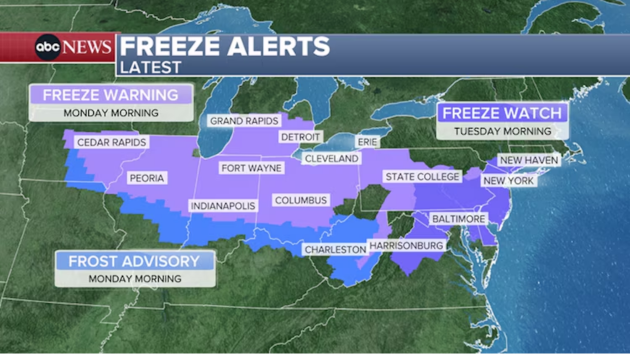
Freeze alerts from Iowa to Connecticut on Monday morning, April 20, 2026. (ABC News)
(NEW YORK) — Don’t put away those winter coats just yet.
Summer-like temperatures will give way to chilly weather across the Northeast beginning on Monday as residents in the Midwest and Plains clean up after a spell of severe weather that spawned multiple tornadoes.
Morning temperatures are forecast to be near 40 degrees along the I-95 corridor from Washington, D.C., to New York Monday and into Tuesday, just days after 90-degree weather enveloped much of the East.
It may be even colder from Chicago to Boston, where morning temperatures are expected to dip into the mid-30s on Tuesday, with some morning frost possible.
In parts of the Midwest from Minneapolis to Detroit, temperatures could fall to below freezing.
Just days after temperatures soared into the 90s, setting daily high temperature records in Washington, D.C., New York and Philadelphia, the weather is expected to turn significantly cooler to start the workweek.
Some places in the Northeast could also approach record low temperatures. Come Tuesday morning, places like Trenton, N.J., Scranton, Pa., Syracuse, N.Y., and Manchester, N.H., will likely see temperatures fall to below freezing and could break or tie their respective record low temperatures for the day.
The cold snap will be short-lived, as temperatures return to a more spring-like feel by Wednesday across the East, with summer-like weather returning by Thursday and Friday.
Meanwhile, the Midwest and Plains were cleaning up from days of severe weather that saw numerous tornadoes develop, some causing damage across Minnesota and Michigan.
The National Weather Service has preliminarily confirmed 50 tornadoes between April 12 and April 17 across 12 states, most of them in Illinois and Wisconsin. However, tornadoes were also confirmed during that time frame as far west as California and as far east as Vermont, according to the NWS.
At least 15 tornadoes were confirmed by the NWS in Illinois, 10 in Wisconsin, seven in Oklahoma and five in both Missouri and Iowa. Michigan and Kansas both had two tornadoes confirmed by the NWS.
The cold front that caused the severe weather late last week is continuing to move east into the Northeast on Sunday, bringing rain and even high-elevation snow showers to parts of the region before pushing off the coast later in the day.
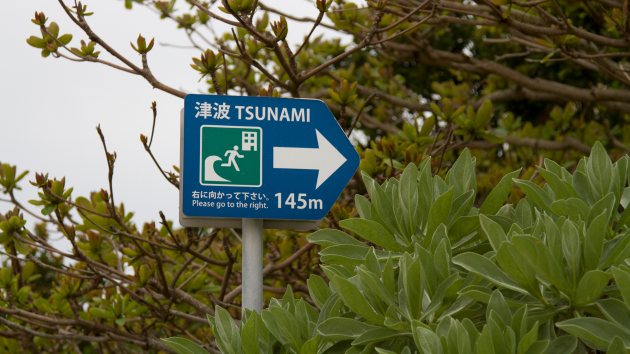
Table indicating the escape route in the case of tsunamis. (Getty stock photo)
(TOKYO) — A 7.4 magnitude earthquake struck on Monday off Japan’s northeastern coast, the U.S. Geological Survey said, prompting authorities to issue tsunami warnings and advisories along parts of the coast.
“Based on the preliminary earthquake parameters,” USGS said, “hazardous tsunami waves are possible for coasts located within 300 km of the earthquake epicenter.”
The Japan Meteorological Agency said tsunami warnings were in place for some of the coast along the Pacific, along with lesser advisories and forecasts farther away from the quake’s center.
“Residents in areas where tsunami warnings have been issued should immediately evacuate to higher ground or evacuation buildings and other higher, safer locations,” Prime Minister Sanae Takaichi said.
The tsunami waves that were expected to have been the highest struck the coast within hours, with the largest one registering about 80 cm, or about 2.5 feet, but officials said they had not ruled out further waves. Official warnings were still in place, although the U.S. weather officials said in an update that, based on available data, “the tsunami threat from this earthquake has now passed.”
Preliminary U.S. data pinpointed the quake about 100 km, or about 62 miles, off the eastern coast of Miyako, USGS said. Light rumbling could be felt as far away as Tokyo. A 5.6 magnitude earthquake struck nearby about 40 minutes afterward, according to USGS data.
The Japanese agency held a press conference on Monday, during which it identified the quake as having been a 7.5 magnitude one. The depth was 10 km, or about 6.2 miles. It occurred at 4:53 p.m. local time, the agency said.
A tsunami warning was issued under twenty seconds after the initial earthquake, an official said. Officials warned people to stay on the alert for about week, as an equal or lesser than quake may occur. The risk was especially elevated for the next two or three days, officials said.
The U.S. Tsunami Warning System said a “destructive” Pacific-wide tsunami was not expected “and there is no threat to Hawaii.”
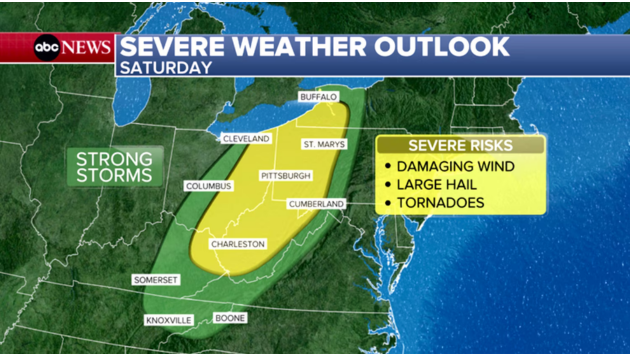
(NEW YORK) — The severe weather threat is expected to ramp down this weekend after one more day of possible severe storms.
There is a slight risk for severe storms in Ohio, West Virginia, western Pennsylvania and western New York. This includes Buffalo, New York; Cleveland; Pittsburgh; and Charleston, West Virginia.
Damaging winds and some large hail will be the main threat, but a tornado and some isolated flash flooding cannot be ruled out.
Remnant showers and storms moved along a cold front sweeping the Ohio Valley Saturday morning before rejuvenating later in the afternoon.
The level of severity of these storms will be determined by how the atmosphere recovers after preceding rain moving through Saturday morning, but enough energy could build up by late Saturday afternoon for some severe storms to develop over the area. Otherwise, it may just end up being added rain with possibly some rumbles of thunder.
This cold front will continue to push east into the Northeast on Sunday, bringing rain, and some high elevation snow, to the region before pushing off the coast.
Ahead of this cold front, the Southeast has had another day or record heat while the Northeast and Mid-Atlantic begin to cool down.
Saturday could see one more day of record highs across much of the South from Louisiana to Florida to Georgia.
The National Weather Service confirmed at least 35 tornadoes across 10 states this week, stretching from California to Vermont.
Wisconsin, Iowa and Illinois have been hit the hardest by multiple outbreaks of severe weather over the week.
Friday was no exception to this active week of severe weather, with more than 300 reports of severe weather from Oklahoma up to Minnesota and east to Indiana.
Wind gusts over 75 mph were also reported in Missouri, Iowa and Illinois. Hail larger than baseballs were reported in Illinois and Oklahoma. Oklahoma, Iowa, Illinois and Wisconsin reported hail greater than golf balls.
In addition, flooding continues to linger for parts of Wisconsin and Michigan from days of rain and, in some areas, on top of a deep snowpack that’s accelerated snowmelt. Fortunately, they have drier weather in the forecast for this weekend into next week.
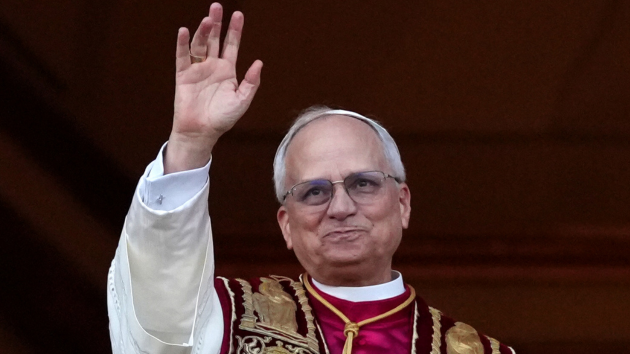
The newly elected Pontiff, Pope Leo XIV is seen for the first time from the Vatican balcony on May 8, 2025 in Vatican City, Vatican. (Photo by Christopher Furlong/Getty Images)
(NEW YORK) — Pope Leo addressed President Donald Trump on Saturday while aboard the papal plane on his trip to Angola.
The pope said recent remarks that appeared to address the U.S. president were prepared two weeks ago, before Trump had commented on him.
“Yet as it happens, it was looked at as if I was trying to debate, again, the president, which is not my interest at all,” he said.