
House approves short-term FISA spy powers extension amid GOP infighting

House approves short-term FISA spy powers extension amid GOP infighting
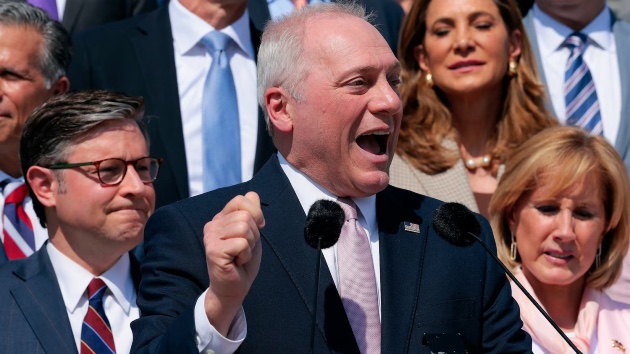
House Majority Leader Steve Scalise speaks alongside House Republican leadership during a news conference on the steps of the U.S. Capitol, on April 15, 2026, in Washington, D.C. (Heather Diehl/Getty Images)

(WASHINGTON) — In the dead of night at 2:09 a.m., the House passed a bill to extend FISA through April 30 by unanimous consent, after Republicans tanked procedural votes on the controversial warrantless surveillance law.

The short-term extension buys GOP leaders more time to continue negotiations amid Republican infighting over the program that was set to expire on Monday.

Despite opposition from some GOP hardliners, Speaker Mike Johnson was this week still trying to determine a path forward to muscle through an 18-month clean extension of the program known as Section 702 of the Foreign Intelligence Surveillance Act (FISA).

The program allows the federal government to collect communications of foreigners abroad without a warrant, including when those people are interacting with Americans.

According to the Office of the Director of National Intelligence, the U.S. government believes it’s a vital tool for protecting the country against “hostile foreign adversaries, including terrorists, proliferators, and spies, and to inform cybersecurity efforts.”

House Republican leaders postponed a debate and a procedural vote on FISA that had been scheduled for 1 p.m. ET on Wednesday. The Senate now will need to consider the legislation.

President Donald Trump has urged Republicans to back the measure and hosted a group of hardliners at the White House Tuesday night to find a path forward as the law is set to expire on Monday.

“I am asking Republicans to UNIFY, and vote together on the test vote to bring a clean Bill to the floor. We need to stick together when this Bill comes before the House Rules Committee today to keep it CLEAN!” Trump wrote on social media on Wednesday.

“Our Military Patriots desperately need FISA 702, and it is one of the reasons we have had such tremendous SUCCESS on the battlefield,” Trump added. “It has already prevented MANY such Attacks, and it is very important that it remain in full force and effect.”

CIA Director John Ratcliffe attended the House Republican closed-door conference meeting on Wednesday and also advocated for a clean extension of the program.

Hardline Republicans, who oppose a clean extension of the surveillance tool and demand reforms like a warrant requirement, were not convinced to change their position following the meeting.

Freedom Caucus Chairman Andy Harris of Maryland said “no” when asked if progress was made on FISA during the meeting.

“They have to deal with the FISA court’s objection to the warrantless searches,” Harris said.

There has been a continued debate over Section 702 because it sometimes allows the government to collect Americans’ communications without a warrant.

“Discussions are ongoing still,” Rep. Andy Biggs of Arizona said leaving.

Rep. Keith Self of Texas, who attended the White House meeting on Tuesday night, said he does not believe a clean extension will pass.

“We’ll see … but, I don’t think the clean extension will pass,” he said.

After the meeting, House Majority Leader Steve Scalise suggested some “minor changes” could be made to the legislation to appease the holdouts but did not divulge specifics.

“FISA has been important for our country’s national security,” Scalise said. “We’ve put some important much needed reforms in place the last time it was up for reauthorization and what President Trump has asked is that now we reauthorize it with those reforms in place, and that’s what we’re working to do. So, we’re having some final conversations. Not all of our members are quite there yet.”

Rep. Chip Roy of Texas said several Republicans “want to see further reforms” to the program.

“We feel like we need improvements. Obviously, we want greater protections for citizens with respect to warrants,” he said. “We want to make sure that there’s greater penalties, for example, for government officials who abuse their authority and power.”

Scalise said Ratcliffe explained to Republicans how FISA is being “used in the real world to stop bad things from happening.”

As he was leaving, Ratcliffe said the meeting “went great.”

Copyright © 2026, ABC Audio. All rights reserved.

Acting ICE Director Todd Lyons leaving agency

Acting ICE Director Todd Lyons leaving agency
Todd Lyons, acting director of US Immigration and Customs Enforcement (ICE), speaks during a news conference in Nogales, Arizona, US, on Wednesday, Feb. 4, 2026. (Ash Ponders/Bloomberg via Getty Images)

(WASHINGTON) — The acting director of U.S. Immigration and Customs Enforcement, Todd Lyons, who presided over the agency amid President Donald Trump’s controversial immigration crackdown, is planning to leave his post later this spring.

Lyons said he was leaving his role to spend more time with his family, according to his resignation letter reviewed by ABC News.

“My sons are both reaching a pivotal point in their lives and my wife and I wish to spend as much time as possible with them,” the letter reads. “This was not an easy decision, but I believe it is the right one for me and my family at this time. I am confident that ICE will continue to fulfill its vital responsibilities with integrity and professionalism.”

Lyons thanked the president for allowing him to serve.

Department of Homeland Security Secretary Markwayne Mullin announced the move in a statement on Thursday and said Lyons’ last day would be May 31.

“Director Lyons has been a great leader of ICE and key player in helping the Trump administration remove murderers, rapists, pedophiles, terrorists, and gang members from American communities,” Mullin said in the statement. “He jumpstarted an agency that had not been allowed to do its job for four years. Thanks to his leadership, American communities are safer.”

The statement went on to say: “We wish him luck on his next opportunity in the private sector.”

As acting director, Lyons oversaw the largest expansion of ICE in U.S. history with funding through the massive tax and policy bill Trump championed last year, known as the “One Big Beautiful Bill.”

During Lyons’ tenure, the Trump administration sent ICE officers into cities across the U.S., including Chicago, Los Angeles and Minneapolis, as part of stepped-up federal immigration enforcement efforts that aimed to fulfill one of Trump’s key campaign pledges.

Democrats, immigration advocates and local officials decried ICE tactics, including allegations of racial profiling and aggressive tactics. Scrutiny of ICE intensified after the shooting deaths of two U.S. citizens, Renee Good and Alex Pretti, in Minneapolis in January at the hands of immigration officers.

Members of the Trump administration praised Lyons’ leadership of the agency. In a statement, Tom Homan, Trump’s border czar, said: “Todd has served selflessly as a highly respected and effective acting Director of ICE,” pointing to what he called a “record number of removals” in the first year of Trump’s second term, “despite unprecedented challenges.”

In appearances on Capitol Hill before lawmakers, Lyons has faced fierce criticism from Democrats, who have denounced the agency’s tactics and a rising number of deaths of detainees held in ICE custody.

The announcement of Lyons’ departure came the same day he appeared before a House subcommittee for a budget hearing, requesting $5.4 billion to sustain enforcement operations around the country and another $2.8 billion for Homeland Security Investigations.

“Despite routine villainization, ICE personnel are working around the clock to carry out President Trump’s commonsense agenda to make Americans safe again, restore order to our communities, and implement law-and-order policies,” Lyons said in his prepared testimony.

DHS funding remains snarled amid an ongoing partial government shutdown stemming from a dispute on Capitol Hill between Democrats and Republicans over changes to ICE tactics and policies.

Lyons started his service in the Air Force, then with a local police department in Florida before then joining what would become ICE in the late 1990s. He previously served as the head of the Boston ICE field office before becoming acting director.

The announcement of Lyons’ departure comes more than a month after Trump fired former DHS Secretary Kristi Noem.

Copyright © 2026, ABC Audio. All rights reserved.
‘We came back as best friends’: Artemis II crew reflects on historic moon mission

‘We came back as best friends’: Artemis II crew reflects on historic moon mission
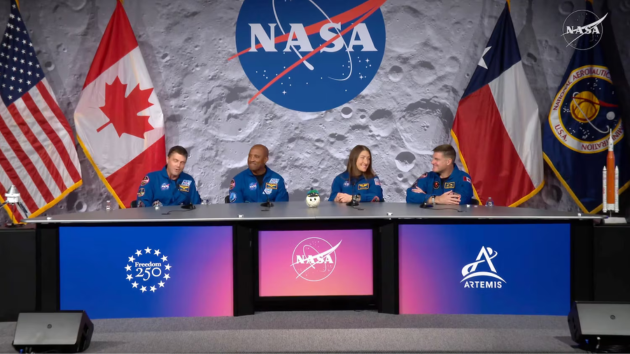
NASA’s Artemis II mission astronauts commander Reid Wiseman, pilot Victor Glover, mission specialist Christina Koch, and Canadian Space Agency’s Jeremy Hansen appear at a press conference on April 16, 2026. (NASA)

(HOUSTON, Texas) — Less than a week after returning from their historic 10-day, 694,481-mile journey to the moon and back, the Artemis II crew answered questions on Thursday about their successful mission.

During a news conference at NASA’s Johnson Space Center in Houston, home of the Mission Control Center, the three NASA astronauts and one Canadian Space Agency astronaut spoke fondly of their time aboard the Orion spacecraft, Integrity, and recalled how they came together as a crew during the first mission to the moon in more than 50 years.

Reid Wiseman, who served as the Artemis II commander, said, “What an amazing journey that was. First and foremost, Victor, Christina, Jeremy, just thank you. This was an unbelievable adventure, and it was made possible by this crew and the support of each other throughout the whole thing.” 

He added, “We are bonded forever. I mean, that’s the closest four humans can be and not be a family.”

“I am here to tell the world: we launched as friends, and we came back as best friends,” he added.

When asked by ABC13 reporter Nick Natario whether the gravity of what they’ve accomplished has hit them and how it may have changed them, the crew said they were focused on completing the mission.

Victor Glover, the pilot for the mission, added, “We did what we said we were going to do, and now we’ve got to step out and just face that reality.”

Christina Koch, one of the flight’s mission specialists, said, “When my husband looked me in the eye on that video call and said, ‘No, really, you’ve made a difference.’ It brought tears to my eyes, and I said, that’s all we ever wanted.”

She added, “When we come before you now, we’ve done this together. We took your hearts with us and your hearts lifted our hearts.”

Jeremy Hansen, the first Canadian to travel into deep space, said, “I found it really refreshing to find out how people have followed the mission and been creative with the mission and there’s lots of funny stuff online. And that really resonates with me a lot, and it just reinforces something I already knew, but humans are just great people in general. We don’t always do great things. We’re not always in our integrity, but our default is to be good and to be good to one another.” 

When asked if the experience of traveling to deep space created a “sense of universal connectedness,” Wiseman said, “I turned to Victor, and I said, I don’t think humanity has evolved to the point of being able to comprehend what we’re looking at right now, because it was other worldly and it was amazing.”

In terms of their sleep about Orion, Koch said that “space sleep is the best sleep ever,” and now that she’s back on Earth, she said, unlike after her International Space Station mission, this time, “every time I’ve been waking up or in the first few days, I thought I was floating. I truly thought I was floating and I had to convince myself I wasn’t.”

Wiseman complimented the Orion spacecraft and the Space Launch System and said it’s ready for the Artemis III mission, scheduled for 2027.

“My own personal opinion, they could put the Artemis III Orion on the Space Launch System tomorrow and launch it, and the crew would be in great shape,” said Wiseman. “This vehicle really handled very well.”

When asked what they brought with them on the trip, Wiseman said he took some notes from friends, some great quotes and a bracelet that his daughter had made for him a few years prior. 

The crew was asked what advice they would give to younger people “who are looking skywards.”

Wiseman said one thing that he thinks society has lost is the pursuit of challenging goals.

“You have to go do really hard, really challenging things and you have to go move the needle,” said Wiseman. “We have to get our hands out there and engaged. Our hands and our minds have got to be engaged.”

Glover encouraged young people to “really get comfortable asking questions and then listening to their peers, but also their mentors. I think that’s been a game-changer for all of us.”

Koch added that people should “find your fulfillment,” “do what scares you,” and “support those around you.”

Hansen said people should “just follow the example that people saw here, don’t do it alone, and share what you’re trying to accomplish with others, because you need the support of others to do big things, and so share your goals. Be brave enough to share them.”

With the next Artemis mission scheduled for as early as next year, the crew discussed their contributions to what comes next for NASA and its pursuit of a moon base.

“We were very much lifted up by the notion that we would get to contribute to astronauts doing this all over again, much sooner than we thought that we were going to be focused on the moon base, on surface operations,” said Koch. “And I would say, if nothing else, we are feeling even more excited and just ready to take that on as an agency.”

Wiseman added that “if we had a first flight lander on board that thing, I know at least three of my crewmates would have been in it, trying to land on the moon.”

“We have to be willing to accept a little more risk than we were willing to accept in the past, and to just trust that we will figure it out in real time. We’re not going to be able to pound everything flat before we go. We’re going to have to trust each other and crews and Mission Control to work through real problems,” Hansen added.

Copyright © 2026, ABC Audio. All rights reserved.
Judge says security-related work on White House ballroom can go on

Judge says security-related work on White House ballroom can go on
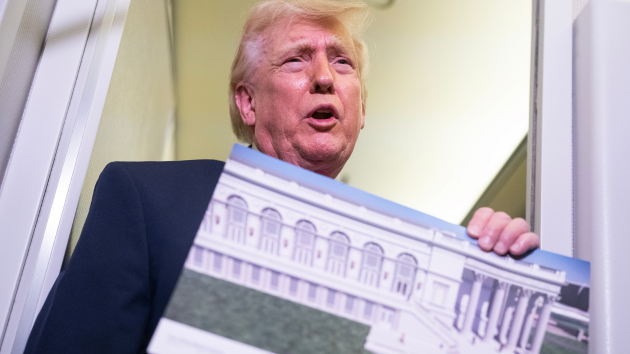
U.S. President Donald Trump holds a rendering of the proposed East Wing of the White House while speaking to members of the media onboard Air Force One on March 29, 2026, while en route to Joint Base Andrews, Maryland, from West Palm Beach Florida. President Trump returned to Washington D.C. on Sunday following a weekend trip to Florida. (Photo by Nathan Howard/Getty Images)

(WASHINGTON) — The federal judge presiding over the White House ballroom case on Thursday clarified his ruling to say that security-related work can go on, particularly below ground, but that work on the ballroom itself still cannot proceed without authorization from lawmakers.

Judge Richard Leon ruled on March 31 that President Donald Trump can’t build the planned ballroom without authorization from Congress.

In addition to issuing Thursday’s clarification, Judge Leon stayed his ruling by another seven days to allow the White House to pursue further appeals.

The revised decision came at the direction of a D.C. Circuit appeals court panel, which ruled 2 to 1 last Saturday that Leon’s initial ruling needed to be clarified.

But in elaborating on the exceptions in his order, Leon also warned the Trump administration that security concerns are not a “blank check to proceed with otherwise unlawful activity,” saying that it is “neither a reasonable nor a correct reading” of his order for the White House to claim that the ballroom is itself part of a security upgrade, as it did in a recent court filing. 

“It is, to say the least, incredible, if not disingenuous, that Defendants now argue that my Order does not stop ballroom construction because of the safety-and-security exception!” Leon wrote.

Leon said his revised order would allow for “below-ground construction of national security facilities, work necessary to provide for presidential security, and construction necessary to protect and secure the White House and the construction site itself.”

Trump officials argued that items such as bulletproof windows, missile-resistant columns and drone-proof roofs — features of the planned ballroom — were necessary to enhance security of the executive mansion.

“While these features may well be beneficial, Defendants have not provided any national security justification for why these features must be installed immediately such that they should be excluded from the scope of the injunction,” Leon said, noting the appeals court panel’s own presumption that it would likely take months, if not years, for those upgrades to be completed.

Leon concluded his opinion by saying he has “no desire or intention to be dragooned into the role of construction manager,” and trusts that Trump and his aides will implement his ruling “in good faith and with the benefit of this clarification.”

Pointing to his latest stay, which is now set to expire next Thursday, Leon warned in a footnote that “any above-ground construction over the next seven days that is not in compliance with my Amended Order is at risk of being taken down pending the resolution of this case.”

The Trump administration filed a notice of appeal to the D.C. Circuit court following the judge’s revised order Thursday.

Trump also blasted Leon’s clarification in a social media post Thursday afternoon.

“This highly political Judge, and his illegal overreach, is out of control, and costing our Nation greatly,” Trump wrote.

Saying that the ballroom project will include “Bomb Shelters, a State of the Art Hospital and Medical Facilities, Protective Partitioning, Top Secret Military Installations, Structures, and Equipment, Protective Missile Resistant Steel, Columns, Roofs, and Beams, Drone Proof Ceilings and Roofs, Military Grade Venting, and Bullet, Ballistic, and Blast Proof Glass,” Trump claimed that Judge Leon’s ruling means that “no future President, living in the White House without this Ballroom, can ever be Safe and Secure at Events, Future Inaugurations, or Global Summits.”

The White House announced the construction of a 90,000-square foot ballroom in late July, and demolition began suddenly on the East Wing in late October when workers were spotted tearing down the wing of the White House.

The National Trust for Historic Preservation filed a lawsuit in December seeking to stop the ballroom construction until the project completes the standard federal review process and the administration seeks public comment on the proposed changes to the White House.

Copyright © 2026, ABC Audio. All rights reserved.

ICE agent charged with allegedly pulling a gun on motorists in Minneapolis

ICE agent charged with allegedly pulling a gun on motorists in Minneapolis

(WASHINGTON) — A U.S. Immigration and Customs Enforcement (ICE) agent was charged with assault for allegedly pointing a gun at the heads of two motorists in Minneapolis in February, the Hennepin County Attorney’s office said Thursday.

According to the prosecutor’s complaint, Gregory Morgan Jr., an ICE agent in Minneapolis, was ending his shift on Feb. 5 and was a driving back to the Whipple Federal Building when a person allegedly cut him off as Morgan was trying to pass them, and the agent then allegedly brandished a firearm at them. 

Morgan, of Temple Hills, Maryland, is charged with two counts of assault with a dangerous weapon and a warrant has been issued nationwide for his arrest. Hennepin County Attorney Mary Moriarity said in a news conference Thursday that Morgan has not been taken into custody but hopes he’ll turn himself in.

The Department of Homeland Security has not responded to ABC News’ request for comment.

The incident occurred during a contentious period in Minneapolis when the city was the focal point of an immigration enforcement surge and after the killings of Alex Pretti and Renee Good by federal law enforcement. During that time questions arose about whether ICE agents could be prosecuted by state or local authorities.

Moriarity said Thursday that Morgan was driving “illegally” on the shoulder, “appearing to bypass shoulder traffic.”

The complainant told police that they did not know the person driving the other car was an ICE agent until investigators told them, according to the prosecutor’s complaint.

“There were no markings on Defendant’s vehicle that would identify it as law enforcement and the vehicle was not displaying or using lights or sirens,” according to the complaint. “Defendant continued to travel on the shoulder but rather than continue to drive past the victims, he pulled alongside their vehicle, rolled down his window, and pointed a black handgun directly at Victim 1 and Victim 2. Victim 1 had a clear view of Defendant’s appearance, saw that Defendant was wearing a black t-shirt, saw that the gun was pointed directly at their heads, saw that the gun was a Glock or Sig Sauer handgun with what appeared to be a red-dot sight, and noted that Defendant 2 yelled something indiscernible.” 

That is when they called police to report what had happened, the complaint said. 

Investigators interviewed Morgan, his supervisor and his partner a day later.

According to the prosecutor’s complaint:

“[Morgan] stated that Victim 1 swerved over in front of him and cut him off. Defendant claimed that he feared for his safety and the safety of others so, in response, he pulled alongside Victim 1’s vehicle, rolled down his window, drew his firearm, and yelled ‘Police Stop.’ [Morgan] stated he was trying to get Victim 1 to ‘back up.’ Defendant acknowledged that his firearm was a Glock 19 with a laser light, which Defendant had holstered on his right hip at the time of the interview. Defendant stated that after he pulled the gun on Victim 1 and Victim 2 he got in front of their vehicle and drove to the Whipple Building.”

Investigators also said they received cellphone footage from the complainant and reviewed traffic camera footage from the road on which they were traveling.

Copyright © 2026, ABC Audio. All rights reserved.

Pope Leo’s brother’s home targeted with false bomb threat

Pope Leo’s brother’s home targeted with false bomb threat
Pope Leo XIV reading his speech as he lead a prayer vigil for peace at St.Peter’s Basilica in the Vatican on April 11, 2026. (Photo by Isabella Bonotto/Anadolu via Getty Images)

(NEW LENOX, Ill.) — One of Pope Leo’s brothers was the victim of a false bomb threat on Wednesday night, according to the New Lenox, Illinois, police department.

Officers received a call at 6:29 p.m. for a reported bomb threat at a private residence, officials said.

“Upon receiving the report, officers were immediately dispatched to the scene and established a secure perimeter to ensure the safety of nearby residents. Out of an abundance of caution, surrounding homes were notified, and asked to evacuate,” according to a statement from the police department. “Specialized units, including the Will County Sheriff’s Office bomb sniffing K9 were requested to assist in the investigation.”

There were no explosives, and no injuries, according to police.

“The incident remains under investigation as authorities work to determine the origin of the report. Making false reports of this nature is a serious offense and may result in criminal charges,” the statement says. “Anyone with information related to this incident is encouraged to contact the NLPD at 815-485-2500 or submit an anonymous tip through the Village of New Lenox website.”

Copyright © 2026, ABC Audio. All rights reserved.
Husband of American woman missing in Bahamas leaves islands, attorney says

Husband of American woman missing in Bahamas leaves islands, attorney says
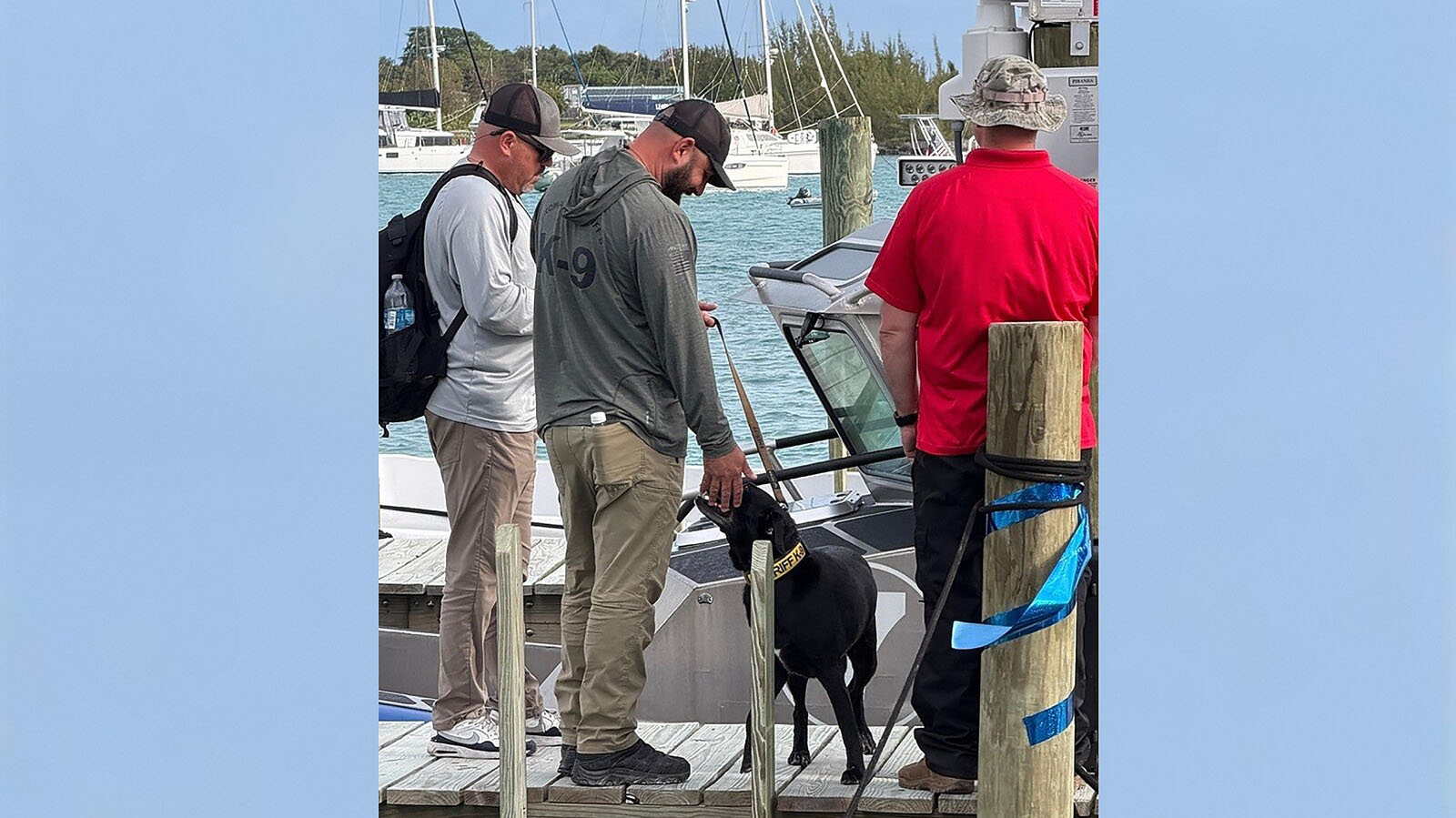
Cadaver dogs in the Bahamas to help search for missing American Lynette Hooker, April 16, 2026. (ABC News)

(NEW YORK) — The husband of an American woman who is missing in the Bahamas has left the islands two days after being released by local authorities, his attorney said Wednesday, as the search continues for his wife, Lynette Hooker.

The attorney for Brian Hooker said his mother is not well.

Meanwhile, cadaver dogs from the U.S. Coast Guard are now being used to help with the search for Lynette Hooker, local police told ABC News.

The Royal Bahamas Defence Force said in a statement Thursday that the search and recovery work is ongoing, with operations involving “extensive shoreline patrols, sea patrols, aerial drone surveillance, and submersible drone operations.”

Lynette Hooker has been missing since the evening of April 4. Her husband reported she went overboard on a dinghy.

When the 55-year-old Michigan woman and her husband departed Hope Town on the Abaco Islands for their yacht, Soulmate, in Elbow Cay, bad weather caused her to fall off the dinghy, her husband told authorities.

Brian Hooker, 58, was arrested on April 8 and questioned by police. He was released on Monday without charges.

Brian Hooker told ABC News on Tuesday that he was staying in the Bahamas with a “sole focus” of finding his wife, “no matter how likely or unlikely that is.”

He said at the time that he planned “to go back to the boat, and then hire or beg people to help me go find some areas to search.”

Brian Hooker’s attorney did not allow him to answer questions about what happened the night his wife went overboard due to the pending investigation.

When asked if there was anything he wishes he’d done differently, Brian Hooker was emotional, saying, “I will always think there was something I could have done differently. My one job, my one job was to look out for her, and that has not happened. And I’m gonna keep looking out for her now, the best I can.” 

ABC News’ Brian Andrews contributed to this report.

Copyright © 2026, ABC Audio. All rights reserved.

Fine arts panel gives initial approval to Trump’s ‘triumphal arch’ but asks for design revisions

Fine arts panel gives initial approval to Trump’s ‘triumphal arch’ but asks for design revisions
Karoline Leavitt, White House press secretary, near an artist’s rendering of President Donald Trump’s planned Triumphal Arch during a news conference on April 15, 2026. (Mattie Neretin/Bloomberg via Getty Images)

(WASHINGTON) — President Donald Trump’s proposed 250-foot-tall “triumphal arch” at the National Mall in Washington, D.C., was given initial approval on Thursday by the Commission of Fine Arts, a federal agency, but revisions were requested to address the panel’s design concerns.

Five members on the commission, now made up entirely of Trump appointees, voted in favor of moving along with the project. The panel’s other two members were not present for the hearing.

The towering arch Trump wants to build near Arlington National Cemetery would be more than twice as tall as the Lincoln Memorial and taller than France’s Arc de Triomphe.

Protesters gathered outside the National Building Museum, where the commission has its office, and held up signs that read: “Stop Arch Insanity,” “No Trump Arch,” and “No Vanity Arch.”

The commission’s vote came after Thomas Luebke, its secretary, said nearly 1,000 public comments were submitted online and that “100% of the comments were against the project.”

Luebke said many of the comments characterized the project as “a waste of money and misuse of funds” and others said “that it would obstruct historic views and disrupt the landscape, it was inappropriate imperial or political symbolism, that the design was gaudy, oversized, incompatible, and that it was disrespectful to Arlington National Cemetery and military sacrifice.”

James McCrery, the commission’s vice chair and the initial architect behind Trump’s massive White House ballroom project, voiced a laundry list of concerns that he wants the architects of the arch to address.

McCrery opposed a planned 250-foot underground pathway for visitors to access the arch, saying building under the capital is “a really, really unfortunate thing.”

“Sometimes it’s absolutely necessary,” McCrery told Nicolas Charbonneau, the architect behind the arch. “Here, I think it’s not absolutely necessary at all.”

McCrery also took issue with proposed lion statues at the base of the arch, arguing they were not culturally American symbols.

“They’re not of this continent,” McCrery said. “They’re noble, they’re courageous, and they’re strong, they’re all those things, but maybe there are alternatives.”

And McCrery called on the architects to “open these arches and air them out” so they don’t obstruct views of other Washington landmarks.

Zachary Burt, the community outreach manager for the D.C. Preservation League, voiced his opposition to the arch during Thursday’s meeting.

Burt said the arch “threatens the solemn vista” between Arlington National Cemetery and the Lincoln Memorial and that its proposed size “risks overshadowing the revered landmarks that Americans hold in the highest regard.”

Lisa Fuller, who said she was a lifelong Washington-area resident, grew emotional recounting crossing Arlington Memorial Bridge as a kid as she argued the arch would obstruct views of the cemetery.

“I first walked across that bridge with my dad after John Kennedy died. We started at the Lincoln Memorial. My father told me all about it, and then we walked across, and we saw the Eternal Flame,” Fuller said.

Copyright © 2026, ABC Audio. All rights reserved.
ICE agent charged with 2 counts of felony assault in Minneapolis

ICE agent charged with allegedly pulling a gun on motorists in Minneapolis

(WASHINGTON) — A U.S. Immigration and Customs Enforcement (ICE) agent has been charged with two counts of second degree assault which occurred in February, according to the Hennepin County Attorney’s Office in Minneapolis.

This is a developing story. Please check back for updates.

Copyright © 2026, ABC Audio. All rights reserved.

Researchers propose solutions to stop Venice from sinking

Researchers propose solutions to stop Venice from sinking
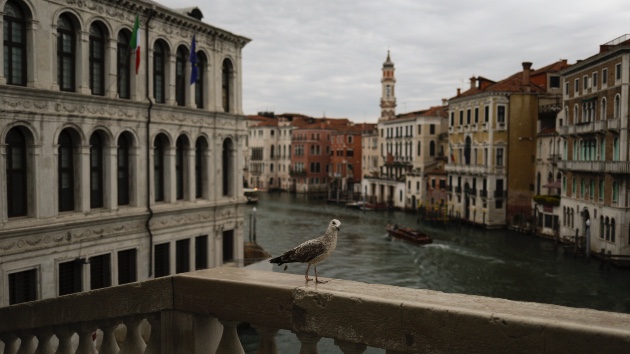
A seagull stands on the 16th-century Rialto Bridge over the Grand Canal in Venice, Italy, Monday, April 13, 2026. (Photo by Danil Shamkin/NurPhoto via Getty Images)

(VENICE, Italy) — One of the world’s most iconic cities could be heavily impacted by climate change and sea level rise in the coming years, leading researchers to search for solutions on how to protect it.

Venice, the historic Italian city known for its canals that serve as water traffic corridors, has been said to be sinking for nearly a century. The site within the vicinity of the Venetian Lagoon has flooded increasingly over the past 150 years, according to a paper published in Scientific Reports on Thursday.

Historically, there have been 28 events in which seawater flooding impacted at least 60% of the city, according to the paper. Eighteen of those events have taken place in the last century.

Piero Lionello, a professor of atmospheric physics and oceanography at the University of Salento in Italy and native Venetian, has noticed an uptick in flooding events throughout his lifetime, he told ABC News.

“The rate has been quite impressive the last three decades,” he said.

Climate experts are now calling for long-term planning to protect the city from rising sea levels over the next several centuries.

The Venetian Lagoon is a “special system” because it is so connected to the Adriatic Sea, said Lionello, the lead author of the paper.

Proposed strategies to prevent flooding as sea levels rise include movable barriers, ring dikes — which are circular or oval-shaped embankments designed to protect localized areas from floodwaters — or even closing the Venetian Lagoon and relocating the city, according to the paper.

Currently, the city is defended by a trio of movable barriers at the edge of the Venetian Lagoon. The MOSE project, installed in the 1990s, is a system of mobile flood barrier shields as tall as a five-story building that can be raised to separate the lagoon from the Adriatic Sea during high tides.

The system allows the waterways of Venice to function normally during high tide and has prevented flood disasters from storm surge. But it won’t be sufficient in the future, Lionello said.

“The present system, it will certainly be become inadequate,” he said.

The existing movable barriers may be effective against sea level rise up to 1.25 meters, or about 4.1 feet, according to the paper. But this benchmark is likely to be exceeded by the year 2300 under a low-emissions scenario due to rising global temperatures and ground subsidence — the gradual sinking of the ground — the researchers said.

Dikes may be necessary to protect Venice’s city center from the rest of the lagoon, according to the paper. The dikes would consist of walls surrounding the city, separating it from the lagoon, Lionello said.

Construction of dikes could cost between $600 million and $5.3 billion, according to the paper.

A “super levee” that could cost more than $35 billion to construct may be needed to close the lagoon and protect the land that is already below sea level.

If sea levels rise enough, it may be necessary for the city’s residents and historic landmarks to be moved inland, the researchers said. Relocating the city could be necessary beyond a 4.5-meter, or nearly 15-foot, sea level rise, which is projected to occur after 2300 under a high emissions scenario, according to the paper. Relocating the city could cost up to $118 billion, according to the researchers.

This solution is the most “provocative” and would involve moving individual buildings and monuments inland, Lionello said.

“You can preserve a building. You can have different solution to keep people living there, but it will be a completely different Venice from the Venice that we have now,” Lionello said.

The system of mobile barriers has been working overtime, according to officials. The MOSE barriers were lifted from the seabed to stop water from the Adriatic Sea from entering the lagoon 31 times during a six-month period between October 2023 and April 2024.

Climate scientists have predicted a steady rise in sea levels in the Adriatic Sea — with the lagoonal ecosystem in Venice experiencing relative sea level rise of about 2.5 millimeters per year, a 2021 study found.

Over the past 60 years, high tides in the Venetian Lagoon have become more frequent.

Between 1870 and 1949, 30 high tides exceeded 1.1 meters — or 3.6 feet — the level above which the MOSE barrier system is activated, according to the Venice Tide Study Center. There were 76 such high tides between 2015 and 2024 alone.

Rapid action to protect the city of Venice from climate change is “essential,” especially since the construction of large-scale interventions could take decades, the researchers said.

Copyright © 2026, ABC Audio. All rights reserved.