White House correspondents’ suspect Cole Allen will stay in custody

White House correspondents’ suspect Cole Allen will stay in custody
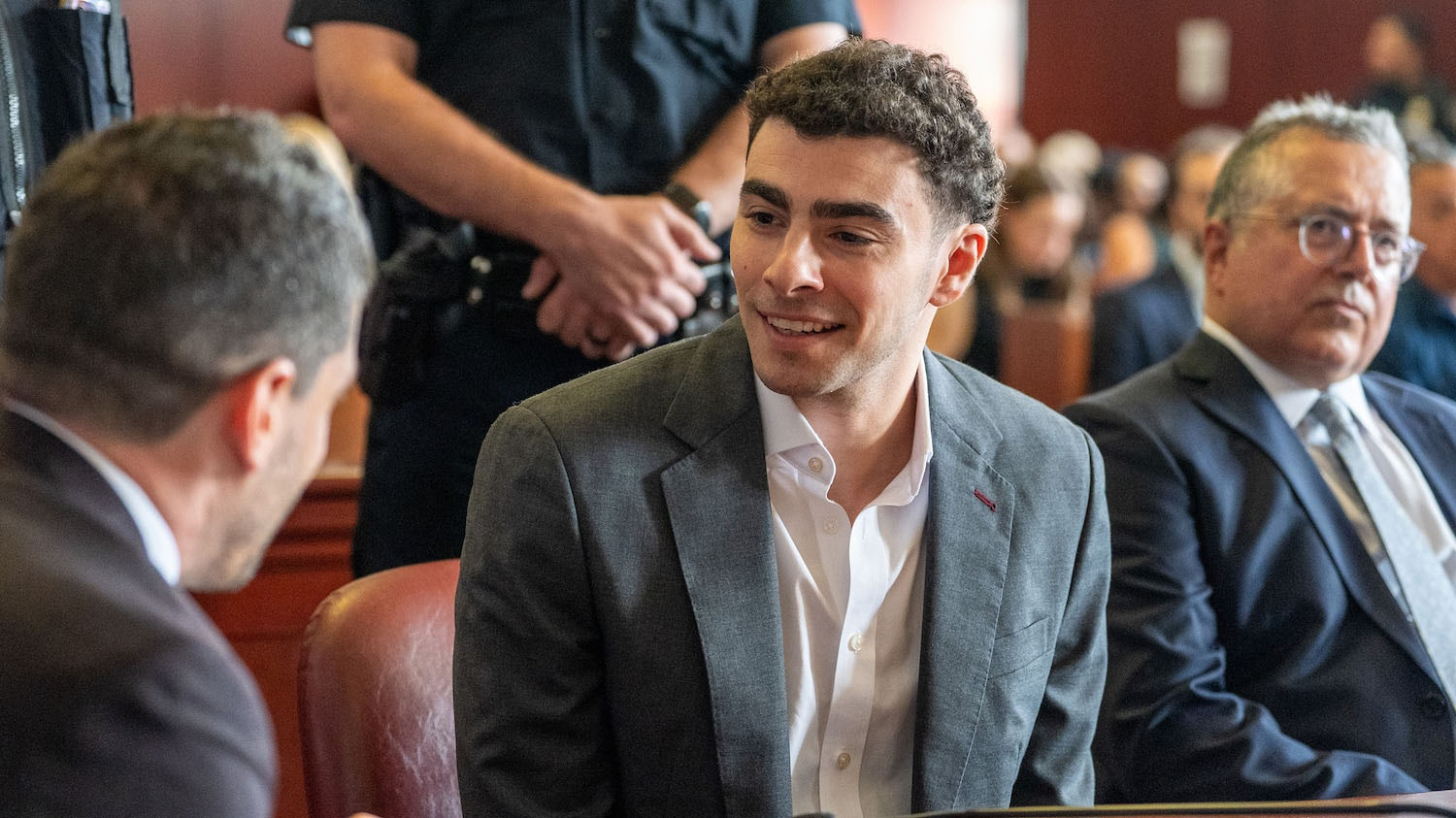
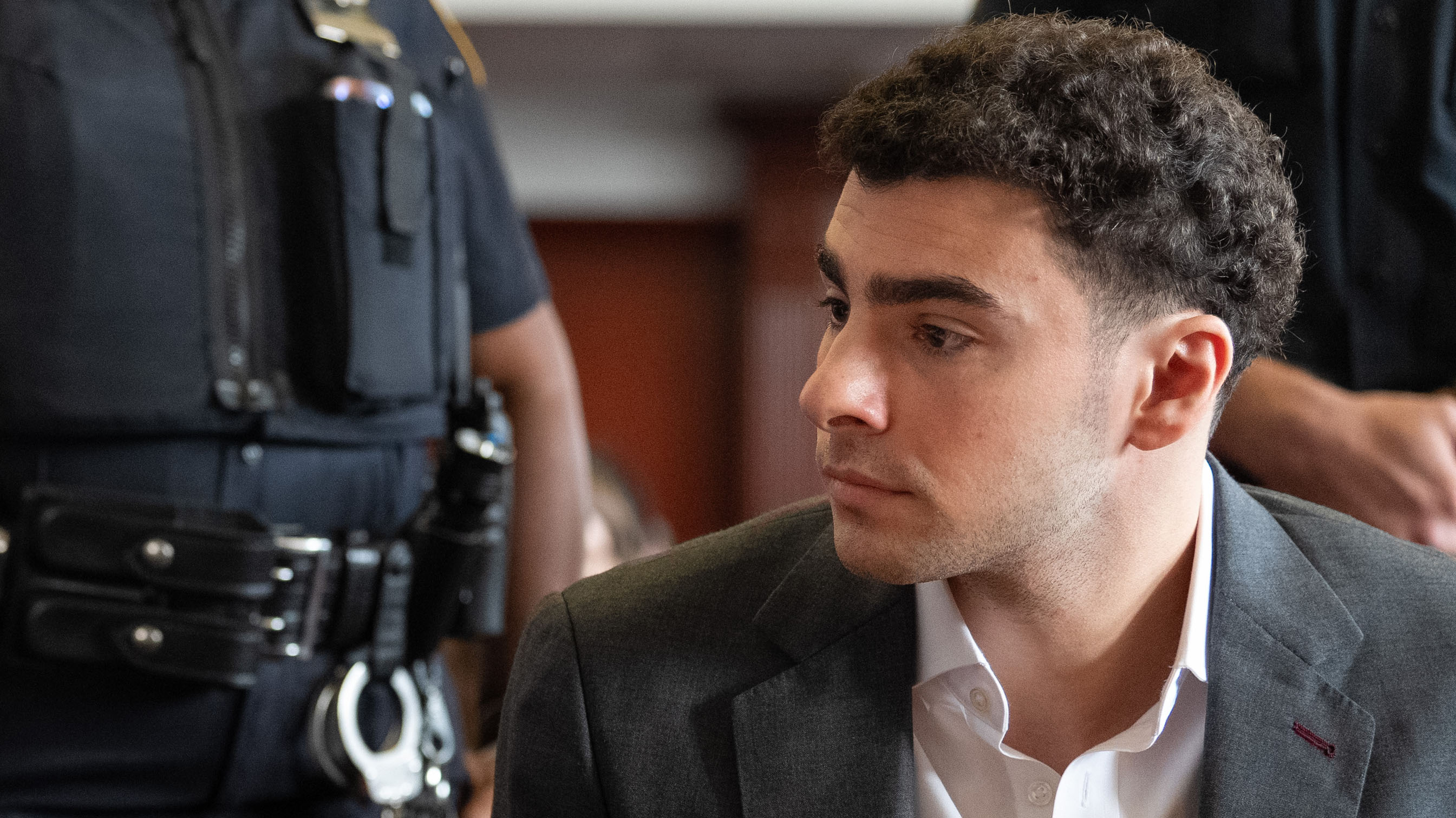
A man named Cole Allen, who appears to be the same person as the suspect in the shooting incident at the annual White House Correspondents’ Association dinner in Washington, D.C., April 25, 2026, is interviewed by KABC in Los Angeles in March 2017. (KABC)

(WASHINGTON) — Cole Allen, the suspect in the White House Correspondents’ Association Dinner shooting, conceded to remain detained pending further legal proceedings in his case, his attorney said at his detention hearing on Thursday.

The government argued earlier that Allen poses a grave risk of danger to the public for allegedly seeking to carry out an attack at Saturday’s dinner.

“This was a planned attack of unfathomable malice that risked the lives of hundreds of people whose only transgression was attending an annual event celebrating the media and featuring the President of the United States,” prosecutors said in a filing on Wednesday. “It was, at its core, an anti-democratic act of political violence.” 

Allen, 31, faces three felony counts of attempted assassination of the President of the United States, transportation of a firearm and ammunition over state lines with the intent to commit a felony and discharge of a firearm during a crime of violence. He has not entered a plea.

The California native — who was carrying a shotgun, a pistol and knives — was tackled by law enforcement after Saturday night’s gunfire inside the Washington, D.C., Hilton hotel, where thousands of journalists as well as President Donald Trump and members of his Cabinet were gathered for the annual dinner. Allen did not reach the ballroom, where the dinner was underway. A Secret Service member was shot during the incident, but the bullet hit the agent’s protective vest, officials said.

Copyright © 2026, ABC Audio. All rights reserved.

Brown shooting and murder of MIT professor were ‘symbolic,’ FBI concludes

Brown shooting and murder of MIT professor were ‘symbolic,’ FBI concludes
Nuno F.G. Loureiro, a professor at the Massachusetts Institute of Technology, has been identified as the man fatally shot at a home in Brookline on Dec. 15, 2025. (MIT)

(WASHINGTON) — The shootings in December that targeted Brown University and an MIT professor were “symbolic in nature,” according to a report released by the FBI.

Claudio Manuel Neves Valente, a Portuguese national and a legal permanent resident who had been living in Miami, Florida, committed a mass shooting at a building on the campus of Brown University in Providence, Rhode Island, before driving north to Brookline, Massachusetts, to kill an MIT professor, authorities said.

Two students died and nine others were injured in the shooting at Brown University on Dec. 13, 2025, and Nuno F.G. Loureiro, an MIT professor, was shot and killed at his home in Brookline by Neves Valente, two days later.

The shooting at the Ivy League school, where the 48-year-old Neves Valente had previously been a physics graduate student, rocked the tight-knit community in Providence.

The suspect was found dead from a self-inflicted gunshot wound in a storage unit in New Hampshire following a dayslong manhunt, authorities said.

“Based on analysis of the information and evidence gathered throughout the investigation, the FBI assesses Neves Valente’s victims were symbolic in nature,” the FBI said in a release. “Brown University as a whole and Dr. Loureiro represented to the shooter his personal failures and injustices he perceived were inflicted by others over time. By attacking them, Neves Valente was likely able to overcome his shame and envy by using violence to punish those communities that he perceived contributed to his downfall.”

Portugal’s Instituto Superior Técnico (IST) previously confirmed to ABC News that Neves Valente and Loureiro had studied in the school’s physics engineering program between 1995 and 2000.

The FBI determined Neves Valente had no criminal record and the shooting had no nexus to terrorism.

”The FBI has determined that Neves Valente was committed to conducting the attack and had completed his planning,” the report said. “He considered, planned, and prepared for the mass shooting at Brown University in increments over a period of several years in isolation, spanning multiple geographic locations. Neves Valente’s transient lifestyle, long-term planning, and social isolation provided little to no opportunity for bystanders to observe and contextualize the significance of his behaviors.”

The bureau’s report added, “The shooter lacked traditional support, such as family, peers, and authority figures, who would have been able to observe any potential warning signs and contact law enforcement.”

More than 1,327 audio files recovered after the shooting made by Neves Valente outline his thoughts for carrying out the shooting, according to the FBI.

“The FBI believes the shooter experienced a failure to thrive, long-standing suicidality, and his current situation was incongruent to where he felt he should be at this stage in his life. As his failures outweighed successes, his paranoia increased, compounding his continued inability to thrive, leading to him being mentally unwell and committed to dying. However, mental health stressors alone cannot fully explain the attacks that occurred.”

The FBI said they recovered guns at a storage facility used by Neves Valente in New Hampshire that matched the guns used to carry out the attack.

Copyright © 2026, ABC Audio. All rights reserved.

Americans oppose Trump ballroom 2-to-1; even more oppose his signature on money: ABC News/Washington Post/Ipsos poll

Americans oppose Trump ballroom 2-to-1; even more oppose his signature on money: ABC News/Washington Post/Ipsos poll
Construction crews continue to remove the East Wing of the White House and prepare for the new ballroom construction as seen from the newly reopened Washington Monument on November 14, 2025 in Washington, DC. (Photo by Andrew Leyden/Getty Images)

(WASHINGTON) — Americans oppose President Donald Trump tearing down the East Wing of the White House to build a ballroom by a 2-to-1 margin, oppose a 250-foot arch by an even wider margin and oppose the addition of Trump’s signature to paper currency by more than 5-to-1, according to an ABC News/Washington Post/Ipsos poll conducted using Ipsos’ KnowledgePanel.

Trump’s ballroom

The Trump administration announced the construction of a 90,000-square-foot ballroom in July 2025, with Trump promising “it won’t interfere with the current building.” By October, demolition started on the East Wing of the White House, which was built in 1902 and renovated in 1942.

The ABC News/Washington Post/Ipsos poll finds that more than half of Americans, 56%, oppose tearing down the East Wing to make way for a 90,000-square-foot ballroom, with 28% in support and 15% unsure. The results are nearly identical to an October ABC News/Washington Post/Ipsos poll.

Currently, strong opposition (47%) outweighs strong support (16%) by about 3-to-1.

In December, the National Trust for Historic Preservation – a privately-funded nonprofit designated by Congress to protect historic sites – filed a lawsuit seeking to stop the ballroom construction until the administration completed the federal review process standard for federal building projects. Earlier this month, an appeals court panel allowed construction of the ballroom to continue, granting an administrative stay of an earlier injunction.

Trump has reiterated his desire for the ballroom in the aftermath of the attempted shooting at the White House Correspondents’ Association Dinner on Saturday night, arguing that the hotel ballroom did not provide the appropriate security measures for an event the president is attending. 

The poll was in the field before and after the Saturday dinner. Overall, there was no significant difference in attitudes before and after the White House correspondents’ dinner, but Republican support for the ballroom increased from 62% before the dinner to 72% after.

Despite Republican calls for building the ballroom in light of the attempted attack Saturday night, the planned ballroom, according to a National Capital Planning Commission staff report, would have a seating capacity of about 1,000 guests. About 2,600 guests were seated for this year’s White House correspondents’ dinner. A White House event would be under the purview of the administration, whereas many events the president attends – including the correspondents’ dinner – are run by outside, independent, entities.

Republicans proposed a bill that would provide $400 million in funding for the facility. It comes after Trump said in October that the ballroom would be “paid for 100% by me and some friends of mine,” referencing donors. “The government is paying absolutely nothing.” Democratic lawmakers have introduced legislation to regulate the project and impose restrictions on donations — aimed at prohibiting bribery. 

Nearly 9 in 10 Democrats oppose the ballroom project, along with about 6 in 10 independents. Among Republicans, 65% support tearing down the East Wing of the White House to make room for a ballroom. Support grows to 77% among MAGA-Republicans (which include Republican-leaning independents who support the MAGA movement), but it drops to just 31% among non-MAGA Republicans.

An arch

In addition to Trump’s major changes to the White House structure, the president has also proposed a 250-foot-tall arch to be built at Memorial Circle, right before the entrance to Arlington National Cemetery, at the other end of the Arlington Memorial Bridge.The arch would be more than twice as tall as the Lincoln Memorial at the other side of the bridge.

“I’d like it to be the biggest [arch] of all,” even bigger than the 164-foot-tall Arc De Triomphe in Paris, Trump said.

By an over 2-to-1 margin, Americans oppose (52%) rather than support (21%) the Trump administration’s plan to build the arch. Another 26% are unsure. 

Strong opposition (41%) outweighs strong support (9%) by more than 4-to-1.

A group of Vietnam War veterans have sued to stop construction of the arch, arguing that the project needs to be authorized by Congress before construction can begin, adding that the arch would block the line of sight between Arlington National Cemetery and the Lincoln Memorial. The veterans have reached a compromise with the administration, stalling the lawsuit for now, with a promise that the administration will follow the legal process to build the arch.

Taxpayer funds would cover at least part of the project: $2 million in special initiative funds and $13 million in matching grants.

Majorities of Democrats (78%) and independents (57%) oppose the arch. A slim 51% of Republicans support building an arch, including 59% of MAGA Republicans and just 23% of non-MAGA Republicans.

Trump’s signature on money

In March, the U.S. Treasury Department announced that Trump’s signature will be added to future U.S. paper currency. This would be a first for a sitting president, as no previous U.S. president’s name has ever appeared on currency. Earlier in March, the federal Commission of Fine Arts approved Trump’s image on commemorative gold coins and in October, the administration proposed a Trump-themed $1 coin.

Americans oppose printing Trump’s signature on paper money instead of the treasury secretary’s by a wider margin than either the ballroom or the arch: 68% oppose it while just 12% support it. Another 19% say they aren’t sure. Over half, 55%, strongly oppose printing Trump’s signature on paper money; just 5% strongly support it.

An 1866 amendment prohibits living persons from appearing on government securities and a U.S. statute states that “only the portrait of a deceased individual may appear on U.S. currency and securities.” A living president has appeared on currency once before: In 1926, President Calvin Coolidge was featured on a coin celebrating the 150th anniversary of the signing of the Declaration of Independence along with a portrait of President George Washington.

Majorities of Americans across most demographic groups oppose printing Trump’s signature on paper money, including 9 in 10 Democrats and over 7 in 10 independents. Just under 3 in 10 Republicans support it, including just over a third of MAGA Republicans (35%) – the largest share across demographic groups.

The poll did not address the addition of Trump’s photo to national park passes or the renaming of the Kennedy Center. The poll was conducted before the announcement that Trump’s image would appear on limited-edition passports.

Methodology – This ABC News/Washington Post/Ipsos poll was conducted among 2,560 U.S. adults overall, but these questions were conducted among a half sample of 1,292 U.S. adults and have an error margin of +/- 2.8 percentage points. Error margins are larger among subgroups.

Copyright © 2026, ABC Audio. All rights reserved.

Senate Democrats press White House over loosened record-keeping policy

Senate Democrats press White House over loosened record-keeping policy
President Donald Trump listens during a press conference with Ukrainian President Volodymyr Zelensky following their meeting at Trump’s Mar-a-Lago club on December 28, 2025 in Palm Beach, Florida. (Photo by Joe Raedle/Getty Images)

(NEW YORK) — The White House’s new policy for preserving presidential records risks allowing the Trump administration to “unlawfully destroy important records,” a group of Senate Democrats warned in a letter to the White House Counsel on Wednesday.

Thirteen Senate Democrats are seeking assurances from the White House that it would continue to preserve presidential records, saying they had grown “deeply concerned” with recent steps the Trump administration had taken to loosen rules dictating document retention.

The Democrats’ missive comes after the Justice Department’s Office of Legal Counsel (OLC) wrote an opinion this month that deemed the Presidential Records Act — a Watergate-era law that changed the legal ownership of presidential records from private to public — to be unconstitutional and “untethered from any valid and identifiable legislative purpose.” 

One day after the opinion was issued, White House Counsel David Warrington issued new guidance for White House staffers to adopt new document retention policies based on the DOJ’s new determination about the legality of the Presidential Records Act.

“The 1978 law is a significant departure from historical practice. For 200 years the presidency existed without the legislative branch invading the rights of the executive branch,” Warrington said in a memo that was later included in a court filing.

Led by Sen. Adam Schiff of California, the Democrats wrote to White House Counsel David Warrington that they feared “the President and his staff” will use the OLC option to “unlawfully destroy important records covered by the [Presidential Records Act].”

Abigail Jackson, a White House spokesperson, said in a statement that the Democrats’ letter reflects “a fundamental misunderstanding of the Administration’s policy.”

“The new White House records retention policy makes it clear that important records will be preserved,” Jackson added.

The senators, in their letter, alluded to what they characterized as President Donald Trump’s “unlawful personal retention and mismanagement of classified documents” in requesting a briefing from White House officials on their “records management procedures” at some point before the end of his term. Trump was indicted after his first term for allegedly storing classified records at his Mar-a-Lago estate and obstructing investigators, though the case was dismissed over U.S. District Judge Aileen Cannon’s concerns about the appointment of special counsel Jack Smith. 

Drafted in the wake of the Watergate scandal, the Presidential Records Act was passed in 1978 to ensure the preservation of presidential records. Every president since Ronald Reagan has been subject to the law, which places the National Archives and Records Administration in control of the official records — such as emails, phone records, and other documentary material created by the president and his staff in the course of their duties — once the president leaves office.

Under the PRA, which is overseen by Congress, former presidents have up to 12 years after leaving office to turn over all their presidential records.

During President Trump’s current term, his administration has moved to unwind record retention protocols. Earlier this month, Assistant Attorney General T. Elliot Gaiser wrote an opinion that would upend the established process for ensuring the public ownership of presidential records, arguing that “the PRA exceeds the oversight power [of Congress] because it serves no identifiable and valid legislative purpose.”

With three years left in Trump’s second term, his Department of Justice now says the president “need not further comply” with the law governing the handover of his presidential records once he leaves office. 

The day after the publication of the Justice Department’s opinion, Warrington issued new guidance for the Executive Office of the President regarding the preserve of records going forward. While the memo said that staff could use policies developed under the PRA, Warrington said the new policy would cover the retention of both classified and unclassified material going forward.

In their letter to Warrington on Wednesday, the senators asserted that administration “does not have the authority to override Supreme Court rulings or unilaterally overturn laws passed by Congress.”  

Within a week of the OLC opinion and new White House guidance, the country’s largest group of a historians and a watchdog organization brought a lawsuit seeking to force the Trump administration to comply with the PRA.

“The Executive Branch has nullified the determinations of the other two branches of government so that the President may claim these official government records to be his own,” the lawsuit said.

Lawyers with the Department of Justice have defended the policy in court filings, arguing the PRA is an “unconstitutional and ahistorical imposition on presidential autonomy.”

As part of the lawsuit, the Trump administration released the new White House guidance on document retention. The Director of Archival Operations at the National Archives, meanwhile, said that the agency continues to “preserve all Presidential records in its custody” and plans to continue processing requests to access those records. 

Copyright © 2026, ABC Audio. All rights reserved.

Truck driver who went missing in possible hijacking found dead: FBI

Truck driver who went missing in possible hijacking found dead: FBI
Alejandro Jacomino Gonzalez is seen circa October 2024 in a photo released by the FBI. (FBI)

(FLORIDA) — A truck driver who went missing in a possible hijacking while transporting vehicles from Georgia to Florida has been found dead, the FBI said Wednesday.

Alejandro Jacomino Gonzalez, 41, was last seen alive in the early morning hours on April 17 at a rest stop on I-95 south in Brevard County, Florida, according to the FBI’s Tampa field office. 

The truck was located in Port Wentworth, Georgia, that day, though Gonzalez was not there, according to the FBI, which called his disappearance “suspicious.” Several vehicles were also missing from the hauler.

On Wednesday, the FBI field offices in Tampa and Atlanta said a body found in coastal Georgia is confirmed to be Gonzalez. They did not say where or when the body was located.

The FBI Tampa and Atlanta divisions are leading the investigation into Gonzalez’s death.

Gonzalez, a CDL driver for an unidentified trucking company, had picked up multiple vehicles from the Port of Brunswick in Georgia on April 16 and was supposed to drop them off in Miami, the FBI said.

He arrived at the truck stop in Grant-Valkaria at approximately 1:21 a.m. on April 17 and rested for several hours, the FBI said. At 7:49 a.m., the truck drove south one exit and then turned north, according to the FBI.

“Soon after, Gonzalez became unreachable and the truck was reported missing,” the FBI stated in a missing person bulletin.

Three vehicles that went missing from the hauler have since been located in Florida, the FBI said.

Anyone with information on the investigation is asked to contact the FBI at 1-800-CALL-FBI or submit tips online.

Copyright © 2026, ABC Audio. All rights reserved.

SCOTUS considers Trump’s bid to end Temporary Protected Status for Haitians and Syrians

SCOTUS considers Trump’s bid to end Temporary Protected Status for Haitians and Syrians
Demonstrators chant and hold signs outside U.S. Supreme Court on April 29, 2026, in Washington. (Tom Brenner/Getty Images)

(WASHINGTON) — The Supreme Court on Wednesday grappled with whether the Trump administration has the authority to end humanitarian protections for thousands of immigrants without facing judicial review. 

While an unrelated ruling about the Voting Rights Act overshadowed the arguments, the court’s conservative majority appeared skeptical of the legal challenge to reverse the cancellation of temporary protected status for thousands of Haitians and Syrians. 

Solicitor General D. John Sauer argued that Congress gave the Secretary of Homeland Security unreviewable discretion to manage and end TPS designations, arguing that a legal challenge would result in “judicial micromanagement” of foreign policy.    

“Congress balanced the risk there might be some decision that’s erroneous or baseless… that would evade judicial review, against the risk of what we’re living through here, which is judicial micromanagement of the sorts of foreign policy laden in determinations and decisions that are naturally conferred upon the political branches,” Sauer said. 

But attorneys representing the Haitians and Syrian Temporary Protected Status holders argued that the Homeland Secretary must follow the “procedural guardrails” set by Congress, which include reviewing country conditions, consulting other government agencies, and providing TPS holders 60 days of notice. 

“The bottom line is the secretary can terminate TPS, but he must turn square corners and follow the rules Congress set,” said attorney Ahilan T. Arulantham. “In contrast, as we’ve heard today, the government reads the statute like a blank check today. They want to use it to expel non-citizens, but the power that they seek is a double-edged sword.” 

Justice Amy Coney Barrett questioned the significance of the legal challenge, which was described as a “box-checking exercise,” if the Trump administration still canceled the designation as long as they followed the procedural steps. 

“If it’s just kind of a box-checking exercise, I mean, why would Congress permit review of the procedural aspect, when really what everybody cares about much more is the substance?” Barrett asked. 

“I think it’s because Congress and us too, and the millions of people who live with TPS holders, have some faith in government, and they believe that if there is consultation, the decisions will be better,” Arulanantham said. 

Sauer pushed back on those arguments, claiming that the Trump administration fulfilled the procedural requirements by “seeking input” from the State Department, though he claimed that even those basic steps were not necessary. 

“If the secretary posted a notice on X saying, ‘I hereby terminate Syria’s TPS program effective tomorrow,’ you would say that there’s no judicial review of that decision,” said Justice Sonia Sotomayor. 

“Correct,” Sauer said.

The three liberal justices also pressed Sauer about President Donald Trump’s public and social media comments about Haitian immigrants, suggesting the statements show a “discriminatory purpose” behind the TPS cancellation. 

“The President has disparaged Haitian TPS holders specifically as undesirables from a ‘s——- country,’ and days after falsely accusing them of ‘eating the dogs and eating the cats of Americans,’ he vowed that he would terminate Haiti’s TPS, and that is exactly what happened,” Justice Sonia Sotomayor said. 

Justice Ketanji Brown Jackson pushed back on the government’s claim that Trump’s rhetoric was focused on policy issues like crime or poverty and pointed to remarks made about “welcoming people” from Norway or Denmark.

“If the position of the United States is that we have to have an actual racial epithet… [and] we aren’t allowed to look at all the context,” Jackson said, then the court would be ignoring a “prime example” of discriminatory intent. 

Justice Jackson noted that U.S. District Judge Ana Reyes — who attended Wednesday’s hearing and blocked the termination of TPS for Haitians in February — found that there is evidence of “discriminatory intent.”

“So aren’t we bound in some regard with respect to what the lower court has already determined about these facts?” she asked. 

Sauer said the court should apply the logic of a different judge who said the President’s statements “are less relevant.”

At one point during the hearing, Justice Brett Kavanaugh questioned the protections in place for Syrians by mentioning that Bashar al-Assad’s regime is no longer in place. 

“The whole thing was the Assad regime,” Kavanaugh said. “After 53 years of complete oppression and brutal treatment, it’s done.” 

Arulantham, who argued on behalf of the Syrians, pushed back and said that while the regime may have changed, the country remains a war zone and pointed to current State Department reports of violence in the country. 

“It is of no relevance because even if the secretary is right and the State Department is wrong, it doesn’t change the fact that they didn’t talk to each other, and the national interest is not a criteria,” Arulantham said. 

While the Court on Wednesday appeared closely divided on whether to invalidate Trump’s cancellation of TPS for Haitians and Syrians over procedural missteps, the bottom line is that the administration retains almost unquestionable discretion as to if and when TPS status for certain countries should be discontinued. 

And that means, if the legal teams representing the migrants prevail in this instance, it may be short-lived. The administration can move again to cancel their status, following the appropriate procedural steps, and more than 350,000+ immigrants who have lived here legally for quite some time under TPS could be forced to leave the country.

The court is expected to issue its decision in the case this summer. 

Copyright © 2026, ABC Audio. All rights reserved.

Ex-Fulton County Jail detainee alleges hands, legs amputated after medical neglect

Ex-Fulton County Jail detainee alleges hands, legs amputated after medical neglect
The Fulton County Jail is seen on August 23, 2023 in Atlanta, Georgia. (Joe Raedle/Getty Images)

(ATLANTA) — Former Fulton County Jail detainee Rashaad Muhammad detailed what he said was a harrowing experience being held at the Atlanta, Georgia, facility from August 2025 to February of this year.

After being arrested on Aug. 11, the 33-year-old — who used a cane to walk and took medication regularly for a blood condition — alleged at a press conference last Friday that he was repeatedly denied medical care as his physical condition rapidly deteriorated for more than two weeks.

As he allegedly experienced symptoms like vomiting bile and losing the ability to stand up, Muhammad said his requests for medical attention were ignored for several days and he ultimately experienced septic shock. After being transported to Grady Memorial Hospital, he fell into a coma and both of his hands and legs were amputated. 

In a statement to ABC News, the Fulton County Sheriff’s Office said Muhammad spent 177 of the 188 days he was in custody “at Grady under hospital care.”

“For days, I’m in the corner by myself suffering. Nobody’s checking on me. Nobody’s coming up to you,” an emotional Muhammad told the press. “I’m back there. I was tired, so I’m trying to tell the officer, ‘Hey officer, I need to, you know, it’s getting bad.’ Nothing.” 

He alleged that officials in the jail ignored his condition, even as he asked for medical help each day.

“I’m begging the sheriff to let me see the provider … I can’t get up. Every time they do head count, you have to stand by your door,” he said. “It got so bad to the point where I couldn’t even get up. I wasn’t trying to be disrespectful to the officers but I just couldn’t get up. So they just started, they’d see me, they didn’t, I didn’t have to do headcount. But that’s when I knew it was bad.”

Muhammad had been charged with two felony counts of aggravated assault and firearm possession. According to court records, the warrant alleges that he drove up to the victim, got out of his car and fired multiple shots at the victim, then drove off.

At the press conference, Muhammad and his attorneys described this as a case of self-defense. All charges were dropped earlier this month. It’s unclear exactly why the charges were dropped.

“For them to drop the charges is another slap in the face, because I was there for no reason. I didn’t have to be there,” Muhammad said.

An attorney from the Georgia Public Defender Council represented Muhammad at the time.

“This case raises serious questions about humane treatment in custody and emphasizes the importance of testing allegations through a fair adversarial process that ultimately resulted in Mr. Muhammad’s charges being dismissed,” a spokesperson for the agency said in a statement to ABC News.

The prosecutors in the case did not immediately respond to ABC News’ requests for comment.

The Fulton County jail system has been the subject of scrutiny for years, drawing national attention in 2022 over the death of LaShawn Thompson in a bed bug-infested cell. In response to a series of reports of inmate abuse and neglect, including Thompson’s death, the Department of Justice launched a civil investigation into the Fulton County jail system in July 2023.

“We need to know why Fulton County did what they did in choosing their health care provider,” Muhammad’s attorney, Eric Hertz, told the press. “We need to know why a bottle of pills which he had on him when he was originally arrested, why they didn’t let him take that with him, why they didn’t carefully give him the antibiotics as he needed them.”

In a statement to ABC News, the Fulton County Sheriff’s Office said it cannot comment on or release information about Muhammad’s medical condition or treatment due to privacy laws.

“It is important to note that of the 188 days Mr. Muhammad was in custody, 177 of those days were spent at Grady under hospital care,” it said. “During his time at the Fulton County Jail, he was under the medical care of NaphCare.”

NaphCare is a private, for-profit correctional health care company based in Alabama. A 2024 report released by the Justice Department after LaShawn Thompson’s death noted “ongoing issues” with the company’s staffing at the jail, but its contract with Georgia state was ultimately renewed until 2027.

At the press conference on Friday, attorney Ben Crump noted that the same medical provider was involved in both Thompson and Muhammad’s situations.

“We need answers, and we need Fulton County to act. This is deplorable, this is horrific, this is egregious,” he said. “And worst of all, this is inhumane. We don’t treat human beings like this.”

In a statement to ABC News, NaphCare said “Fulton County jails represent one of the most difficult environments” where the company provides care in the U.S.

“Despite the challenges, we have been extraordinarily successful in improving care and saving lives, maintaining accreditation by the National Commission on Correctional Health Care, and working with federal court monitors to implement reforms under a federal court consent decree,” the company said.

NaphCare noted that it has “cared for tens of thousands of patients, and have had thousands of positive patient outcomes” in the time it has been contracted to work at the jail.

It also addressed Muhammad’s case specifically.

“We are also deeply saddened by and sorry for the suffering and losses that Mr. Muhammad experienced,” the company said its statement. “We understand that he has a right to file a lawsuit against us, and we will respond to the allegations in court filings and will not comment to the news media outside of the ongoing court proceedings.”

Muhammad’s legal team called for accountability and a full investigation into the conditions and medical care within the jail.

ABC News’ Sabina Ghebremedhin contributed to this report.

Copyright © 2026, ABC Audio. All rights reserved.

Appeals court won’t rehear Trump’s challenge to E. Jean Carroll verdict

Appeals court won’t rehear Trump’s challenge to E. Jean Carroll verdict
E. Jean Carroll arrives for her civil defamation trial against President Donald Trump at Manhattan Federal Court on January 25, 2024 in New York City. (Michael M. Santiago/Getty Images)

(NEW YORK) — A federal appeals court in New York on Wednesday rejected President Donald Trump’s request to rehear his challenges to the writer E. Jean Carroll’s successful defamation and sex assault claims.

Carroll successfully argued during a nine-day trial in 2023 that Trump sexually abused her in a Bergdorf Goodman dressing room in the 1990s and defamed her in 2022 with comments he made after he left office. 

The jury awarded Carroll $5 million in damages.

Trump, who has denied all wrongdoing, tried unsuccessfully to substitute the United States as a defendant and to raise a claim of presidential immunity. In its decision Wednesday, the 2nd U.S. Circuit Court of Appeals said both arguments were raised too late.

“The fact of the matter is that no other defendant would be permitted to move to substitute the United States in his place, fifteen months after trial and the entry of judgment against him,” Judge Denny Chin wrote. “The Court appropriately declined to convene en banc to revisit this issue.”

A separate jury in a subsequent trial awarded Carroll $83 million in damages.

Copyright © 2026, ABC Audio. All rights reserved.

Support from pro-Israel group AIPAC becomes a dividing line in Democratic races

Support from pro-Israel group AIPAC becomes a dividing line in Democratic races
Representative Haley Stevens, a Democrat from Michigan and US Senate candidate, speaks during the DC Blockchain Summit in Washington, DC, US, on Tuesday, March 17, 2026. (Photographer: Al Drago/Bloomberg via Getty Images)

(NEW YORK) — Against the backdrop of polls showing declining Democratic support for Israel — especially among young voters — the American Israel Public Affairs Committee’s support for candidates is under intense scrutiny and is becoming a dividing line in contentious Democratic primaries from Michigan to New Jersey.

A poll released earlier this month by the Pew Research Center shows that Americans’ views toward Israel are trending negative, especially among Democrats.

The survey found that 6 in 10 Americans have a very or somewhat unfavorable view of Israel. That number is up 7% since last year and 20 percentage points since 2022. Among Democrats and Democratic-leaning independents, the percentage who have a very or somewhat unfavorable opinion of Israeli was 80%.

One manifestation of those changing views is the increased scrutiny of political contributions from pro-Israel groups, especially AIPAC.

Conflicts over AIPAC funding have been fueled in part by the popularity of the group Citizens Against AIPAC Corruption, better known by their social media handle Track AIPAC, which says it’s a “grassroots effort to reveal and counter the influence of AIPAC and the Israel Lobby by systematically documenting their financial contributions to our federal officials” and accuses Israel of committing genocide in Gaza — a charge the Israeli government has long denied.

The group churns out graphics of donations to politicians to its audience of 400,000+ followers on X. These numbers include contributions by not just AIPAC but by individuals who have previously donated to groups it says are part of the “pro-Israel lobby.” That approach has received controversy, with critics saying it’s unfair to conflate the donations of individuals with the support of the pro-Israel lobby as whole.

AIPAC has been critical of Track AIPAC’s approach. National spokesperson Deryn Sousa described it in a statement to ABC as “an un-American and undemocratic online campaign that applies selective standards to stigmatize and silence pro‑Israel Democrats.”

Estimates of donations from the pro-Israel lobby were cited by an audience member in a town hall for Michigan Democratic Sen. Elissa Slotkin, who told the questioner, “If you’re equating “Israel lobby” to Jews, I got a problem with that.”

In Michigan, the Uncommitted National Movement, which encouraged opposition to then-President Joe Biden’s support of Israel’s war against Hamas in Gaza, received more than 100,000 votes in the 2024 Democratic presidential primary in the swing state.

Divisions over support for Israel have continued to dominate that state’s highly competitive Democratic Senate primary. Michigan is home to one of the largest Arab-American populations in the country as well as a sizeable Jewish community.

Senate candidate Dr. Abdul El-Sayed, the former Wayne County, Michigan, health director who ran unsuccessfully for governor in 2018, has been the most vocal on the issue, repeatedly calling the war in Gaza a genocide and criticizing his opponents for accepting donations from AIPAC and other pro-Israel groups.

Appearing alongside controversial podcaster and political commentator Hasan Piker on the campus of the University of Michigan, El-Sayed took explicit aim at AIPAC, saying, “No longer are we going to sit idly by while AIPAC tells us that the goal of our foreign policy is to align with a foreign government.”

Most of his criticism has been directed towards his opponent, Rep. Haley Stevens. Stevens, who is Jewish, was backed by AIPAC in her 2022 primary challenge of then-Rep. Andy Levin, a progressive Jewish member who had opposed some of Israel’s policies. Stevens recorded a video in support of AIPAC last month. The Democratic Majority for Israel — a pro-Israel group — has endorsed her Senate run.

The third candidate in the race, State Sen. Mallory McMorrow, has criticized Piker for some of his comments on Jews and the conflict in Gaza, calling it a genocide and promising not to take money from AIPAC.

Track AIPAC endorsed El-Sayed, calling him “the only candidate for US Senate in Michigan with the spine to call out Israel’s atrocities,” and saying “his voice can’t be bought.”

Nearby Minnesota also faces a progressive vs. centrist Senate battle between Rep. Angie Craig and Lt. Gov. Peggy Flanagan. While Flanagan has pledged not to take any funds from AIPAC, Craig has received funds in her past congressional races from AIPAC and has been endorsed by the Democratic Majority for Israel.

Craig has not received AIPAC funding in this race. When asked if it planned to make an endorsement in that race, Track AIPAC’s Co-Executive Director Cory Archibald, who has worked as a consultant for progressive Democrats like former Reps. Cori Bush and Jamaal Bowman, said that it will monitor the race “and we know AIPAC has an interest in who wins Minnesota.”

The track record of AIPAC’s spending in some of the year’s early primaries has been mixed. In New Jersey’s 11th Congressional District, AIPAC spent $2 million on ads attacking moderate Democratic incumbent Tom Malinowski, who supported some conditions on aid to Israel. That primary was won by progressive Analilia Meija, who has called Israel’s actions in Gaza a genocide. Track AIPAC ran an ad supporting her in that race, which marked its first-ever ad buy.

The issue of AIPAC support has emerged on the national level. The Democratic National Committee considered a proposal at its spring conference to condemn the “growing influence” of money in primaries, specifically citing AIPAC. That resolution failed. AIPAC celebrated the decision, saying that “the DNC made clear that all Democrats including millions who are AIPAC members have the right to participate fully in the democratic process.”

Track AIPAC says that despite that setback, it plans to remain “an important voice for change in this cycle and many more to come.”

Copyright © 2026, ABC Audio. All rights reserved.

Special forces soldier who won $400,000 betting on Maduro’s capture pleads not guilty

Special forces soldier who won 0,000 betting on Maduro’s capture pleads not guilty
Special forces soldier who won $400,000 betting on Maduro’s capture pleads not guilty
A wooden judge’s gavel and sounding block on a desk with a blurred courtroom in the background. (imaginima/Getty)

(NEW YORK) — The U.S. Army special forces soldier who was indicted last week on charges of using classified information about the capture of Venezuelan President Nicolas Maduro to make more than $400,000 on the prediction market Polymarket pleaded not guilty Tuesday in Manhattan federal court and was released on bond.

Master Sergeant Gannon Ken Van Dyke appeared in the same courthouse complex where Maduro appeared following the raid on his Caracas compound that Van Dyke helped plan and execute.

Judge Margaret Garnet asked how he pleaded to charges including unlawful use of confidential governmental information for personal gain.

“Not guilty, your honor,” Van Dyke said.

He was accompanied in the courtroom by his attorneys, Zach Intrater, Mark Geragos and Tina Glandian, following his arrest last week at Fort Bragg, where he is posted.

Van Dyke is currently on leave from the Army. His ultimate military status is “unsettled,” Intrater said.

The defense attorney said he expected few disputes over the factual allegations. Instead, Intrater said the case would “largely rise and fall” on motions to eliminate certain evidence and to dismiss the charges.

“This is anything but a usual case,” Intrater said.

In what is believed to be the first case of insider trading on a prediction market, prosecutors alleged that Van Dyke used inside knowledge to place 13 bets on the outcome of the Maduro operation.

According to the indictment, Van Dyke opened a Polymarket account the day after Christmas and began placing bets on Dec. 27 through the evening of Jan. 2 — hours before soldiers entered Venezuelan airspace for the pre-dawn operation. After Trump made the operation public that day, Van Dyke allegedly profited $409,881 from his $33,034 in bets.

Prosecutor Ryan Finkel said there were no plans to add defendants or bring additional charges against Van Dyke but said, “I would not entirely rule it out.”

Judge Garnet released Van Dyke on a $250,000 personal recognizance bond. His travel is restricted to California, where his family lives, North Carolina, where he is posted and New York, where he is being prosecuted.

He has surrendered his firearms. Garnet said she would modify that condition if his military service required him to possess and use a gun.

Finkel said there is a “moderate” amount of evidence in the case including Polymarket records, bank transactions, cryptocurrency exchanges and email accounts. There could also be a certain amount of classified information that would require special handling.

“The events covered by the classified information have now occurred,” Garnet said. She said the case would move faster “if evidence could be declassified to the greatest extent possible.”

Van Dyke’s next court date is Monday, June 8.

Following his arrest on Thursday, Van Dyke briefly appeared in a North Carolina courtroom on Friday. He signed a bond after acknowledging that he understood the charges and potential penalties.

His case is being overseen in New York by the same judge who is presiding over the high-profile federal case against alleged UnitedHealthcare CEO assassin Luigi Mangione.

Amid mounting criticism of prediction markets for allegedly enabling insider trading, Polymarket CEO Shayne Coplan said his company is “constantly” monitoring for suspicious activity and referring cases to authorities. Coplan argued that the public nature of prediction markets makes it easier to crack down on insider trading.

“The transparency afforded by onchain markets makes global compliance more effective than ever. Every trade is public, permanent, and auditable. Bad actors leave a trail,” he said.

Copyright © 2026, ABC Audio. All rights reserved.