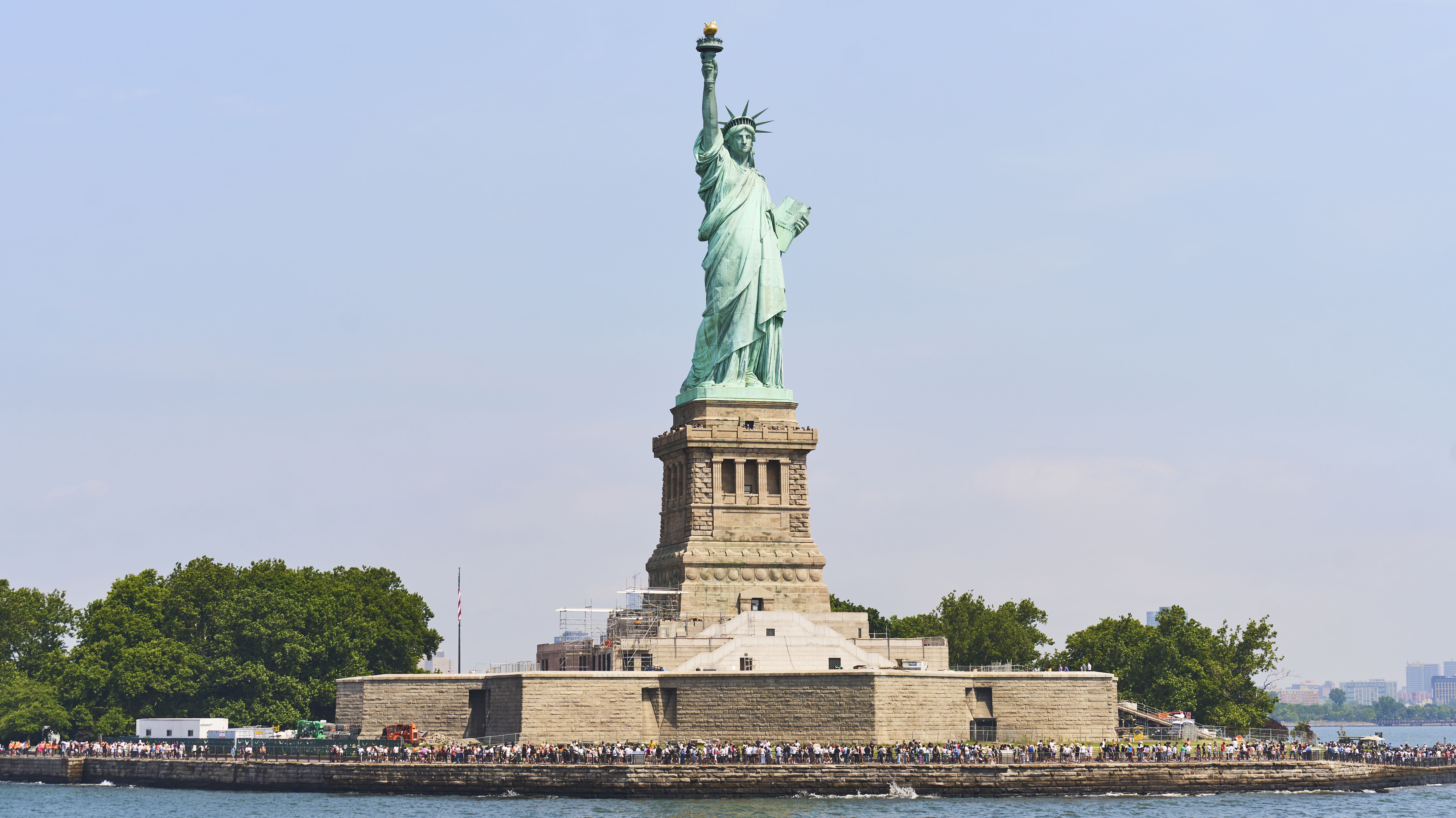
The New York Police Department said a 27-year-old woman and a 5-month-old girl were killed, August 8, 2026, when the boat they were aboard capsized near Liberty Island in New York Harbor, pictured here. (Aire Images/Getty Images)
(NEW YORK) — The operator of a boat that capsized in New York Harbor, leaving a mother and her baby daughter dead, is in federal custody, prosecutors said.
Manuel Hernandez, 46, is due to appear in federal court on Monday afternoon, ABC New York station WABC reported.
Investigators are looking into whether the boat was an illegal charter operation, the Coast Guard said. Hernandez was initially arrested on state charges — 13 counts of reckless endangerment — according to the New York Police Department.
The boat overturned near the Statue of Liberty on Saturday night, sending all 14 on board into the water, the Coast Guard said.
The New York Police Department identified the two people killed as 27-year-old Sara Sanchez and 5-month-old Antonella Garcia, of Queens, New York. Sources told ABC News the victims were mother and daughter.
The 12 survivors were rescued with minor injuries, the Coast Guard said.
Sanchez leaves behind her husband, who was on the boat and survived, and their 6-year-old son, who was not on the boat, WABC reported.
The mother of Tasia Fortune, a 29-year-old Black woman whose body was found hanging from a tree on Aug. 3 in Jackson, Mississippi, told ABC News on Sunday afternoon that her daughter’s death has “just devastated” her family. (Photo courtesy of Christy Spivey)
(WASHINGTON) — The mother of Tasia Fortune, a 29-year-old woman whose body was found hanging from a tree on Aug. 3 in Jackson, Mississippi, told ABC News on Sunday afternoon that her daughter’s death has “just devastated” her family.
“This has just devastated us,” Fortune’s mother, Christy Spivey, said. “Tasia was strong-minded, she was full of laughs and love, she had faith in God. … She had so little and gave so much.”
Spivey said that she last saw her daughter, who is a mother of four, on July 26 after she traveled from Mississippi, where she has lived for over a decade, to Kentucky for a family reunion.
When asked about Fortune’s state of mind the last time she saw her, Spivey said, “She was better than I had seen her in a long time. She was at peace.” Asked if her daughter could have died by suicide, Spivey said, “She did not do this to herself. I know my daughter and she did not do this to herself.”
A spokesperson for the Jackson Police Department (JPD) confirmed to ABC News on Saturday night that police are investigating Fortune’s death and confirmed that the Hinds County Coroner’s Office identified Fortune.
Asked about the status of the investigation and if any persons of interest have been interviewed, the spokesperson did not provide further comment.
The Mississippi State Medical Examiner’s Office is conducting an autopsy to determine Fortune’s cause and manner of death, a spokesperson confirmed to ABC News.
Jackson City Council member Kenneth Stokes sent a letter to the U.S. Attorney Baxter Kruger, asking for help in investigating this case, according to a letter obtained by ABC News.
“We are in dire need of the assistance of the U.S. Attorney’s Office with the death of an unidentified female discovered hanging in the backyard of an abandoned house on the Road of Remembrance in Jackson, Mississippi,” the letter says.
The woman has since been identified as Fortune.
ABC News reached out to Stokes for further comment. Asked if his office is investigating this case, Kruger did not immediately respond to ABC News’ request for comment.
Police are asking anyone with information about the case to call Crime Stoppers at 601-355-TIPS.
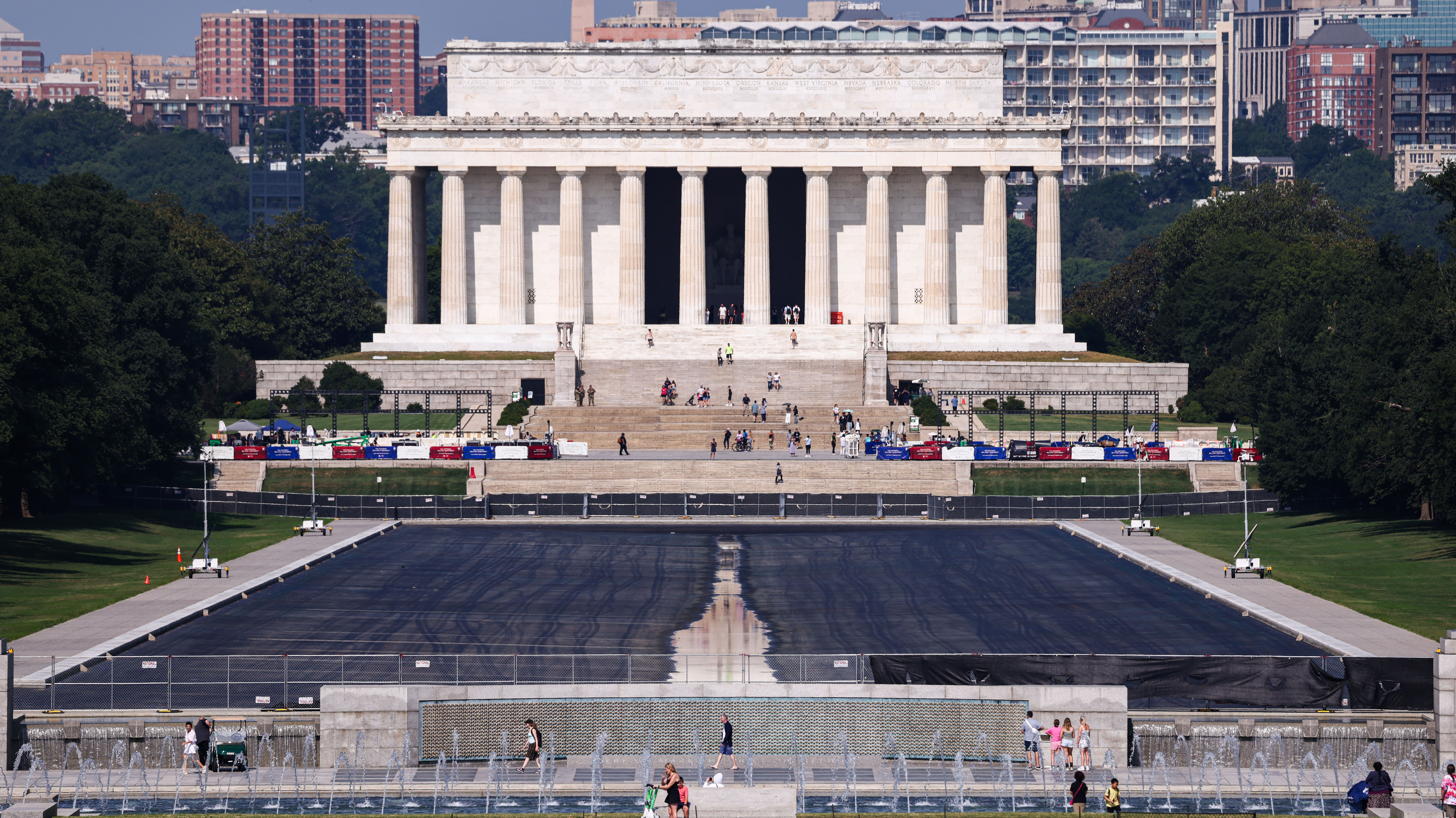
A view of the Lincoln Memorial as the Reflecting Pool is drained on the National Mall on July 22, 2026, in Washington, D.C. (Finn Gomez/Getty Images)
(WASHINGTON) — President Donald Trump acknowledged on Sunday that there was “no video or proof” of alleged vandalism to the Lincoln Memorial Reflecting Pool after weeks of claiming that damage to the pool’s surface was the deliberate work of saboteurs.
Even after acknowledging contractor error and a lack of evidence of vandalism on Sunday, the president still went back to the case against former Olympian David Hearn, whose charges prosecutors moved to drop after new evidence revealed that the section Hearn was alleged to have damaged was already in disrepair when he arrived.
Trump nonetheless again accused Hearn — who pleaded not guilty to a felony destruction of property charge in July and has maintained he didn’t damage the pool — of intentional vandalism.
“There was substantial other damage to the Reflecting Pool, also but, unfortunately, there is no video or proof, other than the damage, itself,” Trump wrote on social media on Sunday.
Trump also said that there was “some contractor error done by rushing the job for a July 4th opening.”
The president said that contractors were “working on the Pool, and it will reopen shortly,” but said that “it was a very small area of this massive Pool” which was damaged, calling it “relatively inconsequential.”
“Security cameras have been, and are being, installed,” he added.
On Monday, Hearn’s lawyers said they were “reviewing all legal remedies” for what they described as “continued harassment.”
Norm Eisen of Democracy Defenders Fund, Mary Dohrmann of Washington Litigation Group and Steve Levin of Steptoe LLP said in a statement, “The government is continuing to attack an innocent man. Our first filing in the case on July 10 included photographic evidence from before Mr. Hearn touched the Reflecting Pool proving that he caused no damage. Our other filings provided even more proof.”
“Finally, the U.S. Attorney’s own motion on July 31 admitted the damage was caused by ‘a botched installation and not vandalism,'” the statement added, describing the continued allegations as “outrageous.”
Going back as early as June, the president has insisted that the damage to the Reflecting Pool — which he ordered resurfaced so the bottom would be “American flag blue” — was purposely destroyed by criminal vandals.
“I can’t help it if somebody goes in with a knife and starts hacking it up. And we also have pictures of it,” Trump told reporters in the Oval Office on June 22. But asked if the president could share the photos, he demurred.
“No, at the right time you’ll see it. You’ll see it in court. You’ll see it in court. But all you have to do is call the Parks Department, call the Department of Interior,” Trump said at the time. But that evidence has not been released publicly.
The Justice Department moved to dismiss the case against Hearn in July, acknowledging the damage to the pool “was the result of flawed installation by the contractor.” U.S. Attorney Jeanine Pirro’s motion sought to dismiss the case without prejudice, which could still leave Hearn exposed to a future indictment.
Last week, Associate Judge Todd Edelman issued an order granting in part the Department of Justice’s request to dismiss the case. Edelman said he would wait to determine whether to grant the dismissal with prejudice after hearing more arguments from the government and Hearn’s attorneys.
Trump criticized Pirro after her office moved to dismiss the case, writing in a post to social media on Aug. 1 that while there “may have been some contractor difficulty” in the installation of a new pool liner, “the major damage was caused by VANDALS!”
“I disagree 100% with Jeanine Pirro,” Trump said in his post.
ABC News’ Alexander Mallin and Peter Charalambous contributed to this report.
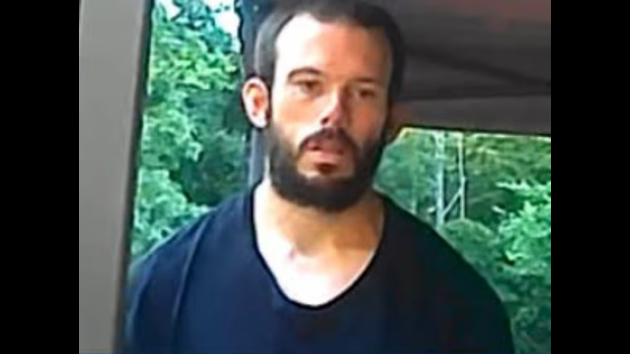
Investigators are searching for 32-year-old Thomas David Ryan, who police say is wanted in connection with his father’s death. (New York State Police)
(NEW YORK) — A manhunt continued Saturday for a suspect in upstate New York believed to have killed his father and set fire to the home to cover it up, according to law enforcement sources.
The suspect, Thomas Ryan, 32, is known to frequent the Plattsburgh area in Clinton County and is considered armed and dangerous, New York State Police said in a statement Friday.
On Thursday, investigators responded to a fire at a residence on Greenville Turnpike in Greenville, Orange County. After the fire was extinguished, the body of a dead man was found inside the residence, state police said.
A preliminary investigation revealed the fire was deliberately set and state police are investigating the death as a homicide, police said.
Ring video obtained by ABC News appears to show Ryan running from the burning house.
Law enforcement sources identified the man found dead as 70-year-old Robert Ryan. Robert Ryan retired to Orange County while the rest of the family lives on Long Island.
Investigators are also looking into Ryan’s mental health history, the sources said.
Stephanie Coiro, the victim’s daughter, told ABC News her father did not deserve to be killed.
“My Dad was a pillar in our family and every community he was a part of. He made you feel welcome, he helped when you needed, and then some. He had more character in his pinky than most in their whole bodies, he did not deserve this,” she said.
Ryan is 6 foot 2 inches and approximately 200 pounds. He was last seen in the area of Greenville Turnpike wearing black sweatpants and a black t-shirt, according to police.
Ryan is believed to be operating a 2016 gray Toyota Prius with a New York license plate, HNH-7671, police said.
The New York State Police is asking residents of the Greenville community to review any available home surveillance footage recorded from approximately 6:00 p.m. on Thursday through the overnight hours. Anyone who observes suspicious activity is urged to contact the New York State Police immediately.
Anyone with information about his whereabouts is asked to not approach him and immediately contact New York State Police Troop F Communications at (845) 344-5300 or call 911. Tips can be emailed to FBCICrimeTips@troopers.ny.gov.
The Lincoln Memorial Reflecting pool is shown partially filled on Aug. 5, 2026, in Washington, D.C. (Win McNamee/Getty Images)
(WASHINGTON) — The Lincoln Memorial Reflecting Pool was partially refilled on Friday to flush out what the National Park Service said were clogged pipes that supply water to the monument, marking the latest twist in the Trump administration’s plagued renovation project.
NPS wrote in a sign posted outside the Reflecting Pool that more than half of the 58 supply ports were “deemed nonfunctioning” due to buildup and needed to be cleared.
The posting blamed the clogged lines on “years of neglect by previous administrations,” echoing attempts by President Donald Trump to pin the Reflecting Pool’s ongoing troubles on his predecessors.
Leaks and cracks in the piping have long afflicted the pool, which was constructed in the 1920s.
President Barack Obama undertook a $35 million renovation in the 2010s, installing a treatment plant to purify water piped in from the Tidal Basin, but it did not eliminate the leaks from both the pipes and between the slabs of the pool itself.
President Trump has long fixated on the leaking pipes installed during the Obama renovation. When he announced the renovation project in April, he said the pool was “filthy dirty” and had “leaked like a sieve for many years.” The administration’s spring renovation, however, was limited to repainting the bottom of the pool and installing a new filtration system, leaving the pipes untouched.
Issues have plagued Trump’s $16 million renovation project since it was unveiled earlier this summer. In mid-June, algae blooms turned the pool a murky green and the newly-installed liner appeared to peel off.
Trump has attributed the problems to vandalism. But charges brought against several visitors accused of damaging the pool have not held up in court.
U.S. Attorney Jeanine Pirro, who originally brought the charges, moved to drop four of the cases last week, saying publicly that evidence indicated the damage was caused by a flawed renovation, not intentional sabotage.
Pirro explained her decision to dismiss the most high-profile charge — a felony indictment against former Olympian David Hearn — in a revelatory 20-page filing last Friday, calling the renovation “hasty” and “botched.” She said she brought the case before she was provided internal Department of Interior documents proving that concerns about the peeling pool liner predated the alleged vandalism.
The public about-face drew Trump’s ire, who continues to attribute the damage to vandalism, and led to questions about Pirro’s future as U.S. Attorney for the District of Columbia. Meanwhile, Hearn is seeking to dismiss the case with prejudice to ensure charges cannot be revived against him. His lawyers have not ruled out further legal action of their own.
The pool, which remains fenced off and empty alongside the sides, was drained for repairs in mid-July. Trump claimed at the time that the repairs would “fix the scars and damage that was done by the Vandals” and promised it would be “refilled and put back into service soon.”
The National Park Service posting warned on Friday that the “flushing may temporarily discolor the water as buildup in the pipes is cleaned out.” The Department of Interior provided a similar explanation when algae first discolored the pool, saying it was residual growth from reactivated supply lines.
Construction at the future site of a helipad and ballroom on the South Lawn of the White House on July 3, 2026, in Washington, D.C. (Finn Gomez/Getty Images)
(WASHINGTON) — A federal appeals court has issued a ruling blocking the construction of President Donald Trump’s $400 million White House ballroom, concluding that congressional approval is needed for the project.
This is a developing story. Please check back for updates.
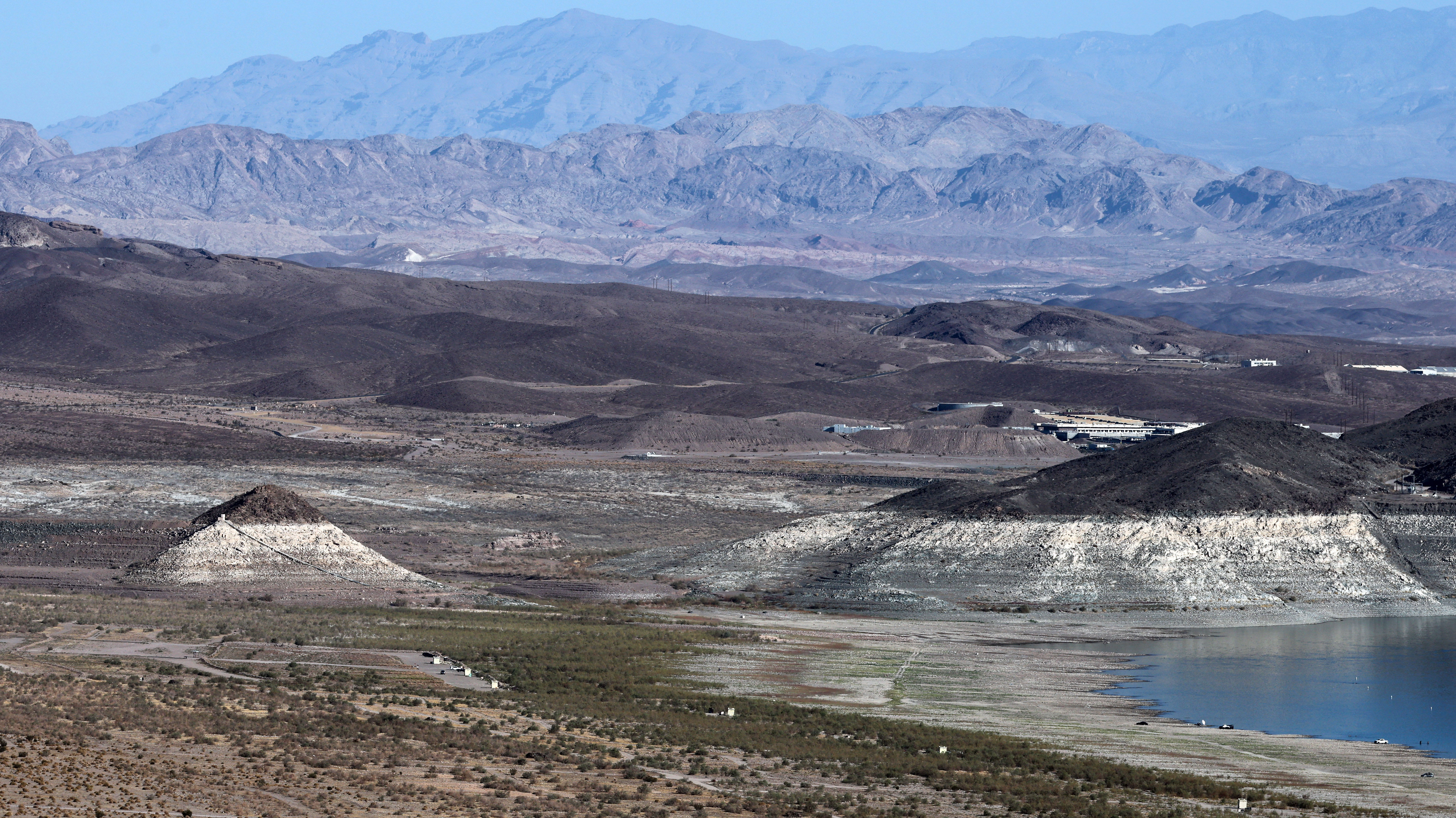
National Park Service water intake pipes that used to draw water from Lake Mead are shown going down the side of Pyramid Island, which is no longer surrounded by water, to the left of Saddle Island, which displays a white “bathtub ring” of mineral deposits left by higher water levels on the rocks on July 25, 2026, in the Lake Mead National Recreation Area, Nevada. (Ethan Miller/Getty Images)
(NEW YORK) — The water level at Lake Mead, the nation’s largest reservoir by storage capacity, hit a record low on Thursday.
Lake Mead’s pool elevation hit the new low at 1,040.50 feet, breaking the previous record of 1,040.58 feet set in July 2022, according to data published by the U.S. Bureau of Reclamation on Friday.
The reservoir, formed by the Hoover Dam on the Colorado River, is located in Nevada and Arizona and supplies water to millions of U.S. residents.
Prolonged drought conditions and exceptionally low snowpack have contributed to the significant declines in water levels at several Colorado River Basin reservoirs this year.
Elevation at the nation’s second largest reservoir, Lake Powell, was measuring at 3,521.43 feet as of Thursday, according to the Bureau of Reclamation — nearing the previous record low of 3,519.92 feet set in April 2023 and the critical level needed for the reservoir to produce hydropower. A new record low at the Utah-Arizona reservoir could also be reached this month, projections show.
The Colorado River basin is a critical system for residents in the western U.S. and Mexico. The basin provides water for up to 40 million people and hydropower to the seven basin states: Arizona, California, Colorado, Nevada, New Mexico, Utah and Wyoming, according to the Bureau of Reclamation.
Since the beginning of the year, hydrologists have been warning about the potential for water levels at Lake Mead and Lake Powell to hit critical levels as a result of record-low snowpack over the winter months.
Much of the western U.S. entered the winter already grappling with drought conditions from lack of rain. But warmer-than-normal temperatures during the winter prevented snow from accumulating, which led to a lack of snowmelt flowing into watersheds once spring came.
Tracy Mingo is accused of using disguises to evade identification so he could target employees at Circle K, Subway and Family Dollar stores throughout the Atlanta area between October 2025 and January 2026, the FBI said. (U.S. Attorney’s Office for the northern District of Georgia)
(NEW YORK) — A man who federal prosecutors in Atlanta nicknamed “master of disguise” is facing federal charges Thursday for allegedly robbing 10 businesses at gunpoint while dressed in different costumes.
Tracy Mingo is accused of using disguises to evade identification so he could target employees at Circle K, Subway and Family Dollar stores throughout the Atlanta area between October 2025 and January 2026, the FBI said.
Mingo allegedly entered each of the stores late at night — after all or nearly all customers had left — and robbed employees at gunpoint, officials said.
He allegedly donned disguises, including a construction worker, a health care professional and a security guard, according to the indictment.
Police and the FBI arrested Mingo in January when they said it appeared he was putting on the same security guard disguise used during the robbery of a Circle K store the night before. Mingo, 33, of College Park, Georgia, is now charged with 20 counts, including Hobbs Act robbery, attempted Hobbs Act robbery, brandishing a firearm during a crime of violence and possession of a firearm by a convicted felon.
“For months, Mingo allegedly used disguises in an attempt to evade identification and continue targeting innocent workers at gunpoint,” FBI Atlanta Special Agent in Charge Marlo Graham said in a statement. “He underestimated the determination of the investigators pursuing him and the strength of the partnerships that exist between the FBI and our state and local law enforcement partners.”
Laura Rojas Ortiz has been in ICE detention for more than 40 days, her family says. (Photo courtesy Laura Rojas Ortiz’s mother, Paolo)
(WASHINGTON) — A 21-year-old pregnant mother has been detained, along with her infant son, for more than a month at the family immigration detention center in Dilley, Texas, her family and an advocacy group told ABC News.
Laura Rojas Ortiz was in the process of applying for a U visa — which is for victims or witnesses of crimes — when she was detained during a check-in with Immigration and Customs Enforcement in Texas, her mother said.
“She was called to appear [at an ICE office] in Dallas,” her mother, Paola, said in Spanish. “She showed up like she always does, and they detained her.”
Paola told ABC News that her daughter turned herself in at the southern border over a year ago with her infant son and partner. The mother claims Rojas Ortiz later began the process of applying for a U visa after there was a shooting in her neighborhood and a bullet went through the walls, allegedly grazing her son.
According to Paola and a friend of Rojas Ortiz, the 21-year-old had been wearing an ankle monitor and regularly checking in with ICE before she was detained with her son as part of the Trump administration’s ongoing immigration crackdown.
Rojas Ortiz, who is five months pregnant, has been detained for more than 40 days, her family said. Her mother says Rojas Ortiz has a high-risk pregnancy and has not been seen by medical staff at Dilley.
“To this day, she hasn’t gotten an ultrasound or been seen by a specialist,” Paola told ABC News. “They haven’t done blood tests or anything.”
Immigrant advocacy groups have said that arrests and detentions of pregnant women violate an ICE directive stating that the agency should not “detain, arrest, or continue to detain individuals known to be pregnant, postpartum, or nursing” except under exceptional circumstances.
Paola said her grandson, who had been drinking only lactose-free milk, has been given whole milk at Dilley.
Paola also told ABC News that when lawmakers recently visited the facility, ICE staff moved her daughter to a “medical room,” where she was told she was going to be checked by a doctor.
“And when they left — so that the politicians wouldn’t see her pregnant — that’s when they let her out of that medical room,” Paola said.
A spokesperson for the Department of Homeland Security did not respond to a request for comment from ABC News.
Last week, Rep. Joaquin Castro, along with a group of Democratic lawmakers, visited the Dilley facility, where he said more than 500 people are currently detained. Castro said he was only allowed by staff to meet with one minor.
“There are now more children there than there were before,” Castro said at a press conference last week. “I believe that is the result of the ICE surge that we’ve seen over the last month or so. We’ve seen these raids on the street. We’ve seen families that have been torn apart on the street, brutality on the street.”
Casey Revkin, the executive director of Each Step Home, an organization that supports immigrant detainees, told ABC News that her group has been providing Rojas Ortiz with financial assistance.
“We’ve been filling Laura’s commissary account and the accounts of the families at Dilley every week. These deposits are a lifeline to families in detention,” Revkin said. “It’s heartbreaking to think of a child not eating, and we’re always so relieved when we hear that a mom was able to use the commissary support to buy her children food they can enjoy.”
Immigrant advocates, medical professionals, and lawmakers have previously raised concerns about conditions at the South Texas facility.
The top medical official at the Department of Homeland Security, which operates the nation’s migrant detention centers, has disputed any suggestion that detainees are being denied proper care.
“These allegations of illegal aliens being denied proper medical care in ICE custody are FALSE,” DHS Chief Medical Officer Dr. Sean Conley previously told ABC News in a statement. “It is both policy and longstanding practice for aliens to receive timely and appropriate medical care from the moment they enter ICE custody. This includes medical, dental, women’s health, mental health services, any needed follow-up medical appointments, as well as 24-hour emergency care.”
“This is better, more responsive healthcare than many aliens have ever received in their entire lives,” Conley’s statement said.
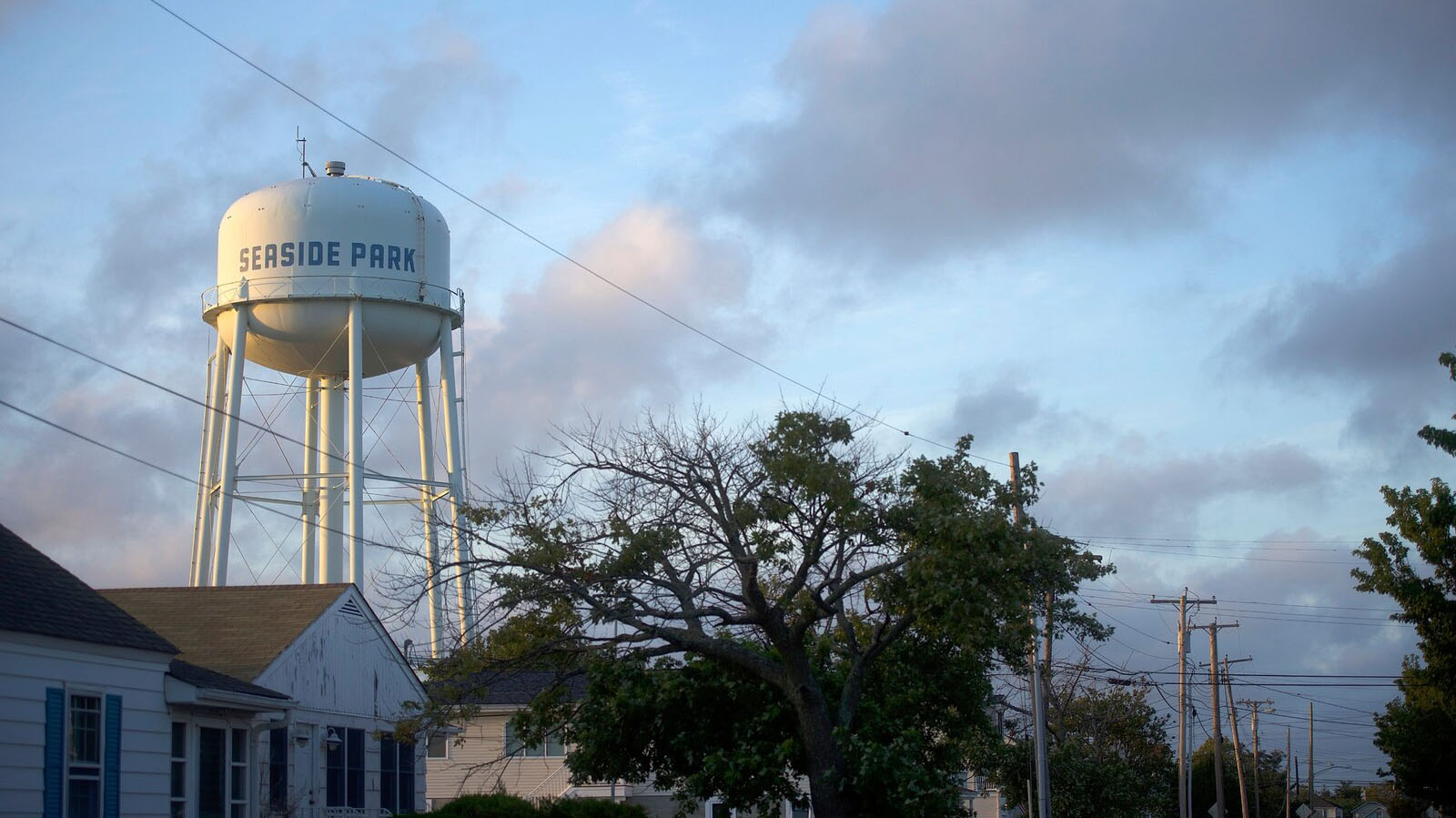
A water tower is illuminated at dusk, Sept. 17, 2016, in Seaside Park, New Jersey. (Mark Makela/Getty Images)
(NEW YORK) — Two municipal water systems in New Jersey were targeted in cyberattacks in the last week, widely thought to be the work of Iran, the state said Wednesday.
The affected utilities, which were not named, were temporarily blinded when automated systems went down. Both utilities shifted to manual operations and the state said there was no disruption to service and both systems have been “secured with strengthened access controls.”
“Our New Jersey Cybersecurity and Communications Integration Cell (NJCCIC) responded to two cyber incidents affecting New Jersey municipal water systems this past week. The NJCCIC is working directly with the affected utilities alongside our federal partners at the FBI and the Cybersecurity and Infrastructure Security Agency,” the state said Wednesday.
“The investigations found that the incidents involved vulnerable internet-exposed control systems, which temporarily limited operators’ ability to monitor or manage them remotely. In both cases, staff shifted quickly to manual operations, and there was no disruption to service. Customers had uninterrupted access to safe drinking water throughout,” the state said.
Sources told ABC News that Iran remains the prime suspect, perhaps showing how it could retaliate as President Donald Trump threatens to escalate the war.
Officials are also assessing whether this could be the work of a different state actor mimicking Iran’s tactics in a possible attempt to influence what the U.S. does next.
In Georgia, the Clayton County Water Authority briefly issued a boil-water advisory when it was targeted by hackers. Columbus Water Works said it also detected an intrusion, but drinking water was unaffected.
The recent hacks, affecting water and wastewater utilities in at least a dozen states, exploited a vulnerability in widely used utility software, sources told ABC News.
A fix has been issued, but utilities across the country that run the same software are racing to see if they were also hacked.
So far, it appears nobody has become sick, and there have been no widespread disruptions to water supplies. However, officials are still working to understand the scope of the hack and what could have happened to systems Americans depend on every day.