
Breast cancer survivor creates breast self-exam app

Breast cancer survivor creates breast self-exam app
Courtesy Jessica Baladad

(NEW YORK) — A breast cancer survivor has created a mobile app, called Feel For Your Life, to help women conduct breast self-exams.

“I found out there were three reasons women weren’t doing self exams,” Jessica Baladad, 36, told Good Morning America. “They were afraid of finding something and not knowing what to do, they weren’t comfortable with their bodies, and they didn’t know how because no one’s ever showed them or talked to them about the importance of a exam, so I thought, ‘I need to advocate for this.'”

According to the National Cancer Institute, breast cancer is one of the three most common cancers in women. The NCI estimates there will be more new cases of female breast cancer than any other cancer in 2021, with a projection of 281,550 new cases.

Breast cancer is primarily detected through a mammogram, ultrasound, MRI or biopsy, and usually involves a combination of testing to ensure an accurate diagnosis. Mammograms can often detect tumors before a lump appears, so screenings are crucial for early detection.

“As a supplementary tool for women of all ages, self-breast exams can increase women’s awareness of their body and what their breasts normally feel like,” Dr. Elizabeth Comen, breast medical oncologist at Memorial Sloan Kettering, told GMA. “As a screening strategy, it helps women identify any concerning findings such as new changes in the shape, skin, or nipple as well as any concerning lumps which may require further imaging and work-up.”

Most guidelines recommend women begin routine annual screenings once they’re 45 years old; a recommendation that can leave younger women vulnerable to missing early detection of the disease.

For those under the recommended age for screening, Comen said that self-exams can have an important role in picking up breast abnormalities and prompt patients to seek out further care from their doctor.

“This is particularly true for women under the age of 40, for whom there’s no routine breast cancer imaging screening recommendations,” she said. “Since most of these women aren’t indicated to have mammograms, many of these cancers are actually detected by women themselves, through self-breast exams.”

Baladad has done regular self-exams ever since she had surgery to remove a benign fibroadenoma tumor in her breast when she was 18 years old, she said.

“I had a pain in my breast and I ran to the bathroom real quick, right before class, and I noticed there was a lump and it scared me,” she recalled, adding that she immediately went to health services after class and it was from there that doctors discovered the tumor. “It was that experience that got me into the habit of doing self-breast exams throughout the rest of adulthood.”

A personal connection to breast cancer

Breast cancer runs in Baladad’s family on her father’s side, with her great-grandmother, grandmother, five grand-aunts, and two aunts all having lived with the disease, she said. Fifteen years later after that initial scare, Baladad was diagnosed with breast cancer herself.

In March 2018, Baladad said she didn’t do her routine self-exam that month because she was scheduled to see her nurse practitioner around then.

“I thought, ‘Who better than my practitioner to do a clinical breast exam?’ and when I saw her, she didn’t say anything about a lump to me so I thought I was good to go,” she said.

When Baladad did a self-exam in the shower just two weeks after her appointment, however, she found a lump in her left breast.

“I just started freaking out like ‘This is it, it’s cancer,'” Baladad said. “But then I thought, ‘Wait. I’m working out in the gym almost every day. I take care of myself. I eat well. I just saw my doctor, surely she would’ve said something about this.'”

After calming herself down, Baladad went on with her life. But when an acquaintance posted about shaving their head due to having breast cancer, Baladad said she decided to get her own lump checked out in August 2018.

“She was a year older than me,” she said. “If she’s young enough to get breast cancer then I’m young enough to get breast cancer.”

This time, Baladad went to a different doctor and had a mammogram, ultrasound and a biopsy. The lump was confirmed as breast cancer, making her one of the millions of women in the United States living with the disease at the time.

“I found out later that my original practitioner didn’t tell me about the lump in my breast because she thought I was too young to have breast cancer and she thought I’d be fine,” Baladad, who was 33 when diagnosed, said. “A self-exam saved my life.”

According to the Centers for Disease Control and Prevention, most breast cancers are found in women 50 and older, though age is not the ultimate determining factor. In 2018, CDC data found that there were 184 new cases of breast cancer in women ages 20-24; 1,173 in ages 25-29; and 3,300 in ages 30-34, with the number of cases continuing to increase thereafter.

“Most breast cancers are identified in women over age 50. That being said, younger women can get breast cancer too,” Comen said. “Any woman, or any patient for that matter, who has an inkling that they need a second opinion, should get a second opinion. Intuition and trusting your doctor are critical for a therapeutic doctor-patient relationship.”

Fortunately, Baladad’s cancer has been in remission since May 2019 — but the road there wasn’t easy.

“I did 16 rounds of chemo, a double mastectomy, 24 rounds of radiation, a hysterectomy, and back in February I had a 10-hour flap reconstruction procedure done where they took fat, tissue, and blood vessels from my abdomen and placed them in my chest,” she said. “I have phase two of that surgery in October.”

From a social media project to app launch

Baladad originally created Feel For Your Life as a social media project during her cancer journey, where she would share her story, as well as cancer statistics, and encourage women to perform self-exams and get checked out by a doctor.

“One night I was in the shower literally watching my life go down the drain as I watched my hair come off my head and the idea just kind of came to me,” she said. “I felt like I was called to do it.”

The idea to build an app came last year after Breast Cancer Awareness Month in October. Baladad said she “wanted to reach more women” and thought the way to do so was through an app.

Over the following months, she researched how to build an app, the features she wanted it to have, and consulted tech-savvy people who helped her with the process. It officially launched on Apple and Android app stores in September 2021.

“I just thought about [the app] from a woman’s experience, and I wanted it to be really intuitive for how a woman may want to use it,” she said. “I’m not a coder or developer, I’m an advocate. I look at the app as an advocacy tool that women can use to communicate with their physicians. I’m not a doctor and I’m not trying to be a doctor — my mission is to help women advocate for their breast health.”

The information on the app is sourced from the CDC, the National Breast Cancer Foundation, and Johns Hopkins Medicine. There are instructions on how and when to do a self-exam and information on genetic testing and counseling, types of breast screenings, risk-reducing surgical procedures, breast reconstruction options and more.

Other features of the app include the ability to set reminders for self-exams and a space to track any changes. There’s also a section where users can share their advocacy wins with Baladad, plus a community feature where users can talk to others about what they’re doing.

“I also have reminders throughout the app that if you find anything, please talk to your doctor,” Baladad said.

Baladad hopes to one day include a telehealth feature within the app, where users can connect with medical professionals in real time.

“If a woman is doing a self-exam and she finds a lump, she may get scared or have anxiety,” she said. “I want to be able to connect her with a physician and they can put her on the right track to help her [with] getting the answers that she needs.”

Copyright © 2021, ABC Audio. All rights reserved.

Court orders FEC to rule on complaints against NRA’s alleged campaign coordination scheme

Court orders FEC to rule on complaints against NRA’s alleged campaign coordination scheme
DNY59/iStock

(WASHINGTON) — A federal court on Thursday ordered the Federal Election Commission to rule on pending complaints that allege the National Rifle Association used shell entities to illegally coordinate campaign spending with federal candidates, including with the 2016 presidential campaign of Donald Trump.

In 2019, the Washington-based nonpartisan watchdog group Campaign Legal Center Action sued the FEC on behalf of the Giffords Law Center to Prevent Gun Violence, a gun-control advocacy group led by former Democratic Arizona Rep. Gabby Giffords, after the federal agency failed to act on multiple complaints that accused the gun rights group of perpetrating what plaintiffs called “an elaborate scheme … to unlawfully coordinate with candidates it supports for federal office.”

The U.S. District Court for the District of Columbia on Thursday ordered the FEC to take action on the complaints within 30 days.

In the 2019 suit, the plaintiffs alleged that the NRA used a “network of shell corporations” to circumvent contribution limits and coordinate approximately $35 million in ad spending with the campaigns of at least seven Republican candidates over the last three election cycles, “thereby making millions of dollars of illegal, unreported, and excessive in-kind contributions.”

The complaint alleged that while the NRA deliberately circumvented FEC rules that prohibit vendor coordination between campaigns and outside groups, the federal agency responsible for oversight of election spending — whose members frequently deadlock on matters along partisan lines — had not taken any enforcement action.

“The failure of the FEC to enforce our campaign finance laws has resulted in an explosion of shady campaign spending,” said Trevor Potter, the president of Campaign Legal Center Action CLC and a former FEC chairman. “The FEC had the chance to do the right thing by taking action against the NRA for this blatant spending coordination, but failed to do so.”

“This is a baseless effort engineered by anti-gun groups who want to silence the voices of our members,” NRA spokesperson Lars Dalseide told ABC News in a statement. “We welcome the FEC’s review so we can move on from this frivolous distraction.”

A spokesperson for the FEC declined to comment on the litigation.

FEC rules prohibit outside groups from making coordinated expenditures with campaigns, stipulating that candidate campaigns should not be “materially involved” in the production and placement of ads purchased by the super PAC arm or the politically active nonprofit arm of the NRA. Vendors that are shared by the NRA and federal campaigns are also prohibited from sharing information in support of each other.

“Over the last several years and across election cycles, the NRA has been brazenly flouting campaign finance law by illegally funneling money to candidates while claiming to remain independent,” said David Pucino, senior staff attorney at the Giffords Law Center to Prevent Gun Violence.

“It is clear that the NRA will continue to violate the law until someone stops them,” Pucino said. “Today’s decision ordering the FEC to take action is a resounding win to keep dark money out of our politics.”

Copyright © 2021, ABC Audio. All rights reserved.

New COVID-19 pills may keep recently diagnosed patients out of hospital, company says

New COVID-19 pills may keep recently diagnosed patients out of hospital, company says
(File photo) – Pixelimage/iStock

(NEW YORK) — Taking a course of a particular antiviral pill over five days, shortly after COVID-19 diagnosis, may slash the risk of being hospitalized or dying of the virus by 50%, according to preliminary results announced by pharmaceutical companies Merck and Ridgeback.

If this pill — called molnupiravir — is ultimately authorized by the Food and Drug Administration, it would be the first antiviral pill people can take at home to reduce their risk of winding up in the hospital from the coronavirus. The medication would require a prescription and likely be for people with mild or moderate symptoms of COVID-19.

“It’s really exciting,” Dr. Carlos Del Rio, the executive associate dean and a global health expert at the Emory School of Medicine, said.

Right now, most COVID-19 patients are sent home and told to monitor their symptoms. Having an effective pill to offer them would “make a difference,” Del Rio added.

Merck Thursday morning announced the results of an ongoing Phase 3 study are so compelling that an independent monitoring board recommended, in consultation with the FDA, ending the trial early so the companies can swiftly seek authorization. The full set of data would become available to the public at that time.

Other companies, including Pfizer and Roche, are also working on antiviral pills that could become available soon. Merck plans to seek emergency authorization in the U.S. “as soon as possible” so that it can start mass distributing its antiviral pill.

The company has started producing the pills with the goal of having 10 million courses of the medication by the end of the year. The U.S. has already asked for 1.7 million doses, at a cost of over $1 billion.

Currently, doctors have some treatments to help those who are already sick with the virus, but those treatments are cumbersome, as they’re typically administered via intravenous infusion and usually reserved for patients who are hospitalized or have a high risk of becoming so.

“What we really need is the Tamiflu, if you will, for COVID-19,” Dr. Todd Ellerin, the director of infectious diseases at South Shore Health and an ABC News Med Unit contributor, said. “It’s possible that molnupiravir could be the agent.”

Molnupiravir is an antiviral drug, meaning it works by slowing the replication of the virus that causes COVID-19.

In an early analysis of 775 volunteers in a late-stage clinical trial, people who tested positive for COVID-19 within the last five days were split into two groups. The first group got the drug and the second got a placebo pill.

About 14% of people who got the placebo were hospitalized or died, compared to just over 7% of those who got the real drug.

“More tools and treatments are urgently needed to fight the COVID-19 pandemic, which has become a leading cause of death and continues to profoundly affect patients, families, and societies and strain health care systems all around the world,” Robert M. Davis, the chief executive officer and president of Merck, said.

“I think this is exciting,” Ellerin said, “because we need an oral antiviral. We desperately need an oral antiviral that can be given early in the course.”

Copyright © 2021, ABC Audio. All rights reserved.

Infrastructure vote postponed despite Pelosi’s efforts to push forward: ‘We are not there yet’

Infrastructure vote postponed despite Pelosi’s efforts to push forward: ‘We are not there yet’
f11photo/iStock

(WASHINGTON) — House Democrats scrapped plans on Thursday to vote on the Senate’s bipartisan infrastructure agreement after leadership and the White House failed to bring progressives and moderates together behind a path forward for President Joe Biden’s broader agenda.

“The President is grateful to Speaker Pelosi and Leader Schumer for their extraordinary leadership, and to Members from across the Democratic Caucus who have worked so hard the past few days to try to reach an agreement on how to proceed on the Infrastructure Bill and the Build Back Better plan,” White House press secretary Jen Psaki said in a statement Thursday night. “A great deal of progress has been made this week, and we are closer to an agreement than ever. But we are not there yet, and so, we will need some additional time to finish the work, starting tomorrow morning first thing.”

“While Democrats do have some differences, we share common goals of creating good union jobs, building a clean energy future, cutting taxes for working families and small businesses, helping to give those families breathing room on basic expenses — and doing it without adding to the deficit, by making those at the top pay their fair share,” Psaki added.

House Speaker Nancy Pelosi, D-Calif., left the Capitol just after midnight, and told Rachel Scott that progressives and moderates are closer to reaching an agreement on the size of their social policy package than it appeared earlier in the week.

“We’re not trillions of dollars apart,” Pelosi said.

Asked about the vote on the Senate-approved infrastructure bill that didn’t take place Thursday, Pelosi said, “There will be a vote today,” in what appeared to be a reference to the legislative calendar.

The decision to delay the vote came after Pelosi insisted Thursday morning that she planned to go ahead with a vote on the bipartisan infrastructure bill — despite progressive Democrats vowing to defeat it.

“We’re on a path to win. I don’t want to even consider any options other than that,” Pelosi told reporters at her weekly news conference. “We go in it to win it.”

Earlier, as she arrived on Capitol Hill, pressed by a reporter that the bill is facing “insurmountable opposition at the moment,” Pelosi responded that it’s “our plan” to bring the bill to vote Thursday, her self-imposed deadline.

“Hour by hour,” she responded. “You’re moment by moment. I’m hour-by-hour.”

“You cannot tire. You cannot concede. This is the fun part,” Pelosi said later at her news conference. “Our best interest is served by passing this bill today.”

Yet her comments suggested the House was in a holding pattern, with no firm decision on whether to hold or cancel the vote.

“We are proceeding in a very positive direction,” Pelosi said brightly, even though the bill has not been scheduled for the House floor and her top lieutenants have said publicly that it lacks the votes to pass.

Meanwhile, the White House wasn’t ruling out Biden heading to Capitol Hill Thursday to make a last-minute push to House Democrats just before the big vote.

While lawmakers were expected to agree separately on a government funding resolution with hours to spare Thursday, the outcome of the House vote on the $1.2 trillion bipartisan infrastructure bill — central to Biden’s agenda — was still in serious doubt.

Pelosi spent the afternoon meeting with various factions of her caucus. Even as progressives left the meeting vowing to withhold support for the infrastructure bill absent progress on Democrats’ larger agenda, two groups of moderates left meetings with Pelosi predicting a vote later Thursday evening.

Progressive Democrats have all but guaranteed that they will defeat the bipartisan bill on the floor — to the embarrassment of Pelosi who vowed to pass the bill this week — absent any breakthroughs on the larger policy spending package. Those breakthroughs seem unlikely as negotiations between the White House and Democratic Sens. Kyrsten Sinema and Joe Manchin, who oppose the package’s $3.5 trillion price tag, have fallen flat.

Roughly half of the nearly 100-member progressive caucus — at least 50 members, urged on by Sen. Bernie Sanders — have vowed to vote no on the bipartisan bill, effectively holding it hostage until a larger infrastructure bill passes via the reconciliation process.

While progressives bashed Manchin and Sinema over their objections to the larger package, Pelosi praised Manchin at her news conference, calling the West Virginia Democrat “a good member of Congress” and said negotiations are focused on “substance” rather than “rhetoric” or “dollars.”

At midday, Manchin told reporters his topline number for the larger bill — that he’s conveyed to Biden — is $1.5 trillion, something bound to harden progressive opposition and put the House vote in even more jeopardy.

Attempting to also sway progressives, Pelosi said Thursday members should “remove all doubt” that there will not be a reconciliation bill following a bipartisan vote on Thursday.

“We will have a reconciliation bill. That is for sure. today the question is about. We are proceeding in a very positive way to bring up the bill, to bring up the “BIF” (the bipartisan infrastructure bill), and to do so in a way that can win. And so far so good for today, it’s going in a positive direction,” she said.

Pelosi, who met with her leadership team ahead of news conference, hinted that getting a larger human infrastructure and climate policy bill is vital to her and her legacy.

“I just told members of my leadership that the reconciliation bill was a culmination of my service in Congress ’cause it was about the children,” she said.

But progressives appear to be holding firm in opposition.

Congressional Progressive Caucus Chair Pramila Jayapal, D-Wash., reiterated on Thursday that progressives are in the “same place” and will not vote to pass the bipartisan infrastructure bill unless there is agreement with the moderate Democratic senators on a larger social spending package.

“We will not be able to vote for the infrastructure bill until the reconciliation bill has passed,” Jayapal told reporters after a meeting with Pelosi.

“It’s not about trusting the speaker, it’s not about trusting the president, it’s really about the vote as an ironclad assurance from the Senate,” she added, referring to Manchin and Sinema.

At her midafternoon White House briefing, press secretary Jen Psaki told reporters, “We’re working towards winning a vote tonight. We have several hours left in the day.”

She added, “We know that compromise is inevitable. We’ve also seen that play out over the last couple of days. And right now, we’re clearly in the thick of it.

Pelosi told ABC News’ George Stephanopoulos on “This Week” that she’s “never bringing a bill to the floor that doesn’t have the votes” — raising questions of whether she’ll stop the vote in the 11th hour.

Asked on Sunday by Stephanopoulos if she was confident that progressive members would vote yes, Pelosi answered, “Well, let me just say we’re going to pass the bill this week.”

Biden stepped out of the White House Wednesday night, rubbing elbows at the congressional game with his former colleagues, appearing to be in good spirits, amid the tense legislative negotiations, while Pelosi appeared to do some last-minute lobbying on her cell phone, in a show of the stakes of the infrastructure bill passing this week — as opposed to later.

The $3.5 trillion bill progressives insist the House passes before or at the same time as the $1.2 trillion package includes significant new investments in health care, child care, higher education, workforce training, and paid family and medical leave which would include 12 weeks paid family and medical leave for most working Americans.

Copyright © 2021, ABC Audio. All rights reserved.

All the details of the Super Bowl 56 halftime show

All the details of the Super Bowl 56 halftime show
EricVega/iStock

(NEW YORK) — Dr. Dre, Snoop Dogg, Eminem, Mary J. Blige and Kendrick Lamar will perform together for the first time when they headline the Pepsi Super Bowl 56 Halftime Show on Feb. 13, 2022 in the Los Angeles area.

These superstars have collectively earned 43 Grammys and have created 22 No. 1 Billboard albums.

For the second year in a row, Jay-Z’s Roc Nation is serving as the strategic entertainment advisor of the Super Bowl halftime show.

“On February 13, 2022, at the Super Bowl LVI in Inglewood, CA, in the new SoFi Stadium, Dr. Dre, a musical visionary from Compton, Snoop Dogg, an icon from Long Beach and Kendrick Lamar, a young musical pioneer in his own right, also from Compton, will take center field for a performance of a lifetime,” Jay-Z said in a statement. “They will be joined by the lyrical genius, Eminem and the timeless Queen, Mary J. Blige. This is the Pepsi Super Bowl Halftime Show. This is history in the making.”

Dr. Dre added: “The opportunity to perform at the Super Bowl Halftime show, and to do it in my own backyard, will be one of the biggest thrills of my career. I’m grateful to Jay-Z, Roc Nation, the NFL, and Pepsi as well as Snoop Dogg, Eminem, Mary J. Blige and Kendrick Lamar for joining me in what will be an unforgettable cultural moment.”

Pepsi and the NFL are also supporting education in LA with the launch next fall of Regional School #1, a magnet high school in South Los Angeles. The high school is based on the USC Jimmy Iovine and Andre Young Academy, founded by Dre and producer Jimmy Iovine.

Copyright © 2021, ABC Audio. All rights reserved.

Scoreboard roundup — 9/30/21

Scoreboard roundup — 9/30/21
iStock

(NEW YORK) — Here are the scores from Thursday’s sports events:

MAJOR LEAGUE BASEBALL

AMERICAN LEAGUE
Texas 7, LA Angels 6
Baltimore 6, Boston 2
Houston 3, Tampa Bay 2
NY Yankees 6, Toronto 2
Detroit 10, Minnesota 7
Cleveland 6, Kansas City 1

NATIONAL LEAGUE
St. Louis 4, Milwaukee 3
Chi Cubs 9, Pittsburgh 0
Atlanta 5, Philadelphia 3
NY Mets 12, Miami 3
LA Dodgers 8, San Diego 3
San Francisco 5, Arizona 4

NATIONAL HOCKEY LEAGUE PRESEASON
Nashville 6, Tampa Bay 2
Boston 4, Philadelphia 2
Los Angeles 3, Vegas 1
Detroit 6, Buffalo 2
Colorado 6, Minnesota 4
San Jose 3, Anaheim 1

NATIONAL FOOTBALL LEAGUE
Cincinnati 24 Jacksonville 21

WOMEN’S NATIONAL BASKETBALL ASSOCIATION PLAYOFFS
Connecticut 79, Chicago 68
Phoenix 117, Las Vegas 91

Copyright © 2021, ABC Audio. All rights reserved.

The Police’s fourth album, ‘Ghost in the Machine,’ turns 40 on Saturday

The Police’s fourth album, ‘Ghost in the Machine,’ turns 40 on Saturday
A&M Records

This Saturday, October 2, marks the 40th anniversary of the release of The Police‘s fourth studio album, Ghost in the Machine.

Released on frontman Sting‘s 30th birthday, the album became the new-wave band’s third consecutive chart-topping studio effort in the U.K. and continued the group’s ascending U.S. popularity, peaking at #2 on the Billboard 200.

Ghost in the Machine featured two top-20 singles in the U.S., “Every Little Thing She Does Is Magic” and “Spirits in the Material,” which reached #3 and #11, respectively. In the U.K., “Every Little Thing” topped the singles chart and “Spirits” peaked at #12, while another single, “Invisible Sun,” reached #2.

Other memorable tunes on the album include “Demolition Man,” “Too Much Information,” “One World (Not Three)” and “Secret Journey.”

While Caribbean sounds, especially reggae, had always been part of The Police’s music, Ghost in the Machine was the band’s first album to mainly be recorded there — specifically at Beatles producer George Martin‘s AIR Studios on the island of Montserrat.

Reflecting on The Police’s success at the time and making the album on Montserrat, guitarist Andy Summers tells ABC Audio, “It was an amazing period, no question about it,” adding, “[T]his is the sort of rock star dream. You know, ‘Hey, we’re on an island in the Caribbean. We are the s*** now.'”

Summers says one his favorite songs on the album was “Spirits in the Material World.”

“I like to play that one ’cause it’s got a great rhythm,” he notes.

The Police soon returned to Montserrat to record their fifth and final album, the chart-topping Synchronicity. In 1989, however, AIR Studios closed after being damaged by a hurricane.

Ghost in the Machine, meanwhile, went on to sell over 3 million copies in the U.S.

Here’s the full track list:

“Spirits in the Material World”
“Every Little Thing She Does Is Magic”
“Invisible Sun”
“Hungry for You (J’aurais toujours faim de toi)”
“Demolition Man”
“Too Much Information”
“Rehumanize Yourself”
“One World (Not Three)”
“Omegaman”
“Secret Journey”
“Darkness”

Copyright © 2021, ABC Audio. All rights reserved.
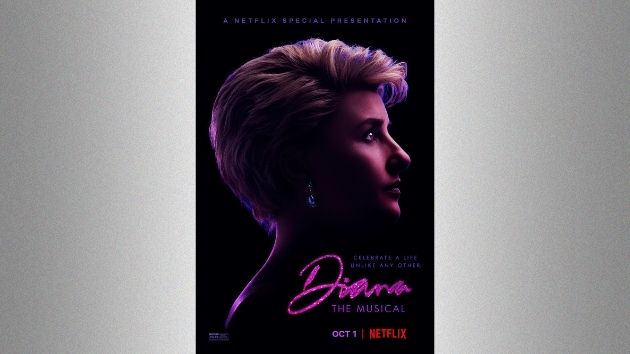
‘Diana: The Musical’ stars explain why storyline makes for “fantastic drama”

‘Diana: The Musical’ stars explain why storyline makes for “fantastic drama”
Netflix

If you just can’t get enough of Royal Family drama, Diana: The Musical hits Netflix today. It’s a filmed version of the stage play which opens on Broadway in November. Jeanna de Waal plays Princess Diana and she offered up her opinion on why America is so in love with these stories.

“They’re the ultimate celebrities, right?” she rhetorically tells ABC Audio.

“America loves our celebrities and these celebrities actually live in castles and actually have titles and actually used to be, you know, kings and queens who have power,”  the actress continues. “And there’s something insane and thrilling about that.”

Something else that de Waal finds thrilling is the fact that the musical is heading straight to on-screen viewers., which she says “democratizes the process of experiencing theater.”

“We bypassed some of the tight bottleneck, harsh New York critics, and just say hey world, what do you think? And I think it’s a fantastic way to engage a much wider crowd in theater,” she explains. 

While Princess Diana’s story has been told in various ways, including on Netflix’s The Crown, it’s the “nuances” that de Waal says are not that well known, but “make for fantastic drama.”

“There’s a lot I think people don’t know between Charles, Diana, and Camilla, to be specific, is really what our story is about,” she shares. 

So, will the royals be watching? Roe Hartrampf, who plays Prince Charles, hopes so. 

“We hope that they realize that we’re approaching this from a real human storytelling standpoint and we are big fans of everybody involved.”

Copyright © 2021, ABC Audio. All rights reserved.

Bodycam video shows moments before Chicago police officer attempted to tackle Black woman

Bodycam video shows moments before Chicago police officer attempted to tackle Black woman
iStock/Marcus Lindstrom

Newly released police body cam footage shows the moments before a white police officer attempted to tackle a Black woman walking her dog in a closed park, allegedly unprovoked.

Nikkita Brown said that on Aug. 28 the officer drove up to her as she was walking her dog in the Lincoln Park neighborhood of Chicago and told her to leave the area immediately. She said that she was walking out of the park, adhering to his instructions, when the incident occurred.

The video shows that the officer identified himself and showed his badge at Brown’s request. It also shows that Brown repeatedly asked the maskless officer to remain within six feet of her, citing concerns over potential exposure to COVID-19.

“Please don’t. Please respect my space. It’s COVID. Six feet,” Brown said.

“Respect your space? I’m about to put handcuffs on you,” the officer replied.

Brown said she consistently told him, “I am leaving” and “I am walking away,” as she actively walked toward the exit, but he got out of his car and continued to follow her.

The officer got out of his car and told her, “You can go to jail,” according to a video taken by Brown who recorded part of the encounter.

Brown’s attorney identified the officer as Bruce Dyker through his badge.

A Chicago Police Department spokesperson told ABC News earlier this month, “The officer in question has been placed on desk duty as the COPA investigates the video.”

At one point during the argument with Brown — while she had her phone out to record — Dyker ran toward her and attempted to tackle her.

The physical struggle between the two lasted for more than a minute and Dyker repeatedly threatened to arrest Brown. In the end, no arrest was made.

Brown told Good Morning America earlier this month that she believes she was targeted because she’s Black and said she hopes that her speaking out will stop others from being targeted.

“I walked past four kids that were behind me … white males. As soon as I saw the car pull up, I looked behind me to see if he said anything to the kids. He didn’t,” Brown said.

The bodycam video was released last Thursday by the Civilian Office of Police Accountability (COPA), the group investigating the incident.

A COPA spokesperson told ABC News that the investigation is ongoing and once it concludes, COPA will send recommendations to the Chicago Police Superintendent David Brown to review.

“Ultimately. we want him fired, given this incident and his horrible disciplinary record,” Brown’s attorney, Keenan Saulter, told ABC News.

Dyker has 24 allegations of misconduct filed against him, three of which resulted in discipline.


Copyright © 2021, ABC Audio. All rights reserved.

Mick Jagger says late Rolling Stones drummer Charlie Watts worked on some new songs by the band

Mick Jagger says late Rolling Stones drummer Charlie Watts worked on some new songs by the band
Carrie Davenport/Redferns

With The Rolling Stones back on tour and the band preparing to release a deluxe Tattoo You reissue next month, Mick Jagger chatted with Apple Music‘s Zane Lowe about numerous topics, including the group moving forward following drummer Charlie Watts‘ recent death.

In the interview, Jagger reveals that before Watts’ passing, he’d recorded parts for new songs that likely will appear on The Stones’ next album, noting that some of the recordings were done while they were working on the reissue’s bonus tracks.

“I did some stuff with him in the studio very recently, while we were doing [these] Tattoo You things,” Mick reports. “We did some…work on Tattoo You. Charlie did some work on…just a few fills and stuff like that. And then when we started messing around with some other things…It seems like only yesterday that I was in the studio with Charlie, joshing around. It’s just so weird and then very sad.”

Reflecting on recording new Stones material in the future, Jagger laments, “[W]ithout Charlie being there, it’s going to be very difficult.”

Having said that, Mick maintains that he and his band mates all want to keep going.

“[T]he thing about the Rolling Stones, I think, throughout their career has been their resilience in the face of adversity,” Jagger noted. “We’ve had adversity, and this was probably one of the most difficult ones. And so we booked the tour [that was] supposed to be played last year. We couldn’t do it for obvious reasons, because of the pandemic. And I just thought, and I think everyone in the band thought that we should just carry on.”

He added, “I’m glad we’re doing it. I know Charlie wanted us to do it. I think the audience wants to do it.”

Copyright © 2021, ABC Audio. All rights reserved.