(WASHINGTON) — U.S. diplomats at the embassy in Kabul warned in a classified memo to Secretary of State Antony Blinken and the department’s leadership last month that the Afghan government was at risk of collapse as the Taliban offensive swept across the country, a source familiar with the memo confirmed to ABC News.
The dissent cable, as such memos are called at the agency, was sent on July 13 and was immediately brought to Blinken’s attention, the source said.
State Department spokesperson Ned Price declined to comment on the cable, saying dissent cables are “strictly between the Department’s leadership and the authors of the dissent messages,” but said Blinken reads and responds to each and values their use.
It’s another example of how U.S. officials had been warning senior Biden administration officials about the risks of the president’s decision to withdraw from Afghanistan, although even diplomats on the ground had no idea the collapse could come so quickly.
The cable, which was first reported by The Wall Street Journal, called on the Biden administration to begin an airlift operation immediately for Afghans who helped the U.S., according to the source.
It also urged the U.S. government to use stronger language to condemn the Taliban’s atrocities as they swept across the country and gained control of provinces, per the source — something the embassy, its top diplomat Ambassador Ross Wilson and eventually the department started doing around that time.
Blinken read the cable and responded to it, according to the source, who said the “thoughts of the drafters reflected much of the thinking at the department.” The day after the cable was sent, the administration announced Operation Allies Refuge to begin relocating Afghans who assisted the U.S. military and diplomatic missions and their families to the U.S.
But that operation did not begin until late July, and before Kabul fell on Sunday, it had only brought under 2,000 Afghans to the U.S. — those who had been approved for special immigrant visas and already undergone security vetting. In total, some 20,000 Afghans who worked for the U.S. have applied for these visas, according to the State Department, for themselves and tens of thousands more family members.
The administration has been criticized by U.S. lawmakers of both parties and veterans groups, among others, for not beginning that operation sooner, moving Afghans to the U.S. quickly enough or securing agreements with safe countries to host Afghans who have not yet passed security vetting.
“There was a concern that if we moved too quickly that it would undermine the confidence of the Afghan government and it would lead to a collapse even faster,” Deputy Secretary of State Wendy Sherman told ABC News Wednesday.
“I appreciate that in hindsight people are saying, ‘Why didn’t you do this? Why didn’t you do that?'” she added. “The focus now today is getting all those SIVs out.”
(BATON ROUGE, La.) — In Louisiana, the COVID-19 crisis is leaving hospitals teetering on the edge of collapse.
The state currently has the nation’s highest case rate, and hospitalization levels — more than 3,000 at last count — are stretching the health system to a breaking point with patients overwhelming intensive care units and staffing in short supply.
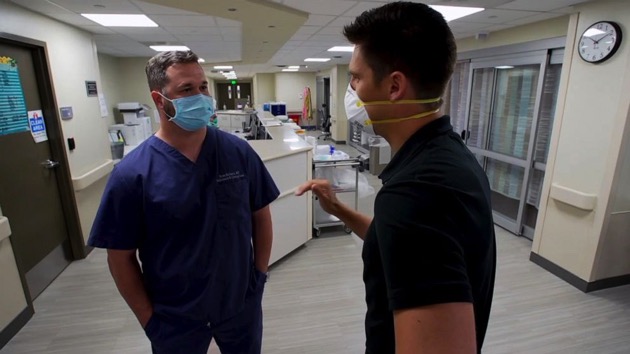
“Our volume, over the past couple of weeks, has been outrageously high,” Dr. Jon Michael Cuba, service line chairman for emergency medicine at Ochsner Health in Baton Rouge, told ABC News. “There has been a ton, a ton of COVID. We are built to deal with this, but with this surge, there is a lack of nurses, a lack of beds and it’s hard to get enough physicians to see the onslaught of patients that are coming in.”
In the last month alone, hospital admissions have surged by more than 340%, amidst a steady rise in daily cases over the last seven weeks.
The situation in Louisiana, driven by the highly infectious delta variant, is mirrored in other Southern states where vaccination rates are relatively low.
In Florida, more patients are currently hospitalized than at any other point in the pandemic, and in Alabama, there no remaining ICU beds available statewide.
In Louisiana, less than 39% of the state’s population is fully vaccinated. Nearly all of those currently hospitalized with COVID-9 in the state — 91% — are unvaccinated, according to state data.
“We’re seeing people come in, they’re getting sicker more quickly,” Dr. Ryan Richard, a pulmonary and critical care physician with the Baton Rouge General Hospital told ABC News, adding that “the vast majority of people are unvaccinated.”
Hospitals in crisis mode
Hospitals across the state are struggling to keep up with the rapidly changing pandemic. There is simply not enough staff to deal with the influx of COVID-19 patients, in addition to the non-COVID-19 patients, doctors said, thus greatly straining the healthcare system
“We are seeing crazy outrageous numbers of patients,” Cuba explained.
At the beginning of July, there were 10 COVID-19 patients receiving care at Baton Rouge General Hospital. As of Wednesday, there were more than 200 COVID-19 patients.
The hospital is now at a breaking point, Richard said. “We do have people calling in to try to get to this hospital that we’re unable to accept,” he said, adding that they have had to send patients to other facilities because they simply do not have the means to care for them. “That’s hard on us, because we want to take everybody that we possibly can and do everything we can, but we don’t have the right means. It’s very frustrating.”
With so many patients needing care, and critical care at that, hospitals have been forced to create makeshift ICUs.
Baton Rouge General opened its eighth COVID-19 ward this week, including one unit in the hospital’s burn unit. Other hospitals in the state have been transforming endoscopy suites, or other medical rooms into untraditional places to care for patients.
In addition, the wait time in the emergency rooms is getting increasingly longer, with critically ill patients forced to stand by for care that was once immediate.
“We are getting crushed in our emergency rooms, our hospitals are filled to the brim,” said Cuba. “If somebody is coming in today with a heart attack, there is a wait. Something we aren’t accustomed to, or comfortable with, but it’s just overwhelming and a cold hard fact of the capacity in the hospitals are starting to get to the bursting point.”
Patients getting younger, and sicker
With more than 80% of Americans 65 and older fully vaccinated, the burden of disease has shifted largely to younger Americans. As of Aug. 7, Americans between the ages of 18-49 make up more than 40% of the patients currently hospitalized with COVID-19, across the country.
Many of the patients who are coming in tend to be younger and sicker, Dr. Abdul Khan, pulmonary critical care physician in the COVID ICU at Ochsner Medical Center in New Orleans noted. He recalled a 40-year-old father, who before being placed on a ventilator, told staff that he was the primary caretaker of a 10 year-old son.
There has also been a staggering increase in younger patients being hospitalized.
“The other thing that we didn’t see in the beginning, is parents visiting their kids,” Khan explained. “The thought of having to visit my kids in the hospital is mind numbing. And that’s what we are seeing.”
Even more concerning, added Khan, is the dreadful reality that “we are having to have conversations with people’s parents about end of life care and things like that. These aren’t kids, but they are 20 years old and 30 years old, and the people that are at their bedsides are their parents.”
One of the patients at Baton Rouge General is 39-year-old disaster relief worker Jessica Cooper, of Baton Rouge, who has been hospitalized with the virus for over 12 days. Cooper, who was unvaccinated, told ABC News, she had wanted to wait for the shot until after she completed an upcoming surgery.
Cooper told ABC News that the infection had depleted her, with every breath a battle. At her worst, she had even written out a goodbye text to her 11-year-old daughter, in case she did not make it out of the hospital.
“I had prayed, made my peace with God. And started typing a text message to her, that way if something happened, and I didn’t make it, she knew I loved her,” Cooper said, adding that this virus is “ageless, it’s colorless — what you can do to protect yourself, it’s not even about you, it’s to protect others.”
Richard noted that people who are coming into the hospital appear to be getting sicker, more quickly, and while in the first three waves of COVID-19, the medical staff felt that it could predict, to some degree, who would get sick, and which people were most vulnerable to the disease, it is no longer the case.
“We’re fooled everyday for what we thought and we’re seeing a lot of young people with no medical problems that were significant or it,” he said. “I thought we had kind of turned the corner and on our way out of this thing… but the delta has truly thrown us a curveball.”
Hospital workers overworked and overwhelmed
The nationwide shortage of nurses has also left frontline workers stretching their teams responsibilities, in an effort to meet all patients’ needs.
“The amount of nurses is never enough,” said Khan. “We are redeploying physicians. That’s how sick the patients are, and how fast they are coming in. If we have 5, 10, 15 extra nurses, there will be a job for them. That’s how many people are coming to the hospital.”
Teams are also ultimately facing the burden of the physical and emotional toll yet another wave has placed on the staff.
“We are already stressed in our job with the extra hours covering the surge, and then when you see your patients, and worried about what’s in the lobby, worried about who is in the ambulance, am I going to be able to get this heart attack out to the right place, will I find a place for the patient to land? I worry a lot about our teams,” Cuba concluded.
(KABUL, Afghanistan) — Chaos has enveloped Kabul after Afghanistan’s government’s collapsed and the Taliban seized control, all but ending America’s 20-year campaign as it began: under Taliban rule.
As the crisis intensifies, images from Kabul Thursday show Taliban fighters forcefully patrolling streets where Afghan men and women were protesting. Meanwhile, Pentagon officials said their focus remains on maintaining the airport perimeter and increasing the number evacuees out of Kabul.
President Joe Biden returned to Washington from Camp David on Wednesday and sat down with ABC News’ George Stephanopoulos for an exclusive one-on-one interview at the White House, the president’s first interview since the withdrawal from Afghanistan.
The Pentagon said that 6,000 U.S. troops have been deployed to the country’s capital as the military races to evacuate people. Despite criticism, the Biden administration is sticking by its decision to withdraw troops from the country, though Biden told Stephanopoulos troops might stay beyond the original Aug. 31 date if it takes longer to get all Americans out of the country.
Here are some key developments. All times Eastern:
Aug 20, 1:25 am
US evacuated about 3,000 people from Kabul on Thursday
The U.S. evacuated approximately 3,000 people from the airport in Kabul on Thursday as thousands clamor to get out of the country in the wake of the Taliban taking over the government.
The White House confirmed the latest number of evacuees early Friday, among them nearly 350 U.S. citizens. The others on the 12 C-17 flights were family members of U.S. citizens, special immigration visa applicants and their families and vulnerable Afghans, a White House official said.
The official said 9,000 people have been evacuated since Aug. 14 and 14,000 since the end of July.
Not included in those totals were 11 charter flights facilitated by the U.S. military, the official said.
President Joe Biden is scheduled to discuss the evacuations from Afghanistan in an address Friday afternoon.
Aug 19, 8:13 pm
Consular surge will only be as high as 40 people total: Sources
The State Department announced earlier this week that it is “surging” staff to the international airport in Kabul to assist with the massive efforts to evacuate as many as 15,000 U.S. citizens and tens of thousands of Afghans who helped the U.S. mission in Afghanistan.
But the total number of consular officials who will help process people will only be as high as 40 people in total, according to two sources familiar with the plans — raising questions about whether that is enough staff to process the tens of thousands left to evacuate.
The State Department declined to confirm how many consular officials would be based at Kabul airport, but referred questions to spokesperson Ned Price’s comments earlier on Thursday.
“We’re always going to be evaluating what we could be doing differently, what we could be doing more effectively. If it turns out that we need additional consular capacity in Kabul, we won’t hesitate to do that, but right now we are confident that … with the additional reinforcements, we’ll have what we need,” he told reporters.
In comparison, there are more than 5,200 U.S. troops on the ground, securing the airport and evacuating Americans and Afghans on military cargo aircraft. The military is able to airlift between 5,000 and 9,000 people per day, Gen. Hank Taylor told reporters Thursday, but they have not had that many evacuees ready to go.
Crowds are unable to access the airport, blocked by massive congestion and Taliban fighters beating back crowds. U.S. forces have also deployed tear gas and fired into the air to disperse crowds. Over the last 24 hours, Taylor said, only 2,000 passengers were taken out.
(NEW YORK) — Rhashonna Cosby’s two children fared very differently during their months of remote learning. Her son thrived working independently, going on to graduate from high school in the spring of 2020. Her 17-year-old daughter, meanwhile, struggled academically without face-to-face instruction, before transferring this past spring to a school where she could go on-site a few days each week.
“She definitely needs in-person,” Cosby, of Linden, New Jersey, told ABC News. “That’s ideal for her because she doesn’t get distracted. She can focus.”
As students head back for a third school year impacted by the pandemic, COVID-19 continues to complicate the education landscape and the impact of remote learning has yet to be fully assessed. As achievement gaps have emerged, many districts are planning to return fully in person learning in hopes of restoring traditional learning, even as safety concerns mount around the highly contagious delta variant.
But remote learning will remain a part of students’ lives for the foreseeable future, experts say, with tens of thousands of students in quarantine just weeks into the school year for some. How schools approach remote learning is varied: While some view it as a Zoom extension of the classroom, others are taking novel and holistic approaches to try to improve the quality of instruction.
For now, in-person learning is the only option for students like Cosby’s daughter, a rising senior, as New Jersey’s governor was among several leaders to require full-time, in-person K-12 instruction this school year. Other large school districts, like New York City, are starting the year without a remote option.
In recent days, however, the New Jersey state education department has issued guidance that “strongly encouraged” schools to provide remote instruction for students during quarantine, NorthJersey.com reported.
In Philadelphia, Maritza Guridy had the option of a fully remote school, though she decided to have her four children in person “as long as it’s safe,” she told ABC News. Once they were able to return to the classroom last school year, her children did better with face-to-face instruction, she said. While working as the secretary for her children’s school, Guridy heard from many parents struggling with remote learning last year.
“I got many phone calls with families telling me that they had to choose between working or being able to help their child, so there are children that didn’t even log on the entire school year, as a result, because their families could not afford to be at home,” said Guridy, who now works as the Northeast Regional Organizer for the education advocacy group National Parents Union. “It was just so many things that I personally experienced, saw, heard about from parents calling the school. It was a lot.”
Achievement gap in math and English
While some students may do well learning remotely, others have fallen disproportionately behind.
A spring report by the think tank Rand Corp. found that fully remote students learned less in mathematics and English language arts and were more likely to be absent than those learning in person. In a new poll from the Kaiser Family Foundation, nearly 40% of parents of school-age children said their child fell behind academically during the pandemic — with Hispanic parents and households with incomes less than $40,000 a year most likely to report that.
Even for those opting for in-person classes, virtual learning will be inevitable this school year, especially in areas of low vaccination, Daniel Domenech, executive director of AASA, the School Superintendents Association, told ABC News.
Case in point: Just a week into the school year, over 10,000 students and staff in one Florida school district were isolating or quarantining due to COVID-19 cases or exposure.
And over 20,000 students in Mississippi, the state with the lowest vaccination rate, were in quarantine after the first week of school.
“Remote learning is not going to disappear,” Domenech said. “It’s going to continue as a major supplement to help us catch up with the learning loss.”
Deliberate about who goes remote
Amid rising worries over the delta variant, Kenny Rodrequez, the superintendent of the Grandview C-4 School District in Grandview, Missouri, has seen a growing interest in remote learning ahead of the first day of school on Aug. 23 — from about 5% of the district’s roughly 4,000 students last month to around 10 to 12%, he told ABC News last week.
“Certainly the variant has many people very concerned,” he said, though the district is encouraging in-person learning if possible.
“We’re trying to do it a little bit more deliberately this time, a little bit more in the student’s best educational interests,” he said. “If your kid was virtual last year and they were not successful, we’re going to have a real, personal conversation with you about, maybe this is not in their best interest.”
For parents concerned about safety, the district has been communicating about its COVID-19 protocols, such as requiring students and staff to wear masks regardless of vaccination status, the superintendent said.
As for remote instruction, the district took a few more lessons to heart. For one, teaching both in-person and remote at the same time was too challenging, so it is looking to have educators who just focus on remote learning. Additionally, teaching kindergarten in particular was too difficult via a screen, so the grade will only be in person this school year, Rodrequez said.
Dedicated virtual staff and a targeted student approach have factored into other school districts’ plans. Georgia’s Bibb County School District marked the debut this month of its virtual school, VIP Academy — an investment in remote learning that was in the works pre-pandemic. About 2% of the 21,000-person student body is enrolled in the school, which serves grades 4 through 12, school officials said.
Students had to apply to the school “to make sure that they are a quality candidate to be successful in virtual learning,” Rose Powell, chief information officer for the school district, told ABC News. “It’s not for everyone.”
In the event students attending school in-person in the district aren’t able to show up — such as due to COVID-19 quarantine or isolation, another illness or a family matter — they can shift virtually at their district school. Classrooms are also equipped with audio and video technology, so teachers can record and upload lessons into the district’s learning management system.
“[This] provides our teachers and our students and our parents access like they’ve never had before,” Powell said.
Communication key in unclear environment
One key component during months of pandemic learning has been, simply, communication.
“You cannot communicate enough, because people do not necessarily know what’s going on,” said Rodrequez, who started posting weekly videos online for families. “I think for us, just trying to be as open and honest as possible and communicate everything that’s going on that we know, knowing that sometimes we’re not gonna know what’s gonna happen — some things will change around us and we’ll have to adapt to that as well.”
That captures what many parents are feeling as the school year starts amid high COVID-19 transmission across most of the United States.
Debra Garrett of Troy, New York, is hoping her four children, who are between the ages of 7 and 11, can safely stay in school after they largely learned remotely last year.
“This year was a struggle, but I think a lot of the sacrifices fell on me as a parent, and of course other parents can vouch for that as well,” said Garrett, who left her job working for the state’s retirement system to be home with her children. She also was in school virtually herself, recently graduating with a bachelor’s in health sciences.
Her children did better academically and socially with face-to-face instruction, especially her 10-year-old, she said. After he went back to the classroom a few days a week to receive speech therapy services, he improved so much he currently doesn’t need them this upcoming school year, she said.
As cases continue to rise in her area, though, Garrett is getting more anxious about both the prospects of staying fully in-person once her children go back to their charter school on Aug. 23, and what it means for their safety.
“I’m nervous, but I really want them back in the building,” she said. “I know that they learn better when they’re there. I also need a sense of normalcy.”
(NEW YORK) — The NFL is trying to tackle the issue of COVID-19 vaccination, but some players are calling time out.
Miami Dolphins tight end Adam Shaheen, whose Twitter location says “somewhere without a mask,” told reporters earlier this month that he won’t allow the league to “strong-arm” him into getting the vaccine and criticized the NFL for “taking away freedoms of unvaccinated guys.”
And former NFL quarterback Derek Anderson slammed the league’s strict rules on Twitter, saying he would “retire tomorrow” if he was still playing.
“This is total b——- @nfl. So if a vaccinated player contracts which they will ,no consequences? That’s ridiculous … Let them make their own decisions,” he wrote.
The tensions the league is grappling with, including personal liberty and safety concerns, appear to be a microcosm of the debates playing out around the country about COVID-19 vaccination, mandates and other rules from employers.
“Every conversation that goes along blue and red, [Democrat] versus Republican, finds its way into the NFL,” said LZ Granderson, an ABC News contributor, sports journalist and longtime columnist for ESPN. “The former president politicized the virus, politicized the vaccination, and continues to politicize the conversation in general, but he’s not alone. You have governors doing the same thing. You have members of Congress doing the same thing, you have local officials doing the same thing.”
A spokesperson for the NFL told ABC News on Thursday that the “current player vaccination rate is around 92 percent.” Although the league did not provide breakdowns by team, some are sharing the vaccination rate of their players like the Atlanta Falcons, who announced this week that the team is fully vaccinated.
And while the league is overwhelmingly vaccinated, some players say they felt pressured to get a vaccine that, while deemed safe and effective, is not fully approved. Hesitance for a number of reasons has been a lingering issue in the U.S. that officials and the private sector have been trying to chip away at with a combination of incentives and penalties — efforts met with both praise and protest.
Under the agreement between the league and Players Association reached last month, players who choose not to get vaccinated will be required to wear masks at all facilities, undergo routine COVID testing and are at a risk of forfeiting games. Per the protocols, if a team has an outbreak due to unvaccinated players and games cannot be rescheduled during the 18-week season, the team would have to forfeit and be assessed a loss, which could impact playoff seedings.
Per the new guidelines, unvaccinated players who break COVID-19 protocols will be fined $14,650 for each incident, according to ESPN.
Vaccinated reluctantly
Some players admitted that they only got vaccinated due to the NFL’s COVID protocols, but they were not happy about it.
Tennessee Titans quarterback Ryan Tannehill said that he got vaccinated because “they’re going to try and make your life miserable” if you don’t.
“I think it’s a personal decision for each of us,” he told reporters last month. “They are trying to force our hands and ultimately have forced a lot of hands by the protocols.”
Seattle Seahawks cornerback D.J. Reed tweeted last month that he didn’t want to get vaccinated but gave in because the NFL and the NFLPA “made getting the vaccine a competitive advantage” and he did not want to “hinder” his teammates.
J.C. Tretter, president of the NFL Players Association, said in a statement that although “we believe the vaccine is both safe and effective, players have the choice whether to take it or not. Unlike among the NFL coaching ranks or in other businesses, the vaccine is not mandated for NFL players.”
According to Dr. Anthony Fauci, the nation’s top infectious disease expert and chief medical adviser to President Joe Biden, although there are some breakthrough cases among vaccinated people because “no vaccine is 100 percent effective,” but those cases are “mostly mild or without symptoms,” whereas the unvaccinated “are the ones that are vulnerable to getting severe illness that might lead to hospitalizations and in some cases death.”
“We have 100 million people in this country who are eligible to be vaccinated who are not getting vaccinated. We are seeing an outbreak of the unvaccinated,” Fauci told ABC News’ “This Week” earlier this month. “… the unvaccinated, by not being vaccinated, are allowing the propagation and the spread of the outbreak which ultimately impacts everybody.”
On the fence
The NFL said earlier this month that 90% of its players are either fully vaccinated or have had at least one dose of the COVID-19 vaccine, but some have remained non committal.
Baltimore Ravens quarterback Lamar Jackson, who has contracted COVID-19 twice, said that while he is considering getting the vaccine, it’s a “personal decision” and one that he’s consulting with his doctors about.
Buffalo Bills wide receiver Cole Beasley, one of the most outspoken critics of the vaccine policy, told reporters in July that he is “not anti or pro-vax,” but is “pro-choice” and that he believes it is too soon to know if the vaccine, which does not have full FDA approval yet, is safe.
“Without having all the proper information a player can feel misguided and unsure about a very personal choice. It makes a player feel unprotected,” he said.
According to the CDC, “Serious side effects that could cause a long-term health problem are extremely unlikely following any vaccination, including COVID-19 vaccination.”
In addition, Fauci said last week that he is hopeful that the FDA will fully approve the COVID-19 vaccine by the end of the month.
The NFL’s vaccination policy for coaches is even stricter.
Tier 1 and 2 employees — including coaches, trainers, assistant coaches and operations employees — who don’t get vaccinated would not be allowed to interact with players in person, the NFL announced in June. And barring a religious or medical reason for opting out, would lose their Tier 1 status and would not be able to have face-to-face contact with the players.
The protocols already led to two coaches parting ways with the NFL over these vaccination guidelines, according to ESPN.
Threading the needle
Asked about the lingering hesitancy to get vaccinated, Dr. Fauci lamented the “unfortunate” political divide over the vaccine.
“There’s this ideological divide that we have where people for reasons that are not based on public health principles who do not want to get vaccinated — libertarian feelings, feelings of not wanting to be told what to do,” Fauci told “GMA3” last Thursday. “It’s so unfortunate because we’re dealing with a public health crisis and you address a public health crisis by public health principles. Ideology, divisiveness has no place in this and yet in many areas it seems to dominate.”
Granderson said that by not making vaccines a requirement, the NFL is trying to “thread the needle” on a divisive issue.
“Trying to please both sides means you don’t please either, you know, you end up with two disappointing sizes, sides. So what the NFL needs to do is take a stance, heavily rooted in science and move on,” he added.
Some teams like the New Orleans Saints are requiring fans to show proof of vaccination or a negative COVID test before attending games. Meanwhile, the Las Vegas Raiders became the first team to mandate vaccination for fans, setting up vaccination sites at the stadium and allowing entry to the newly vaccinated if they wear masks.
(NEW YORK) — As students across the country head back to school, a top priority for many educators and parents is how to help students who have experienced “learning loss” during the COVID-19 pandemic.
With kids leaning remotely since early 2020, “learning loss” — or gaps in understanding and skill knowledge that prevent academic progress — has been a natural worry for many parents.
But instead of dwelling on how much students may have fallen behind during their time away from school, some educators are focusing on meeting students where they are rather than focusing on what they’ve “lost.”
“Sometimes the phrase ‘learning loss’ doesn’t value and uphold all of the hard work that teachers, students and families did over the last year and a half to really try to stay the course and really keep their students learning,” Juliana Urtubey, the Council of Chief State School Officers’ 2021 national teacher of the year, told Good Morning America.
“One of the things that I like to tell families and my students is that we’re going to be OK. We’re going to work really hard to catch all the kids up,” Urtubey said. “But what we want to focus on is the future and how to meet all the needs of all of our students instead of working, fixating on the pressure of catching up.”
Urtubey, who is a special education teacher at Kermit Booker Elementary School in Las Vegas, said that even if the COVID-19 pandemic didn’t exist, teachers still assess where students stand academically each year. But if learning loss is the main focus this school year, Urtubey said it could put a lot of pressure on students.
“I think that one of the biggest things we can do is really be critical about how we think about this concept and push back on the idea that our students are going to have to be running the whole year to catch up,” said Urtubey.
Urtubey said that in-person learning will provide a support system for students as they return to school and teachers will meet their needs to help them stay engaged and help them get to where they need to be academically.
“We’re going to work really hard to make sure all of our students have the foundational knowledge they need to be able to apply critical thinking,” Urtubey added. “Each student benefits and thrives in different ways, which is why it’s so important for us to have community within our learning spaces no matter what grade you’re in. Students do better when they know that they’re part of a community and that there’s lots of support for them.”
Ahead of the upcoming school year, Urtubey shared some advice for parents to help their kids feel supported as they transition back to in-person learning.
Co-write a letter with your child to the teacher
Urtubey said co-writing a letter with your child to their teacher is a good way for teachers to get to know students, but also a good way for students to introduce themselves to their teacher. Students can talk about anything from their family to their favorite activities. It can also include what they struggle with in school or what they’re excited to learn. Parents can also include their concerns in the letter.
“As a teacher, I loved getting these letters at the beginning of the year,” Urtubey said. “They made me feel like I already knew the child and I already had a first step in terms of building this kind of trust with families.”
Do activities that are both academic and of interest to your child
If your child expresses an interest in certain subjects like art or reading, Urtubey said it’s good to push them to explore the topics more. For example, if a child is interested in space, Urtubey said a trip to the library can help get your child reading books about space.
“You’re carving out time at home for them to read, so that learning is enjoyable, so that learning is self-guided and self-motivated and that the child has some kind of way to share the learning at home,” Urtubey said. “I think that especially during this last year, we have to make sure that all students feel joy in what they’re learning.”
Visit school before the year begins
For big transition years, like kindergarten or the start of middle school, one way to help prepare students for the upcoming year is to visit the school before the year begins. That way students know where they’re having lunch, where their classroom is, who their teacher is and more.
“A lot of schools will already schedule this,” said Urtubey. “I know that this is really helpful in reducing stress before the first days of school.”
Help students practice introductory questions
Urtubey said when she taught fifth grade students, one way to help them prepare for middle school was spend time with them on things like switching classes or practicing opening a locker. Another way they prepared for the school year was to practice social skills to make new friends.
Urtubey suggested practicing different conversations for different scenarios with your student to help them take the stress or anxiety out of forming friendships or meeting new people.
Encourage deeper conversations about school
At the end of each day, Urtubey suggested asking your child questions beyond “How was your day?” since that doesn’t necessarily start a conversation with them about what happened during school.
Instead, Urtubey suggested questions such as, “Tell me about a time that you felt really happy today,” “Tell me about a time you felt challenged today,” or “Tell me a bit about what you learned today,” will help foster more discussions about what they’re feeling.
For Thomas Rhett, his latest hit, “Country Again,” represents coming back to his roots in more ways than one.
The former ACM Entertainer of the Year confesses the inspiration came after a particularly difficult period, when he was “freaking out,” not knowing what to do since he couldn’t tour or make music, about a month after the beginning of the COVID-19 pandemic.
“My wife [Lauren] was like, ‘Honey, I think you have to just realize that you can’t do this right now. So maybe why don’t you just take a step back and live some life and then go try to write again?'” TR recalls. “And so I literally didn’t write a song for almost two months, which is the longest I’ve ever gone, I think, in my whole life.”
“And when I came back, the very first song I wrote was ‘Country Again,'” he reveals.
That also unleashed the floodgates for a double album, which begins with Country Again: Side A.
“Songs just kind of started flowing out of me,” TR explains. “And I think the writers were kind of on board with this vision.”
“And I think for the first time in a long time,” he continues, “I just was like, ‘What do I want to say? What do I want to write? If this had nothing to do with anything in the world, what would I say if nobody was in here?’ And these are some of the songs that just kind of flowed out of that.”
“And it was a really fun way to, just to be creative and write songs,” he adds.
The Country Again: Side A collection also includes his previous #1, “What’s Your Country Song,” with the new track, “Redneck Be Like,” presumably offering a glimpse into Side B.
“Move” arrives 22 years after Santana and Thomas teamed up for the massively successful hit “Smooth,” and at a New York City press event Wednesday, Rob explained via Zoom that the reason it took so long for Carlos and him to reunite for a follow-up tune was that it “had to happen naturally,” like “Smooth” did.
Thomas revealed that “Move” came about while he was working on material with the New York-based rock group American Authors, who also contributed to the track.
“[A]t the tail end of that session, [they sent] me a track and [said]…’See if you can do something with this,'” Rob recalled. “And…it just hit me immediately. The chorus came out, I sent it to Carlos immediately…Carlos is like, ‘Oh, this is beautiful. I want to do this. This sounds great.'”
Carlos, who attended the press gathering in person, shared that “Move” “has the two components that I love, being in a physical body — spirituality and sensuality.”
He added, “I feel very grateful and very confident that…Rob and I [get to] reach the four corners of the world again and make a lot of families happy.”
Santana and Thomas also will reach lots of people when they hit the stage together Saturday in New York City’s Central Park at the star-studded We Love NYC: The Homecoming Concert.
Musing about the show and its theme, celebrating New York’s revival in the COVID pandemic’s wake, Carlos said, “I feel that New Yorkers need…a spiritual boost. Like a dog shakes water…we have to ward off and shake off fear and darkness and…anger.”
Kandi Burruss had success as a member of Xscape and star of Real Housewives of Atlanta, and now she’s displaying her versatility with acting and producing her first Broadway play.
Last year she made her acting debut in the role of Roselyn Perry in season three of Lena Waithe’s The Chi, set on the south side of Chicago.
“I wanted people to see me in this light of being an actress and really feeling like I have embodied the character,” she tells Hello Beautiful. “I’m not just a reality TV star who got a break.”
The 45-year-old entertainer admits she was nervous, especially for her first sex scene.
“I was already trying to prepare my mind for it,” she recalls, “but, it’s like, I have to go through the motions with somebody that was a complete stranger.”
The Grammy-winning composer and singer also had to face jealousy from her husband, Todd Tucker.
“He was like a little weird about it,” she remembers. “He was supportive, but it was a little awkward for him. I’m not gonna lie about that, but he was still supportive. It wasn’t like, he was like, ‘No, you can’t do this show.’ He had to deal with it in his head.”
Now Kandi is focusing on her debut as a Broadway producer for Thoughts of a Colored Man which opens October 31, starring Dyllón Burnside from Pose.
“Broadway has been known as ‘The Great White Way’ for a long time in past history,” she says. “To have a show like this with all of us, you know, being a part of it, championing it. It has to be a success. It’ll be a win for not just us, but for the whole culture.”
In the new film Flag Day, opening today in select theaters, Sean Penn directs his daughter Dylan in her first starring role. They play a father and a daughter with a complicated relationship, and he tells ABC Audio it’s something he wanted to make for a while, though she was hesitant.
“If I was going to make the movie…the only way I was going to really know how to make it was with her,” Sean, 61, says, adding, “She was reluctant to do it…So we had to sit back and be patient.”
And patient he was, because Dylan reveals that it took her about 15 years to finally agree to the gig.
“The first time he brought it to my attention, I was pretty young, I was maybe 15, 16,” the now 30-year-old actress explains.
“I never wanted to act…And then I just didn’t really feel like I was ready to take on a role like that,” she continued. “I read the book and I hadn’t grown up. So I think, 15 years later, I had grown up a bit.”
So, what’s it like working opposite, and being directed by, her superstar dad?
“Overwhelming,” Dylan admits. “I was nervous…like a lot of people would be nervous to work in a professional environment with their family the first time. You don’t know how that’s going to play out.”
As for Sean’s take, he says working with his daughter made his job a little easier.
“What you’re trying to do is express a feeling of a relationship. And I think that we were definitely able to use the emotional shorthand that we had from growing up together,” the Oscar winner says. “It’s a coming of age story where I’m the one coming of age.”