(LOUISVILLE) — A 16-year-old boy was killed and two other children were hurt in a shooting at a school bus stop in Louisville, Kentucky, Wednesday morning, according to local police.
The three children were waiting for a bus when they were shot in a drive-by at about 6:30 a.m. local time, police said.
One of the injured kids, a 14-year-old boy, is in the hospital with non-life-threatening injuries, police said. The other survivor, a 14-year-old girl, was treated for minor injuries at the scene, police said.
“I had to hold the wound of a little boy and tell him he was going to be OK.” Neighbors enraged over the number of shootings affecting our kids. This one at a bus stop. One student telling me, it’s not a good day to have anxiety. @WHAS11pic.twitter.com/yvvEHCX9jO
Police are looking for the occupants of a grey Jeep they say was in the area at the time of the shooting.
Alert: We’re looking for this vehicle in the area of this morning’s homicide. We need to talk to any occupants who may have information on this.
Grey Jeep license plate with Illinois plate BD91644. Call 574-LMPD. You can remain anonymous. We need your help #LMPD#Louisvillepic.twitter.com/j690CrF2CF
The three victims have not been identified but Jefferson County Public Schools Superintendent Marty Pollio said they are students at Eastern High School.
The school bus arrived shortly after the “traumatic” slaying, Pollio said, and a bus stop for middle schoolers was close by.
LMPD and JCPS officials are at the scene. Waiting for their response on a bus stop shooting that sent three kids to the hospital around 6:30 this morning. @WHAS11pic.twitter.com/fndpPRI9t4
This is one of our toughest days at @JCPSKY. We have suffered another devastating loss to senseless gun violence. Our hearts go out to the family of the Eastern HS student whose life was ended. We are providing support for the students.
This marked Louisville’s 145th homicide of the year, officials said.
Louisville Metropolitan Police Chief Erika Shields called it a “heinous crime.”
Shields said the city is tackling gun violence and “getting violent felons off the street daily.” However, she added, “the availability of illegal guns is just so widespread.”
Our hearts break this morning with the news of the senseless violence targeting children waiting for a school bus. This is unacceptable. Report those responsible. Contact us (263-6000) or @LMPD (574-LMPD). The safety of our community depends on ALL of us working together. pic.twitter.com/zXPvqcc2oq
(NEW YORK) — In the two weeks sinceGabbyPetitowentmissing while on a cross-country trip with her boyfriend, her story has gained national attention.
Petito’s case has made news headlines and gone viral online, with people everywhere trying to find clues and solve the case themselves. Adding to the intrigue in Petito’s case is the largesocial media footprint sheleftbehind as she documented her travels cross-country with her boyfriend, Brian Laundrie.
Officials confirmed Tuesday that a body found over the weekend near Grand Teton National Park belongs to 22-year-old Petito, but the national fascination with the case continues, as authorities search for Laundrie, currently a person of interest in the case.
It is a fascination that families of other missing people, particularly women of color, say they wish was turned to their own loved ones’ cases.
“Everybody who is missing loved ones is saying, ‘Why wasn’t my case done that like?'” said Paula Cosey Hill. “It’s very hard because it takes you back to when your child went missing.”
Cosey Hill’s then-16-year-old daughter, Shemika Cosey, disappeared without a trace near her home in St. Louis, Missouri, just a few days after Christmas in 2008.
She described watching the search for Petito unfold as an “emotional rollercoaster,” since she has both grieved for the Petito family and reflected on what did not happen in the aftermath of her daughter’s disappearance.
“All the questions that weren’t answered with my daughter, I’m checking to see if they’re doing in that case,” said Cosey Hill. “When you report your loved one missing, you hear, ‘We’ll try to get someone on this,’ and they act as if they don’t have enough manpower to do it.”
“But as you can see, they can get enough manpower to do it,” she said. “They just choose which cases they want to do.”
Natalie Wilson, co-founder of the Black and Missing Foundation, Inc., an online search agency that helps search specifically for missing Black and Hispanic children, said minority children who go missing are often classified as runaways, which can lead to less media attention and less help from law enforcement.
Minority adults who go missing are often stereotyped as being involved in crime or violence, poverty and addiction, which takes attention away from their cases too, Wilson said.
“There’s frustration. There’s sadness,” she said of the people she works with who are searching for their missing loved ones. “We are meeting families at the worst points in their lives. They are frustrated because they’re not getting help from law enforcement or they’re frustrated because they’re not getting media coverage.”
“I think oftentimes the media and even law enforcement can show that [minority] lives are not as important,” Wilson said. “We have to remember that these are mothers and daughters and fathers and children that are missing and they are definitely needed and valued in our communities.”
The historic tendency for national attention to gloss over cases of missing people of color was dubbed “missing white woman syndrome” by Gwen Ifill, the late PBS anchor.
Many years later, the term coined by Ifill still applies in the U.S., according to Wilson, who noted the effort to publicize missing persons of color is not meant to divert resources, but to simply “equal the playing field.”
“We’ve been sounding the alarm for close to 14 years that this is an issue and we need to have that conversation, all of us, as to how we can change the narrative,” she said. “We’re not surprised by the publicity or the reaction [to Petito’s disappearance] and we are also hoping and working to keep our missing in the forefront as well.”
Maricris Drouaillet, of Riverside, California, said she too was not surprised by the reaction to Petito’s disappearance, but said it has brought up emotions of “hurt and heartbreak.”
Drouaillet and her family have spent nearly nine months searching for her sister, Maya Millete, a mother of three who disappeared from her home in Chula Vista, California, in January. Millete’s husband was named a person of interest in her disappearance in July.
“Even before Gabby’s case was out there, I felt that maybe if we were white or with money or had names, we probably would have gotten a different approach, more help and support,” said Drouaillet, whose family moved to the U.S. from the Philippines when Millete was 12. “That’s how I feel. That hurts a lot.”
Drouaillet said she and her family have led searches on their own since January, and have created a website and social media accounts to organize resources and call attention to their sister’s missing person case.
“Every missing person deserves to be in a headline,” she said. “We have to put awareness out there and seek help from the public, because a lot of times the public are the ones who help solve the case.”
While 21% of Indigenous people, who are mostly girls, remained missing for 30 days or longer, only 11% of white people remained missing that long, according to the report.
The report also found that 30% of Indigenous missing and murdered people made the news, compared to 51% of white people. When coverage was done on Indigenous victims, it was more likely to “contain violent language, portray the victim in a negative light, and provide less information,” according to the report.
Cara Boyle Chambers, director of the division of victim services in Wyoming’s Attorney General office, said the Petito case has echoed the report’s findings.
“It highlighted exactly what we had pointed out, the disproportionate, very positive response to Gabby’s story versus a lot of other families who don’t have that attention and don’t have that closure that came, in the scheme of things, relatively quickly,” Boyle Chambers said. “We have families that are 20, 30 years of no answers and no remains to bury and no sense of closure.”
Boyle Chambers — who pointed out that two men went missing in June in the same area where Petito was last seen — said officials in Wyoming have worked since the report’s release to improve the collection of missing persons and criminal justice data.
The Petito case has also confirmed the importance of galvanizing media attention, including social media, according to Boyle Chambers.
“I think that is the biggest takeaway too from Gabby’s case, just how important the role of social media and people out there were in helping to locate her,” she said. “The more eyes you have on it, the better, which is why we’re having this whole conversation.”
Wilson, of the Black and Missing Foundation, said individual people can make a difference by sharing alerts about missing people and talking about missing person cases, involving minorities, in particular.
“We all have a responsibility, and that is law enforcement, the media and the community,” she said. “If you just have one tip, it can solve a case.”
Original Foals keyboardist Edwin Congreave has left the band.
The U.K. outfit announced the news in an Instagram post Wednesday, revealing that their performance at the All Points East festival in August marked their final show with Congreave.
“After 15 years of sweet music making and surfing the globe together [Congreave’s] decided to hang up his musical boots to pursue other avenues of life,” the post reads. “It’s been a wild ride. We wish him all the best and thank him for everything, our friendship endures.”
As Congreave himself shares, those other avenues include “beginning a postgraduate degree in economics at Cambridge.”
“I hope in the next couple of years to join others in technical efforts to mitigate the imminent climate catastrophe,” he adds.
Congreave has played on every one of Foals’ albums. His departure follows that of founding bassist Walter Gervers, who left the group in 2018.
Foals’ most recent album is their 2019 two-part opus Everything Not Saved Will Be Lost. They’re currently “writing music as a three piece.”
A Los Angeles judge has ordered Dr. Dre to fork over an additional $1.5 million in legal fees to his ex-wife, Nicole Young, in their ongoing divorce battle.
The judge estimated that Nicole’s reasonable legal fees in the case through July 2 should total $3 million, plus costs, according to documents obtained by the New York Post. Those additional charges include $1 million toward the balance of her fees, and another $550,000 in costs associated with the case.
Young and her lawyers had previously claimed fees in the case were close to $4 million. The court papers reflect that Young is being represented by celebrity attorney Samantha Spector, whose legal tab can cost up to $1,100 per hour.
Dre, born Andre Romelle Young, had been previously ordered to pay Nicole $293,306 in monthly temporary spousal support, as well as household security, insurance, gardening, taxes, repairs and maintenance costs, retroactive to September 1, 2020. That comes to a grand total of $3,812,987 over the past year, the judge estimated in the ruling.
The seven-time Grammy winner and Beats mogul was ordered to pay Young roughly $300,000 a month in spousal support in July.
Dre, 56, and Young, 51, wed in 1996. They share two children: Truice, 24, and 20-year-old Truly.
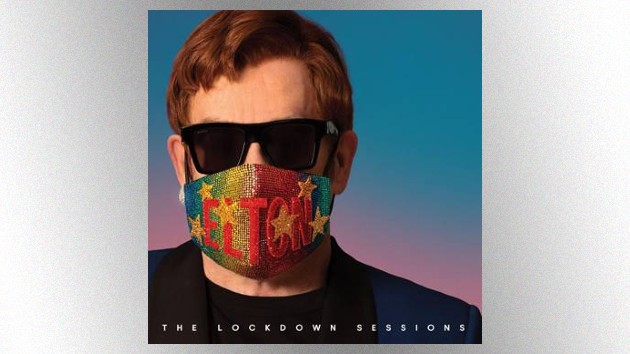
Elton John and Charlie Puth have unveiled their duet “After All,” which will appear on Elton’s upcoming all-star album of collaborations, The Lockdown Sessions.
The two musicians met in March of 2020 at an L.A. restaurant and since Elton was already a fan of Charlie’s, they started chatting and discovered that they were neighbors. So Charlie invited Elton over and they wrote and recorded “After All,” which was the first track either of them completed during lockdown.
“Charlie is an amazing musician; we just hit it off. He’s become a friend and a friend of the family,” says Elton. “Our children love him and he loves them. Everyone we’ve worked with on The Lockdown Sessions I’ve really gotten closer to them, it’s quite amazing.”
“I played electric piano and actually wrote the song all the way through and then Charlie wrote the lyrics pretty quickly,” he adds. “He’s incredibly quick, Charlie. We just had an amazing chemistry in the studio.”
Charlie, who says he’s been a fan of Elton his “entire life,” adds, “It is truly incredible how the melodies and chords seem to come to him instantly whenever he sits down at the piano…He is world class and the true definition of a musical genius. Being a part of his musical journey is a dream come true.”
This weekend, Elton and Charlie will both be performing in Paris during the Global Citizen Live event, which will span seven continents and feature more than 50 artists over 24 hours. You can watch it on ABC TV and ABC News Live.
On Sunday, Charlie and Elton will go live on their TikTok pages to chat about the collaboration.
Billy Corgan is partnering with the site Reverb to sell various instruments and gear he’s used in-studio and onstage with The Smashing Pumpkins.
Among the over 100 pieces available for purchase are two gold Marshall JMP-1 preamps used during the Siamese Dream and Mellon Collie and the Infinite Sadness tours, and guitars played on the Machina and Oceania albums.
You’ll also be able to buy various used synthesizers, amps and pedals.
The Billy Corgan Reverb online shop opens September 29. For more info, visit Reverb.com.
Carly Pearce has found an unlikely, and perhaps unfortunate, connection with Kacey Musgraves.
While plenty of fans are clinging to Carly’s story of recovering from a devastating break-up in her 29: Written in Stone album, Carly is finding inspiration from Kacey, in Kacey’s just-released star-crossed record, released after Kacey and Ruston Kelly ended their marriage.
“They filed for divorce right after I did, so I understood what she was going through,” Carly tells Country Now. “We’re very similar in age, and we have a very similar approach as far as how we approach writing songs. I was excited to have an album come out that I could listen to and probably feel not alone musically.”
Carly also enjoyed the film that accompanied star-crossed, and experiencing how Kacey approached her own heartache.
“I think I watched it five times in a row,” Carly says. “I was just blown away by how two artists going through similar situations had such different approaches visually and musically.”
Carly added of Kacey, “I’m obsessed with everything that she’s doing right now.”
Gabrielle Union says more needs to be done to ensure all actors are paid fairly in Hollywood — especially those of color.
Speaking to 9 to 5ish with theSkimm, Union explained why she’s a big believer in being transparent about salary, saying the pay disparity is worse among Black actresses and calling upon her own pay negotiating experiences to illustrate the matter.
“As Black actresses, there’s almost shame involved because we get paid so much less,” Union began, noting that Black actors take note of who tops the Forbes‘ highest paid celebrity list year after year. “You’re like, ‘Oh, I’m a failure. I’m a failure! That’s what they’re making? And I’m nowhere close.’ But that’s because Black actors don’t talk to each other.”
She says the best way to obtain better pay is by knowing what your colleagues are making. Union says studios are counting on talent to not know what to ask for because it allows them to offer a much lower salary.
“They assume, justifiably [and] rightly so, that none of us are talking and that’s how [we] screw each other,” the Bring It On star explained, noting that some studios have even been deceitful about what other actors are earning in order to trick someone into thinking they signed a great contract.
Union says that’s more than enough reason to make actors of color want to talk money with each other, because it can save them from accepting a potentially bad deal. She says actors of color can then negotiate a better deal by asking studios, “Okay, now please tell me again why you’re low-balling me based off of nothing, hoping that I’m an idiot?”
Union closed by referencing a meme she recently saw, which read, “They know your worth. They just hope you don’t.”
Dream Theater has released a new song called “Invisible Monster,” a track off the band’s upcoming album, A View from the Top of the World.
In a statement, guitarist John Petrucci describes “Invisible Monster,” which you can download now via digital outlets, as a “more mid-temp song” about “how anxiety plagues people.”
“It’s like there’s an invisible monster beating you,” he explains. “You don’t see it, but it’s haunting you all of the time.”
“Invisible Monster” is the second song to be released from A View, following “The Alien,” though it’s considered to be the record’s first official single. At six-and-a-half minutes, “Invisible Monster” is the second shortest cut off the album — the closing title track is the longest, at over 20 minutes.
A View from the Top of the World will be released October 22. It’s the follow-up to 2019’s Distance over Time.
The Free Guy actor shared the news on Tuesday that he and his wife would be donating to the organizations that help provide legal support and other services to fight civil injustices.
“Honoured and excited to launch this,” Reynolds shared in an Instagram Story. “THANK YOU ACLU and NAACP Legal Defense and Educational Fund for your tireless work defending rights and protecting civil liberties.”
Over on Twitter, the ACLU gave the celebs a shout out, announcing, “Ryan Reynolds and Blake Lively are announcing today a $1M grant, split between us and our friends at the @NAACP_LDF, to support the work to protect our democracy.”
The Defense Fund also took to Twitter to thank the couple for their kindness. “LDF is hugely grateful to Blake Lively and Ryan Reynolds for matching all gifts up to $1,000,000 split between LDF and @ACLU through October 8,” the tweet reads. “Their generosity comes at a critical time for our democracy.”
Reynolds retweeted the sentiment, adding, “We still believe in you, 2021” and encouraged his 18 million followers to chip in as well. “Let’s help @ACLU and @naacp_ldf change it together,” he wrote.