(ATLANTA) — Over 140,000 children have experienced the loss of a parent or caretaker since the COVID-19 pandemic started, according to a new study from the Centers for Disease Control and Prevention published Thursday.
The study, which considered data from April 2020 until June 2021, quantified an under-discussed issue of the pandemic: the magnitude of trauma children who’ve lost guardians have suffered at home, even as the virus continues to largely target adults.
It also found that the burden of grief has fallen hardest on children of color.
Nearly one in 500 children have lost a mother, father or grandparent who cared for them since April of 2020, the study found. But the majority of children, almost seven out of every 10 who have lost parents or caretakers during the pandemic, are Black, Hispanic or Native American.
The authors of the study called for federal attention and resources to address the trauma, which will continue to grow as long as the pandemic continues. Already, the authors estimate the number of children who’ve experience loss is higher than 140,000, because of the delta variant surge that hit the U.S. over the summer after the study concluded.
One of out of every 168 American Indian and Alaska Native children have lost a parent or grandparent who cared for them. During the same time, one out of every 310 Black children have faced such loss. For white children, the risk is lower; one out of every 753 children have lost a parent or caregiver.
The study showed the highest burden of death occurred in Southern border states for Hispanic children, Southeastern states for Black children, and in states with tribal areas for American Indian/Alaska Native populations.
“We were quite disturbed by the racial and ethnic disparities that were appearing in our data,” Susan Hillis, the lead author on the CDC study, told ABC News.
The CDC didn’t collect data to explain why those disparities exist, but research over the course of the pandemic has shown grave inequities in health care have led to higher death rates for communities of color. The CDC study published Thursday also found that parents generally had more children in demographics that were hit hardest by loss.
During the research period, Hillis said she was picturing a group of first-graders, all from different backgrounds and parts of the country.
“In my mind’s eye, there’s five children standing together and having such an extreme difference in their risk of having to face the death of the very person who is supposed to provide their love, security, education and care,” she said.
“We’re compelled to mount a response that’s effective for them — for all of them,” she said.
The data suggests that the country needs to build an “urgently needed” pillar into its COVID-19 response, specifically for children, Hillis said.
While she was working on the research, Hillis met a 16-year-old girl named Katie who had lost her dad to the virus.
“She said, ‘People with COVID in our country, most of them do recover, even though my daddy didn’t. However, I will never recover,'” Hillis recalled. “I will not have my daddy with me when I go to the prom, to take pictures beforehand, he will not walk me down the aisle, he will never be with me for another special event in my whole life. I need people to understand, recognize, see and help people like me.”
Losing a parent leads to an increased risk of mental health problems, abuse, unstable housing and poverty, the study said, and for children of single parents, it could mean an immediate need for new housing — whether that is moving in with other family members who can step in and care for them, or going to foster care.
“The critical point to remember is: Not only does it affect the child now, in the short term, but it does really stay with them for the rest of their lives,” Hillis said. “The good news is we do have programs that can help address them, and we have people ready to help implement the programs that work, so I’m encouraged about that.”
(NEW YORK) — It’s the critical aspect of the fight against the pandemic that the U.S. is still figuring out nearly two years after the first documented cases of COVID-19, which has claimed more than 700,000 American lives: coronavirus testing.
At first, testing supply was extremely limited with long lab turnaround times, and only a handful of Americans could access them before things improved as tests became more widely available. Then suddenly, testing demand dropped as mass vaccinations began.
Now, despite billions of dollars in federal investment and more than 20 months into the pandemic, COVID-19 tests are getting harder to find as millions return to offices and schools.
The struggle to keep up with demand also comes amid shifting federal guidance on who should be tested and when as some companies and schools conduct extensive testing, even in situations that may not require it.
The nation’s largest COVID-19 test manufacturers say they have seen a significant increase in the demand for coronavirus tests. Some major test manufacturers — including Abbott Laboratories — scaled back their production in the spring and early summer when daily testing numbers declined.
Many large test-producing companies say their rapid testing products are quickly flying off store shelves nationwide and are out of stock for online shoppers.
“We’ve ramped up our capacity significantly and, by the end of October, we’ll be producing as many or more rapid tests as we were at the height of our production,” said John Koval, an Abbott spokesperson. “To get there, we’ve hired additional employees and have turned on parts of our self-established manufacturing network.”
Although there is a faster result turnaround for rapid antigen tests, they are not as accurate as PCR (polymerase chain reaction) tests, which often involve a nasal swab. PCR tests are widely considered the gold standard for COVID-19 testing, due to their sensitivity, as they provide a more definitive answer as to whether someone may have active coronavirus.
More than 51 million coronavirus tests were administered in the month of September only the second time this year, after January, when test numbers were comparably high.
According to the Johns Hopkins Coronavirus Resource Center, testing in September increased by a record 82% compared to that period last year when many schools and workplaces were still fully virtual.
The U.S. now conducts nearly 2 million tests a day on average after hitting its peak for the year on Sept. 27 with 3.6 million.
Tests can be administered in a variety of locations, including testing sites, doctor’s offices and even at home and new technology is being developed to make the process easier, more available and cost-effective.
Here’s what we know about the testing landscape in the U.S.:
Return to work and school, in person
The return of Americans to work and school, along with the spread of the delta variant and a small but rising number of breakthrough infections among the vaccinated, created an increase in test demand that many suppliers are only now beginning to catch up with.
“It’s incredibly frustrating that we find ourselves back in this situation that we were in pretty much at the start of the pandemic,” said Dr. Jennifer Nuzzo, lead epidemiologist for the Johns Hopkins Coronavirus Resource Center. “Employers really haven’t pulled back on screening testing that they’re doing even among vaccinated workforce, so that all added together stacks up to a fairly sizable demand for tests.”
Preparing for the return of employees back to the workplace, many U.S. employers have already purchased thousands of COVID-19 tests in bulk.
Prominent investment bank Goldman Sachs, which is based in New York, now requires staff in all of its U.S. offices to take weekly coronavirus tests, even if they’re fully vaccinated.
Other large employers, such as banks, retail stores and supermarkets have begun testing as well, with some using rapid tests and others using self-administered PCR tests.
Labcorb, a U.S. medical diagnostics company, insisted to ABC News that it didn’t reduce its capacity when demand dwindled, and that it has enough supply.
Labcorp sells large quantity collection kits to businesses, which are processed in their labs. Companies can distribute them to their employees to mail in for results.
The company says that equipping businesses both large and small with coronavirus tests is a key priority.
“By making it easier for employees to get tested, we are supporting communities and small businesses across the country,” said Dr. Brian Caveney, chief medical officer and president of Labcorp Diagnostics.
The U.S. Food and Drug Administration, for example, partnered with Labcorp in March to implement a voluntary COVID-19 testing program for agency employees and contractors doing in-person work at government buildings or elsewhere.
Approximately 3,000 PCR tests a month are expected to be provided to FDA employees over the course of the program’s year-long contract.
As vaccinations increased among the general population in early spring, the Centers for Disease Control and Prevention (CDC) loosened mask policies for vaccinated individuals indoors and said that the vaccinated didn’t have to get tested.
Testing companies heeded that guidance, and significantly rolled back their production as their stock prices dipped in response to the lower demand.
But the rapid spread of the delta variant in the summer coinciding with a lull in vaccinations, compelled the CDC to update its guidelines.
The CDC now advises that vaccinated people who come in contact with others who have a confirmed case of COVID-19 get tested regardless of whether they have symptoms, and quarantine only if their test results are positive.
More than 186 million people — 56% percent of the U.S. population — have been fully vaccinated.
Testing protocols driving demand
Public health experts say that testing protocols for students returning to the classroom, employer testing mandates, in addition to continued spread of the virus, even in a limited way among the vaccinated, is part of what’s driving the demand for COVID-19 tests.
“We’re coming out of a fairly substantial surge of infections, so that has clearly prompted a need for more testing,” said Dr. Nuzzo, from Johns Hopkins. During the summer, the 7-day average of infections surged to levels not seen since the fall and winter spike of last year, when vaccines were not widely available.
When President Biden first took office, he committed to establishing a national pandemic testing board to “massively surge” and guarantee free access to coronavirus testing. But much remains unknown about the goals of the board, particularly when it comes to developing a national testing strategy.
A Health and Human Services spokesperson told ABC News that the board is comprised of officials from across the federal government and “includes a focus on addressing supply issues – the supply group meets regularly to review testing capacity.” Testing strategy has been left largely up to states.
The Biden administration has awarded billions in contracts to private sector companies to surge testing, with the goal of eventually getting those tests widely distributed. But industry experts have observed those actions have not been nearly enough to keep up with the pace of the demand to effectively change the ground game on testing access.
“I don’t know why it wasn’t obvious to everyone that with the fall there would be an increasing demand for testing, particularly because of the push to return kids back to school,” said Nuzzo. “We never had enough tests for that.”
The White House has promised to double the number of rapid tests on the market over the next 60 days with a special focus on reducing test prices, which is still a significant barrier to access for many Americans.
In September, the White House said it plans to spend $2 billion to purchase nearly 300 million rapid tests.
On top of that, the Biden administration recently announced plans for another $1 billion in spending on at-home rapid COVID-19 tests, which officials believe will increase the number of tests available to Americans to 200 million a month, beginning in December.
“The manufacturing is scaling up significantly, doubling across the next couple of months, and we’re just going to keep at it to encourage those manufacturers to increase capacity and to drive down the cost of those tests,” said White House COVID-19 Coordinator Jeff Zients.
Cost a factor
The cost of COVID-19 tests in the U.S. varies, as the price often depends on factors including where you live and the type of labs where tests are processed.
While some COVID-19 tests are free and lowly priced, others are not, and even the insured could be left with a sizable bill.
Many rapid antigen tests, which can provide results in a matter of minutes, cost at least $12 at many U.S. retail stores, compared to prices less than half of that in many European Union countries, including Germany and the U.K.
“We have made a fair amount of progress there. Is it enough? No,” said Mara Aspinall, an advisor to the Rockefeller Foundation and professor of practice in the biomedical diagnostics program at Arizona State University. “It’s still too expensive for many Americans who’ve got two kids to buy $65 worth of tests.”
Many retailers including Amazon, CVS, and Walmart are out of stock of Abbott’s Binax Now COVID-19 antigen self-test, which sells for $24.
Testing experts believe that even amid the current COVID-19 testing supply problems, there are other under-utilized tools that can be applied to mitigate the spread of the virus.
“Our focus is surveillance and then outbreak control, and when you do that, we’ll be doing more wastewater testing, more air monitoring, I think we need to be using more COVID sniffing dogs, and scratch-and-sniff tests,” said Aspinall. “We can’t be short-sighted, we need to be thinking about the U.S. and around the world.”
When Keith Urban sings “Saw the man in black/ Spotlight in the air/ Heard a thousand screams/ Saw my dad’s stare,” in his new hit, “Wild Hearts,” he’s actually sharing one of his pivotal memories.
The freedom anthem came to Keith — fully finished — via Old Dominion‘s Brad Tursi, Runaway June‘s Jennifer Wayne, and singer/songwriter Eric Paslay. But it resonated with the Aussie superstar so much, he asked if he could change the verses to make them more personal.
“I sat down and thought about my journey, and when did that begin?” Keith explains. “And the very first thing that popped in my head was probably when my dad took our family to see Johnny Cash.”
“I was five, and that’s an impactful concert to see at any point in your life,” he reflects. “But when you’re five, it was something else.”
It’s an experience that helped propel Keith onto the stages of arenas all over the world.
“The things I remembered mostly about it were, of course, this guy up on stage,” he recalls. “I remember this white-hot spotlight coming all the way from the back of the room. It was huge. I remember the screaming of this crowd.”
He continues, “And then I remember looking up at my dad and seeing the way that he looked at this person on stage. And probably subconsciously, I probably thought, ‘I’ve never seen my dad look at me like that.’ And so that probably was the beginning of my journey.”
“Wild Hearts” ended up being so powerful, Keith decided to immediately put it out, though it’s not on his latest album, The Speed of Now Part 1, which was released in September 2020.
(NEW YORK) — Here are the scores from Wednesday’s sports events:
MAJOR LEAGUE BASEBALL
NATIONAL LEAGUE PLAYOFFS
LA Dodgers 3, St. Louis 1
NATIONAL BASKETBALL ASSOCIATION PRESEASON
Phoenix 117, LA Lakers 105
Detroit 115, San Antonio 105
Cleveland 99, Atlanta 96
New Orleans 104, Orlando 86
Dallas 111, Utah 101
Golden State 118, Denver 116
Sacramento 113 LA Clippers 98
NATIONAL HOCKEY LEAGUE PRESEASON
Columbus 4, Detroit 2
NY Rangers 6, New Jersey 2
Washington 4, Boston 3 (OT)
Minnesota 4, St. Louis 3 (OT)
Winnipeg 3, Calgary 2
Los Angeles 6, Anaheim 3
WOMEN’S NATIONAL BASKETBALL ASSOCIATION PLAYOFFS
Chicago 79, Connecticut 69
Las Vegas 93, Phoenix 76
It’s almost time for No Time to Die — the 25th James Bond film is in theaters on Friday after over a year-and-a-half of delays.
Bohemian Rhapsody Oscar winner Rami Malek plays villain Lyutsifer Safin, who masterminds a global catastrophe, and he tells ABC News it was tough at first to identify with the evil nature of his character.
“The villain just has to believe that he’s right, that he’s the hero of his own story,” notes Malik. “And for me, I just tried to put myself in his skin and think, ‘You know what? Make Bond the villain, make Daniel [Craig] the villain every time you see him.'”
Thankfully, says the 40-year-old actor, Craig — making his final appearance as Bond — made the entire cast feel at ease.
“In between takes, you feel him, his concern for everybody on set. He knows everyone’s role, everyone’s name. And when you have that type of integrity, it really drives people to do their best and that’s what he gets out of you,” says Malek. “He is a special type of actor. He’s extremely versatile in his performances, and extremely caring and in his personal experiences with you off set.”
No Time to Die grabbed $119 million in its international debut this past weekend, and Malek hopes the film sets a box office record in North America as well.
“I was just in London, they were walking down the street saying, ‘I can’t see it. It’s sold out, it’s sold out in every theater,'” he recalled. “So I hope that same thing happens here… galvanizing people to come back to the theater and bringing cinema back to people who love it so much.”
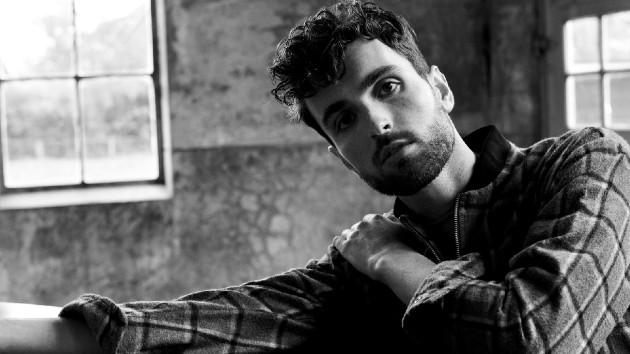
Duncan Laurence‘s hit “Arcade” was first released in 2019, but it’s only been this year when it’s really blown up worldwide, especially on American radio, thanks to TikTok. While he’s thrilled about that, the Dutch singer/songwriter says it’s been a bit frustrating seeing his first single go up the charts everywhere, while he’s stuck at home in the Netherlands due to the pandemic.
“It’s been just sitting at home not being able to travel — especially not being able, as an EU citizen, to travel to America,” Duncan tells ABC Audio. “But there is hope. I just got a message from my manager which says that in November, I’ll be able to travel to the U.S., so there is a little light at the end of the tunnel!”
“But I mean, this tunnel was super-bright already, because it’s been such an amazing year,” he points out, even though he jokingly compares his experience to “seeing everything from the sidelines of the soccer match.”
The one drawback with “Arcade” being so big, though, is that there hasn’t been any plans for a follow-up single, because everyone is still discovering and enjoying the song. But given that it’s been two years already, isn’t Duncan, well, kind of sick of it? Nope.
“I mean, it’s such a gift. It brings me so many places. It brings me connection with all these people that I never thought I would connect with!” he says. “You know, I’m able to share my story in a worldwide way. So no, I’ll never get bored of that first single that blew up during COVID!”
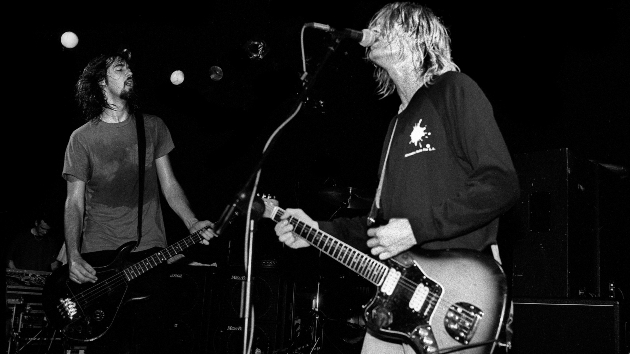
Nirvana‘s sales and streaming numbers are certainly “In Bloom” in the wake of Nevermind‘s 30th anniversary.
The grunge icons’ seminal 1991 album skyrocketed up the Billboard 200 to number 44 after hitting the big 3-0 on September 24. That’s the highest Nevermind has been on the chart since 2011, when it was celebrating is 20th anniversary.
Nevermind also saw a 10 percent bump in on-demand streaming during the September 24-30 tracking week, as well as a 327 percent jump in sales.
In total, the RIAA Diamond-certified Nevermind has spent 543 weeks on the Billboard 200 — over a third of its entire lifespan.
Nirvana is celebrating the 30th anniversary of Nevermind with a deluxe reissue, due out November 12. The expanded collection includes the full live recordings of four Nirvana concerts from 1991 and 1992.
The Weeknd holding the Quincy Jones Humanitarian Award at the BMAC gala on September 23, 2021 in Los Angeles. Photo credit: Leon Bennett/WireImage
The Black Music Action Coalition, which is supported by hundreds of artists and executives, is demanding that President Joe Biden sign an Executive Order to approve the George Floyd Justice in Policing Act.
BMAC co-founder Willie “Prophet” Stiggers sent a letter to the president on Wednesday, calling for him to enact the legislation, according to Variety. BMAC backed Joe Biden during his 2020 presidential campaign based on his “promise to the Black community, George Floyd’s family, and to America.” The goal of the coalition is to address systematic racism in the music industry.
Numerous stars artists have endorsed the coalition, including Pharrell Williams, Cardi B, Quincy Jones, Lil Nas X, Diddy, Travis Scott and Mary J. Blige, as well as Lady Gaga, Ariana Grande and Doja Cat.
On September 23 in Los Angeles, BMAC honored The Weeknd and H.E.R with the Quincy Jones Humanitarian Award at the coalition’s first gala.
“You told George Floyd’s daughter that her father would change the world,” Stiggers wrote in the letter. “Now that we have elected you President of the United States, I’ve anxiously waited and watched several executive orders get signed. But we are still waiting for the George Floyd Justice in Policing Act?…How can you Build Back Better and push to pass a bill that addresses America’s infrastructure, without addressing the cracks in America’s soul?”
The George Floyd Justice in Policing Act, created in July 2020, is designed to hold police accountable for their actions. It seeks to establish national standards for operation of police departments, mandate data collection on police encounters, and more.
The letter ends with the words, “Mr. President, if Black Lives Matter, please prove it! Do Black lives only matter during an election cycle?”
That famous photo of Britney Spears and Madonna locking lips at the 2003 MTV VMAs is now reportedly being auctioned off as an NFT.
TMZ reports that the photographer, John Shearer, is teaming up with Cryptograph to sell the NFT for a good cause.
The auction, which kicks off Thursday and lasts 72 hours, will share a portion of the proceeds with GLAAD.
The 2003 VMAs opened with the now-iconic performance from Madonna, Britney Spears and Christina Aguilera. The trio sang Madonna’s hits “Like a Virgin” and “Hollywood” and the performance concluded with Madonna kissing both Britney and Christina — though the Britney kiss garnered way more attention.
Alice Cooper delves into his many adventures as a famous shock rocker in a new installment of Audible’s Words + Music audio series, Who I Really Am: The Diary of a Vampire, debuting today.
The two-hour feature captures the Rock & Roll Hall of Famer discussing how the original Alice Cooper band came together and, with their edgy sound and over-the-top, horror-inspired stage show, became one of the biggest rock group’s of the early 1970s.
Cooper, whose given name is Vincent Furnier, tells ABC Audio that he tapped his longtime producer Bob Ezrin to work with him on the Audible project.
“Bob and I are the only two that actually know the character Alice Cooper,” he notes. “I mean, we’ve created him over the years.”
Interspersed in the feature are acoustic renditions of some of Cooper’s biggest hits, including “I’m Eighteen,” “School’s Out,” and “Poison,” recorded especially for Who I Really Am.
“[T]hat was actually one of the more fun things to do, was to go revisit those songs in an acoustic version,” Alice says.
Who I Really Am also features Cooper discussing his childhood as the son of an evangelist; the inspiration behind some of his famous songs; his experiences with other famous rockers; his descent into alcohol and substance abuse; meeting his wife, Sheryl; and his Christian faith.
Reflecting on the incongruous aspects of his life, Cooper notes, “[T]he idea that I came from a Christian home, and that I went as far away as I could and then came back. The fact that I’ve been married 45 years to the greatest girl. I mean, there’s so many things that you would never, ever expect the Alice Cooper story to be.”
Visit Audible.com to find out how to access the Words + Music series.