Nas is always on the list in the discussion of the greatest rappers of all-time, and now the iconic MC is sharing his wisdom and experience in a new online course.
“I feel like everybody has their own technique. If you take a look at mine, it’s really too much to say in one MasterClass,” Nas tells Complex. “If you take my technique, I think you’ll find that it might be real similar to yours if you’re a writer. You might see things that you do that are similar or that you didn’t see before in yourself. You might find that I gave you something that could add to what you’re doing, and I think that’s important. I think that’s where we’re at in the business: it’s to share.”
In a trailer for the course, he says he will teach students “how to find your inspiration, your flow, and how to turn your life experience into music.”
The Grammy winner grew up in the borough of Queens in New York City. On September 23, he received the key to Queens as he performed a charity concert raising money to help feed the hungry in NYC.
“I’m super honored by it. When you look back and think about humble beginnings, and you realize how much you’ve been putting in… It’s a great county. It’s a great town,” he says.
“To have that honor in 2021 and have my own day, September 23, makes me feel great,” Nas continues. “It makes me want to do something more.”
Founding Romantics guitarist Mike Skill has just released his debut solo album, Skill…Mike Skill, which is available now via digital formats, with a vinyl version due out later in 2021.
The 12-track collection features Mike’s recently issued version of The Romantics’ 1980 power-pop classic “What I Like About You,” as well as several other songs he released as digital singles over the last few years and some new tunes recorded during the COVID-19 pandemic.
Skill, who has co-written all of his band’s best-known songs, tells ABC Audio that one of the reasons he decided to put together the solo album was that The Romantics weren’t enthusiastic about working on new music during the pandemic.
“So I’m just kind of living in Mike Skill world, and…showing [what] my sound…is, and my voice and my name,” he explains.
One of the album’s tracks, “’67 Riot,” which was first released as a single, features contributions by one of Mike’s guitar heroes, The MC5‘s Wayne Kramer.
Skill says he was initially hesitant to ask Kramer to play on the song, but after Wayne heard it, “he loved it, loved the lyrics, he loved the whole attitude,” noting that the tune “had that throwback sound to late-’60s, ’70s kind of Detroit sound, that…high-energy rock.”
Skill worked on a number of the tracks with longtime Romantics drummer Brad Elvis, while Brad’s wife, singer/musician Chloe F. Orwell, also contributed her talents to some tunes.
Mike says Chloe wrote the lyrics for “Carrie Got Married,” a power-pop anthem that was penned as a sequel to the 1980 Romantics song “Tell It to Carrie.” Chloe also sang and played sax on the soul-flavored track “So Soul Alone.”
With the holiday season approaching, Blondie has released a new three-track EP featuring a rare 1981 Christmas tune called “Yuletide Throwdown” that the band recorded with hip-hop legend “Fab 5 Freddy” Brathwaite, as well as a new remix of the song created by DJ/producer Cut Chemist.
“Yuletide Throwdown” originally was released on a flexi-disc given away by U.K. magazine Flexipop, and was co-written with and co-produced by Fab 5 Freddy. The song features Blondie frontwoman Debbie Harry and Freddy rapping Christmas-themed lyrics over what actually is the original music for the band’s chart-topping 1981 smash “Rapture.”
The Yuletide Throwdown EP is available now digitally and via streaming services, while a limited-edition 12-inch vinyl version will be released on November 5, pressed on either black or magenta-colored vinyl.
“Yuletide Throwdown” recently was rediscovered while Blondie was going through its personal archives in preparation for a new box set that will be released in August 2022.
“It has been an impossible amount of time since I believed in Santa Claus, but I could very well believe again if he was Freddy Brathwaite!!” says Harry in a statement. “Some of my best times have been making music with [Blondie guitarist/songwriter] Chris Stein and Freddy B.”
Adds Stein, “Freddy has done as much as any multi-platinum selling Hip-Hop star to promote rap culture.”
Meanwhile, Fab 5 Freddy notes, “In the beginning of my journey into pop culture, Chris & Debbie were among the first to take me and my ideas about hip hop culture seriously and were like mentors to me shining a light along the road and assisting my quest. I’m happy after all this time the world can now hear this fun holiday tune we did way back then!”
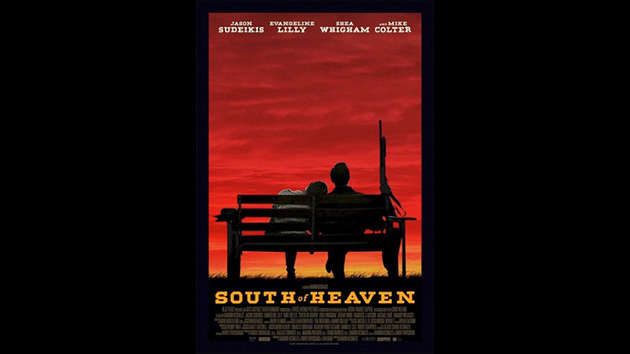
Evangeline Lilly stars as a terminally ill wife-to-be in the new indie thriller South Of Heaven alongside Jason Sudeikis, who plays her just-released from jail beau who is trying to walk the straight and narrow, when of course everything goes very, very “south.”
While Lilly notes Sudeikis is known for playing “the most likable, jovial, sweet and charming” characters, Lilly told ABC Audio that audiences can expect to see a different side of him.
“He takes a real turn in this movie he plays a very serious character who’s grappling with his demons,” she explained.
South of Heaven, helmed by director and film professor Aharon Keshales, wrapped production in 2020 — just hours before life changed for everyone. Recalling how everything went down, the award-winning actress shared, “I was being told ‘You can’t get on a plane. Nobody can fly. There is this crazy thing going around’ and I was like ‘what are you talking about?'”
“I flew home to Canada. The next day, the world shut down,” she said.
Included in that shut down were movie theaters, which is why Lilly expressed that it’s time to reconsider the theater-going experience by being able to “celebrate that we can” and “reinforce that we want to go out.”
“Also to support independent filmmaking,” she added. “That’s one of the only places where original stories are being told. And I think these little independent stories are important and they are the kind of films that I love and if we don’t go and support them in the theater they will just disappear altogether.”
In addition to theaters, South of Heaven is available on VOD, digital outlets and in theaters.
Kim Kardashianhosted Saturday Night Live for the first time this weekend and held nothing back, roasting the entire Kardashian-Jenner clan.
After explaining her purpose for hosting — to prove she was “more than that reference photo my sisters showed their plastic surgeons,” Kim revealed the “one thing [she’s] really proud of,” is that “no one can ever call me a gold digger.”
“Honestly, I’m not even sure how you become one, so I asked my mom’s [Kris Jenner‘s] boyfriend Corey [Gamble].”
“I’m an influencer, but would never tell anyone what they can or can’t do,” she insisted. “Remember, I’m a Kim, not a Karen,” adding that “with all the K names, it’s really impressive that my mom didn’t pick Karen.”
“I don’t know how she saw that one coming and not Caitlyn,” she quipped, referring to her former step father Caitlyn Jenner.
Kardashian followed with a jab at her ex-husband Kanye West. After declaring that she married “the best rapper of all time” and the “richest Black man in America” as well as “a talented, legit genius,” she joked that her decision to divorce him “came down to just one thing — his personality.”
Kim also took aim at her sister Kourtney in a sketch called “The People’s Kourt,” which featured a cameo from sister Khloé, as a defendant, and Kris pressing charges against her younger daughter, Kendall Jenner, for having “no drama.”
The family took the barbs in stride, with Kris gushing on Instagram that her daughter “crushed one of the hardest stand up gigs in the world.”
“Proud is an understatement!!!” Khloé wrote on her Instagram Story.
“ORDER IN THE KOURTNEY!” Kourtney posted on her Instagram Story. “Ahhhhh! This is everything!
Kendall and Kylie Jenner each shared clips of their sister onstage. Kylie captioned her video, “Yes!!!!!”
DEA Speciat Agent Mike Garbo in an undated photo. – (U.S. Drug Enforcement Administration)
(NEW YORK) — It has been a particularly perilous week for federal law enforcement.
On Monday, DEA Special Agent Michael Garbo, a 16-year veteran of the agency, was shot and killed during an operation in Tucson, Arizona.
What started as a routine investigation with DEA agents following up on tips that illegal drugs were being transported on an Amtrak train from California turned deadly as agents closed in on a suspected drug dealer.
The Tucson incident was one of three shootings in the past week that left at least 4 agents killed or wounded. As of Oct. 5, 55 law enforcement officers had been killed or wounded so far this year, approaching the five-year high set in 2018.
Another agent was also shot but not killed in the operation.
On Tuesday an ATF agent was shot and critically wounded in Nashville after a suspect opened fire team of agents looking to arrest him as he sat in his parked in his car outside a diner.
The dramatic scene was captured on security camera video. According to court records, the suspect, who died in the incident, was the target of a drug investigation.
Earlier this week, an FBI agent was shot and critically wounded while serving an arrest warrant with the U.S. Marshals in Racine, Wisconsin, according to police. They did not specify what the agent was doing other than categorizing it as “law enforcement activity.”
FBI Agents Association President Brian O’Hare said the association stands with those law enforcement agents who were shot at.
“The FBI Agents Association stands with these courageous agents, and our thoughts and prayers are with them and with their families,” O’Hare said in a statement to ABC News. “The FBIAA hopes that all Americans will join us in condemning these abhorrent acts of violence.”
And last Friday in Louisiana, a deputy U.S. marshal died after he was in a car accident while on duty.
Law enforcement leaders say these incidents show just how dangerous the profession can be.
“These tragedies are yet another painful reminder of what everyone in this audience knows firsthand: violent crime — particularly gun violence — has reached epidemic levels,” Deputy Attorney General Lisa Monaco told the Major City Chiefs Association during its annual conference on Wednesday.
Acting Deputy Director of the ATF Tom Chittum told ABC News in an interview it has been a hard week for federal law enforcement.
“This has been an incredibly difficult week for federal law enforcement,” he said. “Our hearts and thoughts and prayers go out to the families, the friends and to those officers that have been subjected to this gun violence.”
He said law enforcement is a dangerous profession, investigating the most serious violent offenders, but as of late it’s been more dangerous.
“I think they represent in a lot of cases, a callous disregard for life, no respect for them law,” Chittum said. “We have seen an increase in assaults on law enforcement officers that goes hand-in-hand with just the increase in violent crime we’ve seen across the country. It’s a dangerous time out there and increasingly we see more rounds being fired, often in the ambush style attacks.”
(NEW YORK) — In 2005, when music producer and engineer Elliot Scheiner was working with the Foo Fighters on “In Your Honor,” he had the rock group sit in an Acura TL parked outside the studio.
“We’d finish a mix and go out to the car to listen,” Scheiner, an eight-time Grammy winner, told ABC News. “We listened to the album for two weeks in the car. We’d come back, make changes and go back to the car. We mixed these records based on the Acura.”
The Foo Fighters were immediately captivated by the TL’s immersive, crisp and precise sound system Schenier helped design with a team of Panasonic engineers.
“Dave [Grohl] went out and bought a car, he thought it was so amazing. [Eagles guitarist] Joe Walsh bought one too,” Schneier recalled. “All the artists felt [the system] was the most unbelievable representation of what they do.”
Automakers — even mainstream ones — have increasingly turned their attention to high-end, premium audio systems to attract buyers.
Scheiner, 74, continues to work closely with Panasonic on Acura’s exclusive ELS Studio system. The most advanced ELS system, Studio 3D, now boasts 16 channels, 16 speakers and 710 watts, a powerful upgrade from the TL’s seven speaker, 5.1 system. For Acura’s second-generation TLX sedan, Twin Telford subwoofers were added to dramatically reduce and eliminate extraneous rattles and vibrations and guarantee accurate playback in the sedan’s 17 speakers.
“When you put a speaker in the car, it sounds completely different,” Panasonic engineer Mark Ziembe told ABC News. “The car changes it, makes it colored. We’re trying to get rid of that car sound.”
Techniques like dynamic enhancement, motion control and equalization are applied in the tuning process to make sure an Acura “sounds more like a studio,” Ziembe said.
“We want people who buy these cars to be intimate with the artists,” Ziembe said. “We want people to get into their car and have it be a sanctuary.”
Cadillac decided to team up with AKG, an acoustics engineering and manufacturing company, on the revamped Escalade SUV.
“We really wanted to take Cadillac and the audio system to the next level and be different, be unique,” Chris Lata, the engineering group manager for the Cadillac Escalade, told ABC News. “It was a global search and we had a lot of different proposals. AKG is a Grammy winning studio.”
The AKG Studio Reference System in the Escalade comes with 36 speakers and 28 channels that provide a rich, acoustic environment for passengers. Lata said finding where to strategically place and integrate the speakers — the A pillar, headliner, doors — was a challenge in the massive Escalade.
“We worked very closely with AKG on the tuning … there were lots of tweaking, listening evaluations, tests with the windows down, at highway speeds,” he said. “Speakers had to get in the places and locations that give the best studio experience and immersive feel.”
He went on, “When you get into an Escalade and listen to the AKG system, it’s almost like you’re hearing the music differently for the first time. We’ve recreated the live experience as if you’re sitting there at the studio or stadium.”
Brian Moody, executive publisher of Autotrader, said automakers are concentrating on premium audio systems to stand out among audiophiles and consumers who are spending more hours of the day inside their vehicles.
“When you hear the music the way the artist intended — the subtlety, breathiness, crunchiness — it’s a huge enhancement in your everyday life,” he told ABC News. “In the modern world of cars it’s no longer enough to say I have cooled seats and leather and a sunroof. Automakers are taking audio more seriously. Premium systems become more about branding and exclusivity.”
These systems may even matter more than a vehicle’s performance stats or latest tech gadgetry, Moody argued.
“Millennials don’t care that a car has a V8 engine,” he said. “My 18-year-old son is way more interested in a car’s sound quality than ride quality.”
Tim Gunkel, a sound and acoustics development engineer at Mercedes-Benz, said he’s seeing more young people seek out premium audio systems over engine size in their luxury vehicles. Mercedes is currently the only automaker to offer a 4D high performance stereo system where “you can actually feel the music, can feel the impact of the bass, when sitting in the seat,” he told ABC News.
The 4D surround system, developed in partnership with renowned German audio company Burmester, took five years to engineer and is only offered in Mercedes’ flagship S-Class sedan. The state-of-the-art system features 31 high-performance loudspeakers, eight additional exciters and a system output of 1,750 watts — allowing the driver and passengers to perceive the rhythms of the music through the entire body and not just the ears.
“Burmester is connected to a lot of famous Berlin musicians and music producers,” Gunkel noted. “Our customers tell us they like the audio system so much they go to the car to listen to their music.”
British automaker McLaren first partnered with venerable Bowers & Wilkins, also based in the U.K., in 2015 for the 570S supercar. McLaren’s audio engineers had to create a perfect audio system for its discerning customers while also factoring in the supercars’ sonorous turbocharged V8 engines.
“At higher speeds, you’re hearing a lot of noise from external sources,” Matthew Dryden, McLaren’s senior engineer for audio systems, told ABC News. “The system adjusts the bass frequencies to counteract the wind and tire noise … the audio sounds the same but the user doesn’t notice.”
The tweeters in McLarens showcase Nautilus diffusers — spiraling channels that dissipate reflected sound waves — and every speaker seamlessly assimilates into the supercars’ sleek, modern cabin. McLaren also chose Aramid Fibre, a high-end loudspeaker technology known for its robust nature, responsiveness and tonal qualities, in its Speedtail hypercar and GT.
“More and more consumers expect a vehicle’s audio to match up to what they have at their house,” said Dryden. “We want our customers to go on long journeys and enjoy the audio experience.”
Karl Brauer, executive analyst at iSeeCars.com and a self-described audiophile, said a small but growing subset of consumers is willing to pay thousands of dollars more for higher quality, dynamic systems. The best way to test a vehicle’s audio system? Put away the cellphone and plug in a USB to get that raw, unadulterated experience, according to Brauer.
“The number of speakers in cars has become a bullet point in marketing material,” he told ABC News. “Don’t be fooled by the specs — you have to listen to the quality of the system. And execution of the hardware is even more important than the hardware.”
For lawyer Greg Kovacevich, the ELS Studio system in his Acura TSX helps him tune out and survive his long commute home in Southern California traffic.
“I am sitting like cattle most of the time and I want good sound and a comfortable seat to enjoy myself,” he told ABC News. “Premium sound is far more important to me than super tight handling or even fuel efficiency.”
Kovacevich said he has sampled various audio systems made by other automakers but keeps coming back to Acura, with plans to soon buy the new TLX.
“The system is designed so well … Elliot is amazing. The only place I listen to music is in the car,” he said.
(NEW YORK) — The stock market has been a roller coaster ride in recent weeks, with wild swings from day to day at times.
The major indices have also hit record after record this year as the as the economy roared back from pandemic lows and the government flooded the economy with stimulus cash.
The S&P 500 and Nasdaq Composite indices, for instance, closed at record-highs last month, besting highs that were only just set earlier in the year, and the Dow Jones Industrial Average of 30 large company stocks closed at a record-high a month prior. Despite a pandemic-battered economy, the S&P 500 and tech-heavy Nasdaq are both up approximately 30% compared to the same period a year ago, and the Dow is up more than 20%.
The trends have left some experts wondering whether the ground underlying the rapid growth of the market, fueled in part by a new crop of retail investors, is solid, or if there is a bubble building.
Risks abound, from the debt ceiling crisis to inflation fears and even China’s Evergrande saga, which have led to daily swings.
But even as markets have fallen on news, the newfangled hashtags like #BuyTheDip (which encourages market participants to buy rather than sell during these down periods) and #DiamondHands (encouraging investors to hold onto assets rather than sell) often trend on Twitter in tandem with the fear-ridden headlines. Even the Fed has warned of vulnerabilities associated with the “increased risk appetite” demonstrated by retail investor exuberance seen in the “‘meme stock’ episode.”
While the pandemic’s abrupt disruption to American life is another reminder that it’s impossible to predict the future, historical patterns and the precariousness of present market conditions have some economists warning that current growth rates may be unsustainable, especially amid inflation worries and potential tightening by the Fed of monetary policy.
Here’s what we know and don’t about the market landscape:
Key overvaluation indicator at highest level since the Dotcom bubble
One measure often used by economists to predict a potential asset price bubble is the cyclically adjusted price-to-earnings (CAPE) ratio, developed by economist and Yale University professor Robert Shiller. The measure looks at firms’ inflation-adjusted real earnings per share over a 10-year period to indicate possible over- or under-valuations.
Itay Goldstein, a professor of finance and economics at the University of Pennsylvania’s Wharton School of Business, told ABC News that the measure is essentially used as “an indication for whether the stock price is too high or not.”
When Shiller first published his research in 2000, he pointed to how high stock prices were at that point relative to the fundamentals that should underly their prices. His book, “Irrational Exuberance” appeared in March 2000, highlighting how psychological factors can produce speculative bubbles and as it appeared, the tech-heavy NASDAQ Composite index began a 78% drop and the broader U.S. stock market took a 64% fall.
Presently, the CAPE Ratio hovers at around 37, its highest level since the 2000-2002 Dotcom crash — higher now than the 30 it reached before the Black Tuesday crash in October 1929 that triggered the Great Depression. The historical mean is 16.8.
There have been criticisms of CAPE. Jeremy Siegel, a professor of finance at the University of Pennsylvania’s Wharton School of Business, has argued in research that changes in accounting standards cause the earnings data to be biased downwards and thus the CAPE to be biased upwards. Others noted that the CAPE uses past earnings, but what investors are interested in is future earnings.
“You basically see that it’s now still in historically high levels,” Goldstein said of the CAPE Ratio. “If you go back in history, it was higher than that only around 2000 before the big crash of the Dotcom bubble, it wasn’t even at that high a level in 2008 before the big financial crisis.” In May 2008, before stocks started falling, the CAPE was 23.70.
“It’s been high for a long time, and there was this crash last year when COVID started and then it climbed back up very quickly and continued to climb since then,” he added. “It’s hard to predict what will happen, but certainly it could be that the level is too high and there could be some correction.”
Fears of overvaluation are not new, especially in the tech sector where the value of certain traditional fundamentals or research and development may be harder to quantify. Many tech companies are not earning profits now, but people are investing based on the hope that they will earn in the future. A measure such as CAPE that uses past earnings will not be useful for evaluating these companies.
Tech sector and risk appetite
Many market watchers, for example, have been ringing alarm bells surrounding the sky-high growth of Tesla stock in recent years — arguing that its value does not align with its production output and fundamentals. On paper, the argument seems valid: Tesla’s market cap, some $775 billion, is larger than the next five largest automakers combined.
Yet some with so-called #DiamondHands who have been able to ignore this have seen themselves become “Teslanairres” in recent years as the electric vehicle maker’s stock value continues to climb.
Tesla aside, overvaluation estimates for the stock market as a whole is “speculative,” Goldstein said.
“People can tell sort of an economic story that will justify — my overall feeling is that it’s too high and it’s hard to justify that based on fundamentals,” Goldstein said, referring to the market as a whole.
While he stresses it is ultimately difficult to know for sure whether stock prices are creeping towards a bubble, Goldstein said that, “The indicators that we see, I think give us some reason to be worried that stock prices might be too high.”
The Federal Reserve also warned off rising asset prices being vulnerable to “significant declines should risk appetite fall,” in its semi-annual Financial Stability Report released in May, noting that “prices are high compared with expected cash flows.”
Fed Governor Lael Brainard pinned increased appetite for risk and rising valuations in part on retail investors, referencing “the ‘meme stock’ episode” in a statement accompanying the report.
“Valuations across a range of asset classes have continued to rise from levels that were already elevated late last year. Equity indices are setting new highs, equity prices relative to forecasts of earnings are near the top of their historical distribution, and the appetite for risk has increased broadly, as the ‘meme stock’ episode demonstrated,” Brainard said.
The increased appetite for risk has also been seen in the bond market, Brainard added. “The combination of stretched valuations with very high levels of corporate indebtedness bear watching because of the potential to amplify the effects of a re-pricing event,” he said.
Unique market conditions and inflation woes
When COVID-19 upended the economy in the spring of 2020, unemployment levels in the U.S. reached highs not seen since the Great Depression as lockdown orders forced businesses to shutter. In the midst of the crisis, the stock market fell sharply in March (when it had been at record highs) — but then rallied back to reach new highs within months.
Much of the pandemic stock markets gains can be pinned in part to aggressive monetary policy by the Federal Reserve in response to the pandemic, some economists say. The Fed pulled out all of the stops, slashing the target for overnight interest rates to almost zero, buying massive amounts of Treasury and mortgage-backed securities, encouraging bank lending and taking other steps to sustain the flow of credit.
“What the Fed has done is it reacted to a public health crisis,” Philip Schnaebl, a professor in finance and asset management at New York University’s Stern School of Business told ABC News.
“Now, the economy looks much stronger, obviously there’s still risks with [the] delta [variant] and what’s happening in emerging markets and so on,” Schnaebl, who is also a research associate in corporate finance at the National Bureau of Economic Research, added, “But employment growth has been pretty strong, it looks like the public health crisis is not as severe as it used to be.”
If the Fed starts tapering its purchases of securities — which it signaled after its Sept. 22 meeting that it would likely start doing soon — and when it looks to start raising interest rates, many economists are bracing for what this could mean for the stock market. The Fed has been buying Treasury securities and mortgage-backed securities each month starting in March 2020. Tapering means the Fed would slow its purchase of these assets.
Ending these pandemic-era policies would “lead to slow deflation of stock prices,” Schnaebl said.
The Fed said it found concerns that a change in monetary policy, especially if the economic outlook hasn’t improved, could lead to a “correction for risky assets,” according to the investors , academics and more it surveyed as part of its market intelligence gathering for its Financial Stability report.
“Contacts observed that valuations of many assets have derived significant support from low discount rates and therefore may be susceptible to a spike in yields, especially if unaccompanied by an improvement in the economic outlook,” the report said.
Overall, Schnaebl said he thinks the Fed has its “eye on the ball” and will be able to respond to stock market dangers that could spill over into the economy as a whole.
One possible wrench in the Fed’s machine, however, would be if inflation takes hold and the central bank could no longer implement expansionary policy. Data from the consumer price index has stoked inflation fears, though the Fed has largely said that it should be temporary due to labor and supply chains issues as the economy emerges from the COVID-19 shock.
Historically, the stock market has served Main Street in the long run
Retail investors have pumped billions into the stock market in 2021, with some economists linking this to the rise of investing apps and pandemic stimulus funds that were distributed at the height of stay-at-home orders.
Ultimately, Stern’s Schnaebl says it is hard to tell until after the fact if stocks are overvalued and a crash looms.
“There can be a lot of volatility in the short run, that’s why the stock market is risky,” he said.
“I’m less concerned about the stock market just on its own, sort of falling,” he added. “I’m concerned about the health crisis and if that worsens, I think it would show up in the stock market.”
A sudden drop in stock prices “would be bad, not necessarily because the stock market crashed, but probably because something else happened which made the stock market crash and that’s not good news for the economy.”
While price corrections can be scary for investors, they can also be viewed as a part of how equity markets work when prices adjust to reflect longer-term values.
Goldstein notes that asset “prices are just high, they are high across the board, across multiple assets.” He sees a “significant likelihood” that stock prices will fall. The trigger for this could be monetary policy tightening, news coming out of China like Evergrande’s threat to destabilize the international financial system, or some other factor.
“People are looking for where to put to put their money and make a decent return,” Goldstein said of the new excitement in the stock market. “With all this in place, I think you have a combination of factors that contribute to high prices, and there could be a trigger that could come from different places that will eventually start the drop.”
Even if economic outlooks in the labor market and beyond are positive outside of stock prices, Goldstein notes a sudden drop would impact the real economy as firms “become more cautious” by spending and investing less.
Many major Wall Street players are feeling the uncertainty. Over three-quarters of respondents to a CNBC Delivering Alpha investor survey say now is the time to be very conservative in the stock market when asked what kind of market risk they are willing to accept for themselves and their clients. Respondents include some 400 chief investment officers, equity strategists, portfolio managers and contributors to the financial news outlet.
Schnaebl noted that if a drop were to happen, “The question is why does it happen, and usually these things don’t come out of the blue.”
“I tend to think of the stock market in many ways is a reflection of what’s going on in the economy rather than this is independent entity which is driving other things,” he added, noting that if the a drop were sparked by the worsening of the virus it would be a blow to the economy as a whole that’s reflected in the stock market versus not the other way around.
Still, the stock market has historically been a useful vehicle for those with #DiamondHands looking to save over the long term.
“For investors — especially people saving for retirement and thinking about where to put their money so they can have a safer time in 10 to 30 years from now — historically, the stock market has been a good place,” Schnaebl said.
“My advice to everyday investors would be two things: first of all, diversify,” Schnaebl said, “And second of all, invest for the long run.”
(LONDON) — After a two-year pandemic break, football is returning to London this weekend as the NFL ventures over for the first of two regular season matchups. The New York Jets will face the Atlanta Falcons at Tottenham Hotspur Stadium on Sunday.
Atlanta coach Arthur Smith commented on trip options this week, saying in past these games have been treated “like a Bowl Week,” and teams would stay the entire week. Smith, however, decided to keep his Falcons stateside all week for practice before traveling to the U.K.
Both teams are currently 1-3. The game kicks off at 9:30am ET.
(WASHINGTON) — While national Democrats, including President Joe Biden, struggle with Arizona Sen. Kyrsten Sinema’s positions in an evenly-divided Senate, progressives at home are launching campaigns to pressure the state’s senior senator, threatening a primary challenger in 2024.
But Arizona is far from a blue state, and some argue that Sinema’s opposition to parts of the Biden agenda are in line with what she campaigned on being: an independent, moderate voice to represent the often-quirky political leanings of Arizonans.
The former Green Party activist, who once criticized a presidential candidate for attempting to get Republican support, is now a moderate thorn in the president’s side.
Progressives are expressing frustration with Sinema, who they say is working against an already moderate president and making Democratic priorities more difficult to enact. And activists are ramping up the pressure on her with crowdfunding campaigns and protests, even following her into a bathroom while she was home in Arizona last week, an action widely condemned by leaders on both sides of the aisle.
Sinema also faced protesters at the airport last weekend, asking her why she is opposing Biden’s agenda in the Senate. On her flight, she was approached by a DACA recipient, who asked for a commitment from her to support a pathway to citizenship. Protestors say they have a difficult time getting meetings with Sinema, so they are turning to the airwaves and larger fundraising campaigns to up the pressure.
Common Defense, an organization run by progressive veterans, is placing a seven-figure ad buy to target Sinema and pressure her to help pass Biden’s “Build Back Better” agenda.
“I do feel like she’s failing to deliver with us when part of her campaign was about lowering prescription drug costs, and that’s something that the Build Back Better Act does. And she has come out against it, and again, no real good reason why,” Naveed Shah of Common Defense told ABC News.
The opposition to Sinema did not begin with infrastructure. At least two new political action committees have launched in response to Sinema’s positions since Biden came into office, both seeking to bankroll a primary challenger if Sinema doesn’t change her mind on the filibuster.
Kai Newkirk, a progressive organizer who helped elect Sinema in 2018, is a part of the effort to pressure Sinema to fall in line with Biden’s agenda in the Senate by using one of the new political action committees to send a clear message: Move out of the way so Biden’s agenda can pass, or else Democrats will look elsewhere for a 2024 Senate nominee. He and other activists started a conditional crowd-sourcing campaign to fund a primary challenger to Sinema, which raised $100,000 in a week.
Arizona Democrats recently threatened a vote of no confidence if Sinema continued to stand in the way of filibuster reform that would help ensure passage of Biden’s agenda, an issue they single out as the biggest blockade to Democratic success in Washington.
“We are at a point where we need federal action and there is nothing happening there,” state Sen. Martín Quezada told a progressive news outlet. “I was expecting the Kyrsten Sinema that I had seen in the legislature. I was always impressed by her intelligence, her aggressiveness and her commitment to values that we supported. That’s what I was hoping we would get, but she hasn’t done that. She’s been the exact opposite of what we thought we were electing.”
Some of the dissatisfaction with Sinema comes from a lack of clarity on what exactly she wants. She initially ran for the state House in the 2000s as an independent and pushed for progressive agendas. As her political career developed and she gained larger constituencies, she’s continued to move to the center. Now, in the Senate majority for the first time, she’s been in and out of meetings with the White House and, along with West Virginia Sen. Joe Manchin, is one of two Democrats blocking movement on Biden’s infrastructure package.
Even her colleagues are unclear on what exactly she and Manchin are angling for.
“Now it’s time, I would say for both senators, make your mark and close the deal,” Senate Majority Whip Dick Durbin of Illinois said last week. “What is it that you want? What is your final goal? It’s time to stop talking around it and speak directly to it.”
Aside from her lack of support on some aspects of Biden’s agenda, some Democrats argue her actions could harm freshman Sen. Mark Kelly, a Democrat, when he is up for reelection next year.
“I think the risk is that it’s going to be harder to reelect Kelly, for Democrats to keep their majorities in general, because we haven’t been able to deliver on what we were elected to do, if Sinema keeps doing what she is now,” Newkirk said. “You have to keep your promises, and make a difference in voters’ lives for them to put you back in office.
Groups that organized for her argue it is difficult to get a meeting with her or her office, and that when they do, they’re often met with nonanswers.
“She’s not explaining what she’s doing or where she really stands to her constituents. And it’s absurd and insulting….feeling that she doesn’t even have to explain to the people who elected her — that she’s there to represent — where she stands on these specific issues,” Newkirk said.
But all of that may not matter. While Arizona opted for Democrats at the top of their ballot in 2020 — in both the presidential and Senate races — only former President Bill Clinton and President Joe Biden have broken Arizona’s tendency to vote red for its presidential nominees. Biden only won the state by .3%, a reminder that some Democrats’ fantasy of a deep-blue Arizona could still be far off.
Samara Klar, an associate professor at the University of Arizona’s school of government and public policy, said that despite the fact that many Democrats are angry with Sinema, Arizona voters historically love a candidate who is willing to stick with their convictions, even if they aren’t popular within their own party at the time.
“Sinema and Mark Kelly both ran and won on this centrism thing. That’s who they are, they’re not going to be typical partisan politicians,” she said.
“Even among the Democrats, we tend to see a little more right-leaning issue positions and preferences for centrism and moderate candidates than what we tend to see nationally. In fact, I would say Kyrsten Sinema largely was elected thanks to that,” she added.
Sinema, who only won her 2018 election by just under three points, would still, however, need to win a Democratic primary, Newkirk argues.
“If she runs as an independent, she’s not some institution like John McCain. The votes are not there. She has to win the Democratic primary, and if she continues on this path, she’s not going to be able to, but she continues to dig in her heels,” Newkirk said.
Sinema has often said she sees Sen. John McCain as an inspiration, and is sometimes branded as a politician cut from the same cloth. But Chuck Coughlin, a GOP strategist in Arizona who has watched Sinema’s rise into national politics, told ABC News that those comparisons fall short.
“People knew who John McCain was — it’s not something that needed to be defined by anybody else,” Coughlin said. “And she does not have those types of depth of roots in the public consciousness. She’s being defined right now. This is a moment in her life that will define her going forward.”