HBO has set a release date for their upcoming docu-series Black and Missing, a program which discusses how systemic behaviors stem from “centuries of deeply rooted racism.”
The four-part series, which comes from Emmy winner Geeta Gandbhir and journalist Soledad O’Brien, will debut on HBO with back-to-back episodes on Tuesday, November 23 at 8 p.m ET. The final two episodes will air the next day on November 24 at the same time. In addition to exploring crime-related stories and the issues surrounding them, the anthology is said to “expose the stark disparity in the media coverage of white and Black missing persons.”
In other news, Kirby Howell-Baptiste has been added to the cast of Mr. Harrigan’s Phone, the forthcoming Netflix film adaptation of the short story by Stephen King, Deadline has learned. She joins Jaeden Martell, Donald Sutherland and Joe Tippett, who were previously announced. Like the story by King, the film will center on Craig, a young boy who bonds with an elderly reclusive billionaire and discovers that he can communicate with him after passes via an iPhone. Howell-Baptiste will play Craig’s caring and concerned teacher, Ms. Hart. A release date for Mr. Harrigan’s Phone has not yet been announced.
Finally, Nicole Ari Parker, who will star in the upcoming Sex and the City HBO Max reboot, And Just Like That…, says the new series will tackle issues around race. In an interview with Variety, Parker says “some of [their storylines] will deal with race and deal with real experiences.” As previously reported, And Just Like That… will follow Sarah Jessica Parker, Cynthia Nixon and Kristin Davis‘ characters “as they navigate their friendship in their 50s. It hits HBO Max in December.
Keith Urban celebrated his 54th birthday on Tuesday, and his wife, actor Nicole Kidman, didn’t let the day go by without marking the occasion. On social media, she posted a sweet, simple tribute to her country star husband.
“Happiest of birthdays my love,” Nicole wrote, along with a string of birthday cake and heart emojis.
She also posted a snapshot of the two of them hanging out on a boat, with Nicole planting a kiss on Keith’s cheek as he smiles with his eyes closed. A second slide shares a glimpse of their birthday celebrations: From the vantage point of what appears to be a private box at Nashville’s Bridgestone Arena, we see an image of gold, glittery balloons reading “Happy Birthday.”
Keith and Nicole tied the knot in 2006. They are parents to two daughters, 13-year-old Sunday Rose and 10-year-old Faith Margaret.
Alyssa Milano revealed that she and Shannen Dohertyhave buried the hatchet following their decades-long feud.
When asked if she and Doherty are now on good terms, the Charmed alum toldEntertainment Tonight, “I would say we are cordial.”
“I could take responsibility for a lot of our tension that we had,” Milano continued, noting that their relationship started to suffer when they both starred on the supernatural drama. “I think a lot of our struggle came from feeling that I was in competition rather than it being that sisterhood that the show was so much about. And I have some guilt about my part in that.”
As for how the two mended fences, Milano said it began in 2015 when Doherty first announced her battle with breast cancer.
“When I heard about her diagnosis, I reached out to her,” the Insatiable star recalled, and the two started communicating again. “I will send her DMs every couple of months to just check in.”
Milano, who recently released her memoir Sorry Not Sorry, regrets that she missed out on friendship with Doherty and admitted, “I have respect for her. Great actress, loves her family so much, and I just wish I could’ve felt strong enough in who I was to recognize that back then.”
Doherty starred alongside Milano for three seasons on Charmed, before exiting the series in 2001. She was replaced by Rose McGowan.
Charmed ran on the WB, now the CW, from 1998 to 2006 for eight seasons.
Bill Hader was close to shooting the upcoming third season of his Emmy winning HBO series Barry last year when the pandemic shut the production down.
With the show’s filming back underway, and with about a month to go until they’re wrapped, Hader told ABC Audio what it was like to return to shooting after the forced hiatus as star, director, writer and producer.
“Yeah, at first, we were like, ‘Wait, what do we do?’ he said with a laugh. ‘I don’t know, how do I do this?’.
He recalled, “how exhausted I was. You know, just after midway through the first day and it’s like, ‘Oh my gosh, I haven’t walked this much…I haven’t stood this much like a year and a half,” the SNL vet laughed.
That said, Hader says he feels “so lucky” to be working with fellow Emmy winner Henry Winkler and the other “phenomenal actors” in the cast.
Hader even joked he asked if he could shoot Barry “from my closet,” like he did when voicing his role as mad scientist Cyrus Strange in the animated Addams Family 2.
A fan of the Barry SonnenfeldAddams Family movies in the ’90s, he thinks the new movie is a blast. “I mean, I think it’s a fun thing to see in a theater just because, you know, as a parent, it’s hard finding those things where you…can all go and see a movie where you actually are also enjoying it.”
He adds, “I’ve done that too, where you take your kids to the theater and you see something and you’re like, ‘Oh God, I have to sit through this.’ And this is actually really fun, from top to bottom.”
(NEW YORK) — Sara Blakely is probably going down as one of 2021’s best bosses ever.
The Spanx founder recently announced that she is giving the company’s employees two first-class Delta plane tickets to travel anywhere in the world.
She also gave $10,000 for them each to spend on the trip.
“I really want every employee to celebrate this moment in their own way and create a memory that will last them a lifetime,” Blakely captioned a video celebrating the moment.
Ahead of sharing the exciting news with her staff, Blakely choked up on the video as she reflected on initially writing down that Spanx, an underwear company focused on shapewear, would one day become a $20 million-dollar business.
“Everybody laughed at me, but I really believed that,” she continued.
Fast forward, a little over 20 years later and Spanx is valued at $1.2B, according to Business Wire. Global investment firm Blackstone also recently bought a majority stake in the company.
Since posting the special occasion on Instagram, it’s been viewed a million times with many comments.
“So inspired by you and what you created and the women you’ve impacted along the way Sara,” said former professional football player Lewis Howes.
Cat Oshman chimed in saying, “This had me in tears of joy. Love this so much and I admire the accomplishments + all the encouragement Sara brings to women today. Here’s to building our dreams and bringing others along the way!”
When asked where they are going to go, Spanx employees responded with destinations such as Croatia, South Africa and Antarctica.
One employee said she’d be taking her gifts to go on her honeymoon to Bora Bora while another said he would fly to Sweden and elope with his girlfriend.
“GMA” reached out to Spanx for comment.
In a previous post, Blakely opened up about the brand’s milestone in selling to Blackstone saying how proud she is.
“I’ve bootstrapped this for 21 years and I can’t wait to see what we can do for our customers with Blackstone’s full global resources behind us,” she said. “I’m eternally grateful to the customers, employees (past and present), vendors, retailers, friends and family who stood by me while I took the leap. Let today inspire all the dreamers out there who care the most.”
She continued: ” After meeting with the all-female deal team, I knew they were the right partners to grow our mission and scale our purpose. Now together with Blackstone, we will have even more opportunity to further our mission of making the world a better place… one butt at a time!”
In 2012, Blakely was named Forbes Magazines’ youngest self-made billionaire.
Today, the company offers leggings, clothing, activewear, maternity wear and more.
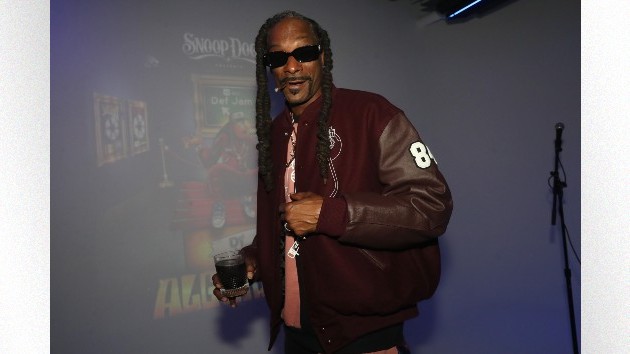
As Snoop Dogg continues to mourn his late mother, he’s moving on with his career, and Tuesday night, he hosted a listening session for his upcoming album, The Algorithm.
Dave East, DJ Whoo Kid, and Lena Waithe were among the stars attending the event at Def Jam Recordings in New York City.
“This makes me feel good when I can come out and see love, see appreciation,” the 50-year-old rapper said. As previously reported, his mother, Beverly Tate, passed away Sunday. She was 70 years old.
“When I can come out and see the love that my mother instilled in me and see it given back to me. Y’all making me feel real good tonight,” he added.
As previously reported, last week, The Doggfather debuted his new supergroup, Mount Westmore, consisting of Snoop, Ice Cube, E-40 and Too Short, who released “Big Subwoofer,” the first track from The Algorithm.
Now Snoop is challenging fans to record their own video to the music of the song, and the winner of the contest will hang out with him at his home in Inglewood, California.
“Whoever does the dopest video to my new video, ‘The Big Subwoofer,’ gets to come to The Compound,” he says
“’Big Subwoofer’ is an instant classic that once again shows the incredible musical genius of Snoop and the whole Mt. Westmore crew,“ TrillerNet Executive Chairman Bobby Sarnevesht told The Source. “Our good friend Snoop is going to give one talented and lucky Triller user an experience they won’t forget, so I encourage everyone to get on the app now and use Triller’s incredibly easy, intuitive and powerful tools to start making great videos.”
Videos should be posted on the Triller website, and the winner will be chosen by Snoop Dogg next month
Ed Sheeran isn’t letting his COVID-19 diagnosis stop him from giving fans what they want.
In addition to dropping his new album = [Equals] on Friday, Ed announced that he’ll also be releasing the new music video for his song “Overpass Graffiti.”
The teaser clip features a reporter broadcasting the news that Ed Sheeran has gone missing from his tour bus. She interviews his head of security, who doesn’t seem to be too concerned with the singer’s disappearance. He just hopes Ed returns before the next show because he needs him alive “for the Christmas bonus.”
And speaking of Christmas, Ed also announced he’ll be playing a special U.K. holiday show at St. John at Hackney Church in London on December 13. The show will raise funds for his Suffolk Music Foundation. U.K. residents have the chance to get exclusive access to tickets when they pre-order = from Ed’s official store.
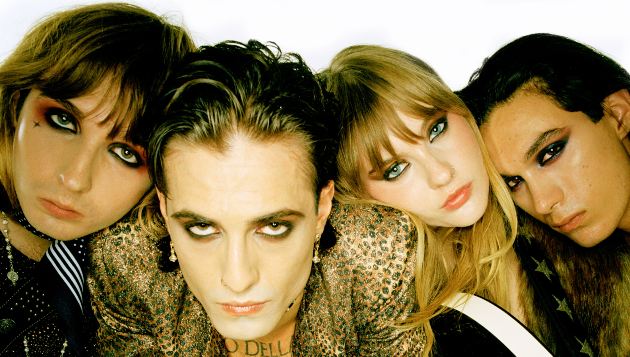
After making their late-night U.S. TV debut on The Tonight Show Tuesday, the Italian rockers have announced that they’ll be opening for The Rolling Stones next month. They’ll take the stage ahead of the “Satisfaction” legends on November 6 at Allegiant Stadium in Las Vegas.
The Stones gig follows Måneskin’s previously announced, much more intimate headlining shows taking place October 27 in New York City and November 1 in Los Angeles, which mark the band’s first-ever full U.S. concerts. As you might’ve guessed, both dates are sold out.
If you can’t catch them live, Måneskin’s also just booked another TV performance: the MTV Europe Music Awards on November 14.
Historic collectibles from various music legends, including Eric Clapton, Led Zeppelin‘s Robert Plant and Bob Dylan, will be up for bid during a memorabilia sale hosted by Julien’s Auctions on November 19 and 20 at the Hard Rock Café in New York City.
Among the priciest items going on the block is a 1968 Martin D-45 acoustic guitar once owned by Clapton, who played the instrument at the live debut of his group Derek and the Dominos at London’s Lyceum Theatre in June 1970. The guitar, which Clapton gifted to singer/guitarist Dave Edmunds in 1976, is estimated to sell for between $300,000 and $500,000.
Meanwhile, a sheet of lyrics for the classic Led Zeppelin song “Kashmir” handwritten by Plant on stationery letterhead from Chicago’s Whitehall Hotel is estimated to fetch between $200,000 and $300,000. The lyrics feature some differences from the studio version of the tune, which appeared on 1975’s Physical Graffiti album.
Another interesting item being auctioned is an abstract oil painting of a nude woman created by Dylan during the 1960s and gifted to his late manager, Albert Grossman, which is expected to bring in between $100,000 and $200,000.
Also up for bid is a cream-colored Fender Stratocaster Vintage ’57 reissue electric guitar that Pink Floyd‘s David Gilmour owned and played on stage with the band during the 1980s and ’90s. It’s estimated to sell for between $80,000 and $100,000.
Other items being sold as part of Julien’s Auctions’ “Icons & Idols: Rock ‘n’ Roll” event include memorabilia and artifacts from The Beatles, Guns N’ Roses, Eddie Van Halen, U2, Elvis Presley, Whitney Houston, Kurt Cobain, Michael Jackson, Madonna, Trent Reznor, Keith Richards and Quiet Riot.
(WASHINGTON) — Democrats on Wednesday scrambled to close the deal on President Joe Biden’s landmark social spending legislation, focusing on new ways to pay for the package, including a billionaires’ tax the White House said the president supports.
At the same time, they were hoping to make enough progress that House progressives would agree to vote for a separate Senate-passed bipartisan infrastructure bill before Biden heads overseas Thursday.
Just hours after Senate Democrats on Wednesday morning unveiled the “billionaires tax” — to tax the wealth of a few hundred of the wealthiest of Americans — the gambit came into question when Democrat Sen. Joe Manchin, a decisive vote on the bigger social spending bill, raised concerns.
“I’m supporting, basically, that everyone should pay their fair share,” Manchin told reporters on Capitol Hill. “I don’t like the connotation that we’re targeting different people.”
When asked about the plan, proposed by Sen. Ron Wyden, D-Ore., which would help pay the $1.5 -2 trillion cost for sweeping new programs including child care, child tax credits, family leave and environmental initiatives, Manchin hesitated, saying while he thought they would “absolutely” get to a deal “the Senate will take time.”
“There’s a lot going on with that and it’s very convoluted. I believe there’s going to be everyone’s going to pay. I believe that we will end up where everyone must participate,” he said.
Wyden’s plan would apply to people with at least $1 billion in assets or $100 million in income for three consecutive years, applies to increased value on assets — so-called “unrealized gains” not now subject to tax — and would impact roughly 700 taxpayers, according to experts. White House press secretary Jen Psaki announced at Wednesday’s briefing that the plan has Biden’s support.
But the option raises some constitutional concerns and could depend ultimately on the Supreme Court’s interpretation of a wealth tax as a direct tax on property, which is unconstitutional, or whether it’s another form of income tax, which is constitutional. Legal challenges also risk undermining the president’s promise that his plans would be completely paid for.
“We’re not going to support anything we don’t think it’s legal,” Psaki said. “But I will tell you, the president supports the billionaire tax. He looks forward to working with Congress and chairman Wyden to make sure the highest-income Americans pay their fair share,” he said.
White House press sec. Jen Psaki says Pres. Biden “remains open” to going to Capitol Hill amid agenda negotiations.
Aside from the billionaires’ tax plan, Manchin said he and his fellow Democrats are on board with another proposal to help pay for the sweeping programs: a 15% minimum tax on the country’s wealthiest companies.
“We’ve all agreed on a 15% corporate tax,” he said.”There’s a patriotic duty that you should be paying something to this great country to give you the protection and the support and the opportunities. That’s called a patriotic tax. It will be nothing that should be scorned about.”
Wyden, Sen. Elizabeth Warren, D-Mass., and Sen. Angus King, I-Maine, introduced the plan to establish a 15% minimum corporate minimum tax rate that’s aimed at companies making more than $1 billion in profits annually. They estimate the plan would apply to 200 companies generating “hundreds of billions in revenue over ten years,” according to a statement form the senators.
Warren pointed to Arizona Democratic Sen. Kyrsten Sinema in promoting the plan as negotiation continued on Capitol Hill, telling reporters they scrapped the idea of raising individual tax rates on the rich because, she said, those people do avoid taxes anyway.
“They have now opened that hole to the point that billionaires drive semis through it loaded with money,” Warren said of the current tax system.
The corporate tax proposal, and the separate tax on billionaires, are aimed at that tax avoidance — what lawmakers said was the concern of Sinema, who with Manchin, has been a Democratic holdout.
“The idea here is to say, ‘Enough, enough. If you’re a corporation that makes more than $100 billion dollars in profits — not revenues, not assets — but profits, then you’re going to pay a minimum 15% tax,” Warren told reporters.
“It’s not a new tax idea. The taxes are actually already there,” she added. “We’re now saying,”We want you to — you’ve got to — make this on an annual basis instead of putting it off for 30 or 40 years.”
As the clock also ticks on Biden’s overseas trip and White House senior staff do last-minute lobbying to lawmakers, Psaki said Wednesday the president also “remains open to going to the Hill.”
But she also signaled that if there isn’t a vote this week, the White House wouldn’t accept it as a loss.
“We’re on the verge of getting to a deal,” she said of negotiations. “They don’t look at it through the prism of whether there is a vote in one [sic] legislative body before he gets on an airplane,” She said.
Biden summoned Manchin and Sinema to the White House Tuesday night, but Democrats appear still at odds over key issues on expansion Medicare, Medicaid and family leave.
Despite some progressives’ objections, an optimistic-sounding House Speaker Nancy Pelosi signaled the House could act on the “BIF” — the bipartisan infrastructure framework bill — sooner rather than later, with the thinking the chamber can and should vote on BIF with a framework in hand.
“In order for the BIF to pass, we need to have the trust, the confidence and the reality of the Build Back Better bill,” Pelosi told House Democrats in a closed-door meeting, a source familiar told ABC News.
Notably, Pelosi has said she doesn’t bring bills to the floor for a vote if she knows they are going to lose.
“In the next couple of hours, I will be communicating with you on our path from here to there … depending on what happens at the White House,” she said. “That will determine our timetable, our course of action, but we are in pretty good shape.”
Coming out of a meeting later, Pelosi told reporters that Democrats are in “pretty good shape” on the social spending bill.
“We have to just make decisions about one thing or another,” Pelosi said, heaping praise on Biden for leading the charge. “I feel pretty good about it.”
Pelosi notified members in a new dear colleague letter this afternoon that the House Rules Committee will hold a hearing on Thursday on the Build Back Better Act.
The hearing does not mean the bill is ready to hit the floor, as negotiations continue, but it will offer committee leaders a chance to speak to members about the bill. She wrote that progress had been made on a few sticking points, including closing the Medicaid coverage gap, but they’re still working to close a deal on paid family and medical leave.
Meanwhile, a disgruntled Sen. Bernie Sanders told reporters that he doesn’t see a deal by the end of the day.
“I don’t know, but I don’t think so. I’m not quite clear in terms of the revenue package. Every sensible revenue option seems to be destroyed,” Sanders said.
Members of the Congressional Black Caucus said Thursday at a press conference they are also ready to vote “soon” on the legislation that chair Joyce Beatty, D-Ohio, said members have not been on the sidelines for when it comes to negotiations.
“I don’t think we’re in a position to keep kicking the can down the road,” Beatty said. “You know, infrastructure is very important, and we need to make sure that we meet the deadline that is imminent.”
The White House is hoping Biden will be able to tout the sweeping infrastructure package at the COP26 summit and G-20 summit this weekend.
According to an analysis by the pro-wealth-tax Americans for Tax Fairness and the Institute for Policy Studies Program on Inequality, billionaires in the U.S. have seen their collected wealth surge 70% since the start of the COVID-19 pandemic to more than $5 trillion — a gain equal in size to Biden’s spending plans over 10 years, The Associated Press reported.
The president did not campaign on a wealth tax but vowed no one earning less than $400,000 would pay more in taxes in his administration.
ABC News’ Sarah Donaldson contributed to this report.